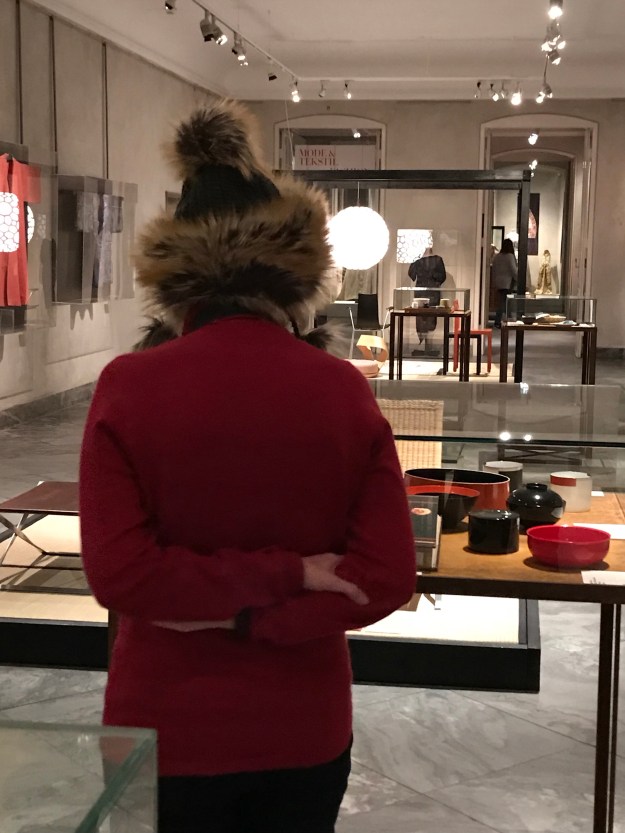
Easter in Copenhagen: Church-Lady Angels, A Sunburned Gardener, and Thermal Onesies

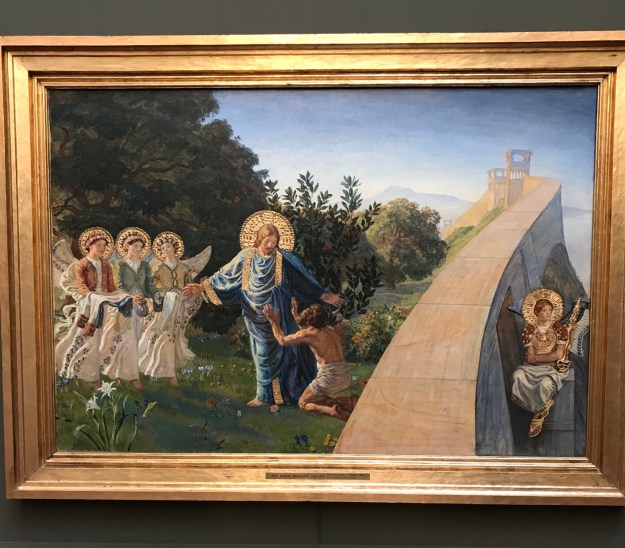
Last winter in Copenhagen, I admired a very unusual Easter-themed painting in the Hirschsprung Gallery. Joakim Skovgaard painted it as an altarpiece in 1890. The title is translated as “Christ Welcomes the Penitent Thief into Paradise.”
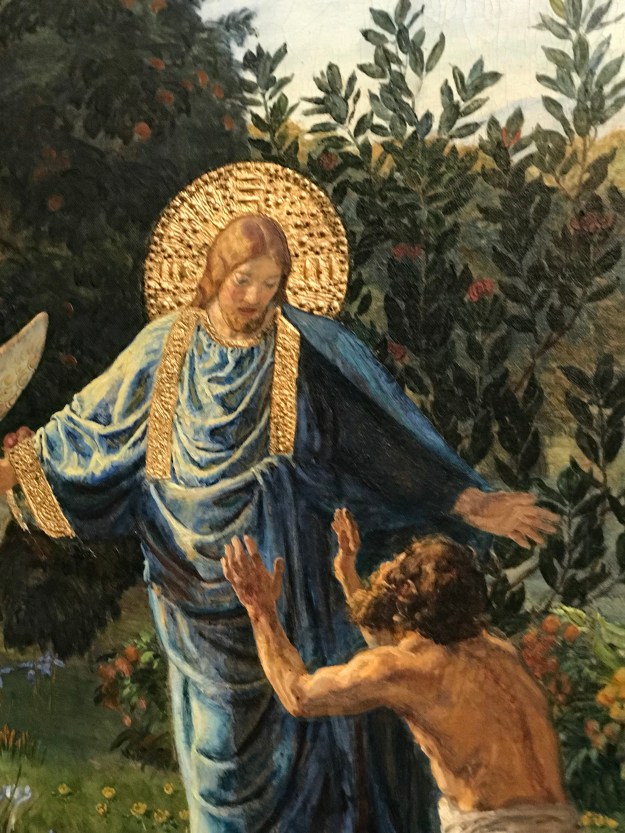
In the Biblical account, one of the thieves executed with Christ admitted his sins, repented, and begged desperately for help. Christ promised him, “Today you shall be with me in Paradise.” I’ve never seen this event depicted anywhere else, maybe because I’m not Catholic. I understand the Catholic Church celebrates the feast day of this man, now called St. Dimas, around Easter time. I think his feast day is March 25.
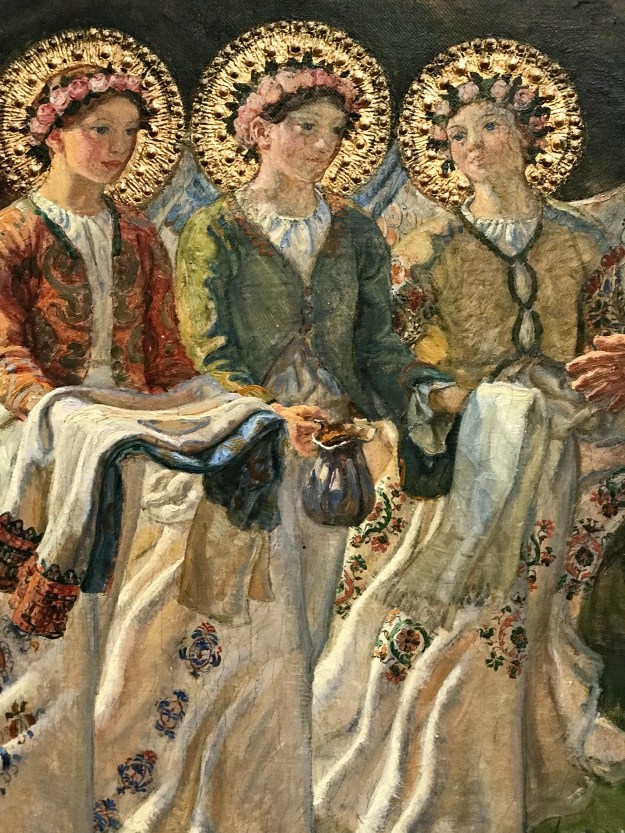
I admire the gentle realism of the painting, along with the liberal use of gold leaf. Three angels with gold haloes AND rose wreaths stand ready with new clothes and a pitcher of water. They look like very earthly angels, wearing pretty Scandinavian jackets and embroidered dresses. Their wings are barely visible; these angels could easily pass for kindly church ladies. (They’ve probably also made a nice casserole and some lemon bars for their newest guest).
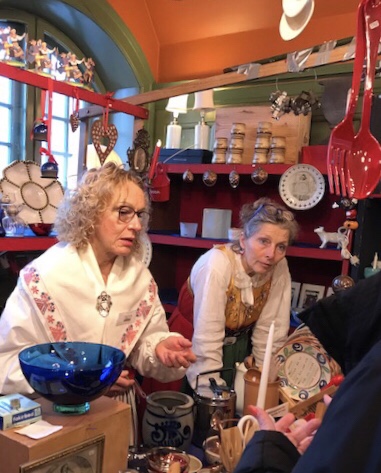
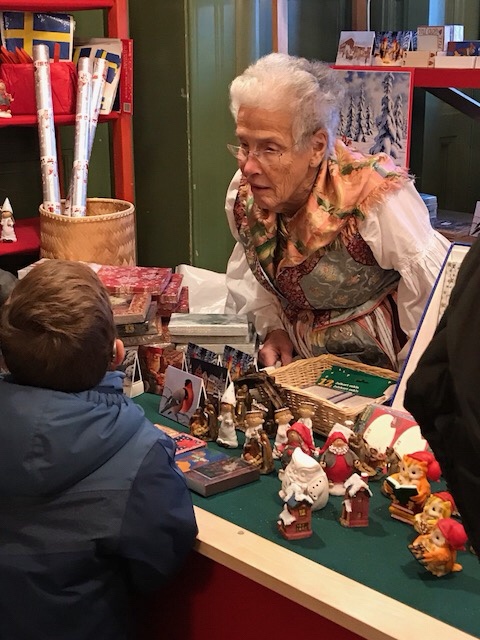
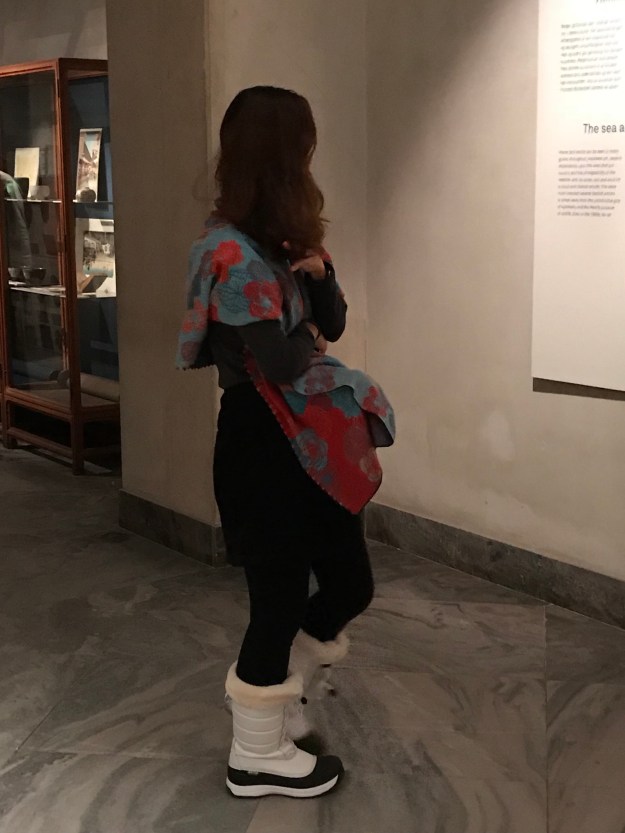
Above are some actual church ladies, for comparison. They were helping people at the Christmas bazaar at the Swedish Church in Copenhagen this past November. I have a high opinion of angels as well as helpful church ladies in pretty Scandinavian outfits.
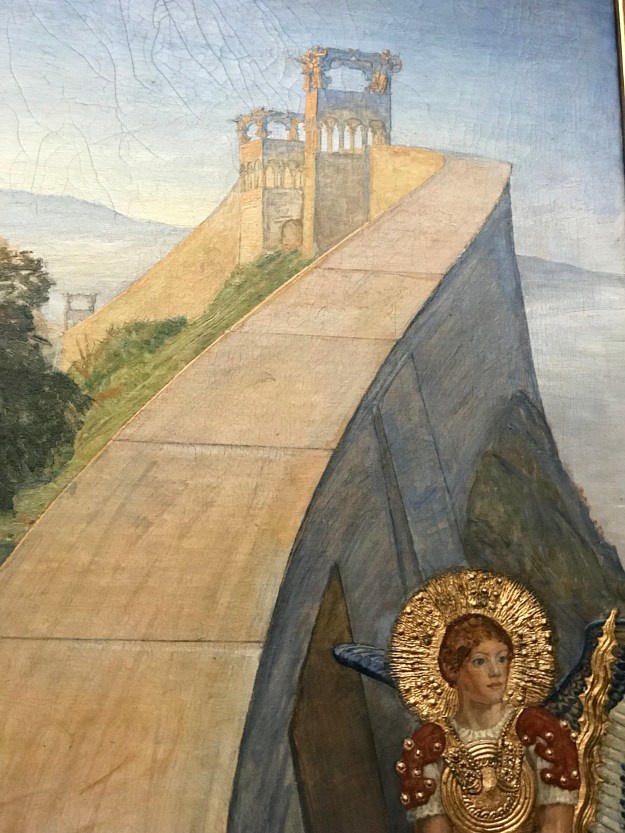
Paradise has a thick wall with guard towers and a narrow door.
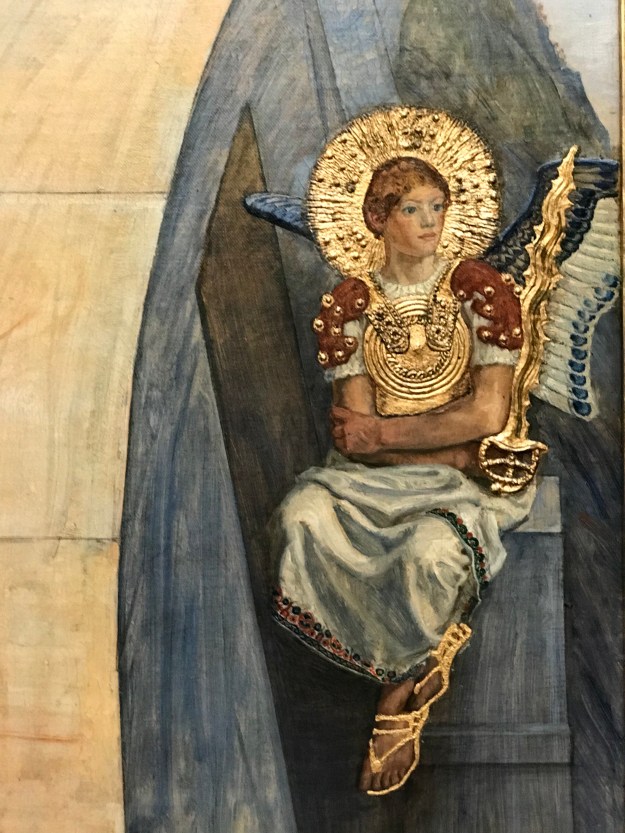
An angel with a flaming sword guards the door. I especially like this angel’s gold armor and comfy gold sandals.

So which side of the wall is Paradise? At first I thought the angel with the flaming sword was “inside.” But that side of the wall drops off sharply into nothingness. The flaming-sword angel perches on some kind of pillar beside the door, looking off into the nothingness in case anyone else approaches. I think Christ has already ushered the thief through the door and on into Paradise, which looks a lot like rural Denmark in springtime. Or maybe it looks like the Garden of Eden. But I don’t want to overthink the theology here, not that I know enough theology to overthink it. I just like the painting.

Religiously themed art is not very common outside of churches in Scandinavia. And the churches tend to be austere. This altarpiece must have been a real center of attention and worship. I’d like to have seen it in the church it was painted for.
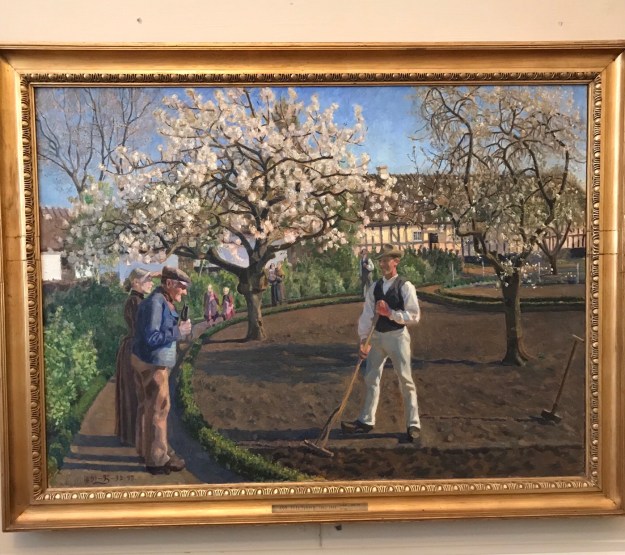
For those who celebrate Easter more as the beginning of spring, here’s another Hirschsprung Gallery painting from the same time period. Fritz Syberg painted “Spring” in 1891-93.
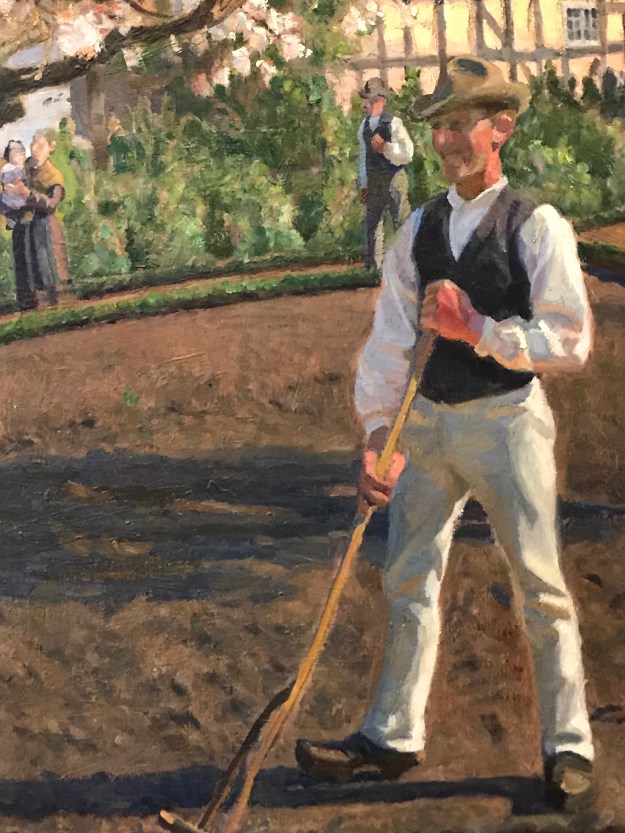
A sturdy fellow in wooden clogs cheerfully rakes the bare soil. It looks like he’s been at it long enough to get a bit of sunburn.
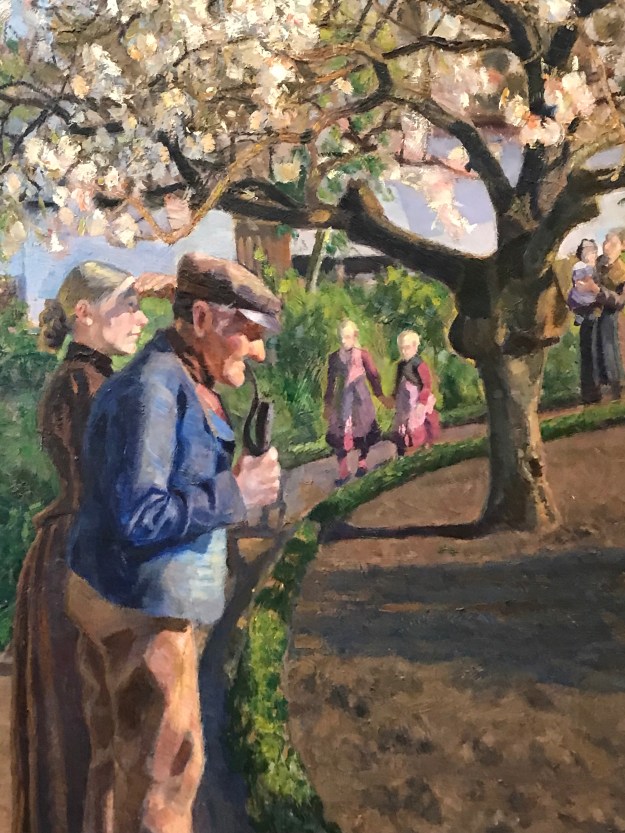
Neighbors stroll and gaze off into the distance under flowering fruit trees. They look glad to be outside. Winters are long and hard in Scandinavia. But spring finally comes.
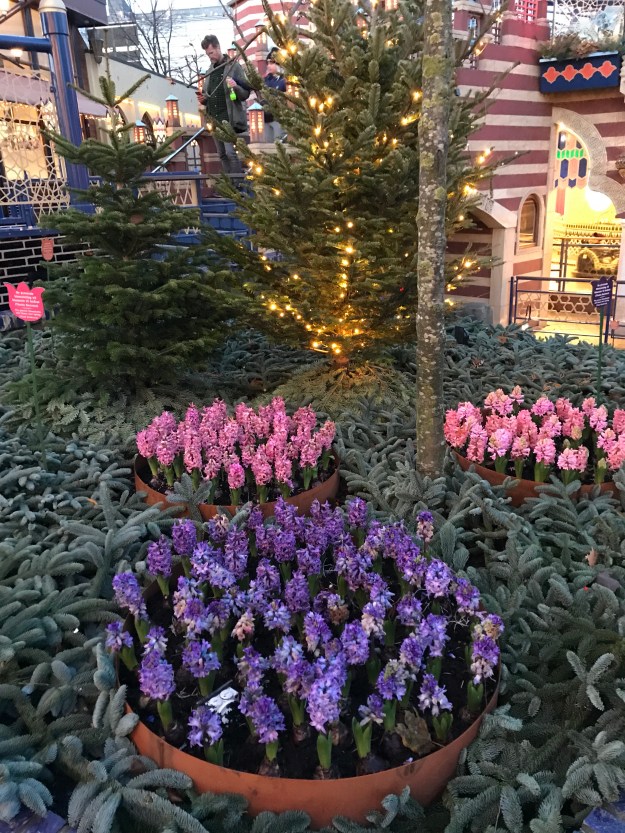
In nearby Tivoli Park last December, thousands of hyacinths were featured in the Christmas flowerbeds–a real novelty in the long winter. (Temperatures were around 40 degrees Fahrenheit, almost the same day and night. I wondered if the plants were dug up and put to bed in a greenhouse while the park was closed at night).
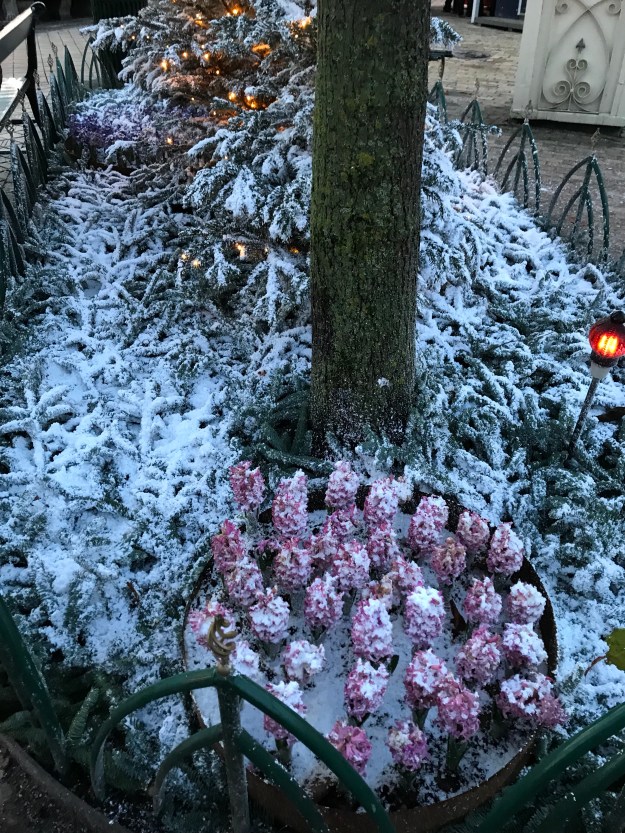
It wasn’t cold enough to snow in early December. The dusting of pretend snow on the hyacinths must have been sprinkled by human hands.
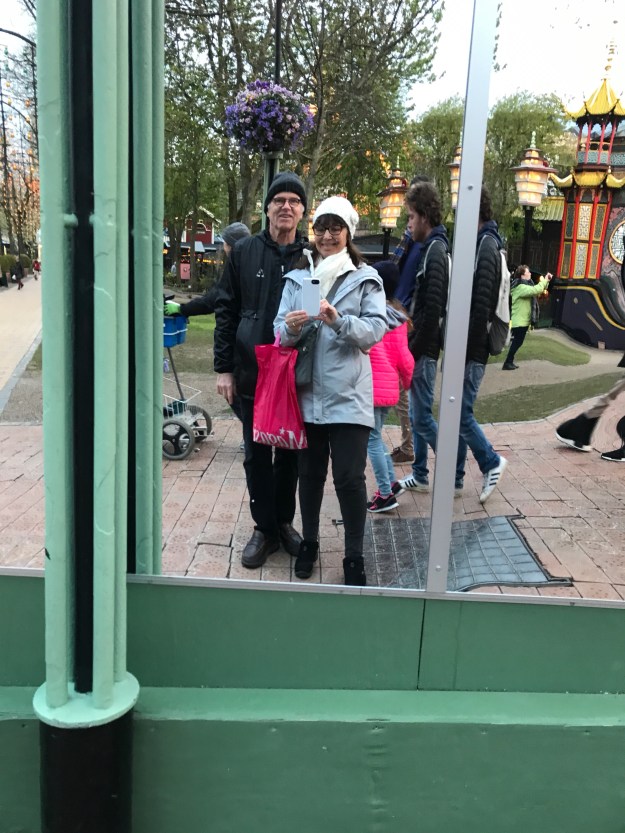
We were lucky enough to also be in Copenhagen last April (we liked it so much we went back in December). Even in spring, we bundled up in layers of sweaters and raincoats.
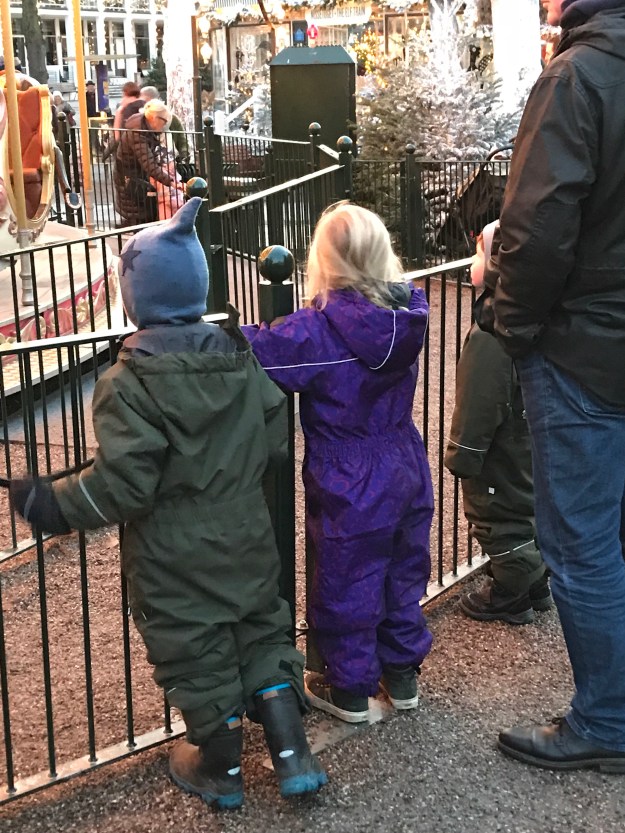
Actually, I think it was colder in April than in December. I was wishing I had a parka, or better yet, a onesie snowsuit like the ones all the kids wear.
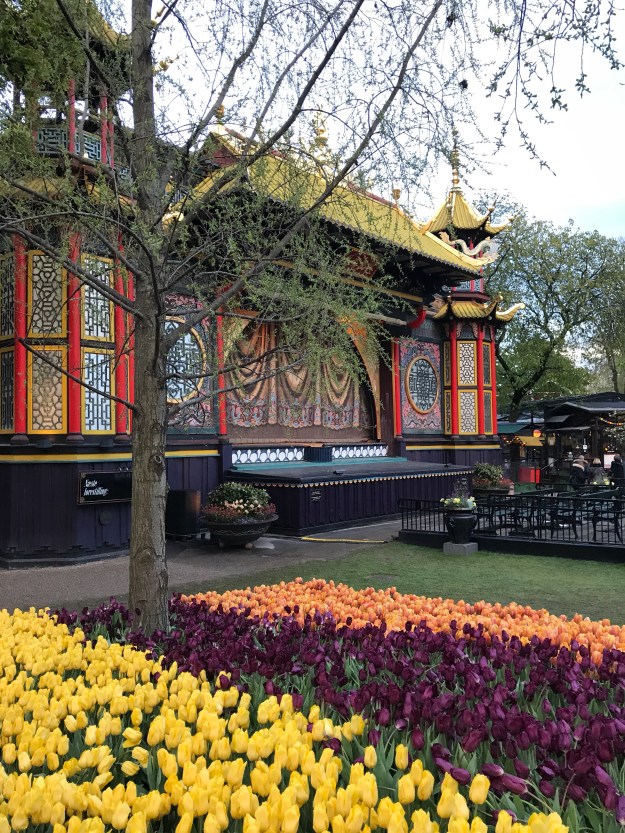
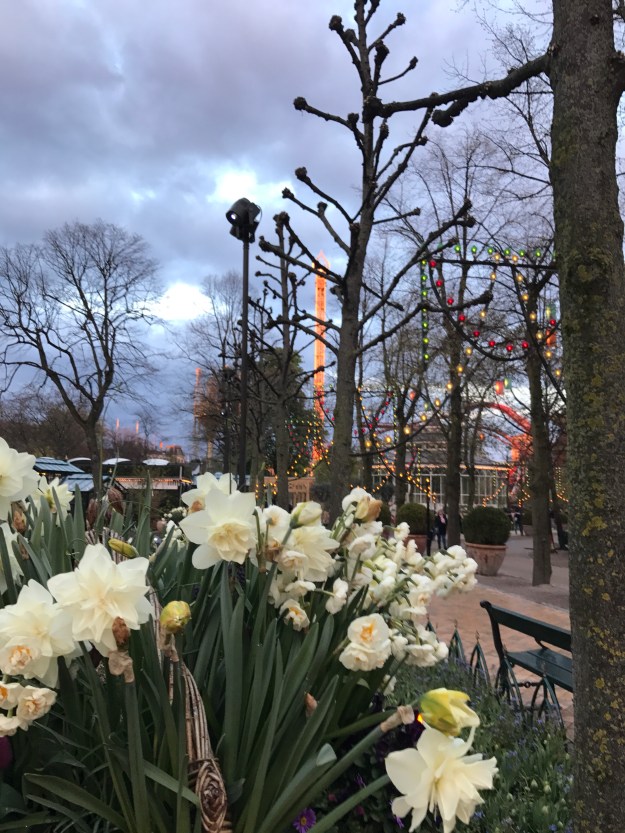
Chilly or not, I’m sure the Tivoli flower beds are overflowing again this spring with tulips and daffodils. I’d like to be there again.

Happy Easter and happy spring!
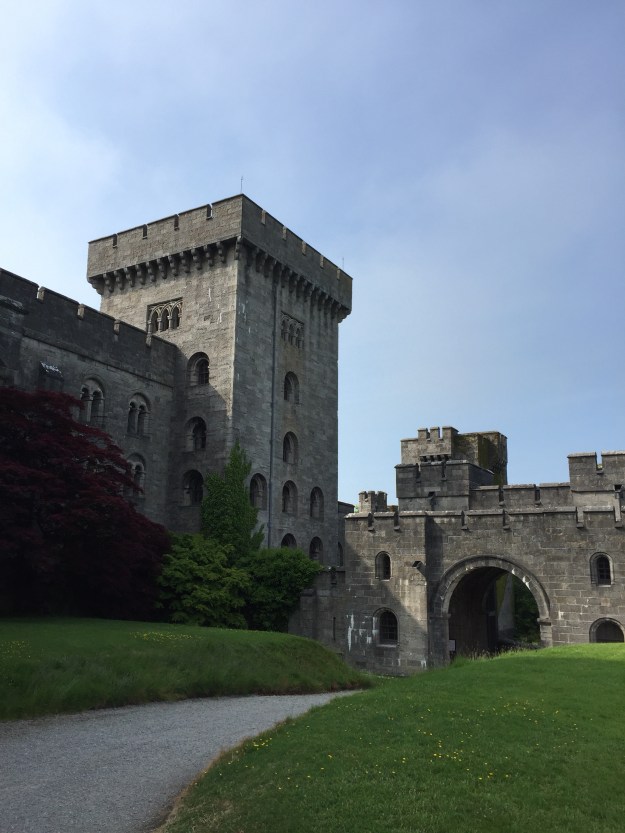
Penrhyn Castle: A Neo-Norman Victorian Fantasy

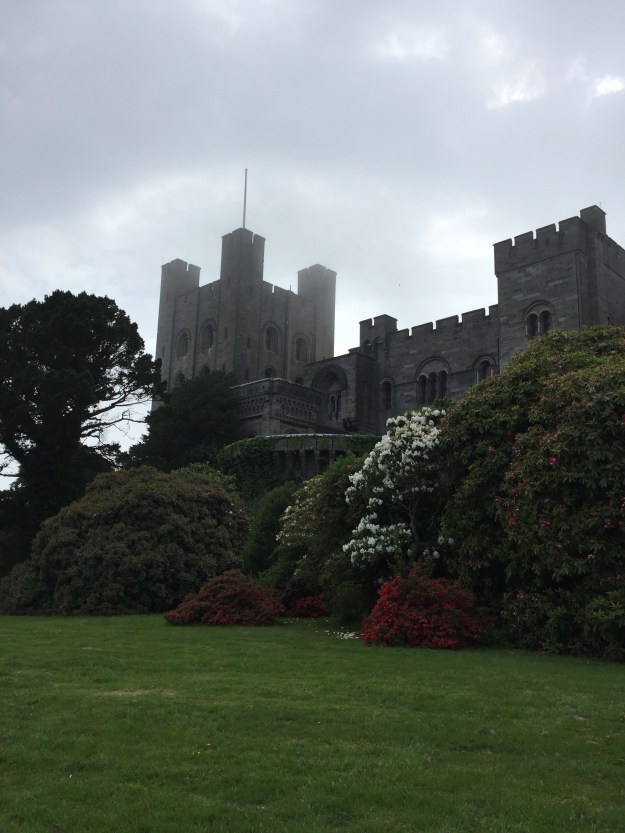
I can’t believe I even have a “least favorite” castle, but right now Penrhyn is it. Why would that be? Penrhyn is spectacular in every way. It was built to impress: a fabulous Victorian gingerbread castle in Wales.

Penrhyn is in the very northern part of Wales overlooking Snowdonia. Originally, there was a medieval fortified house on the property. In 1438 the house was expanded into a stone castle and tower. Between 1822 and 1837, the architect Thomas Hopper expanded the building into a “neo-Norman” castle–in other words, a castle like the ones built by William the Conqueror after 1066, in order to show his new British subjects who was in charge.

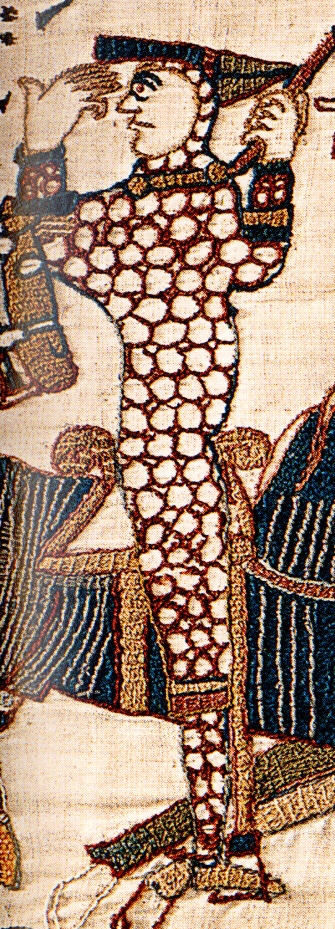
That’s William above, in the Bayeux Tapestry, lifting his helm to show that he’s still alive during the Battle of Hastings (public domain).

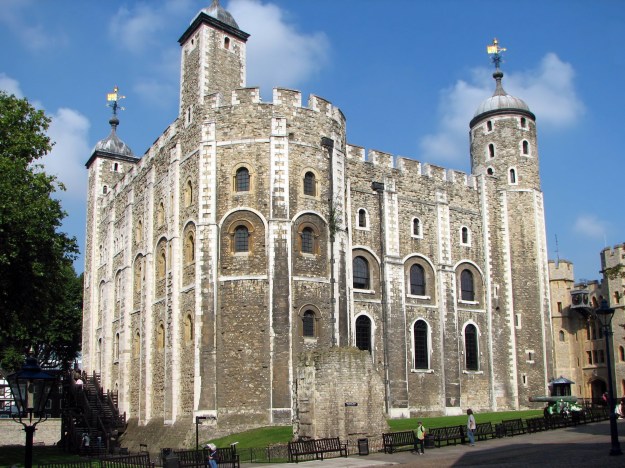
The Tower of London is the best-known example of a Norman castle in Britain. William began the White Tower as a timber fortification almost as soon as he left the battlefield, and work in stone continued until about 1100. It still dominates the Tower complex. (The photo is by Bernard Gagnon, licensed under Creative Commons).

The owner of Penrhyn was the fabulously wealthy George Hay Dawkins-Pennant, who inherited the property and a whole lot of money from his second cousin, Richard Pennant. The money came from Welsh slate mining, from Jamaican sugar, and from Jamaican slavery. (I do realize that a lot of British wealth came from slavery and other ills of the colonial era).

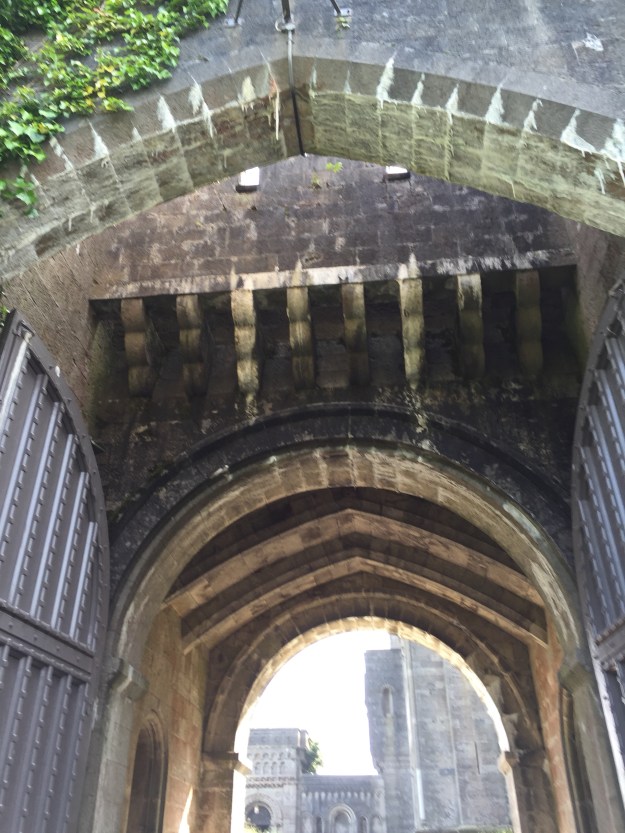
Starting at the entrance, everything about Penrhyn seems overbearing.

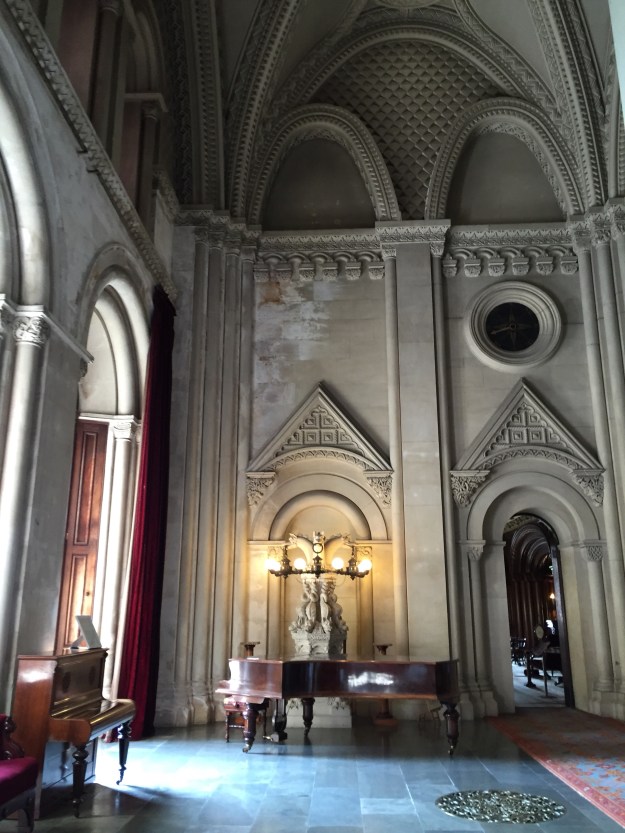
The cavernous entrance hall is meant to impress. It does. I found myself wondering whether I was all that welcome, even with my National Trust Pass.

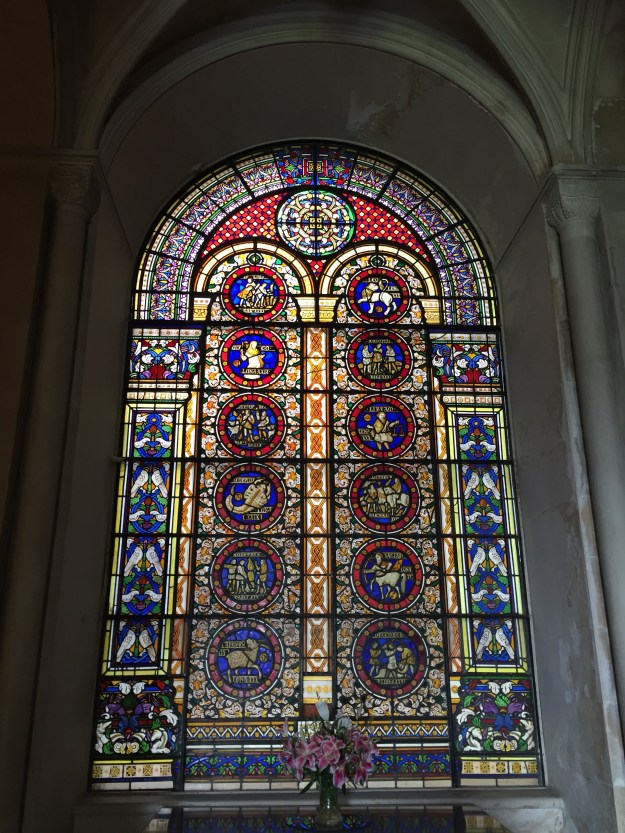
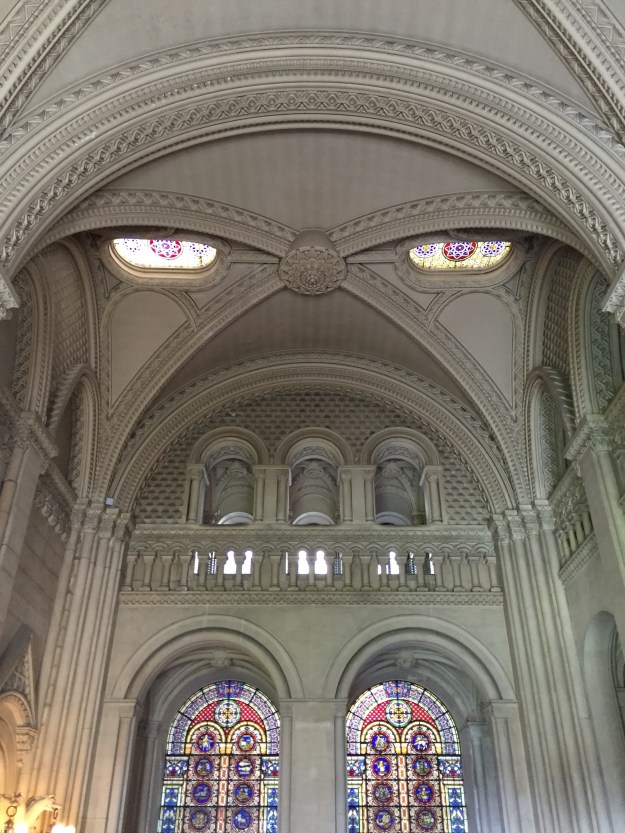
Everything looks somehow overdone. The huge stained glass windows seem like they belong in a cathedral, plus they block the light from outside.

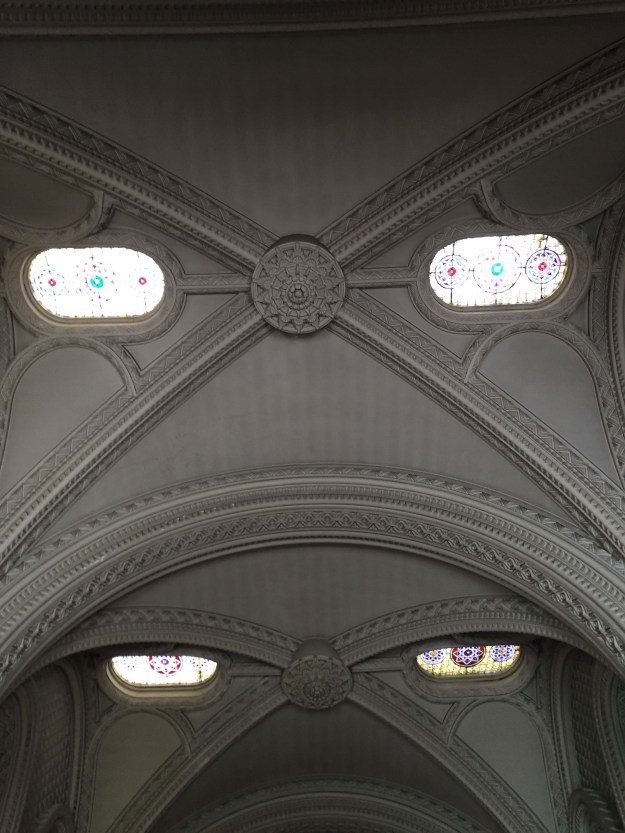
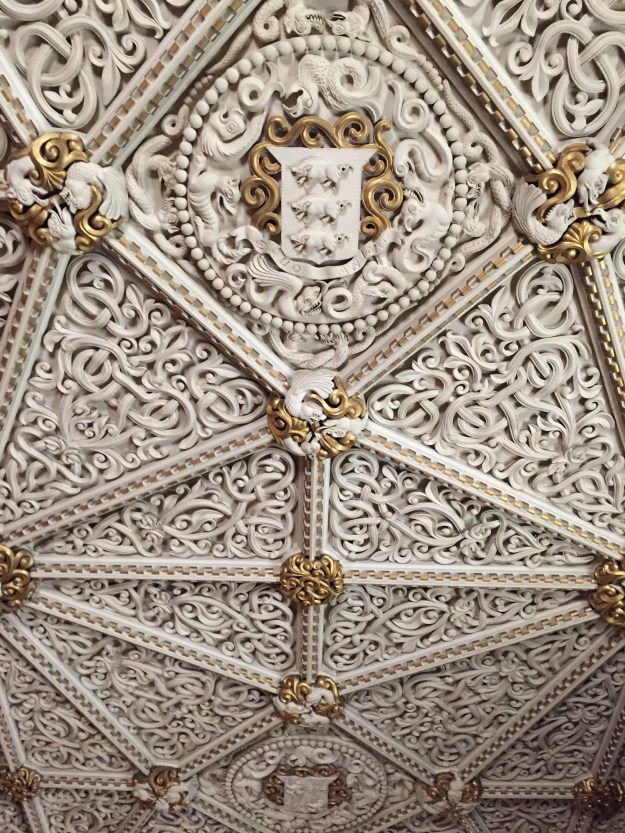
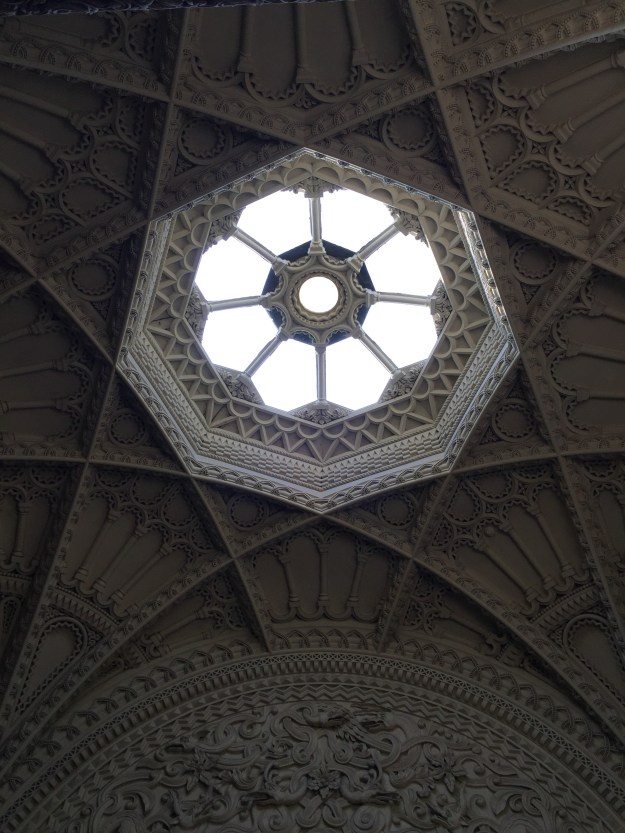
I know the huge entrance hall is meant to be welcoming, but I felt like menacing faces were looming high above me in the arched ceilings.

Even the chairs looked uncomfortable.

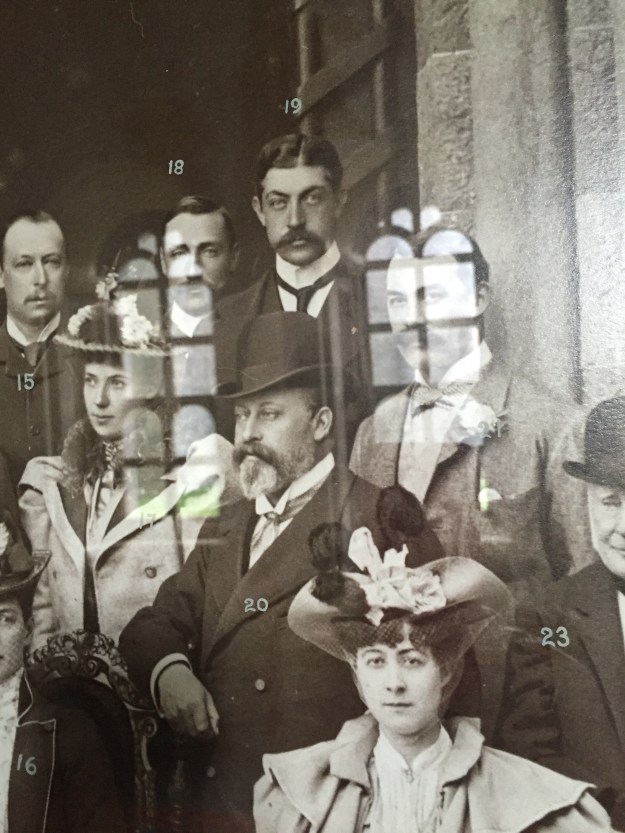
Oh, well, I thought, maybe it’s just my silly reaction. I looked at one of the framed photos, which showed a visit by Albert, Prince of Wales, in June 1894. Bertie is the portly fellow in the hat. He was a regular–he obviously liked the place. Maybe I could learn to like it.

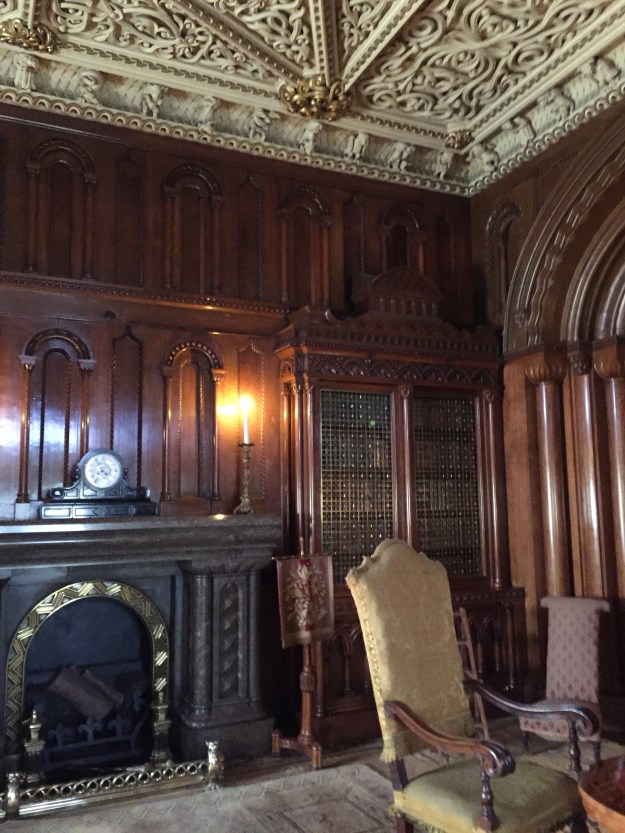
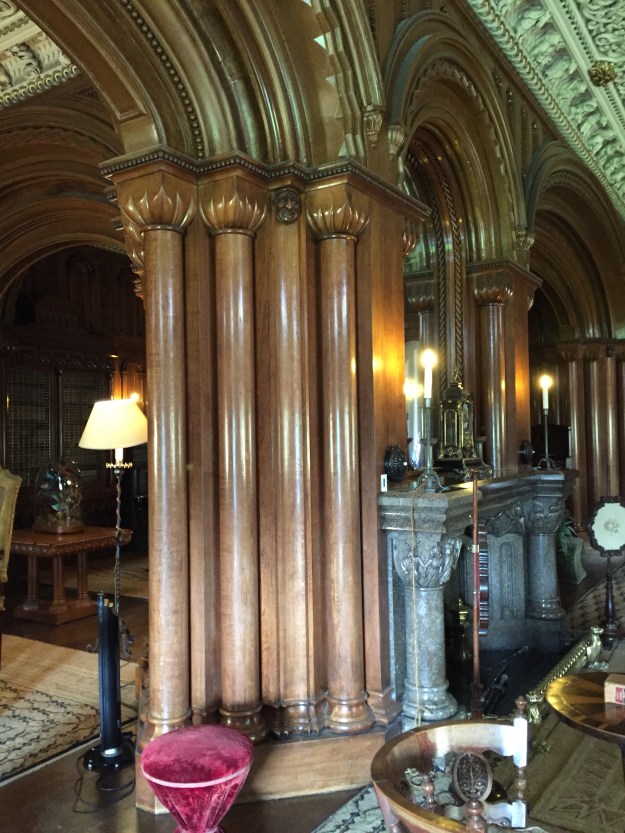
Guests would have proceeded into the library for some aristocratic R & R.

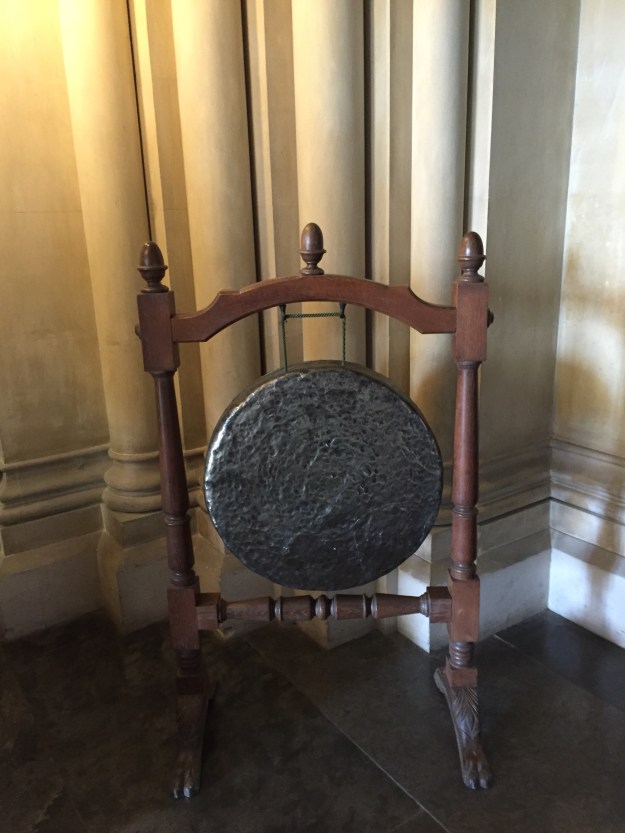
There’s the dinner gong! I wonder if I would even hear it, if I was still upstairs checking the mirror in my evening dress and trying to remember which fork to use for which course.
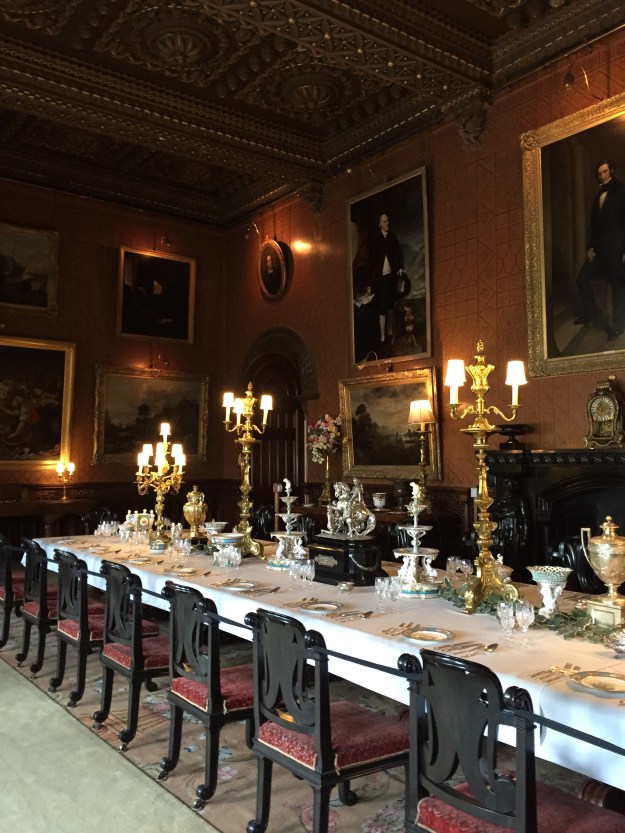
And so to dinner, admiring the fine paintings on all the walls…

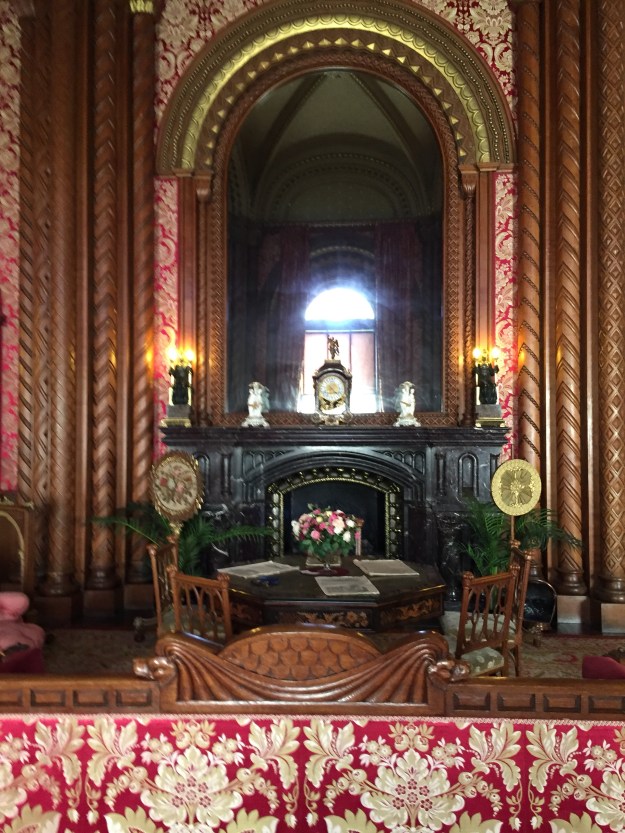
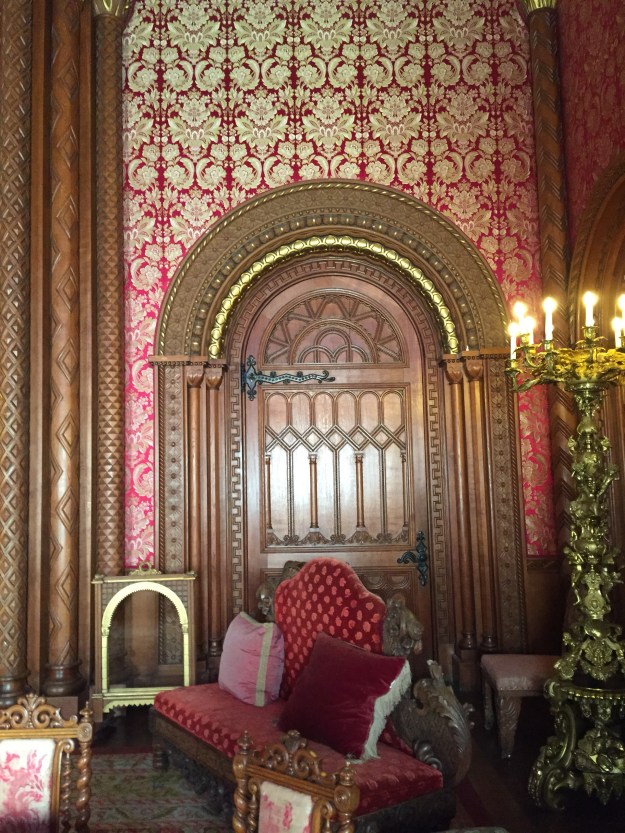
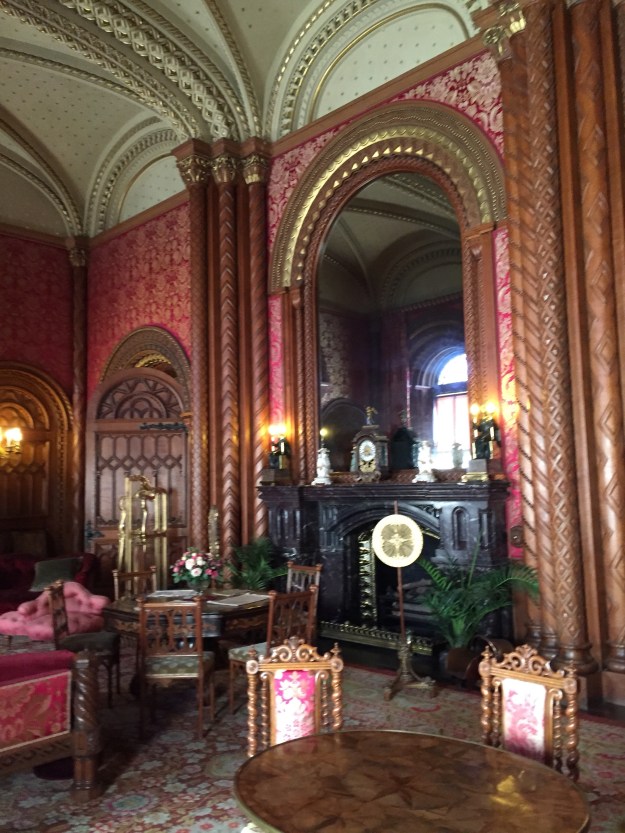
…and then coffee and conversation and cards in the drawing room. So what’s not to like? I don’t know exactly. It all seems dark and heavy and confining, without feeling very Norman.

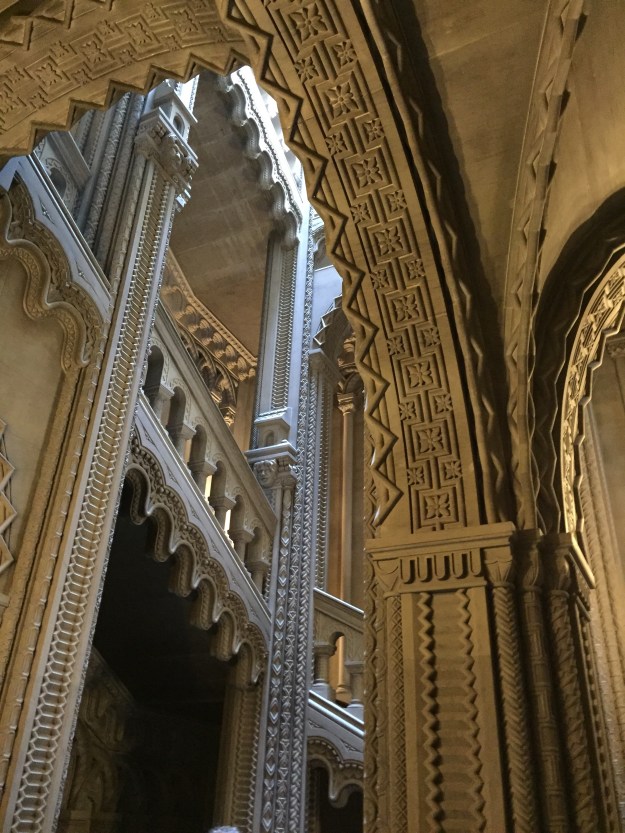
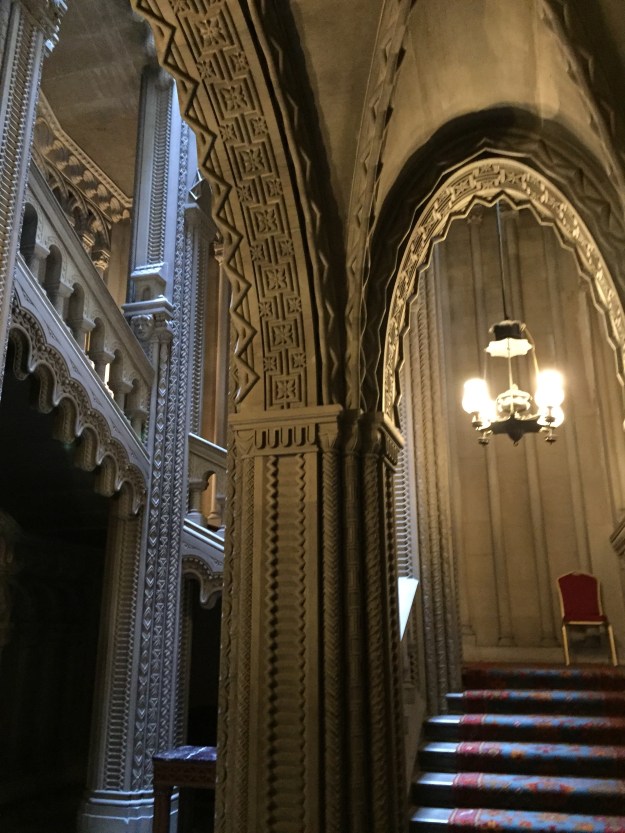
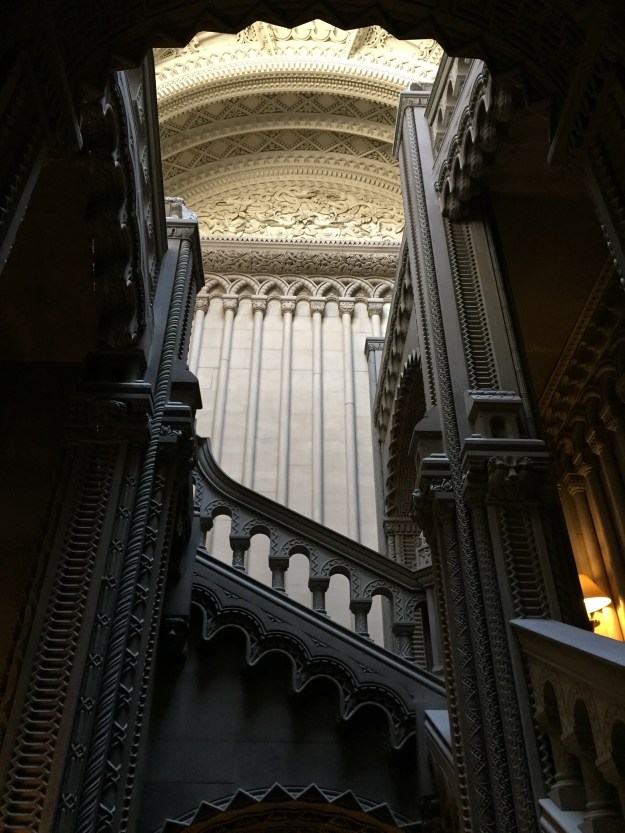
Especially in the stairwells, there are acres of fine stonework and plasterwork. It’s beautiful, but it seems to me that actual Norman architecture is a lot more elegantly austere.

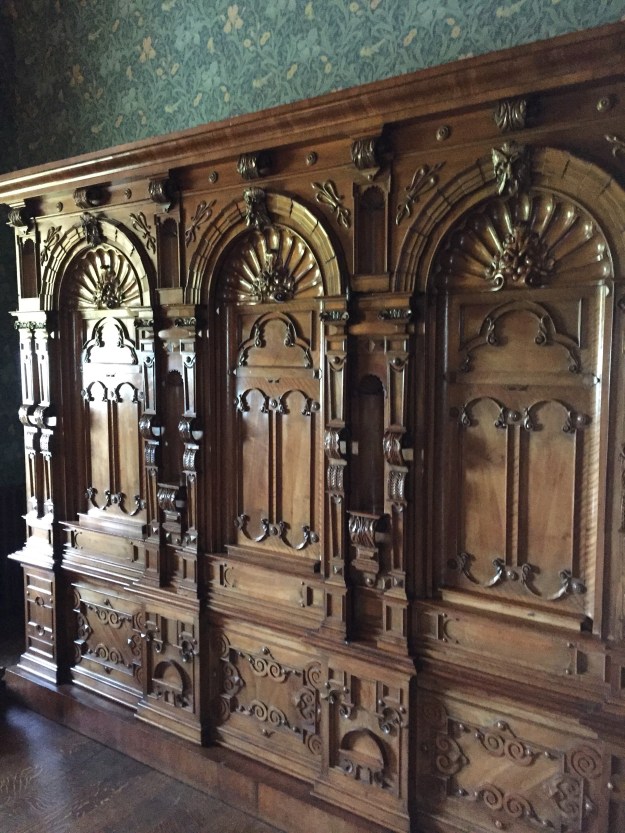
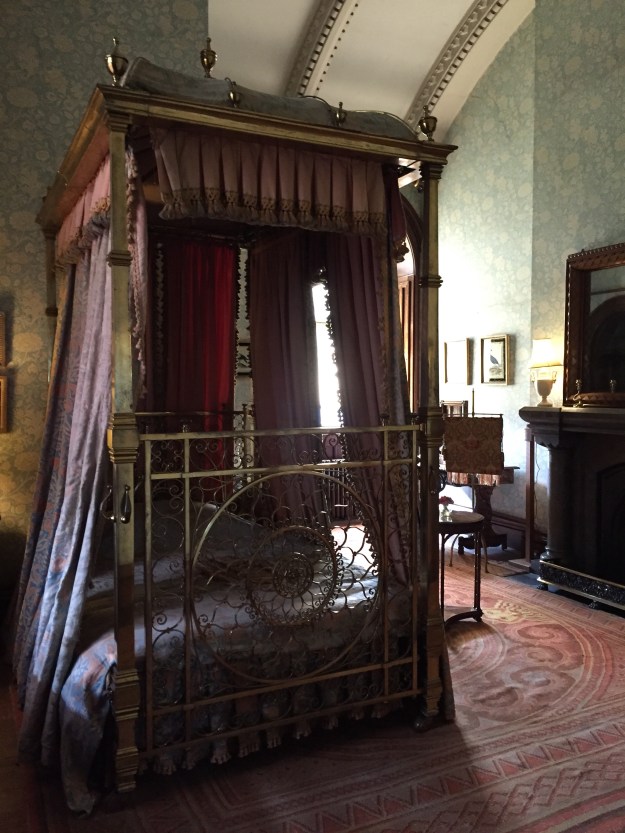
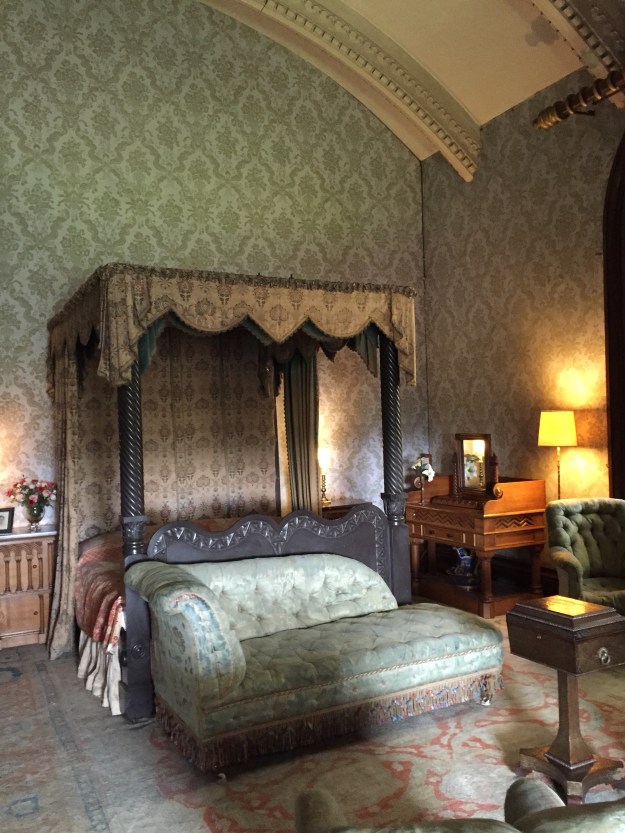
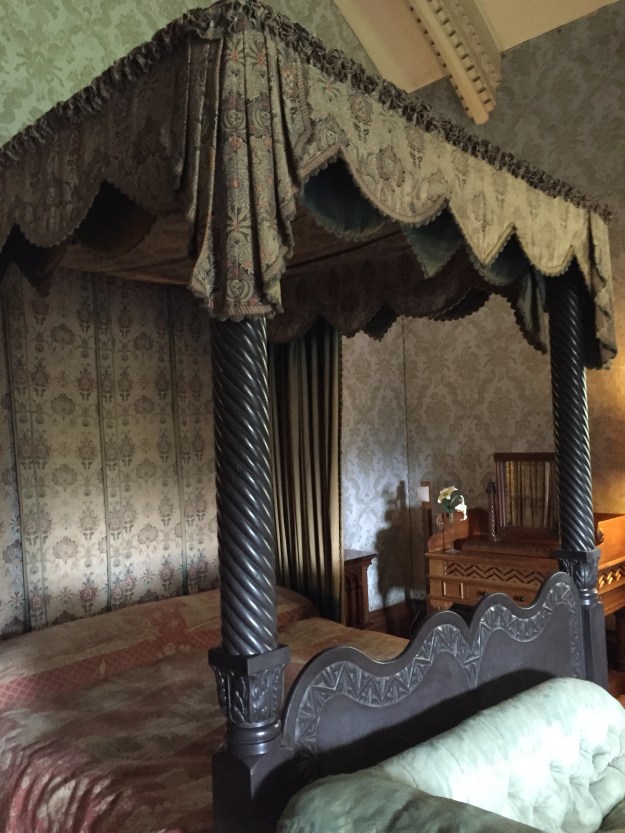
In the family and guest bedrooms, there’s fine wood carving and canopied beds galore.

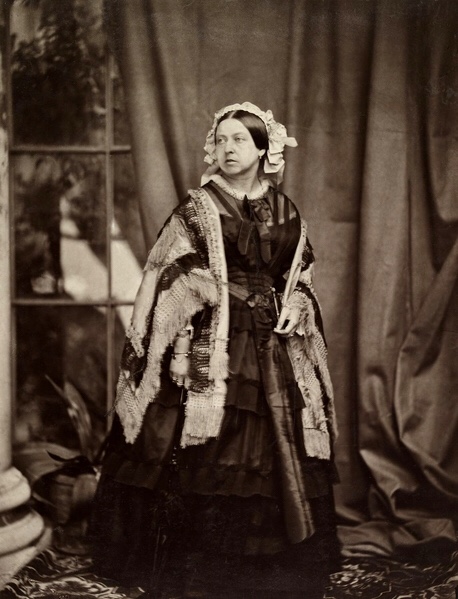
At least one person found the decor too heavy for her taste: Queen Victoria. The photo above was taken in 1860 by J. J. E. Mayall, public domain.

A one-ton bed was carved from local slate especially for a royal visit. Victoria took one look and refused to sleep in it; she said the slate headboard and footboard looked like tombstones.

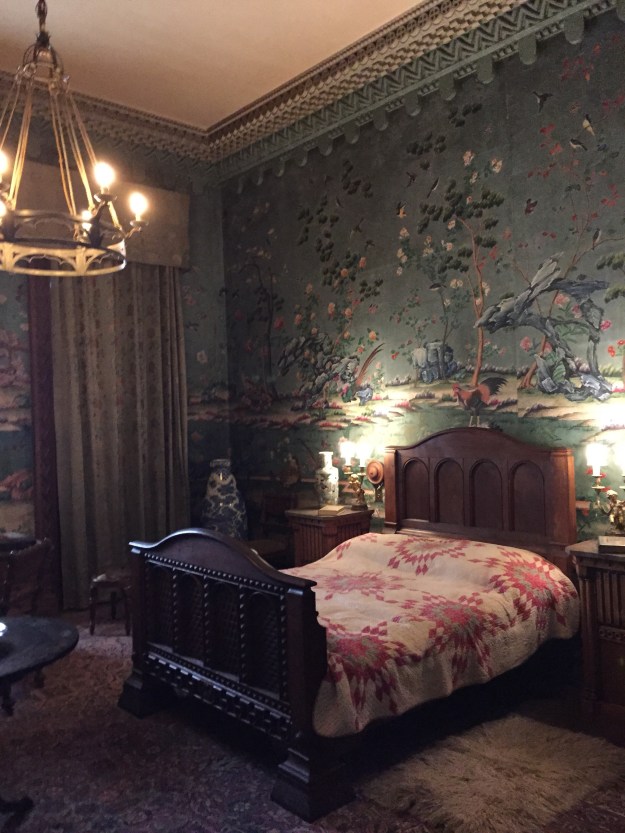
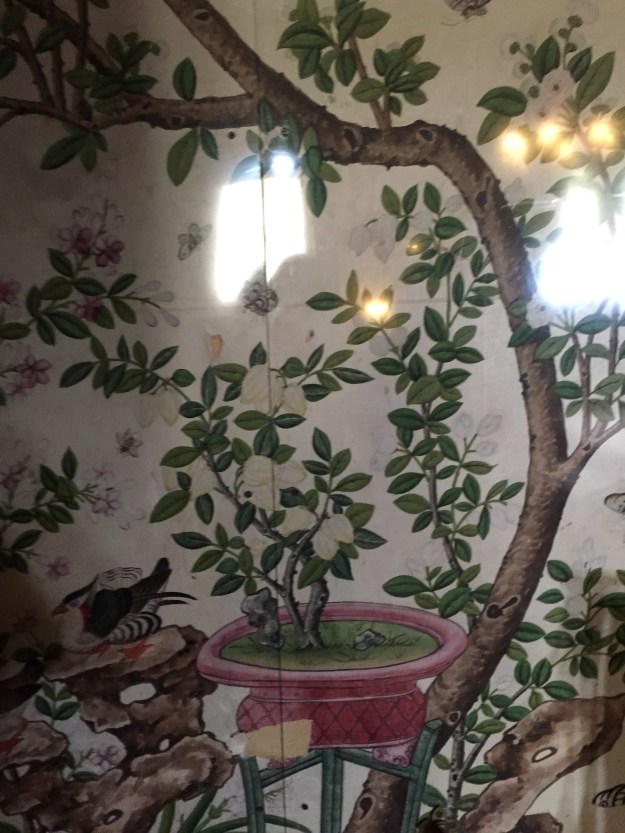
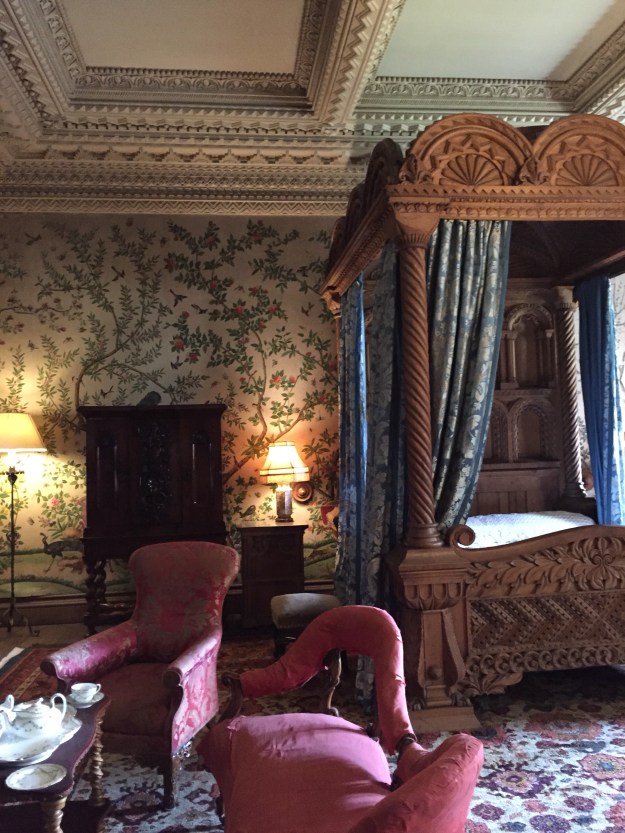
Maybe she ended up in the very pretty Lower Indian bedroom instead. That’s beautiful handpainted wallpaper from around 1800. The last Lord Penrhyn chose this as his bedroom. I would have, too.

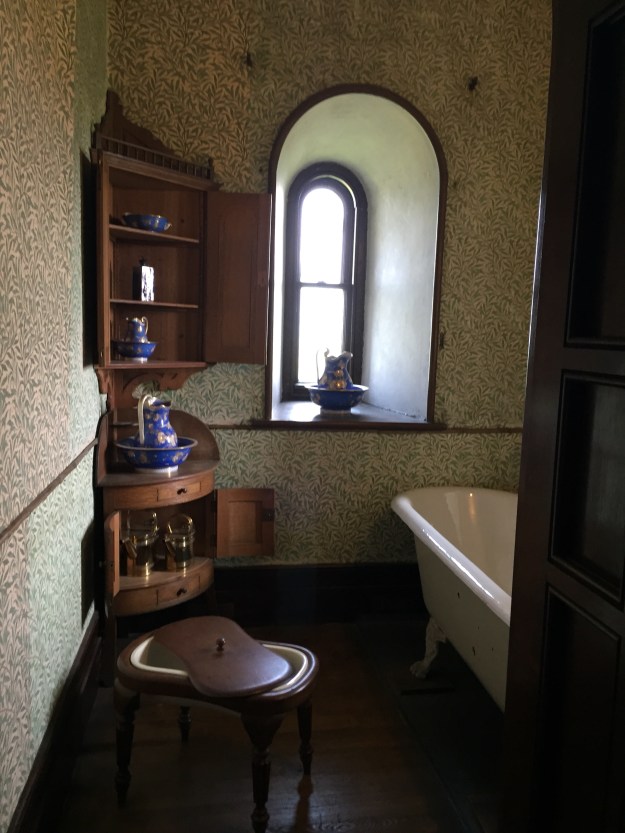
I’m sure Victoria enjoyed a world-class bathroom–essential for any vacation, especially if it’s tended by an army of discreet servants. I liked the more modest bedrooms and bathrooms better than any of the grander rooms.

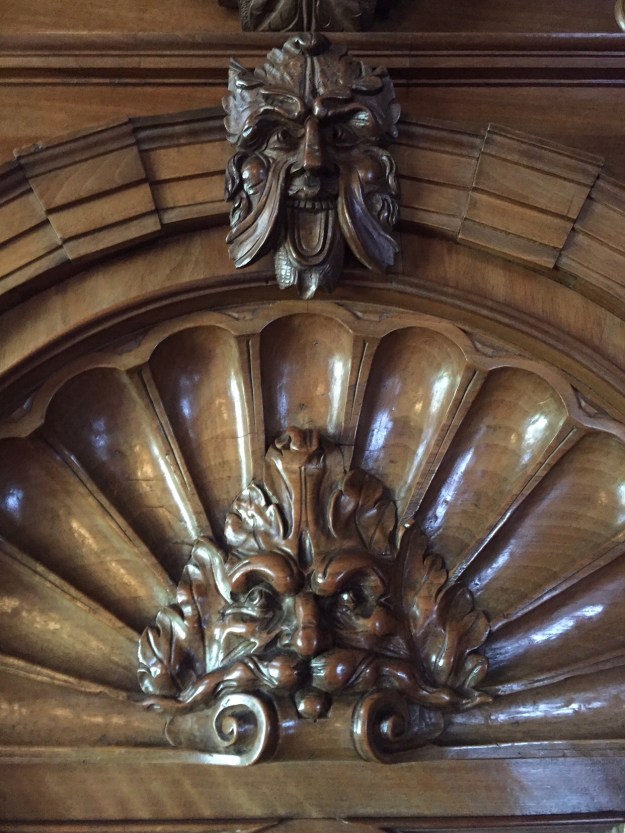
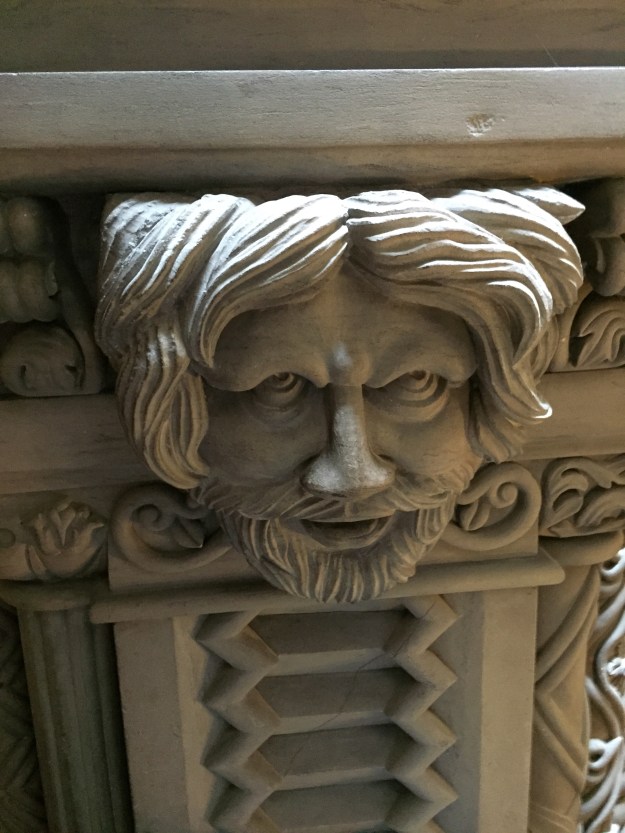
I hope the many carved stone faces in the hallways didn’t scare Victoria if she wandered around in the middle of the night.

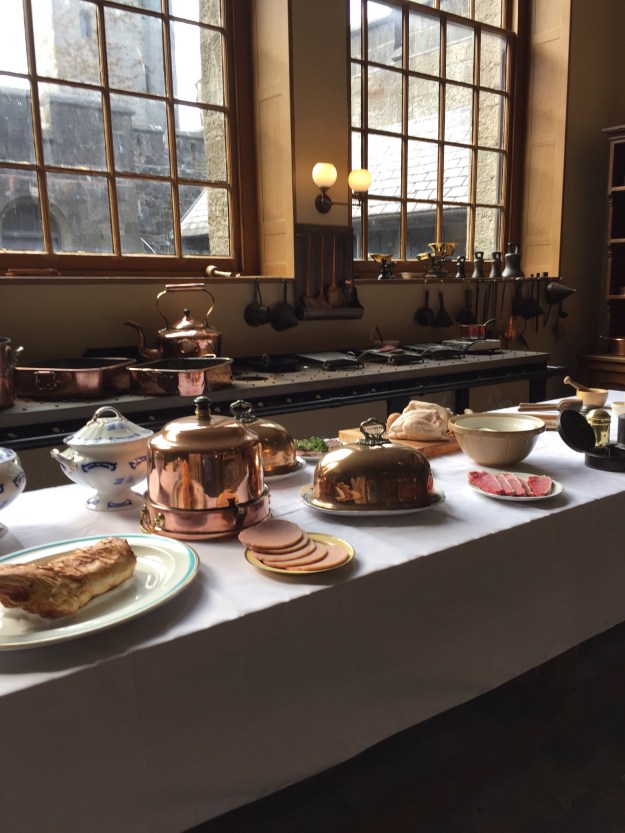
Maybe she wandered all the way down to the kitchens, and maybe the French chef was still awake, cooking and baking goodies for the royal visit.

Family members lived in the castle until 1951, when the dreaded British “death duty” taxes plus the staggering costs of upkeep, drove them to more modest digs. Penrhyn is now owned and run by the National Trust.

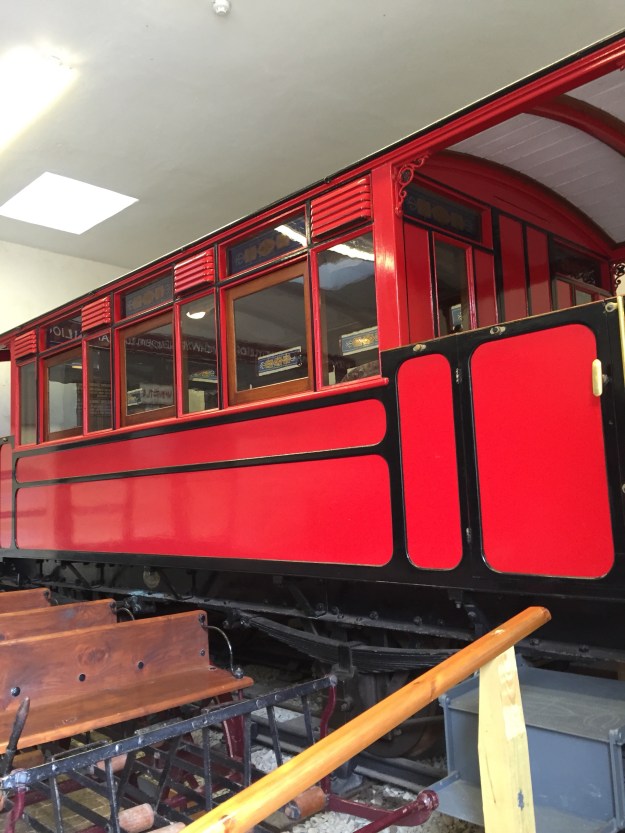
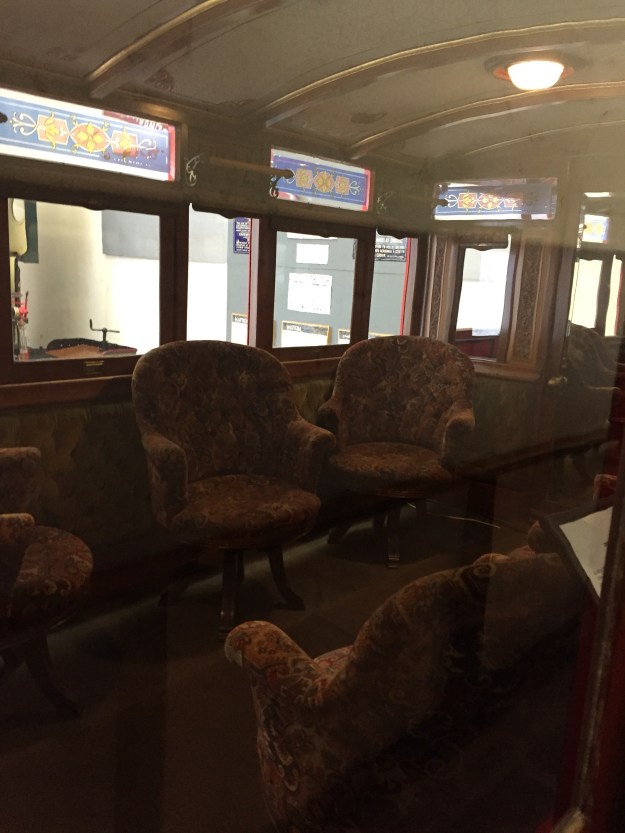
There’s a very entertaining little railroad museum, trains having been important to the family slate business. The photo above shows the open bench car that slate mine workers rode in.

The shiny red car towering over the workers’ car was for mine owners and other bigwigs. They got cushy swivel chairs and stained glass. Sorry, that’s me being judgmental. But if I’m honest, I should admit that I’m very privileged myself. I’m a budget traveler. But I know how fortunate I am to be able to hop on a plane and go pretty much anywhere I want, even if it’s in a too-narrow seat with no legroom. So I really have no business turning up my nose at Victorian luxury.

I’ll visit Penrhyn again if I happen to be nearby. Maybe I’ll be in a better mood and I’ll like the place better. I do love castles, but I like them to be authentic. For my taste, Penrhyn is not–at least not authentically Norman. On the other hand, it’s a reflection of the days when the sun never set on the British Empire. In Penrhyn’s heyday, British business tycoons were Masters of the Universe. That’s about as authentically Victorian as anything gets.

Join me next time for more explorations in the art and history of Europe and the British Isles!

Kelmscott Manor: William Morris’s Dream House

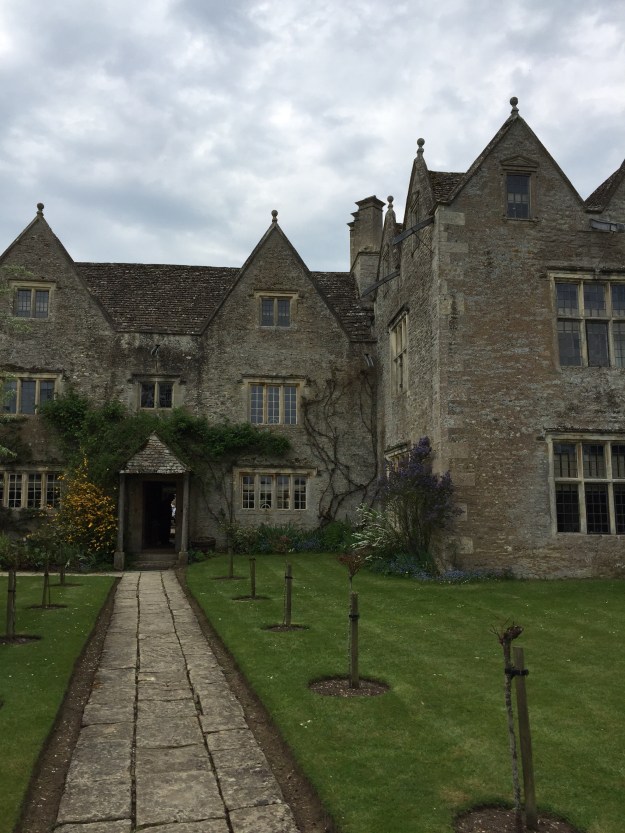
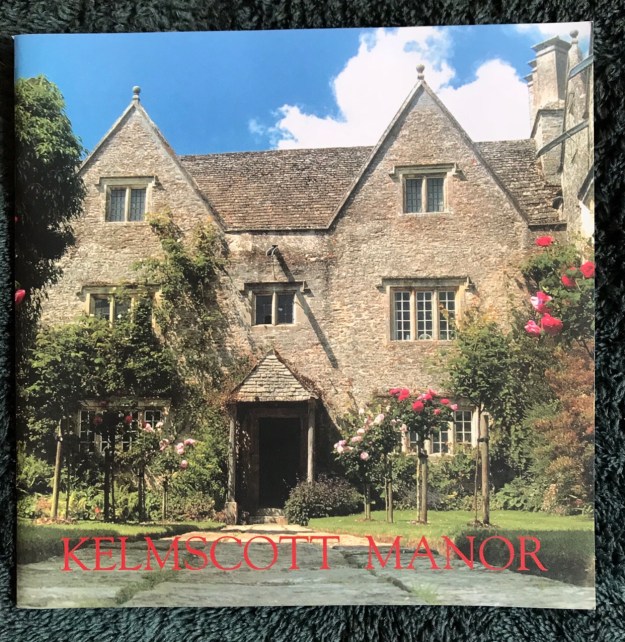
In honor of the artist/writer/social activist/all-around creative genius William Morris’s birthday on March 24 of 1834, I’m remembering a visit to his home. He had a dream house: a house that actually appeared in his dreams. One day in 1871, he found the actual house, exactly as he had dreamed it, and immediately rented it for himself, his wife and two young children. The house, begun around 1594 and added to over the years, was Kelmscott Manor in farming country in Oxfordshire.

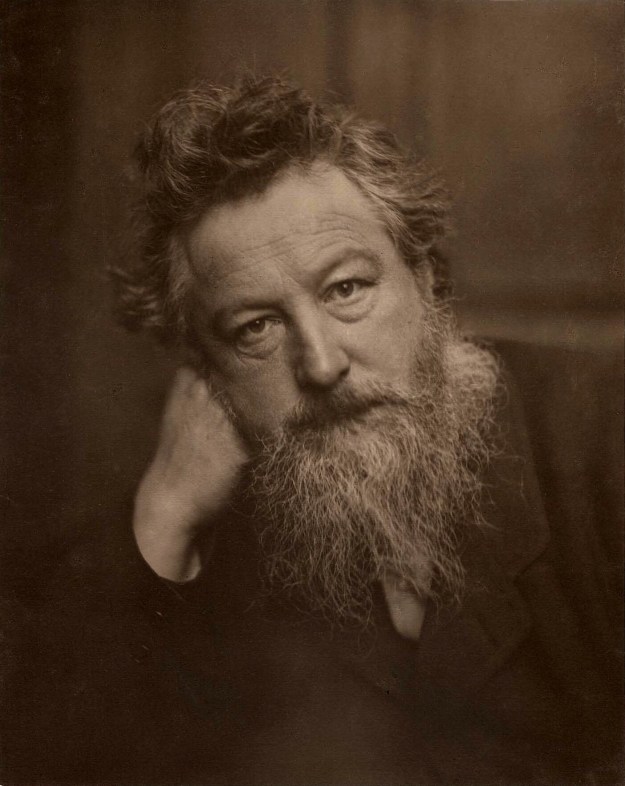
Morris was 37 years old, at the height of his very great powers. Frederick Hollyer photographed him later, in 1899, Public Domain.

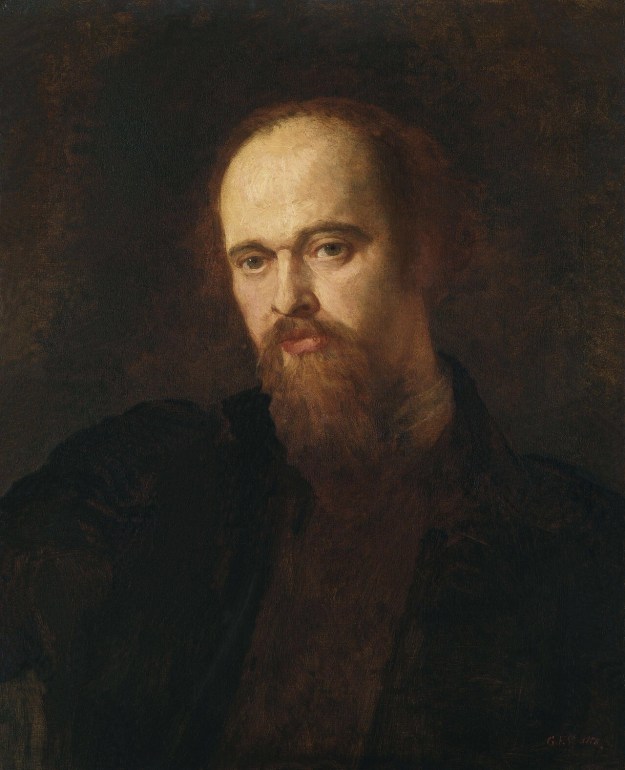
He was not making a lot of money, though. So he shared the tenancy of Kelmscott with his close friend, the painter and poet Dante Gabriel Rossetti. He’s above, painted by George Frederic Watts, 1871, Public Domain.

In 1861, Rossetti had become a founding partner in Morris’s design firm, along with Ford Madox Brown, Philip Webb, Charles Faulkner, Peter Paul Marshall, and Edward Burne-Jones.

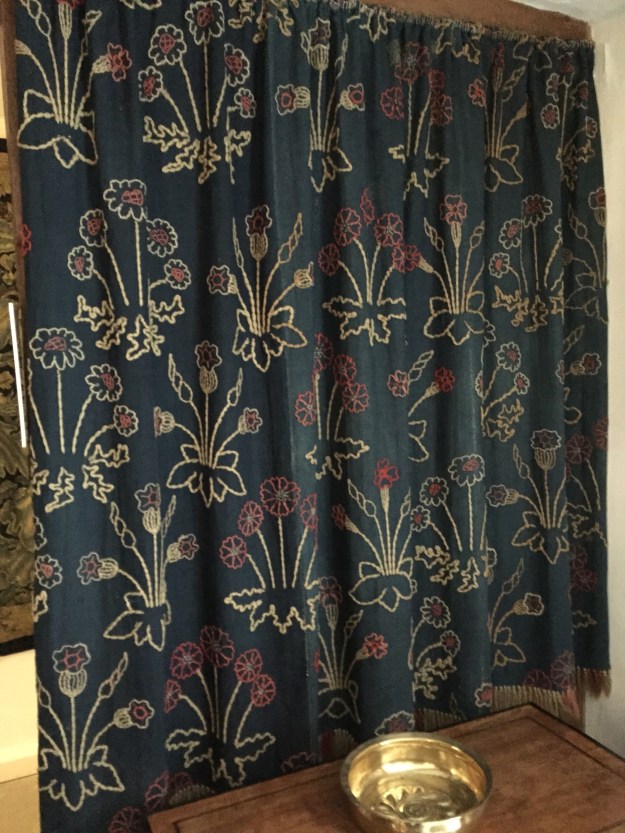
The house today is a picture of long-ago domestic bliss. Above is a wall hanging which Jane and William embroidered together, early in their marriage. In reaction to the beginning of the Industrial Age and the rise of capitalism, Morris and his friends looked back at an idealized Medieval Age, when life was simpler and beautiful things were hand-crafted. Morris adapted the design from one he found in a 14th-century French manuscript.

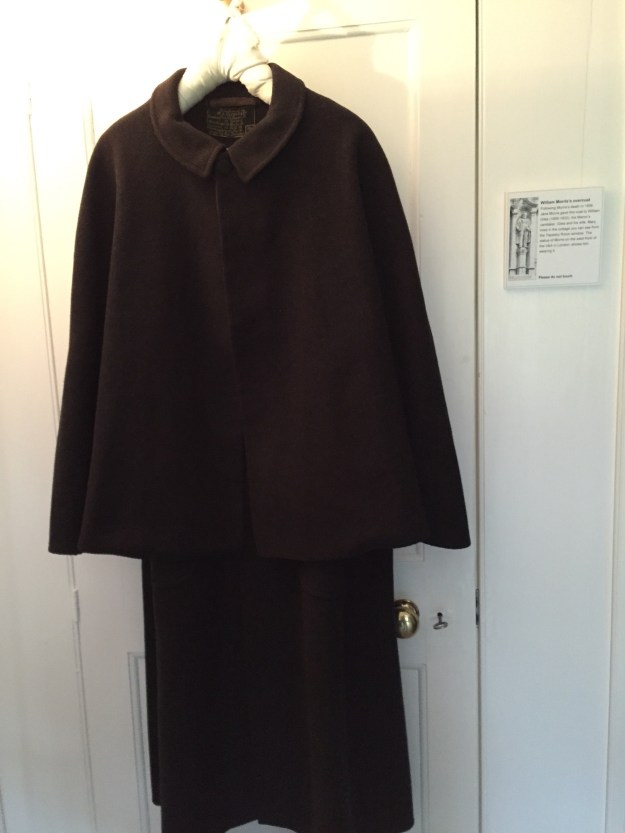
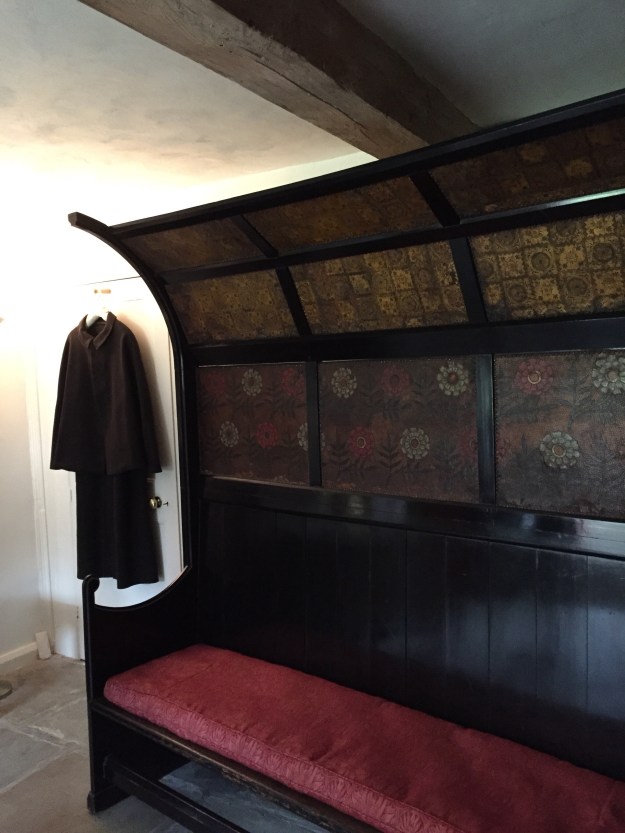
William’s overcoat hangs ready for a ramble on country lanes, soaking up the nature that inspired him.

It hangs next to a handpainted medieval-style settle, with a tall curved hood as a shelter from drafts. The settle was designed by Philip Webb, the architect and designer whose work included the country house Standen.

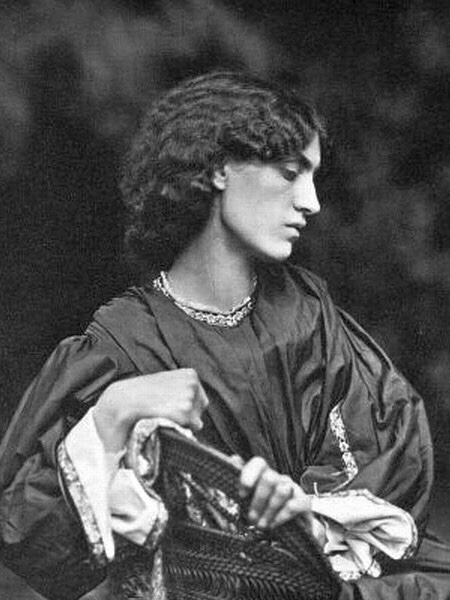
William Morris had met his future wife, 18-year-old Jane Burden, in Oxford. Her photo is by John Robert Parsons, 1865, Public Domain. Rossetti posed her for this photograph. Morris and his friends were mesmerized by Jane’s ethereal beauty and she immediately became their model and muse. Jane had grown up poor and uneducated. William Morris arranged a whirlwind education for her, which she thrived on. Before long, she could hold her own with the most sophisticated of Morris’s friends, and she was perfectly at home in society. They married in 1859.

Does this story sound familiar? Many people think Jane was the inspiration for George Bernard Shaw’s play “Pygmalion.”

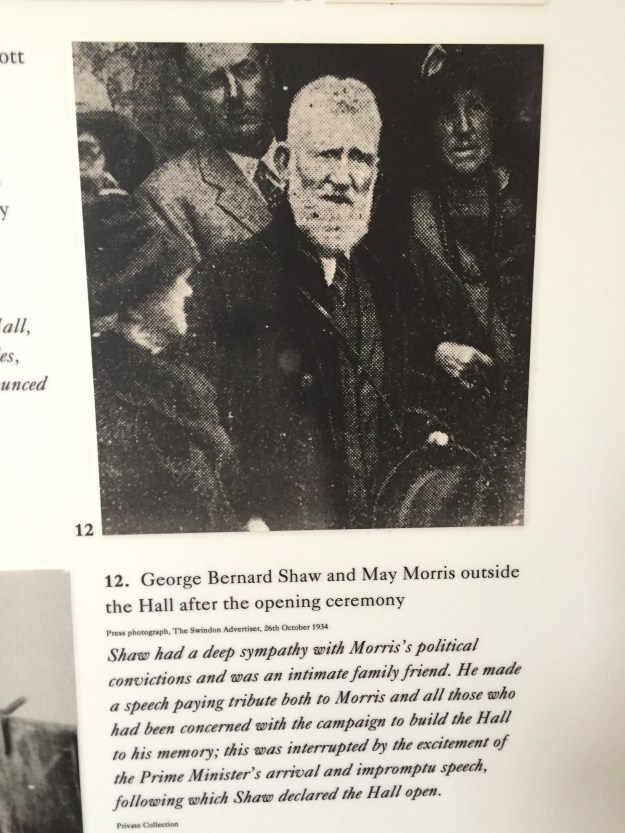
The playwright was a friend and frequent visitor to the Morris family.

The illustration above shows Mrs. Patrick Campbell as Eliza Doolittle, 1913, Public Domain. The play became the source for the Broadway musical and movie “My Fair Lady.” Six degrees of Victorian separation!

Later, Jane admitted that she always liked Morris, but never actually loved him. This spelled trouble. No sooner had Morris settled his family in the house than he set off on an extended trip to Iceland to study the hero sagas.

He wrote and illustrated several books about Icelandic folklore over a period of two years, during which Jane was involved with Rossetti in the home they all shared.

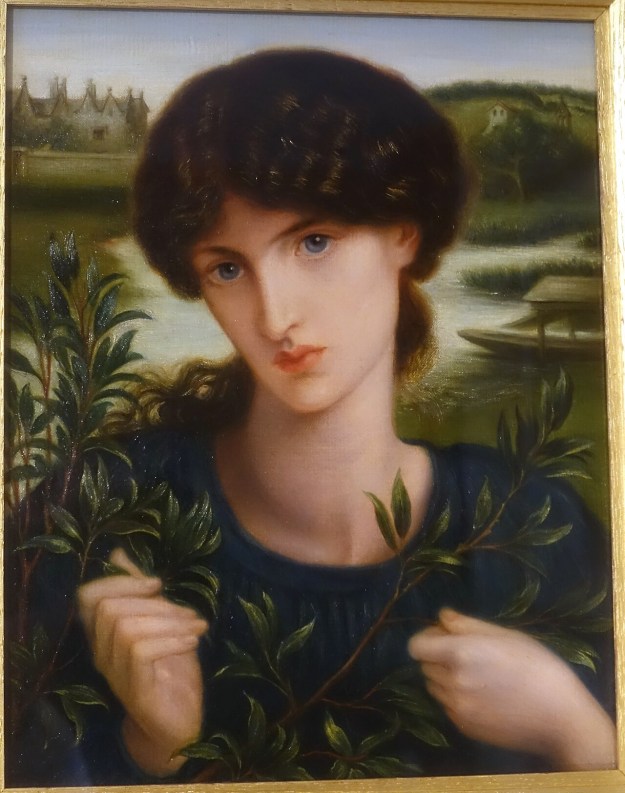
According to a Kelmscott guidebook, Morris was being a gentleman by going off to Iceland: making himself scarce so that the relationship between Jane and his friend could run its course (which it did). In “Water Willow,” 1871, Rossetti painted Jane with the nearby Thames tributary, the boathouse, Kelmscott Manor and the village church in the background. The painting still hangs in the house; it was Jane’s favorite.

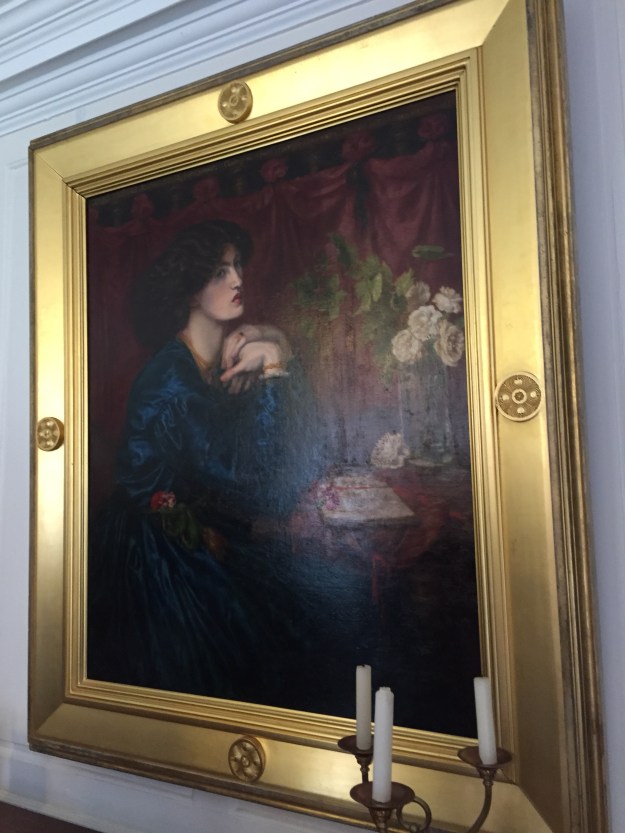
Rossetti was a bit of a ladies’ man, and Jane was irresistible. He painted her many times, before, during, and even after their liaison. The portrait above is “The Blue Silk Dress,” 1868. It still hangs in the house.

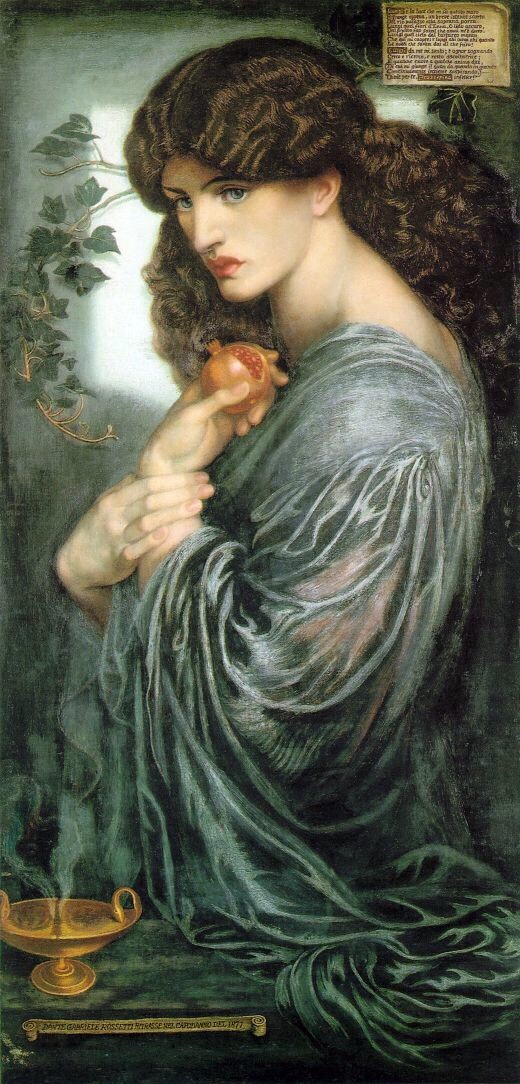
“Proserpine,” 1874, hangs in the Tate Britain gallery in London, Public Domain.

In spite of the turmoil in their love lives, the Morris family had many happy years in the house, and eventually Morris’s daughter May was able to buy it.

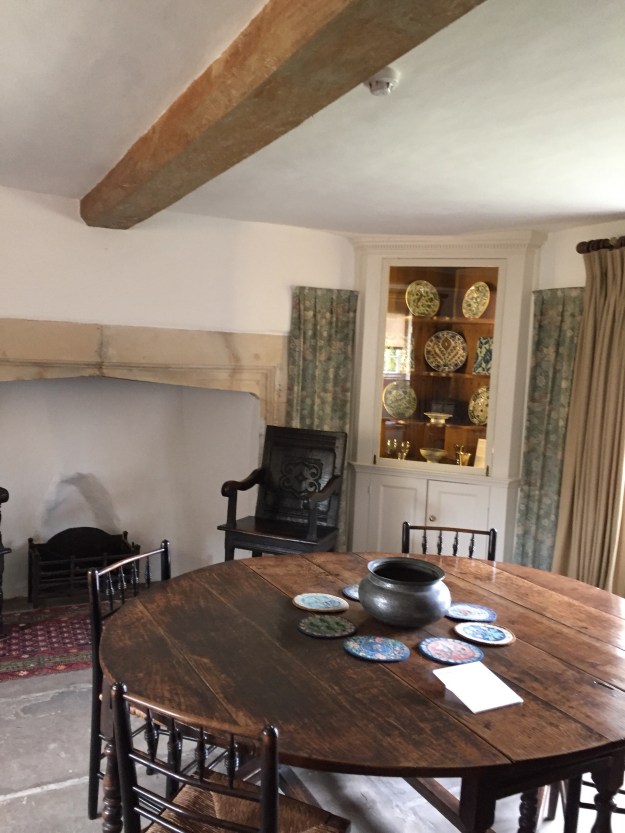
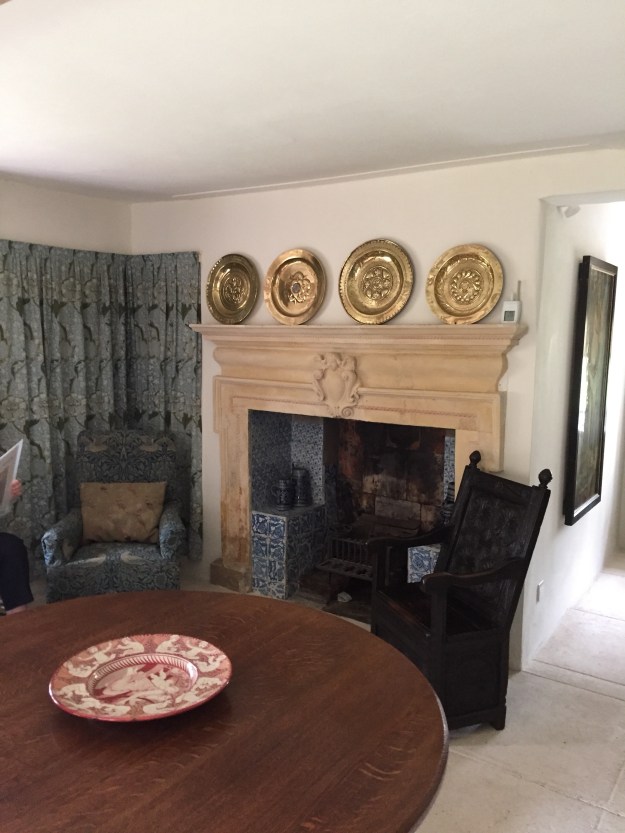
The house had cozy rooms for entertaining friends.

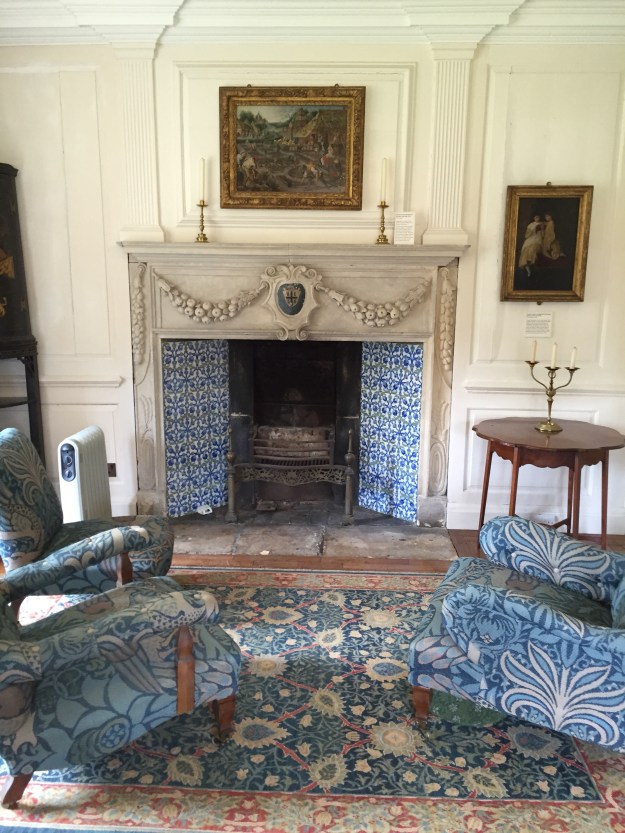
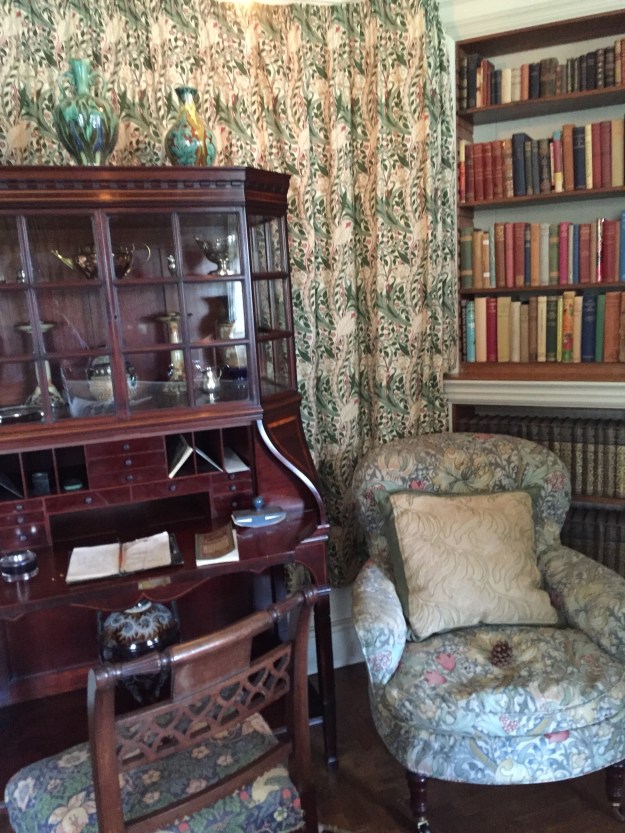
Naturally, the house was decorated with the designs of Morris and his friends.

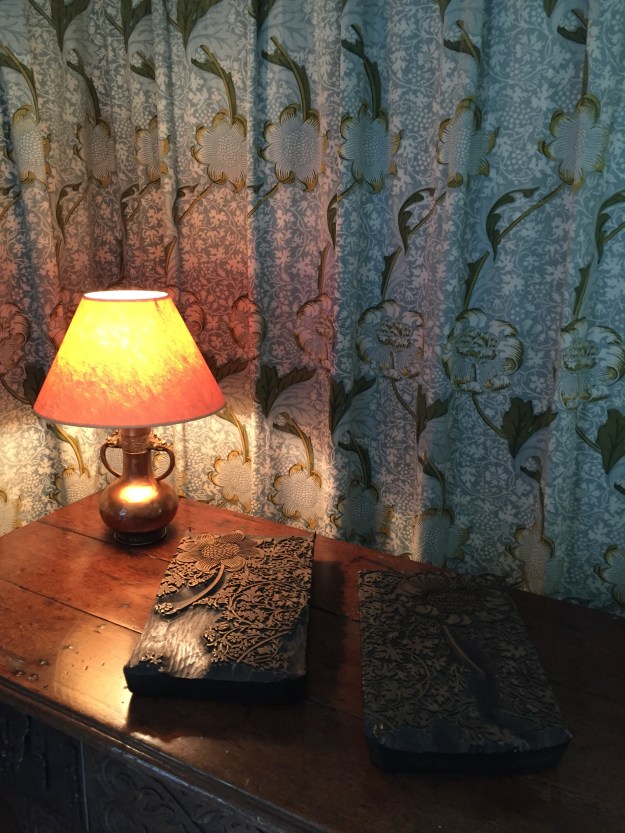
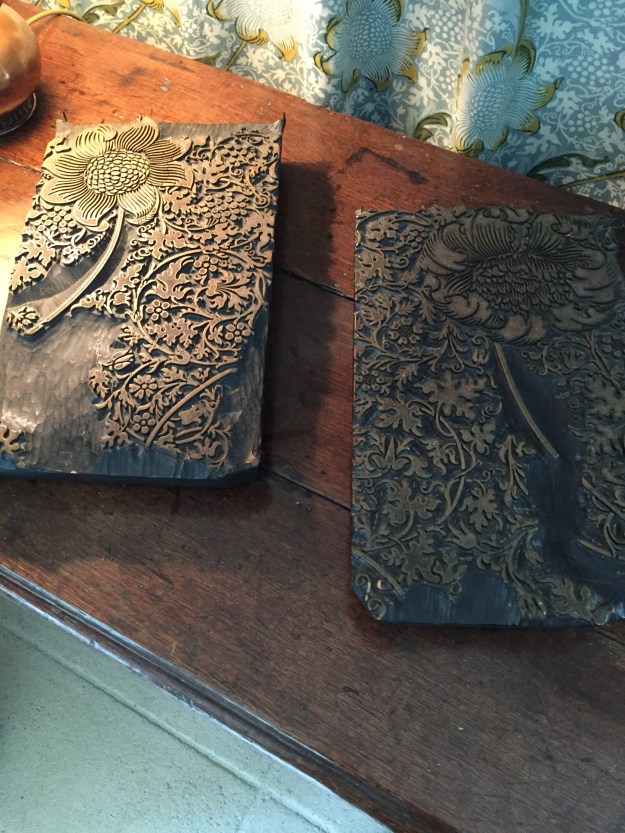
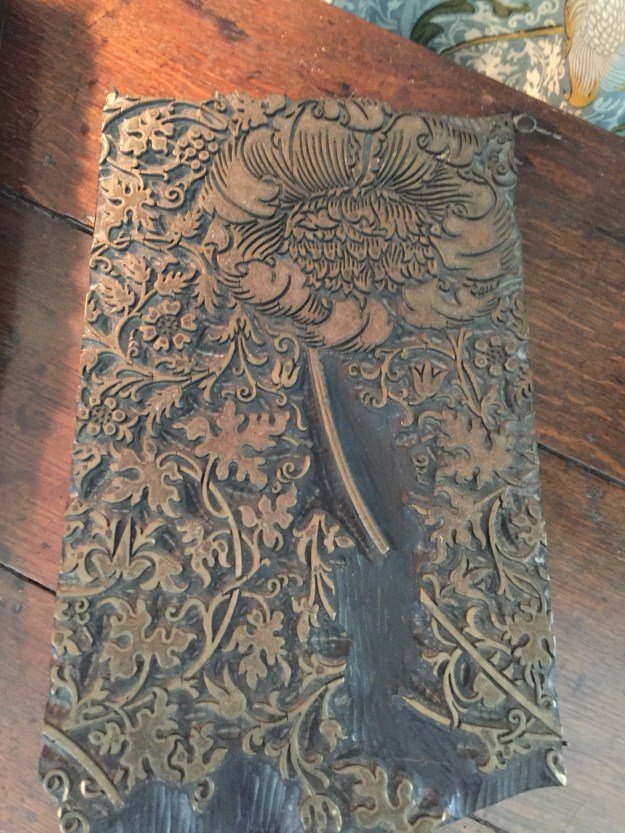
The early designs were actually printed by hand on fabrics. Above are some of the original blocks used for printing. Some designs took a dozen or more different blocks.

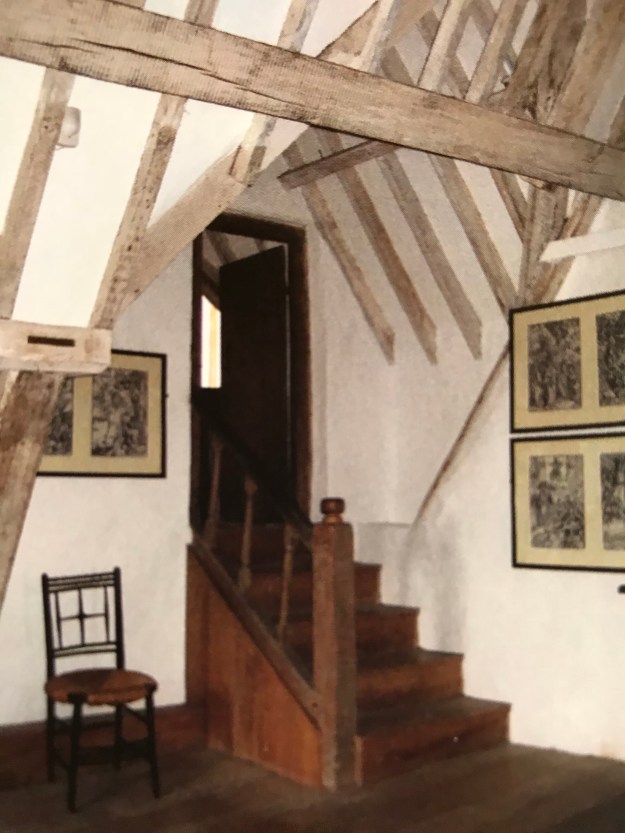
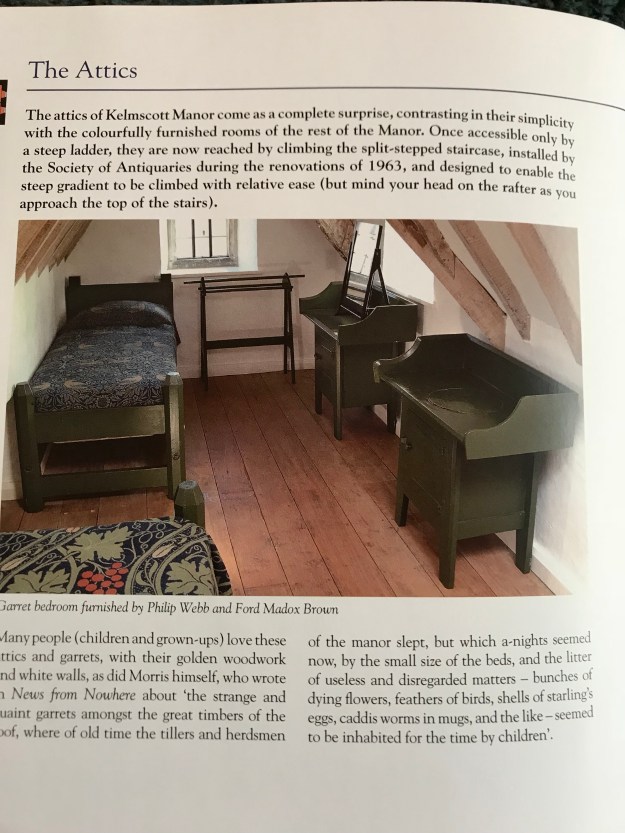
The attics of the house, once the sleeping quarters for farm servants, were left plain, whitewashed, the sturdy beams exposed, with minimal furniture.

Morris loved the “medieval” look of the attics. He wrote, “I have spent, I know, a vast amount of time designing furniture and wallpaper, carpets and curtains…but I would prefer, for my part, to live with the plainest whitewashed walls and wooden chairs and tables.” (I’m not so sure I believe that, but it’s a nice thought, in keeping with Morris’s concern for working people and his longing for a simple life).

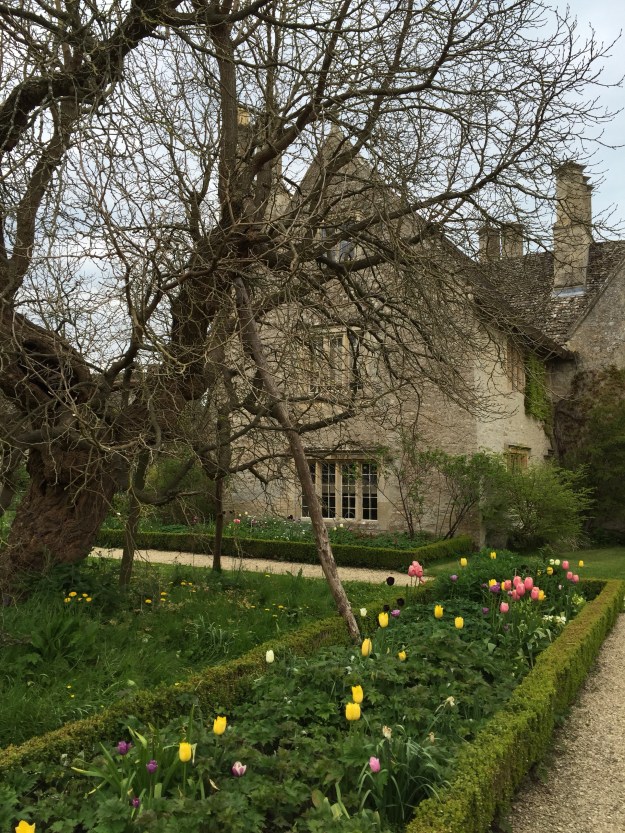
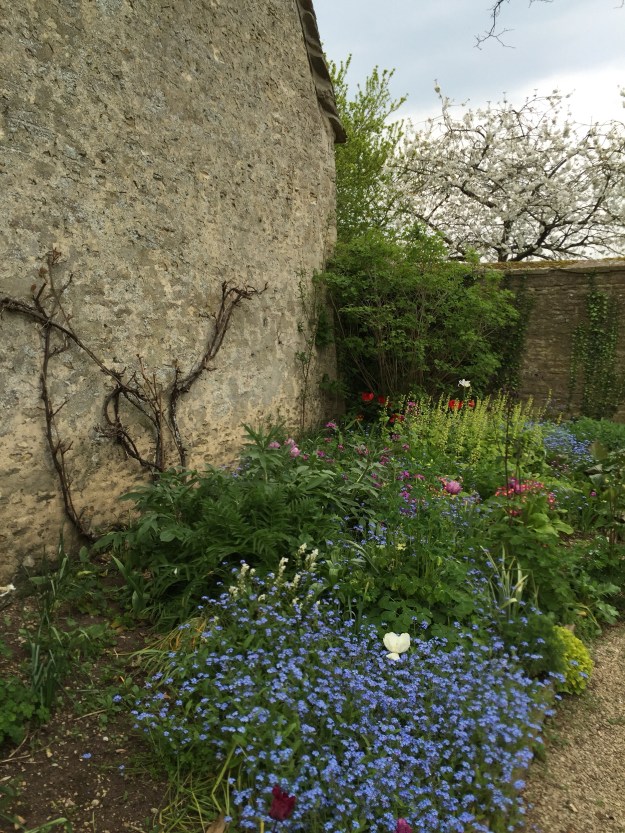
The garden was as important to Morris as the house.

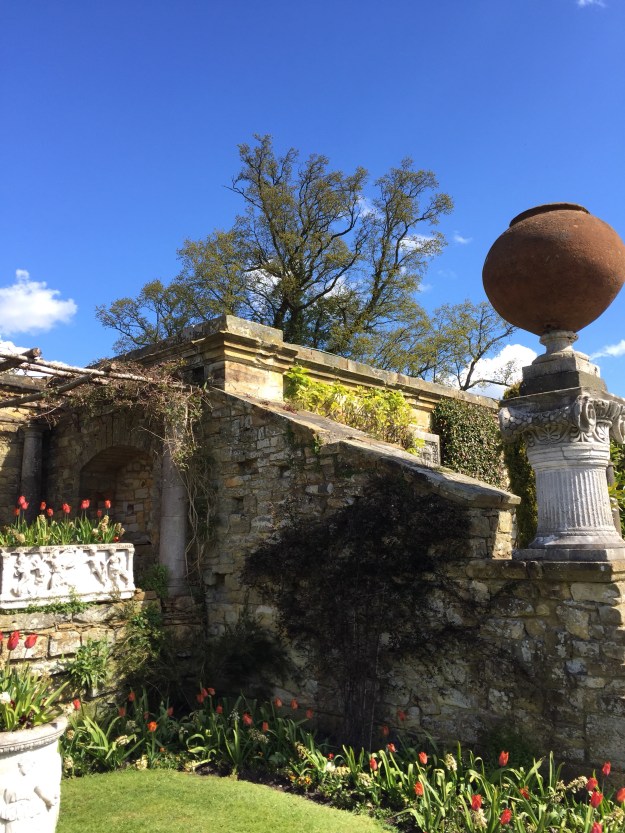
It was never a manicured garden, but it was beautiful in all seasons. I saw it in spring, with tulips and bluebells.

William Morris lived in other houses during his lifetime, but Kelmscott was always his dream home.

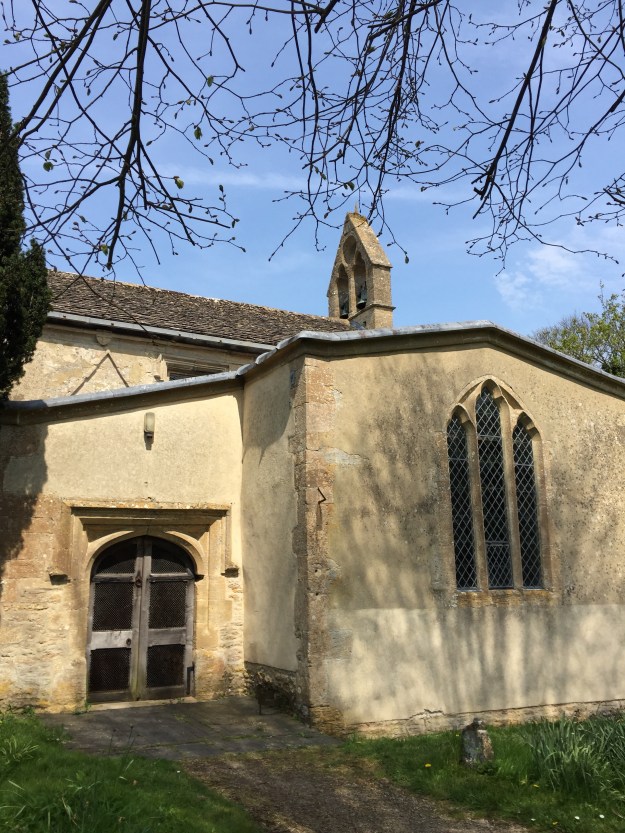
The nearby village church, St. George’s, was begun in Norman times, in the eleventh century, with additions up to around 1430 but very minimal changes after that. When he lived at Kelmscott, William Morris founded the Society for the Preservation of Ancient Buildings to protect just such buildings from over-enthusiastic Victorian “restorations.” After his death in 1896, William Morris was buried in the peaceful churchyard near his beloved Kelmscott.

Happy Birthday, dear William!

Arts and Crafts Perfection at Standen

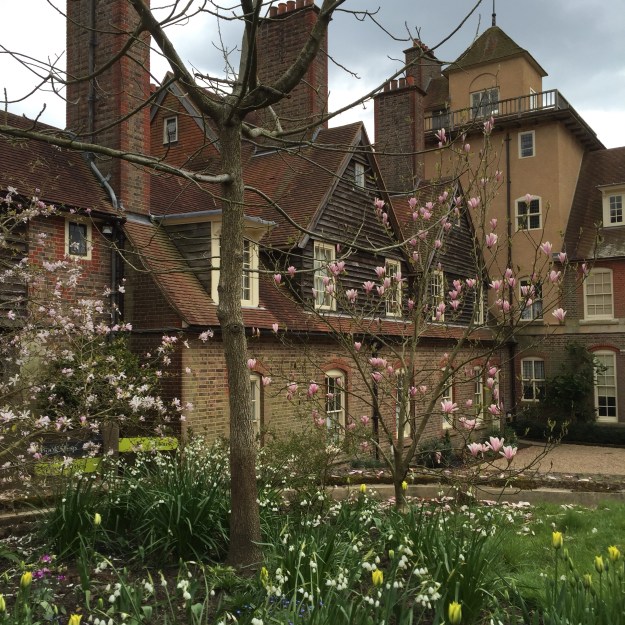
If I could move into any house I wanted in the English countryside, I’d take Standen, near East Grinstead in Sussex.

The house has a complicated floor plan, built in stages. I’m not exactly sure what was older and what was newer. The final stage was to link the new building to the original farmhouse on the property, Great Hollybush (I’d have kept that name!)

It is not a particularly grand house–in fact, that is the point. It was built by the architect Philip Webb, a close friend of William Morris, in 1892-94.

The client, James Beale, was a very wealthy solicitor who had made his fortune in London. At age 50, Mr. Beale wanted a beautiful but functional second home in the country for his wife and their seven children. The children were already beginning to marry and move away, but Standen remained the gathering place for children and grandchildren for almost eighty years.

Philip Webb and William Morris had met in their twenties at Oxford. They immediately hit it off, and collaborated on projects for the rest of their working years.

I’d love to hire “The Firm” today. They were the very opposite of the sleek throw-away esthetic of IKEA. (Not that I don’t own plenty of practical IKEA stuff!)

James Beale was a hardworking, pragmatic, sober, simple-living family man. He wanted a comfortable family home, not a showplace. But he was willing to pay for quality.

His idea of luxury was a house big enough to contain the hijinks of his large family and lots of visitors.

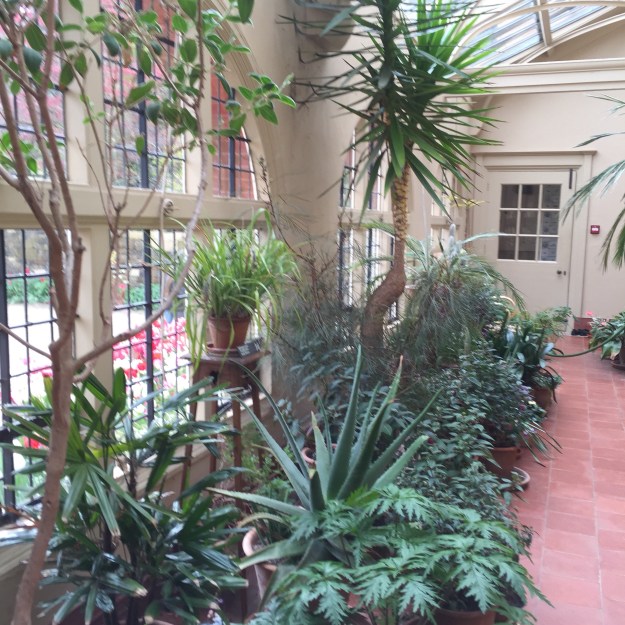
The house is large and filled with daylight. The conservatory was a favorite place to lounge and read.

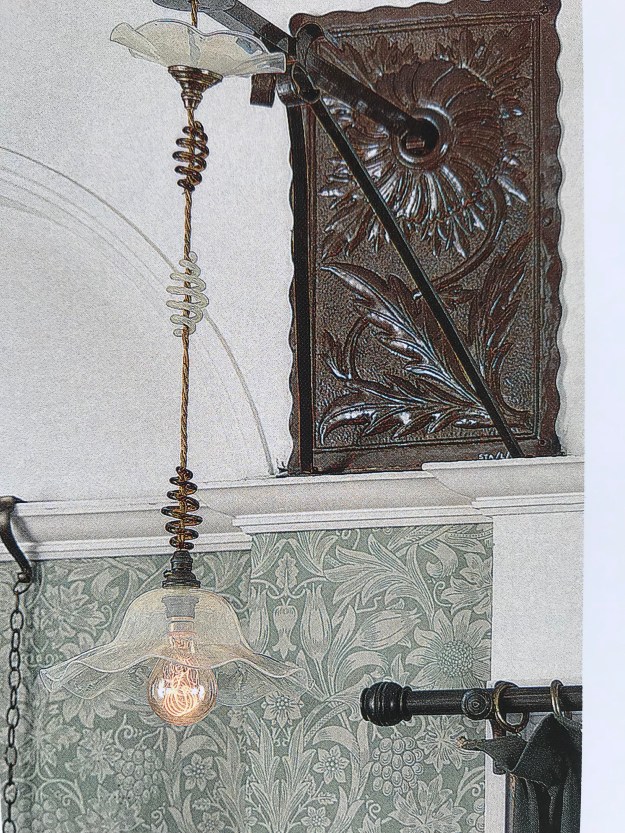
Billiards, anyone? The house had electric lighting from the beginning.

All the fixtures were specially designed, most of them by W. A. S. Benson, who trained under William Morris.

The effect is subtle but beautiful, even in daylight.

The Beales did not need any grand rooms for entertaining; they just wanted to relax and enjoy each other’s company.

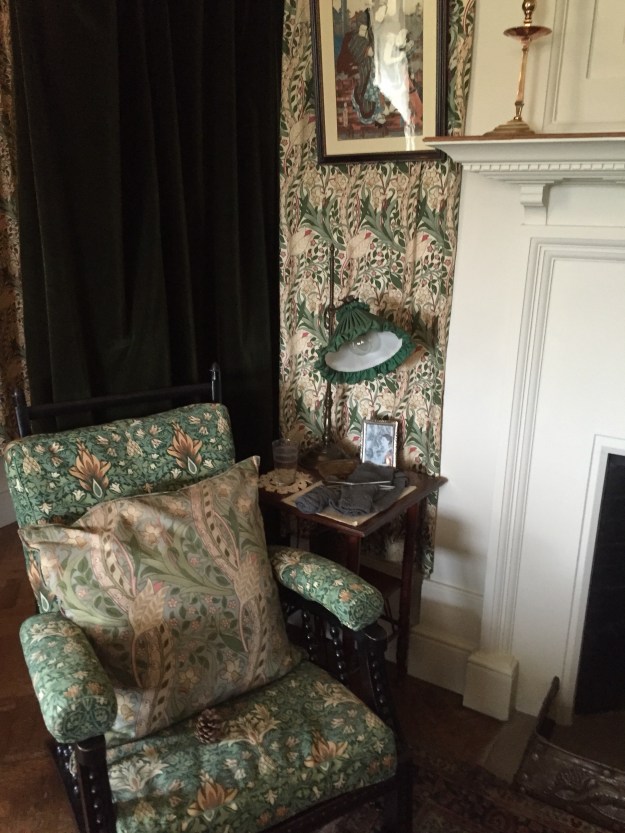
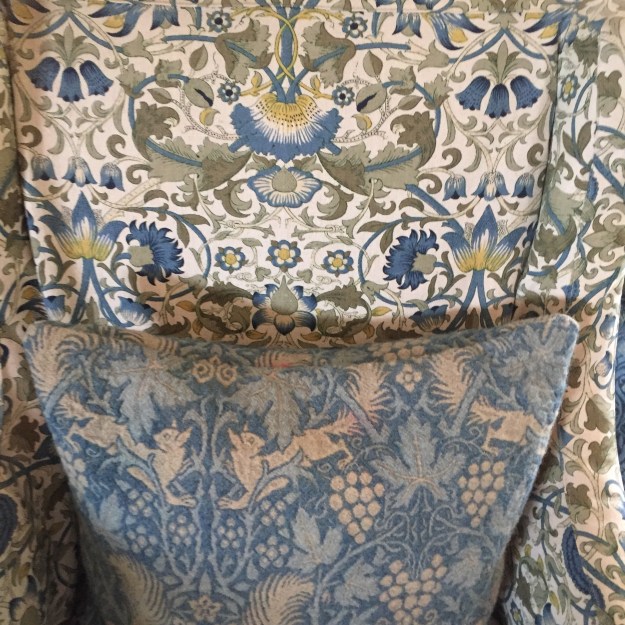
Most of the textiles and wallpapers were William Morris designs.

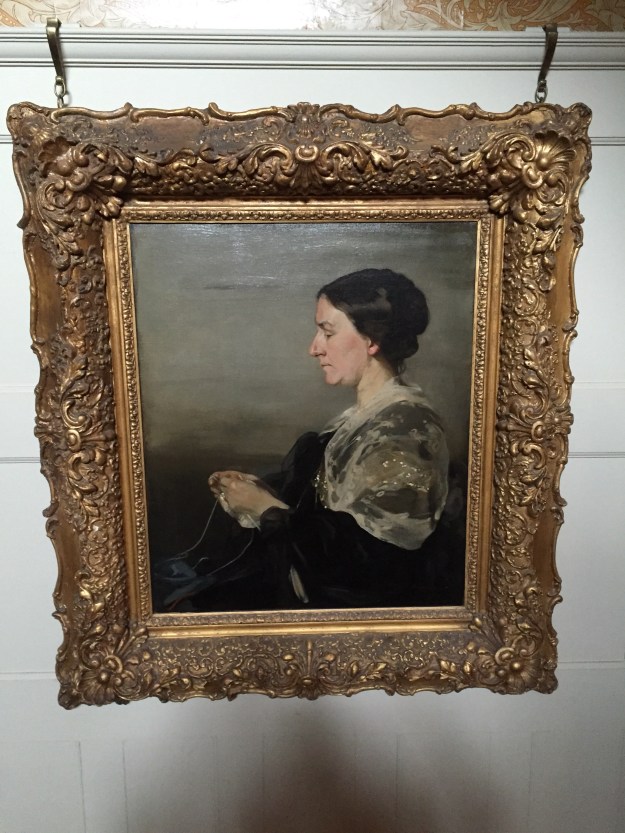
Margaret Beale was creative and handy with any kind of needle.

She kept her children busy making things for the house.

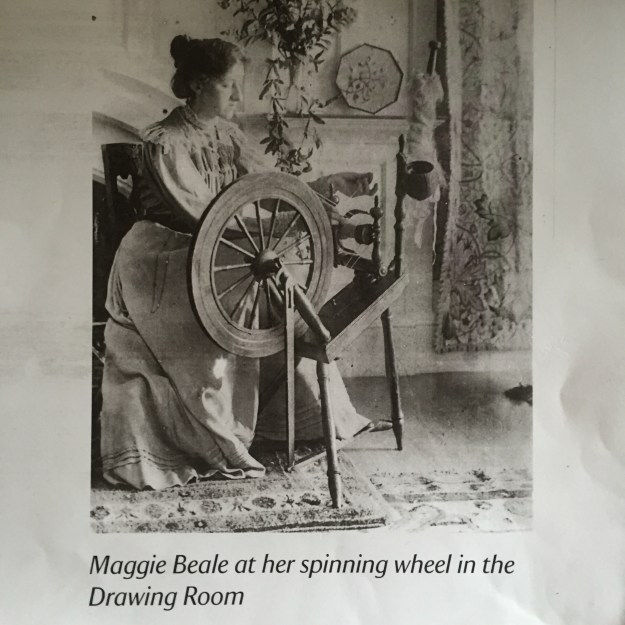
One of the daughters, Maggie, never married. She stayed at Standen and became a skilled artist and designer in her own right.

Maggie’s studio is one of the most pleasant rooms in the house. It seems like she could breeze in at any moment with an idea for a painting or a sofa cushion.

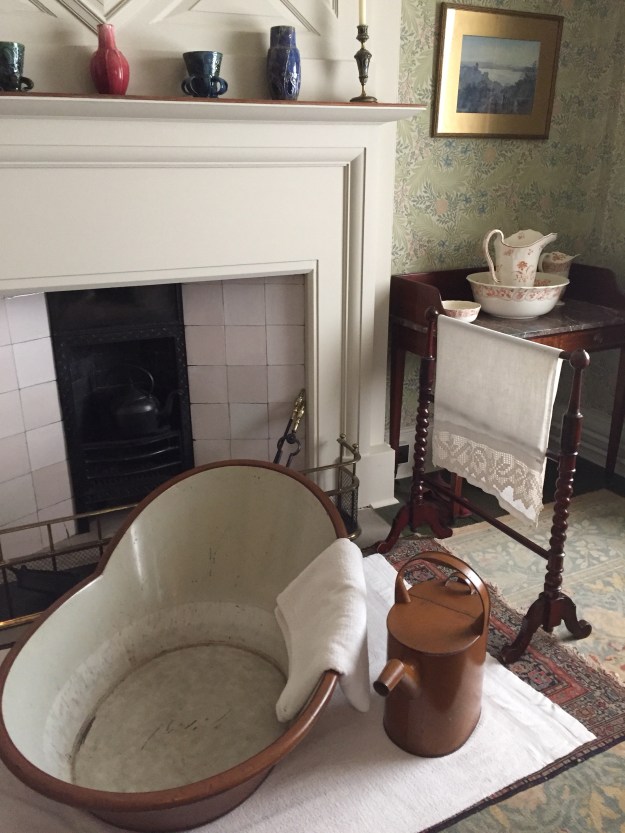
My other favorite room is the Larkspur Bedroom, so named for the William Morris wallpaper. I like the built-in wardrobes and I LOVE the tub in front of the fire (the maids may not have loved lugging pails of water up and down stairs for it).

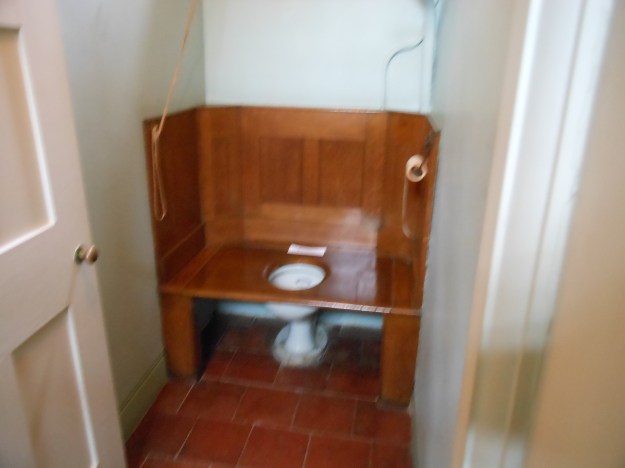
Mr. Beale and his architect were old-fashioned and a bit frugal. The floor with all the bedrooms had only two “necessary” rooms and one bathroom. (I think bedrooms still had chamber pots and maids still had to deal with them).

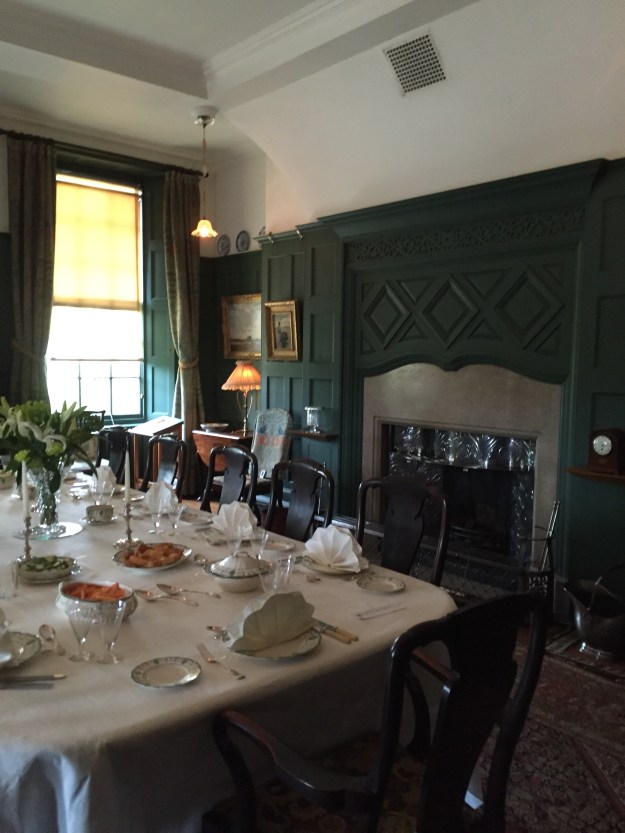
The family enjoyed their meals and they were big eaters. The children used to have contests to see who could pack on the most weight from a single meal. The family record was five pounds, put on by one of the boys. (The family dressed for dinner. I guess someone’s satin cummerbund must have felt a little tight after that epic meal).

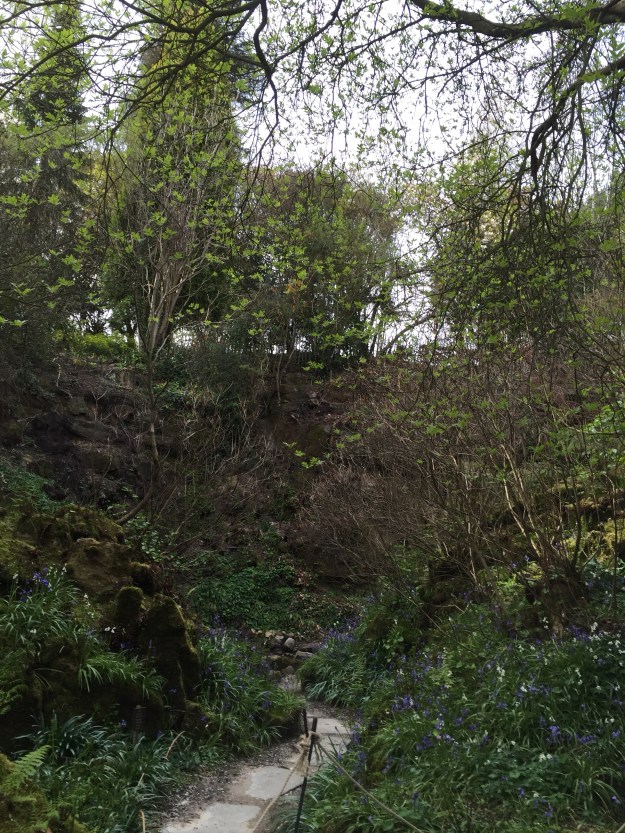
The children had plenty of room outside to burn energy. There were flower beds and a kitchen garden and woodlands to explore.

Then as now, there were chickens right outside.

And the door was always open to the home the Beales created, where everything was useful or beautiful–or both.

Join me next time for more explorations in the art and history of Europe and the British Isles!

First Day of Spring, and England Calls

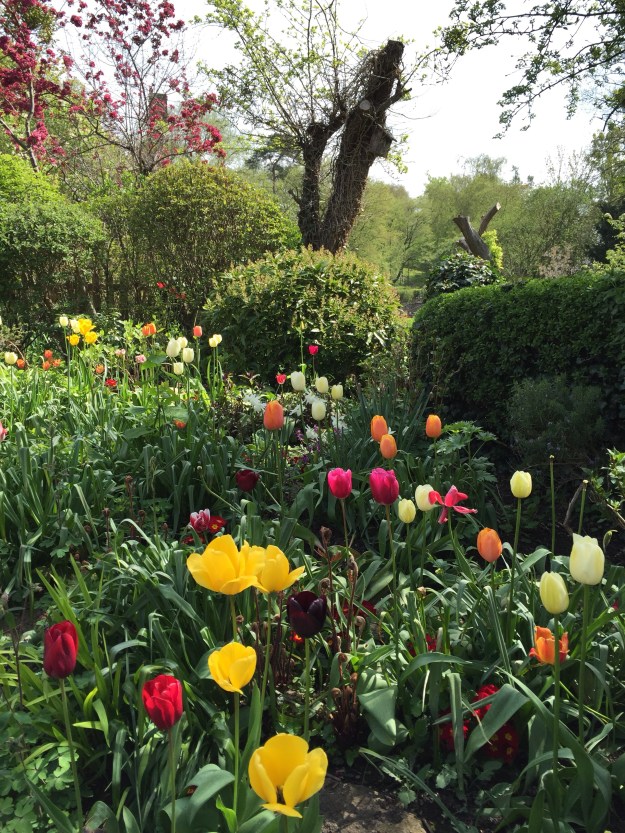
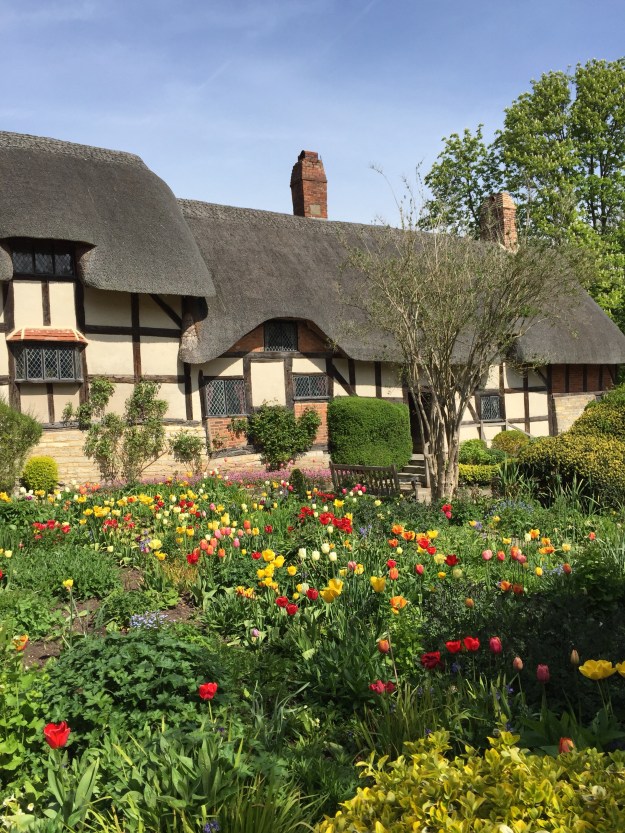
I think spring is coming late to England this year. I’ll be there soon, and I’m thinking there might still be snow in the ground. Or flooded spring rivers. Still, I’m hoping for tulips. They were spectacular a couple of years ago.

These were in the gardens of Ann Hathaway’s thatched-roof cottage near Stratford-on-Avon.

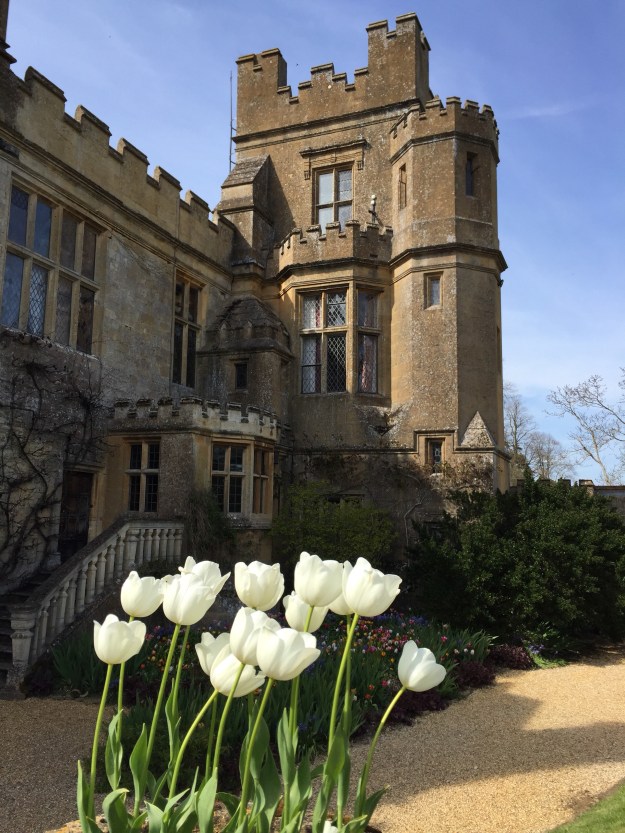
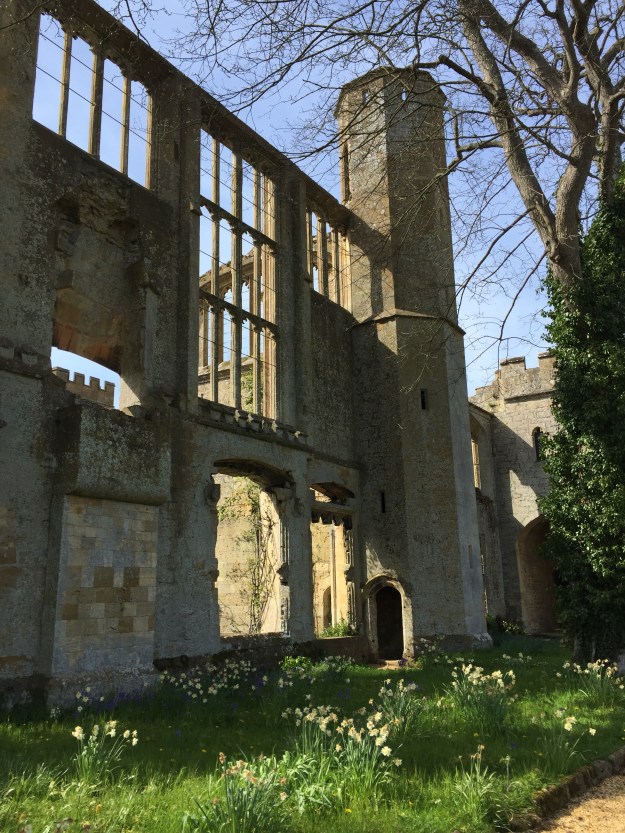
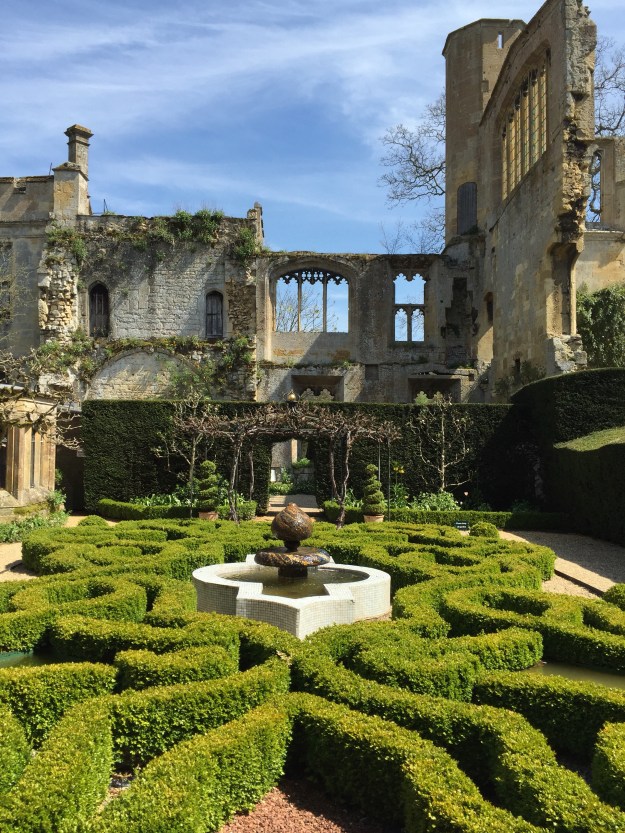
The tulips and daffodils were in bloom at Sudeley Castle in Winchcombe, where Richard III’s banqueting hall lies in picturesque ruins, sheltering a Tudor Knot Garden (planted much later, using Tudor designs).

Fruit trees blossomed overhead…

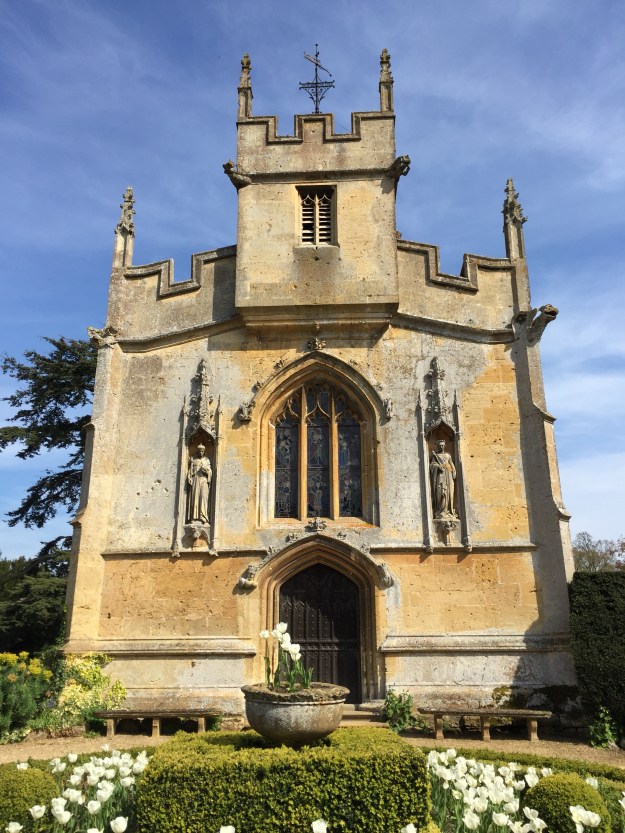
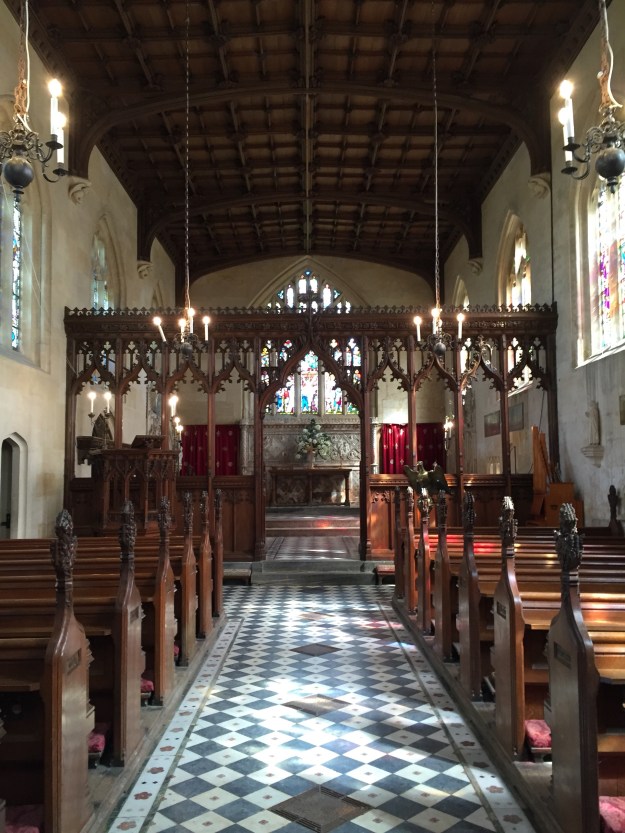
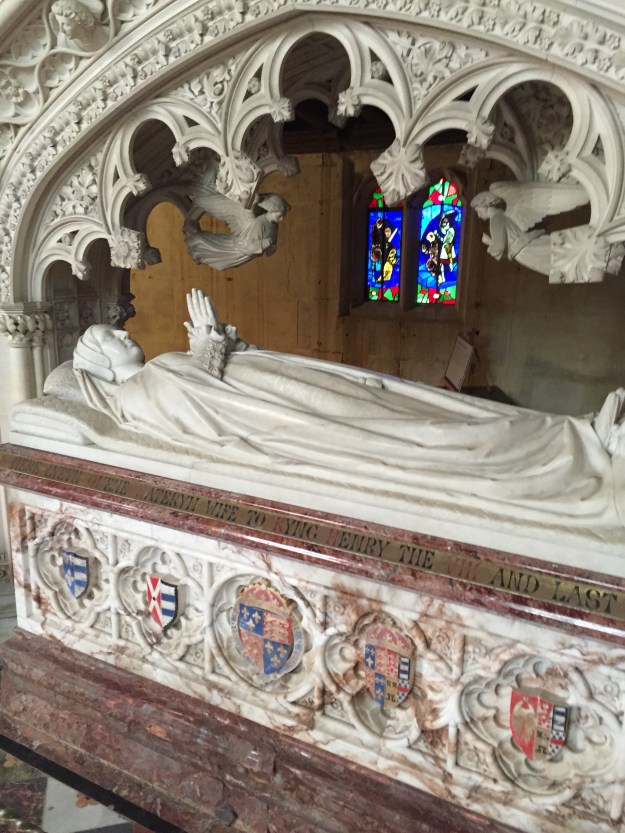
…and in St. Mary’s Church on the castle grounds, angels hovered over the Victorian tomb of Queen Catherine Parr, the last wife of King Henry VIII. (Her coffin was lost for a few centuries following the English Civil War, when the castle was “slighted” by Cromwell’s troops).

I was on the lookout for bluebells in all the woodsy places.

We should have been on the lookout for hidden springtime potholes too. This one caused not one but two flat tires on our rental car. Country roads are narrow, we’re driving on the “wrong side,” and sometimes we have to swerve.

Where I live in the mountains of Colorado, it’s still winter. The moose are finding tender branches to chomp, though.

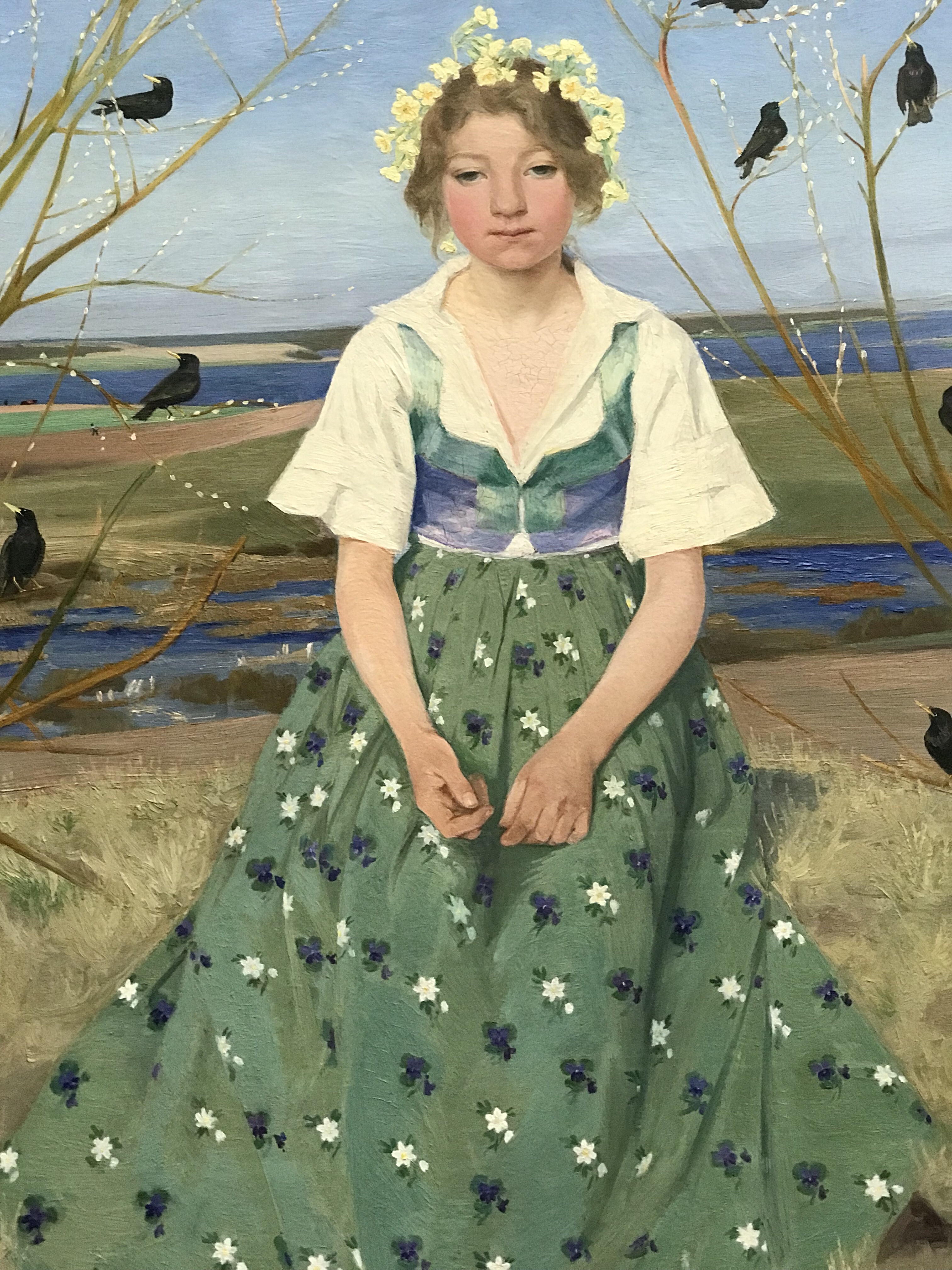
In the dead of winter last year in Copenhagen, I admired a painting by Fritz Syberg, from 1892. It’s called simply “Spring.”

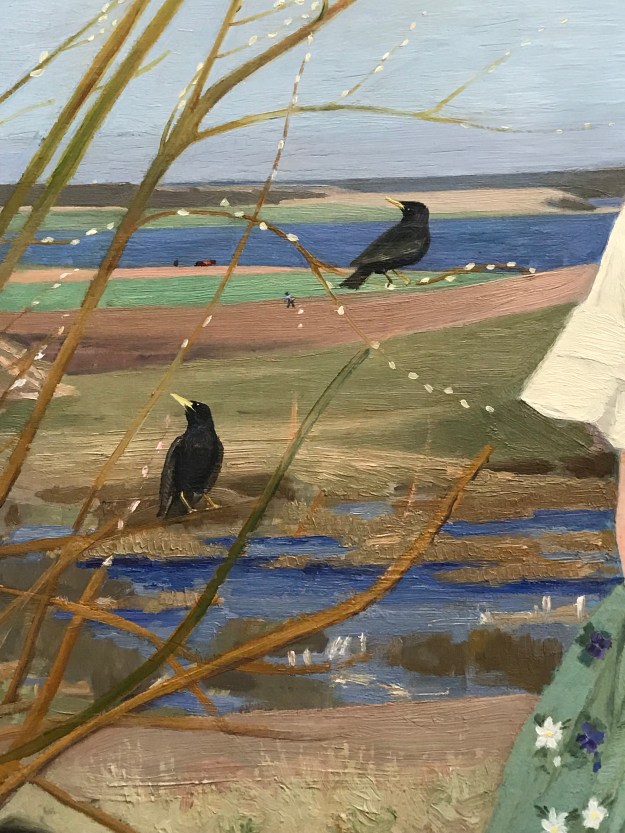
Birds sing, rivers flow, and trees bud.

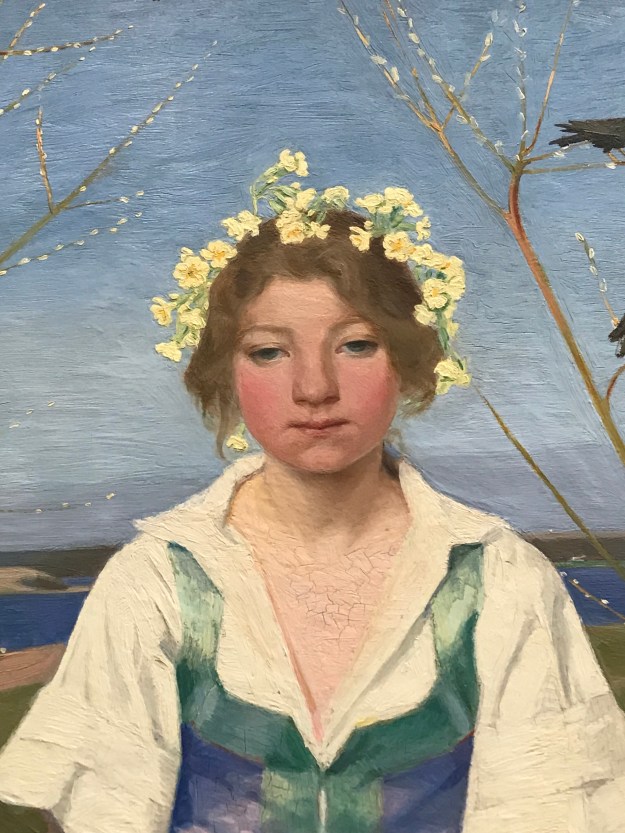
The young girl’s face is oddly melancholy. Or maybe she is just thoughtful.

Art should make us think. Travel makes us think too, about the past, about being present in the moment (even if the moment involves flat tires), and about the future. I’m anxious to be off again!

British Hall Chairs: Putting Visitors in Their Place

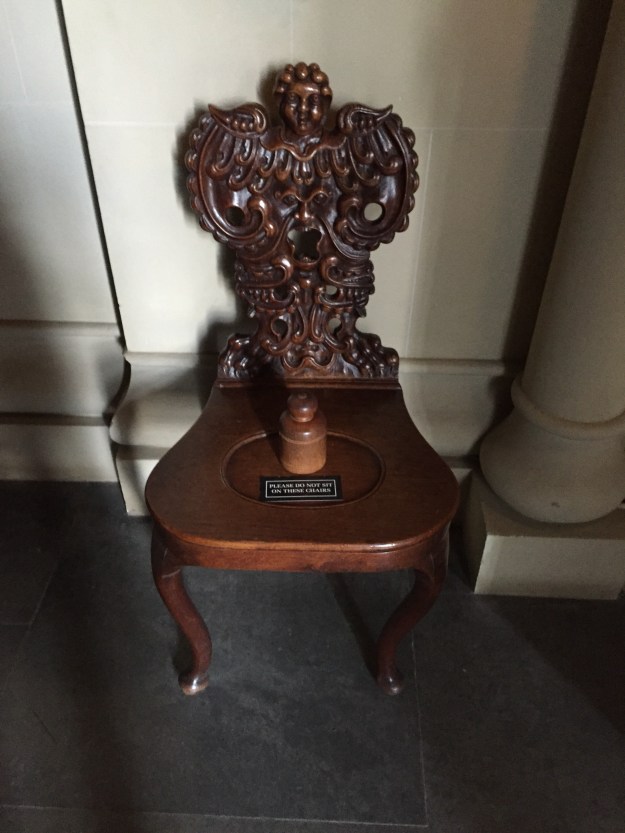
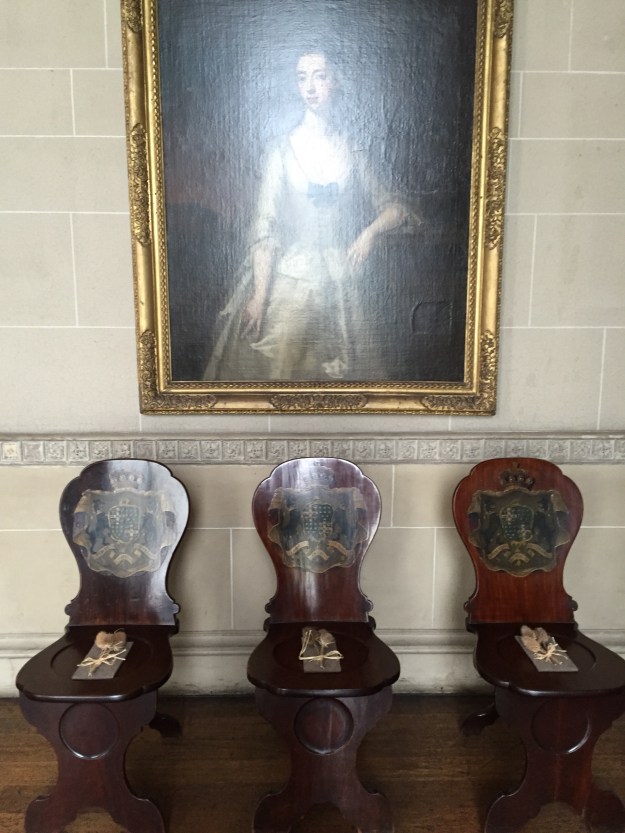
If you turned up at the entrance to a grand home in Britain without an invitation, you’d likely be told to go around to the servants’ entrance. If you were obviously respectable and had a convincing story, you might be shown into the drawing room to wait for the master or mistress. But if the maid or butler was not sure whether you were fish or fowl, you’d be told to cool your heels on a hall chair. The one above is at Attingham, a Georgian mansion near Shrewsbury.

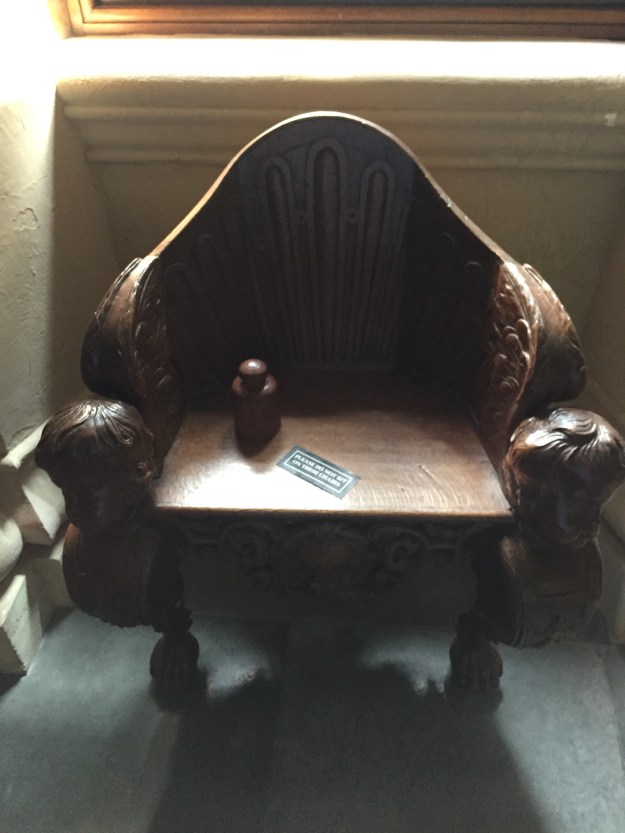
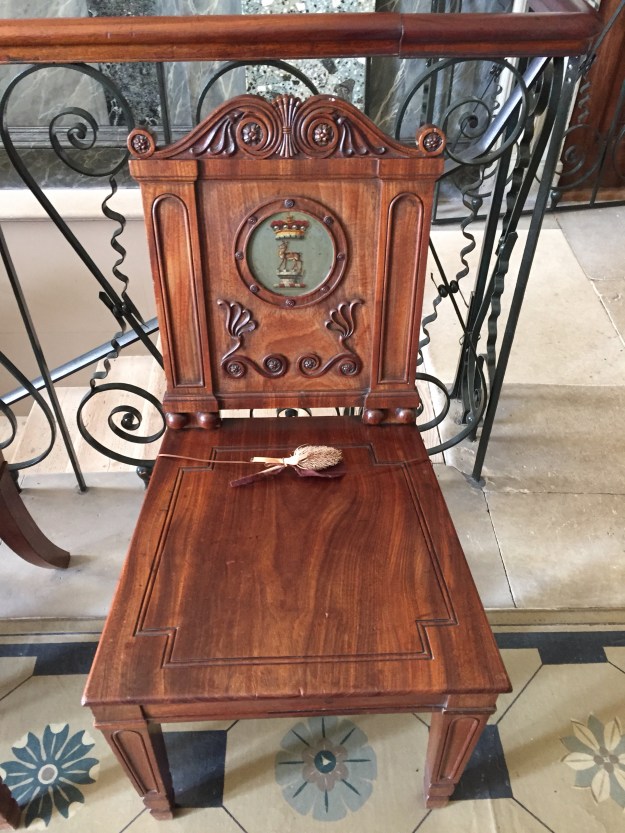
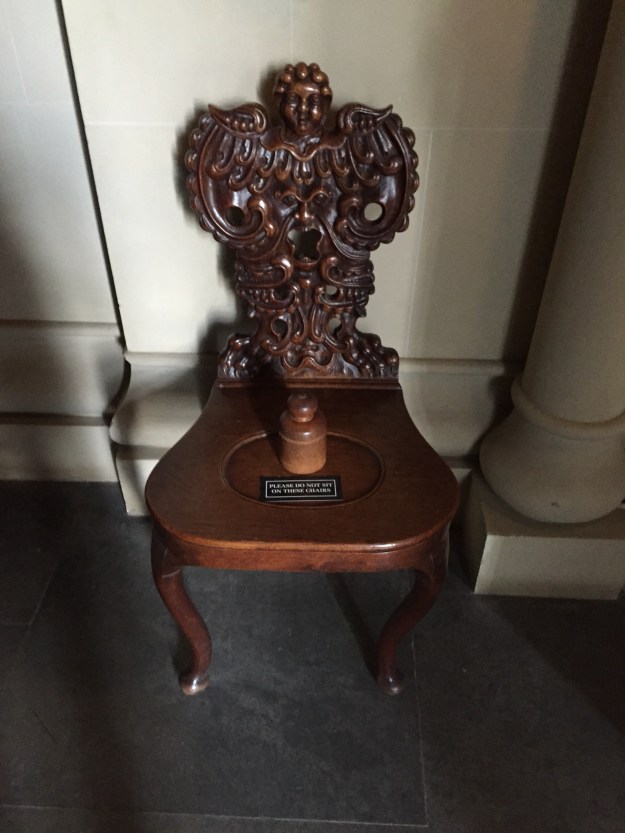
Hall chairs were often custom-made for grand homes, the style carefully considered to reflect the wealth and taste of the owner. The one above is from Penrhyn, an over-the-top 19th-century stone pile built to resemble a medieval Norman castle. It’s in North Wales, and in its heyday it was a favorite haunt of Bertie, Prince of Wales.

At Plas Newydd, also in North Wales, hall chairs boast the family’s coat of arms.

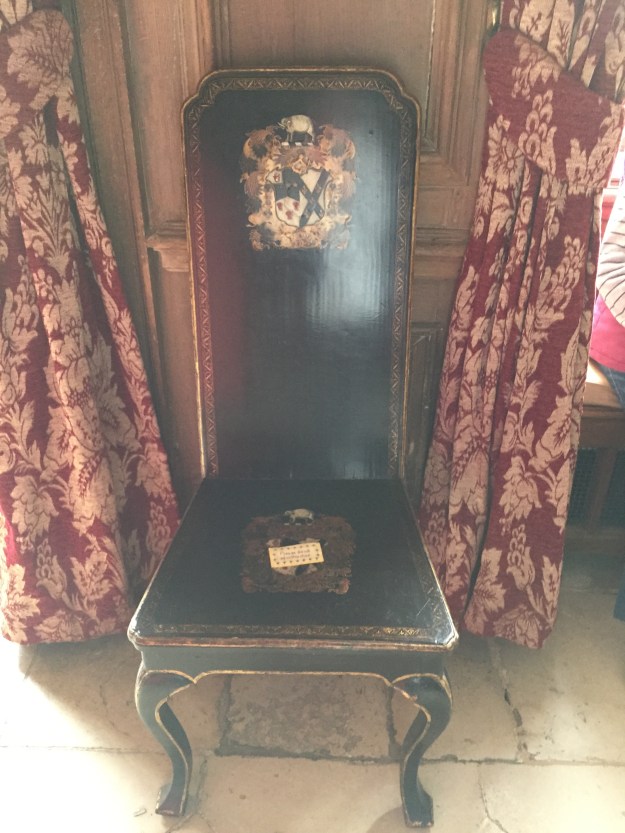
A hall chair can be steeped in history. This chair, at Nunnington Hall in Yorkshire, has the emblems of one of the many owners over the years. I’m not sure whose emblems they are. But the oldest part of the existing mansion was built by William Parr, the brother of Catherine Parr, the only one of Henry VIII’s six wives to outlive him. William lost his title and Nunnington in 1553 when he made the big mistake of plumping for Lady Jane Grey as Queen. After her nine days on the throne, he was convicted of treason and sentenced to death. But a pardon allowed him to keep his head. Eventually, Elizabeth I restored his title, but not his mansion or his hall chairs.

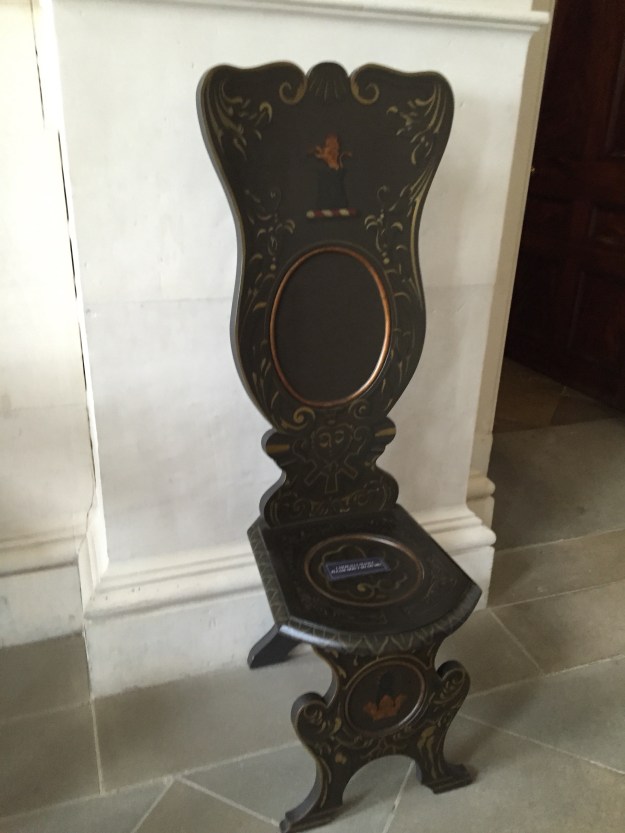
This chair, at Castle Howard in Yorkshire, looks like a spot to squirm in discomfort. But then comfort is not the point in hall chairs. They almost never have arms. This one barely has a seat.

Hall chairs are almost never padded or upholstered. A docent explained to me that a visitor relegated to a hall chair might have fleas. Hall chairs had to be easy to sanitize.

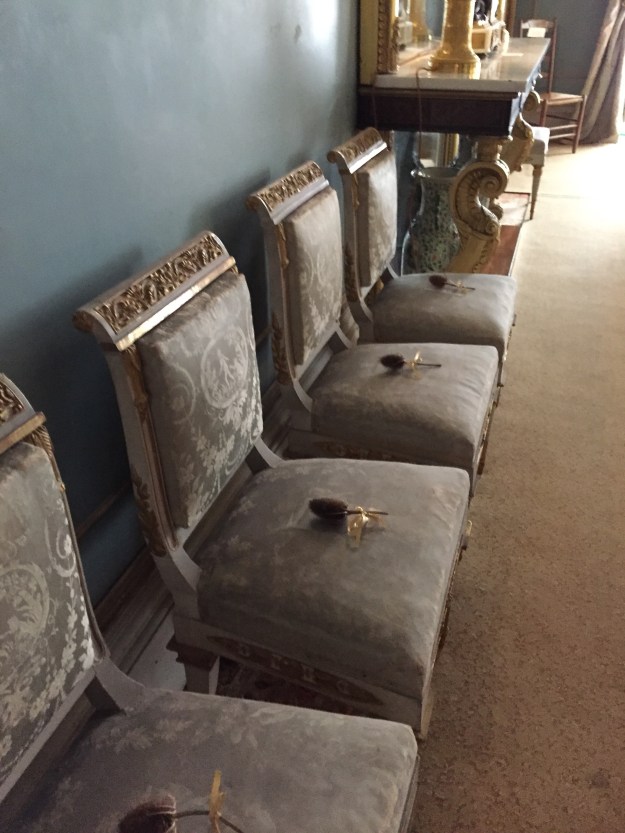
If you were lucky enough to be invited into a drawing room and dared to sit down, you might feel comfy on an upholstered chair, like one of these at Attingham. But if you were kept in the entry hall, you might have a long wait perched on a hard chair. I suspect that often a servant would be delegated to watch you as well, to be sure you didn’t make off with a silver candlestick.

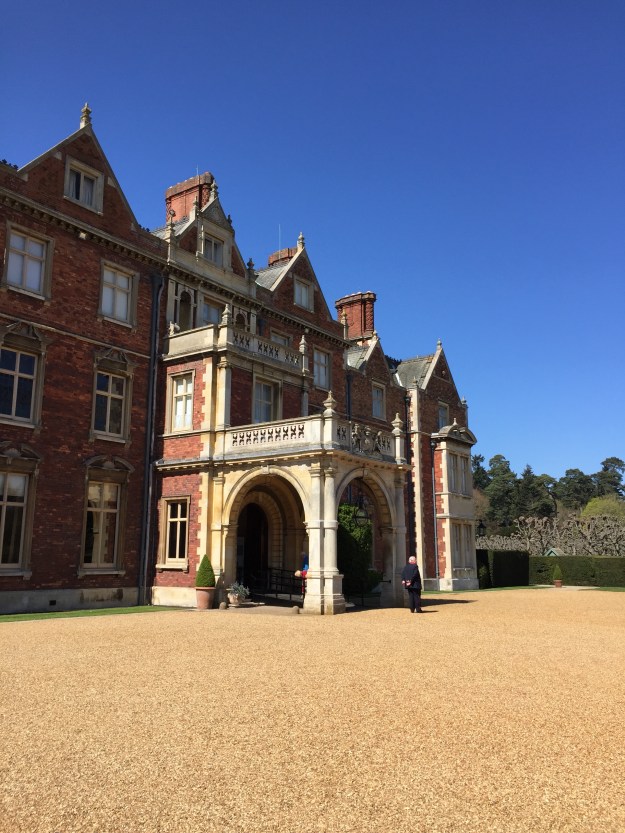
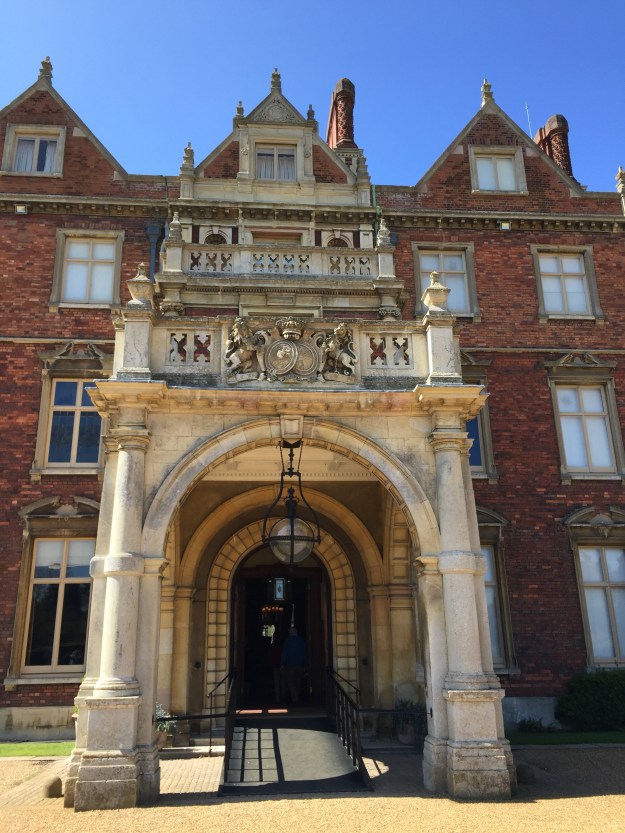
At Sandringham House, the private home of the Royal Family in Norfolk, paying visitors are welcome to see a few rooms when the Queen is not in residence.

Everybody enters through this door. But photographs inside are strictly forbidden.

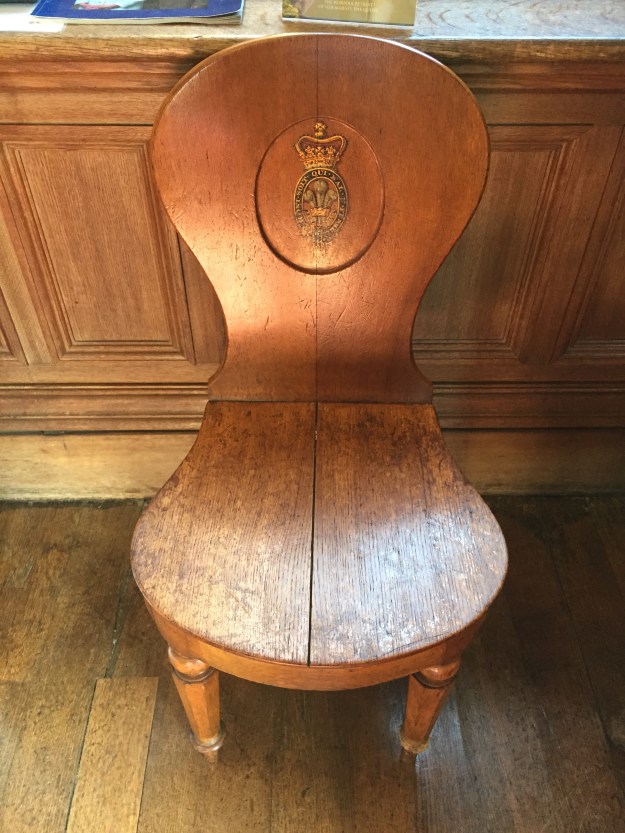
It seemed all right to take a picture of one of the Queen’s very elegant hall chairs just inside. But I didn’t quite dare to sit down.

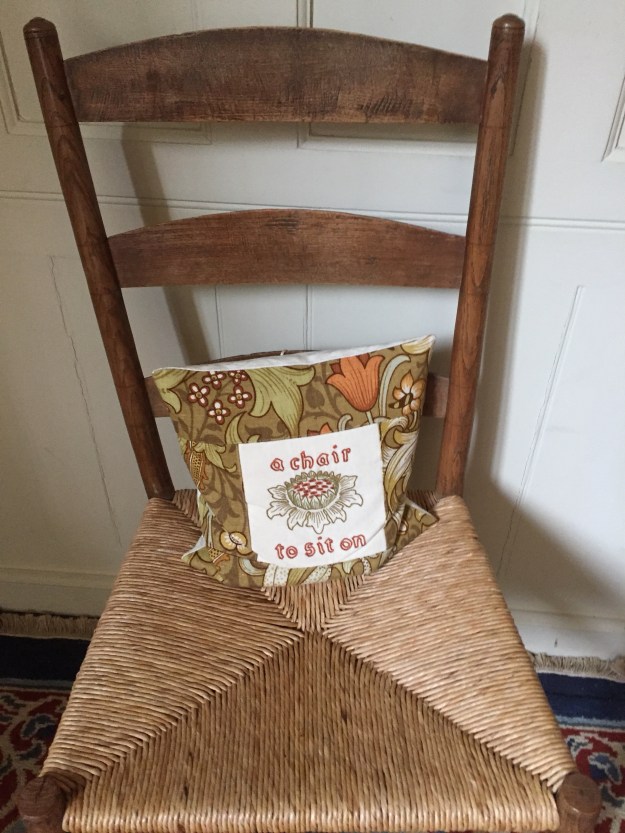
In refreshing contrast to aristocratic chair rules, stately and historic homes run by the National Trust often have special non-historic chairs set aside for weary visitors to take a load off. This one, at Standen near East Grinstead, even has an inviting pillow. Standen is entirely done up in William Morris style, which was all about beauty, comfort and practicality. Sit down? Thank you! I don’t mind if I do.

Join me next time for more explorations in the art and history of Europe and the British Isles!

Topiaries and the Hound of Hades at Hever Castle

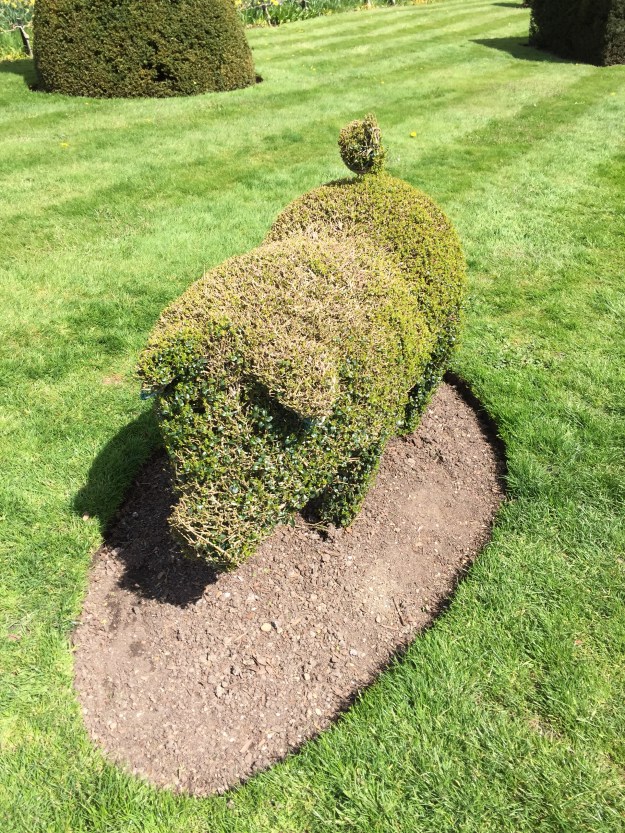
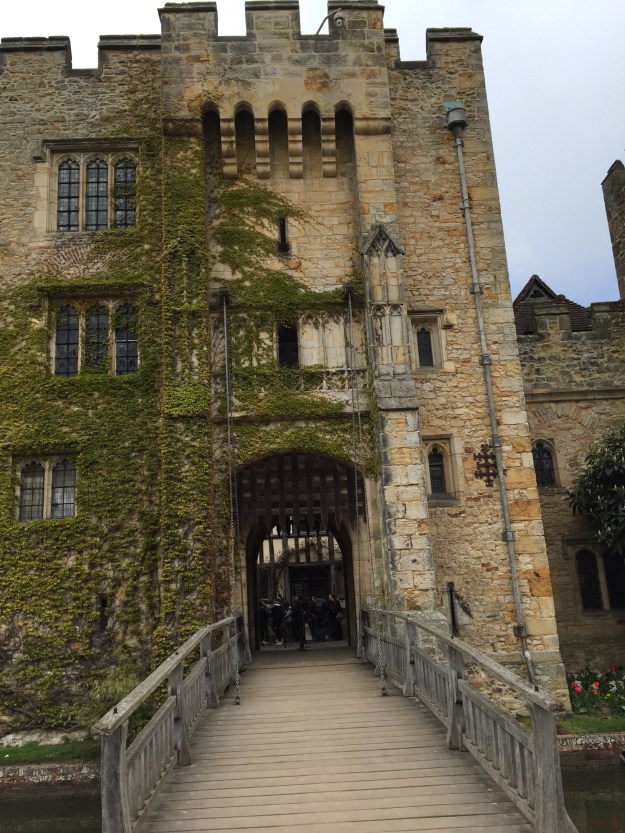
Apparently the art of topiary began under the Romans. Did Julius Caesar ever order up a topiary pig? This one lives on the grounds at Hever Castle, in Edenbridge. It’s about 30 miles south of London.

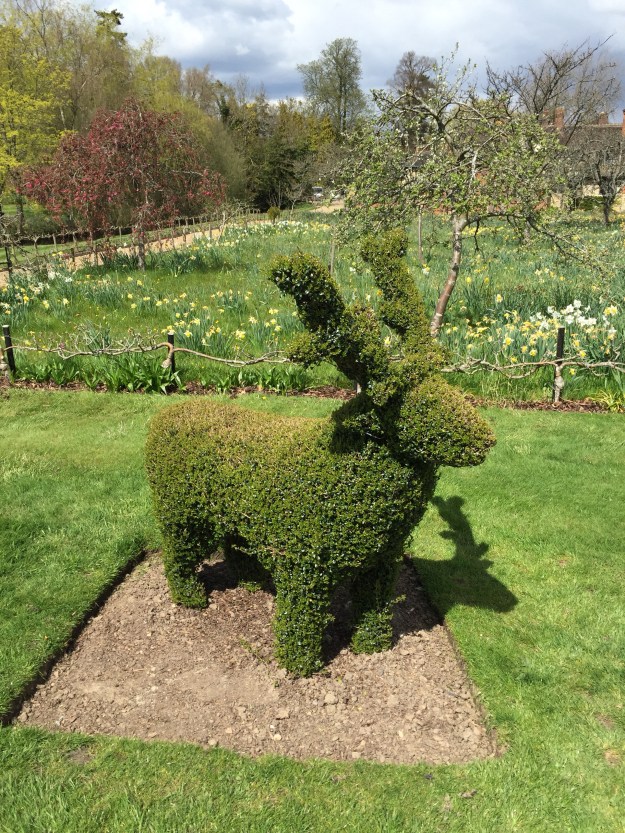
How about a reindeer?

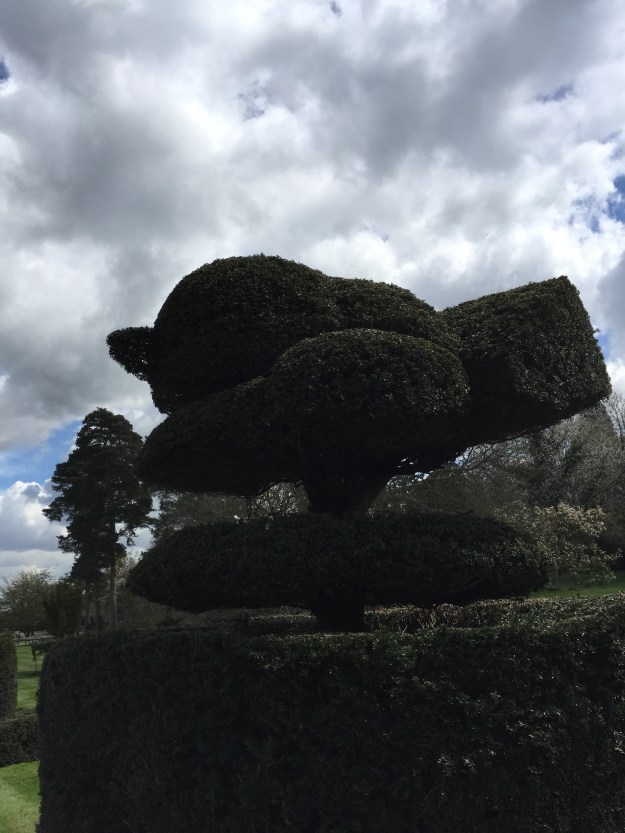
Or a nice songbird.

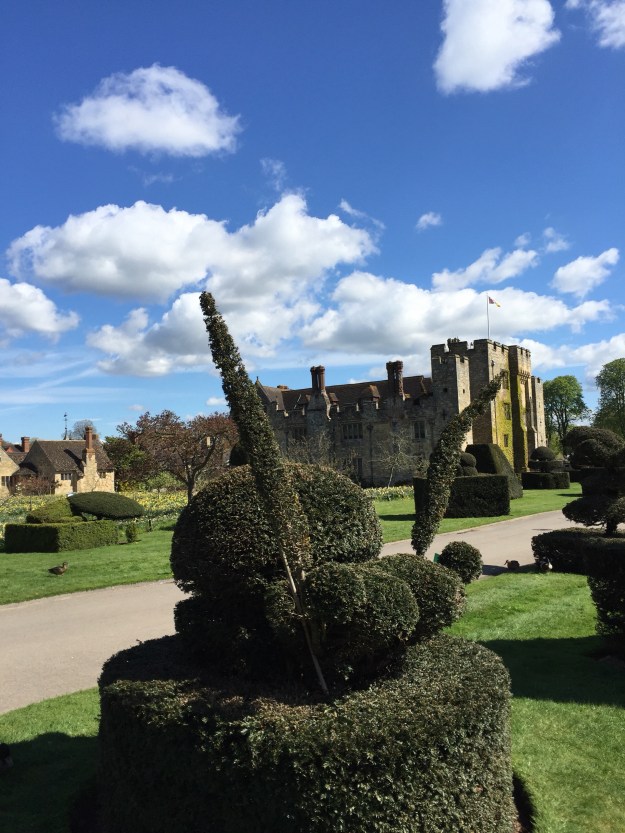
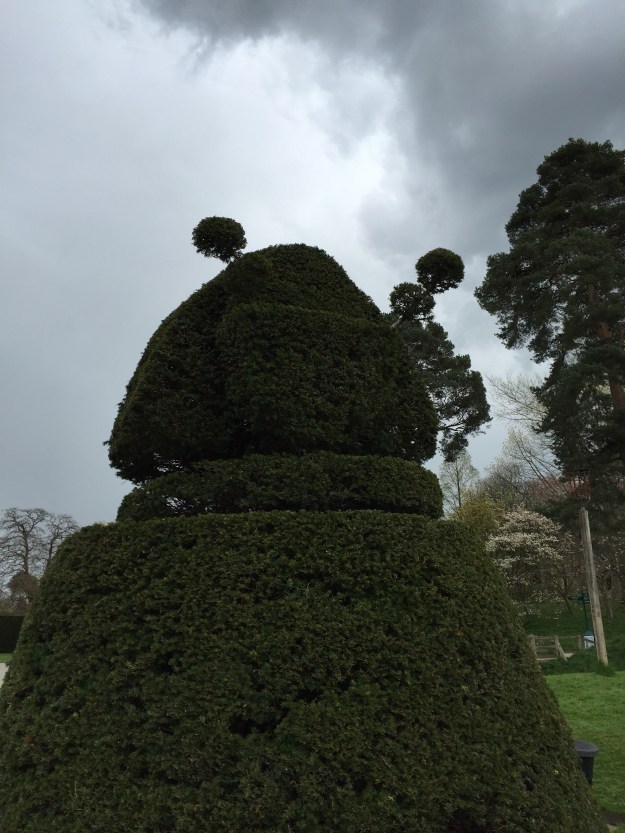
I’m pretty sure this is a giant snail.

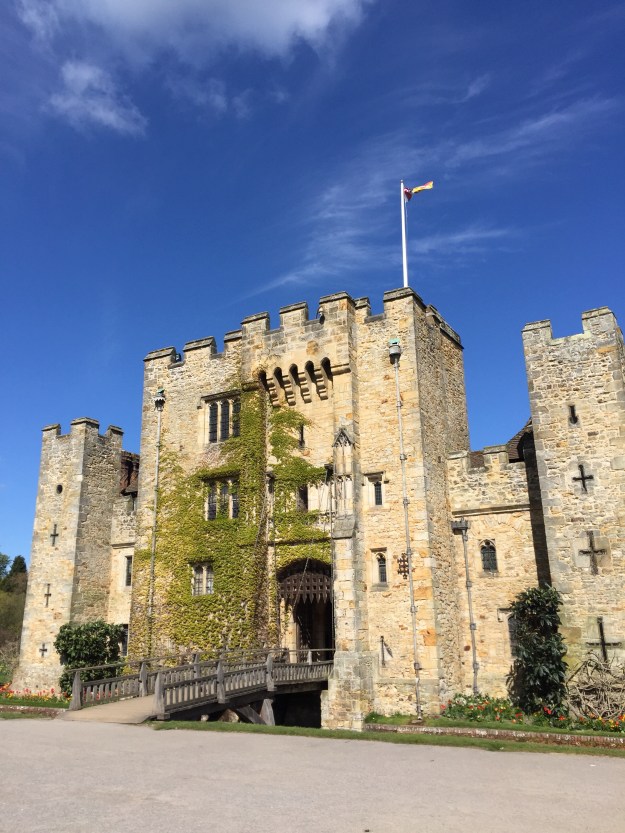
Hever Castle was the childhood home of the unfortunate Queen Anne Boleyn. The castle was the family seat of the Boleyns from 1462 to 1539.

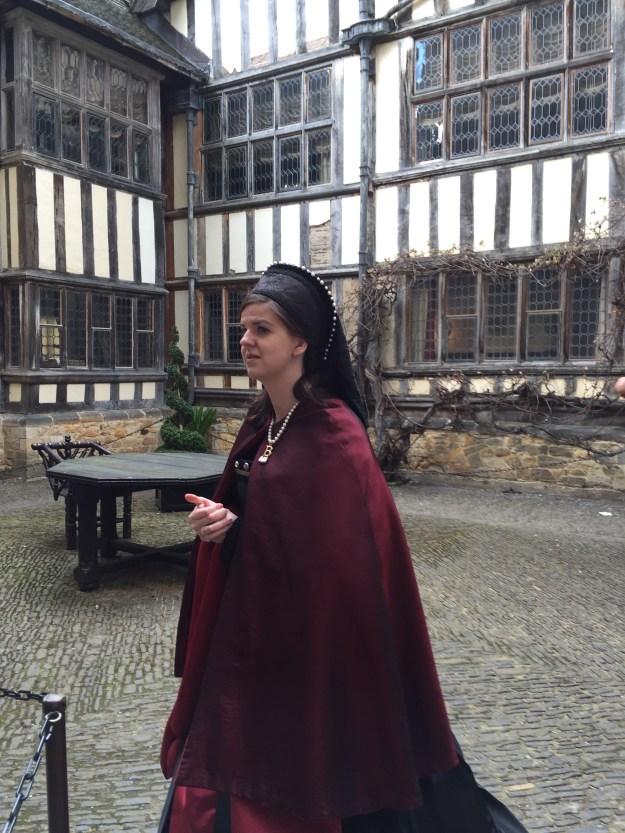
Tour guides in period costume roam the creaky hallways and courtyard today. Photos are not allowed inside, much to my disappointment.

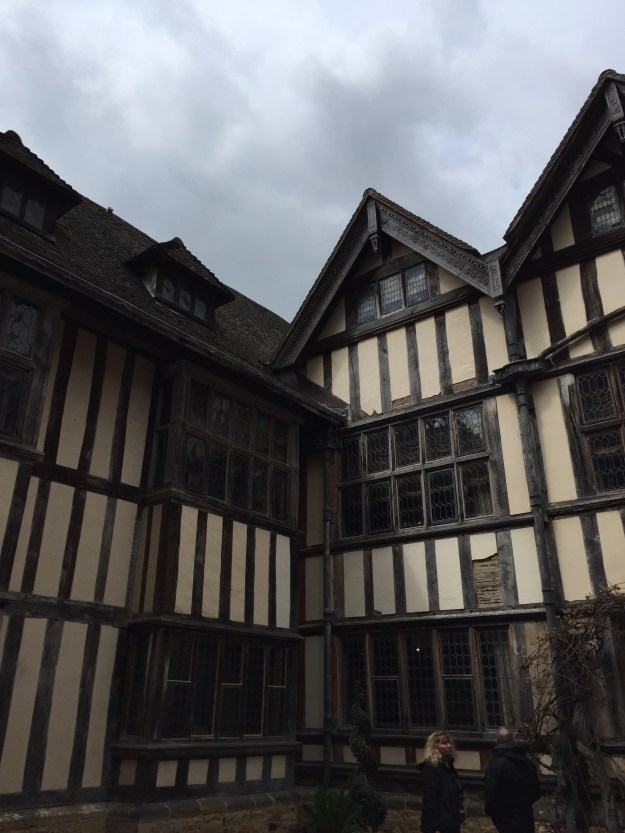
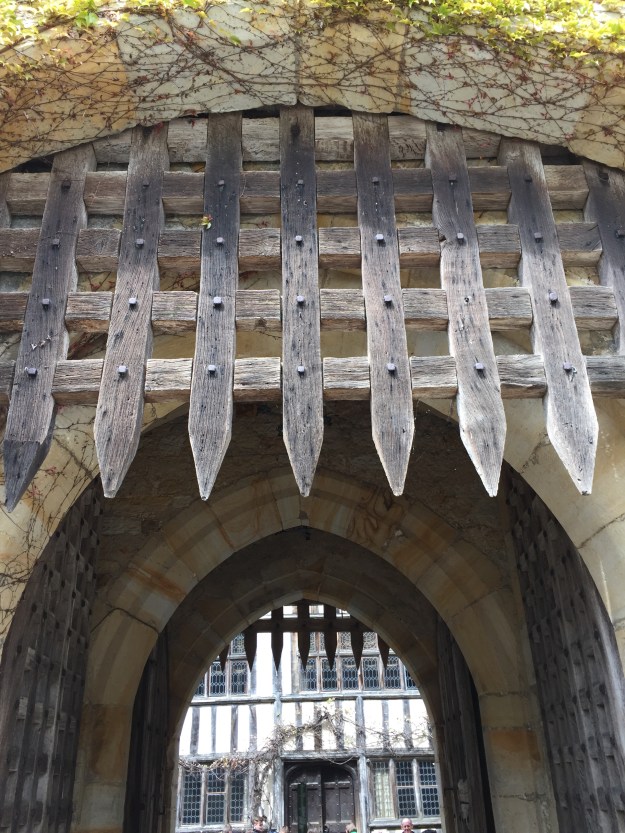
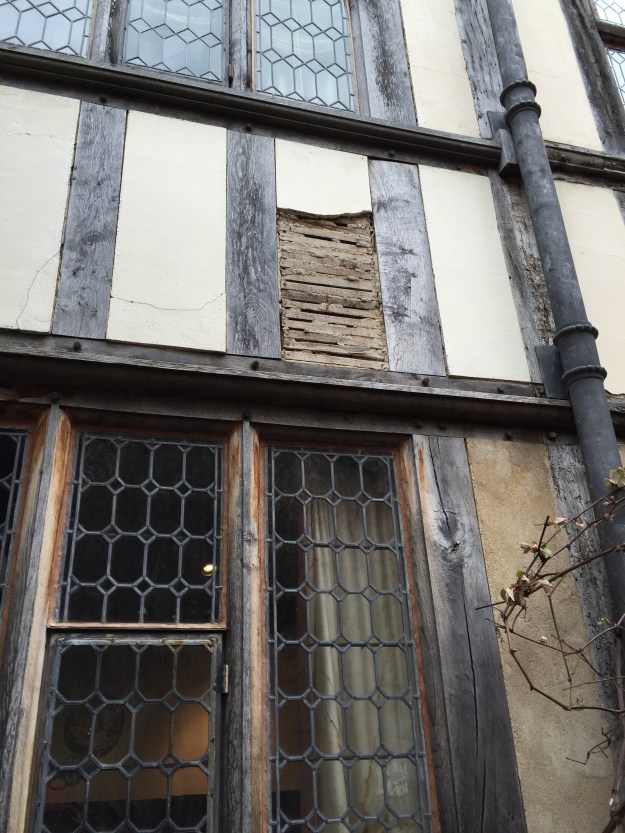
Visitors wait in the courtyard to be let in by timed ticket. There’s not much to see while waiting, but it’s interesting to get a glimpse of how the house was constructed centuries ago. I think the walls were made with a “wattle and daub” method.

No doubt there were fine Tudor gardens during the heyday of the Boleyns, but I doubt they would compare to the gardens planted by William Waldorf Astor when he bought the derelict castle in 1903.

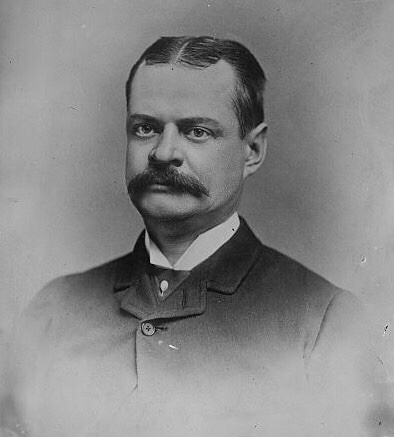
He had become the richest man in America on the death of his father in 1890, but after failing at politics and having a falling-out with some of his relatives, he took his vast fortune to England and became a British subject in 1899.

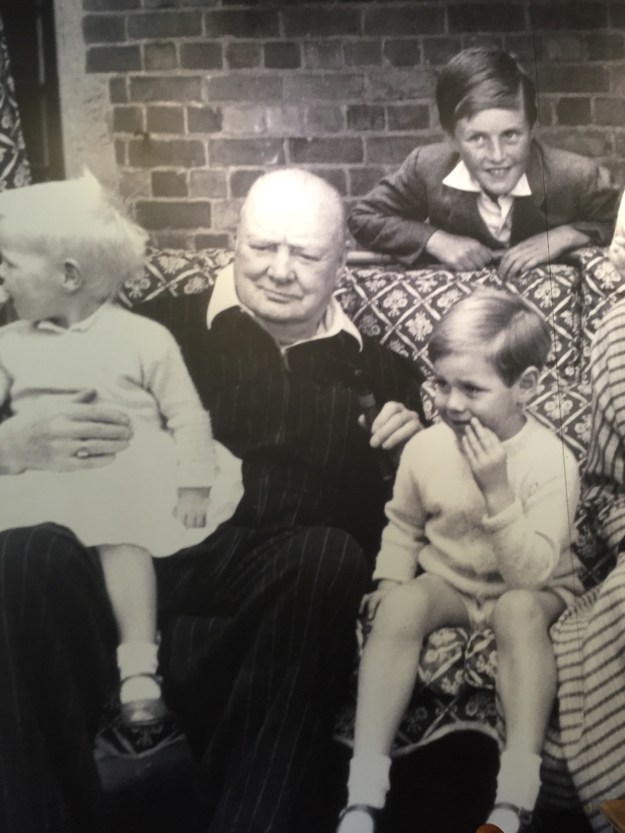
Hever Castle was more or less abandoned and falling into ruin until Mr. Astor made it one of his family homes. He needed a country place to entertain his famous friends, like Sir Winston Churchill and his family.

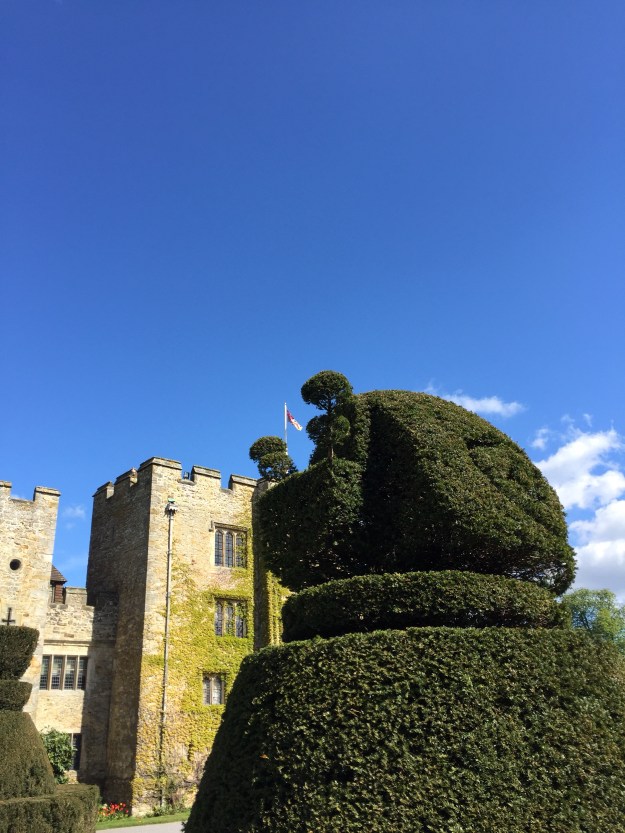
Mr. Astor poured money into the house and grounds. He began planting yew and box hedges, which his small army of gardeners carved into topiary figures for the amusement of his guests. There are about 100 figures altogether. There’s a maze and water garden, too.

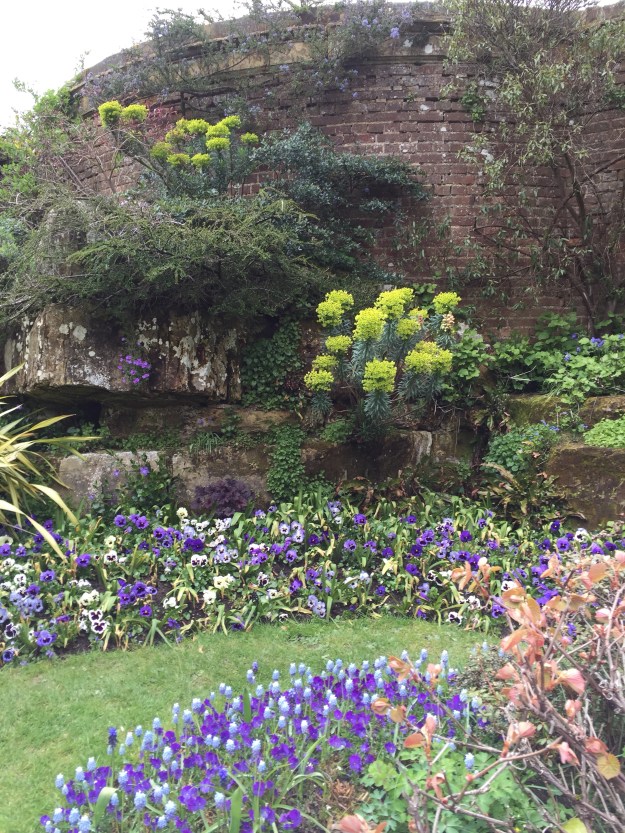
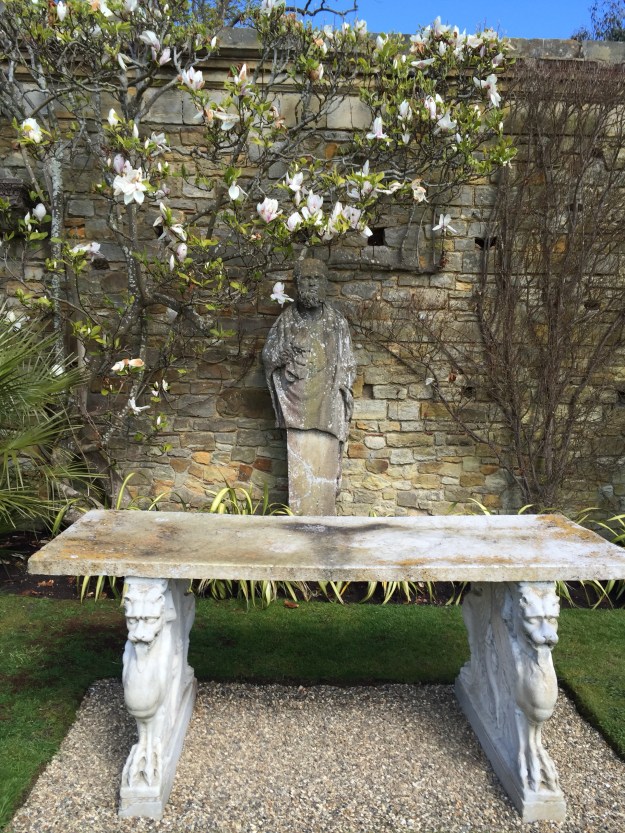
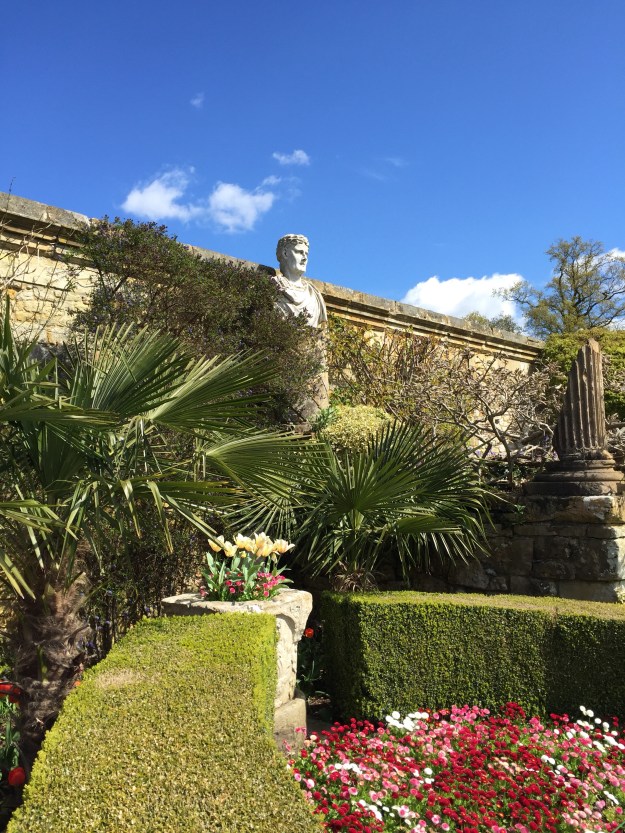
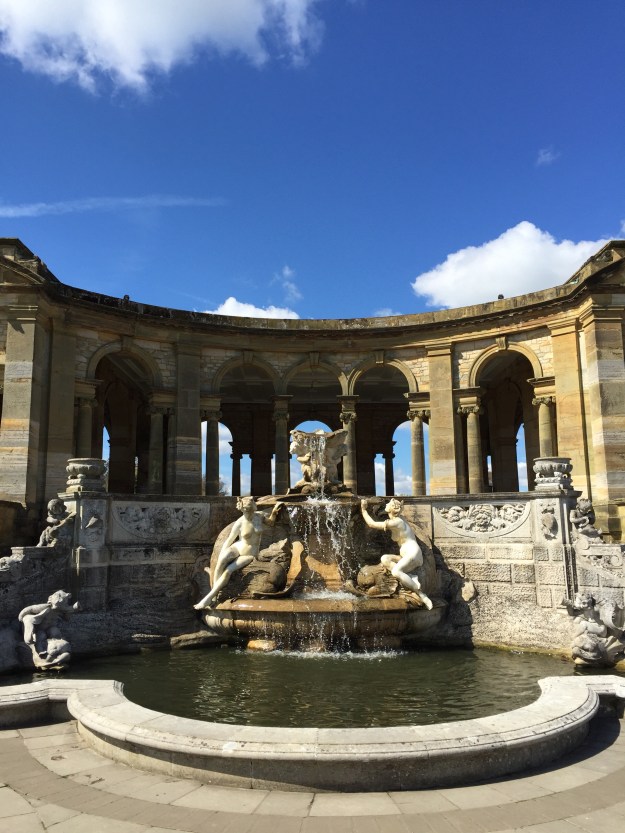
My favorite part of the estate is the Italian Garden, with statuary from Mr. Astor’s travels organized into little floral rooms.

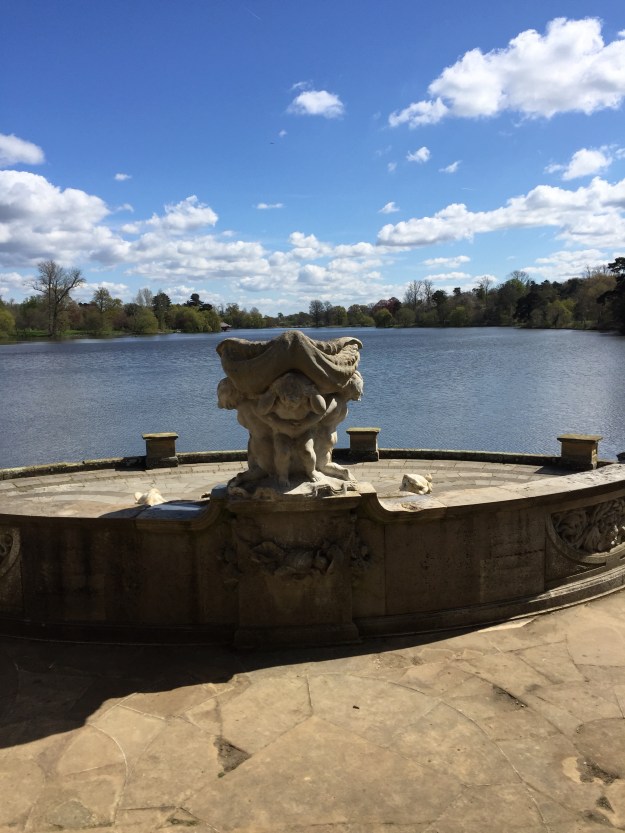
There’s an Italian colonnade leading to a lake.

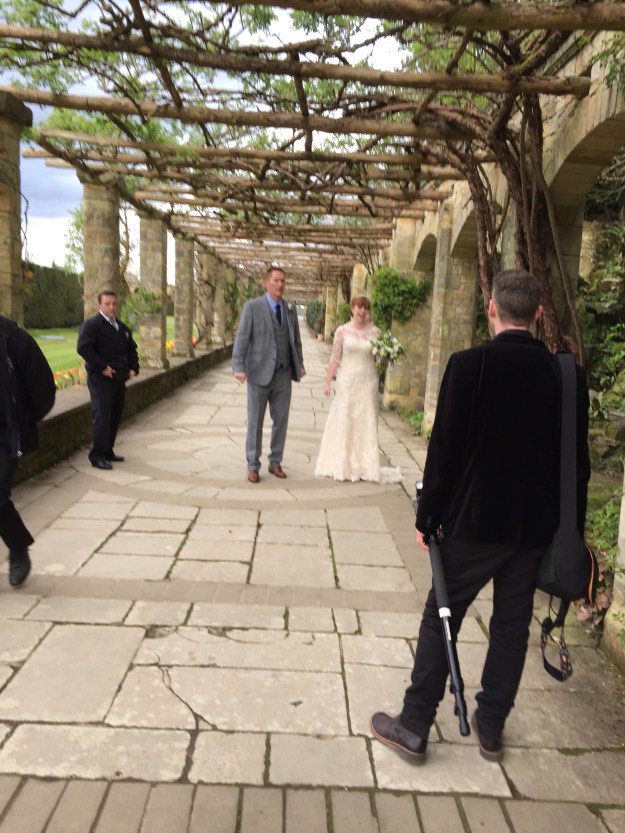
It’s a popular wedding venue.

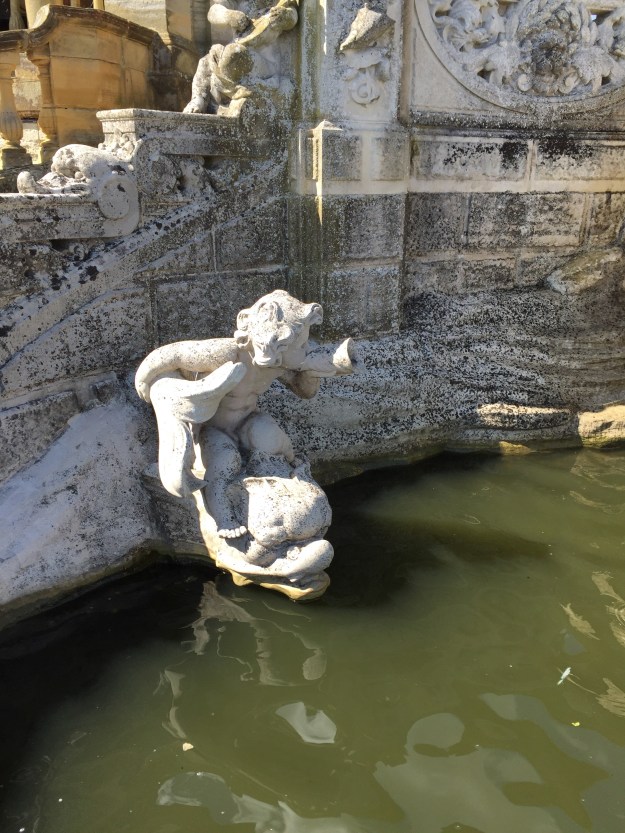
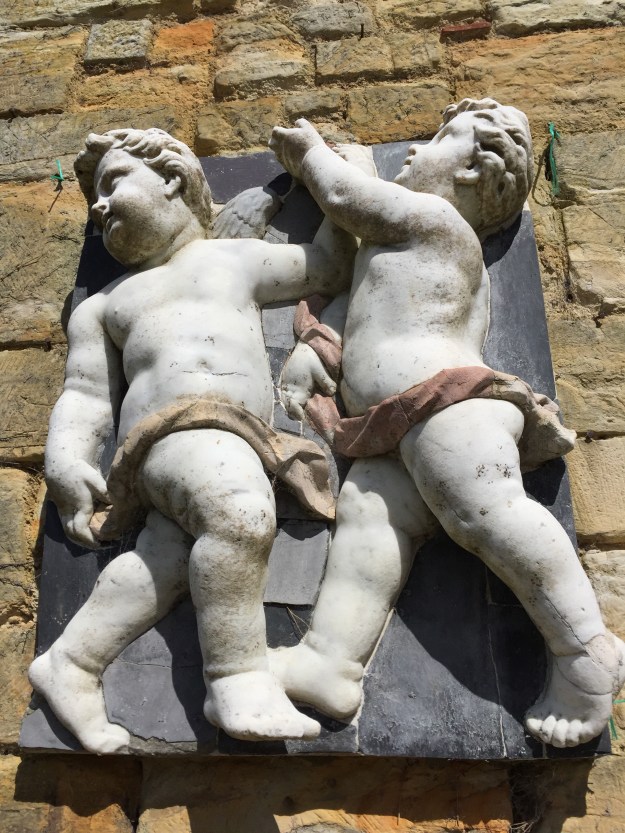
Cherubs frolic in the colonnade on the lakeshore.

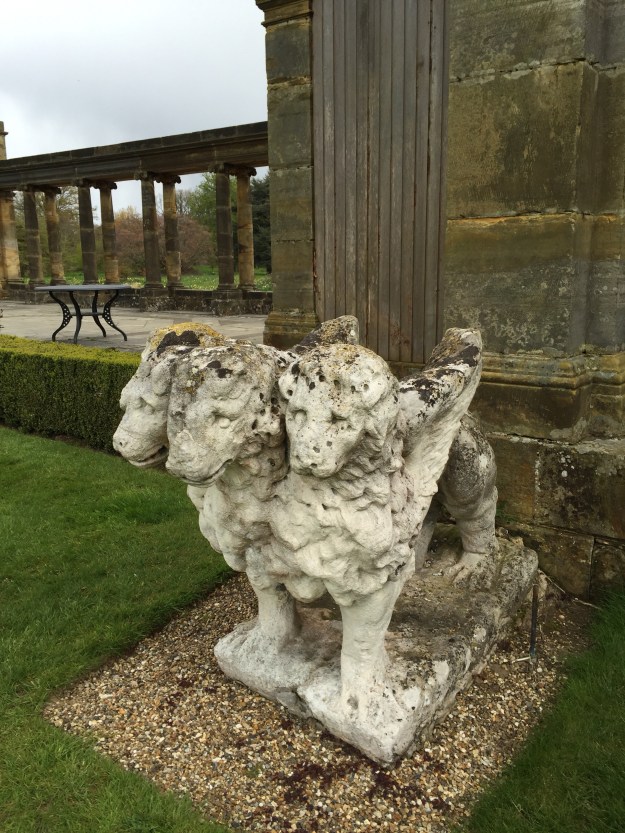
Mythical beasts keep watch. Just above, that’s Cerberus, the fierce three-headed Hound of Hades.

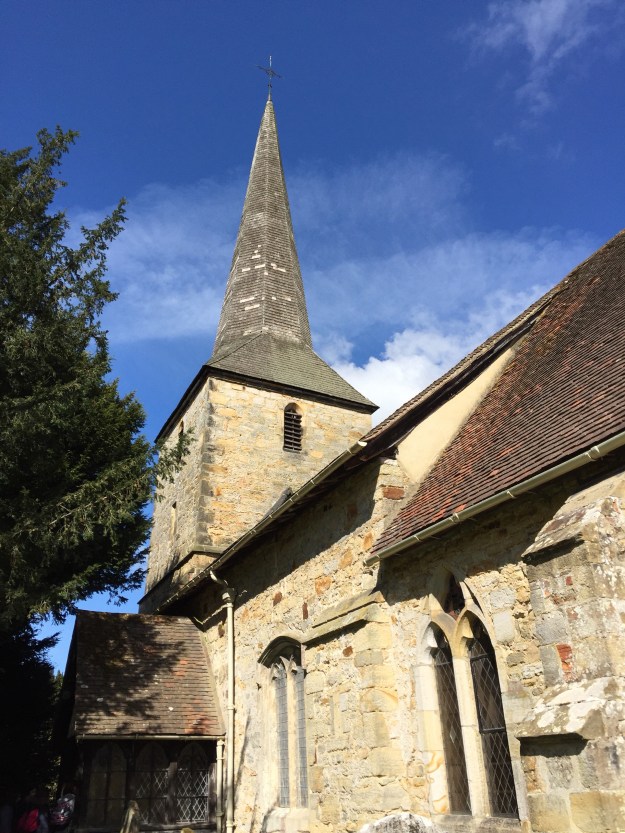
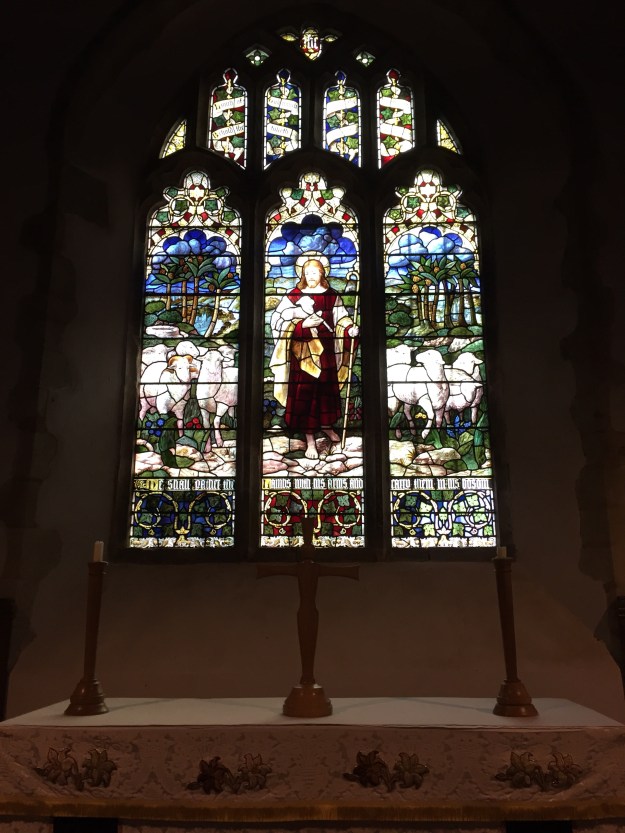
The nearby village church is a little melancholy. Several Astors are buried there.

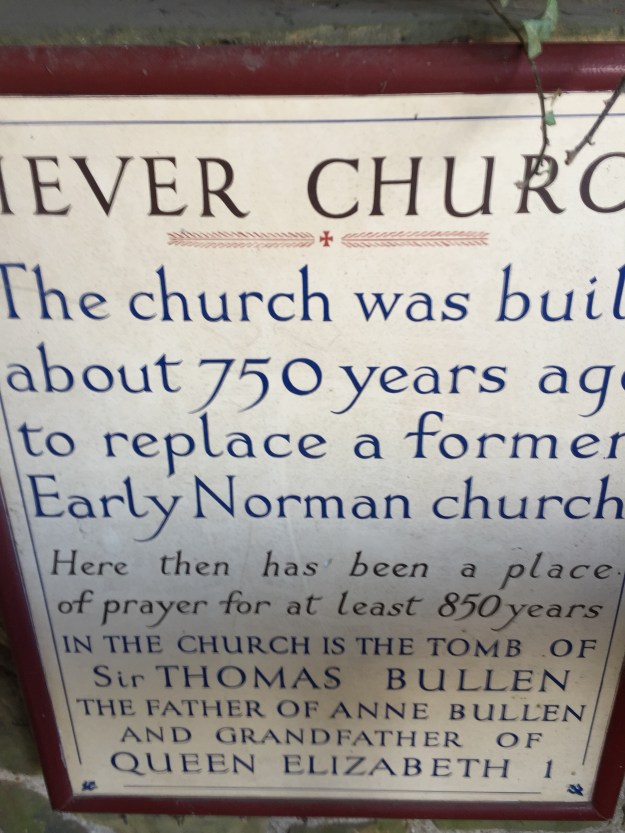
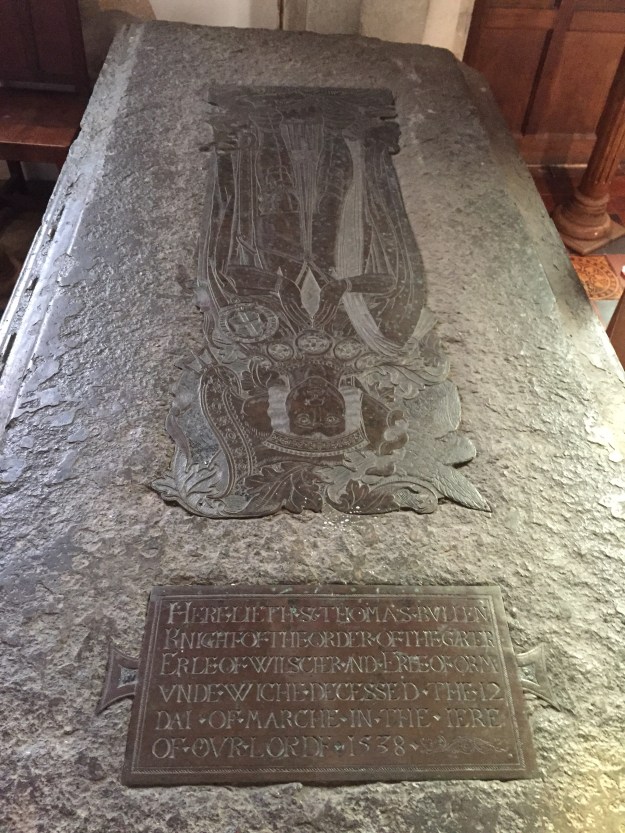
It also holds the tomb of Thomas Boleyn, father of Anne. The Boleyns seized the main chance under King Henry VIII, but their line died out when Thomas died in 1538. If I understand it correctly, Thomas sat in judgment for at least part of the trial of his son George and daughter Anne when they were convicted on trumped-up charges of incest. George and Anne were both executed, but Thomas survived.

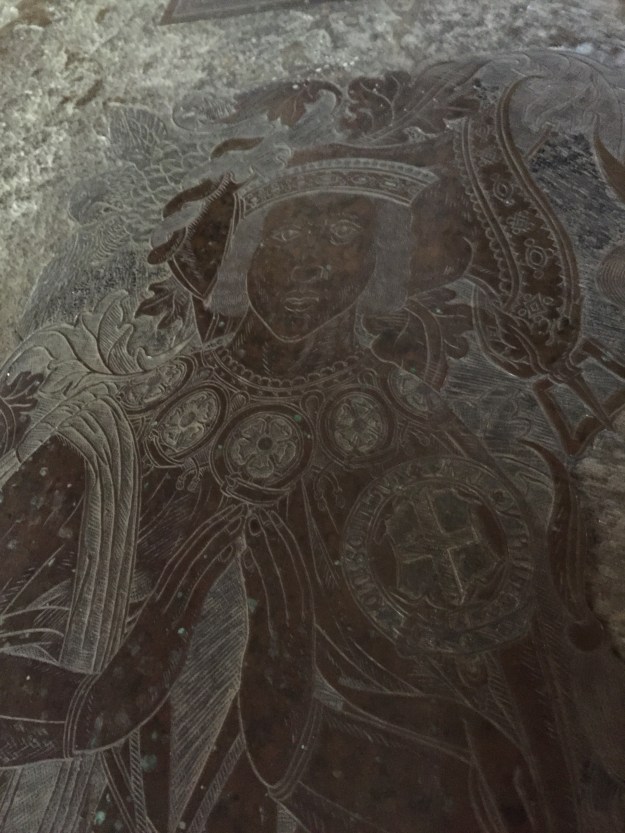
Here’s a right-side-up view of the image on Thomas’s tomb. Through the murderous reign of Henry VIII, Thomas had managed to hold on to his head and his castle at Hever, but he must have felt his family was pursued by the Hound of Hades. Did he regret the part he played in the fates of his son and daughter? I’m thinking his last days at Hever must have been sad and lonely.

After Thomas died, his castle passed to Henry VIII, who later gave it to Anne of Cleves as part of their dissolution-of-marriage settlement. Henry is known to have visited here. Inside the castle, not very much remains of the rooms these long-ago people walked in. But the stone walls and windows and doorways look about the same as they did during those turbulent Tudor times.

Join me next time for more explorations in the art and history of Europe and the British Isles!

The Ha-Ha at Chirk Castle

I’ll be the first to admit that it rains in England. So when visiting castles and stately homes, I often scurry through the gardens and take refuge inside. But the day I made it to Chirk Castle was gloriously sunny, so I got the full effect of the gardens.

The views across the Ceiriog Valley in Wales are spectacular. I’m sure the herd of 500 deer, established by the 1500s, enjoy the views as much as their ancestors did (when they’re not being hunted by their owners). But deer and cattle are not allowed inside the 5 manicured acres of the garden. They’re kept out by the Ha-Ha, built in 1764 by landscape architect William Emes.

What’s a Ha-Ha? It’s a deep ditch with a stone or brick wall set into one side. Presumably the name comes from the reaction of a person who stumbles into it, although I’d expect to hear some choice words beyond “Ha ha!” Anyway, it works as well as a fence, but preserves the views. I’ve always wanted one, but I would probably get sued if someone stumbled in.

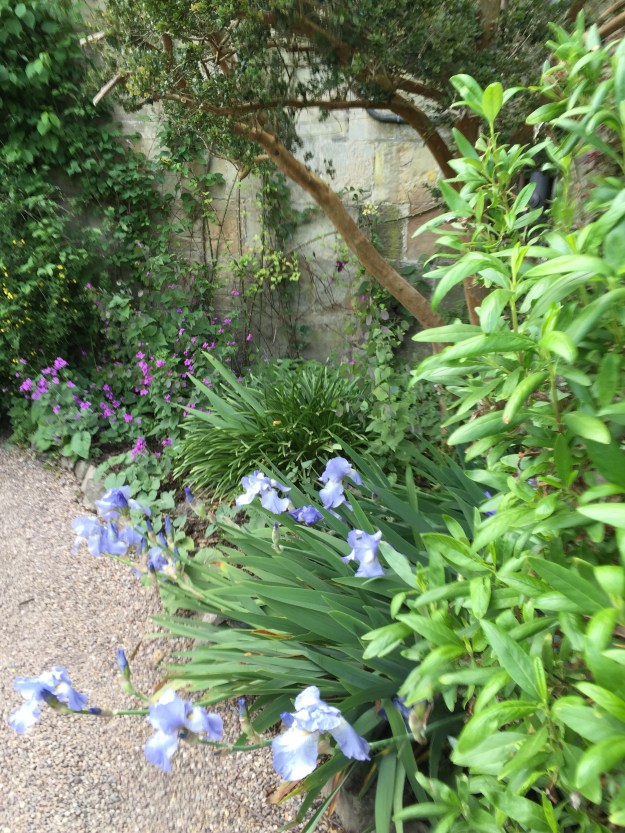
Generations of the Myddelton family lovingly tended the gardens. I visited in springtime.

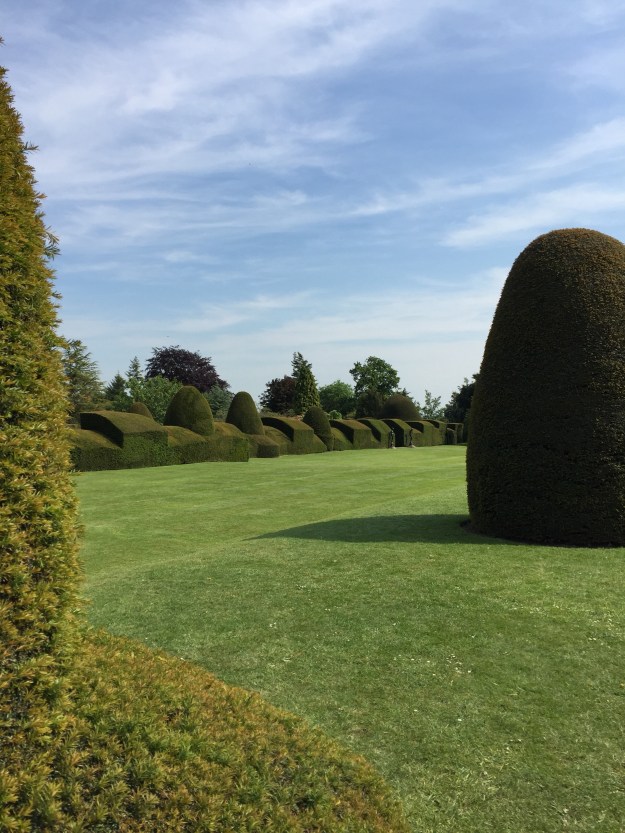
The yew-tree topiaries are about 130 years old. These days, there are only three gardeners. It takes them six to eight weeks every year just to trim the topiaries.

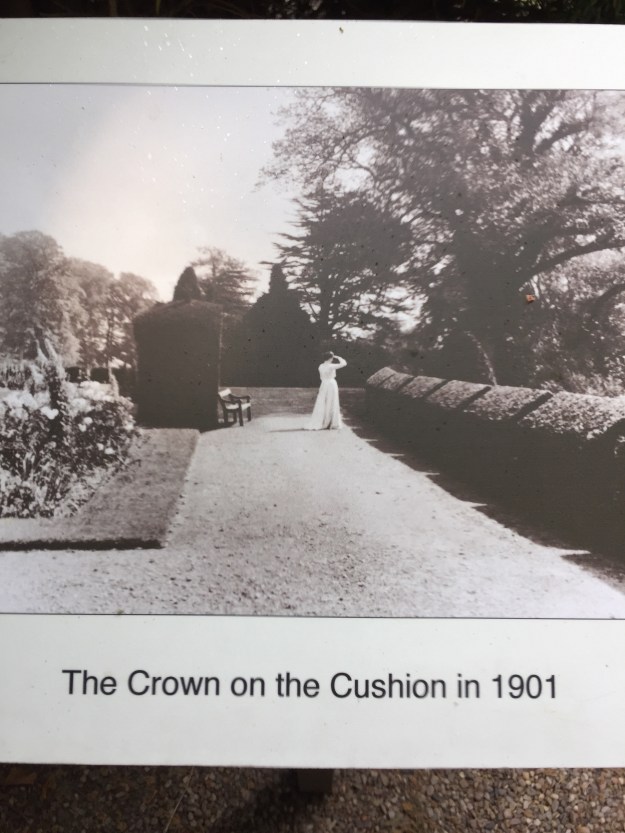
The grandest topiary is the Crown on the Cushion.

In 1901, it was not that much taller than a Victorian lady.

Now, it’s big enough to pitch a tent under.

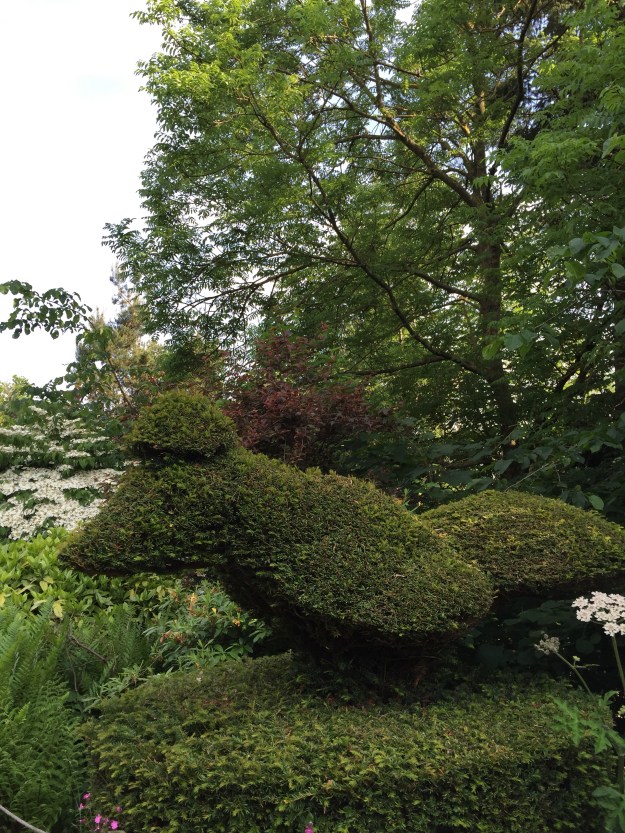
I like this bird topiary, perched in a shady spot among the ferns.

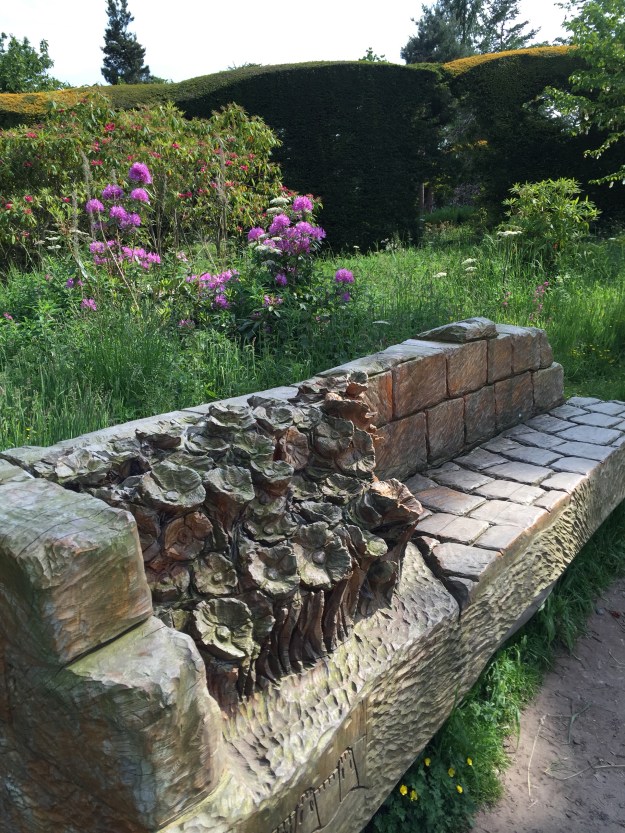
In recent years a beloved tree was felled by a storm.

The Myddelton family had its trunk carved into a garden bench.

If I were more of a gardener myself, I’d know exactly what I’m looking at. Rhododendrons? I like the wildness of the grassy bordered walks, after the formality of the manicured gardens.

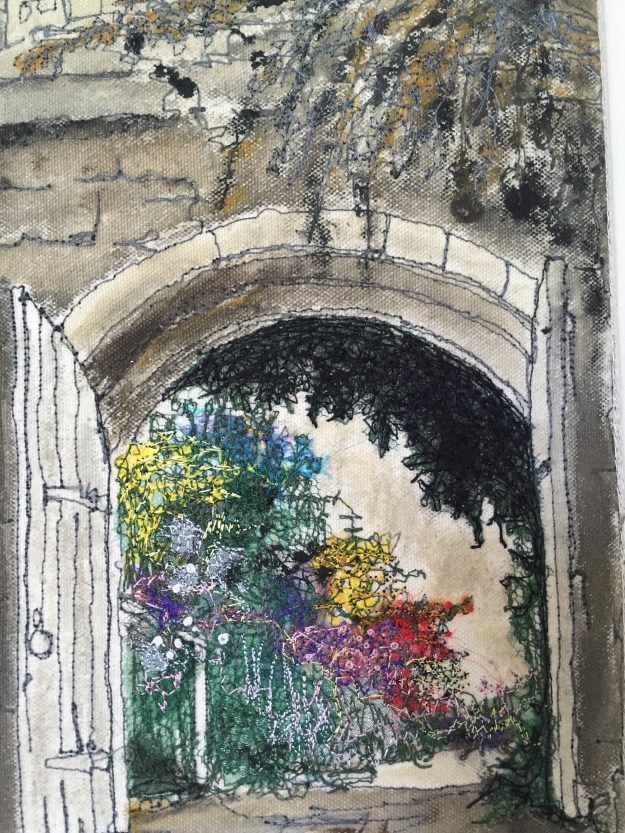
Inside the castle, there was a special exhibit of embroidery based on the grounds and gardens. The piece above, “Across the Fields,” is by Janet Vance of the Embroiderers’ Guild.

Sue Sercombe made “Snowdrops in the Woods.”

Sheila Foggin used her sewing machine in ways I would not dream of, to create “Through the Gate.”

I always think that needlework is under-appreciated as an art form. I have trouble appreciating the gardener’s art too, because I know so little about it.

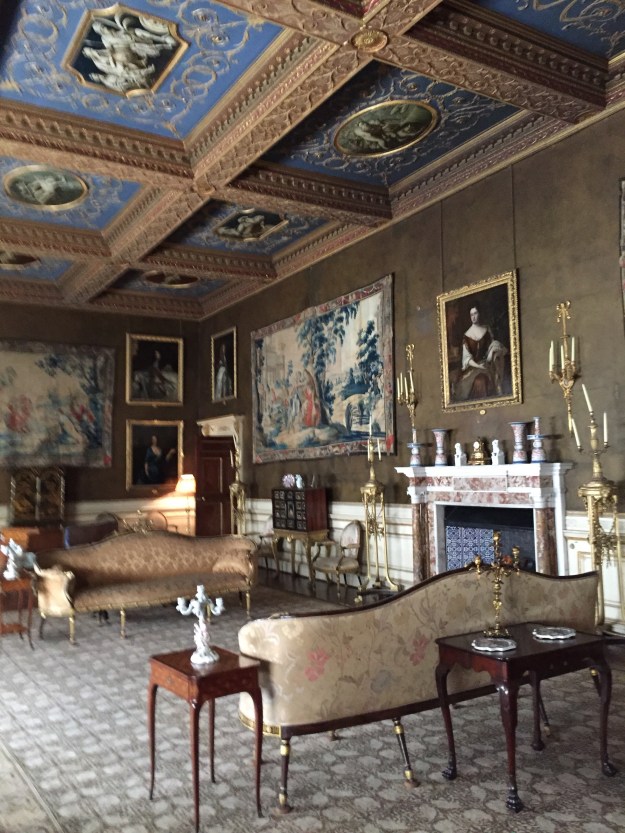
Well, I’ll head back into the castle for one last look at the grand Drawing Room.

It has an 18th-century look to it. In a 700-year-old castle, each succeeding generation makes its mark.

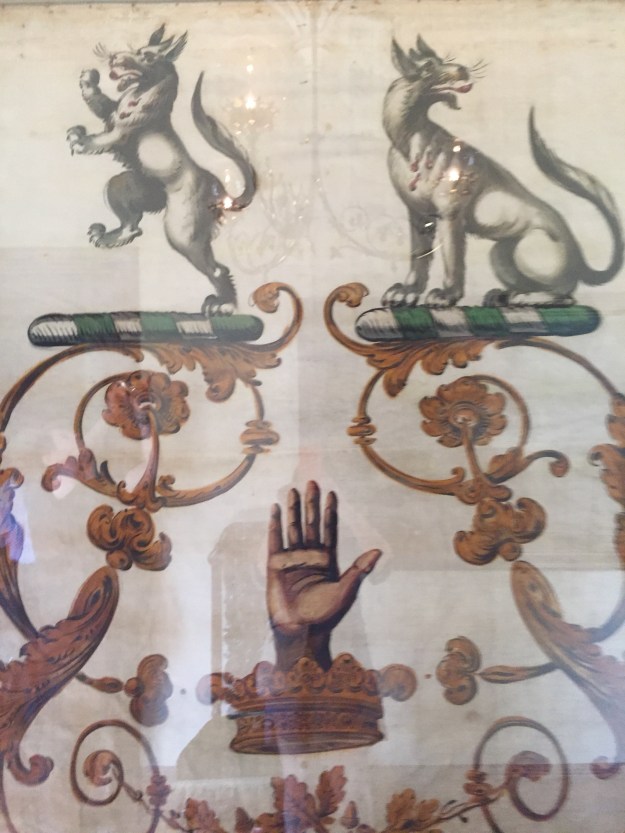
And there’s that famous Red Hand again! It’s the subject of all kinds of entertainingly bloody legends, but really it just represents the title of Baronet which the Myddelton family bought themselves a few centuries ago.

So many faces have come and gone at Chirk. We know a bit about those who made it into the history books. The more humble “below stairs” stories would be just as fascinating.

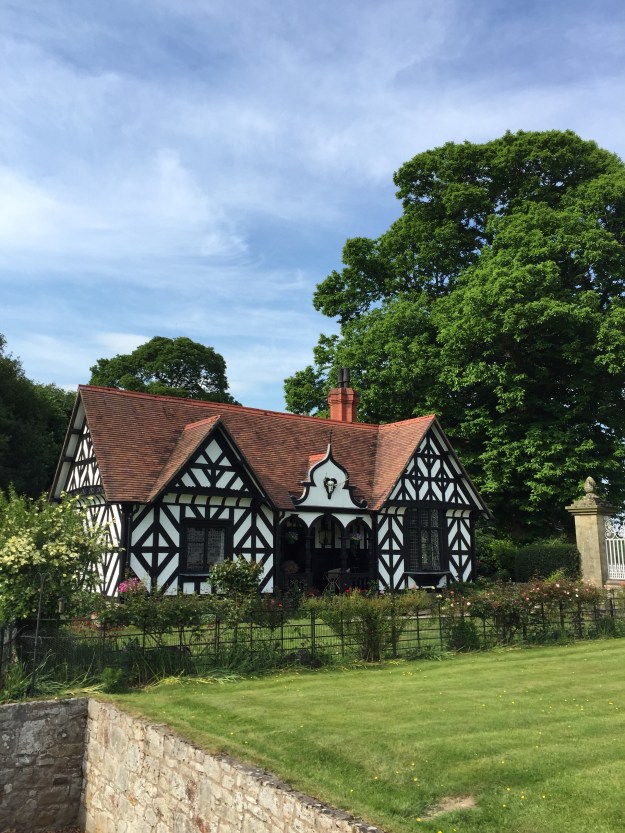
On my way out, I’ll admire this cottage perched on the edge of the Ha-Ha. Maybe it was once the home of the chief gardener. I’d cheerfully move right in! Just show me how to use those garden shears.

Join me next time for more explorations in Europe and the British Isles!

Chirk Castle

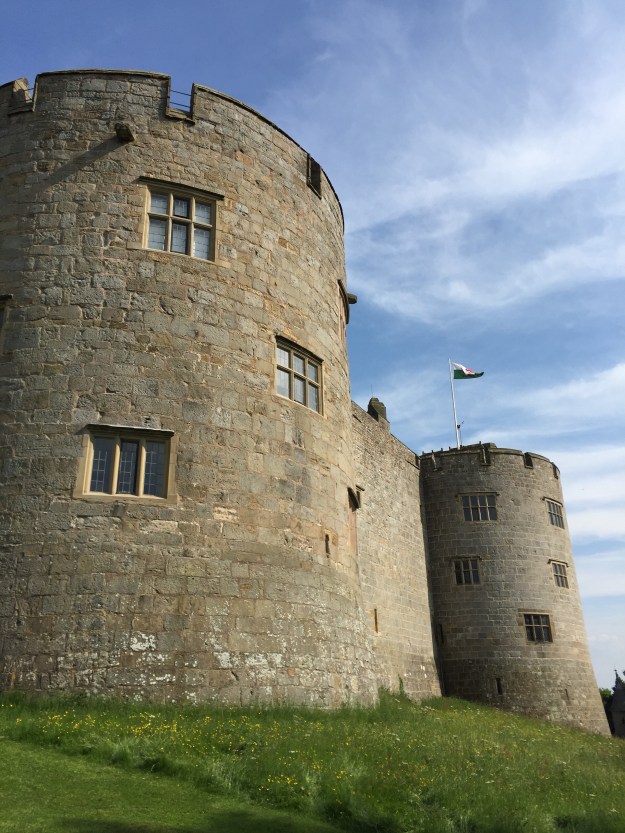
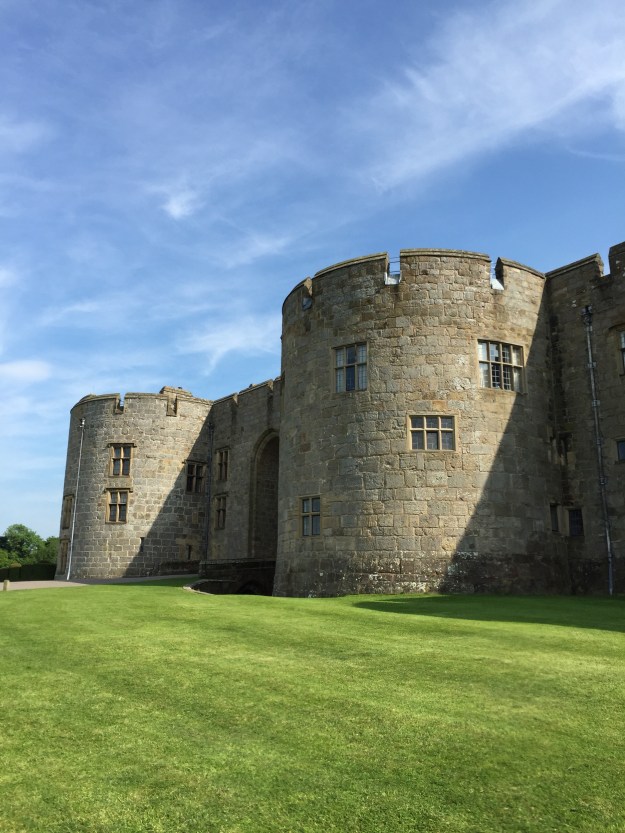
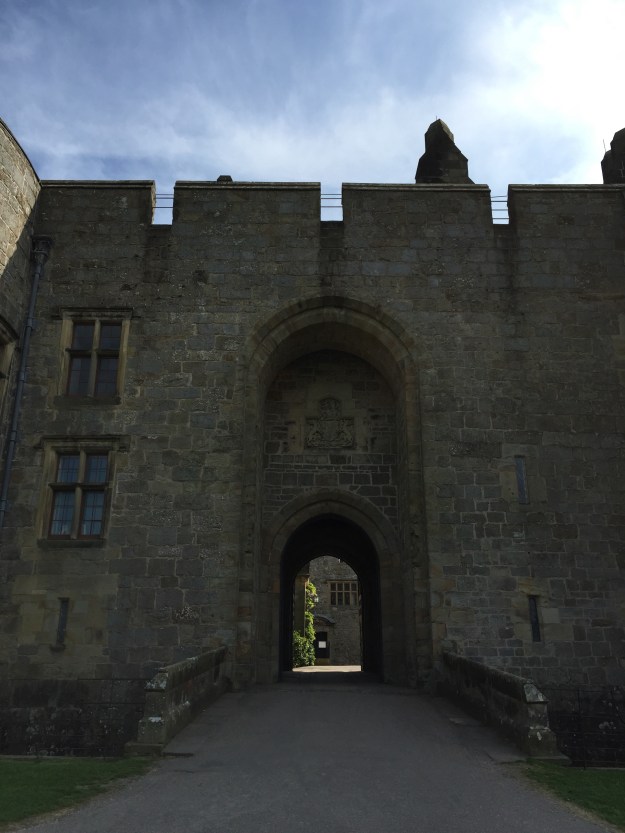
Catching-up time: I’m off to England soon, so I’m posting about places I will not see because I’ve seen them before. For a hopeless Anglophile like me, England has way too many stellar sights. Chirk Castle is one of my favorites.

Construction began in 1295, under Roger Mortimer. He was an English army captain who received the land from Edward I, with a mandate to show the recently-subdued Welsh who was in charge. A powerful ring of fortresses grew within a few years on the Marches, the brooding borderlands between England and Wales.

Most of these stone piles are now picturesque ruins, but Chirk has been continuously inhabited since it was finished in 1310.

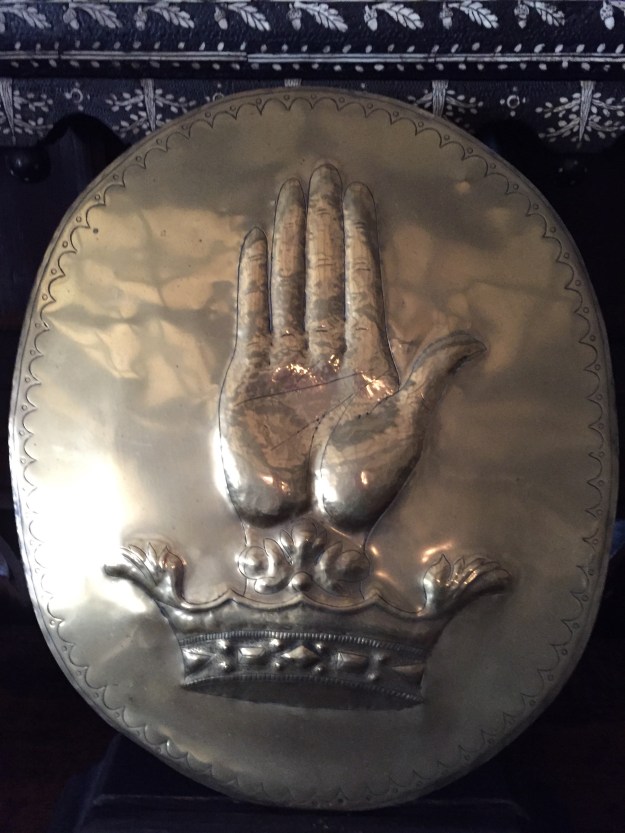
I’d like to think this emblem, showing a hand above a crown, is from the days of the Mortimers. I’m a “Game of Thrones” fan. Was Roger Mortimer the “Hand of the King?” No, actually the hand emblem is from the late 1500s, when the Myddelton family owned the place and bought themselves a title.

When they added to King James I’s coffers by paying for the title of Baronet, they were entitled to add a red glove to their coat of arms.

The original Roger Mortimer and his namesake nephew both turned against the Crown. The first died in the Tower, and the second was executed as a traitor by Edward III. Three other owners of Chirk were also executed as traitors over the years. It’s easy to imagine the castle being haunted.

In Tudor times, in 1563, Elizabeth I gifted the castle to her favorite, Robert Dudley. Some rooms and parts of the gardens still have a distinctly Tudor look.

After Robert Dudley died, the castle was eventually sold to Sir Thomas Myddelton I. His son, Sir Thomas Myddelton II, found himself in the peculiar position of being ordered to break in and occupy his own castle in 1643. It had been taken by Royalists under Charles I in the English Civil War. Myddelton was ordered to retake it, which he could have done with artillery. But he didn’t feel like bashing his own home to smithereens. Eventually, the Royalists were bribed to leave peacefully, Charles I was executed, and Chirk went on as before. If these walls could talk!

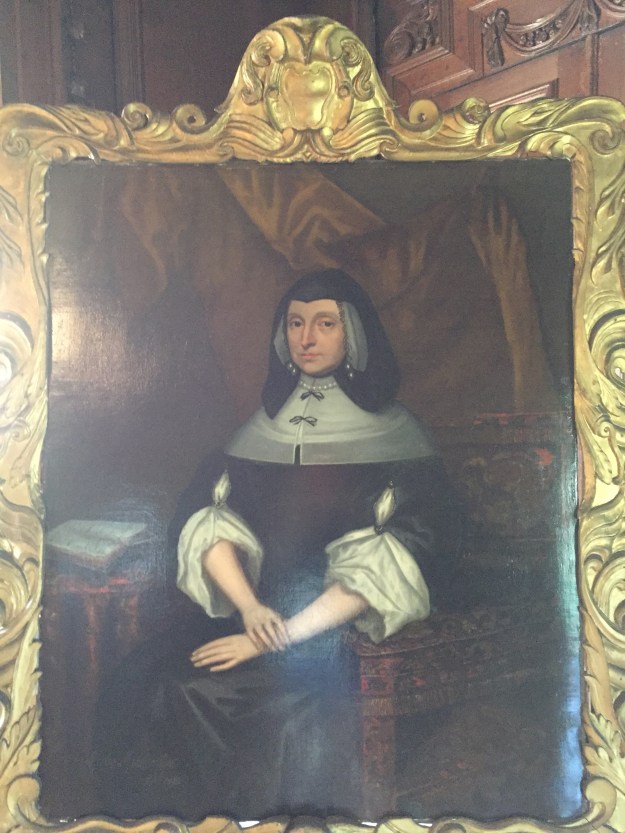
Later, subsequent generations of Myddeltons were forced to rent out their castle to make ends meet, but the family managed to hold on until 1978. Even after giving the castle to the National Trust, family members lived there, and they still actively help manage the castle and grounds. That’s a Lady Mary Myddelton above, circa 1613.

One of her descendants sits, wineglass in hand, in the Bow Drawing Room.

The room is furnished as it was for posh parties in the twenties and thirties.

A gramophone plays dance music, and visitors are invited to make themselves at home.

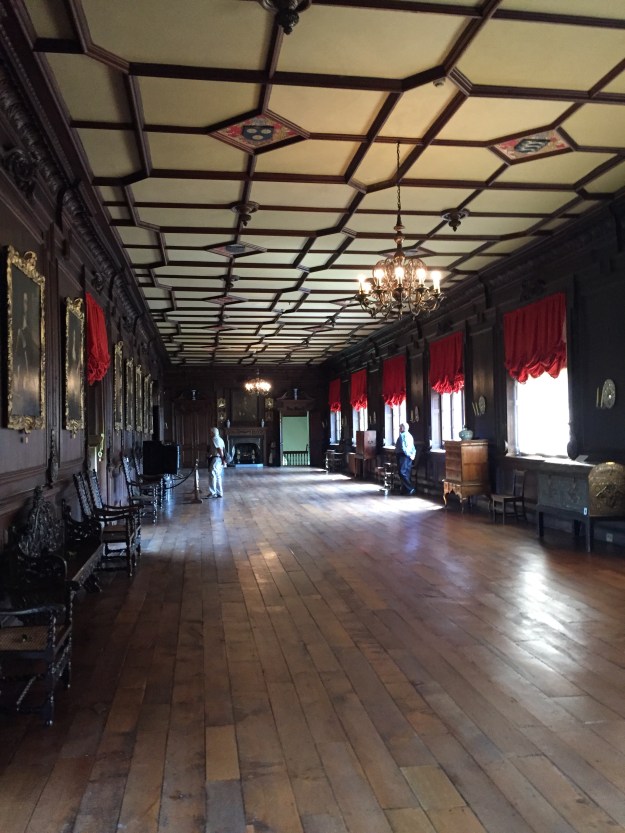
Maybe we should take a turn in the Long Gallery?

Wait, I heard the dinner gong!
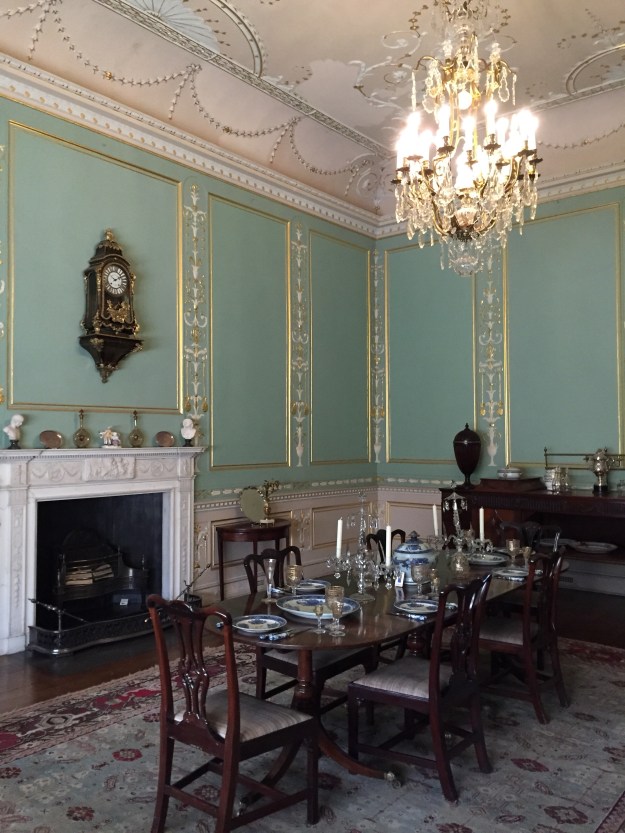
The dining room, last decorated in the 1930s, has entertained the likes of George Bernard Shaw, Rudyard Kipling, Augustus John, and any number of other people I would love to meet.

I’m not big on romantic castle ruins, but I’d go back to gloriously UN-ruined Chirk Castle anytime.

The exuberant Baroque Davies Gates, made by two local blacksmiths in 1712, will be waiting.

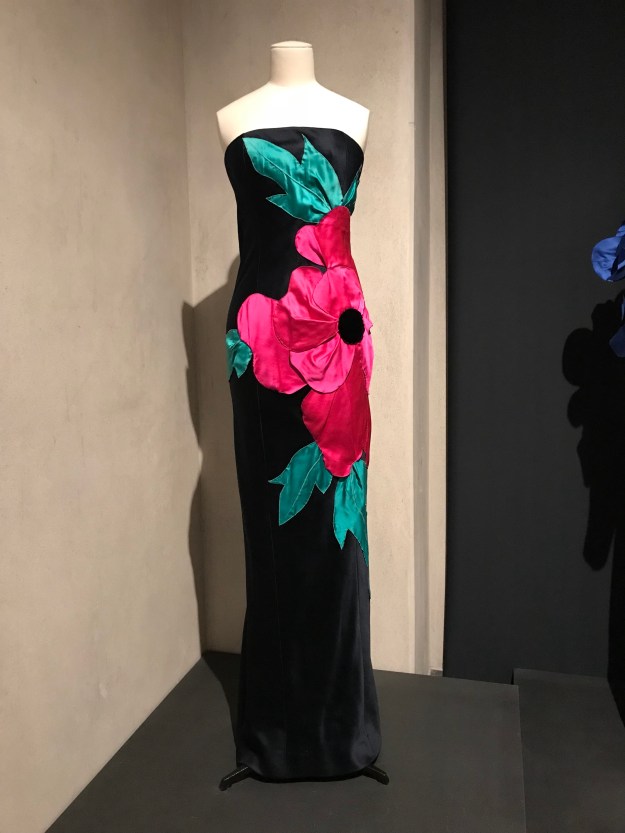
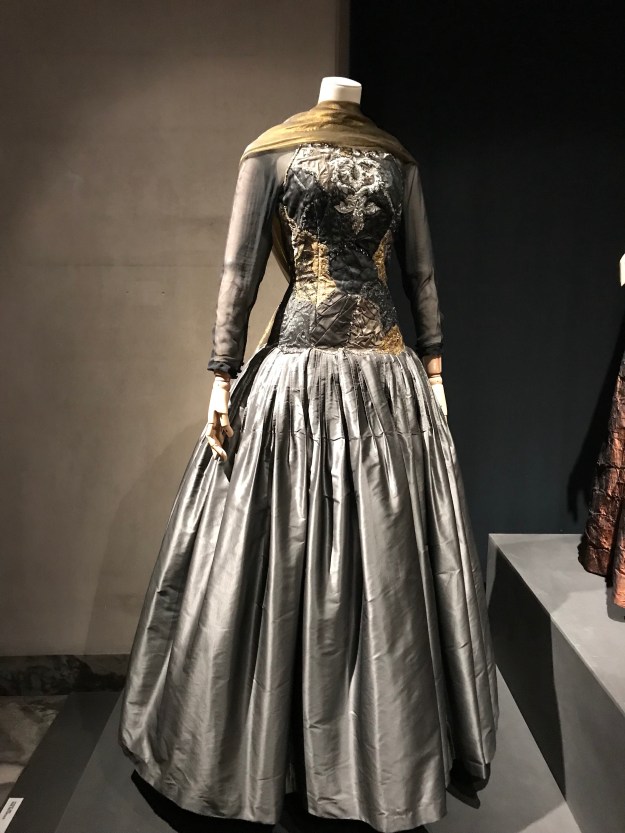
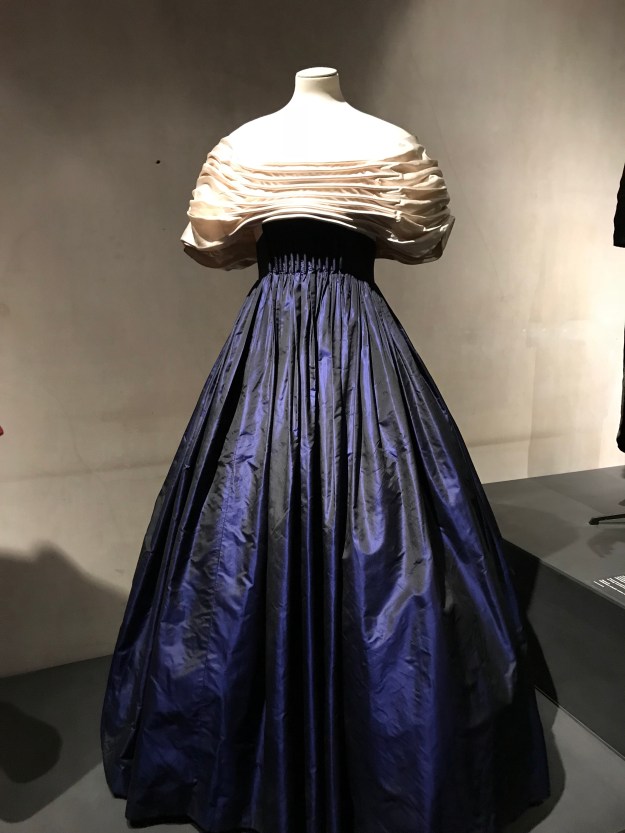
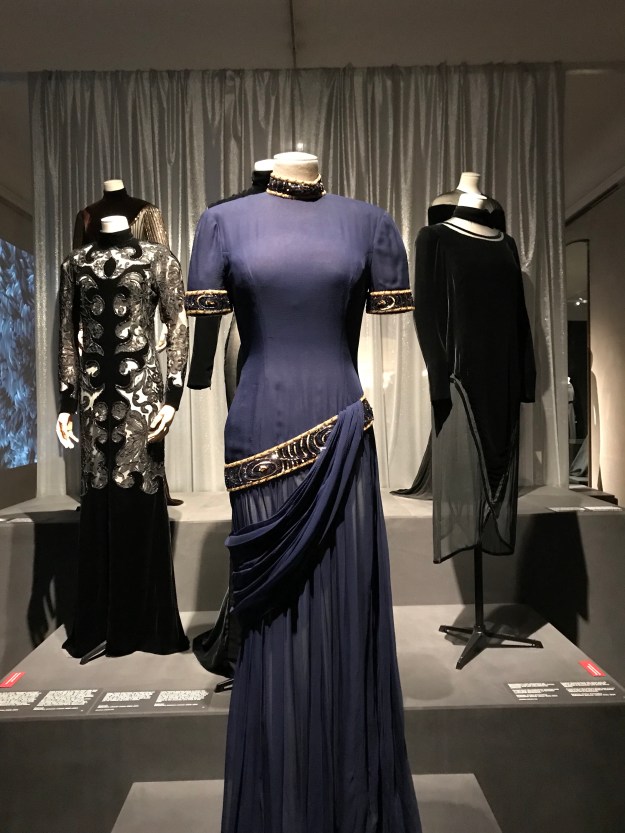
High Fashion at Copenhagen Design Museum

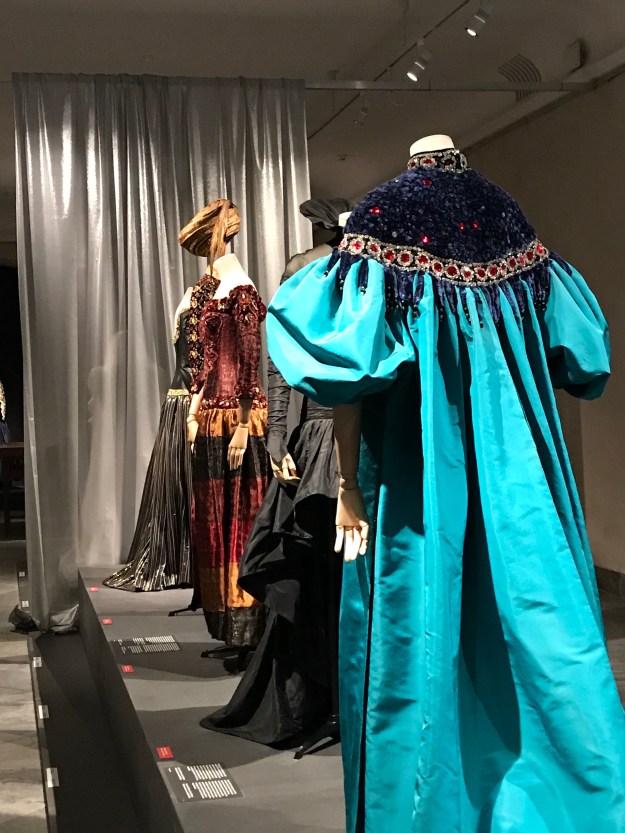
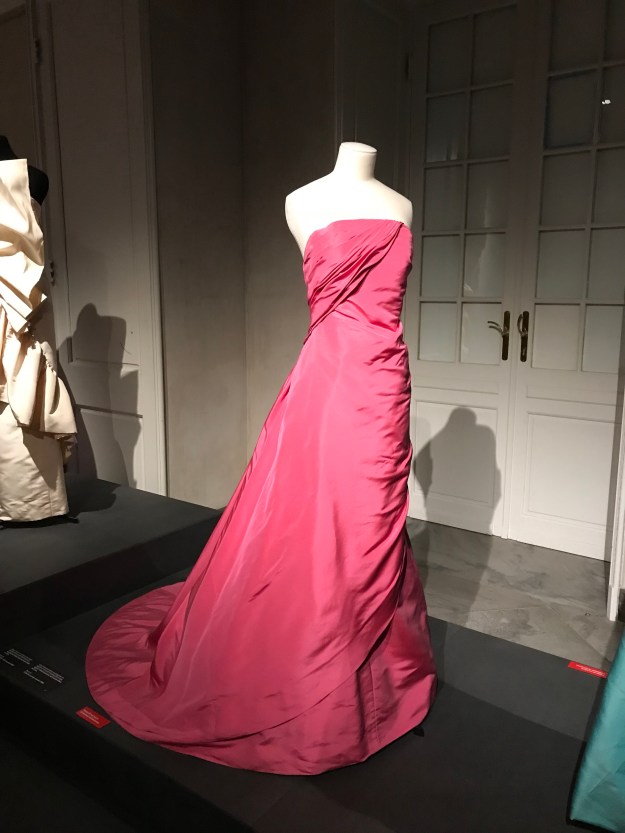
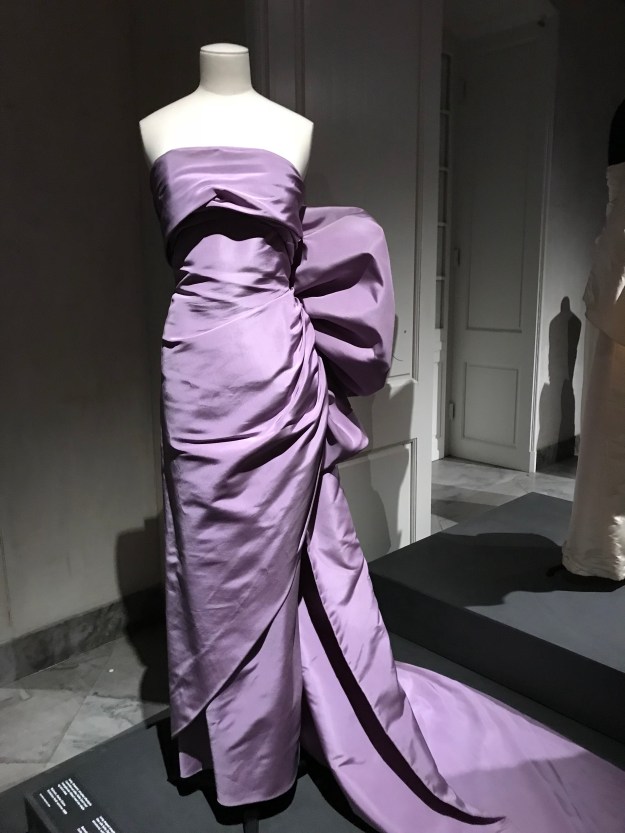
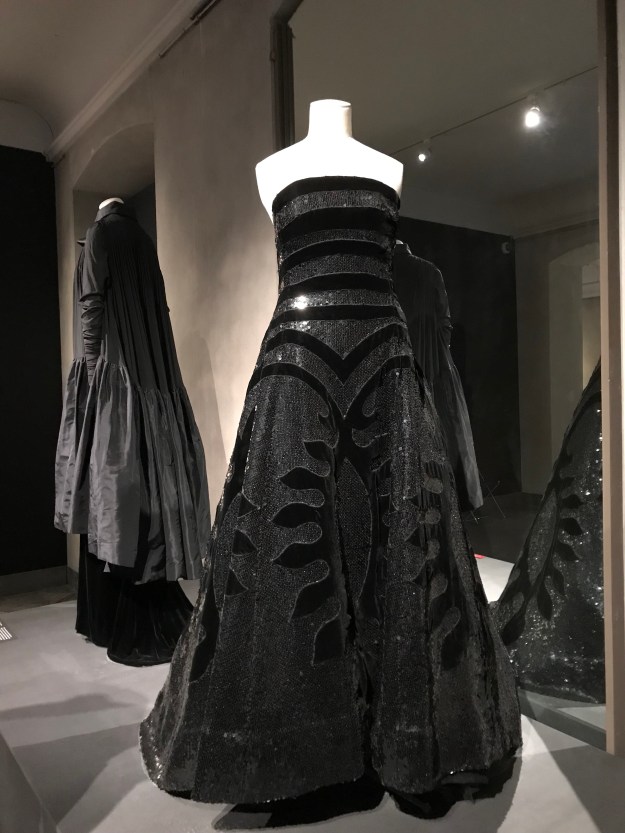
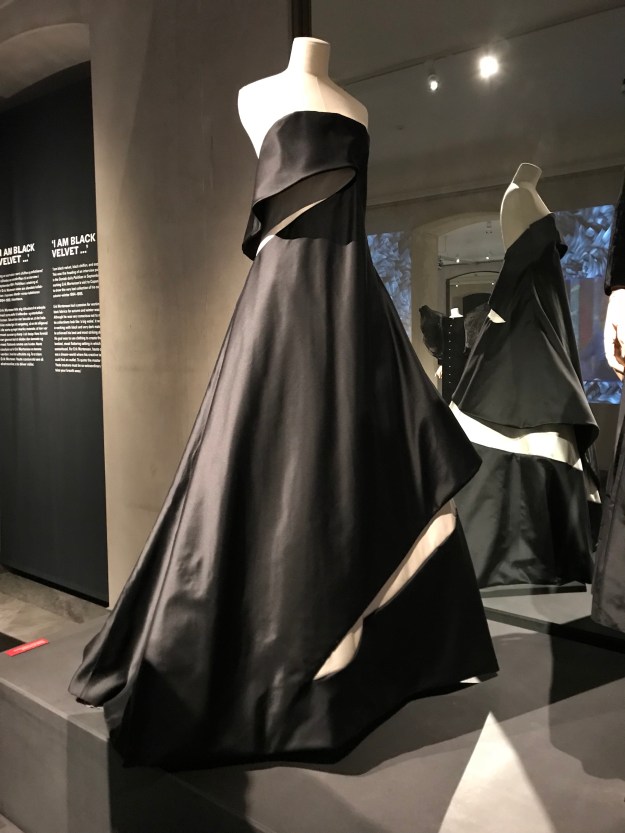
In honor of Fashion Week in New York City, I thought I’d post photos showing the closest I ever get to high fashion. In December, Copenhagen’s Design Museum, which covers an entire city block, featured an exhibit of the work of Erik Mortenson, a Danish designer who worked in Paris for years.

He was creative director at the couture houses of Pierre Balmain and Jean-Louis Scherrer between 1982 and 1995.

Call me old-fashioned, but I’m not particularly interested in seeing the navels and other anatomical parts the rich and famous like to display on red carpets these days. I could do with a return to elegance.

I could even do with a return to covered-up elegance.

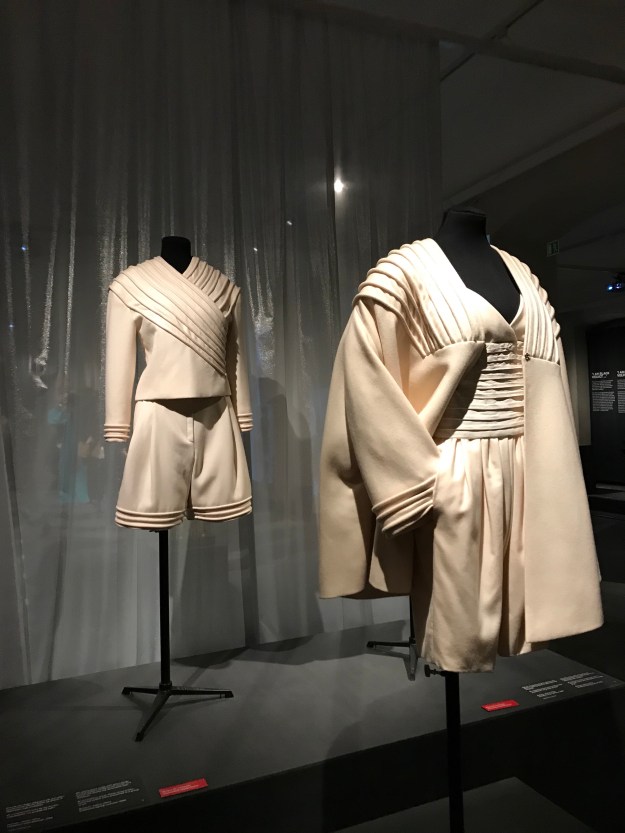
For afternoon tea at the Ritz, maybe you’d like a satin Bermuda shorts ensemble? Didn’t think so, but somebody paid cash money…

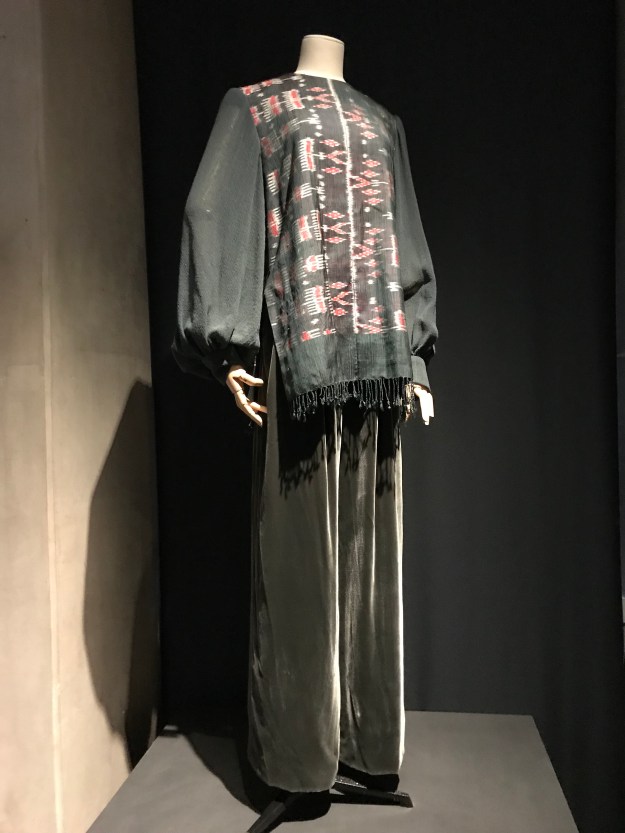
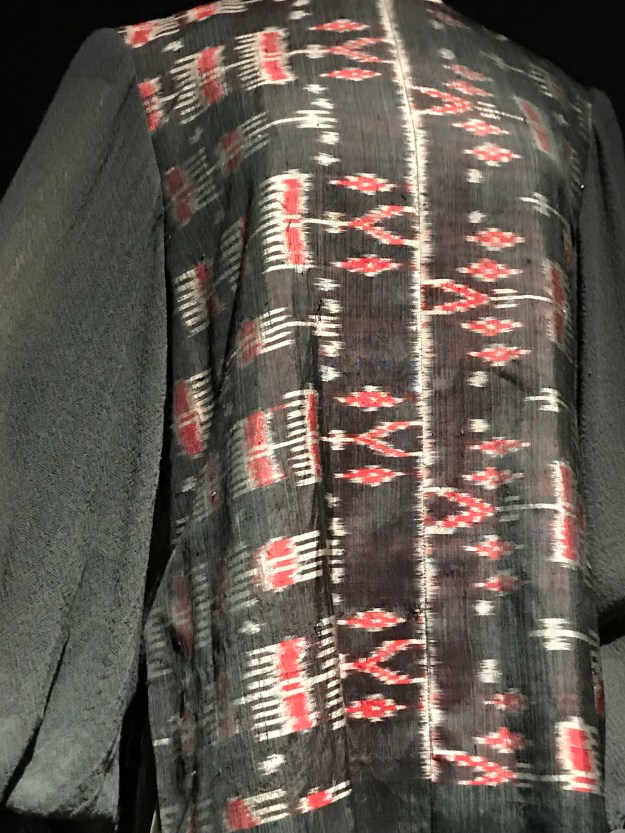
For an evening entertaining guests at the chateau, how about velvet PJ pants with a handwoven ethnic-looking top?

Out on the street, how about a fun fur?

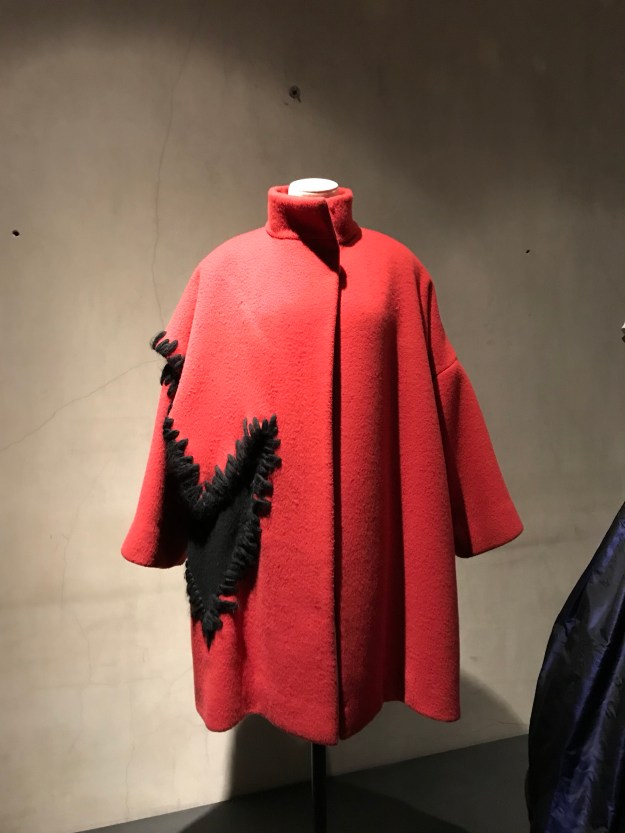
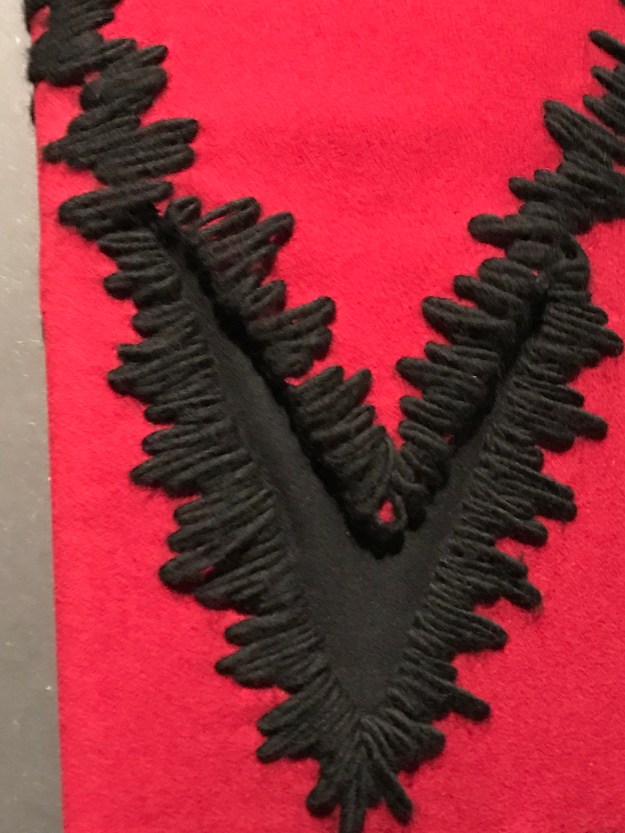
Or a pretty red wool number that I could (almost) see myself wearing?

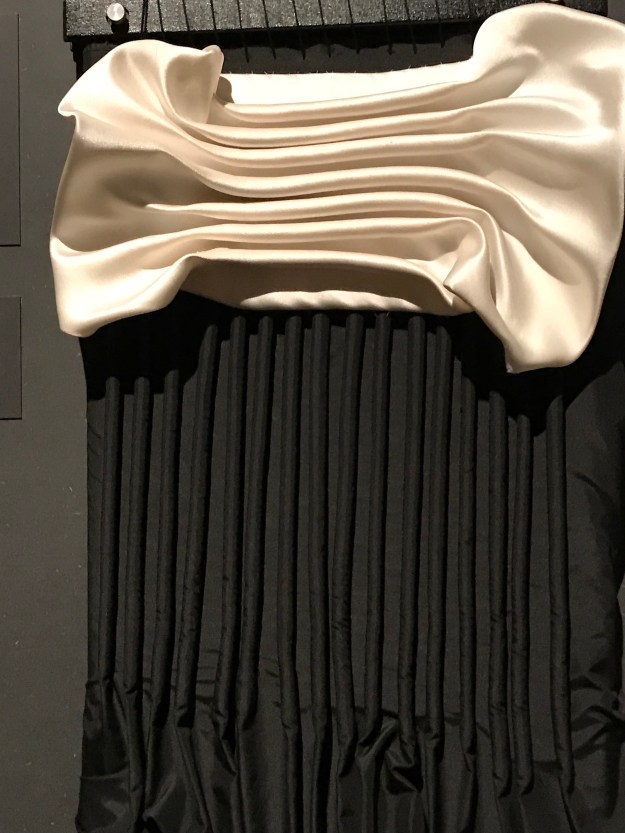
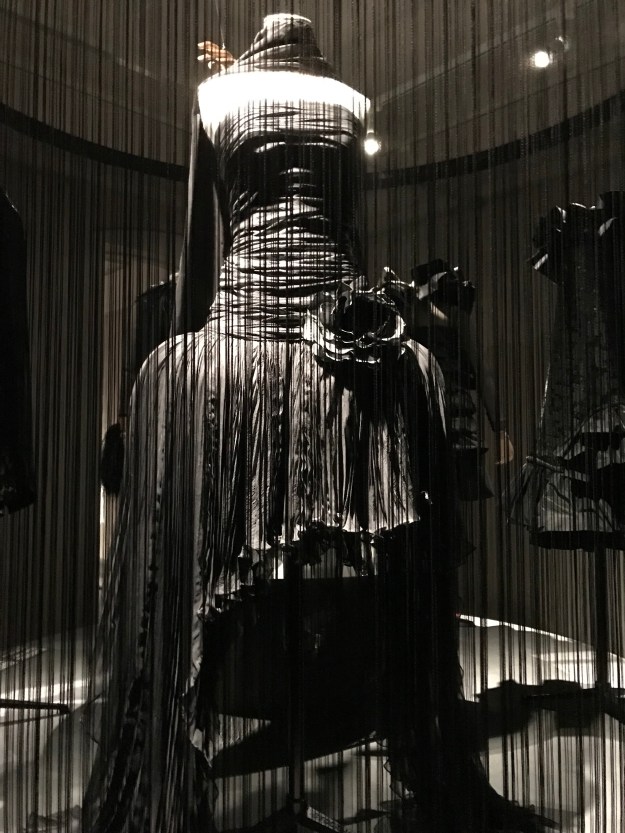
People seriously interested in design could study the detailing on these hand-made works of wearable art.

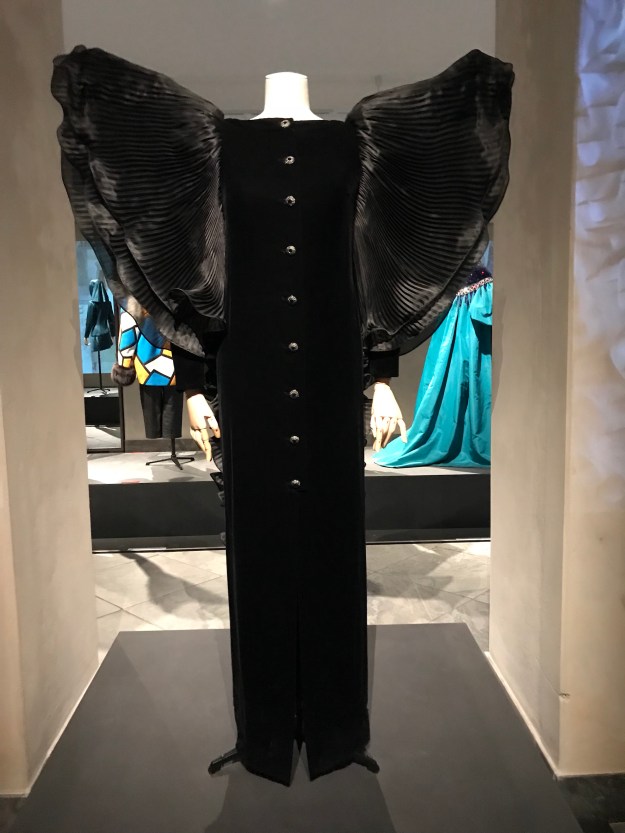
Whether anyone actually wore them, couture designers have always come up with out-there designs. Those are bat-wing sleeves above–note the mannequin’s hands below. Who knows what holds up those finely-pleated silk sleeves? Sometimes fashion is mystery.
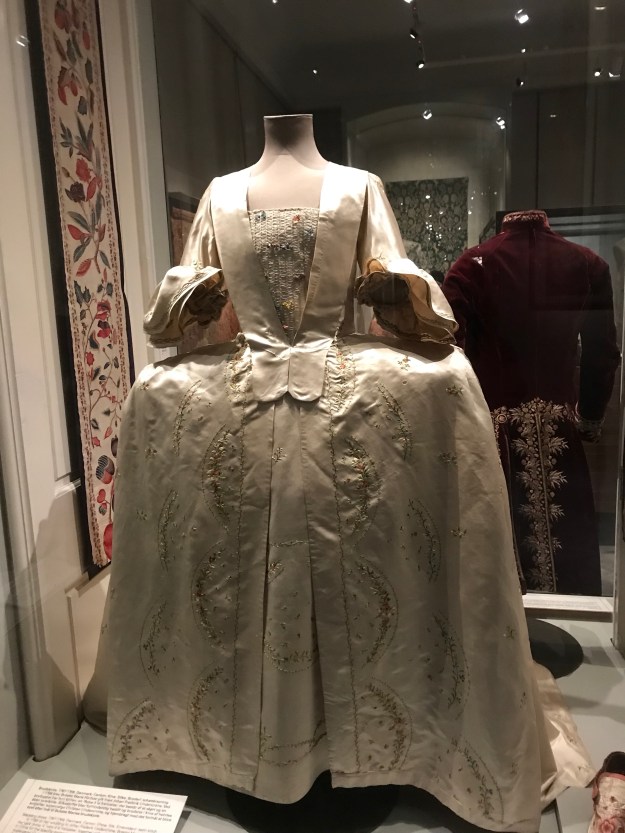
Sometimes super-wide hips can be fashionable.
They were in the eighteenth century, as in this wedding gown in the adjoining historic fashion gallery.

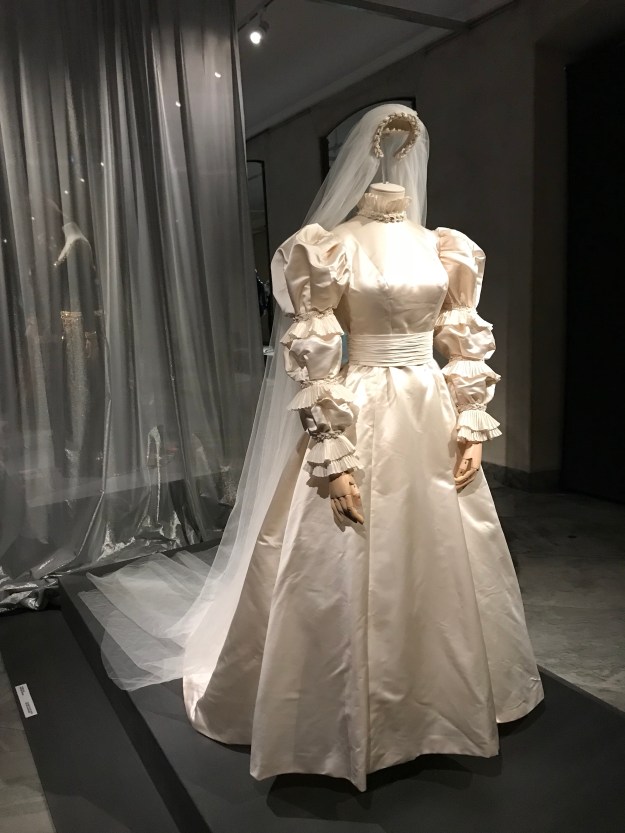
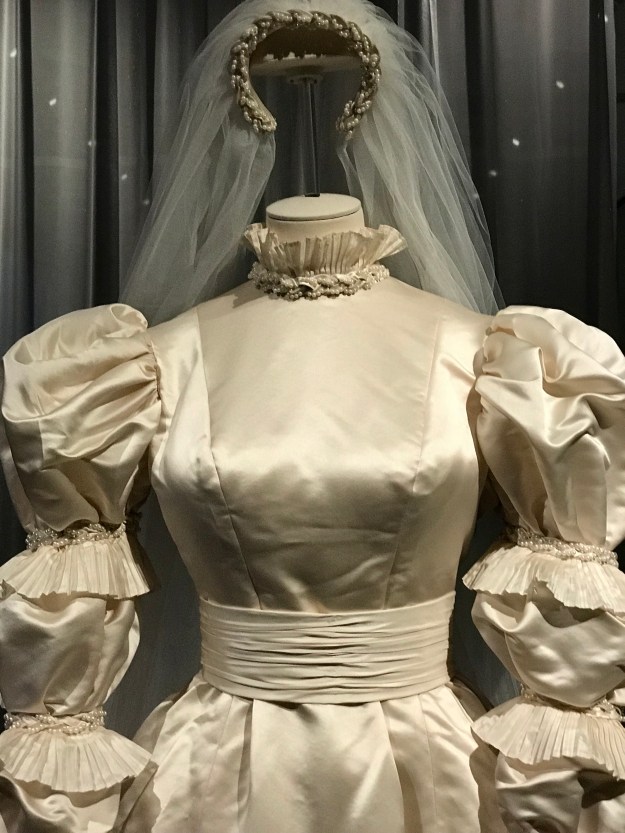
A wedding gown that Mr. Mortenson designed for a favorite niece in 1982 left me a little cold. It had a few ruffles and pearls too many for my taste. But I’m sure the groom thought his bride was the most beautiful woman in the world when she walked up the aisle.
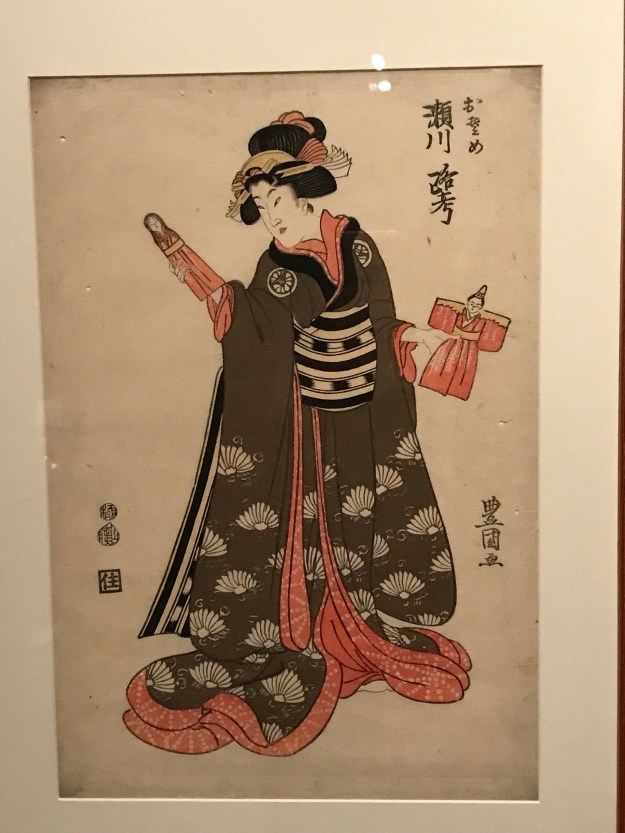
The Design Museum also featured an exhibit on Japanese influences on Danish design–more on that later.

Half the fun of design museums is seeing what people wear.

As for me, my idea of high fashion is high ALTITUDE fashion.

I’m very happy to qualify for a senior-discount season pass at Steamboat, and to still be able to stay vertical on the mountain (most of the time). I do come in a lot earlier than I used to, which leaves plenty of time for dreaming of trips to come.