Love in the Air in Copenhagen

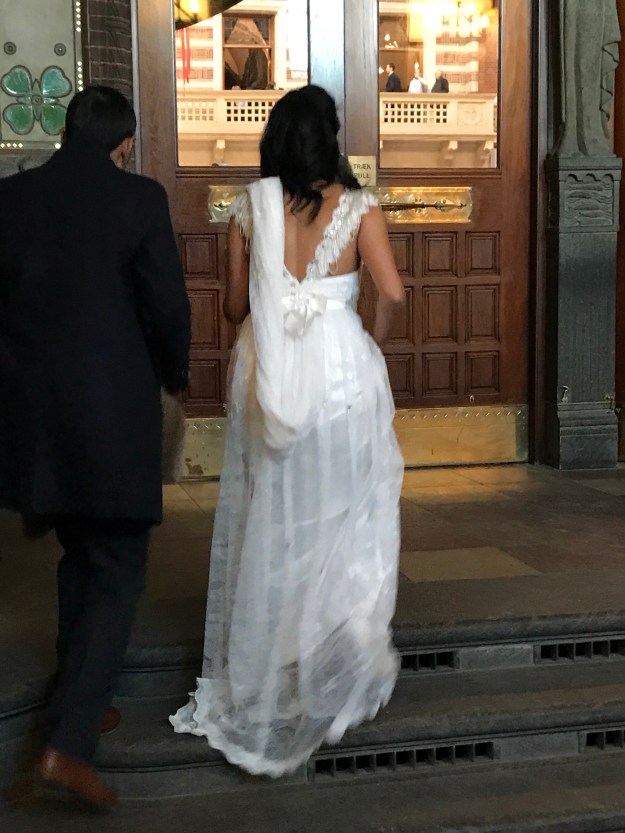
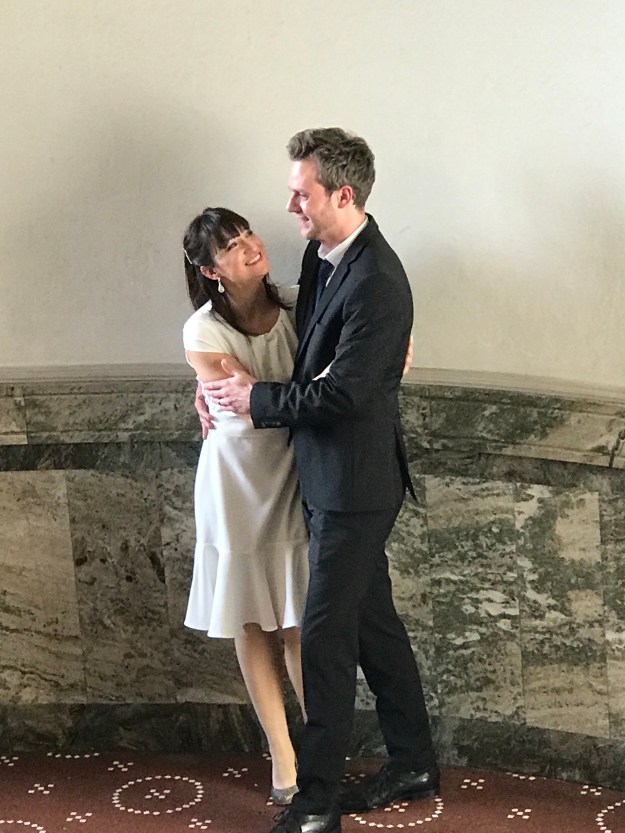
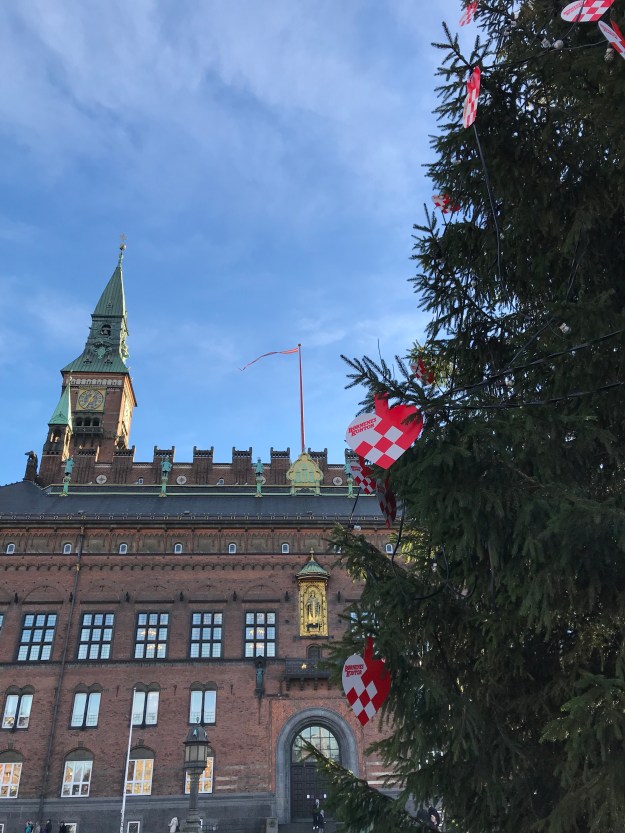
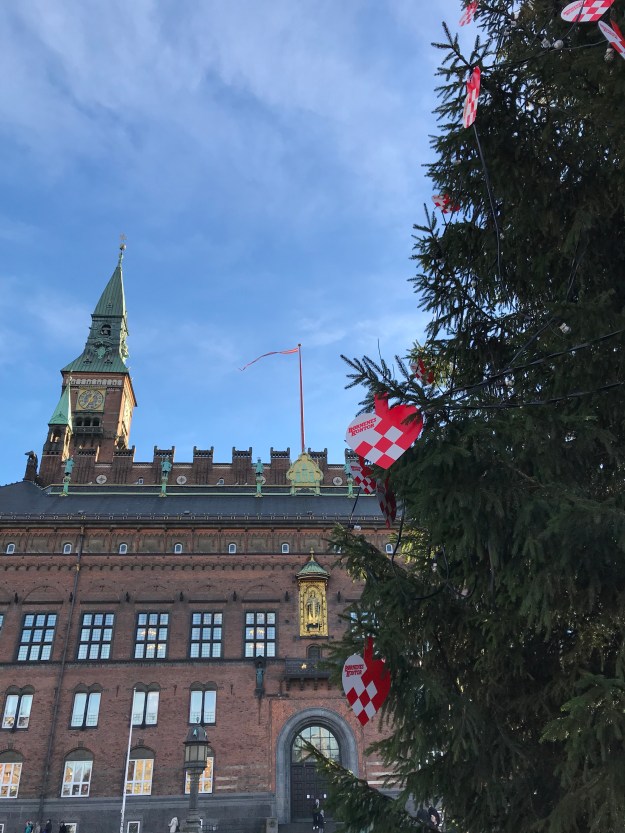
Every Saturday, couples in love keep appointments in Copenhagen’s beautiful and romantic City Hall.

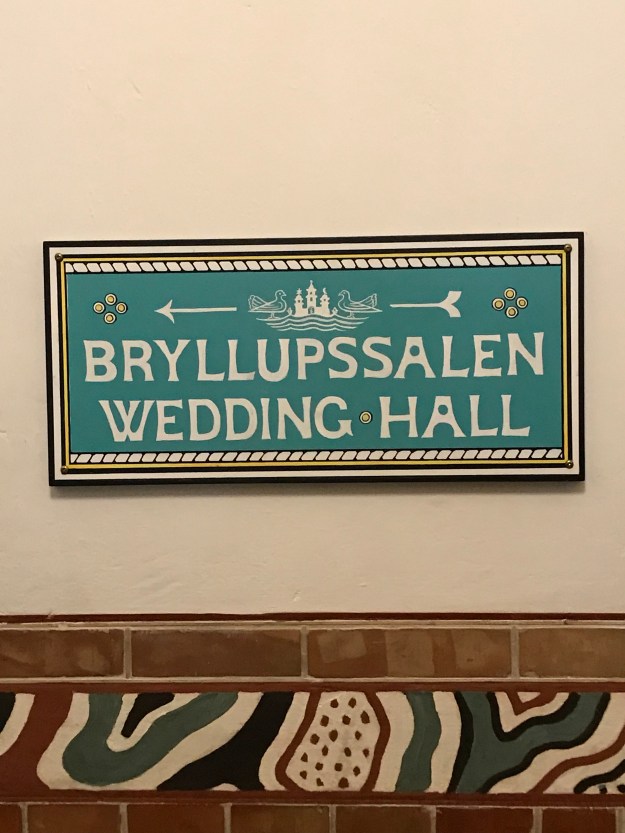
It seems to be THE prime wedding venue in Denmark.

Possibly a formal tour would include the actual wedding hall.

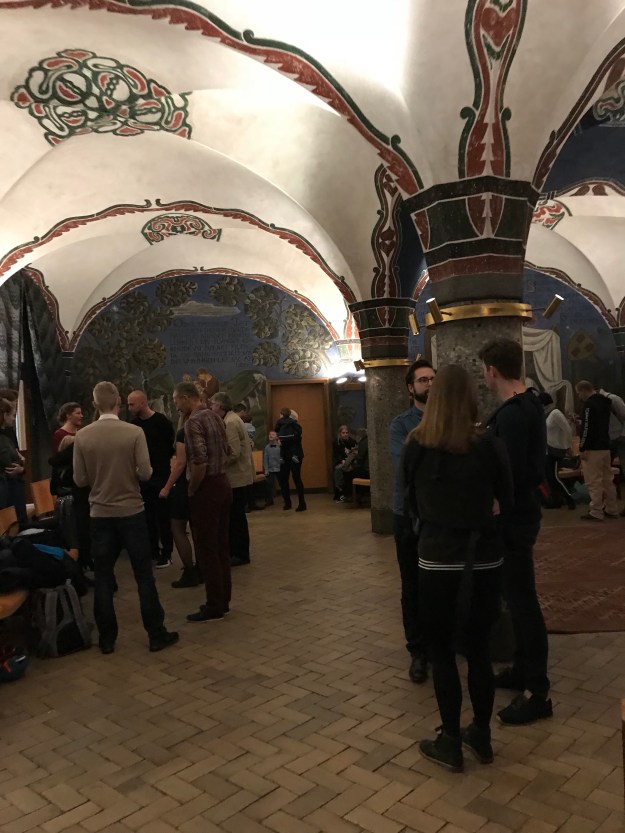
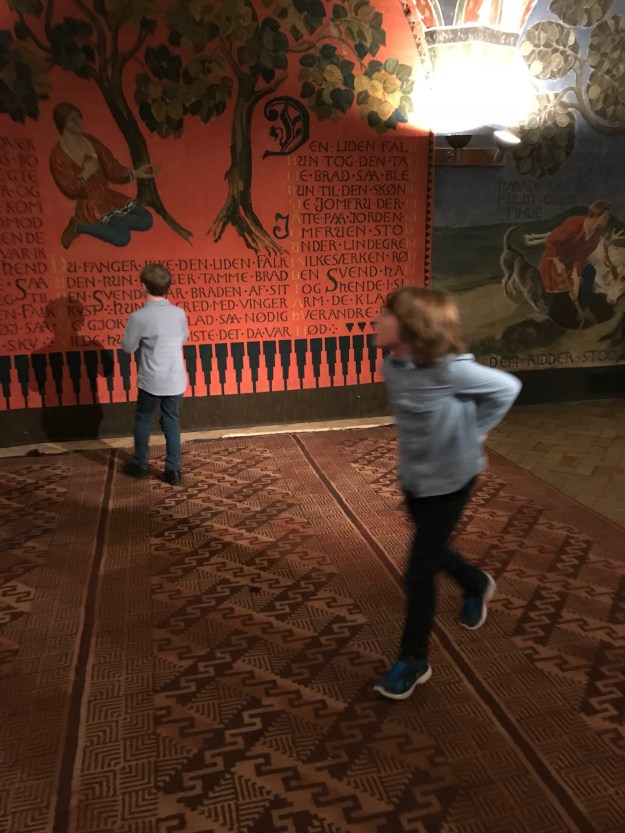
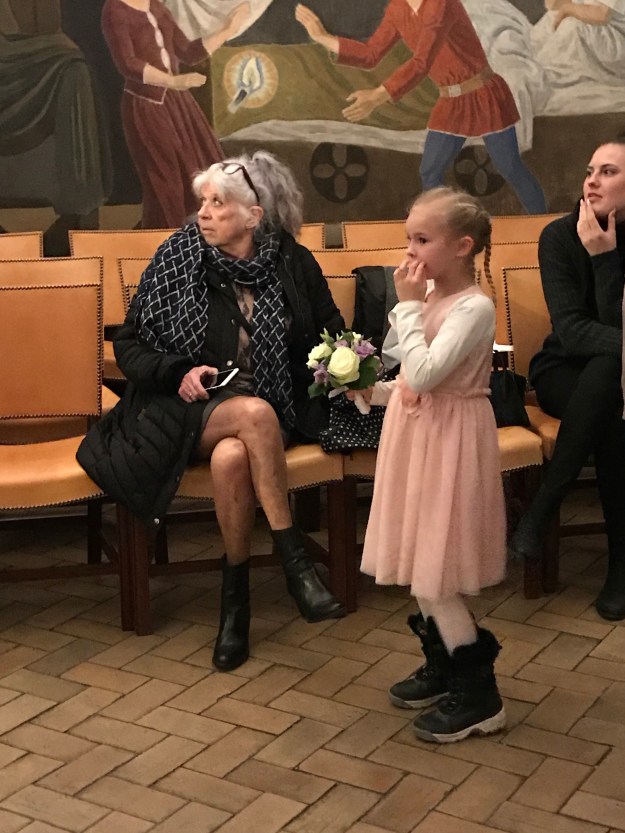
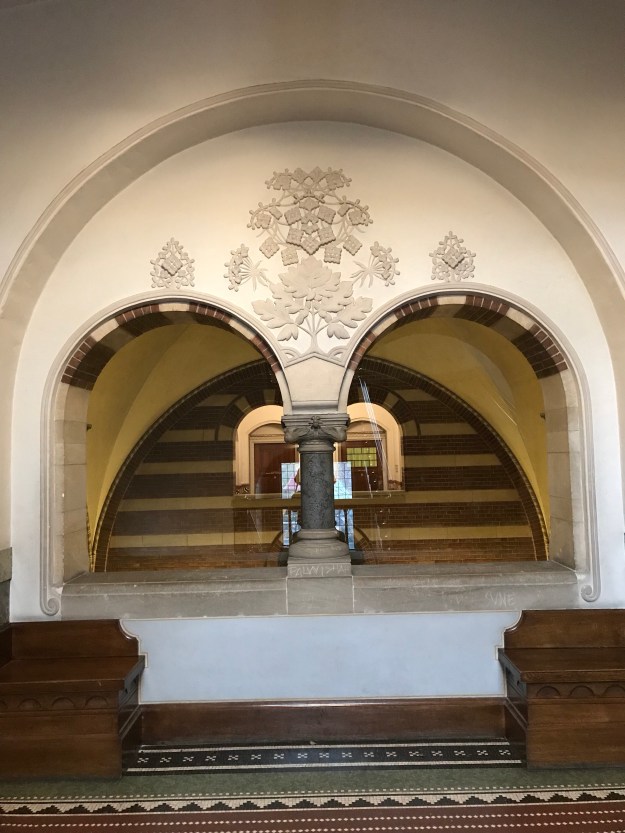
But we were there on a busy Saturday, and without an invitation, we got only as far as a beautiful anteroom where friends and relatives gather.

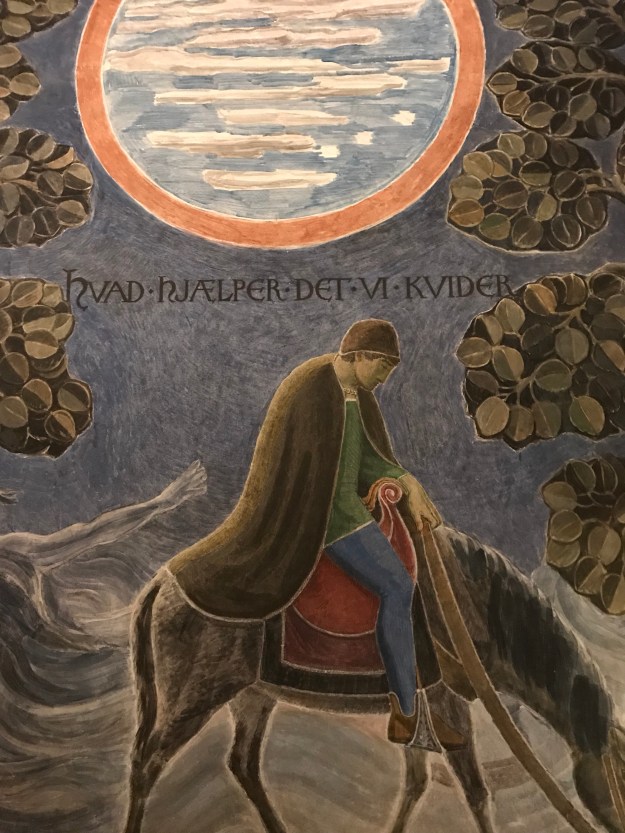
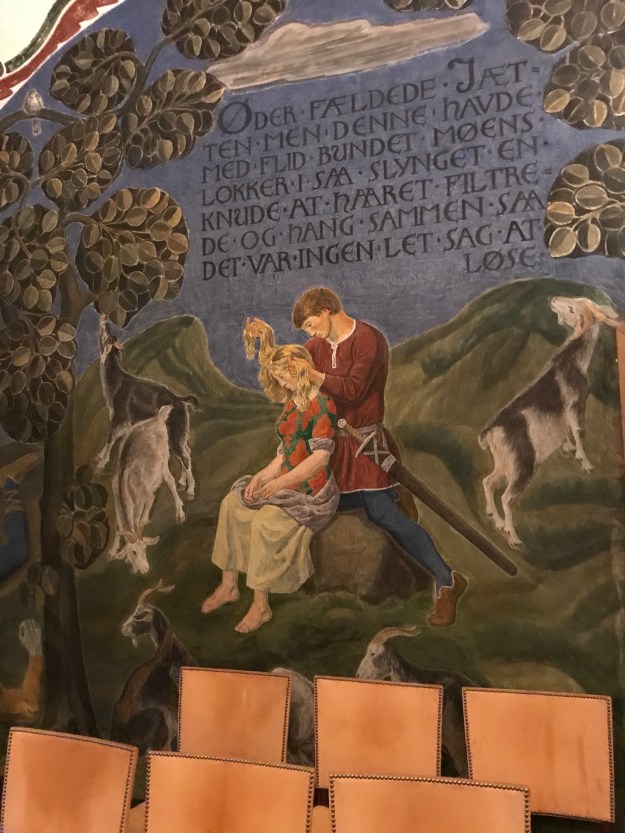
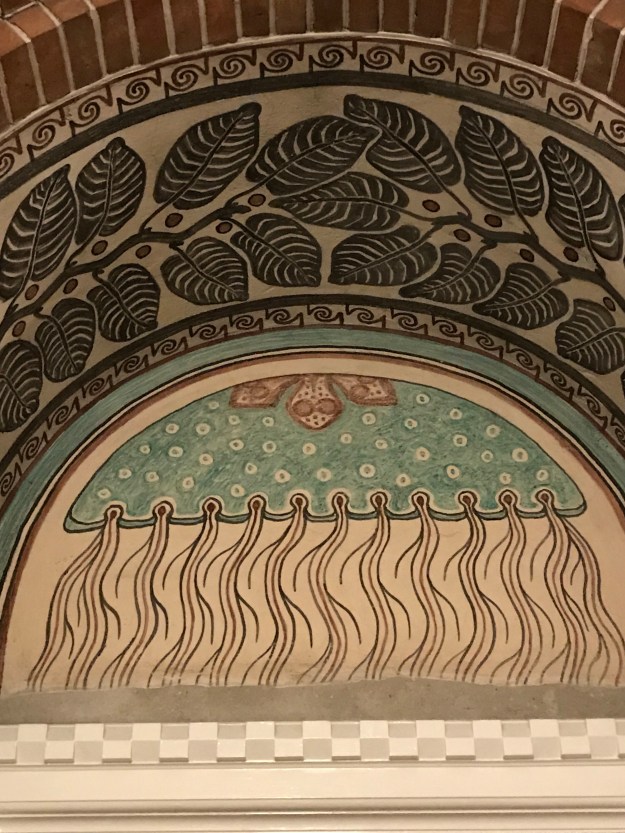
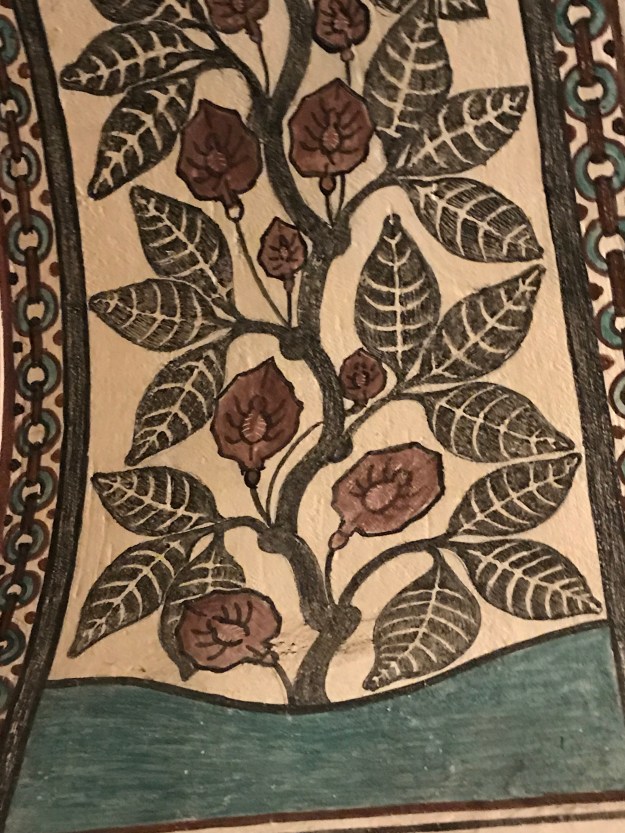
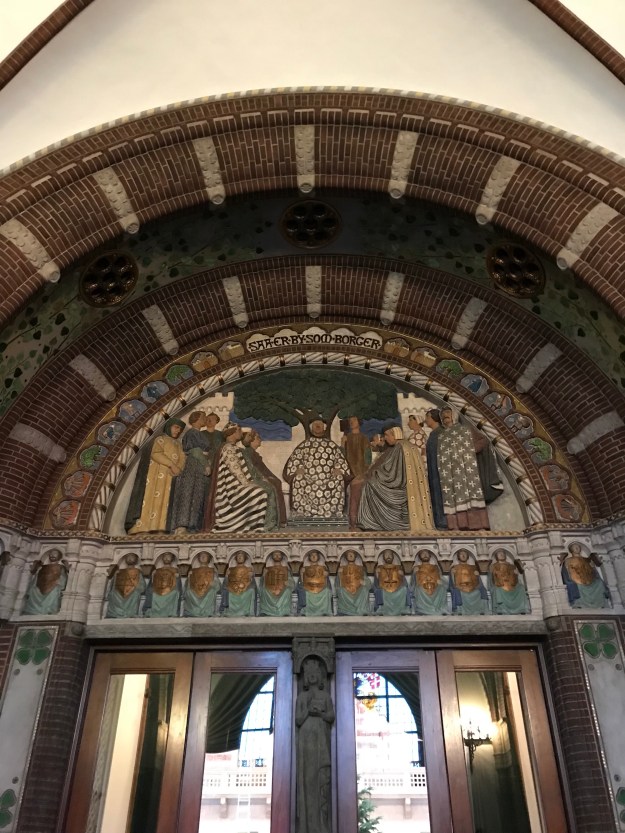
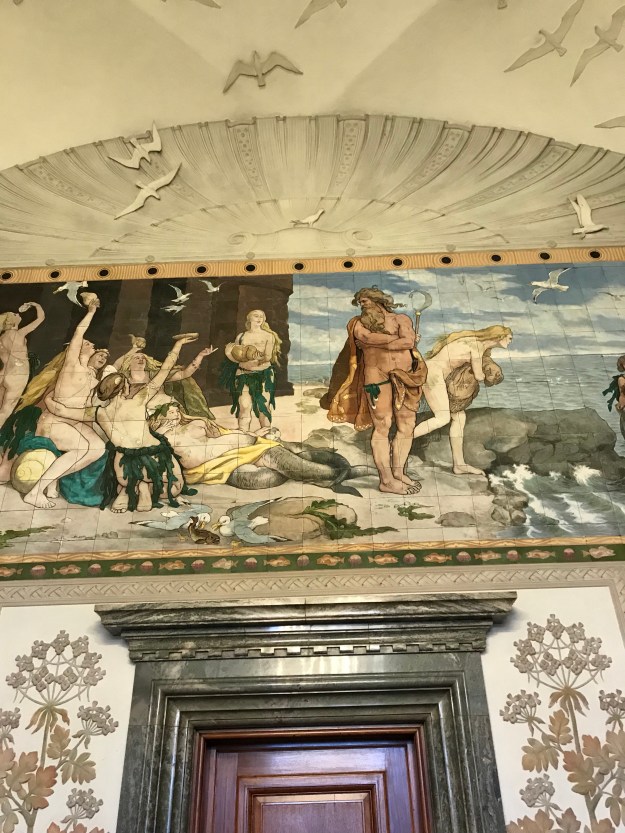
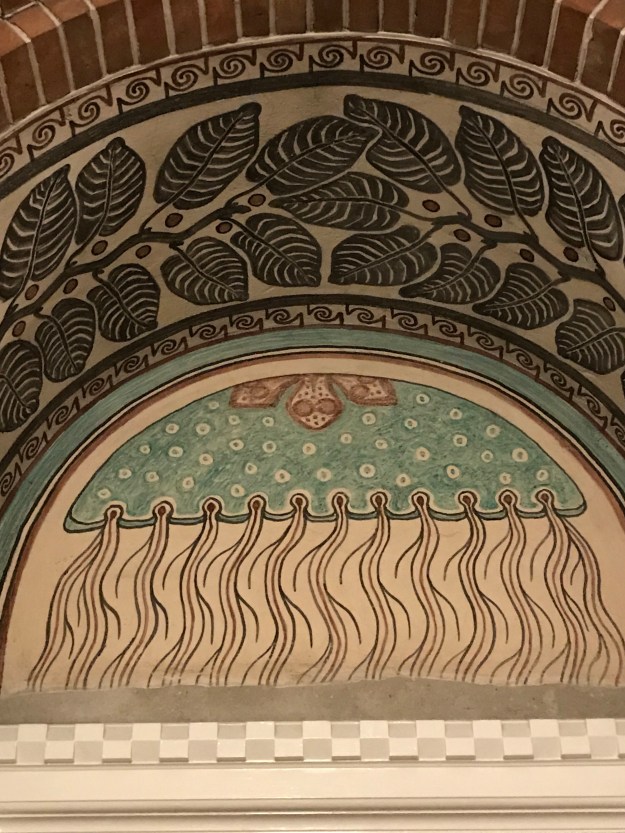
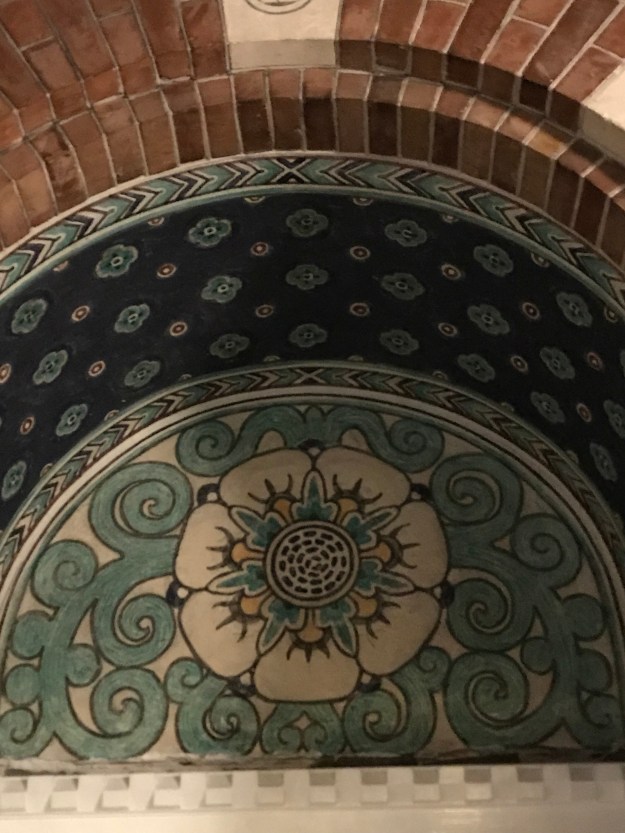
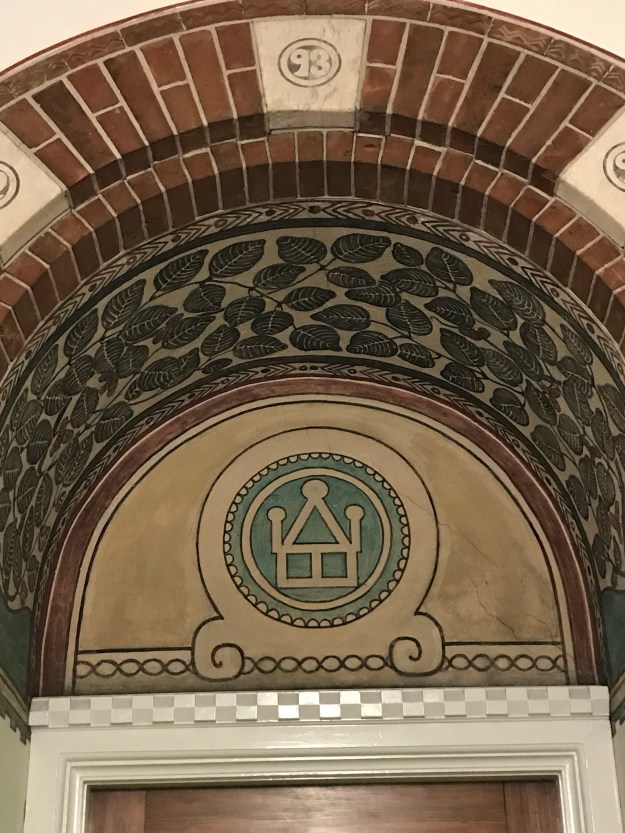
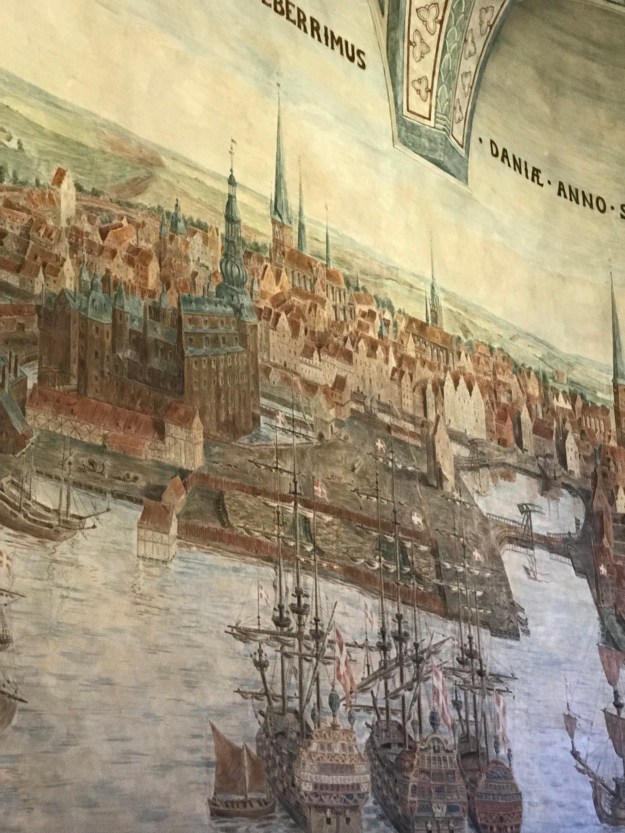
Romantic frescoes cover the walls.

What’s this story about? I can’t read Danish, but I’m pretty sure it’s a love story.

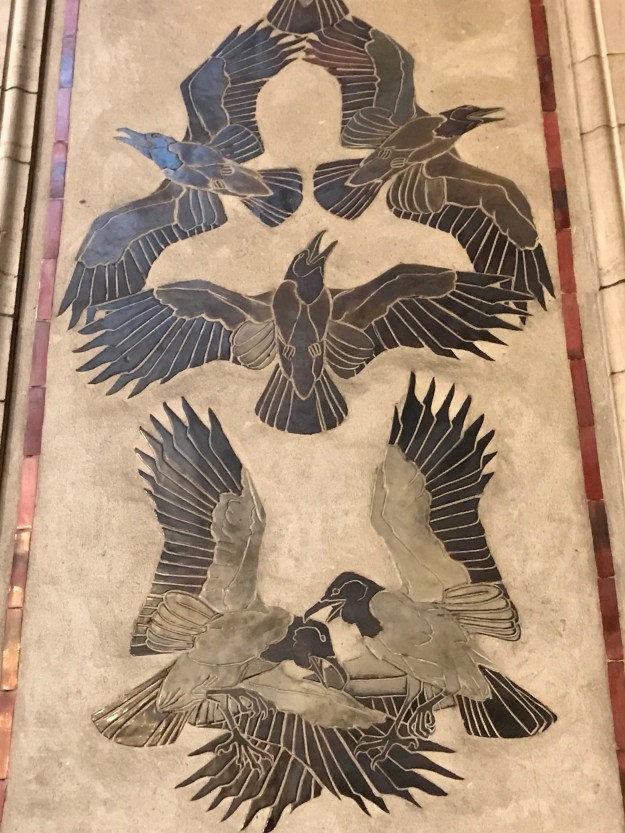
Kids run around on the intricate tile floor.

Families gather, anxious to take their parts in the back-to-back ceremonies scheduled all day.

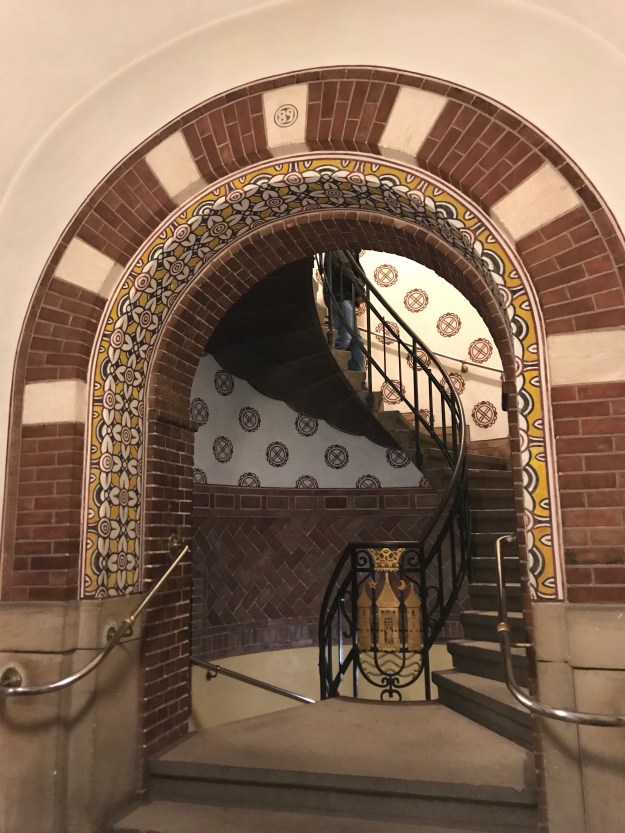
Happy couples pose for photos in the stairwells and hallways.

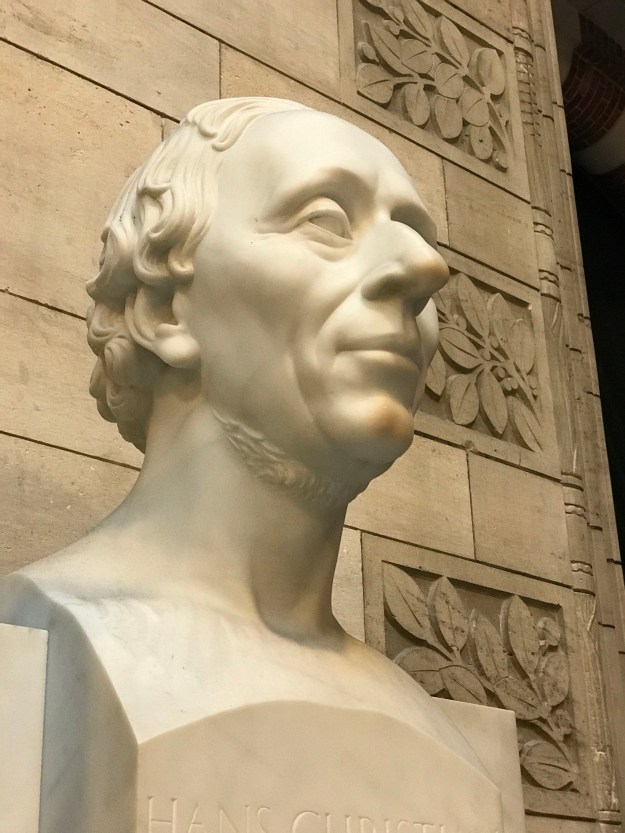
That great Danish Romantic, Hans Christian Anderson, watches couples come and go. (Sadly, the great love of his life was unrequited and he died a single man).

Maybe the newly married leave with some design ideas for their new homes? I certainly would. The City Hall is grand, yet most of the design elements look handcrafted. I’m going to copy some motifs myself.

Happy Valentine’s Day from Copenhagen!

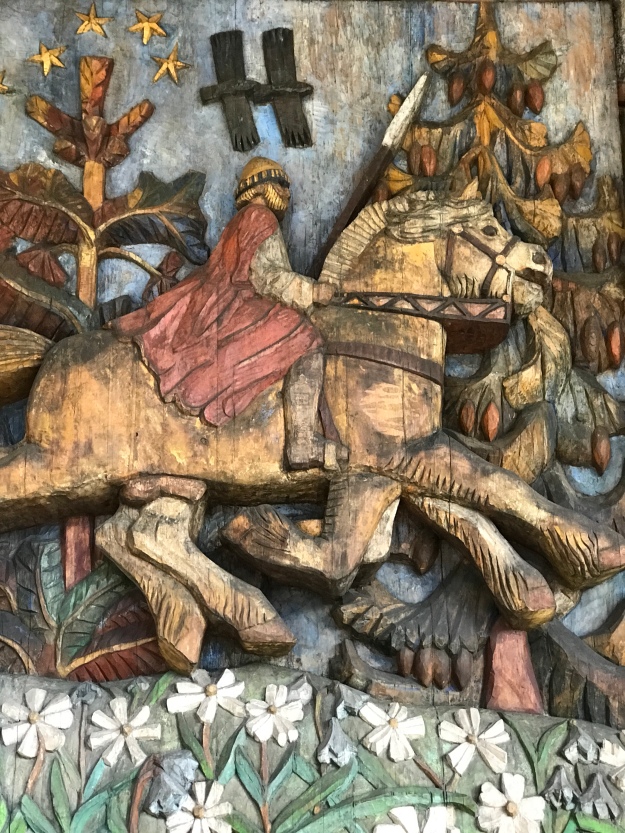
Swan Maidens at Oslo City Hall

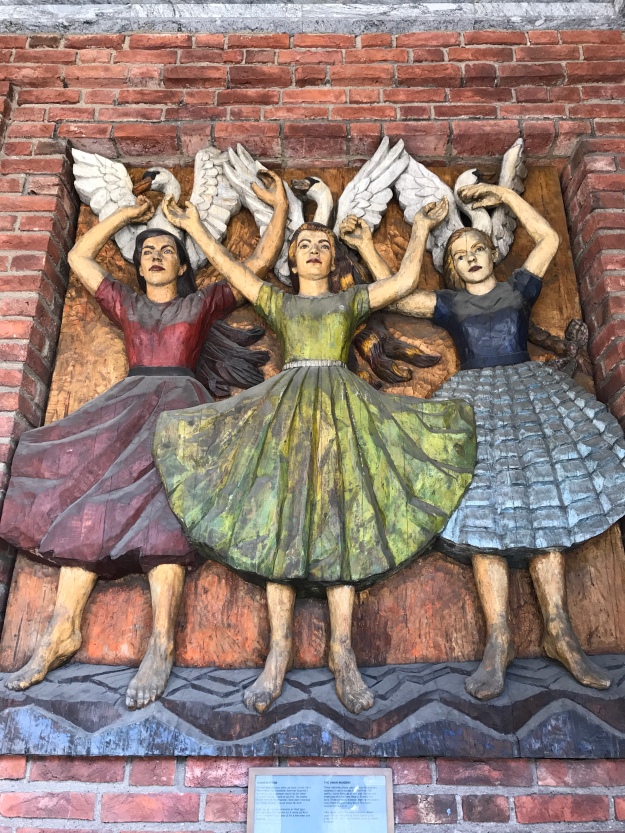
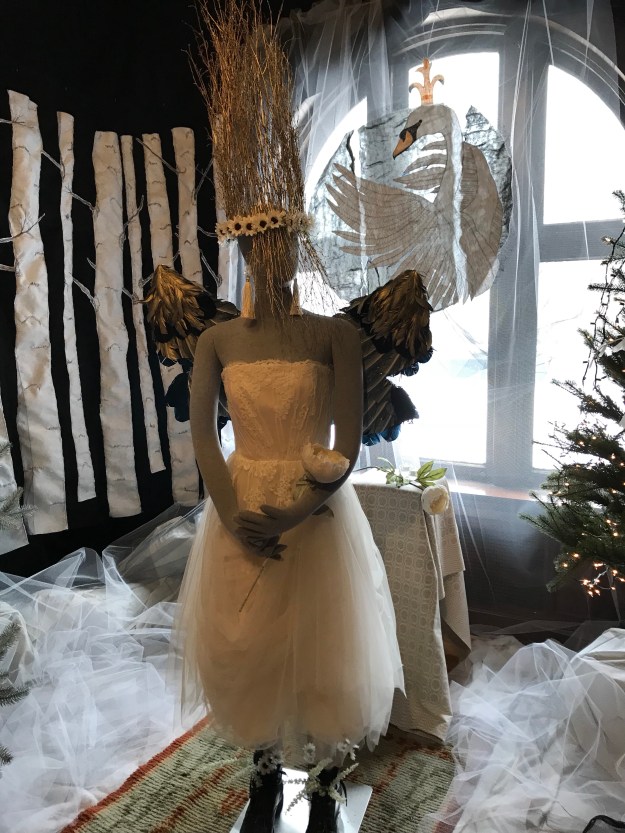
I was just planning on a quick walk-through of the building, which honestly is not to my taste. But the courtyard has sixteen large wood reliefs, each about eight feet tall, by Dagfinn Werenskiold. They portray Norse myths from the 13th century. He had me at the Swan Maidens. Legend has it that three Valkyries appeared on a beach one day in the form of swans. They turned into beautiful women, married three brothers who happened along and couldn’t believe their good fortune, and stayed fourteen years. Then they flew away. I don’t know the end of the story, but the Valkyries are beings that fly over battlefields, deciding who will live and who will die. Did the brothers later fight in battle and get saved? Or had they maybe left the toilet seat up one time too many? The answers are lost in the mists of time.

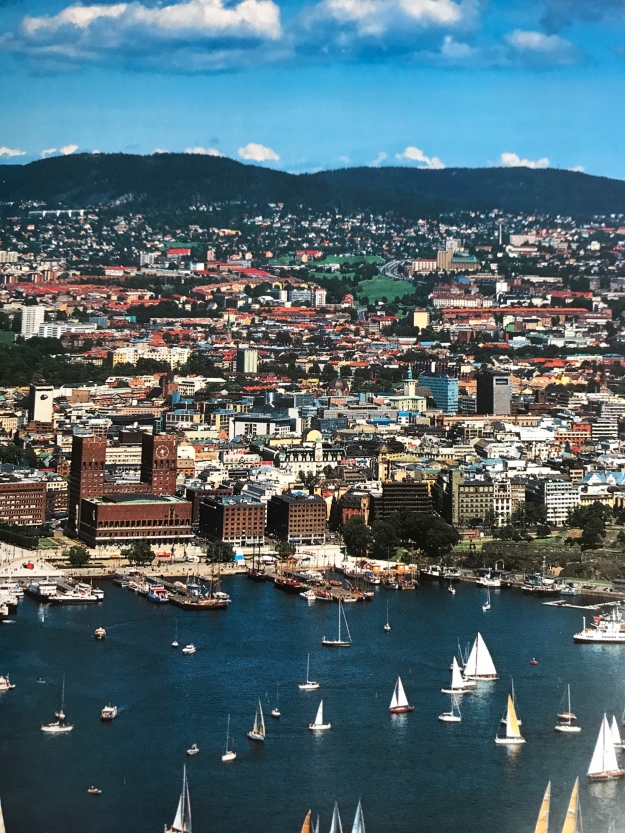
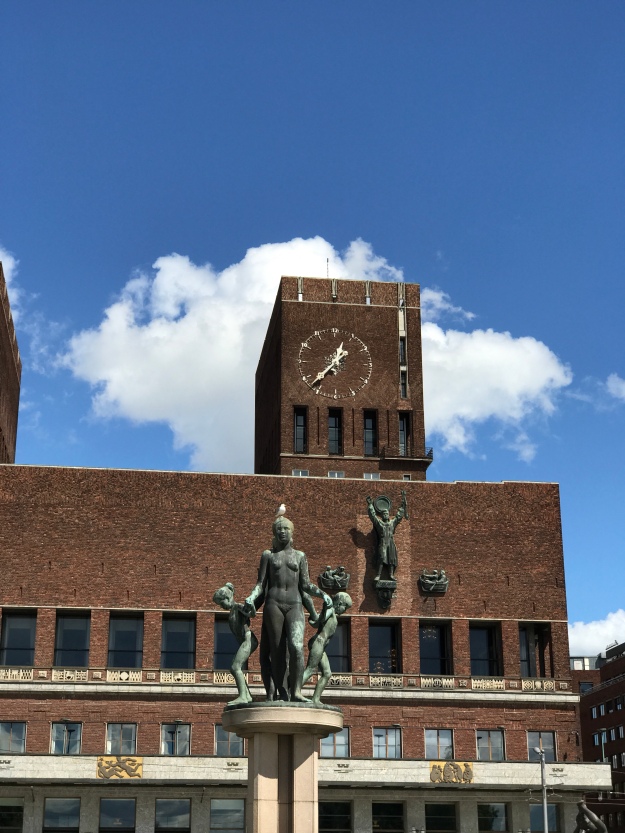
The Oslo City Hall replaced a slum in the middle of the city, directly on the Oslo Fjord. The exterior style is listed as “Functionalism,” which sums it up. The architects were Arnstein Arbeberg and Magnus Poulsson. It was partially built by 1939, but then World War II intervened and it was finally completed in 1950. The spectacular interior more than makes up for the so-so exterior.

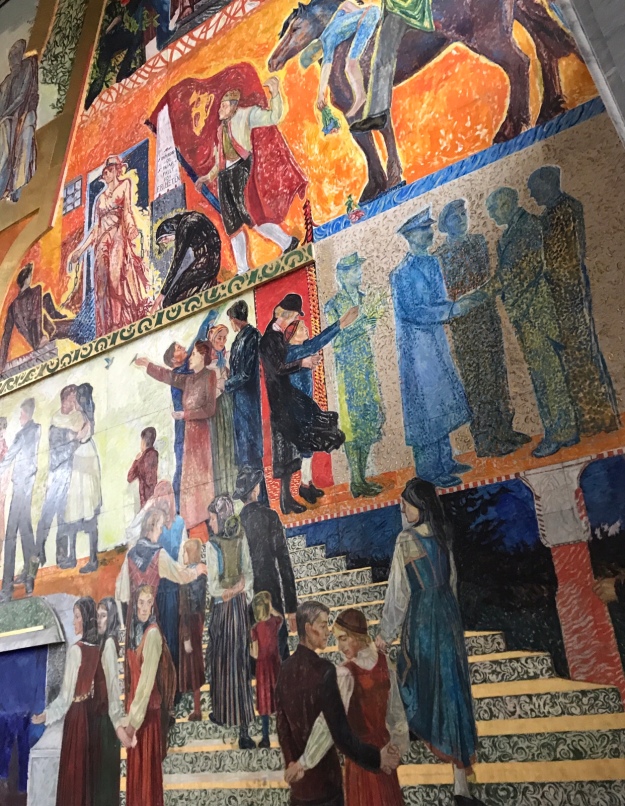
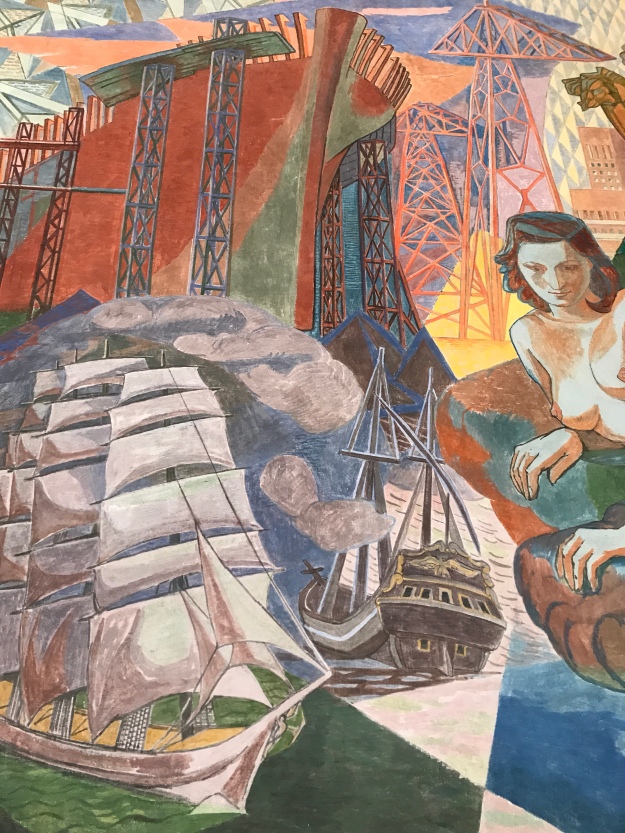
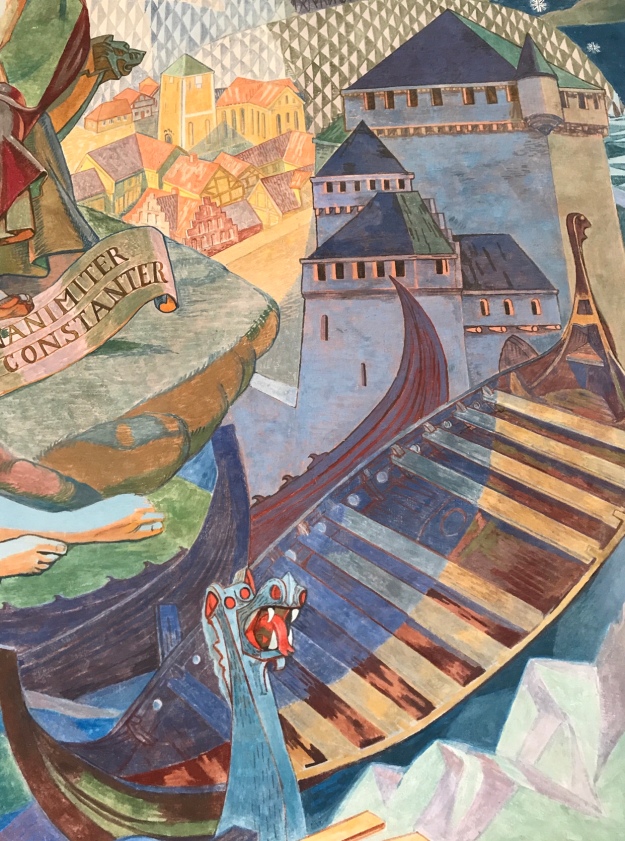
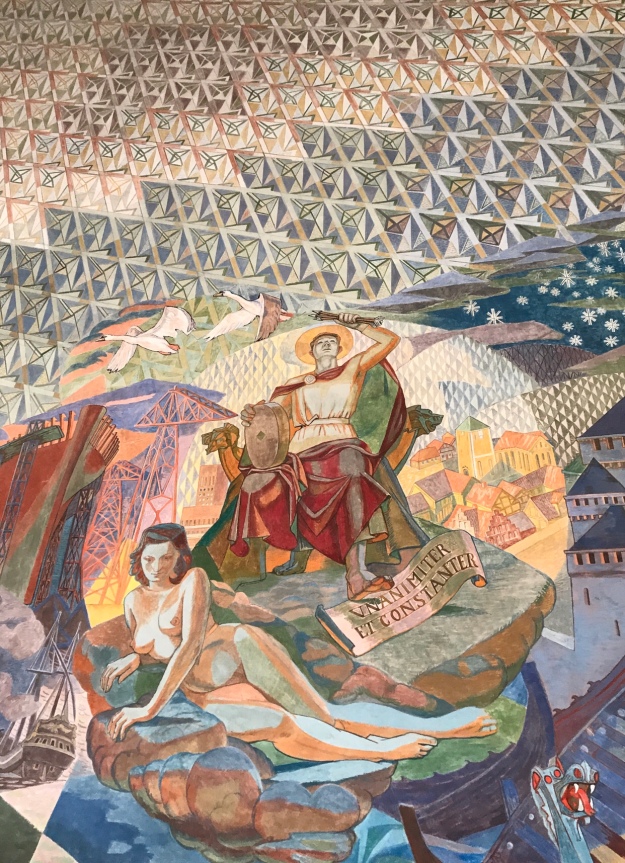
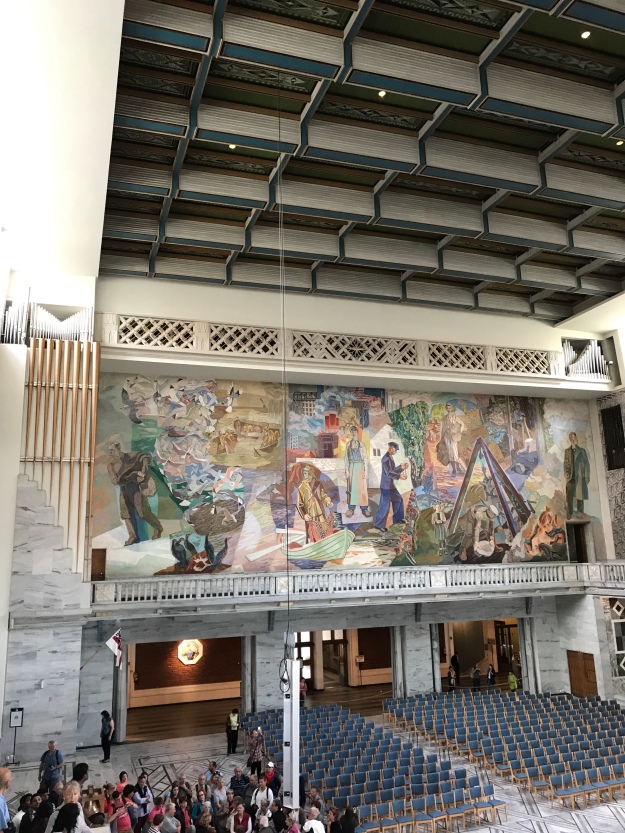
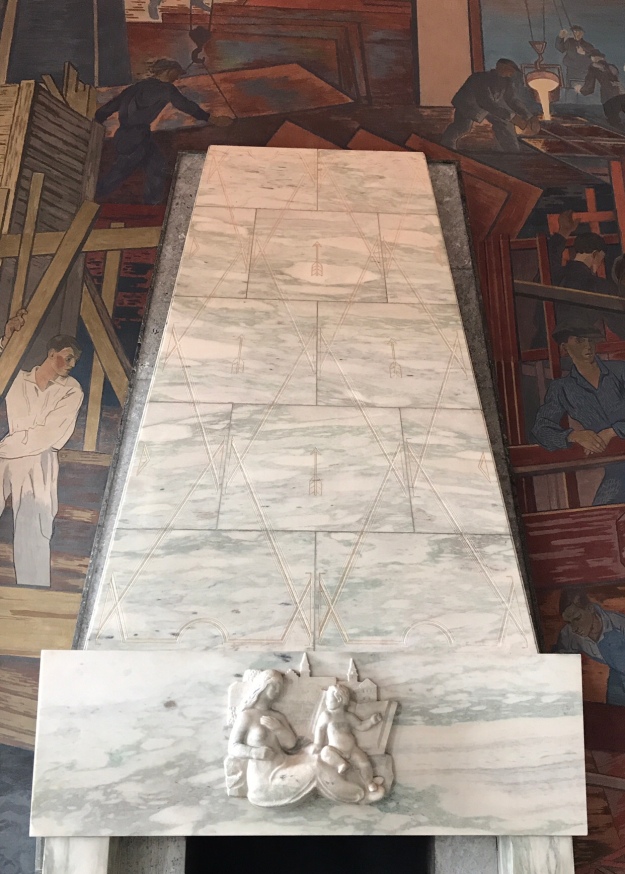
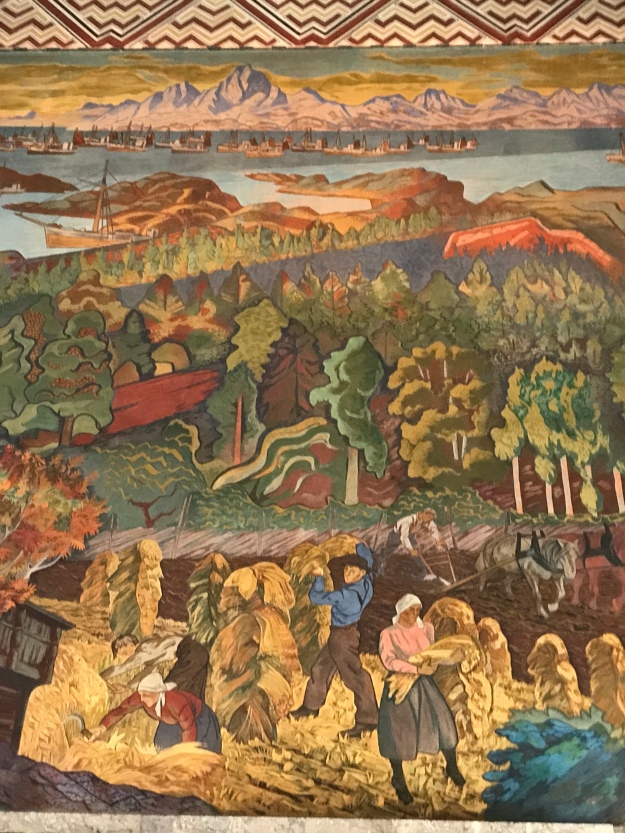
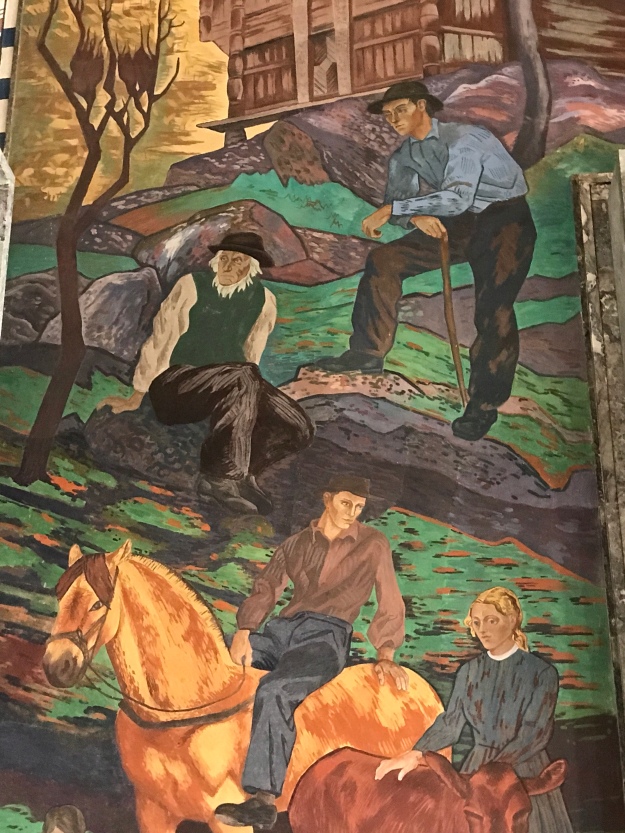
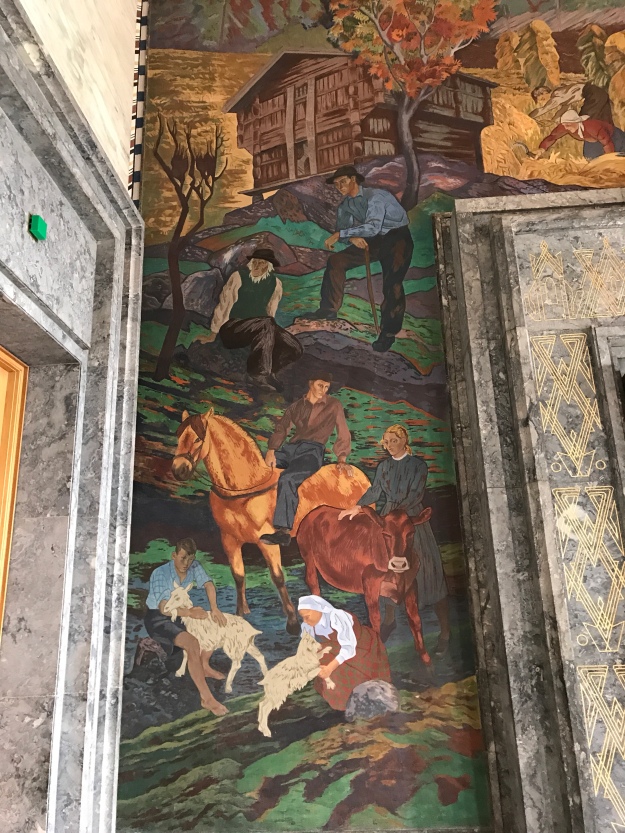
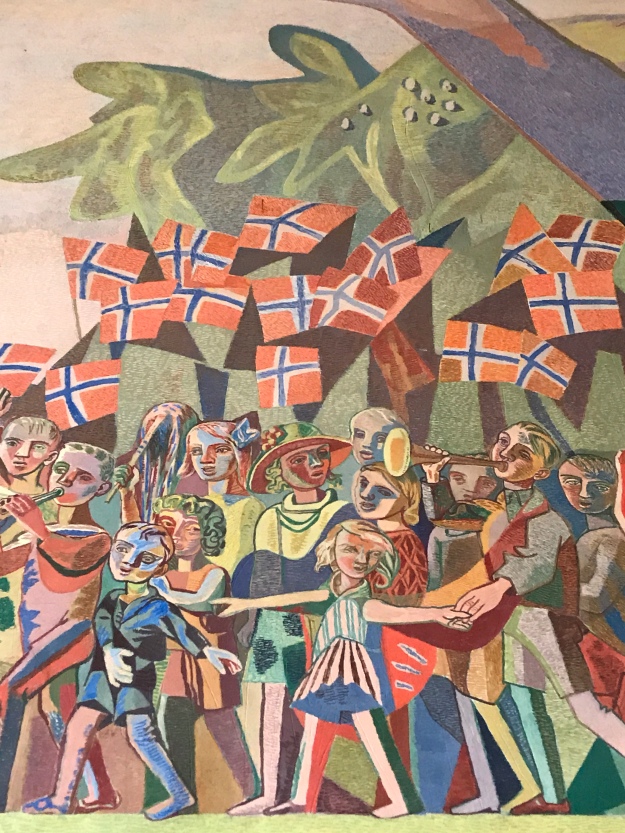
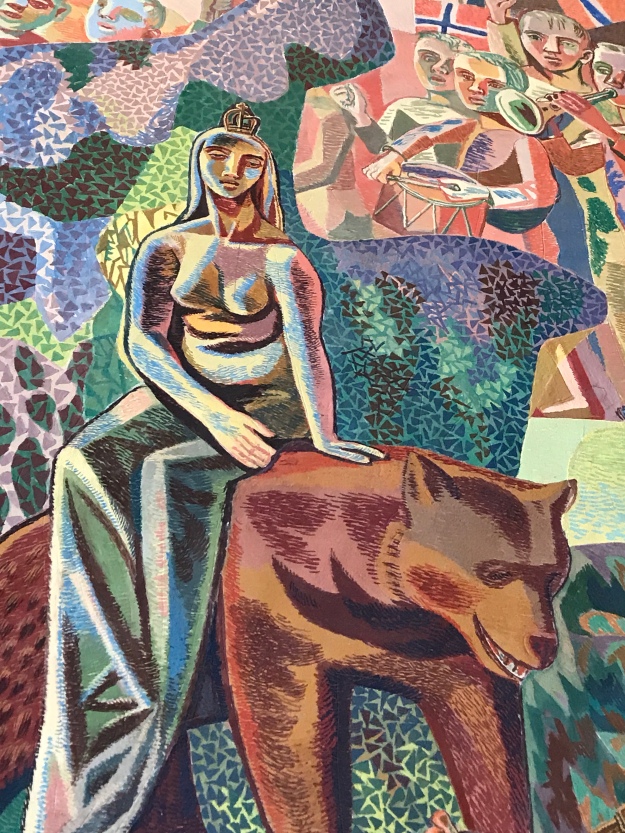
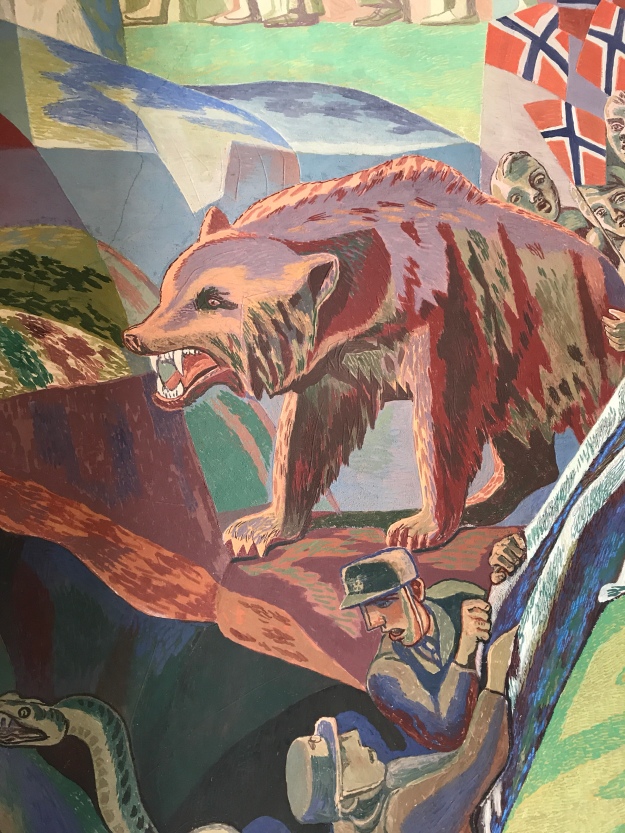
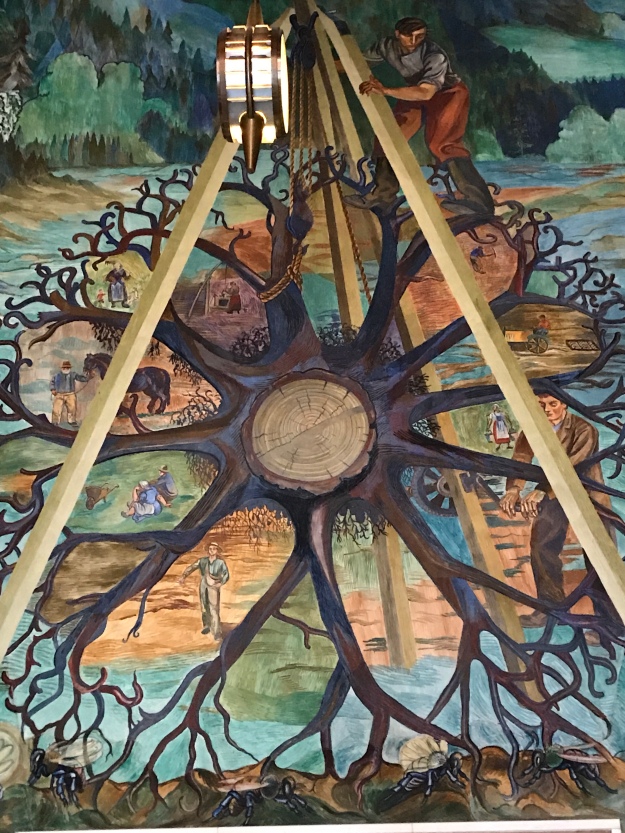
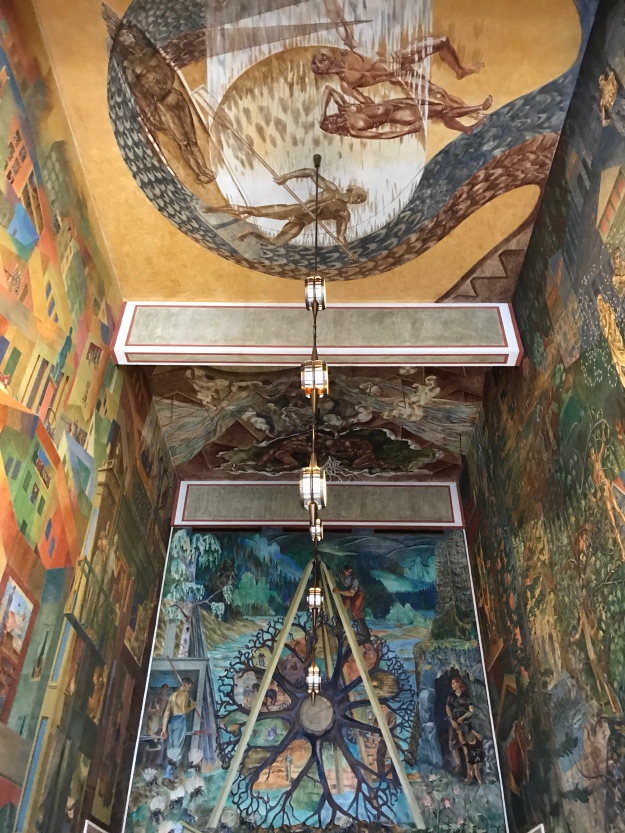
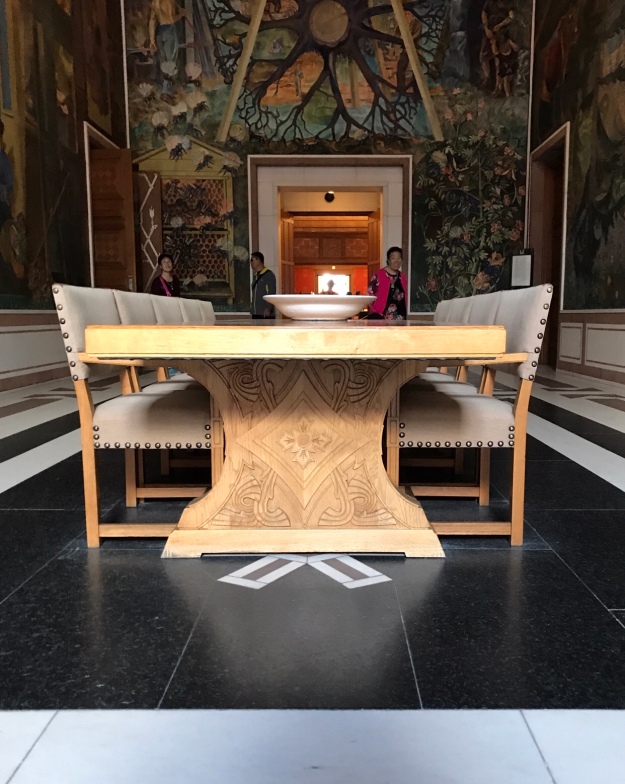
Inside, the grand rooms were decorated by the finest Norwegian artists, chosen by competition. The details above are from Henrik Sorenson’s huge mural “The Nation at Work and Play.”

It dominates the Main Hall, where the Nobel Peace Prize is awarded every year.

The rear wall features a mural by Alf Rolfson.

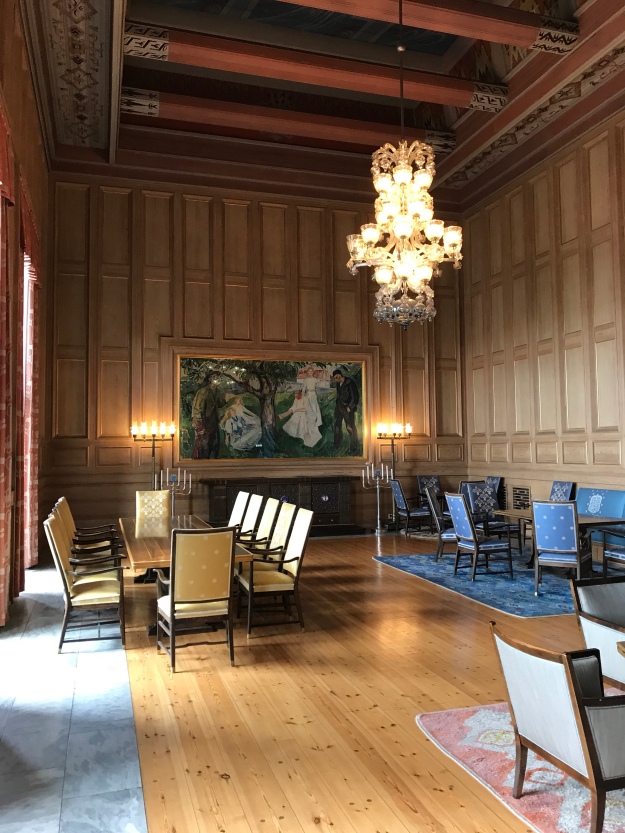
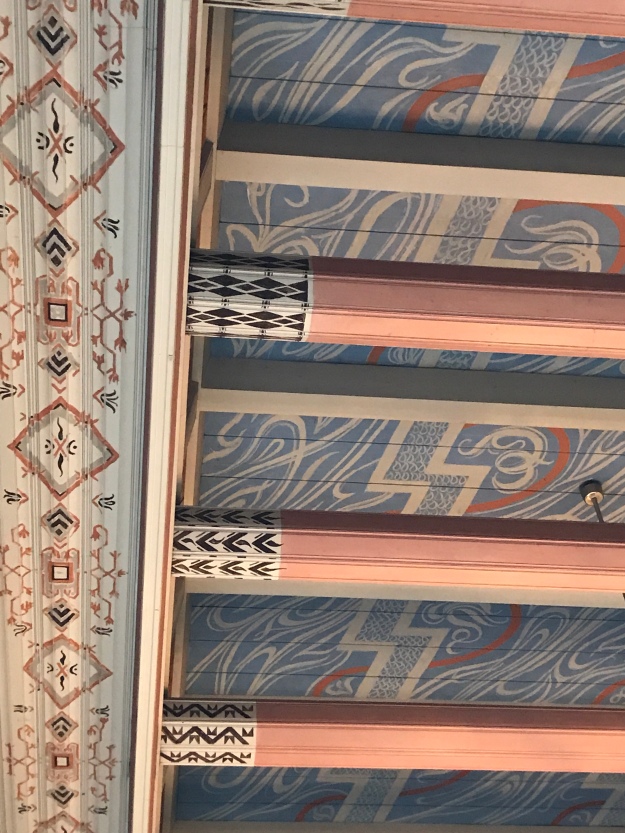
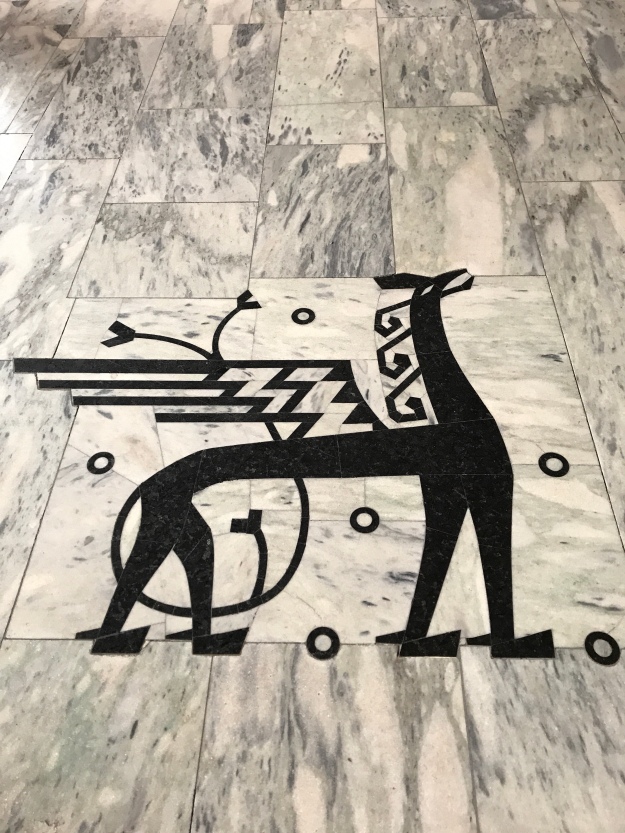
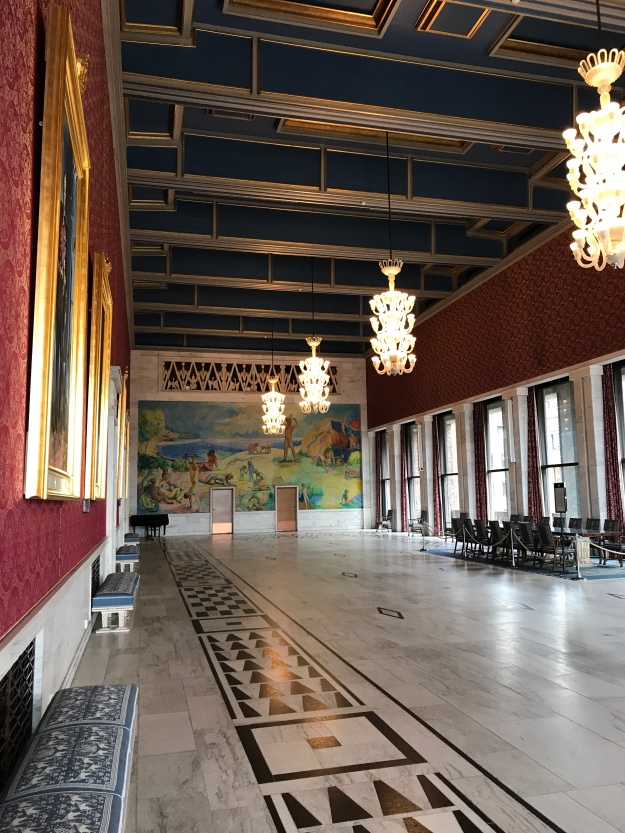
I like the “smaller” rooms even better. The Festival Gallery has windows looking out over the fjord, and a beamed and painted ceiling. Of course there are Viking motifs, like this creature inset in the marble floor.

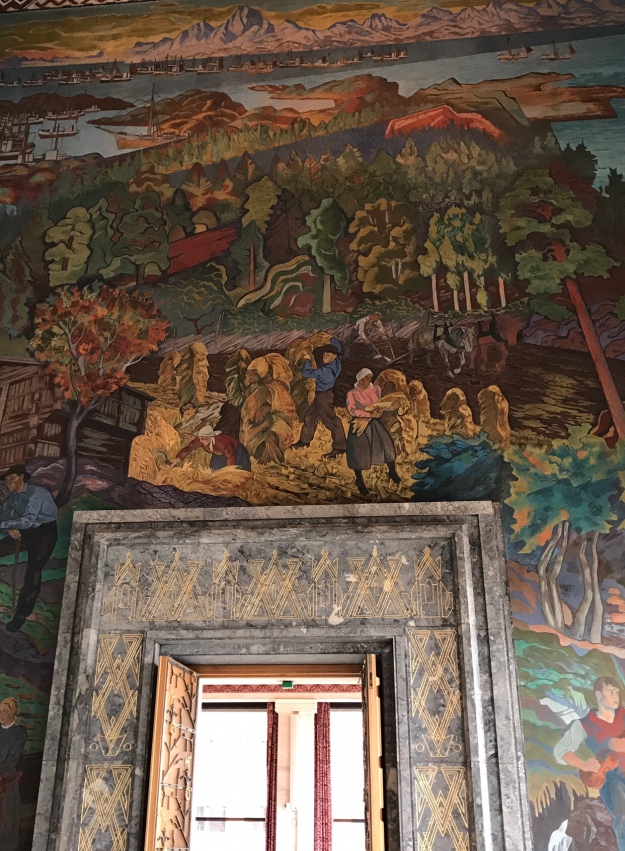
Axel Revold covered the end wall with a mural depicting the long, narrow country of Norway from north to south.

Aage Storstein, a young up-and-coming artist, painted the West Gallery with images of freedom and democracy. I don’t really understand the history or the politics, but a captive princess and a bear depict the centuries that Norway was in union with Denmark (not exactly willingly, it seems).

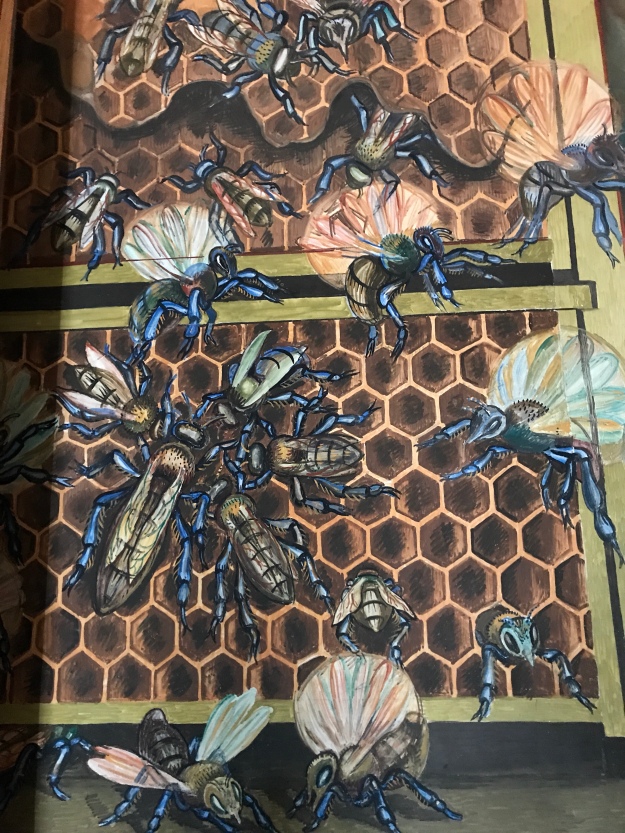
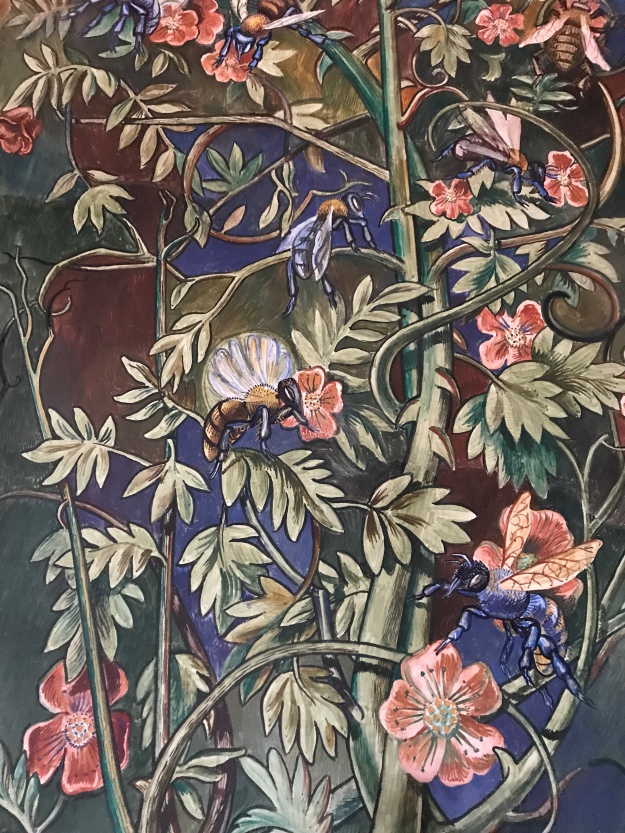
My favorite room is a smallish one, the East Gallery. Per Krogh considered it his masterpiece.

The beehive represents city life and the rosebush country life.

He painted an uprooted tree as a rose window.

So much for a quick walk-by of a boring city building. I wandered in the Oslo City Hall for a long time. Outside, I admired Dagfinn Werenskiold’s wooden carvings again. How about Odin on his eight-legged horse Sleipner?

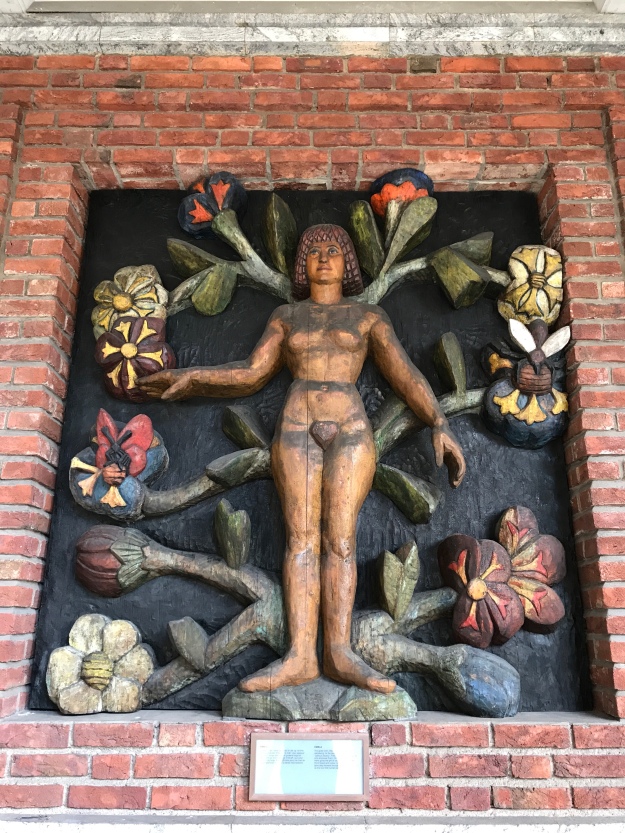
Or ponder “Embla,” an elm tree turned into the first human woman in a Nordic creation story.

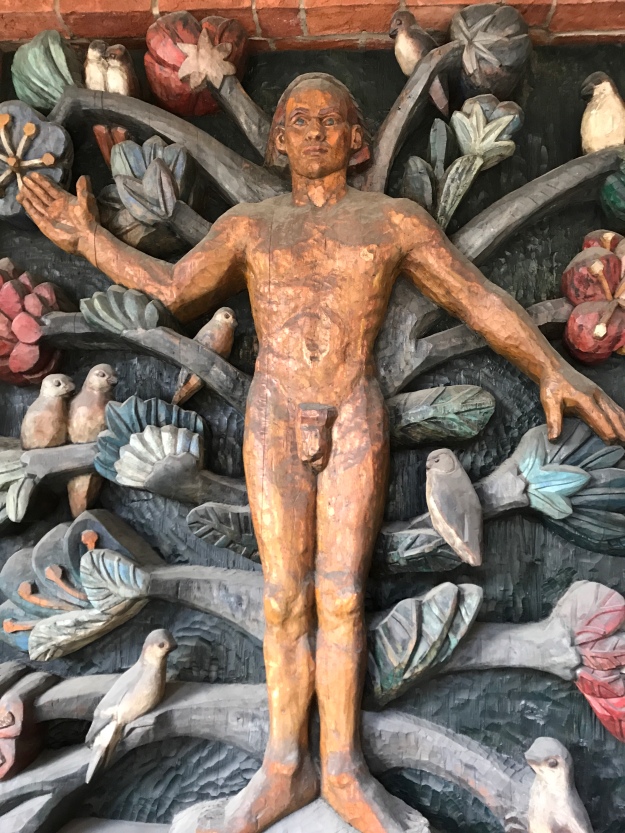
Her partner was Ask, a man created from an ash tree.

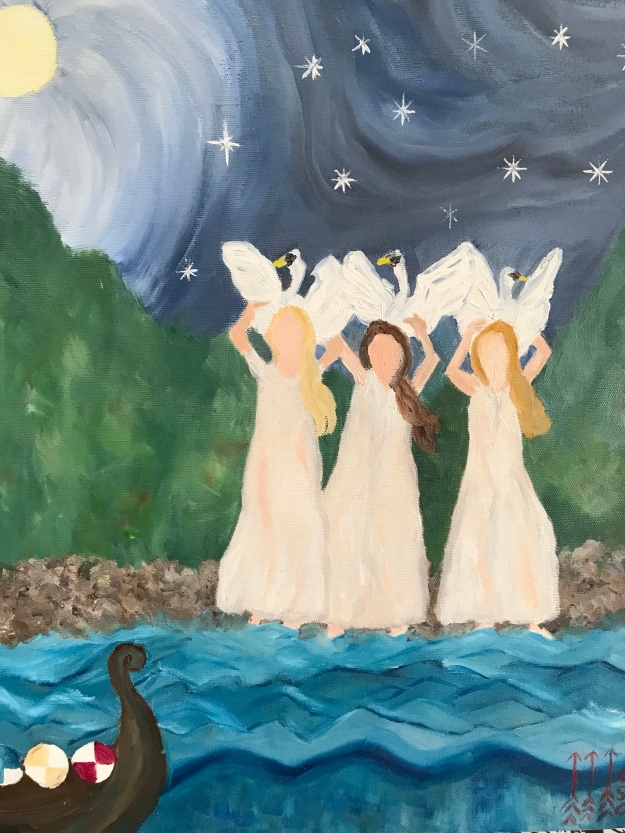
I was so inspired by Norse mythology that when I recently had an art-class assignment to do a painting that tells a story, I tried my own Swan Maidens. They’re creepily faceless right now while I work out how to do noses and eyes and chins and mouths. Meanwhile, I’ll enjoy my Nordic memories.

Join me next time for more explorations in the art and history of Europe!

Copenhagen’s Romantic City Hall

My new favorite City Hall is in Copenhagen.

Why do I even have a favorite City Hall? In most cities, it’s about the last place I’d care to visit. I remember a long-ago trip to Winnipeg, Canada, when I spent several frustrating hours in the City Hall dealing with a fender-bender. (The only consolation was that I got to see an actual Canadian Mountie in his spiffy red jacket).

But Scandinavian countries like Denmark are proudly secular societies. City Hall is front and center in people’s lives, much as cathedrals are in other cities.

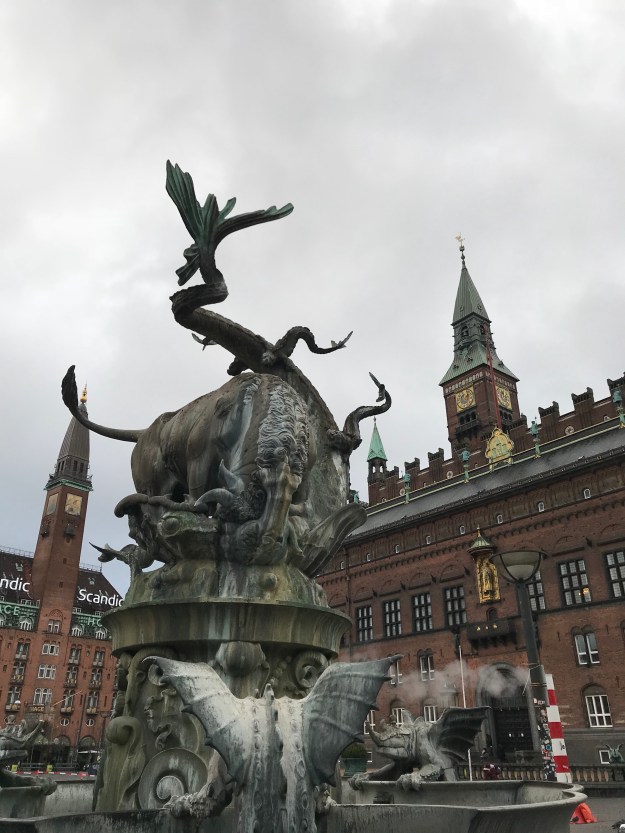
Martin Nyrop designed the building in National Romantic Style. To me, it looks distinctly Jugendstihl, Art Nouveau, or Arts and Crafts. This is not surprising for a building inaugurated in 1905, the heyday of these artistic movements. In Denmark, the movement was called “Skonvirke,” meaning “aesthetic work.”

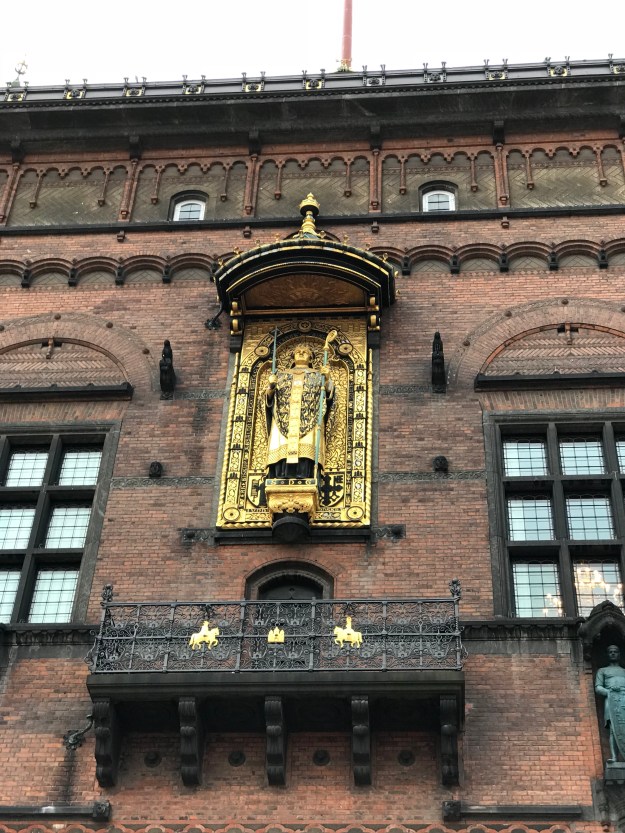
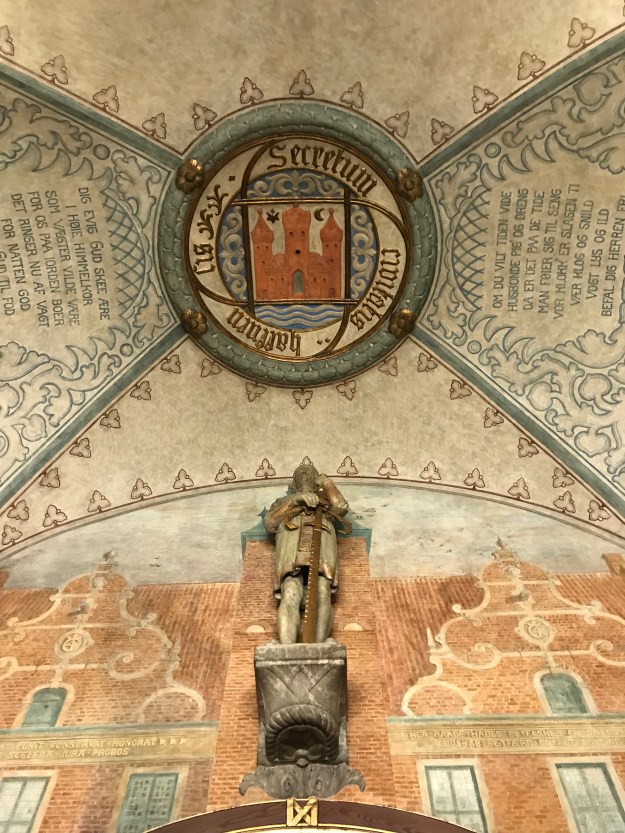
A gilded statue of Absalon stands grandly above the main entrance. Absalon (also known, maybe to his buddies, as Axel) lived from 1128 to 1201. He was a warrior, politician, and archbishop–a Renaissance man before there was a Renaissance. He conquered pirates who plagued early Denmark, expanded its territories, built the first fortifications of what is now Copenhagen, and began untangling Denmark from the Holy Roman Empire. I don’t know whether he was also a kingmaker, but King Valdemar I leaned on him for counsel.

Just inside the main entrance, I think Absalon is dispensing good advice. (Or maybe this is the king–I couldn’t find any information and there was no tour going on).

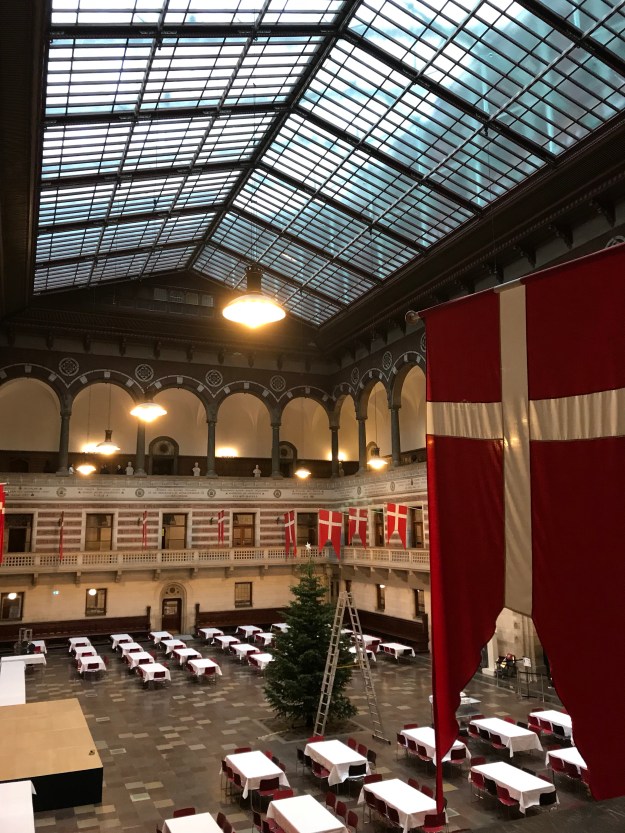
In early December, the great central hall was being set up for an event. Another time I visited, there was a fascinating exhibit about immigrants to Denmark. (I wouldn’t mind emigrating to Denmark myself).

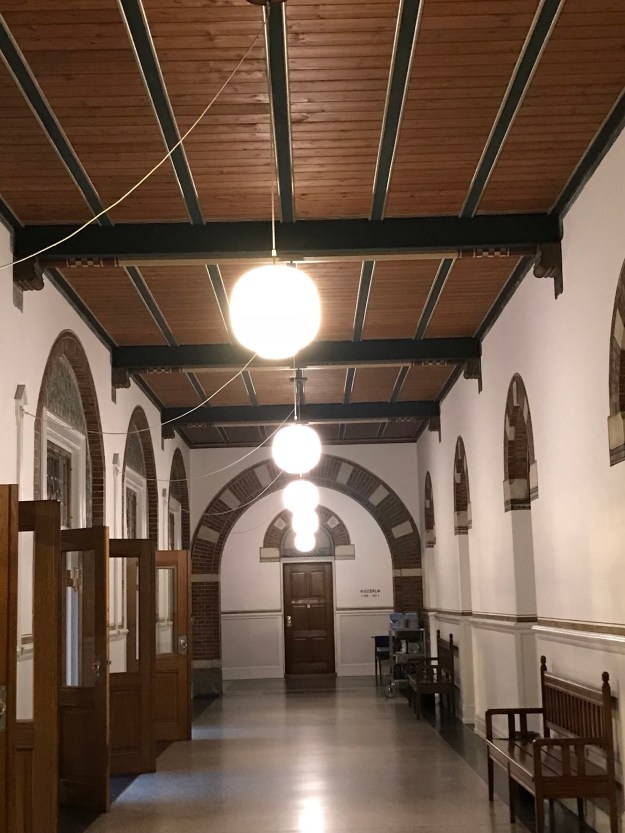
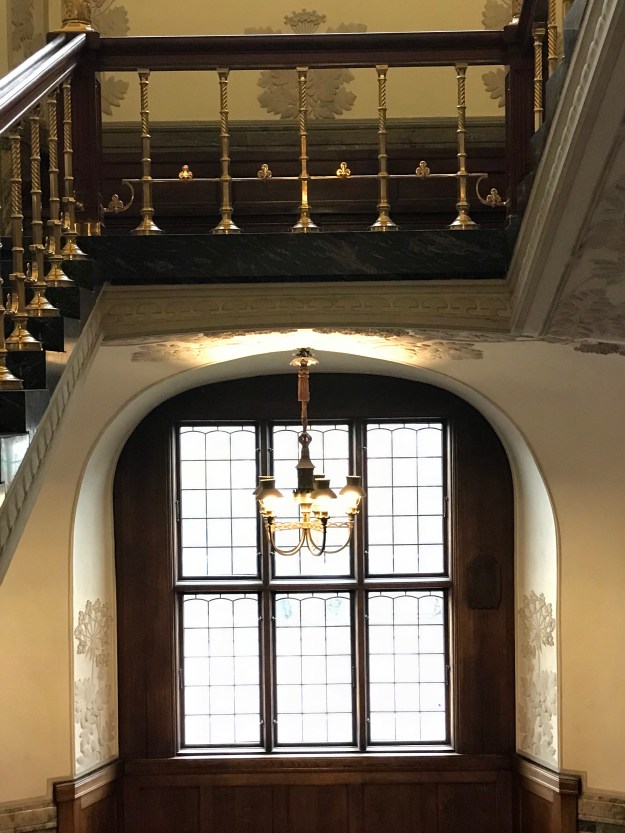
Inside on a weekday, city workers walk up and down beautiful staircases and go calmly about their business in hushed corridors.

Visitors are free to wander, taking in the beauty everywhere.

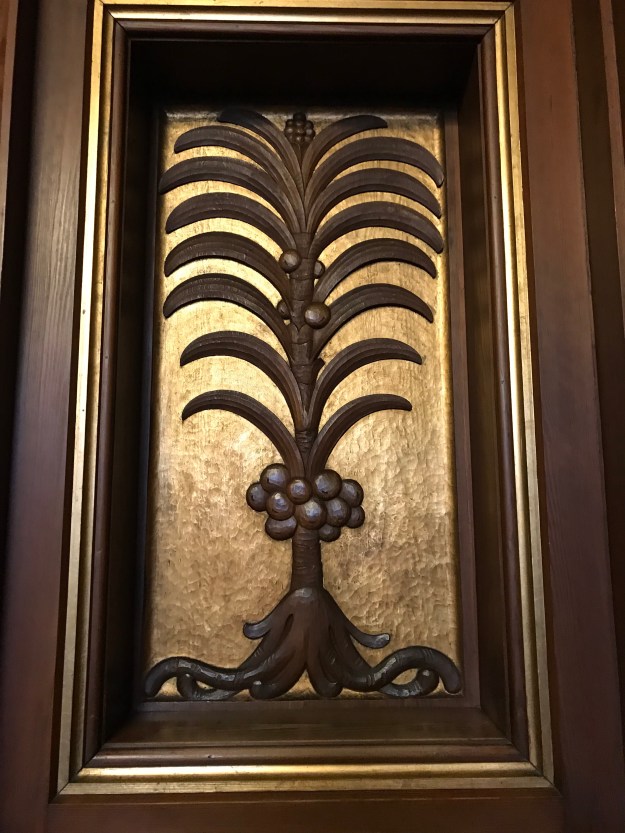
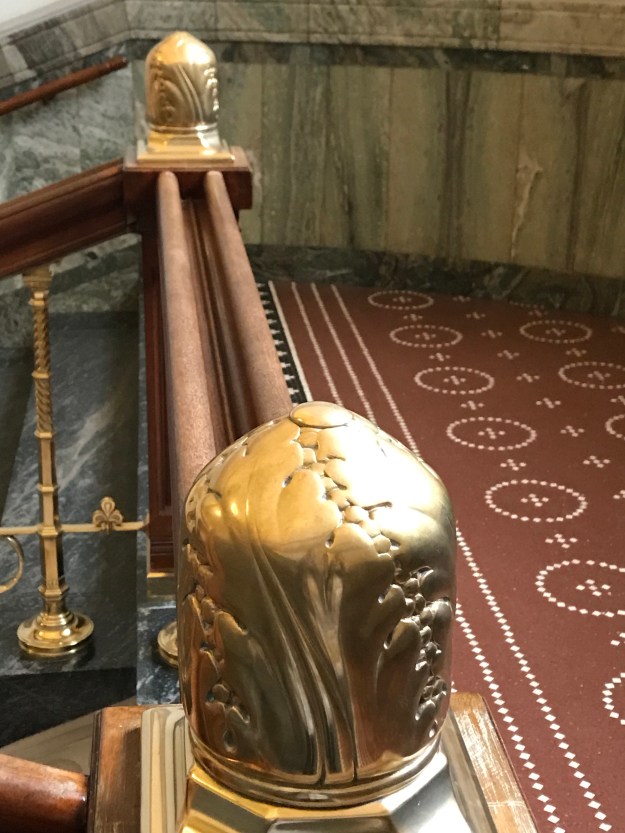
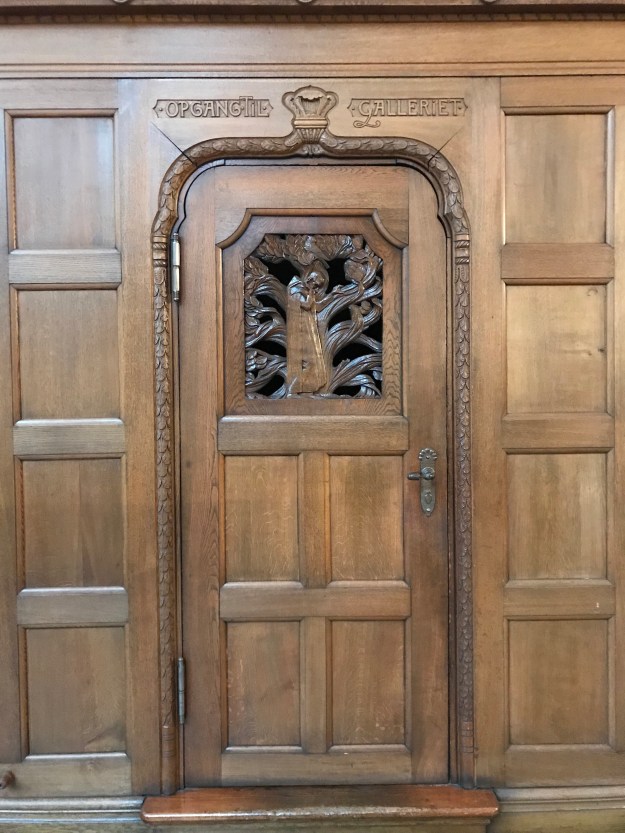
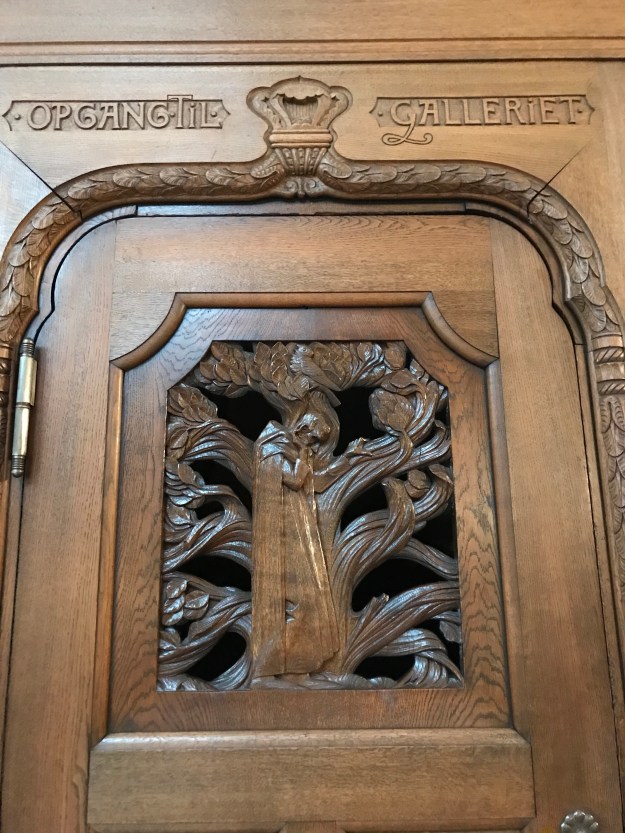
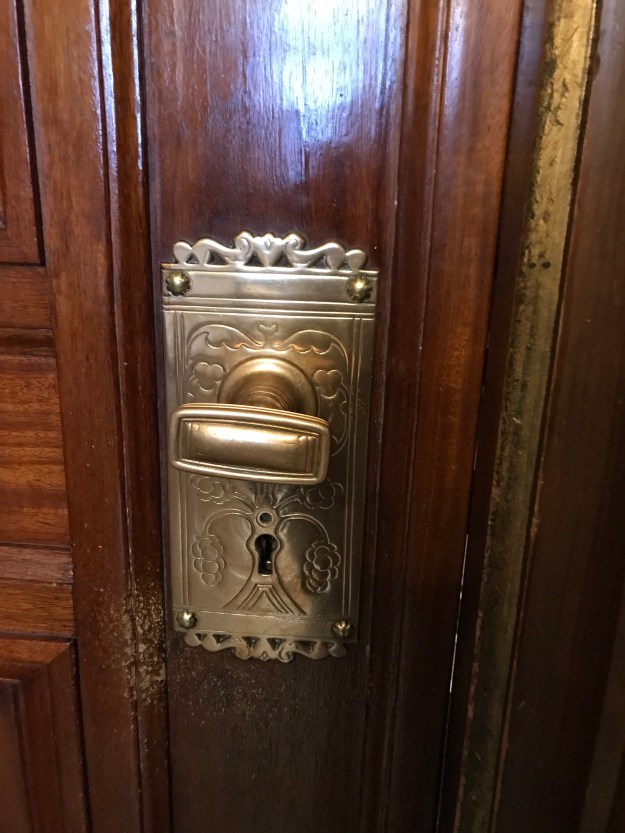
Some doorways are carved and fitted with elegant hardware.

All the other doorways have colorful painted decoration. No two are the same.

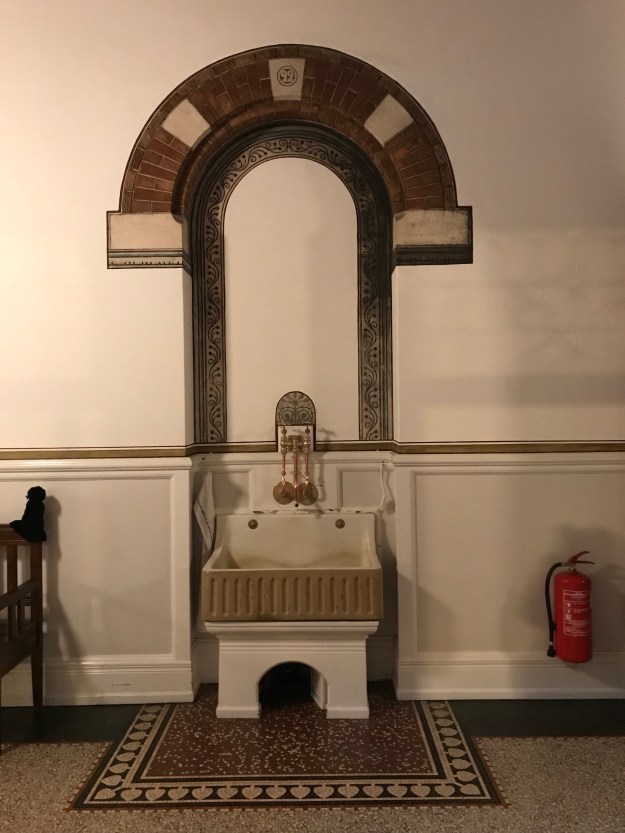
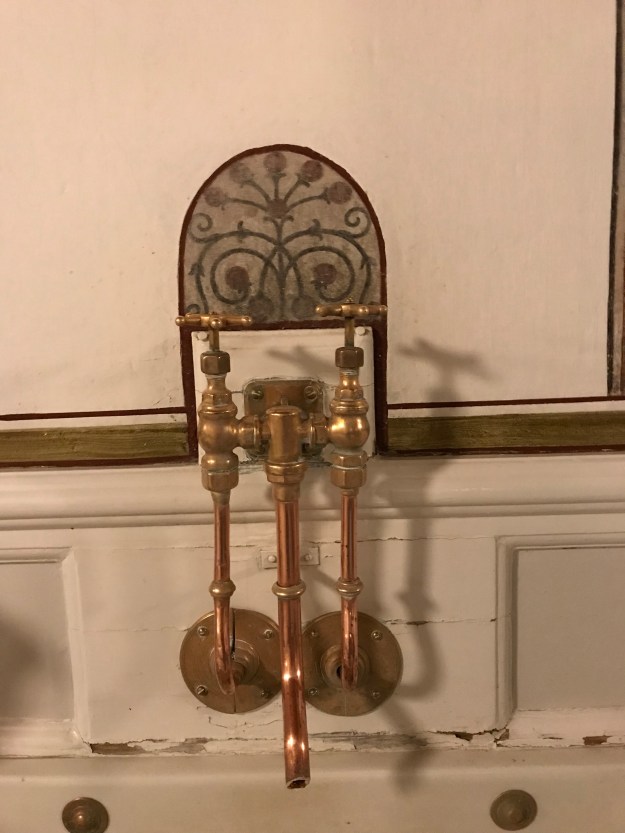
Even a janitor’s hallway slop sink is a thing of beauty.

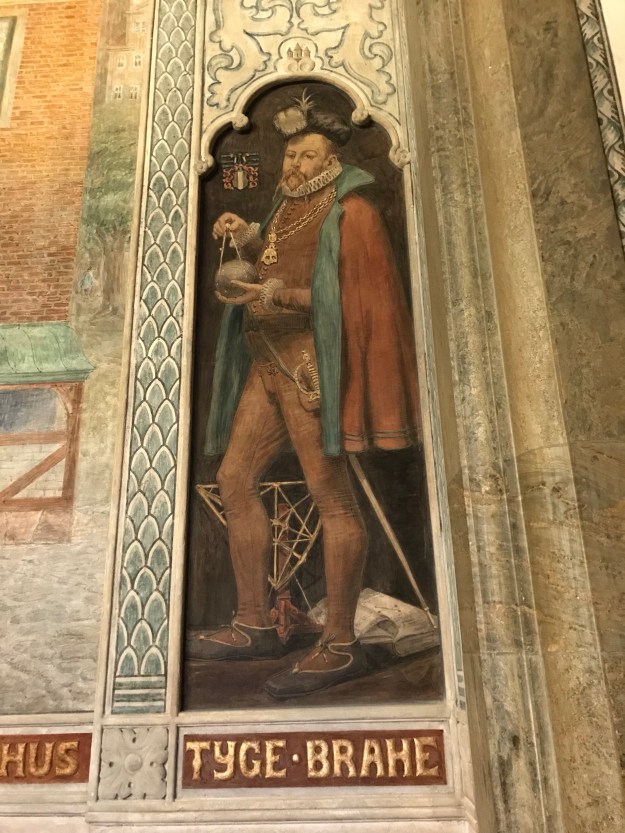
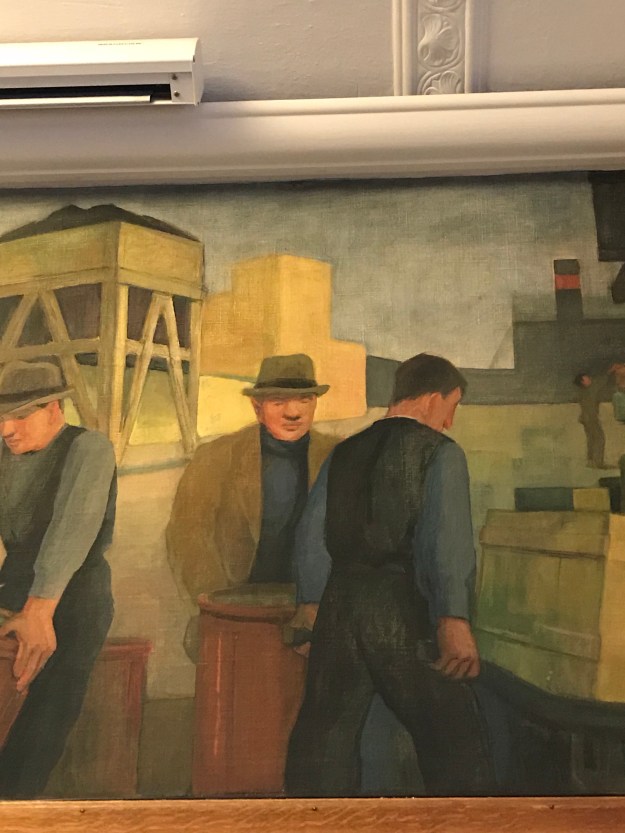
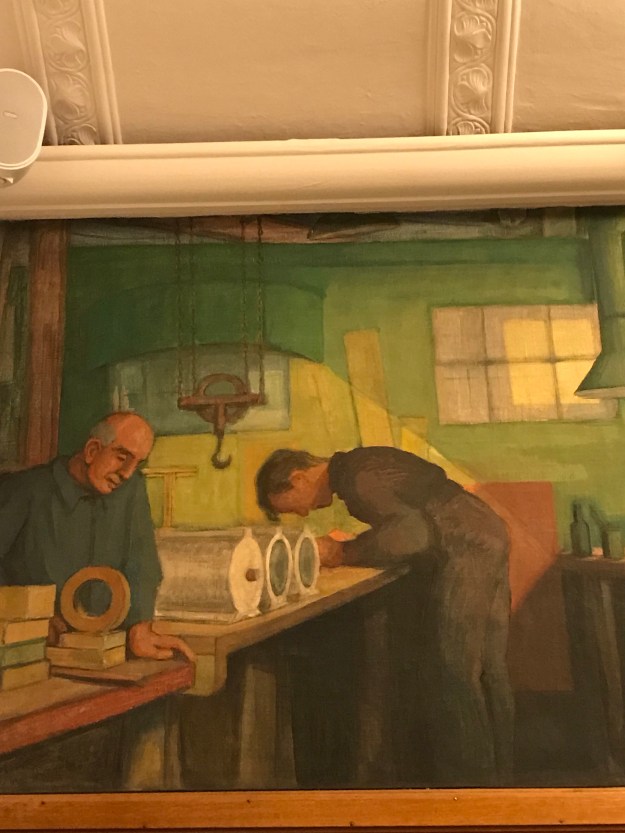
The great and good are featured in murals, but so are working people. Tycho Brahe, above, lived from 1546 to 1601. He was a Danish nobleman and a great astronomer, but in this most egalitarian country, machinists and laborers are also honored.

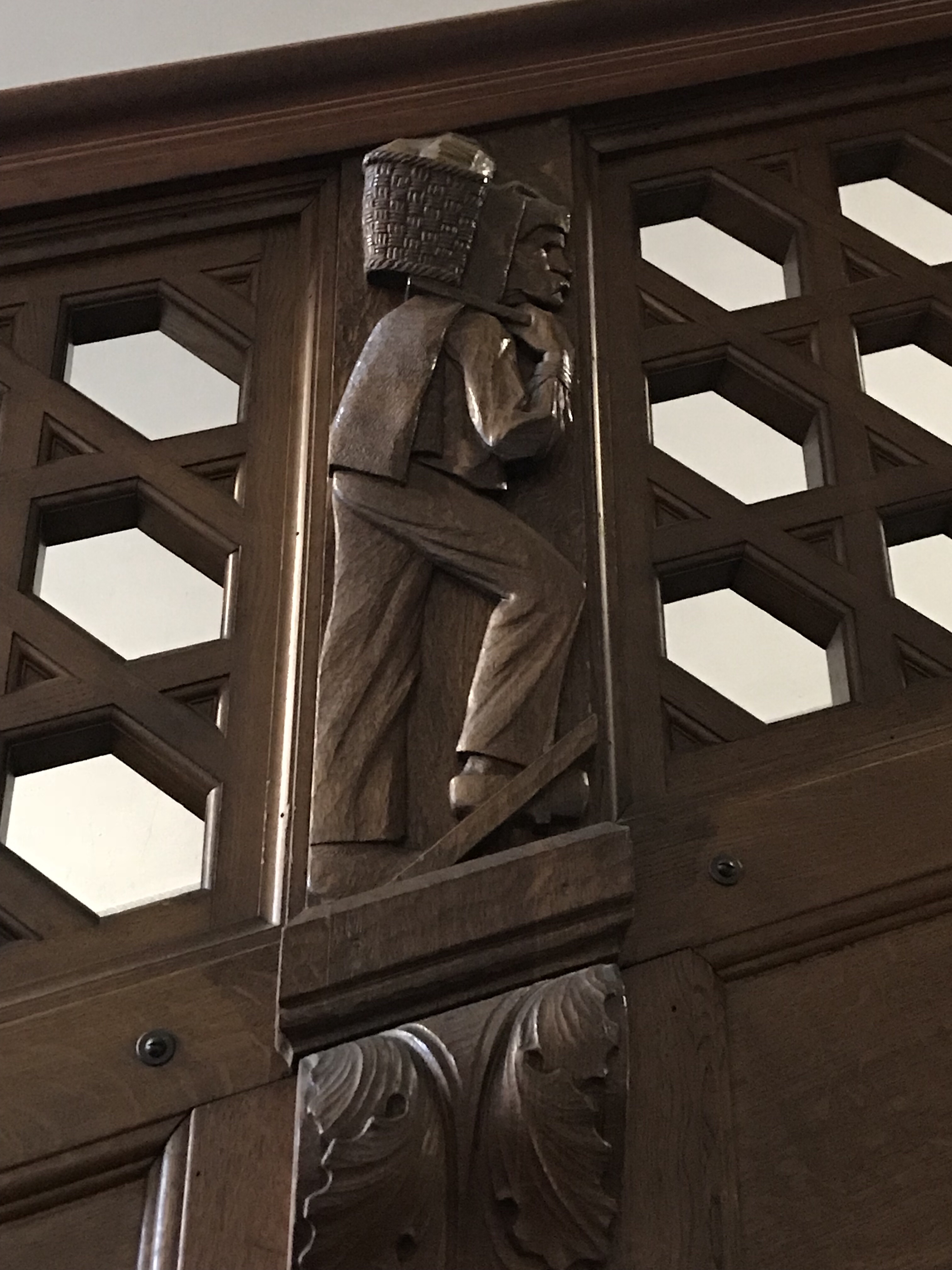
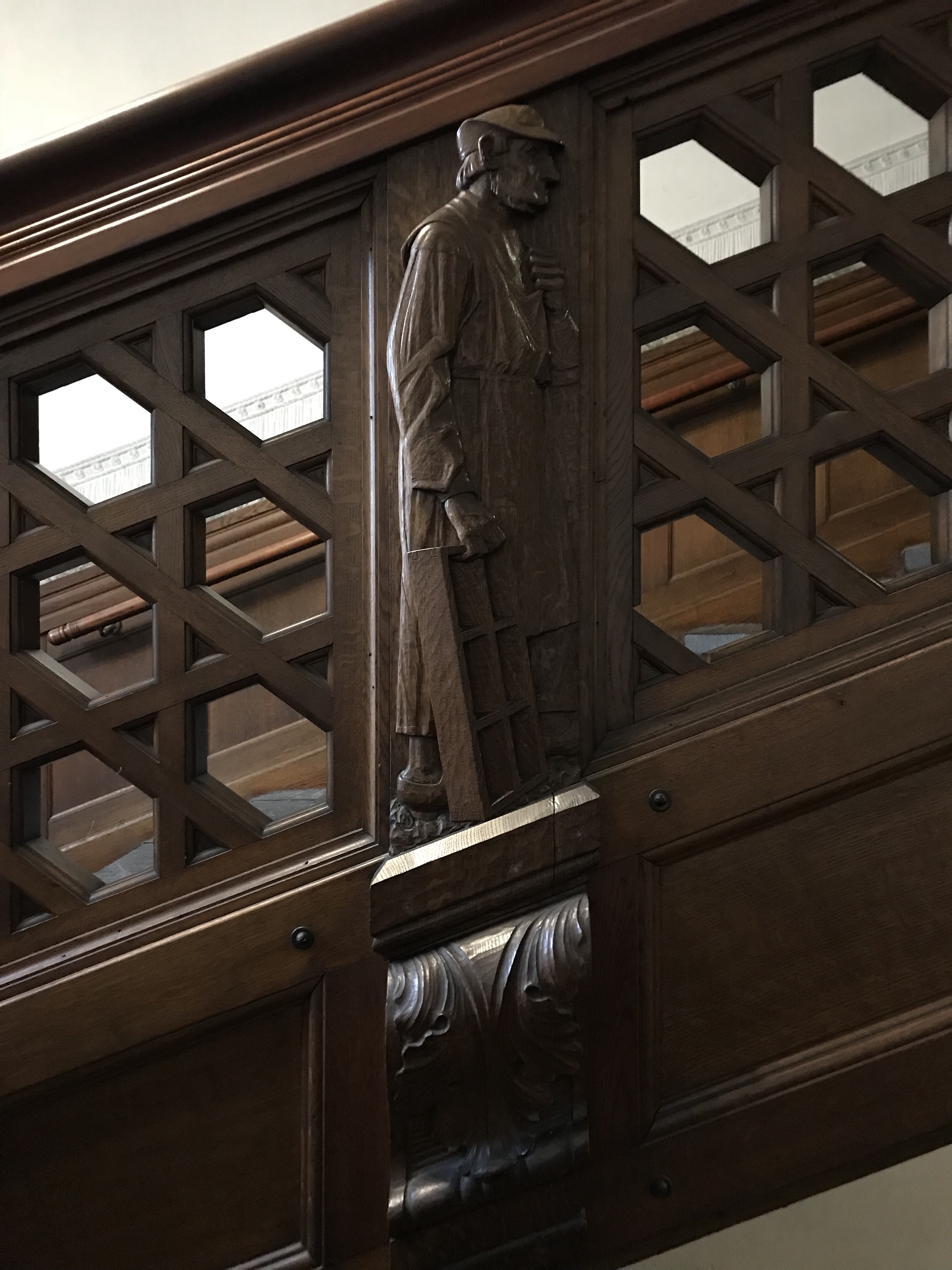
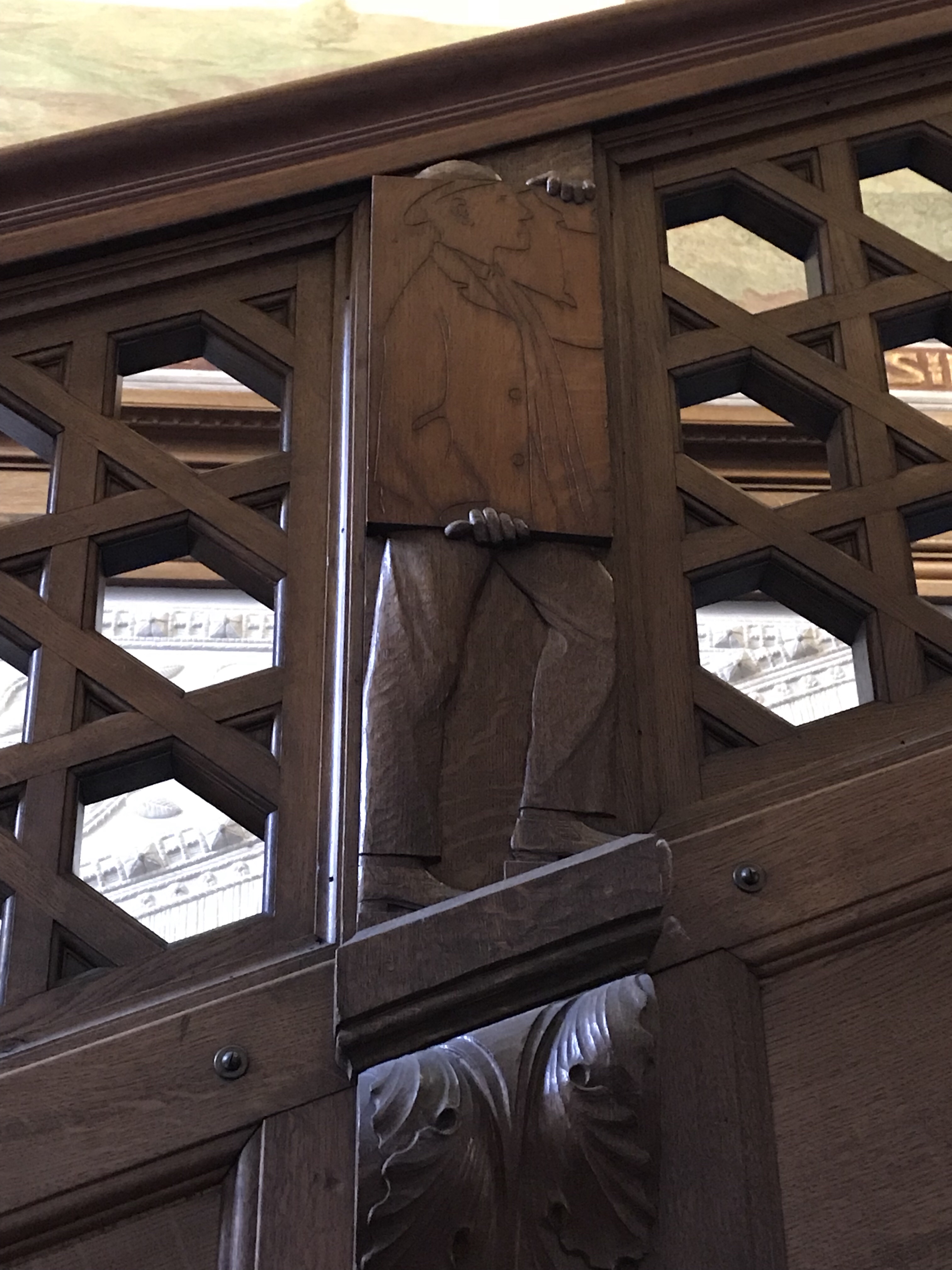
Carved workmen trudge up a staircase. I especially like the man carrying a sheet of glass for a window.

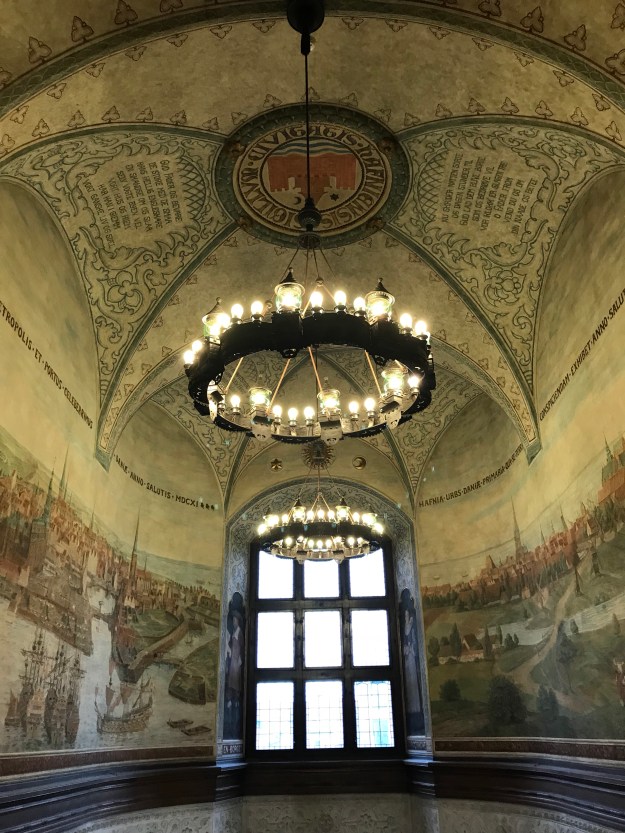
Other spaces are more grand, with murals and ceilings celebrating Copenhagen’s history.

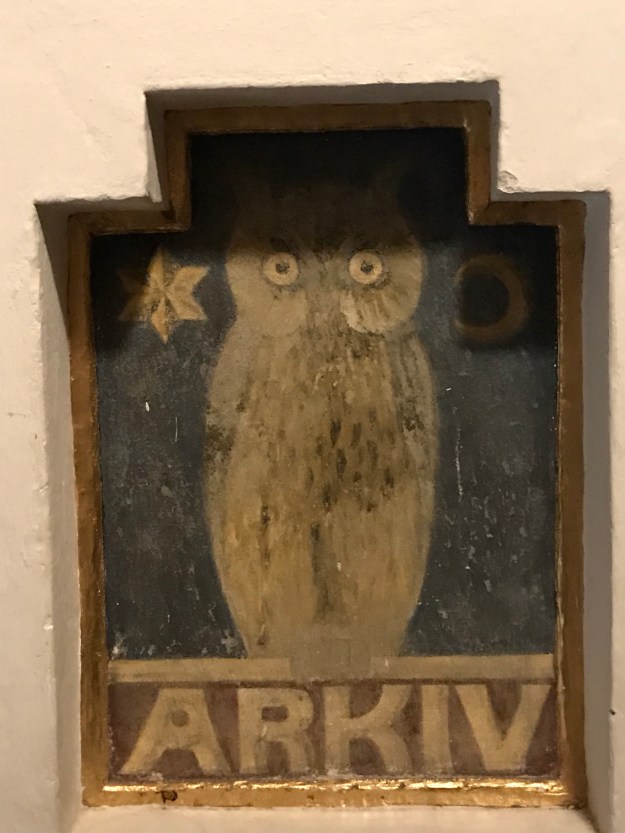
An owl stands at the doorway to the city archives. I have a feeling that important papers don’t get lost here in this most civilized City Hall. It’s no wonder that Denmark’s citizens line up at their beautiful City Hall every Saturday to celebrate their weddings. More on that on Valentine’s Day!

Happy and Hopeful 2018 to All

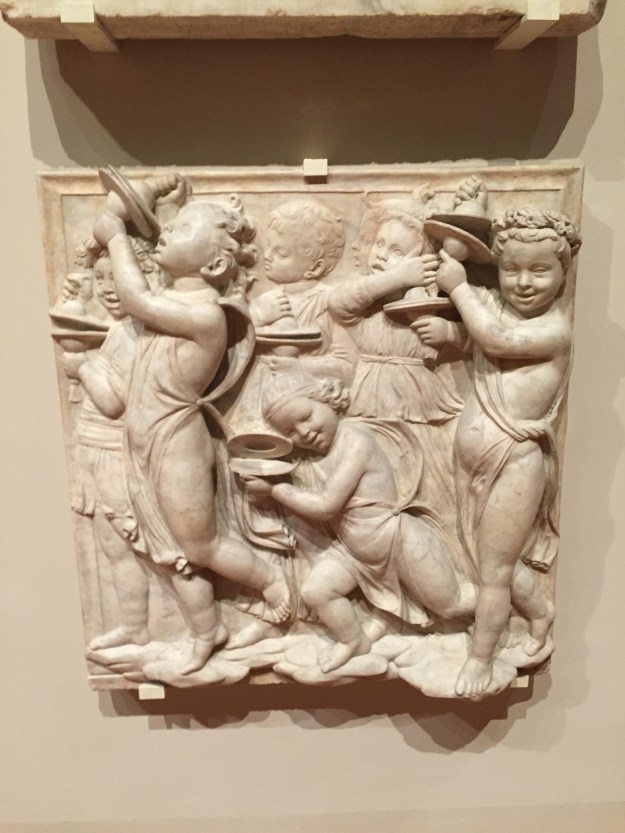
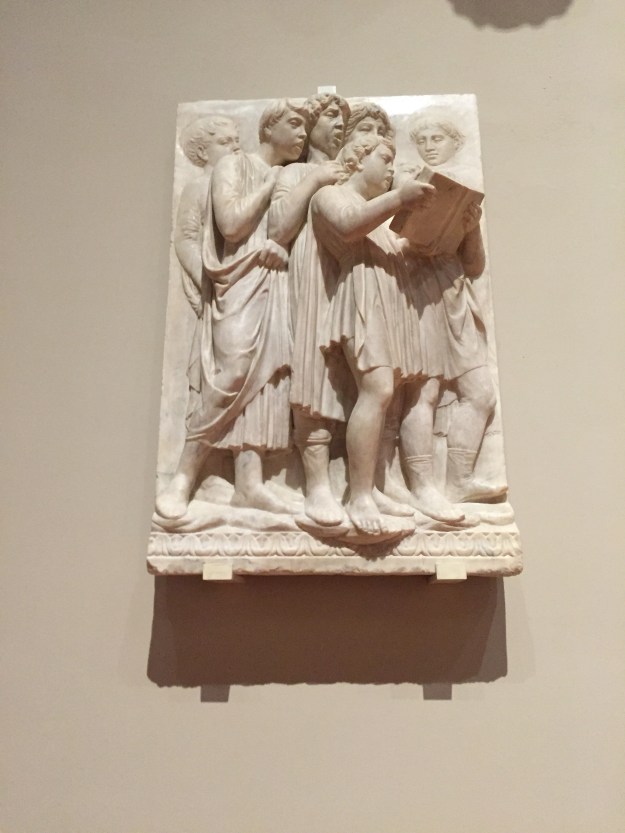
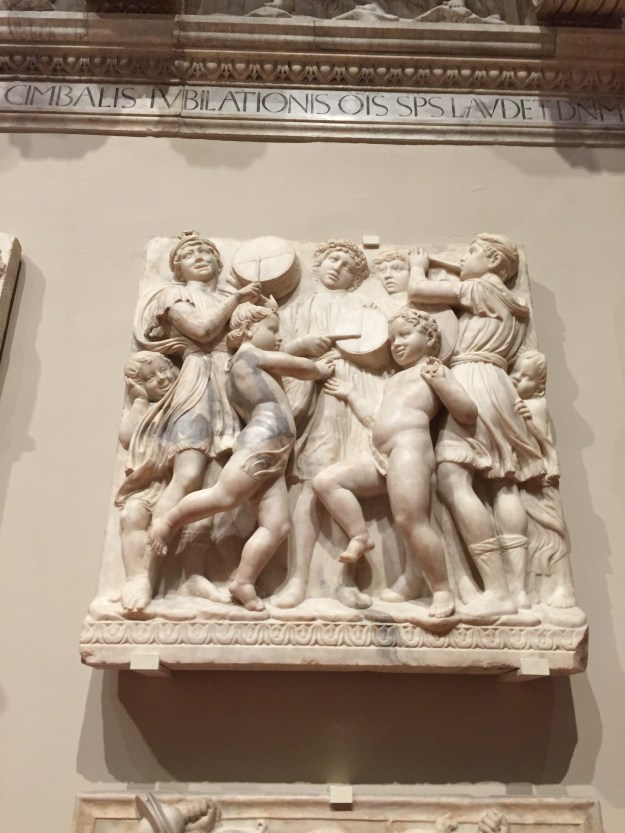
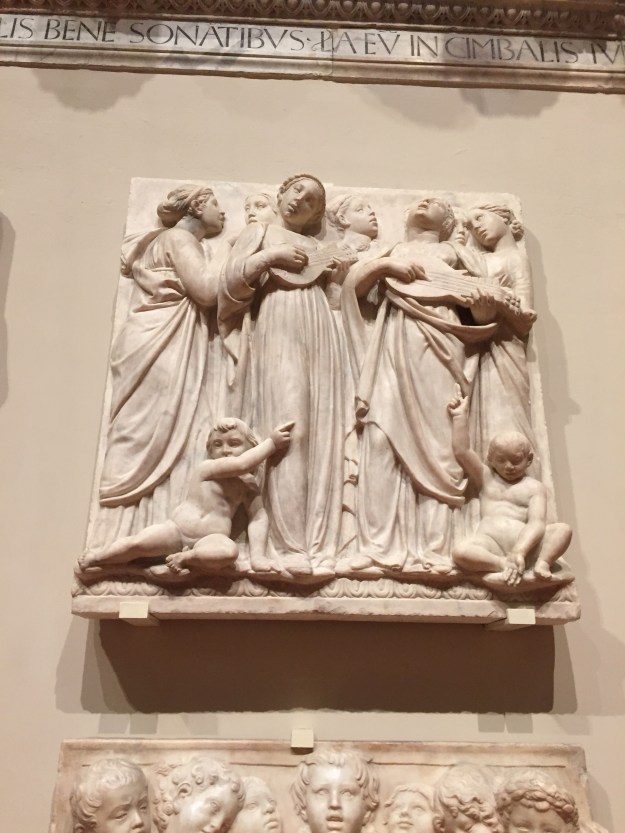
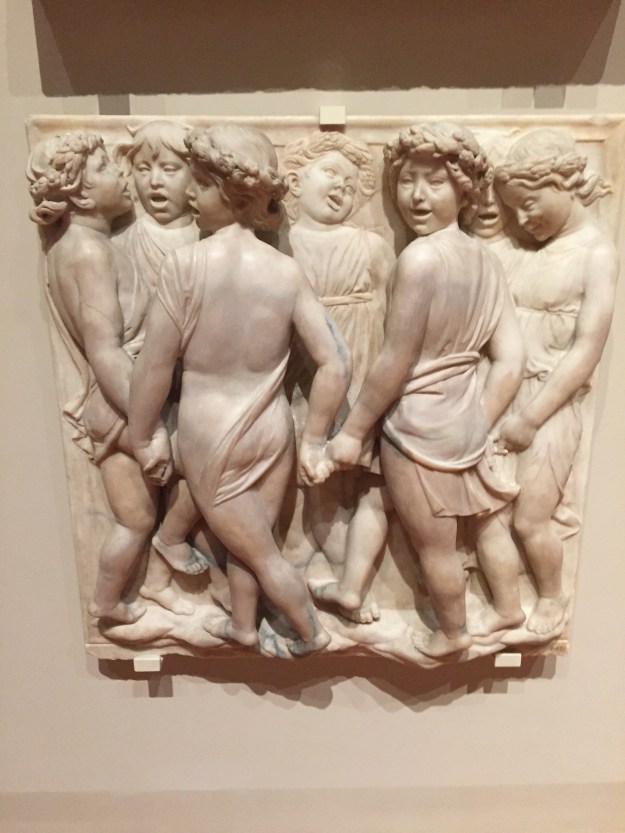
Carefree children dancing: a nice image for the New Year.

These large relief panels by Luca della Robbia were commissioned in 1431 for the organ loft in Florence’s Cathedral.

I’d never get near the organ loft, so I’m glad somebody made the decision to install them in the newly-renovated Museo dell’Opera del Duomo, just across the street.

There are ten of them, with the overall title “Cantoria.” They’re designed to reflect the joy of music, and they make me think of the joy of new beginnings.

In our world, of course, being a child is not all sweetness and light. It never was.

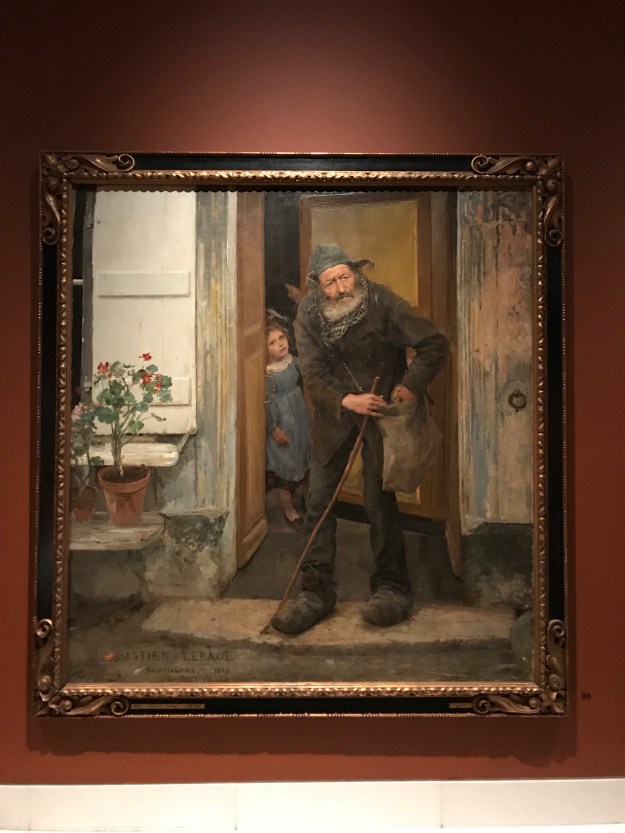
I loved this very large painting by the French artist Jules Bastien-Lepage, 1880. He was not as well known as other French painters, but he was a leader in the developing Naturalist school, where the point was to see the world as it really was. He influenced later painters like Claude Monet. This painting is in the wonderful French collection in Copenhagen’s Glyptotec.

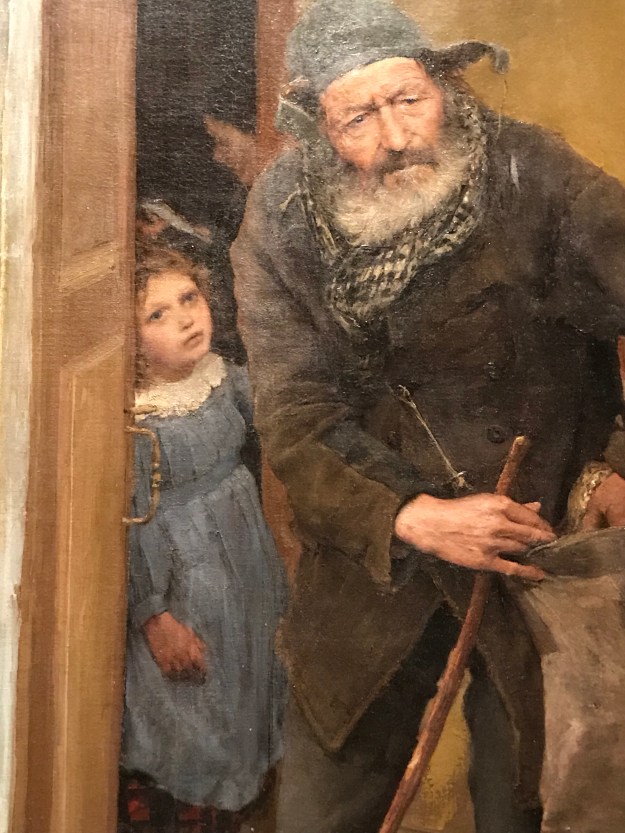
The title is “The Beggar.” In it, an elderly beggar dressed in rags turns away from a doorway. Did he receive something in his bag? Maybe, but nothing that would change his life. The woman in the background is already occupied with something else, finished with the encounter one way or the other. But the little girl in the blue dress would like to do more for him. Her face registers shock and profound sorrow and reluctance to see the old man leave. She hasn’t yet learned any of the rationalizations adults use when we turn away from someone else’s suffering.

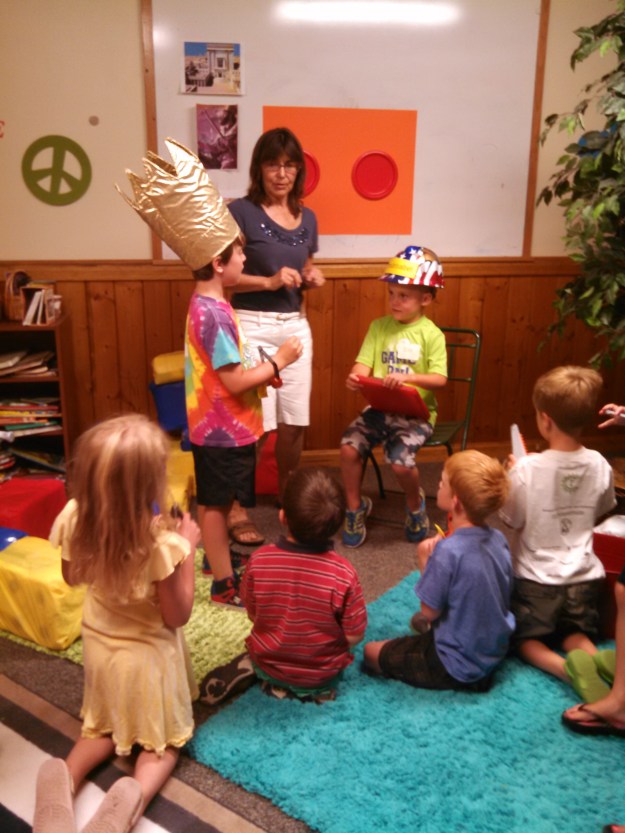
I hang out with kids every chance I get. I love their energy and open minds. I don’t want them sitting quietly in rows–I want them up and moving and laughing.

I’m often “the teacher” and therefore the one presumably imparting wisdom. But children are the ones with wisdom. Kids are the true Superheroes who ALWAYS come out in favor of honesty, fairness, generosity, and including everybody. And they always manage to create their own fun, no matter how intent the adults are on a serious lesson. They’re our future.

I think a good beginning for 2018 would be to talk to our children about what they’d like for our world, and then follow their lead. What if we put them in charge for awhile? Happy and hopeful New Year!

Renaissance Angels of Florence

A year ago I was in Florence, and I found myself collecting angels. On December 21, the darkest day of the year in North America, I’m thinking we could do with a few angels to watch over us.
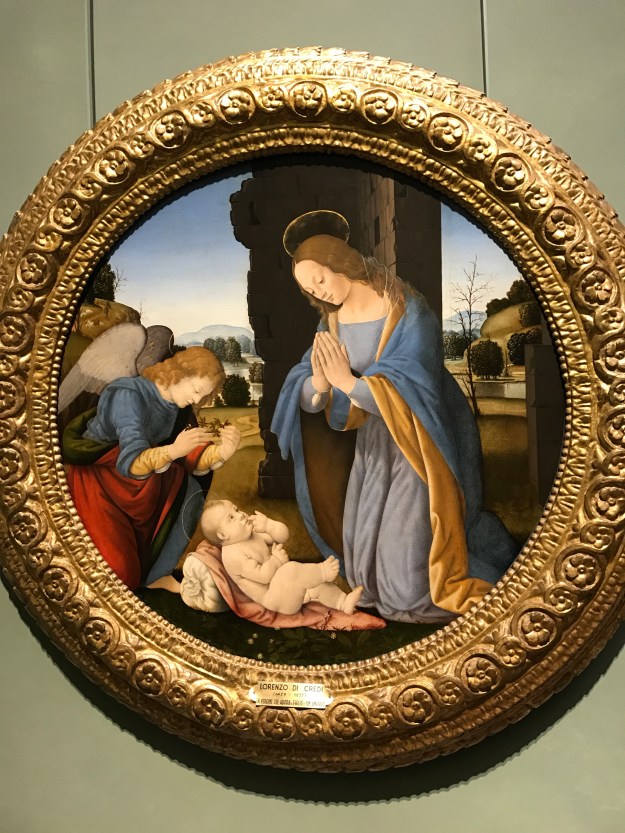
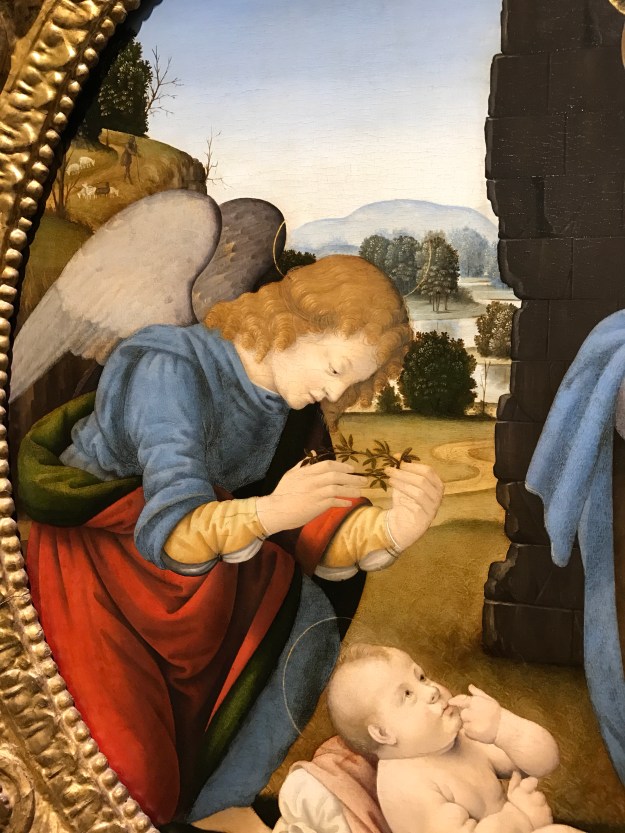
I’d be looking at a masterpiece like this “tondo” (round painting) in the Uffizi Gallery and then I’d go in for a closeup of the angels. Lorenzo di Credi painted “Adoration of the Christ Child” between 1505-15. (The placard says it’s an unfinished painting, but I’d like to even start a painting this good).
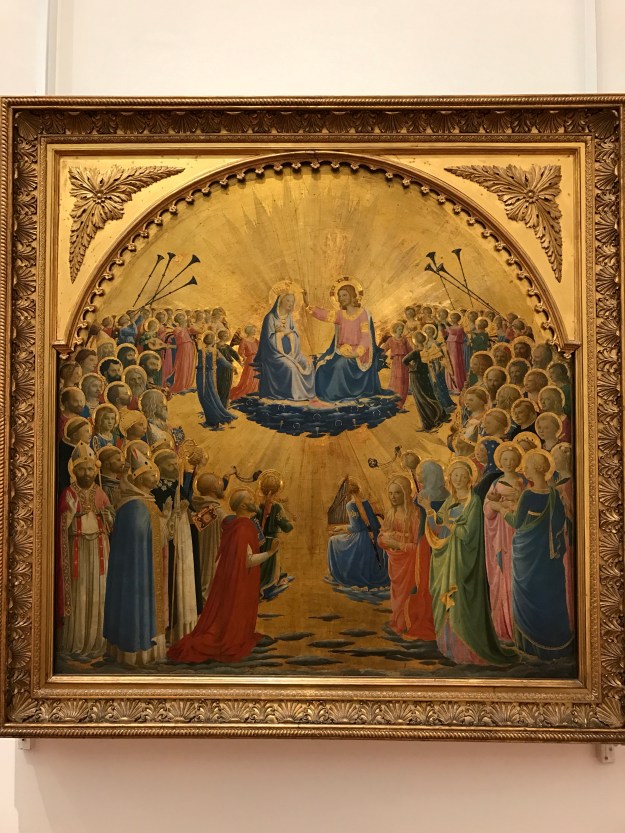
There are a lot of angels in Italy. In Florence, anybody with an angel phobia would be out of luck. Some angels travel in crowds, as in Beato Angelico’s “Glorification of the Virgin with Angels and Saints,” circa 1434-5.
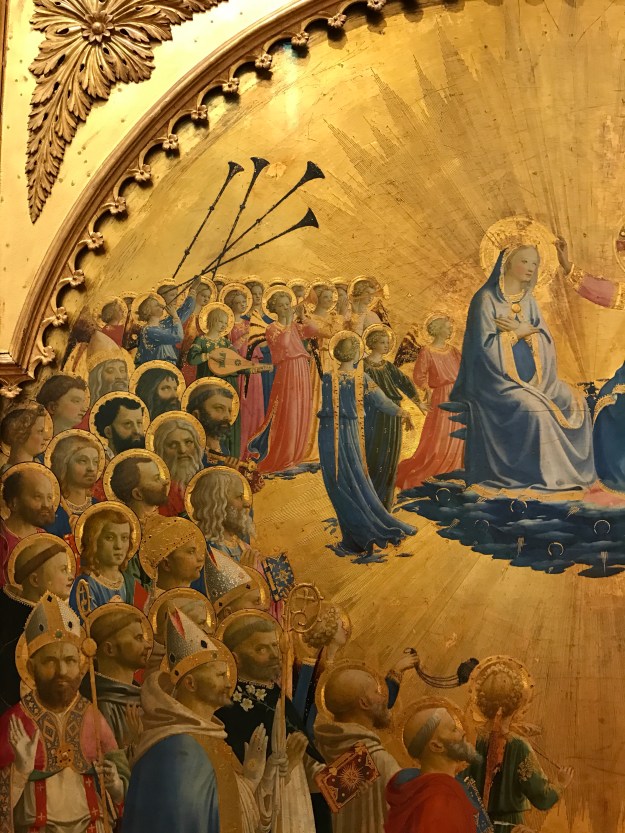
In Florence, the cradle of the Renaissance, there was new interest in the individuality of ordinary humans, and their importance in the scheme of things. This carried over into the portrayal of angels and saints as well. Each personality is distinct.
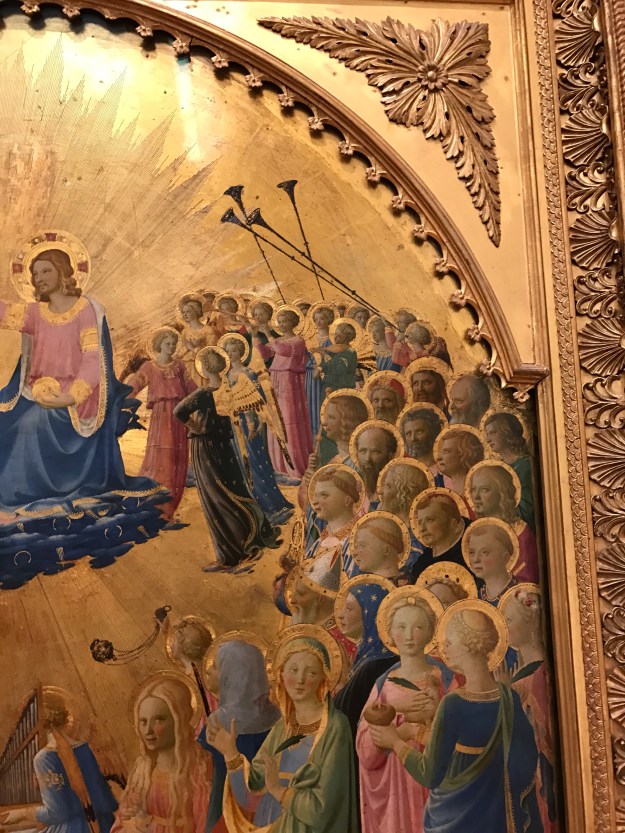
Fittingly, the crowd of human saints is placed closer to the viewer than the troops of angels. But some angels mix right in with the humans, and they pretty much look like regular humans with wings.
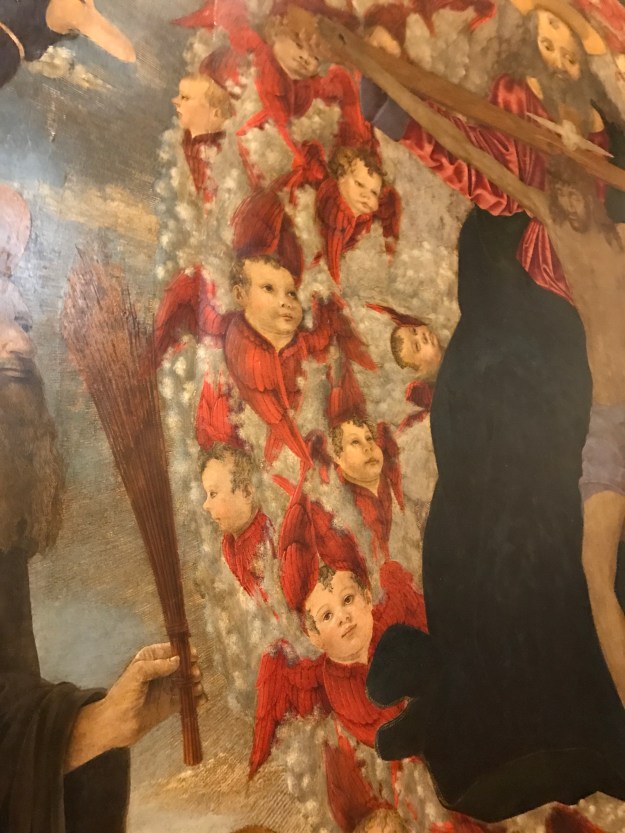
Sometimes, baby angel-faces with double sets of wings float around in clouds. Those above are from “The Trinity and Saints Benedict and Giovanni Gualberto,” 1470, a panel by an unknown artist, taken from the Church of Santa Trinita and now in the Uffizi. (Sometimes, glare got in the way of my photos and I had to sort of mosey over to the side to get a halfway-clear image).
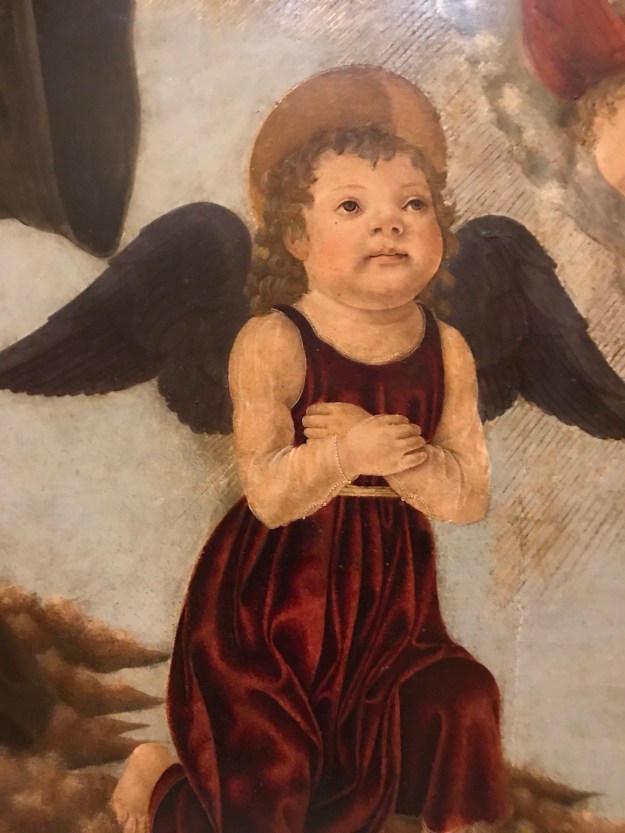
I especially like this toddler angel in her Sunday best, from the same panel.
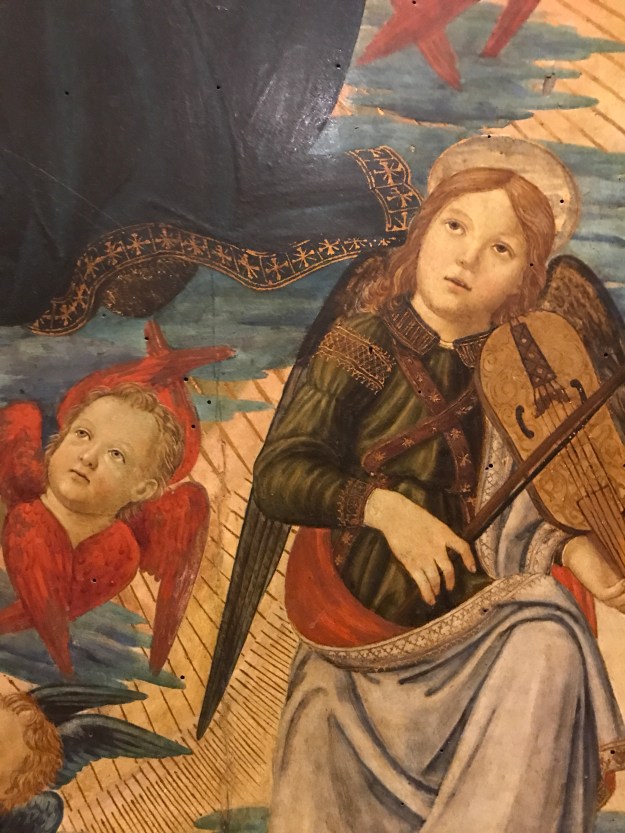
Angels like music a lot.
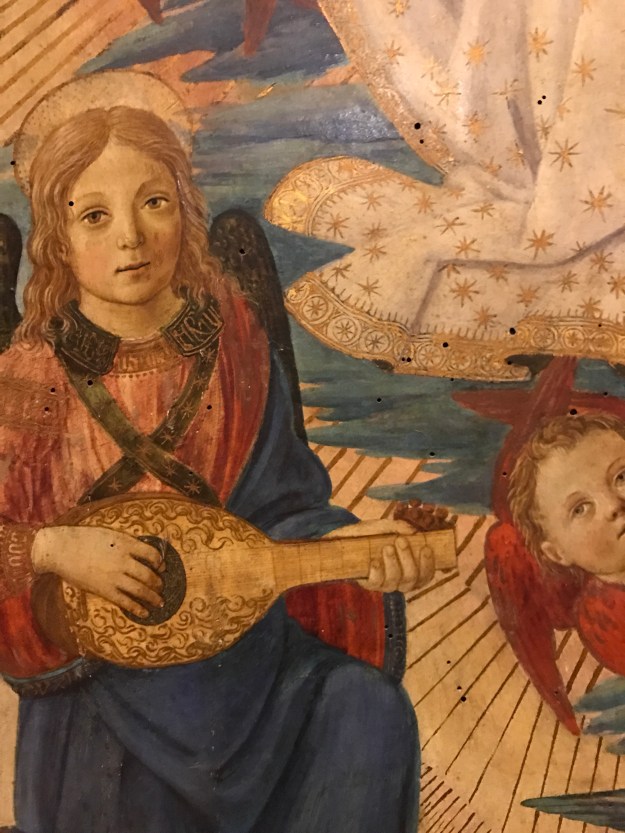
The two above are celebrating “The Crowning of the Virgin,” a panel by an unknown painter around 1470-1480. Again, there are the double-winged angel-babies.
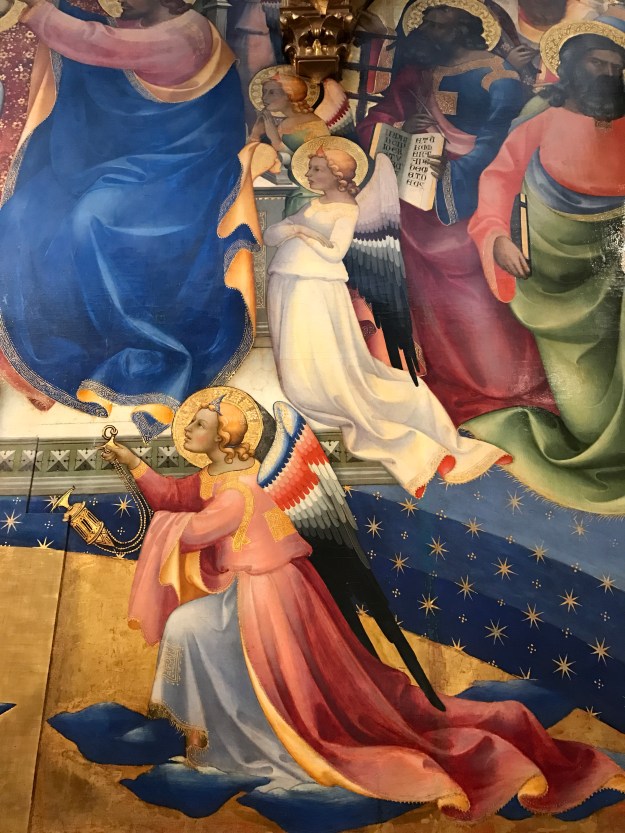
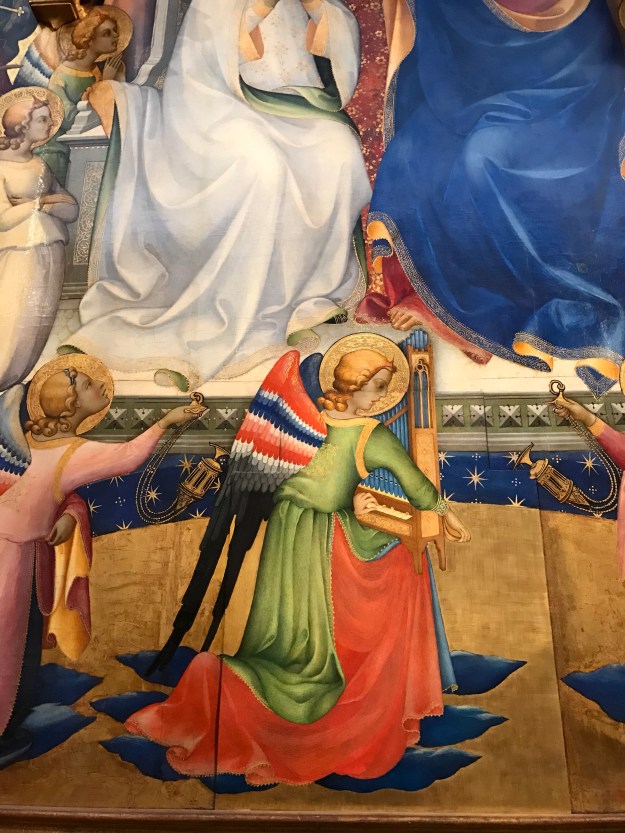
Some angels have especially colorful wings, not to mention their bright robes.
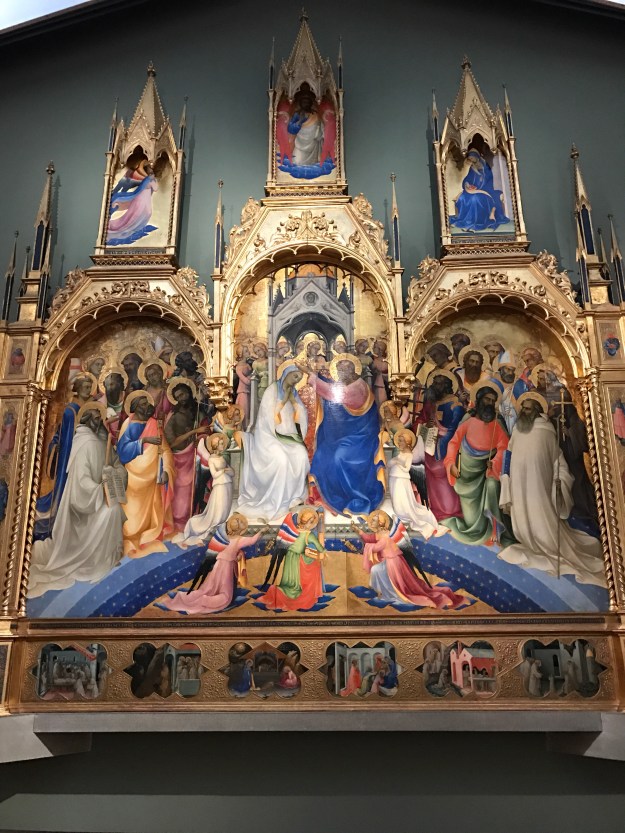
The elegant angels above are from a very grand altarpiece by Lorenzo Monaco, around 1414.
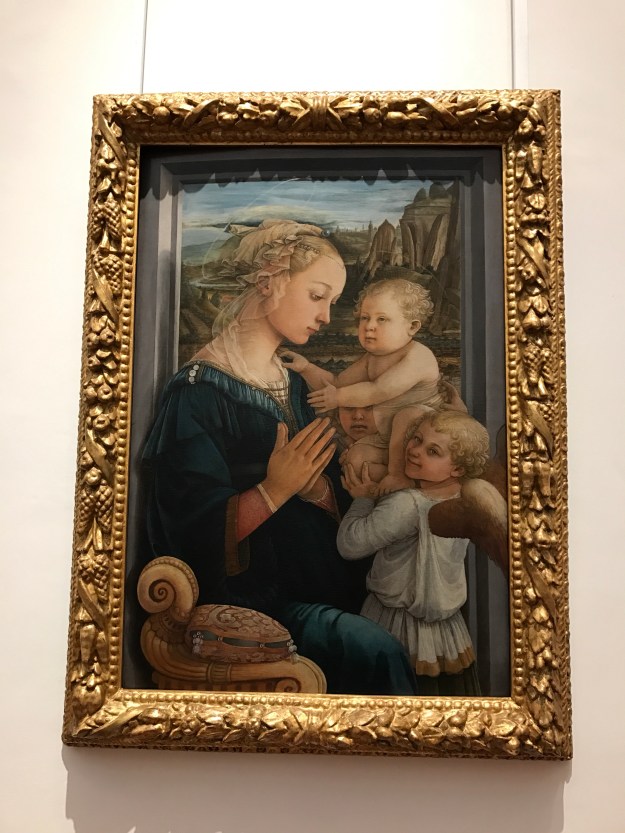
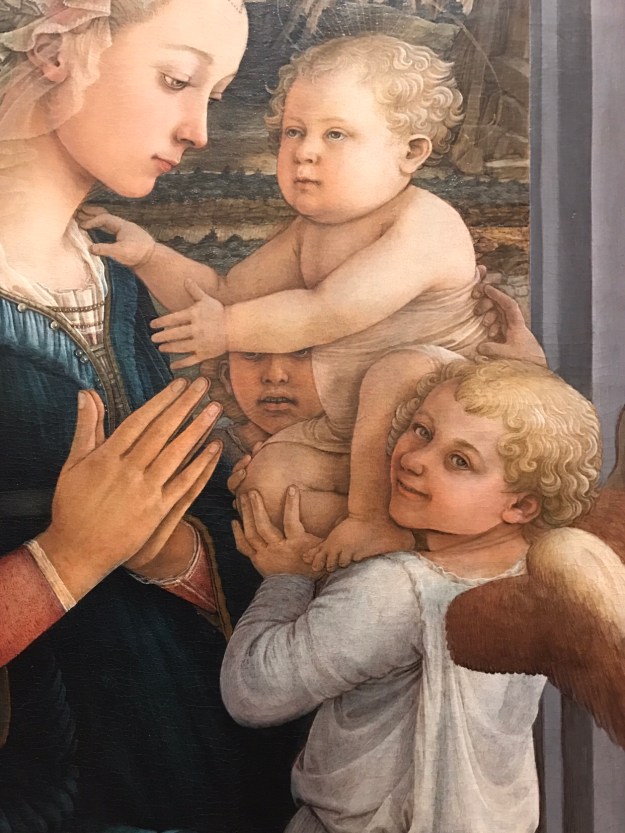
One of Filippo Lippi’s most famous paintings, “Madonna and Child with Two Angels,” wowed everyone in 1460, and still does. Do the humans look just like angels, or vice versa? The friar’s fresh take on a traditional theme influenced any number of other artists, including Sandro Botticelli.
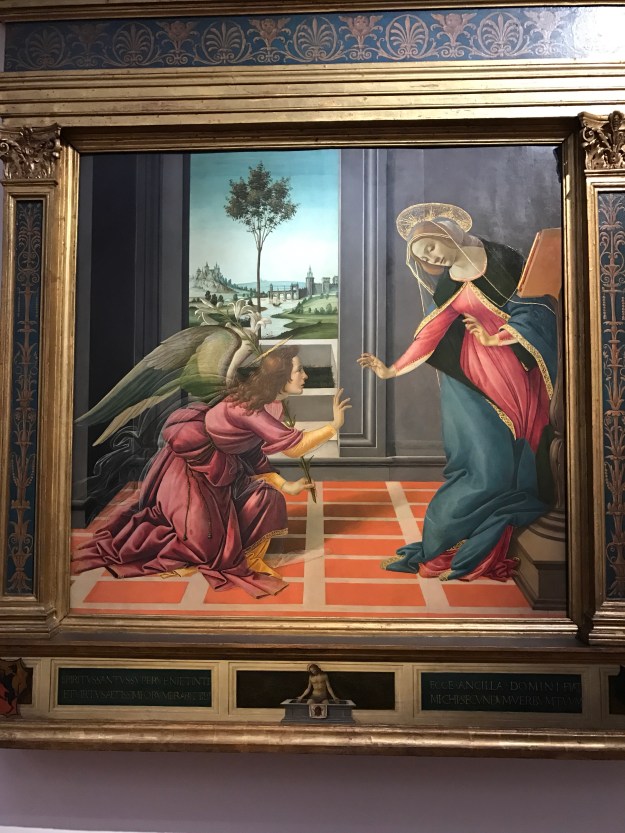
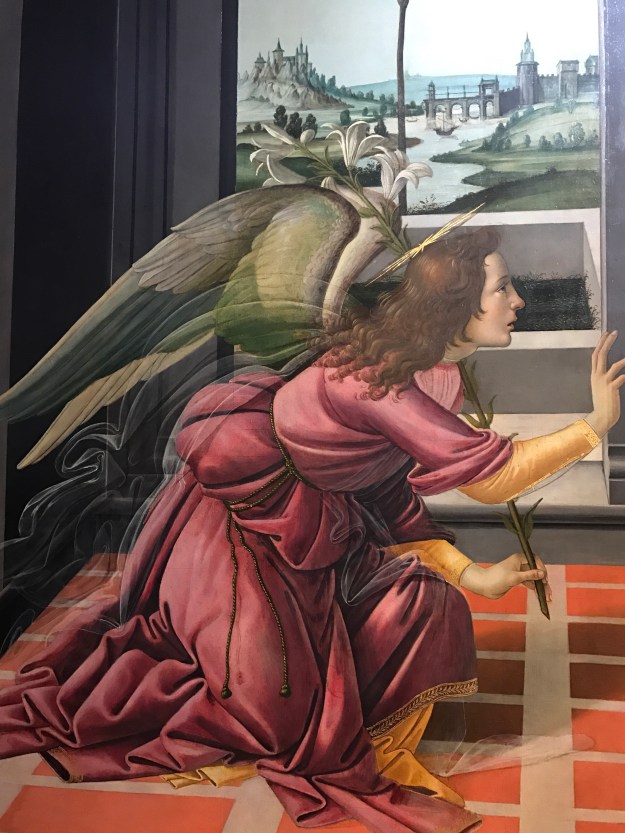
My photos hardly do justice to Botticelli’s sublime “Annunciation,” 1481. His angel looks half real, half apparition and all beautiful.
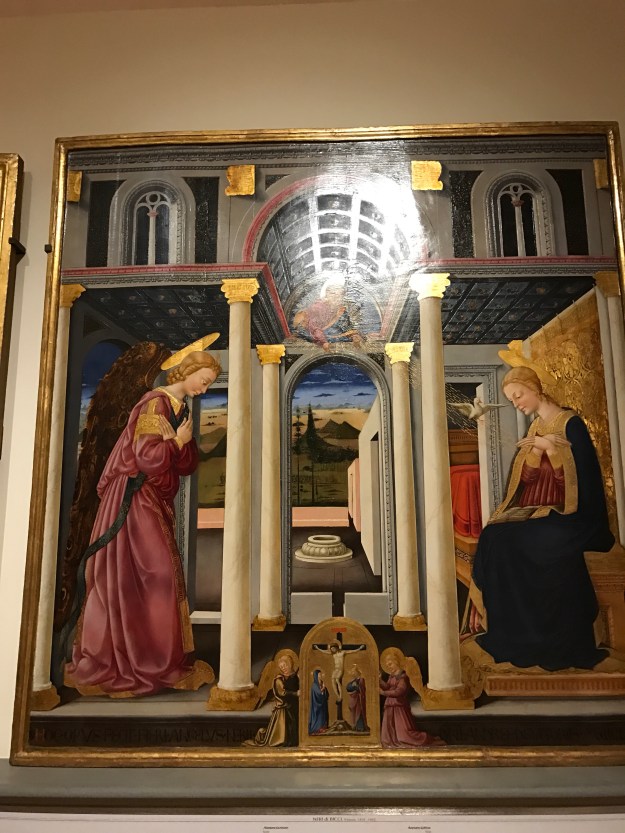
In Neri di Bicci’s “Annunciation,” 1465, the starring angel, Gabriel, has brought along a couple of mini-me’s to help out.
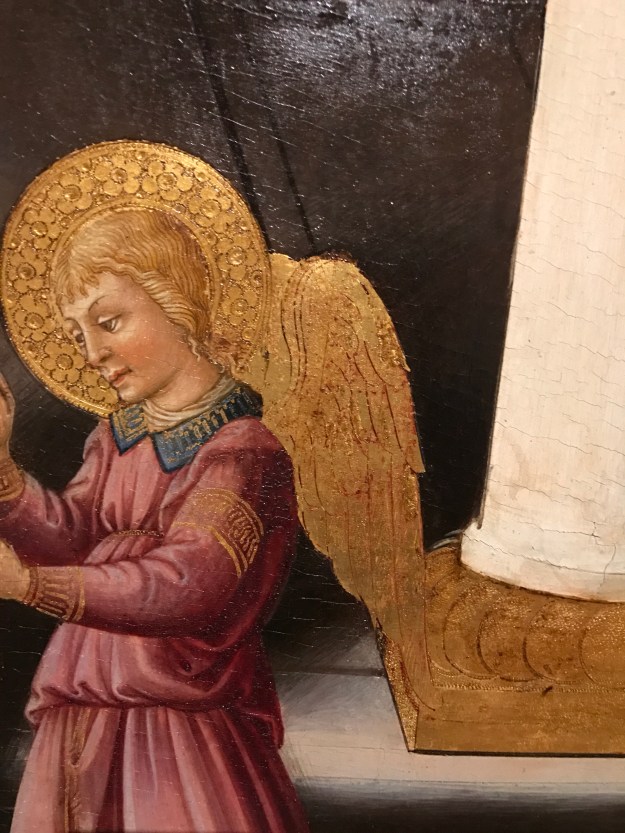
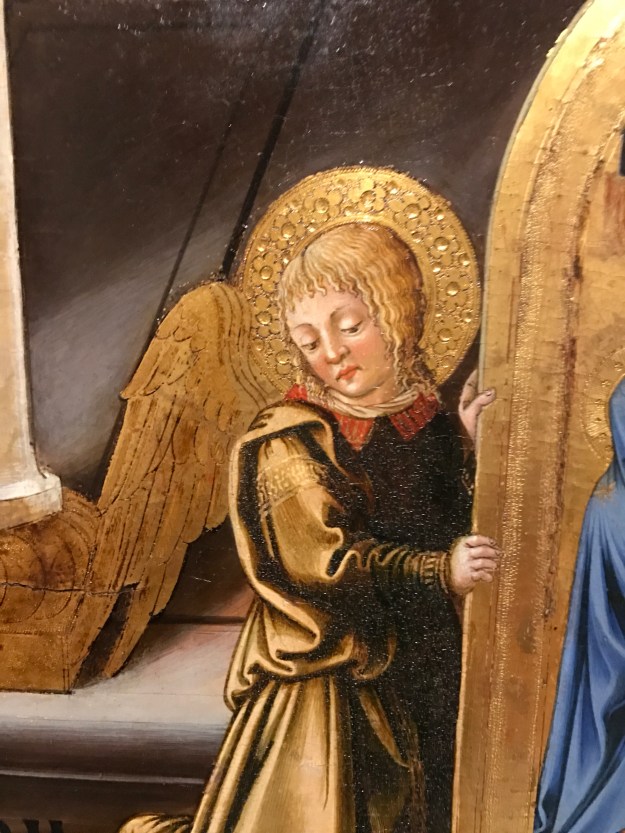
I love their modest expressions. They’re not even looking up at the action, just there to do their job.
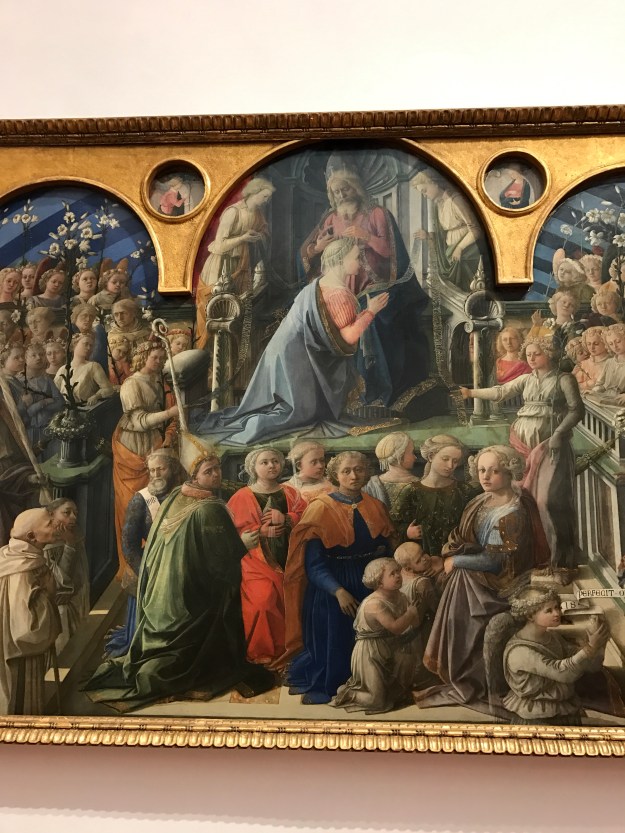
Actually, my favorite angels are often the ones off to the side of the action, like the one in the lower right-hand corner of one of Filippo Lippi’s most important paintings, “Coronation of the Virgin,” 1439-47. It’s a monumental painting–it is no wonder he worked on it for years.
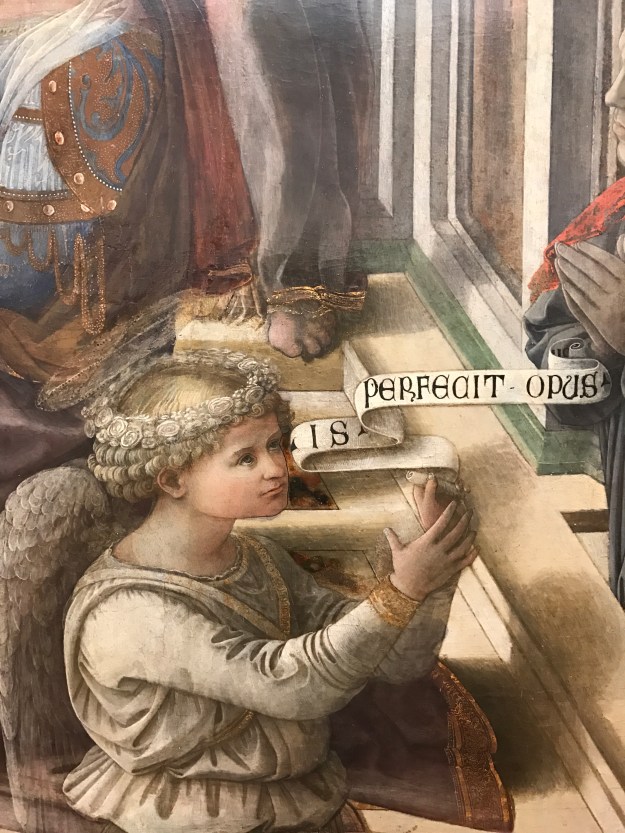
I especially like the gentle angel in the corner, unfurling a banner but not calling attention to herself.
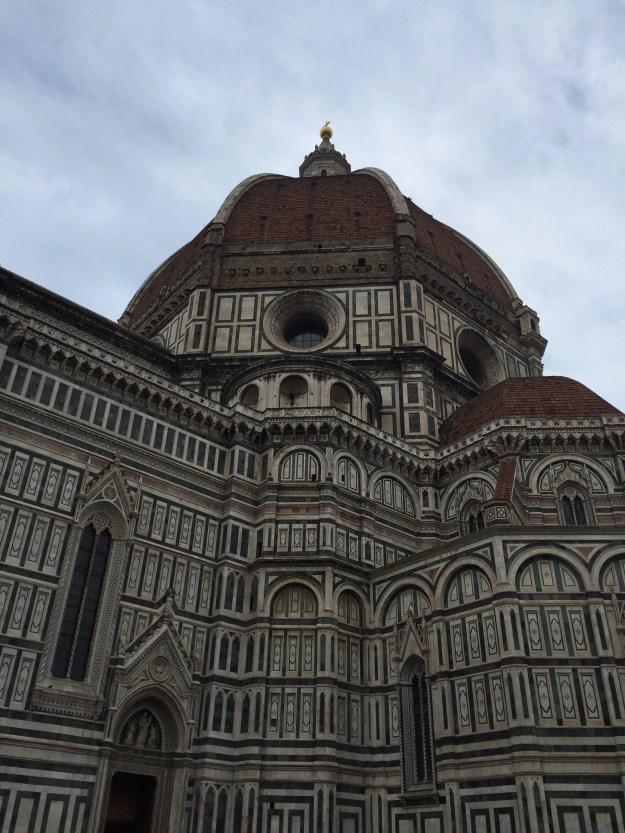
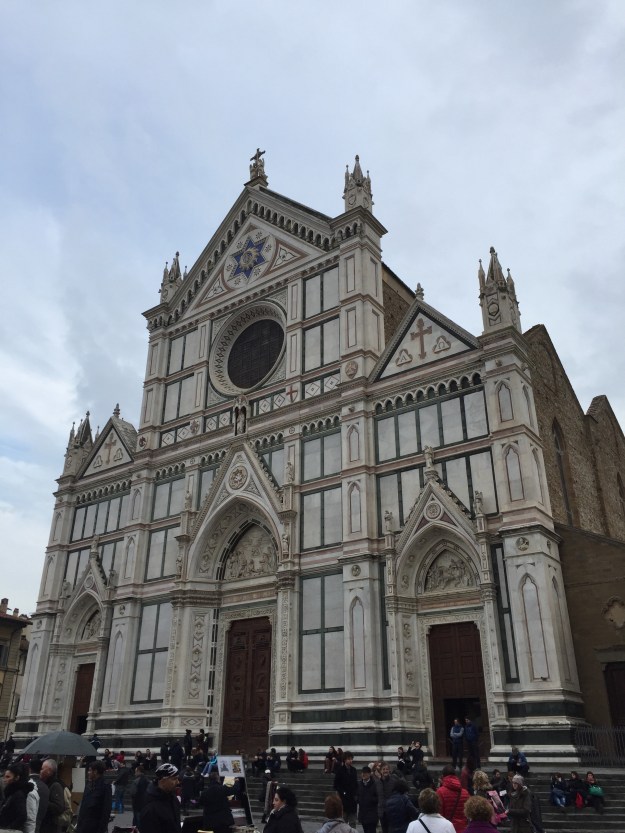
Time to leave the galleries and wander the narrow streets of Florence, where the glorious Duomo dominates. The cathedral was begun in 1296, just before the dawn of the Renaissance in Florence. It was completed in 1496 when Filippo Brunelleschi figured out how to top it off with his glorious dome. (Over the centuries, the builders must have figured, “Well, how hard can it be?” But eventually they discovered they’d built too big for any known dome construction).
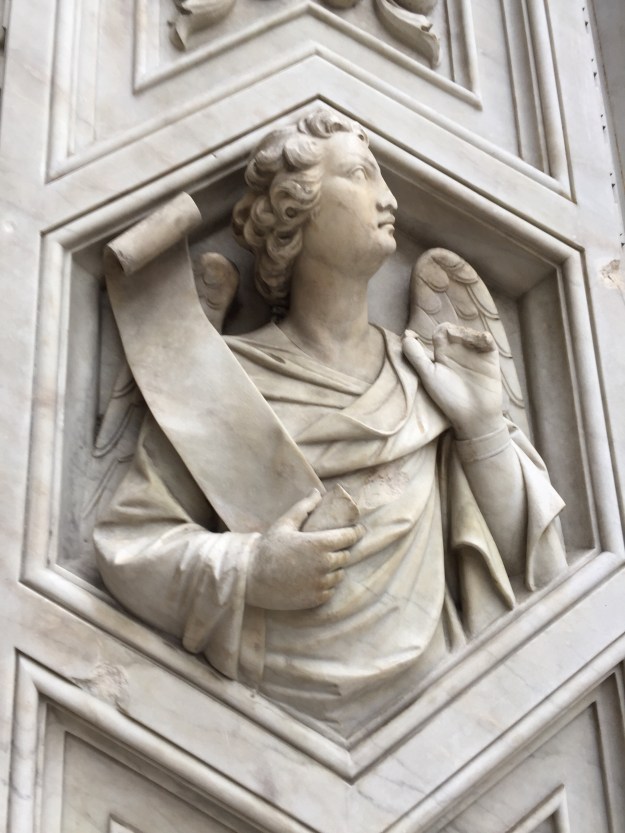
Finally, in the 19th century, Emilio De Fabris frosted the cake by adding the pink, green and white marble Gothic Revival facade. He stuck a welcoming angel next to the main entrance.

Whatever theology or non-theology one has, I think angel-collecting is a fine way to spend time in Florence, or anyplace where there’s fine art.

Happy Scandinavian Christmas!

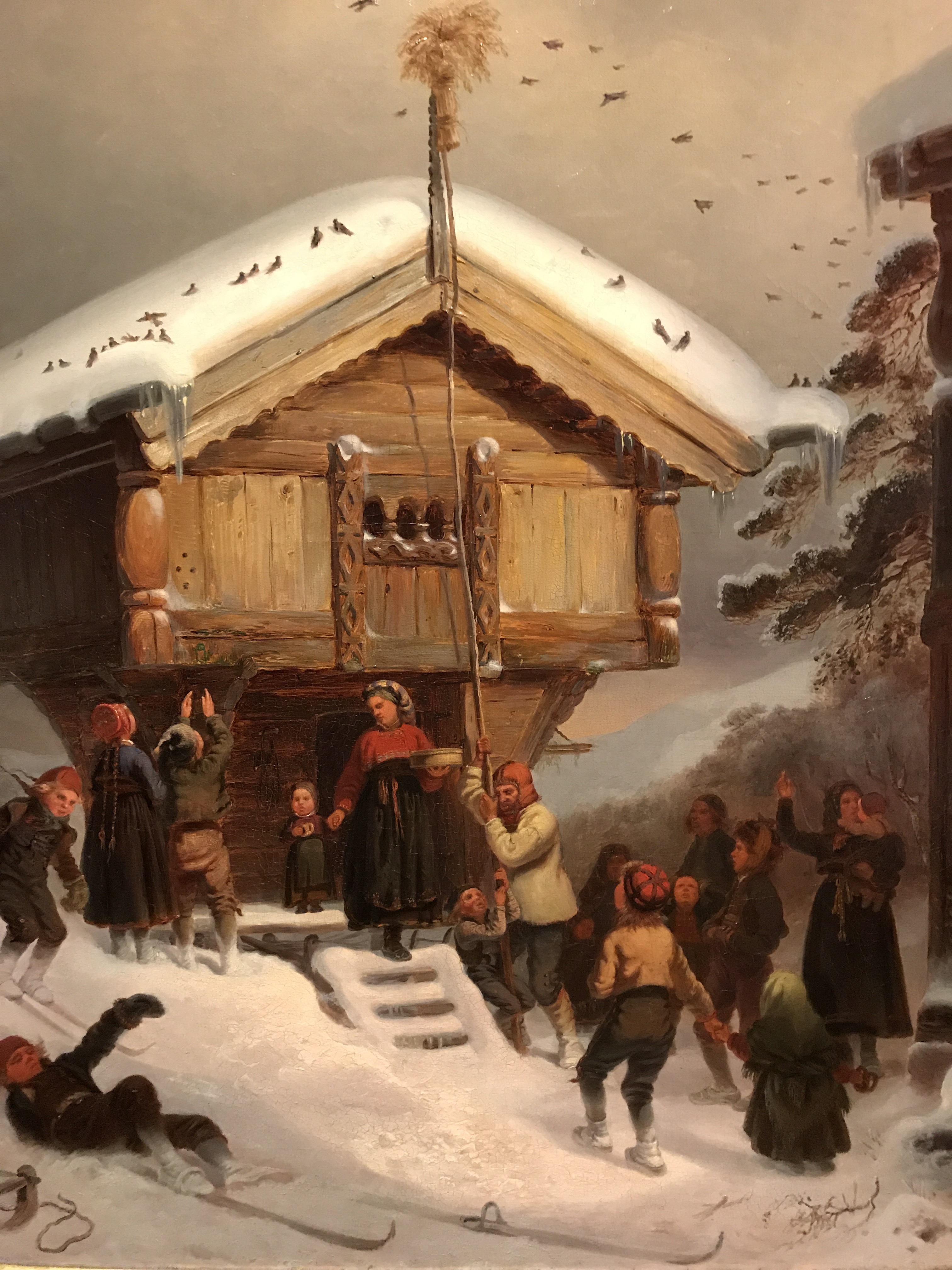
I don’t know exactly what’s going on here, but I want in. The painting, from Norway’s National Gallery in Oslo, is “Traditions of Christmas” by Adolphe Tideman, 1846. It looks like a sheaf of wheat is being hoisted up on the rooftop for hungry birds. And there are skis, and puffy snow to tumble into. Works for me!

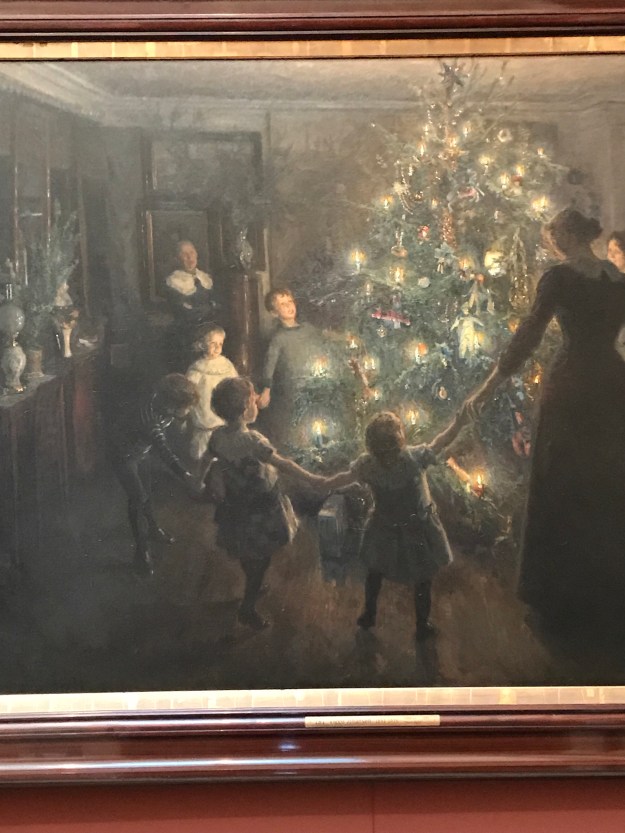
Viggo Johansen painted his family celebrating in “Silent Night,” 1891, now in the Hirschsprung Gallery, Copenhagen.

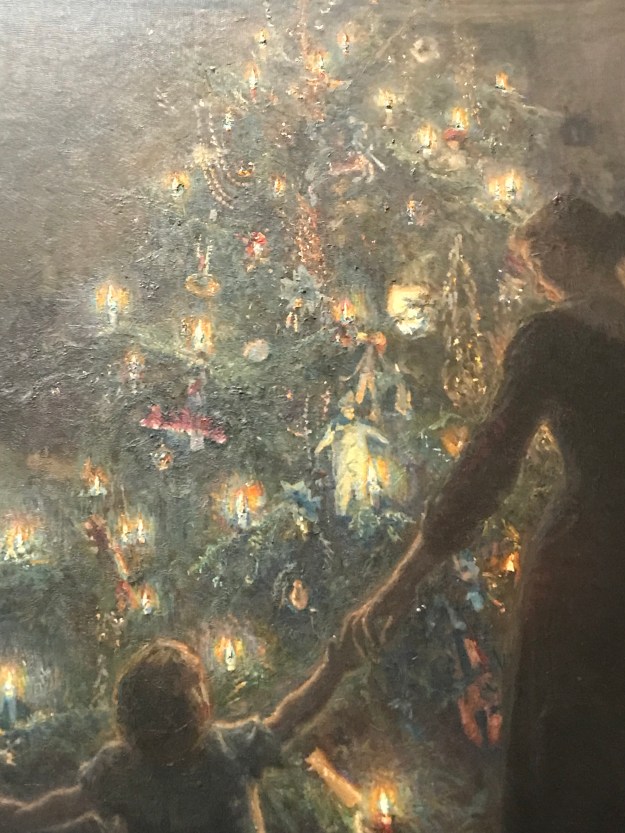
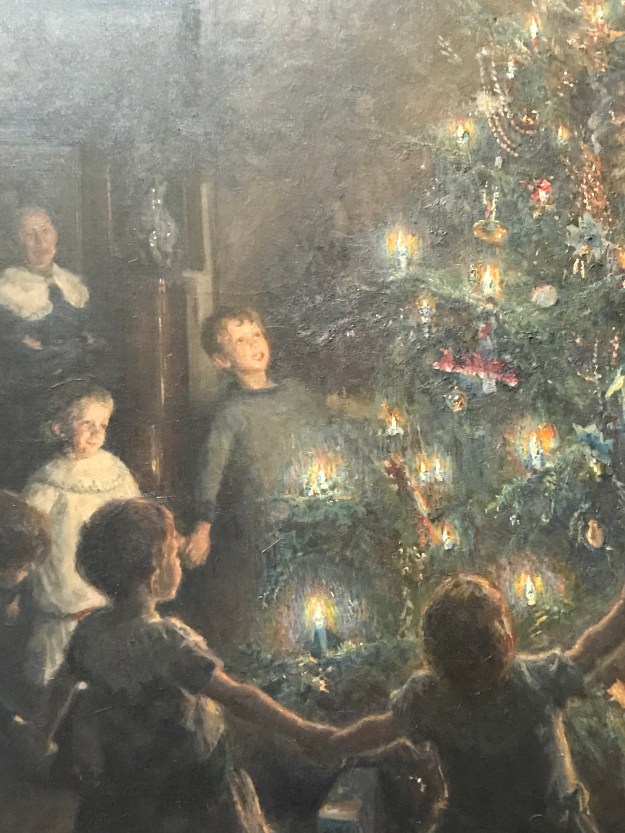
He painted his wife, his children, and a servant around their tree with lighted candles.

The artist most likely only painted himself as an arm reaching for his son’s arm behind the tree. The museum commentary explains that Christmas was the best day for quite awhile in the Johansen household. Within a day or so, all the kids were down with measles. The artist left the tree up for four months so he could finish the painting while also tending a houseful of sick children.

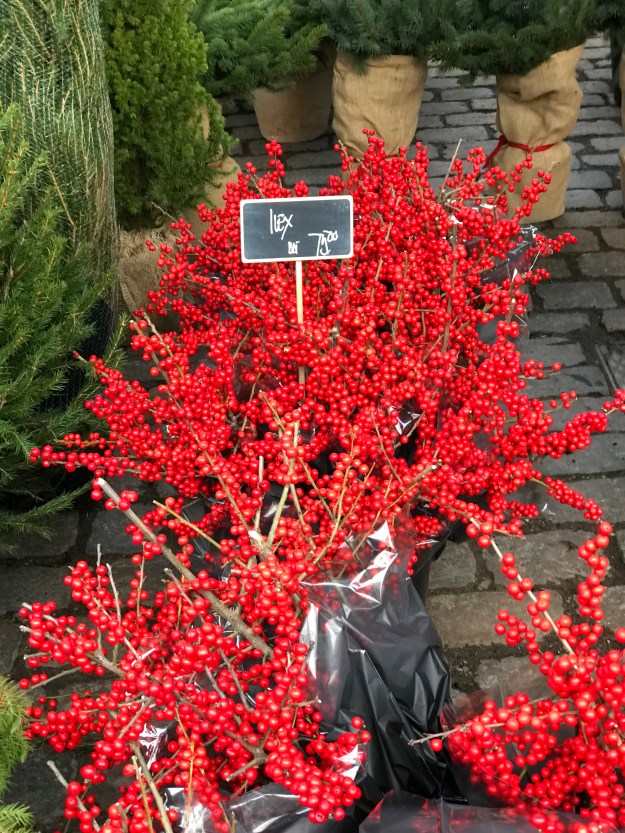
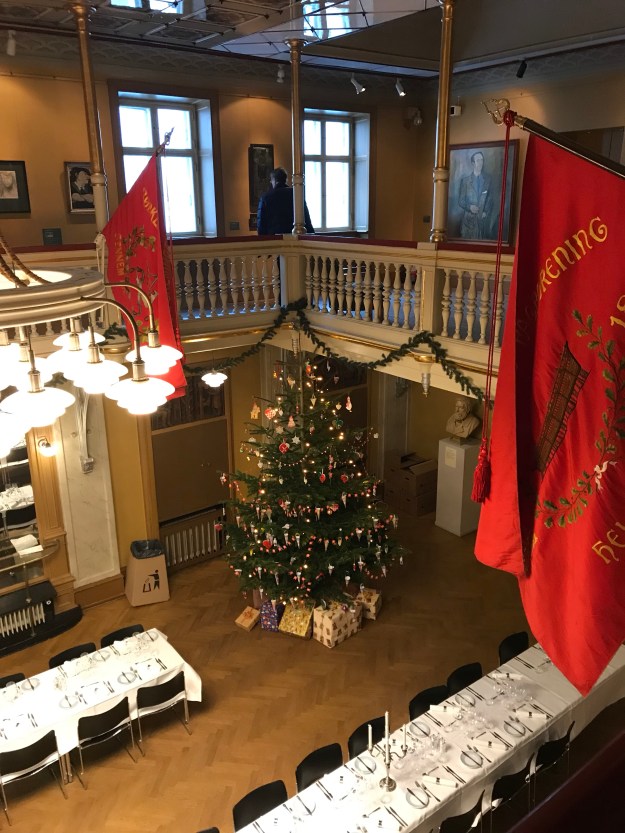
In Copenhagen right now, street markets are bright with berries, and the grand assembly room at the Workers’ Museum is set up for a party.

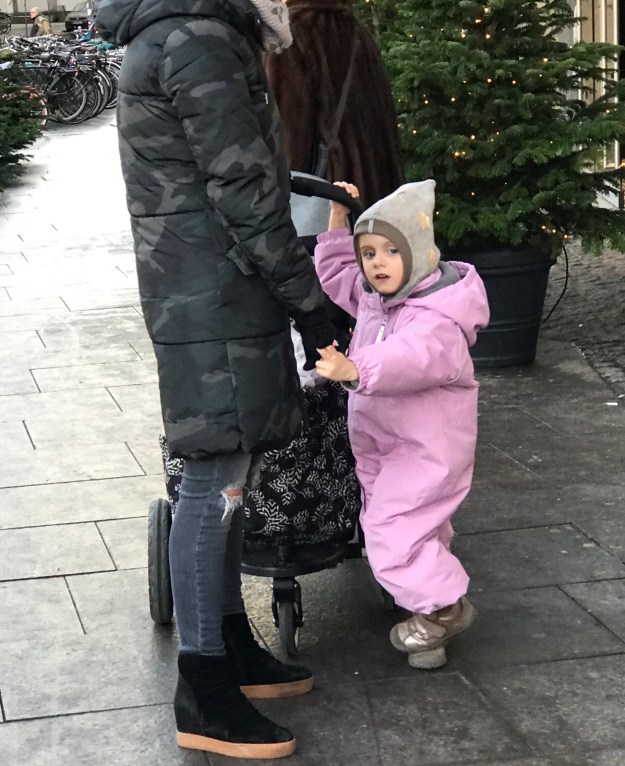
Children are cozy in their insulated onesies. Every time I see one, I want one for myself.

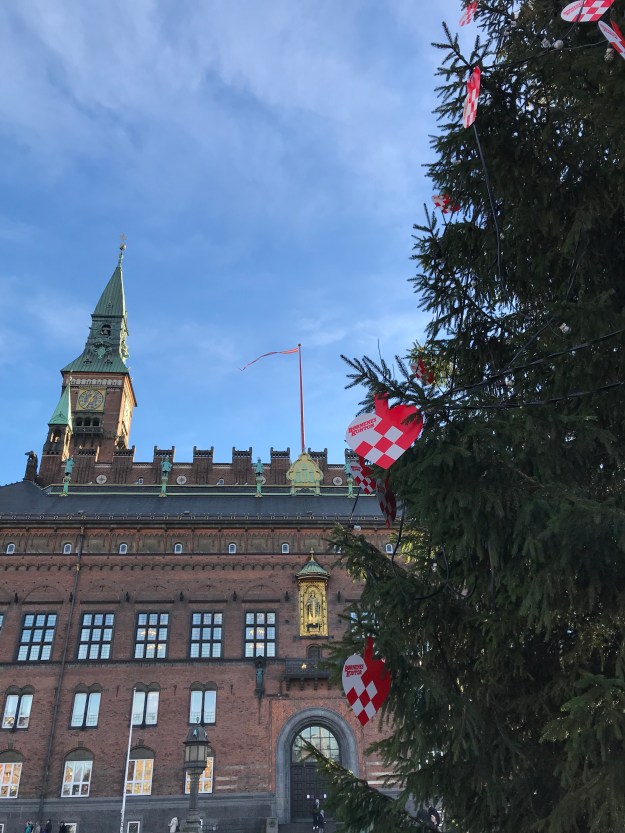
I’m not sure the sun is shining today in Copenhagen, but it was a sunny day a couple of weeks ago at City Hall.

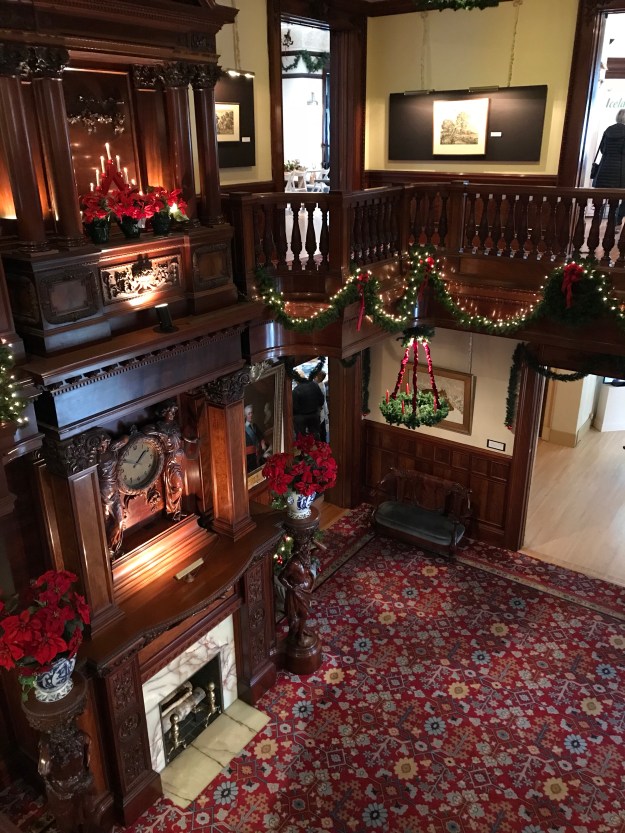
Back in my hometown of Minneapolis, where many Scandinavian people ended up as immigrants, the Swedish Institute has decked the halls.

The lakes are frozen, there’s just enough snow to call it a White Christmas, and it’s COLD.

And at Christmas dinner today, I have not only grandchildren but a new granddog: a sheepadoodle. Merry Christmas to all!

Listening for the Siren on the Flam Railway

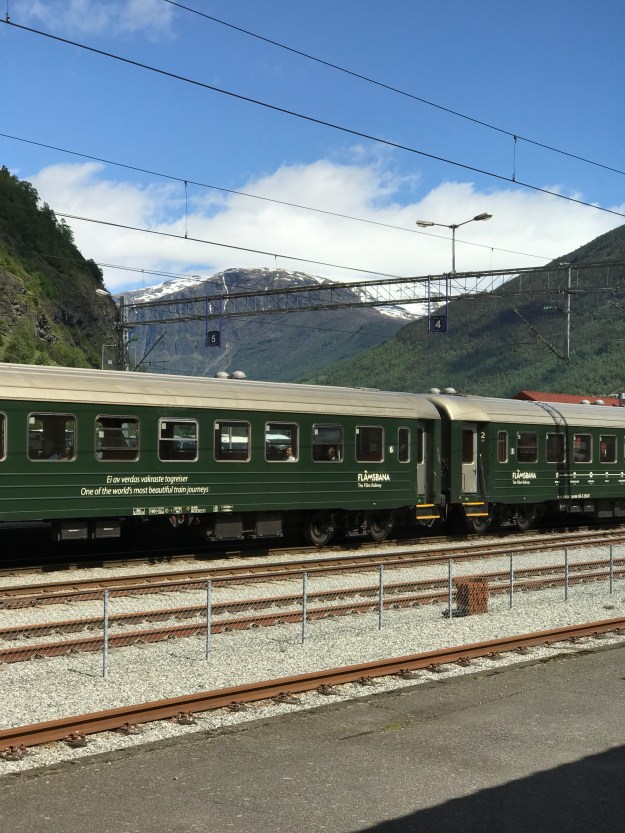
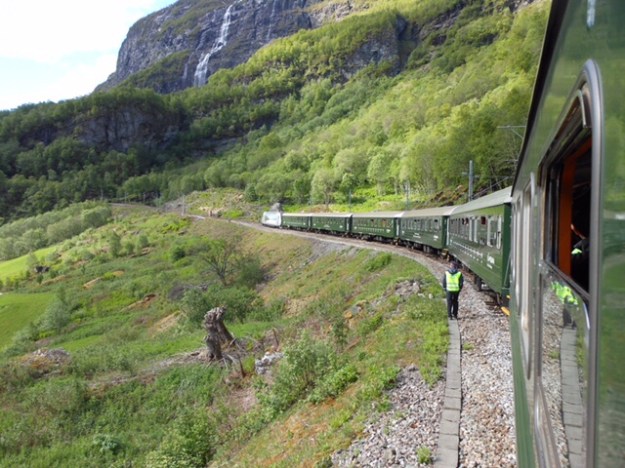
Nobody goes to the Sognefjord without riding the Flam Railway. It’s only 20 kilometers, but they’re all vertical kilometers. The average gradient is 1 to 18.

The math meant nothing to me until I got on the train and looked out the window.

The trick is to avoid crowds. Going off-season helps, but there are still cruise ships. In early June, we bought tickets only after asking the friendly agents for advice. They know exactly how many cruise passengers are getting off their boats and clamoring for seats at any given time.

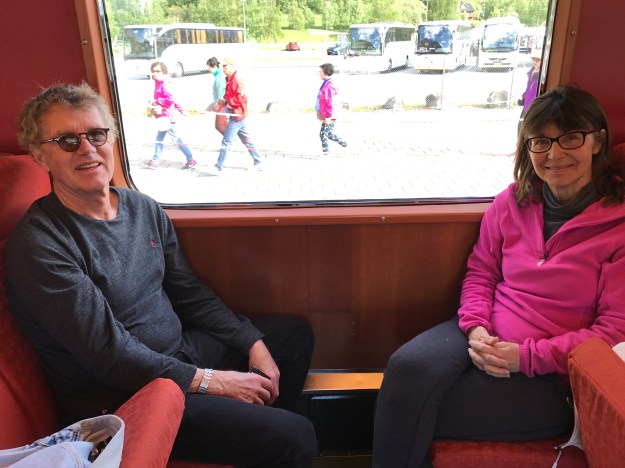
Our reward was having plenty of room on the train to spread out and rush from side to side of the compartment to take in the ooh! and aah! views.

The 50-minute trip snakes through 20 tunnels, each one a feat of Norwegian engineering. But it’s pretty much impossible to get a good picture of a tunnel. The train is privately run now, but it’s not just a tourist train. When it was opened in 1941, it made tiny mountain settlements accessible and provided much-needed connections to main railway lines.

The ride passes countless waterfalls, but the highlight is the Kjosfossen. The train stops for a few minutes and passengers step out onto a platform for a photo op with 93 meters of watery spectacularness. OK, I made up that word, but it fits.

Who knows how many gallons of water roar past the platform, especially in spring when snow is still melting at higher altitudes? We took pictures.

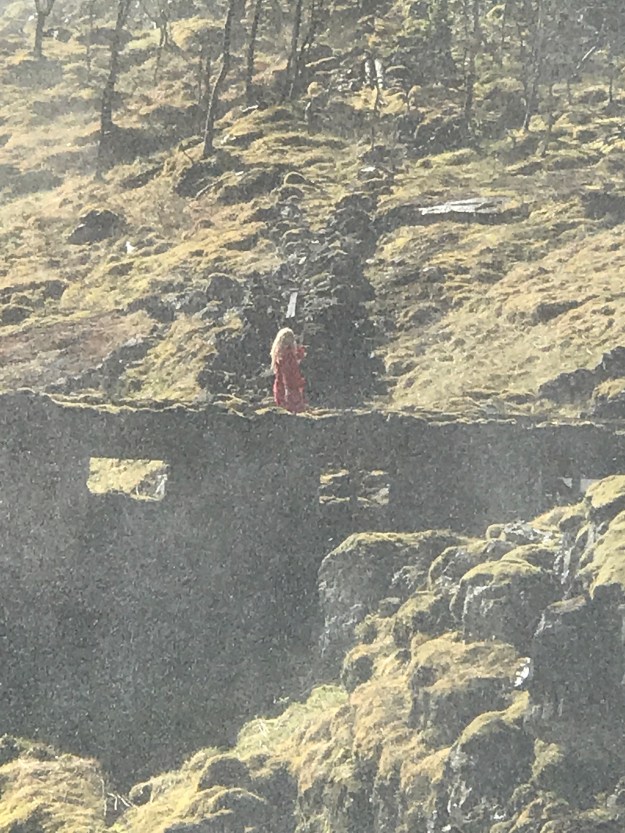
Then, Twilight Zone music started blaring from loudspeakers and a lady in red emerged in the waterfall mist above us, dancing and beckoning. She must have had her own dancing platform, halfway up the waterfall. An amplified voice proclaimed a legend about a water sprite who tries to lure men to join her in the Kjosfossen–a Norwegian siren.

The sirens of Greek mythology were beautiful women who tried to lure sailors with enchanting music, crazing them into crashing their ships on rocks.

I hoped the siren’s platform was dry and she didn’t slip. And I wondered if the job paid well. It looked like fun. And she probably didn’t have to hear the blaring music above the roar of the falls.

At the top of the train ride, at Myrdal, some people got out to connect with the Bergen-Oslo train. My son realized that he could rent a bike and ride the switchback road back down the mountain to Flam. I handed him my gloves and hat and sent him on his way. Later, he reported that the bike ride was actually pretty gentle if he took it slow. He said it was the bike ride of a lifetime. If I went back when the roads were clear, I’d do it.
The scenery on the trip down was the same, with no stop at the Kjosfossen.
While we waited for our biker in Flam, we amused ourselves in various ways.

Flam has a lot of shops, cafes, and an excellent historic railway museum.

Is the Flam Railway really worth all the Norway in a Nutshell hype? Well, this part of the Nutshell only takes a couple of hours if done independently, and I would do it again. I’d like to see it in the deep snows of winter, and I’d like to do the bike ride down in good weather. But I would not like the train ride in lockstep with a big group, which is what you get if you book a Norway in a Nutshell tour. I can’t stand the feeling of being herded from one place to another. Still, I know the tour would be an efficient and exciting way to get out into fjord country.

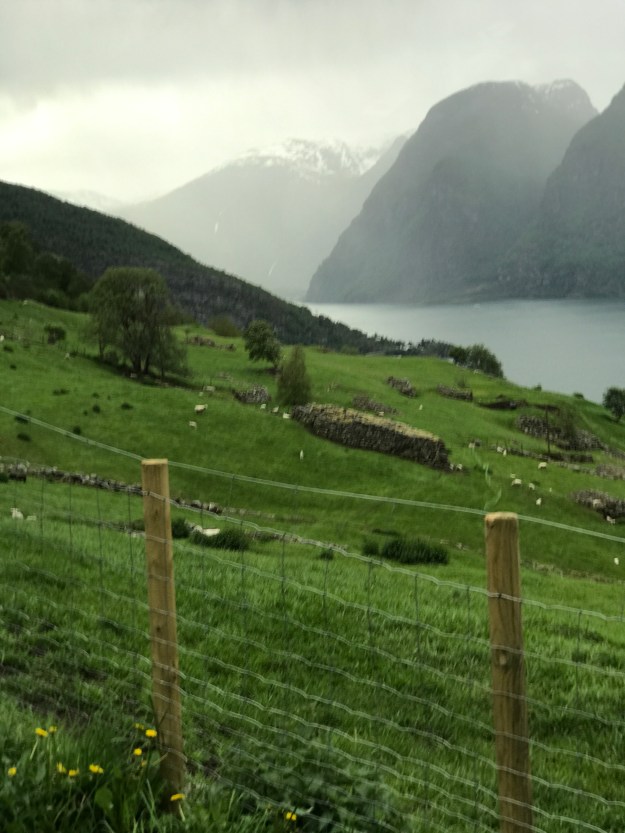
Really, though, I was happier when we were wandering on our own around the Sognefjord. There’s stunning scenery and hundreds of waterfalls everywhere.

And I like to spend time with the locals, including the sheep.

I’m Dreaming of a White Sognefjord

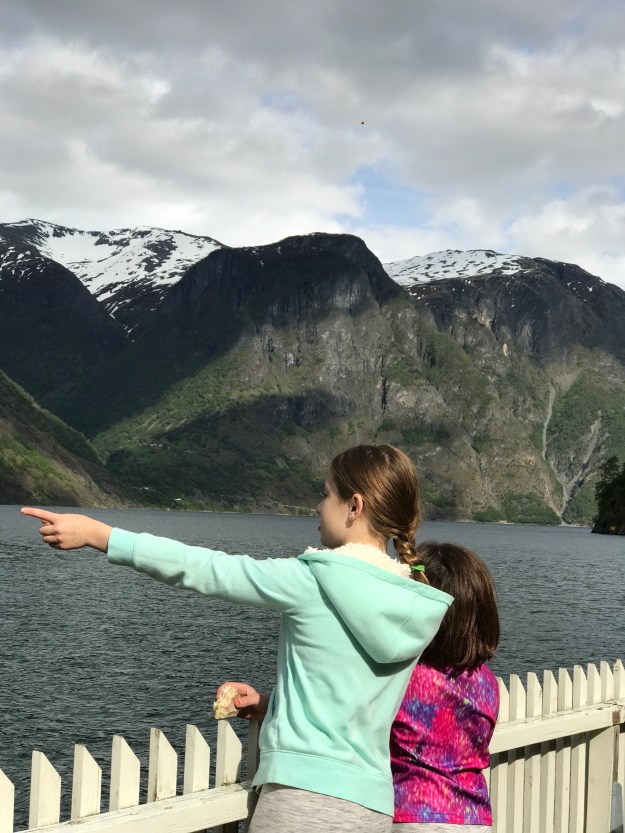
When I had a chance to see the fabled fjords of Norway last spring, I naturally chose the longest and deepest one: the Sognefjord, which stretches for 127 miles and is 4,291 feet deep. (That’s the better part of a mile).

We settled in a beautiful branch of the King of Fjords, the Nærøyfjord. It’s a UNESCO World Heritage site. We chose to stay in Aurland, a peaceful small town a short drive away from the cruise-ship commotion of Flam.

Instead of taking the famous “Norway in a Nutshell” tour and being herded from boat to bus to train on a hectic schedule, we were lucky enough to rent our own wheels. There were six of us, and the rental company proudly announced they had upgraded us to a nine-person van. Well, OK, but did the van have to announce to all the world that it was a rental?

And did it need to have about a hundred dings and dents which we had to document before we set off?

Once we were under way, the van worked out fine. All our luggage slid right in, and everybody had a personal window to watch the scenery from. My trusty Garmin GPS cheerily followed (and led) us up and down highways and tiny dirt roads with no names. (My son finally understood why I plunk a big extra screen on the dashboard instead of just checking Waze on my phone. There’s no phone service out in the wilds, but the satellite reaches everywhere).

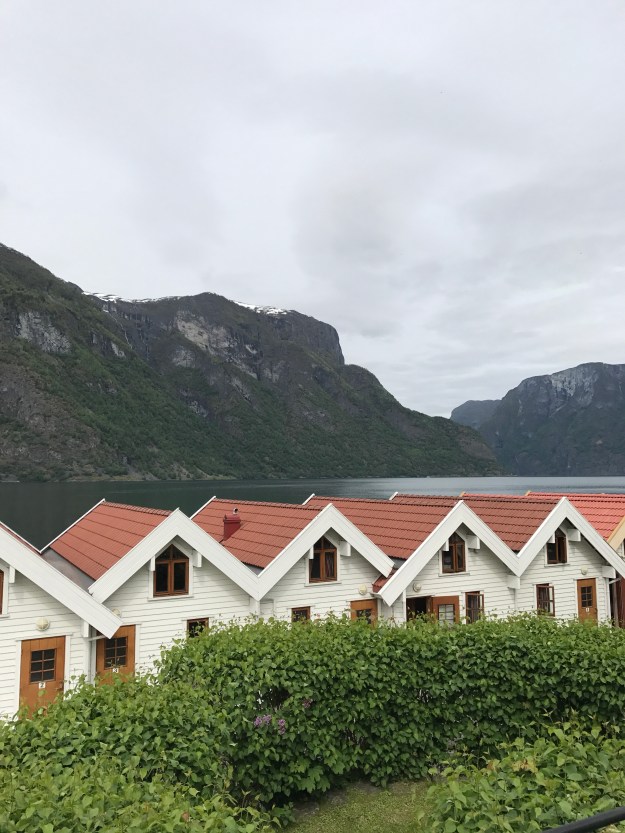
The best choice we made was to stay at the Vangsgaarden, a venerable historic hotel in Aurland. We rented two of the six new little waterside cottages. The cost was reasonable, considering how expensive Norway is in general.

The almost-midnight sunsets in early June were spectacular.

The older buildings date from the 1700s, when wealthy people began venturing into the fjords for vacations.

The place reminded me of old-fashioned Minnesota lake resorts, the ones where I spent long summer days with sand between my toes.

I like old stuff, even old technology stuff.

I felt as though I’d arrived at the cozy home of a kind elderly aunt, one with time to spend reminiscing about the old days.

There was even an attention-seeking cat named Lotus, spiffy in his springtime lion cut. He liked to push all the brochures off the table and watch a human put them all back. We obliged.


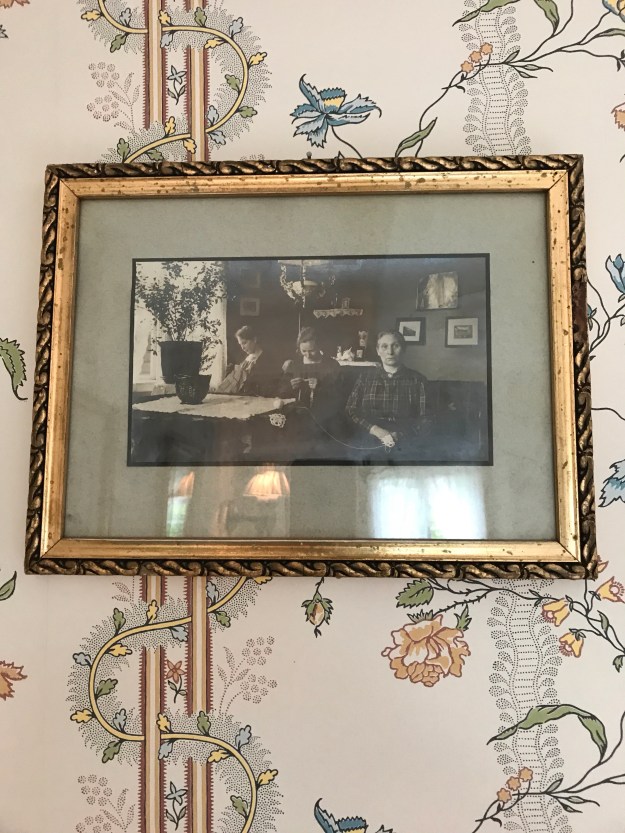
Norway felt like home. And in fact, my brother once tried to track down family connections from the Norway fjords. Sadly, it seemed no relatives were left.

I thought the hotels, boats, buses and trains would be closed all through the long dark winter, but I just read an article by a woman who did the Norway in a Nutshell tour in January and lived to tell how spectacular it was. Now I’m plotting a return, maybe to the opposite shore of the Nærøyfjord. I’d like to see Balestrand, and I think it sounds livelier than Aurland. In winter, I think there would be more going on and it would be equally beautiful.

I’m envisioning recitals and Christmas services in little churches, like this one in Flam.

But I don’t envision driving on icy mountain hairpin curves. They were challenging enough with dry roads in June. That’s a typical one above, just below and to the left of the waterfall.

After the rest of the family left, my husband and I took the scenic 8-hour train ride from Bergen to Oslo. (He was glad to be done white-knuckle driving that van). In June, there was still plenty of snow in the wild country high above the fjords.

I would like to see Bergen and the fjords in winter. Maybe there will be a tempting airfare and I’ll do it.

I wonder if I can get the grandchildren out of school. Surely this would be an educational trip?

Meanwhile, it’s a nice winter dream. And it’s on my travel wish list.

Happy Birthday, Jane Austen!

In honor of Jane Austen’s birth on December 16, 1775, I’m revisiting one of my favorite travel memories. In 2014, I visited the home where Jane lived in her last years. And I experienced Six (or fewer) Degrees of Separation from Jane.

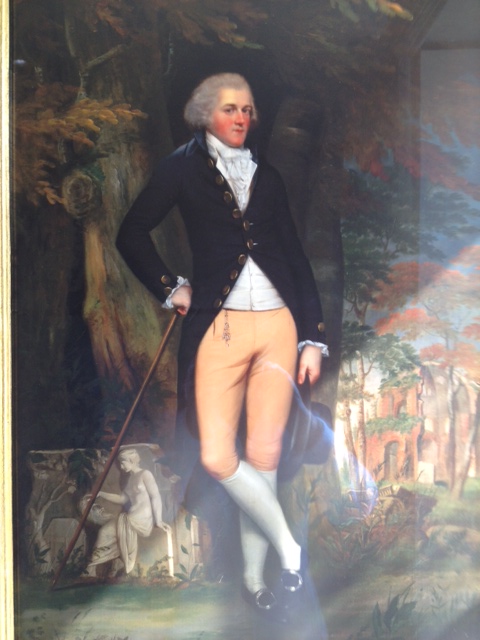
Jane Austen lived the last few years of her too-short life in tranquil Chawton, Hampshire, with her mother, her cherished sister Cassandra, and a family friend. The women were pretty much penniless after the death of Jane’s father.  Like most single women of their time, they had to depend on the kindness of relatives for a roof over their heads.

Edward Knight

It was their good fortune that Jane’s brother Edward Knight was able to come to the rescue. Why was his name Edward Knight, not Edward Austen?  He had been formally adopted by a cousin of Jane’s father, Thomas Knight.  Thomas and his wife Catherine were wealthy and childless.  They made Edward their heir.  He inherited several estates, among them a grand house at Chawton.  The house came with a sizable but cozy cottage, which Edward made available to his mother and sisters for their lifetimes.

At last, in her thirties, Jane had a stable home.  She had begun writing as a teenager but had more or less given it up during the years that she had no settled home.  In Chawton, she established a routine of writing every morning at a little round table in front of the dining room window.  Her sister Cassandra took over morning household chores, giving Jane the freedom to write. In the afternoons, they took long walks in the countryside–just like Jane’s heroines. They also spent a lot of time visiting friends and relatives, including the wealthy connections Edward Knight was able to give them.

On this humble little table, Jane wrote the classics we know and love: Persuasion, Pride and Prejudice, Sense and Sensibility, Northanger Abbey, Mansfield Park, and Emma. Some of them she had begun earlier and had put away. Family lore had it that a squeaky door was purposely never oiled, so that Jane always had warning of visitors.  She would hastily hide her manuscript until the visitors had left.

Jane’s books dealt with the serious problems of women dependent on men for economic security.  As she knew all too well from her own life, an unmarried woman without a fortune of her own had very few options for survival. Jane spun her stories with humor, but also with hard-earned experience in understanding human conflicts.

I was deep in a discussion about Austen family history with a man stationed in the house, when I noticed that his name tag said, “Mr. Knight.”  Could it be?  Yes!  My Mr. Knight was a living, breathing, direct descendant of Jane’s brother! I think he looks just like his ancestor.

In Copenhagen this month, I loved seeing some outfits from Jane’s era in the Design Museum.

The Empire dresses first popularized by Josephine, the wife of Napoleon, were popular in Scandinavia as well as in Jane’s England.

I loved the puff detail on this one, which was made in Denmark’s colony in the Indies. (Taking care of fragile garments like this was the job of slaves–an unpleasant fact that countries like Denmark and England and America are still struggling to come to terms with). In one of her books, “Mansfield Park,” Jane touched on the subject.

Still, I can dream of a ladylike life in a peaceful English village. How about a little cotton jacket for a stroll in the garden?

I just found my DVD of my all-time favorite movie based on Jane’s work, “Persuasion.” It’s about maturity, regrets, making one’s own risky choices, and second chances. It stars Amanda Root, Ciaran Hinds, Corin Redgrave, Fiona Shaw, and a long list of other fine British actors. I’ll be watching it today, and feeling grateful that in her short life Jane was able to write as much as she did.

St. Lucia, Fermented Herring and the Sami in Sweden

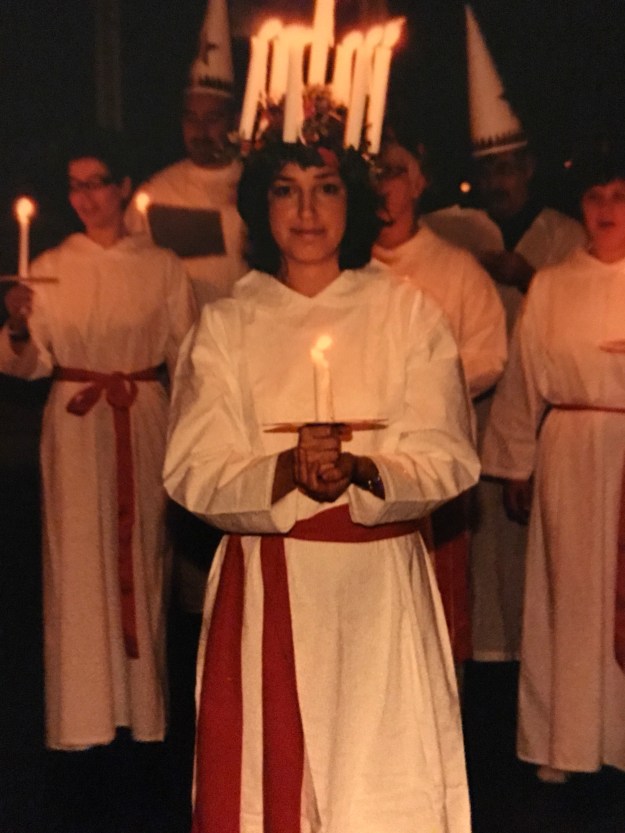
Someday, I’d like to be in Scandinavia for St. Lucia Day. In Norway, Sweden and parts of Finland, Croatia and Italy, December 13 is the feast day of Lucia.

She was an early martyr executed in the reign of Diocletian. Her crime was to carry food to Christians hiding in the dark catacombs of Rome.

Legend has it that she wore a wreath of candles to light the way, all the better to free up her hands to carry as much food as she could.

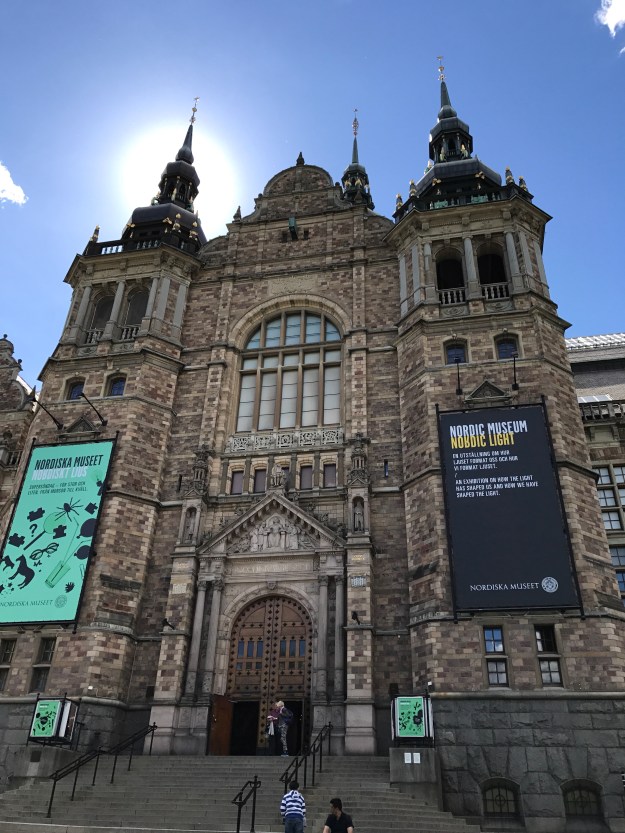
I love the Nordiska Museum in Stockholm. I’ll spend hours there anytime.

It’s a grand palace built specifically to celebrate all things Swedish.

An enormous wood carving of King Gustaf Vasa, who liberated Sweden from Denmark in the early 1500s, occupies his own dome in the great hall. It’s by Carl Milles, 1925.

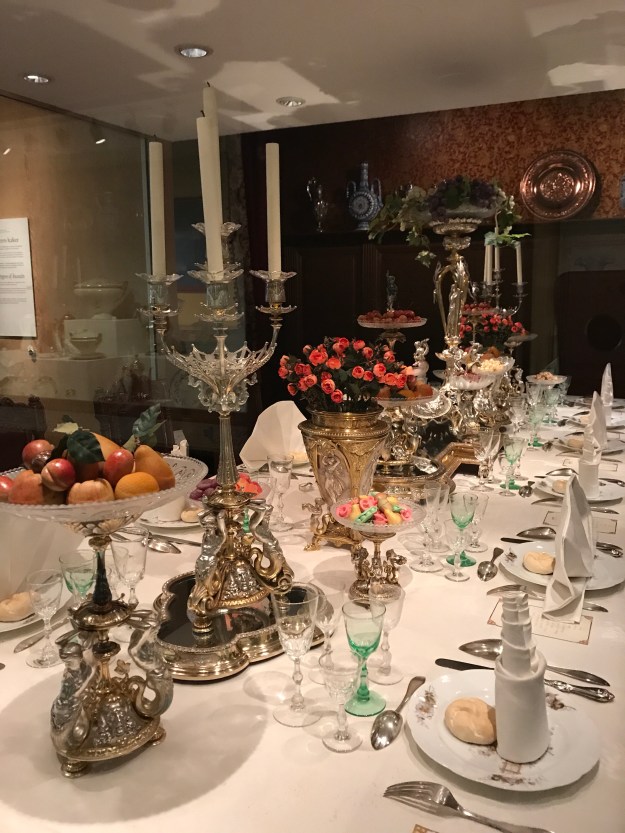
Each traditional holiday has its own set of displays.

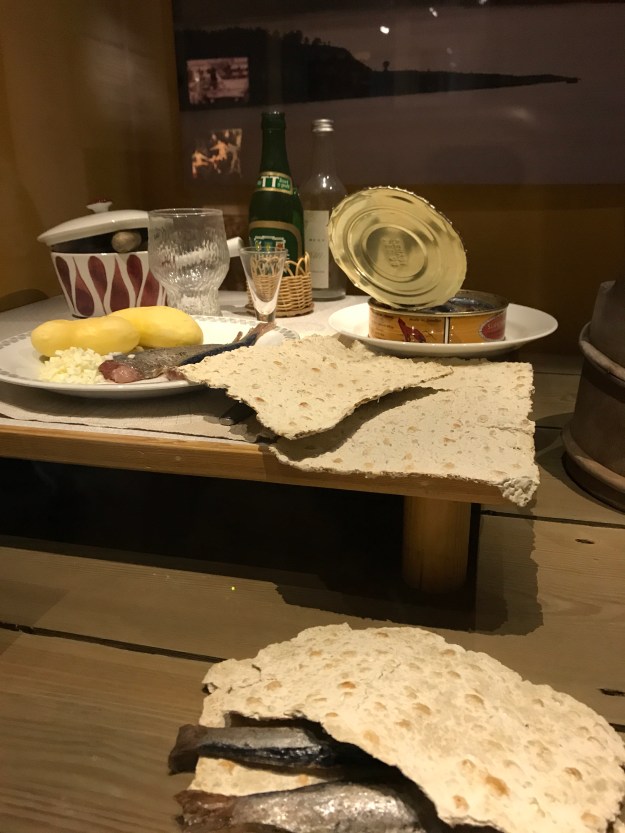
St. Lucia Day and Christmas are well-known, but how about the uniquely Swedish holiday of the Fermented Herring Festival?

I’m sure my own Swedish ancestors ate plenty of fermented herring. In Minnesota, where many Swedes landed, it survives as “lutefisk,” still made for special occasions and much joked about. So far, I’ve avoided having to actually eat it. (In the fine film “The Emigrants,” a young man hoping to go to America excitedly tells his friend that it is absolutely forbidden to eat herring in the new land. Poor people had their fill of herring in the Old Country).

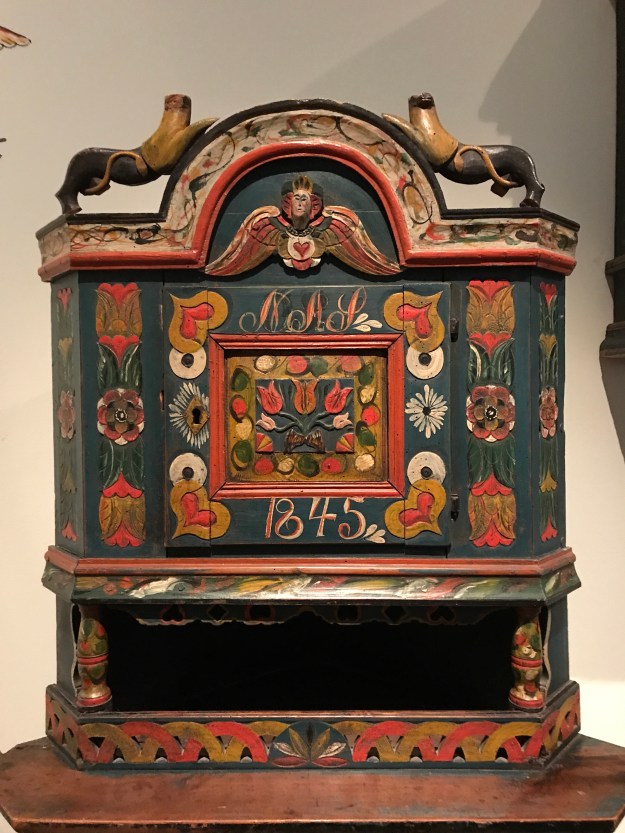
The Nordiska features the best collection of folk art and furniture that I’ve ever seen.

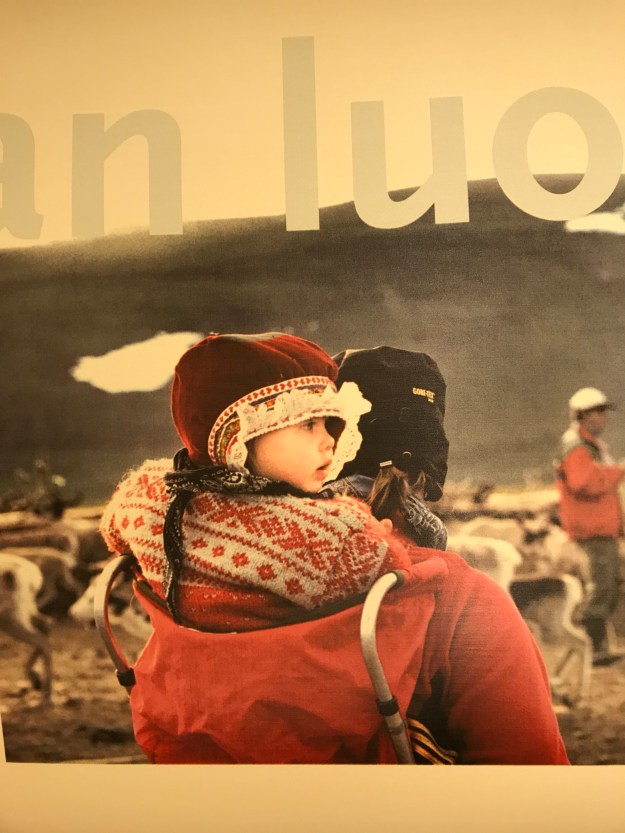
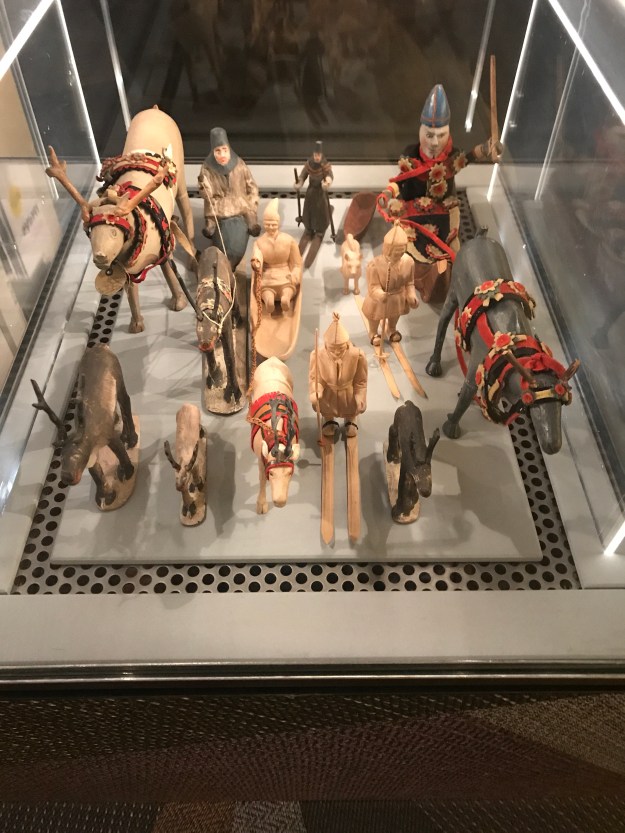
There’s a large section devoted to the indigenous Sami people, who have their own culture and traditions. In spite of a history of some persecution and exploitation, about 20,000 of them still live in their ancient homelands in northern Scandinavian.

They’ve added tourism and marketing their wonderful crafts to their traditional occupation of reindeer herding.

The last time I was at the Nordiska, I was lucky enough to have family along. My granddaughters had a great time in the interactive kids’ section detailing Swedish country life in earlier times.

Oh, to be in Sweden on St. Lucia Day! I’m adding it to my ever-expanding travel wish list. I’d like to head way north to visit the Sami, too. But I’ll probably skip the herring.

Join me next time for more explorations in the art and history of Europe!