Category Archives: Historical Figures

Lord Anglesey, A Man of Parts


Henry, the dashing 7th Marquess of Anglesey, came to mind this morning. In a burst of fall energy, I started madly cleaning out drawers, cupboards, closets and even the dreaded garage. I thought of Henry.
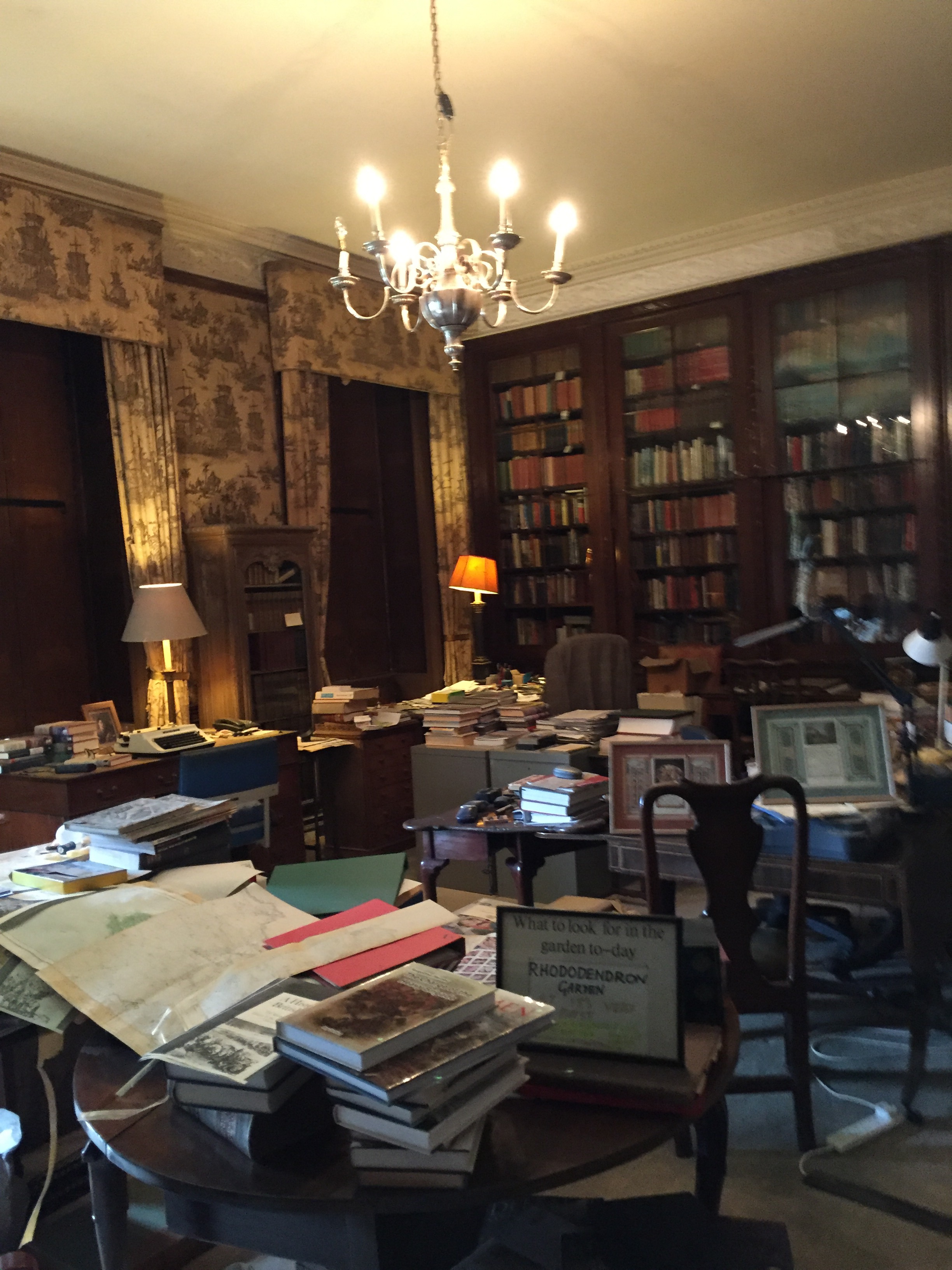

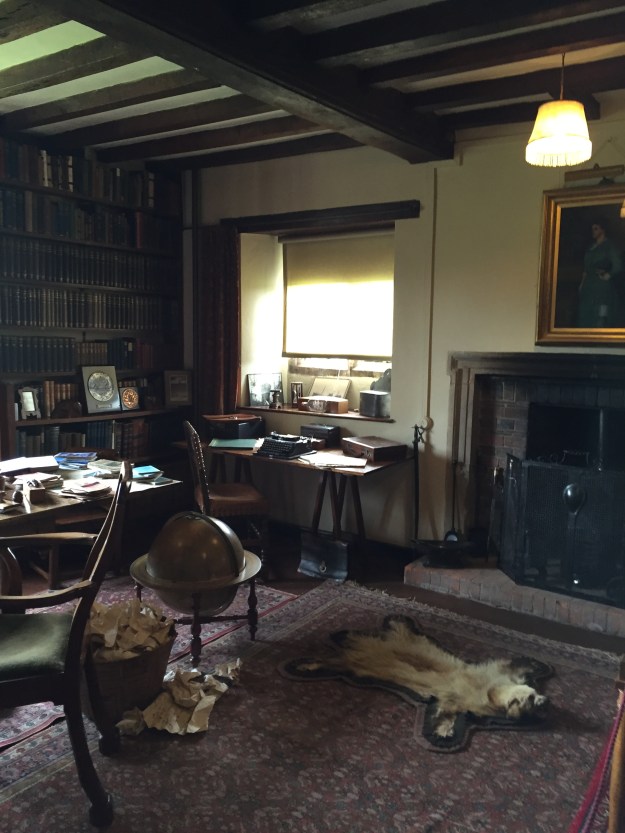
After a couple of strenuous hours of pitching and organizing things I had forgotten I owned, I sank into my softest chair and thought admiringly of Henry’s study at Plas Newydd in Wales. Henry was Marquess from 1947 until he died in 2013. In 1976, he gave Plas Newydd–“New Mansion”–to the National Trust, but still lived upstairs with his family. I think his heirs still live there, too. So would I.

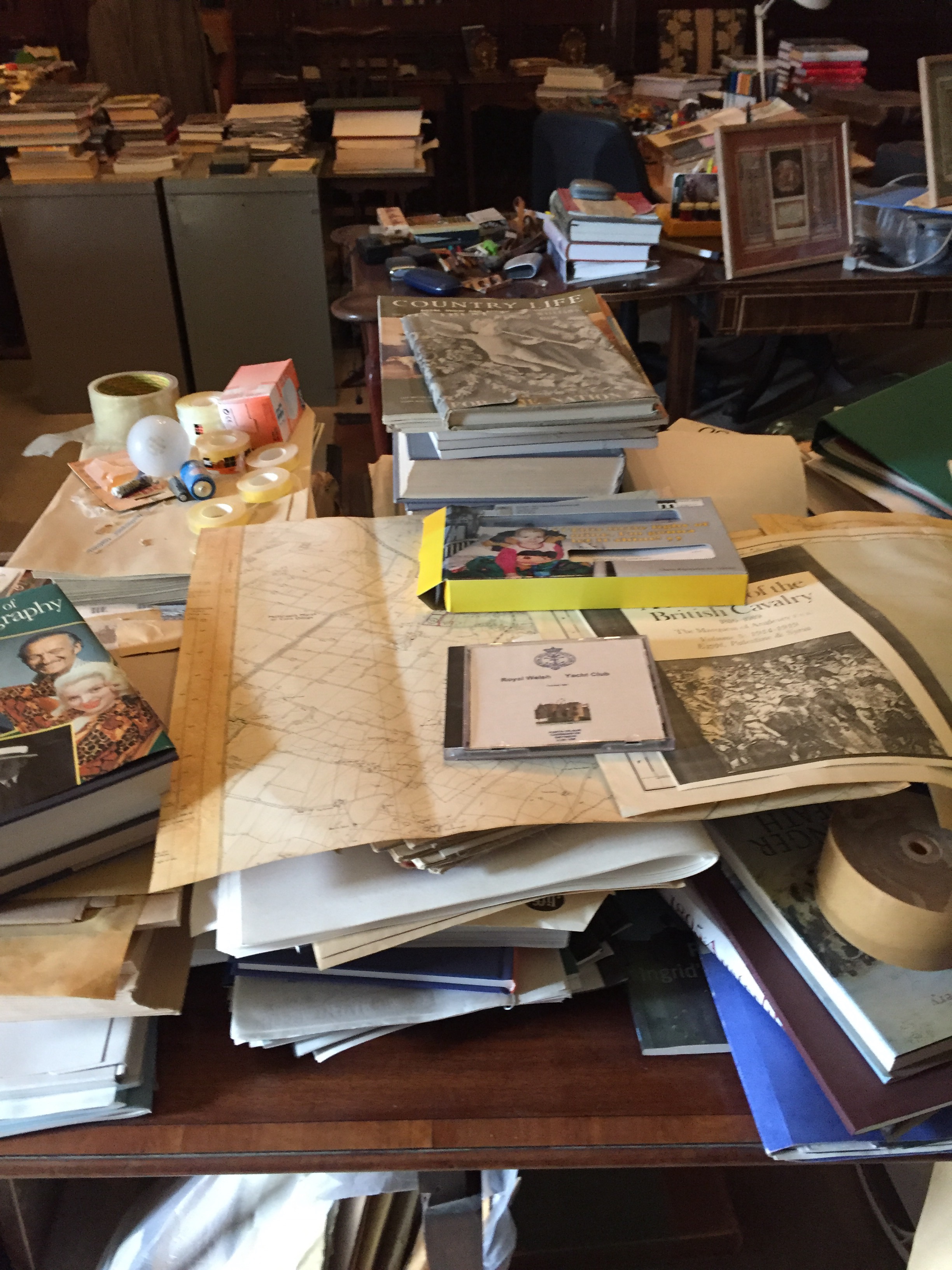
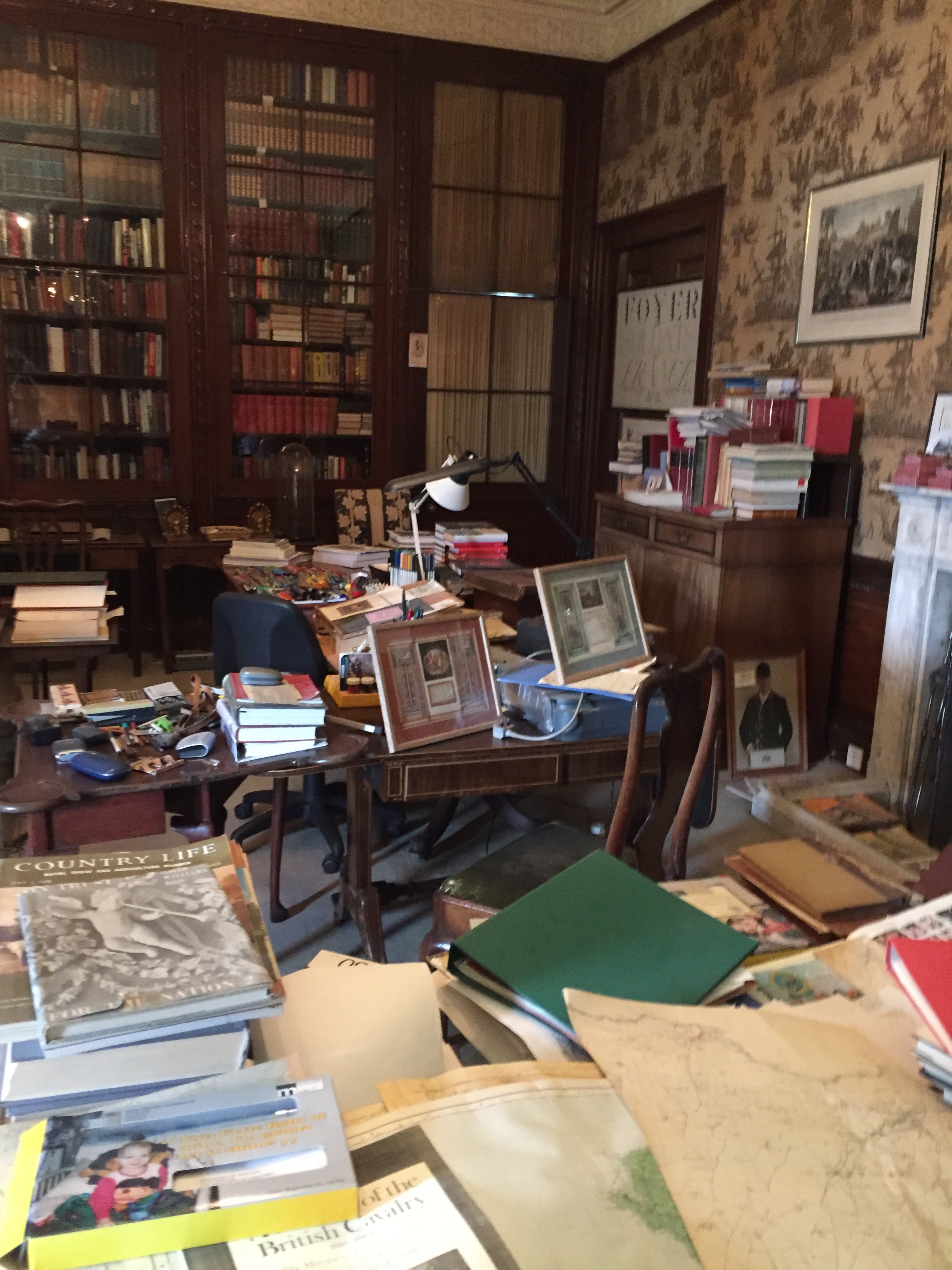
Henry’s study, used daily during his lifetime, is a magnificent jumble of books, papers, drawings, photos, magazines, and who knows what else.

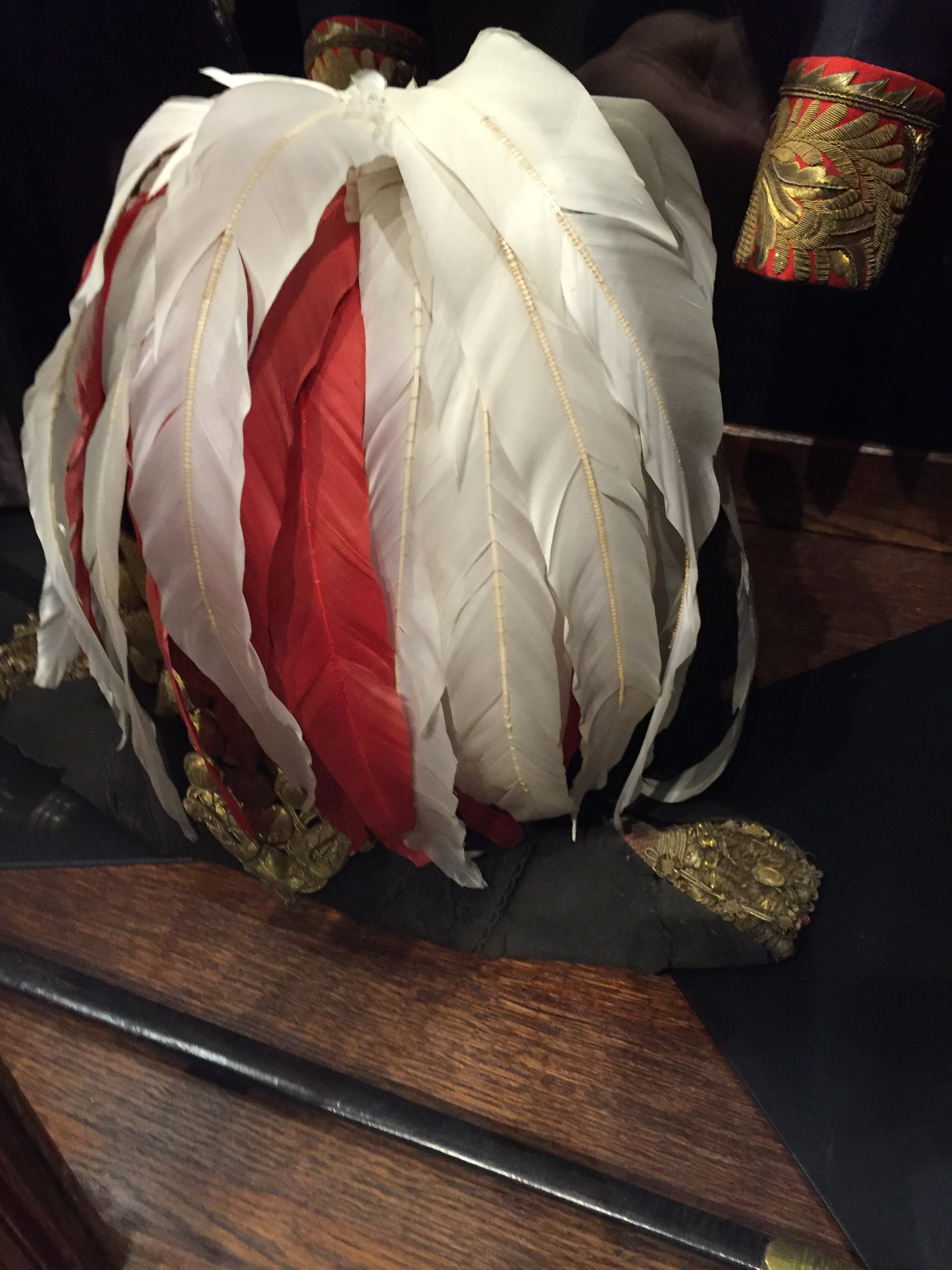
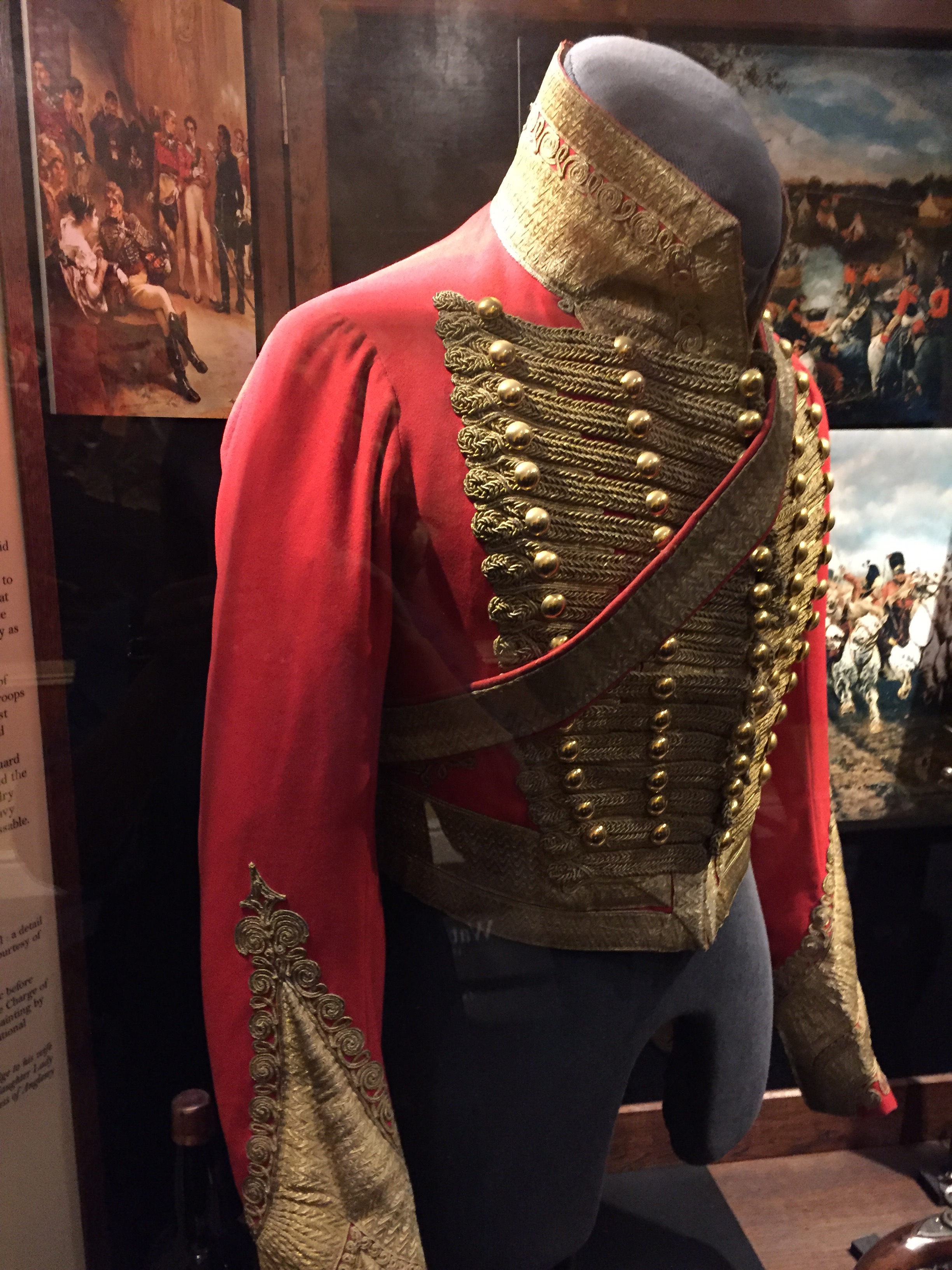
Another part of Plas Newydd displays stuff from the family’s colorful history. Henry was a distinguished historian, and well he might be. His ancestors included the first Marquess, Henry “One-Leg,” whose leg was shot off by cannon fire at the battle of Waterloo in 1815, while he was right next to the Duke of Wellington himself. On the occasion, Henry coolly said, “By God, Sir,    I’ve lost my leg.” The Iron Duke replied, “By God, Sir, so you have.”


The Marquess had what remained of his leg amputated, with a stiff upper lip and no anesthetic, and was fitted with a wooden leg. Afterward, he fathered ten children and walked nine miles a day for the rest of his life.

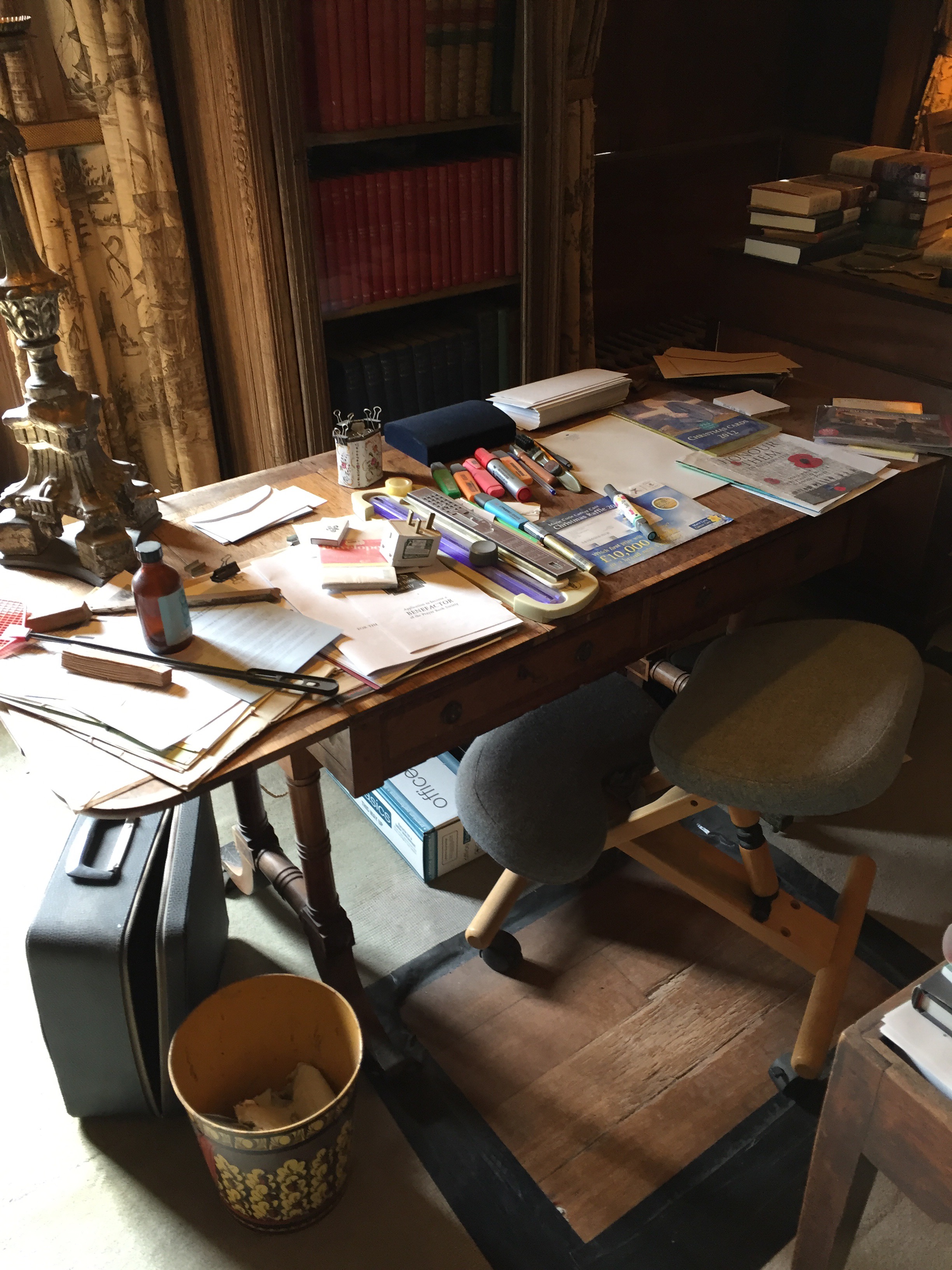
But back to the 7th Marquess. He must have been something of an artist as well as a politician and a writer. He kept a special drawing table, under a window with good light. Of all the rooms in grand homes that I’ve seen, Henry’s study is one of my favorites.


I can see him happily puttering around, going from one table to the next. The jumble made perfect sense to him. He just kept a separate place for each one of his many projects. If only I had the space to do the same.


The other unforgettable room at Plas Newydd is the dining room. In 1936, the 6th Marquess commissioned Rex Whistler to paint the entire long wall as a mural.


The artist was happy to spend endless hours on the mural, partly because he was in love with one of the daughters of the family, whom he also painted. Tragically, Rex Whistler was killed in action in Normandy in July 1944, having insisted on fighting rather than serving in some less dangerous way. He had just arrived at the front.

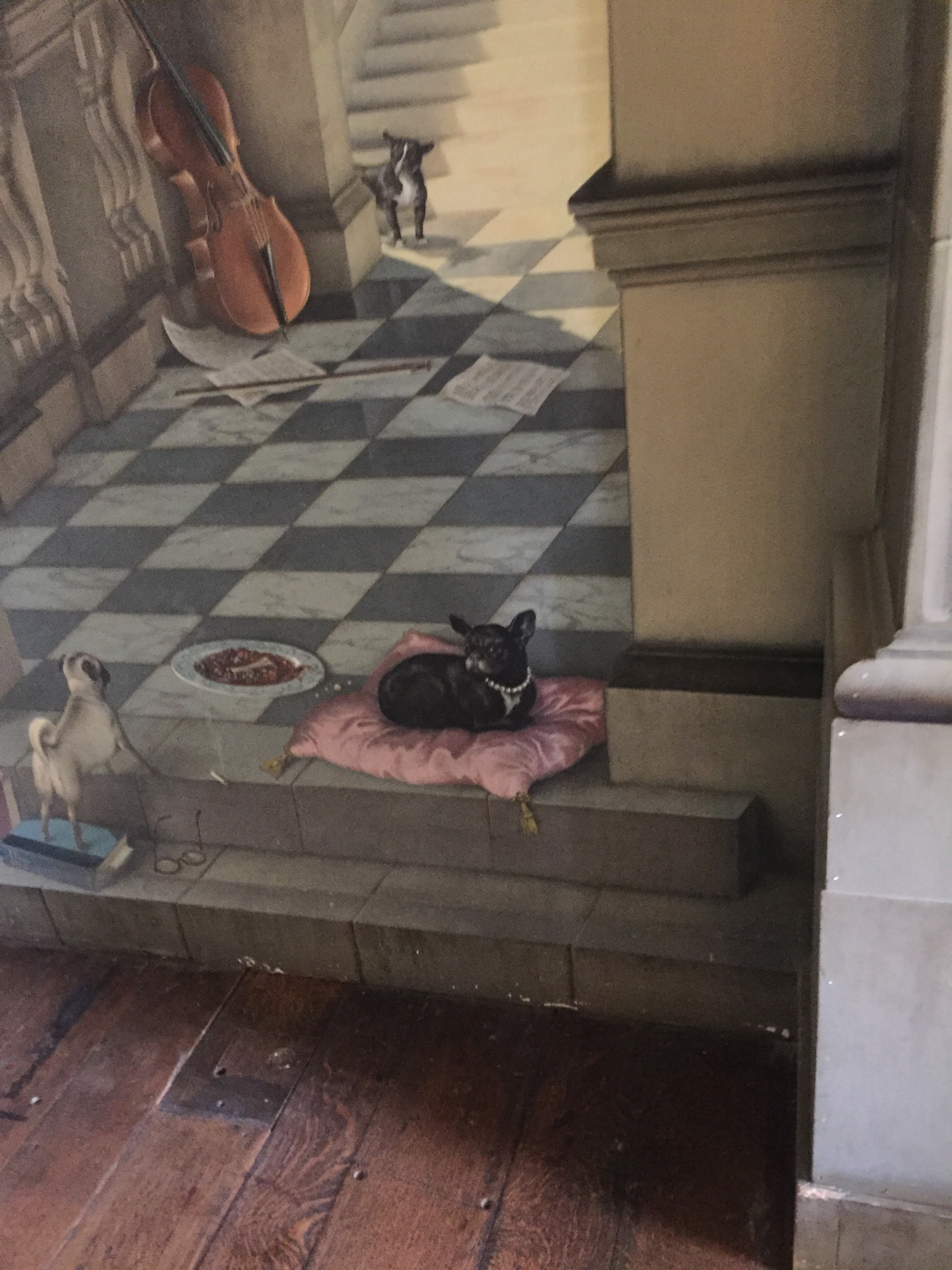
I could spend hours taking in the detail of the Whistler mural, which is full of gentle humor and family references.


If I get to return to Plas Newydd, I’ll try to find time to look into the grounds and gardens, another interest of Henry’s.
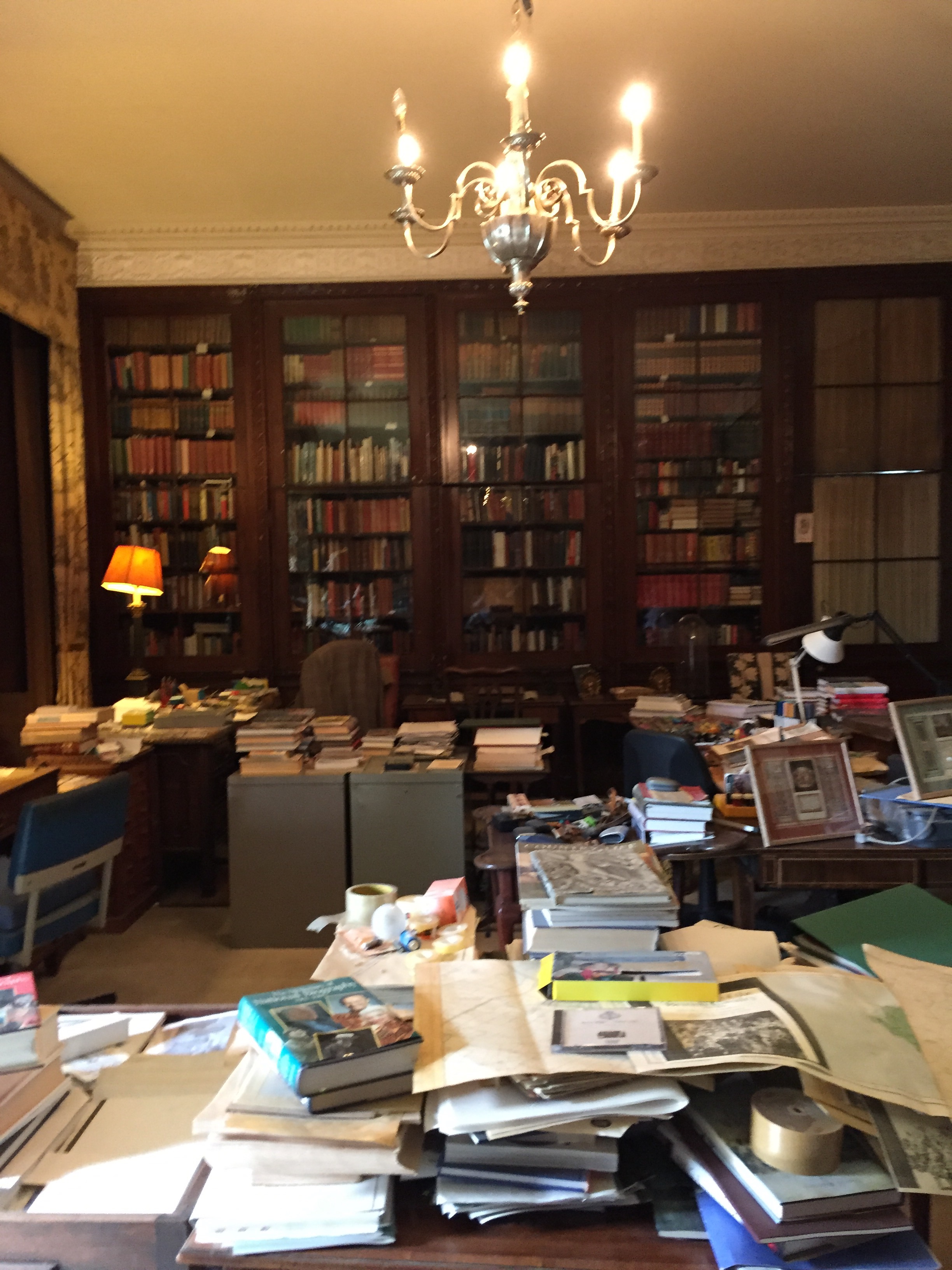

Meanwhile, I’ll dream of having a room all my own, like Henry’s. “A man of parts” is the British term for a multi-talented Renaissance man.Henry is the best example I know of. Now, about my basement storage room…

There’s an article about the 1st Marquess at:
http://www.telegraph.co.uk/culture/books/11682406/The-Battle-of-Waterloo-is-this-the-most-British-conversation-ever-to-be-held-on-a-battlefield.html

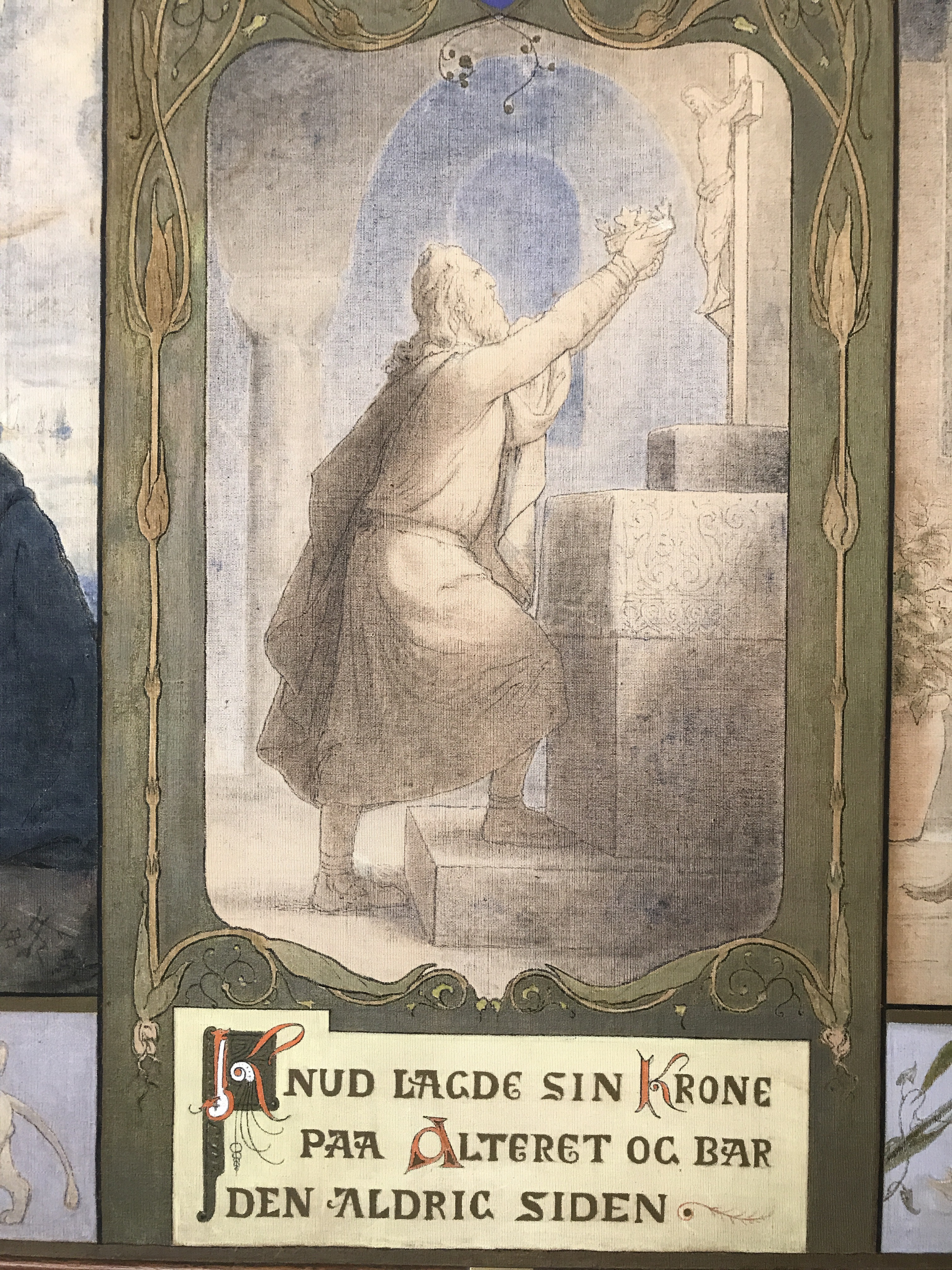
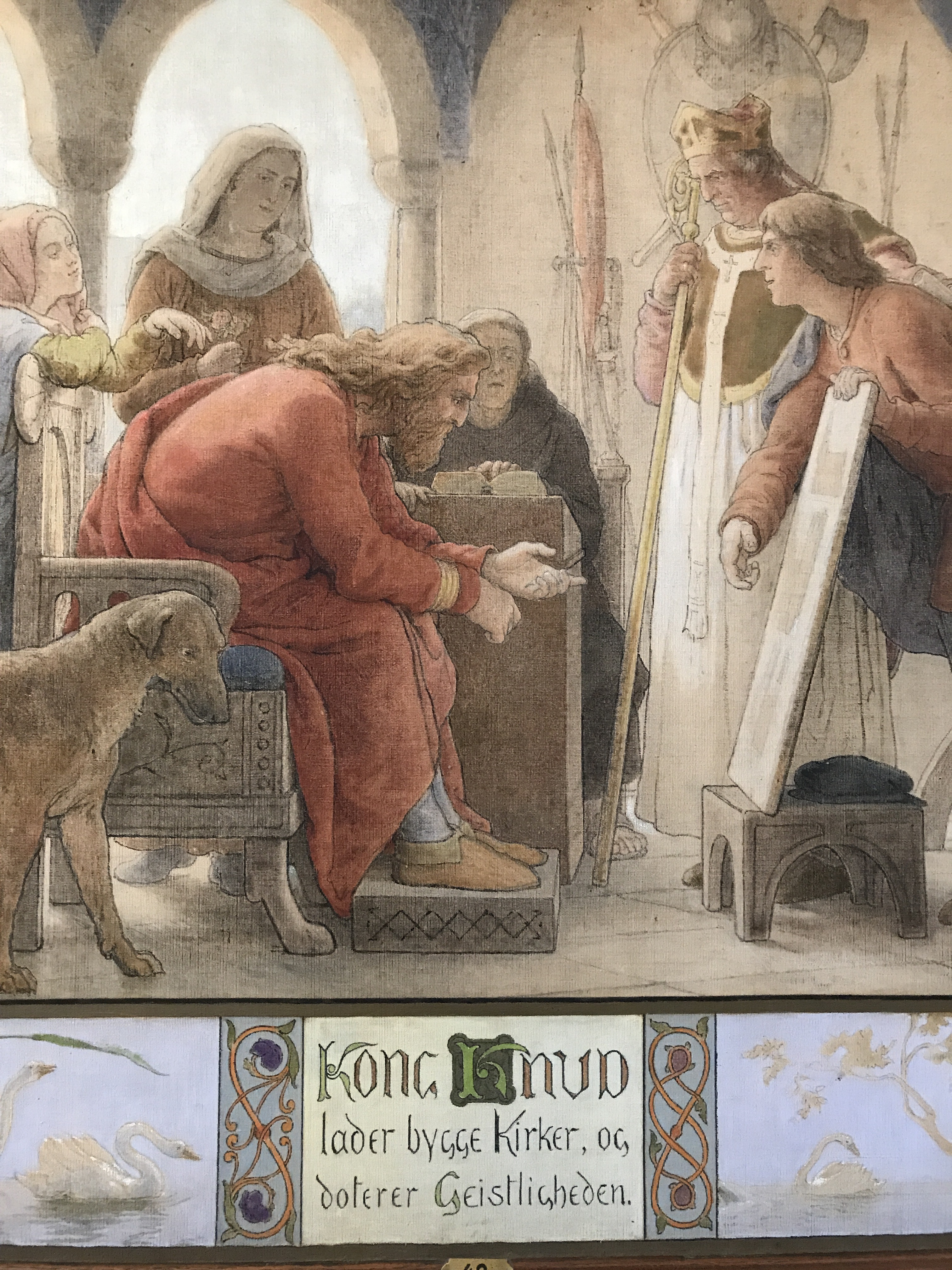
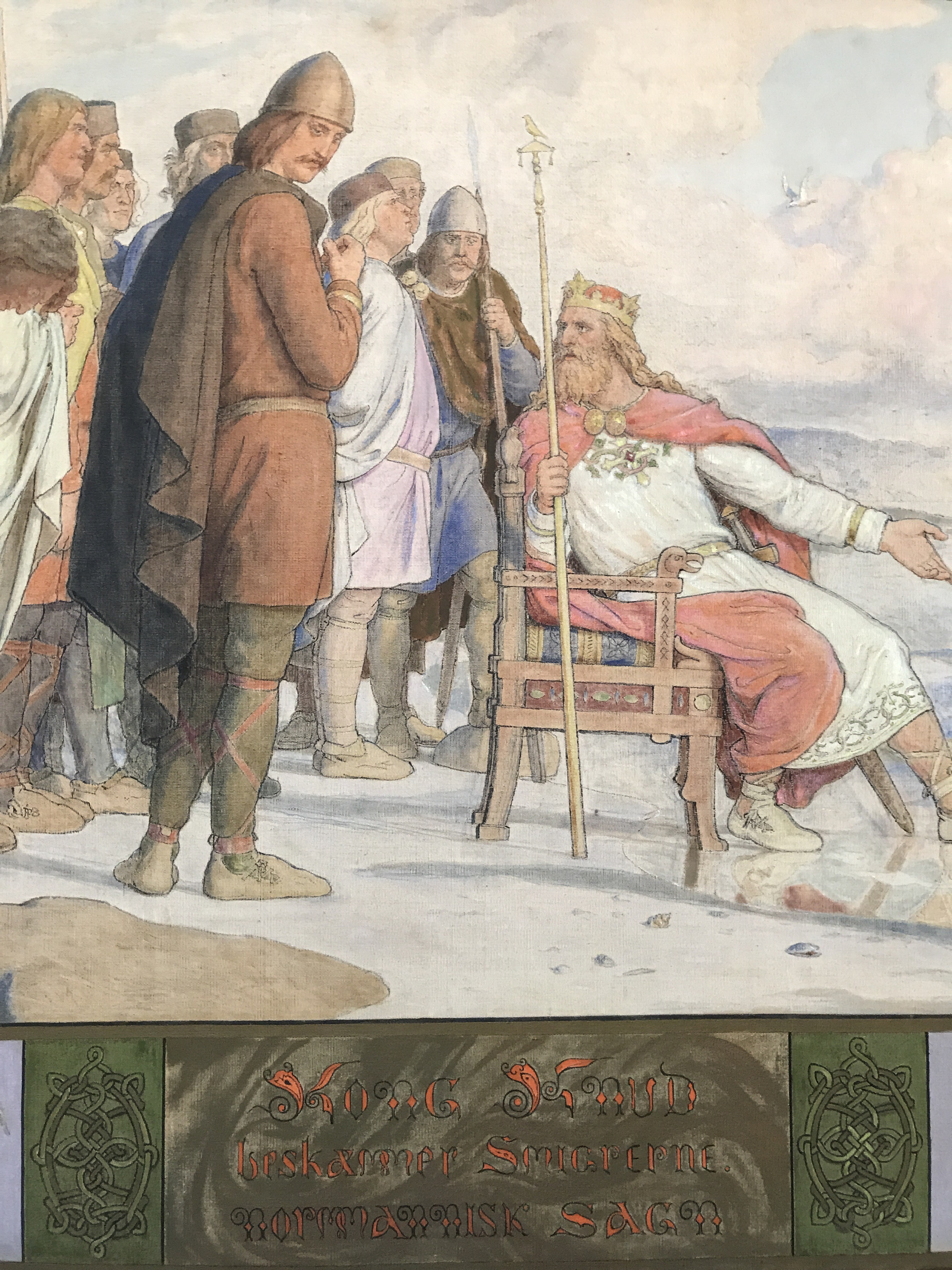
Art Nouveau Vikings at Frederiksborg 

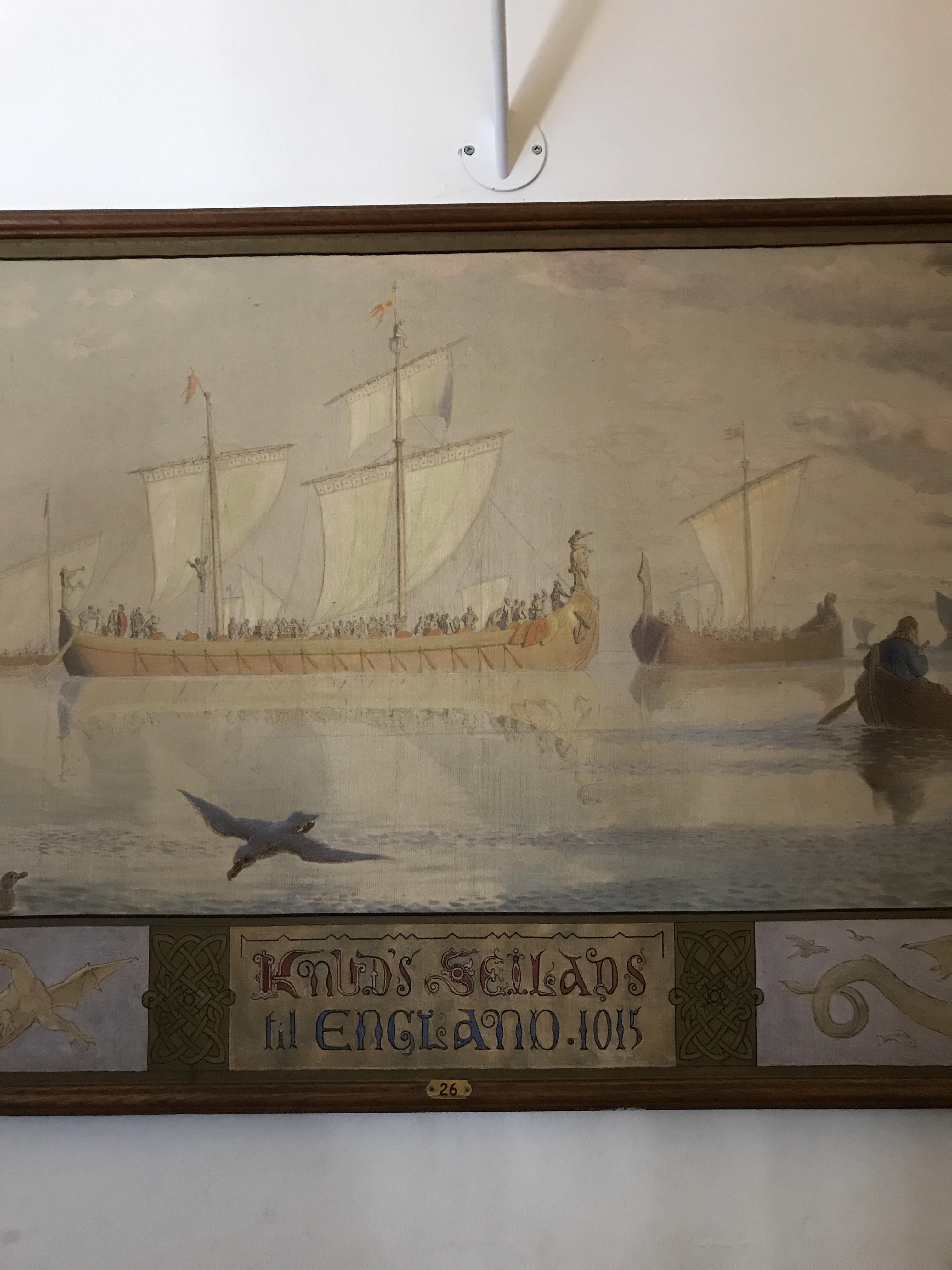
Frederiksborg Castle in Hillerod, Denmark houses tons of fine historic art, but one of my favorite pieces is pretty humble: it occupies a long lower-level hallway leading to the exit.

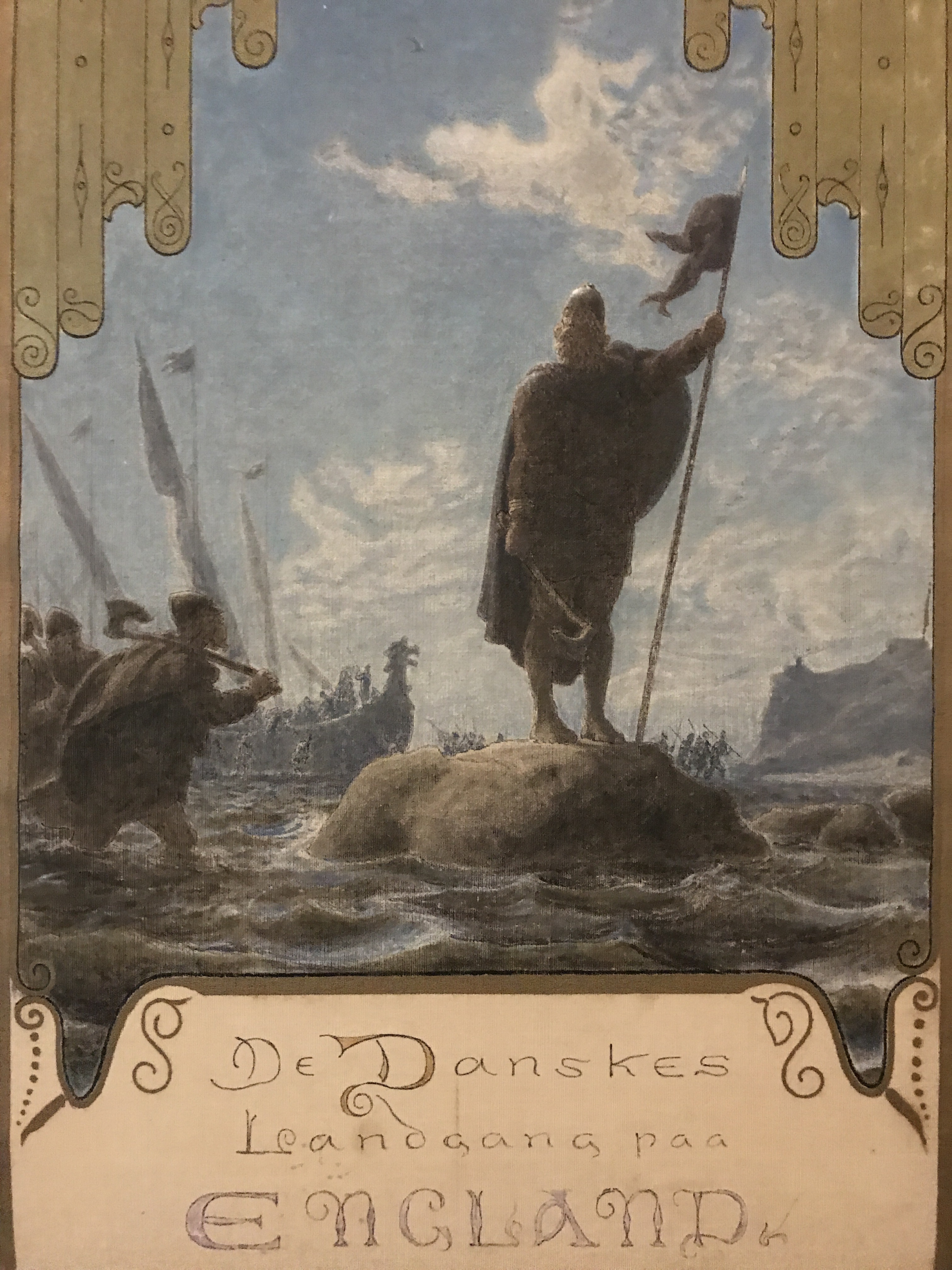
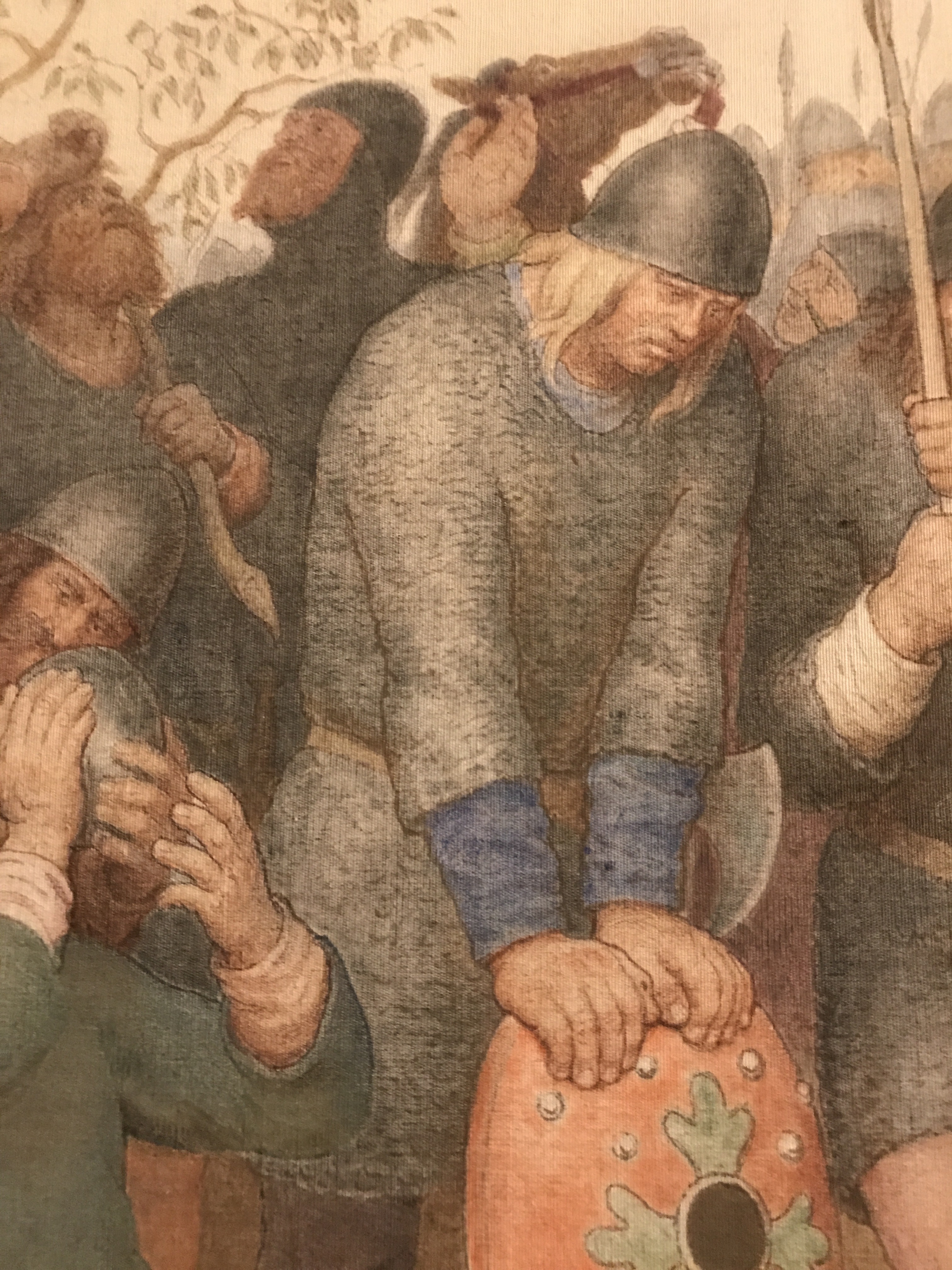
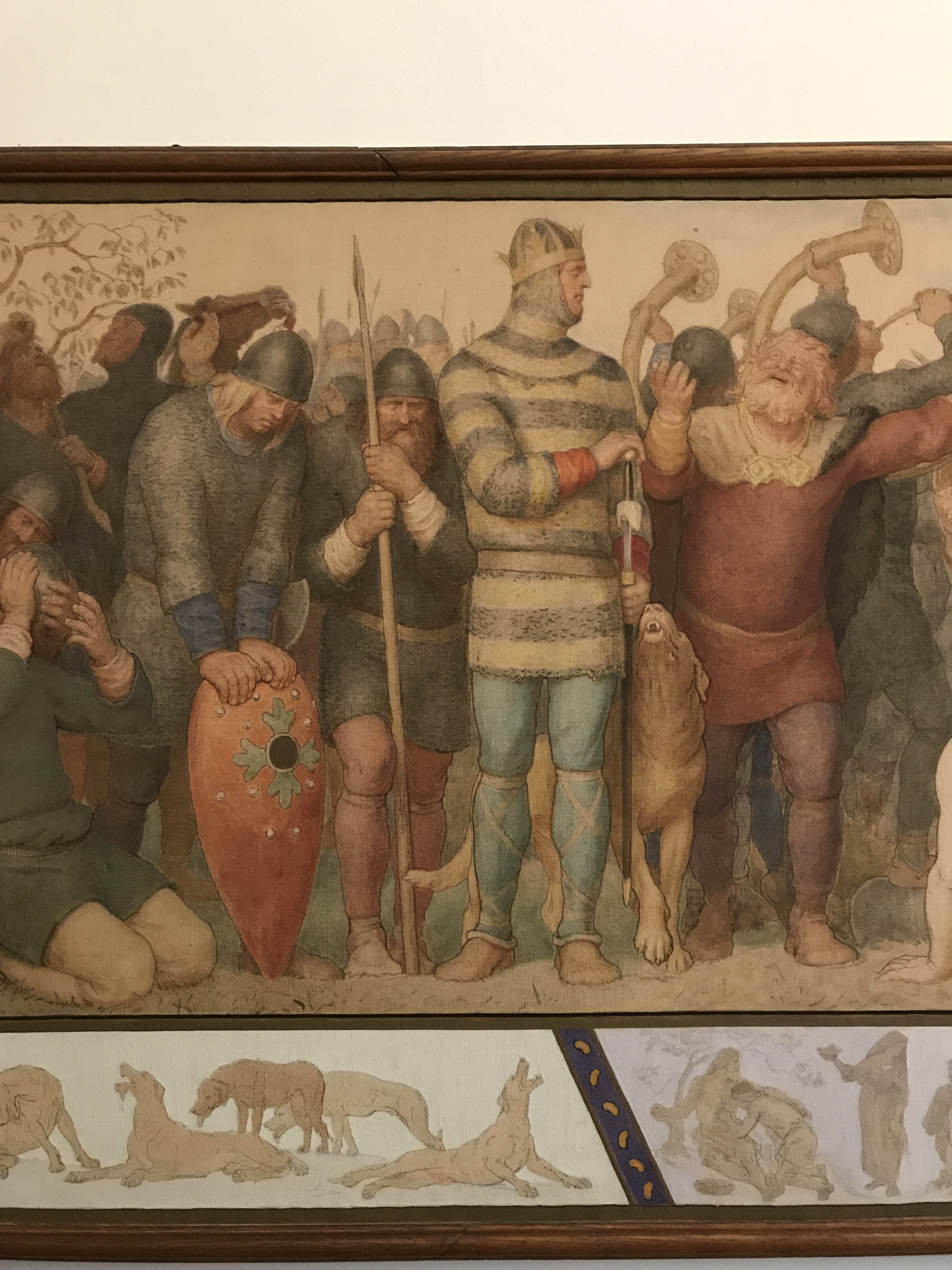
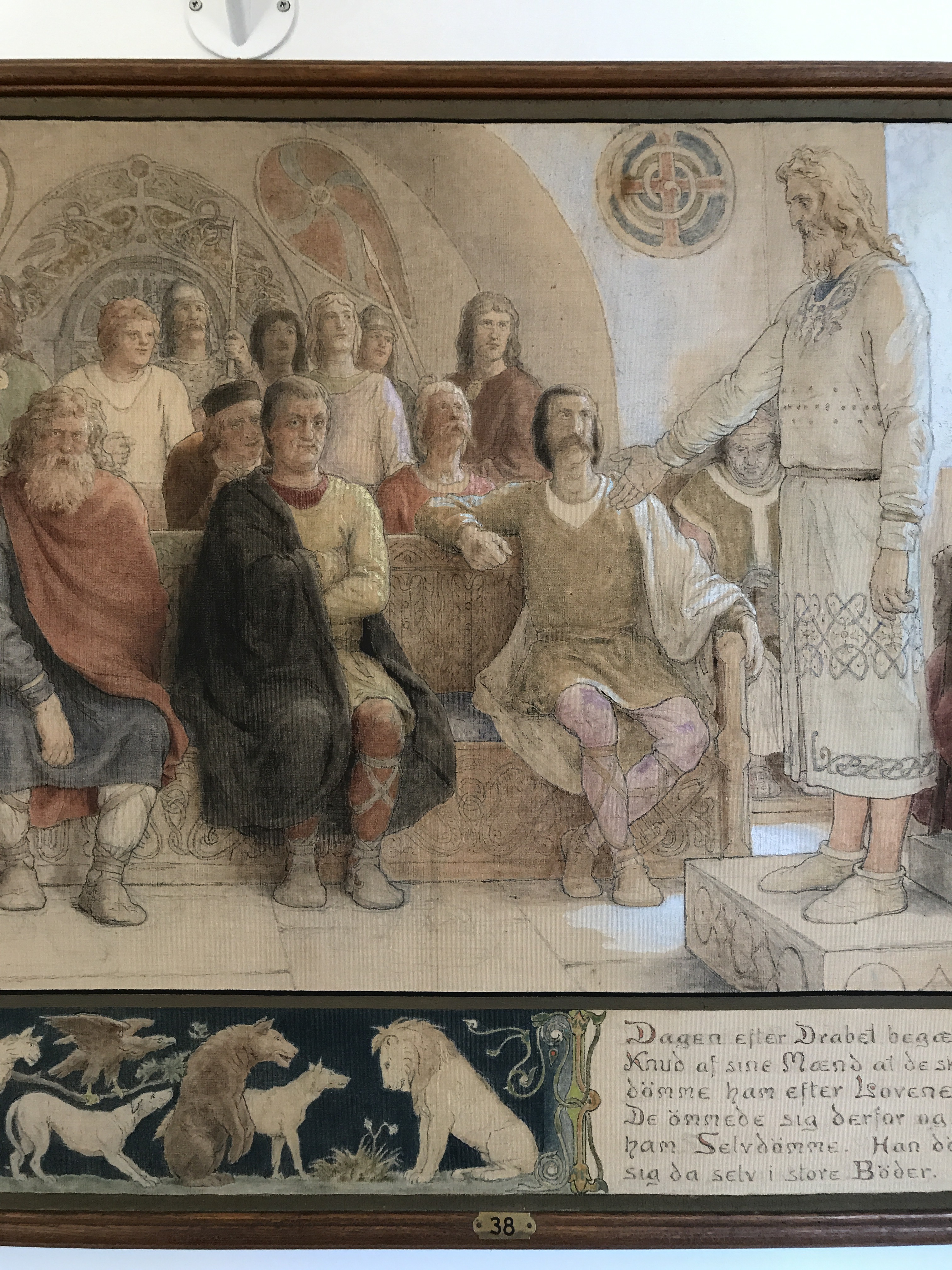
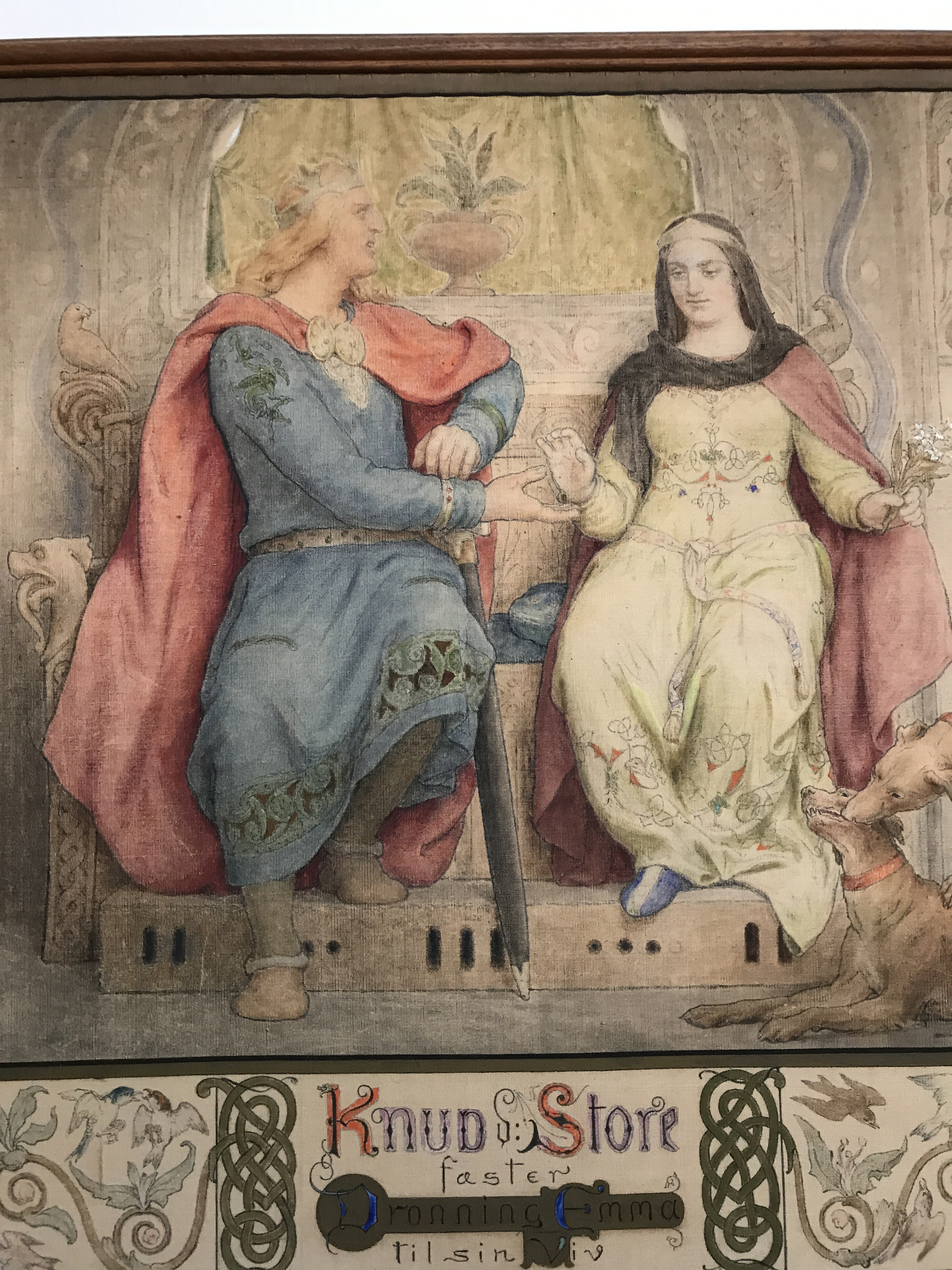
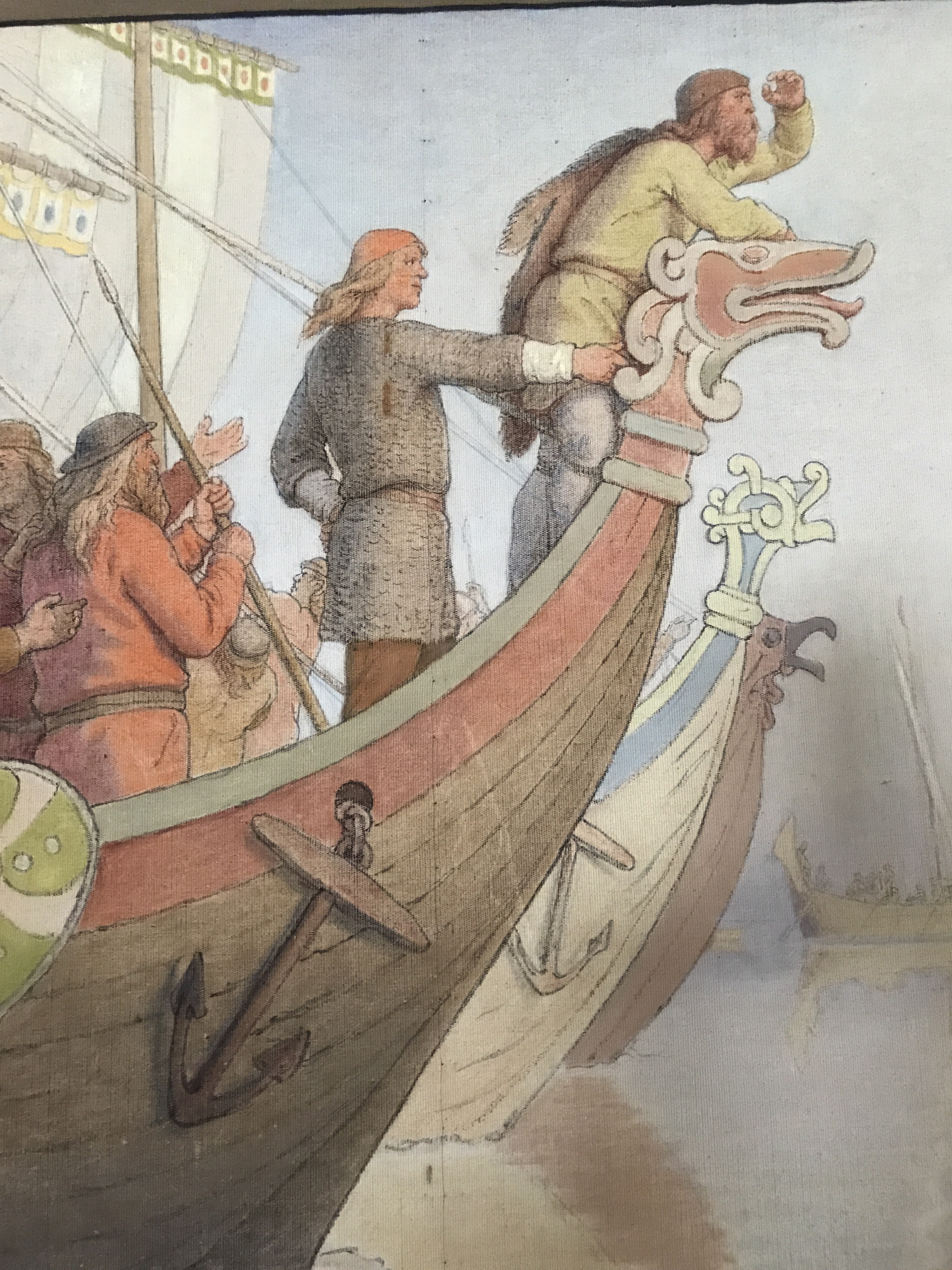
From 1883-1886, Lorenz Frolich painted a commissioned piece: a 37-meter frieze depicting the Danish conquest of large chunks of England. It was to be a Danish counterpart to the embroidered Bayeux Tapestry, which documented the Norman Conquest of England in 1066. The style of the frieze was from the very early years of Art Nouveau,  also known as Jugendstihl, also known as Skonvirke in Denmark.

The Danish Vikings began sailing their shallow-depth longboats across the sea and up the rivers of England in the late 700s. Before that, they had only ventured as far as the Baltic countries on their raids. The trouble was, the Baltics were almost as poor in resources as Scandinavia. Pickings were slim. But England had rich soil where Danish settlers could grow much more food than in their own rocky soil. English monasteries were crammed with gold and silver candleholders, crosses and chalices.

Raiding was wearying work, but somebody had to do it, right?


After a couple of centuries of striking fear into the hearts of the Brits, and much bloody axe-swinging, the Dane Swein Forkbeard was crowned King of England in 1013.

When Swein died, his son Canute the Great took the crown, and in due course Swein’s grandsons Harold Harfoot and Hardecnut had their turns at ruling the rich land of England. The printed information at Frederiksborg skips over the period when the Danes lost their grip on power in 1042 after the death of Hardecnut. But we’re informed that 1066 was all about the Danes: the Normans were direct descendants of the Danish Vikings who had conquered the part of France that became Normandy.


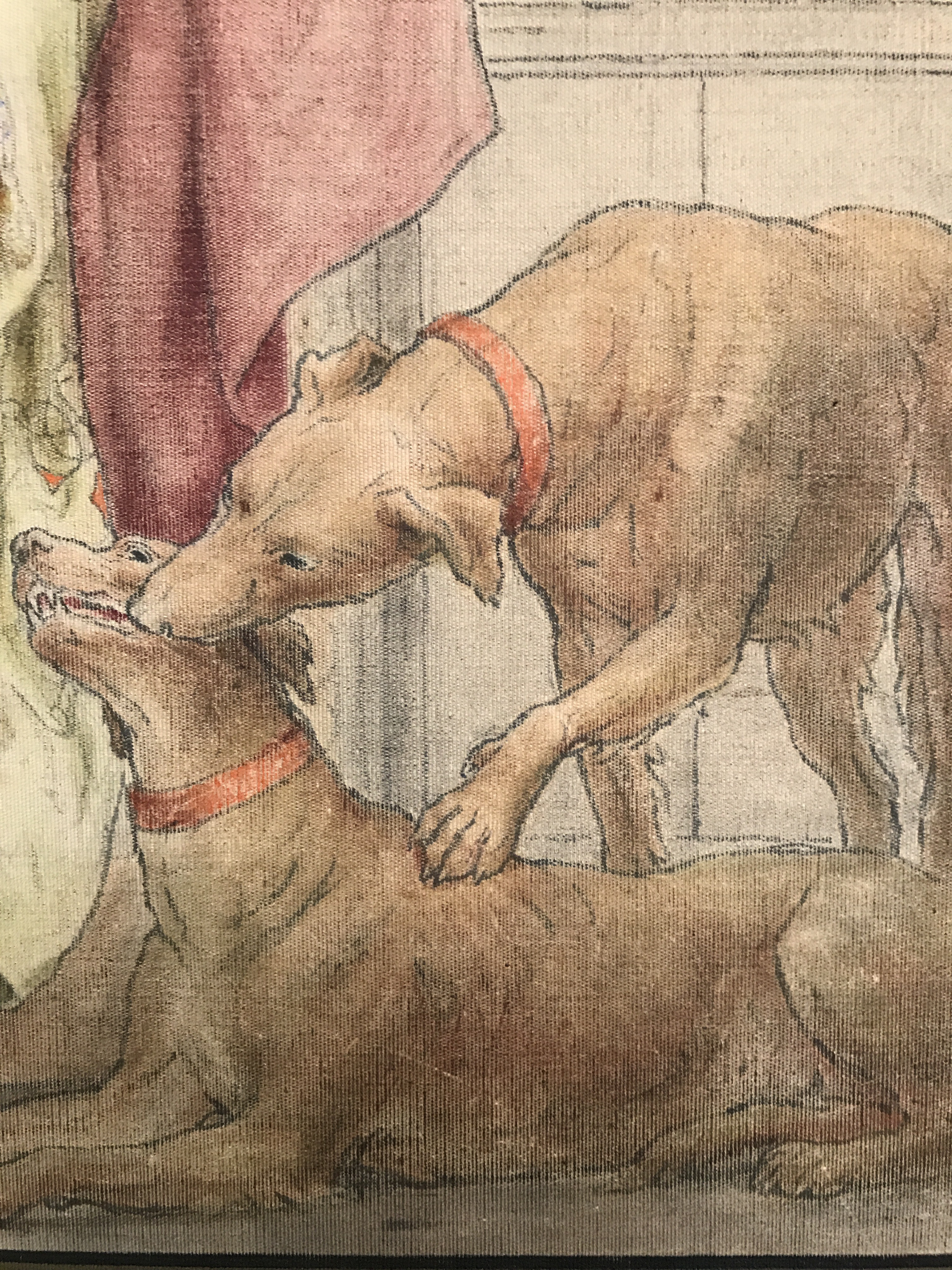
The Frederiksborg frieze is at pains to depict the conquering Vikings as reasonable, law-abiding fellows willing to sit in orderly rows and debate issues like gentlemen.


There’s also emphasis on their domestic qualities. And it’s true: they were fine farmers and they had domesticated animals.

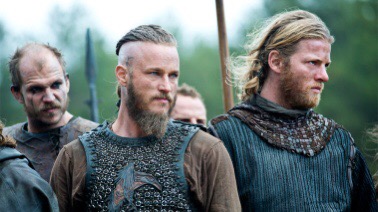
Travis Fimmel as Ragnar Lothbrok, photo from review in “Variety,” Feb. 21, 2014


All the qualities of the Vikings are on display in the History Channel’s TV series “The Vikings.” I’m anxiously awaiting the 5th season. A disclaimer: yes, I know the show is full of appalling violence. Don’t even ask me what a Blood Eagle is. But for the first time, I begin to understand the Vikings, their world view, and the elaborate mythology that guided their behavior.

The series tells the story of Ragnar Lothbrok, an early Viking of song and legend, and his descendants, who eventually became the Normans of 1066 fame. Following the time-honored traditions of TV showrunners everywhere, real events are compressed and characters invented. But historical research is said to be quite accurate as far as clothing, houses, community organization, laws, and religion.

Travis Fimmel, pictured above, plays Ragnar. He is a former Calvin Klein model, but he has real acting chops to go along with his fierce blue eyes and intimidating tattoos. I’ll watch him do anything, from his early daring voyage to pillage Lindisfarne monastery, through adultery and divorce, and right on into the murderous madness of his old age.

Katheryn Winnick and Travis Fimmel in “The Vikings,” photo from review in “The Telegraph,” May 3, 2014


Another big selling point of “The Vikings,” for me, is the depiction of strong women. Lagertha is Ragnar’s brave and loyal wife, a formidable “shieldmaiden.” Even after their messy separation after he takes up with a tall, graceful, ladylike beauty, Lagertha graciously returns again and again to bash heads alongside Ragnar and their sons. Axe, sword and shield in hand, she’s ready save Ragnar’s bacon when he finds himself in trouble. What a woman!


I like the kinder, gentler version of the Vikings depicted in Frolich’s frieze paintings. But I’ll take my Vikings at their fiercest, too.

Join me next time for more explorations in the art and history of Europe, Scandinavia and the British Isles!

Rudyard Kipling’s Beloved Bateman’s


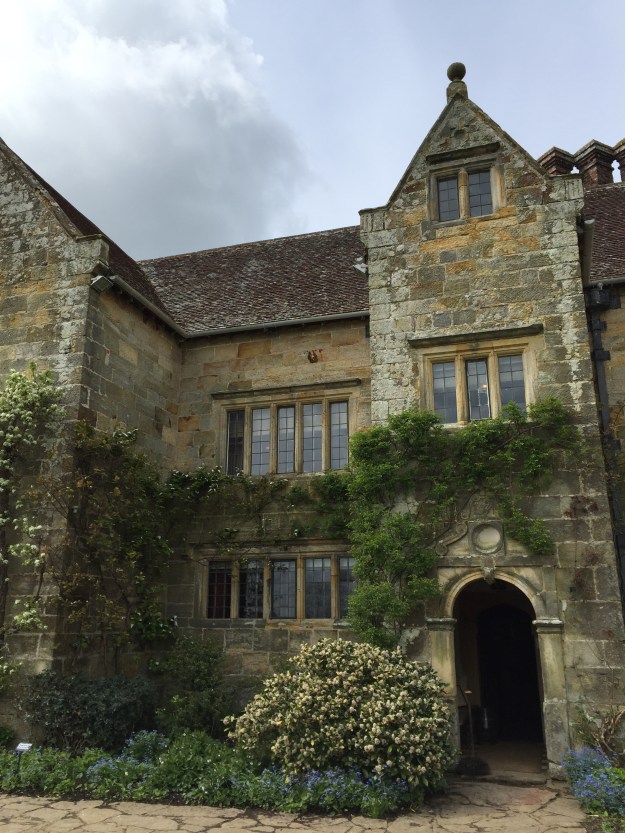
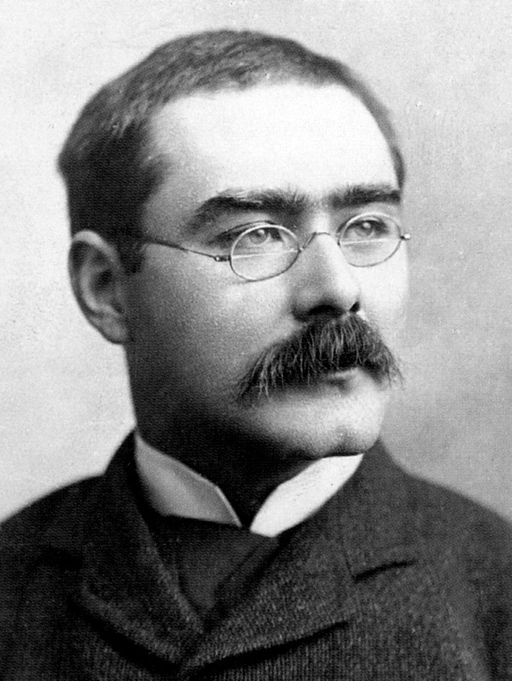
1fac83c7-7594-479b-a24f-4643c42663f6The Nobel prize-winning British author Rudyard Kipling died on January 18, 1936 in his beloved country home, Bateman’s, aged 70. The house is deep in the rural countryside of East Sussex, close to the site of the Battle of Hastings.
rudyard_kipling_portrait

Public Domain portrait of Rudyard Kipling, from John Palmer’s 1915 biography

I have to confess I’m not really familiar with much of his work, but I loved visiting the home where he and his wife chose to spend the last 34 years of his long and productive life.

3863aabd-aad3-408e-b003-68a928081fd0

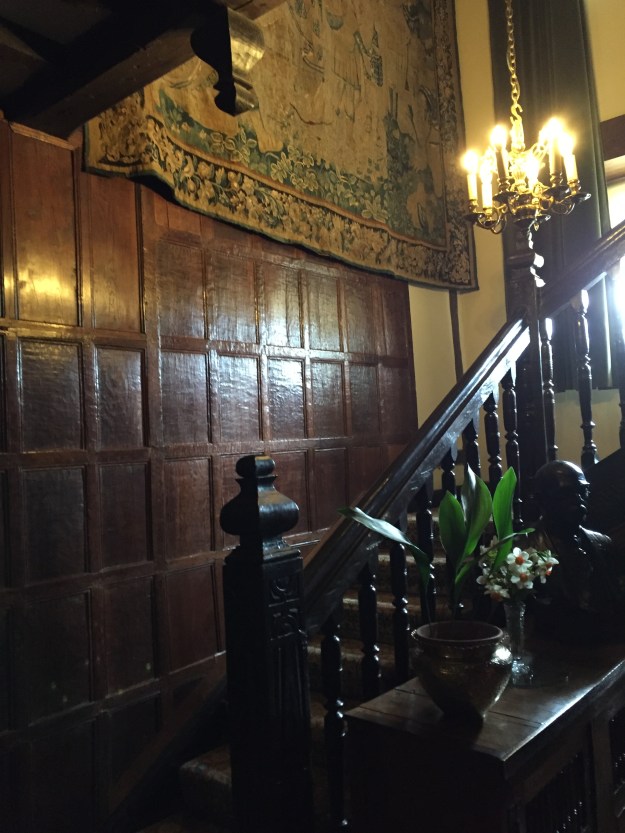
They bought the house in 1902.  It had  no bathroom, no electricity, and running water was only downstairs. But Kipling wrote, “Behold us, lawful owners of a grey stone lichened house–A.D. 1634 over the door–beamed, panelled, with old oak staircase, and all untouched and unfaked. We have loved it ever since our first sight of it.”

65835eb1-7653-4b29-ad11-1ae0d9e05016

The house is now in the hands of the National Trust.  Most of the furnishings are from Kipling’s happy time there. It is hard for us to appreciate just how famous this man was even before he was awarded the Nobel Prize for literature, but the house was a peaceful retreat from Kipling’s busy life–he was active in politics and journalism, besides literature, all his life.9313938c-3171-478f-ad25-bc04c49b1791

His wife Caroline ran his affairs, working tirelessly in a tiny hidden office with a window looking out into the entry way, above and to the right of the fireplace.  She kept an eagle eye on the many people who knocked on the door, seeking time with the great man.  Not many were admitted when he was working in his study, pictured below. (We should all probably have someone like Caroline to turn off our internet when we want to get something accomplished).

9bdb6e68-5993-404d-a0e2-8debd9e6a481

Kipling spent a good part of his working life in India and Africa, writing about both the glories and pitfalls of British imperialism.  He wrote with foreboding about the difficulties–and the morality–of maintaining the global British Empire, which was still in its heyday during Victorian times.

08dc1075-6c91-4771-bf75-20a7efeca508

In 1915, at the outbreak of World War I, Kipling’s son John was wild to join the fight.  He was rejected by both the Royal Navy and the Army because of poor eyesight.  So Kipling used his connections to get his son into the Irish Guards. John Kipling was killed in the Battle of Loos, aged 18, having been sent in with reinforcement troops.  He was last seen stumbling blindly on the battlefield, possibly from a face wound. His childhood bedroom, pictured above, is a poignant memorial to a lost son.

ce7395d3-8247-4959-a686-d16f4c667f4c

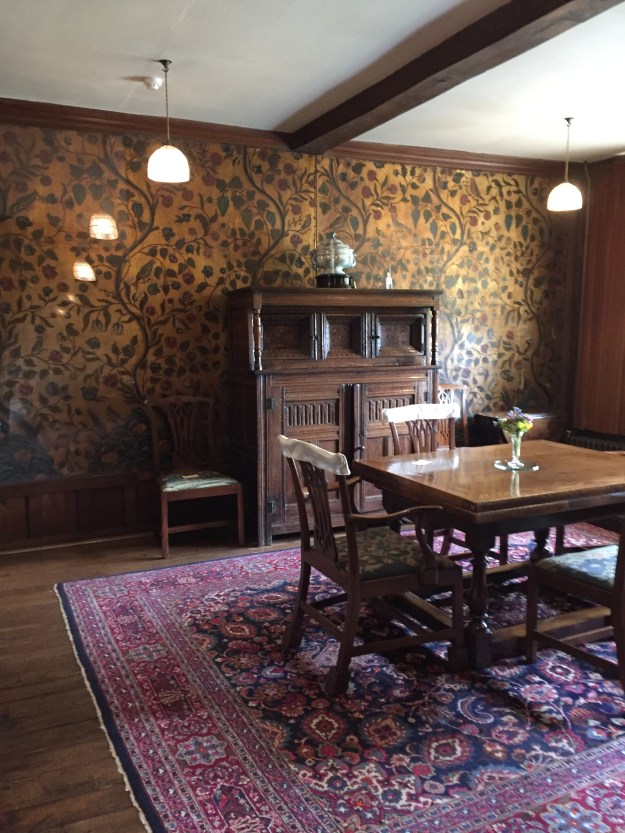
I especially liked the dining room. The walls are covered with embossed leather brought from India.

c3c148fe-ab33-4b4f-8ea8-692ec312d2fc

Above the fireplace is a painting that everybody in the family hated, but it was too good to get rid of. (Or maybe it was a gift from someone who was not to be insulted? I have items like that in my house, but I generally just get them out when the giver is visiting). The painting really is pretty ugly. It seems to show a naked crying baby, maybe with a mother or nanny wondering what to do.

4e2ed35d-519c-44ea-b1b8-577ffec654a3

Mr. Kipling’s chair was placed so that his back was always to the hated painting.

8af4c825-e824-4245-82af-e8fcf55f9612

I think the kitchen must have had modern conveniences in the years leading up to Kipling’s death in the house in 1936.  Now, it’s a serene mostly-empty space where National Trust volunteers and staff dry flowers from the gardens.

8b88fe22-33f1-4022-9a69-b64495377ca5

Literary fashions come and go, even for Nobel prize winners.  Having seen Rudyard Kipling’s country home, maybe I’ll find the time to dip into his writings. I’m sure Mr. Kipling would appreciate a visitor.

Join me next time for more explorations in the art and history of Europe and the British Isles!


Thanksgiving Day: A Berwick Memory

dscn8224 dscn8227

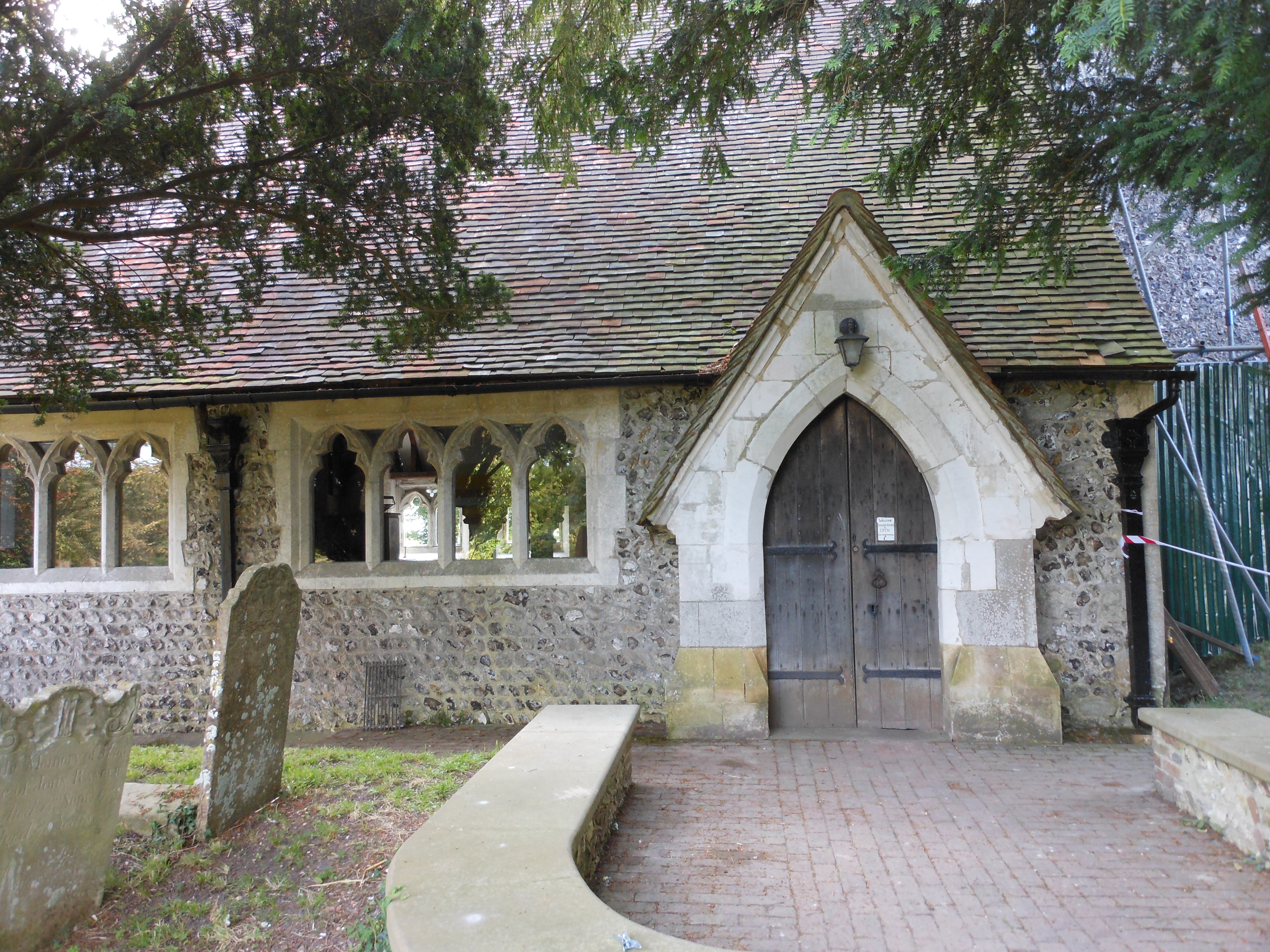
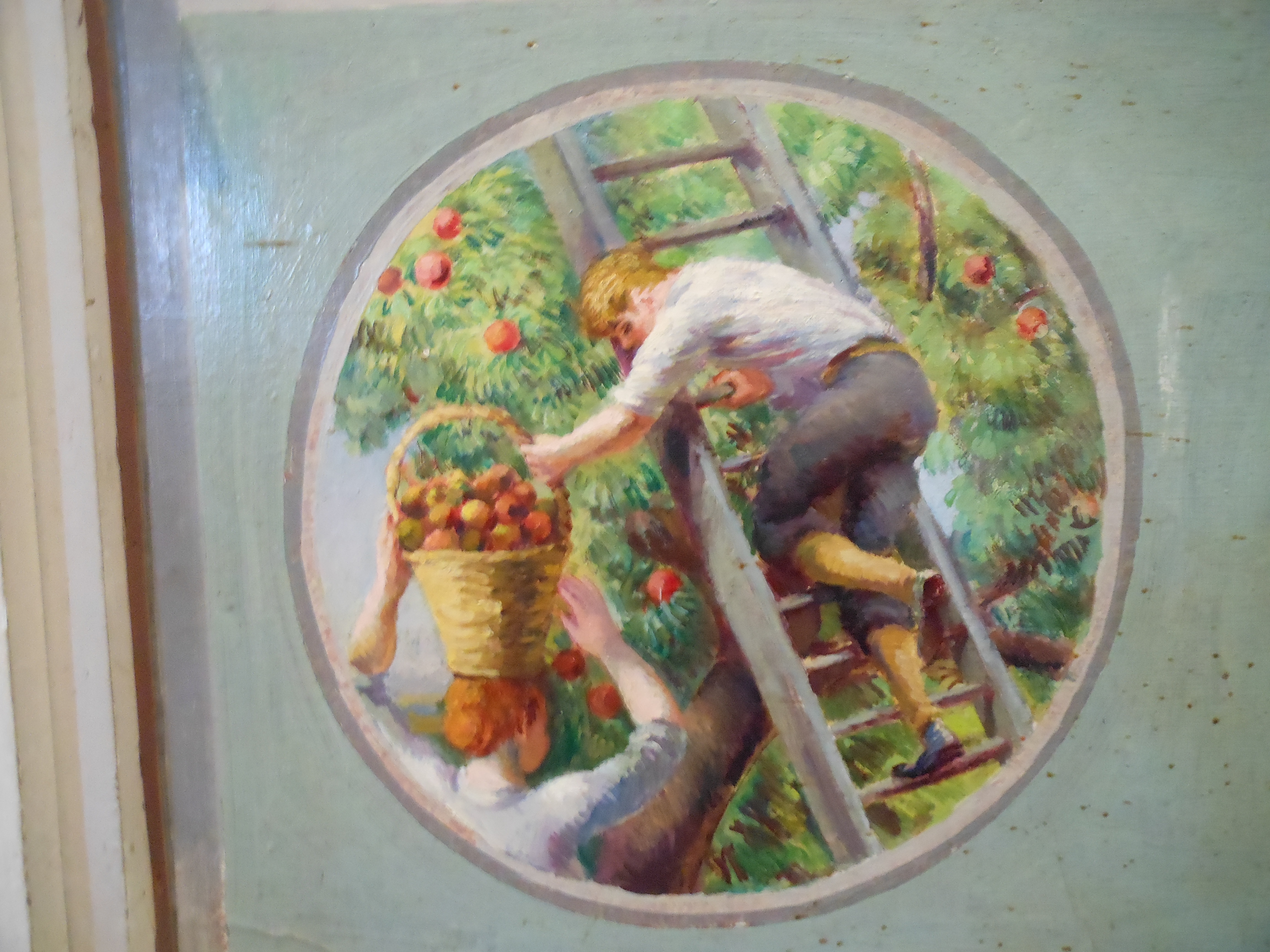
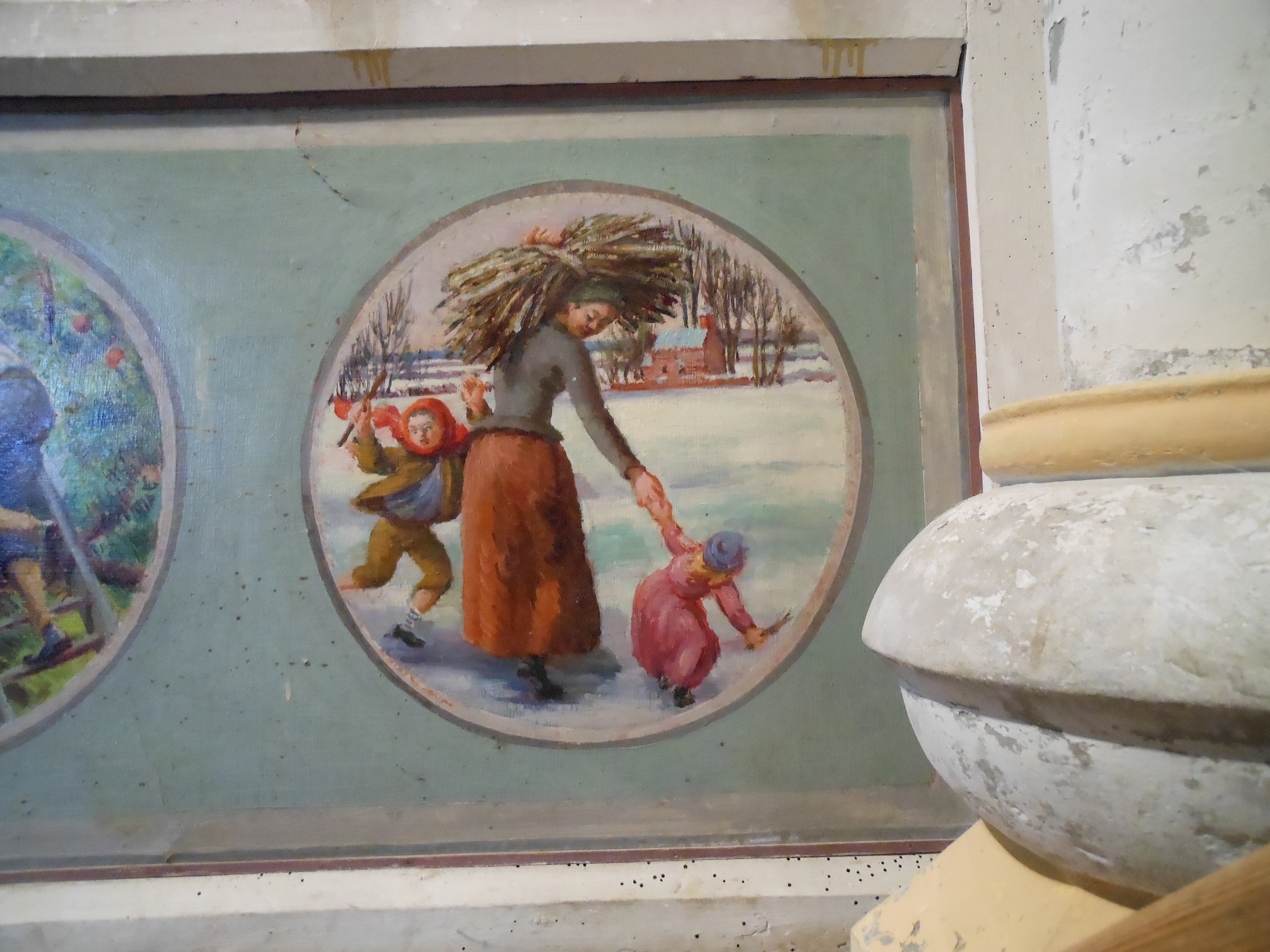
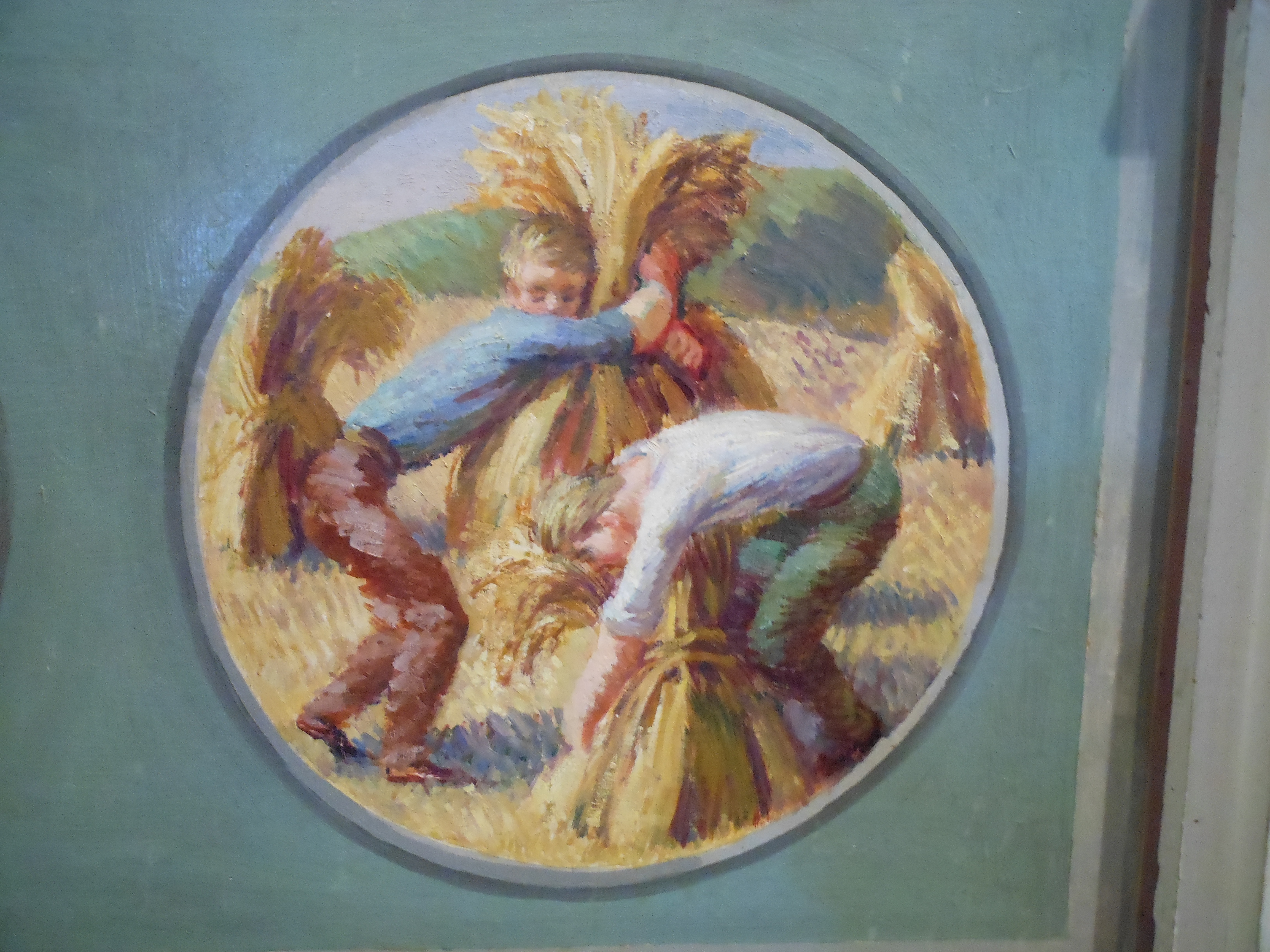
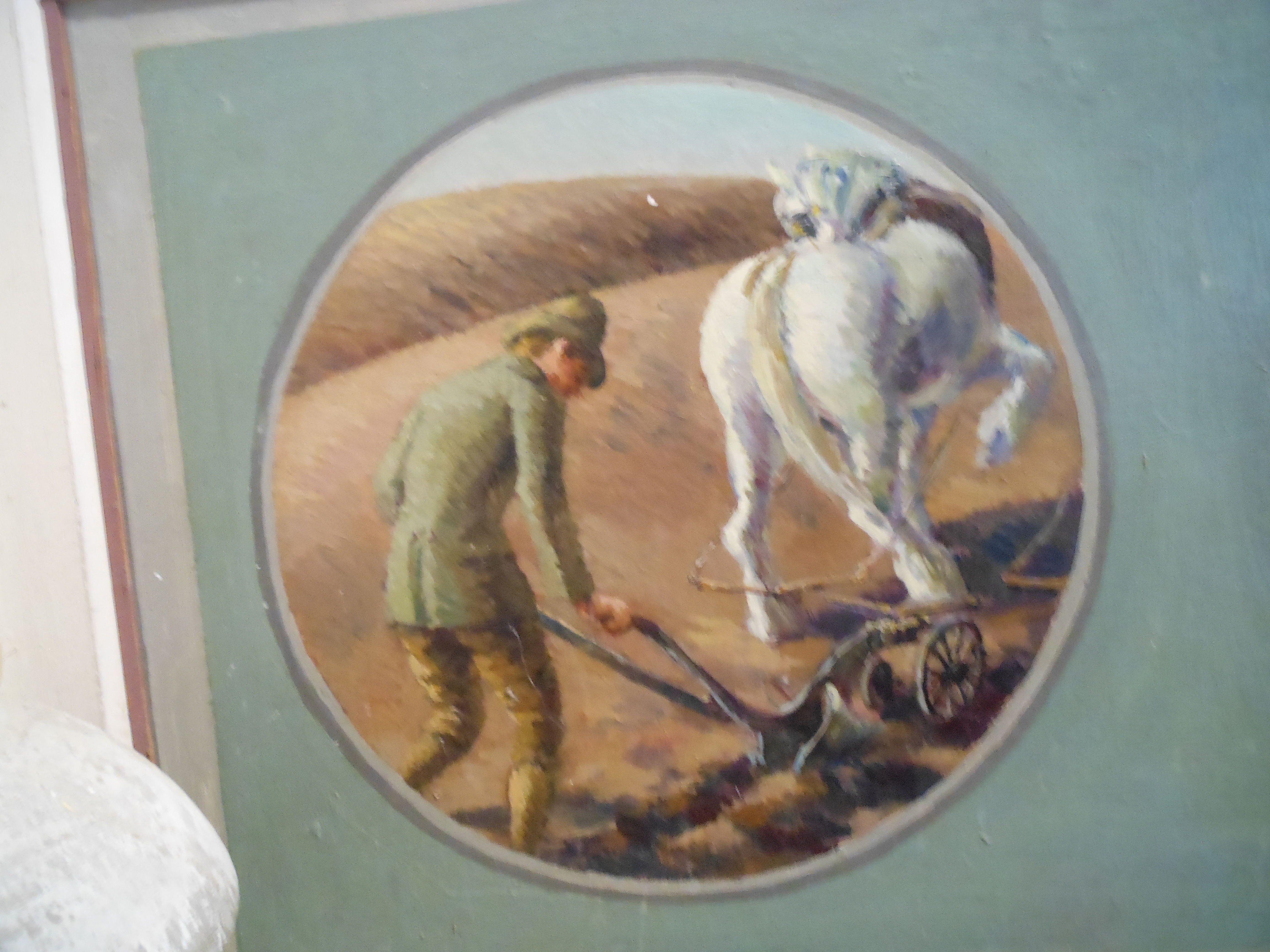
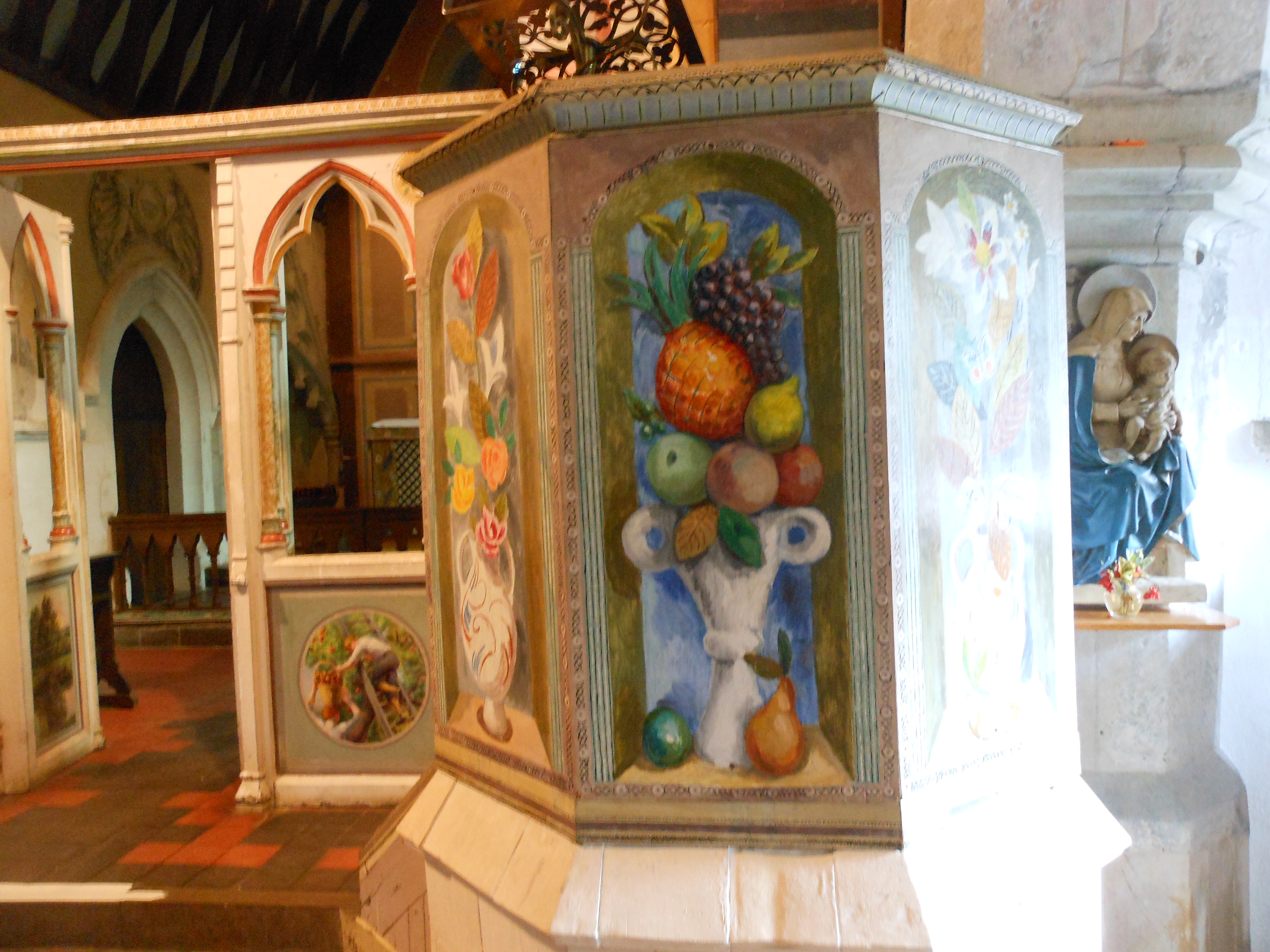
For Thanksgiving Day, I thought I’d post some paintings from beautiful Berwick Church in southern England.  St. Michael and All Angels is a little parish church in Sussex, dating back to at least the 12th century.  Parts of it are even older, dating from Saxon days. It was given a modern artistic touch in the 20th century.

dscn8239 dscn8241

During the First World War, the famous Bloomsbury group of artists, writers and intellectuals decamped from their London homes and occupied the Charleston Farmhouse and Monk’s House in this area.  The men were mostly conscientious objectors.  They fulfilled their patriotic duty by doing farm work in Sussex.

dscn8245 dscn8246

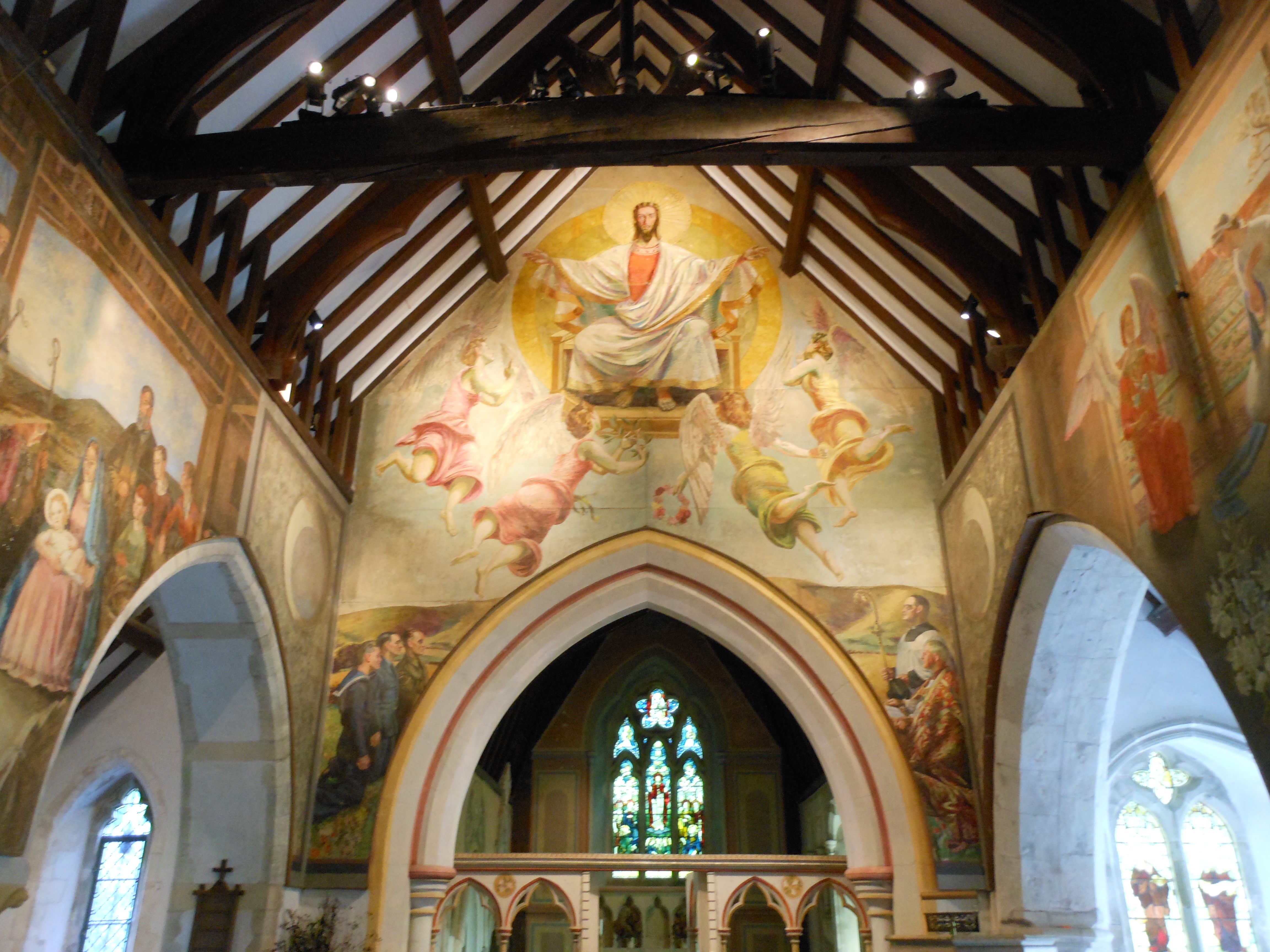
In 1941, several artists from the group were hired to paint new murals and decorations in the ancient church.  These are some of the few remaining works of Vanessa Bell, Duncan Grant, and Quentin Bell.  They depicted themselves and their friends, both as country laborers and as figures in sacred scenes.

dscn8236

The artists were all free-thinkers and even atheists living unconventional, sometimes scandalous lives.  But the local religious authorities hatched an ambitious plan to give artists employment; they hoped the plan would spread all over England’s ancient churches.  That didn’t happen, but I’d like to think the Bloomsbury group occasionally attended a service at the little country church they decorated so beautifully.

Berwick Church stands as an example of cooperation and understanding between people with very different views of the world.  After the tumultuous election season Americans just endured, I think we can use some cooperation and understanding. We’re different, but we can stand together.

img_0432

As for me, I’m spending Thanksgiving Day on an airplane, heading off on a new adventure.  They’re serving pumpkin pie in the airport lounge.  It’s pretty good!

Waldemarsudde: Favorite Room in Favorite House in Favorite City

img_3018

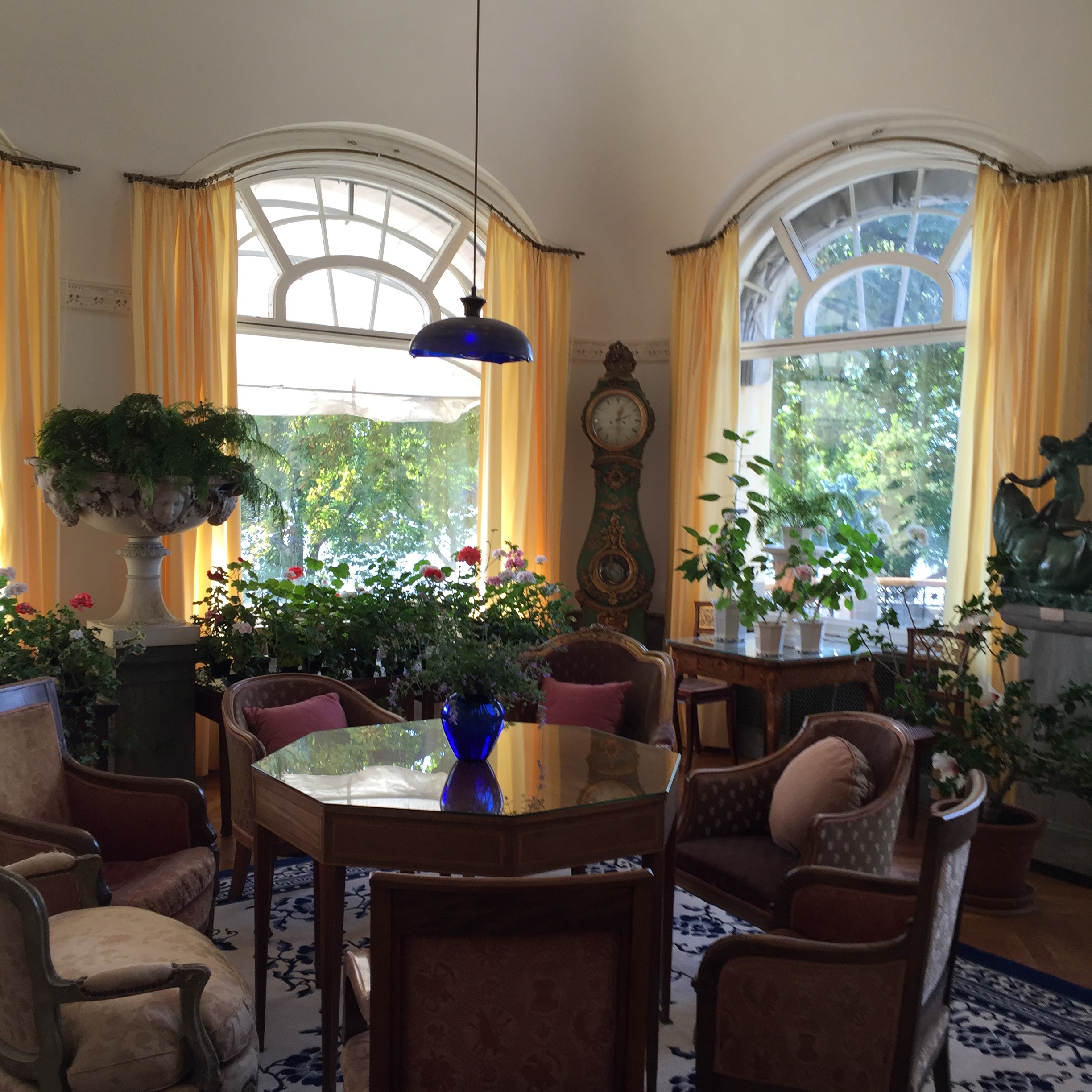
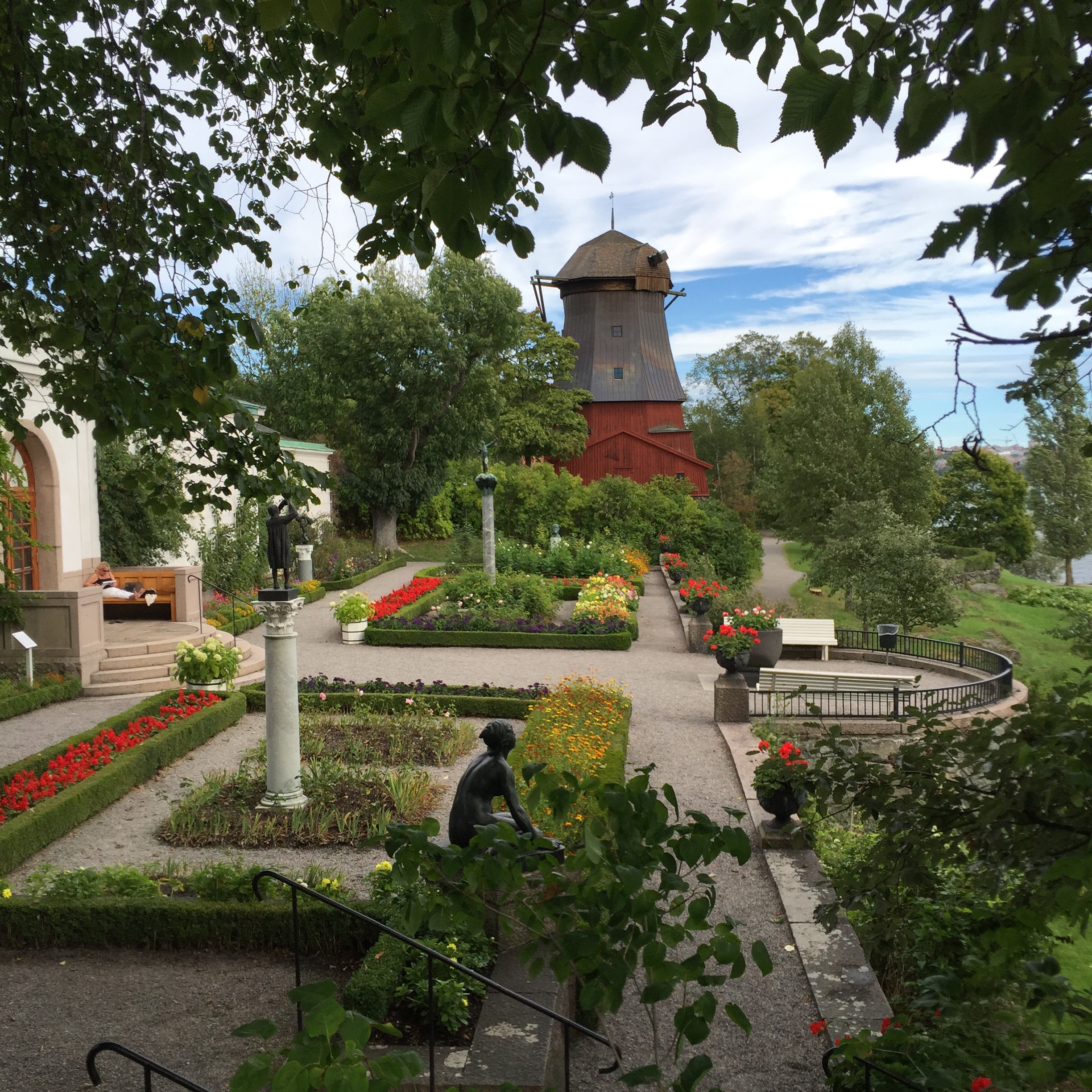
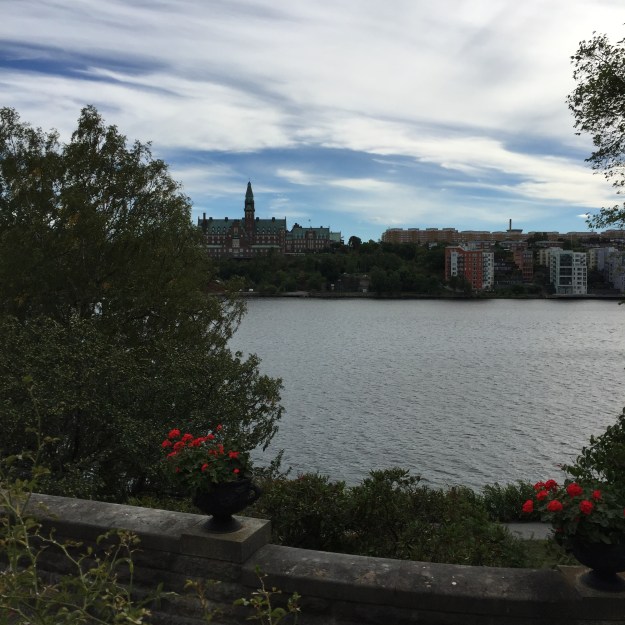
Considering the national election turmoil that’s going on in the USA this week, I’d like to transport myself to a more peaceful place:  Prince Eugene’s blue-and-white dining room in his beloved lakeside home in Stockholm, Waldemarsudde.

img_3037

It looks inviting, don’t you think?  Come on in and have a seat at the table. Here, between about 1900 and his death in 1947, the Prince entertained his friends, fellow artists, writers, and the odd anarchist.

img_2872

Eugene’s state-of-the-art kitchen, all shining white tiles, is now a little cafe. Photos of the Prince decorate the walls.

img_2845

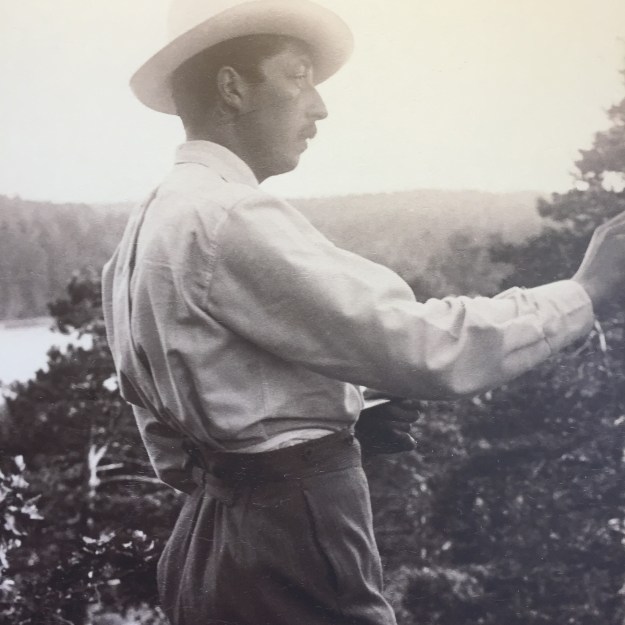
Eugene was a handsome fellow, and must have been a charming companion. He fulfilled royal duties when asked, but mostly he lived his own life exactly as he pleased. As a younger son of the monarchy, he was under no pressure to marry.

img_2949

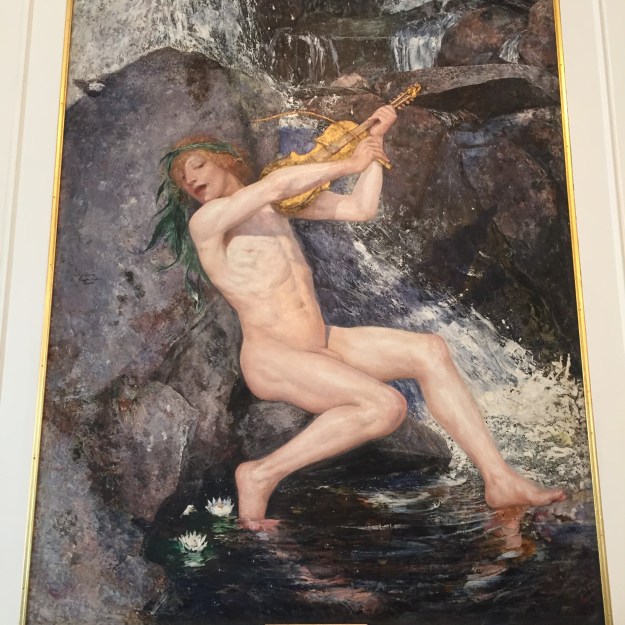
Whatever his lifestyle choices, it appears the Royal Family left him in peace, to pursue his art and his friendships. In his Salon, Ernst Josephson’s painting “The Water Sprite,” 1884, dominates the room.  It was considered so scandalous at the time that the Academy in Stockholm didn’t dare to accept it as a gift. I don’t think the nudity was the problem; it was the new-fangled Symbolist style.

img_2996

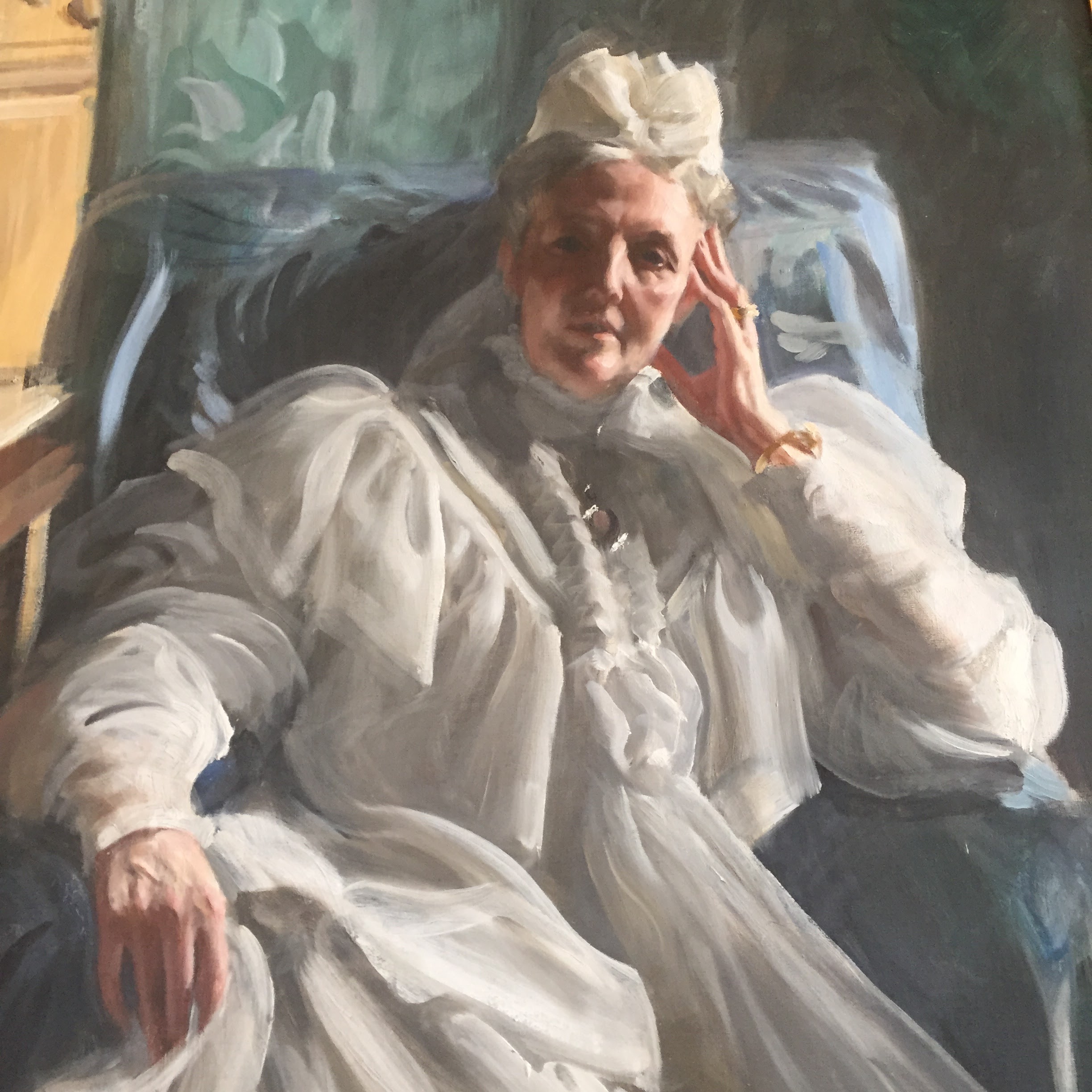
Eugene hung a portrait of his mother, Queen Sofia, directly across from the daring Water Sprite. She gazed gently and benevolently on her son’s private goings-on, however raffish. I’m guessing Eugene was a loving son who never caused his mother much worry.

img_3112

Eugene loved flowers.  His sunroom, overlooking the water, was always blooming.

img_2972

He designed a pretty ceramic flowerpot that’s still in use all over Sweden. I’d have brought one home if I didn’t always travel light.

img_3584

I’m already planning a return trip to Stockholm in the spring.  I’ll see Eugene’s flowerbeds filled with tulips, I hope.

img_3579

Meanwhile, I can dream of my favorite room in my favorite house in my new favorite city, Stockholm.

Join me next time for more explorations in the art and history of Europe!

For All Saints’ Day: Henry Chichele’s Tomb at Canterbury

img_7246

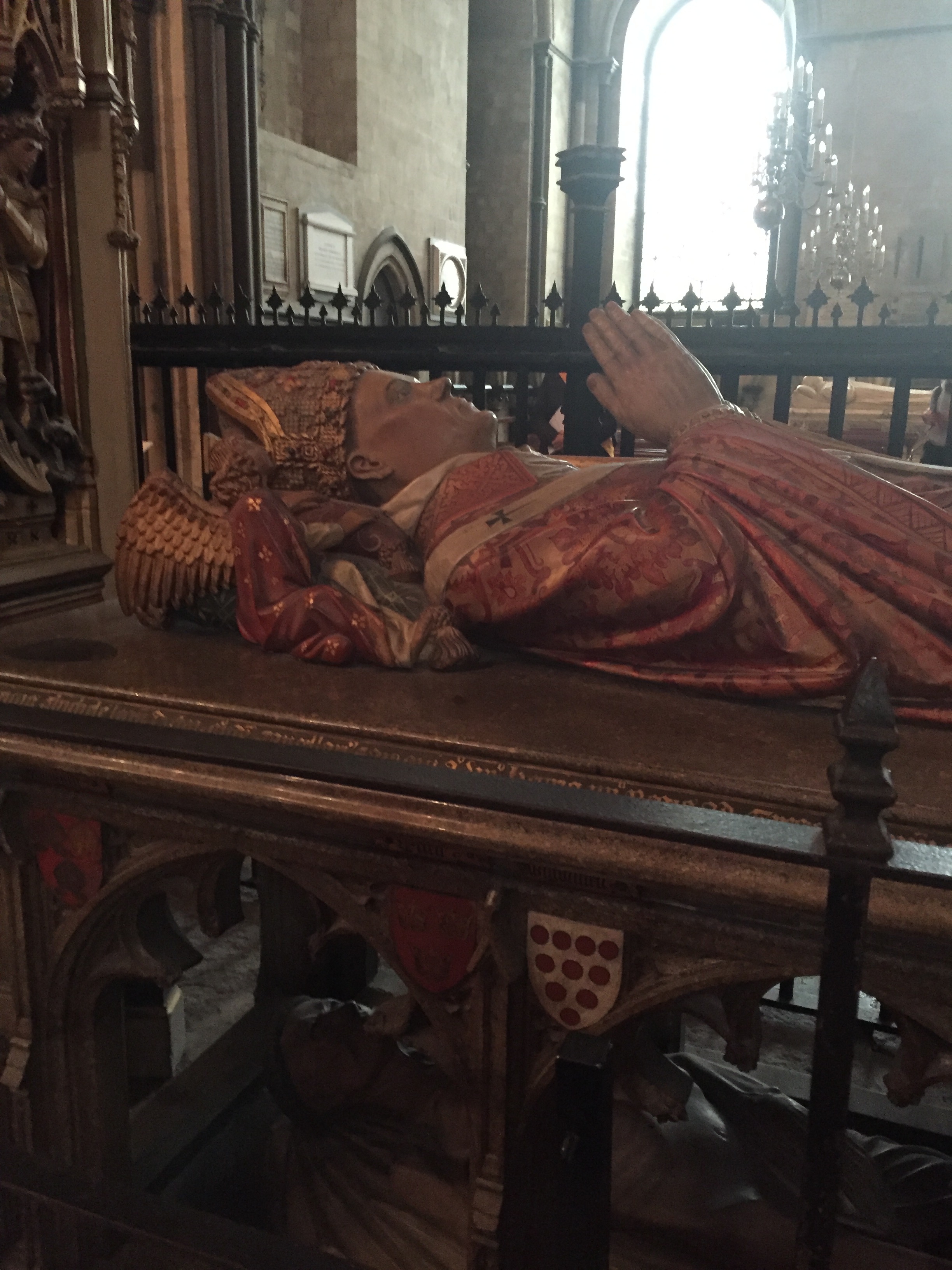
Today, November 1, is All Saints’ Day, when the Christian calendar honors the departed, saintly and otherwise. After the rollicking party atmosphere of the American “Halloween,” when everyone pretends to be scary and scared, I thought of something truly scary (at least to me).  Last spring I saw the “cadaver tomb” of Archbishop Henry Chichele, who died on the 12th of April, 1443. But the Archbishop had been contemplating his own death for many years. He had his own tomb built many years before he died.  It’s elaborate and colorful, but still it’s the very opposite of vain.

img_7345

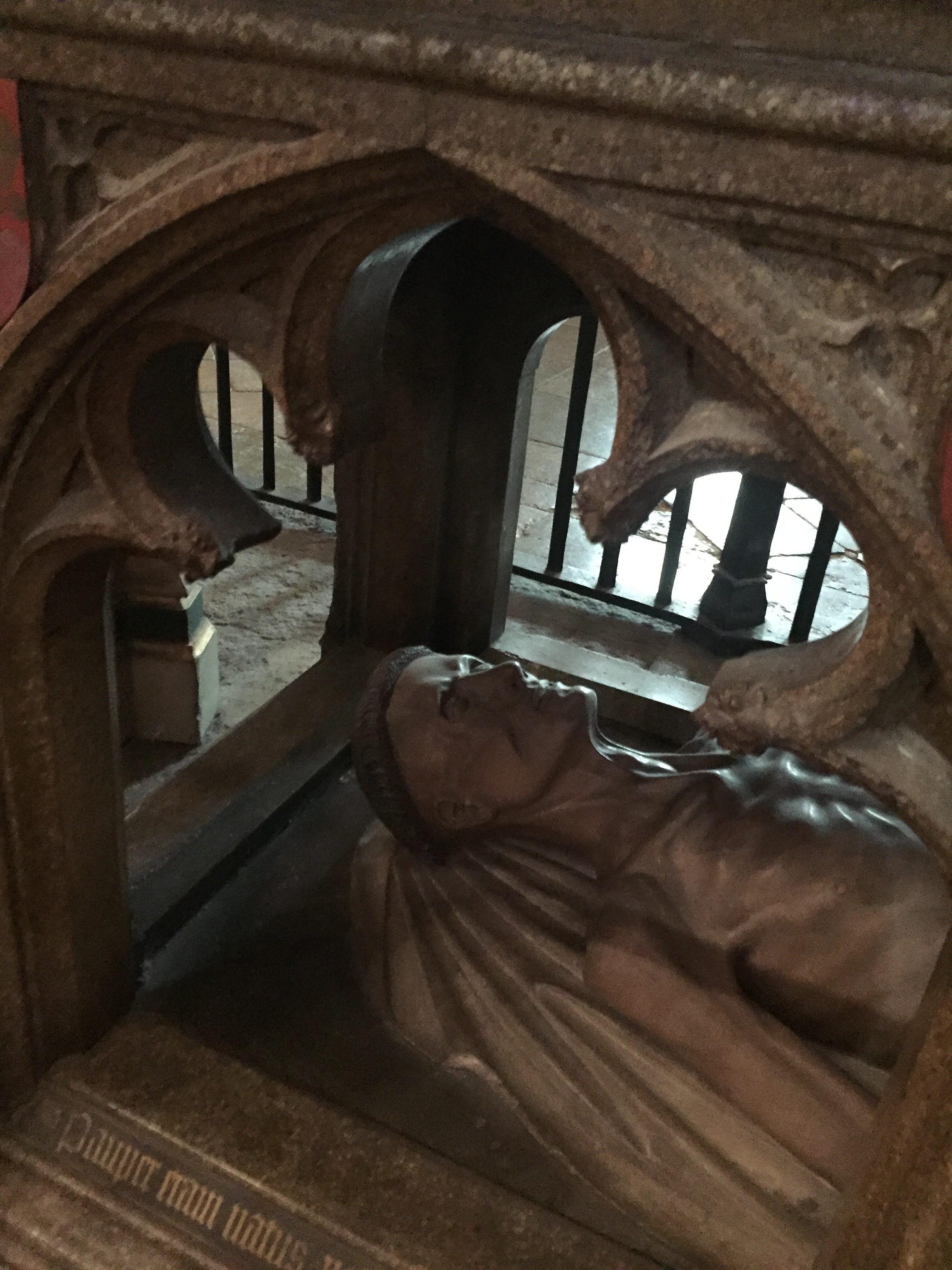
Under the brightly painted effigy of the Archbishop dressed in his finery and clasping his hands in everlasting prayer, there’s another effigy.  The lower effigy shows the good Archbishop as a decaying corpse, naked and bony.

img_7336

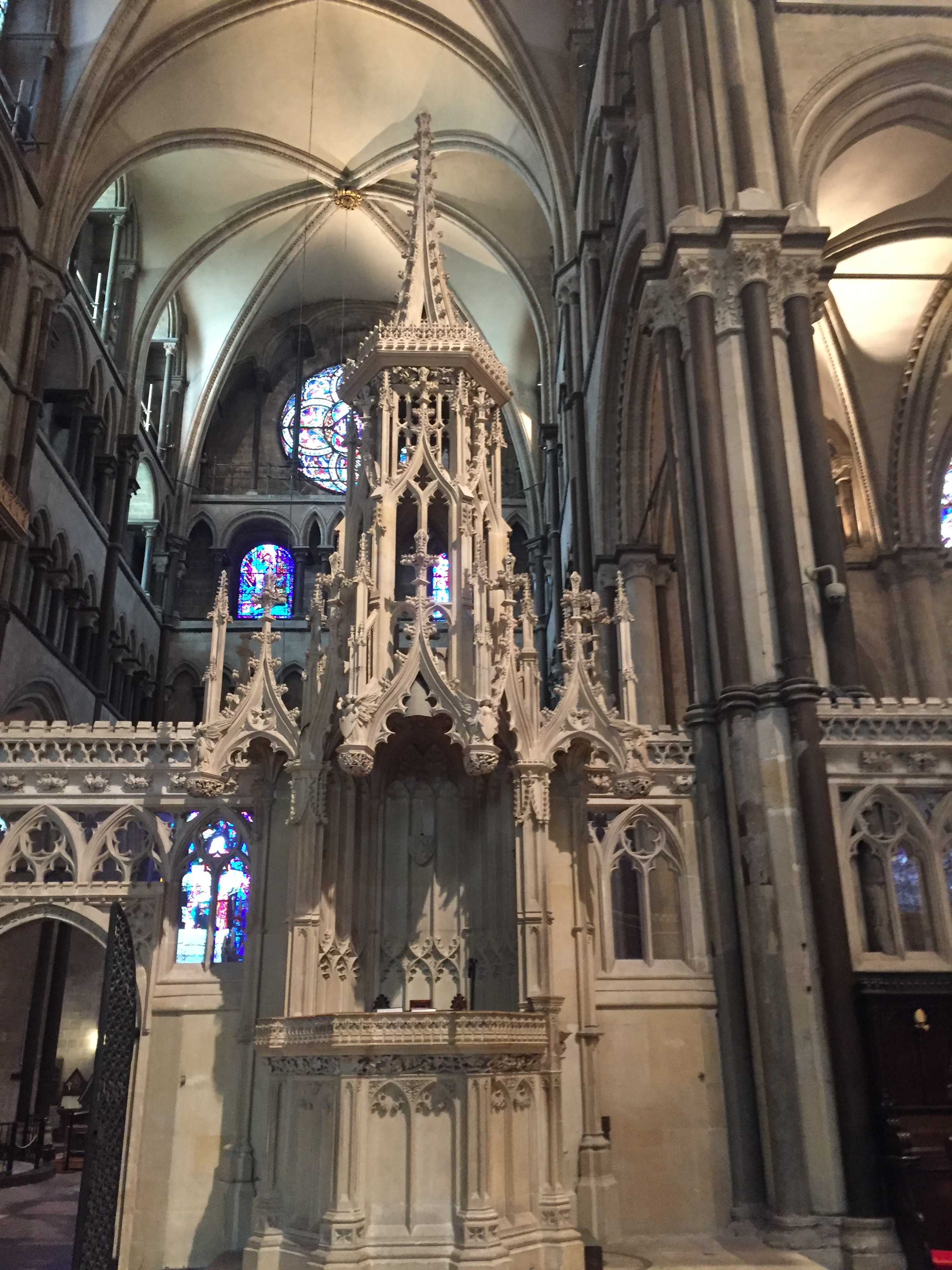
The archbishop not only paid for this jarring reminder of his own mortality, he forced himself to contemplate it often.  The tomb where he would someday be buried was directly opposite his ornate Gothic pulpit. The inscription reads, “I was pauper-born, then to primate raised.  Now I am cut down and served up for worms. Behold my grave.”  If that isn’t scary, I don’t know what is. But the Archbishop’s intent was to be ever-aware of the brevity of life.

img_7239

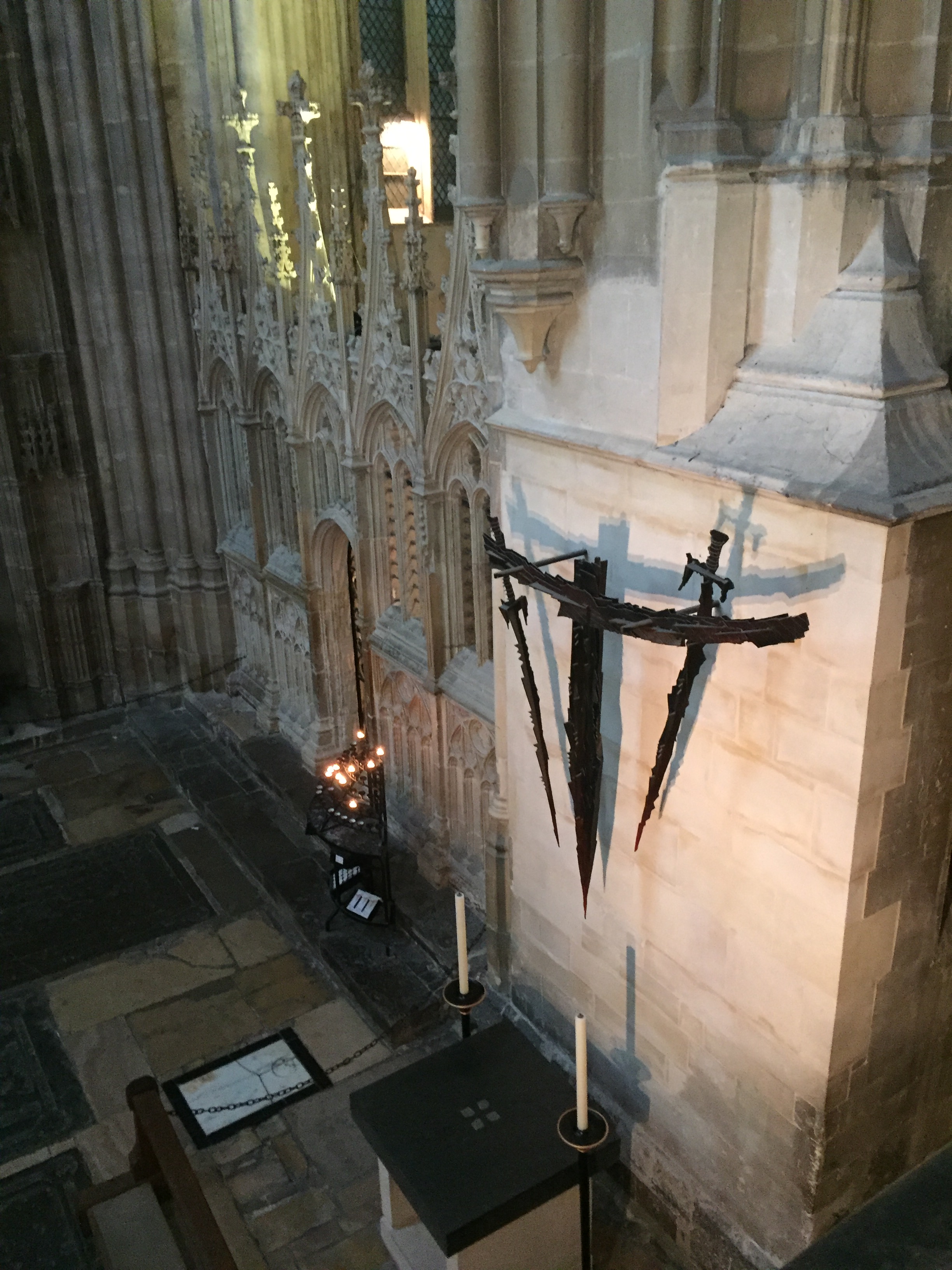
Henry is just one of many historical figures honored in Canterbury Cathedral. Another is Archbishop Thomas a Becket, murdered at the direction of King Henry II in 1170.  The exact spot where assassins surprised him at prayer is still a much-visited place of pilgrimage. Above the small altar, there’s a menacing modern sculpture of the weapons that left Thomas bleeding onto the cathedral stones. Unfortunately, King Henry VIII ordered Thomas’s tomb destroyed during the Dissolution of the Monasteries.  (I didn’t realize Henry VIII had done this particular deed.  He has a lot to answer for). Today, the approximate burial place of the sainted Thomas is underneath a dark, empty chapel decorated only with a single candle left burning.

img_7128

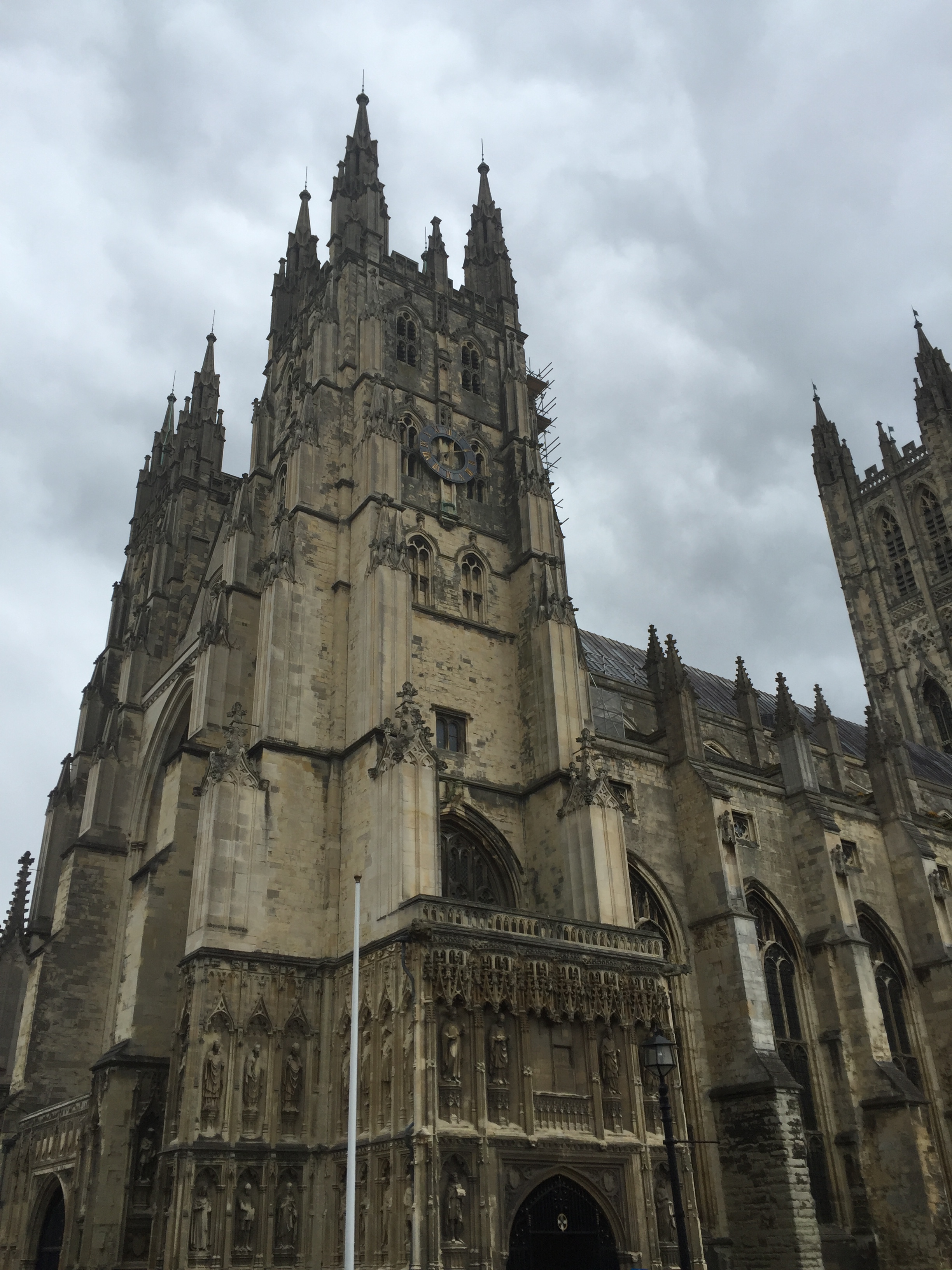
Canterbury Cathedral, dating back at least as far as St. Augustine in 576, is one of the most interesting of all the many churches in England. I was lucky enough to attend Evensong in this ancient place of worship and history. I’d love to return.

Join me next time for more explorations in the art and history of Europe and the British Isles!

Eugene, the Painter Prince of Sweden

Prinz Eugen, Duke of Narke, 1910, painting by Anders Zorn, Public Domain

Prinz Eugen, Duke of Narke, 1910, painting by Anders Zorn, Public Domain

If I were born royal, I’d for sure want to be a younger child.  It looks to me like Prince Harry has a lot more freedom than the more direct heir to the throne, Prince William.  In Sweden, Prince Eugene was the fortunate younger son of the royal family in the late 19th century.

Eugene was born in 1865 in Drottningholm Palace, on a beautiful island about an hour by boat from Stockholm.  It’s still the home of the Swedish royal family, and makes for a dreamy visit. Eugene was fourth in line to the throne, so he was pretty much free to do as he liked. Nobody expected him to marry and produce an heir, although he did cheerfully carry out many royal duties.

img_2849

What Eugene wanted was to paint and to hobnob with artists and writers. He found the perfect spot for his home on the island of Djurgarden, with views over the water of the Stockholm skyline. He studied painting seriously, in Stockholm, Olso and Paris.

img_3557

Today, his beloved home, Waldemarsudde, is an enchanting museum with the rooms left as they were at his death in 1947.

img_3410

His top-floor studio space is a gallery with rotating exhibits, some by artists the Prince patronized during his long life.

In his studio and on his peaceful grounds, Eugene contentedly painted the Swedish and Norwegian landscapes he loved. The painting just above is a beloved country home where he spent time.

img_2962

Eugene decorated his home with the work of other artists who were his friends. He considered “The Water Sprite” by Ernst Josephson, 1884, to be one of his best acquisitions.  Josephson did three versions of this painting of a character from Swedish folklore. Eugene offered it to the Academy in Stockholm, but they considered it too daring to accept.  It seems the problem was not so much the nudity as the style.  Josephson was breaking away from the time-honored traditions of Realism and Naturalism.  He was getting into the movement that later became known as Symbolism. Eugene was more than happy to keep the painting, which dominates his salon.

img_3150

Inside Waldemarsudde, Eugene studied, read, and entertained his friends–most of them artists, and many of them partisans of the then-radical ideas of the 1880s. Although he was named the Duke of Narke at his birth, Eugene much preferred artists to royalty.

img_3571

Having seen Drottningholm Palace, the Royal Palace in Stockholm, and Waldemarsudde, I’m with Eugene.  The palaces are showplaces, gilded, confining, and a little dreary. Waldemarsudde is a light-filled home.  I’d choose the artist’s life over the Royal Prince’s any day.


Join me next time for more explorations in the art and history of Europe!

Kalmar Castle Doorways

img_4443

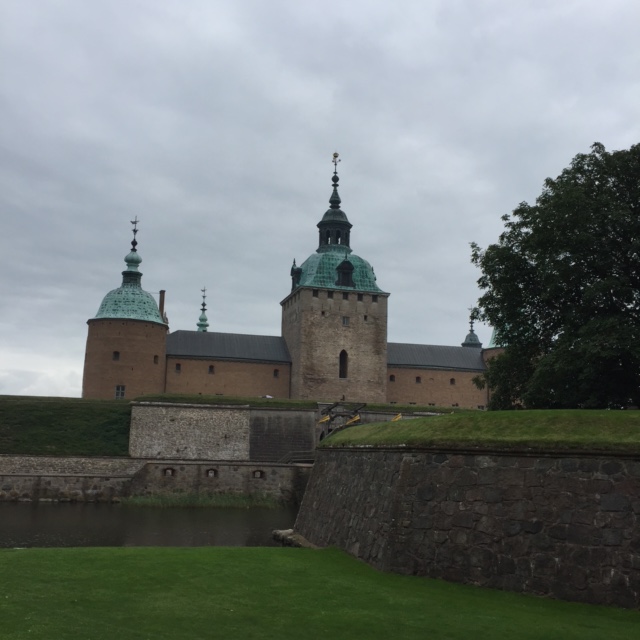
Kalmar is a pretty town on the Swedish Baltic coast. It has a spectacular Renaissance castle on a site that was of strategic importance for many centuries, starting about 800 years ago.

img_4474

Naturally, it has spectacular doorways, beginning with the dry-moated entrance.

img_4494

Some of the doors are clearly defensive.

img_4461

Some are more decorative, but still formidable.

img_4909

Some are meant to impress and possibly intimidate, like the one just past the drawbridge.

img_4456

This door features the regal lions of Sweden.

img_4705

Inside, doorways reflect the luxurious tastes of kings and queens.

img_4863

The doorways of Kalmar Castle are all worth entering.  Everything is more spare than Renaissance castles and palaces in England, Austria, Germany, France or other European countries.  But that very spareness has its own Nordic elegance. The castle is a fascinating look at the unique ways that Renaissance ideas played out in Scandinavia.

The shop has books about Elizabeth I and Mary Queen of Scots, apparently because most of the major rebuilding and decoration of the castle was done during their lifetimes. And at least one Swedish prince was known to have courted Elizabeth I. Of course, we all know that she said “No!” to marriage. But at the time, Sweden was a great naval power.  I wonder if Elizabeth gave some serious thought to a Swedish alliance. How might history have been different if she had said “Yes!” to a Swedish prince?

Castle doorways always lead me to questions like this.  It’s why I travel.

St. Jerome and His Lion: More Sightings

IMG_4931

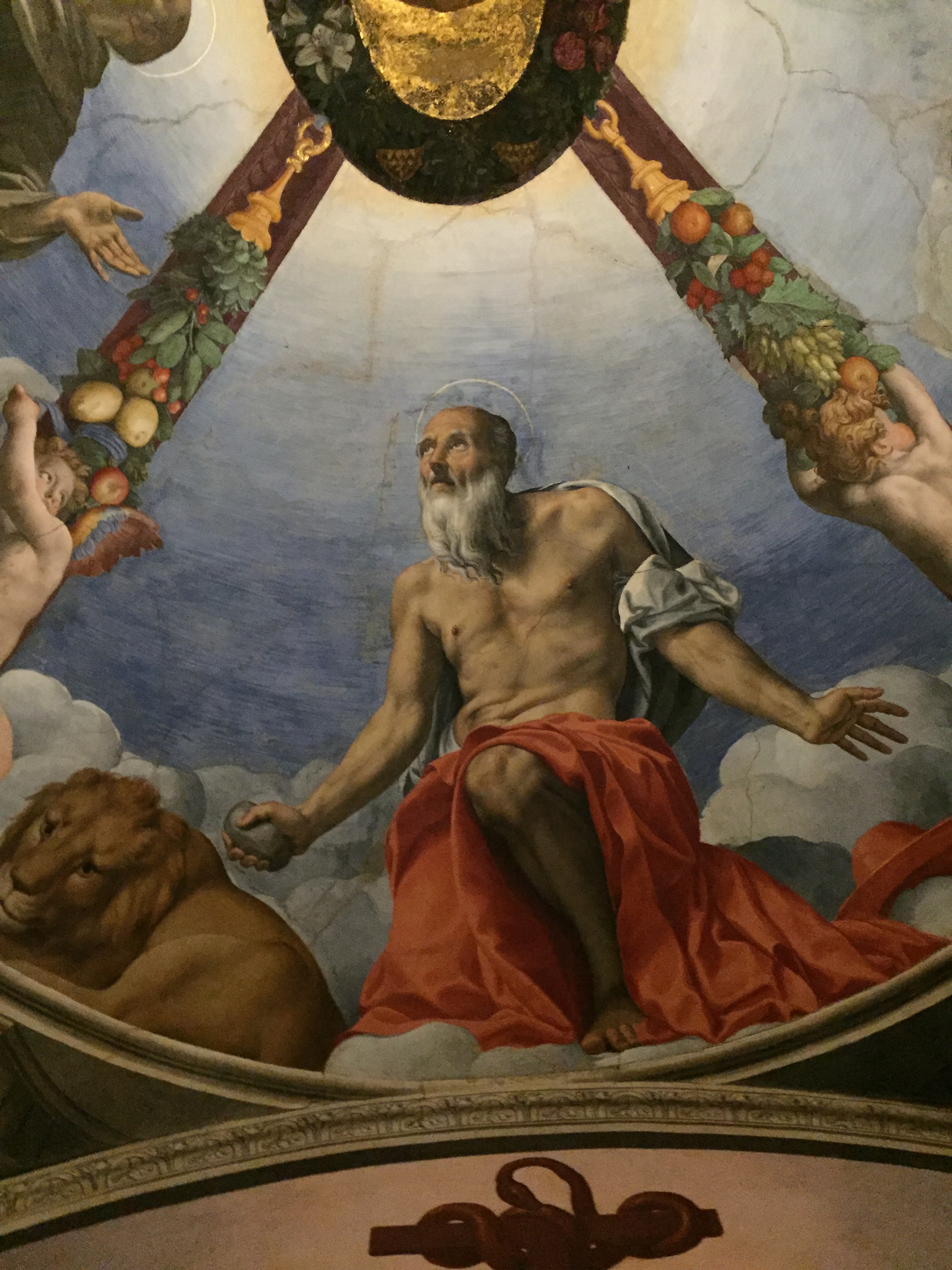
I’m always on the lookout for images of St. Jerome and his lion. Legend has it that when the saint retreated to the wilderness to study and pray, he came upon a lion with a thorn in its paw.  St. Jerome didn’t run or climb a tree.  He stopped and removed the thorn. From that day forward, the grateful lion stayed by his side. The fresco above is from a ceiling in the Palazzo Vecchio in Florence. Agnolo di Cosimo, known as Bronzino, painted it between 1540 and 1565.

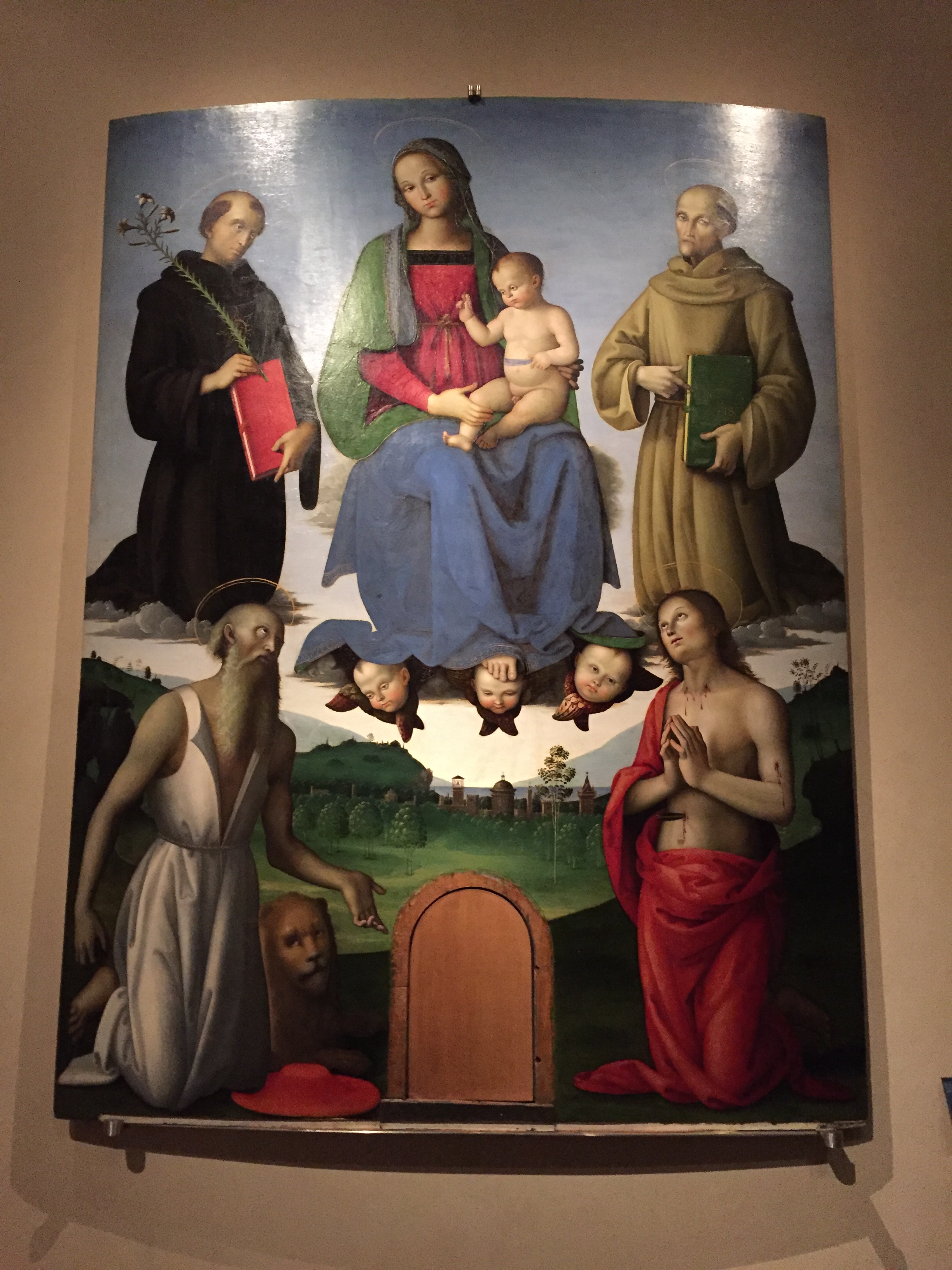
Pala Tezi, Pietro di Cristoforo Vannucci, known as Il Perugino, 1500

Pala Tezi, Pietro di Cristoforo Vannucci, known as Il Perugino, 1500

A more primitive, but still endearing, lion is in the painting above, from the Galleria Nazionale of Umbria in the town of Perugia.

Detail from Il Perugino painting above

Detail from Il Perugino painting above

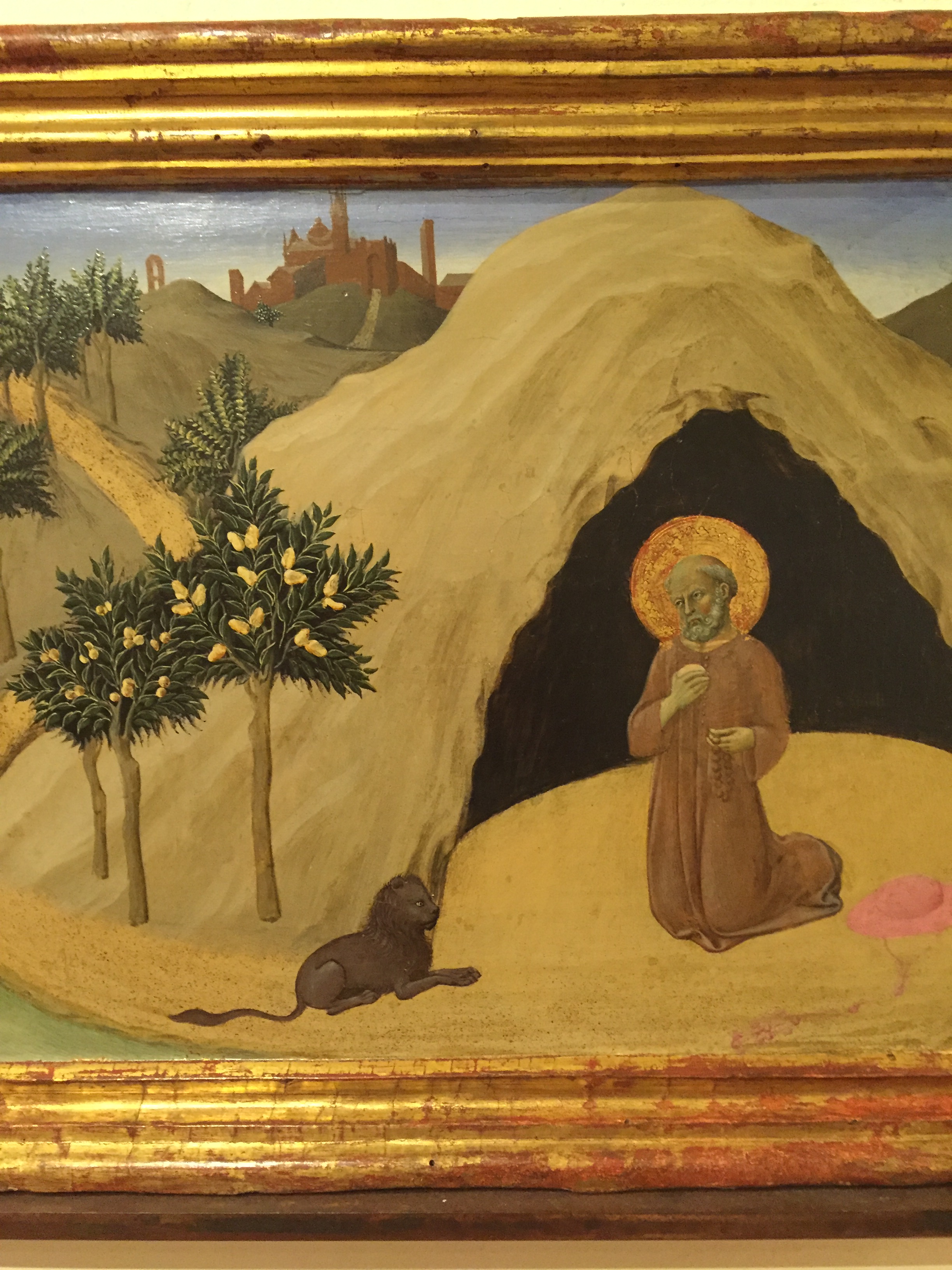
The artist painted the lion and the saint sitting peacefully together in a simple landscape, in front of the cave that Jerome may have lived in.

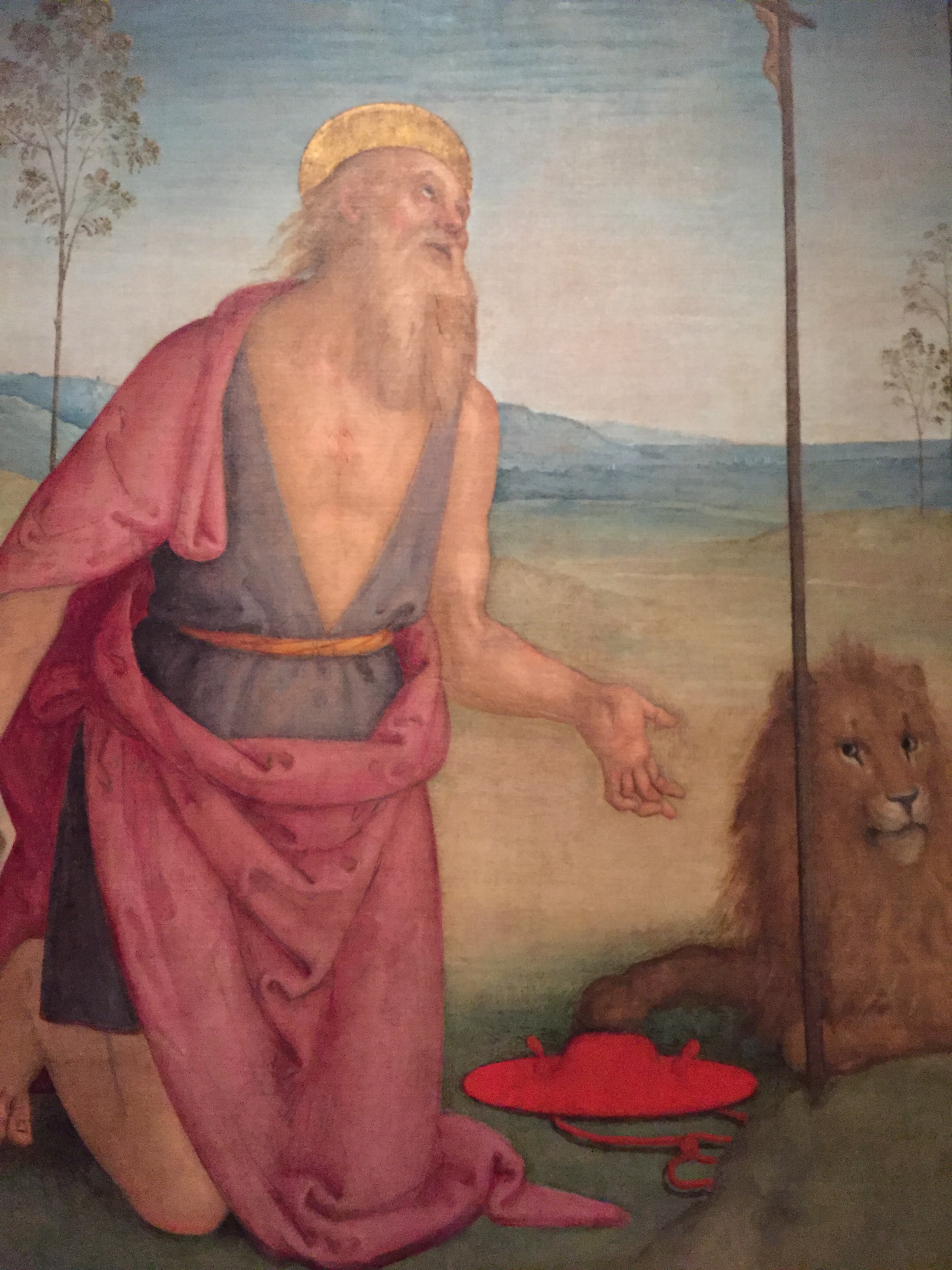
San Girolamo Penitente, Il Perugino, 1512

San Girolamo Penitente, Il Perugino, 1512

Another painting by Perugino shows the saint in contemplation of the Virgin and child, accompanied by other saints.  In humble adoration, he’s set his cardinal’s red hat on the ground–and who is lurking beside him?

San Girolamo Penitente, Il Perugino, 1512

San Girolamo Penitente, Il Perugino, 1512

In turn, Jerome’s faithful lion gazes adoringly at him.  Isn’t this what we all love to have our pets do?

Detail from Il Perugino painting above

Detail from Il Perugino painting above

The lion’s face is distinctly human.  How many of us humanize our pets? It’s an ancient impulse.

St. Jerome, Pintoricchio, around 1495

St. Jerome, Pintoricchio, around 1495

The same museum in Perugia has another painting of the saint in the same pose–also with his cardinal’s red hat set humbly on the ground. It’s by Bernardino di Betto, known as il Pintoricchio.

The friendly lion is guarding the hat–and St. Jerome.  Who wouldn’t like to have a tame lion riding shotgun all the way through life? Jerome’s lion always had his back.

In medieval times, retreating to the wilderness to meditate was a radical action. Jerome would not have been the first man eaten by a lion in the wilderness. At a time when nature was frightening, St. Jerome was revered for being at one with nature. In our times, retreating to the wilderness still has its risks, but it’s becoming more and more an expensive luxury. Our wildernesses are shrinking and human over-development is routing wild animals from their age-old homes.

1B2632B5-0CCB-42CB-AE4C-EDBC95B95B2B

I treasure any wildlife sightings, like this fox right outside my window.  And I’ll keep looking for glimpses of St. Jerome and his lion.

My previous post about St. Jerome and his lion is at

https://castlesandcoffeehouses.com/2015/08/06/st-jerome-and-his-lion/

Join me next time for more explorations in the art and history of Europe and the British Isles!

Happy Birthday, Emily Bronte!

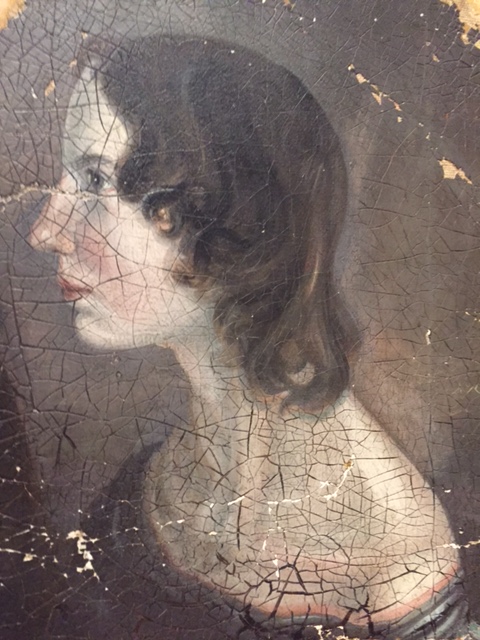
Emily Bronte, portrait by Branwell Bronte

Emily Bronte, portrait by Branwell Bronte

Emily Bronte was born on July 30, 1818. Her brother Branwell, an aspiring poet and portrait painter, composed one of the very few images of her. His sister Emily was painfully shy, hardly speaking with anyone outside the family. But she was a bold artist.  Her novel, Wuthering Heights, is still startling in its passion and social critique.

IMG_7974

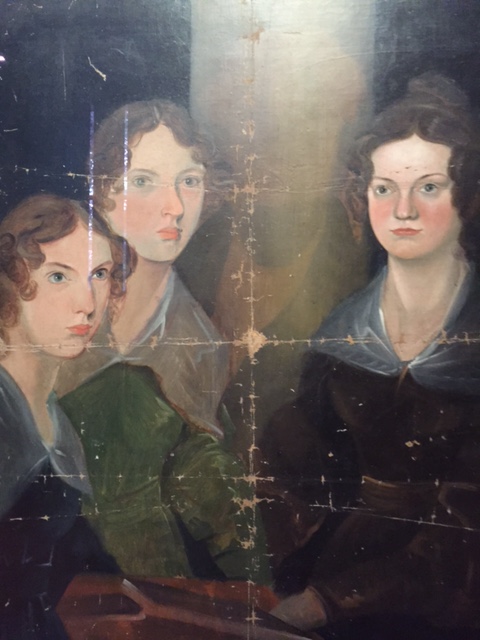
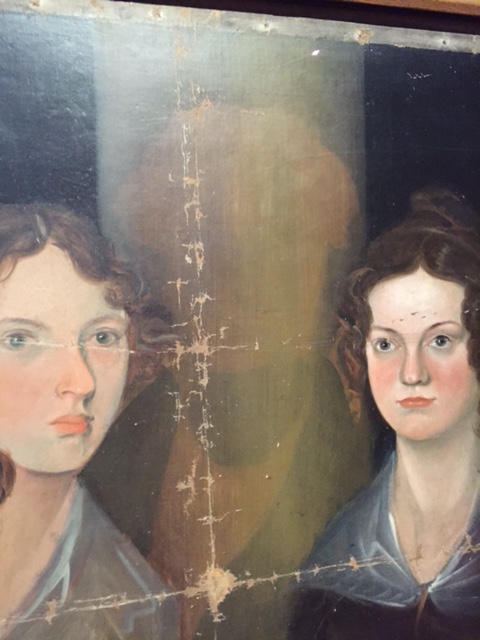
Branwell  was the only son in the family and great things were expected of him. I think poor Branwell suffered from what we might now call Preacher’s Kid Syndrome: a need to act out, just because his father, the Reverend Patrick Bronte, was such an upright man. Branwell studied painting, in between bouts of drinking, taking opiates, and getting fired from various gigs as a tutor–for which his father had taken great pains to educate him. In around 1834, at age 17, Branwell painted the group portrait above. It is now one of the most treasured works in London’s National Portrait Gallery, and the centerpiece of a special Bronte exhibit I saw last spring.

Why is this rare painting folded in the middle?  We’re lucky that it still exists, damaged as it is. The portrait, together with the profile of Emily, traveled to Ireland with Charlotte Bronte’s widower after her death as a young bride. It appears that a heartbroken Arthur Bell Nicholls shoved the portraits of his beloved Charlotte and her sisters on top of a wardrobe in an Irish farmhouse, out of sight and out of mind.

5BF4DE23-BACA-4EB1-A574-4B0C8DB37E39

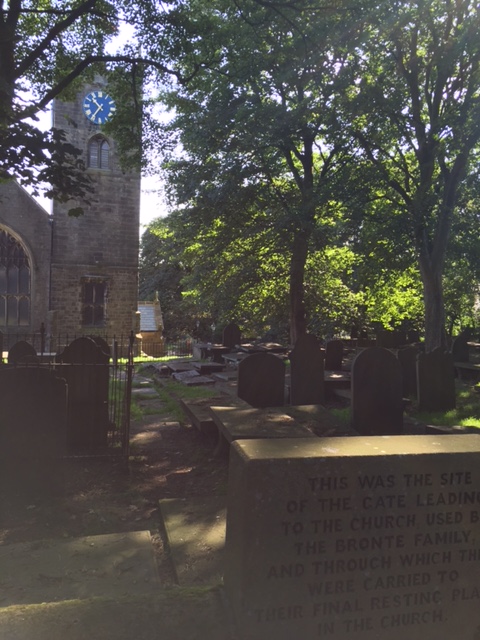
The churchyard where all the Brontes are buried (except Anne, who died at Scarborough and was buried there) is just outside the door of the parsonage. Living there, walking every day past the graves of so many loved ones who had died so young, must have been unbearably sad.

By the time Charlotte died, shortly after her marriage and while pregnant with her first child, Branwell, Emily and Anne were already dead. Most likely they died of either tuberculosis or infectious diseases from the poor sanitation in the village. (Branwell more or less drank himself to death). Nicholls stayed in Haworth for several years to care for his father-in-law. Nicholls eventually remarried. His widow finally discovered the paintings (housecleaning, no doubt) in 1914.

IMG_7991

Sadly, it seems that Branwell had erased himself from the family portrait. This fact was not known until the 1950s, when the oil paint became more transparent with age. Now, it is clear that there was once a man’s figure between the sisters.  Did Branwell already have such a low opinion of himself? Was he ashamed to be seen with his much-more-virtuous sisters? Or did he feel he could not do justice to his own wonderfulness? Or was this possibly a portrait of his father, who took a very dim view of Branwell’s nights spent in the local pub or worse?  We’ll never know.

IMG_7998

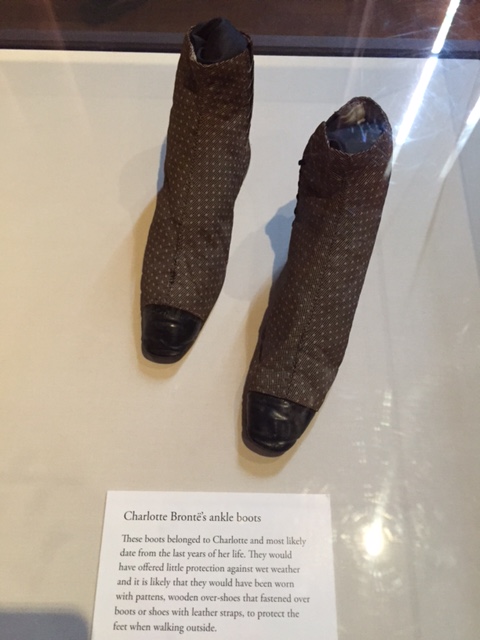
The London exhibit also contains items such as Charlotte’s tiny boots. The caption says that for outdoor wear, the boots were most likely worn with wooden platens strapped to the soles for a little protection against mud and snow. How did the Bronte girls manage to walk for miles in the rugged North Yorkshire moors in footgear like this?

516249D9-D9D6-4C17-9562-2F8427A4F7FA

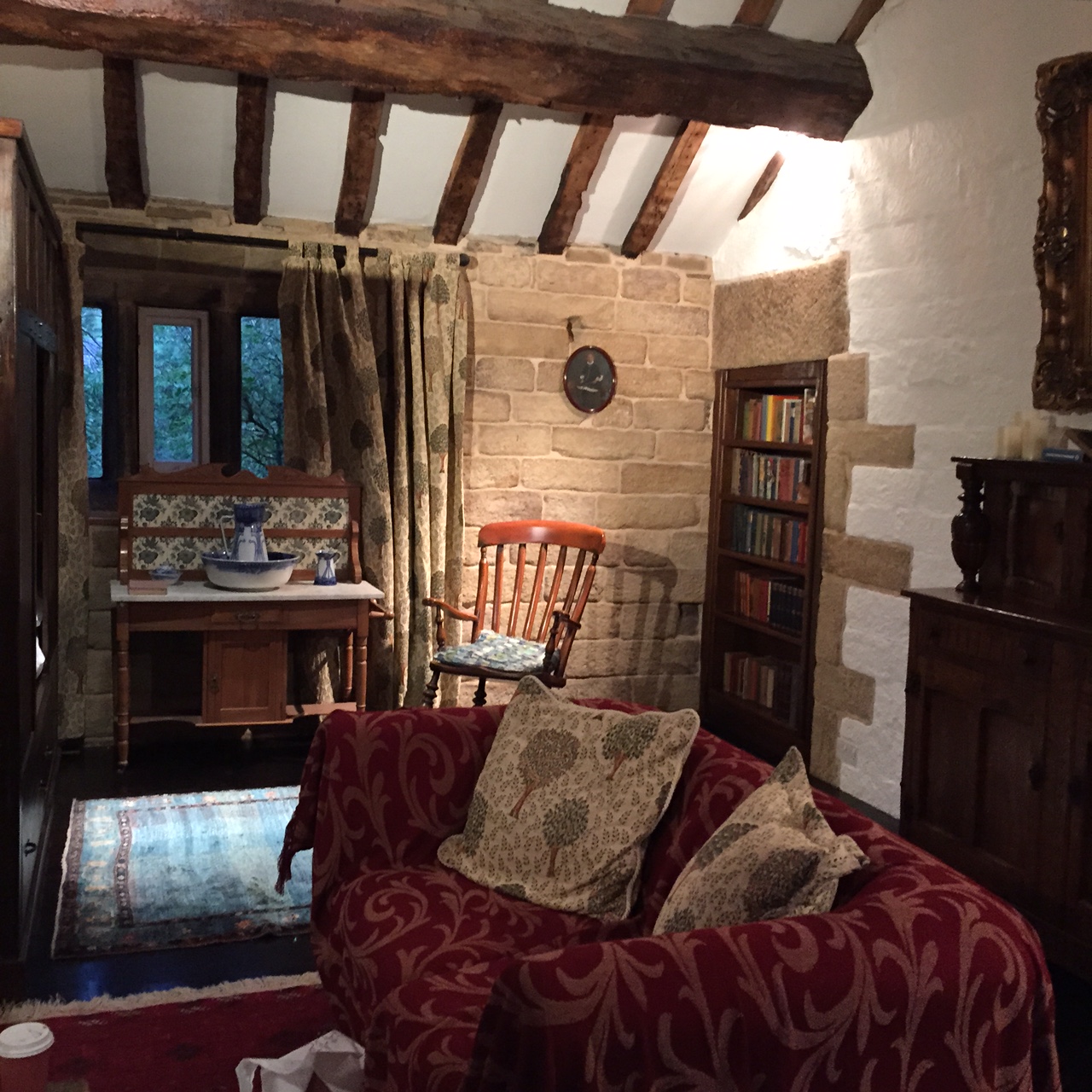
Last year I made a literary pilgrimage to Haworth in Yorkshire.  The town still looks much the same as it did when Emily composed her novel about wild forbidden love on the moors. I was lucky enough to stay at Ponden Hall, a house where the Brontes were regular visitors. It’s now a family home, a lovingly run bed and breakfast, and a venue for  gatherings of artists, writers, and Bronte fans. The charming hosts go out of their way to show all visitors around their historic home.  In the photo below, the bookcase is a hidden door into a secret library. The Bronte girls used to visit the house, a couple of miles from the parsonage, to use the library.

C62787CB-D25E-42C6-9317-8B42D8F7B0E1 7CCCA642-6749-4E0A-BDF0-962884452783

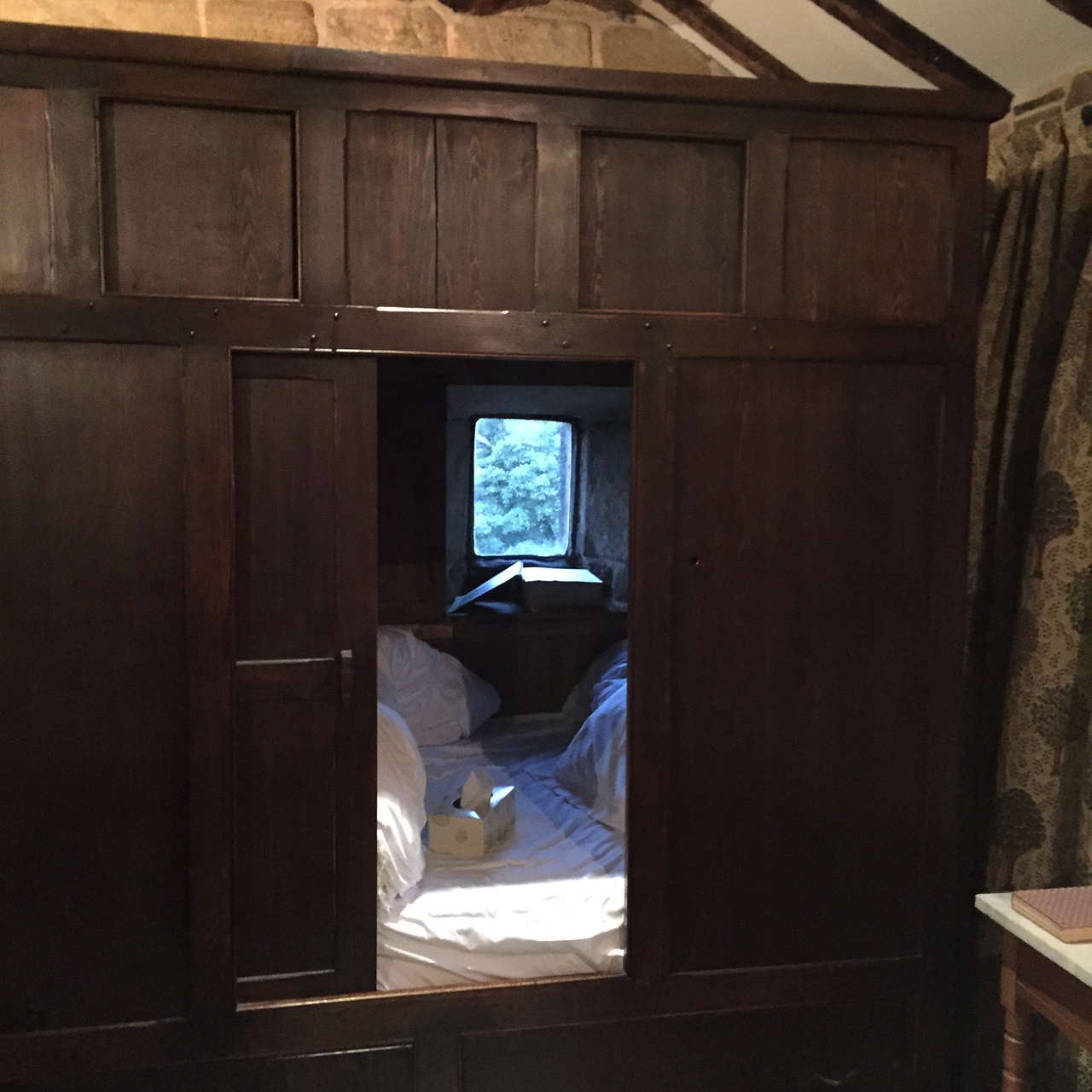
It’s possible to actually sleep in the “box bed,” shown above, with the little window that reportedly inspired Emily to write her famous scene where the ghost of Cathy appears outside the window, begging to be let in.  Her forbidden and guilt-ridden lover Heathcliffe staggers out onto the moors in desperate search of her. (Did I sleep in the box bed? No, but maybe next time! Do I believe in ghosts? Maybe!)

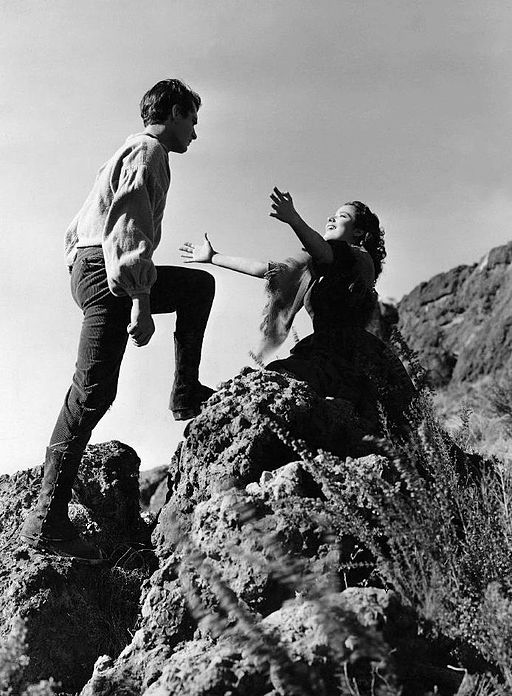
Laurence Olivier and Merle Oberon in "Wuthering Heights," Public Domain

Laurence Olivier and Merle Oberon in “Wuthering Heights,” Public Domain

In 1939, Laurence Olivier and Merle Oberon played the lovers Cathy and Heathcliffe in the classic romantic film based on the novel.  Since then, there’s been a 2011 film version that makes explicit the racism that Emily only hinted at in her novel, by calling Heathcliffe a “gypsy.” It’s on my list to watch.  There’s a 2009 miniseries, too.

577AA11D-6684-4EE1-9BFE-E0BDB8161171

Did I venture onto the wild moors myself?  Only partway.  I had a broken foot, thanks to a super-klutzy fall just before I left on my trip.

E8ADF0D1-3C59-43B8-A466-D01193D148E5

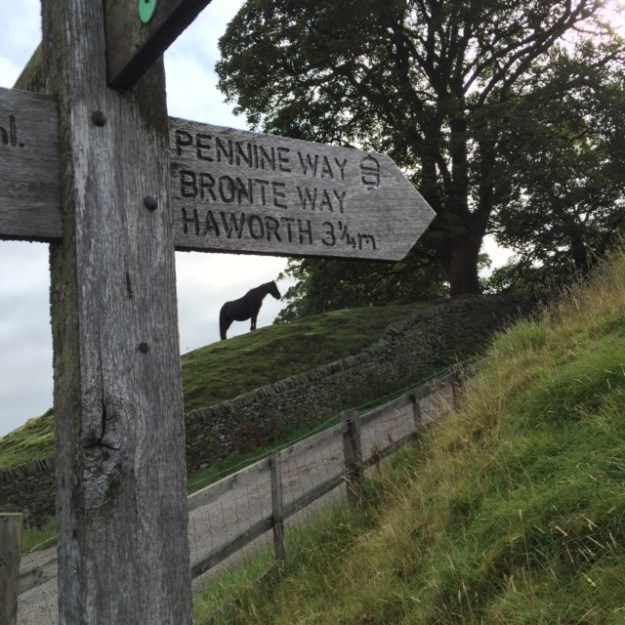
But I’m determined to hike the moors.  Next time, I hope I’ll be able to follow the signposts and get just a little bit lost in the wild countryside that inspired Emily Bronte and her sisters.

Join me next time for more explorations in the art, history and literature of Europe and the British Isles!