Category Archives: France

Chateau de Maintenon


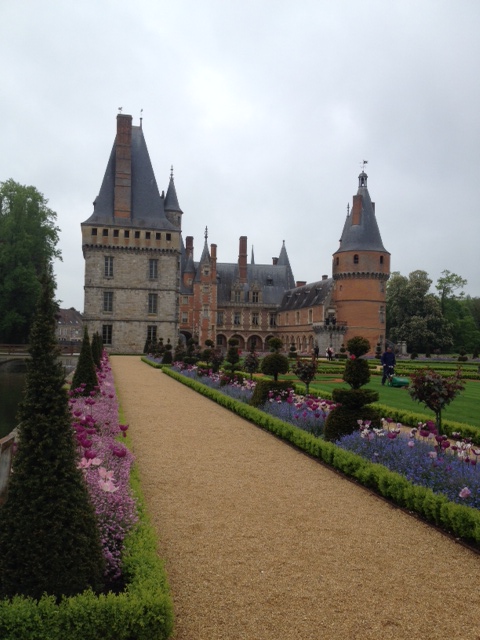
MaintChateauMy new second-favorite chateau is one I had never even heard of until my recent trip to France. (My favorite chateau is the incomparable Chenonceau, which was built spanning a river in the Loire Valley). The story of how a penniless woman, born in a prison, came to be the second wife of the Sun King is strange but true. Chateau de Maintenon is close to the cathedral city of Chartres, and I came across a brochure about it in the Chartres tourist office.
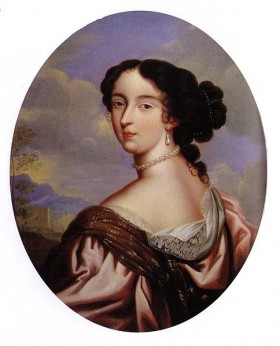
Madame de Maintenon, Public Domain

Madame de Maintenon, Public Domain


The woman who eventually became Madame de Maintenon was Francoise d’Aubigne, born in the prison where her ne’er-do-well father was incarcerated in 1635.  She married an invalid older man, an aristocrat who brought her into the highest social circles before obligingly dying and leaving her with a sizable royal pension. After awhile, though, Louis XIV suspended the pension and she was left high and dry. One of her friends was the current favorite mistress of the King, the Marquise de Montespan. Francoise became the caretaker of the King’s many illegitimate children with his favorite mistress, about 8 as far as anybody knows.  Francoise was discreet and did her job well.  The King rewarded her with a pile of money, which she used to buy the Chateau in the town of Maintenon.

Eventually the King tired of the ill-tempered Montespan, and took up with Francoise, giving her the title Marquise of Maintenon. The King’s wife died.  He was in his early forties, beginning to feel like an old man, and beginning to be concerned about his sins.  He married the Marquise sometime in 1685-1686. She remained at his side for 30 years, his most trusted confidant for the rest of his long life.  The marriage was officially secret, but courtiers had to accept the low-born Marquise de Maintenon as a permanent fixture, like it or not. It was a seventeenth-century version of an old story:  the rich man marries the nanny. (In this case, the nanny was actually a few years older than the King, and considered overly pious in the French court. But Louis appreciated her qualities).
MaintFlowers

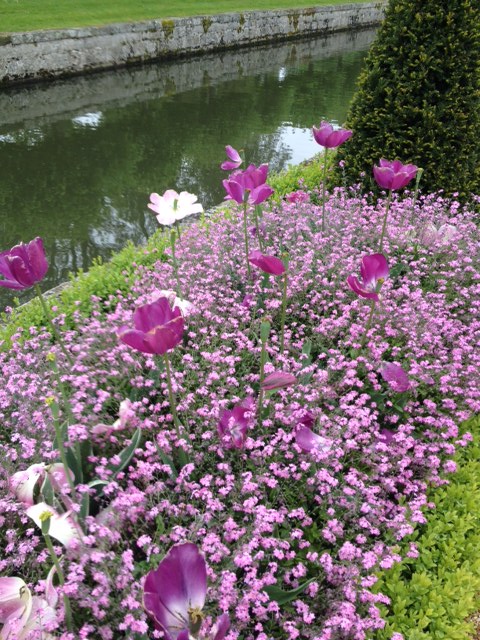
Today the chateau and its gardens are lovely and as inviting as they must have been when the King used the Chateau as a homey escape from the crowds at Versailles. The Marquise was given rooms adjoining the King’s at Versailles and in all the other royal residences, so she rarely had time to visit her own beloved chateau once she was married.  For the rest of her life, though, she had flowers and foods grown on her estate delivered to her.

Join me next time for more explorations in the fascinating art and history of Europe!
 

Parisian Elegance

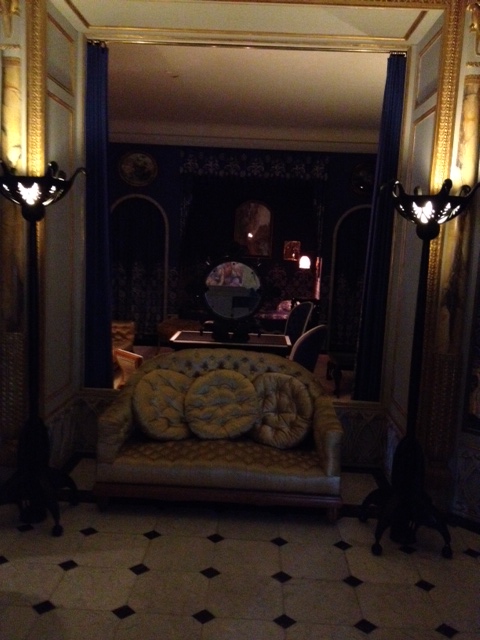
The Musee des Arts Decoratifs (Museum of Decorative Arts) in Paris is actually in the Louvre complex. It doesn’t get the traffic enjoyed by the Mona Lisa, but anyone looking for a visual feast will be happy in its galleries.  Among many other things, there is the reconstructed apartment of the fashion designer Jeanne Lanvin in Paris.

photo (33)

Jeanne began her career as an apprentice milliner, then trained as a dressmaker.  She married a count at age 28, which brought her into higher social circles. Their only daughter, Marguerite, eventually took over the fashion business her mother had founded.

photo (31)

Jeanne began by making exquisite clothes for her daughter, which her friends wanted for their own children.  Soon she was making dresses for their mothers, and she was on her way. In no time, she had her own boutique on the world’s penultimate fashion street, the rue du Faubourg Saint-Honore.

photo (32)

Jeanne’s most famous creation was the iconic perfume “Arpege,” which was inspired by her daughter’s piano practice.  “Arpege” is French for “arpeggio.” The bottle features a charming graphic of a mother and daughter.

The apartment, from the 1920s, is designed down to the square inch, all in the blue and gold featured on the signature perfume bottles.  I can only imagine the rarefied life lived there.

Le Renard

FoxYard

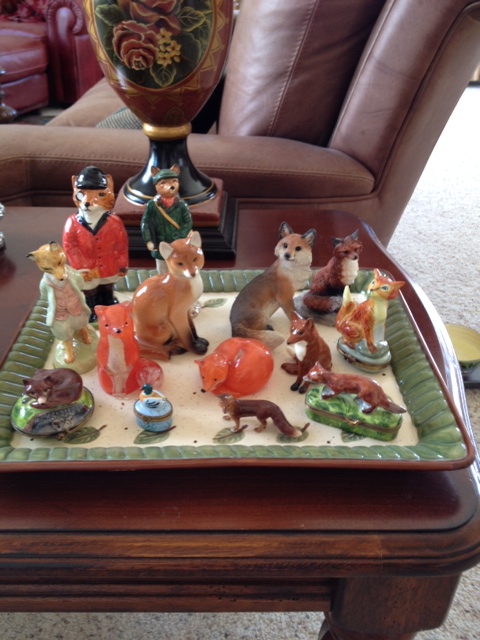
The most fun I ever had speaking French was the time I had a fairly long conversation with a Parisian woman who was walking a particularly lovely little dog. He looked exactly like a fox, my favorite animal. Foxes patrol just outside my house, hunting and also trying to get a rise out of my cats. The cats stare out in wonder at this unassuming animal that looks like a dog, but does not carry a ball or slobber on the window glass.

I wanted to know what breed the elegant little Parisian dog was. After much petting and exclaiming over the adorable creature, the woman managed to explain to me that he was “particulier.” I concluded this meant that he was one of a kind, what I might call a mutt. I would not be able to procure a dog just like him unless I got really lucky at my local animal shelter.

I’ve heard of people trying to tame foxes, but I know wild animals belong in the wild. My indoor foxes live on tabletops!

FoxCollect


Spring at Last


Snowwoods

I live in lands of ice and snow.  You have to love winter to choose life in the mountains. Mid-April in these parts, big wet flakes are still falling and people are still digging out from the long winter.

snowcar


People are putting away their skis and getting out their mountain bikes on days when the roads are clear.

MooseCloseup


Moose appear outside my window, searching for buds on the trees. Hungry bears have already been sighted near town.

MediciGrottoParis

But I’m off soon on a springtime trip to Europe, where (usually) the climate is a lot more temperate.  This year I’m lucky enough to have a few days in Paris–in April! I’m already dreaming of the Medici Grotto in the Luxembourg Gardens. I’m dreaming of the flowers in the Tuileries, once the pleasure gardens of kings and queens, but now open to all.

TuileriesFlowers3

Marie Antoinette: A Tragic Habsburg

MarieAntBust

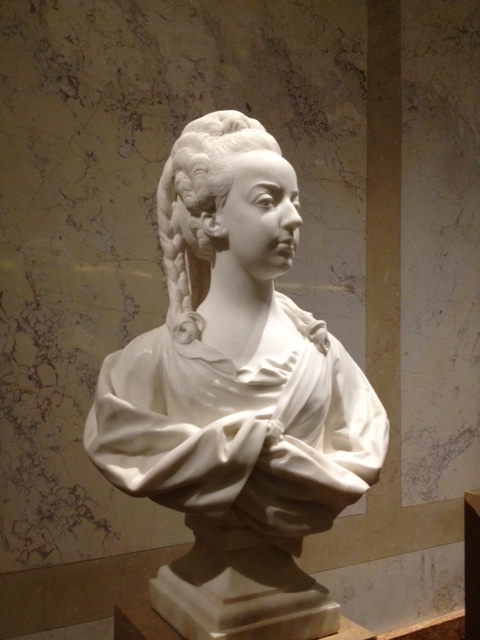
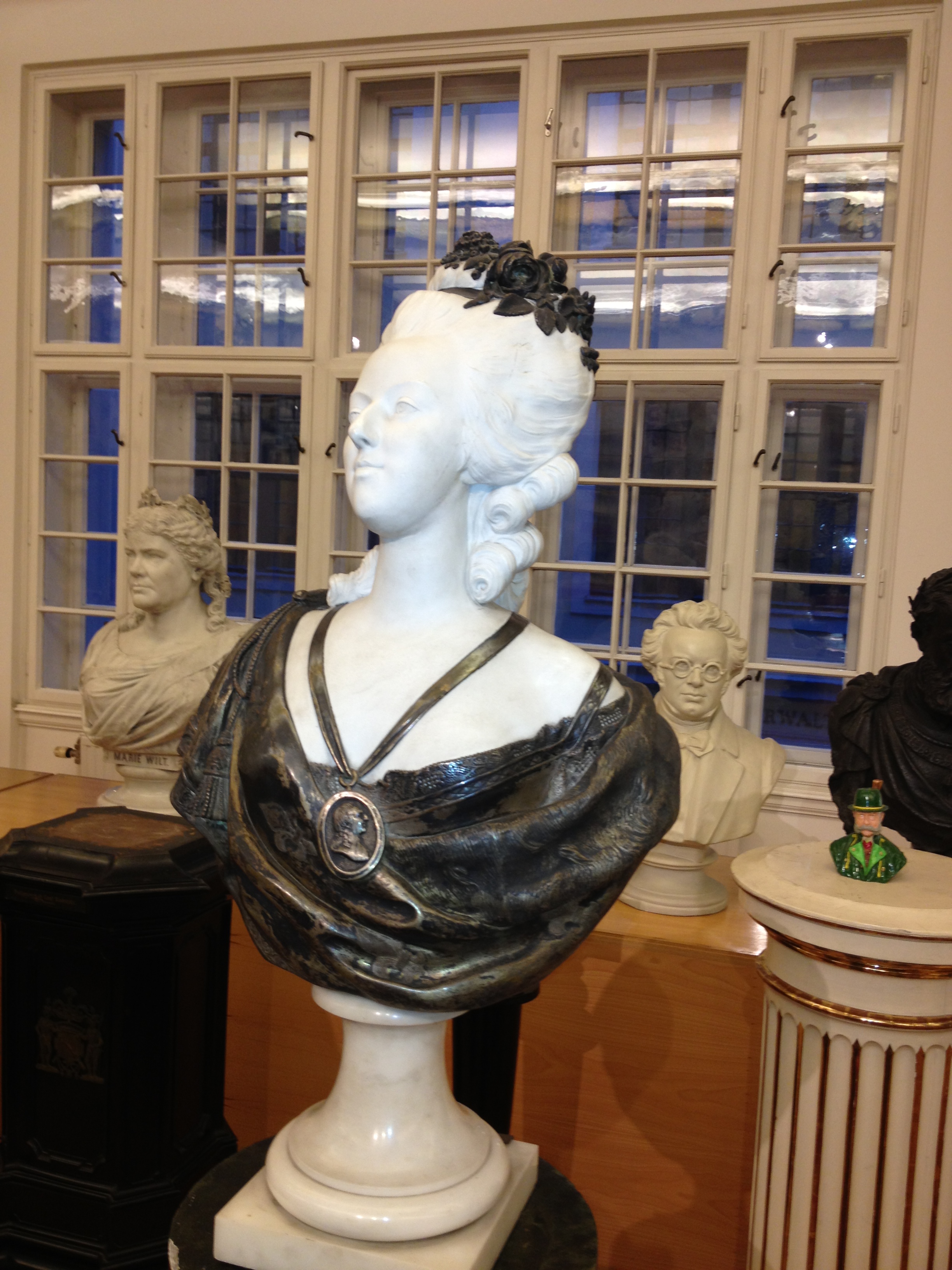
In various places in Vienna, I’ve encountered the proud features of Marie Antoinette, the Habsburg-Lorraine daughter of the redoubtable Empress Maria Theresa.  Poor Marie Antoinette was packed off to France at the age of fifteen to marry the Dauphin who became the most unfortunate Louis XVI. We all know her story: wealth, power, frivolity, and finally the guillotine at age 37. I am always surprised that no one in Austria seems particularly sympathetic to Marie Antoinette. The captions under her images mostly mention only her name, and then only as “Archduchess of Austria.”

MarieAntHofmobil11-12

The Habsburgs held on to power by judicious marriages all across Europe, and Marie Antoinette was a pawn in this real-life “Game of Thrones.” Once she was sent to France, she literally became the property of France.  In a biography, I read that when she was handed over, she was stripped of all her clothing and dressed in clothing provided by the French State.  At the last moment, she had to leave her little dog behind, too. He was the only vestige of her happy childhood in Vienna. She never saw her home or any of her family again, except perhaps for a visit by one of her brothers.  Her mother wrote her frequently, scolding her for laziness and urging her to work for Austria’s interests–as if she had any say in government.

MarieAntPaint

In Paris, I’ve visited both Versailles and the damp, chilly cell on the banks of the Seine where Marie Antoinette spent her last months. The Conciergerie is still a terrifying place, even for a tourist today.  It is all too easy to imagine the horror of being a prisoner there. In Marie Antoinette’s letters, she often expressed a wish to see her beloved home in Vienna again. From what I’ve read of Marie Antoinette, she deserves a little more sympathy than history has given her.

Join me next time for more explorations in the art and history of Europe!

A Kinder, Gentler Church: Strasbourg Cathedral

TowerToCeiling

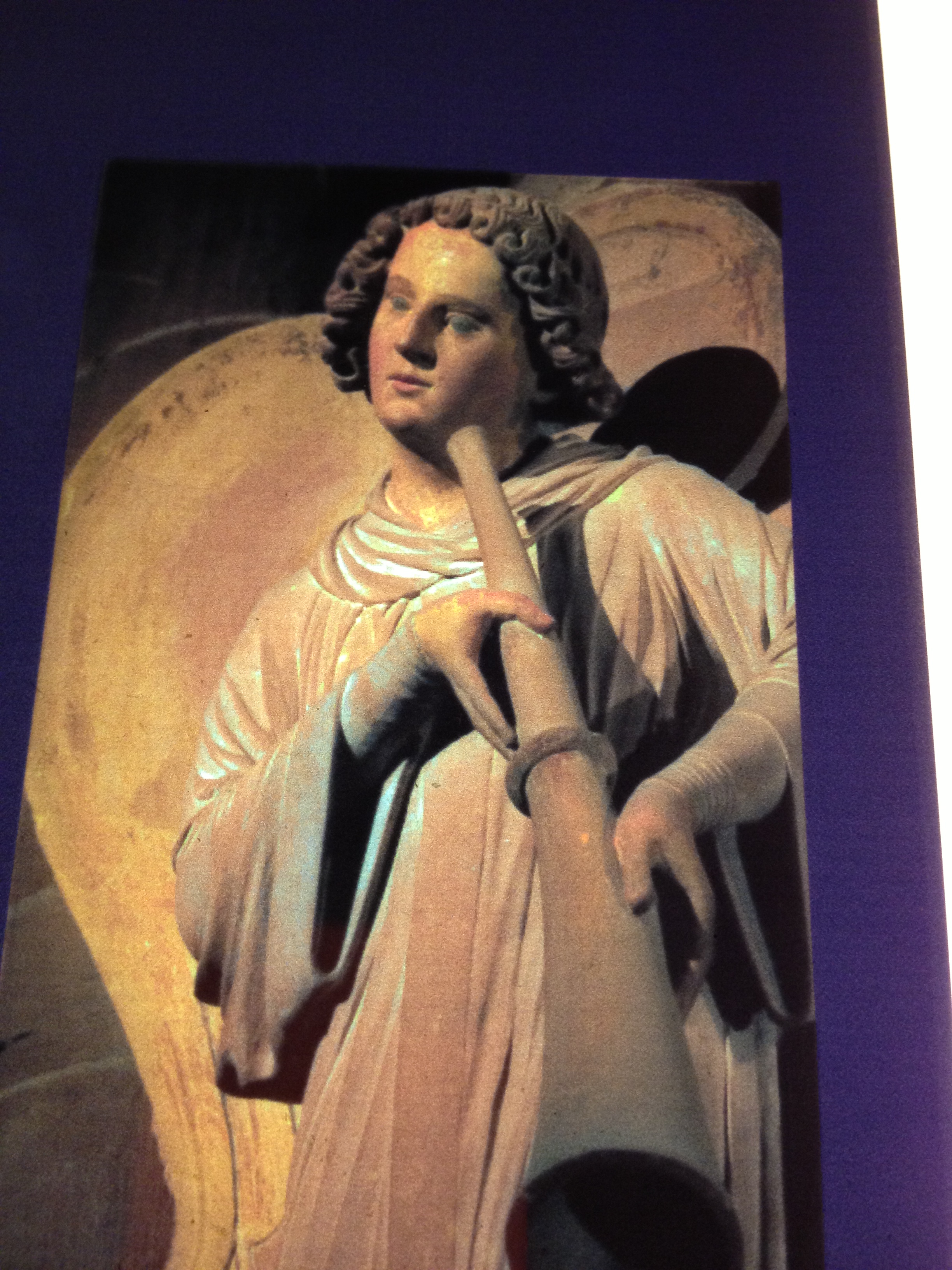
Among the many wonders of Strasbourg Cathedral is the Tower of Angels.  The breathtakingly beautiful column reaches from the cathedral floor all the way to the vaulted Gothic ceiling.  It was sculpted between 1225 and 1230, early in the 400-year span of time it took to build the cathedral. The subject of the column is really the Last Judgment, but it has a startling twist on the usually-dire subject.

BeautifulAngel

The four Evangelists appear on the lowest level, with angels above them, then the dead rising, then finally Christ.  My criticism of the column as a teaching tool for the faithful is that it’s hard to see the pinnacle, the figure of Christ, and get the point. But helpful placards provide close-ups and explain, in several languages, what is going on.

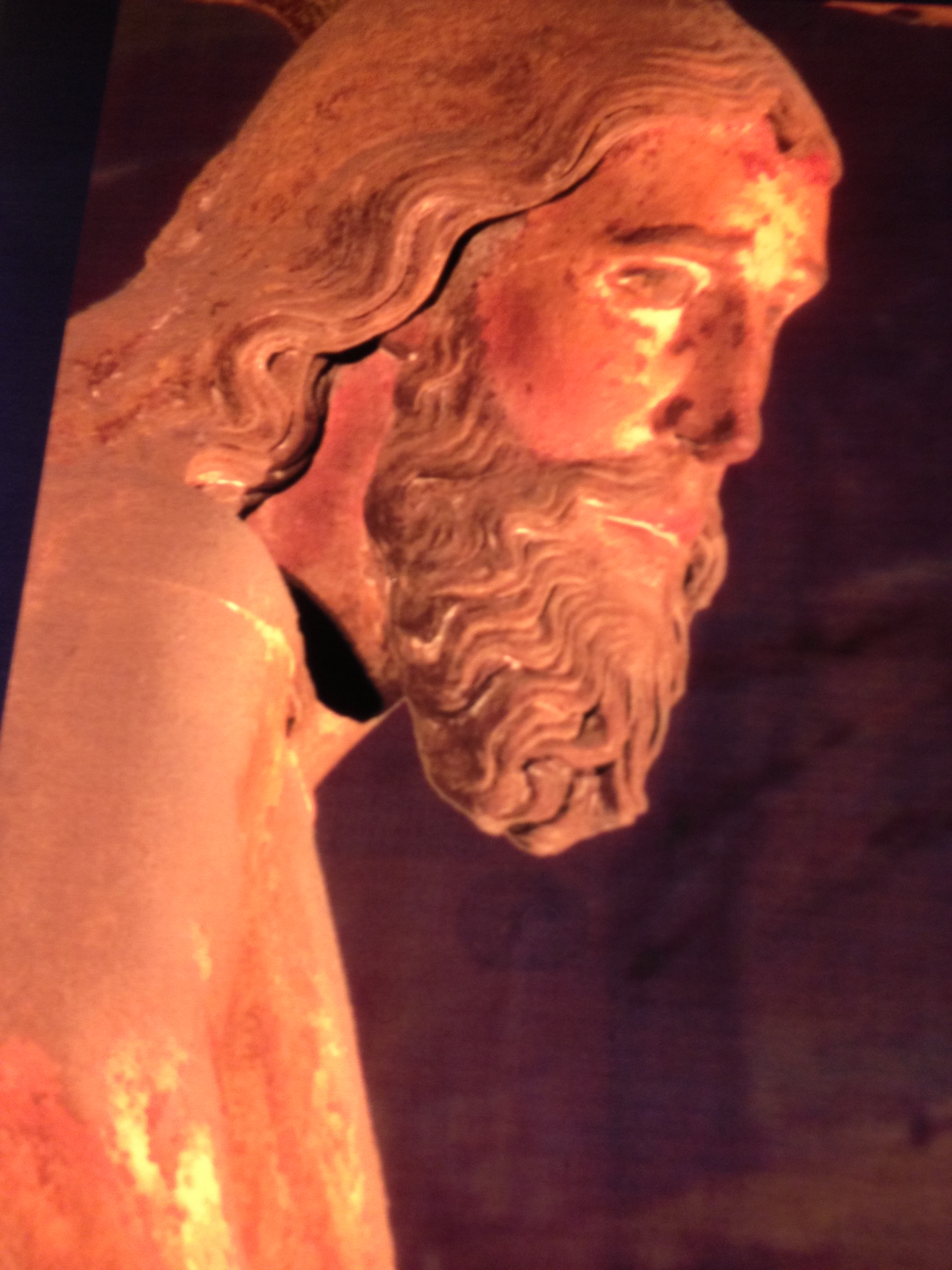
Christ

The Christ figure at the top is not sitting in splendor on a grand throne.  He is not giving anyone a thumbs-up or thumbs-down. Instead, this Christ bestows a gentle welcoming smile on everyone. This is a humble figure, a figure of loving understanding and compassion for the always-messy human condition.

I thought of the tower and its message this morning as I read the bold new statement by Pope Francis concerning the future of the Catholic Church.  Full disclosure:  I am not now and never have been a Catholic.  I visit cathedrals and churches for their art, traditions and history. Wherever I’m living, I attend whatever Protestant church seems the most socially active, inclusive and forward-thinking. But like many non-Catholics, I’m impressed by the current Pope. (Actually, he had me as soon as he decided to wear regular shoes instead of red Papal slippers.  Then when he chose to live among regular priests instead of in the much-fancier Papal Apartments, I decided he was worth a listen anytime).

In his latest statement, cited in the article below, the Pope said, “I prefer a Church which is bruised, hurting and dirty because it has been out on the streets.”  He has consistently shaken things up by insisting that the church should boldly reach out into the world with love,  compassion and creativity.  His vision is that the church is a place of refuge for all, not a place of harsh judgment. This is not a new idea, of course.  But it’s one that can certainly use a new champion.

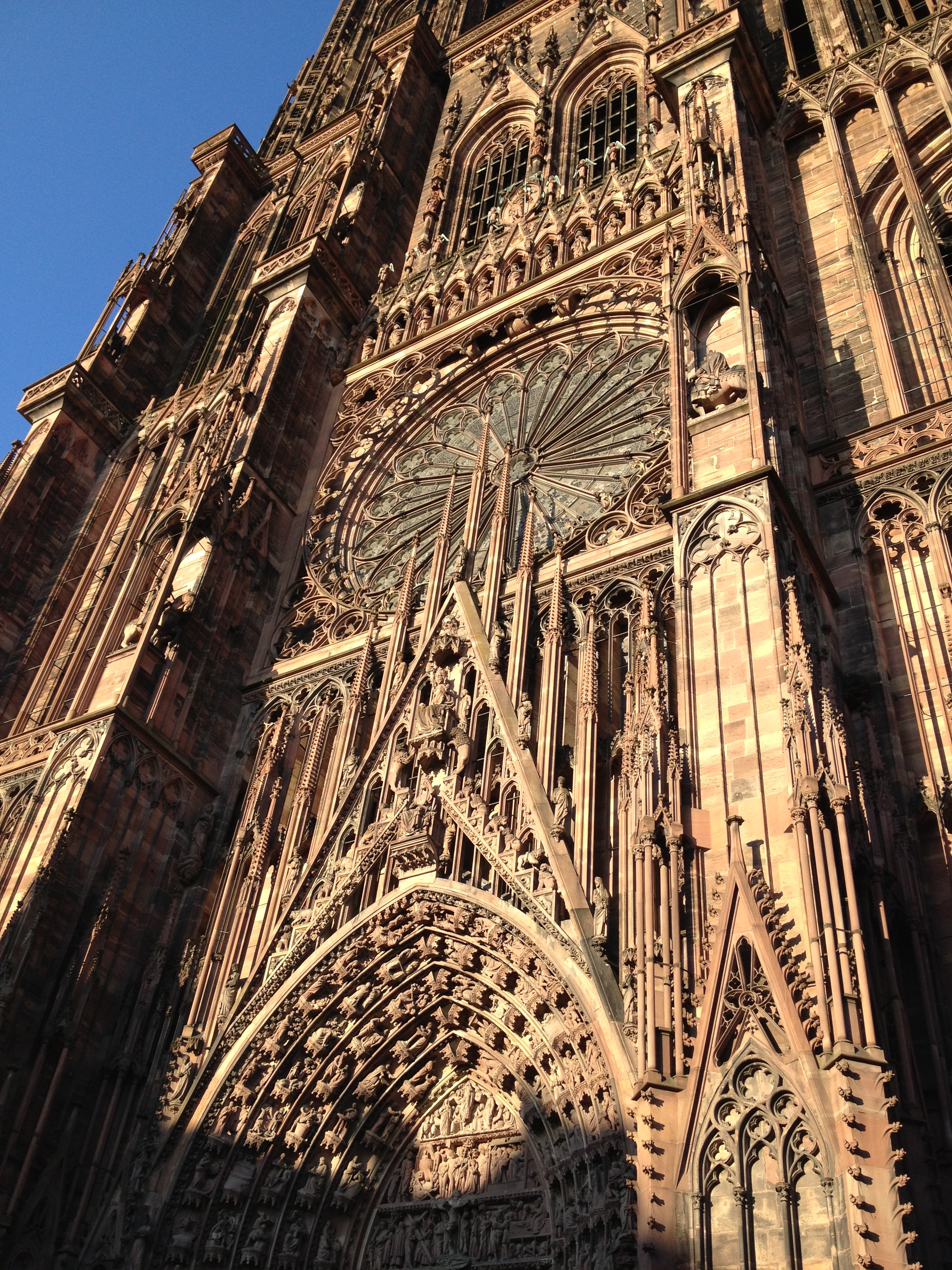
StrasCathedral

In September, I found the French city of Strasbourg so lovely that I’m planning a side trip there, on my way home from Vienna in December. Strasbourg is just two miles across the border between Germany and France.   I’ve scheduled a day and a night there. I’ll wander through the Christmas markets, which have been held at the base of the cathedral since medieval times. And I’ll spend time contemplating the season inside this most warm and welcoming of cathedrals.

Join me next time for more explorations into the art and history of Europe!

Veterans’ Day

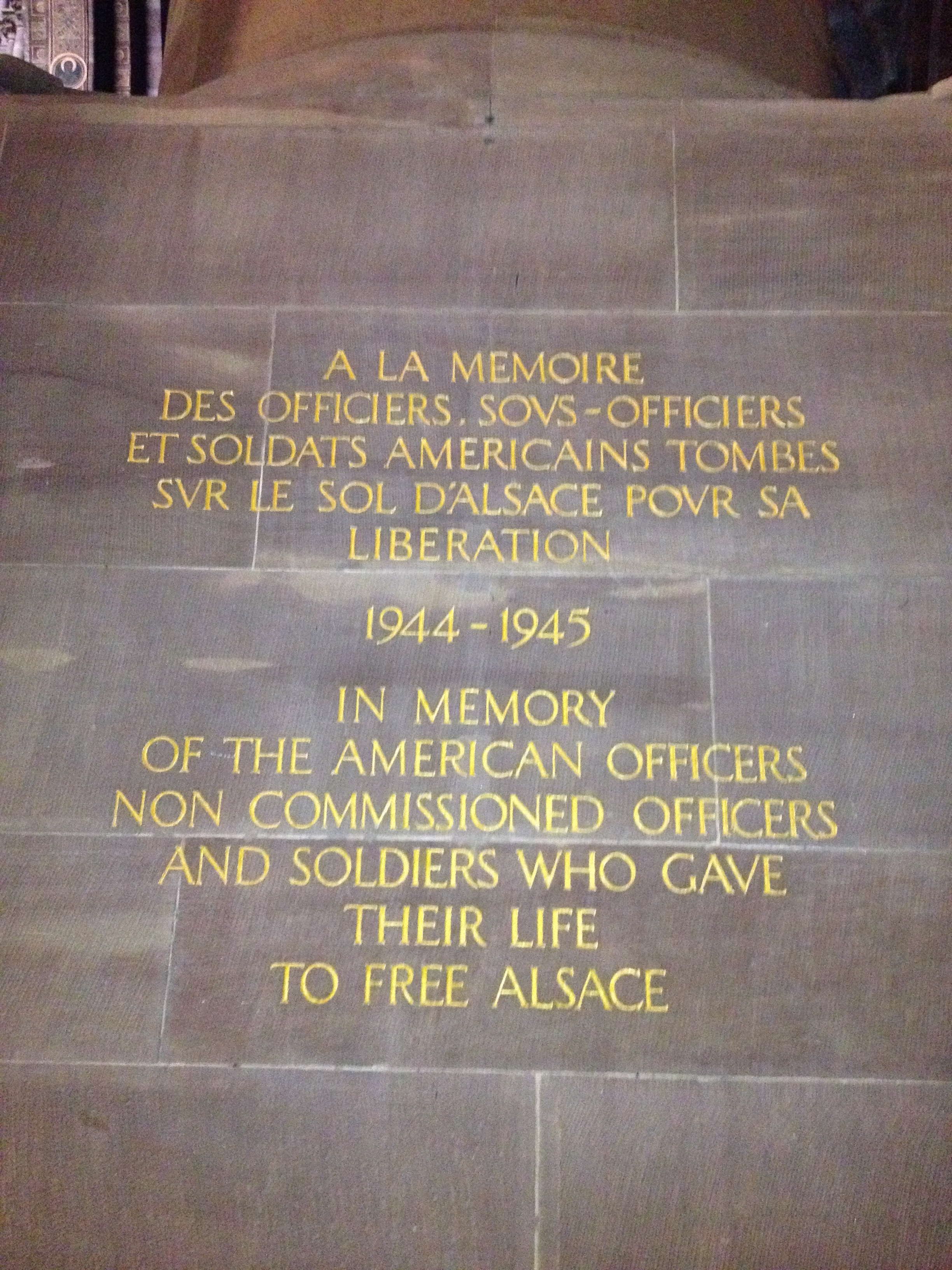
When I visited Strasbourg Cathedral a couple of months ago, I was touched to see a memorial to American soldiers who had helped to liberate Alsace and its capital, Strasbourg, from Nazi control.

AmerMemorial

Strasbourg is just across the Rhine from Germany, and had been in dispute between the Germans and the French ever since the Franco-Prussian War of 1870-71.  I know next to nothing about that war, but I do know that Strasbourg had great symbolic importance for the Free French, led by Charles de Gaulle from exile in England.  He insisted that only French soldiers should liberate Strasbourg, and so it was.  Strasbourg and its Cathedral had enough symbolic importance that Hitler himself had visited in 1940.  Hitler declared that he intended the Cathedral to be a place of sanctuary for the German people, or possibly a memorial to the Unknown Soldier. But in the closing days of the war, while the Allies moved across France from Normandy toward Germany, French forces were assigned to recapture Strasbourg and above all to liberate the beloved Cathedral.  Liberation took place on November 22, 1944.

The day we celebrate as Veterans’ Day is known as Remembrance Day or Armistice Day in many countries.  It actually marks the end of World War I, which everyone hoped would be “the war to end all wars.”  Sadly, it was not.  But the guns of World War I fell silent at the 11th hour of the 11th day of the 11th month of 1918. The next year, the day was designated to honor veterans of all wars.

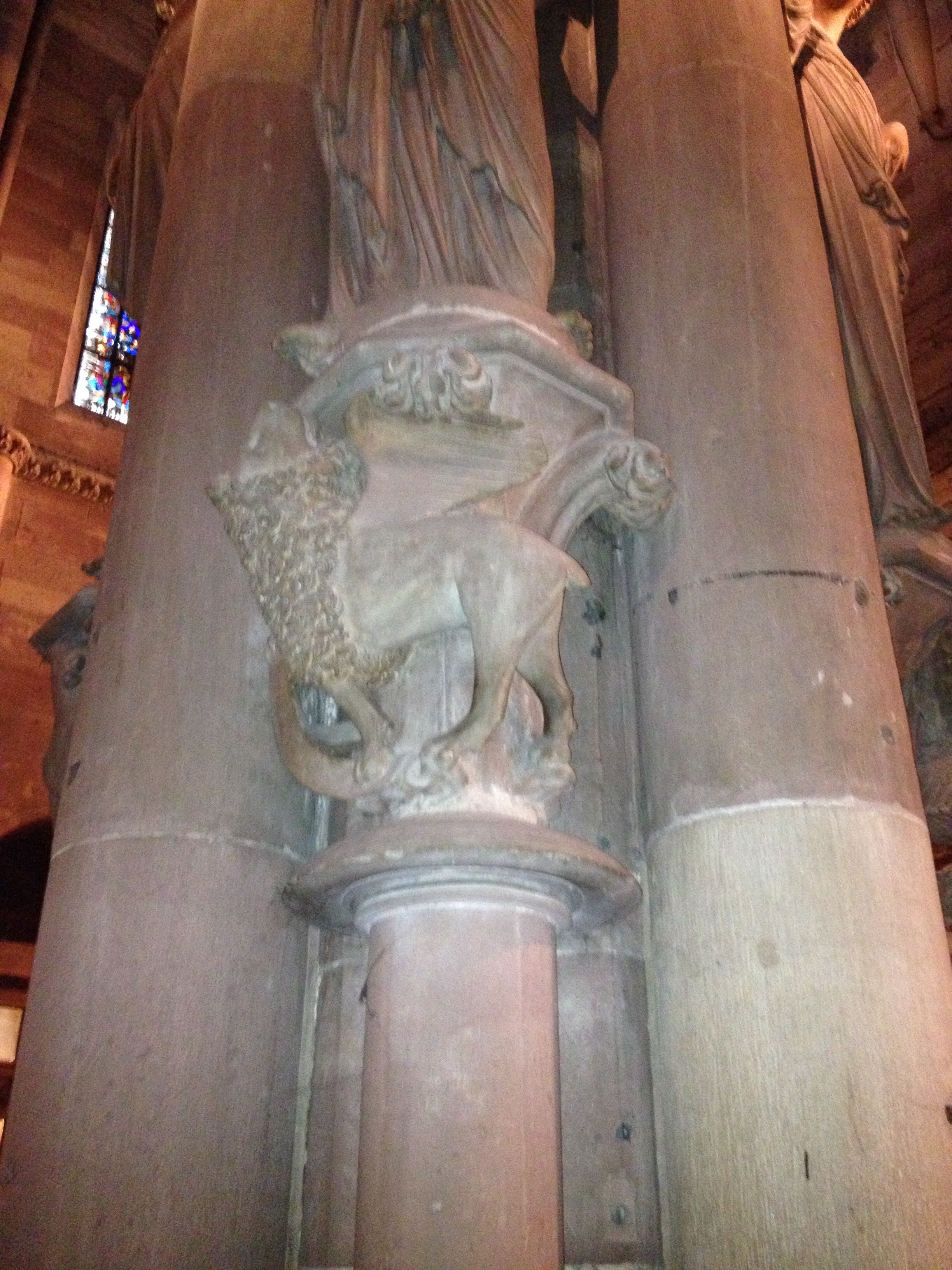
BulletsStrasCath

In the Cathedral, columns are still pocked with bullet holes.  Was there actually a battle inside?  I don’t know.  The fighting was certainly fierce.  But possibly the damage was more from the bombs that hit the Cathedral in August of 1944.

Yesterday in church, veterans were asked to stand and be recognized.  In our congregation, there were about a dozen veterans, all white-haired.  Then members were asked to call out the names of veterans they wanted to remember.  Names were spoken from all corners of the church.  Some of the voices were young and strong.  Some were old and quavering.  The people named could have filled the place by themselves. All those named had served their country with honor.

We might not all agree on the wisdom of sending American troops to the many places across the globe where they have been deployed.  But we can agree that we all owe a debt of gratitude to those who are willing to serve their country. I think we can spare some sympathy for the men and women of other countries who have been drawn into war, too. Service people are committed to dangers other than war, too. As I write, I’m sure that American service people are among those rushing to provide aid after the catastrophic typhoon that just hit the Phillippines.

Join me next time for more explorations into the art and history of Europe.

Picasso’s Soft Spot?

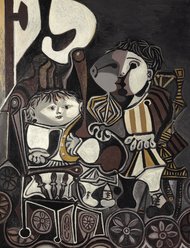
In the rarefied world of Christie auctions, price is always what makes news.  At a recent auction, sales were disappointing except for the price fetched for a Picasso painting from 1950, “Claude and Paloma.”  It sold for $28.1 million, much more than predicted.  I can see why.  I’d have bought it myself. To paraphrase Ferris Bueller’s thoughts about buying a Ferrari, “If you have the means, I recommend it.”

Photo from NYT article cited below

Photo from NYT article cited below

The painting depicts Pablo Picasso’s two youngest children.  What strikes me is the depiction of the baby, Claude.  In the midst of all kinds of sophisticated design elements, in a sort of cubist composition, the baby’s face stands out as almost a traditional portrait.  Could it be that the great man just melted when looking at the little child’s face?  This portrait seems a pure depiction of childhood innocence.  Maybe the artist was looking back at his own lost innocence,   when he first discovered his own talent and had no idea where it would lead him.  In 1950, Picasso had just lived through the horrors of the Second World War, which he spent in occupied Paris.  The Nazis did not allow him to exhibit, considering him degenerate.  The end of the war was a new beginning of artistic freedom.  A baby is always a new beginning, too.

The article about the Christie auction, by Carol Vogel, is at http://www.nytimes.com/2013/11/05/arts/despite-picassos-bidding-is-sluggish-at-christies.html?_r=0


Hemingway in Austria

Ernest and Hadley, Winter 1922, photo from NPR article cited below

Ernest and Hadley, Winter 1922, photo from NPR article cited below

In the golden days of Ernest Hemingway’s youthful career as a writer, he and his athletic first wife Hadley used to escape wintery, gray Paris for a sunny ski town in Austria.  In the 1920s, they could live in Schruns on a shoestring all winter, enjoying crisp snow and roaring fires.  Hadley cheerfully hiked up and skied down bunny hills just behind the hotel while the great man labored at his writing, then joined him for cozy evenings.

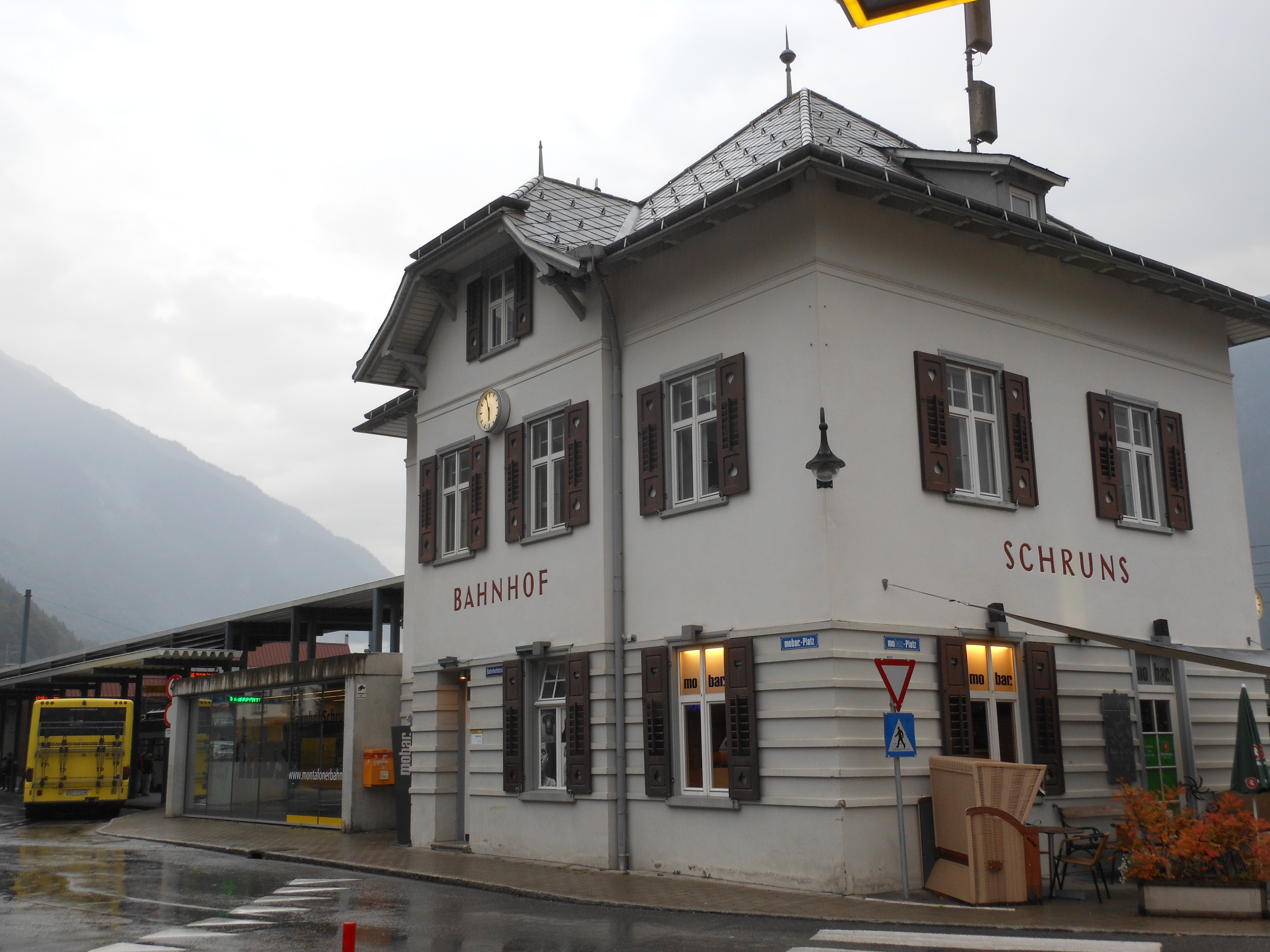
A couple of weeks ago I made a literary pilgrimage to the town of Schruns.  (Actually, it was more of a flying visit on a gray rainy day).  There is not a whole lot to see, but I found it moving to stand outside the actual railway station where Hadley and their toddler son Bumby waited to meet Hemingway after he returned from a pivotal meeting in New York, where he made his first major sale.

Bahnhof

What Hadley didn’t know at the time was that Hemingway had spent the previous few days with Pauline Pfeiffer, her supposed best friend.  Pauline would shortly become the second Mrs. Hemingway.

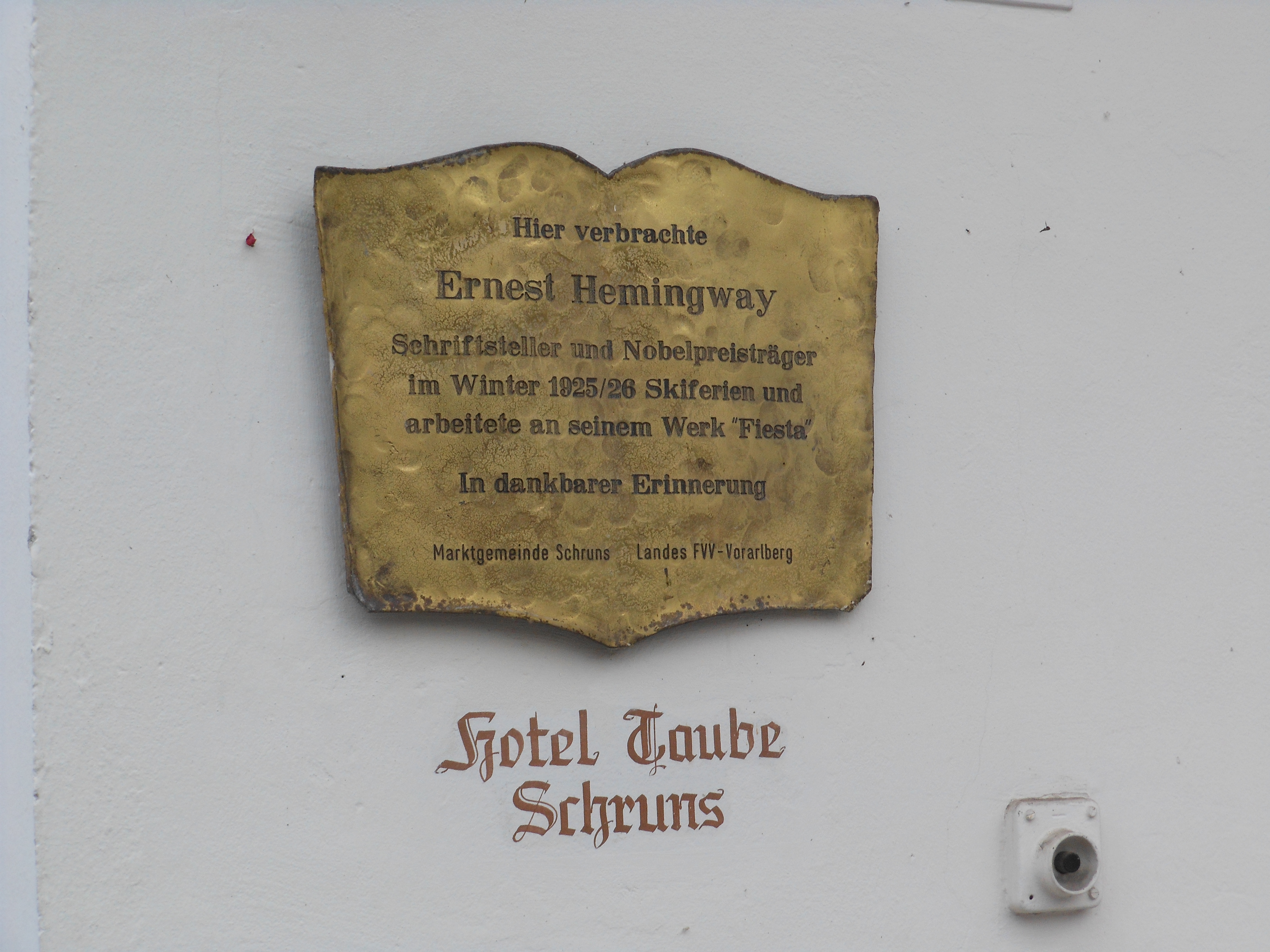
HemPlaque

The station is just a short walk from the hotel where the young family stayed–and where Pauline had previously insinuated herself for months, supposedly to keep Hadley company, while she single-mindedly pursued Hemingway.  Hadley must have been a little dim to have missed all this going on under her nose, especially when Pauline and Hemingway left at the same time.

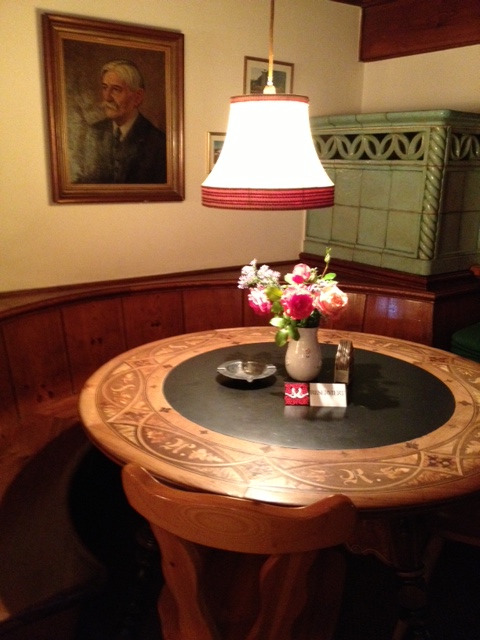
HemTable

Anyway, the hotel still stands.  It’s been remodeled inside, but there is still an actual table from the bar as it was in 1922, when Hemingway regaled Hadley, Pauline and his cronies with his skiing  and writing exploits.

I’m about to re-read Hemingway’s own account of that time in his memoir, A Moveable Feast.

Recently I read an interesting account of Hadley’s life with Hemingway in The Paris Wife by Paula McLain.

ParisWife

There’s an NPR review of that book by Lynn Neary at

http://www.npr.org/2011/03/01/134132944/the-paris-wife-dives-into-hemingways-first-big-love.

Join me next time for more explorations into the art and history of Europe–the major sights and the fascinating byways!

To Dance in France

Arriving in Strasbourg, France on a Sunday evening, I came upon a group of people gathered to dance in the moonlight in the plaza between the cathedral and the palace of the bishops.  It looked like a weekly gathering of friends, mostly young but some old. The setting could not have been more elegant.

The magnificent Gothic cathedral took about 400 years to build.  It was completed in 1439. During the French Revolution, it became a Temple of Reason.  HItler visited in 1940, after his armies steamrollered across the French border. He wanted the landmark cathedral to become a “refuge for the German peoples.” The city of Strasbourg was only returned to France after Germany’s defeat.

StrasCathedral2

The Baroque Palais Rohan was built between 1731-1742.  It was once occupied by Hapsburg bishops under the Holy Roman Empire.  At one time Napoleon Bonaparte took over and remodeled parts of it to his own taste.  Actually, it is hard to find a corner in Europe where Napoleon did not make some kind of mark.

Dancers

Through centuries of political changes, the local people have carried on their own cherished traditions no matter who ruled them.  Dancing is one such tradition.  Before each dance that I watched, a pair of young women conferred with a flutist and a violinist.  Then they all began a tune, blending in sweet harmony.  Couples stepped, promenaded and twirled around the musicians.  The dances were graceful, but fairly simple and repetitive.  I imagine they’ve been performed at weddings and village festivals for generations.

Maybe because dancing was so important Strasbourg, it once got out of hand.  In 1518, there was a Dancing Plague.  Several hundred people were victims of a kind of mass hysteria which caused them to dance nonstop for weeks.  Most if not all of them finally died of heart attacks or exhaustion.

The dancers I watched on a clear fall evening looked happy and healthy.  Long may they dance!