Category Archives: England

Mary Russell, Flying Duchess–and Much More

IMG_1407

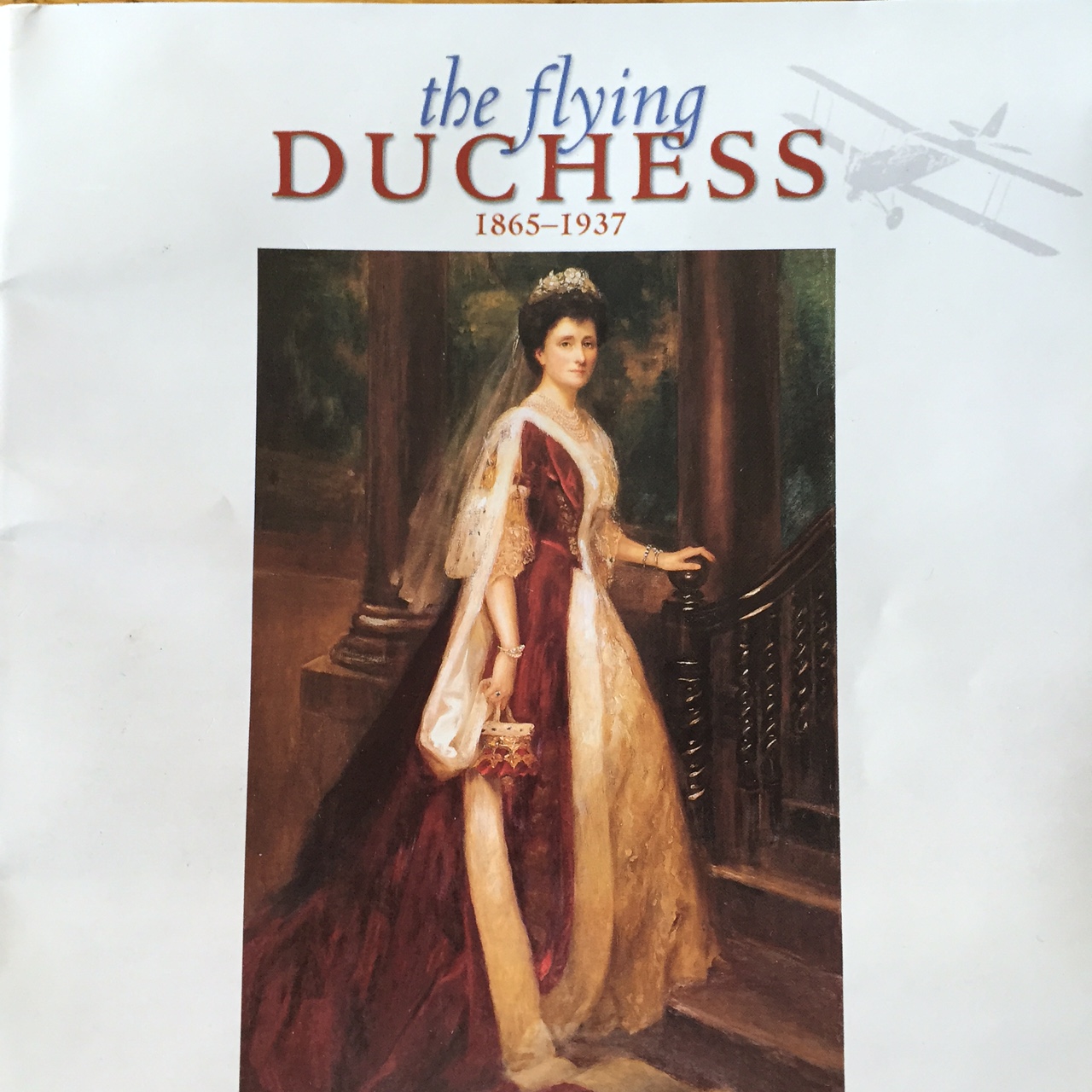
How did the free-spirited daughter of an obscure English clergyman become the famous Duchess of Bedford, best known as The Flying Duchess? The little book above, written by Mary’s great-grandson the Marquess of Tavistock, tells her story. Mary Du Caurroy Tribe was born and educated in England, but as a young teenager she went to join her family, stationed in India.  Her father’s chaplaincy duties took him on dirt roads and over mountain passes to Indian villages.  For six years, Mary happily went along for the ride, taking turns with her father on their one pony. She loved every moment of outdoor adventure.
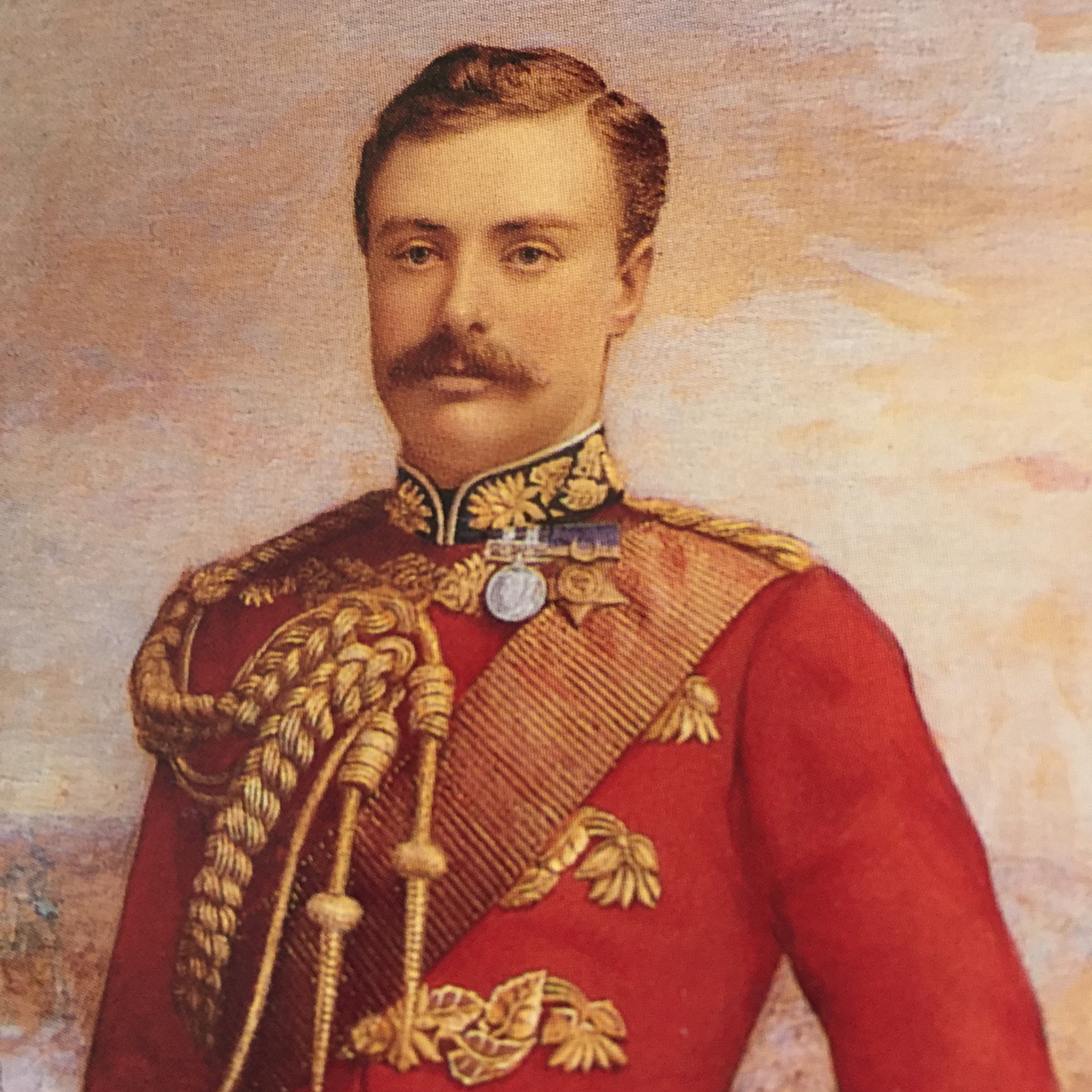
Lord Herbrand Russell, my photo taken from book "The Flying Duchess," cited above

Lord Herbrand Russell, my photo taken from book “The Flying Duchess,” cited above

In 1888, at age 23, she married the dashing Lord Herbrand Russell, aide-de-camp to the Viceroy. He was 27, and as an aristocratic younger son he had to make his own way in the world. A life serving Queen Victoria in India seemed likely for the young couple.

Mary Russell, Duchess of Bedford, Public Domain
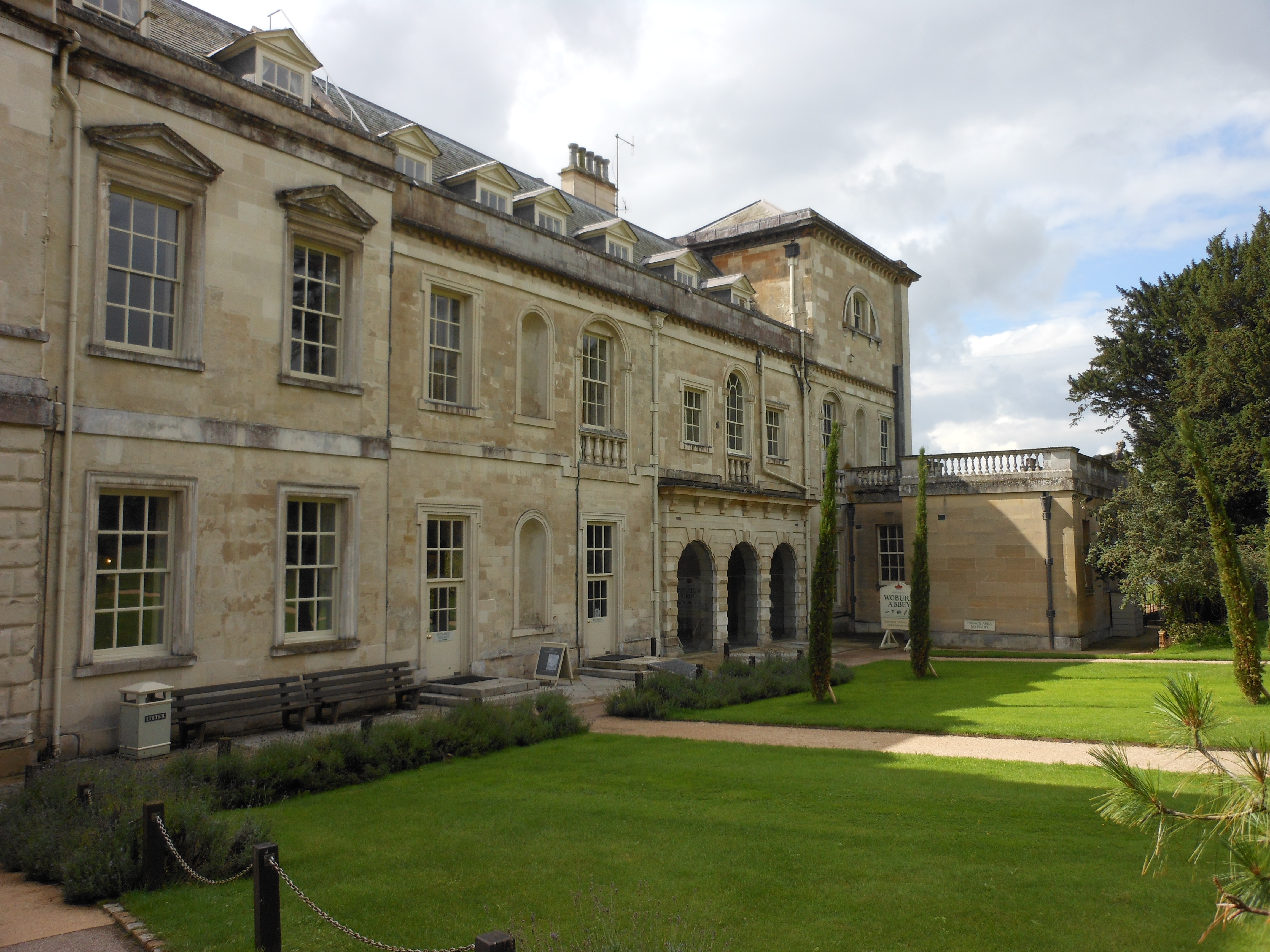
Mary Russell, Duchess of Bedford, Public Domain

But in quick succession, Lord Herbrand’s father and childless older brother died, and hey presto! the young couple became Duke and Duchess of Bedford.

Woburn

Along with the title came Woburn Abbey, seat of the Dukes of Bedford for over 300 years. In the twentieth century, war and industrialization took a toll on all great country houses. Woburn opened to the paying public in 1953, preserved from steep tax bills thanks to pragmatic plans that included a golf club. But it is still the family’s home. And rare breeds of deer still roam the park.

In her early married years, the Duchess gave birth to her only child, a son named Hastings.  Besides dressing up and wearing a tiara when required, she did all manner of good works in her community. She loved nature and being outdoors. She traveled on her yacht, hunted, fly-fished, and canoed, often alone, down rivers where she “shipwrecked” more often than she probably cared to admit. She took up bird-watching. Never one to do things by halves, she became a world authority on birds.

One of her prized pets was a rare swan named Sabina, a rescue bird who ferociously attacked any creature, man or beast, that ventured near her pond. She was no match for Mary Russell. The Duchess wrote in her diary, “I made a stand and gave Sabina to understand that in my case at least such behavior could not be tolerated.” Soon Sabina was following the Duchess around and allowing herself to be picked up. She haunted the terrace in front of the house, watching for the Duchess. She even asked for kisses. A male swan was drafted into service as a mate for her. Sabina tolerated him, but her first love was the Duchess.

Duchess of Bedford as a nurse, my photo taken from "The Flying Duchess" book cited above

Duchess of Bedford as a nurse, my photo taken from “The Flying Duchess” book cited above

The Duchess designed and built a state-of-the-art community hospital in Woburn. But she didn’t stop there.  For 34 years, she actually worked in the hospital, shoulder to shoulder with her employees. If she noticed a dirty floor, she scrubbed it. 

When World War I came, she converted large outbuildings on the estate into a war hospital. She hired an eminent London surgeon, Mr. Bryden Glendining, as her head of staff.  She trained as a surgeon’s assistant and stood by his side for about a dozen operations a week.

Realizing that the new science of radiology was crucial to diagnosis, she learned radiology and headed that department.  I can just hear her saying, “How hard can it be?” The War Office had so much confidence in the Duchess’s hospital that wounded soldiers were sent to Woburn directly from the Front.
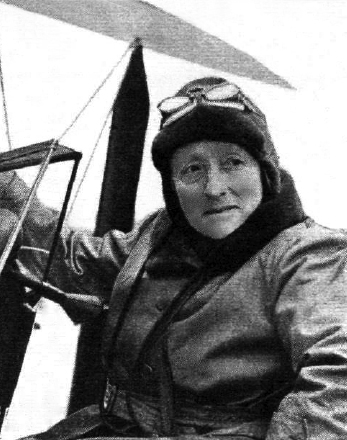
MaryRussellBedford

At age 61, the Duchess took up flying.  Again, how hard could it be? In 1937, at age 71, she had 199 hours of solo flight under her belt when she took off from the park at Woburn, alone in her De Havilland Gipsy Moth. She was never seen again. It seems likely that she strayed over the Channel and went down at sea.  Pieces of her plane eventually washed up on shore, but she was never found. Her beloved husband survived her by three years.

If the Duchess had lived on into the years of World War II, no doubt she would have tossed her flying helmet onto a shelf, rolled up her sleeves, and marched straight back into her hospital work.  A BBC article about her life is at http://www.bbc.co.uk/threecounties/content/articles/2008/08/12/flying_duchess_feature.shtml


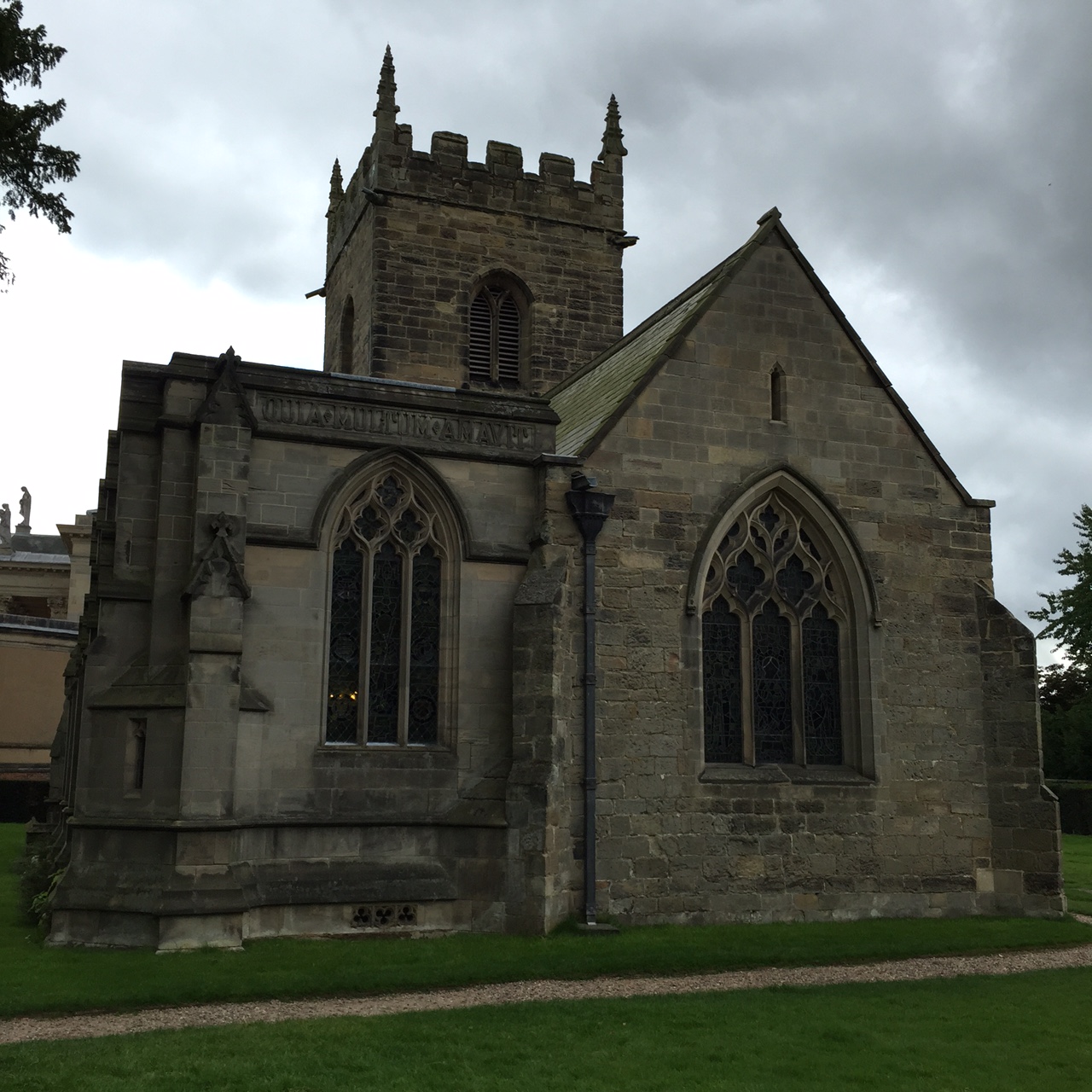
All Saints’ Church at Kedleston Hall

KedlestonHall

Kedleston Hall is the spectacular showplace home of the Curzon family, designed by Robert Adam, finished in 1765 and open to visitors before all the plaster was dry. The housekeeper led visitors (of the right sort, of course) on a tour through the state rooms. The point was to impress visitors with the wealth, power and taste of the family. Not everyone cared for the place, though. Dr. Johnson remarked, “It would do excellently for a town hall.” I have to agree.  Entering the lofty Marble Hall feels like entering a courthouse. Visitors stop in their tracks and speak in hushed voices.

AllSaintsKedleston

My favorite part of the estate is All Saints Church on the grounds outside. The church is an important historic site, cared for by a special organization separate from the National Trust, which manages the house.

CurzonMedieval

Curzon ancestors, dating all the way back to Norman times, were buried inside and in the churchyard. When Sir Nathaniel Curzon inherited the estate in 1758, he lost no time in razing the medieval village where his ancestors had lived quietly for centuries. But he kept the village church where they slept in their tombs.

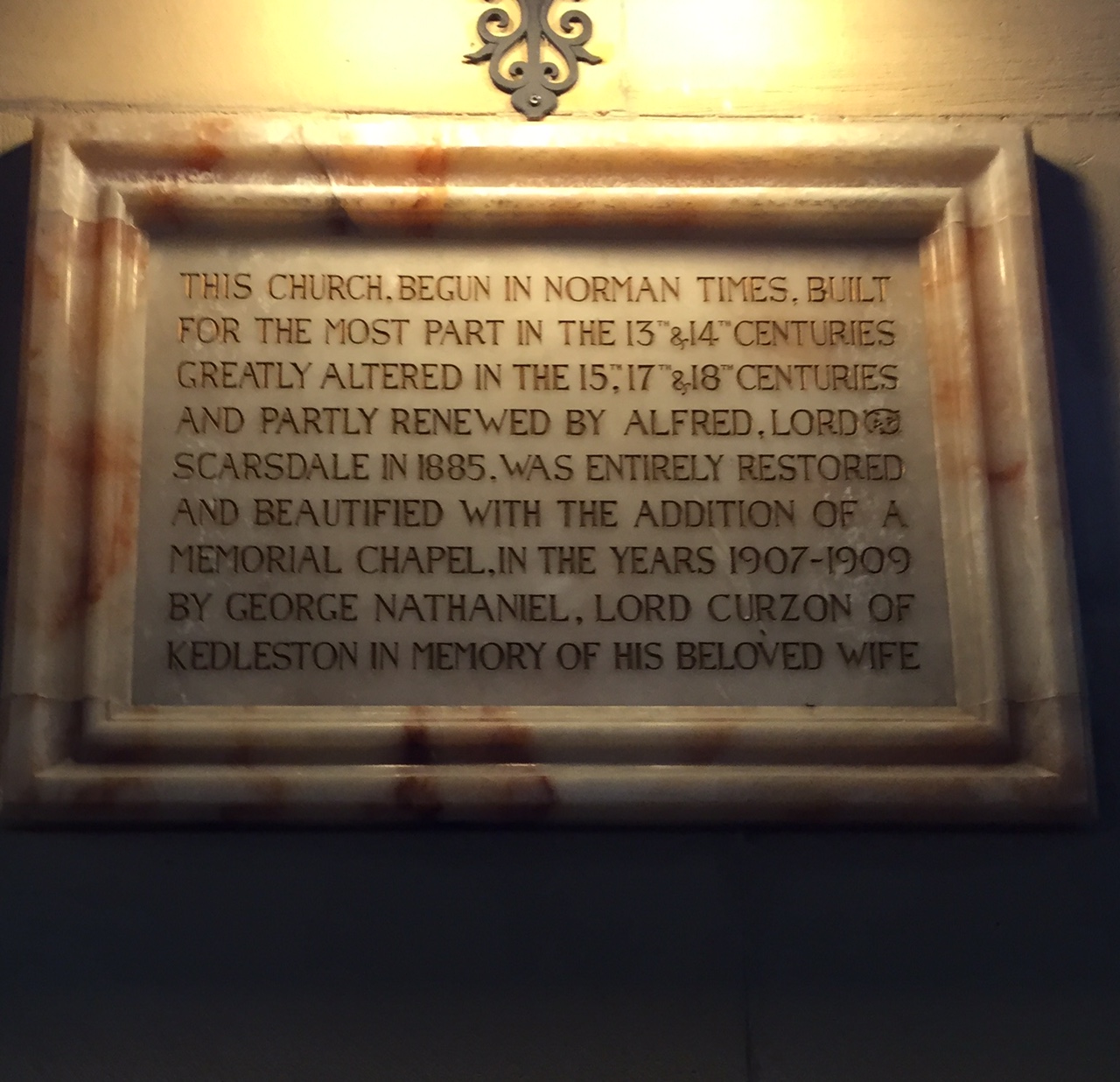
AllSaintsPlaque

As the plaque above explains, various Curzons maintained and restored the church over the years.  But its pristine condition today is mostly because of a sad love story.

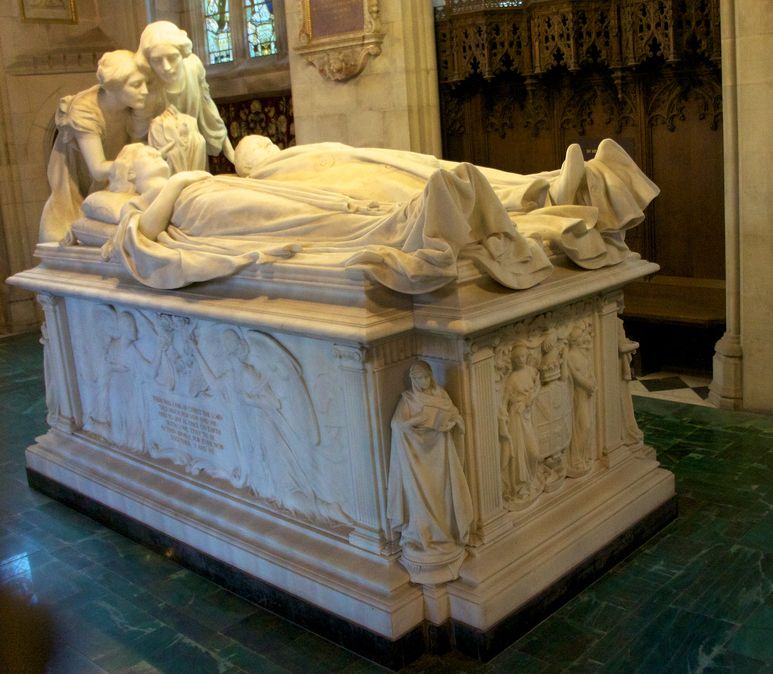
Photo by Chris Hoare, Creative Commons Attribution 2.0 Generic

Photo by Chris Hoare, Creative Commons Attribution 2.0 Generic

The photo above shows the exquisite marble memorial of Lord George and Lady Mary Curzon.  It was created between 1907 and 1913 by Bertram Mackennal. (Visitors can’t get the complete view above, because the side chapel is separated from the main church by a gate). This is one of the most beautiful and intriguing of all the many tombs I’ve seen in old churches. Who were these people?

MaryCurzon

Mary Leiter was a fabulously wealthy, cultivated and beautiful young woman from Chicago.  Her father was Levi Leiter, founder of Field and Leiter stores, which eventually became Marshall Fields. (Yes, Mary Leiter was an inspiration for Cora, the perfect wife of Lord Grantham on the TV show “Downton Abbey.”)  Mary Leiter married George Curzon in 1895. He very soon afterward became Viceroy of India, the highest title available to an Englishman, during the heyday of Victorian empire. Mary gave birth to three daughters, but failed to produce the all-important son. The years she spent in India were happy ones, but her health suffered and she died in 1906, aged only 36.

KedlestonSideChapel

Her husband immediately set to work memorializing her, even as he moved on to various mistresses and an eventual second wife. He never really recovered from his grief at losing Mary. So he built a neo-Gothic addition to the family church. The addition blends almost seamlessly with the original medieval church.   He commissioned the beautiful marble memorial. Mary was buried in the newly-created family vault underneath.  My understanding is that Lord Curzon had Mary’s effigy placed on the plinth as soon as the chapel was complete.  His own effigy was finished and kept in storage until he died.  Then it was placed next to his beloved Mary, and he took his place in the vault below.

Victorian technology allowed Lotrd Curzon to install a hidden elevator in the marble floor next to the memorial, so that coffins could be lowered into the vault at the push of a button.  The friendly church guide recalled the spooking of a lady in recent years. She walked into the church just as a workman rose slowly from underground, standing on the moving section of floor. The terrified lady fled.

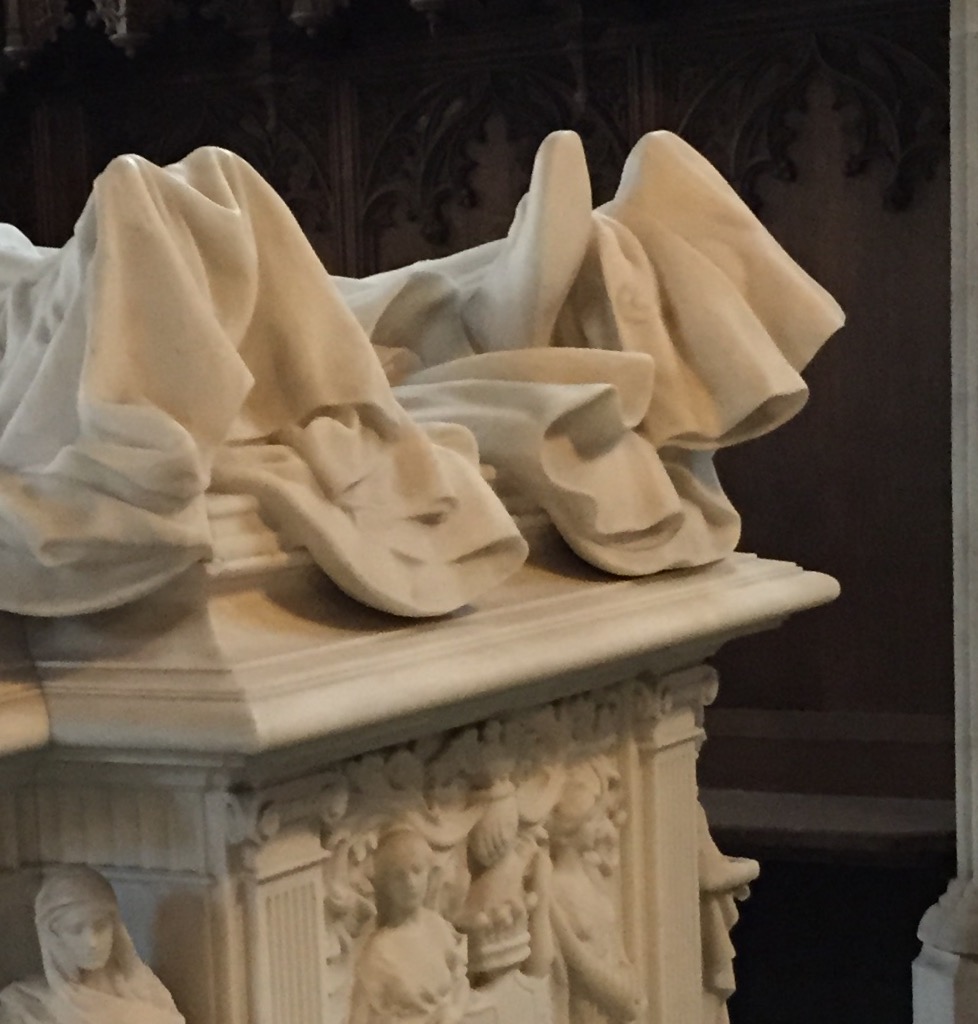
FullSizeRender (12)

The guide pointed out that Lord Curzon’s right foot is uncovered, a Victorian convention indicating that the effigy was created while the person was still alive. Lord Curzon was a stickler for detail, and he expected the same from his family and everyone who worked for him.

MaryCrown

The sculpture depicts two angels hovering over the sleeping figures.  What are they holding? It’s the Crown of Life–a fairly obscure Biblical reference. The crown is wrapped in a veil. Why?  My thought is that nobody gets to see their heavenly reward until they actually receive it in the Great Beyond.

The sculpture stands serenely in its own side chapel, surrounded by nine stained glass windows depicting various Marys from the Bible and other sources. Impertinent questions come to mind. Considering that there are two people lying in state, why is there only one crown? Is the sleeping couple somehow supposed to share the crown, or is it meant for only one of them? If it is for one of them, would that be Mary? In some traditions, Mary the mother of Jesus became Queen of Heaven after her death. But this is an Anglican church, and as far as I know has no such tradition. Anyway, wouldn’t it be just a bit sacriligious to insinuate that one’s wife was destined to be Queen of Heaven? The guide had an information booklet, but there was very little explanation of the mysterious veiled crown. I would not use a vulgar term like “control freak” for Lord Curzon, but I half expected his ghost to tap me on the shoulder and set me straight about the crown. He did not suffer fools gladly.

Lord Curzon never found another person who could compare to his Mary, and by all accounts he often said so. How could any actual living person compete with a sainted ghost? After Mary’s death, Lord Curzon was soon battling his daughters for their shares of the money Mary had left. He ended up estranged from them. Toward the end of his life, he was also estranged from his second wife, Grace. All the same, according to the guide, Lord Curzon kindly reserved a space for her in the family vault. But Grace did not care to spend eternity directly underneath the effigies of her husband and his first wife, depicted in everlasting marital bliss. Instead she chose a burial plot for herself in the far corner of the churchyard.

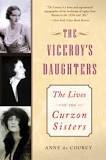
Viceroy's Daughters
Every trip leads me to buy books which I may or may not find time to actually read. I’ve already devoured the book above, The Viceroy’s Daughters by Anne de Courcy. The Curzon family history, especially in the 20th century, is riveting.  The book is a window into British aristocratic life from Victorian times all the way through World War II.  I’ll be writing more about the glamorous Curzons.

Join me next time for more explorations in the art and history of Europe and the British Isles!

The Chapel at Tyntesfield

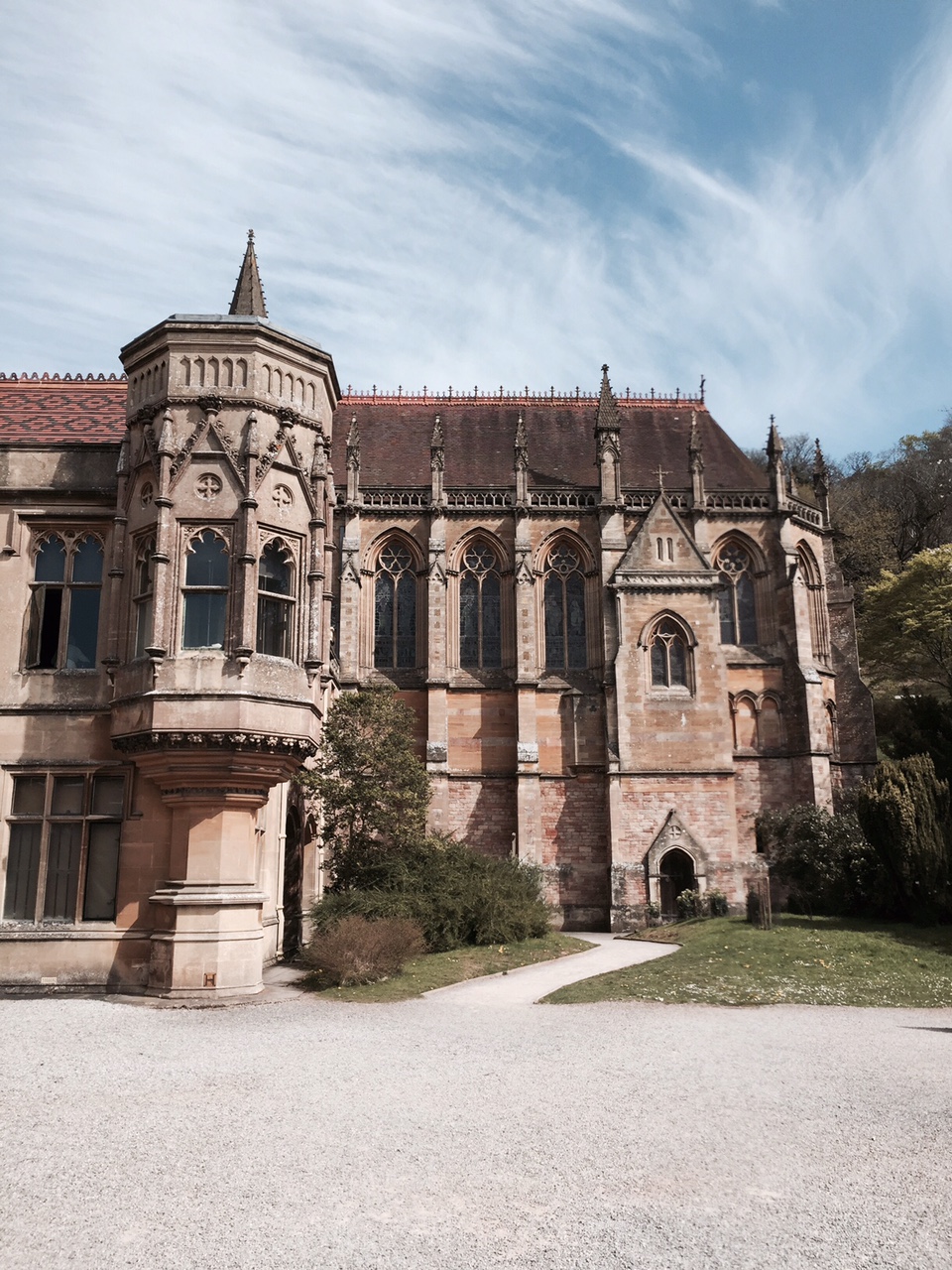
TynChapelExt

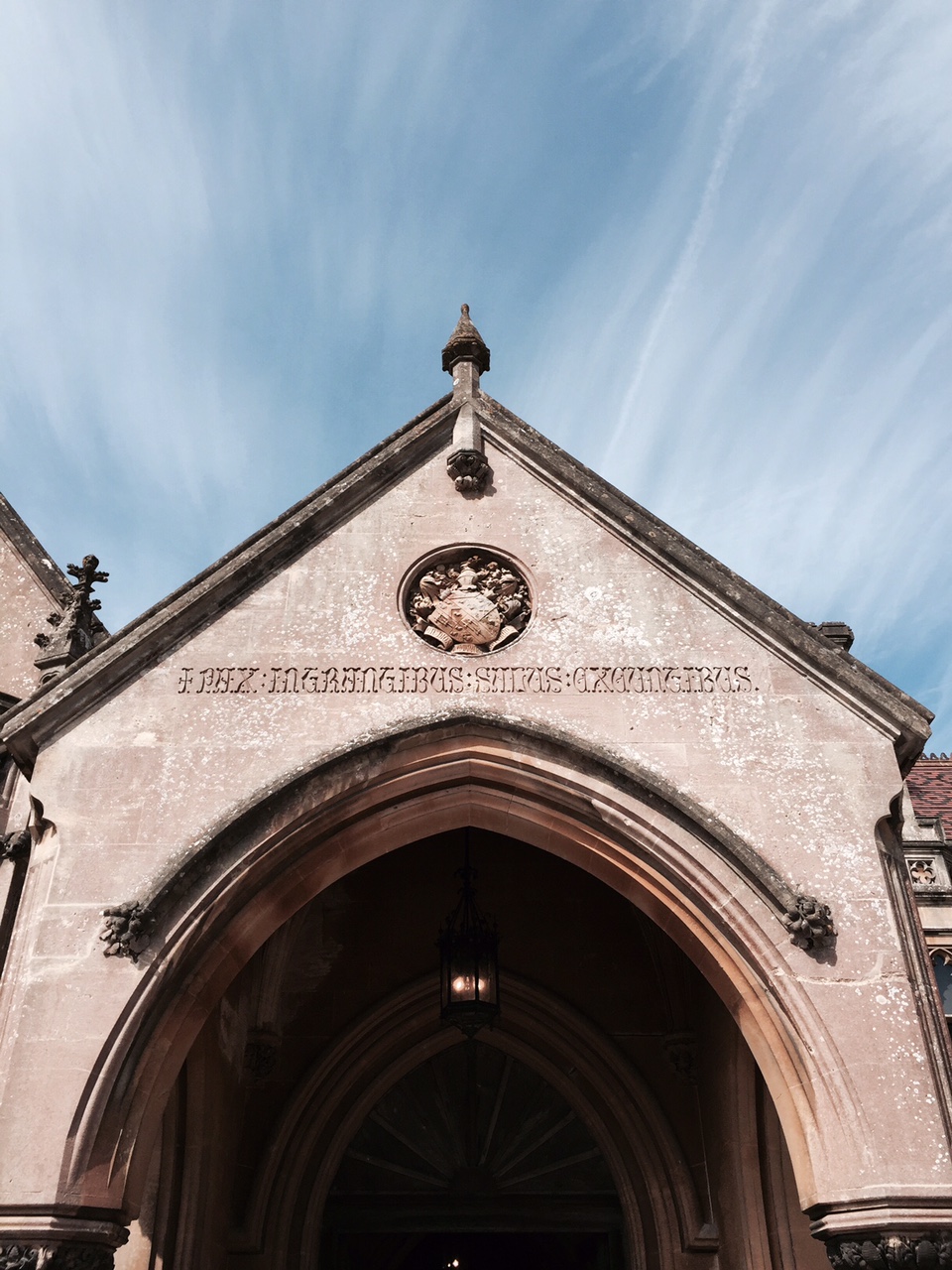
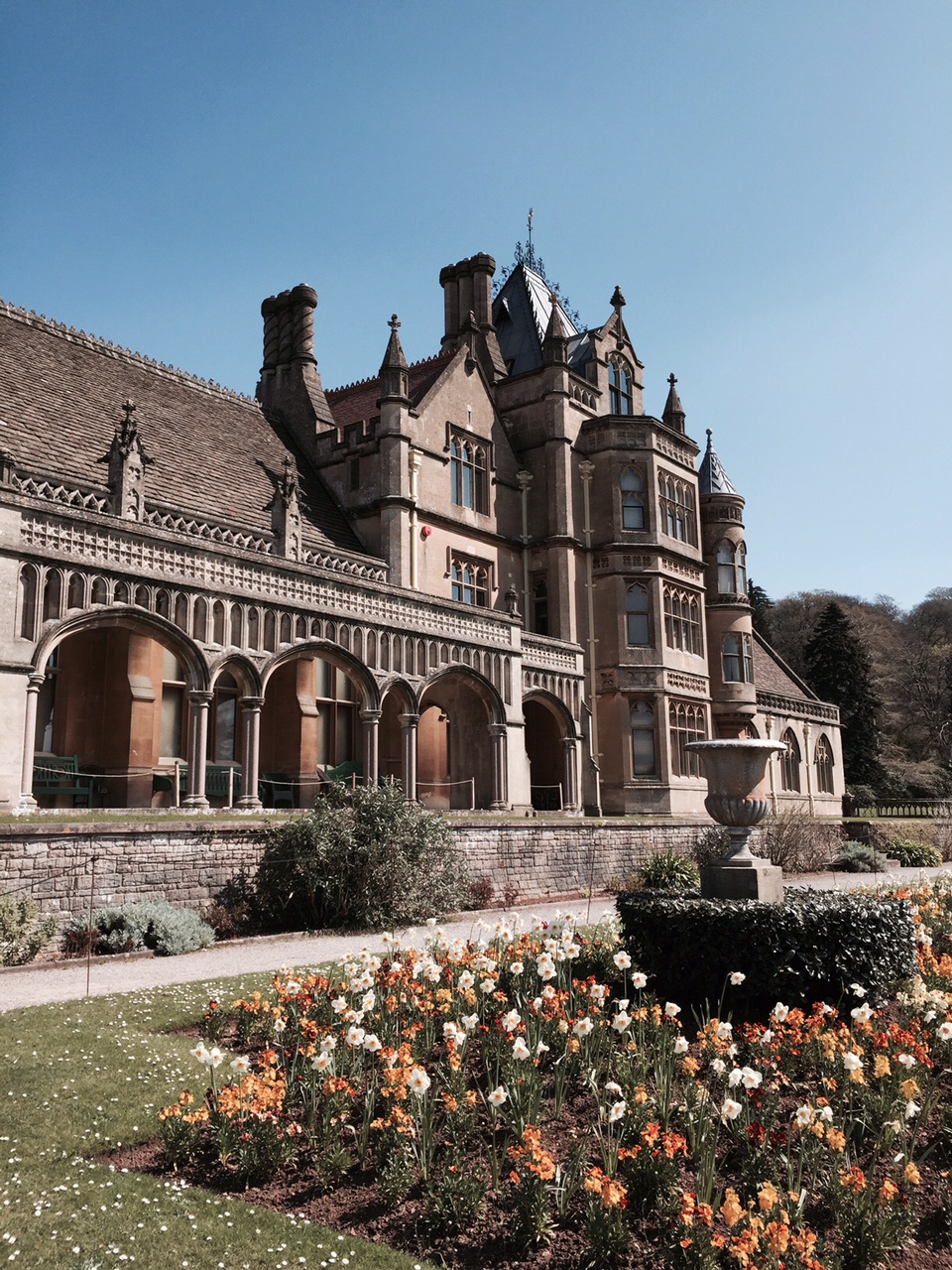
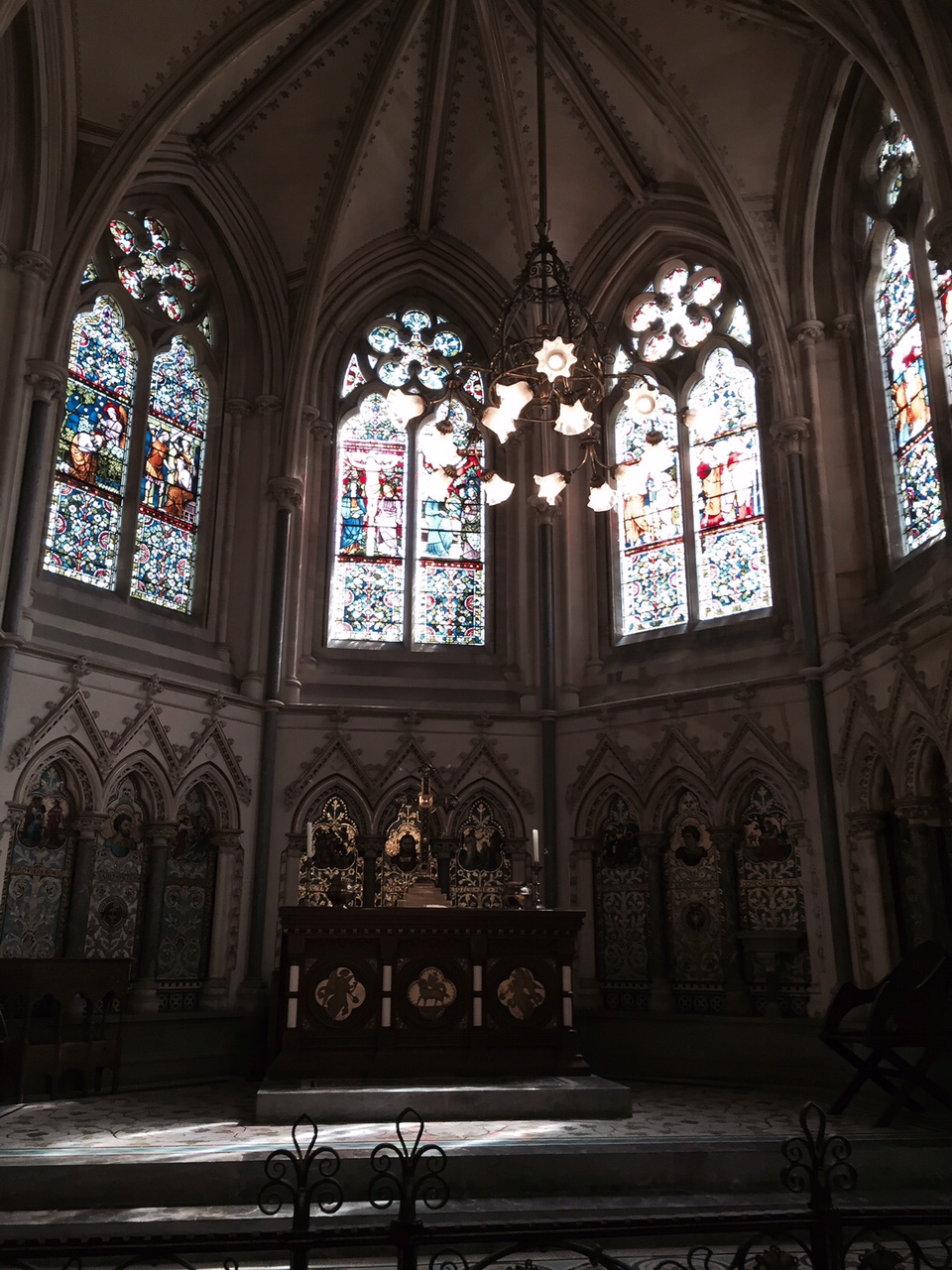
The chapel at Tyntesfield is a spectacularly beautiful reimagining of a French medieval church, Sainte-Chapelle in Paris. Tyntesfield is a Victorian neo-Gothic mansion built by the devout Gibbs family, commoners who rose to great wealth through banking, shipping, and bat and bird manure (more on that later).

FullSizeRender (9)

The chapel was the last big building project on the property, just outside Bristol, but it was in many ways the one most important to William Gibbs. It is also the first part of the house that the visitor sees on the walk from the parking lot and National Trust visitor center.  It’s a stunning first impression. Arthur Blomfield was the architect and builder.

FullSizeRender (8)

When the Gibbs family lived in their Victorian Gothic Revival mansion, the family, guests and servants alike attended prayers twice daily–first in the grand hall, and later in the chapel when it was finished. Beginning around 1842, William Gibbs made his fortune from a simple idea that grew and grew: he imported guano, the droppings of sea birds and bats, from Peru to North America.  Guano was highly prized as a fertilizer. William Gibbs became the richest non-aristocratic man in England. Tyntesfield had 106 total rooms, with 26 main bedrooms plus more rooms for the many servants. The square footage is about 40,000. And this was only their country home.  Most of the time they lived elsewhere, in equally grand digs.

FullSizeRender

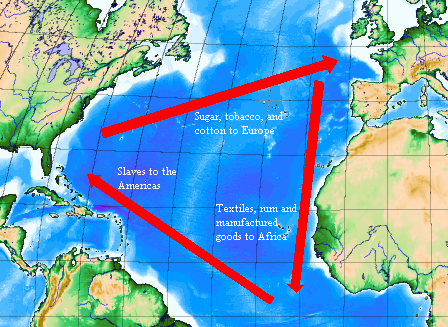
Naturally, people were envious of Gibbs’s success. An indelicate ditty in London ran, “Mr. Gibbs made his dibs, Selling the turds of foreign birds.” Actually, the selling of fertilizer led inexorably to profiting from the slave trade, a fact which the Gibbs family preferred not to dwell on.  Their shipping business, over time, became a part of the Triangular Trade that caused so much human misery. Ships constantly transported material goods and slaves between Europe, the Americas, and Africa.

Triangular Trade, Creative Commons GNU Free Documentation License

Triangular Trade, Creative Commons GNU Free Documentation License

The Gibbs family donated large amounts of their fortune to various charitable causes, and generously supported churches all over England. Naturally, they wanted their own church.  The chapel was built between 1872 and 1879, to a design by Arthur Bloomfield.

Sainte-Chapelle, interior, image from The Guardian article cited below

Sainte-Chapelle, interior, image from The Guardian article cited below

The inspiration was Sainte-Chapelle in Paris, pictured above. Sainte-Chapelle was built by the devout Louis IV in the 1240s. (He later became St. Louis, giving his name to the American city later still).

TynChapGlass

The stained glass at Tyntesfield is beautiful, if not as spectacular as the newly-restored glass at Sainte-Chapelle in Paris.

FullSizeRender

The stonework is lovely and evocative.

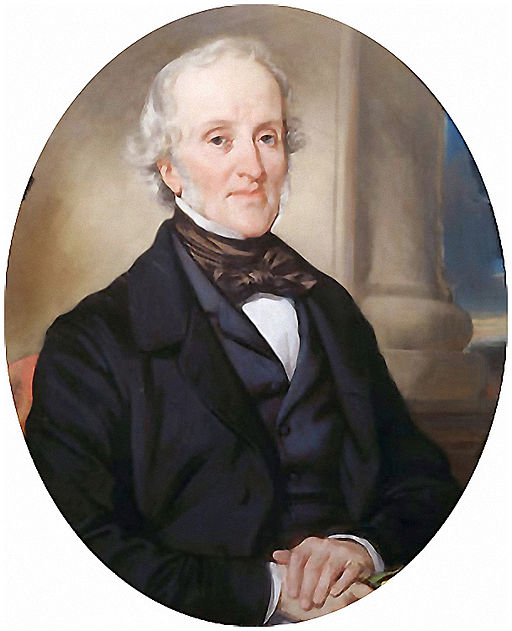
Portrait of William Gibbs by Eugene Deveria, circa 1850, Public Domain

Portrait of William Gibbs by Eugene Deveria, circa 1850, Public Domain

WIlliam Gibbs intended to follow the example of aristocratic families and create a family burial vault underneath the chapel for future generations. The vault exists, but it is empty. The Bishop of Bath and Wells, under pressure from local churches, refused to consecrate the chapel. The stated reason was that allowing a consecrated chapel on the grounds of Tyntesfield would detract from local churches. I can’t help thinking that “the powers that be” were also reluctant to upset the social applecart by allowing a family of common birth to put on airs. (Eventually, George Abraham Gibbs was “created” 1st Baron Wraxall in 1928, but family fortunes were already declining by that time).

The chapel at Tyntesfield is the last stop for visitors touring the beautiful mansion. It’s a lovely, light-filled, quiet place to contemplate history. William Gibbs was buried elsewhere, but a cross and inscription from the book of Proverbs memorialize his life: “The hoary head is a crown of glory, if it is found in the way of righteousness.” William Gibbs did his best to be both a businessman and a righteous man.  Early in his career, he and his brother Henry worked hard to completely repay the debts that earlier family members had run up.  The family business had gone bankrupt, and there was no obligation to pay. But they did anyway, every penny. It also appears that William Gibbs did his best to remove his shipping business from the slave trade once the terrible abuses were known.

I previously wrote about Tyntesfield and the Gibbs family at https://castlesandcoffeehouses.com/2014/10/22/high-victorian…at-tyntesfield/

https://castlesandcoffeehouses.com/2013/06/19/tyntesfield-vi…lendor-rescued/

Tyntesfield: Mr. Gibbs Made His Dibs

An article about the restoration of St. Chapelle in Paris is at http://www.theguardian.com/world/2015/may/20/sainte-chapelle-paris-stained-glass-window-restoration-completed

Join me next time for more explorations in the art and history of Europe and the British Isles!

Norwich: Refugees in the Cathedral

IMG_8299

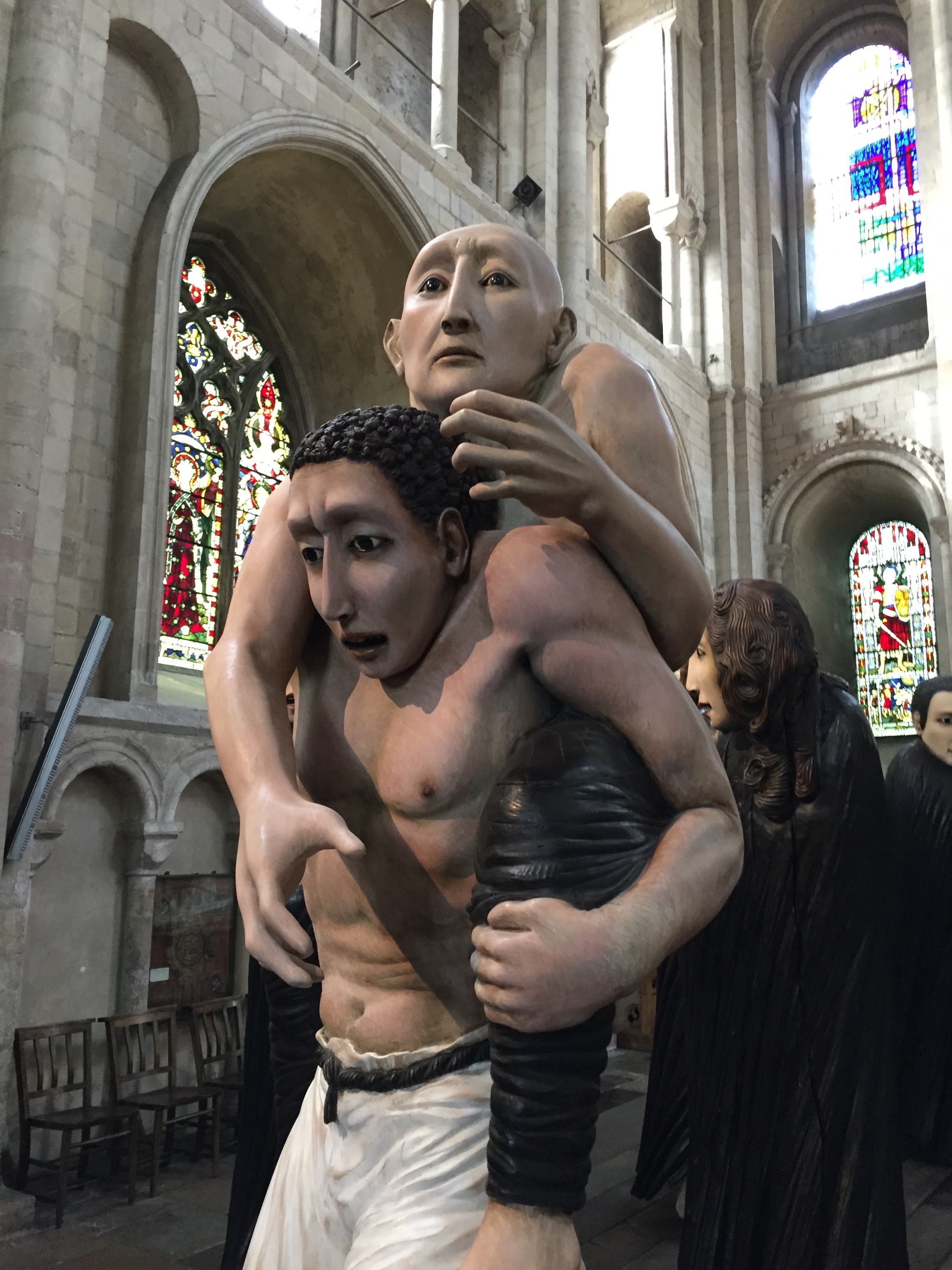
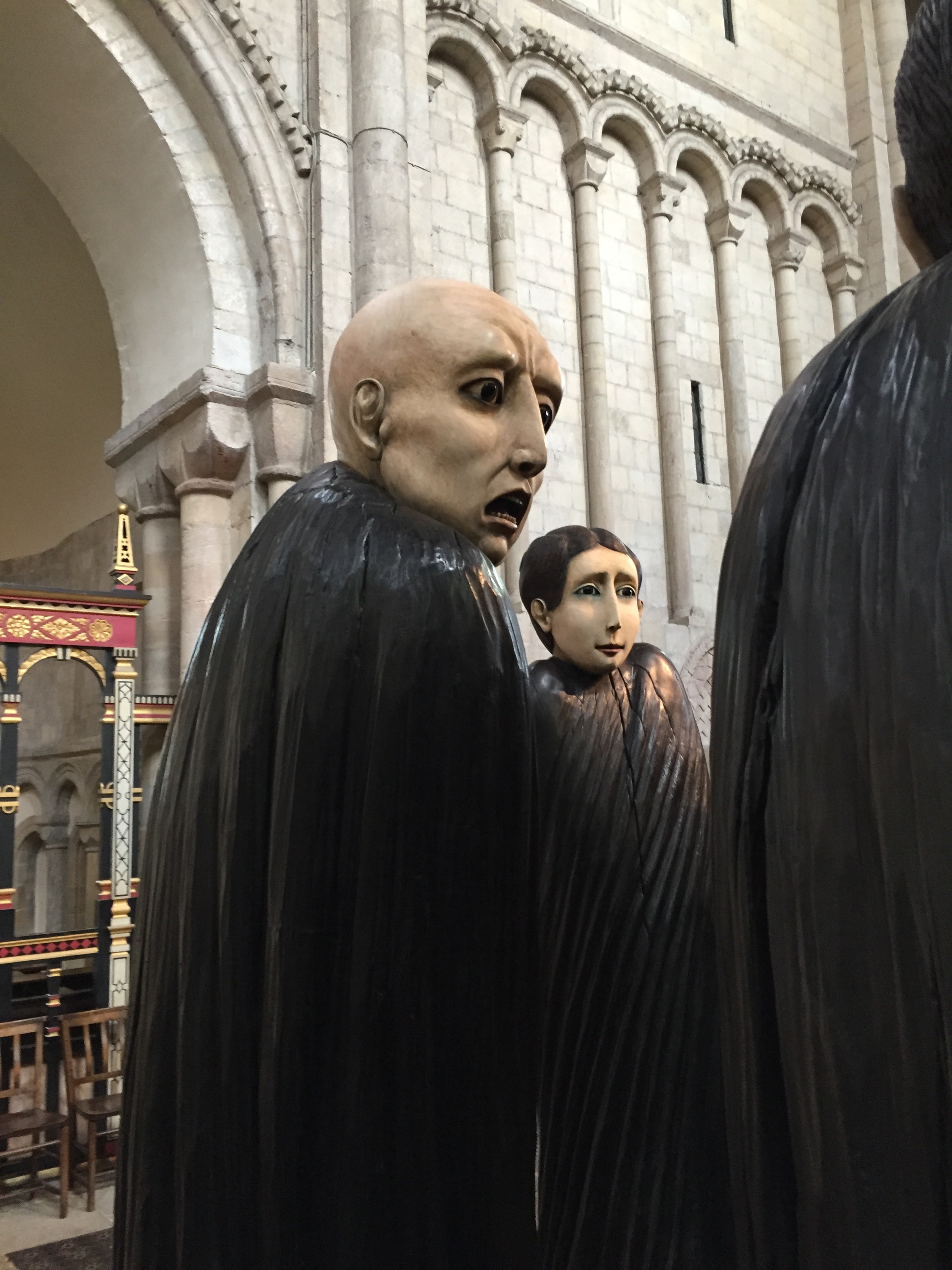
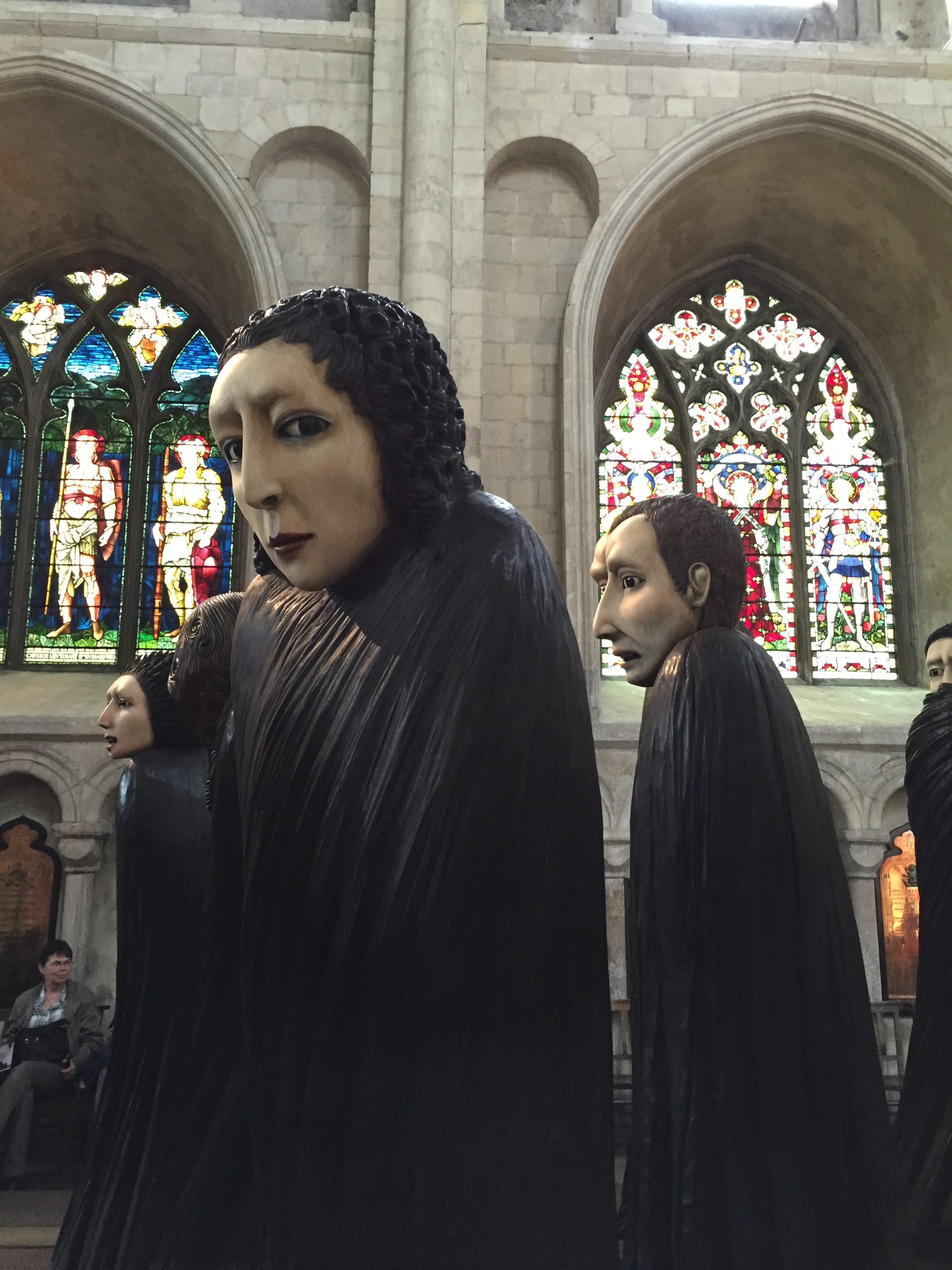
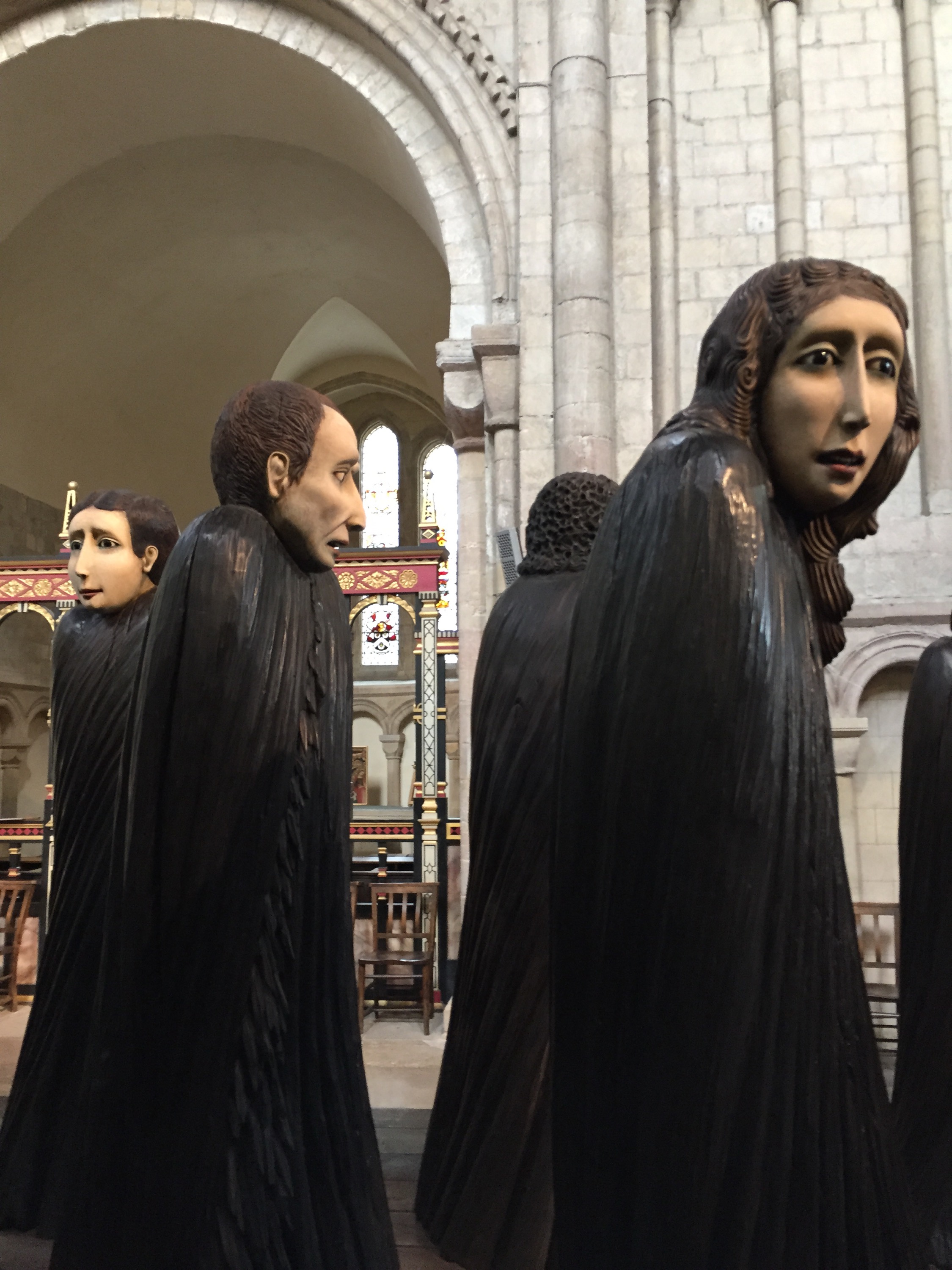
In the middle of the biggest and most heartbreaking refugee crisis in Europe since World War II, I came face to face with larger-than-life refugees in the middle of beautiful Norwich Cathedral in England. Ana Maria Pacheco, a sculptor from Brazil, had her ten-figure group on exhibit in the North Transept.  The installation is called Shadows of the Wanderer. It was created in 2008.  But it is especially powerful today, when people are dying every day in a desperate flight away from violence and grinding poverty in their home countries. The nations of Europe are struggling to come to terms with the vast number of refugees arriving on their shores and at their train stations. All over Europe and Britain, while governments dither, ordinary people get on with the business of helping their fellow human beings.  They collect diapers, food, water bottles, blankets and tents, and they simply appear where they are needed.

The lead figure in the sculpture group is a young man carrying his elderly father on his back. Father and son are carved from the same huge block of wood. The son literally cannot leave his father behind; his father is part of him, and he is part of his father. The origin of this stunning work of art was the story of Aeneas, who carried his aged father Anchises from the ruins of battle at Troy.  The son is about to step off the exhibit plinth and join us, the viewers.

How will we react to these desperate people? All the figures are larger than we are, about 7 or 8 feet tall. The situation they depict is bigger than we are, too.

IMG_8288

The remaining figures show possible reactions: Shock, dismay, disapproval, indifference.

IMG_8291

Will we look around, wondering who is going to get this problem out of our sight?

IMG_8276

Will we look the other way, complacent as we go about our regular business?

The draped figures following the desperate father and son have their arms and hands hidden.  If the father and son fell backward, would anyone catch them? Will no one reach out a helping hand?  These are the questions that ordinary people are asking their leaders right now.  Each one of us could become a refugee for reasons beyond our control.  The current crisis is a test of our humanity.

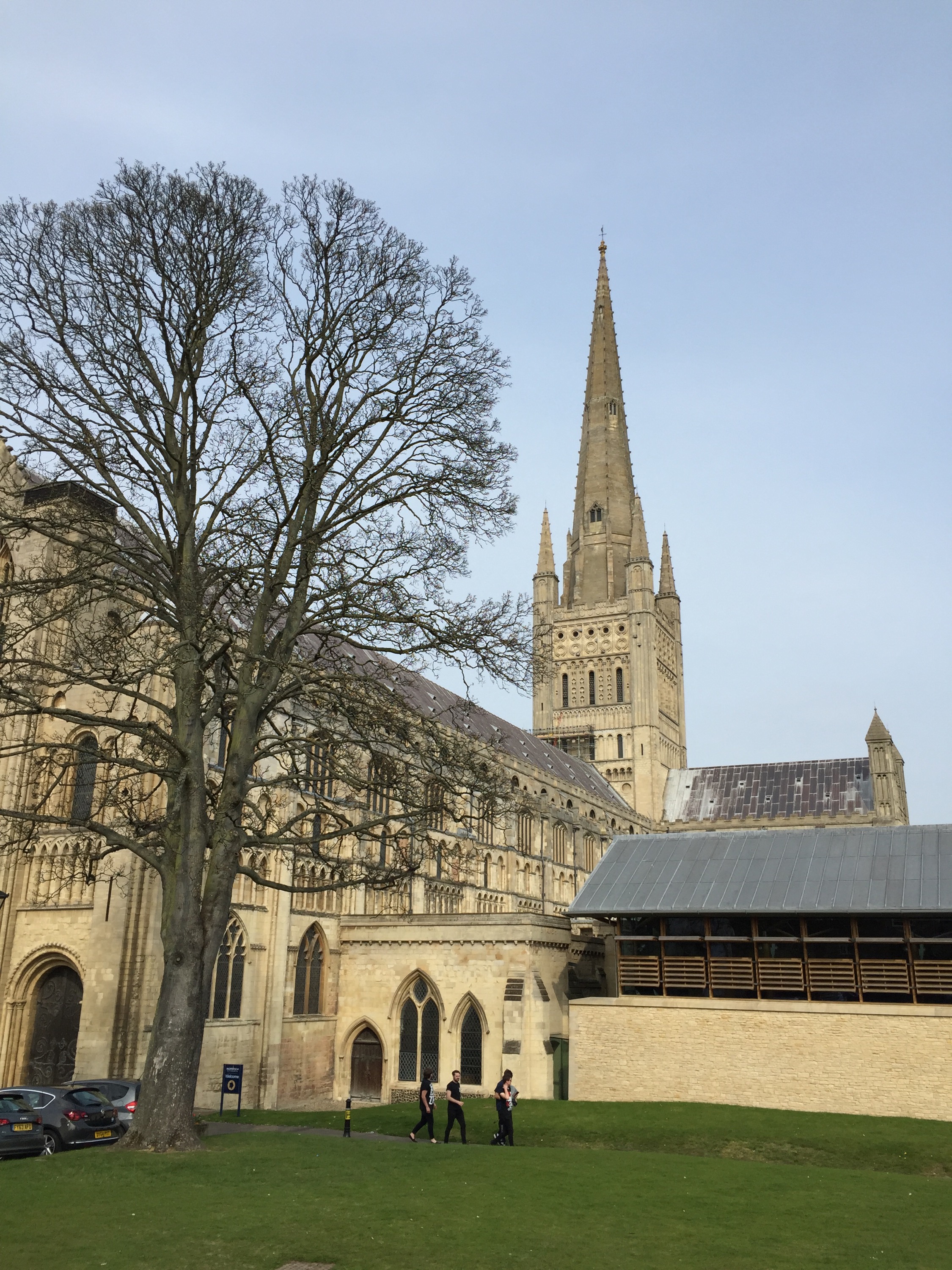
Norwich has one of the most welcoming cathedrals I’ve ever seen.  Many great cathedrals charge admission, often as much as $15 or $20.  At Norwich, visitors are greeted by volunteers asking what they are most interested in seeing.  I’m sure donations are gratefully accepted, but I arrived late in the day and didn’t realize until after I’d left that I never saw a place to donate. The business of Norwich Cathedral is to welcome and to minister to its visitors.


When I arrived, a lovely young volunteer asked about my interests, then described this special exhibit. She offered to lead me directly to the North Transept so I wouldn’t miss this powerful work of art in my limited time.  I am grateful to her.

Join me next time for more explorations into the ever-fascinating and ever-challenging history and art of Europe and the British Isles.

St. Jerome and His Lion

Niccolo Antonio Colantonio,

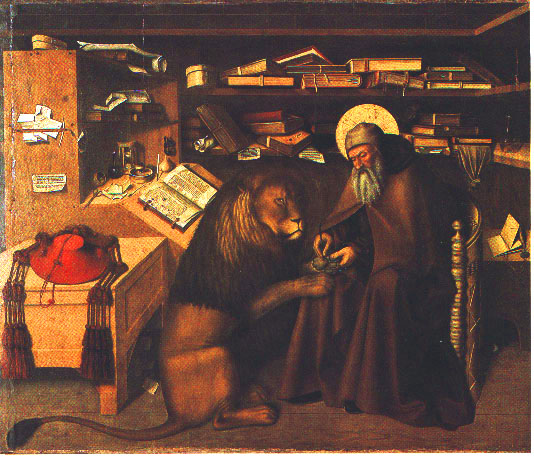
Niccolo Antonio Colantonio, “Jerome in his Study,” c. 1440-1470, Public Domain, National Museum of Capodimonte

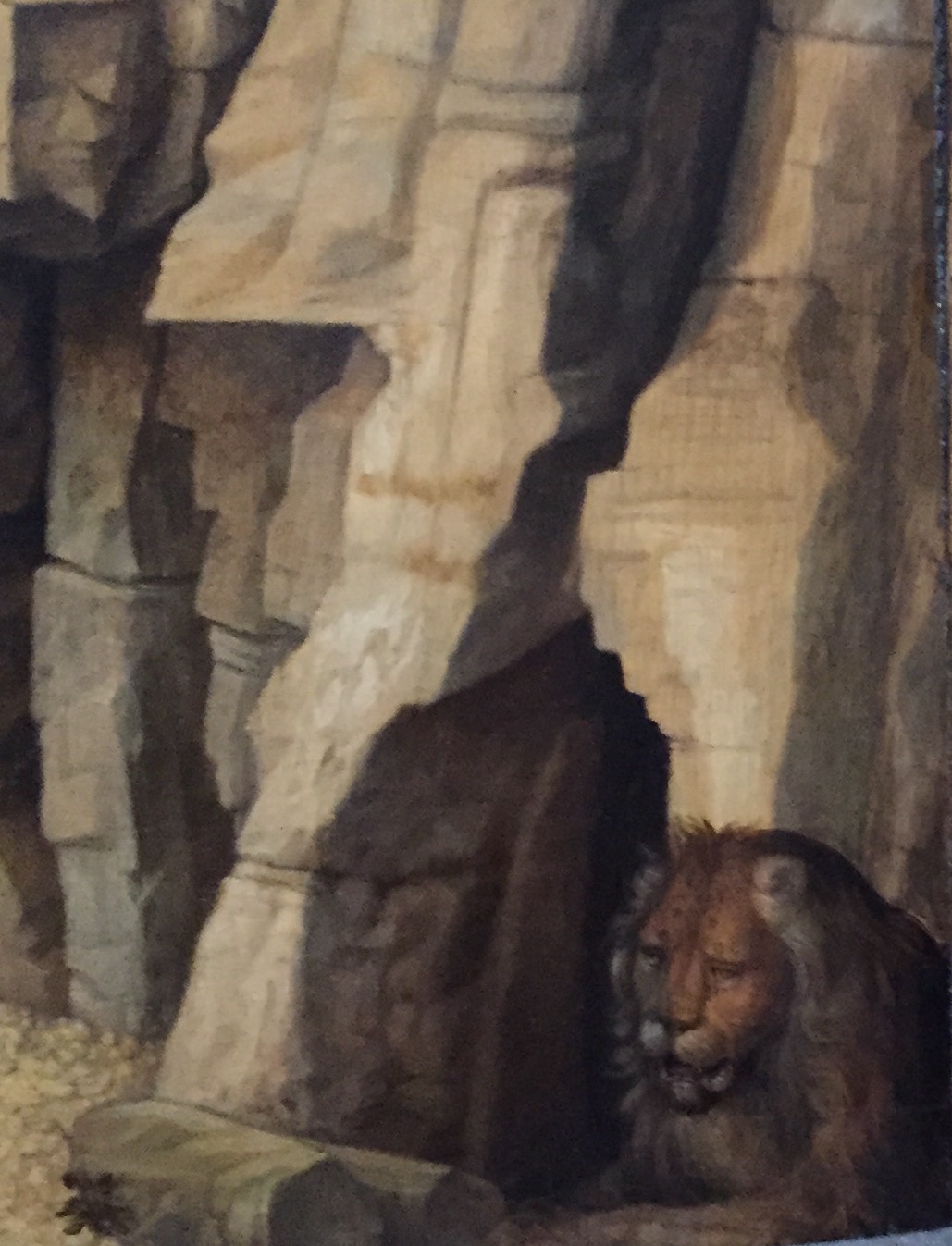
One of my favorite saints is Jerome, AKA Saint Hieronymous. Why? Because he befriended a lion in the wilderness–or at least so the legend goes. In the painting above, the lion has ventured into the saint’s dusty study with a thorn in his paw.  Jerome sets his book aside and carefully removes the thorn.  In other depictions, the saint comes across the lion, writhing in pain, out in the wilds. Either way, the legend is that from the moment Jerome extracted the thorn, the lion never left his side.

Jerome was born around the year 347 A.D.  He lived mostly in what is now Croatia.  A scholarly fellow, he became one of the earliest Doctors of the Church, before titles like “Cardinal” existed.  One of his main accomplishments was translating the Bible into Latin, from its original Aramaic and Greek.

Jacopo Tintoretto,

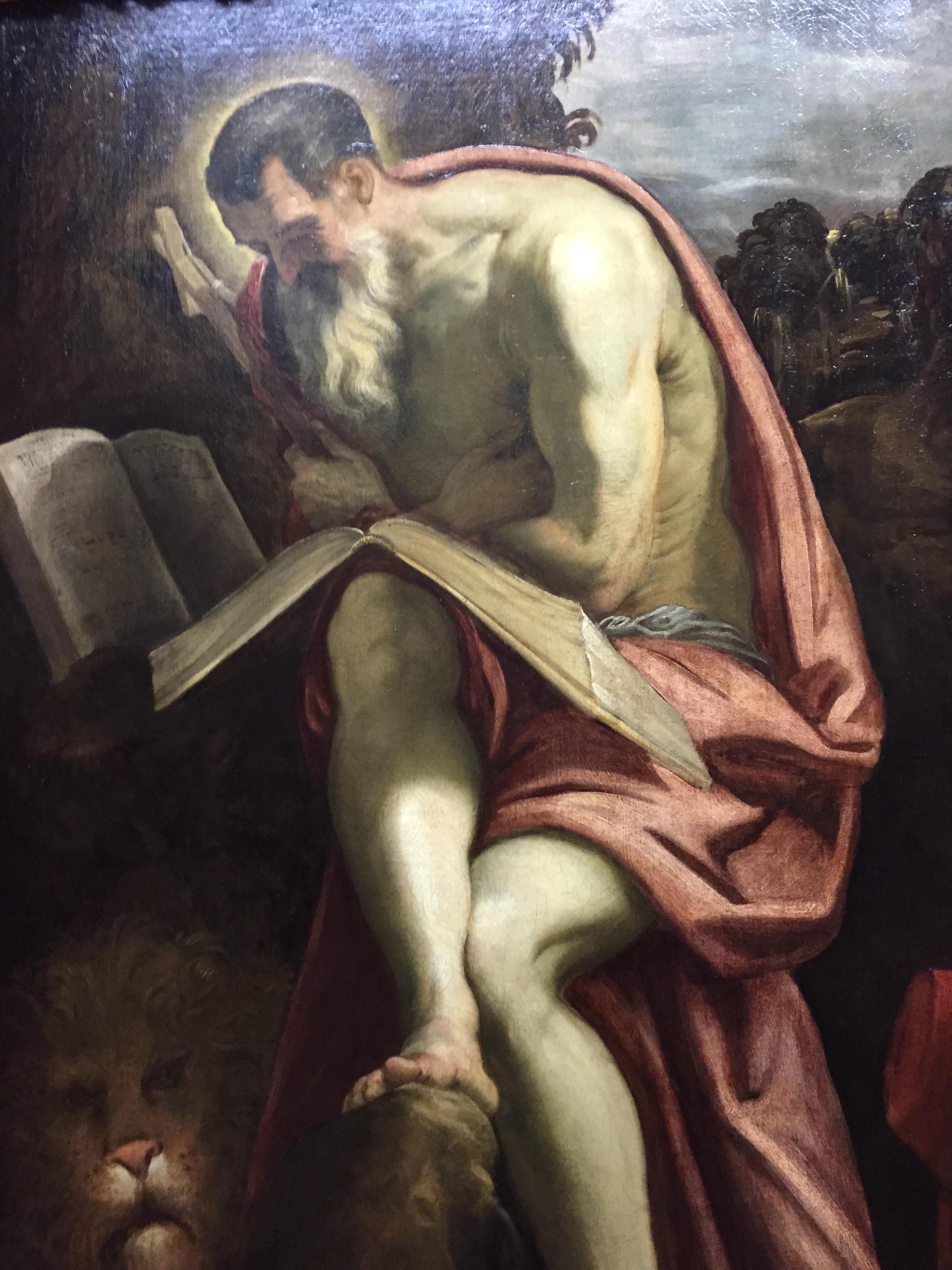
Jacopo Tintoretto, “St. Jerome,” c. 1570, Public Domain, Vienna Kunsthistorisches Museum

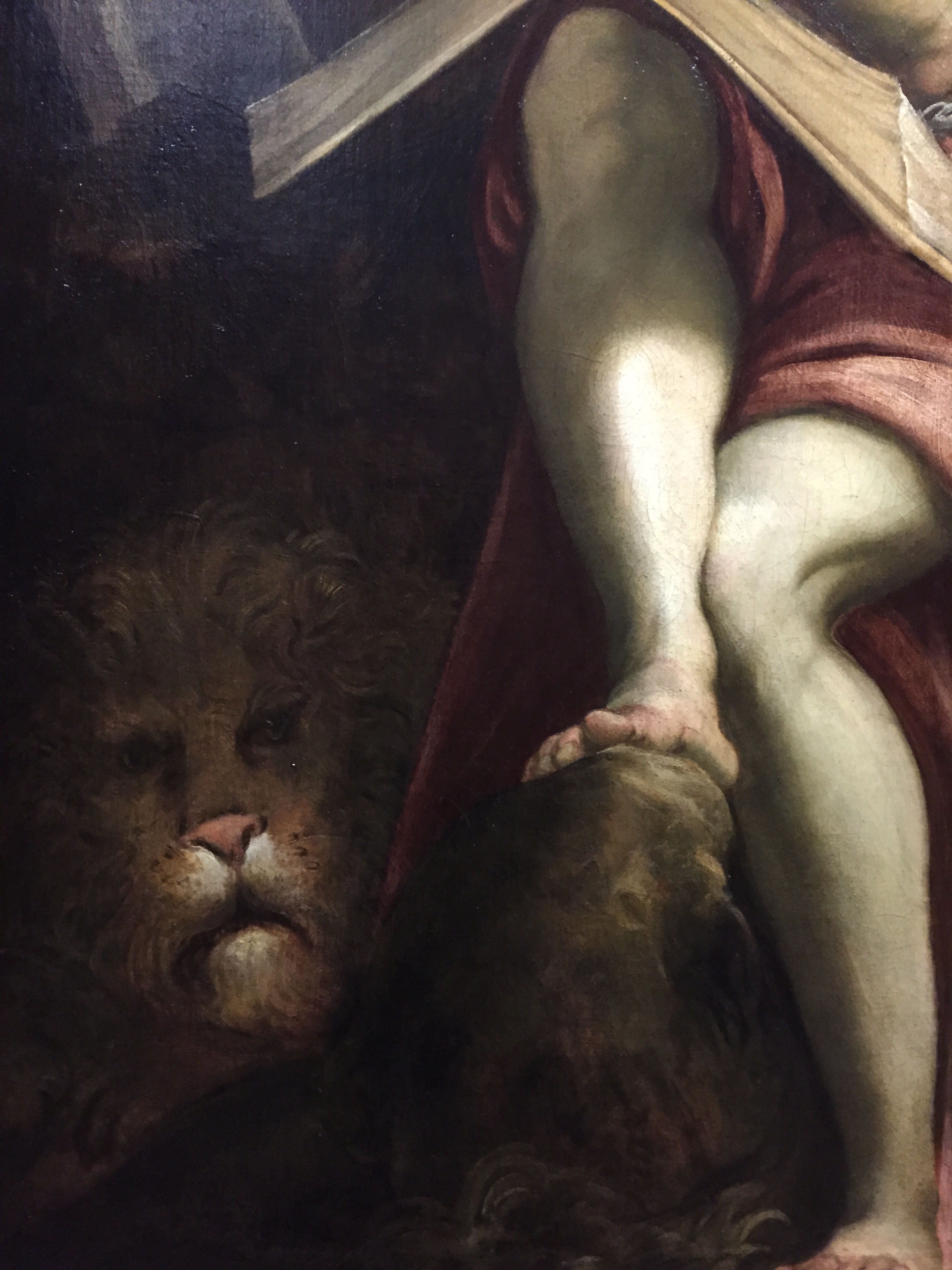
In paintings, the lion often lurks under a table or in a dark corner.

IMG_3174

I took the two photos just above in the Kunsthistorisches Museum in Vienna. I love the legend, and whenever I’m in an art museum I’m on the lookout for images of Jerome and his lion. They have been painted countless times.

IMG_3495

Whenever I spot Jerome and his lion, I move in for a closeup.

Workshop of David Gerard, Saint Jerome in a Landscape, about 1501, my photo taken in National Gallery, London

Workshop of David Gerard, Saint Jerome in a Landscape, about 1501, my photo taken in National Gallery, London

To me, Jerome’s friendship with his lion is part of his concern for the whole creation.

Antonello da Messina,

Antonello da Messina, “Saint Jerome in His Study,” about 1475, my photo taken in National Gallery, London

Sometimes the lion is not underfoot, but he’s always close by.
FullSizeRender (3)

The faithful lion is always present.  In the painting of Jerome in the large study above, he’s patrolling the perimeter. No matter what, the lion always had Jerome’s back.

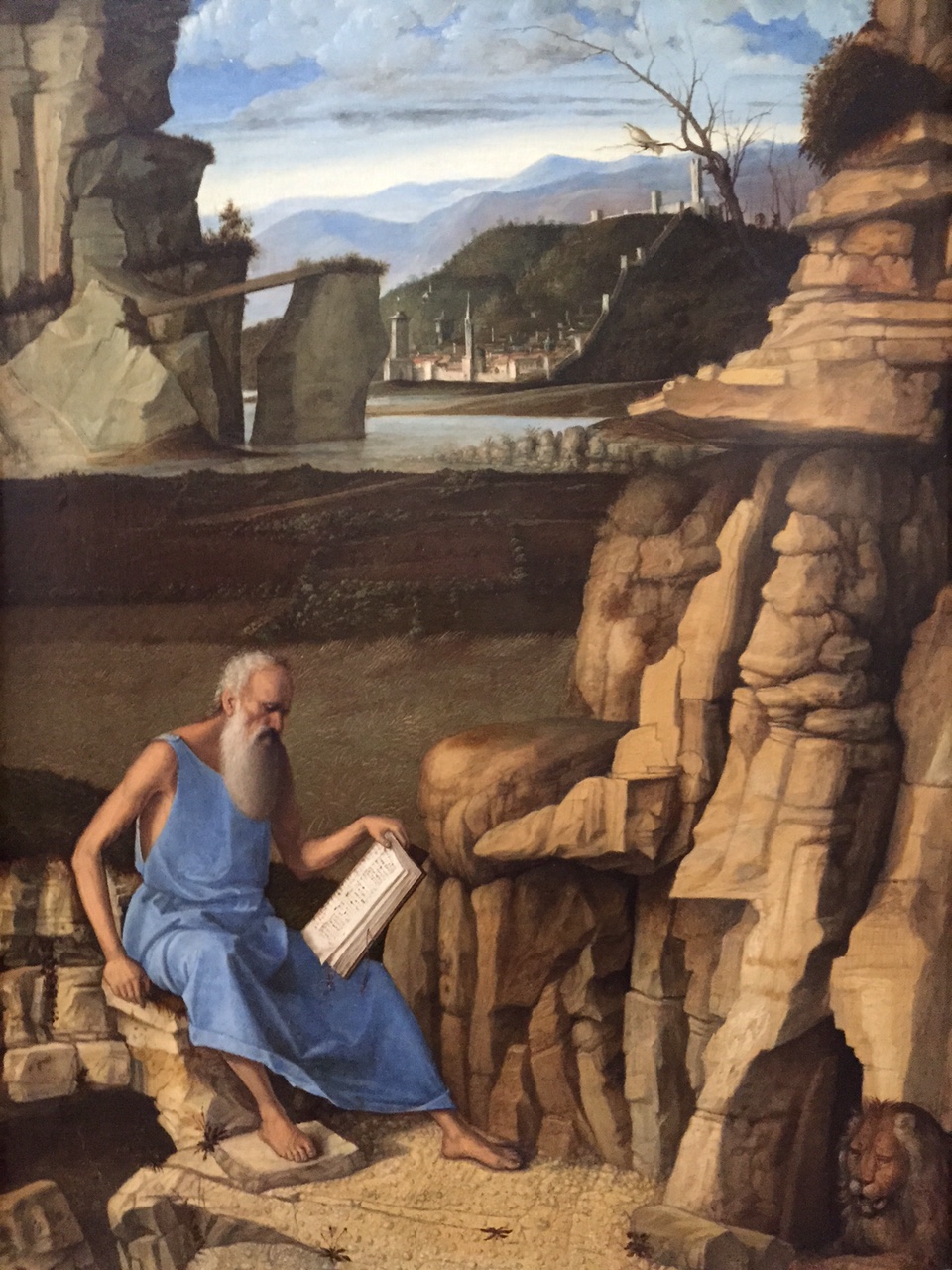
Giovanni Bellini, Saint Jerome Reading in a Landscape, circa 1480-5, my photo taken in National Gallery, London

Giovanni Bellini, Saint Jerome Reading in a Landscape, circa 1480-5, my photo taken in National Gallery, London

If the lion’s face is shown, he always has a friendly, grateful, loyal face–much like a shy family dog. He tends to look a little wary–who is about to disturb his friend Jerome?

FullSizeRender (2)

Are these paintings just sentimental portrayals of a serious saint who should be remembered for much more than a story that may not have happened at all?  The subject is the medieval and Renaissance equivalent of sharing cute animal videos online.

On a busy day, a couple of minutes spent watching photogenic animals feels to me like a guilty pleasure. What am I accomplishing by watching a gorilla rock a kitten to sleep or a sheepdog rescue a teacup pig from drowning?  Well, I’m not getting a thing done, but I’m pausing in a busy day to learn compassion from animals. Like those videos, the images of St. Jerome and his lion give us an appreciation of our bond with the animals who share our world. The animals mostly treat each other and our world better than we humans do. If I were St. Jerome, I wouldn’t mind being remembered as an animal lover as well as a high-powered scholar.

Join me next time for more explorations in the art and history of Europe!

Cousin Beatie at Melford Hall

2015-04-26 16.07.09

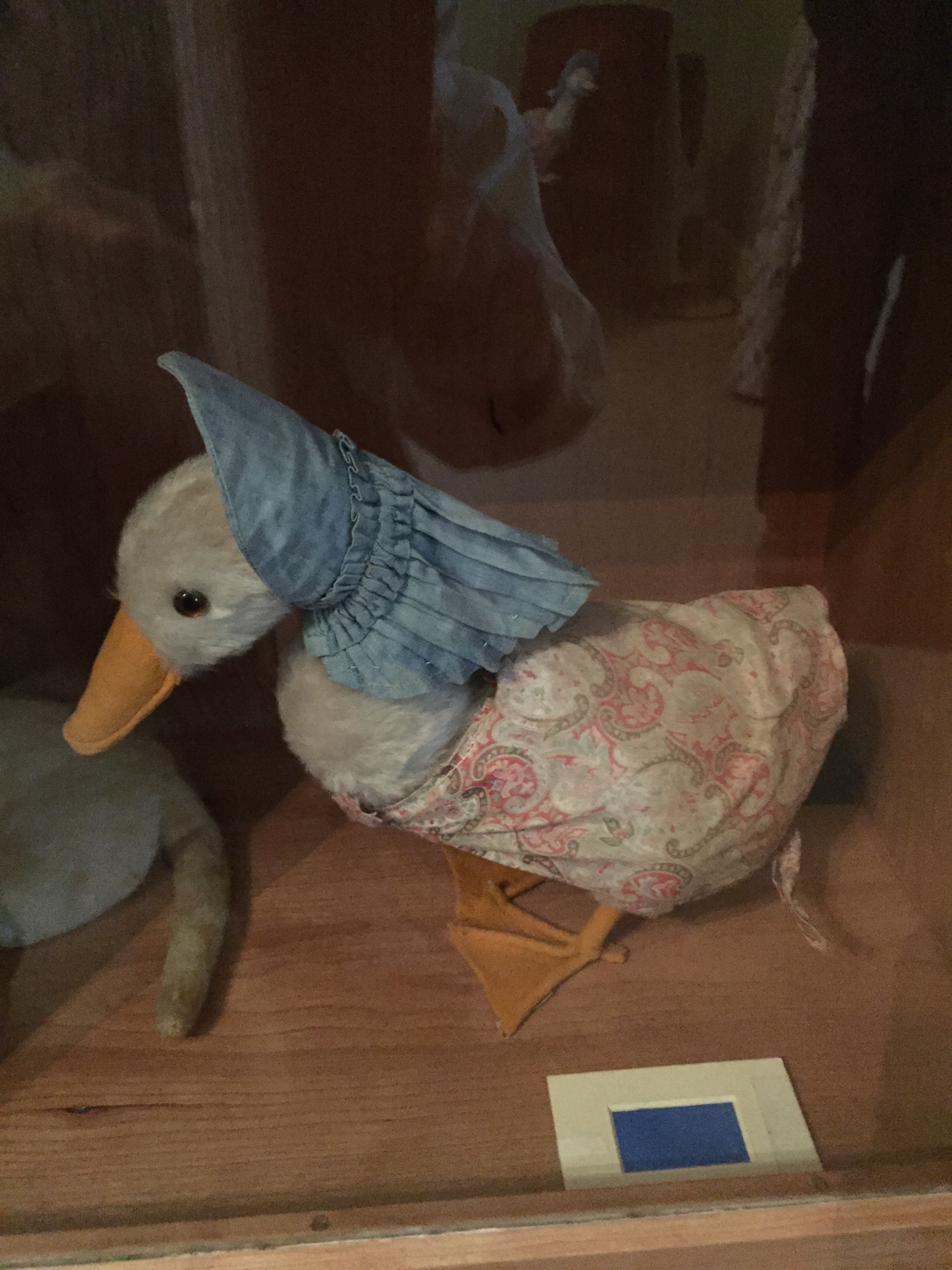
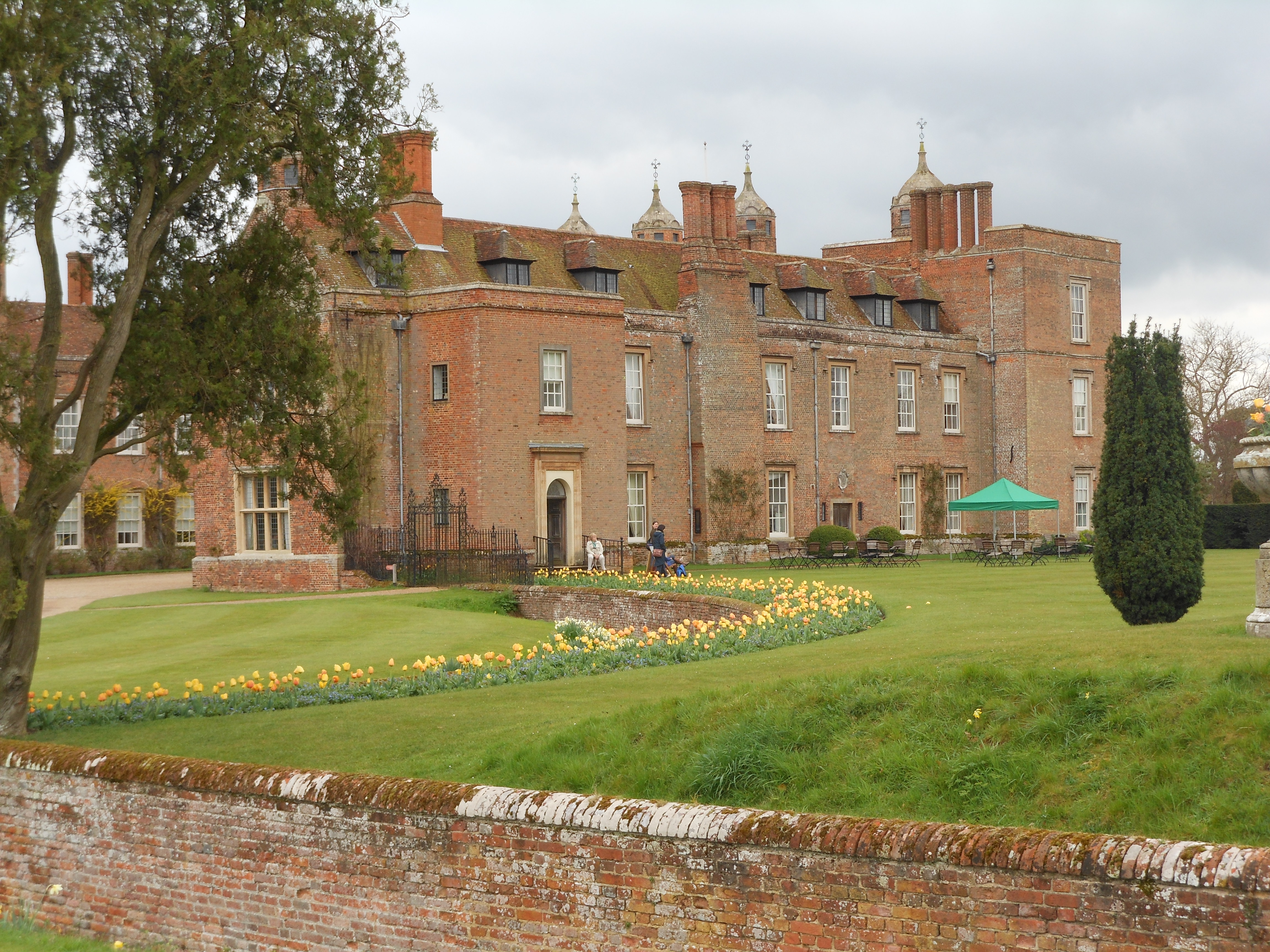
Beatrix Potter, born on this day in 1866, was a frequent guest at Melford Hall in Suffolk. One of her most beloved characters, Jemima Puddleduck, began life as a toy dressed by Beatrix and given to Richard Hyde Parker, a grandson of her cousin.

DSCN7712

The house is now a National Trust property and a delight to visit. Beatrix was a cousin of Ethel Leech, who lived at the Hall with her husband, Reverend Sir William Hyde Parker. (Like many younger sons of the nobility, he had gone into the Church.  But the heir died unexpectedly and Sir WIlliam found himself a Baronet and the owner of a grand country home with a rich history).

2015-04-26 16.09.07

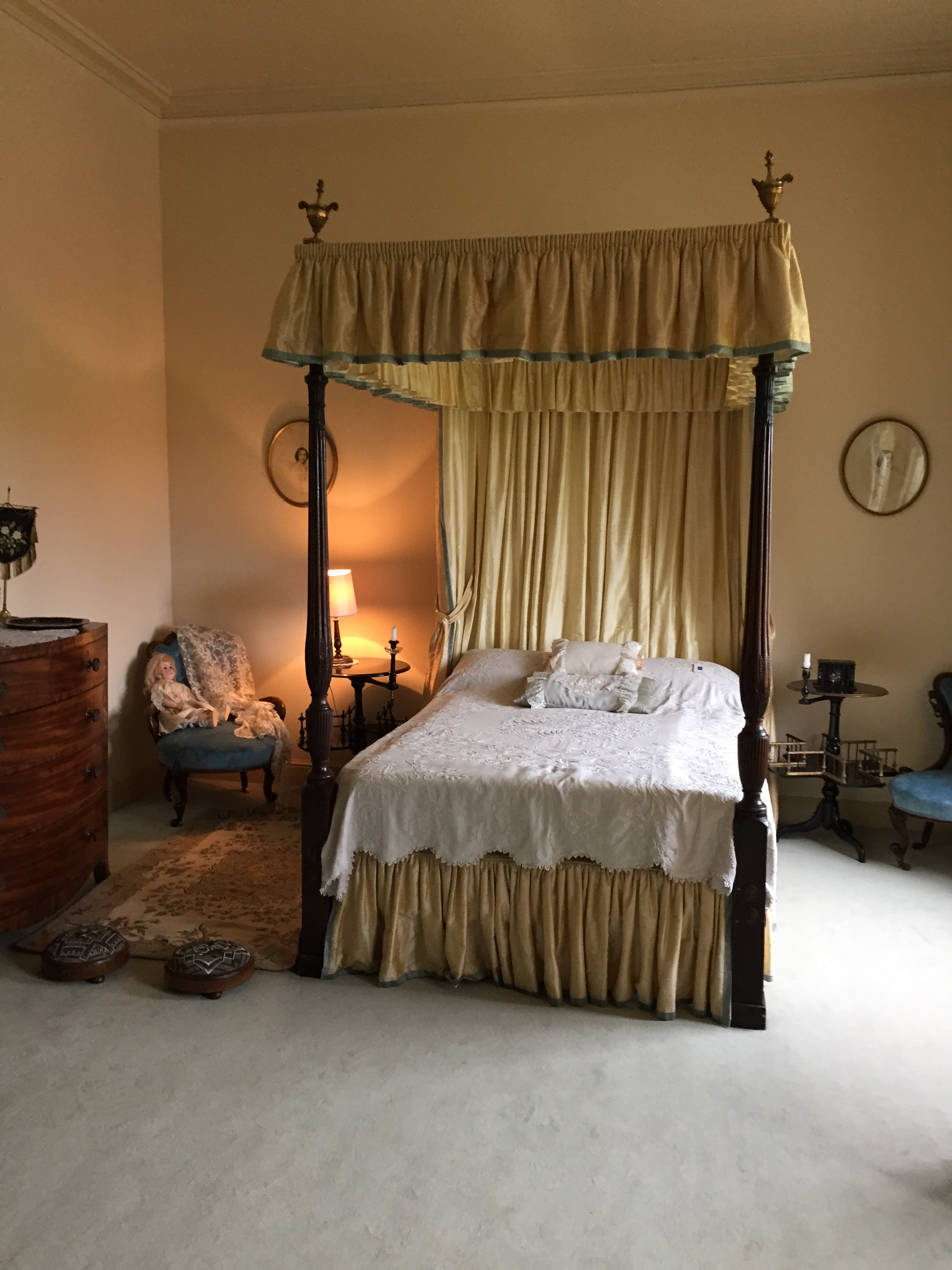
Beatrix usually stayed in the West Bedroom, which had views over the garden and countryside. It’s an elegant high-ceilinged room. When she was a visitor, the room was a magnet for the children of the family.  Beatrix often brought along a collection of small animals, which she kept in the adjoining turret room.

2015-04-26 16.09.33

The house has lots of mementos of “Cousin Beatie’s” time there.

Beatrix returned the family’s hospitality.  When Melford Hall was commandeered by the army during the Second World War, she invited the family to live at Hill Top Farm. They lived there for a year, a great privilege. No one had lived there since Hill Top contained many of Beatrix’s most prized possessions.  No one had lived at Hill Top after she herself moved to Castle Cottage when she married.

One of the joys of wandering in British country houses is in finding connections with history, and especially with British authors.  Beatrix Potter is one of my favorites, and I was very happy to spend an afternoon walking in her footsteps.

Join me next time for more explorations in the art and history of Europe and the British Isles!

A Royal Christening at Sandringham

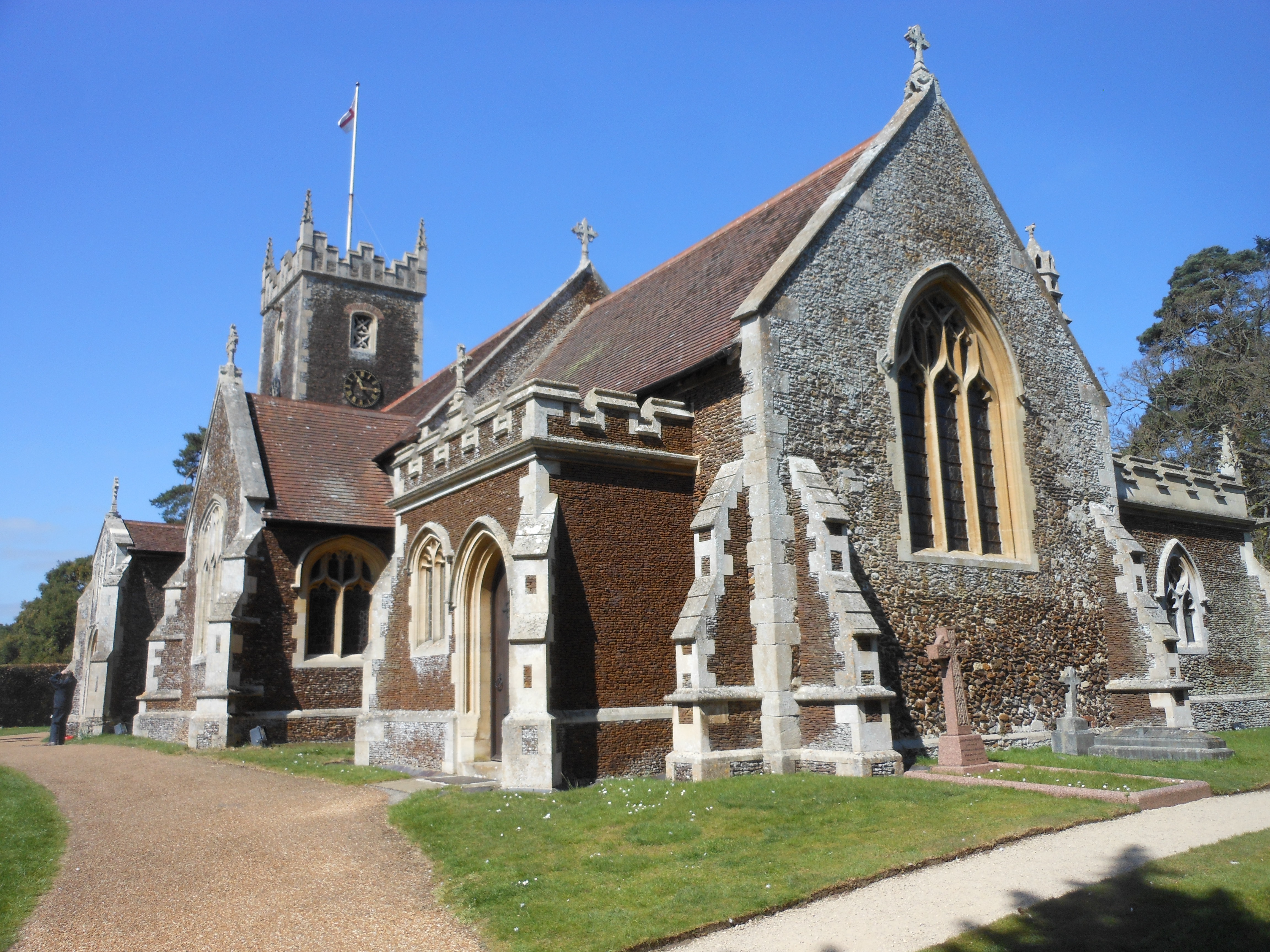
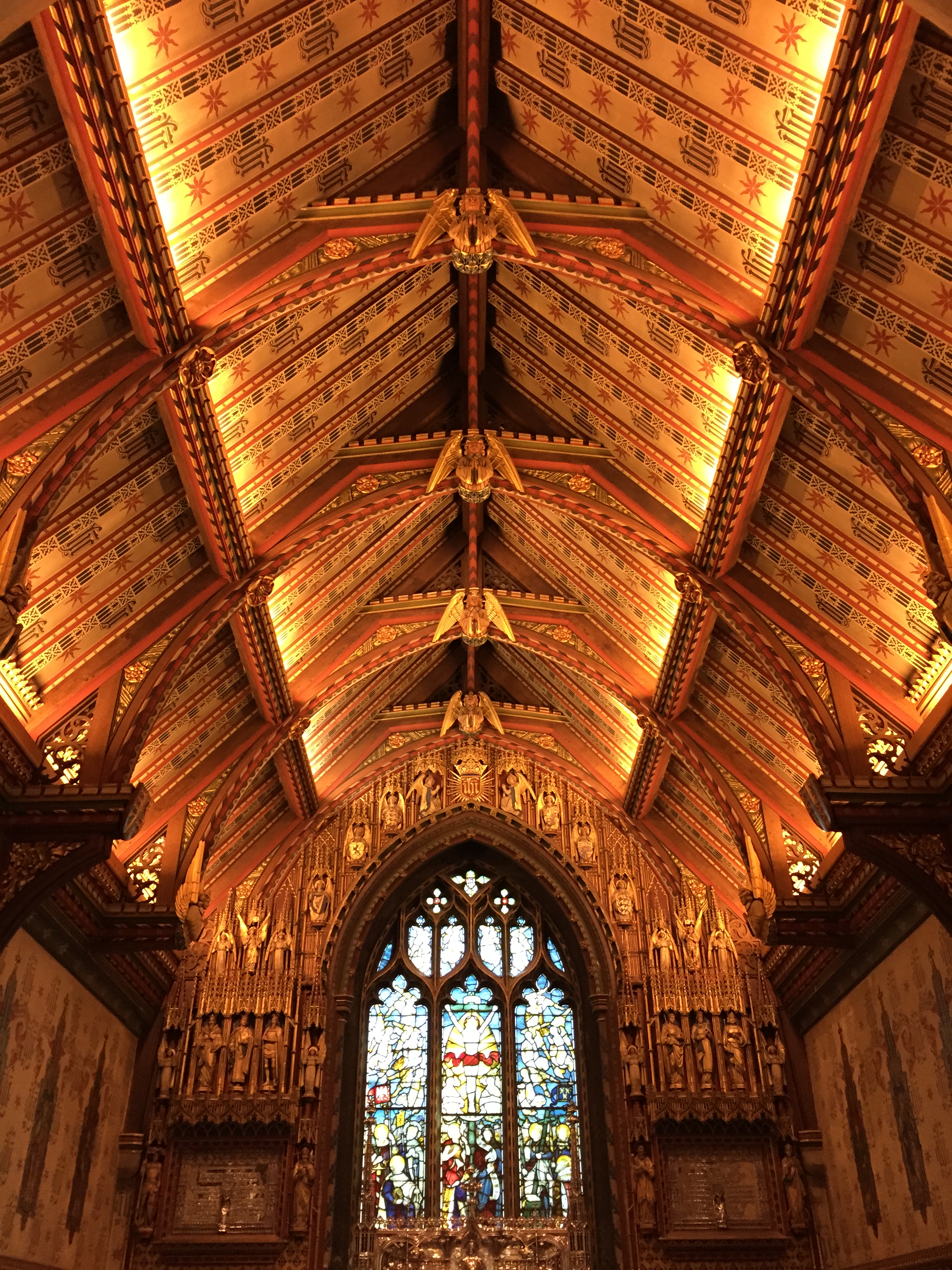
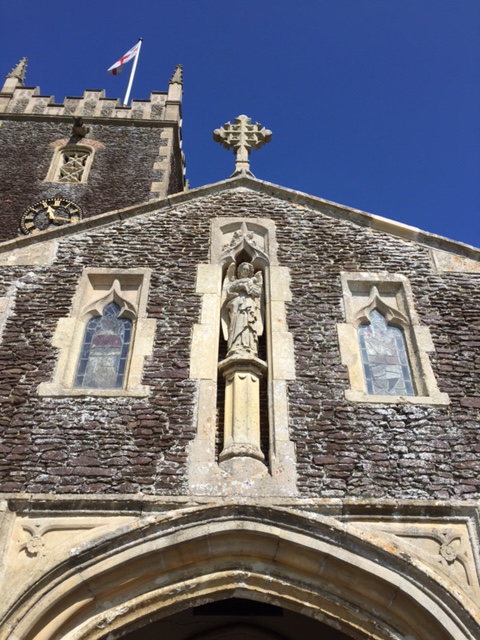
DSCN7017In April I visited Sandringham, the private country home of the royal family, and was especially keen to have a look at the local parish church, where Princess Charlotte was christened yesterday.  News media reported that royal well-wishers were invited to stand in the “paddock” where folks stand every Christmas to watch the royals go in and out of church.  What’s a paddock?  It’s just a field where horses normally stand around and eat grass.  Yes, the old stone parish church is in an unassuming location with fields all around, just a short walk from the grand house. From the outside, the Church of St. Mary Magdalene looks exactly like countless other English country churches. Inside, it is the most beautiful country church I’ve ever seen–not surprising, what with the royal connection.

2015-04-23 11.16.47-2An angel holding a baby stands, appropriately, just above the entrance.

2015-04-23 11.19.51More angels minister to people inside, like this carved wooden one offering communion to a parishioner.

2015-04-23 11.20.49The church seems an especially joyful place of worship.  Sunlight streams in through stained glass.

2015-04-23 11.19.21The painted ceiling is especially beautiful and colorful. I think the church in its present form dates mostly from Victorian times.

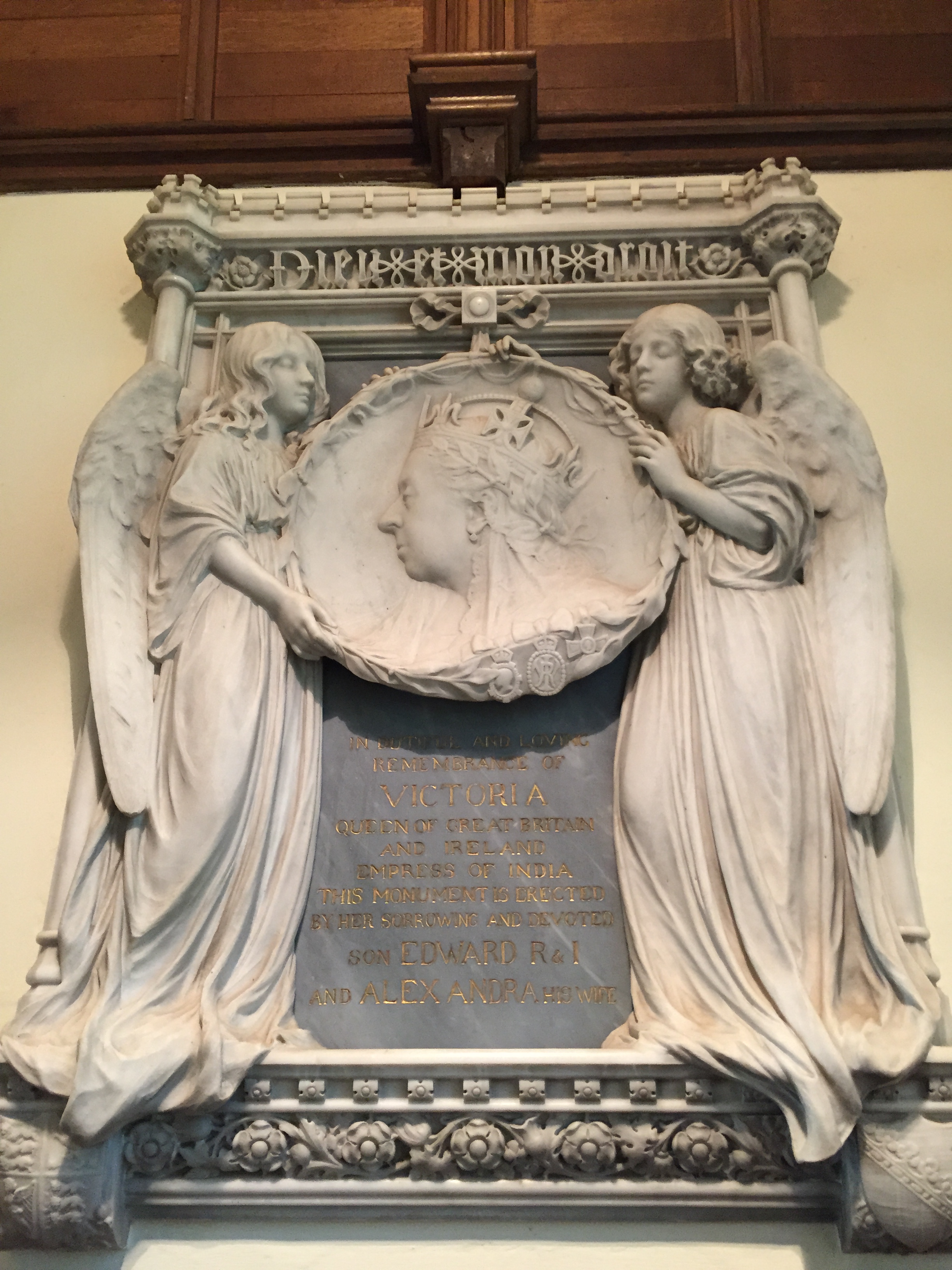
2015-04-23 11.26.07No one seems to be buried in the church, but the walls contain exquisite memorials to various royals.  My favorite is the one of a pair of angels tenderly supporting a silhouette of Queen Victoria. I’m sure she was present in spirit to watch over the newest generation of her descendants. Did they behave themselves? That’s always the big question, as Victoria knew well from the trials of raising her own very large family.

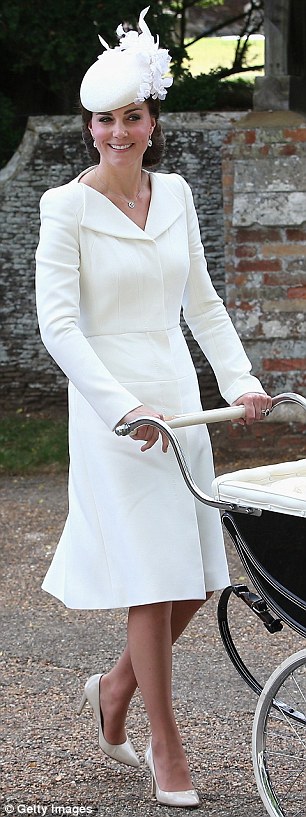
KatePippaNews media have breathlessly reported on supposed sibling rivalry at the christening:  Pippa Middelton is accused of trying to upstage her sister Duchess Kate by wearing essentially the same outfit, and possibly wearing it better.  I reserve judgment. If there are any soap-opera goings-on among the current young royals, I prefer not to know about them. Anyway, good luck upstaging Kate.  This is the woman who left the hospital and waved to crowds the very day she gave birth in April, wearing a pretty dress, perfect hair and HIGH HEELS.  I would not care to try competing with Duchess Kate. The images of the sisters are from the Daily Mail article cited below.

2015-04-23 11.25.37Not having been one of the 25 or so people invited to the christening, I’m not sure there was a sermon or homily.  But if there was, it was delivered from this beautiful silver Victorian pulpit. Best wishes to the new Princess!

http://www.dailymail.co.uk/femail/article-3150898/Did-Pippa-Middleton-try-upstage-Kate-Middleton-Etiquette-expert-William-Hanson-Aunt-Middleton-s-matching-christening-outfit-avoided.html
Previous posts about Sandringham are at https://castlesandcoffeehouses.com/2015/05/07/sandringham/

and https://castlesandcoffeehouses.com/2015/04/30/the-queens-chu…at-

Why I Love England: A Garden is More Than a Garden


IMG_8907

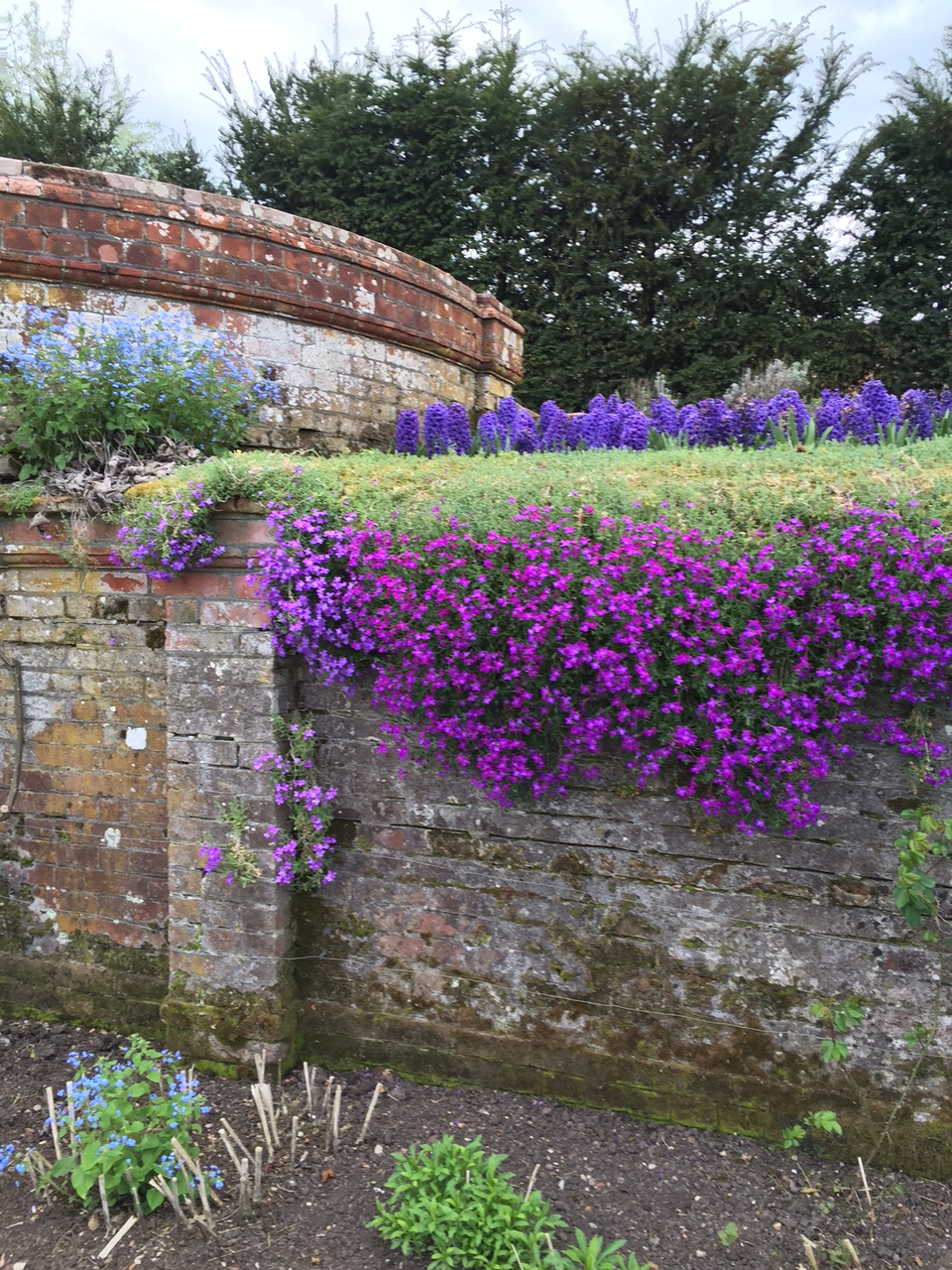
It seems that anyone in England who owns a patch of ground, large or small, is compelled to make it into a thing of beauty or an expression of taste. English gardeners use flowers as a painter uses color.

IMG_5899

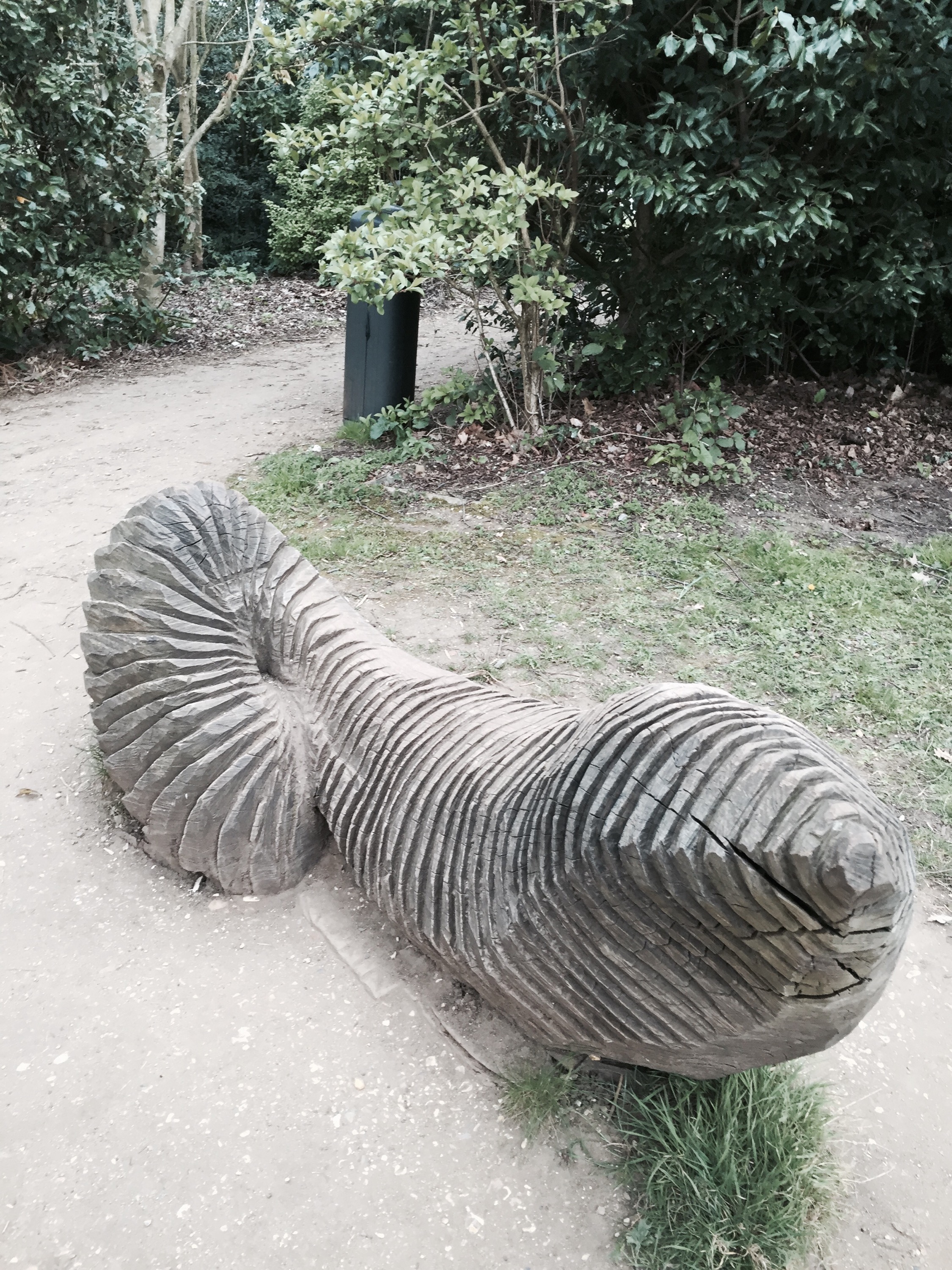
And an English garden is more than just pretty flowers.  It’s also a place to display the imagination and wit of the gardener. Do you have an unsightly stump with a horizontal lean to it? Turn it into a six-foot earthworm to greet your guests. This one is at the entrance to The Vyne, a National Trust house from the Tudor era. I’m pretty sure the earthworm was a modern gardener’s idea.
IMG_7684
Maybe your stump is more vertical. The Queen turned one of hers into a giant squirrel at Sandringham, the private country estate of the Royal Family near King’s Lynn. The squirrel stands about eight feet tall.  Do children climb on it? There’s nothing to stop them except decorum–maybe the Queen will walk by.

SudeleySpider

Do you have a boring expanse of lawn?  How about a creepy-crawly spider? This one, about a thousand times larger than life-size, is at Sudeley Castle.

Topiaries

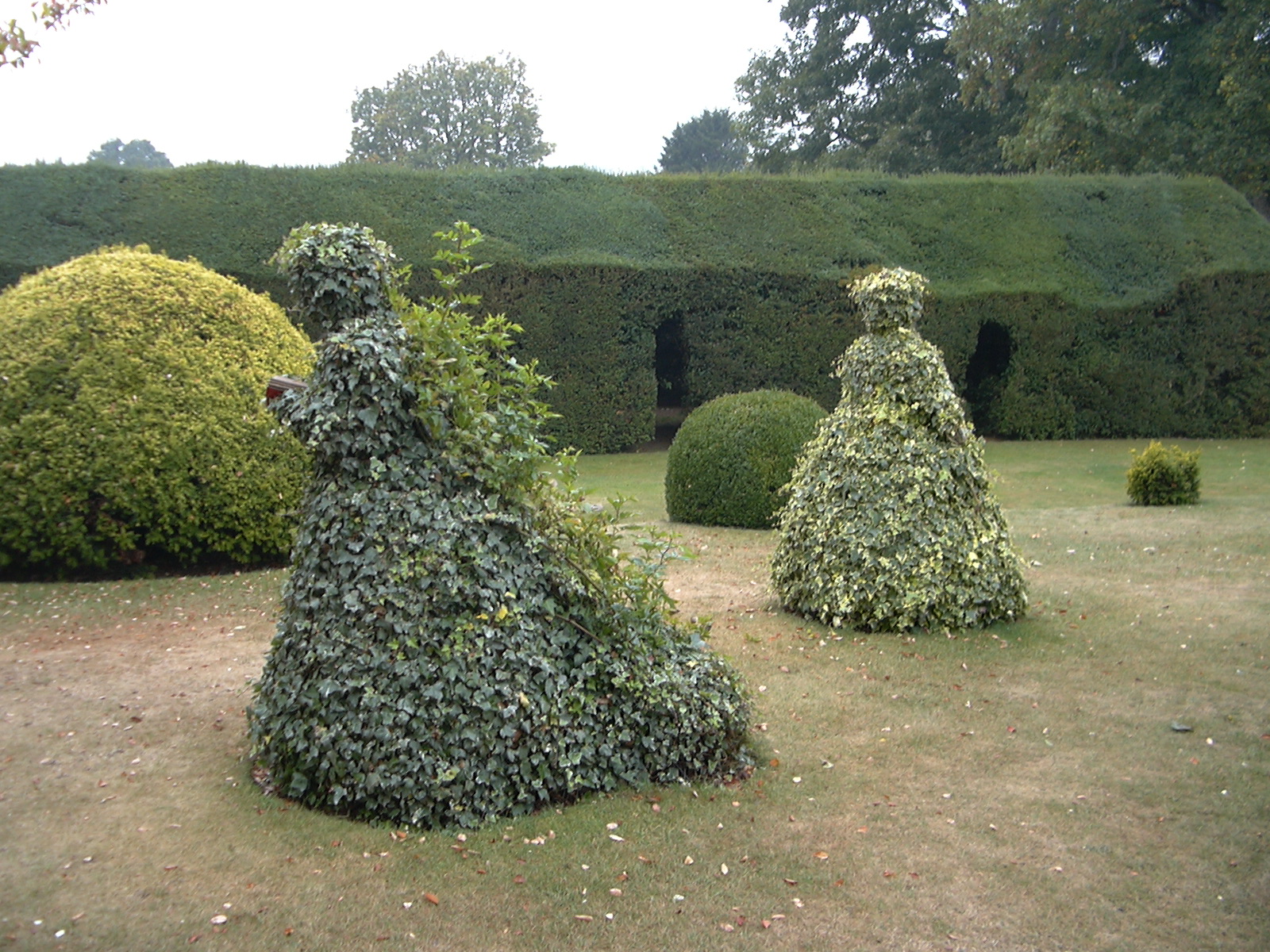
Sometimes garden ornaments touchingly describe history. Sudeley Castle has exquisite ivy garden sculptures depicting Queen Catherine Parr and her younger relative Lady Jane Grey, two queens who lived at Sudeley together for a time. Later, Lady Jane reigned as Queen for only nine days. The political machinations that put her on the throne brought her down quickly and she lost her head. Queen Catherine was the only wife to survive Henry VIII. She is buried in the nearby chapel where she and Lady Jane went daily to pray.

SudeleyRoses

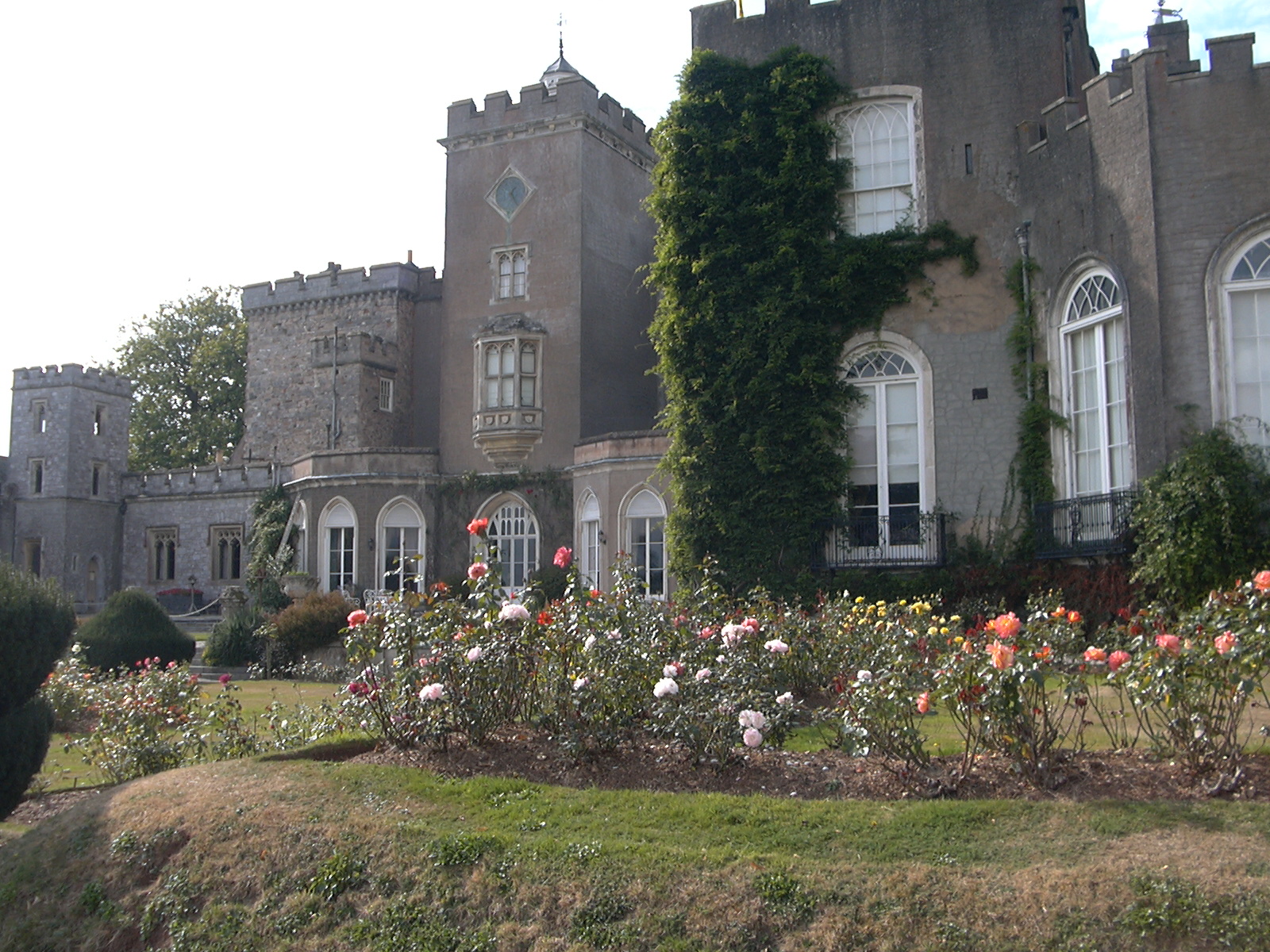
History is everywhere in English gardens. At Sudeley, antique roses are lovingly cultivated outside the castle where the 15-year-old Elizabeth, later Queen Elizabeth I, once had to fend off the advances of Thomas Seymour. Baron Seymour, always on the lookout for the main chance, eventually married Queen Catherine Parr after Henry VIII died.  Sadly, Baron Seymour’s ambition proved his undoing and he was later executed for treason. It seems that Elizabeth wisely avoided him after Catherine died. Elizabeth had suitors enough without this particular bad boy.


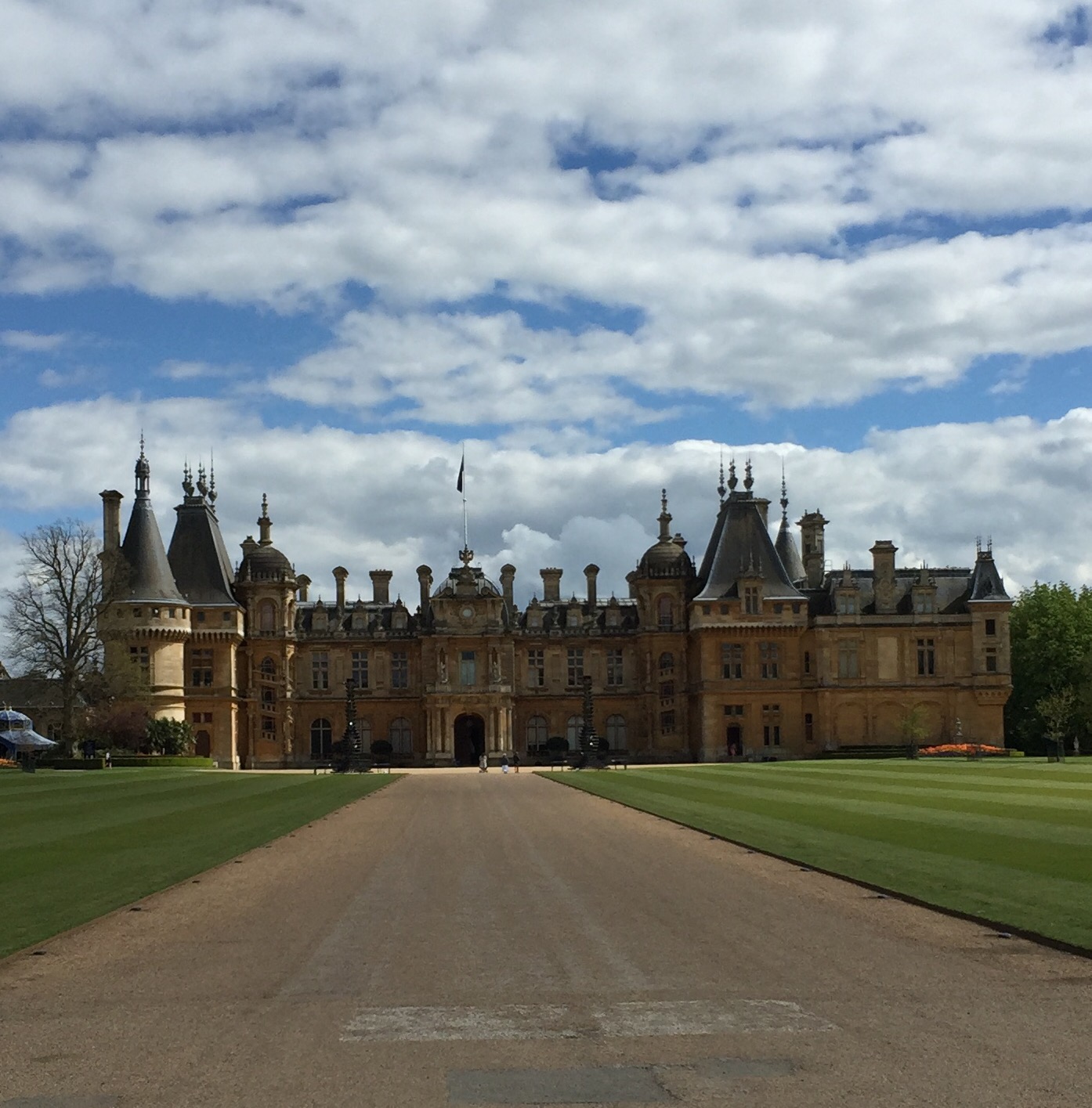
If your brother was the fabulously rich Baron de Rothschild and he built himself a French chateau in the English countryside, then put you in charge of the grounds, what would you come up with?

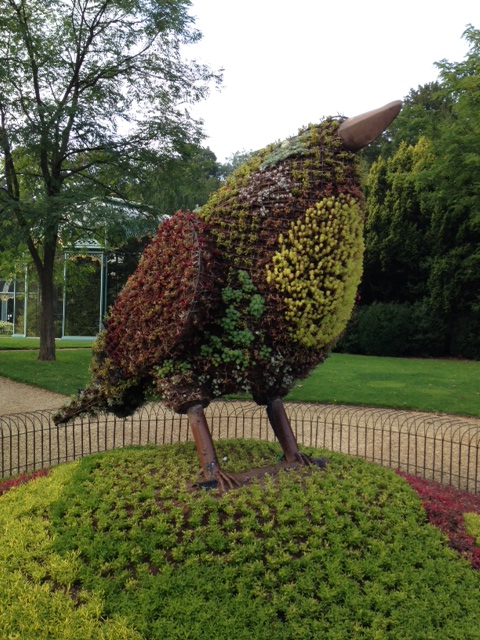
BirdWaddesdon

Baron de Rothschild’s sister Alice invented “vertical gardening” at Waddesdon Manor. This bird, studded with colored plants in early spring, is about 8 feet tall. Like her mega-rich brother, Alice liked to do things in a big way.

MeGarden

I’d love to be wandering in an English garden right now, looking for discoveries through the next garden gate. Join me next time for more explorations in the art and history of Europe and the British Isles!


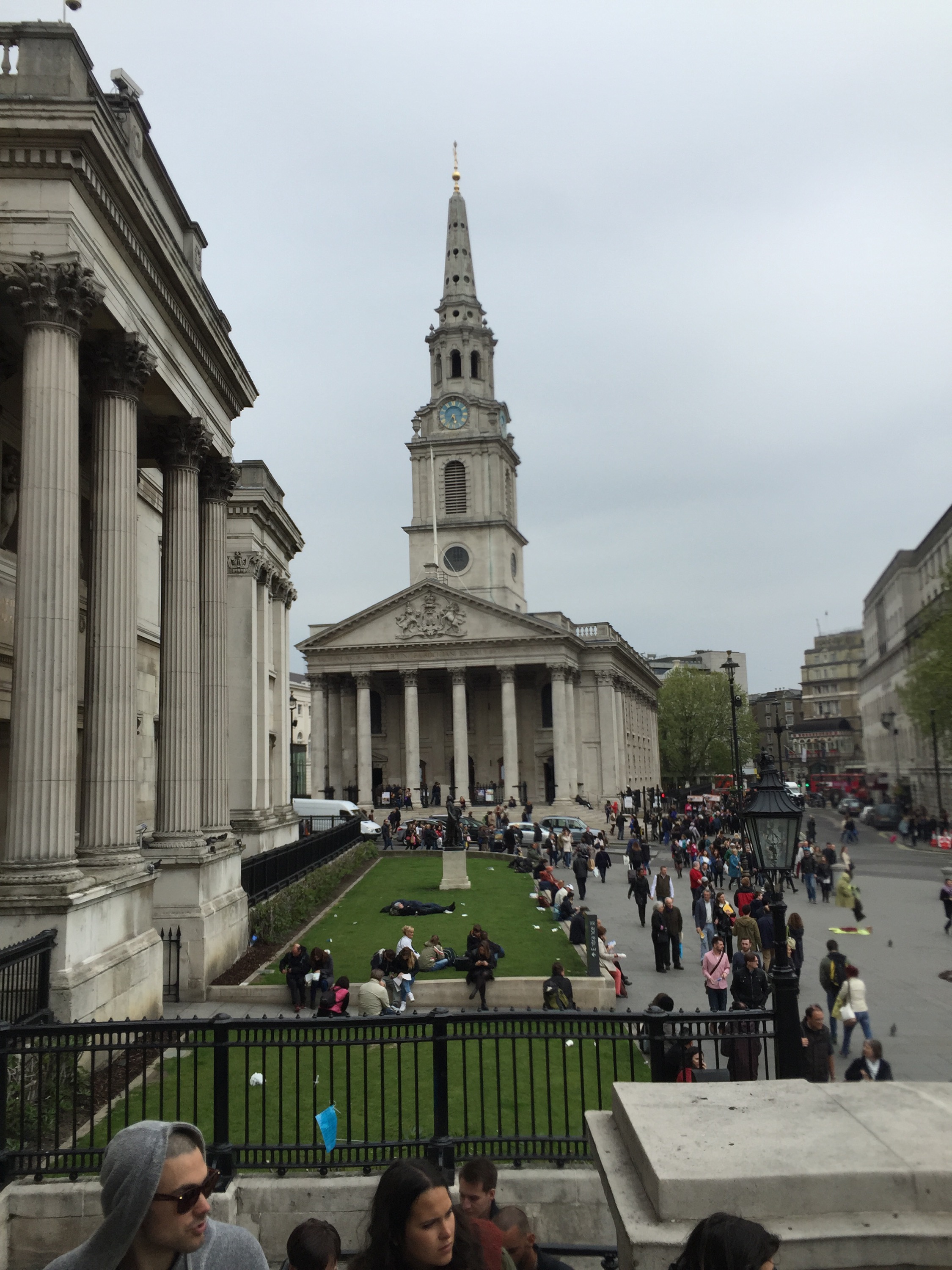
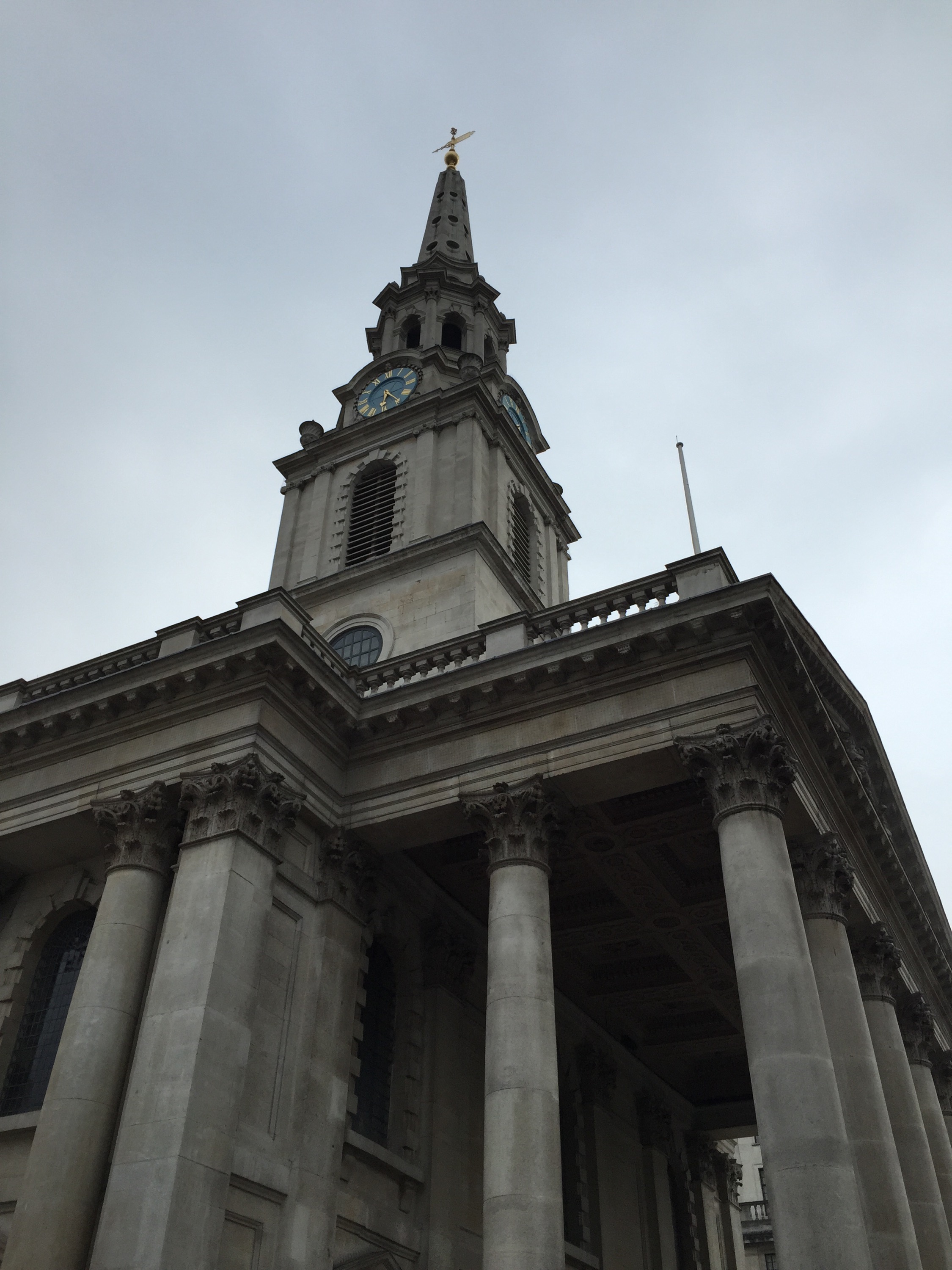
St. Martin-in-the-Fields


IMG_3643

After spending a few hours in London’s National Gallery, I’ve had enough of appreciating great art. I’m more than ready to stagger down the steps into Trafalgar Square, navigate through the crowds, cross the street, and disappear down the well-worn steps into the ancient crypt of St. Martin-in-the-Fields Church. The church was once literally “in the fields,” far outside the center of London. Now it’s at the epicenter. The day before I visited was May Day, when tens of thousands of demonstrators converged on the square. (In most of Europe, May Day is similar to Labor Day in the United States. In Europe, people march in support of working people on this day). On any day, though, Trafalgar is full of people.

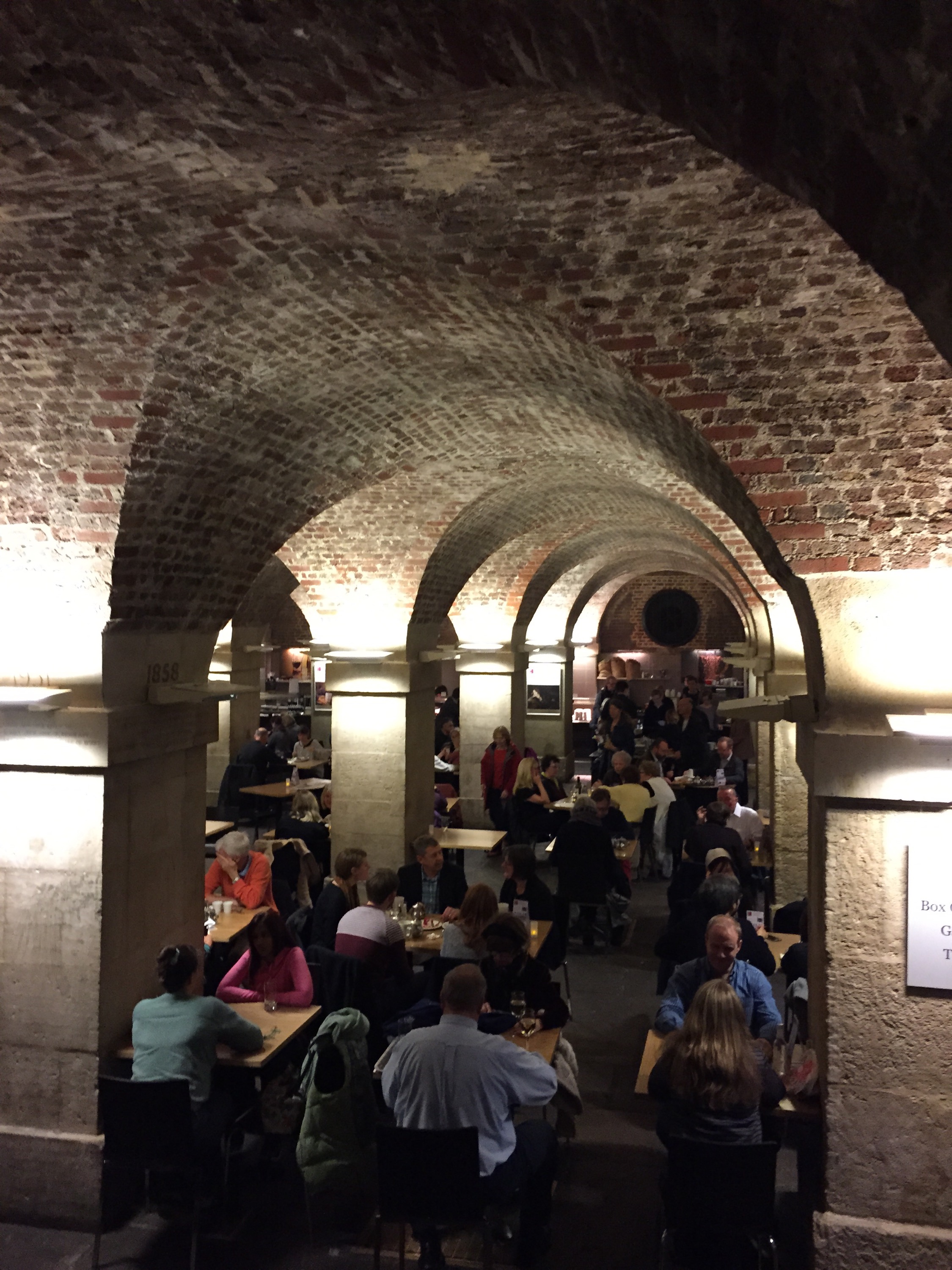
IMG_3648

The centuries-old crypt underneath the church has been turned into a cheerful cafeteria and venue for jazz concerts.

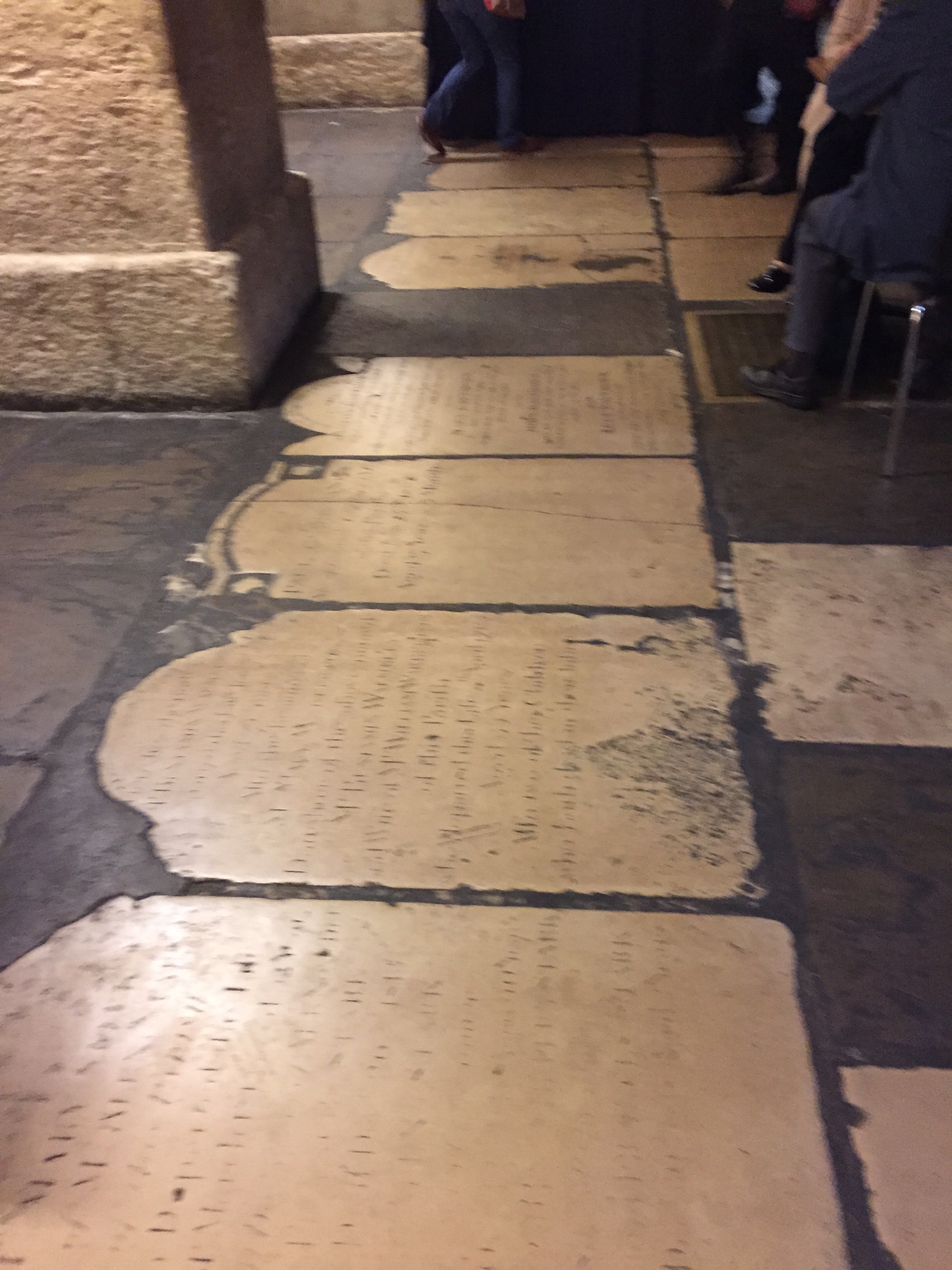
IMG_3657
Are we walking on top of very old tombs? I don’t think so. I think these are grave markers from centuries past, when the church still had a churchyard around it. I think that tombs once in the crypt were moved elsewhere during one of the many rebuildings of the church over the centuries. Of course, like many British churches, the site of this one dates back to Roman times–or very likely even pre-Roman pagan times. So there’s no telling what is deep underground. If there are spirits of the departed, I think they enjoy the company.

IMG_3666
The food is cooked onsite, inexpensive, healthy and delicious.

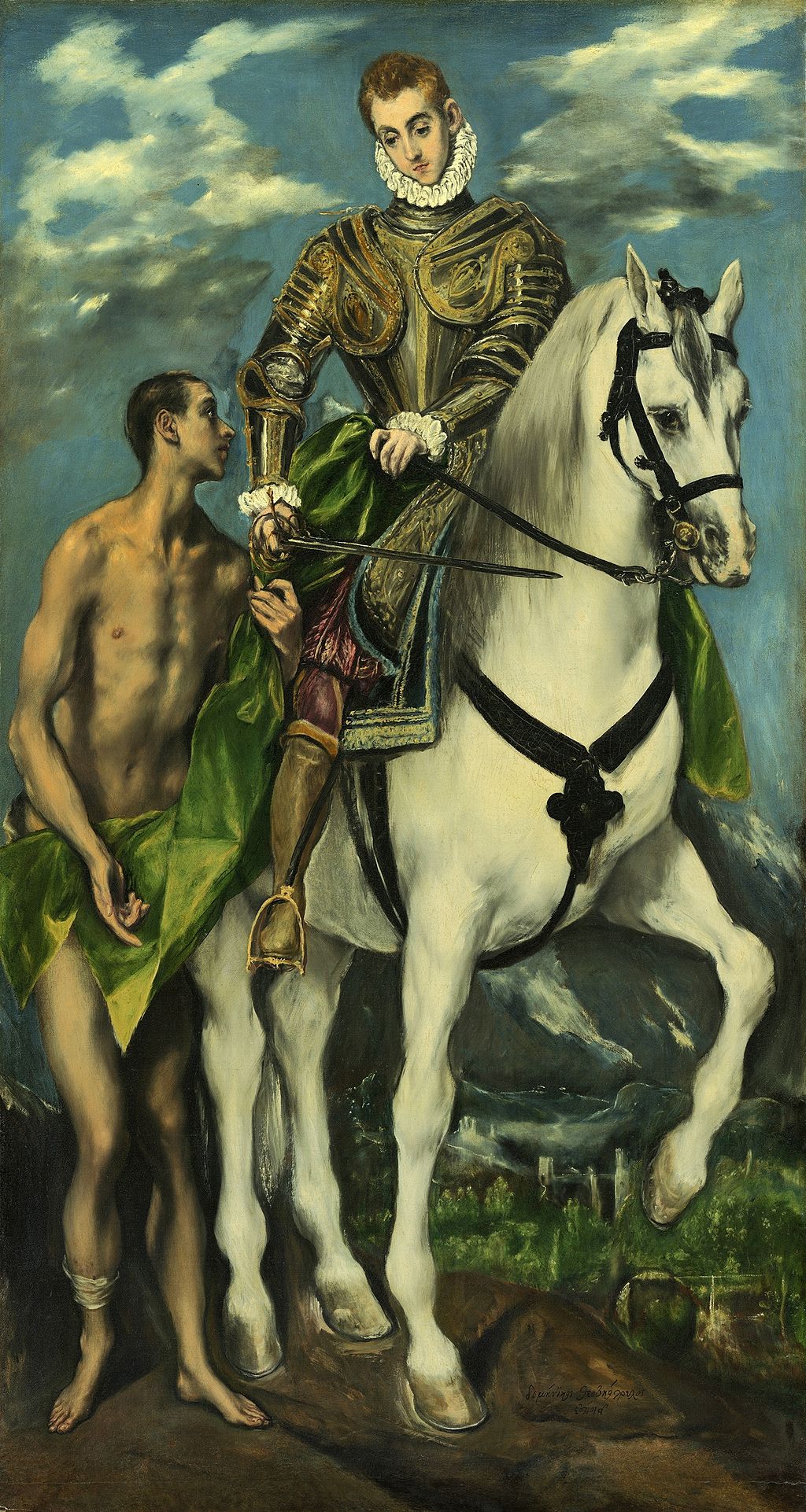
El Greco, St. Martin and the Beggar, circa 1597, Public Domain

El Greco, St. Martin and the Beggar, circa 1597, Public Domain

Who was St. Martin of Tours? He was a 4th-century Roman soldier who became one of the first conscientious objectors when he decided not to fight. He offered to go to the front lines unarmed, but fortunately the enemy sued for peace and he was allowed to leave the army. He eventually became Bishop of Tours, a post he accepted reluctantly because he preferred to serve the poor directly. He was well known enough in his day to have a biographer who followed him around and wrote about him, so it is pretty well documented that he once impulsively cut his warm military cloak in half and gave it to a near-naked vagrant in the dead of winter. Legend has it that the next morning the cloak was made whole again. The rest of his life was devoted to serving the poor and outcast, and that is the mission of St. Martin-in-the-Fields today. The church’s cafe and its many concerts support its work with the poorest of the poor in London.

IMG_3695

I’m happy to contribute to the work of this famous church by joining the lively crowd in the once-silent crypt. Join me next time for more explorations in the art and history of Europe and the British Isles!


Why I Love England: History in Bits and Bobs

IMG_8851

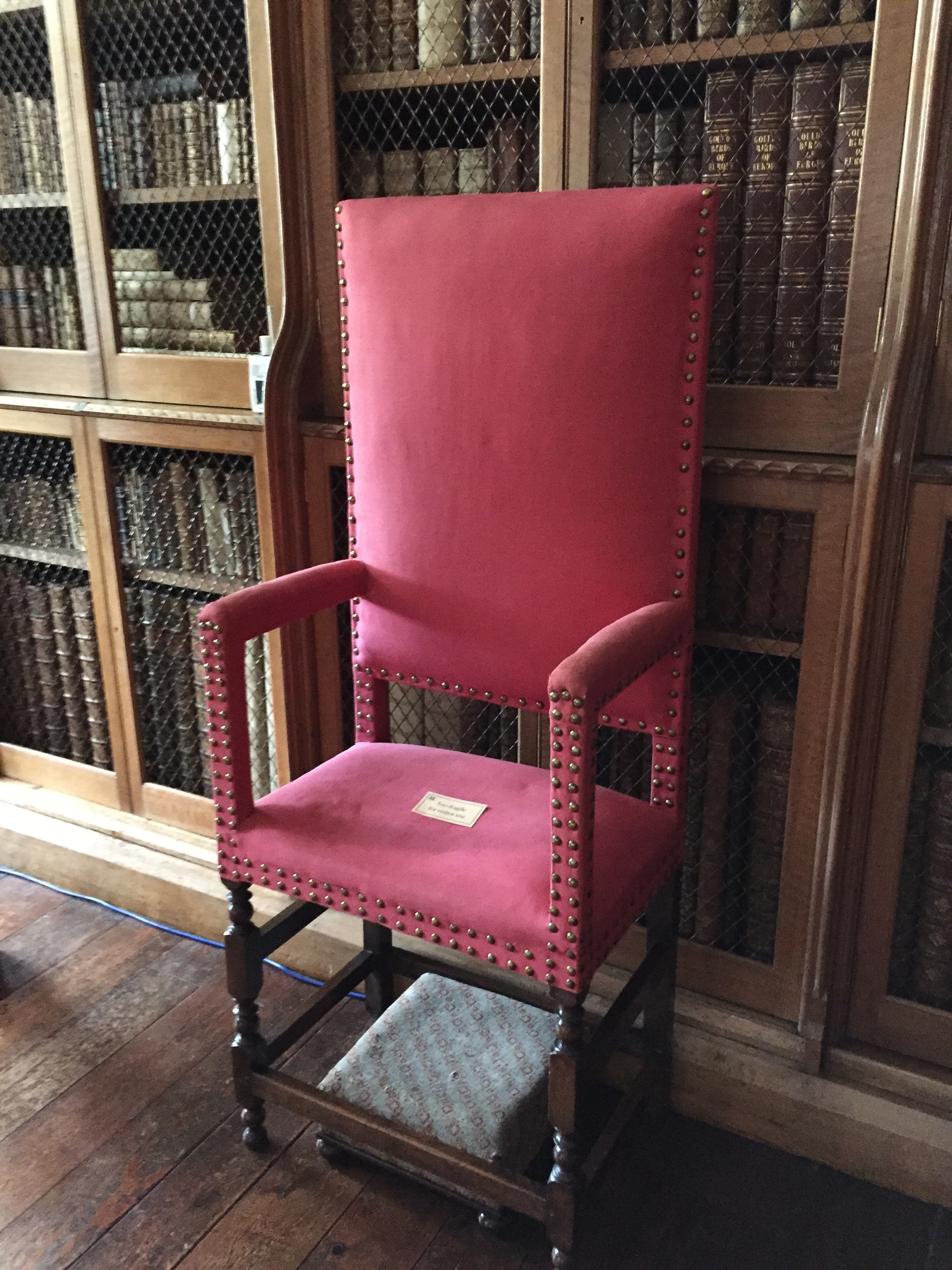
In the Oak Gallery at Blickling, a Tudor house in Norfolk, I came across a tall chair upholstered in red velvet. It had no label, just the usual polite note from the National Trust asking the visitor not to sit on it. (Actually, the NT has so many unsittable ancient chairs that they often just place a dried thistle or a pinecone on the seat).

I asked the friendly room docent, a lovely white-haired lady, if there was anything special about this chair. “Oh, yes!” she said. “That was the coronation chair of Charles the Second.”

Really? The coronation chair of the King whose reign ended the bloody Civil War in England didn’t rate a placard? Charles II was the English king crowned in 1660, 11 years after his father, Charles I, was executed–for treason. How could a king be guilty of treason? Charles I wanted to rule as an absolute monarch, levying taxes without consulting Parliament. Thus began the bloody English Civil War. Charles I lost.

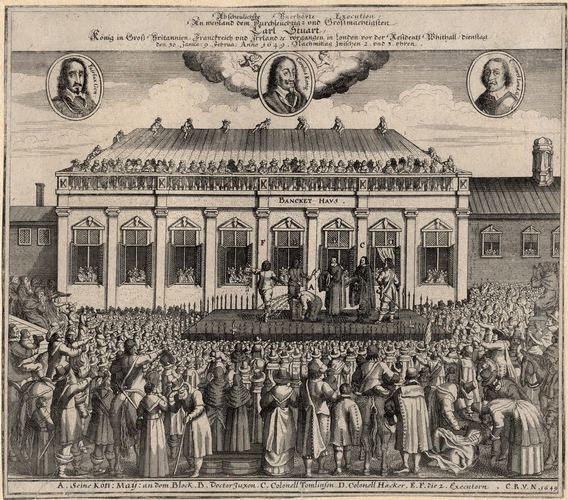
Contemporary print of Beheading of Charles I of England, 1649, Public Domain

Contemporary print of Beheading of Charles I of England, 1649, Public Domain

Charles I was executed in public, with all due ceremony, in front of the Banqueting House at Whitehall, in 1649. It was a cold day in January, and reportedly Charles’s main worry was that he would shiver and the crowd would think he was scared. He wasn’t.

IMG_8641

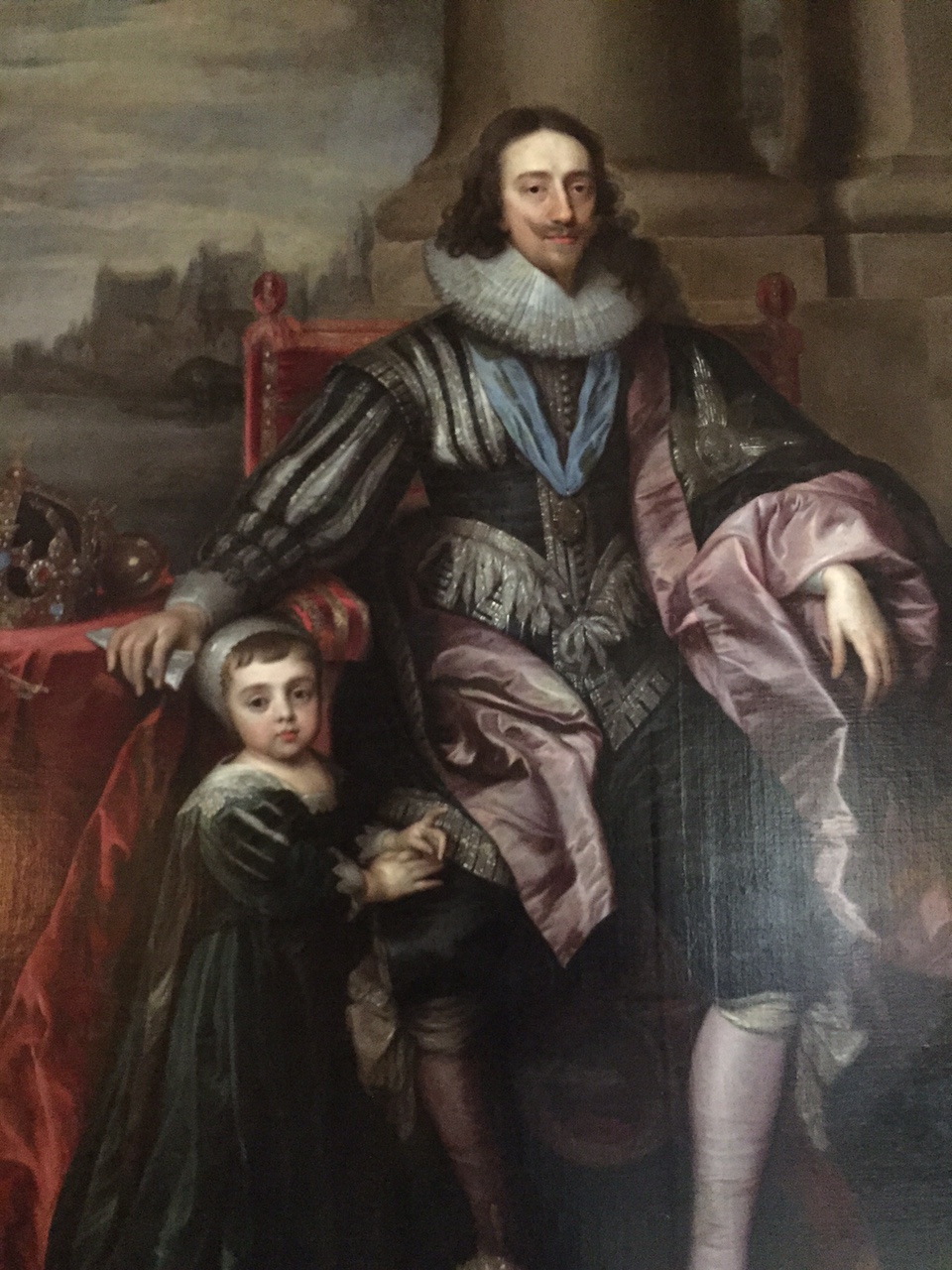
Charles I was an unpopular king, but there are countless images of him. I can spot one at twenty paces.  The painting above is at Blickling, but I forgot to take a picture of the caption so I don’t know the artist.  I think the future Charles II is shown with his unfortunate dad. The pointy beard at the bottom of Charles I’s long narrow face is always a giveaway. I’m sure I’m being way too hard on the man, but to me he always looks very aloof, with his head in the clouds.

After Charles I lost his head at Whitehall, a Commonwealth of England was declared, but it was really more of a dictatorship led by Oliver Cromwell.  Before too long the people wanted their monarchy back. This is a huge simplification of events and people that are still hotly debated, of course. Oliver Cromwell was dug up and beheaded for treason after he was already dead, but many people consider him the father of British democracy.  Anyway, once again England had a hereditary King, Charles II.  I’d have thought the coronation chair of Charles II was an important piece of furniture.

I was pretty sure the kindly docent was mistaken about the tall red velvet chair.

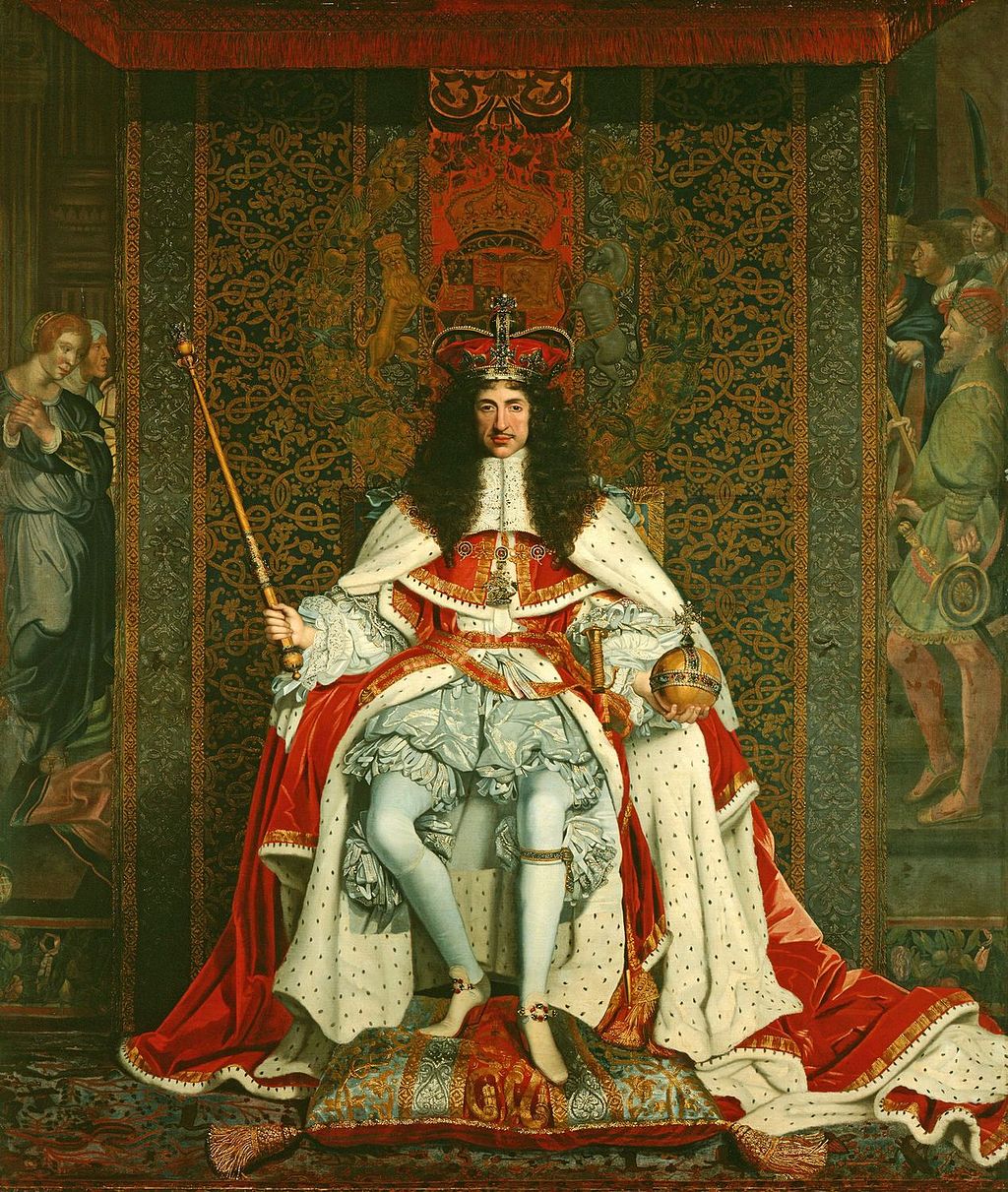
Charles II of England in Coronation Robes, John Michael Wright, 1661-1662, Public Domain

Charles II of England in Coronation Robes, John Michael Wright, 1661-1662, Public Domain

I found a coronation portrait of Charles II with a much grander coronation chair just visible behind him.  He was crowned at Westminster Abbey in the full splendor that the English have always done so well. Now I think the chair I saw may have been used for something else–maybe a grand banquet following the coronation, built high so that everyone could see the new King.  Or maybe Charles II just had especially long legs and this was his favorite chair. I’m not willing to give up the idea that Charles II sat in that chair.

Anyway, I love the way the British love their history.  I would not dream of contradicting a lovely, friendly docent who is working as a volunteer in a National Trust property. If I heard a mistake, I would always just let it slide.  But if a Brit heard a howler of a mistake, trust me, there would be a swift and stern correction. People in the room would immediately gather round and join the debate. Events from 400 years ago might as well have happened yesterday. They are lovingly preserved in memory and in physical objects.

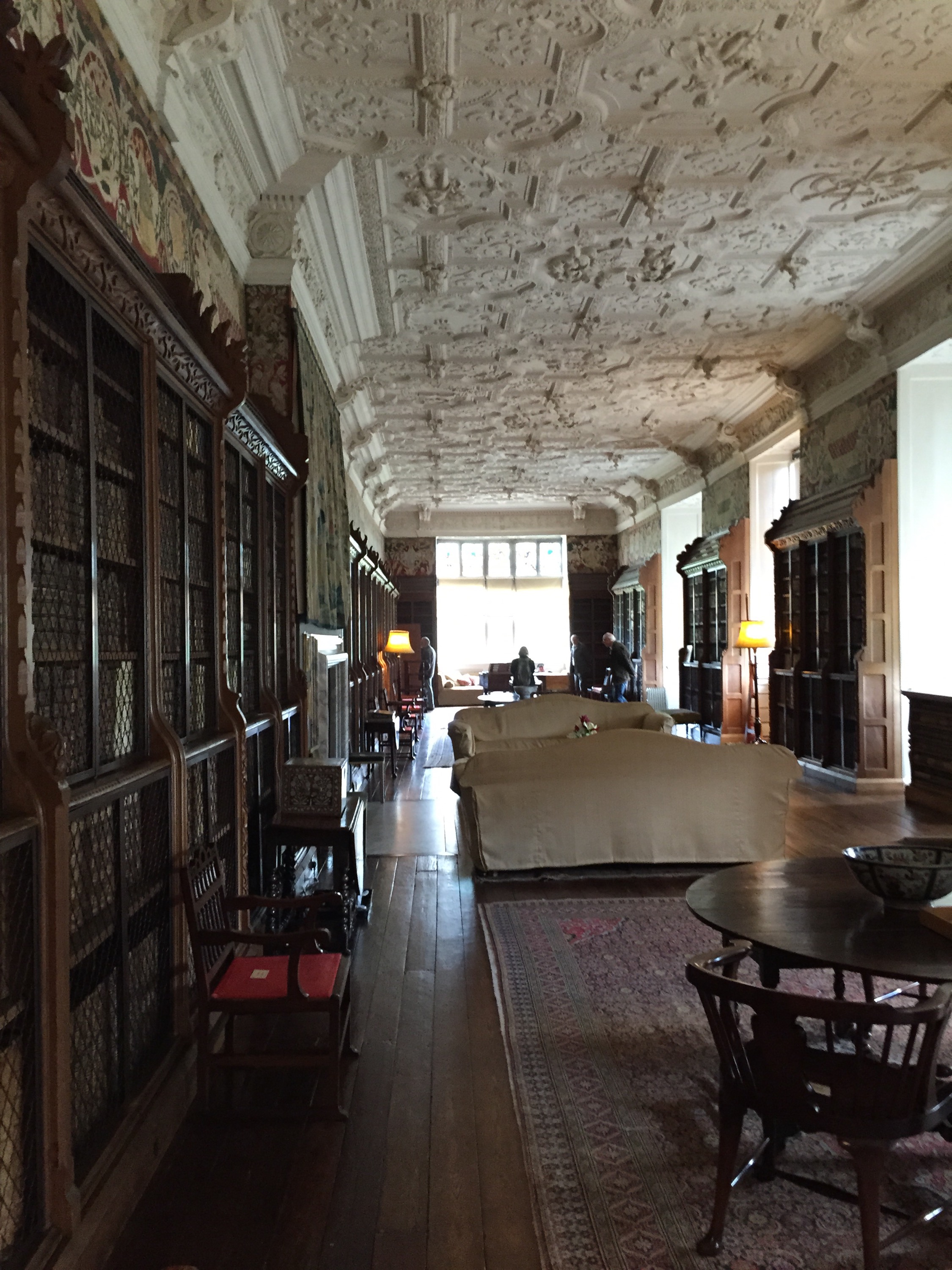
The Oak Gallery at Blickling is magnificent. For the price of a National Trust pass, a visitor can trace the footsteps of Henry VIII and several of his queens. When Henry was gone, Queen Elizabeth I was a frequent visitor. Anne Boleyn was most likely born on the property, though not in the present house.  On the anniversary of her death, she is said to arrive at the house in a ghostly carriage, sadly carrying her head.   Did Charles I or II walk this gallery? I’m not sure.  I’d better go back for another visit.

Join me next time for more explorations in the art and history of Europe and the British Isles!