Category Archives: Explore Europe

Kids and Their Costumes

ChildMilitia

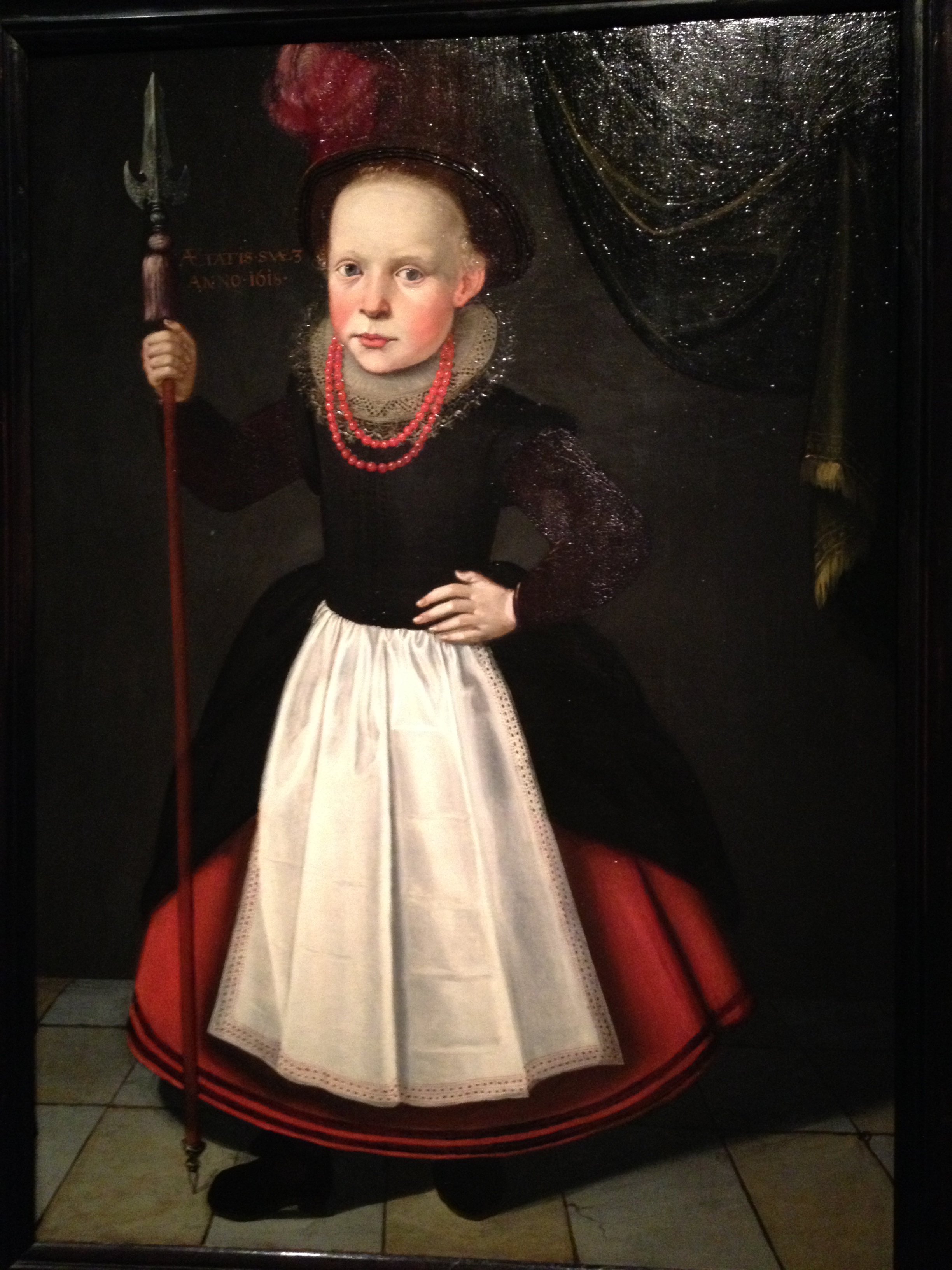
Last month in the Amsterdam History Museum, I admired this touching portrait of a solemn little boy dressed up as a militia officer, complete with a pike in his hand.  This child was no doubt a member of a wealthy family in the Netherlands of the 1600s.  The city militia of the time was not so much a military or police organization as an exclusive club for the elite.  This child’s family hoped he would grow up to be a civic leader.  At that time, children were generally portrayed as miniature adults. Still, parents must have had the same feelings present-day parents have.

images

This portrait reminded me of the costumes present-day children wear, for Halloween and for everyday play. The firefighter’s costume above is for sale at http://www.rakuten.com/prod/kids-baby-halloween-costume-firefighter-fireman/211550071.html?sellerid=23844739. I saw kids trick-or-treating in similar costumes last week.

We all want our children to grow up to be useful members of society.  I’m sure that parents in the 1600s, like present-day parents, watched each stage of their childrens’ development with a mixture of pride and apprehension.  Then as now, parents must have wished they could prolong childhood for their little ones.

Join me next time for more explorations in the art and history of Europe!

Woman in Blue


Vermeer's "Woman in Blue Reading a Letter," Rijksmuseum website

Vermeer’s “Woman in Blue Reading a Letter,” Rijksmuseum website

One of the masterpieces in Amsterdam’s Rijksmuseum is Johannes Vermeer’s “Woman in Blue Reading a Letter.”  In the newly-renovated museum, there are now four exquisite Vermeers all in a row.  In his entire life the master Vermeer only produced only a total of about 34 paintings.  He never became rich or particularly famous.  He ran an inn and acted as an art dealer to make money, not to mention having 15 children, of whom 11 lived beyond infancy. The wonder is that he had any time or energy at all to paint.  He lived in the small town of Delft for his entire 43 years, from 1632 to 1675.  A local patron bought most of his paintings, so his name never spread much beyond Delft until long after his death.

Today, crowds gather in front of Vermeer’s small, jewel-like paintings.  They reward close study. In this painting and in others, Vermeer splurged on expensive blue pigments, lapis lazuli or natural ultramarine. This particular painting was just recently restored, unlocking the glorious blue and the luminous light.   Almost all of of Vermeer’s paintings were small domestic scenes, recording humble lives in humble homes. Through the centuries, the beauty of everyday life shines through in them.

Join me next time for more explorations in the art and history of Europe!

Hemingway the Shredder Dude?

Hemingway on skis in 1927, public domain

Hemingway on skis in 1927, public domain

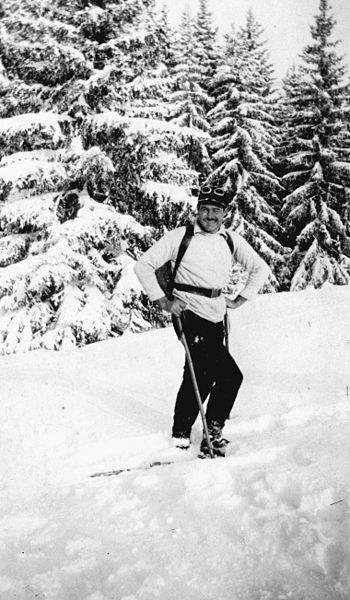
I liked seeing the town of Schruns last month.  It was Ernest Hemingway’s beloved Austrian winter home during his Paris years, when he was young and innocent and struggling to become a writer.  Skiing is the one Hemingway exploit I can relate to.  Big game hunting, hauling marlin out of the sea, wartime ambulance driving?  They’re all too macho, too far outside my experience.  But I know what it feels like to be alone on a mountain in a blizzard.

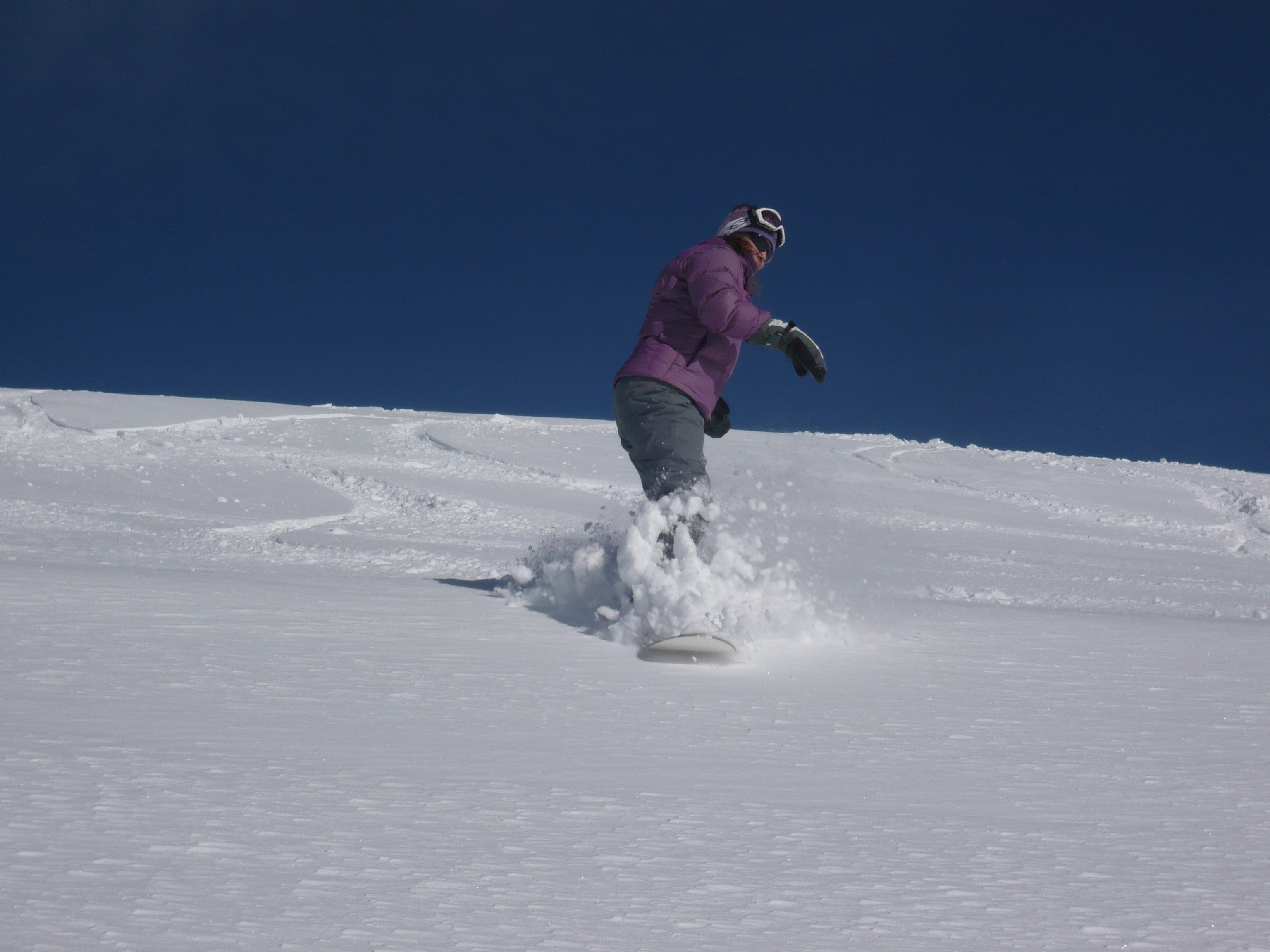
I’m not much of a back-country skier, at least so far.  Mount Werner in a blizzard is about as adventurous as I get, and it’s enough.  Some people are fair-weather skiers.  I prefer snowstorms, when powder piles up so deep and fast that my tracks fill in behind me. When the sun comes out, so do other skiers. It’s great at first, and makes for nice pictures. But soon the snow begins to get heavy and develop a crust. I like storms. Icy winds and blinding snow?  Bring ’em on. I love the mountain on storm days because hardly anyone else is out there.  Good. The mountain is mine.

MePowder4 MeSnowGhosts

I switched from skiing to snowboarding eleven years ago.  The learning curve was pretty steep, but it’s much easier on the knees.  I hope to be shredding well into my old age.

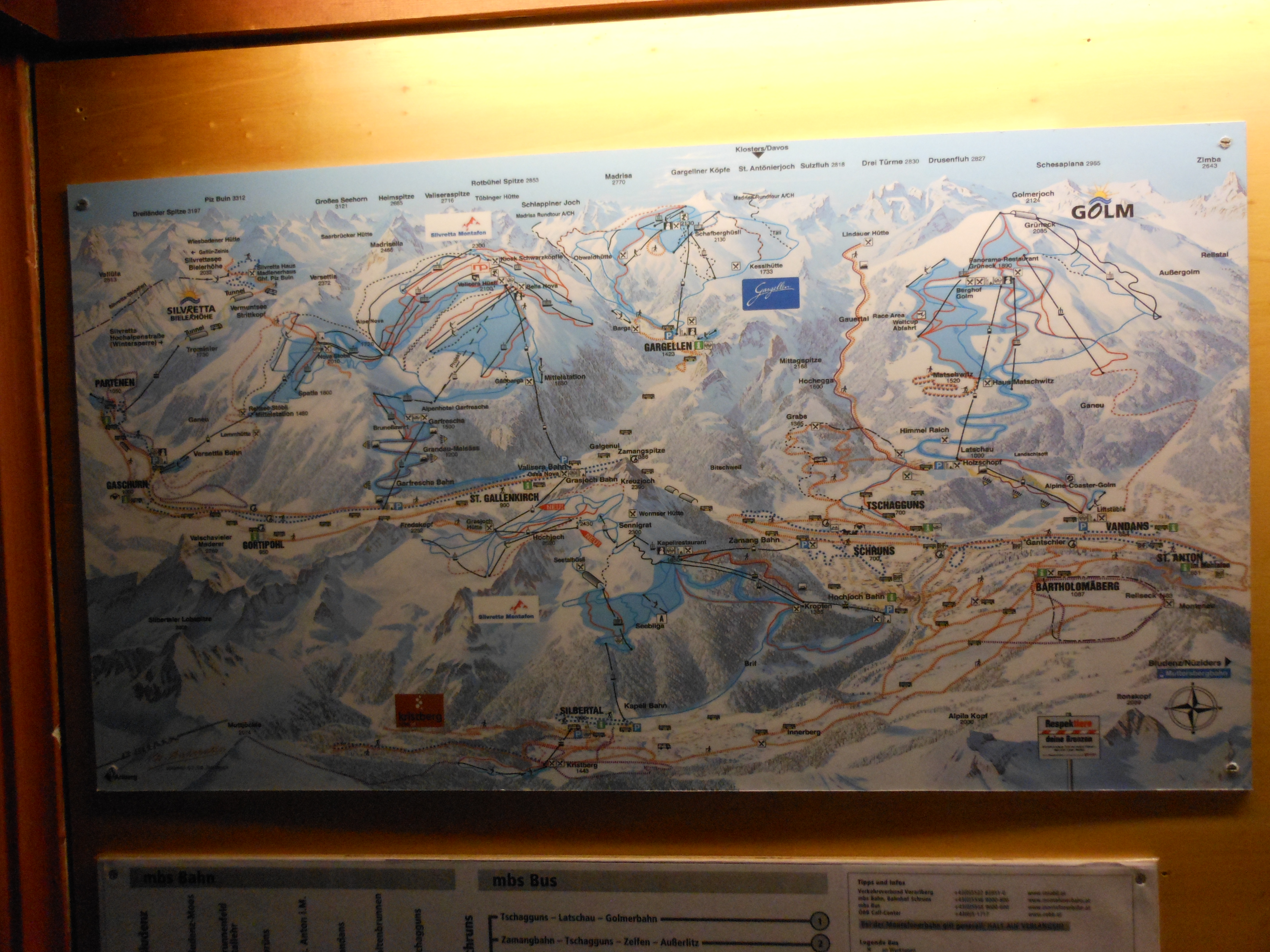
Today, Schruns still looks like a working town, unlike nearby Lech and Zurs.  European royalty and others with deep pockets fill the expensive hotels and crowd the expensive restaurants  in those resorts. In Schruns, there are probably no ski valets and it takes some doing to get to the lifts. In the 1920s, none of the present-day ski runs were neatly marked with signs.  The local people were mostly busy making a living.  They had no time for snowy hikes up into the high country just in order to risk life and limb skiing down.  Besides, they believed that devils lurked in the high mountains.

Schruns-Tschagguns Ski Map

Schruns-Tschagguns Ski Map

In Hemingway’s day, everyone who skied was a back-country skier.  There were no gondolas with heated seats and Wifi.  There were no chairlifts.  There were not even any humble tow ropes. As he recalled his life in A Moveable Feast, Hemingway wrote, “Skiing was not the way it is now, the spiral fracture had not become common then, and no one could afford a broken leg.  There were no ski patrols.  Anything you ran down from, you had to climb up to first, and you could run down only as often as you could climb up.  That made you have legs that were fit to run down with.”

Amazon

Hemingway’s mentor Walther Lent took small groups, including Hemingway’s cronies and sometimes his wife Hadley, up into the untracked high country for the ultimate reward: “unroped glacier skiing, but for that we had to wait until spring when the crevasses were sufficiently covered.”

On a ski trip to Switzerland years ago, I once skied around the rim and down the steep slope of a glacier, ending up at a remote train stop in a valley.  I don’t really claim bragging rights, because I was in abject terror most of the way down.  But I do know what a crevasse looks like:  an impossibly deep blue chasm opening up in the rutted, hard-packed snow in precisely the spot where I think I can manage a turn.  There’s no time to plan.  Survival means improvising, and later wondering how you did it.  Now that’s skiing, Hemingway style.

If Hemingway had lived to see the advent of snowboarding, would he have tried it in Sun Valley, where he lived out his final days?  I like to think so.  I wish he had lived just a little more prudently, for the sake of his liver and his aging knees.  Maybe he would not have succumbed to despair and left us too soon.  I doubt that he would wear knee pads like I always do.  I do know that if he ever buckled on a snowboard on a powder day, he would want to do it again.

Dude, he would be strong and sure and straight and true.


Amsterdam!

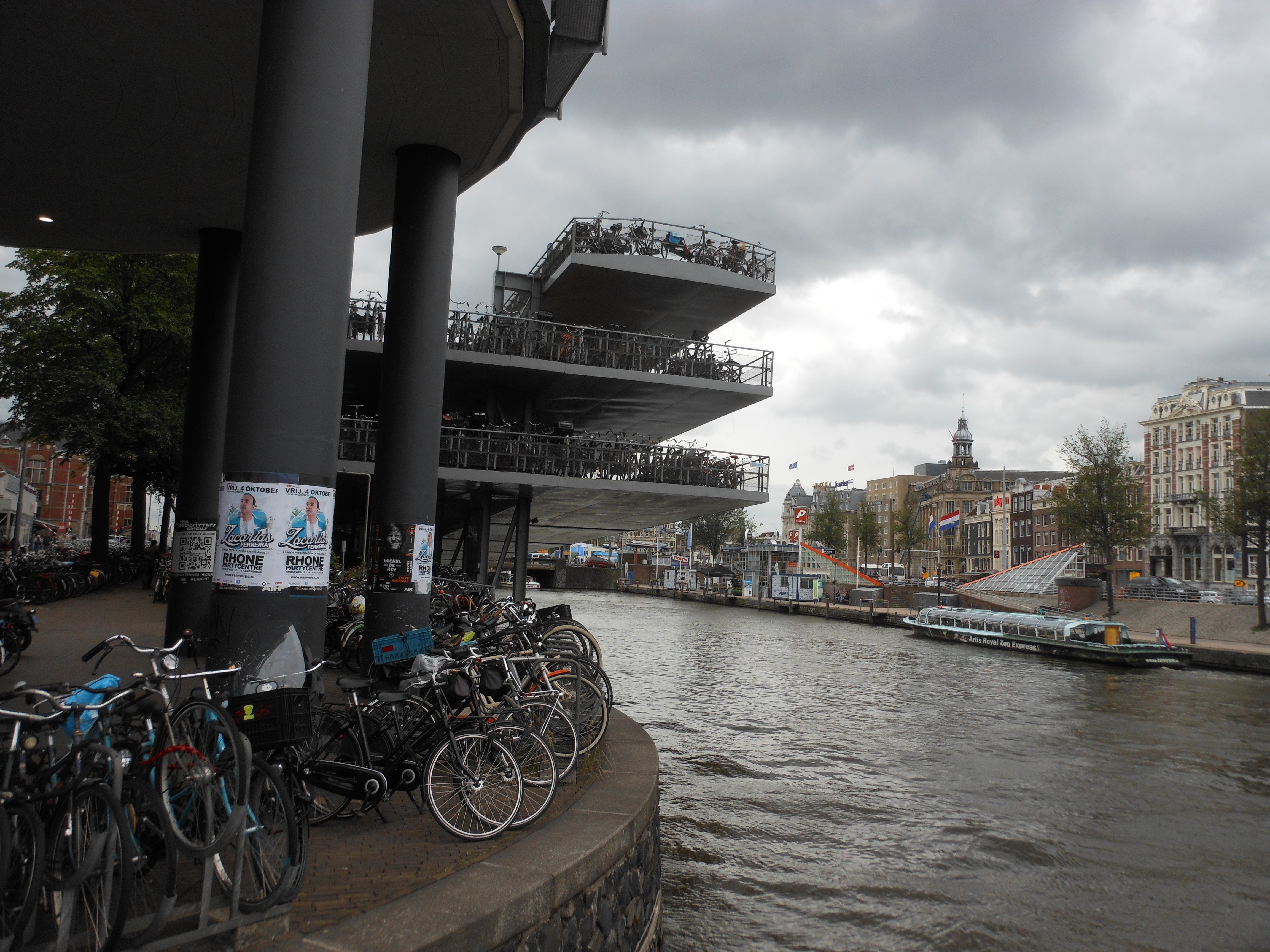
Just arrived, late in the afternoon.  Tomorrow will be a museum day in this city of great museums.  Today was a day for walking the canals, people-watching and figuring out how to dodge trams and bikes. People of all ages ride bikes in all weathers here.  I’m sure a  bike is the best form of transportation in this compact, crowded city center. The bikes themselves are simple and workmanlike, mostly one to three speeds.  Many of them have years of patina. But a lot of skill is involved in riding one.

Just outside the Central Station, there’s a 3-story free bike garage maintained by the city.  I’d be hard put to find a place to park a bike there; they overflow into the surrounding streets.

Bikes

The locals are adept at weaving in and out of pedestrians, car traffic and other bike riders.  No one wears a helmet and no one has a bell. I’ll be lucky to avoid getting hit by a bike, never mind riding one.

Tomorrow I’ll set off on foot to explore the city!


From the Grand Tour to the American West

In my last post, I mentioned the delightful book Nothing Daunted by Dorothy Wickenden.  The subtitle is “The Unexpected Education of Two Society Girls in the West.”

513BtSEHi7L._SL110_

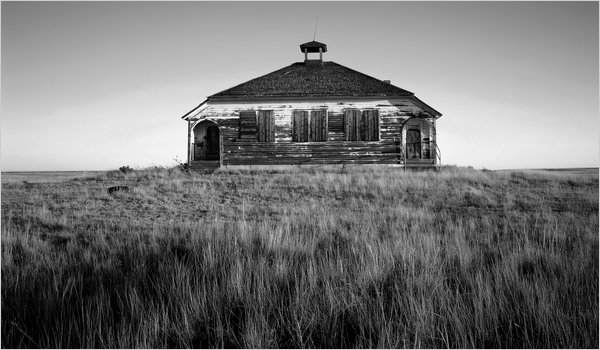
Dorothy Wickenden, the executive editor of The New Yorker, found a treasure trove of letters written by her grandmother, Dorothy Woodruff, who with her best friend, Rosamund Underwood, answered an ad for teachers in a one-room schoolhouse in remote northwestern Colorado.  The young women had graduated together from Smith College.  They were twenty-three and had no intention of settling in right away to their expected life of marriage, charity work, and society events.  So in the summer of 1916, off they went on the grand adventure of their lives.

Photo by Lawrence M. Sawyer/Corbin, from NYT review cited below

Photo by Lawrence M. Sawyer/Corbin, from NYT review cited below

The schoolhouse was in an area so remote they had to live with a homesteading family and ride horseback to work every day, rain or shine.  Their students had to do the same; in winter some students had to ski to school on makeshift skis made of barrel staves.  Not surprisingly, the young women found themselves courted enthusiastically by local cowboys and also by educated men–including the one who had placed the ad, Ferry Carpenter.  He was a Harvard-educated lawyer who had gone west to make his fortune.

The young women had lived lives of privilege; after college, they had been lucky enough to take the Grand Tour.  They spent a year in Europe, studying French and seeing as much as they possibly could.  They went out of their way to see art and experience theater and dance. They judged the women in Rubens’ paintings “beefy,” but loved most of what they saw.  In Paris, they saw an exhibit by Matisse and Picasso.  They were not impressed, especially after having spent a lot of time with the masterpieces in the Louvre. Dorothy thought Matisse’s work was “like that of a little child.” Many years later, she regretted passing up the chance to buy some of those paintings for a song.

They saw Nijinsky, then twenty years old, dance in Scheherazade, the most famous ballet produced by Sergei Diaghilev’s Ballets Russes. They saw Isadora Duncan in her premiere performance of Orpheus.

Dorothy and Rosamund toured France, Germany, Italy, Spain and Holland. All along the way, they wrote long letters home.  They also collected postcards.  Later, when they went off to teach in the one-room Colorado schoolhouse, they brought their postcard collection.  Their students (and the parents of the students) eagerly studied the postcards as clues to the wider world.  I’d like to think that many of them eventually went on adventures of their own, following the lead of these two remarkable young women.

There’s a review by Maria Russo in The New York Times at http://www.nytimes.com/2011/06/26/books/review/book-review-nothing-daunted-by-dorothy-wickenden.html?pagewanted=all&_r=0.

Hitching a Ride on a Steam Train

My friend, Judy Gunthorpe, sent me an entertaining message about a trip on a piece of history:  a steam train in England.  She lives in Bristol–very close to Tyntesfield.  Steam trains were an important part of the industrial development that allowed people like the Gibbs family of Tyntesfield to build their fortunes. Judy and I must have been on the same wavelength!  With her permission, I’m sharing her article below.  (I say she needs her own blog–I hope this is a start).  All aboard!
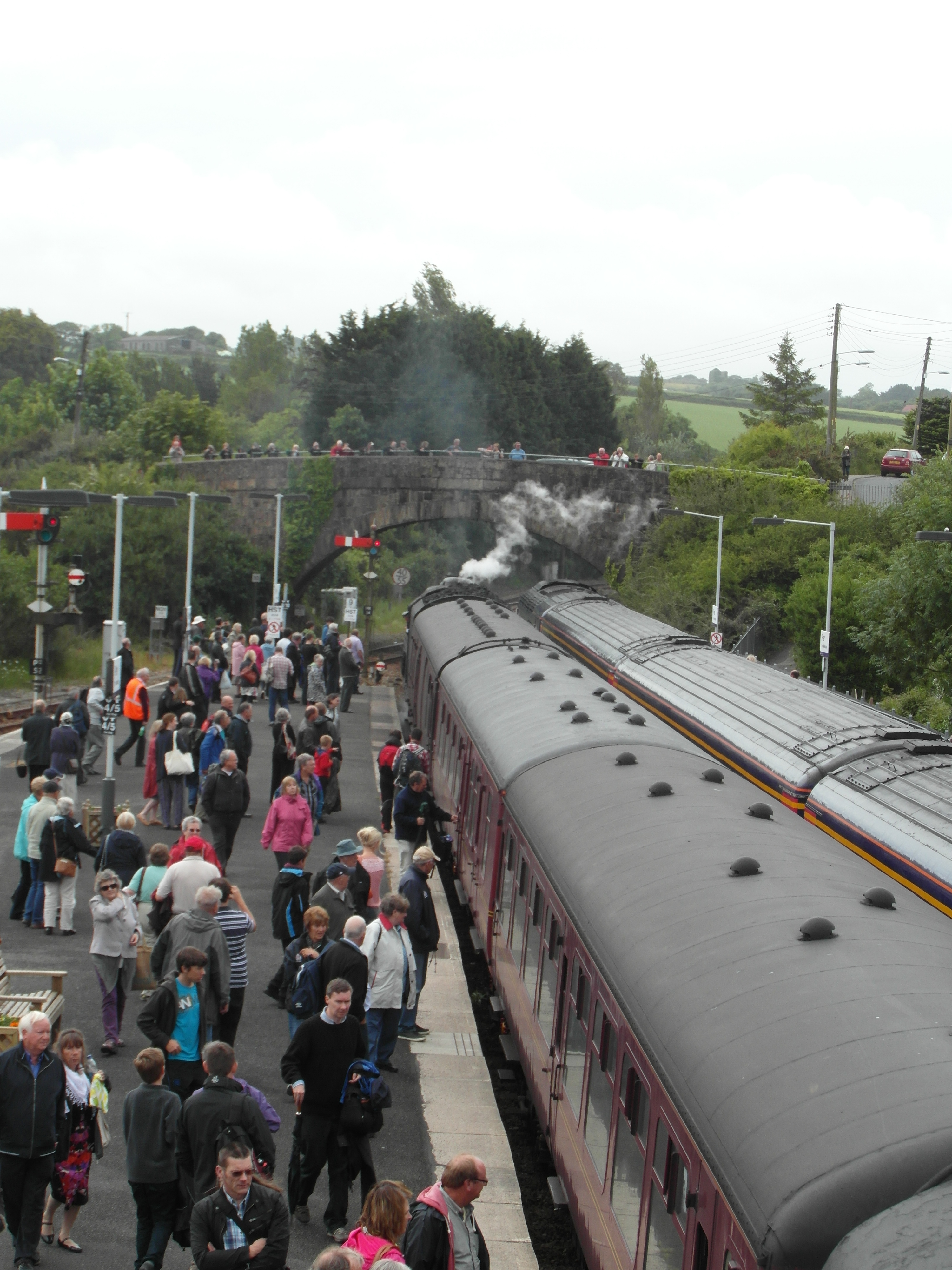
Engine Arriving

Engine Arriving

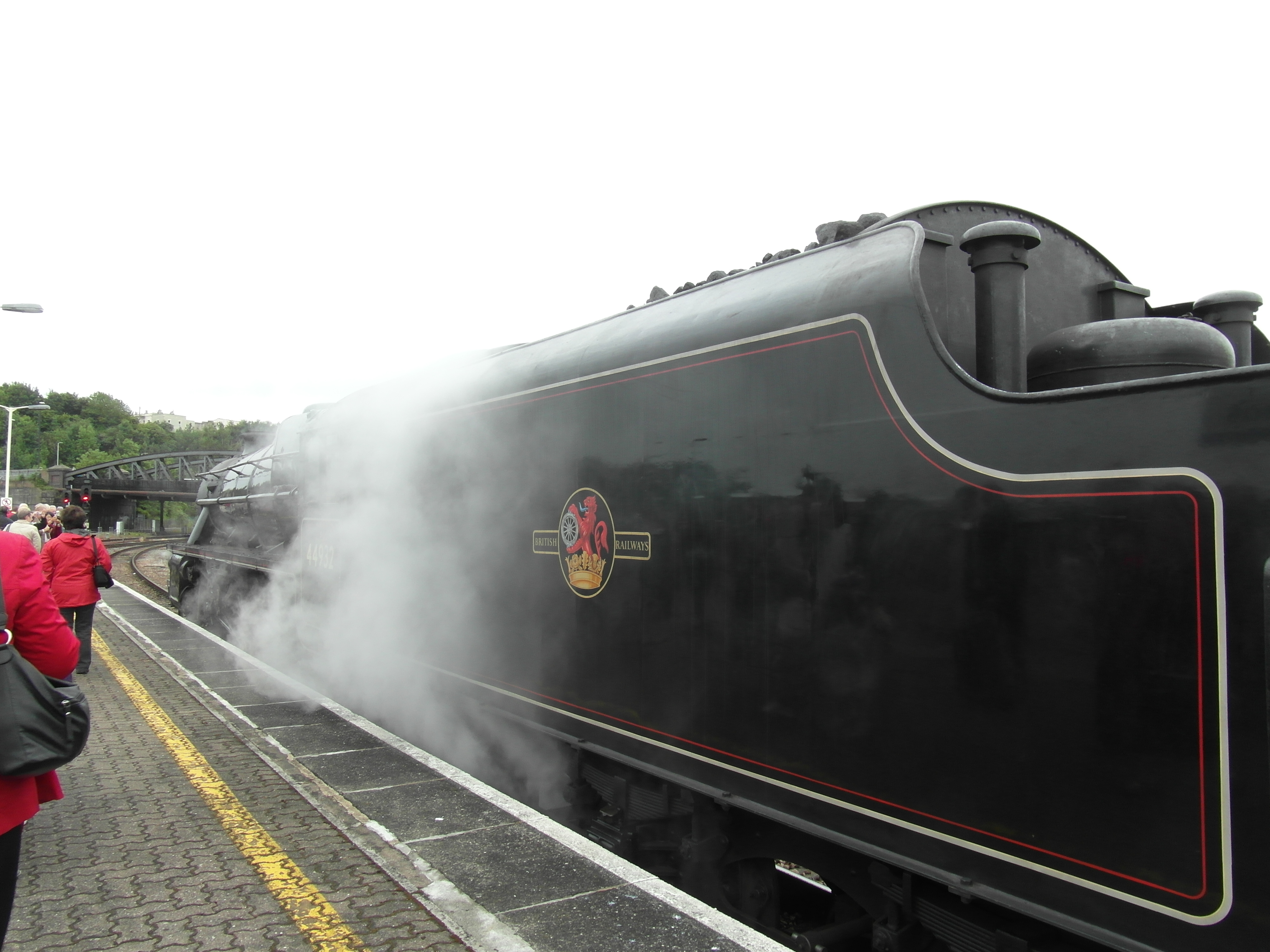
It’s 8.30am on a Sunday morning and I’m sitting on a steam train at Bristol Temple Meads station. Without any fanfare, a platform overhead light turns to OFF, two guards wave their paddles and, imperceptibly, as if magically, we glide forward.

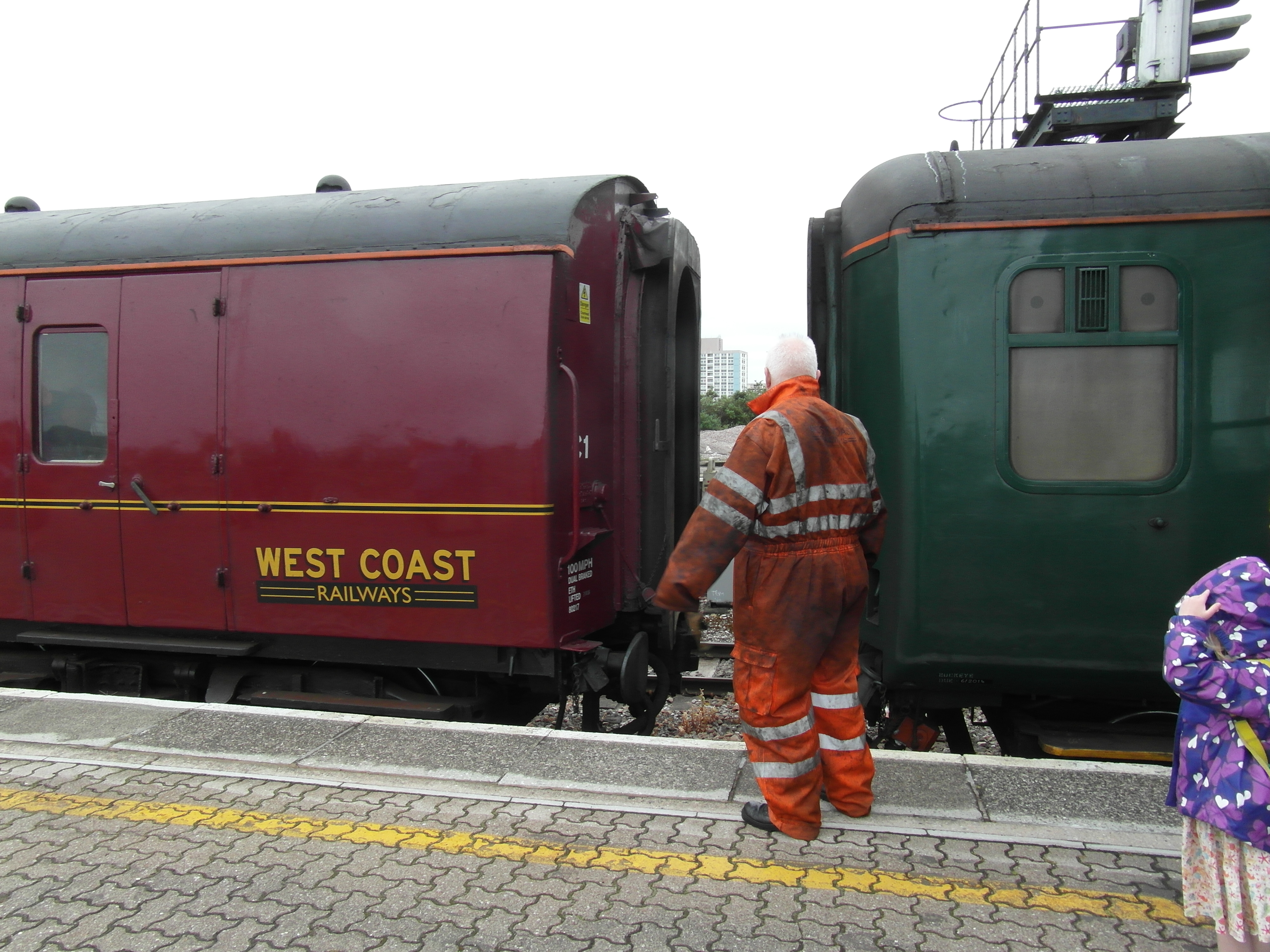
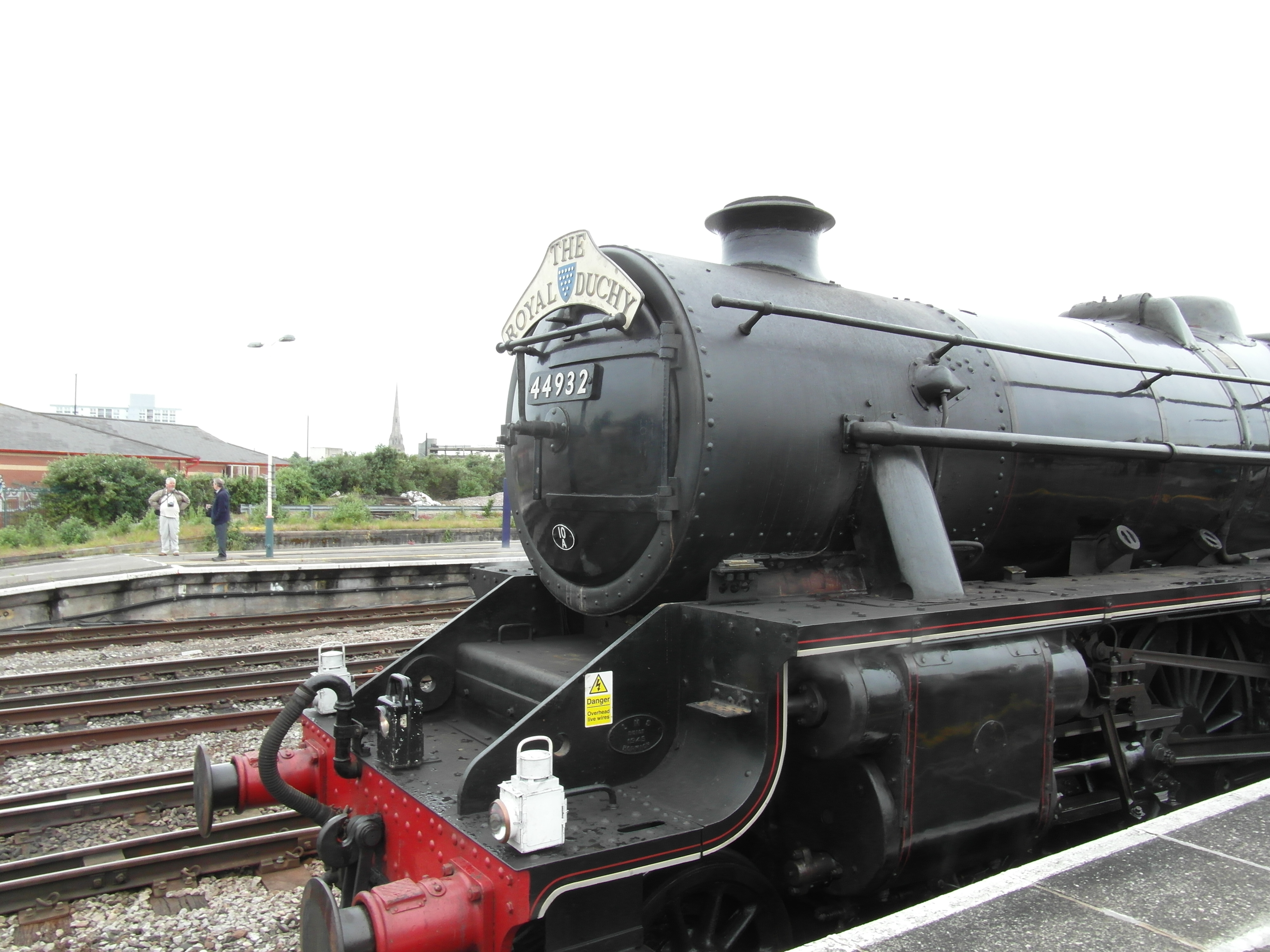
This is the Royal Duchy trip organised by the The Railway Touring Company and we are heading for Par in south Cornwall. There are 8 carriages and a kitchen carriage. Immediately behind the engine are four Premier coaches where passengers have paid £179 for a full English breakfast and a three course ‘silver-served’ dinner. The next three coaches are First Class, offering morning coffee and Danish pastries and afternoon tea with scones and finger sandwiches. We are in the single Standard carriage of 64 seats with tables of four, where everyone has brought their own picnic and ‘sharing’ happens!! (At half the cost of the Premier service we think we’ve got the best deal).
Flock of Passengers

Flock of Passengers

The other couple at our table have driven over from Lincoln and are steam aficionados! They stopped yesterday at Cheltenham Racecourse for a mini local steam ride. Armed with DIY safety specs from Wicks, they spend most of the journey south with their heads out of the door window. Hmmm!!
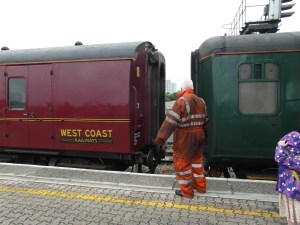
Coupling Up to Carriages

Coupling Up to Carriages

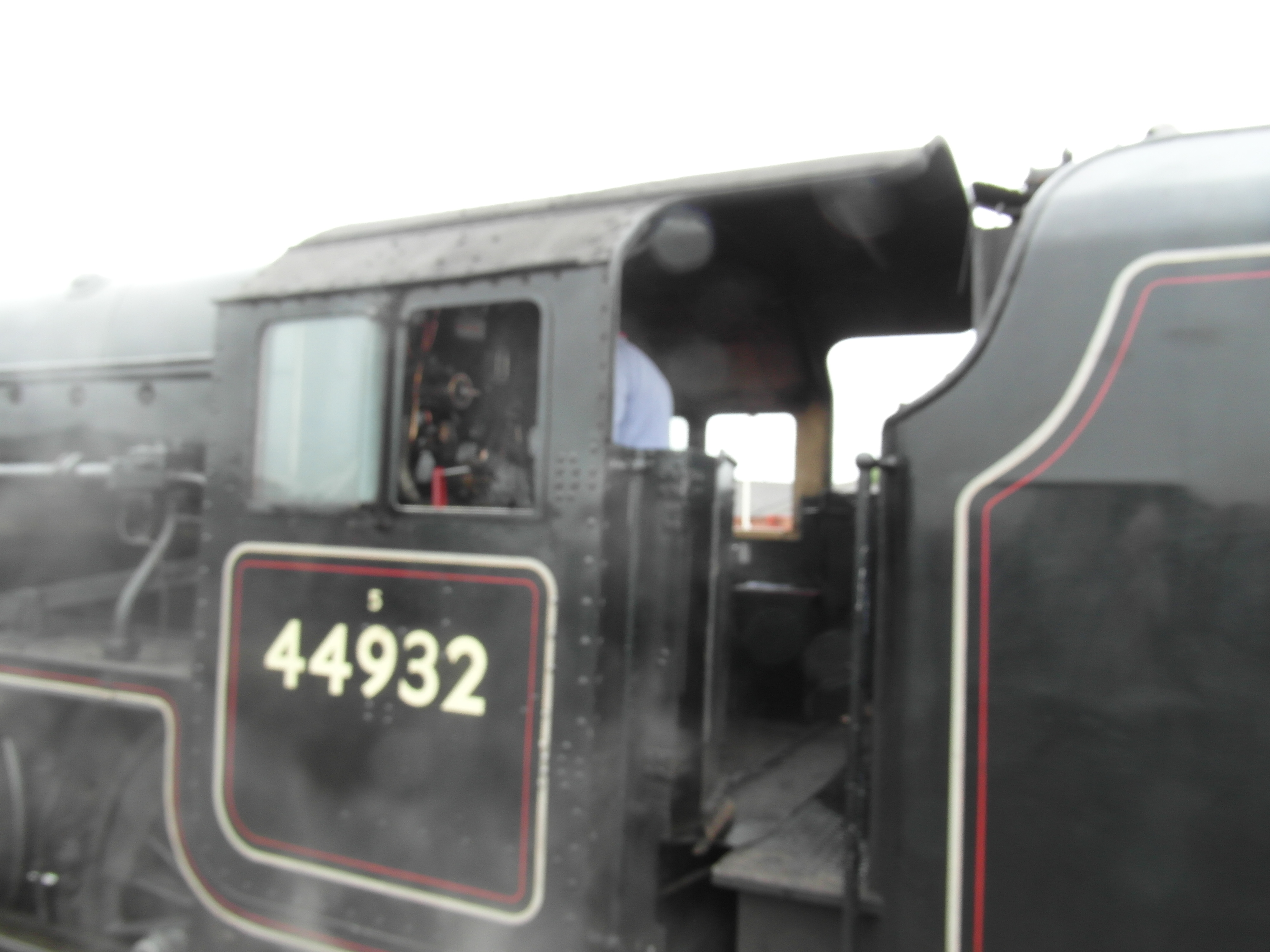
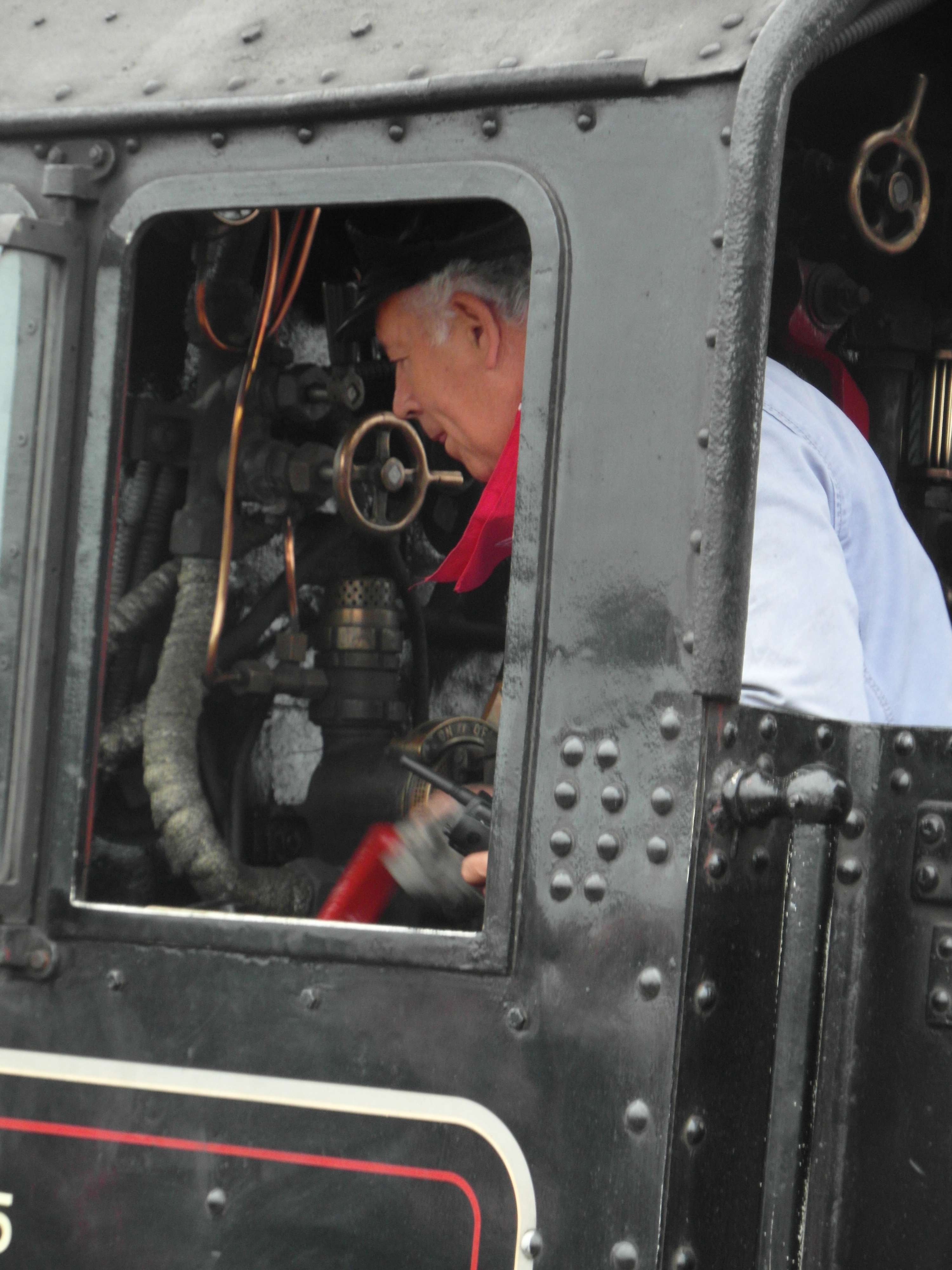
We stop at various stations to collect more passengers and there is almost an hour’s Water scheduled delay at Exeter.  The old ‘automatic’ boiler water pipes alongside the tracks have been removed, so refilling now requires a very different process. During this stop we actually climb onto the footplate, warm ourselves by the open, roaring furnace and chat to the drivers. They are dressed in denim with the compulsory neckerchief. They tell me its ‘jolly chilly’ in their open cab compared to the protected equivalent of a modern engine.
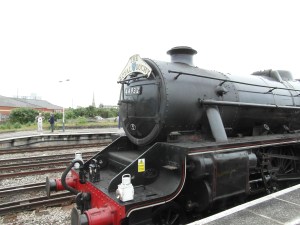
Looking Good

Looking Good

Warned by the early morning weather forecast of ‘bad weather ‘over the south-west we are prepared with kagools and umbrellas. It was cold but dry as we left Bristol but by Taunton the drizzle had begun. Along the causeway towards Teignmouth the rain cascaded down the windows.

All along the route we see steam fanatics waiting on balconies, in fields, in back-gardens, on bridges. They wave, click cameras and jot down details. The stations appear to have suspended the ‘ticket only’ entry to platforms, allowing anyone / everyone access to this special engine.
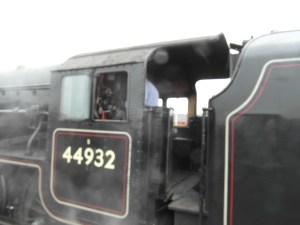
The Mighty Engine

The Mighty Engine

At Dawlish Warren we pull onto a side track to allow a faster Intercity to race past, and at Newton Abbott there is an unscheduled hold-up because a Great Western train needs to disembark some unruly passengers! This presents a disadvantage when we do set off; ahead is the worst climb of the journey – the third steepest main line bank on the British mainland – and we’ve no momentum to assist us. As we head for the Dainton Tunnel we are almost at walking pace. It’s when the engine struggles up these inclines I can hear the chatter of the wheels – ‘I think I can, I think I can’!!

Some years ago my husband Robin saw a Bristol-Penzance rail offer for £10 return. Collecting the tickets, he was delighted to find that, for another £5, we could travel First Class and enjoy unlimited tea, coffee and biscuits. We planned to take the bus on to Land’s End. However, due to ‘wet rails’, we arrived five minutes after the bus left!! Walking to St Michael’s Mount the weather was so cold and miserable I needed a brandy to recover!

Robin produces a bag of strange tasting gummy sweets. On inspection, I see they are from Target, so originated in Colorado. That makes me look closer – to find the sell-by date was December 2012. He argues they are pretty inert so exceeding the date by six months will have no effect.  Later, during our 3 hour turn round time at delighful and scenic Charlestown, near Par, we enjoy afternoon tea. Robin has a scrumptious genuine scone and cream and I manage to demolish a generous slice of pecan pie.  Sadly, within 5 minutes of leaving the coffee shop, my cake has left me!!  Now, was that caused by those odd sweets????
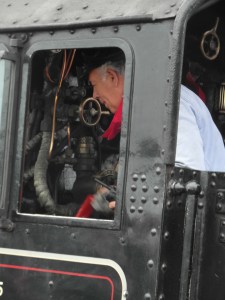
The Man in Charge

The Man in Charge

The journey home always seems shorter that the outward leg, and dusk falls as we cross the Somerset levels. We notice bats flitting round and the cattle, who all day have fled from our unusual sounds, simply lift their heads to look. As our carriage attendant collects the rubbish and tidies things away, I eavesdrop surrounding conversations; pet cats, hospital visits, long train journeys, future train trips, gradients and speed. My own thoughts revert to my father putting me on a train at Liverpool Lime Street and my mother meeting me at Euston Station for a half-term break. Yes, we could travel alone as children safely in those days. It’s time to snooze  – until the motion slows and we gently settle back on Platform 10 in Temple Meads.  For now, we are all ‘steamed out.’

Thank you, Judy!  It’s almost as good as being on that train myself!

Join me next time for more adventures in exploring Europe and the British Isles.

Tyntesfield: Victorian Splendor Rescued

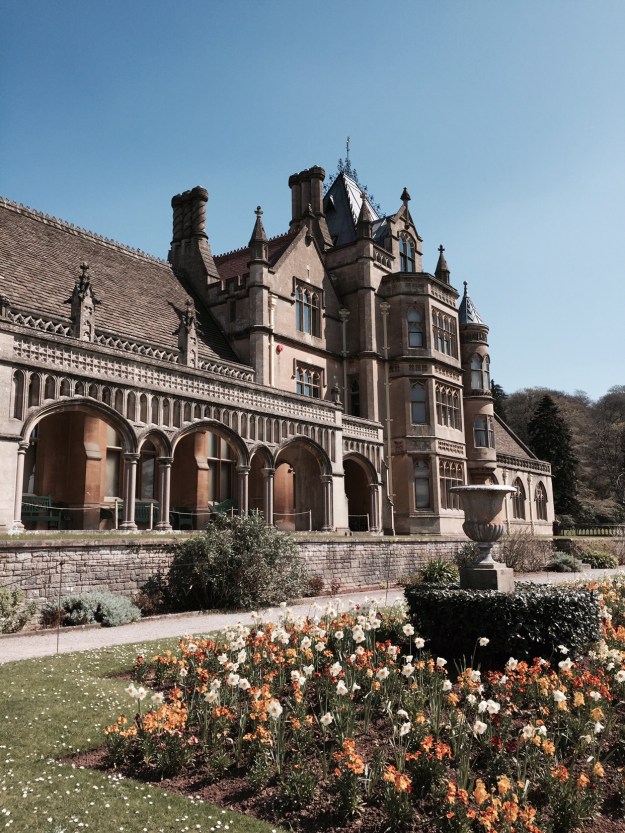
Just outside Bristol, and not far from Bath, stands one of the most beautiful country homes in England. It has only been open to the public since 2002, when the National Trust acquired it.  I visited a couple of years after the opening and can’t wait to return.

By the time the 2nd Lord Wraxall, known as Richard, died in 2001, he was the only person living in the house.  The house had been hit by bombs several times during the Bristol Blitz of World War II, and had never been properly repaired. Birds and bats took up residence in whole wings of the house. Lord Wraxall had maintained the house as best he could, but over the years the four generations of the family had simply closed off areas not in use.  So the house contained a treasure trove of historical belongings. For example, there were packages of shirts dating from the last century, still in their original wrappers as they came new from the shop.  And Tyntesfield was the last High Victorian house available for purchase in all of England.
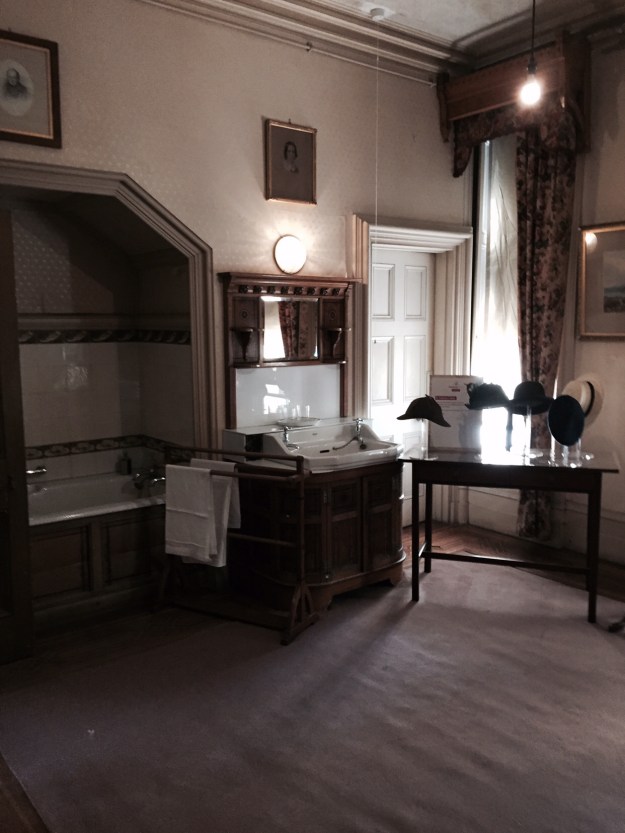
Lord Wraxall’s will specified that the house be sold and the proceeds divided among 19 heirs.  The market value was about 20 million pounds, or  about $31 million. In addition, double or triple the purchase amount was needed for repairs. Sotheby’s took charge and began cataloging the house’s contents for auction.

Various gazillionaires were interested. (The press reported that Madonna, Kylie Minogue, and Andrew Lloyd Webber were looking).  But the National Trust of Britain, one of the two main preservation societies, managed to raise the purchase money within a period of 50 days.  (Controversy arose when a semi-secret deal with the National Lottery provided some of the money for this project that many considered “elitist”). The Trust took possession in July of 2002. This was the first new acquisition by the National Trust in many years, and the largest in its history.  Today, over 800 paid and volunteer staff work on the estate, 3 times the number at any other National Trust property. First order of business was repairing the roof. A free-standing scaffold the size of 10 tennis courts covered the entire structure for 18 months.  Then the entire house had to be re-wired and re-plumbed.  An elaborate fire protection system was installed. One by one, rooms were cleaned, restored and the furniture carefully arranged, using historic photos and descriptions.

In the meantime, visitors were welcomed.  The Trust had determined that the more people were able to see of the property, the more they wanted to donate and volunteer. Instead of the usual years of construction followed by a great unveiling, the renovation has proceeded with the enthusiastic participation of legions of volunteers.  The renovation itself is a great educational project, unprecedented in National Trust history. Elitist?  Not today.  The estate buzzes with the activity of volunteers, workers, school groups and tourists eager to bask in a lost way of life. I’m writing a number of posts about Tyntesfield because it’s such a fine example of the work of the National Trust. We can learn so many lessons from the ups and downs of a house’s history.  Good or bad, the events of the past help us figure out how to live in the future. I notice that the National Trust has now published a book all about Gibbs family history, Fertile Fortune: The Story of Tyntesfield, by James Miller, National Trust Books, 2006.  If I don’t acquire the book beforehand, I’m sure that on my next visit I’ll walk out of the gift shop with a copy. Join me next time for more explorations into the art and history of Europe and the British Isles!

Tyntesfield: The House that Guano Built

In 1842, William Gibbs’s brother Henry died during a visit to Venice.  In the same year, the South American agent for the family firm, Antony Gibbs and Sons, made a risky decision. He took out government contracts for the collection and shipping of guano from barren islands off the coast of Peru.  What is guano?  Solidified bird droppings!  William Gibbs was alarmed by the large loans necessary, but the gamble paid off.  Soon the company had a monopoly on the business, which shipped vast amounts of agricultural fertilizer all over the world.

William became a very rich man. He happily set about transforming a fairly simple Georgian house into a dream home for his growing family.  The beautiful result was Tyntesfield, completed in 1865.

William lived contentedly with his family until he died in 1875 at age 85.

Themes from nature appear everywhere in the house.

In his later years, he was affectionately known as “Prior,” because he turned his attention to spiritual matters and to good works in his community. The exquisite chapel was never consecrated, but it’s beautiful all the same. Family and servants gathered for daily prayers, and I doubt that anybody minded taking a break in this beautiful space.

Subsequent Gibbses made substantial additions of their own, and the house rang with the laughter of family and friends for many happy years.

Unlike grand houses built for show, Tyntesfield was built solely for the enjoyment of a family.  The wonderful library was filled with carefully catalogued books that were used on a daily basis by anyone interested.  Those books are still there.  As soon as the room was completed, the family began using it for amateur theatricals.

By all accounts, servants at Tyntesfield were well treated and stayed with the family for many years.

On my very first visit, shortly after the house opened, the servant quarters were just being explored.  It was possible to see, behind the scenes, how a grand home actually operated.  There were laundry rooms, boot rooms, a still room for making jams, a luggage room, rows of large containers for carrying hot water to the main bedrooms, and a kitchen with a fireproof ceiling.

House staff included a butler, two footmen, a housekeeper, a lady’s maid, a cook, six housemaids, a nurse, two nursery maids, two scullery maids, and a hall boy.  Actually, this was  a fairly modest staff for such a large house and family.  I like to think the Gibbs children, raised with the strong Gibbs work ethic, made their own beds.

Join me next time for more explorations in the art and history of Europe and the British Isles!

Briticisms

One day in London, I was standing in a customer service line at Harrod’s.  The well-dressed woman in front of me was unhappy with the answers she was getting from the man behind the counter.  I heard the woman say icily, “I find your attitude most reprehensible.”  The man behind the counter, amazingly, blanched, looked around to see who was watching, and gave her what she wanted.  That’s England.  An American customer in the same situation might say, “Hey, gimme a break” or “I want to see your supervisor, ” only to be met with a blank stare.  The British still have a whole layer of civility that Americans are sadly lacking.

Brits take pride in their wit.  Once at Blenheim Palace, I paid extra for a tour of the family’s private quarters–always worthwhile, anyplace it is offered.  The tour guide provided a running commentary about the family’s foibles, as he guided us through grand but surprisingly shabby rooms (Brits still honor “old money,” and Blenheim is about as old as it gets). Someone asked the guide whether the college-age heir hung around the palace he would someday inherit.  “Well,” he replied, “he’s off somewhere having his gap year, don’t you know, but every now and again he stops by and strikes the place a glancing blow.”

Some expressions are just amusing because they’re different.  A trash can is a “rubbish tip.” To be careful when stepping onto a subway car is to “mind the gap.” The equipment needed for, say, a long hike, is “all the kit you need.” An airline attendant might look at an excessive amount of luggage and say, “I’m afraid you can’t bring all that lot.”  If I thought my suitcase was especially heavy, I could say “That thing weighs 10 stone” (140 pounds, at 14 pounds to the stone). To give something a try is to “have a go.”

The Brits have some wonderfully descriptive terms, too.  I like to call myself a “dogsbody” when I find myself doing some menial task no one else wants to do.  When totally amazed, I might say I’m “gobsmacked.”

In the films of Laurel and Hardy, the contrasts between the American Oliver Hardy and the Englishman Stan Laurel account for a lot of the humor.

It’s especially amusing that the Englishman, who aside from his dopey expression looks slim and elegant, is childlike and dim.  He’s always asking unanswerable questions.  The  tubby American is equally clueless, but he doesn’t know it.  So he is ridiculously pompous.

All this has left me feeling a bit knackered.  Maybe it’s time for a bit of a lie-down!