Category Archives: Castles and Palaces

If I Had to Choose a French Chateau: Chenonceau

P1020886

Rumbling up the drive in a carriage, here is what the long-ago aristocratic visitor would have seen.  I suppose a line of nicely-turned-out servants would have stood at the ready, to haul in trunks. From this angle, Chenonceau  looks like a hundred other chateaux all across France.
IMG_3907

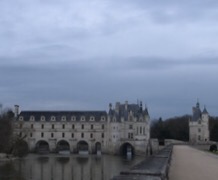
But wait, there’s more! Chenonceau is the only chateau I know of that was actually built spanning an entire river. It stops just a short hop from the opposite bank. (During World War II, the River Cher was the border between Nazi-occupied and Vichy France. Prisoner exchanges and who knows what else took place here).  Back in 1514-1522 when the present chateau was built, I don’t know why everyone else didn’t run out and build one like it. I guess not everyone owned access to a river, or had the means to accomplish this feat of engineering.

The visitor enters Chenonceau the same way royalty did in days long gone: through a supremely French-looking courtyard and facade. As always, I find the details of Chenonceau every bit as enchanting as the overall dreamy effect of this pleasure palace built over a serene river.
ChenonceauManDoor

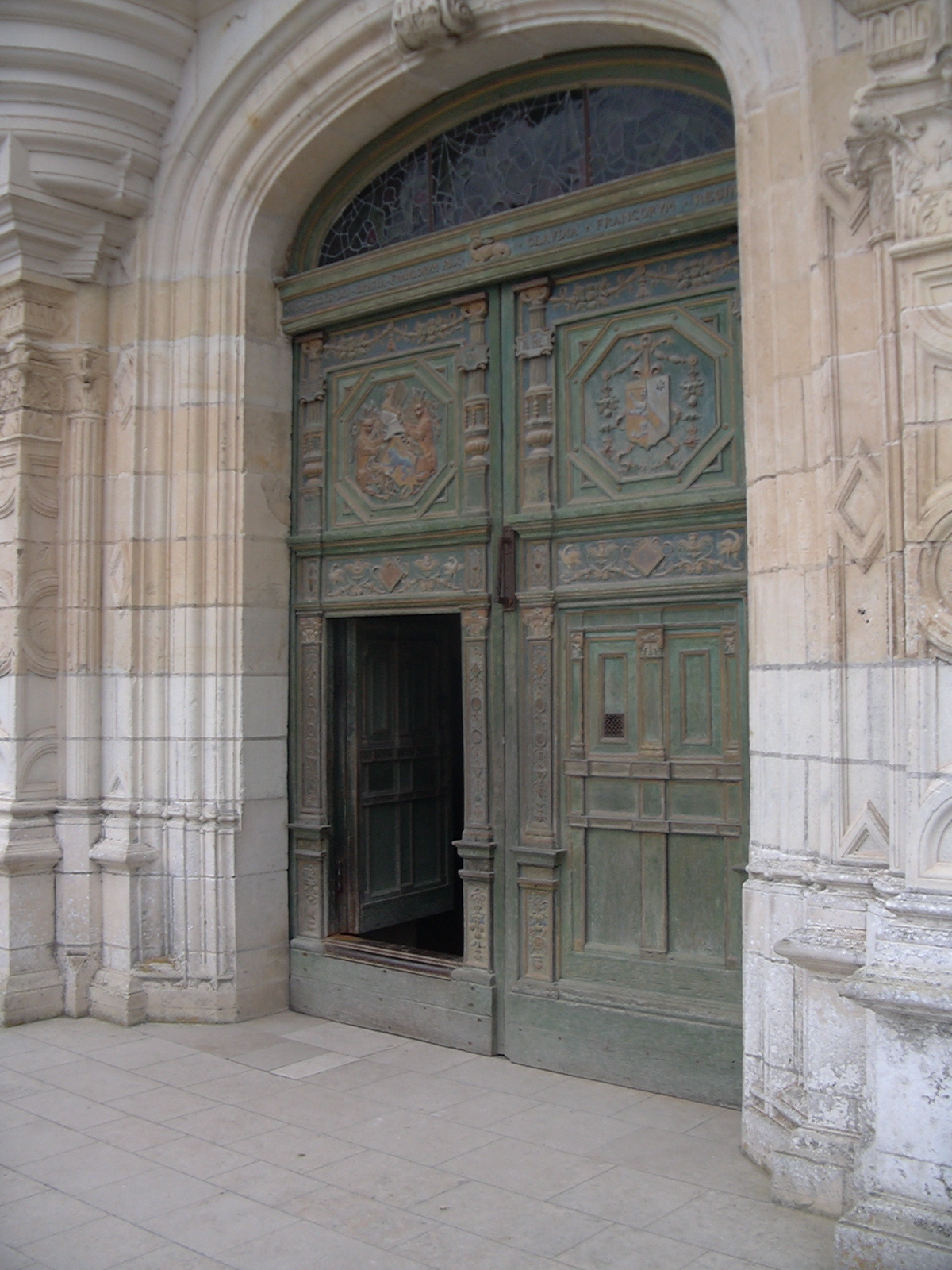
The grand entry door has a person-sized smaller door within it, for visitors who don’t need to make a grand entrance. I didn’t have a sweeping ball gown, so the small door worked for me.
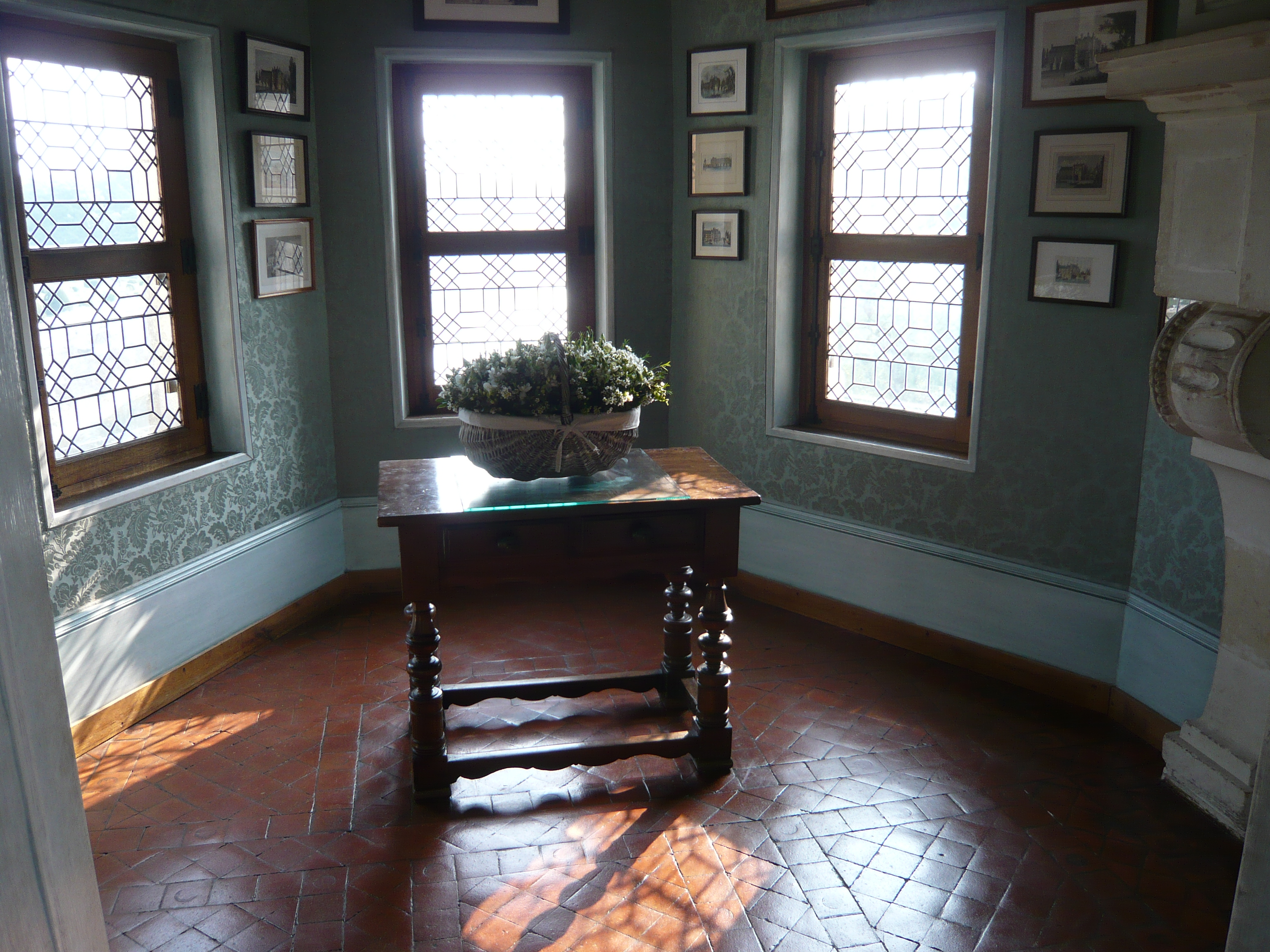
ChenonceauStudy

Fresh flowers from the gardens outside decorate all the rooms.  This was a study, overlooking the gently flowing river.  I’m not sure I’d get much work done here.
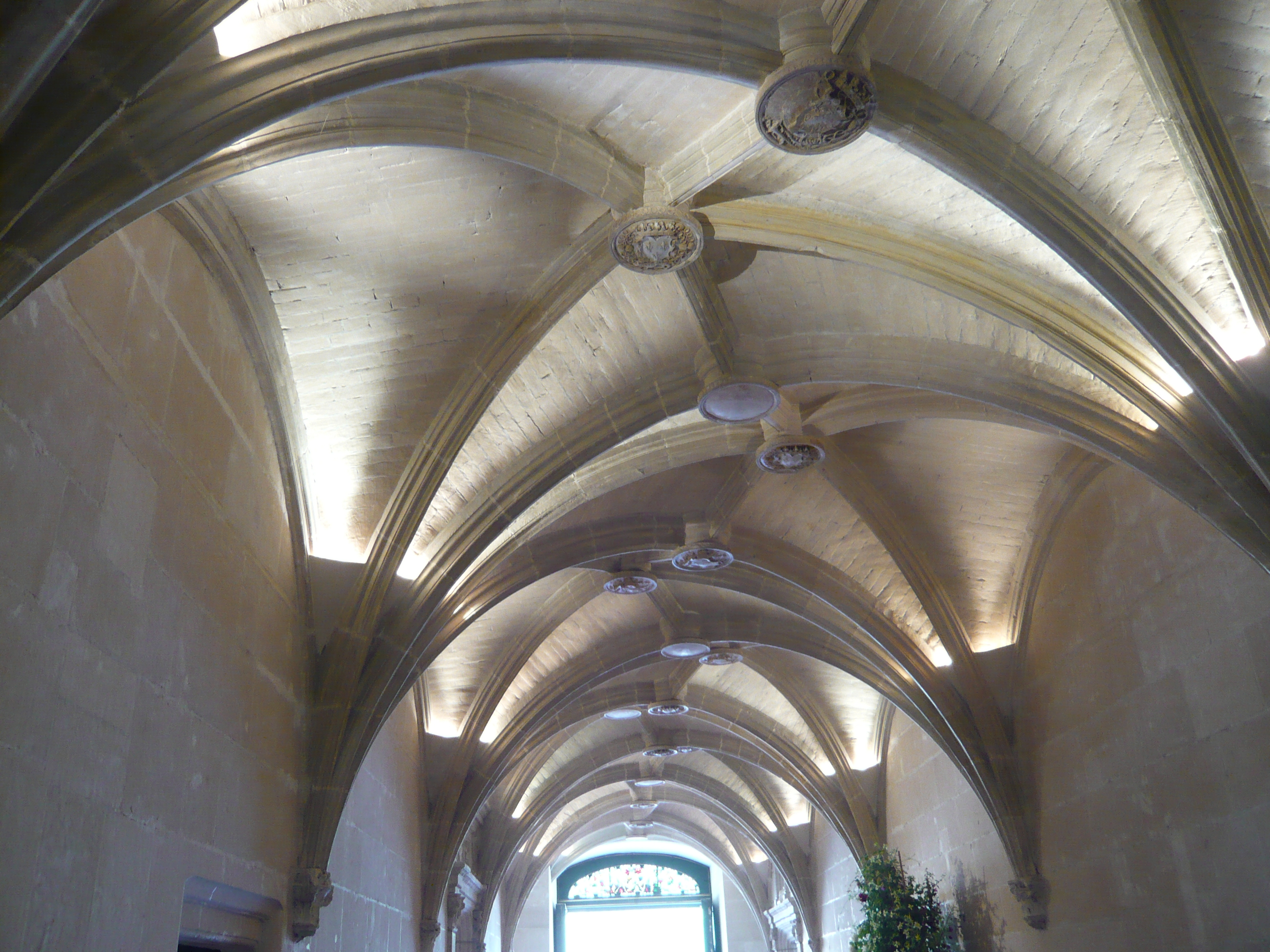
ChenonceauCeiling

This stairway was reportedly one of the first that was not a cramped spiral.  Guests must have enjoyed sweeping grandly up and down this staircase.
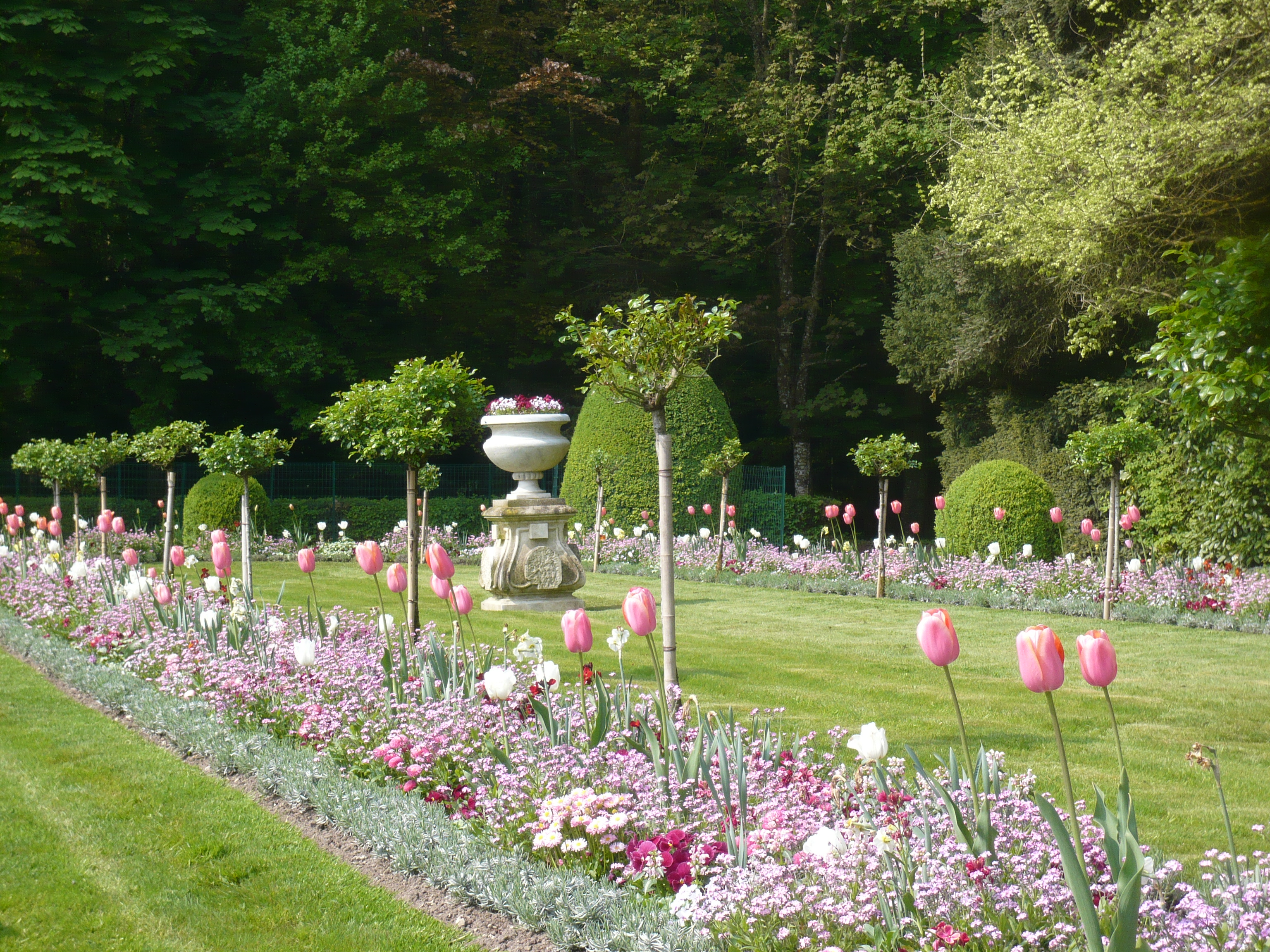
ChenonceauGarden2

The entire chateau is wonderfully light and airy.  And outside, gardens await, just as they did when Diane de Poitiers reigned here.

Diane de Poitiers, portrait by unknown artist, Public Domain

Diane de Poitiers, portrait by unknown artist, Public Domain

Chenonceau’s most illustrious occupant was Diane de Poitiers, a beautiful and cultured noblewoman who was the longtime mistress of King Henri II of France.  In the portrait above, she is pictured as Diana, goddess of the hunt.


Join me next time for more explorations in the art and history of Europe!

Ludwig at Linderhof

"King Ludwig II of Bavaria," Ferdinand Piloty, 1865, Public Domain

“King Ludwig II of Bavaria,” Ferdinand Piloty, 1865, Public Domain

“Mad” King Ludwig II of Bavaria was found dead in Lake Starnberg on June 13, 1886. He was 40 years old. The cause of death is still mysterious, but his death was convenient for a lot of people in Bavaria, where he had pretty much given up on the day-to-day business of governing. Government of Bavaria ground to a halt while Ludwig spent all his money (mostly his own personal fortune) on increasingly theatrical castles and palaces. He had been declared insane the previous day and was in some kind of royal “protective” custody.

After a couple of misses, I was finally able to visit Linderhof Palace, King Ludwig II’s favorite home, at a time when the grotto was open.  I was anxious to see it, especially after watching Luchino Visconti’s very fine film Ludwig, about the life and mysterious death of the notorious Bavarian king.

LudwigPoster

Ludwig built Linderhof as his own personal getaway.  In fact, it was the ultimate bachelor pad.  But he enjoyed the place in solitary splendor; he rarely if ever had visitors.  He built a special music room for his favorite composer, Richard Wagner, but Wagner never saw it. The grounds are breathtaking, and because the palace is quite small, each room looks out onto a beautiful manicured view with pristine mountains in the background.

Linderhof Palace

Linderhof Palace

In Visconti’s 1972 film Ludwig, the king is played by Visconti’s real-life romantic partner and muse, Helmut Berger.

LudwigBed1

The film shows Ludwig lounging around in his grand surroundings with hand-picked servants and a handsome young actor. Filming took place in the palace, so watching it is like having a tour personally conducted by the very strange and romantic Ludwig himself. His bedroom (intentionally) recalls the bedroom of King Louis XIV of France. This is a one-man palace; there are no guest rooms.  The help stayed in outbuildings, invisible to the king until they were needed.

It is hard to say how accurate the life story is.  But it is certain that Ludwig was an eccentric and  dreamy romantic.  His people loved him, but he was not much of a king when it was time to hang the ermine in the closet and get some work done.

One of Ludwig’s very few friends was his cousin, the Austrian Empress Elisabeth, nicknamed Sisi. She was famously married to the Emperor when she was only 15, and spent the rest of her life wanting out.  She is played by Romy Schneider (who also played Sisi in the very silly but entertaining semi-fictional series of Sissi movies).

The grotto was built up the hill behind the castle.  The entrance looks like a fort a very ambitious child might build.

GrottoEntry

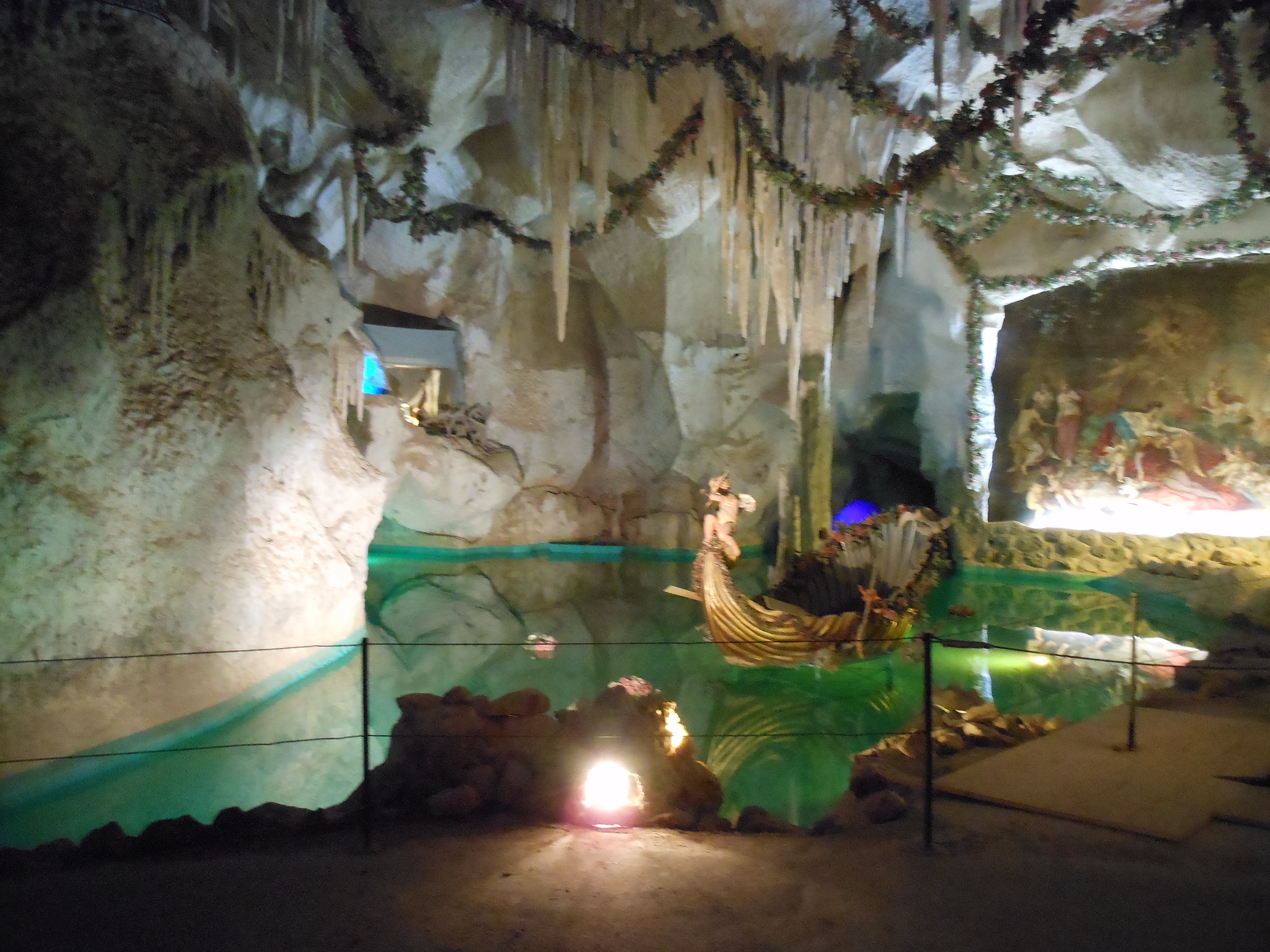
But the grotto itself is as jaw-droppingly weird and beautiful as it was in Ludwig’s day.  He had Wagner’s operas performed inside for his own personal pleasure.  The water was heated, so that he could swim in it if he tired of being rowed around in his gilded shell boat.  And the lighting could change colors depending on his mood, or the mood of the opera scene.

Ludwig's Grotto

Ludwig’s Grotto

The grotto is still festooned with the floral swags that Visconti’s movie crew put up.  The film has a fantastic scene where an Austrian actor is taken into the grotto to meet Ludwig, who wants him to recite dramatic speeches 24/7.  Helmut Berger, as Ludwig, floats out of the gloom in his shell boat, wearing a dark overcoat and a black Homburg–with an enormous diamond brooch pinned to the side. He fixes the actor with an imperious, piercing stare. The actor tries hard to be Ludwig’s New Best Friend, but the friendship ends badly and Ludwig is alone again.

Nearby Neuschwanstein and Hohenschwangau Castles are justly famous, but they are overrun with tourists.  Armed with a Bavarian Castles Pass, I actually went to Linderhof twice during my last trip.  One day it was rainy, the next it was sunny.  I can’t say I had the place to myself, but there was time and space enough to ponder the mysterious life of Ludwig.

Join me next time for more explorations in the art and history of Europe!

Why I Love England: History in Bits and Bobs

IMG_8851

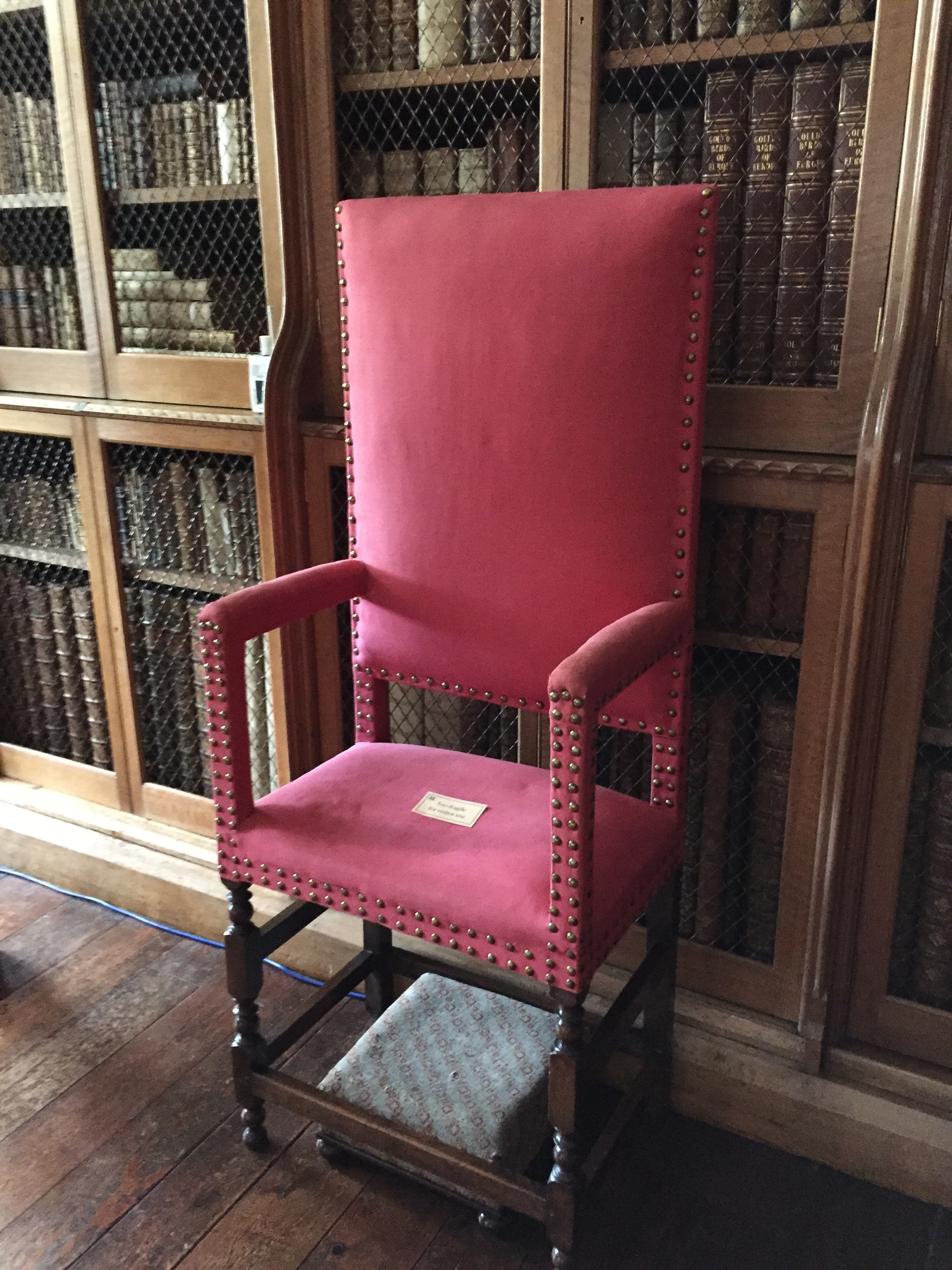
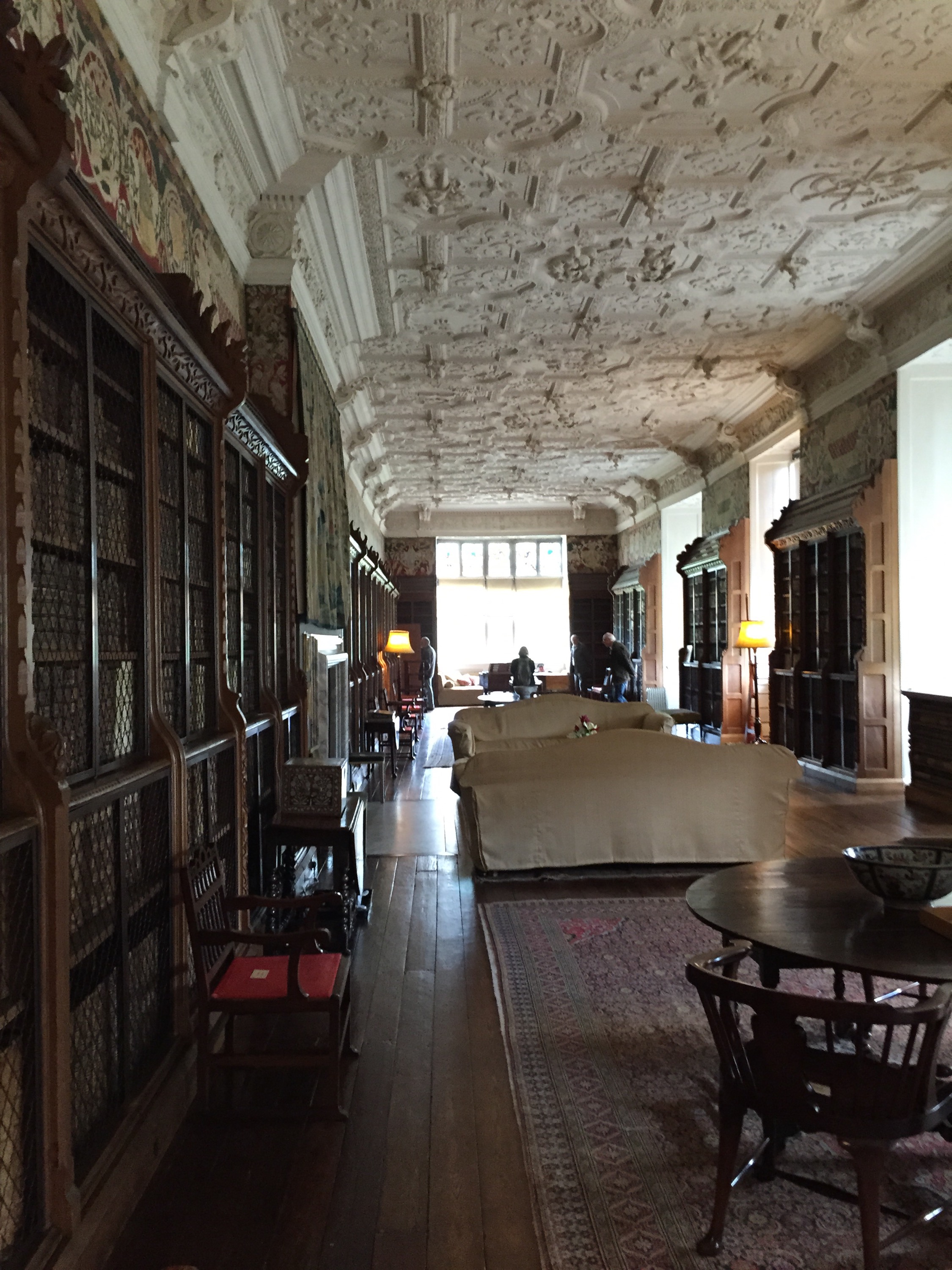
In the Oak Gallery at Blickling, a Tudor house in Norfolk, I came across a tall chair upholstered in red velvet. It had no label, just the usual polite note from the National Trust asking the visitor not to sit on it. (Actually, the NT has so many unsittable ancient chairs that they often just place a dried thistle or a pinecone on the seat).

I asked the friendly room docent, a lovely white-haired lady, if there was anything special about this chair. “Oh, yes!” she said. “That was the coronation chair of Charles the Second.”

Really? The coronation chair of the King whose reign ended the bloody Civil War in England didn’t rate a placard? Charles II was the English king crowned in 1660, 11 years after his father, Charles I, was executed–for treason. How could a king be guilty of treason? Charles I wanted to rule as an absolute monarch, levying taxes without consulting Parliament. Thus began the bloody English Civil War. Charles I lost.

Contemporary print of Beheading of Charles I of England, 1649, Public Domain

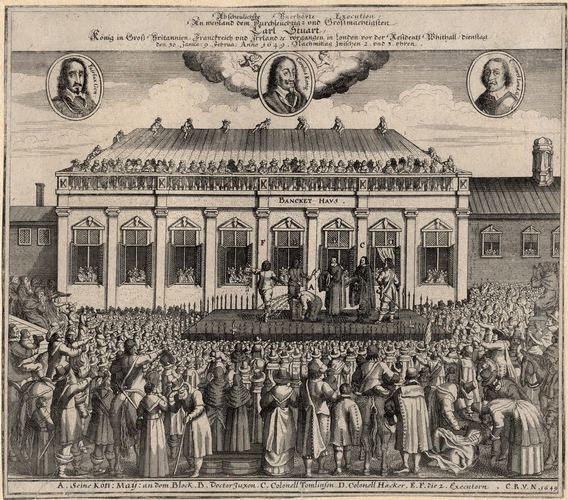
Contemporary print of Beheading of Charles I of England, 1649, Public Domain

Charles I was executed in public, with all due ceremony, in front of the Banqueting House at Whitehall, in 1649. It was a cold day in January, and reportedly Charles’s main worry was that he would shiver and the crowd would think he was scared. He wasn’t.

IMG_8641

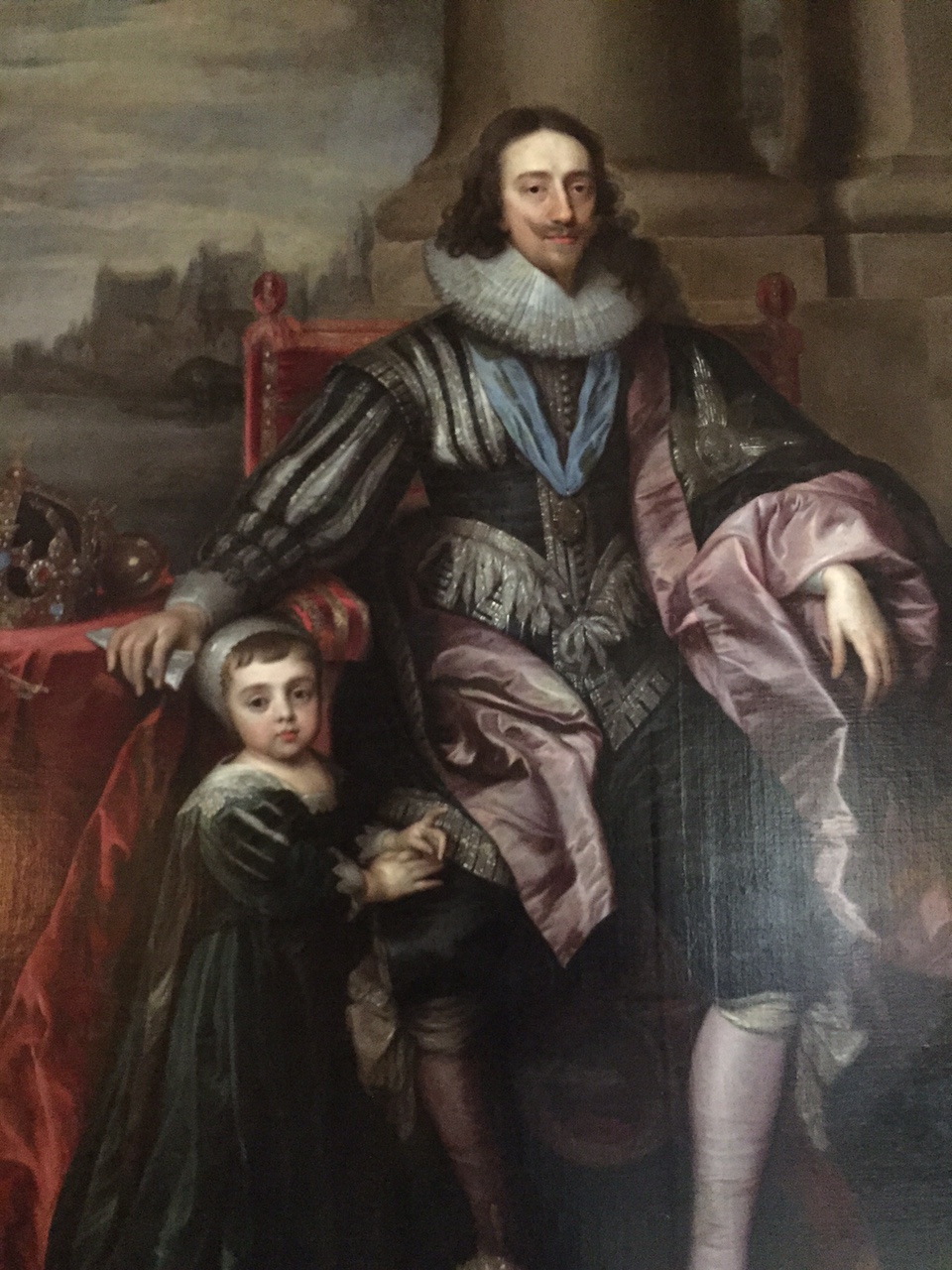
Charles I was an unpopular king, but there are countless images of him. I can spot one at twenty paces.  The painting above is at Blickling, but I forgot to take a picture of the caption so I don’t know the artist.  I think the future Charles II is shown with his unfortunate dad. The pointy beard at the bottom of Charles I’s long narrow face is always a giveaway. I’m sure I’m being way too hard on the man, but to me he always looks very aloof, with his head in the clouds.

After Charles I lost his head at Whitehall, a Commonwealth of England was declared, but it was really more of a dictatorship led by Oliver Cromwell.  Before too long the people wanted their monarchy back. This is a huge simplification of events and people that are still hotly debated, of course. Oliver Cromwell was dug up and beheaded for treason after he was already dead, but many people consider him the father of British democracy.  Anyway, once again England had a hereditary King, Charles II.  I’d have thought the coronation chair of Charles II was an important piece of furniture.

I was pretty sure the kindly docent was mistaken about the tall red velvet chair.

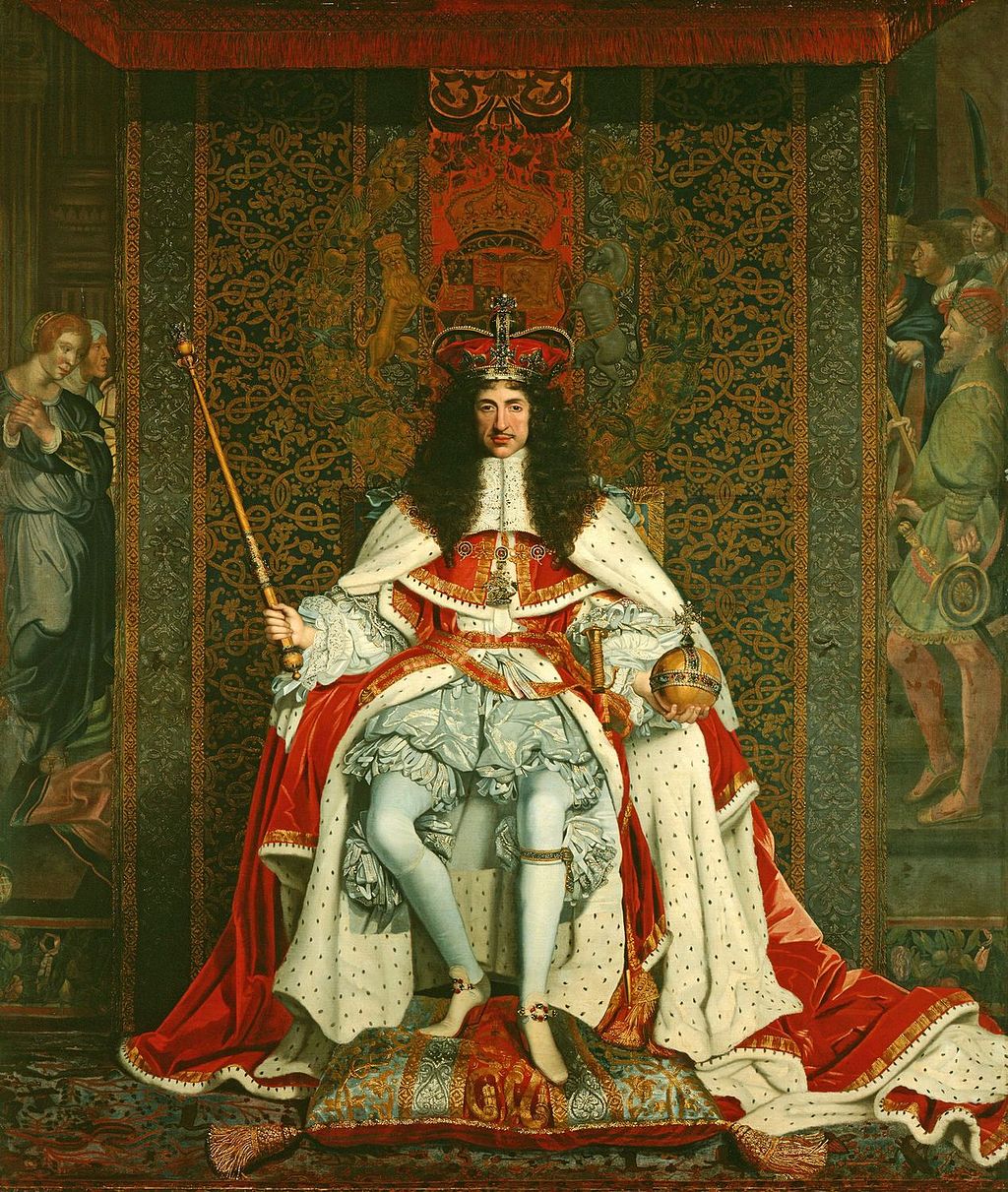
Charles II of England in Coronation Robes, John Michael Wright, 1661-1662, Public Domain

Charles II of England in Coronation Robes, John Michael Wright, 1661-1662, Public Domain

I found a coronation portrait of Charles II with a much grander coronation chair just visible behind him.  He was crowned at Westminster Abbey in the full splendor that the English have always done so well. Now I think the chair I saw may have been used for something else–maybe a grand banquet following the coronation, built high so that everyone could see the new King.  Or maybe Charles II just had especially long legs and this was his favorite chair. I’m not willing to give up the idea that Charles II sat in that chair.

Anyway, I love the way the British love their history.  I would not dream of contradicting a lovely, friendly docent who is working as a volunteer in a National Trust property. If I heard a mistake, I would always just let it slide.  But if a Brit heard a howler of a mistake, trust me, there would be a swift and stern correction. People in the room would immediately gather round and join the debate. Events from 400 years ago might as well have happened yesterday. They are lovingly preserved in memory and in physical objects.

The Oak Gallery at Blickling is magnificent. For the price of a National Trust pass, a visitor can trace the footsteps of Henry VIII and several of his queens. When Henry was gone, Queen Elizabeth I was a frequent visitor. Anne Boleyn was most likely born on the property, though not in the present house.  On the anniversary of her death, she is said to arrive at the house in a ghostly carriage, sadly carrying her head.   Did Charles I or II walk this gallery? I’m not sure.  I’d better go back for another visit.

Join me next time for more explorations in the art and history of Europe and the British Isles!

Sandringham

IMG_7332

Photos are not allowed inside Sandringham House, but mere tourists like me are allowed to take pictures outside and in the nearby museum. This is the very grand entry, used by tourists and guests invited for grand occasions. I just learned that the Queen was recently in residence, possibly while I was there. But I’m sure there is a very private entrance for her and her personal guests. (I think there’s a separate ballroom entrance, which is an exit for tourists).

Yesterday Prince William and his newly-expanded family left London for Anmer Hall, their newly-expanded mansion on the Sandringham estate. I thought I’d post a few photos from my recent visit there.

IMG_7662
Sandringham is only open to tourists for a few months a year. At other times, it is the strictly private property of the Royal Family, bought during Victorian times as a retreat. The gardens have been open to the public since 1908.  King George V created and opened the Museum in 1930, with an admission charge of 3 pence. In 1977, the present Queen Elizabeth decided to open some rooms of the house to tourists for a few months a year–very good PR, I think.  The place certainly won me over.

IMG_7355

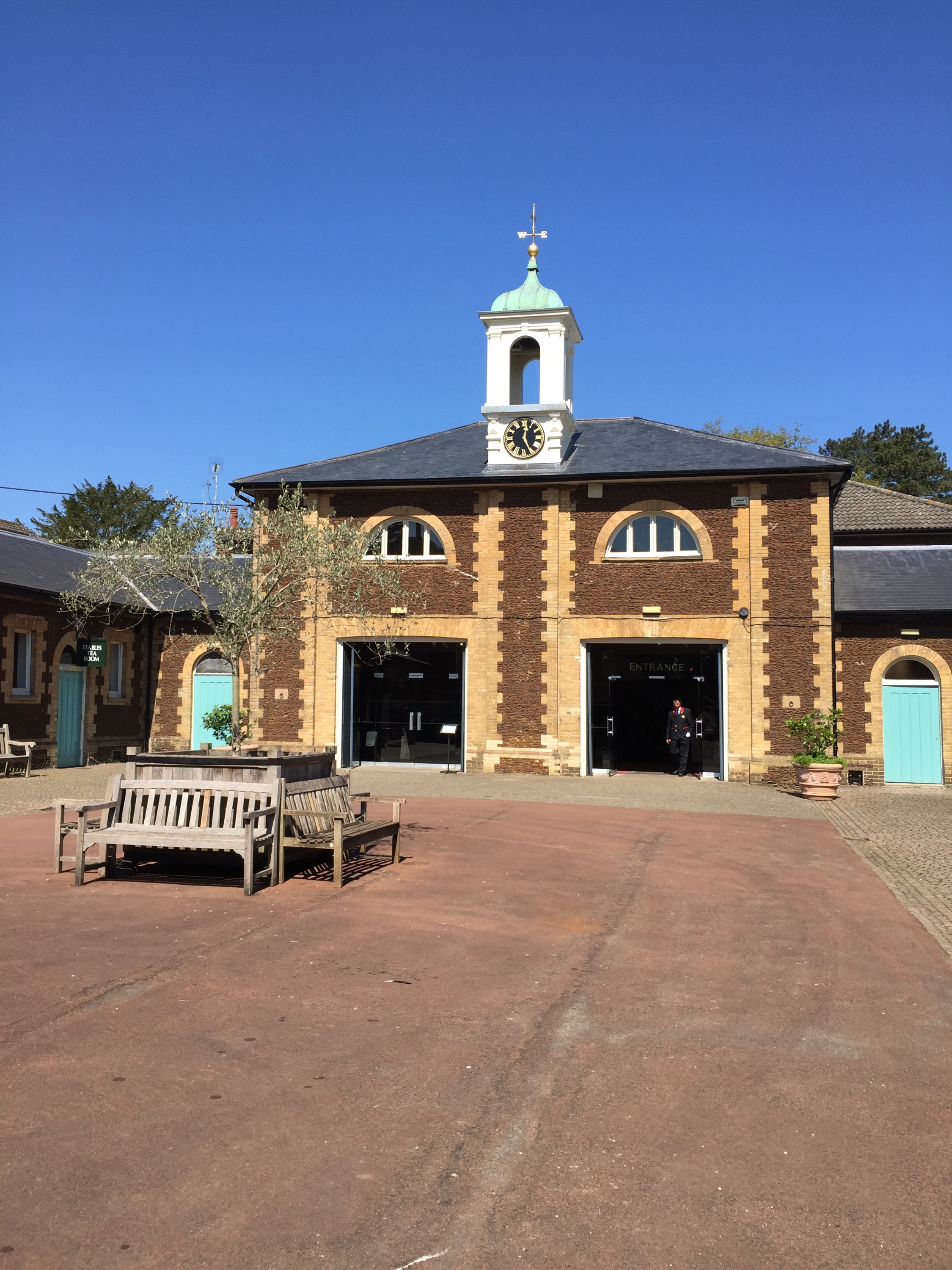
The museum, in the old stable block, is as interesting as the house. It contains, as the British would say, a lot of “bits and bobs” about the Royal Family. 

IMG_7465

The family follows traditional pastimes at their country home. This old photo shows royal children looking very serious in 1905. Princes Edward, Albert and Henry and Princess Mary are taking instruction in marching from the Piper, Forsyth. 

IMG_7504

Among many fascinating retired vehicles, there’s a picnic wagon which was in use until fairly recently, when it was replaced with a new one. The picnic wagon has a place for everything, including wine bottles and fine china. It’s housed in a large building with murals that show the Royal Family and their friends enjoying the great outdoors in their beautiful grounds. I’m sure family picnics will continue for the newest great-grandchildren of the Queen.

IMG_7640

Who knew that the Queen’s husband, Prince Philip, is a painter? He’s pretty good. Who can resist this little informal portrait of the Queen reading the morning paper?

IMG_7370

The room guides in the house are the Queen’s regular trusted servants. They’re friendly and happy to chat. In the grand formal dining room, I asked whether the Corgis have the run of the house. Of course they do! The Queen feeds them personally in the Gun Room, and they mill around under the dining room table, probably cadging scraps like any other dogs. Right now there are seven Corgis. An elderly dog, the Queen’s beloved Monty, died recently.

This year, Queen Elizabeth will become the longest-reigning British monarch in history.  She has had to overcome her share of family troubles and occasional anti-monarchy sentiment.  But as far as I can see, the Brits really love their Queen.  And right now it seems most British folks also love the very appealing young family of William, Kate, George and Charlotte.

The new little Princess Charlotte Elizabeth Diana of Cambridge will no doubt be delighted by the Queens’s Corgis. I’m sure the Queen will be a doting great-grandmother!

IMG_7681


Affordable Europe: The Old Farmhouse, Windsor

DSCN8934
I chose The Old Farmhouse because it is close to Heathrow–a good place to unwind after a long flight or to depart without stress. I don’t like paying exorbitant airport hotel rates for rooms that are just OK at best. After three nights in this house, I’m hooked. I’ll go back any chance I get.

DSCN9118


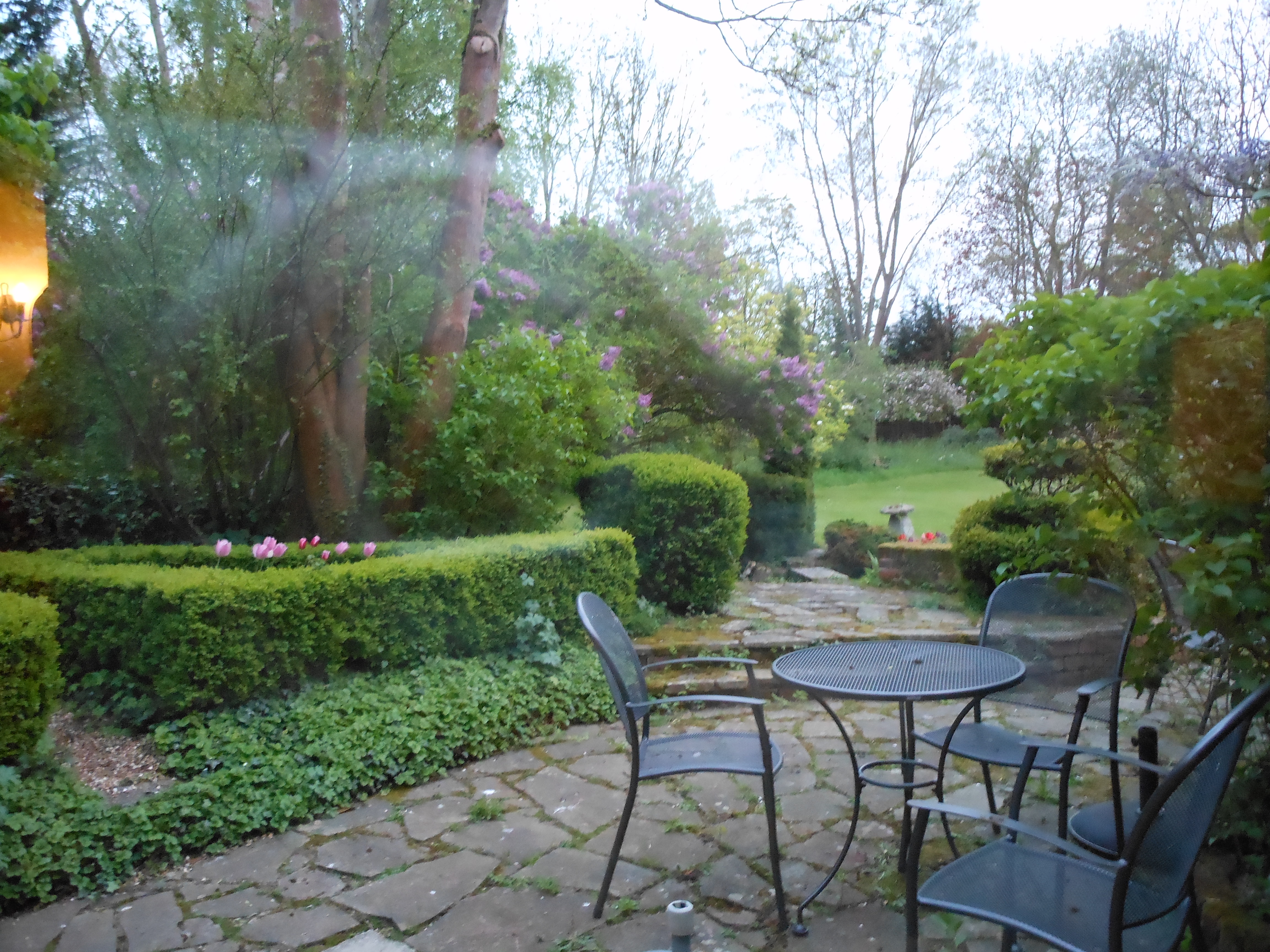
The Old Farmhouse is a destination in itself–peaceful flowery grounds, just three guest rooms, and a cooked-to-order breakfast that comes with a huge fresh fruit plate. No one actually lives in the house–the very professional staff arrive in the morning to bustle around making breakfast and cleaning, cheerfully answering questions and generally being friendly. They’re on call the rest of the day and night.


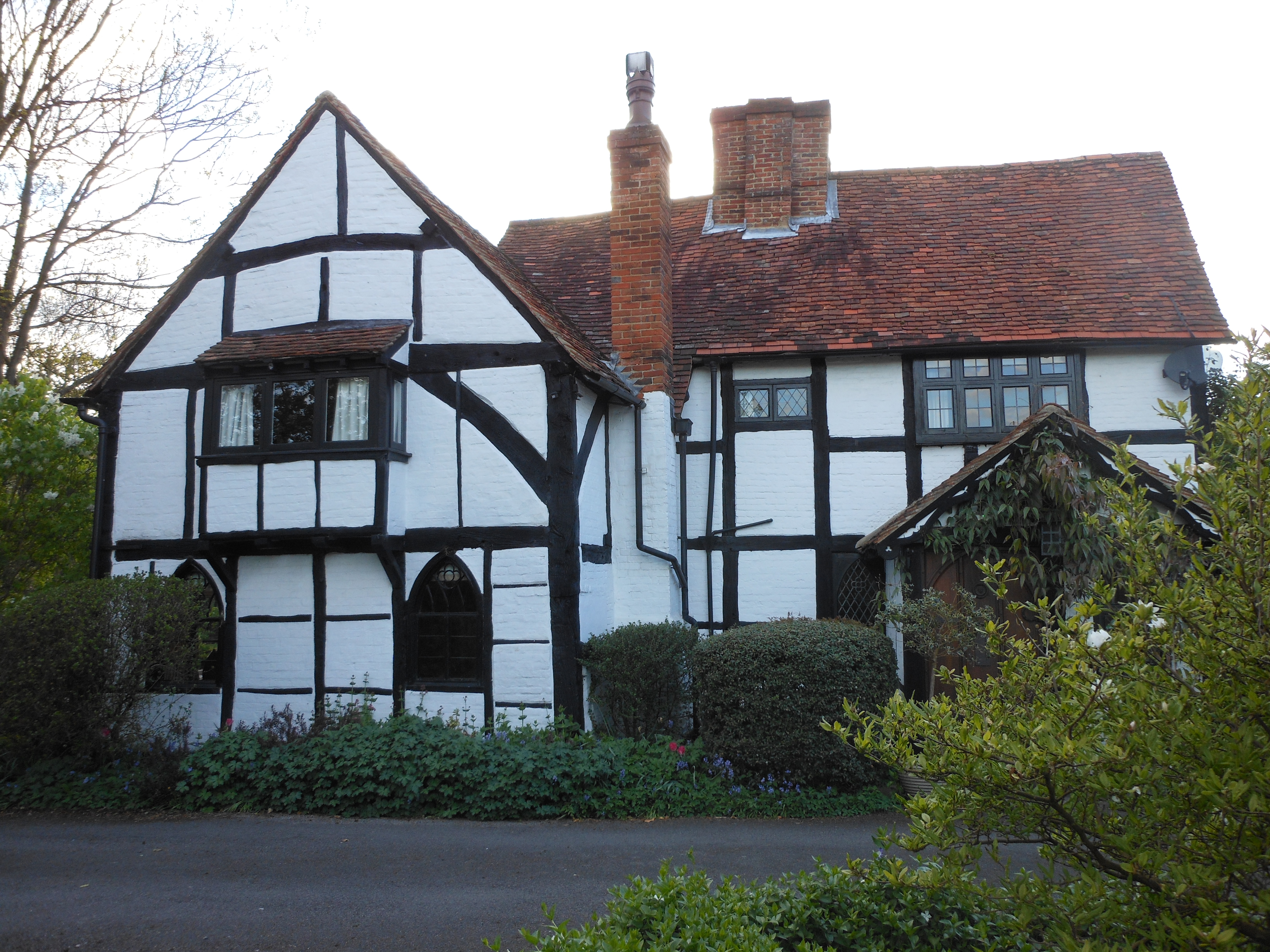
It’s actually a 14th and 15th century house, modernized over the centuries but keeping the historic charm that brings Anglophiles like me to England. It’s not rock-bottom cheap, but it’s about a third of the price of a comparable nice hotel in the town of Windsor–and way less than anything in London.  I spend my trips to England using my National Trust pass to visit historic houses.  It’s a real treat to stay in one.

IMG_2697

My bedroom had ancient beams–complete with original wood pegs from the days when there were no nails.

IMG_2725


The entry has a beautiful and very old fireplace, decked with flowers in spring.

IMG_2705

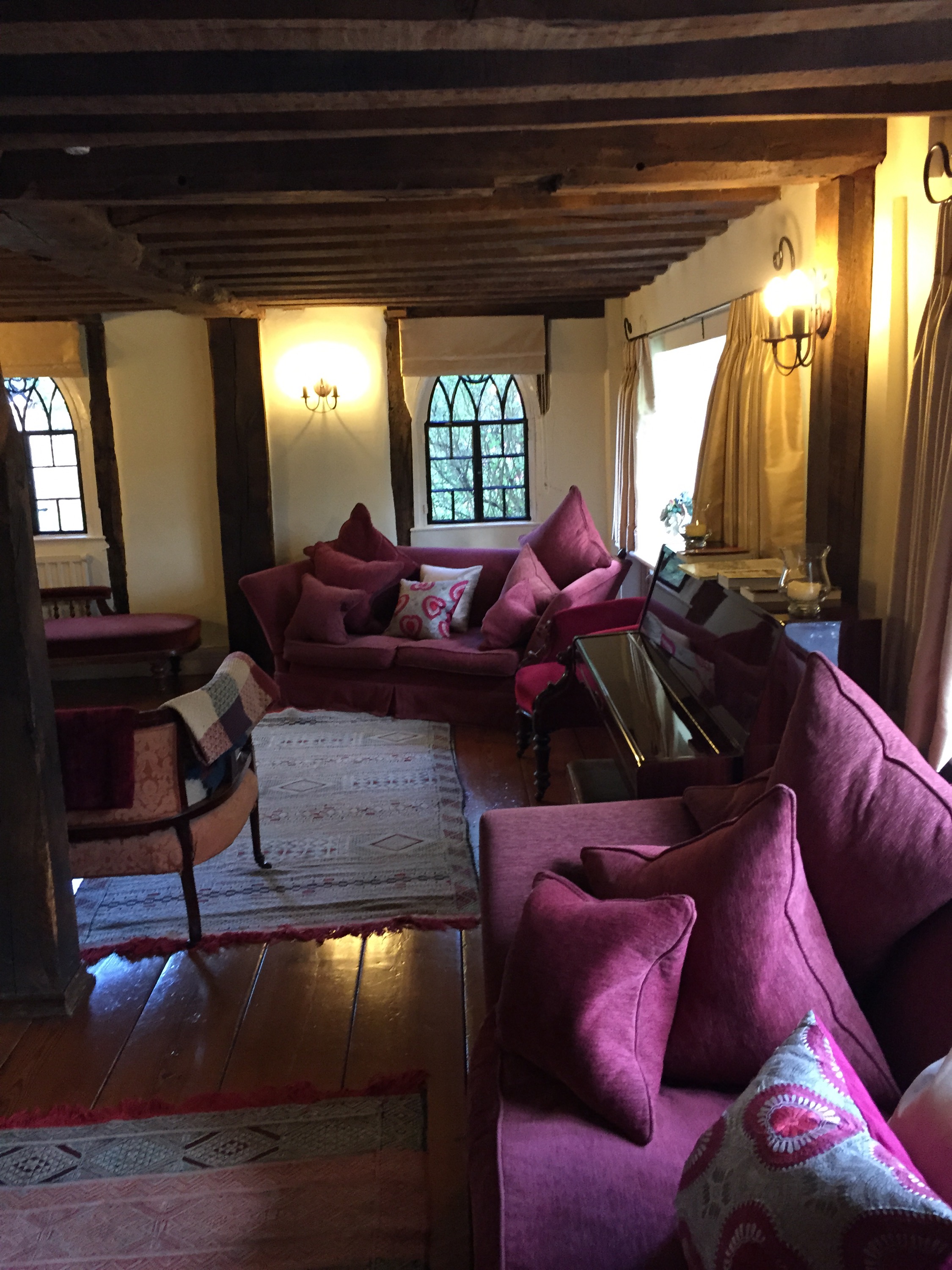
There’s a pretty lounge downstairs with comfy sofas and a piano. Wifi is free and fast.

Is there anything I didn’t like? Well, I have to say that flights out of Heathrow begin at around 6:30 in the morning. But Heathrow planes fly over all of Windsor. And there are not that many flights. The Old Farmhouse must be on one of many flight paths.

When we left, it took about 25 minutes to drive to the rental car return at Heathrow–which I had saved as a location on my GPS, because finding it is confusing. Heathrow is huge, and the car rental is not only at Terminal 5, but way outside the terminal. I think a taxi ride to the Heathrow departure level for a specific terminal would be a lot faster. I understand there is also a bus.

The location makes for an easy daytrip into London. An inexpensive train ride from Windsor to Paddington Station takes about half an hour, including an easy change at Slough. Trains run every 10 minutes. We had a rental car to drive to the station, less than two miles away. But the location is so close to Heathrow and Windsor that it would also work with taxi rides, kept pretty inexpensive by following the advice of staff and calling a particular company.

IMG_2773

Hampton Court Palace, where Henry VIII kept everybody shaking in their boots in the 1500s, is a 30-minute drive from Windsor. Henry’s Great Hall is intact, complete with some wood carvings of Anne Boleyn’s initials. Most of the marks of Anne’s time as Queen were removed along with her head, but even Henry VIII was not able to control every detail.

Join me next time for more explorations in the art and history of Europe and the British Isles!

Back to Blenheim

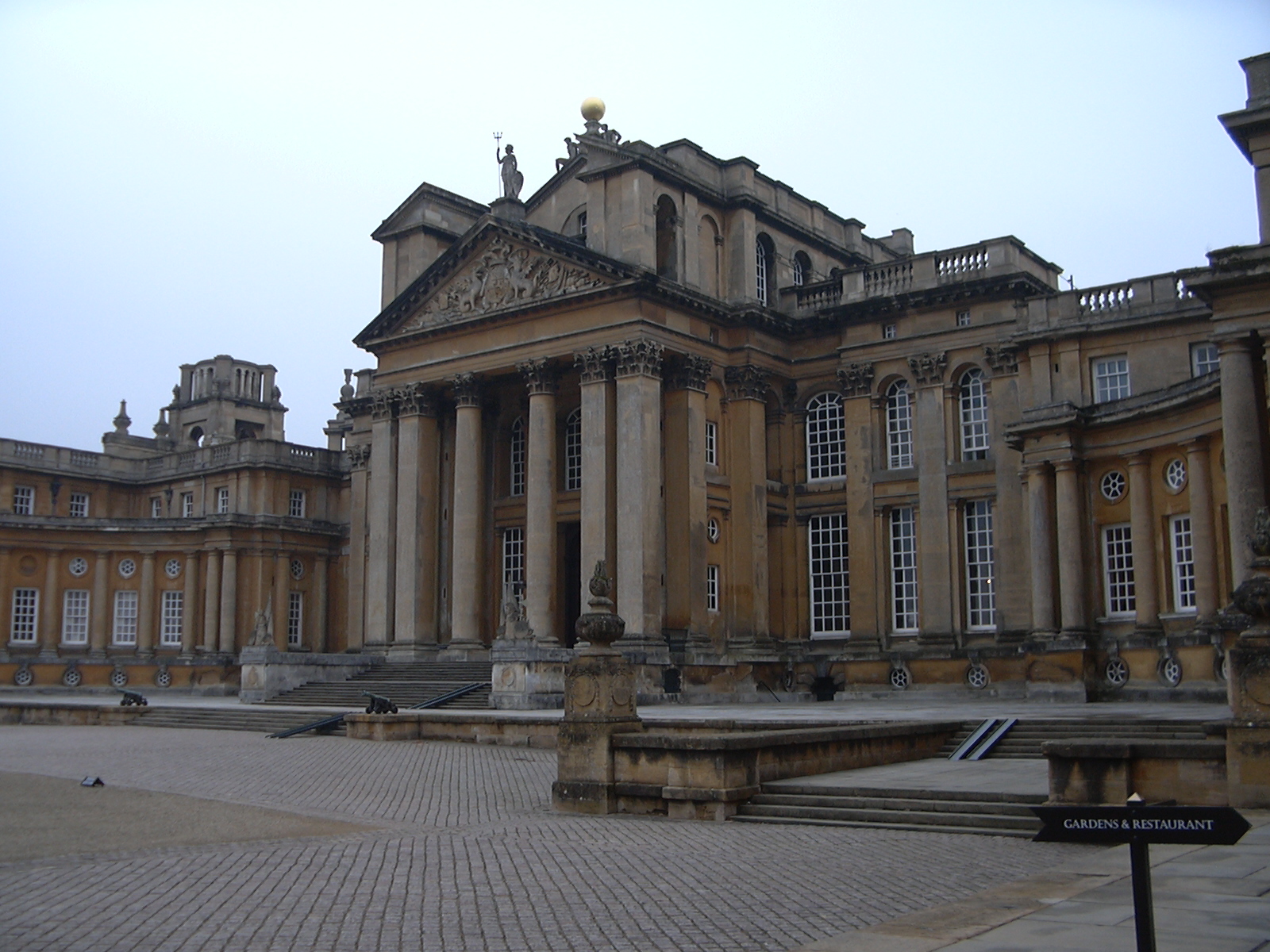
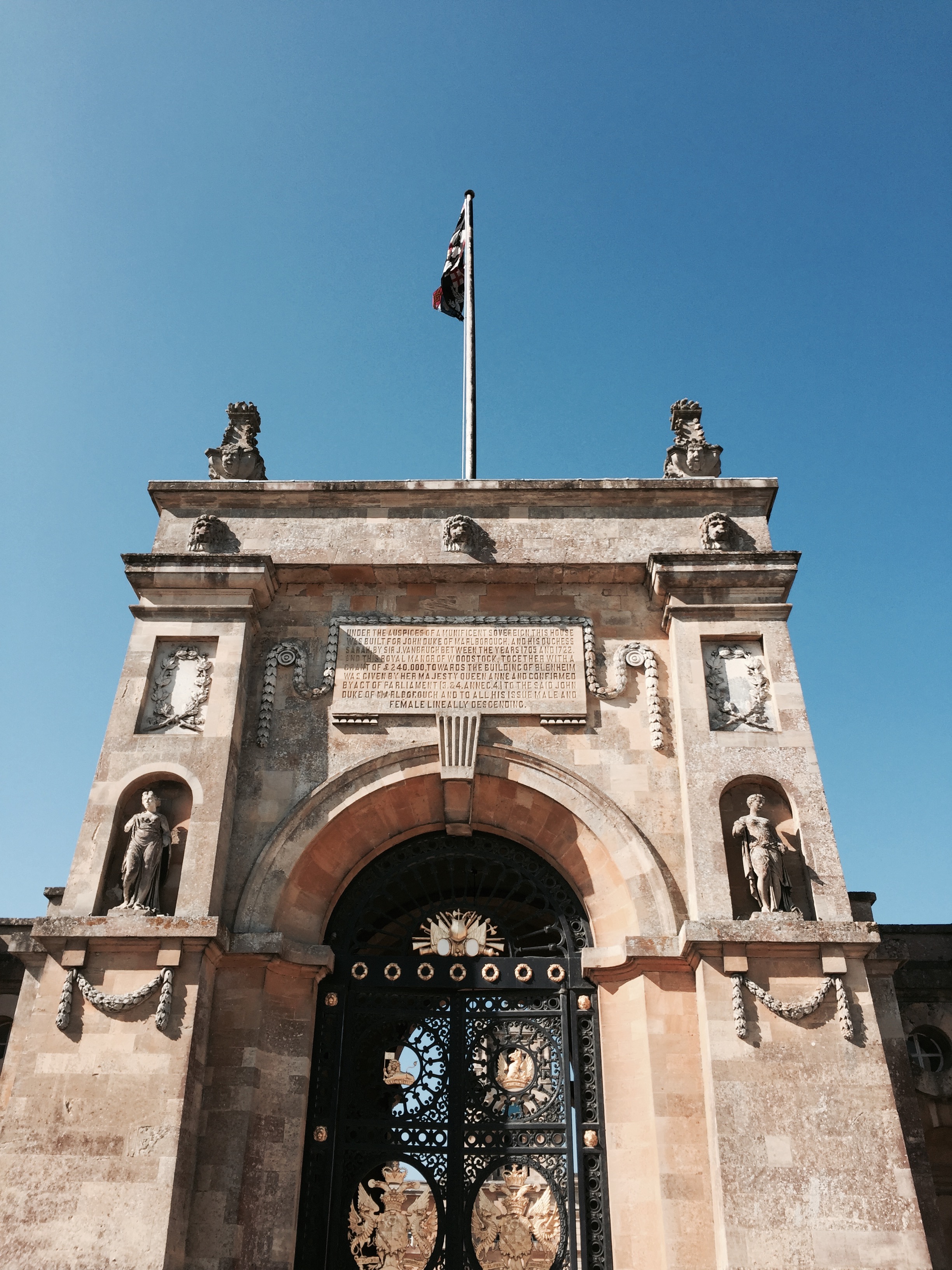
BlenheimFacade

Every now and then the stars align favorably.  I was lucky enough to visit Blenheim Palace last fall, and doubly lucky to be in England again in the spring.  When I bought my Blenheim ticket last fall, I stopped at a kiosk and made it into a year-long pass–at no extra charge!  What a deal!  I’d probably go back even if I didn’t like the place, but I happen to love it.

HamletPoster

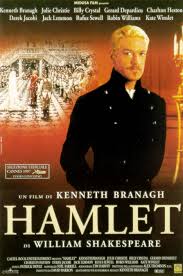
Blenheim was used for the exterior scenes of the great film Hamlet, with Kenneth Branagh as director and and playing the melancholy Hamlet himself. He was perfect. English major and Shakespeare lover that I am, I’ve watched the film quite a few times.  I like to turn on the subtitles so I can get all the glorious Shakespearean words, but it is very dramatic and easy to follow even without caring much about the dialogue. It even ends with some swashbuckling worthy of Jack Bauer in 24. The acting is stellar, featuring, besides Kenneth Branagh, Charlton Heston, Julie Christie, Billy Crystal, the late Robin Williams, Derek Jacobi, Kate Winslet, Michael Maloney, Timothy Spall, Richard Attenborough, Brian Blessed, Judi Dench, Geraard Depardieu, John Gielgud, Rosemary Harris, and Jack Lemmon (he was still with us in 1996!)

FullSizeRender (31)

Toward the end of the film, one scene shows the new King arriving after the tragic events of the story, riding up to the palace with his retinue.

DSCN7019

The palace, decorated with military mementos of the First Duke of Marlborough, was just the right location. The 11th Duke of Marlborough had a cameo appearance as one of the nobles accompanying the new king.  I’m guessing it was one of the highlights of his long and distinguished life. After all, he was appearing with fine actors in a great film that showcased his ancestral home. Plus the new King was played by Rufus Sewell, in fine smoldering form.  Who wouldn’t want to appear in that film?
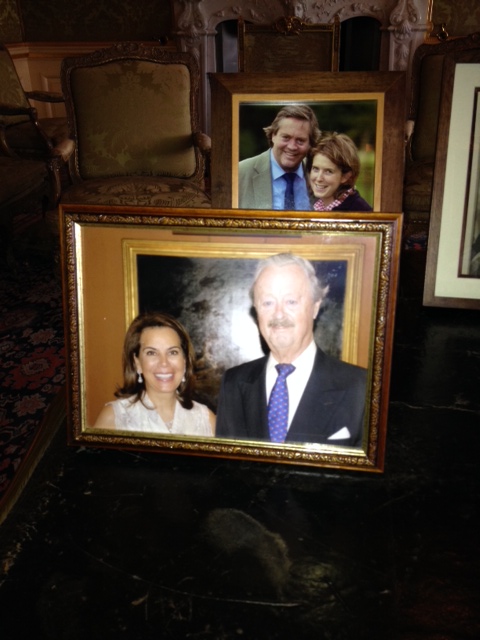
DukePhotos

I  last saw the 11th Duke last fall on my visit.  He was usually a very visible presence, striding around his palace and really seeming to welcome visitors.  When I was there last, his brother was being married in the palace chapel. So the Duke was jovially greeting his guests.  He looked frail, though, and I was sad to learn that he died just a few weeks later. During my visit, I saw his lovely wife, and I also saw the soon-to-be 12th Duke with his wife. I recognized them all from photos in the house. The heir is in the photo just behind the 11th Duke.

I previously wrote about Blenheim at https://castlesandcoffeehouses.com/2014/11/06/blenheim-the-s…kings-waterloo/

I wrote about the death and funeral of the elegant 11th Duke at https://castlesandcoffeehouses.com/2014/10/30/what-are-plus-fours-anyway/ ‎ and  https://castlesandcoffeehouses.com/2014/10/29/farewell-to-th…of-marlborough/

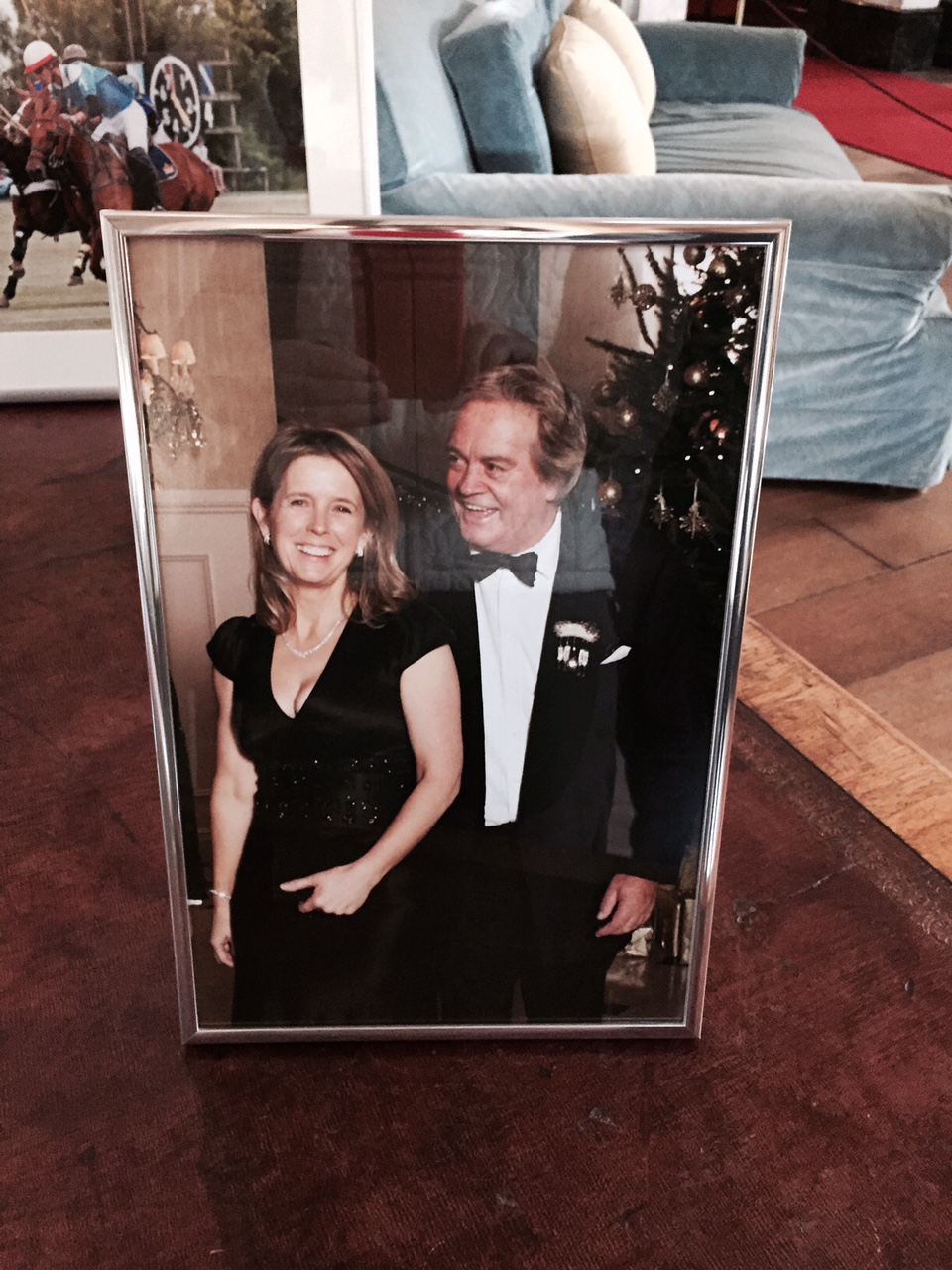
FullSizeRender (34)

The 12th Duke has now moved to the front of the photo displays in the palace. Yesterday I toured the several of the family’s private rooms in the East Wing.  The rooms are sumptuous, but lived-in.  (Think of the most elegant possible version of Shabby Chic).  There are 12 bedrooms, each with its own bathroom and dressing room–but they are off limits. No photos were allowed. The 12th Duke was in the house–his flag was flying.  But he must not have been told that I had come to see him, because he was nowhere in sight.  As an American, I’m always puzzled but intrigued by British aristocracy and royalty.  I wish the 12th Duke many years of carrying on his family’s heritage, and I’m sure he’s as dedicated to the task as his late father was.

Join me next time for more explorations in the art and history of Europe and the British Isles!

Petit Trianon: It’s All in the Details

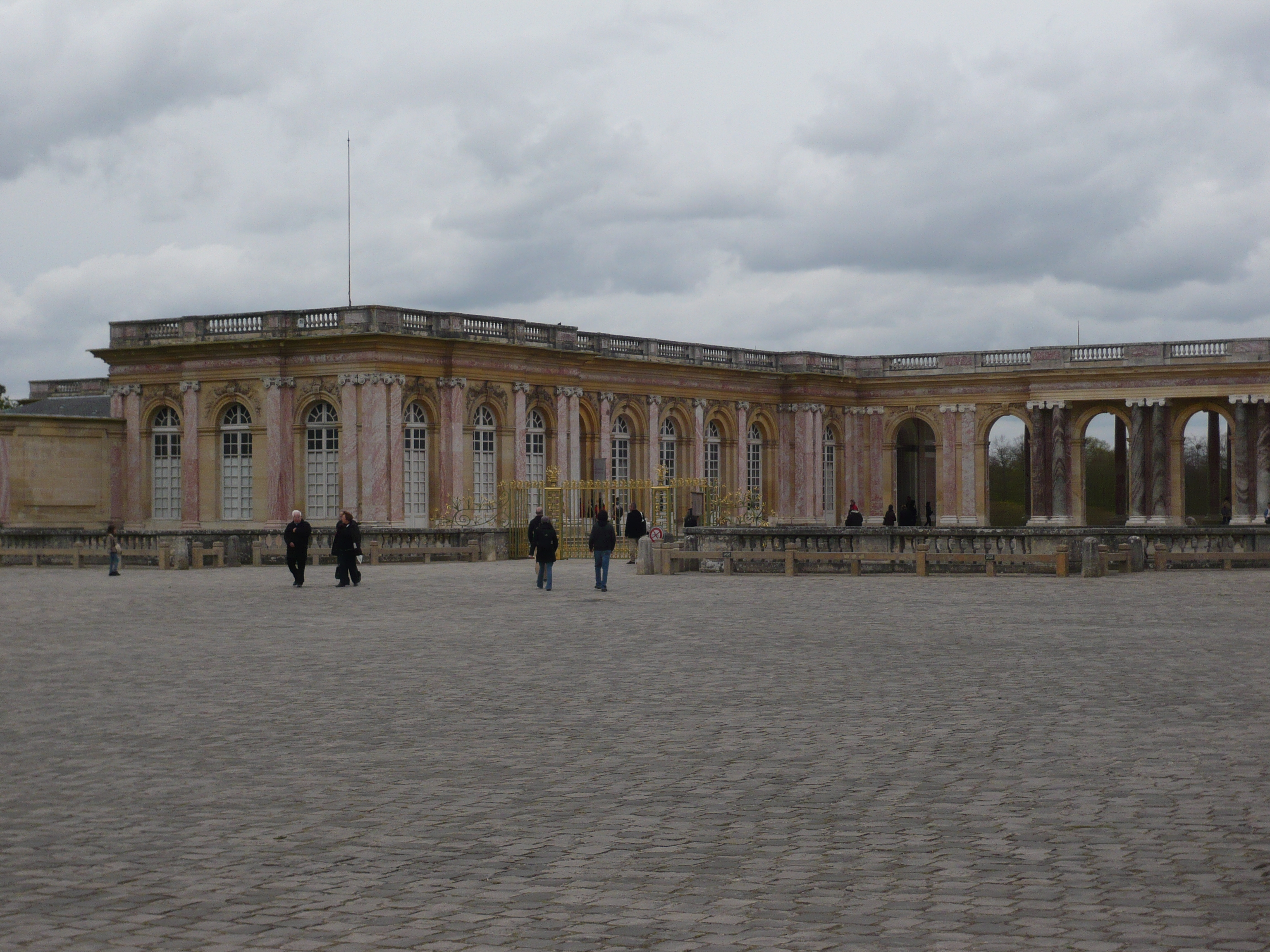
PetitTrianon

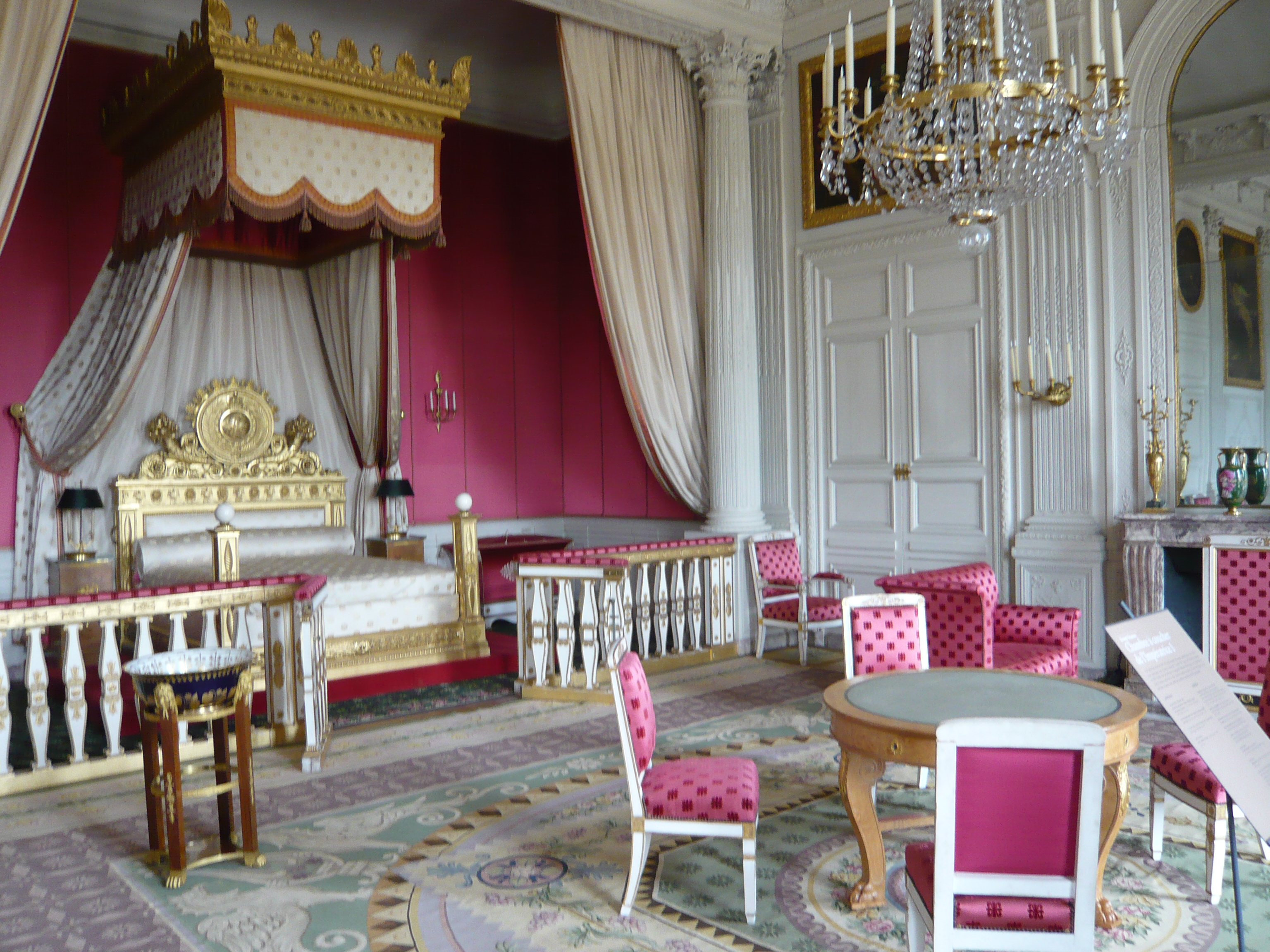
Not that many tourists make the trek from the over-the-top Palace of Versailles to the much smaller Petit Trianon, built as a retreat from the crowds that filled the main palace as soon as it was built.

PetitTrianonBR

I like the much-more-human scale of the Petit Trianon. So did Marie Antoinette.  OK, I’m sure her critics were correct in accusing her of hosting raucous parties there, but I’m sure she also appreciated the details in her more quiet moments.

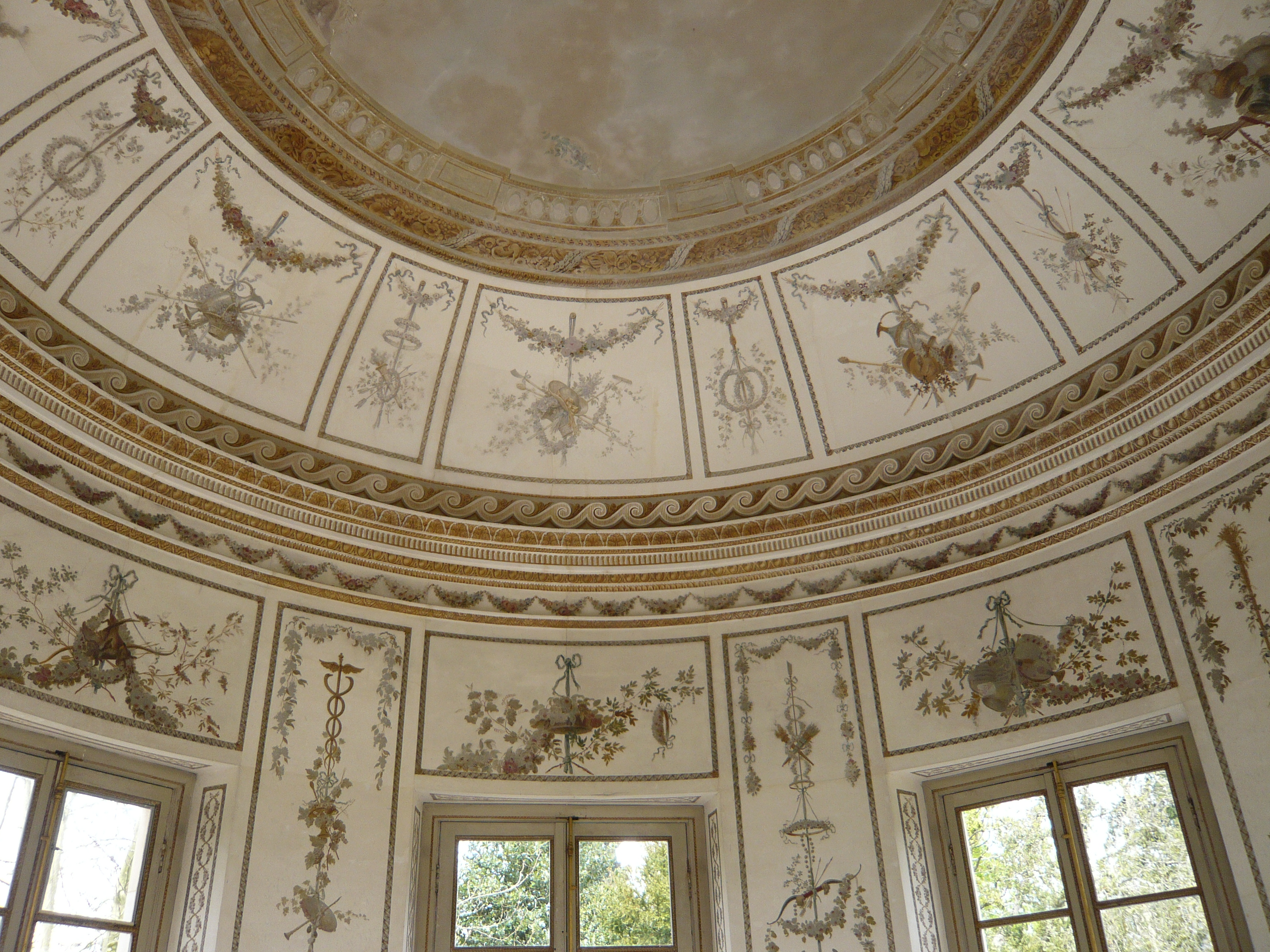
TrianonDetail

There’s a round salon with exquisite, soothing painted panels.

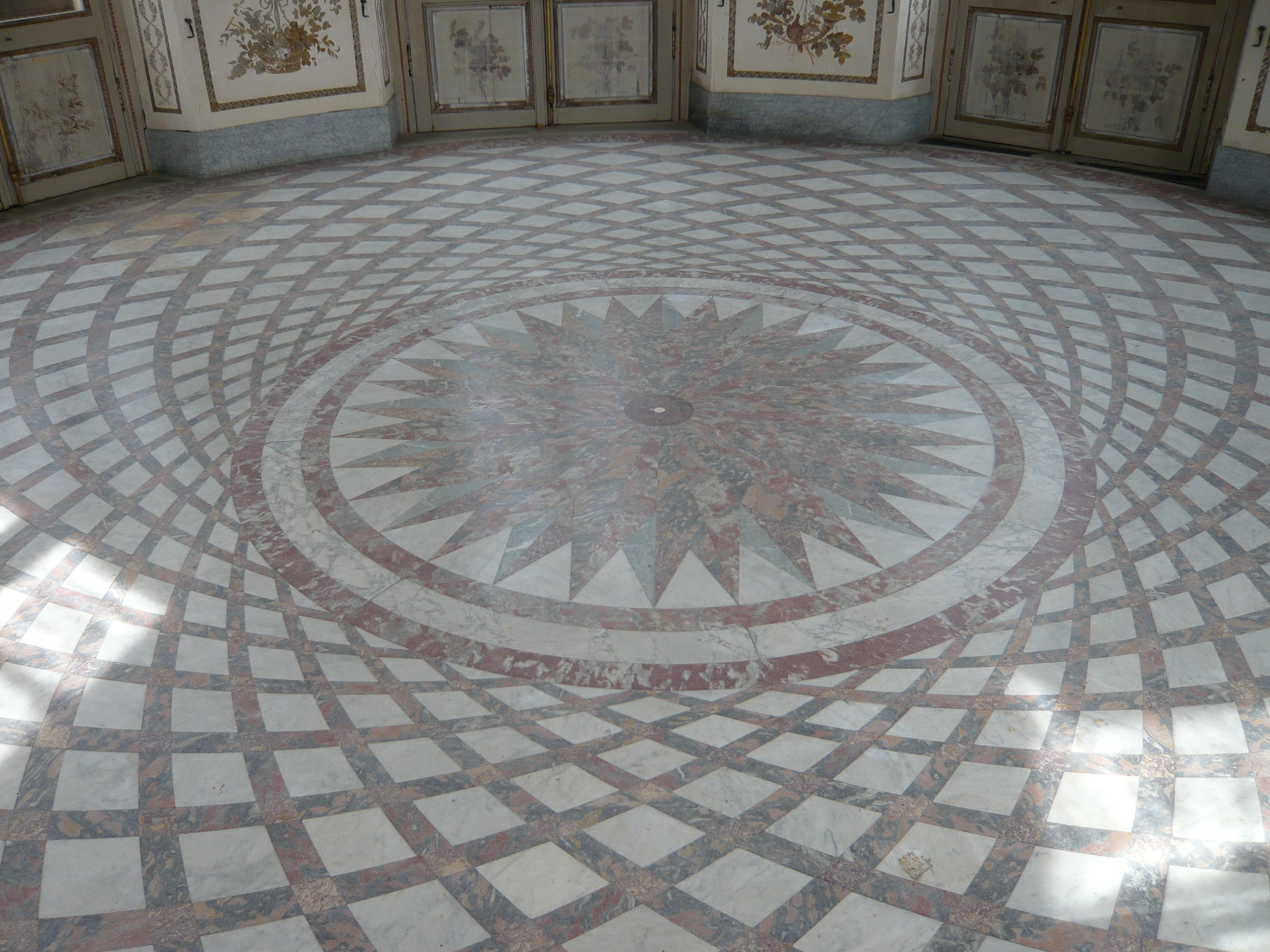
TrianonFloor

The salon has a patterned marble floor, still pristine.

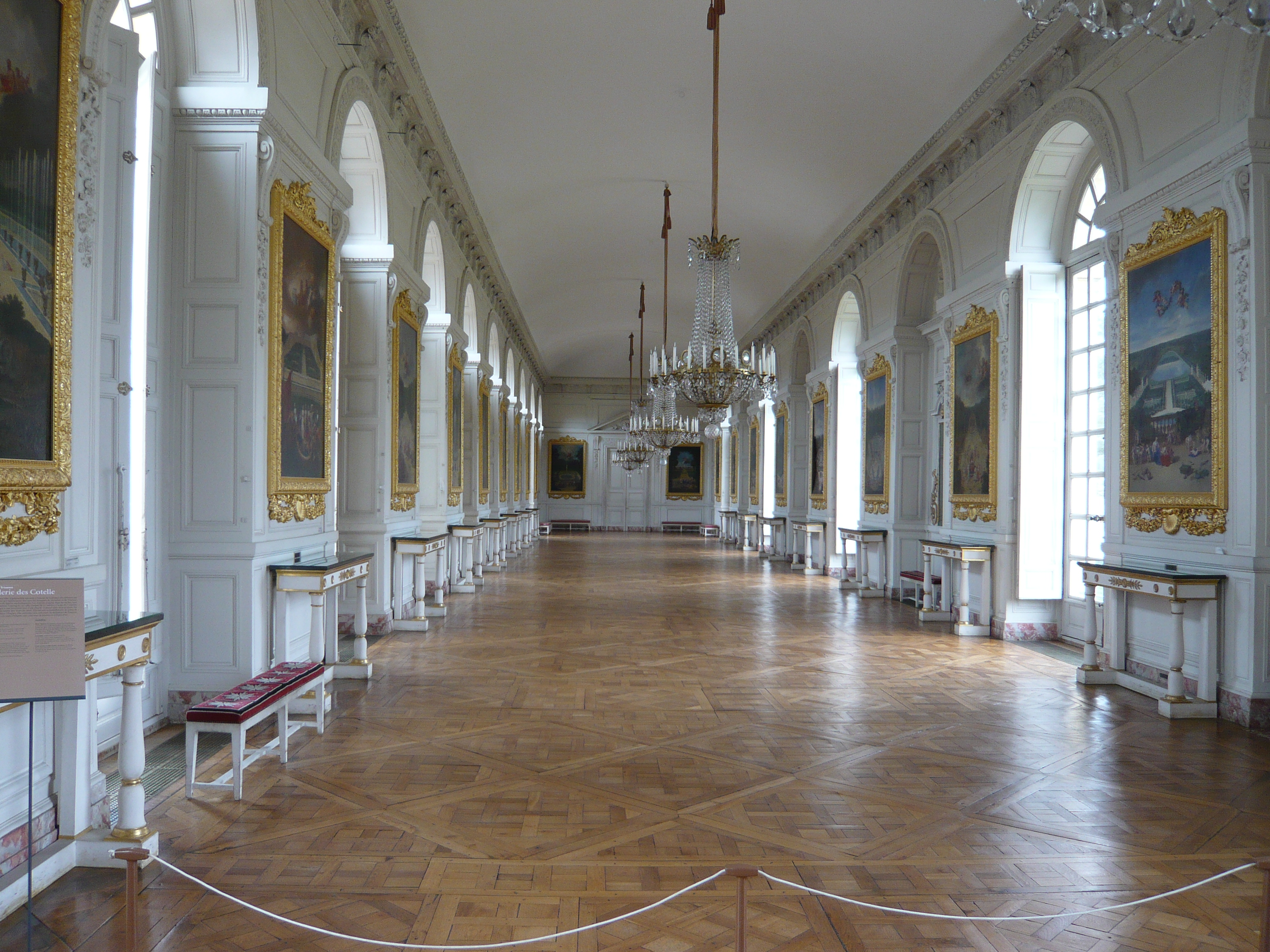
PetitTrianonGallery

A long gallery is a mostly-white version of the main palace’s Hall of Mirrors.  It’s calming, not frenetic. I think it’s too bad the royals who succeeded the glory days of the Sun King did not use the peace and quiet of their retreats to think about how they could sustain the monarchy.  In nearby Paris, daring thinkers were meeting in obscure coffeehouses, sowing the seeds of revolution.

Join me next time for more explorations in the art and history of Europe!


Maria Christina: The Sister Who Got Everything

MariaChristinaWreck

A few months ago in the Albertina Palace and Museum in Vienna, I came upon a small painting that showed the wreck of a carriage–an unusual subject for such grand surroundings. The caption explained that the wreck was an event in the life of the palace’s one-time occupants, Archduchess Maria Christina and her husband Albert of Saxony.  The couple became Duke and Duchess of Teschen and joint governors of the Austrian Netherlands on their marriage. They received an enormous dowry, too, from the bride’s famously parsimonious mother, Empress Maria Theresa.

Maria Christina

Maria Christina

Who were these fortunate people, and why was their carriage wreck such a big deal? Having a painting of a private misfortune, which the victims survived nicely, was the 18th century equivalent of a Facebook post about a fender-bender. And the 18th century was a time when almost no one had access to anything remotely like Facebook. The answer lies in family favoritism.

Empress Maria Theresa, who ruled the Austro-Hungarian Empire for 40 eventful years, produced 16 children.  It seems that she only liked one of them: Maria Christina, who happened to be born on Maria Theresa’s own birthday.  Every other sibling was used as a pawn in the empire’s political ambitions.  They were all packed off to strategic foreign marriages, preferably with either royal cousins or other monarchs who might be able to help the far-flung empire. The unluckiest sibling was Marie Antoinette, shipped off to France as a teenager to marry the doomed Louis XVI and lose her head.

Prince Albert

Prince Albert

But Maria Christina was allowed to marry the man she loved, Albert, a minor princeling with no wealth and no throne. Her doting mother kept Maria Christina close, in Vienna, and built her a magnificent palace right next door to the Hofburg, seat of Austrian royalty.

FullSizeRender

Maria Christina’s portrait in the Albertina Museum shows her posing (smugly, if you ask me) with her lapdog. In contrast, Marie Antoinette, on arrival all alone at the border of France, was forced to strip down and leave behind every article of Austrian clothing because she became the property of the French state. No one told her, until the last moment, that she also had to leave behind her beloved little dog.

Years later, Maria Christina paid her kid sister a visit in France. I completely understand Marie Antoinette’s reaction. I’ve read that Marie Antoinette retreated to her private mini-palace at Versailles, the Petit Trianon, and pointedly did not invite her big sister along.

Sibling rivalry? There we have it, on a grand scale.

Join me next time for more explorations in the art and history of Europe!

Blenheim: The Sun King’s Waterloo

Claude Lefebre, Public Domainnknown artist, after Louis XIV, circa 1670, u

Claude Lefebre, Public Domainnknown artist, after Louis XIV, circa 1670, u

Before there was Napoleon Bonaparte, there  was Louis XIV, the Sun King.  He believed himself the greatest monarch the world had ever seen, so naturally he thought he might as well control all of Europe plus the British Isles, not just France.  In 1704, the War of the Spanish Succession had been going on for four years, and things were going well for the French.  Unlike many kings, Louis XIV was actually a soldier, and an accomplished one.

John Churchill, 1st Duke of Marlborough, 1704, Adriaen van der Werff, Public Domain

John Churchill, 1st Duke of Marlborough, 1704, Adriaen van der Werff, Public Domain

He met his match in John Churchill, who had risen through the ranks after beginning at court as a lowly page.  He had already attained the rank of First Duke of Marlborough when he stopped the French in their tracks.  He changed the course of European history.  Churchill/Marlborough did this through a combination of deceptive communications and wily maneuvering of his forces.  As I understand it, he marched his troops undetected through the Low Countries, pretty much surprising the French at a little Bavarian village called Blenheim.  The object was to keep the French from occupying Vienna, which would have broken up the delicate and ever-shifting balance among European powers.

Marlborough’s heroics ended Louis XIV’s dream of controlling all of Europe. The French suffered 30,000 casualties.  The French commander-in-chief, Marshall Tallard, was captured and hauled to England as a prisoner.  There were still battles left to fight, but the battle of Blenheim was a huge turning point in history.

DSCN7028

A grateful nation gave the 1st Duke of Marlborough the lands and the money to build a suitable tribute, a palace that would rival the Versailles of Louis XIV.  In fact, the cavernous entry hall at Blenheim is as impressive as anything I’ve seen at Versailles.  It’s more austere, though–suitable for the military theme of Blenheim. The palace was built in the English Baroque style, and contained 187 rooms. The construction was halted in 1711, after the Duchess of Marlborough had a terrible quarrel with Queen Anne.  In fact, the Duke and Duchess had to go into temporary exile on the continent until the Queen died in 1714.  After that, the Duke had to spend his own money to complete his palace.

Serious historians would not be much impressed by my analysis of the military situation. If I wanted to fully understand the War of the Spanish Succession and its many battles, I could study a large military exhibition at Blenheim Palace.  I thought about the military exhibit on my recent visit, but the tearoom was calling my name.

Join me next time for more explorations in the art and history of Europe and the British Isles!
A Cradle Fit for a King (or Emperor or Duke)

BlenCradle

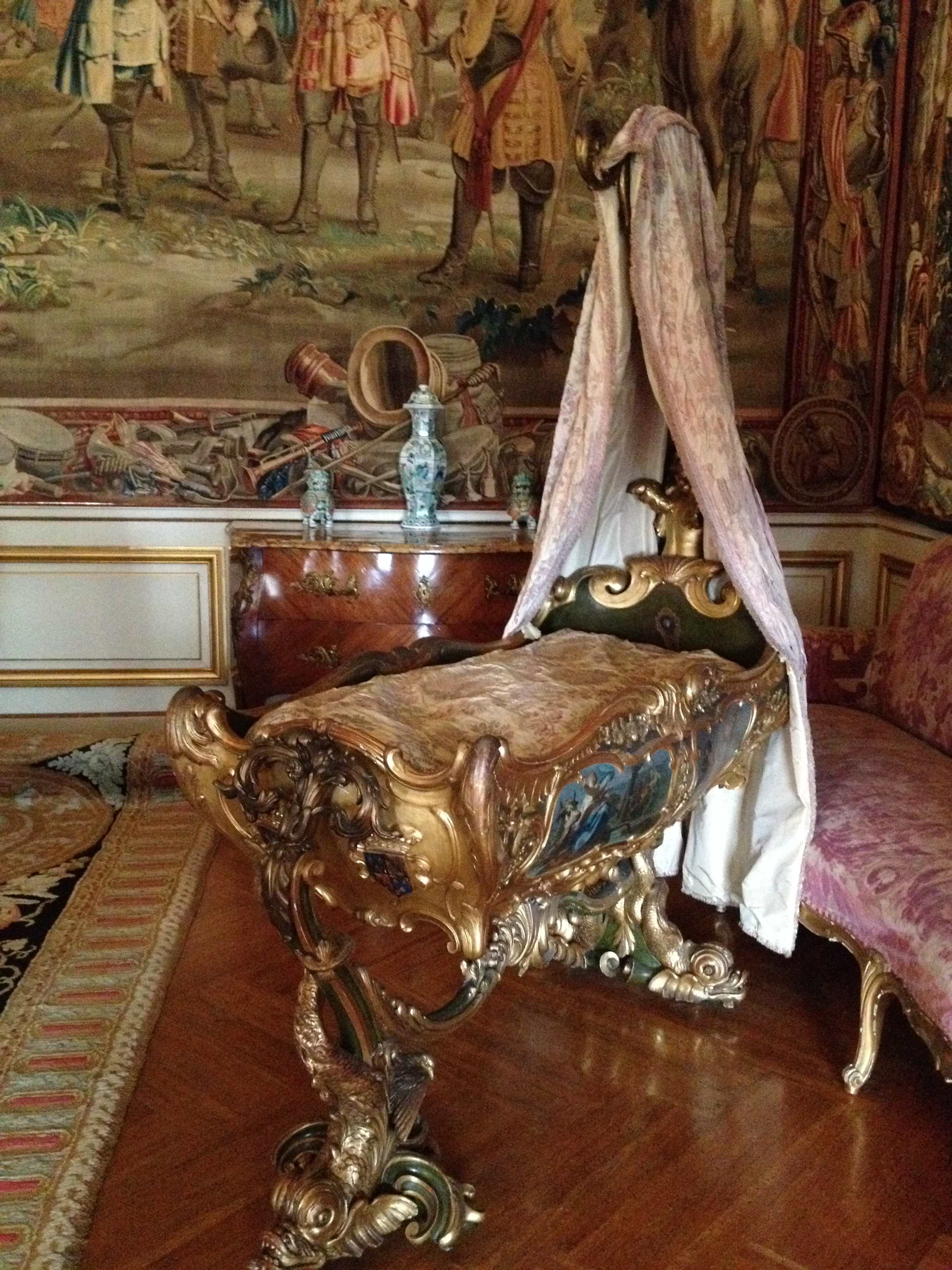
When Consuelo Vanderbilt did her duty and produced the required “heir and a spare” for the 9th Duke of Marlborough, she rocked her boys in a regal cradle, which is still on view at Blenheim Palace.   Consuelo’s mother, the irrepressible Alva Vanderbilt, wasted no time in ordering this cradle from Italy.  She had moved heaven and earth to marry her very rich daughter to the Duke of Marlborough.  The birth of a male heir insured that the Vanderbilt bloodline would forever have a secure footing in the British aristocracy.

According to a placard about the cradle in Blenheim Palace, it was a near-replica of the one made for Napoleon Bonaparte’s long-awaited heir in 1811. I don’t see much resemblance, though. Consuelo’s cradle is ornate, over-the-top with fanciful figures and gilding. (Actually, a baby being rocked in this cradle would have gone straight over the top and onto the floor–the mattress is even with the sides. If Consuelo actually used it, she must have used it with a lower mattress).

NapoleonCrib


Napoleon II’s cradle is now in the Imperial Treasury in Vienna, because the child’s mother was Napoleon’s second wife, Marie-Louise of Austria. It was never actually subjected to a burping, crying child.  It was a ceremonial object–a “throne cradle”– presented to Empress Marie Louise by the City of Paris. This cradle has a distinctly military look. It was fashioned of 280 kg of silver, replete with symbols of power and good government:  horns of plenty, the Roman Capitoline Wolf, a laurel wreath, a crown of stars, and numerous bees. Napoleon the Emperor took the bee as his personal emblem; it was also an old symbol of Paris, indicating diligence. The foot of the cradle has a small eagle; Napoleon II was popularly known as “The Eaglet,” with the hope that he would surpass even the glorious exploits of his father.

Napoleon’s only legitimate son had a short and tragic life.  The Emperor made his son the King of Rome the instant he was born.  Glory did not follow, though. After his father’s abdication in 1814, Napoleon II’s mother was forced to flee home to Austria with her toddler.  She remained married to Napoleon, but never saw him again.  The child died in isolation in Austria, where he had to be kept from the public for fear of his father’s admirers trying to rally around him.  I read somewhere that the unfortunate child’s only companion was a pet bird.  He was a frail, sickly child, kept indoors almost all the time. He died of tuberculosis at age 21.

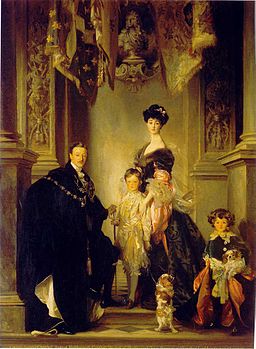
Duke of Marlborough and His Family, John SInger Sargent, 1905, Public Domain

Duke of Marlborough and His Family, John SInger Sargent, 1905, Public Domain

Consuelo’s marriage to the 9th Duke of Marlborough was loveless and unhappy, but her older son, in the fullness of time, became the 10th Duke of Marlborough and her younger son lived out his days as Lord Ivor Spencer-Churchill. Consuelo’s ancestors continue to occupy Blenheim Palace to this day.

Join me next time for more explorations in the art and history of Europe and the British Isles!