Category Archives: British Isles

Happy Birthday, Emily Bronte!

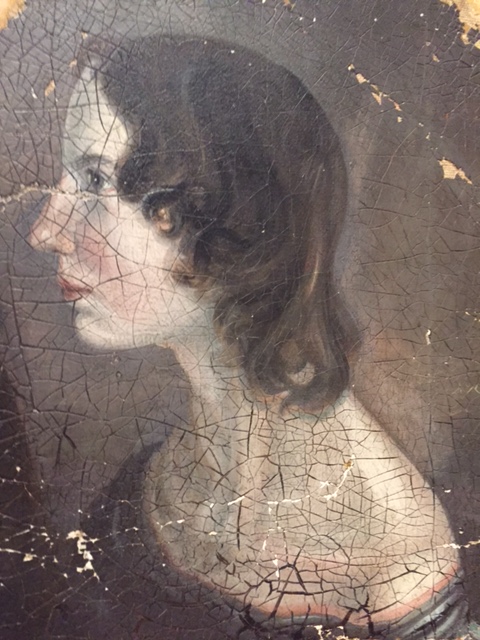
Emily Bronte, portrait by Branwell Bronte
Emily Bronte, portrait by Branwell Bronte

Emily Bronte was born on July 30, 1818. Her brother Branwell, an aspiring poet and portrait painter, composed one of the very few images of her. His sister Emily was painfully shy, hardly speaking with anyone outside the family. But she was a bold artist.  Her novel, Wuthering Heights, is still startling in its passion and social critique.

IMG_7974

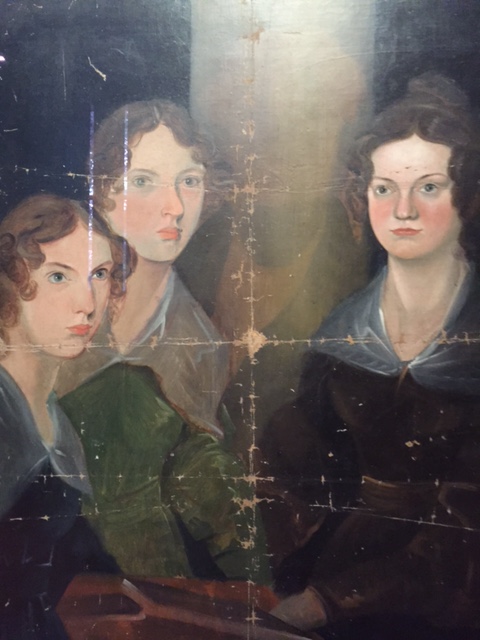
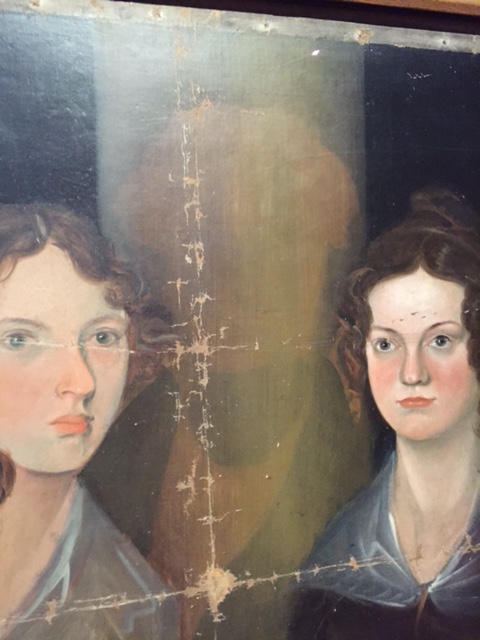
Branwell  was the only son in the family and great things were expected of him. I think poor Branwell suffered from what we might now call Preacher’s Kid Syndrome: a need to act out, just because his father, the Reverend Patrick Bronte, was such an upright man. Branwell studied painting, in between bouts of drinking, taking opiates, and getting fired from various gigs as a tutor–for which his father had taken great pains to educate him. In around 1834, at age 17, Branwell painted the group portrait above. It is now one of the most treasured works in London’s National Portrait Gallery, and the centerpiece of a special Bronte exhibit I saw last spring.

Why is this rare painting folded in the middle?  We’re lucky that it still exists, damaged as it is. The portrait, together with the profile of Emily, traveled to Ireland with Charlotte Bronte’s widower after her death as a young bride. It appears that a heartbroken Arthur Bell Nicholls shoved the portraits of his beloved Charlotte and her sisters on top of a wardrobe in an Irish farmhouse, out of sight and out of mind.
5BF4DE23-BACA-4EB1-A574-4B0C8DB37E39

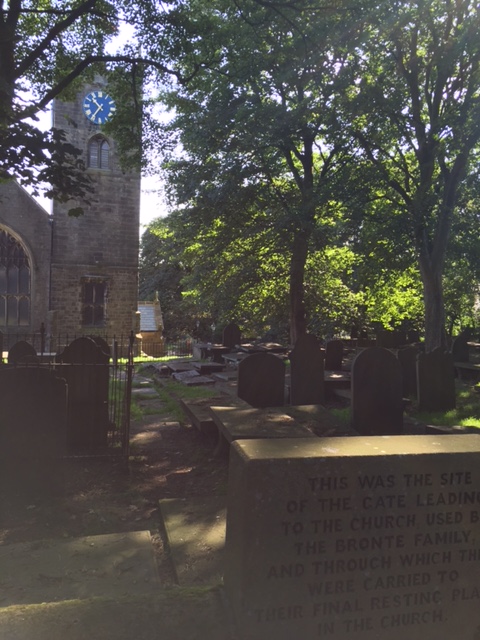
The churchyard where all the Brontes are buried (except Anne, who died at Scarborough and was buried there) is just outside the door of the parsonage. Living there, walking every day past the graves of so many loved ones who had died so young, must have been unbearably sad.

By the time Charlotte died, shortly after her marriage and while pregnant with her first child, Branwell, Emily and Anne were already dead. Most likely they died of either tuberculosis or infectious diseases from the poor sanitation in the village. (Branwell more or less drank himself to death). Nicholls stayed in Haworth for several years to care for his father-in-law. Nicholls eventually remarried. His widow finally discovered the paintings (housecleaning, no doubt) in 1914.
IMG_7991

Sadly, it seems that Branwell had erased himself from the family portrait. This fact was not known until the 1950s, when the oil paint became more transparent with age. Now, it is clear that there was once a man’s figure between the sisters.  Did Branwell already have such a low opinion of himself? Was he ashamed to be seen with his much-more-virtuous sisters? Or did he feel he could not do justice to his own wonderfulness? Or was this possibly a portrait of his father, who took a very dim view of Branwell’s nights spent in the local pub or worse?  We’ll never know.
IMG_7998

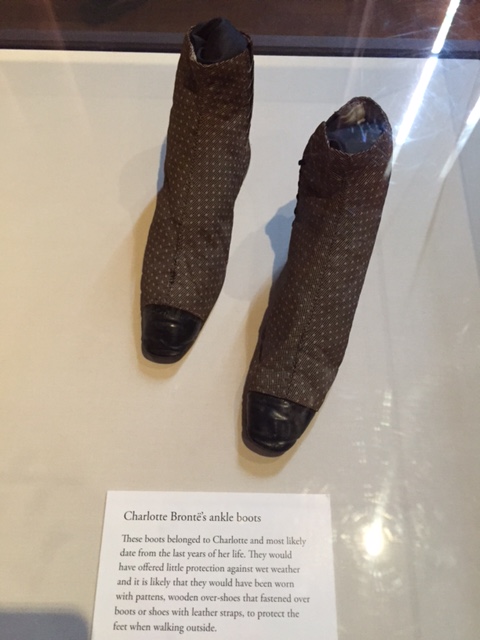
The London exhibit also contains items such as Charlotte’s tiny boots. The caption says that for outdoor wear, the boots were most likely worn with wooden platens strapped to the soles for a little protection against mud and snow. How did the Bronte girls manage to walk for miles in the rugged North Yorkshire moors in footgear like this?
516249D9-D9D6-4C17-9562-2F8427A4F7FA

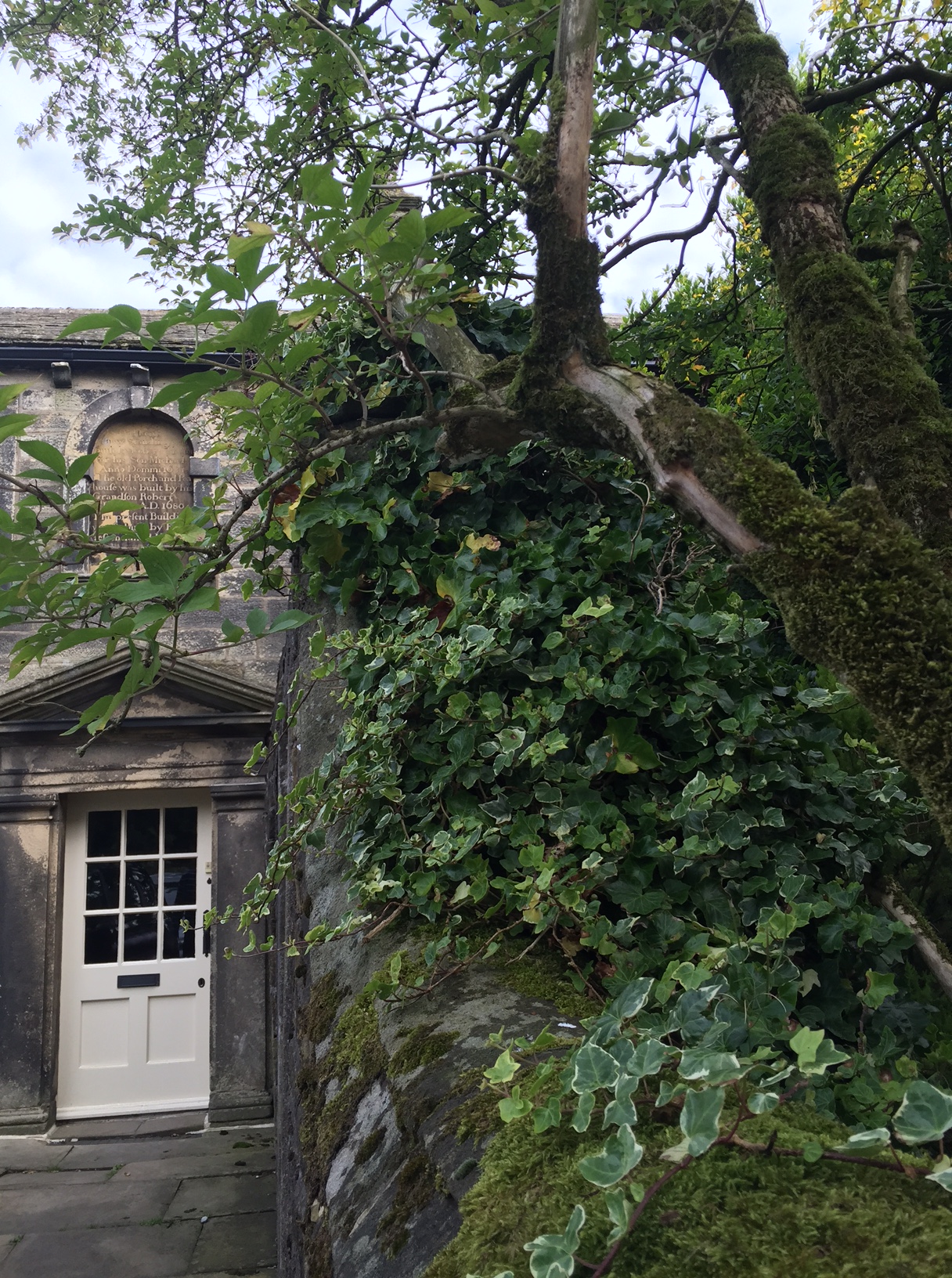
Last year I made a literary pilgrimage to Haworth in Yorkshire.  The town still looks much the same as it did when Emily composed her novel about wild forbidden love on the moors. I was lucky enough to stay at Ponden Hall, a house where the Brontes were regular visitors. It’s now a family home, a lovingly run bed and breakfast, and a venue for  gatherings of artists, writers, and Bronte fans. The charming hosts go out of their way to show all visitors around their historic home.  In the photo below, the bookcase is a hidden door into a secret library. The Bronte girls used to visit the house, a couple of miles from the parsonage, to use the library.
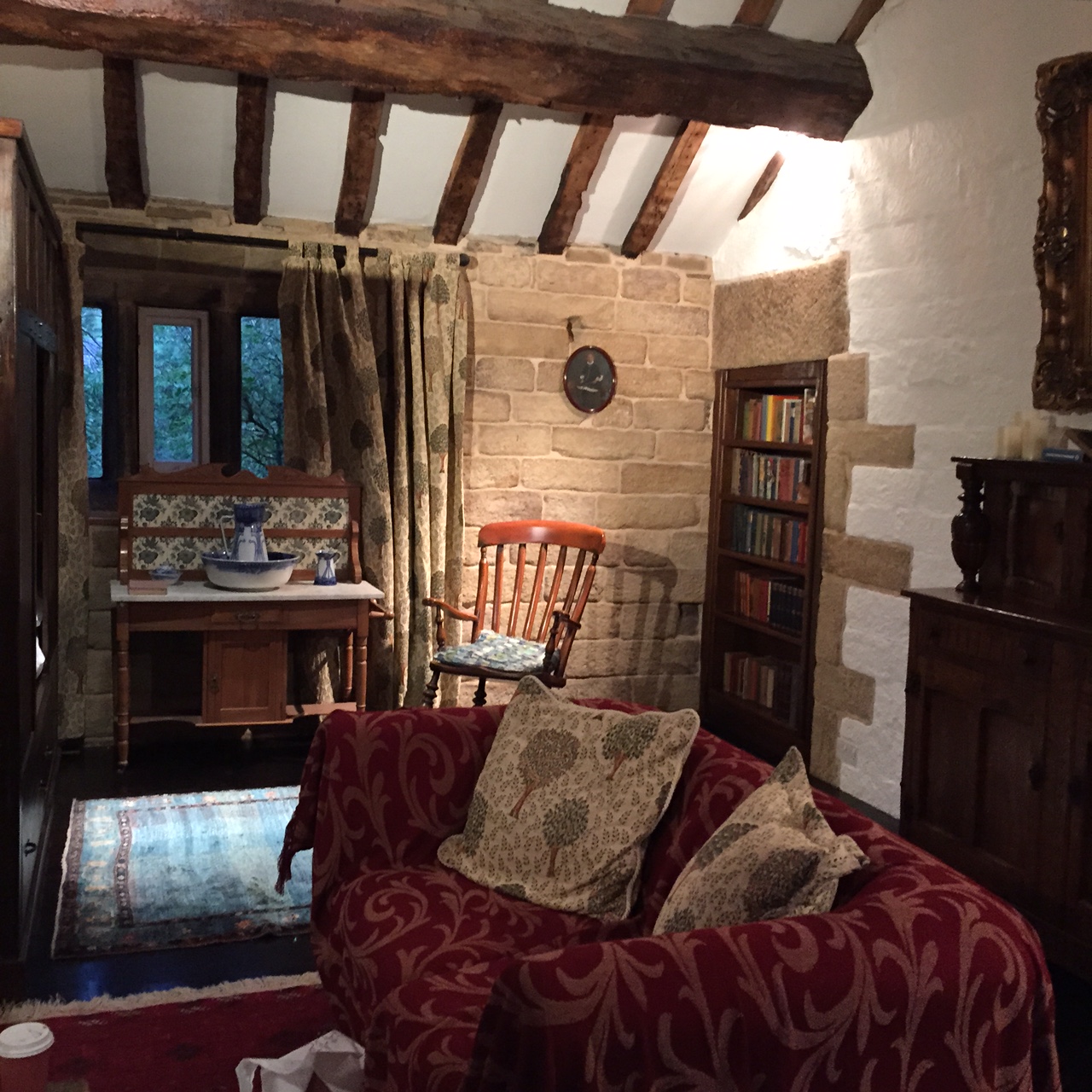
C62787CB-D25E-42C6-9317-8B42D8F7B0E1 7CCCA642-6749-4E0A-BDF0-962884452783

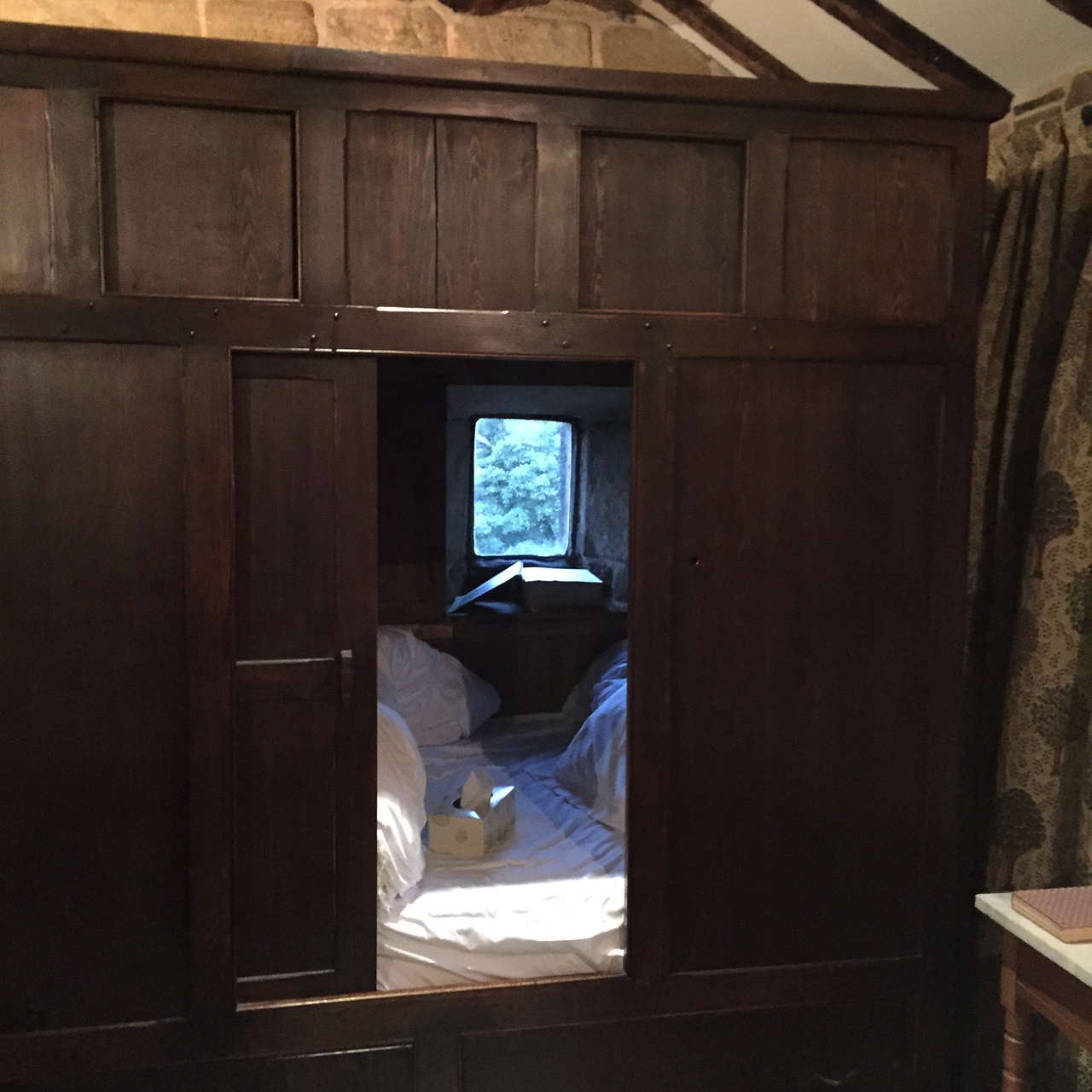
It’s possible to actually sleep in the “box bed,” shown above, with the little window that reportedly inspired Emily to write her famous scene where the ghost of Cathy appears outside the window, begging to be let in.  Her forbidden and guilt-ridden lover Heathcliffe staggers out onto the moors in desperate search of her. (Did I sleep in the box bed? No, but maybe next time! Do I believe in ghosts? Maybe!)
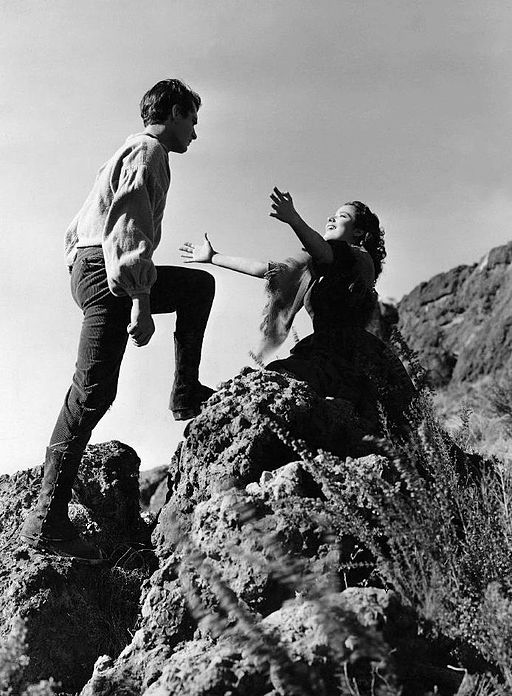
Laurence Olivier and Merle Oberon in "Wuthering Heights," Public Domain

Laurence Olivier and Merle Oberon in “Wuthering Heights,” Public Domain

In 1939, Laurence Olivier and Merle Oberon played the lovers Cathy and Heathcliffe in the classic romantic film based on the novel.  Since then, there’s been a 2011 film version that makes explicit the racism that Emily only hinted at in her novel, by calling Heathcliffe a “gypsy.” It’s on my list to watch.  There’s a 2009 miniseries, too.

577AA11D-6684-4EE1-9BFE-E0BDB8161171

Did I venture onto the wild moors myself?  Only partway.  I had a broken foot, thanks to a super-klutzy fall just before I left on my trip.
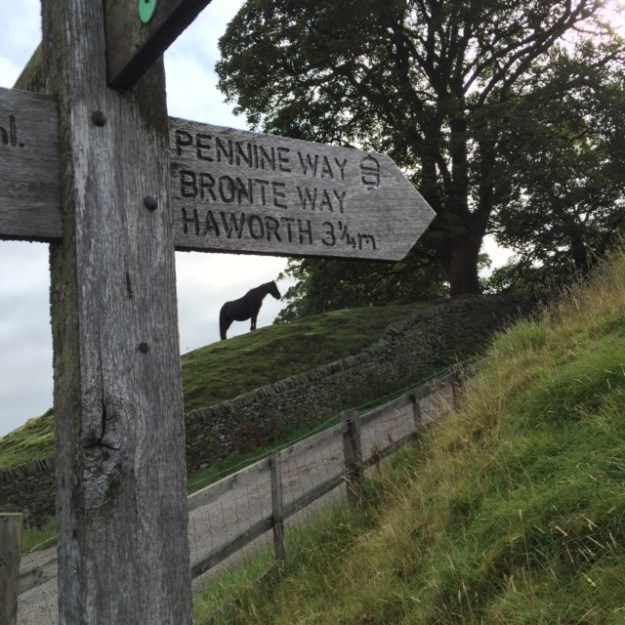
E8ADF0D1-3C59-43B8-A466-D01193D148E5

But I’m determined to hike the moors.  Next time, I hope I’ll be able to follow the signposts and get just a little bit lost in the wild countryside that inspired Emily Bronte and her sisters.

Join me next time for more explorations in the art, history and literature of Europe and the British Isles!

Erddig: Home of the Spider Brusher

IMG_4085

Who is the Spider Brusher?  She is Jane Ebbrell, a beloved servant at the Welsh estate of Erddig, near Wrexham. Actually, she was more of an all-around housemaid, but she wielded a mean spider-brush in her day.  We know this because her slightly eccentric late 18th century master, Philip Yorke, not only commissioned her portrait, but wrote an affectionate ditty about her.  It begins,

To dignify our Servants hall

Here comes the Mother of us all;

For seventy years, or near have pass’d her

Since Spider-Brusher, to the Master

At the time of her portrait, she was 87.  Many other servants received the same oil portrait and poem treatment over the next 250 years. But the Yorkes went beyond lip service. Jane Ebbrell, for example, was encouraged to marry another servant, and when she finally retired it was to her own home on the estate.

IMG_4068

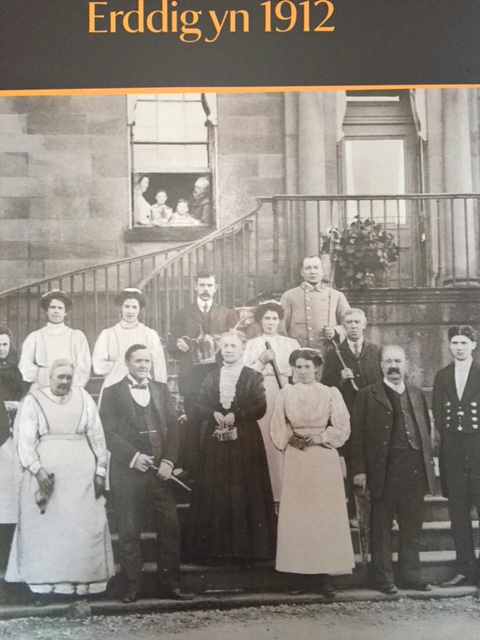
In around 1852, the squire, Simon Yorke III commissioned a photograph of all the family servants, each holding an implement of his or her work, standing on the front steps.  He and his family appeared in the window behind the servants.

IMG_4051

In 1912, Philip Yorke duplicated the photo with his own servants and his own young family.  He wrote a long poem for the occasion.  A book of his poems, all affectionate doggerel, is sold in the gift shop.

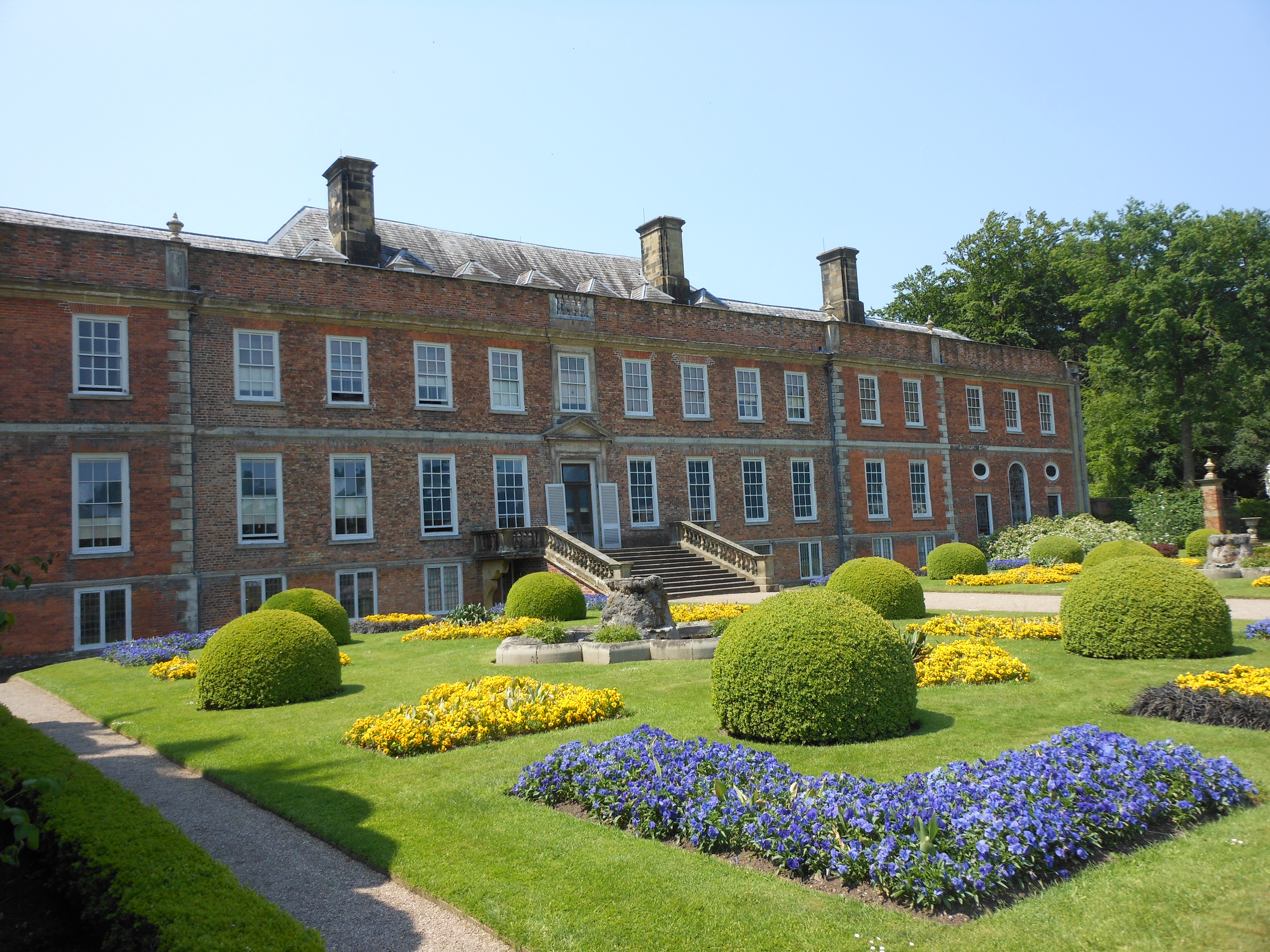
What made seven generations of the Yorke family treat their servants so well? This was an age when kitchen maid might always be called “Mary” because master and mistress could not be bothered to learn new names. Most likely the reason is that the Yorke family had somewhat humble origins themselves. When they unexpectedly inherited the house and its grand 18th century furnishings from an uncle, they found themselves rich in property but poor in cash.  They could not afford the usual wages, but they made up for it by treating their servants so well that they felt part of the whole enterprise.

ErddigFacade

Perhaps not wanting to waste anything, they eventually became epic hoarders.

DSCN0068

When the property finally passed to the National Trust in 1973, the sole remaining Yorke required that no objects should EVER be thrown out or sold. About 30,000 objects were inventoried.  Only about 10,000 can be on display at the same time.

DSCN0123

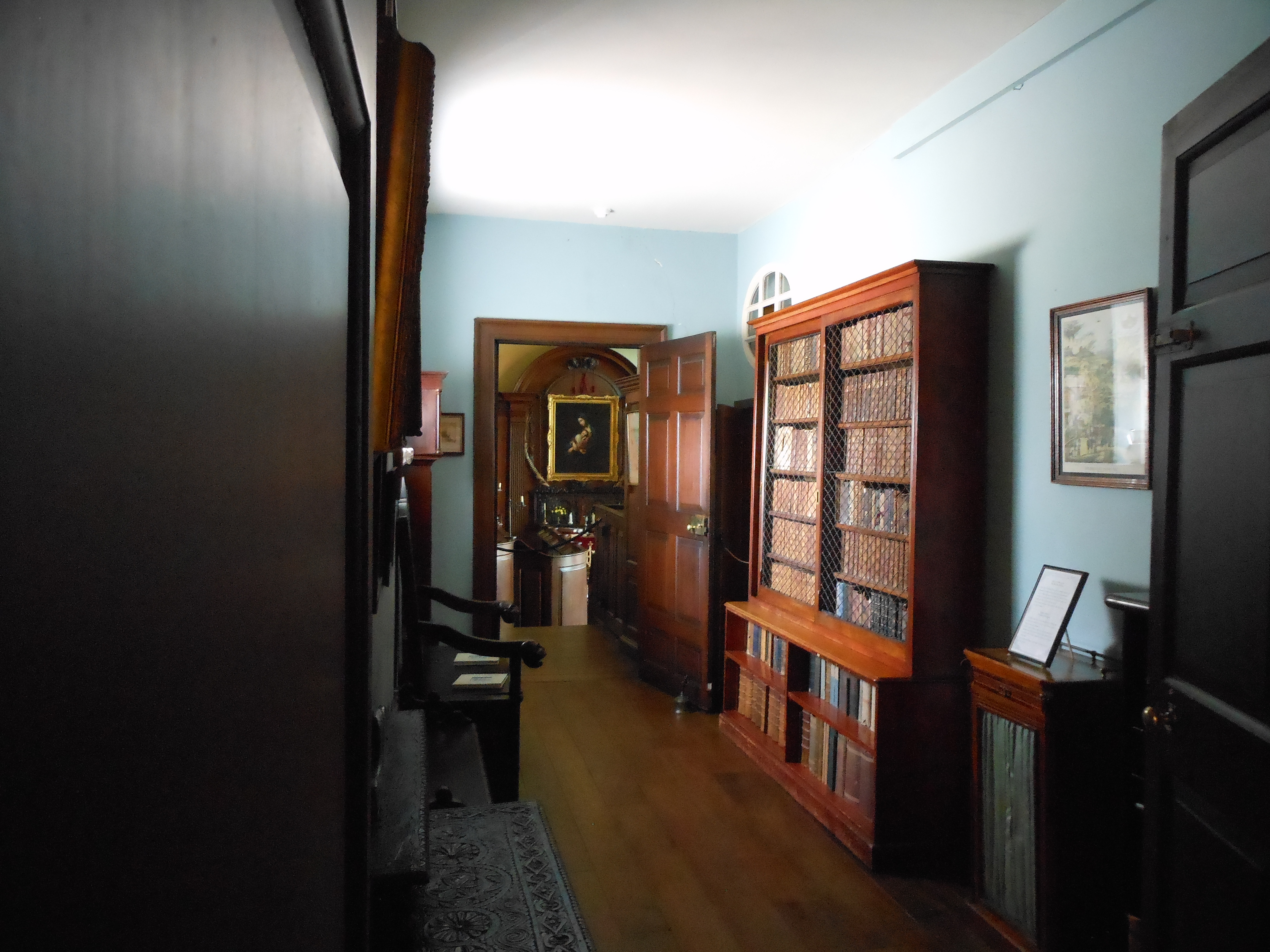
In their more orderly years, the family kept a “Failures Gallery:” a collection of objects and art they didn’t like but didn’t want to part with.  It lined the walls of the passage the servants used to get to the private chapel.

DSCN0106

The chapel was the scene of daily prayers for everyone.

DSCN0122

The family never used the Failures Gallery.  They entered the chapel through their grand eighteenth century rooms. So life at Erddig kept some of the traditional distance between master/mistress and servant.  But still, life in the Servants’ Hall at Erddig was pleasant enough that generations of families were happy to serve the Yorkes for low wages.

An article about Errdig is at:

http://www.telegraph.co.uk/travel/destinations/europe/united-kingdom/wales/articles/Fiona-Bruces-Britain-Erddig-Wales/

Shakespeare’s Globe Theatre

IMG_8643

Shakespeare’s original Globe Theatre burned to the ground on June 29, 1613.  It was rebuilt in 1614 and operated until about 1642, when the Puritan movement in England closed theatres, and demolished in 1644. The American actor and producer Sam Wanamaker organized a group that worked tirelessly for decades to build a replica, based on drawings and best guesses.  Construction had begun when Mr. Wanamaker died in 1993; performances began in 1997.

I finally made it to the Globe this month, and I’ll go again every chance I get. Lately I am rediscovering London, after avoiding the city for years because of the expense, the crowds, the pollution, and on and on. I’ve been tootling around the English and Welsh countryside instead, loving the small towns and villages and historic homes. But London is still glorious.

IMG_8655

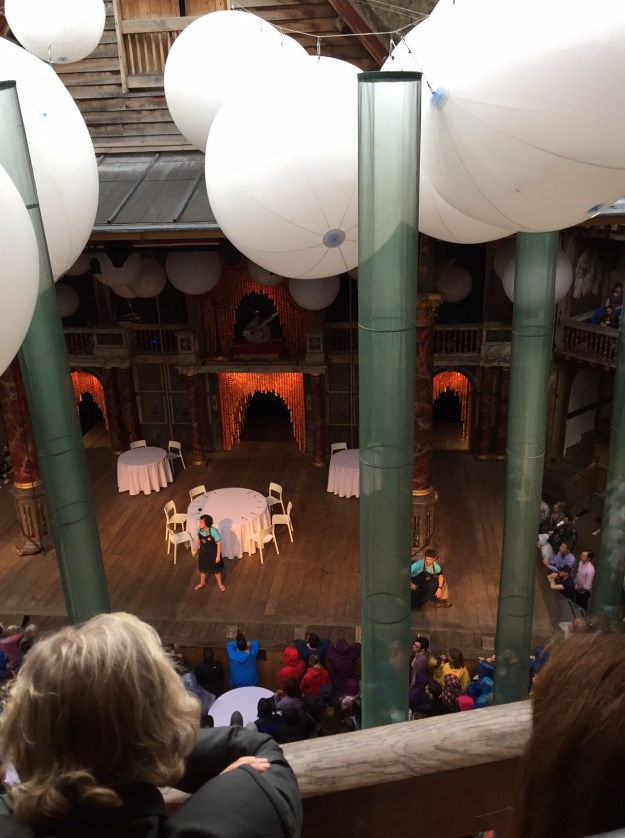
I saw a wonderful production of Shakespeare’s “A Misdummer Night’s Dream.”  Of course, photos are not allowed during performance, and I would not want them to be. But I did snap some photos before the performance began. The “rude mechanicals” were Globe staff members in this production, and they regaled the audience with jokes and instructions before the show got underway.

IMG_8666

My vantage point was from the uppermost gallery, with a roof and wooden benches–still cheap as theatre tickets go, but not as cheap as the “groundlings” places at 5 pounds apiece.  It’s standing room down there, as it was in Shakespeare’s time, and there’s no shelter from the rain.  It rains a lot in London. No umbrellas are allowed, but people wore raincoats and ponchos, and obviously had a good time.  The rain was only on and off, and not many people left during intermission. It looked like a lot of fun down there. I would do it.

IMG_8667

But I was glad enough to have a thatched roof over my head, a plain wooden bench and the cushion which I hired for a couple of pounds extra. After a day chasing around London and standing in museums, the old dogs were barking.

IMG_8658

The setting on the Thames, a few hundred yards from the site of the original Globe, is part of the revitalised South Bank nightlife area.  It’s lively and fun and feels perfectly safe, at least along the river walk. St. Paul’s Cathedral, which earlier that day held a Service of Thanksgiving for the 90th birthday of Queen Elizabeth II, looms majestically across the Thames.

IMG_1764

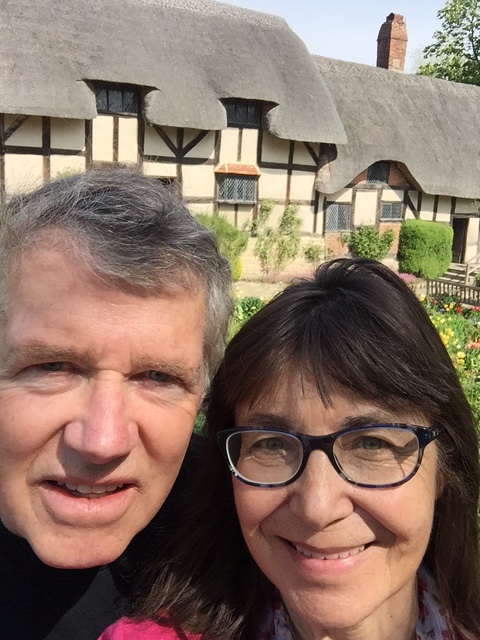
Outside of London (tootling around in a rental car) we took in some other Shakespeare sights, including my favorite, Ann Hathaway’s Cottage in Stratford-upon-Avon.  Long live the Bard!


Parham Park: My Favorite Long Gallery

This is Parham Park, built in Elizabethan times for a wealthy old family fortunate enough to acquire the land in 1540, when King Henry VIII was busy dismantling monasteries.  The land at that time passed from the Monastery of Westminster to the Palmer family, who began building their grand house in 1577. In about 1597, the Bishopp family bought the house and estate, and held it for about 325 years. In 1922, the Pearson family bought the property and found it in sad repair. They set about renovating, very conscientiously. The quiet but luxurious country life lived in this beautiful house has been about the same for centuries. It appears that over the years, the families who lived here were able to steer clear of the dangerous (and often lethal) political turmoil of their times.


The house is pretty much in the middle of nowhere, close to the southern coast. After the excitement of hosting troops during World War II, the family decided they liked having people around and opened to paying visitors in 1948.

The matriarch (think of her as the equivalent of Lady Violet on Downton Abbey) used to enjoy sitting in the Long Gallery, pictured below, as tourists filed through. She stayed anonymous and had a great time fielding  questions and chuckling at inane comments. She especially liked it when complete strangers claimed that they had been guests of the family before the war–when she would have been their hostess.

According to a friendly docent on a recent visit, the house has the third longest remaining Long Gallery in the country. These galleries were built in Tudor and Elizabethan times to showcase the family’s treasures. Just as importantly, family members used the gallery to take long walks when it was pouring rain out in their gardens and woodlands.


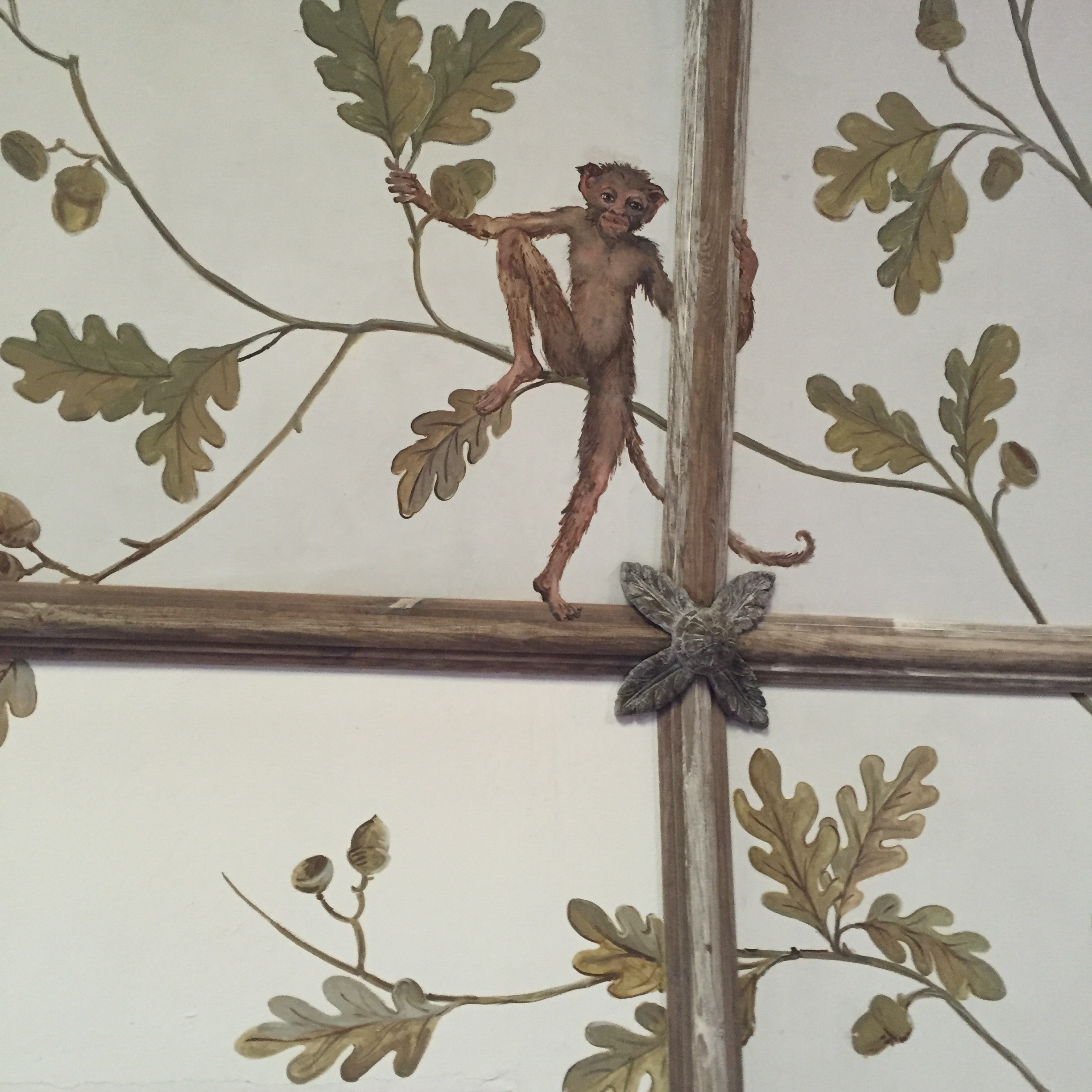
Sometime in the 1960s, the family at Parham tired of the plain white ceiling of their Long Gallery. They had repaired and replaced the roof decades before, but the Gallery was beginning to bore them. So they hired an artist to add vines and branches. And some wildlife! A little owl perches on a branch in the panel above.


How about a pair of birds and their nest?


My personal favorite is the monkey, who looks like he’s up to no good.

Parham today is managed by a charitable trust, and the Pearson family still lives in part of the house. If Parham were run by the National Trust or English Heritage, painting vines and wildlife on the ceiling of the Long Gallery would probably never happen. Those organizations rightly insist on historical accuracy. But since Parham was (and is still) privately owned, the family was free to do what private owners of stately homes have always done: make their home exactly the way they wanted it.  The house is part of the Historic Houses Association, which sells a yearly pass that gets pass holders into many properties free, and into others at very limited times when no one else is admitted.

img_8084

I’ll cheerfully flash my HHA pass at a house like Parham any chance I get, and I’ll return again and again to savor spectacular historic interiors like the dining room above.

img_8015-1

St. Eustace in Canterbury Cathedral

img_7293

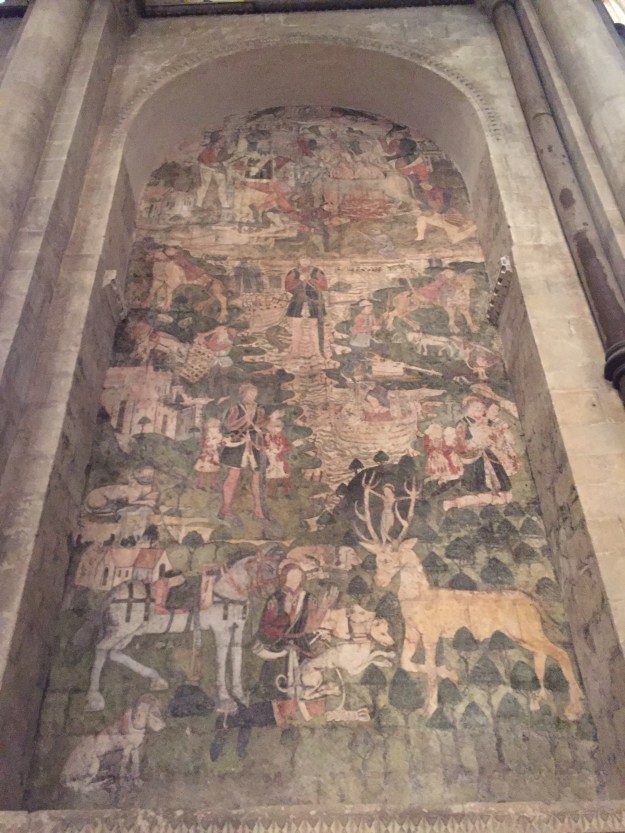
Among the many treasures at Canterbury Cathedral, one of my favorites on my visit this week  was this large large wall painting, done in about 1480. It’s the legend of St. Eustace, who lived a colorful if harrowing life. He might possibly have been a known historical character, a Roman general named Placidus, in the 2nd century A.D.

img_7332

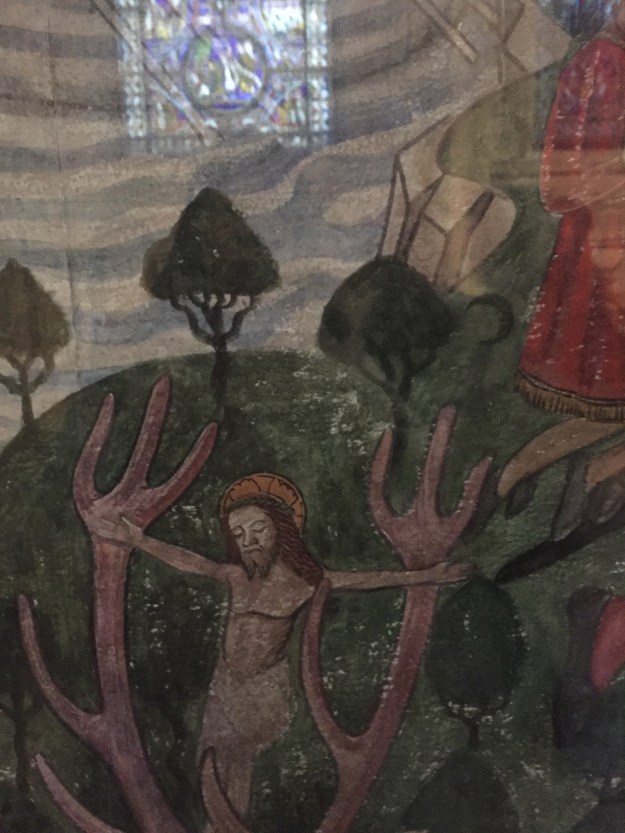
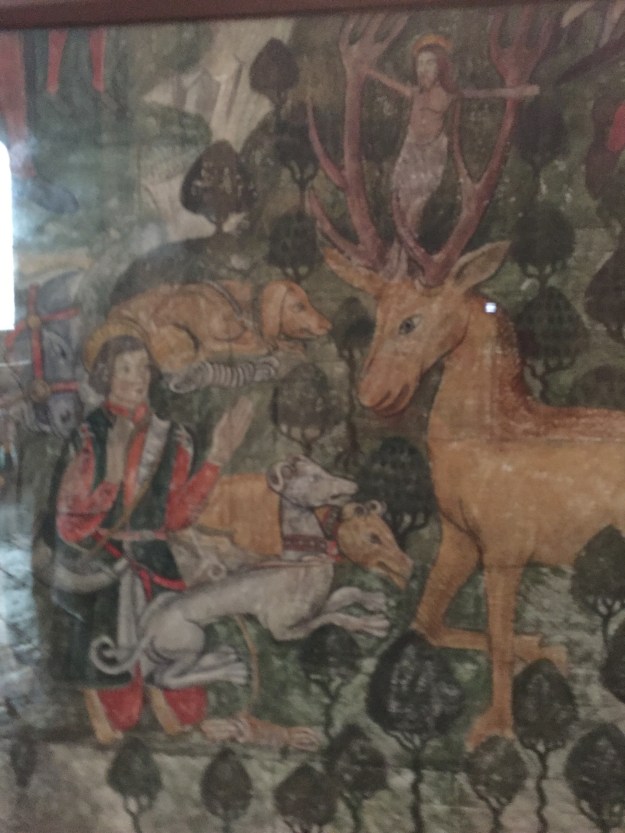
The legend goes that Placidus was out hunting one day when he had a vision of Christ  in the antlers of a stag.  He immediately converted to Christianity and changed his name to Eustace.

img_7302

It’s hard to see the images that go high up the stone wall of the catheral.  But there’s a horizontal copy nearby.  Photos of it are not great because it’s covered by glass, but the reflections of the stained glass windows are sort of a bonus. I loved the images, especially the animals like the smiling stag and the hunting dogs above.

img_7322

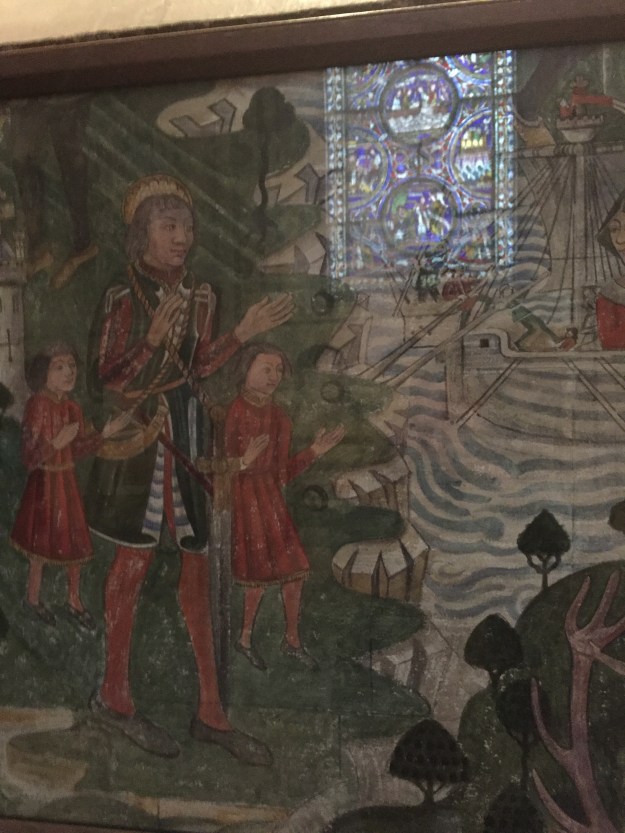
The legend goes that Eustace’s troubles began right away.  His faith was tested by various calamities.

img_7327

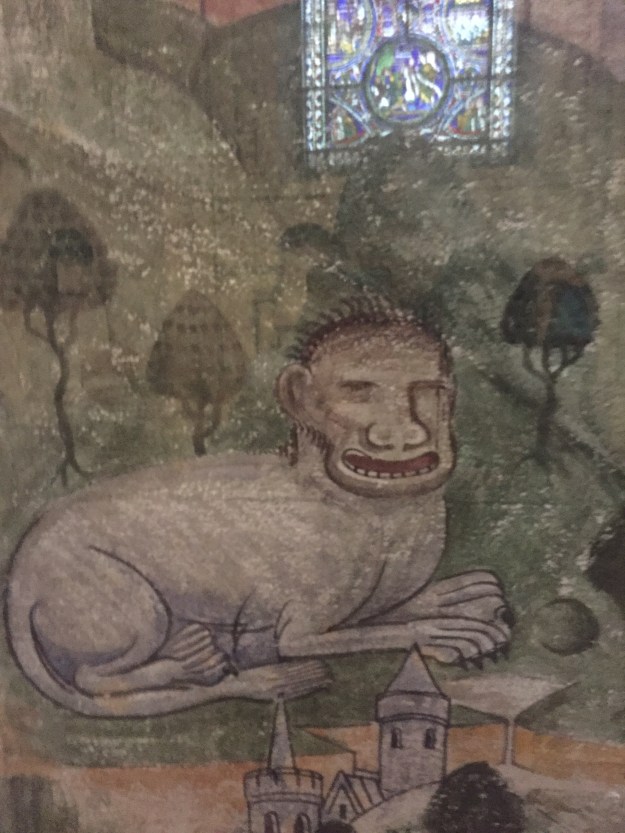
I was admiring the lion image. Personality plus! Then I read that the lion was grinning because he had just eaten Eustace’s son.

img_7335

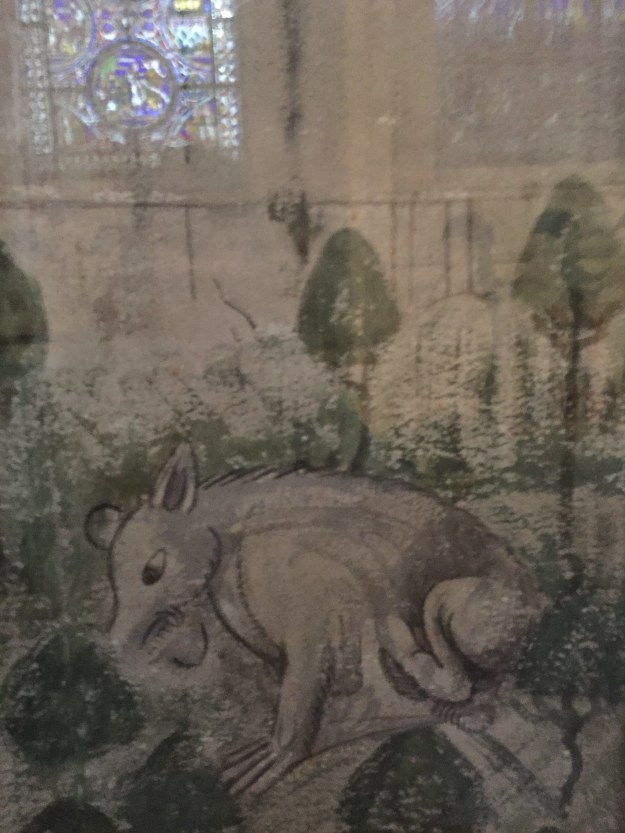
The wolf, looking all innocent? He had eaten the other son. But the legend goes that Eustace endured his hardships and kept his faith.

The painter of the Canterbury mural subscribed to a disputed end of Eustace’s story: the very upper part of the mural shows Eustace, his wife and his remaining children being roasted alive by order of the Emperor Hadrian. Eustace had refused to make a pagan sacrifice. Then they were all beatified, so there was still a happy ending of sorts. However, the martyrdom and even the historical existence of the saint are in doubt. I love the painting, regardless of the source. Bravo to the anonymous painter, back through the centuries!

To me, the charm of the mural is in the medieval images of people in nature, learning lessons from animals. The painter told the story with gusto and some humor.

Join me next time for more explorations in the art and history of Europe and the British Isles!


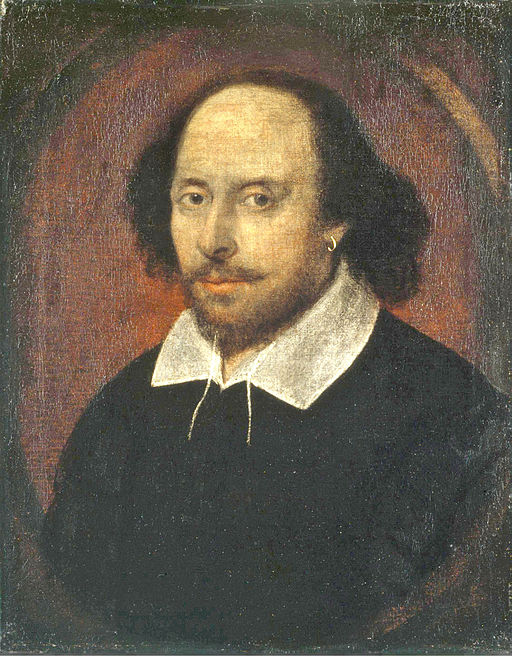
Happy Birthday, Dear William!

512px-Shakespeare

“Chandos” portrait, thought to be William Shakespeare, circa 1610, National Portrait Gallery, Public Domain

In honor of William Shakespeare’s 400th birthday, I’m revisiting an old post about one of my many treasured Shakespeare experiences.

Some years ago, I found myself with a lot of Frequent Flyer miles that were about to expire.  No one was free to travel with me.  So I treated myself to a solo trip to England.  I decided to see as much live theater as I possibly could. In the course of two weeks, I saw 18 plays.  Some days I doubled up and took in a matinee plus an evening performance.  I saw plays at grand theaters, in the London equivalent of “Off-Broadway,” and in tiny rooms above pubs.

At that time, to get to Stratford-upon-Avon, I had to take a train from London, then transfer to a bus.  (Now, there is a convenient train that goes all the way to Stratford).  I had dreamed for years of seeing the Royal Shakespeare Company in their home theater, the Swan. One evening, I saw a very fine production of a Shakespeare play with the actors in modern dress.  Which play, you might ask?  I think it was Romeo and Juliet, but I can’t be sure. (On the train, I met a woman who had saved the program from every theater performance she had ever attended.  Although she was a theater professor, I thought that was a little obsessive.  Now I wouldn’t mind having all my programs).

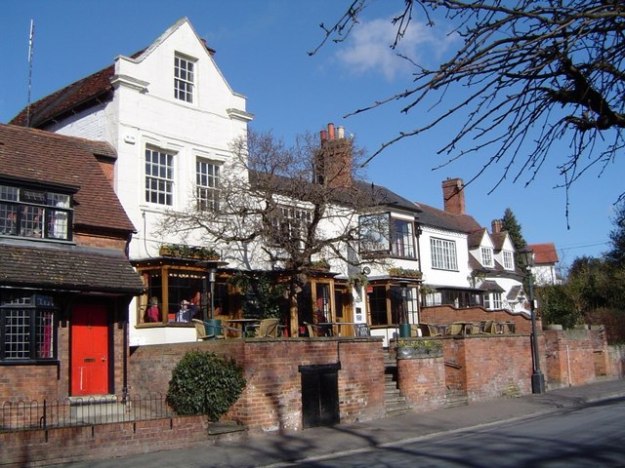
The_Dirty_Duck,_Waterside,_Stratford_on_Avon_-_geograph.org.uk_-_607409

The Dirty Duck pub, Stratford-upon-Avon, photo by Lindsay Dearing, Creative Commons Attribution Share Alike 2.0 Generic

The next morning, I went to the bus stop for the trip back to London.  Just outside The Dirty Duck, the pub still frequented by theater folk and tourists alike, I spotted an actor I had seen the evening before.  I stopped and complimented him on his performance.  He seemed delighted to be recognized; he had only a medium-sized part.  I’m thinking maybe he played Juliet’s father. I know how much talent and hard work it takes for any actor to get even a non-speaking, spear-carrying part in the Royal Shakespeare Company. I did remember his performance, I thought he stood out in the character, and told him so.  He thanked me graciously.  Just then, the bus pulled up and I got on.

The bus was about to pull away from the curb when the actor jumped up the steps with a great theatrical flourish. He stood beside the driver, peering down the aisle at all the passengers.  “I am looking for a LADY,” he intoned, in his best Shakespearean elocution.  He spotted me and moved up the aisle toward me.  He took my hand, bowed low with a great stage flourish, kissed my hand, and made a great show of presenting me with a perfectly ripened peach.  Everyone on the bus applauded, he took a very grand bow, and he was off with a jaunty wave.

Peach

Like all artists, actors pursue their passion even though they know they are very unlikely to gain riches or fame. I wish I could remember the name of this actor, who shared a magical personal moment with me and went out of his way to entertain a busload of non-paying strangers.  Did all this happen 26 years ago?  Yes, it did.  Travel memories are lifelong!

I’m off to England, and looking forward to seeing a play in the Globe Theatre in London. Photos to follow. Thank you, Mr. Shakespeare!

Happy Tax Day in the USA

 In the whole history of the world, has anyone ever enjoyed paying taxes?  Probably not. In London’s National Gallery, I came upon these two fellows, obviously no friends of the artist.  The painting is from the workshop of Marinus van Reymerswale, most likely from the 1540s. The caption explains that it was probably painted as a satire on covetousness.

At the time, government authorities imposed taxes on items such as wine, beer and fish.  The serious-looking gentleman on the left is apparently writing out a tax list. Once the tax rate was set, private individuals were entrusted with actually collecting the money from taxpayers.  An unscrupulous tax-gatherer could obviously take advantage of this system. The man on the right, with his grasping fingers and face contorted by greed, looks more than ready to grab more than his fair share of whatever he collects. 

Do tax collectors deserve any sympathy? The painting below, a 1599-1600 masterpiece of Michelangelo Merisi da Caravaggio, depicts the moment that Jesus Christ called the tax collector Levi to walk away from his lucrative profession and follow Jesus as a disciple.  He became the disciple we know as Matthew.

4096px-The_Calling_of_Saint_Matthew-Caravaggo_(1599-1600)

The Calling of St. Matthew, Caravaggio, 1599-1600, Public Domain

So who is St. Matthew in the painting? Opinions vary.  I’ve always thought it was the bearded man, pointing to himself as though to ask, “Who, me?” But I recently read that some experts think Matthew is the young man slumped over at the end of the table, trying to avoid the summons to a life of poverty and hardship. It could not have been an easy choice.

April 15 is the day that Americans have to submit their income tax forms to the government.  We all would like to believe the tax system we live under is fair, uncorrupted and just. Let’s hope so, and as we send off our tax returns, let’s hope that every hard-earned penny is spent wisely.

Virginia Woolf at Monk’s House

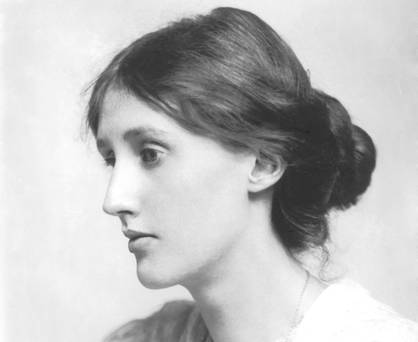
VWoolf1902

On March 28, 1941, Virginia Woolf wrote a loving letter to her husband, Leonard Woolf, and walked out of her country home in rural Sussex, Monk’s House.  She made her way to the nearby River Ouse.  On its banks, she filled her pockets with stones, waded in, and drowned.  Her body was recovered almost 3 weeks later. She was 59 years old.  She was a central figure of the intellectual and artistic Bloomsbury Group, whose influence is still felt.  Virginia herself was an avant-garde novelist who changed the shape of the English novel with works such as Mrs. Dalloway, Orlando, The Waves, and To the Lighthouse.

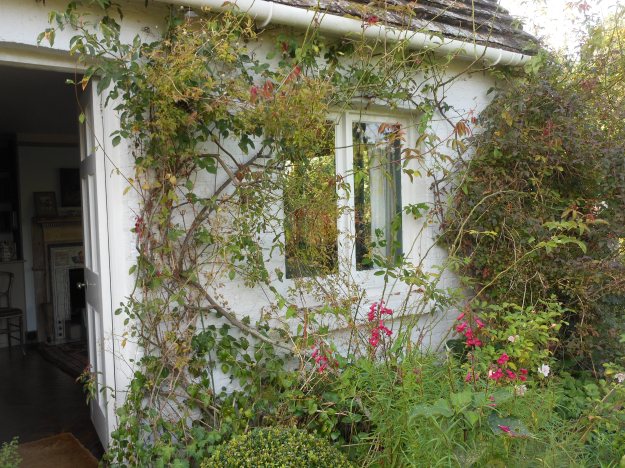
BRDoorway

Last year I visited Monk’s House, now a National Trust property. I was thrilled to walk in the footsteps of Virginia and Leonard Woolf.

Virginia had suffered bouts of debilitating depression for much of her life, but she had always recovered. Between illnesses, she was a fun-loving friend and a wonderful conversationalist.  But she needed a certain amount of “alone” time in order to create.

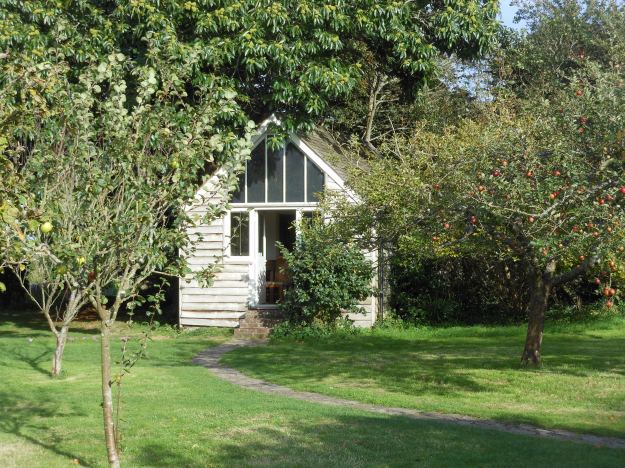
WritingShedIn her country garden, she spent long hours composing her ground-breaking novels and thoughtful essays in her writing shed. It is furnished just as she left it.  It looks as though she just stepped out for a stroll through her flowers.

One of Virginia’s most famous works is the long essay “A  Room of One’s Own,” in which she examined the need for women to have solitary time and space in order to create. She knew all too well that most women had no writing shed or other personal space. Maybe her need for creative time and space is what prompted a friend, Lady Ottoline Morrell, to describe Virginia as “this strange, lovely, furtive creature.”

Kitchen

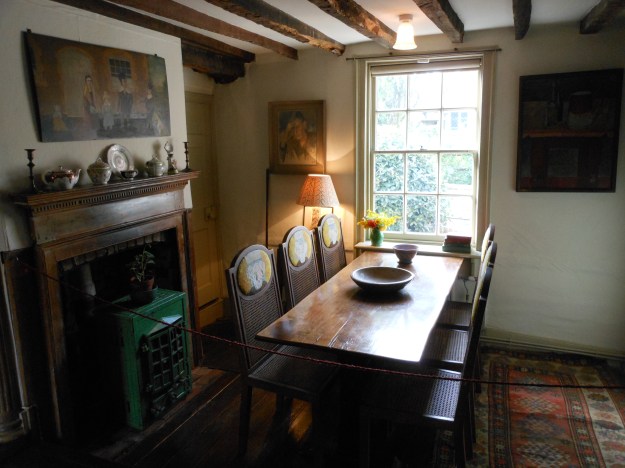
Inside the house, I could imagine long and lively discussions at the dining table, with the likes of Roger Fry, Lytton Strachey, John Maynard Keynes, T.S. Eliot, and H.M. Forster, not to mention Virginia’s sister the painter Vanessa Bell.VWBR2

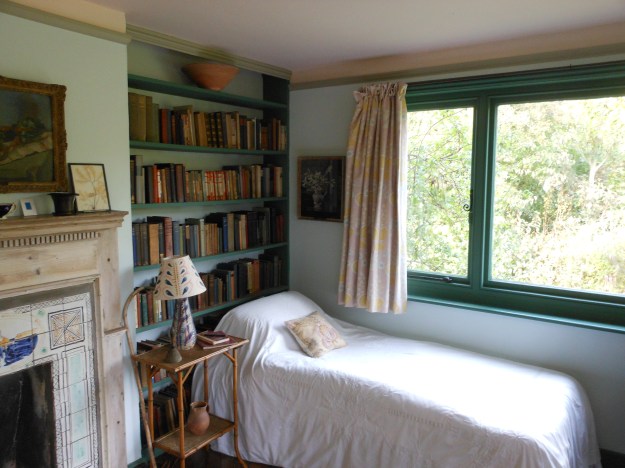
Her bedroom was originally added to the house as a writing studio.

WoolfBR

But Virginia liked the airy room so much she decided to sleep there.  I would too.

VWBBR

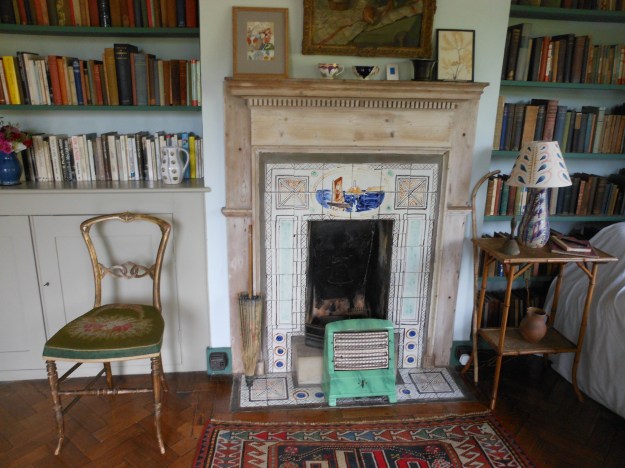
Naturally, there are books everywhere in the house.

MonksLR

The drawing room is cosy, set up for long evenings of reading and conversation.

Monks2Chairs

Are these his-and-hers chairs?  I can imagine Virginia in one and Leonard in the other.

VWBust

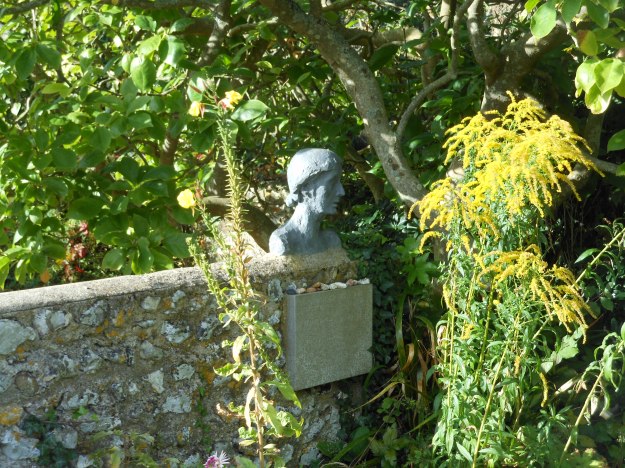
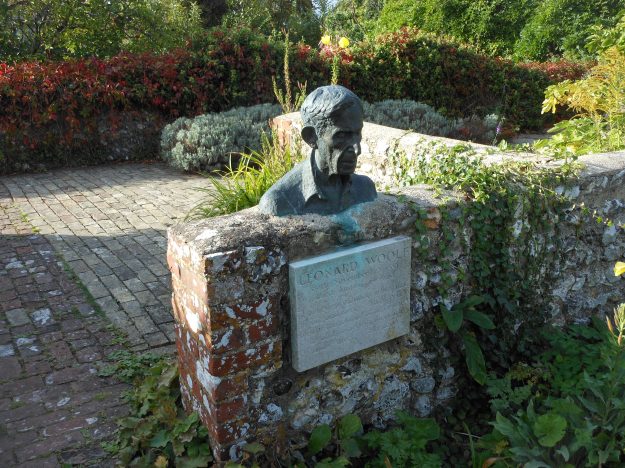
After her death, Leonard had Virginia’s ashes buried in their beloved garden. A bust of Virginia stands nearby.  Her admirers leave stones beneath it.

LeonardWBust

Later, Leonard’s own ashes and bust took their places near hers. In her final letter, Virginia sadly explained that she could not bear another episode of what she called her “madness.” Possibly she suffered from what we would now call bipolar syndrome. At any rate, she described hearing “voices.” The last line of her final letter read, “I don’t think two people could have been happier than we have been.”

The photo  at the top of this post is from the article cited below, “Virginia Woolf: The Woman Who Remade the Novel,” by Jonathan deBurca Butler. The photo, of Virginia in 1902, is by George C. Beresford. The article is an excellent summary of Virginia’s life, her sad death, and her continuing influence on modern literature.

http://www.independent.ie/life/virginia-woolf-the-woman-who-remade-the-novel-34572892.html

MonksNT

Monk’s House is wonderfully maintained by the National Trust. Charleston Farmhouse, where Virginia’s sister Vanessa Bell lived, is nearby.  I would highly recommend a visit to both.

Join me next time for more explorations in the art and history of Europe and the British Isles!


Disraeli at Hughenden Manor

Vic&Dis

I can’t really leave Benjamin Disraeli without posting some more pictures from his country home, Hughenden Manor.  It’s the most quintessentially Victorian place I can think of. In those days, it must have seemed perfectly natural to hang side-by-side portraits of the Prime Minister and his Queen above the fireplace–in the bedroom Mr. Disraeli shared with his loving wife, Mary Anne.  She decorated the room herself.

DisRobe

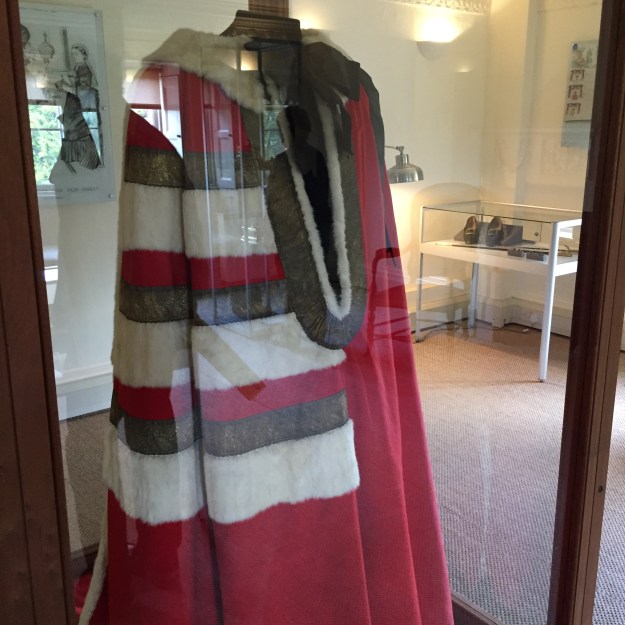
In the House of Lords during the height of the British Empire, politicians wore red velvet robes on ceremonial occasions, without irony or having to wade through rude protests outside. Becoming the Earl of Beaconsfield was a proud accomplishment for a man born into a modest Jewish family in 1804.  Disraeli became an Anglican at age 12, and remained one for the rest of his long life.

IMG_6851

We tend to think that Britain has a fairly rigid class system, but even in Victorian times it was possible for an unlikely man to rise to the height of power, through luck, connections, charm and sheer hard work.

512px-Her_Majesty's_Gracious_Smile_by_Charles_Knight

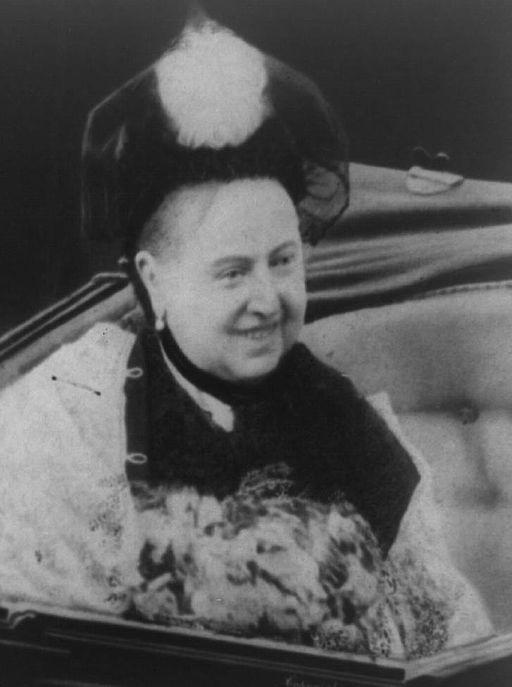
Queen Victoria has a reputation for sternness, but she knew how to be amused, too.  And her trusted friend Benjamin Disraeli amused her.

IMG_6920

The Queen set an example of happy, respectable family life for her subjects. Mary Anne Disraeli created a peaceful refuge at home for her busy husband.

IMG_6923

Why did Victorians stuff their homes with so much stuff?  In a restored Victorian home like Hughenden, every surface is occupied:  baubles, bibelots, and knickknacks carefully arranged on top of curlicued whatnots. In Victorian times, minimalism was an unknown concept. And old photos seem even more crowded than restored rooms. Why? Here’s my theory: the British ruled an empire that spanned the entire globe. Victorian rooms seem crowded and stuffy to the modern sensibility, but I think all those possessions were an exuberant expression of Victorian confidence and optimism. If you’ve got it, flaunt it!

HughendenDR

Mary Anne Disraeli presided over a lively dinner table.  She was practical, too–which her husband was not.  Household records show that after one dinner party, she sent two big unused blocks of cheese back to the cheesemonger.  Waste not, want not!

Disraeli loved trees. In fact, while Mary Anne was busy inside finding just the right places for her trinkets and doodads, Disraeli was busy outside planting trees–the more the better.  He brought in specimens from the far-flung empire and created a forest that lives on today. He spent hours walking among his trees, taking solace from their growth and variety. He once remarked, “I am not surprised that the ancients worshipped trees.”

HughendenExt

I was so interested in the house–with its Victorian history as well as the amazing part it played in World War II–that I didn’t get into the gardens and the forest.  Next time!

The three posts just before this one described the vital history of Hughenden in more detail. Join me next time for more explorations in the art and history of Europe and the British Isles!

No More Red Boxes? What Would Disraeli Say?

IMG_7054

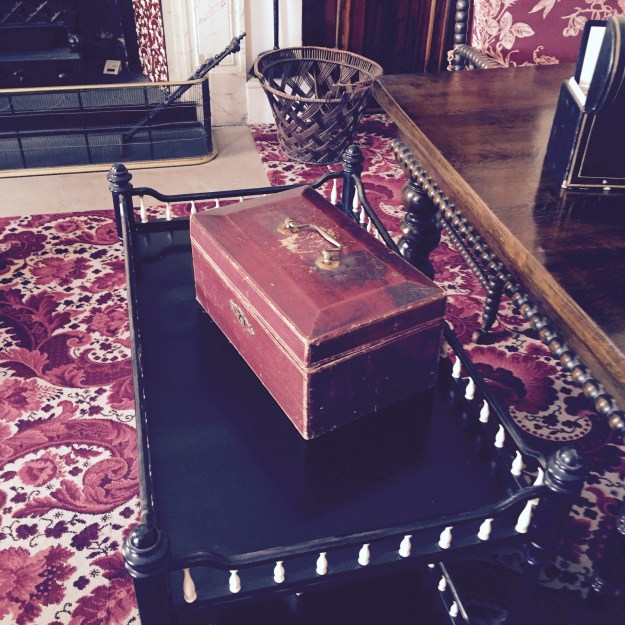
At Hughenden Manor last spring, I was thrilled to spot Prime Minister Disraeli’s famous “red box” in his study.  It’s a  kind of box used for the last 150 years or so by British government officials. It’s really just a briefcase, but so much more romantic–and quintessentially British. These boxes were first used in the 1860s.  They were covered in red-dyed rams’ leather, embossed with the Royal Cypher and lined with lead–reportedly so that if the carrier were captured at sea, the box would sink with all its secrets intact. The lead also made the boxes pretty strong in the event of bombing or other catastrophe. The lock is on the bottom of the box, guaranteeing that nobody will walk off without locking it. (Does anyone ever forget, grab the handle and spill the important documents?  Let’s hope not).

redboxontrain

Photo from “Daily Mail” article cited below

Until very recently, important government officials proudly carried their red boxes wherever they went. (Naturally, a government official is always hard at work, so the box is necessary at all times). Any man or woman would walk a little taller carrying the jaunty red case. And what a status symbol to casually place on one’s table on the train!

Queen Elizabeth, like Disraeli’s Queen Victoria, receives her own royal red box daily.  It contains documents the sovereign must sign before they become law.  I’d like to think the Queen’s red box will exist for a long time.

But now, the British government is phasing out the revered symbol of power in favor of secure smartphones. For one thing, ministers have developed the wasteful habit of having their boxes shuttled from place to place in chauffeured limousines, as described in an article from The Independent. Then there’s the problem of security. A fingerprint-activated smartphone is apparently safer (at least until it’s hacked.)

2015-04-21 19.03.39

So in England, red ministerial boxes are going the way of red curbside telephone boxes.

IMG_7050

Prime Minister Benjamin Disraeli lived in a slower-moving world.  His red box came with him to his country home, where he worked in his quiet study between long walks inspecting his grounds. There was time for him to think, to read actual books, to reflect on the weighty problems of state. I fear that Britain’s government ministers will now be more like the rest of us: constantly intent on a pocket-sized screen.

IMG_7179

Somehow, I can’t see the elegant Mr. Disrael hunched over a smartphone.

I wouldn’t give up my own smartphone for anything, of course.  It’s my only camera, as well as my window into the wider world.  I can look up most anything with a few thumbstrokes. But if I were a British government minister, I would miss my elegant red ramskin box with the Royal Cypher and the lock on the bottom.

http://www.dailymail.co.uk/news/article-2958851/Traditional-government-red-boxes-phased-150-years-ministers-given-thumbprint-activated-smartphones.html

http://www.independent.co.uk/news/uk/politics/the-government-ferried-briefcases-around-alone-in-chauffeur-driven-cars-3000-times-in-the-last-three-a6812851.html

Join me next time for more explorations in the art and history of Europe and the British Isles!