Author Archives: Claudia Suzan Carley

St. Martin-in-the-Fields


IMG_3643

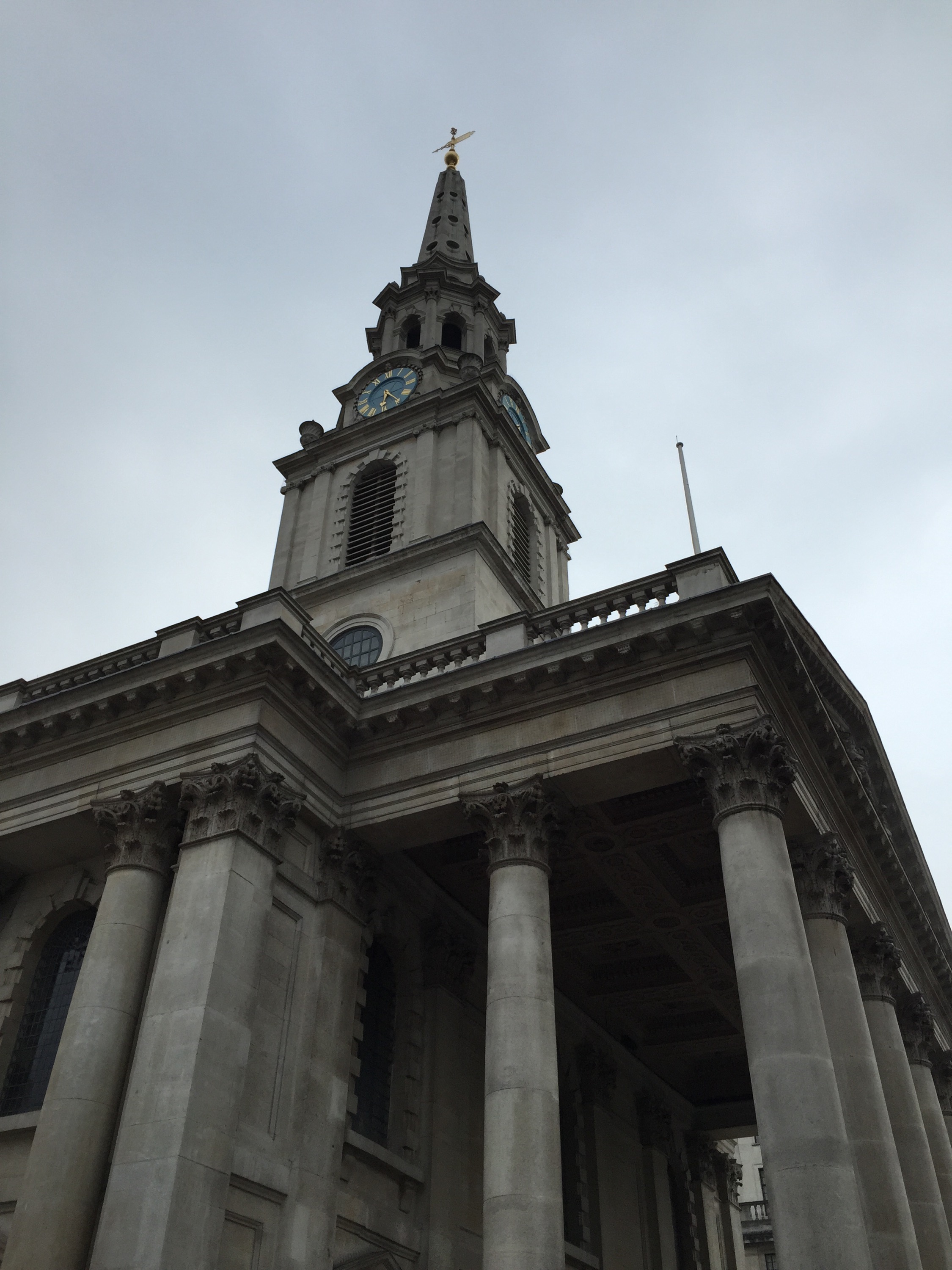
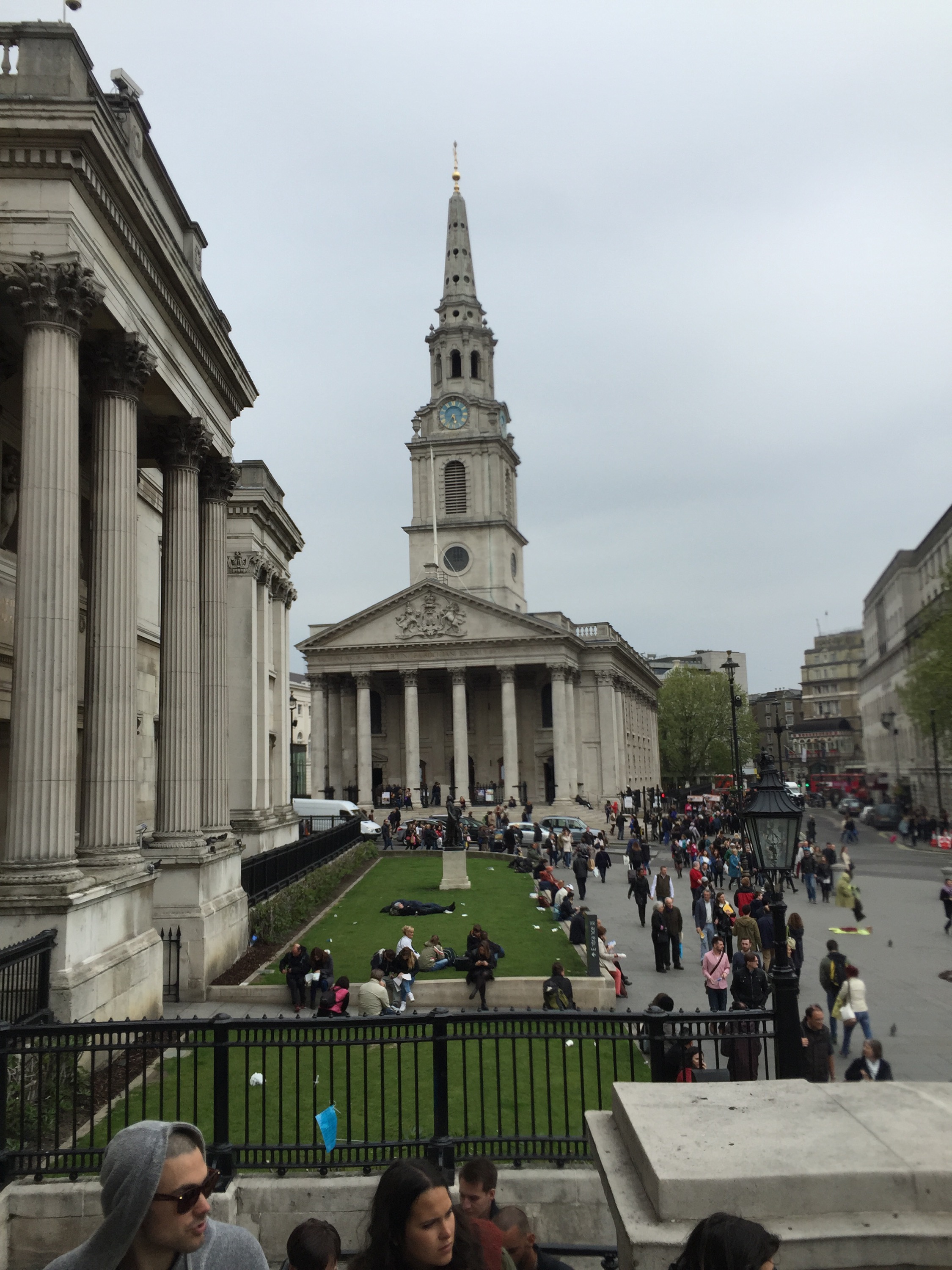
After spending a few hours in London’s National Gallery, I’ve had enough of appreciating great art. I’m more than ready to stagger down the steps into Trafalgar Square, navigate through the crowds, cross the street, and disappear down the well-worn steps into the ancient crypt of St. Martin-in-the-Fields Church. The church was once literally “in the fields,” far outside the center of London. Now it’s at the epicenter. The day before I visited was May Day, when tens of thousands of demonstrators converged on the square. (In most of Europe, May Day is similar to Labor Day in the United States. In Europe, people march in support of working people on this day). On any day, though, Trafalgar is full of people.

IMG_3648

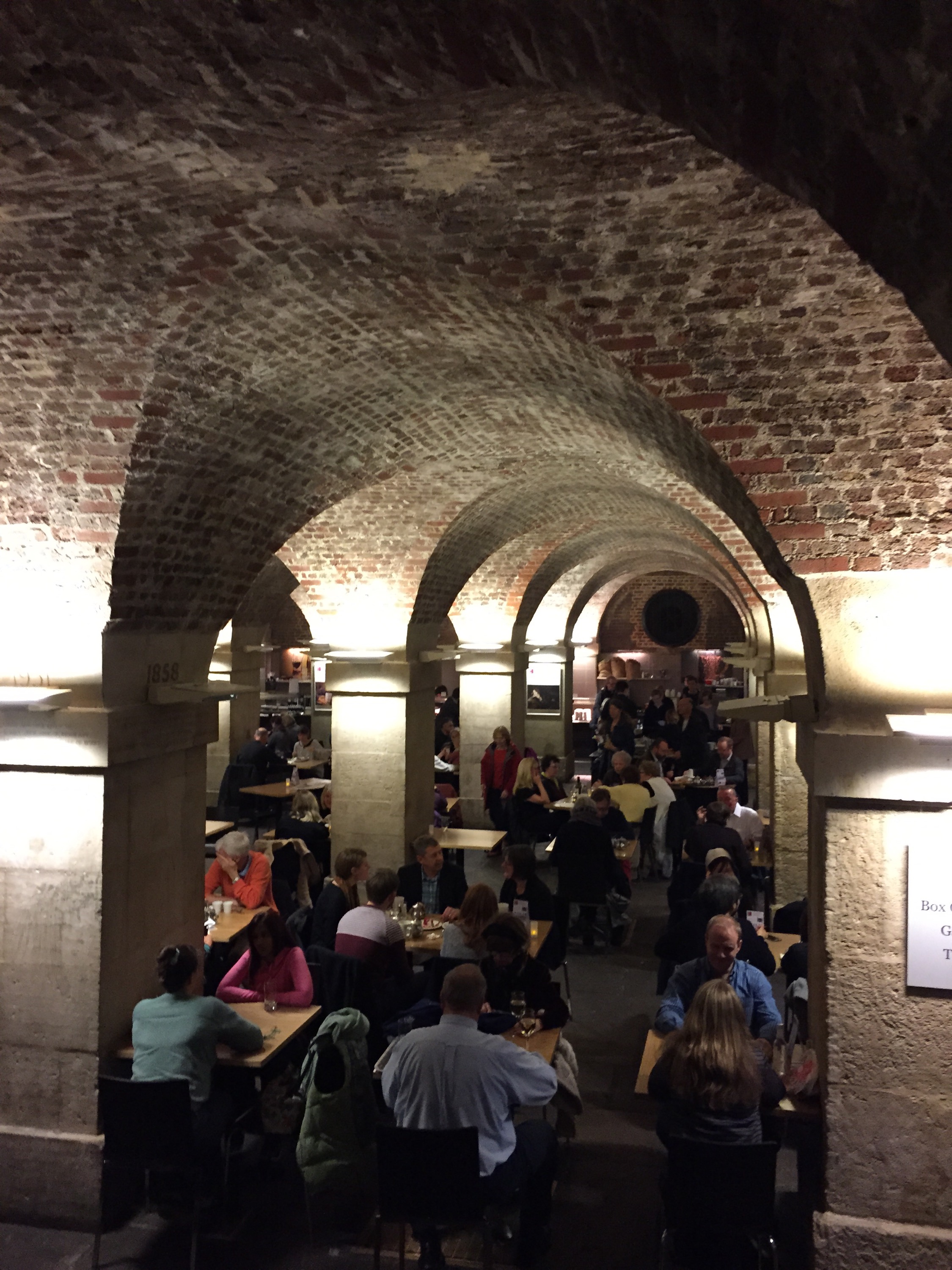
The centuries-old crypt underneath the church has been turned into a cheerful cafeteria and venue for jazz concerts.

IMG_3657
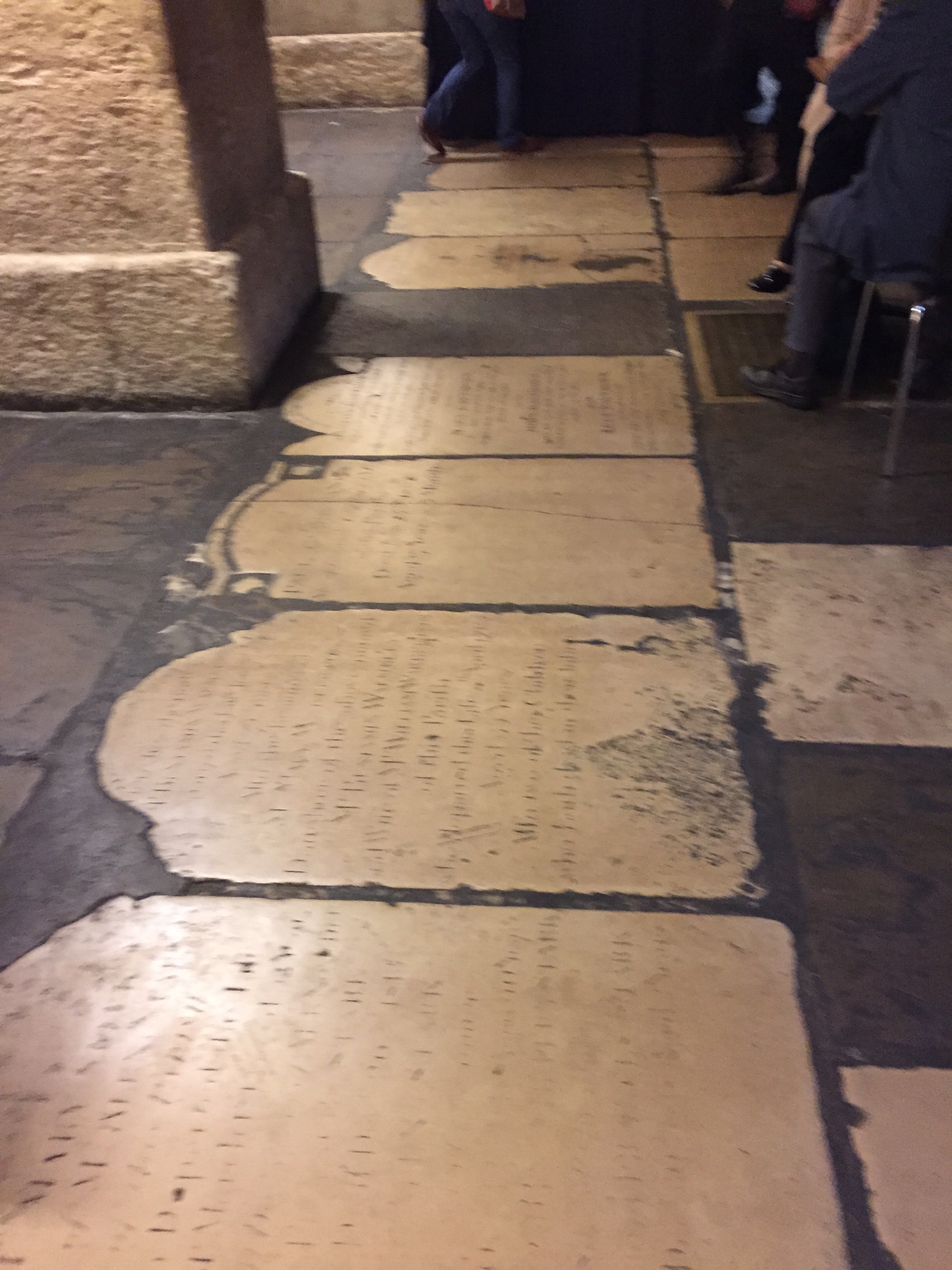
Are we walking on top of very old tombs? I don’t think so. I think these are grave markers from centuries past, when the church still had a churchyard around it. I think that tombs once in the crypt were moved elsewhere during one of the many rebuildings of the church over the centuries. Of course, like many British churches, the site of this one dates back to Roman times–or very likely even pre-Roman pagan times. So there’s no telling what is deep underground. If there are spirits of the departed, I think they enjoy the company.

IMG_3666
The food is cooked onsite, inexpensive, healthy and delicious.

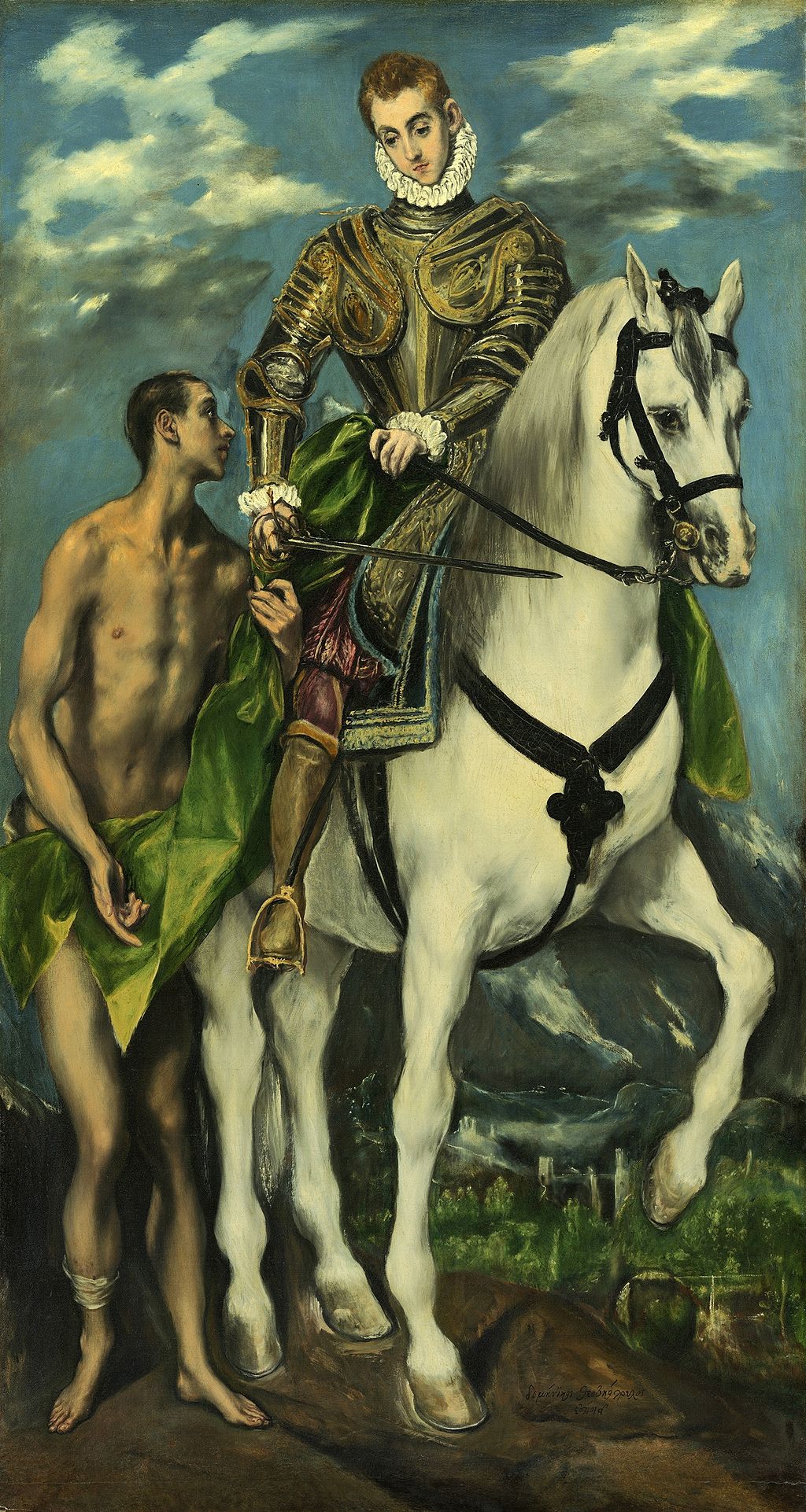
El Greco, St. Martin and the Beggar, circa 1597, Public Domain

El Greco, St. Martin and the Beggar, circa 1597, Public Domain

Who was St. Martin of Tours? He was a 4th-century Roman soldier who became one of the first conscientious objectors when he decided not to fight. He offered to go to the front lines unarmed, but fortunately the enemy sued for peace and he was allowed to leave the army. He eventually became Bishop of Tours, a post he accepted reluctantly because he preferred to serve the poor directly. He was well known enough in his day to have a biographer who followed him around and wrote about him, so it is pretty well documented that he once impulsively cut his warm military cloak in half and gave it to a near-naked vagrant in the dead of winter. Legend has it that the next morning the cloak was made whole again. The rest of his life was devoted to serving the poor and outcast, and that is the mission of St. Martin-in-the-Fields today. The church’s cafe and its many concerts support its work with the poorest of the poor in London.

IMG_3695

I’m happy to contribute to the work of this famous church by joining the lively crowd in the once-silent crypt. Join me next time for more explorations in the art and history of Europe and the British Isles!


Why I Love England: History in Bits and Bobs

IMG_8851

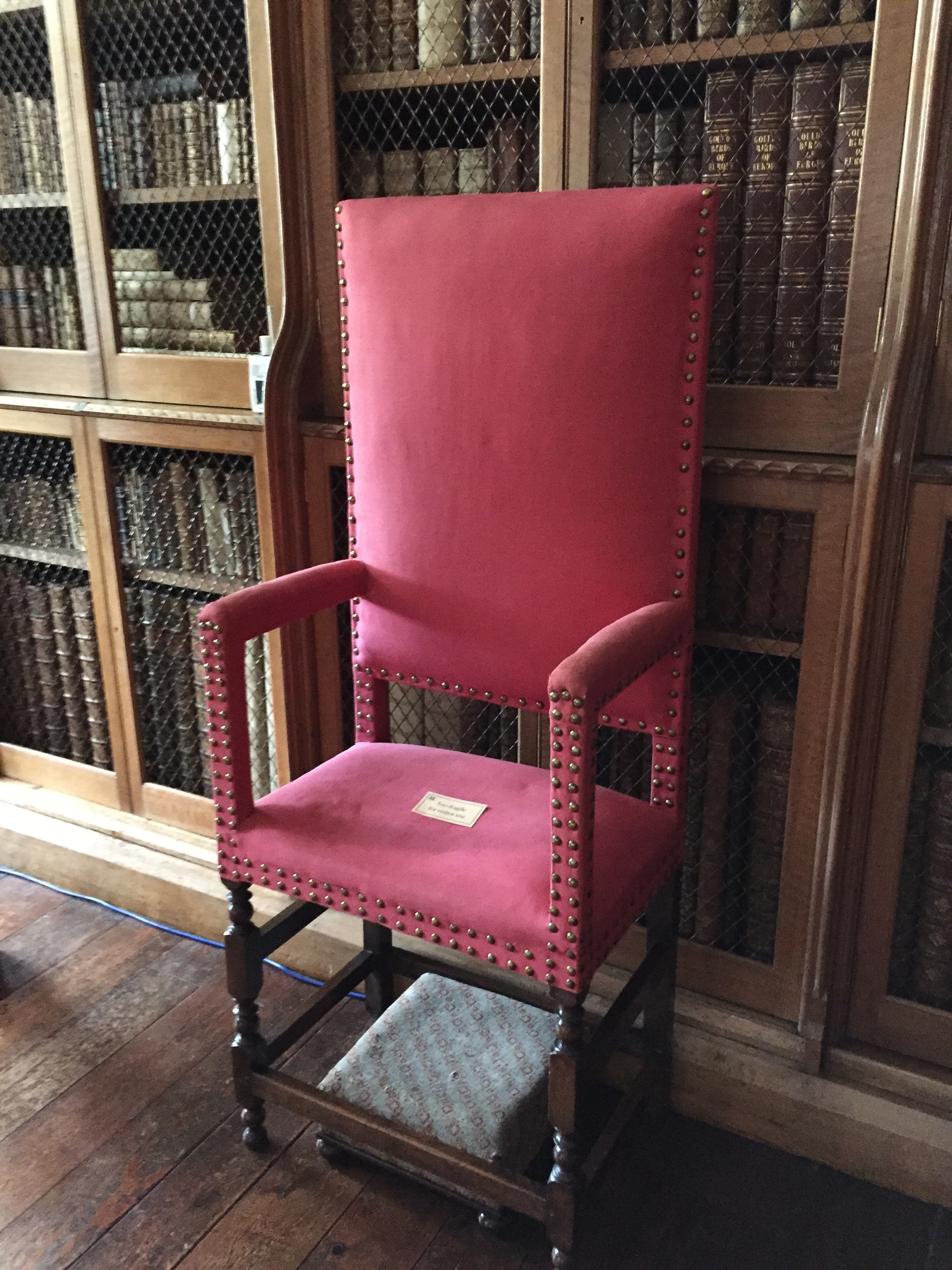
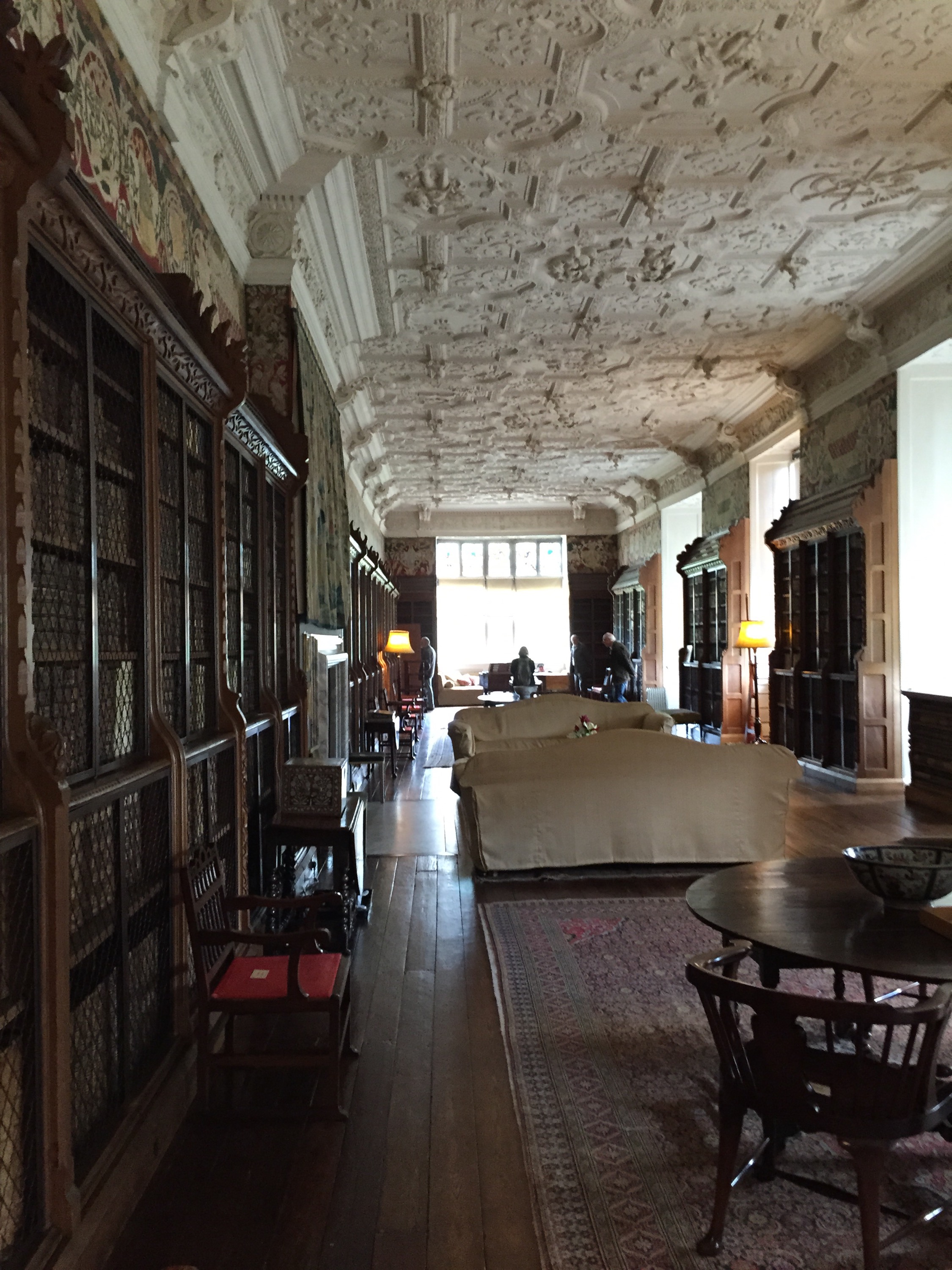
In the Oak Gallery at Blickling, a Tudor house in Norfolk, I came across a tall chair upholstered in red velvet. It had no label, just the usual polite note from the National Trust asking the visitor not to sit on it. (Actually, the NT has so many unsittable ancient chairs that they often just place a dried thistle or a pinecone on the seat).

I asked the friendly room docent, a lovely white-haired lady, if there was anything special about this chair. “Oh, yes!” she said. “That was the coronation chair of Charles the Second.”

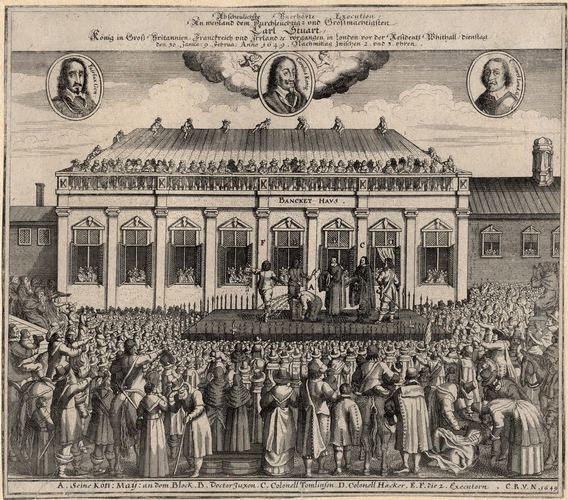
Really? The coronation chair of the King whose reign ended the bloody Civil War in England didn’t rate a placard? Charles II was the English king crowned in 1660, 11 years after his father, Charles I, was executed–for treason. How could a king be guilty of treason? Charles I wanted to rule as an absolute monarch, levying taxes without consulting Parliament. Thus began the bloody English Civil War. Charles I lost.

Contemporary print of Beheading of Charles I of England, 1649, Public Domain

Contemporary print of Beheading of Charles I of England, 1649, Public Domain

Charles I was executed in public, with all due ceremony, in front of the Banqueting House at Whitehall, in 1649. It was a cold day in January, and reportedly Charles’s main worry was that he would shiver and the crowd would think he was scared. He wasn’t.

IMG_8641

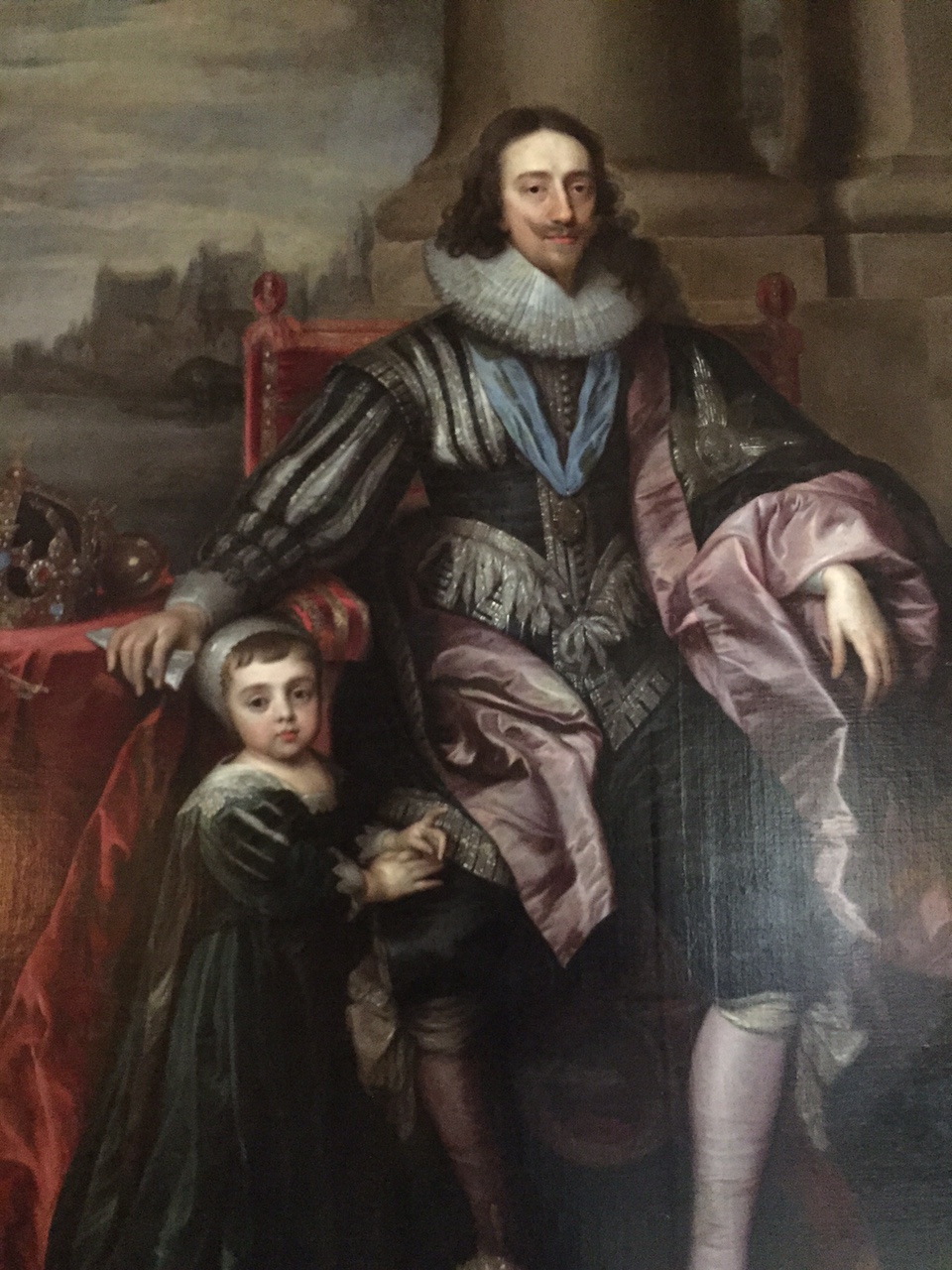
Charles I was an unpopular king, but there are countless images of him. I can spot one at twenty paces.  The painting above is at Blickling, but I forgot to take a picture of the caption so I don’t know the artist.  I think the future Charles II is shown with his unfortunate dad. The pointy beard at the bottom of Charles I’s long narrow face is always a giveaway. I’m sure I’m being way too hard on the man, but to me he always looks very aloof, with his head in the clouds.

After Charles I lost his head at Whitehall, a Commonwealth of England was declared, but it was really more of a dictatorship led by Oliver Cromwell.  Before too long the people wanted their monarchy back. This is a huge simplification of events and people that are still hotly debated, of course. Oliver Cromwell was dug up and beheaded for treason after he was already dead, but many people consider him the father of British democracy.  Anyway, once again England had a hereditary King, Charles II.  I’d have thought the coronation chair of Charles II was an important piece of furniture.

I was pretty sure the kindly docent was mistaken about the tall red velvet chair.

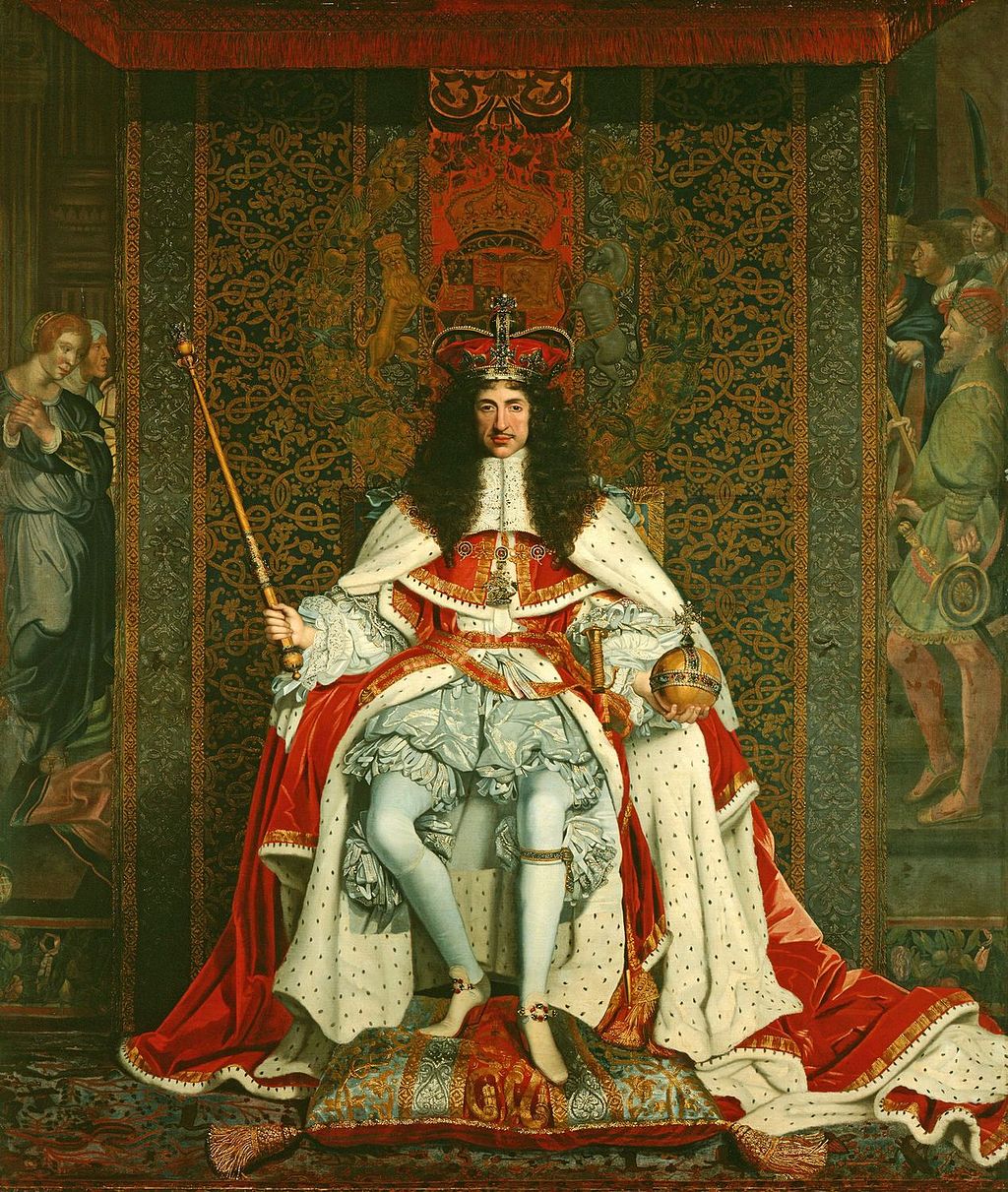
Charles II of England in Coronation Robes, John Michael Wright, 1661-1662, Public Domain

Charles II of England in Coronation Robes, John Michael Wright, 1661-1662, Public Domain

I found a coronation portrait of Charles II with a much grander coronation chair just visible behind him.  He was crowned at Westminster Abbey in the full splendor that the English have always done so well. Now I think the chair I saw may have been used for something else–maybe a grand banquet following the coronation, built high so that everyone could see the new King.  Or maybe Charles II just had especially long legs and this was his favorite chair. I’m not willing to give up the idea that Charles II sat in that chair.

Anyway, I love the way the British love their history.  I would not dream of contradicting a lovely, friendly docent who is working as a volunteer in a National Trust property. If I heard a mistake, I would always just let it slide.  But if a Brit heard a howler of a mistake, trust me, there would be a swift and stern correction. People in the room would immediately gather round and join the debate. Events from 400 years ago might as well have happened yesterday. They are lovingly preserved in memory and in physical objects.

The Oak Gallery at Blickling is magnificent. For the price of a National Trust pass, a visitor can trace the footsteps of Henry VIII and several of his queens. When Henry was gone, Queen Elizabeth I was a frequent visitor. Anne Boleyn was most likely born on the property, though not in the present house.  On the anniversary of her death, she is said to arrive at the house in a ghostly carriage, sadly carrying her head.   Did Charles I or II walk this gallery? I’m not sure.  I’d better go back for another visit.

Join me next time for more explorations in the art and history of Europe and the British Isles!

Thanks for Everything, Mom! Love, Vincent

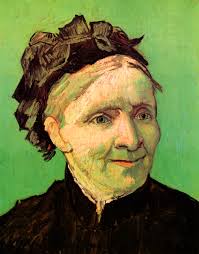
Portrait of the Artist's Mother, Vincent van Gogh, 1888, Public Domain

Portrait of the Artist’s Mother, Vincent van Gogh, 1888, Public Domain

Vincent van Gogh painted a portrait of his mother in October of 1888 during his stay in Arles, France.  This was an autumn of turmoil for Vincent; Paul Gaugin visited him in Arles, they quarreled, and the visit finally ended with the infamous ear-cutting episode.


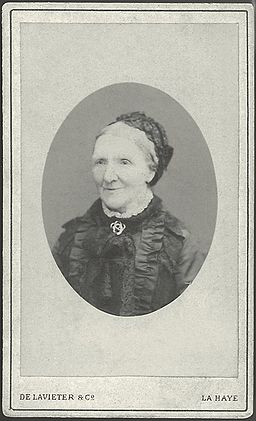
Photo of Anna van Gogh, Public Domain

Photo of Anna van Gogh, Public Domain

It seems that Vincent was missing his mother, whom he had not seen in years.  He wrote to his brother Theo that he was painting his mother for himself.  He had received a black and white photograph of her, and couldn’t bear to look at it. So he painted her in the soft glowing colors in which he remembered her. I wish he could have visited her. I think that her gentle actual presence would have helped him at this point in his life.

Vincent’s mother, Anna Carbentus van Gogh, raised six children: Vincent, Theo, Anna, Elizabeth, Wilhelmien and Cornelius.  Vincent was the oldest, although an earlier son, also named Vincent, had died.  Anna van Gogh was a pastor’s wife, tirelessly serving rural communities. Still, she found time to paint in watercolors, especially flowers and nature subjects.  She shared her love of flowers and painting with her children. As he accumulated finished canvases, Vincent used to send flowers to his mother in the form of paintings.  He sent, he wrote, “great bouquets of flowers, violet-colored irises, great bouquets of roses.”

Vincent’s parents had conservative and conventional religious views.  They were dismayed when he turned away from the institutional church and developed his own mystical religious view of the world, in which the divine was present everywhere at all times.  They could not approve of his stubborn poverty for the sake of his art, and they certainly could not approve of his unconventional love life.  But I love to think of Vincent’s mother, at her modest home in the Netherlands, unrolling a canvas from her son and finding a glorious bouquet of irises.

Irises, Vincent van Gogh, 1889, J. Paul Getty Museum, Public Domain

Irises, Vincent van Gogh, 1889, J. Paul Getty Museum, Public Domain

You can see van Gogh’s portrait of his mother at the Norton Simon Museum in Pasadena, California.  It’s one of my very favorite small museums in the world, worth going a little out of the way to visit on any trip to Los Angeles.

Happy Mother’s Day to all moms!  Join me next time for more explorations into the art, artists and history of Europe.

Sandringham

IMG_7332

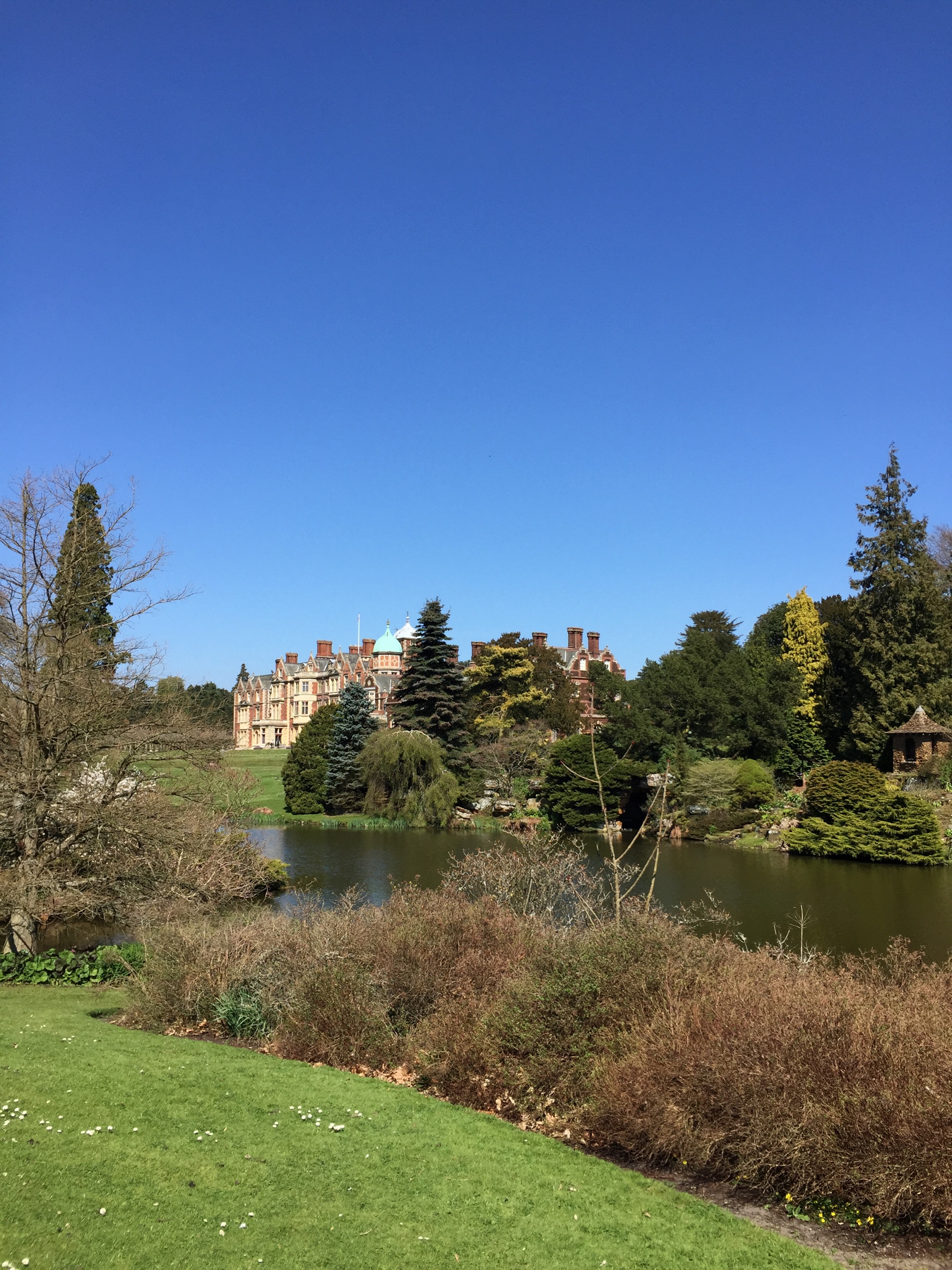
Photos are not allowed inside Sandringham House, but mere tourists like me are allowed to take pictures outside and in the nearby museum. This is the very grand entry, used by tourists and guests invited for grand occasions. I just learned that the Queen was recently in residence, possibly while I was there. But I’m sure there is a very private entrance for her and her personal guests. (I think there’s a separate ballroom entrance, which is an exit for tourists).

Yesterday Prince William and his newly-expanded family left London for Anmer Hall, their newly-expanded mansion on the Sandringham estate. I thought I’d post a few photos from my recent visit there.

IMG_7662
Sandringham is only open to tourists for a few months a year. At other times, it is the strictly private property of the Royal Family, bought during Victorian times as a retreat. The gardens have been open to the public since 1908.  King George V created and opened the Museum in 1930, with an admission charge of 3 pence. In 1977, the present Queen Elizabeth decided to open some rooms of the house to tourists for a few months a year–very good PR, I think.  The place certainly won me over.

IMG_7355

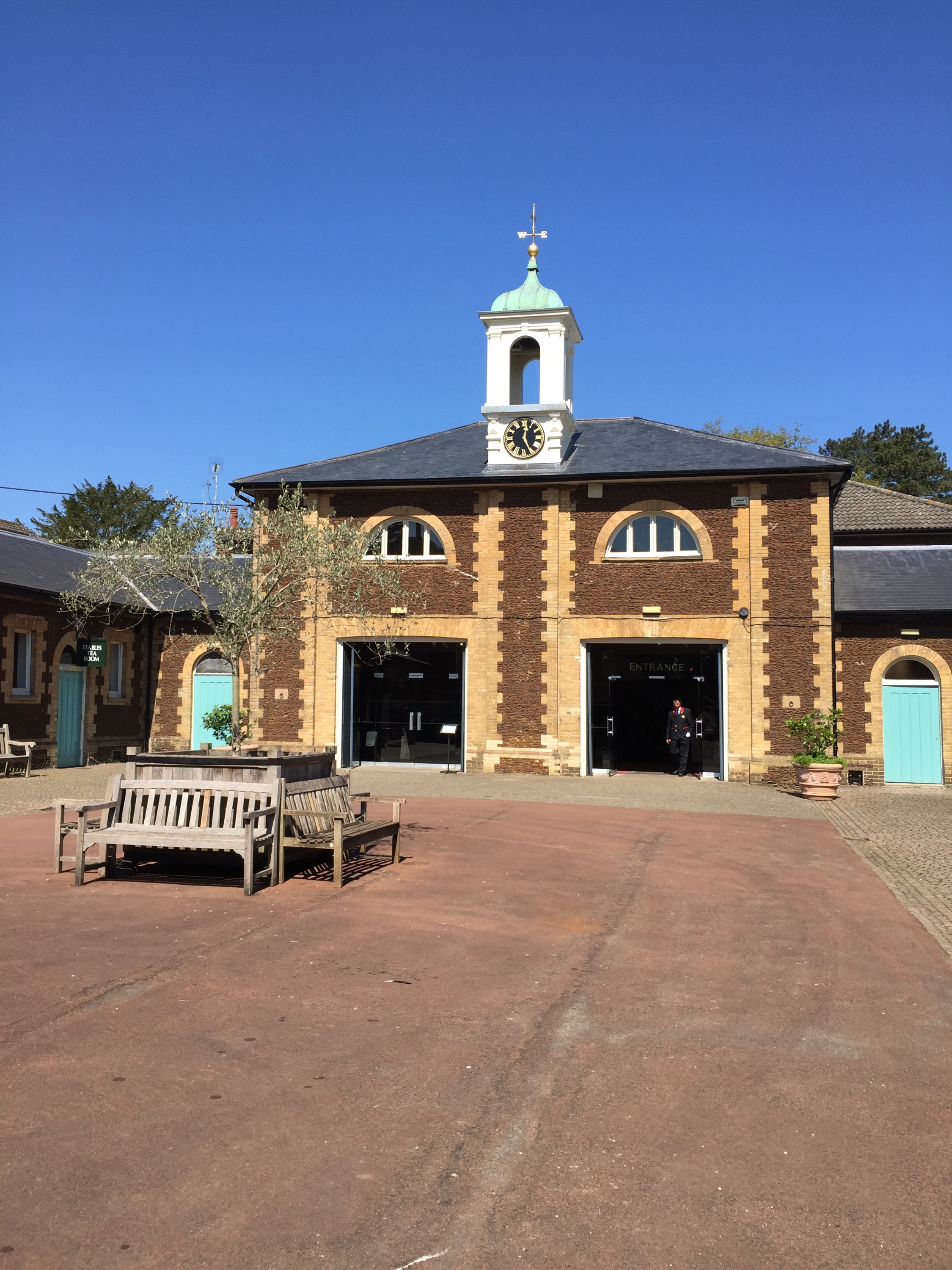
The museum, in the old stable block, is as interesting as the house. It contains, as the British would say, a lot of “bits and bobs” about the Royal Family. 

IMG_7465

The family follows traditional pastimes at their country home. This old photo shows royal children looking very serious in 1905. Princes Edward, Albert and Henry and Princess Mary are taking instruction in marching from the Piper, Forsyth. 

IMG_7504

Among many fascinating retired vehicles, there’s a picnic wagon which was in use until fairly recently, when it was replaced with a new one. The picnic wagon has a place for everything, including wine bottles and fine china. It’s housed in a large building with murals that show the Royal Family and their friends enjoying the great outdoors in their beautiful grounds. I’m sure family picnics will continue for the newest great-grandchildren of the Queen.

IMG_7640

Who knew that the Queen’s husband, Prince Philip, is a painter? He’s pretty good. Who can resist this little informal portrait of the Queen reading the morning paper?

IMG_7370

The room guides in the house are the Queen’s regular trusted servants. They’re friendly and happy to chat. In the grand formal dining room, I asked whether the Corgis have the run of the house. Of course they do! The Queen feeds them personally in the Gun Room, and they mill around under the dining room table, probably cadging scraps like any other dogs. Right now there are seven Corgis. An elderly dog, the Queen’s beloved Monty, died recently.

This year, Queen Elizabeth will become the longest-reigning British monarch in history.  She has had to overcome her share of family troubles and occasional anti-monarchy sentiment.  But as far as I can see, the Brits really love their Queen.  And right now it seems most British folks also love the very appealing young family of William, Kate, George and Charlotte.

The new little Princess Charlotte Elizabeth Diana of Cambridge will no doubt be delighted by the Queens’s Corgis. I’m sure the Queen will be a doting great-grandmother!

IMG_7681


Affordable Europe: The Old Farmhouse, Windsor

DSCN8934
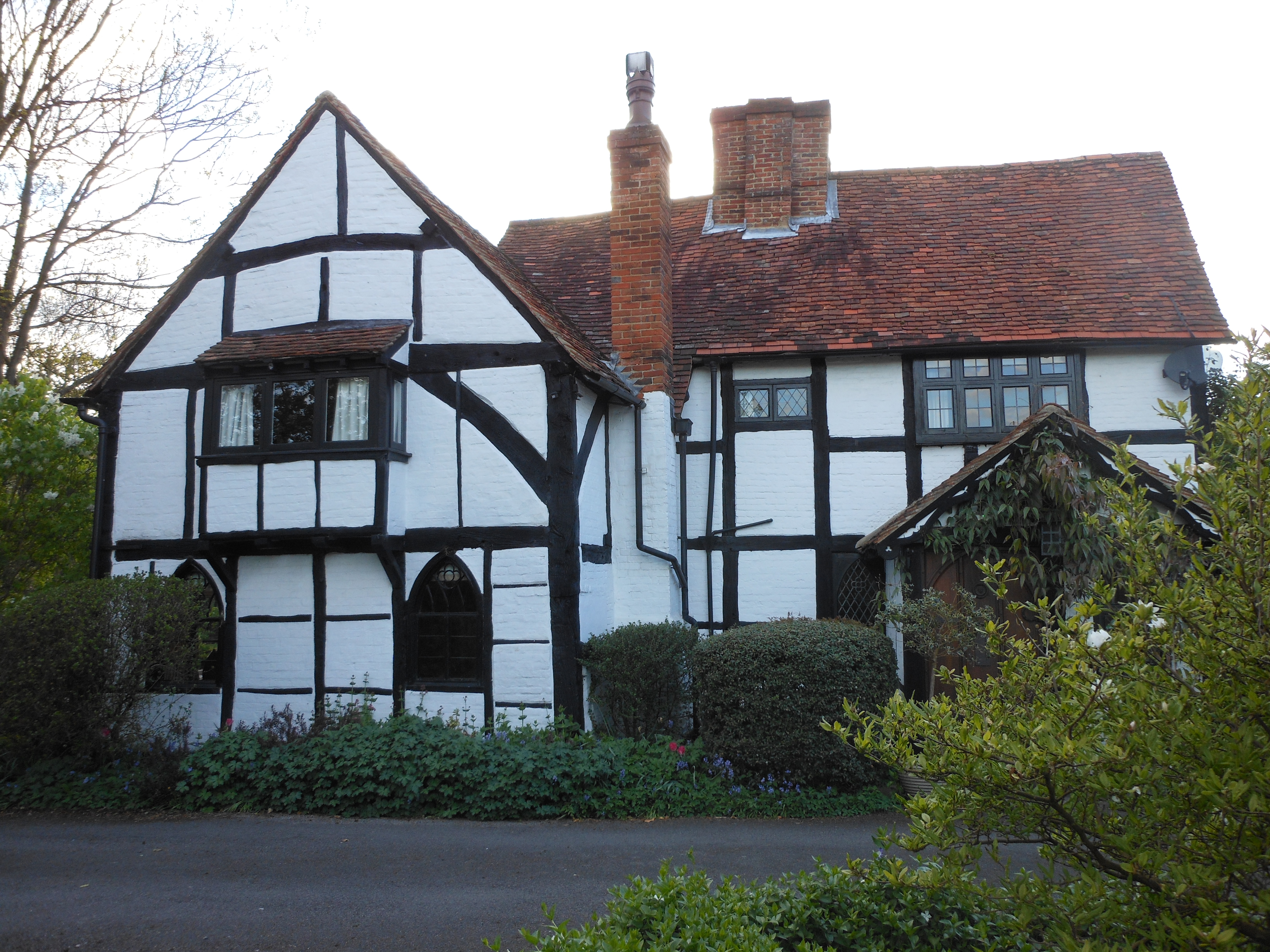
I chose The Old Farmhouse because it is close to Heathrow–a good place to unwind after a long flight or to depart without stress. I don’t like paying exorbitant airport hotel rates for rooms that are just OK at best. After three nights in this house, I’m hooked. I’ll go back any chance I get.

DSCN9118


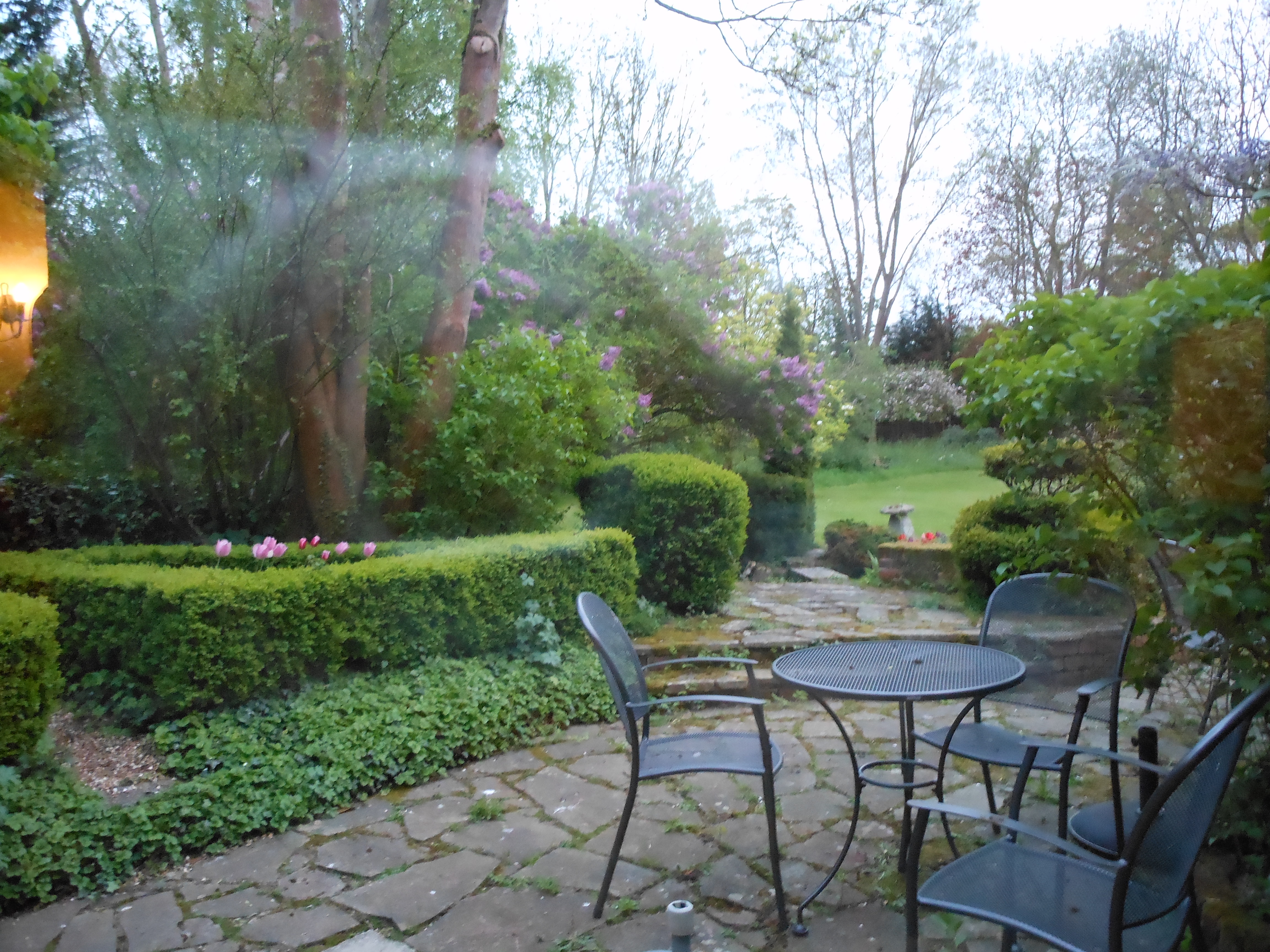
The Old Farmhouse is a destination in itself–peaceful flowery grounds, just three guest rooms, and a cooked-to-order breakfast that comes with a huge fresh fruit plate. No one actually lives in the house–the very professional staff arrive in the morning to bustle around making breakfast and cleaning, cheerfully answering questions and generally being friendly. They’re on call the rest of the day and night.


It’s actually a 14th and 15th century house, modernized over the centuries but keeping the historic charm that brings Anglophiles like me to England. It’s not rock-bottom cheap, but it’s about a third of the price of a comparable nice hotel in the town of Windsor–and way less than anything in London.  I spend my trips to England using my National Trust pass to visit historic houses.  It’s a real treat to stay in one.

IMG_2697

My bedroom had ancient beams–complete with original wood pegs from the days when there were no nails.

IMG_2725


The entry has a beautiful and very old fireplace, decked with flowers in spring.

IMG_2705

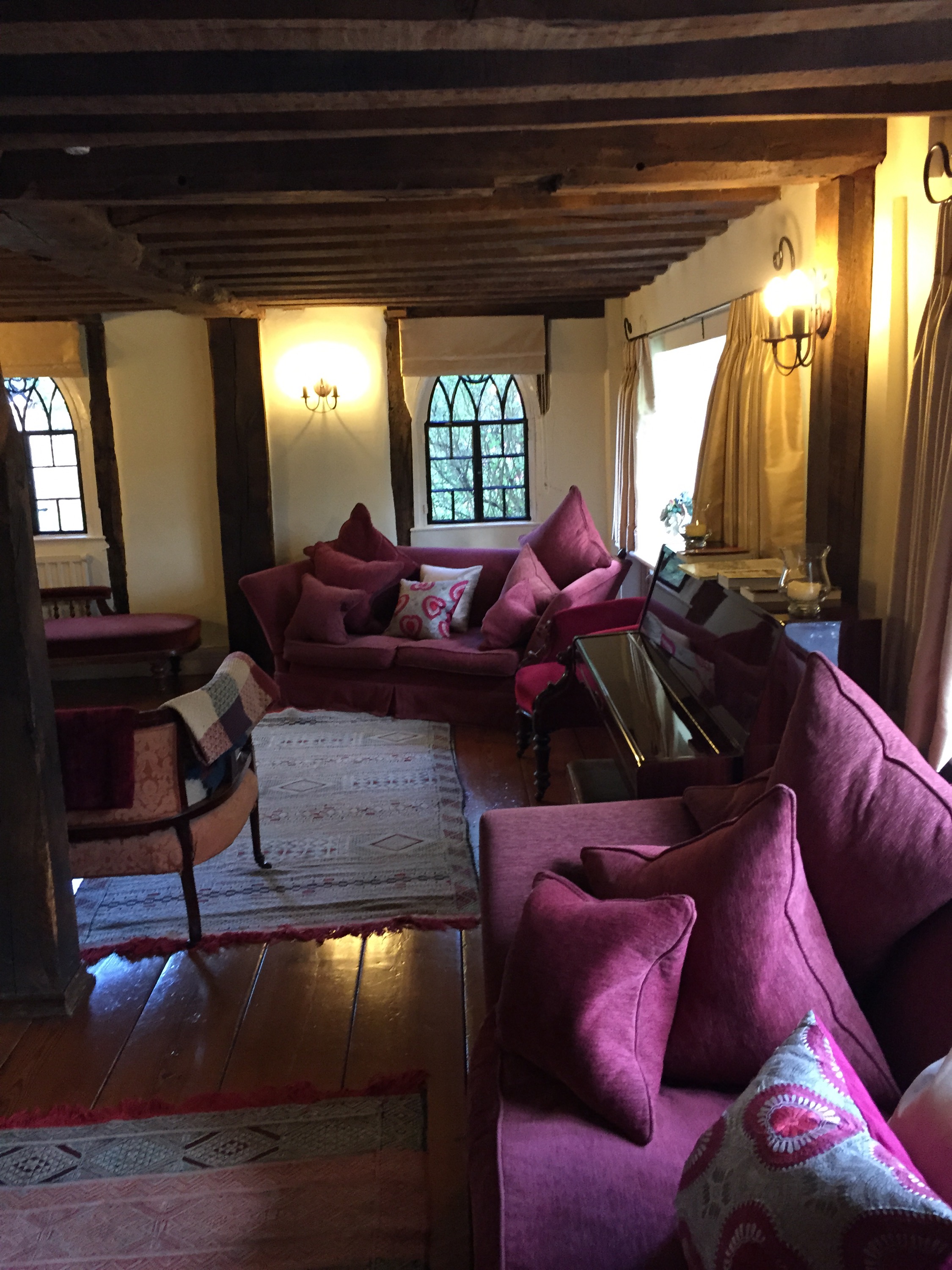
There’s a pretty lounge downstairs with comfy sofas and a piano. Wifi is free and fast.

Is there anything I didn’t like? Well, I have to say that flights out of Heathrow begin at around 6:30 in the morning. But Heathrow planes fly over all of Windsor. And there are not that many flights. The Old Farmhouse must be on one of many flight paths.

When we left, it took about 25 minutes to drive to the rental car return at Heathrow–which I had saved as a location on my GPS, because finding it is confusing. Heathrow is huge, and the car rental is not only at Terminal 5, but way outside the terminal. I think a taxi ride to the Heathrow departure level for a specific terminal would be a lot faster. I understand there is also a bus.

The location makes for an easy daytrip into London. An inexpensive train ride from Windsor to Paddington Station takes about half an hour, including an easy change at Slough. Trains run every 10 minutes. We had a rental car to drive to the station, less than two miles away. But the location is so close to Heathrow and Windsor that it would also work with taxi rides, kept pretty inexpensive by following the advice of staff and calling a particular company.

IMG_2773

Hampton Court Palace, where Henry VIII kept everybody shaking in their boots in the 1500s, is a 30-minute drive from Windsor. Henry’s Great Hall is intact, complete with some wood carvings of Anne Boleyn’s initials. Most of the marks of Anne’s time as Queen were removed along with her head, but even Henry VIII was not able to control every detail.

Join me next time for more explorations in the art and history of Europe and the British Isles!

Lord Nuffield ( the “Other” William Morris)

IMG_6101-0
William Morris wanted to be a surgeon, but his working-class family could not dream of sending him to university. So at the age of 15 he was apprenticed to a bicycle repair shop.  After awhile, he politely requested a raise.  When his boss refused, he went down the street and opened his own repair shop. Soon he was building and selling superior bicycles, which he personally raced, winning national awards for distances from one to fifty miles. His bikes, with a distinctive gilt wheel, attracted customers from all over Great Britain.
IMG_6094-0

He met his wife because she loved cycling too. As a side business, the enterprising Mr. Morris ran a taxi service.  Soon he was repairing taxis. It was just one step further to building his own car–simple and easy to repair. How hard could it be?

MorrisPoster

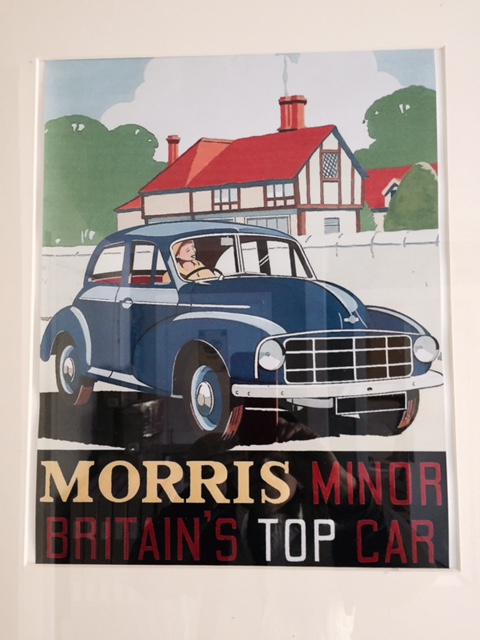
Soon he was selling huge numbers of Morris motorcars –and selling them at a price that middle-class and even working-class people could afford. Just as Henry Ford did in the United States, William Morris pioneered mass production, turning out fleets of fine affordable cars in ever-shorter times.

He was a master of marketing, too. He offered affordable car repair plans.  He published a colorful magazine that showed ordinary people tootling along the roads of Great Britain, enjoying excursions that were once reserved for the rich and their chauffeurs. But Mr. Morris gave away his money as quickly as he made it. All over Great Britain, self-made men were building stately homes that rivaled royal palaces. But Lord Nuffield gave most of his money to charities. He lived happily at his fairly modest home, Nuffield Place, now a National Trust property.
QueenThanks

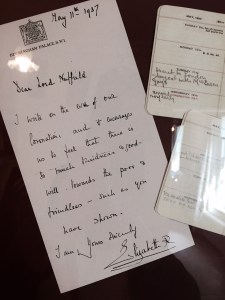
In gratitude for his philanthropy, the King “created” him Viscount. He became a close personal friend of both King and Queen. He took the name “Lord Nuffield” from the village near Oxford, where he had a home. On the eve of coronation in 1937, the Queen wrote him a sweet note of gratitude.
FullSizeRender (27)

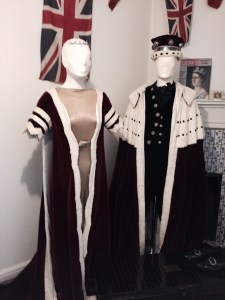
Rather reluctantly, because they were modest people, Mr. Morris and his wife decked themselves out in the ermine-trimmed red velvet robes needed for the coronation.

When World War II broke out, the Morris factories had to meet the tremendous need for military vehicles. Soldiers set forth from England to battlegrounds all over the world in Morris vehicles. Lord Nuffield was too old to fight, but he saw another need: anesthesia for field hospitals.

IMG_6240

Again, how hard could it be? In no time, he had designed a portable machine to administer ether. He gave away thousands of them. No longer did soldiers fresh off the battlefield have to endure excruciating pain in surgery.

IMG_6291
The war ended at last. Then in the 1950s, there was an outbreak of poliomyelitis, in England as in the United States. Lord Morris designed and manufactured an iron lung. One of them is on display at Nuffield Place. It is hard to imagine life inside one of these machines, but the machine saved many lives. Lord Nuffield gave away over 5,000 of these machines to patients all over Britain and the Commonwealth. Polio victims could get through the worst stage of the disease. Without such a machine they died because they could not breathe. Many of them were able to recover. They might be left with some paralysis, but they were alive.

So William Morris, who richly deserved the title “Lord Nuffield,” ended up saving and improving countless lives. What would he have accomplished as a surgeon? Most likely he would have been equally creative and generous as a physician.
FullSizeRender (7)

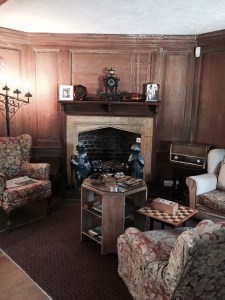
England has hundreds of very grand castles, palaces and stately homes.  But one of my favorite sights is Nuffield Place, the fairly modest home where William Morris chose to live.

I wrote about Lord Nuffield and his home after a visit last fall, at https://castlesandcoffeehouses.com/2015/04/21/nuffield-place…-practical-man/

I’m off to England again soon.  If I can, I’d like to pay another visit to this inventive, practical, generous man’s home. Join me next time for more explorations in the art and history of Europe and the British Isles!

Welcome to the Princess of Cambridge!

_82732687_027026114-1

The Duke and Duchess of Cambridge greeted their second baby yesterday, and she will indeed be a princess: Princess of Cambridge. In Windsor last evening, carillon bells rang out over the streets lively with celebration.

There’s no word yet on the baby’s name. Speculation on possible names is intense. Bets are being feverishly placed. Reportedly Alice and Charlotte are the front runners. Victoria, Elizabeth and Diana are also popular. Royals often are given about four names, so there are quite a few possibilities.


I was just in beautiful rural Norfolk, where William and Kate will reportedly make their primary home.  Tourists like me are allowed to visit the Royal Family’s private retreat, Sandringham. The house and grounds are breathtakingly beautiful and tranquil. William and Kate’s house, still under renovation, is on the Queen’s estate lands–in fact it is right next to Her Majesty’s horse breeding and training grounds.


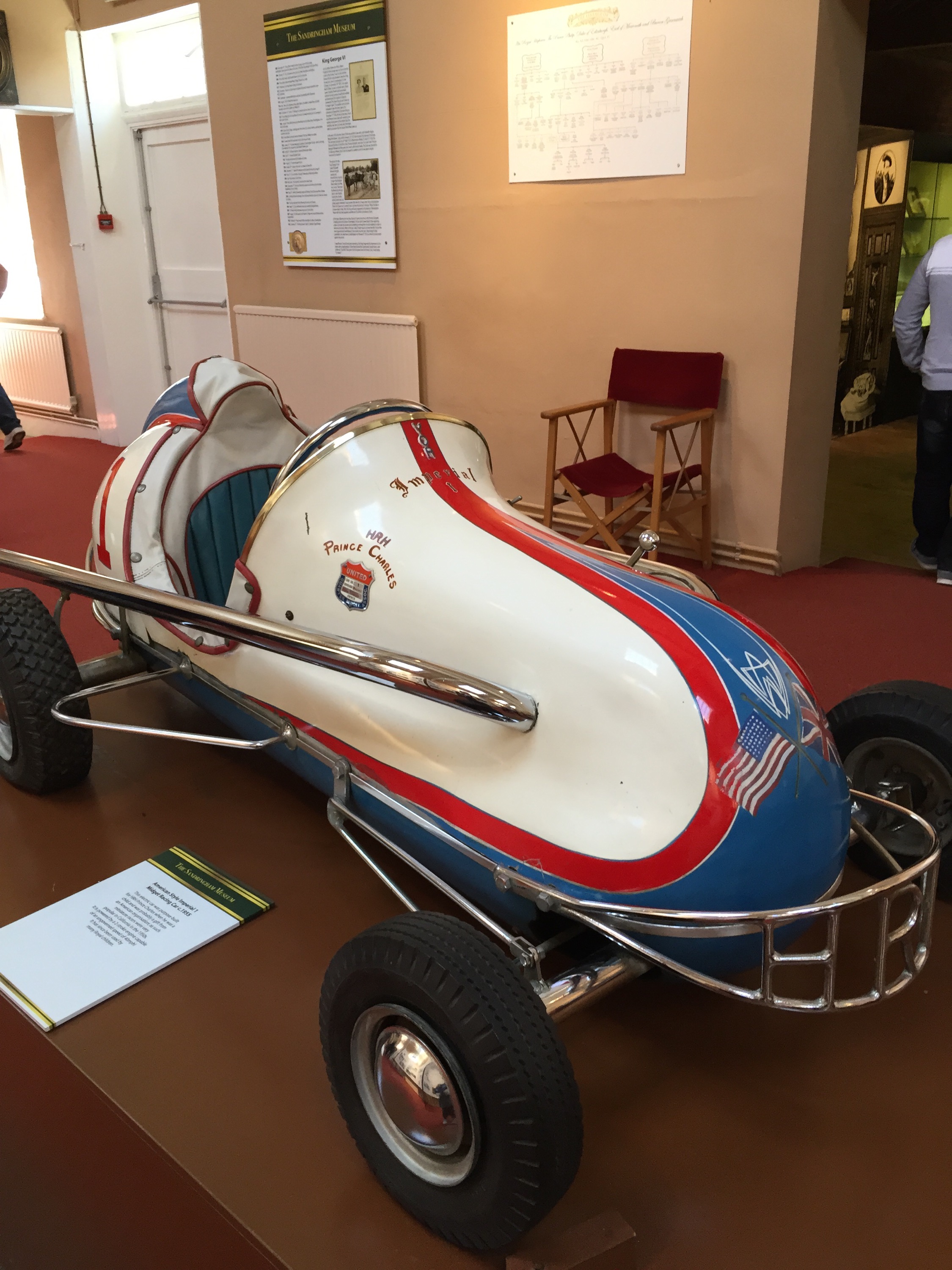
There will be plenty of fun for a child on Her Majesty’s idyllic grounds. The little race car above was presented to Prince Charles when he was a child, and it has seen a lot of use by other royal children–boys and girls.

Prince William has chosen to work as a helicopter rescue pilot, and much of the time he will be stationed in Norfolk.  That pleases me.  I remember reading that when he was a child, his mother Princess Diana used to take William and Harry out on unofficial private visits to homeless shelters.  It seems to me that aside from official working visits to hospices and daycare centers and so on, this generation of the Royal Family does genuinely care for those less fortunate.

FullSizeRender (10)
The local parish church, St. Mary Magdalene, has a lovely guardian angel over the entrance door.
The angel is tenderly holding a baby.  I wish the new royal baby a life of being cared for, and of caring for others.

The baby’s photo at the top of the post is from http://www.bbc.co.uk/news/uk-32567875.

Why I Love England…Especially in Spring

I’ve found that April is really a better month than May in England. It actually rains less in April than in May. It’s cool, but I just wear an extra layer. No one expects to completely avoid rain in England, but sunny days are a big plus.

IMG_2749

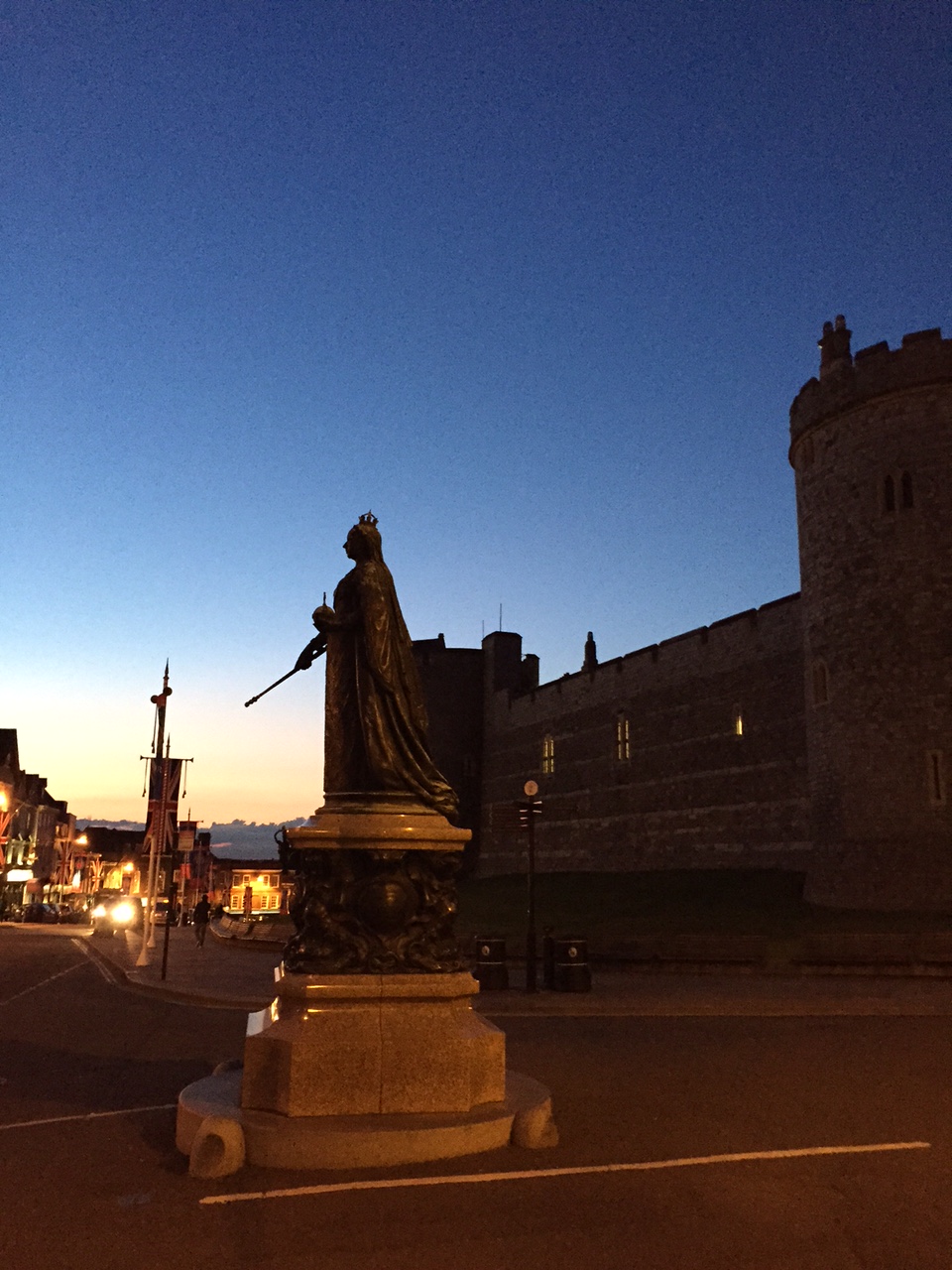
On a clear spring evening in Windsor, Queen Victoria stands sturdily on her pedestal and gazes majestically over the town. In this land of tradition, royalty begins to make sense even to an American puzzled by the idea of hereditary privilege. Victoria seems like a benign grandmother to one and all. No doubt she would approve of the very traditional name given to the new Princess of Cambridge, Charlotte Elizabeth Diana. Certainly the phenomenon that was Diana caused turmoil for the Royal Family, but then Victoria had troublesome children of her own. I imagine she took the long view.

IMG_2731
Spring flowers are in full bloom. Lilacs are fresh and fragrant.

IMG_6821
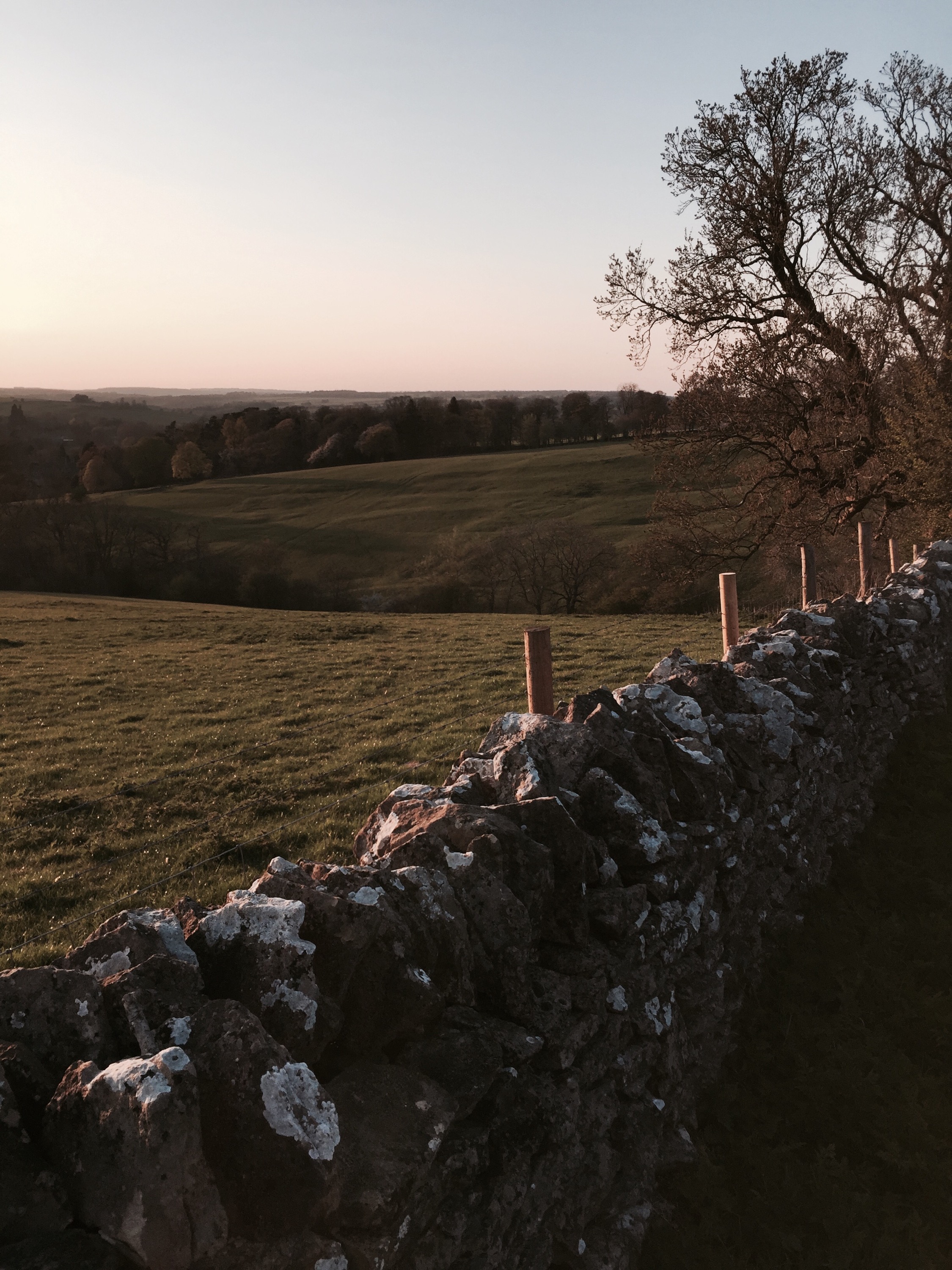
Stone fences neatly divide fields where every square foot has been lovingly farmed over many centuries.

IMG_8407

Public footpaths on private lands crisscross the entire country. The British consider keeping them public to be a sacred right, open to everyone. They’re muddy in rain, but easily walkable in dry weather.

IMG_0333

The British love their dogs (and their cats too). The little fellow above was dressed in a stylish fur-lined hoodie for a slightly chilly outing in Cambridge with his doting person.

IMG_7260 (1)
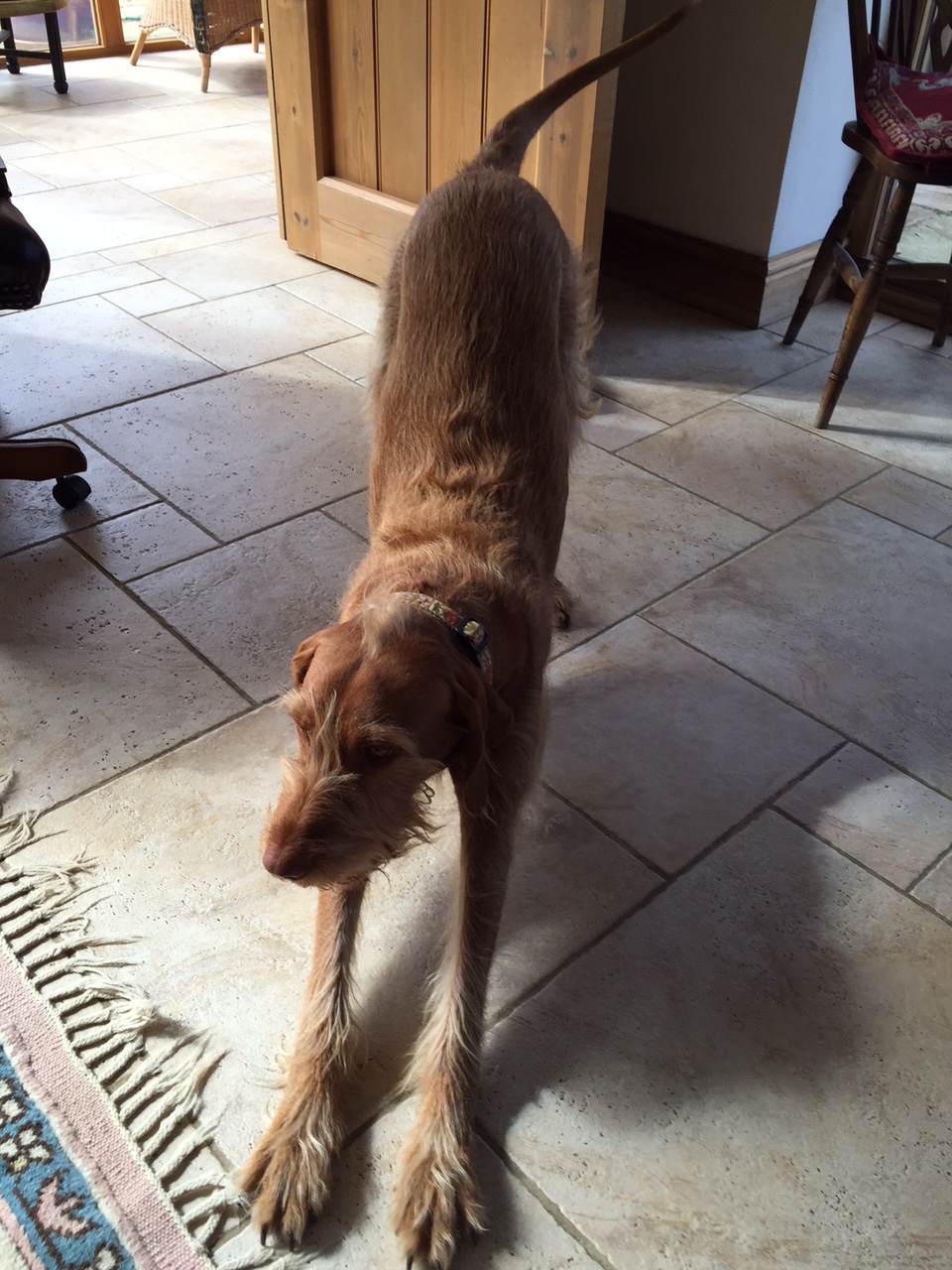
I get lonesome for pets left at home. B and Bs in the countryside often provide loaner pets on request, if you ask nicely. My new friend Ruby lives on a pretty farm in rural Suffolk.

Photo by nicogenin, Creative Commons Attribution Share Alike

Photo by nicogenin, Creative Commons Attribution Share Alike

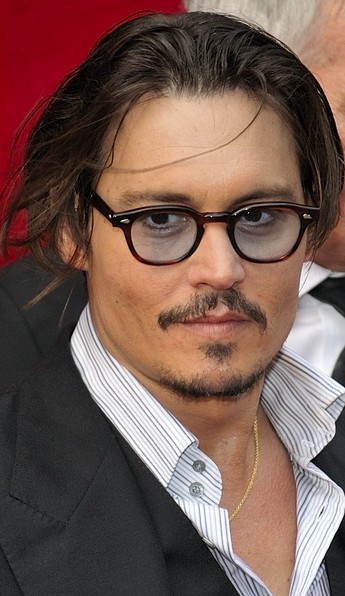
I had never been to the area north and east of London before–it’s off the main tourist trails.  In fact Rick Steves does not even mention the area, except for Cambridge. That may change, with William and Kate settling in Anmer, close to the coast in Norfolk.  And I think I had a Johnny Depp sighting!  Rumor has it that he bought a mansion in Burnham Market, a very posh but rural little village near Anmer. I think I spotted him driving right past me in a nifty Griffith sports car.  If the “east of England” is good enough for the royals and for Johnny Depp, it’s good enough for me.

I really do love England, in any season!

It’s a Princess!


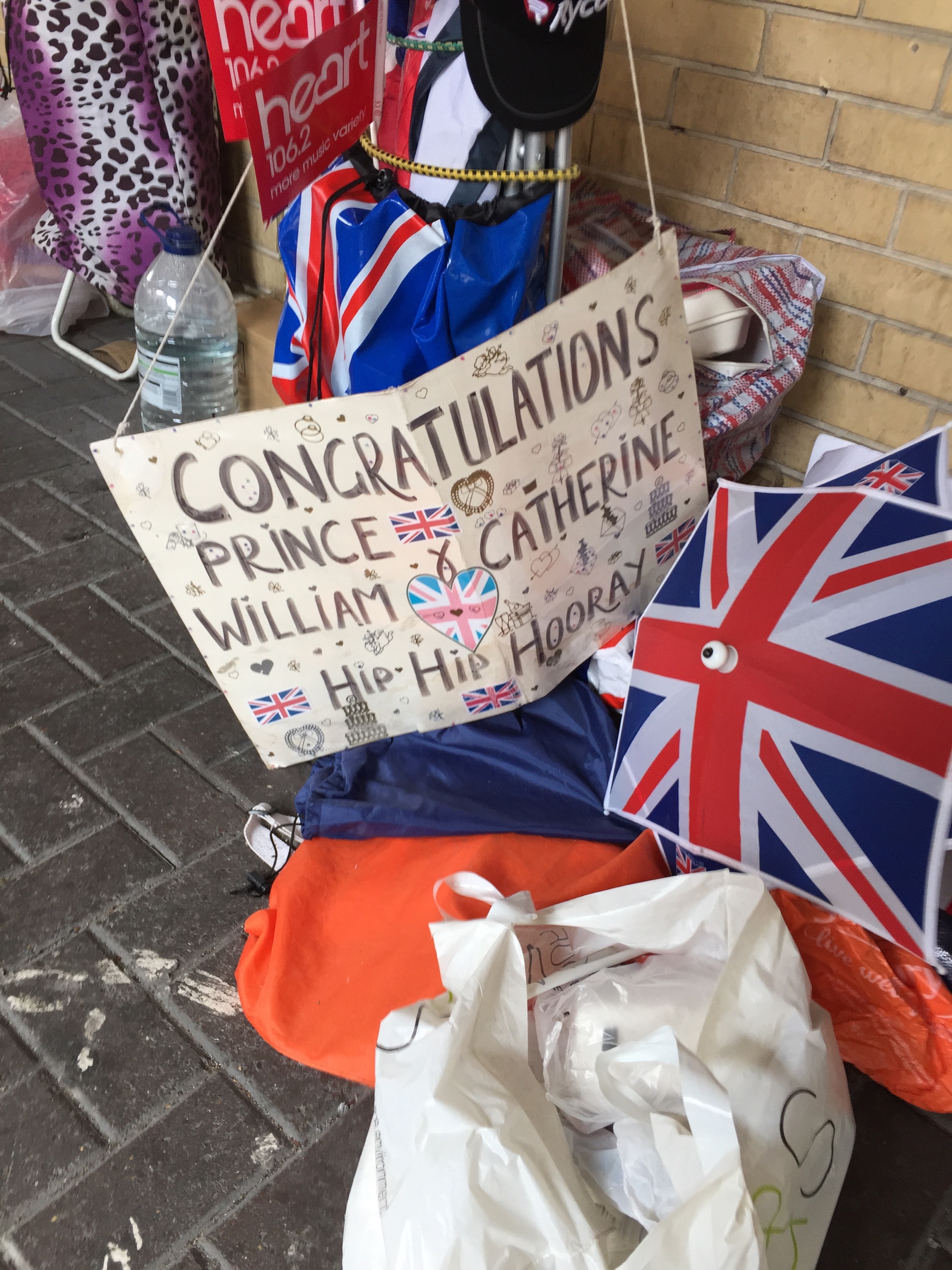
Well, it’s whatever one properly calls the daughter of a Duke.  It may be just “Lady Cambridge” for the time being. As an American, I wouldn’t know. I didn’t plan this (honestly!) but I happened to arrive at Paddington Station a half-hour after that the announcement that the Duchess of Cambridge had given birth. I was within a block of the Lindo Wing of St. Mary’s Hospital, and the celebration was just beginning.


Pink banners fluttered from the fence in front of the hospital.


Pink party hats started appearing.


Reporters interviewed fanatical royal watchers who had been camped out for days or weeks.

Welcome, baby Cambridge!
Clandon Park: A Window Into History, Closed Forever

ClandonPalladian

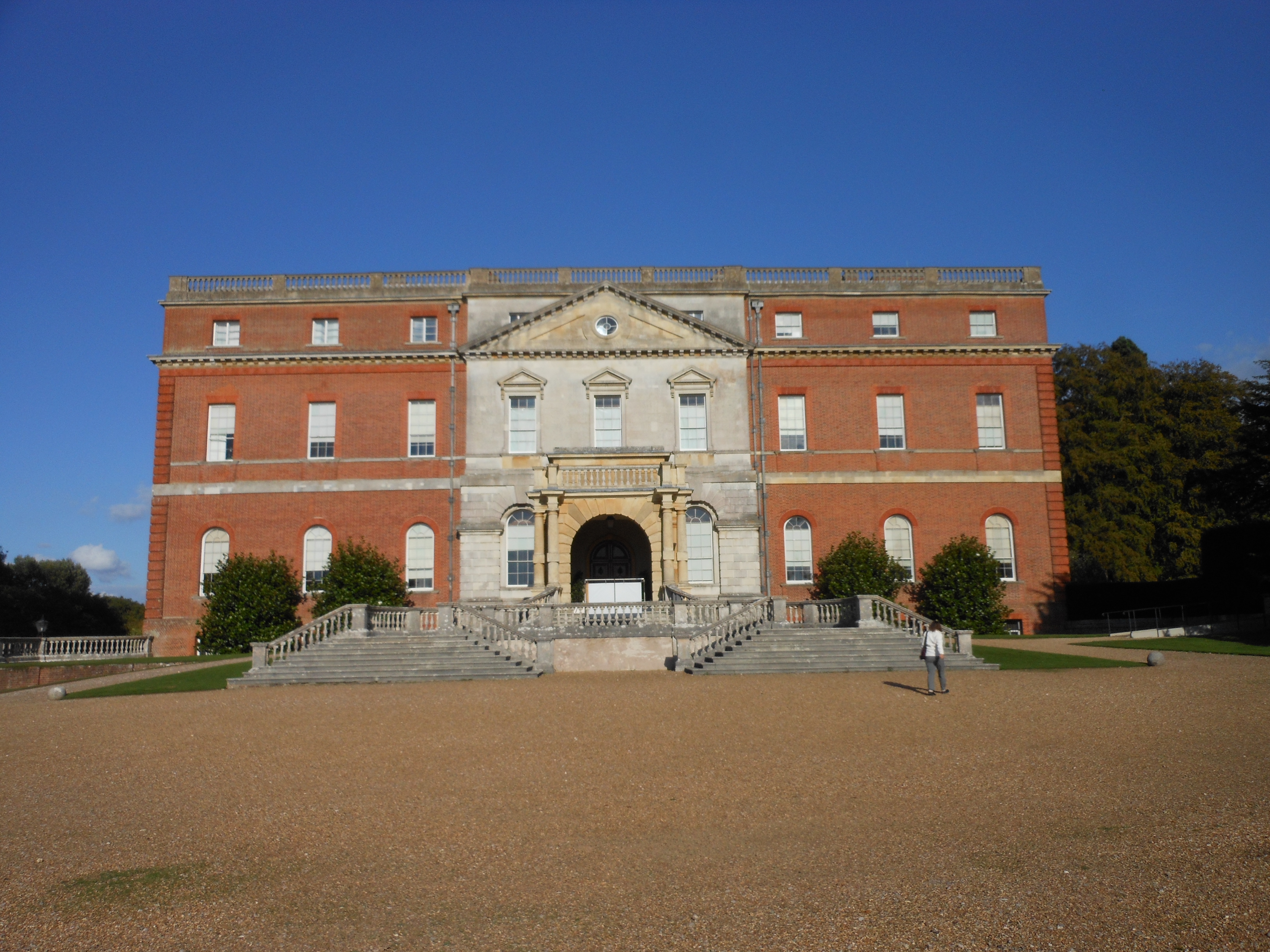
Well, I hope it’s not really forever.  Clandon Park is a splendid 18th century Palladian mansion just outside London. It was featured as a location for the film The Duchess, starring Keira Knightley.  It went up in flames a couple of days ago.

ClandonMarbleHall

The Marble Hall, one of the finest in England–and in the world–is gone. It was a perfect cube, 40 feet square, of white marble, a space designed to impress.  The ornate stucco ceiling completed the cube, with heroic figures superimposed on the exquisite background. Outside of visiting hours, the mansion was a popular wedding venue.  Several English brides are scrambling right now to replace their dream setting for a white wedding.

ClandonCanovaGraces

Countless volunteers and at least 80 firefighters struggled to save what they could.  Much of the furniture and art was rescued, but I doubt that anyone was able to move this life-size sculpture of “The Three Graces” by the great Italian sculptor Antonio Canova.

ClandonUniforms

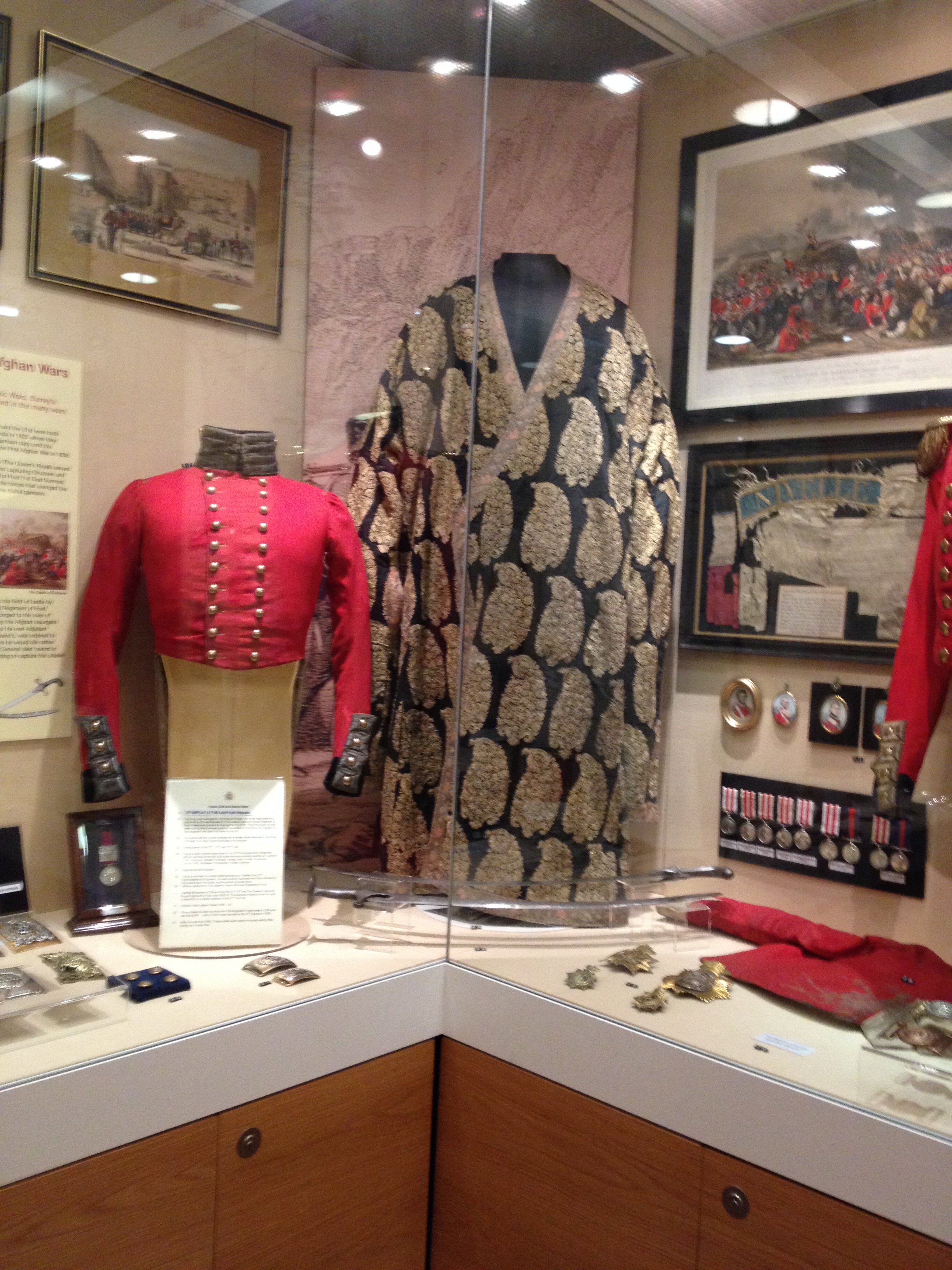
The mansion housed a wonderful military museum in the basement, where the fire apparently started. I know that the prized Victoria Crosses, awarded for bravery in battle, were saved.  Certainly the many colorful uniforms from heroes of the past were lost too. The Onslow family, who began building on the property in the 1200s, were prominent British politicians. In fact, three of them served as Speakers of the House of Commons. More recent Onslows fostered connections with Maori tribes.

I was fortunate enough to see the house in its glory, last September.  Will it be rebuilt?  Possibly.  Some National Trust properties, such as Uppark, were eventually rebuilt.  But this was an especially devastating fire which left a national treasure an empty roofless shell.  I am sad.

The smouldering remains of Clandon Park House

An article about the fire is at  http://www.theguardian.com/uk-news/2015/apr/30/clandon-park-house-fire-salvage-stately-home-surrey#img-3. The photo above, by Rex Shutterstock, is from the article.