Sunrise service on the mountain, and moose family napping in the snow. And time to get ready for springtime travels. Happy Easter!


Sunrise service on the mountain, and moose family napping in the snow. And time to get ready for springtime travels. Happy Easter!
In the midst of the most turbulent American political season in decades, I recently re-read Shakespeare’s play Julius Caesar. His source was mostly the historian Plutarch. The play is still relevant, and still illuminating on the subjects of loyalty to others versus loyalty to country, honest differences of political opinion, the uses and abuses of power, and whether and when violence is justified. And because it’s Shakespeare, every word is memorable. In history and in the play, Julius Caesar meets a bloody end. But Shakespeare gave him some memorable lines before he went down. In the play, contemplating his risks, Julius Caesar says, “Cowards die may times before their deaths; the valiant never taste of death but once.”
This day, the 15th of March in year 44 B.C., did not work out well for Julius Caesar. According to the historian Plutarch, a fortune-teller warned Caesar that something terrible would happen to him before the “Ides of March.” There were other warnings, too: a graphically violent dream by Caesar’s worried wife Calphurnia, men seemingly walking around on fire in the marketplace, a lion wandering the streets. Confident (or foolhardy) fellow that Julius Caesar was, he laughed at the portents and predictions. He even gloated, as he made his way to the Roman Senate on that morning. When he reached the Theater of Pompey, where Senate sessions were being temporarily held, he figured he was home free. But a lethal circle of assassins awaited him, knives concealed under their togas. Calphurnia’s nightmare came horribly true.

“Death of Caesar,” 1798, Vincenzo Camuccini, public domain
Julius Caesar’s death marked the end of the Roman Republic and the beginning of fierce civil wars that eventually led to the formation of the Roman Empire–a period that was stable, but definitely not democratic. Julius Caesar had already more or less ended the Republic: at the height of his power, he had named himself “Imperator.”

Could Caesar have avoided his violent end? Given his personality and supreme self-confidence, he probably could not. He had refused to resign when the Senate politely requested that he step down, and with one of his legions he had defiantly crossed the Rubicon River into Italy. That was strictly forbidden. Military conquest was for the frontiers. Rome was for reasoned debate among civilized men. Ever since Julius Caesar’s audacious and risky march across that border river, the expression “crossing the Rubicon” has meant a fateful and irreversible action. There was no turning back, for Caesar or for Rome.

Looking back over the centuries, it appears that the common people loved Julius Caesar for his flamboyance and for the military glory he had brought home to Rome. But his aristocratic peers saw only danger ahead. They decided that Caesar had to go. Once he was safely dead and out of the way, his heir, Octavius, obligingly made Julius Caesar a god. No danger there, and the move placated the restive common people.
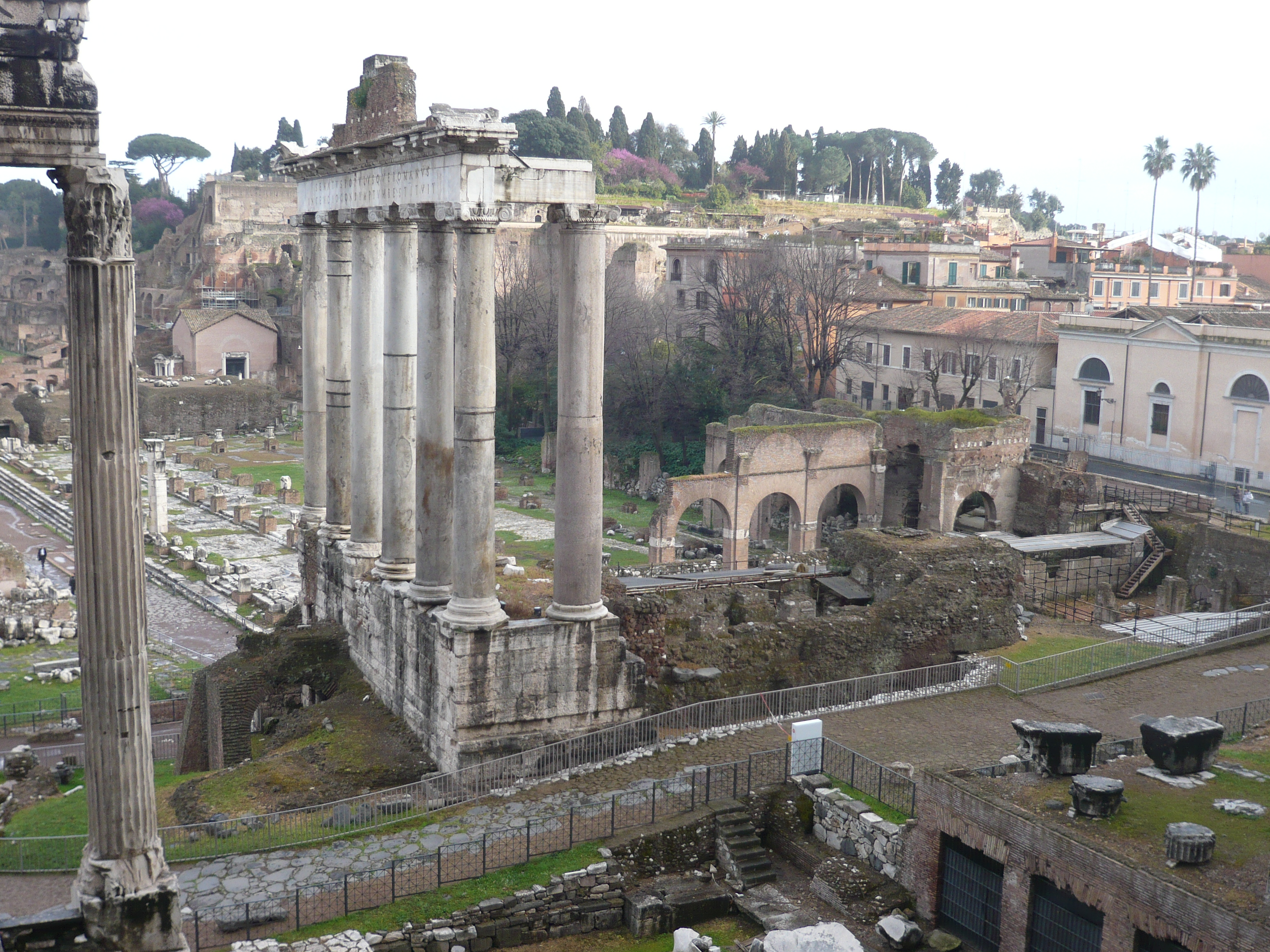
Today, the Roman Forum is a haunting place to wander, pondering the ups and downs of history. When I visited, I bought a book with clear overlays which shows how the various buildings must once have looked back in the day. But even without a visual aid, it is not hard to imagine Julius Caesar and his entourage making his way through the Forum on his way to the Senate session on that fateful day, the Ides of March in 44 B.C.
Join me next time for more explorations into the art and history of Europe!

I can’t really leave Benjamin Disraeli without posting some more pictures from his country home, Hughenden Manor. It’s the most quintessentially Victorian place I can think of. In those days, it must have seemed perfectly natural to hang side-by-side portraits of the Prime Minister and his Queen above the fireplace–in the bedroom Mr. Disraeli shared with his loving wife, Mary Anne. She decorated the room herself.
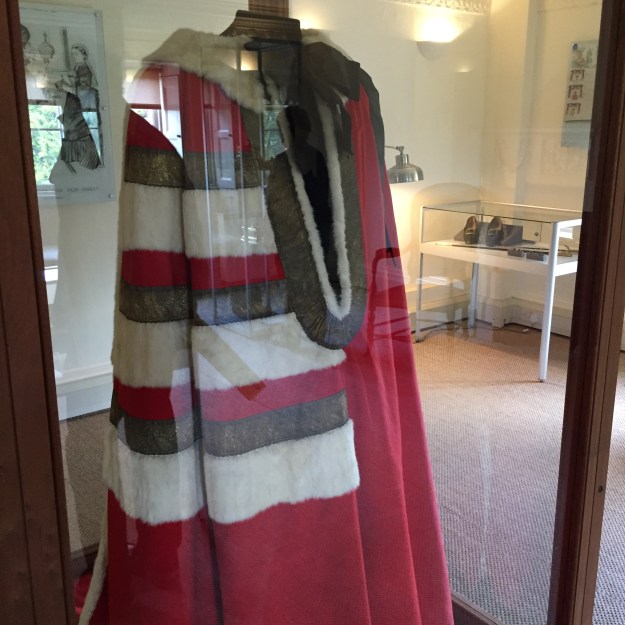
In the House of Lords during the height of the British Empire, politicians wore red velvet robes on ceremonial occasions, without irony or having to wade through rude protests outside. Becoming the Earl of Beaconsfield was a proud accomplishment for a man born into a modest Jewish family in 1804. Disraeli became an Anglican at age 12, and remained one for the rest of his long life.

We tend to think that Britain has a fairly rigid class system, but even in Victorian times it was possible for an unlikely man to rise to the height of power, through luck, connections, charm and sheer hard work.
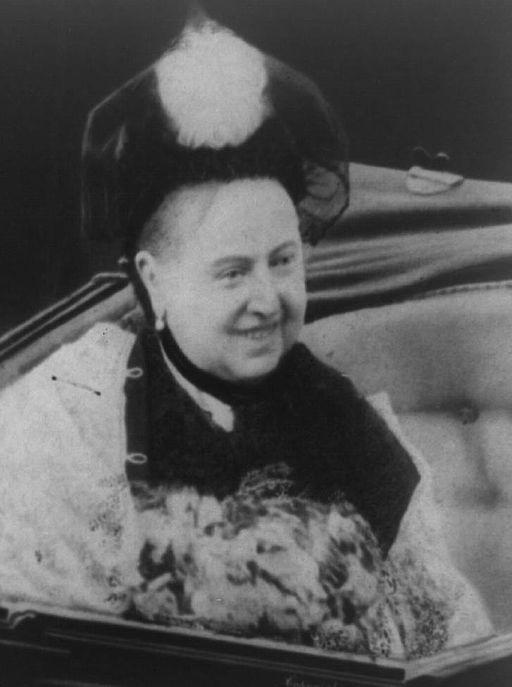
Queen Victoria has a reputation for sternness, but she knew how to be amused, too. And her trusted friend Benjamin Disraeli amused her.

The Queen set an example of happy, respectable family life for her subjects. Mary Anne Disraeli created a peaceful refuge at home for her busy husband.
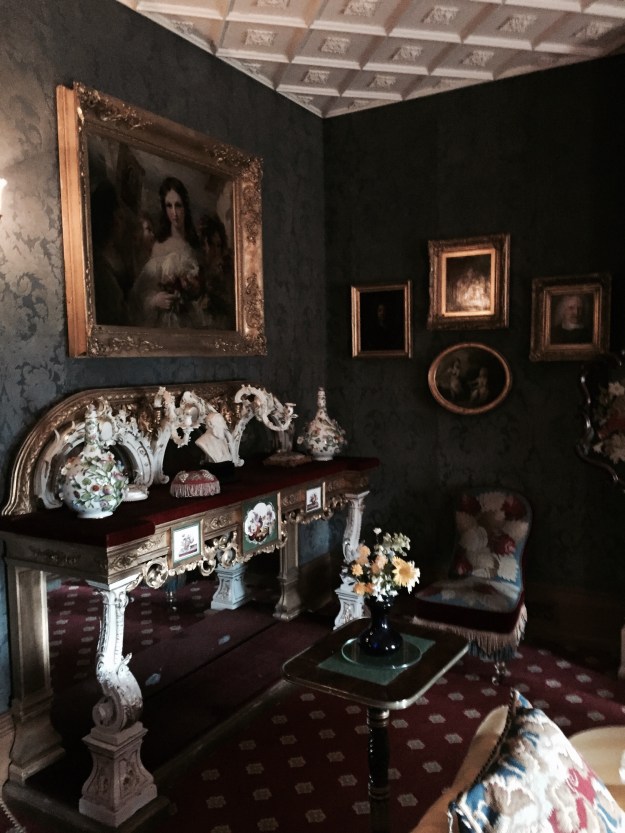
Why did Victorians stuff their homes with so much stuff? In a restored Victorian home like Hughenden, every surface is occupied: baubles, bibelots, and knickknacks carefully arranged on top of curlicued whatnots. In Victorian times, minimalism was an unknown concept. And old photos seem even more crowded than restored rooms. Why? Here’s my theory: the British ruled an empire that spanned the entire globe. Victorian rooms seem crowded and stuffy to the modern sensibility, but I think all those possessions were an exuberant expression of Victorian confidence and optimism. If you’ve got it, flaunt it!

Mary Anne Disraeli presided over a lively dinner table. She was practical, too–which her husband was not. Household records show that after one dinner party, she sent two big unused blocks of cheese back to the cheesemonger. Waste not, want not!
Disraeli loved trees. In fact, while Mary Anne was busy inside finding just the right places for her trinkets and doodads, Disraeli was busy outside planting trees–the more the better. He brought in specimens from the far-flung empire and created a forest that lives on today. He spent hours walking among his trees, taking solace from their growth and variety. He once remarked, “I am not surprised that the ancients worshipped trees.”

I was so interested in the house–with its Victorian history as well as the amazing part it played in World War II–that I didn’t get into the gardens and the forest. Next time!
The three posts just before this one described the vital history of Hughenden in more detail. Join me next time for more explorations in the art and history of Europe and the British Isles!
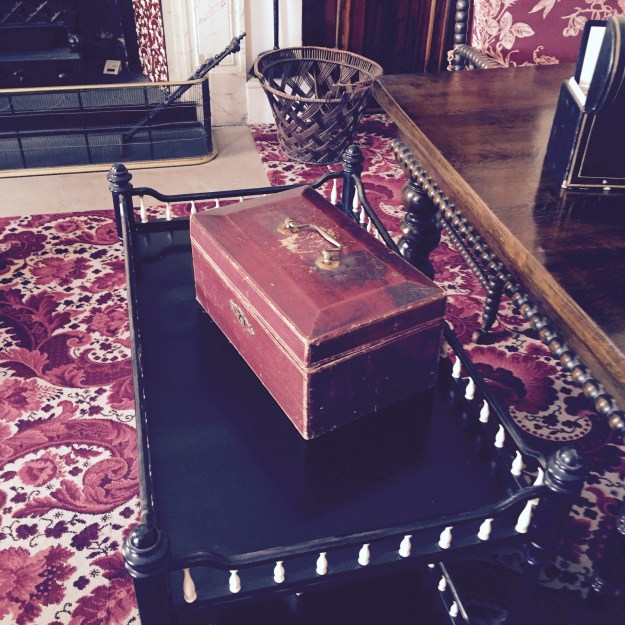
At Hughenden Manor last spring, I was thrilled to spot Prime Minister Disraeli’s famous “red box” in his study. It’s a kind of box used for the last 150 years or so by British government officials. It’s really just a briefcase, but so much more romantic–and quintessentially British. These boxes were first used in the 1860s. They were covered in red-dyed rams’ leather, embossed with the Royal Cypher and lined with lead–reportedly so that if the carrier were captured at sea, the box would sink with all its secrets intact. The lead also made the boxes pretty strong in the event of bombing or other catastrophe. The lock is on the bottom of the box, guaranteeing that nobody will walk off without locking it. (Does anyone ever forget, grab the handle and spill the important documents? Let’s hope not).

Photo from “Daily Mail” article cited below
Until very recently, important government officials proudly carried their red boxes wherever they went. (Naturally, a government official is always hard at work, so the box is necessary at all times). Any man or woman would walk a little taller carrying the jaunty red case. And what a status symbol to casually place on one’s table on the train!
Queen Elizabeth, like Disraeli’s Queen Victoria, receives her own royal red box daily. It contains documents the sovereign must sign before they become law. I’d like to think the Queen’s red box will exist for a long time.
But now, the British government is phasing out the revered symbol of power in favor of secure smartphones. For one thing, ministers have developed the wasteful habit of having their boxes shuttled from place to place in chauffeured limousines, as described in an article from The Independent. Then there’s the problem of security. A fingerprint-activated smartphone is apparently safer (at least until it’s hacked.)

So in England, red ministerial boxes are going the way of red curbside telephone boxes.

Prime Minister Benjamin Disraeli lived in a slower-moving world. His red box came with him to his country home, where he worked in his quiet study between long walks inspecting his grounds. There was time for him to think, to read actual books, to reflect on the weighty problems of state. I fear that Britain’s government ministers will now be more like the rest of us: constantly intent on a pocket-sized screen.

Somehow, I can’t see the elegant Mr. Disrael hunched over a smartphone.
I wouldn’t give up my own smartphone for anything, of course. It’s my only camera, as well as my window into the wider world. I can look up most anything with a few thumbstrokes. But if I were a British government minister, I would miss my elegant red ramskin box with the Royal Cypher and the lock on the bottom.
Join me next time for more explorations in the art and history of Europe and the British Isles!

Who was the man getting the surprise ice-water bath above, and what did he have to do with victory in World War II? One day in 2004, a National Trust guide at Hughenden Manor overheard an intriguing conversation. An old man was very quietly describing to his grandchild how he had once worked in the very room they were standing in. Hughenden Manor was the country home of Benjamin Disraeli, the Prime Minister and friend of Queen Victoria.
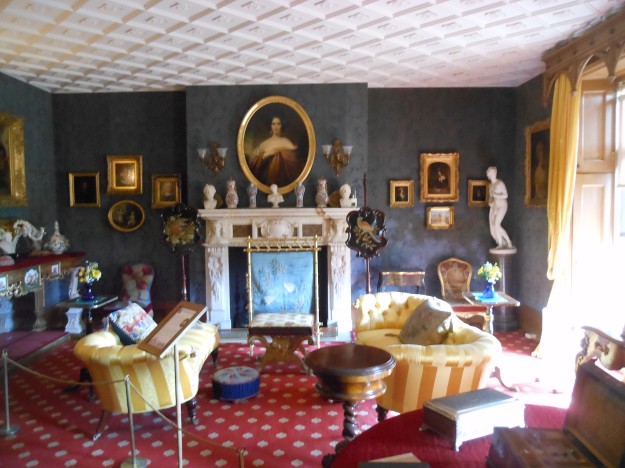
The house was a dusty relic of Victorian times. But it turned out that the house played a pivotal role in the Second World War, totally unknown to anyone except the 100 or so people who secretly worked there in the 1940s.
When the Battle of Britain and the London Blitz ended in late 1940, Britain’s Royal Air Force, the RAF, had overcome all the odds and held off the German Luftwaffe. Adolf Hitler had believed that the British would fold under heavy bombing, negotiate a peace treaty, and become his allies. How wrong he was. About 3,000 young pilots, averaging 20 years of age, did battle daily over the Channel, outnumbered by 5 to 1 in both equipment and flyers. They were not all British; some of them were Polish, Czech, Belgian and French. According to the RAF, 544 of them were killed in the Battle of Britain, and another 814 died later in the war. Winston Churchill famously summed up the Battle of Britain: “Never in the field of human conflict was so much owed by so many to so few.” To this day, pilots who fought are referred to as “The Few.”
But the war was just beginning. It was necessary for Allied forces, soon including the United States, to knock out German infrastructure. The only maps available at the time were made for tourists. They showed roads, cities, railways and sightseeing destinations like castles and cathedrals. Bombers needed detailed maps to accomplish their missions of destroying armament factories and other strategic targets.

Hughenden Manor became a secret command center for the vital mission of creating detailed maps for bomber pilots to use. British Spitfires and later Mosquitos were dispatched across the Channel with automatic cameras in their gun bays. Since the gun bays had no guns, the planes had no protection. The pilots, as brave as any of The Few, flew thousands of surveillance missions over Germany. Over the course of the war, they took 36 million photos. The camera film was carried by courier to Hughenden Manor, where the 100 or so top-secret mapmakers went to work.
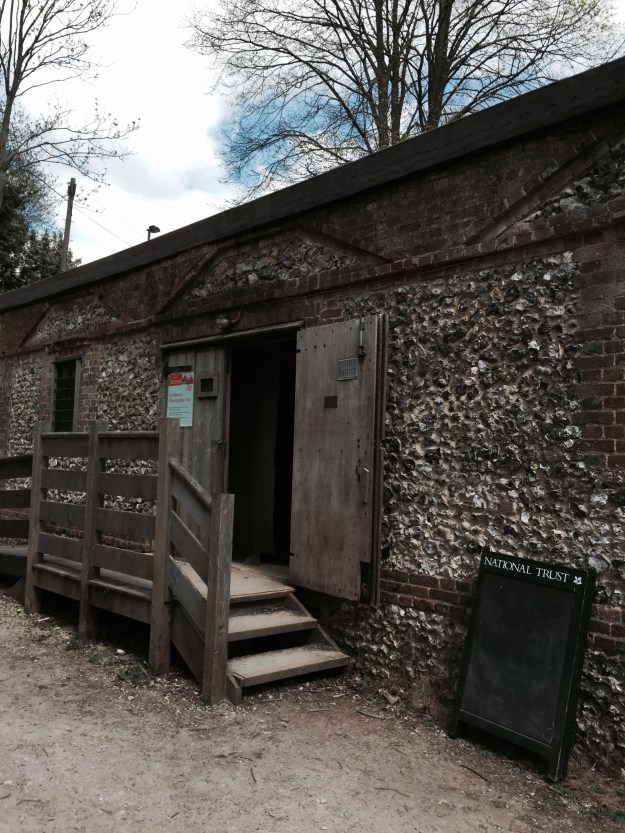
The old Hughenden icehouse was the darkroom.

Mapmakers were on duty at all times; someone always slept in the icehouse.

Inside, mapmakers worked day and night, translating the surveillance photos into maps for bomber pilots. Target maps were drawn by hand, with the target in the middle, surrounded by concentric circles one mile apart.

Today, the visitor can try out the equipment, which in its day was high-tech. Completed maps, thousands of them, were sent seven miles up the road to Bomber Command. Often, couriers used bicycles, so as not to draw attention.

The entire map-making operation was a military secret, protected by the Official Secrets Act. People who worked at Hughenden, military and civilian, took an oath to keep the operation secret for their entire lifetimes. When the National Trust accidentally learned a little about the amazing World War II history of Hughenden, they went to Parliament and eventually received permission to make the secrets public. Today, the icehouse and the basement of Hughenden hold an enthralling museum of this vital part of victory for the Allies in World War II.

Veterans of the secret operation were tracked down and interviewed on video, before their stories were lost forever. People sent in their personal diaries and photos. The almost-lost history came alive.

And the man getting the surprise ice bath? Newbies were invited into the icehouse to have a wartime picture taken, to send to the folks at home (of course, the location was always kept secret). The helpful icehouse staff posed the unsuspecting person under an icy water outlet in the brick ceiling. Someone pulled a lever at the exact moment the camera snapped. Everyone, including the victim, laughed uproariously.
The result was a nice wartime keepsake, and a personal reminder of undaunted British spirit when the odds of victory seemed slim. British self-deprecating humor and camaraderie were a big part of that spirit.
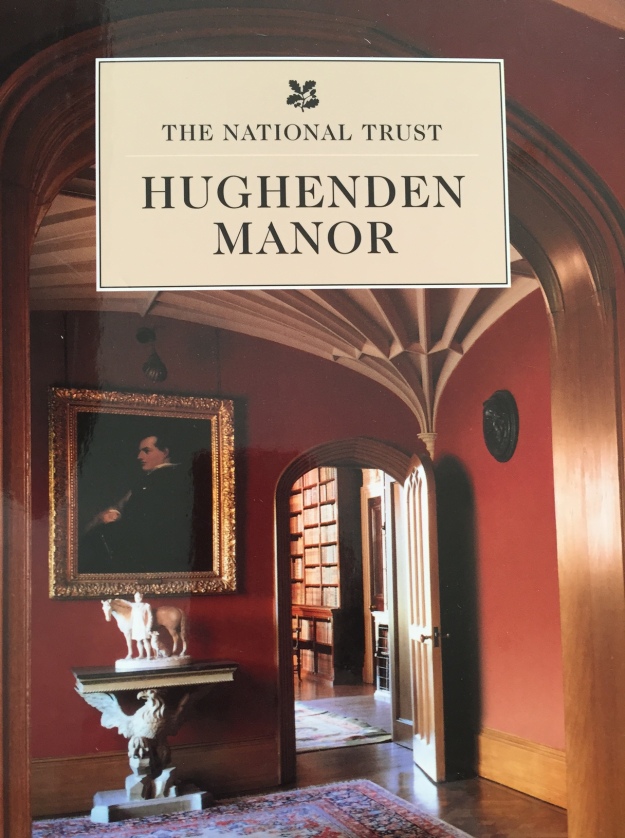
I’d recommend a visit to Hughenden Manor. Join me next time for more explorations in the art and history of Europe and the British Isles!

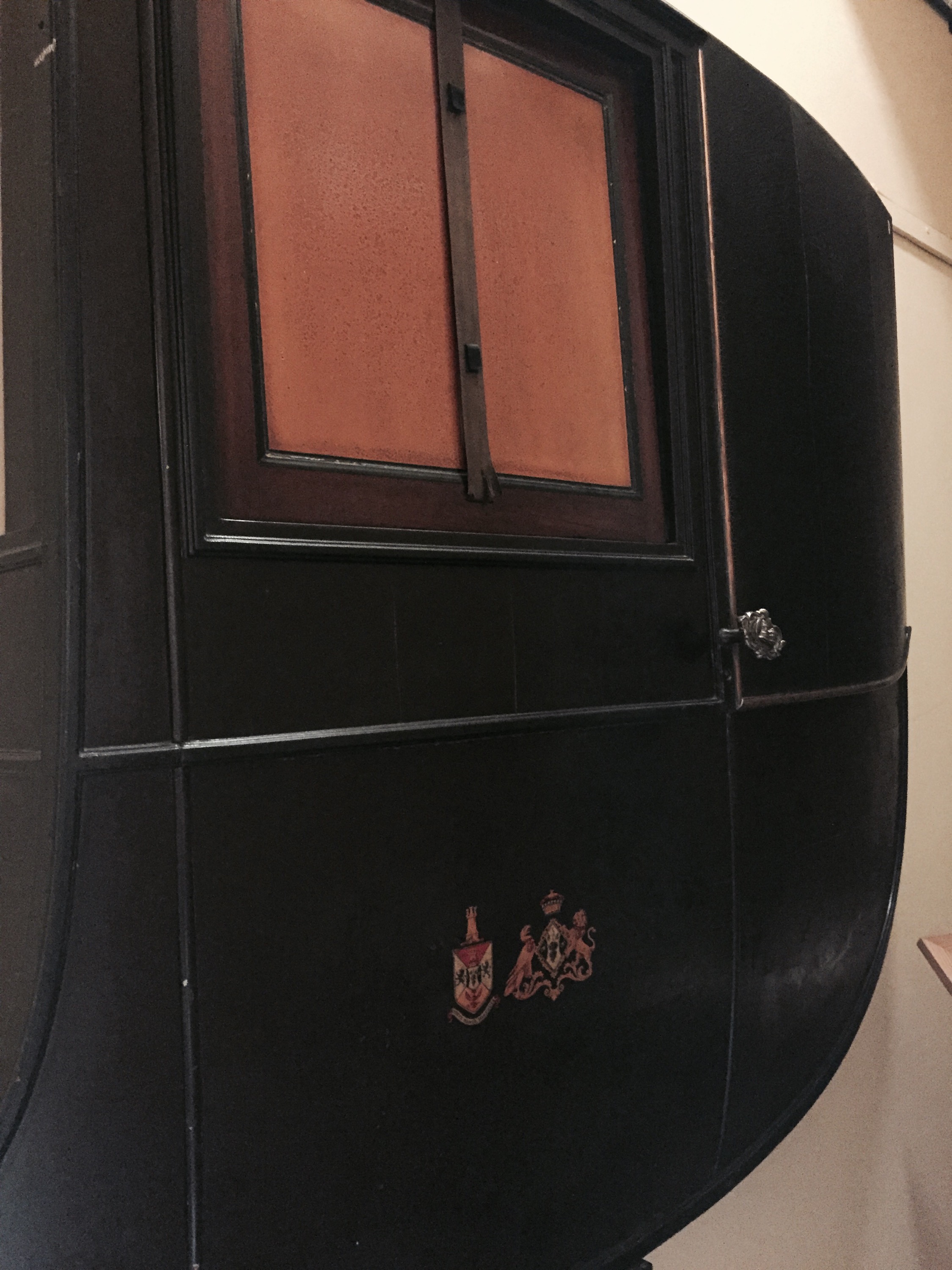
Why is a Victorian carriage door prominently displayed on a wall at Hughenden, the country home of Queen Victoria’s friend and Prime Minister, Benjamin Disraeli? The Prime Minister himself removed it from the carriage and preserved it as a tribute to his wife, Mary Anne. One evening the ambitious politician and his doting wife set off from his London house to Parliament, where he was to deliver a very important speech. When the carriage door was closed, it slammed shut on Mary Anne’s thumb. What did she do? She suffered in silence, all the way to Westminster. She didn’t want to upset the man before his speech. A placard next to the carriage door explains that Mary Anne said not a word until Disraeli was safely out of the carriage and on his way into the corridors of power. The placard remarks drily that her words when her thumb was released were not recorded.
 Mary Anne was 12 years older than her husband, and the marriage began as one of convenience. But it grew into a true love match.
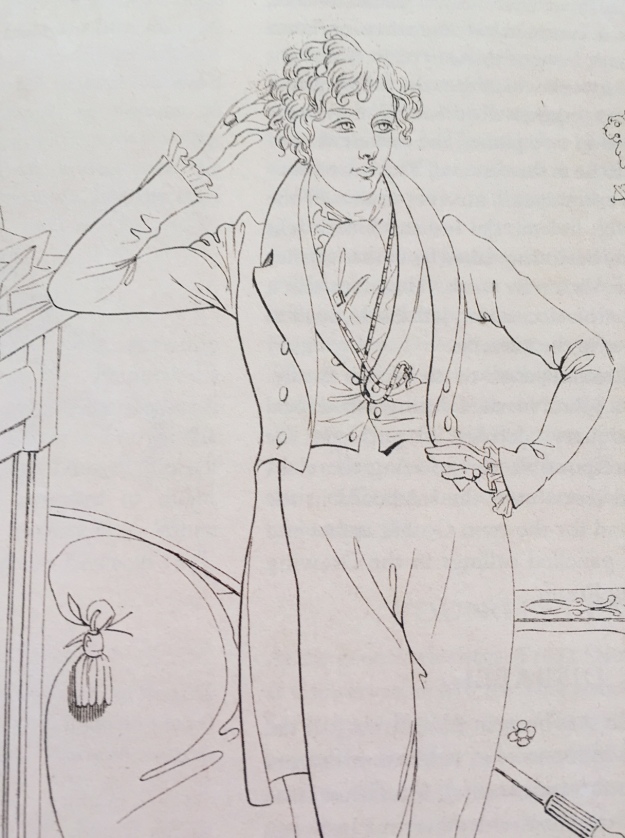
According to the guidebook sold at Hughenden, Disraeli was a novelist and something of a playboy in 1830s London. He had written a novel, Vivian Grey, which was a thinly veiled self-portrait of a young man on the make. His friend Bulwer-Lytton described him thus: he wore “green velvet trousers, a canary coloured waistcoat, low sleeves, silver buckles, lace at his wrists, his hair in ringlets.” He cut a wide swath through bohemian London salons, finally gaining an entree into the highest circles. He tried five times for a seat in Parliament before he won an election. His maiden speech was a disaster; he was shouted down. What worked in drawing rooms did not work in the House of Commons. He famously ended by saying, “I will sit down now, but the time will come when you will hear me.”
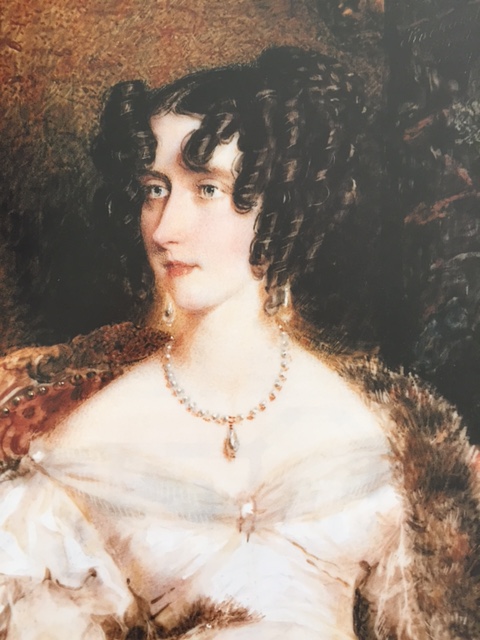
Mary Anne, my photo from Hughenden guidebook
What Disraeli needed was a rich wife. He met Mary Anne Wyndham Lewis in 1832, when she was just another older married woman he enjoyed flirting with. He thought her “a pretty little woman, a flirt and a rattle” which according to the guidebook meant “incessant chatterer.” But her deep-pocketed husband obligingly died in 1838, leaving her a rich widow. Her appeal increased and Disraeli married her in 1839.
 Disraeli soon learned what a treasure he had found. He wrote, “There was no care which she could not mitigate, and no difficulty which she could not face. She was the most cheerful and the most courageous woman I ever knew.” High praise indeed; Disraeli had known and depended on many, many women in his rise to power in Victorian England.
A visit to Hughenden is a window into the Victorian past.
The estate is under the care of the National Trust, and beyond the quintessentially Victorian rooms there’s a surprise, new since I first visited years ago. The estate was a secret location for surveillance work which was crucial to victory in World War II. This work was so secret that not even the National Trust knew a thing about it until very recently. I’ll be writing about what went on in the wartime rooms and the icehouse soon.
Join me next time for more explorations in the art and history of Europe and the British Isles!

Britain’s beloved Queen Victoria died on January 22, 1901, ending the Victorian Era. She was also Empress of India all through the heyday of the years when the sun never set on the British Empire. Her image still appears everywhere in Great Britain. The coronation portrait by George Hayter is in the Royal Collection (Public Domain now). It still appears in reproductions in some tradition-loving British homes.

Other homes display mass-produced images like the one above, spotted in the very regal Wimpole Estate.
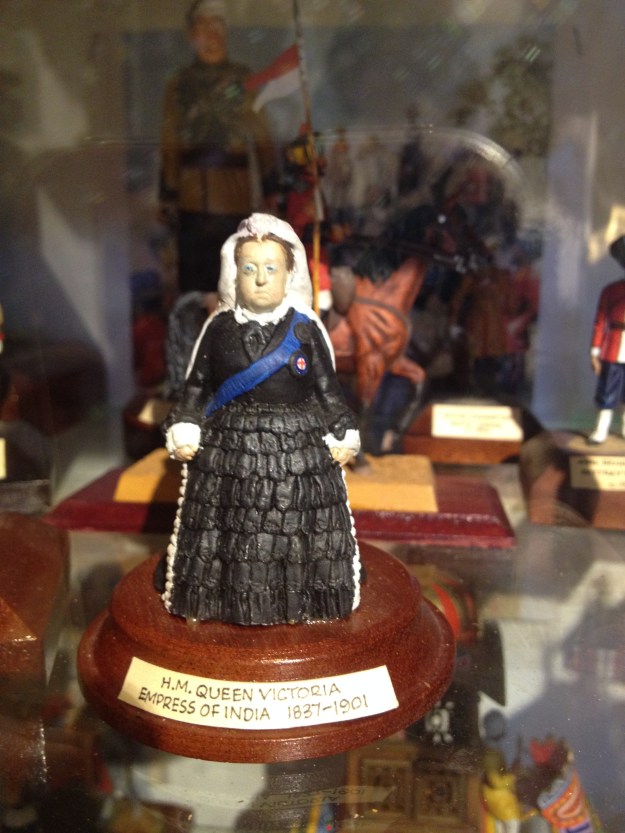
Victoria’s image, dressed in black in her widowhood and with her little diamond crown perched on top of her head, is instantly recognizable. The little model above holds pride of place in an exhibit of military models at Blenheim Palace. That unusual crown served as a canny early version of a prominent person creating a unique brand for herself.
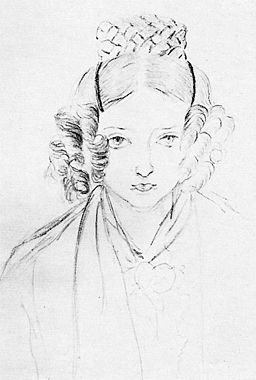
How did Victoria see herself? The sketch above, Public Domain, was Victoria’s own self-portrait as a young girl. She already has some kind of little whatsit balancing on top of her head. She looks apprehensive. But when she unexpectedly took the throne at the age of 18, after everyone else in the line of succession had died, she rose to the occasion and she kept rising. She reigned over England for over 63 years.
We tend to think of Victoria as a dour old lady. But in fact she laughed often. The Public Domain photo above shows her in a jolly mood, even into her old age.

A statue of Victoria stands serenely at the entrance of Windsor Castle, the thousand-year-old complex that is one of the favorite homes of the current Queen.
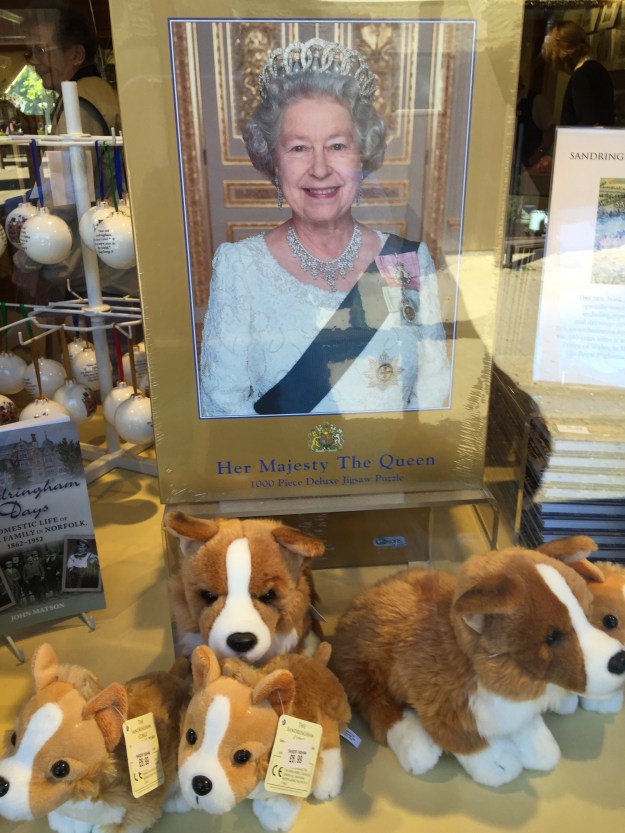
Queen Elizabeth II has now reigned longer than her ancestor, the redoubtable Victoria. Whatever one thinks of the institution of the monarchy, there’s no doubt that Queen Elizabeth is a cracking good Queen. The photo above is from the shop at Sandringham, the country estate in Norfolk that Queen Victoria wisely bought as a private retreat for the Windsors. When I was there, neither the Queen nor her Corgis were in sight, but their presence was felt everywhere. There’s nothing more British than the Queen and her beloved Corgis. I wish them all well.
Join me next time for more exploration in the art and history of Europe and the British Isles!

Henry Croft Pearly King, Public Domain
How did a penniless orphan rate a funeral procession half a mile long? How does a person make something wonderful out of nothing? Why do people appear proudly on the streets of London weighed down by thousands of white buttons? The ladies pictured below are part of the London institution known as the Pearly Kings and Queens. The photo is from the Guardian article cited later.

Henry Croft was born around 1862 and raised in the orphanage of a workhouse. At age 13, he went out into the streets of Victorian London to make his living as a street sweeper and rat catcher. He fell in with the lively community of costermongers: sellers of apples and other cheap goods on the street. They were known for sewing penny-sized mother-of-pearl buttons up the sides of their trousers, at the seams. Henry Croft took it one step further: he somehow acquired a full suit, complete with top hat and tails, and set about decorating it with “pearlies.” His friends helped him. When he appeared in public, people gave him small change which soon added up to sizable amounts. He donated the money to the orphanage that raised him. Soon, he was asked to collect money for other charities. People began joining him and a movement began.

Pearlies, photo from thepearlies.co.uk
In 1911, the first of several organized pearly societies began in London. The various organizations, one for each borough of the city, united in 1975. They are a registered charity in England, with their own website at www: thepearlies.co.uk.
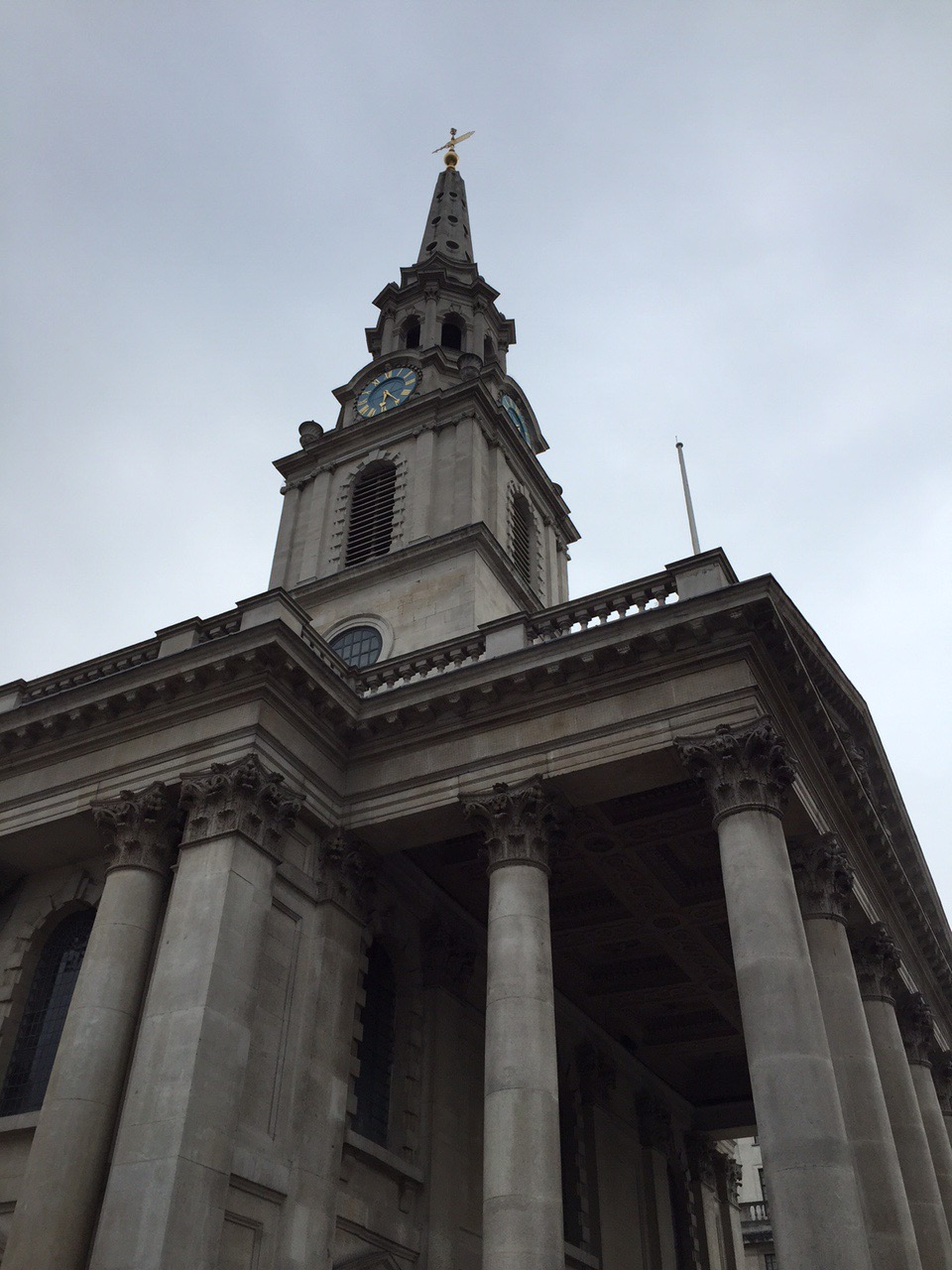
Their base is the Church of St-Martin-in-the-Fields, one of my very favorite places in London. One of these days I’ll make it to their Harvest Festival in the fall.

The tradition is kept alive by about 30 families in London. The photo above is from the Harvest Festival of 2015. An article about the festival is at http://www.theguardian.com/uk-news/gallery/2015/sep/28/londons-other-royalty-pearly-kings-and-queens-mark-the-harvest-festival-in-pictures

Henry Croft died on January 1, 1930. His funeral procession began with 400 Pearly Kings and Queens and stretched for half a mile with other admirers. He was honored with a memorial statue which is now in the crypt at St-Martin-in-the-Fields Church at Trafalgar Square in London. Most of the crypt is taken up by the wildly popular volunteer-run cafe in the crypt. When in London, I eat there every chance I get. I’m sure Henry appreciates all the lively company. On my last visit, I wrote about the cafe at https://castlesandcoffeehouses.com/2015/05/09/st-martin-in-the-fields/
The motto of the Pearlies is “One Never Knows.” None of us can know what the New Year will bring, but I hope it brings peace and a better life for everyone who suffers poverty, homelessness, and being alone in the world.
Join me next time for more explorations in the art and history of Europe and the British Isles!
Wandering in the Pinacoteca in Siena, Italy, I started feeling sorry for Joseph, the often-neglected member of the Holy Family. It seems that in the 14th and 15th centuries, at least in Italy, there was a tradition that Joseph was an exhausted old man. His wife Mary is always shown as a pretty young woman, but poor Joseph in these paintings looks tired and put-upon.
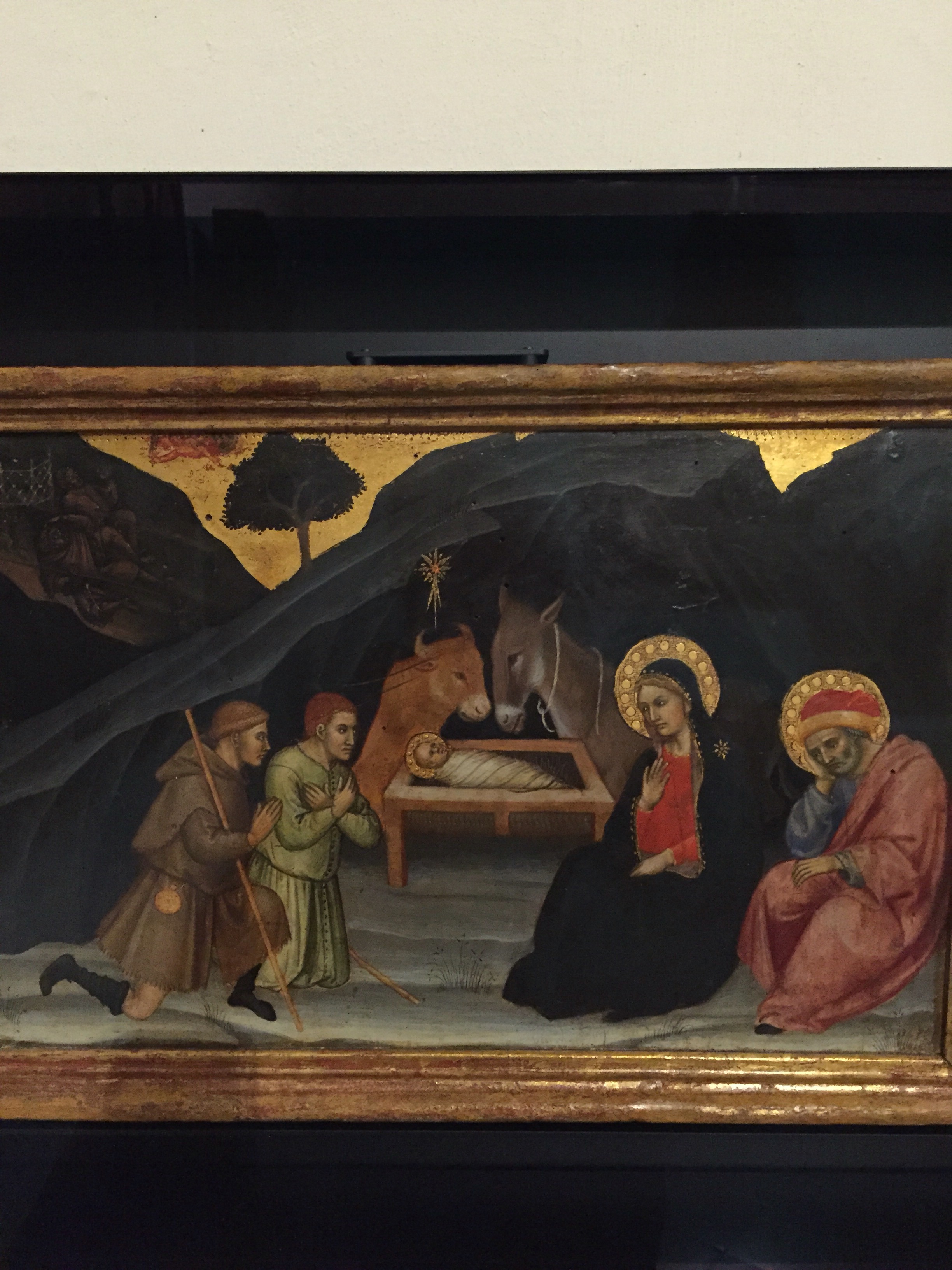
Taddeo di Bartolo, Adoration of the Shepherds, Siena 1362-1422

Joseph disappears in the Gospels after the episode where Jesus stays behind in the Temple after a family visit, and his worried parents have to search for him. In the serene Nativity scene above, are we to think of Joseph as the only one who foresaw the troubles ahead?
Here’s another worn-out Joseph:

Matteo di Giovanni, Adoration of the Shepherds, Siena, 1433-1495

The Biblical story tells us that the Holy Family soon became a family of refugees fleeing persecution, traveling to Egypt to avoid the wrath of King Herod. Was Joseph resting up for the journey ahead?
And another image:

Pietro di Dominico, Adoration of the Shepherds with St. Paul, Siena, 1457-1502

Here, the Three Kings are just arriving in the background. In the story, Joseph has already traveled far with a pregnant wife, and now he has an infant as well, and faces more trudging down a dirt road. Is Joseph thinking, “Enough with the gold, frankincense and myrhh. How about a tent, a baby backpack and some down sleeping bags?”
In the painting below, Joseph has his walking stick at the ready.

Giaccomo Pacchiarotti, Adoration of the Shepherds, Siena, 1474-1540

In all the joy of the holidays, I’d like to remember those who are refugees, or old, or tired, or discouraged. I’d like to remember those who stay in the background and do the heavy lifting. I’d like to remember those who are in over their heads for one reason or another. I’d like to remember those who stick around to clean up after everyone else has celebrated and headed home. I don’t know the theology that informed these paintings, but I have a lot of sympathy for Joseph.
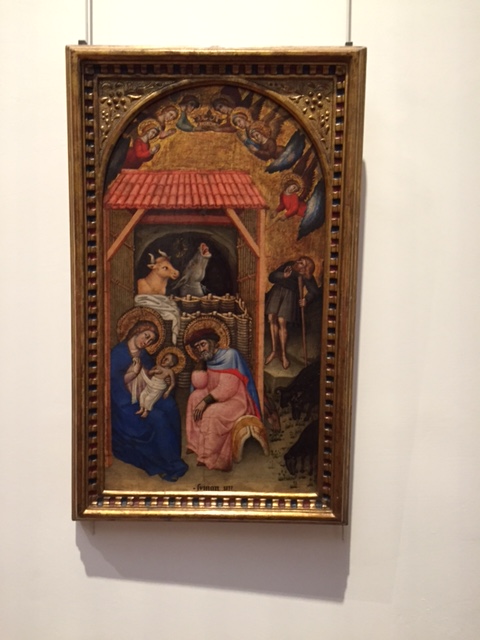
Simone di Filippo, Nativity, circa 1380, Bologna

In my favorite fresco, a humble anonymous work I wrote about a few days ago, Joseph looks aged, but cheerful and downright sprightly. That’s my wish for all of us. My post about this delightful fresco is at https://castlesandcoffeehouses.com/2015/12/21/a-medieval-dan…-for-christmas/
Join me next time for more explorations in the art and history of Europe!
In 14th and 15th century Tuscany and Umbria, angels appeared everywhere in sacred art.

Benedetto Bonfigli, Angels with Roses, Church of San Francesco al Prato, Perugia, circa 1466

Detail from a painting by Lorenzo de Niccolo, early 1400s, Santa Croce Church, Florence
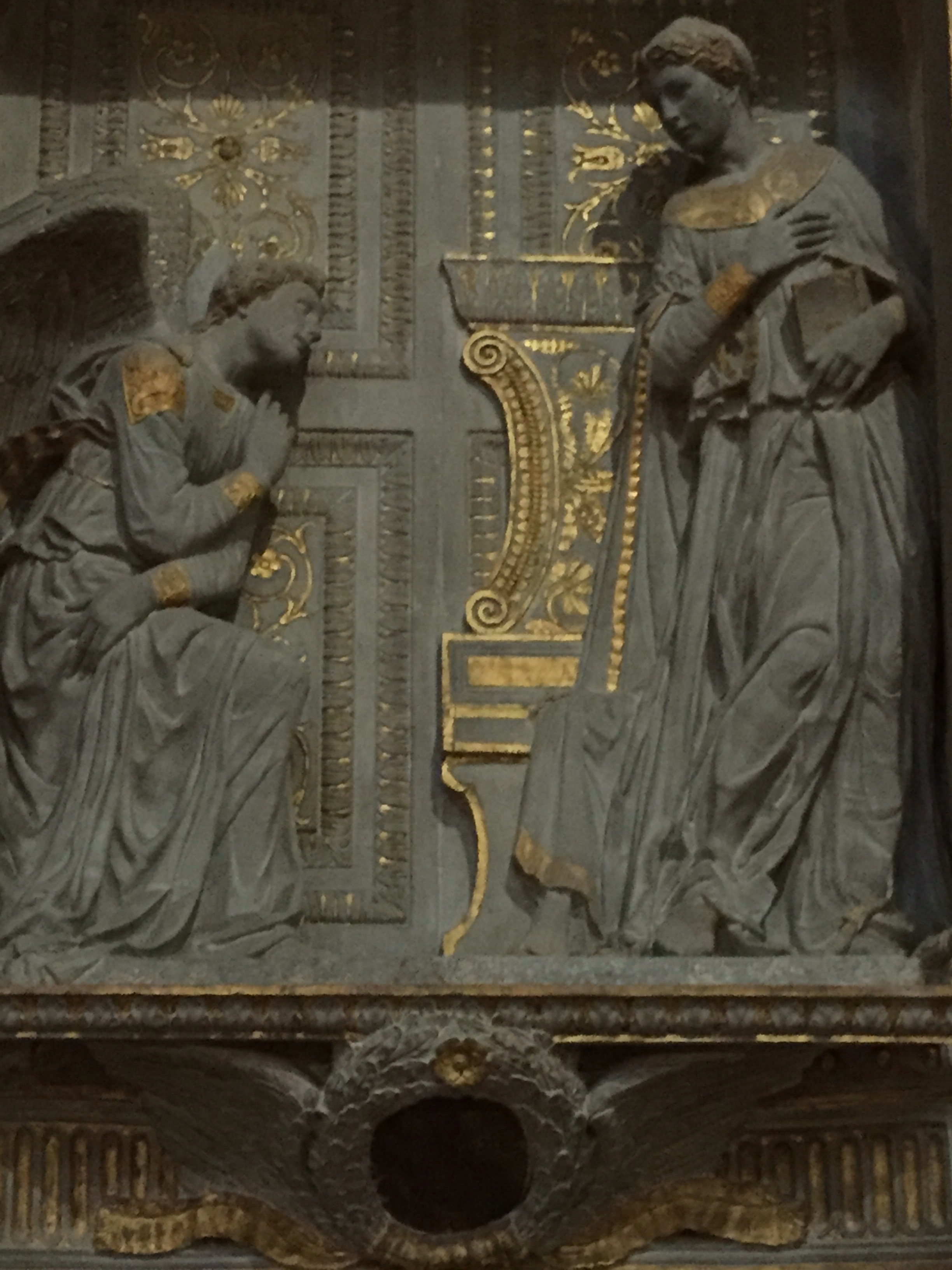
Donatello, Tabernacle of the Annunciation, 1433, Santa Croce Church, Florence
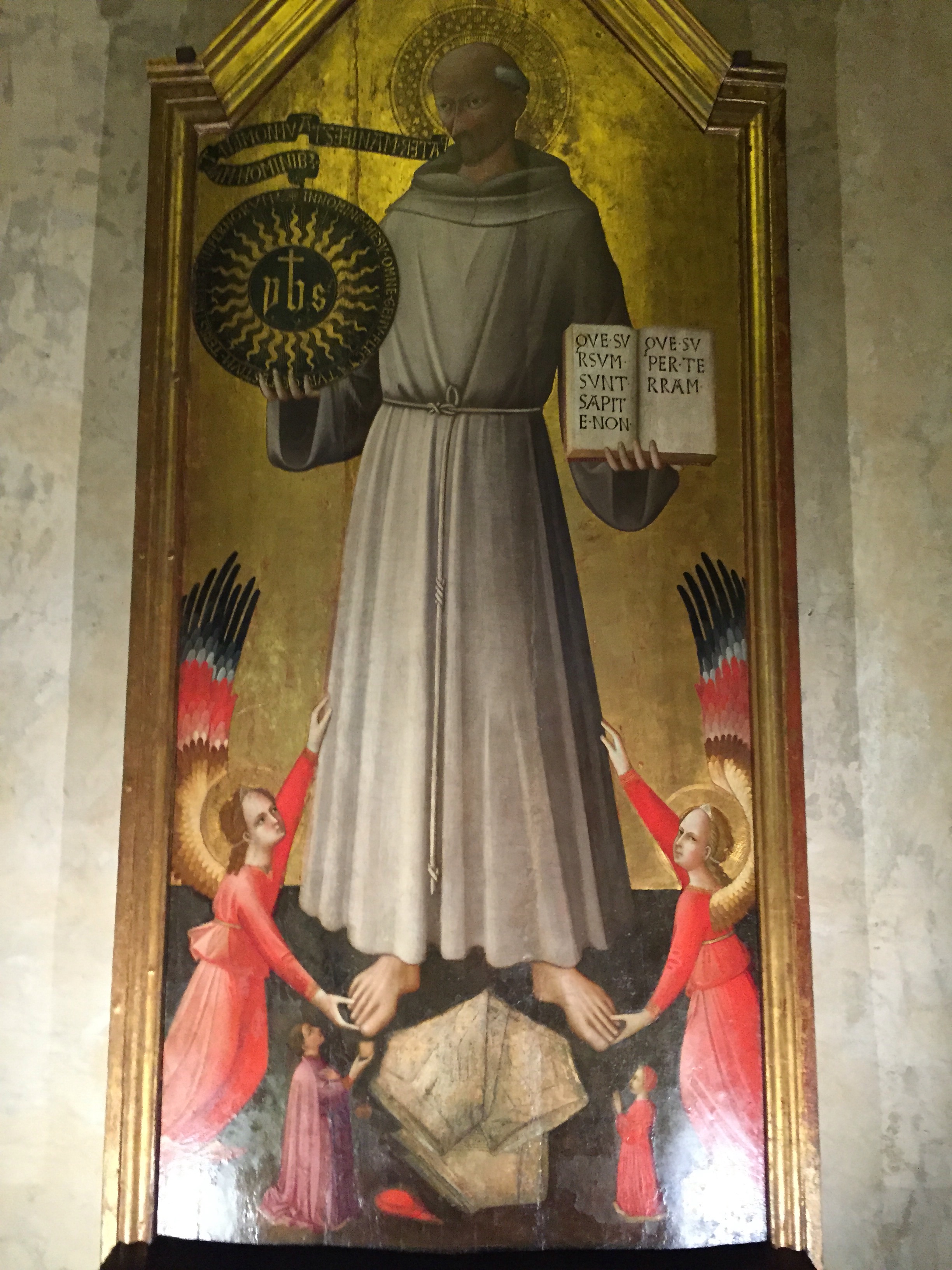
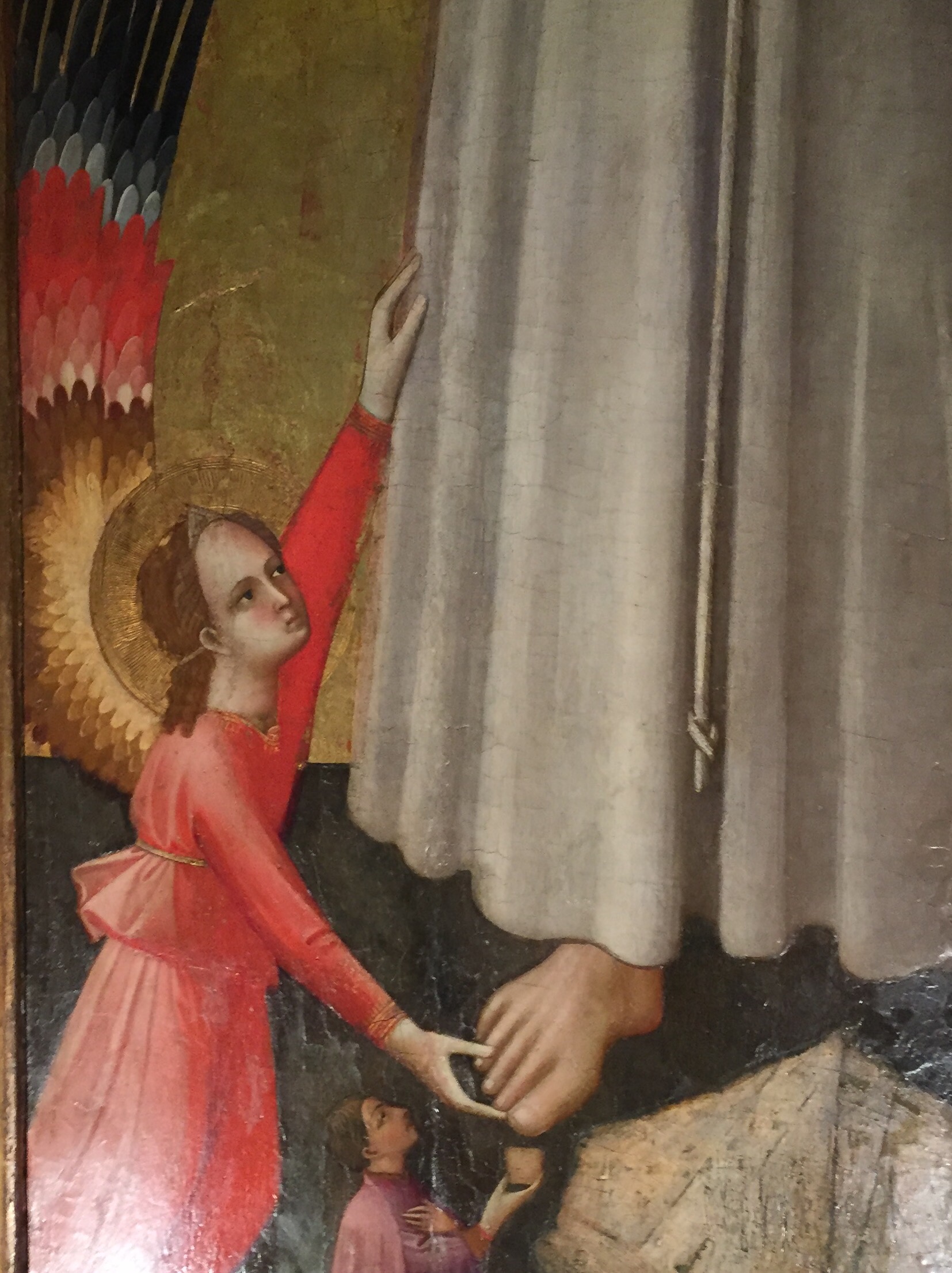
Rosello di Jacapo Franchi, St. Bernardino of Siena with angels and donors. A giant saint, a smaller angel, and the tiny humble donor who commissioned the painting!

And a Renaissance-styled angel from the glorious exterior of Florence’s Duomo, completed in Victorian times, around 1880.
 castlesandcoffeehouses.com