When Virginia was a Colony

photo (1)

Recently at the National Portrait Gallery in Washington, D.C., I came upon a charming portrait of a young Queen Elizabeth I. It’s by an unknown artist and dates from around 1558. Sir Walter Raleigh tried to establish a British colony on what is now known as Roanoke Island.  He named the new colony “Virginia,” in honor of his young Queen, who was already establishing her popular image as the “Virgin Queen.” At the time, the young Elizabeth was keeping a wary eye on powerful Spain, which had extensive colonies already in the “New World.”

Elizabeth was also anxious to reinforce her credentials as the legitimate heir of King Henry VIII, a little problematic since her mother, Ann Boleyn, had been executed as an adulteress and traitor to the throne. So Elizabeth was portrayed with the famous square-cut stone known as “The Mirror of France,” which her father had also worn prominently.
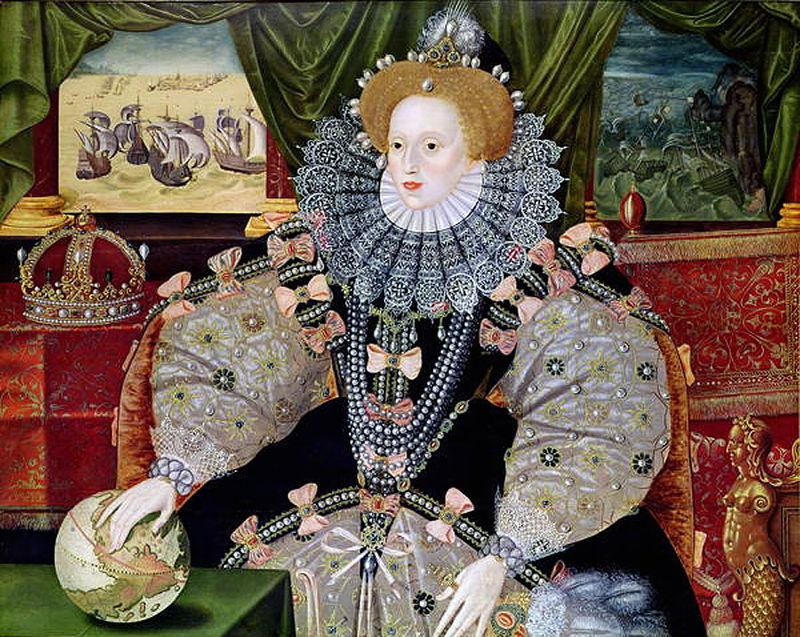
Elizabeth I, Public Domain

Elizabeth I, Public Domain

Years later, after the resounding defeat of the Spanish Armada, Elizabeth had fully developed her authority and had herself portrayed in much grander fashion, as in this portrait from around 1588.  The Queen rests her hand on a globe, symbolizing her international power.

I much prefer the very early portrait, depicting a young woman full of hope and promise at the very beginning of her glorious reign.

Join me next time for more explorations in the art and history of Europe!
 

Steamboat Springs: Small Town 4th of July

Sometimes the most unusual and endearing sights are close to home.  This holiday weekend in Steamboat Springs, Colorado, I was treated to the sight–from a safe distance–of a mother elk who had just given birth to a couple of calves.  No pictures–it was too dangerous to get close enough! The new mom reigned on a grassy hillside close to my house for several days, until she judged her young ones strong enough to move.

Quilt

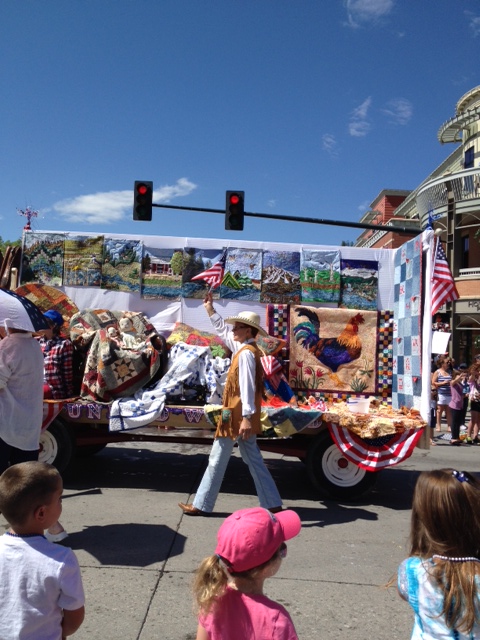
In the traditional parade on Lincoln Avenue, I saw another first:  a parade float featuring local quilts from the Delectable Mountain Quilting Guild.

Flag

The American flag appeared everywhere.  Everybody in town, and folks from far and wide, turned out for events such as ski jumping (on plastic and grass instead of snow).  After the parade, people enjoyed the block party complete with root beer floats and strawberry sundaes.

Snorkels

I watched a couple of happy little girls try out their new snorkel gear at the Old Town Hot Springs, then we all watched the spectacular fireworks.  Somehow, no matter how far I travel, the American 4th of July never gets old!

Who is Buried in Napoleon’s Tomb?

Dome

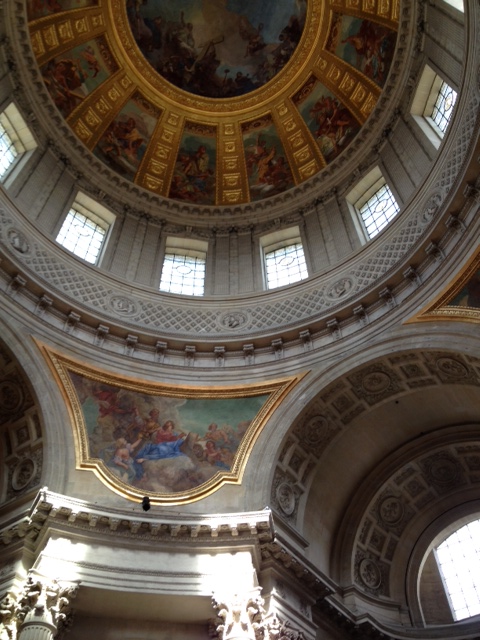
Last spring I finally got around to visiting the tomb of Napoleon in the Invalides in Paris. I was hoping I might finally understand how the French see Napoleon.  I’m still baffled.

Tomb


Who was this man  who now lies in solitary splendor under a very grand dome? Why do tourists pay actual money to gaze down at the marble sarcophagus? (It was covered under my Paris Museum Pass, so at least admission was painless).

I understand that Napoleon Bonaparte was a great military genius–that is, until suddenly he wasn’t.  After conquering most of Europe, he led his Grand Armee into a ruinous march on Moscow–the subject of my very favorite novel, Leo Tolstoy’s “War and Peace.”  The locals simply abandoned their city, when he got close.  So instead of the customary obsequious welcome by those he conquered, Napoleon was greeted by deserted streets,  empty warehouses, and a city ablaze.  His troops died by the thousands as they retreated back the way they had come, through the frozen Russian landscape.

NapEarly

Napoleon certainly cut a dashing figure when he first appeared in Paris, after his early military victories. I understand why the French welcomed a strong leader able to restore order after the bloodbath of the French Revolution.  I don’t understand why the French went to all the trouble of rejecting their hereditary line of kings, only to allow Napoleon to declare himself Emperor. I don’t really understand why a man who left the nation defeated and almost bankrupt is revered.

But then, maybe he is not so revered.  Maybe his tomb stands, for the French, as a place of contemplation of national destiny–the failures as well as the successes.  Napoleon is one of the most controversial of all historical figures.  Maybe the whole point of visiting his tomb is to realize how little we really understand of history.

Join me next time for more explorations in the art and history of Europe!

Three Slugs and a Cabbage: Celebrating Andre Le Notre, Master Gardener

NotreArms

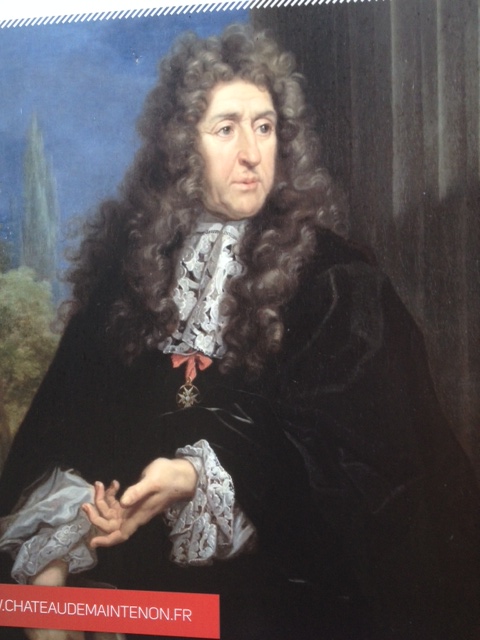
Actually, I should make that “trois escargots et un chou.” That was the tongue-in-cheek coat of arms chosen by the great French landscape architect, Andre le Notre, when a grateful King Louis XIV ennobled him.

NotrePortrait

Le Notre was born into a family of gardeners; his family lived in a house in the Tuileries, in the very shadow of the Louvre when it was still a royal palace.  He was a humble man; he always called himself “just a gardener.”  He never wrote any treatises on his work; he let his gardens speak for themselves. He developed the French formal garden into a sublime art form and an expression of the most current scientific thought as well.

photo (37)

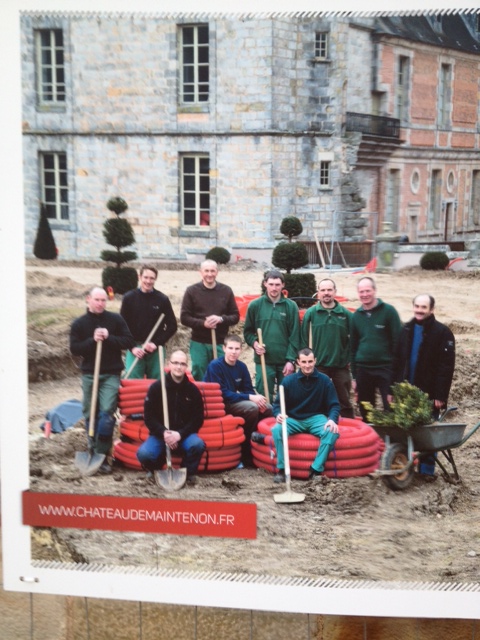
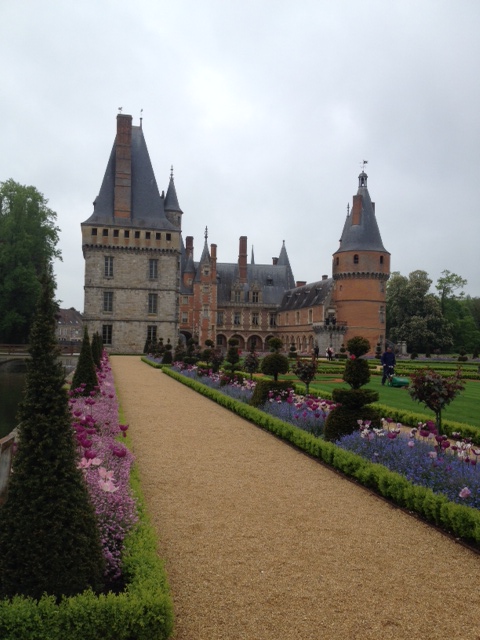
Le Notre worked on the formal gardens at Chantilly, Vaux-le-Vicompte, Fontainebleau, and many other chateaux.  His work culminated in the spectacular grounds at Versailles.  A more modest example of his work is at the Chateau de Maintenon, home of the King’s final and “secret” wife.

MaintStaff

While wandering in this beautiful manicured garden, I could hardly bear to think of my raggedy yard at home.  Then I came upon a photo of the staff employed to maintain even this small and modest French formal garden, and I felt better!

Join me next time for more explorations in the art and history of Europe!

A Father’s Day Salute


part1

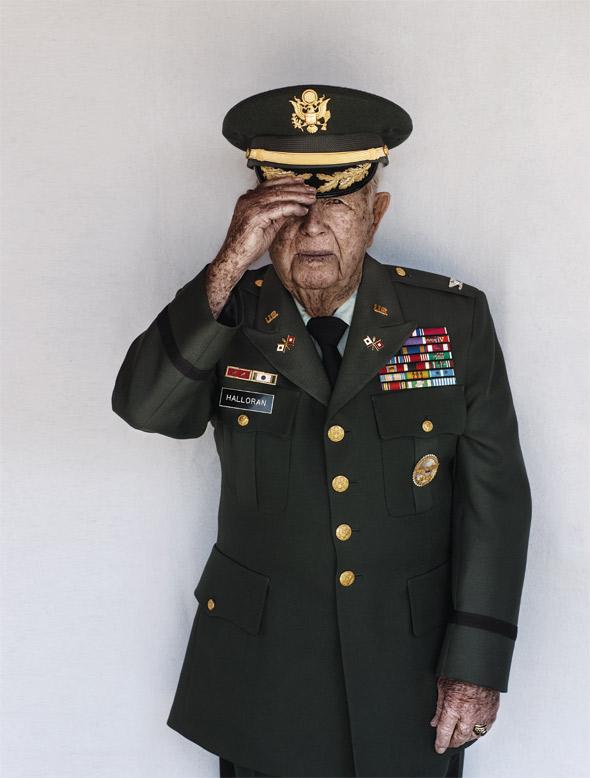
During my recent trip to Washington, DC, many veterans were in town for the 70th anniversary of D-Day.  I am privileged to be related–by marriage–to one of those veterans, Walter Halloran.  He is my daughter-in-law’s grandfather. He was featured in the June issue of “Minnesota Monthly.”  Walter entered the Army after the attack on Pearl Harbor, at the age of 19.  He had some experience as a commercial photographer, so he was put to work as a combat photographer.  (One of the interviewers for becoming a combat photographer was a young Ronald Reagan). That was how he found himself as one of about 160,000 troops on the beach at Normandy on D-Day.

Army photo, Public Domain

Army photo, Public Domain

His camera, an unwieldy Bell and Howell Eyemo, was wrapped in plastic. It had only one lens, a fixed-focus. The crossing on the boat was miserable, cold and wet, with no place to sit and soldiers vomiting from seasickness. Some of the exposed film was to be picked up by boat or plane, but some of it had to actually be sent by carrier pigeon. When his landing craft hit the beach, Walter found himself in deep water.  One of the two pigeons in a cage strapped to his back drowned.

He scrambled onto the beach and immediately flopped onto his belly facing the sea.  His mission was to photograph soldiers as they landed.  He downplays the danger, but as a soldier lying still, he was a prime target for enemy guns.  He and other combat photographers just sent off their film without having a chance to look at the images, so he was never sure exactly what he had captured on film.

Walter went on to fight and photograph all through the rest of the war.  He was awarded the Silver Star for saving the life of a major by carrying him to an aid station under fire and insisting on immediate treatment.  Another day, armed with a pistol, he singlehandedly pursued,  captured and held a German soldier who turned out to have valuable information. He photographed the Battle of the Bulge and the liberation of Buchenwald. In 2007, Walter was awarded the French Legion of Honor for his service in World War II. Like many veterans I have known, Walter lives very much in the present.  He is more interested in the doings of his children, grandchildren and great-grandchildren than in his own past accomplishments.  He never brings up his service, but when asked about it, he exudes a quiet, modest pride in doing what he considered to be his duty.  I am fortunate to know him. I am grateful to veterans like Walter, and to the many men who never came home to enjoy life with their own families.

The link to the most recent article about Walter, by Charlie Maguire, is at

The link to a 2007 article is at http://www.twincities.com/allheadlines/ci_7746690

“Belle:” A Tantalizing Glimpse Into History

Last week in Washington, DC,  sights like the Lincoln Memorial and the new Martin Luther King Memorial made me think about the history of slavery. A film now in theaters examines slavery, and race, from a unique perspective.

"Belle" theatrical release poster

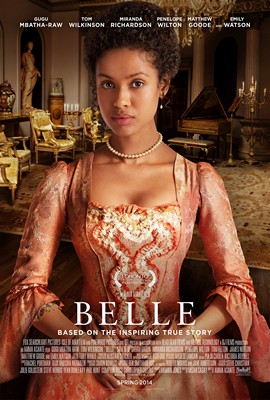
“Belle” theatrical release poster

“Belle,” written by Misan Sagay and directed by Amman Asante, is a 2013 film about a real person, Dido Elizabeth Belle. She was the niece of William Murray, 1st Earl of Mansfield and Lord Chief Justice of England and Wales. She was the daughter of his younger brother, a Royal Navy Admiral, and a free black woman who had died. She was left in the care of her uncle to be a companion to her cousin, Lady Elizabeth Murray. Belle was raised as an aristocrat even though she was black. In the film, certain lines are drawn: Dido is not allowed to sit with the family at evening dinners when there is company,  but she is welcome in the drawing room afterward. Actually, little is known about Belle’s life, but the filmmakers have fashioned an absorbing story based on real-life events close to Belle.

Just as she was coming of age, Belle’s uncle had to decide a notorious case in which owners of a slave ship, the Zong, had thrown their cargo of slaves overboard in order to collect the insurance on their “property.” The Lord Chief Justice’s ruling was eagerly anticipated all across England.  If he went one way, slave traders would have a free hand in the future. If he went the opposite way, his ruling would spell the beginning of the end of slave trading in England.

To further complicate matters, Belle inherits a sizable fortune on the death of her father, while her white cousin is penniless.  Suddenly Belle has aristocratic suitors.

In the movie, Belle’s forbidden romance with a passionate, idealistic but impoverished young lawyer influences her uncle’s eventual decision. The luminous Gugu Mbatha-Raw plays Belle. The stellar cast includes the great Tom Wilkinson as the uncle, as well as Miranda Richardson, Penelope Wilton, Sam Reid, Matthew Goode, Emily Watson, Sarah Gadon, Tom Felton, and James Norton.

Dido and Elizabeth, Public Doman

Dido and Elizabeth, Public Doman

In 1779, Belle’s uncle commissioned a portrait of his two young nieces. The portrait is unique because it is one of the very first paintings that depict a black aristocrat as an equal to a white aristocrat. The painting, by an unknown artist, hung until 1922 at Kenwood House in Hampstead, where Belle grew up.  It is now at Scone Palace in Perth, Scotland.

Join me next time for more explorations in the art and history of Europe!
Jean de Noailles: A Hero of the French Resistance

JeandeNoailles

The Allied forces that liberated Europe from Nazi rule received a lot of help from members of the Resistance in various countries.  Jean de Noailles was one of them.  I came upon a family photograph of him when I recently visited the Chateau de Maintenon near Chartres in France.

MaintChateau


(I wrote about this chateau in two previous posts, “Chateau de Maintenon” and “Louis XIV: A Very Thirsty King”). The de Noailles family still occupies the chateau they inherited from the “secret” wife of King Louis XIV.  They are justifiably proud of their lineage–in fact, a very grand gallery displays large portraits of various illustrious ancestors.

Jean de Noailles would have been the 9th Duke, but he died before his father. During World War II, he was an active member of the French Resistance.  Born in 1893, he was arrested by the Gestapo in 1942. he was imprisoned and tortured first at their Paris headquarters on avenue Foch, then sent to Compiegne in France, then to Buchenwald-Flossenburg, and finally to Bergen-Belsen.  He died there just a few days before the camp was liberated at the end of the war. By all reports, he never handed over any useful information to the Nazis.  They may have kept him alive in hopes of eventually getting information, or they may simply have been reluctant to actually execute a member of a noble family.  (In Germany, the ruling Wittelsbachs were placed in a concentration camp, but given private lodgings and more food than the run of political prisoners).

What would make a Duke risk his life to resist tyranny, when so many ordinary French people went quietly about their lives during the war, and so many cooperated enthusiastically with the Nazis? When I ask that question, I have to ask what I would have done.  We can be grateful to those who did give their lives in the cause of freedom.

Join me next time for more explorations in the art and history of Europe!


D-Day Seventy Years Later


Lincoln

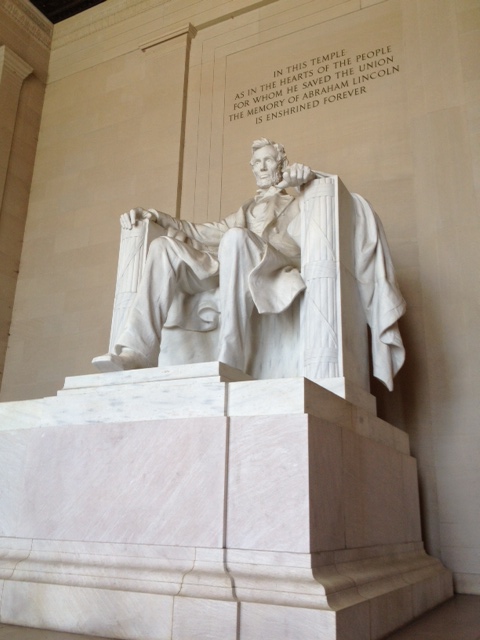
Last week I was fortunate to be in Washington, D.C. on the 70th anniversary of D-Day: June 6, 1944. On that momentous day, troops from several nations made their brave surprise landing on the beaches of Normandy. The Europe we know today–in fact, the whole world we know today–would have been very different without the selfless  sacrifices of the millions who fought, in Normandy and elsewhere. Many veterans were in Washington for the occasion.  At the Lincoln Memorial, I watched a scene that I saw repeated over and over all week long.

Veteran

A very frail elderly veteran in a wheelchair paused for a moment in the entrance to the Lincoln Memorial chamber, with the Washington Memorial in the background. One after another, total strangers stopped to thank him for his service.  His family graciously thanked those who greeted him and allowed strangers to take pictures.  I was moved to tears.

HonorFlight

Nearby, at the Vietnam Veterans Memorial, similar scenes played out.  Volunteers slowly pushed aging veterans along The Wall, pausing for quiet conversations. Overhearing some conversations, I was reminded that many military families have lost loved ones in several different wars over the years.

WallRubbing

Park rangers, as always, stood ready with well-worn books containing the names of the dead.  On the Vietnam Memorial wall, the fallen are listed in the order in which they fell. Stepladders are at the ready.  A park ranger will climb a ladder and carefully make a rubbing of the name of one of the fallen on request.

I’ve been to the beaches of Normandy.  It is hard to grasp the carnage that took place there.  Few of those who were actually present are still alive. Their memory will endure.

Newseum in Washington, D.C.

20140606-114009-42009772.jpg

Our nation’s capital has changed a lot since I last visited some years ago. One of the new-to-me sights is the Newseum, five floors of colorful interactive exhibits about the history of news, starting in Europe in the 1500s with the invention of the printing press. The Pennsylvania Terrace on the top floor gives a spectacular open-air view of the United States Capitol.

I had never really thought much about how absolutely essential a free press is to democracy. With the invention of the printing press, life became much more difficult for tyrants.  Their subjects suddenly had ways of exposing exposing their misdeeds and demanding justice.

photo

Social media have only accelerated that process.  An example of a communication satellite hangs high above the atrium. On the Pennsylvania Terrace, there is a timeline of events that took place on the famous street below.

20140606-115333-42813291.jpg

I was amazed and appalled to see a picture of slave pens that once existed below the street.  Wealthy people could deposit their slaves there f or safekeeping while they enjoyed their dinners.

The next placard is an illustration of the parade that took place on Pennsylvania Avenue  in 1866 following the Emancipation Proclamation. The availability of news all through human history has changed the course of history.

Join me next time for travels in Europe–and in the “New World!”

Two Weddings in Honfleur

Sometimes a tourist gets an unexpected window into contemporary local culture.  That is what happened a few years ago, when I visited Honfleur. It’s a charming and well-preserved harbor town on the Normandy coast. As far as I could tell, the town escaped bombing in World War II.

Honfleur Church

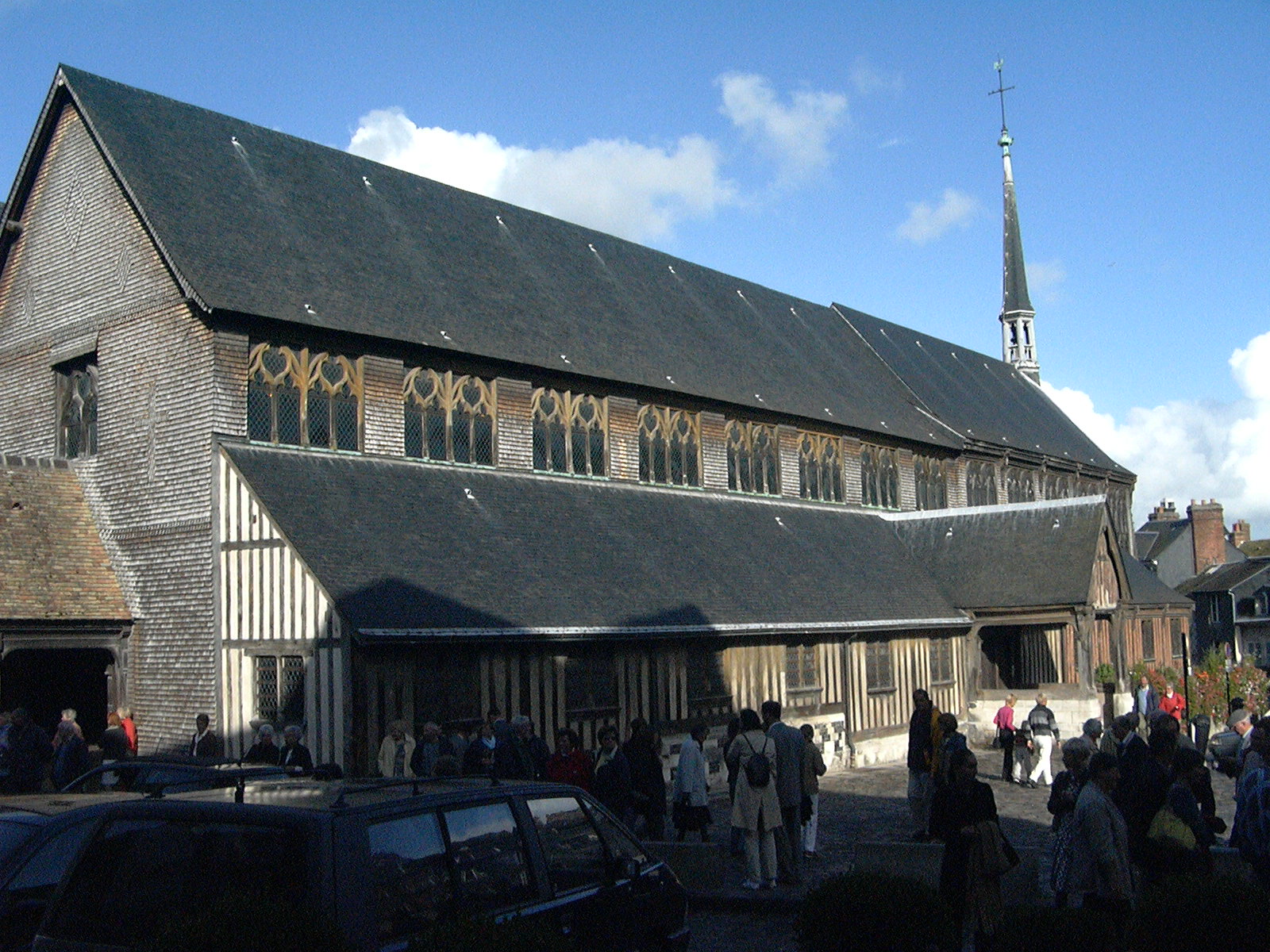
One of the major things to see in Honfleur is St. Catherine’s Church, actually a cathedral dating from the 15th Century.  It is the oldest surviving wooden church in France.

Honfleur1

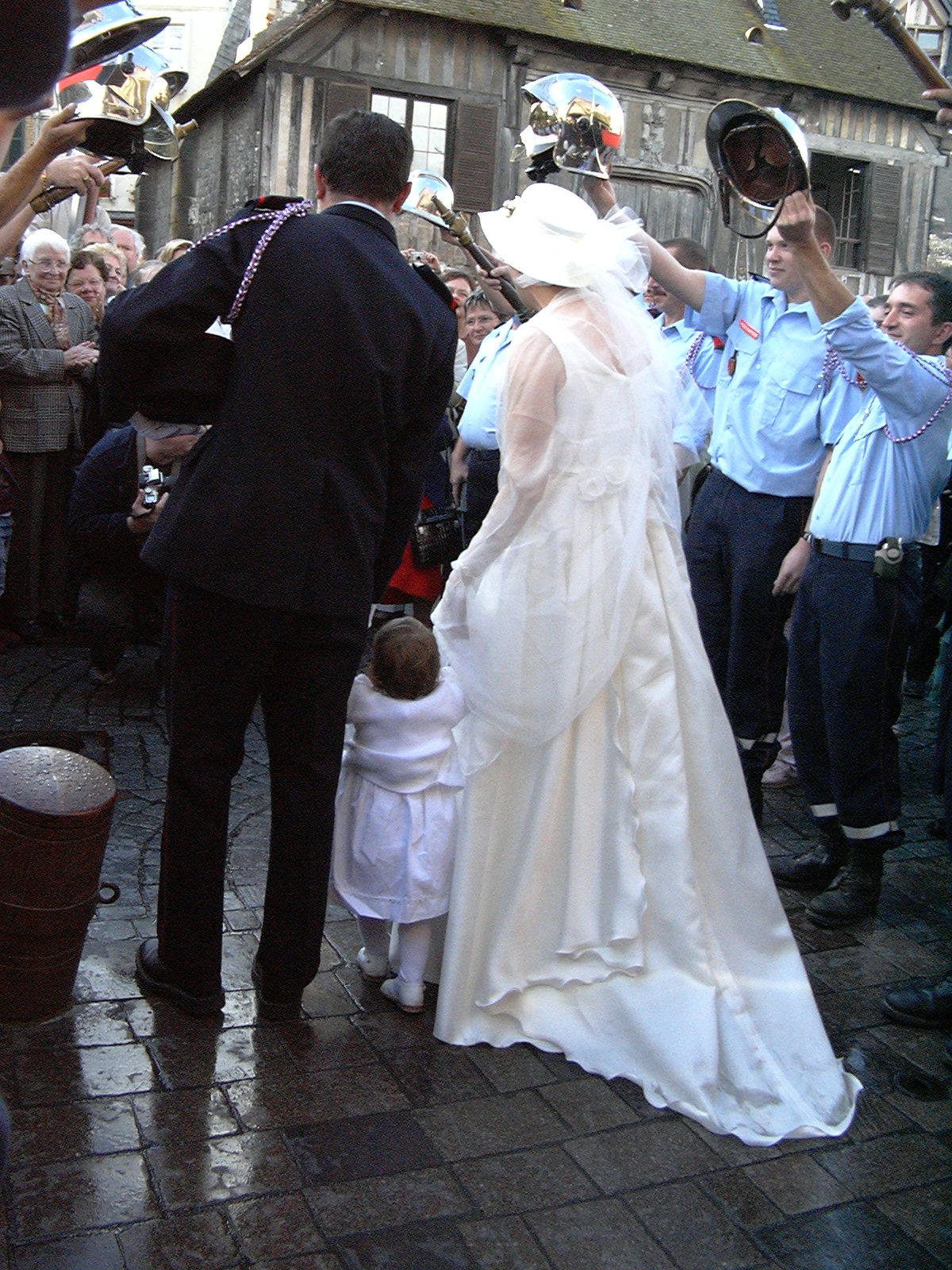
When we arrived, a wedding was taking place.  Uniformed members of the local fire and rescue brigade milled about, both inside the church and outside.  Tourists were allowed to enter and stand quietly in the back of the sanctuary.  We watched the ceremony for awhile.  It appeared that both the bride and groom were members of the brigade.  Most of their guests were in uniform.  Their ceremony went on and on, with the groom, then the bride, then various other people making lengthy speeches once the ceremony itself seemed to be over. The bride looked as though she might give birth very soon, and from what I could understand of the speeches, the couple had gone through a lot of hardship and received a lot of help from their community. Finally, the bride and groom left, to applause and shouts of congratulation.  Outside, they were greeted by waiting colleagues, each holding up a helmet for them to pass under.

HonWedding2

During the ceremony, I noticed caterers busy hauling in tall potted trees and beautiful floral arrangements.  The instant the fire-and-rescue bride and groom were outside, the caterers went to work transforming the sanctuary into a floral bower.

WeddingHats

Outside, the fire-and-rescue bride and groom were driven away in a waiting fire engine.  The square was immediately filled with very posh-looking people, a completely different crowd from the one that had just left.  All the women wore huge elaborate hats.

BrideFeathers

Suddenly a discreet sedan pulled up to the front door of the church.  A spectacularly beautiful bride emerged, wearing a designer dress and veil–decorated with ostrich feathers! In the not-too-distant  past, ostrich feathers were only seen at a Royal Court gathering, and only royalty and nobility were allowed to wear them. Was the bride a Duchess or a Countess?  Was she marrying into a noble house?  Be that as it may, I have never seen a more elegant bride anywhere.

As the ceremony was about to get under way, I sidled over to the church door, hoping to sneak a look at this very fancy event (my invitation must have been lost in the mail). Alas, uniformed men stood guard, gazing sternly at anyone who approached the door.  Where we had been welcome at the working-class wedding, the fancy society wedding was another story. The two weddings gave us a very clear view of how the social classes mix–and don’t mix–in France. We wandered off into the town, content with having seen two sides of French life.