Category Archives: Paris

Marguerite: Henri Matisse’s Feisty Daughter

MatisseDaughter

This past April at the Pompidou Center in Paris, I was charmed by this portrait: “Marguerite au Chat Noir,” or “Margaret with Black Cat.”  The young lady was the daughter of Henri Matisse.  He painted this portrait in 1910 and exhibited it in Berlin at the Secession show, and subsequently at the Armory Show in New York City in 1913. The portrait was considered radical and bold in its time; it still is, no less than its model. The artist kept this particular painting in his own possession, and his family has kept it since his death in 1954.

Marguerite was the artist’s only daughter.  He portrayed her many times, no doubt thankful for every moment he spent with her.  At the age of 6, she nearly died of diptheria.  After that, she generally wore either high-necked clothing or a ribbon to cover the scar from the emergency tracheotomy during that illness.

Marguerite grew up to be a brave woman. In 1945, she was arrested and tortured by the Gestapo for her activities in the French Resistance.  She somehow escaped from the train taking her to a concentration camp.  She died in 1982, at age 87.

I wish I could have seen a show in Baltimore last fall, “Matisse’s Marguerite: Model Daughter,” at the Baltimore Museum of Art.  A description of that show, by Tim Smith, is at touch.baltimoresun.com.

Join me next time for more explorations in the art and history of Europe!

Who is Buried in Napoleon’s Tomb?

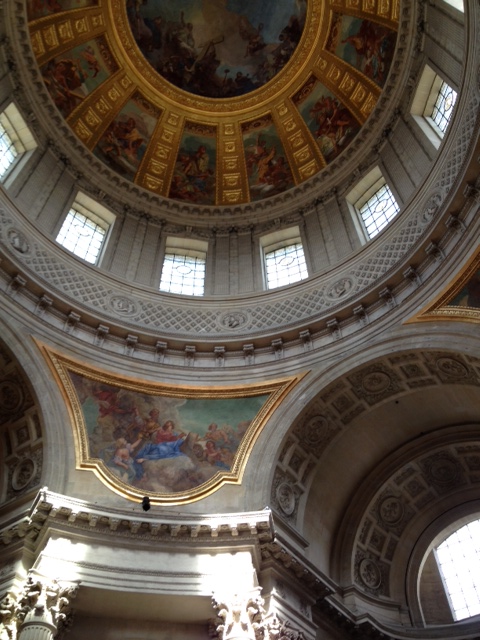
Dome

Last spring I finally got around to visiting the tomb of Napoleon in the Invalides in Paris. I was hoping I might finally understand how the French see Napoleon.  I’m still baffled.

Tomb


Who was this man  who now lies in solitary splendor under a very grand dome? Why do tourists pay actual money to gaze down at the marble sarcophagus? (It was covered under my Paris Museum Pass, so at least admission was painless).

I understand that Napoleon Bonaparte was a great military genius–that is, until suddenly he wasn’t.  After conquering most of Europe, he led his Grand Armee into a ruinous march on Moscow–the subject of my very favorite novel, Leo Tolstoy’s “War and Peace.”  The locals simply abandoned their city, when he got close.  So instead of the customary obsequious welcome by those he conquered, Napoleon was greeted by deserted streets,  empty warehouses, and a city ablaze.  His troops died by the thousands as they retreated back the way they had come, through the frozen Russian landscape.

NapEarly

Napoleon certainly cut a dashing figure when he first appeared in Paris, after his early military victories. I understand why the French welcomed a strong leader able to restore order after the bloodbath of the French Revolution.  I don’t understand why the French went to all the trouble of rejecting their hereditary line of kings, only to allow Napoleon to declare himself Emperor. I don’t really understand why a man who left the nation defeated and almost bankrupt is revered.

But then, maybe he is not so revered.  Maybe his tomb stands, for the French, as a place of contemplation of national destiny–the failures as well as the successes.  Napoleon is one of the most controversial of all historical figures.  Maybe the whole point of visiting his tomb is to realize how little we really understand of history.

Join me next time for more explorations in the art and history of Europe!

A Meal Lost in the Translation

MeatPie

The photo above shows what happens when I think I understand the language, but I really don’t.  My high-school and college French goes only so far.  In larger cities, most establishments that deal with tourists have someone who can speak English.  In smaller towns in France, it almost seems a point of pride with the locals that they only speak French.

It is not easy to be a vegetarian in Europe, and the language barrier does not make it any easier. One day last fall in the Alsatian town of Colmar, just on the border between Germany and France, I tried to order a vegetarian version of the local favorite: tarte flambee.  It’s more or less a pizza, with little or no tomato sauce. I read the entire menu and questioned the waitress as best I could.  I settled on a tarte  which I thought would be covered with Muenster cheese.  The tarte arrived and I sat staring at it in shock.  It was covered with what looked like about half a pound of shaved ham–very fine ham, but I don’t eat ham.

When I called the waitress back, the entire small restaurant fell silent. Forks hung in midair as locals stared in disbelief at the woman who didn’t want any meat. “Madame,” the waitress exclaimed, “C’est Muenster!”  Meekly, I pushed all the “Muenster-Ham” toward the center and ate around the edges.

All over Europe, it seems that more and more people speak English. I think it is a school requirement in some countries. France seems to be the exception. Granted, the French have a proud cultural heritage they want to protect. I also suspect they don’t want to speak English because they figure that English-speaking visitors will correct their pronunciation or grammar. They are certainly quick enough to correct my French.

I am far from fluent, but I pride myself on getting by. One of my proudest moments as a tourist was the time a French-speaking person in Paris asked me for directions and seemed to understand my answer. At least he went off in direction I pointed.  I just have to make sure I never give anyone menu advice.

Join me next time for more adventures exploring art, history and daily life in Europe!


Parisian Elegance

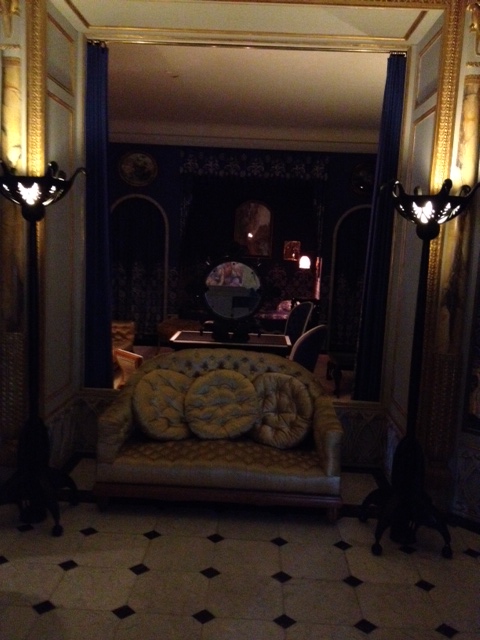
The Musee des Arts Decoratifs (Museum of Decorative Arts) in Paris is actually in the Louvre complex. It doesn’t get the traffic enjoyed by the Mona Lisa, but anyone looking for a visual feast will be happy in its galleries.  Among many other things, there is the reconstructed apartment of the fashion designer Jeanne Lanvin in Paris.

photo (33)

Jeanne began her career as an apprentice milliner, then trained as a dressmaker.  She married a count at age 28, which brought her into higher social circles. Their only daughter, Marguerite, eventually took over the fashion business her mother had founded.

photo (31)

Jeanne began by making exquisite clothes for her daughter, which her friends wanted for their own children.  Soon she was making dresses for their mothers, and she was on her way. In no time, she had her own boutique on the world’s penultimate fashion street, the rue du Faubourg Saint-Honore.

photo (32)

Jeanne’s most famous creation was the iconic perfume “Arpege,” which was inspired by her daughter’s piano practice.  “Arpege” is French for “arpeggio.” The bottle features a charming graphic of a mother and daughter.

The apartment, from the 1920s, is designed down to the square inch, all in the blue and gold featured on the signature perfume bottles.  I can only imagine the rarefied life lived there.

Le Renard

FoxYard

The most fun I ever had speaking French was the time I had a fairly long conversation with a Parisian woman who was walking a particularly lovely little dog. He looked exactly like a fox, my favorite animal. Foxes patrol just outside my house, hunting and also trying to get a rise out of my cats. The cats stare out in wonder at this unassuming animal that looks like a dog, but does not carry a ball or slobber on the window glass.

I wanted to know what breed the elegant little Parisian dog was. After much petting and exclaiming over the adorable creature, the woman managed to explain to me that he was “particulier.” I concluded this meant that he was one of a kind, what I might call a mutt. I would not be able to procure a dog just like him unless I got really lucky at my local animal shelter.

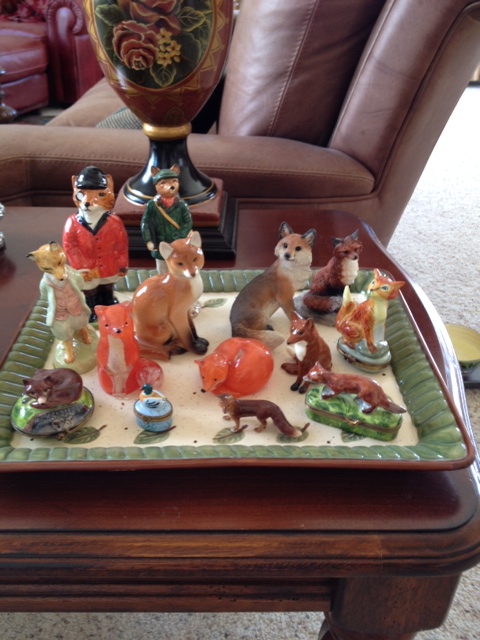
I’ve heard of people trying to tame foxes, but I know wild animals belong in the wild. My indoor foxes live on tabletops!

FoxCollect


Spring at Last


Snowwoods

I live in lands of ice and snow.  You have to love winter to choose life in the mountains. Mid-April in these parts, big wet flakes are still falling and people are still digging out from the long winter.

snowcar


People are putting away their skis and getting out their mountain bikes on days when the roads are clear.

MooseCloseup


Moose appear outside my window, searching for buds on the trees. Hungry bears have already been sighted near town.

MediciGrottoParis

But I’m off soon on a springtime trip to Europe, where (usually) the climate is a lot more temperate.  This year I’m lucky enough to have a few days in Paris–in April! I’m already dreaming of the Medici Grotto in the Luxembourg Gardens. I’m dreaming of the flowers in the Tuileries, once the pleasure gardens of kings and queens, but now open to all.

TuileriesFlowers3

Marie Antoinette: A Tragic Habsburg

MarieAntBust

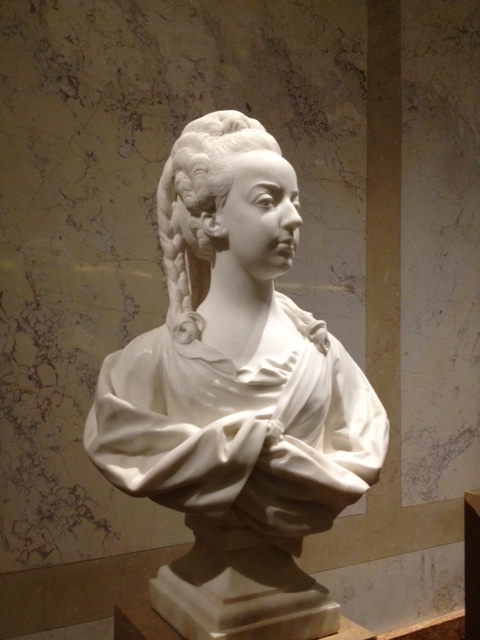
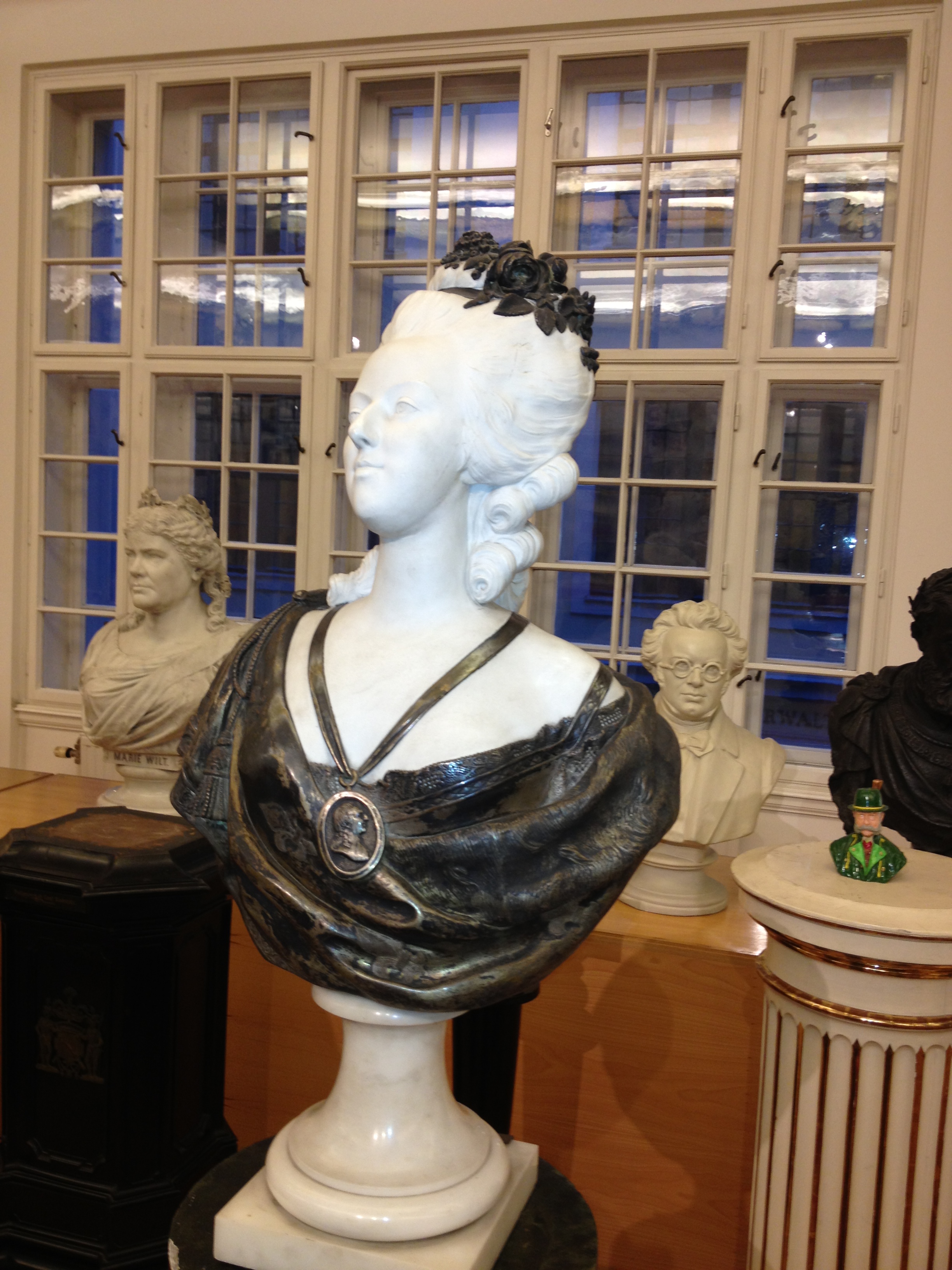
In various places in Vienna, I’ve encountered the proud features of Marie Antoinette, the Habsburg-Lorraine daughter of the redoubtable Empress Maria Theresa.  Poor Marie Antoinette was packed off to France at the age of fifteen to marry the Dauphin who became the most unfortunate Louis XVI. We all know her story: wealth, power, frivolity, and finally the guillotine at age 37. I am always surprised that no one in Austria seems particularly sympathetic to Marie Antoinette. The captions under her images mostly mention only her name, and then only as “Archduchess of Austria.”

MarieAntHofmobil11-12

The Habsburgs held on to power by judicious marriages all across Europe, and Marie Antoinette was a pawn in this real-life “Game of Thrones.” Once she was sent to France, she literally became the property of France.  In a biography, I read that when she was handed over, she was stripped of all her clothing and dressed in clothing provided by the French State.  At the last moment, she had to leave her little dog behind, too. He was the only vestige of her happy childhood in Vienna. She never saw her home or any of her family again, except perhaps for a visit by one of her brothers.  Her mother wrote her frequently, scolding her for laziness and urging her to work for Austria’s interests–as if she had any say in government.

MarieAntPaint

In Paris, I’ve visited both Versailles and the damp, chilly cell on the banks of the Seine where Marie Antoinette spent her last months. The Conciergerie is still a terrifying place, even for a tourist today.  It is all too easy to imagine the horror of being a prisoner there. In Marie Antoinette’s letters, she often expressed a wish to see her beloved home in Vienna again. From what I’ve read of Marie Antoinette, she deserves a little more sympathy than history has given her.

Join me next time for more explorations in the art and history of Europe!

Picasso’s Soft Spot?

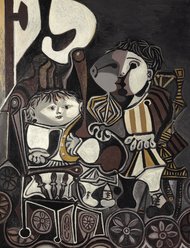
In the rarefied world of Christie auctions, price is always what makes news.  At a recent auction, sales were disappointing except for the price fetched for a Picasso painting from 1950, “Claude and Paloma.”  It sold for $28.1 million, much more than predicted.  I can see why.  I’d have bought it myself. To paraphrase Ferris Bueller’s thoughts about buying a Ferrari, “If you have the means, I recommend it.”

Photo from NYT article cited below

Photo from NYT article cited below

The painting depicts Pablo Picasso’s two youngest children.  What strikes me is the depiction of the baby, Claude.  In the midst of all kinds of sophisticated design elements, in a sort of cubist composition, the baby’s face stands out as almost a traditional portrait.  Could it be that the great man just melted when looking at the little child’s face?  This portrait seems a pure depiction of childhood innocence.  Maybe the artist was looking back at his own lost innocence,   when he first discovered his own talent and had no idea where it would lead him.  In 1950, Picasso had just lived through the horrors of the Second World War, which he spent in occupied Paris.  The Nazis did not allow him to exhibit, considering him degenerate.  The end of the war was a new beginning of artistic freedom.  A baby is always a new beginning, too.

The article about the Christie auction, by Carol Vogel, is at http://www.nytimes.com/2013/11/05/arts/despite-picassos-bidding-is-sluggish-at-christies.html?_r=0


Hemingway in Austria

Ernest and Hadley, Winter 1922, photo from NPR article cited below

Ernest and Hadley, Winter 1922, photo from NPR article cited below

In the golden days of Ernest Hemingway’s youthful career as a writer, he and his athletic first wife Hadley used to escape wintery, gray Paris for a sunny ski town in Austria.  In the 1920s, they could live in Schruns on a shoestring all winter, enjoying crisp snow and roaring fires.  Hadley cheerfully hiked up and skied down bunny hills just behind the hotel while the great man labored at his writing, then joined him for cozy evenings.

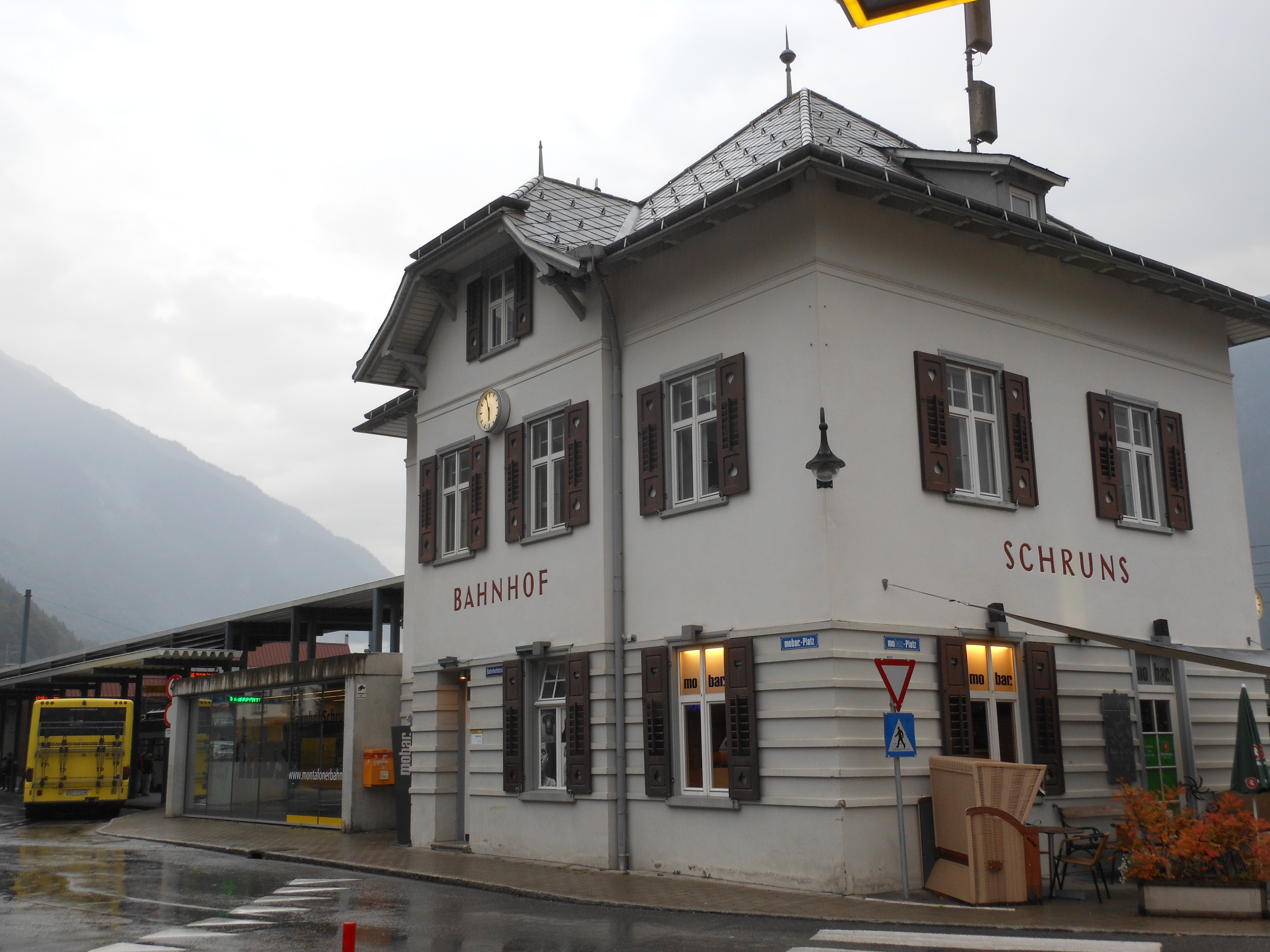
A couple of weeks ago I made a literary pilgrimage to the town of Schruns.  (Actually, it was more of a flying visit on a gray rainy day).  There is not a whole lot to see, but I found it moving to stand outside the actual railway station where Hadley and their toddler son Bumby waited to meet Hemingway after he returned from a pivotal meeting in New York, where he made his first major sale.

Bahnhof

What Hadley didn’t know at the time was that Hemingway had spent the previous few days with Pauline Pfeiffer, her supposed best friend.  Pauline would shortly become the second Mrs. Hemingway.

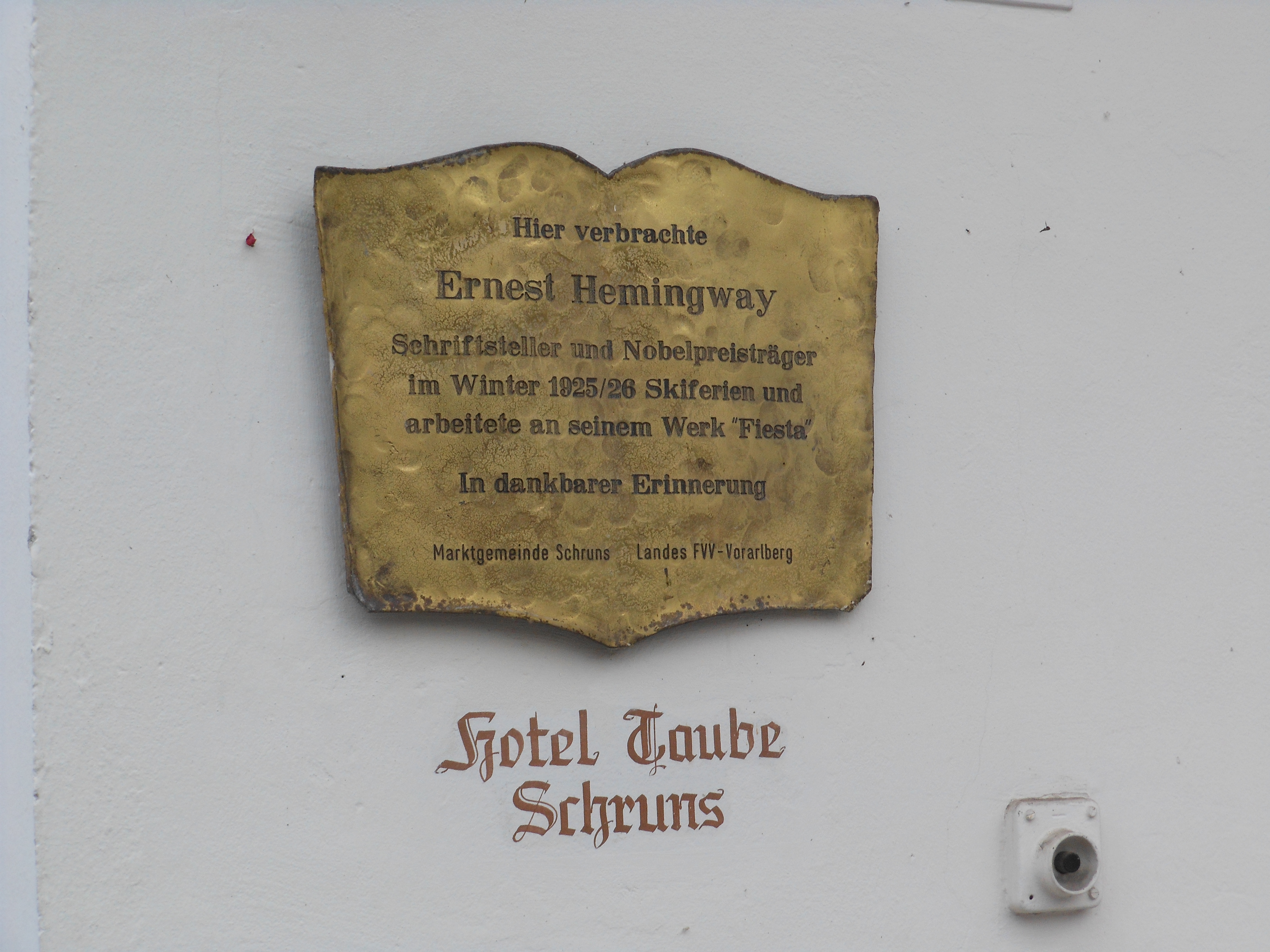
HemPlaque

The station is just a short walk from the hotel where the young family stayed–and where Pauline had previously insinuated herself for months, supposedly to keep Hadley company, while she single-mindedly pursued Hemingway.  Hadley must have been a little dim to have missed all this going on under her nose, especially when Pauline and Hemingway left at the same time.

HemTable

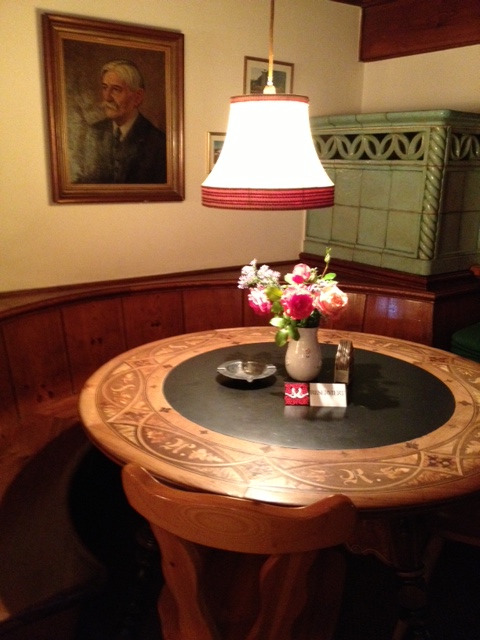
Anyway, the hotel still stands.  It’s been remodeled inside, but there is still an actual table from the bar as it was in 1922, when Hemingway regaled Hadley, Pauline and his cronies with his skiing  and writing exploits.

I’m about to re-read Hemingway’s own account of that time in his memoir, A Moveable Feast.

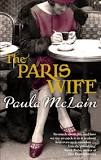
Recently I read an interesting account of Hadley’s life with Hemingway in The Paris Wife by Paula McLain.

ParisWife

There’s an NPR review of that book by Lynn Neary at

http://www.npr.org/2011/03/01/134132944/the-paris-wife-dives-into-hemingways-first-big-love.

Join me next time for more explorations into the art and history of Europe–the major sights and the fascinating byways!

From the Grand Tour to the American West

In my last post, I mentioned the delightful book Nothing Daunted by Dorothy Wickenden.  The subtitle is “The Unexpected Education of Two Society Girls in the West.”

513BtSEHi7L._SL110_

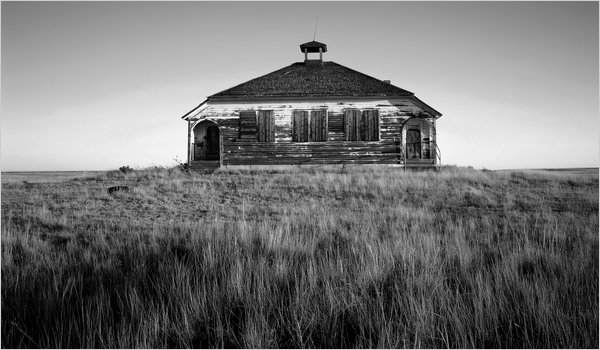
Dorothy Wickenden, the executive editor of The New Yorker, found a treasure trove of letters written by her grandmother, Dorothy Woodruff, who with her best friend, Rosamund Underwood, answered an ad for teachers in a one-room schoolhouse in remote northwestern Colorado.  The young women had graduated together from Smith College.  They were twenty-three and had no intention of settling in right away to their expected life of marriage, charity work, and society events.  So in the summer of 1916, off they went on the grand adventure of their lives.

Photo by Lawrence M. Sawyer/Corbin, from NYT review cited below

Photo by Lawrence M. Sawyer/Corbin, from NYT review cited below

The schoolhouse was in an area so remote they had to live with a homesteading family and ride horseback to work every day, rain or shine.  Their students had to do the same; in winter some students had to ski to school on makeshift skis made of barrel staves.  Not surprisingly, the young women found themselves courted enthusiastically by local cowboys and also by educated men–including the one who had placed the ad, Ferry Carpenter.  He was a Harvard-educated lawyer who had gone west to make his fortune.

The young women had lived lives of privilege; after college, they had been lucky enough to take the Grand Tour.  They spent a year in Europe, studying French and seeing as much as they possibly could.  They went out of their way to see art and experience theater and dance. They judged the women in Rubens’ paintings “beefy,” but loved most of what they saw.  In Paris, they saw an exhibit by Matisse and Picasso.  They were not impressed, especially after having spent a lot of time with the masterpieces in the Louvre. Dorothy thought Matisse’s work was “like that of a little child.” Many years later, she regretted passing up the chance to buy some of those paintings for a song.

They saw Nijinsky, then twenty years old, dance in Scheherazade, the most famous ballet produced by Sergei Diaghilev’s Ballets Russes. They saw Isadora Duncan in her premiere performance of Orpheus.

Dorothy and Rosamund toured France, Germany, Italy, Spain and Holland. All along the way, they wrote long letters home.  They also collected postcards.  Later, when they went off to teach in the one-room Colorado schoolhouse, they brought their postcard collection.  Their students (and the parents of the students) eagerly studied the postcards as clues to the wider world.  I’d like to think that many of them eventually went on adventures of their own, following the lead of these two remarkable young women.

There’s a review by Maria Russo in The New York Times at http://www.nytimes.com/2011/06/26/books/review/book-review-nothing-daunted-by-dorothy-wickenden.html?pagewanted=all&_r=0.