Category Archives: Castles and Palaces

Palatial Bathrooms

I’m about to get on a plane, so naturally my thoughts turn to bathrooms. The bathroom is one of my main concerns when booking a place to stay.  I’ll be in Scandinavia, a part of the world  I’ve never visited. While I wonder what my luck will be on bathrooms, I’m looking at pictures of bathrooms in the stately homes of Great Britain.
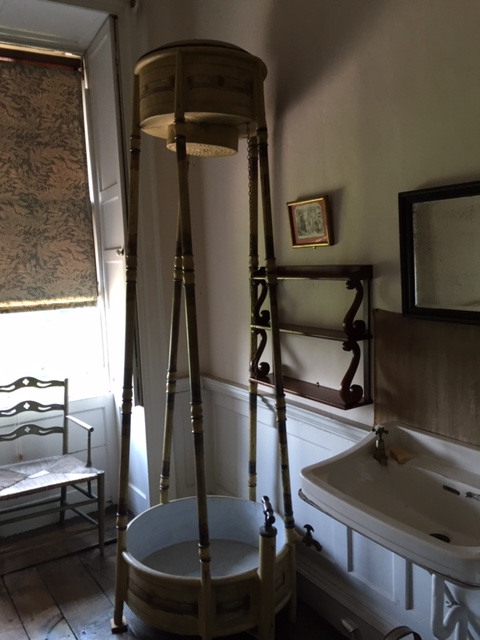
IMG_4105

I like a nice hot bath after a long day tramping a city or country lanes. But the owners of Erddig in Wales were proud to own one of the first showers, a newfangled and somewhat alarming contraption in the late eighteenth century.

IMG_4114

They commissioned an artist to depict family members lining up for showers, and looking none too happy about it. Why the dunce caps?
IMG_5014

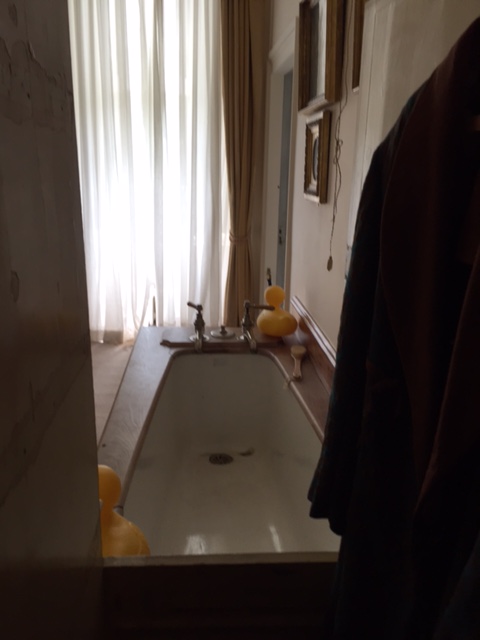
At Plas Newydd, a palatial country home on the water in Wales, the Marquis enjoyed his leisurely baths with his valet in close attendance.  His bathtub had a handy window to the hallway, so the valet could hand him a fresh drink every now and then.

IMG_5026

But at some point, the plumbing failed, as the rubber ducky warns visitors. (Once when I was a houseguest, I got up early to use a bathroom off the host’s kitchen, thinking I wouldn’t wake anyone. It turned out that the tap should have had a warning.  It had not been used in years, and I caused a flood).

IMG_1072

Still, I’m not alone in wanting my hot bath.  When Lord Curzon took over Montacute, a grand Elizabethan house in the early 1900s, he appreciated the ancient architecture.

IMG_1068

But he found a way to shoehorn a secret bathtub behind the priceless old panelled bedroom wall. (His mistress, the beautiful and accomplished novelist Elinor Glyn, was happily decorating and refurbishing the house when she received word that Lord Curzon was engaged to Grace Hinds, an equally beautiful but also very rich American. She packed up and left in a hurry, but I like to think she enjoyed one last bath).
IMG_6923

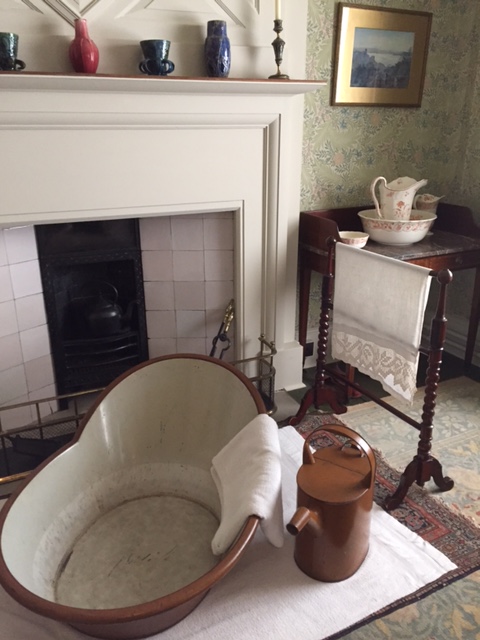
I think the ultimate in luxury would be a hand-drawn bath in front of the fire, like the one at Standen, an Arts and Crafts mansion built in the late 1800s as a family retreat for a wealthy businessman. Life for the servants who had to haul the water was not so pleasant, of course.  In this house, a maid left a recorded account of the day she finally was allowed “upstairs.” It was the day the house was opened to the public by the National Trust. She had toiled “below stairs” in the scullery for her entire working life, not even allowed to haul water upstairs.
FFEAF282-CBA4-4719-9CDB-F4D6337E406F

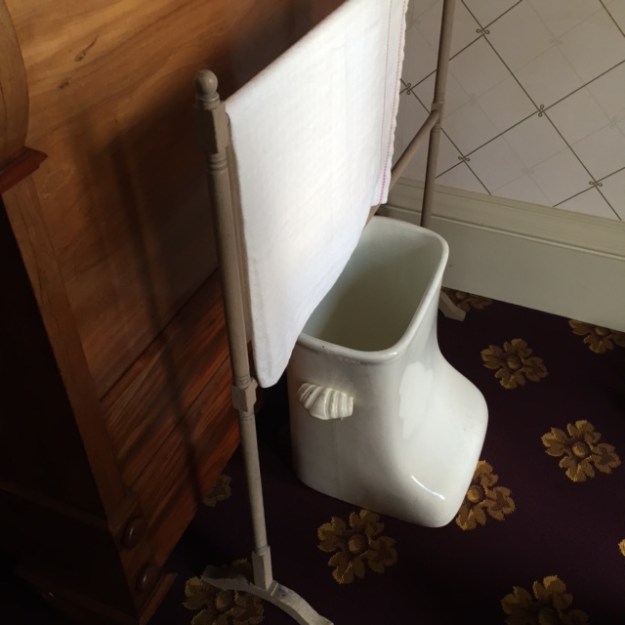
I hope this hard-working scullery maid at least had a foot bath for her aching feet, like this one below stairs at Wimpole.

As for me, I’m hoping for the best when I check in on my travels!


St. Jerome and His Lion: More Sightings

IMG_4931

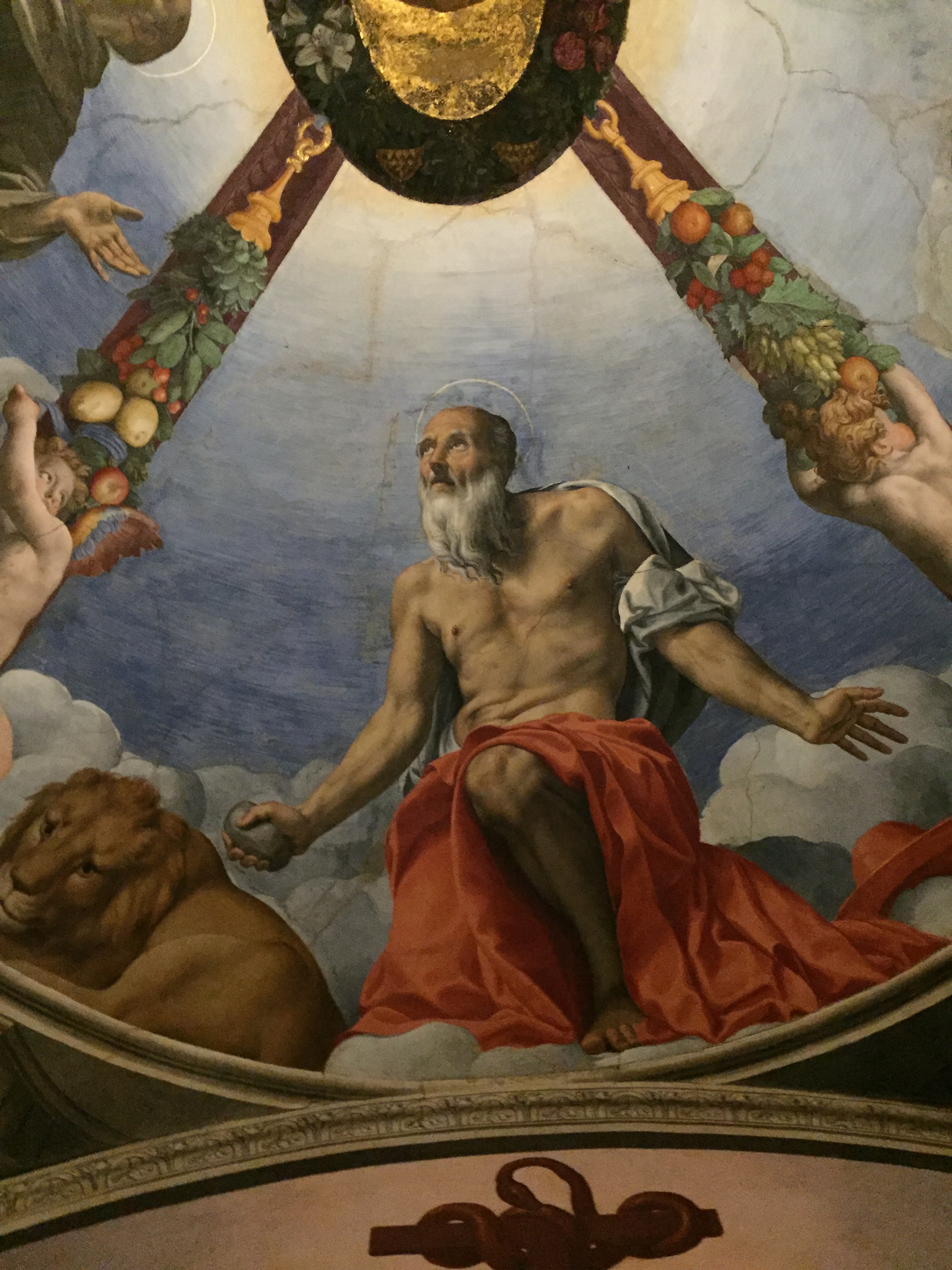
I’m always on the lookout for images of St. Jerome and his lion. Legend has it that when the saint retreated to the wilderness to study and pray, he came upon a lion with a thorn in its paw.  St. Jerome didn’t run or climb a tree.  He stopped and removed the thorn. From that day forward, the grateful lion stayed by his side. The fresco above is from a ceiling in the Palazzo Vecchio in Florence. Agnolo di Cosimo, known as Bronzino, painted it between 1540 and 1565.

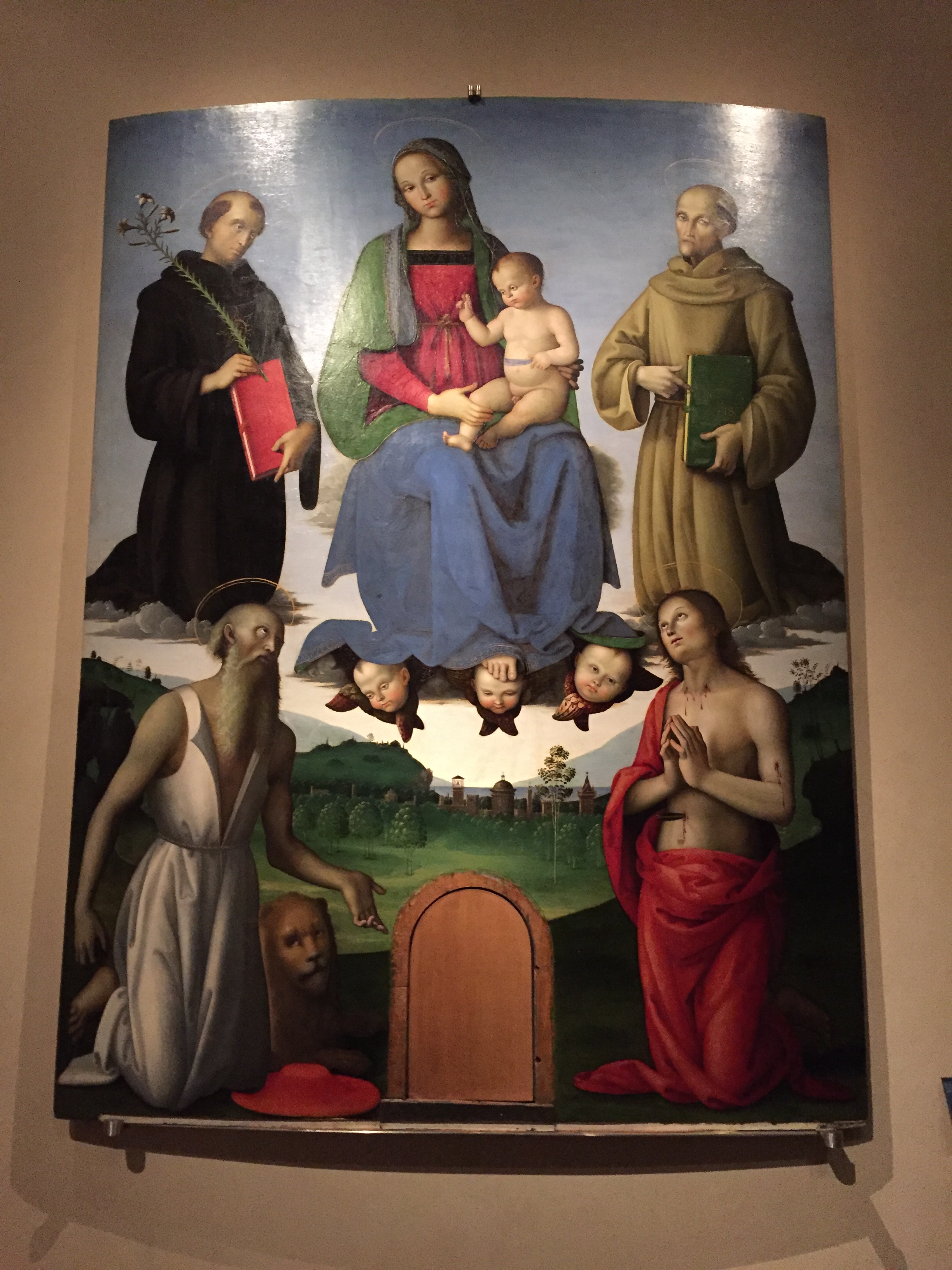
Pala Tezi, Pietro di Cristoforo Vannucci, known as Il Perugino, 1500

Pala Tezi, Pietro di Cristoforo Vannucci, known as Il Perugino, 1500

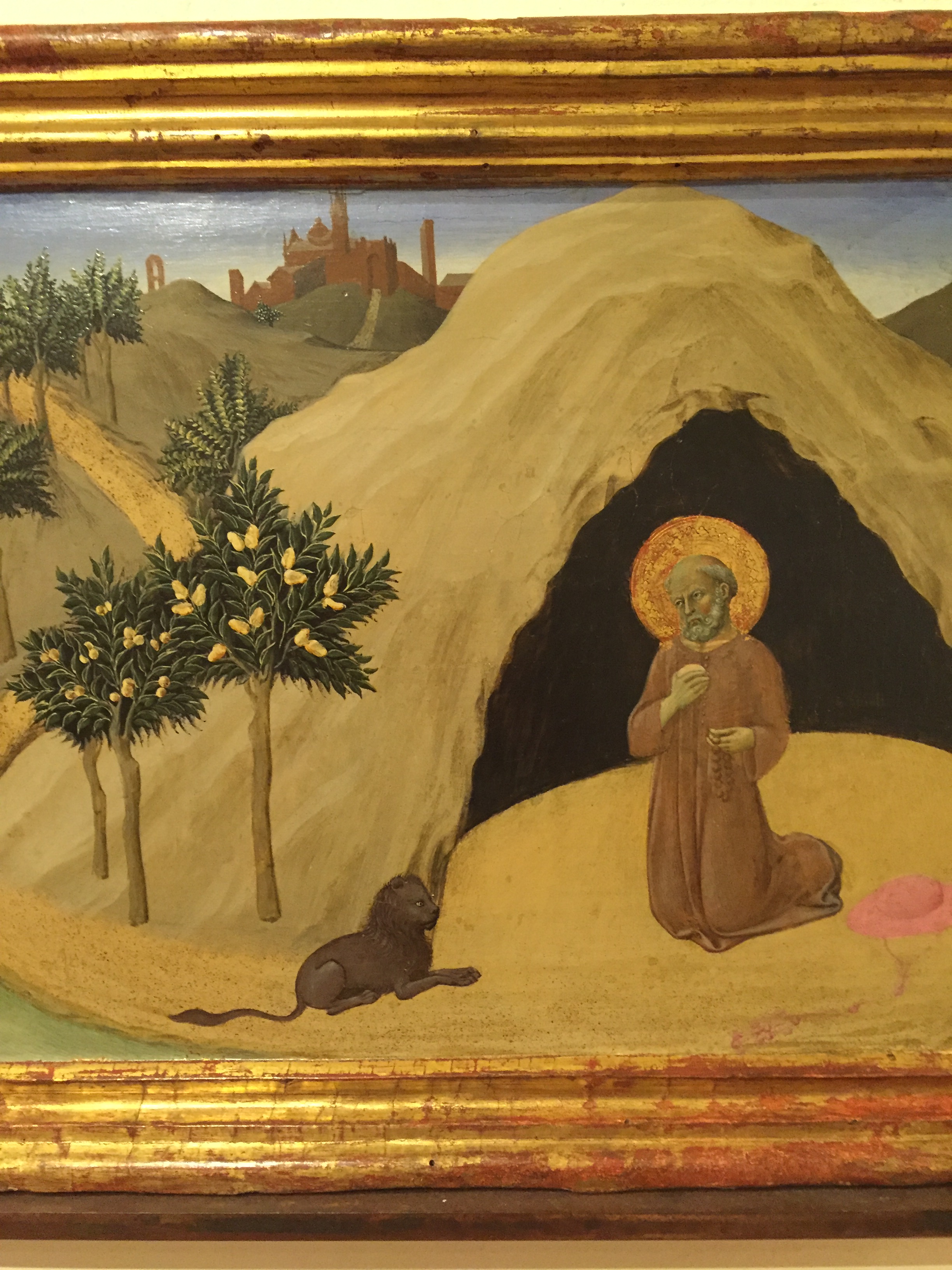
A more primitive, but still endearing, lion is in the painting above, from the Galleria Nazionale of Umbria in the town of Perugia.

Detail from Il Perugino painting above

Detail from Il Perugino painting above

The artist painted the lion and the saint sitting peacefully together in a simple landscape, in front of the cave that Jerome may have lived in.

San Girolamo Penitente, Il Perugino, 1512

San Girolamo Penitente, Il Perugino, 1512

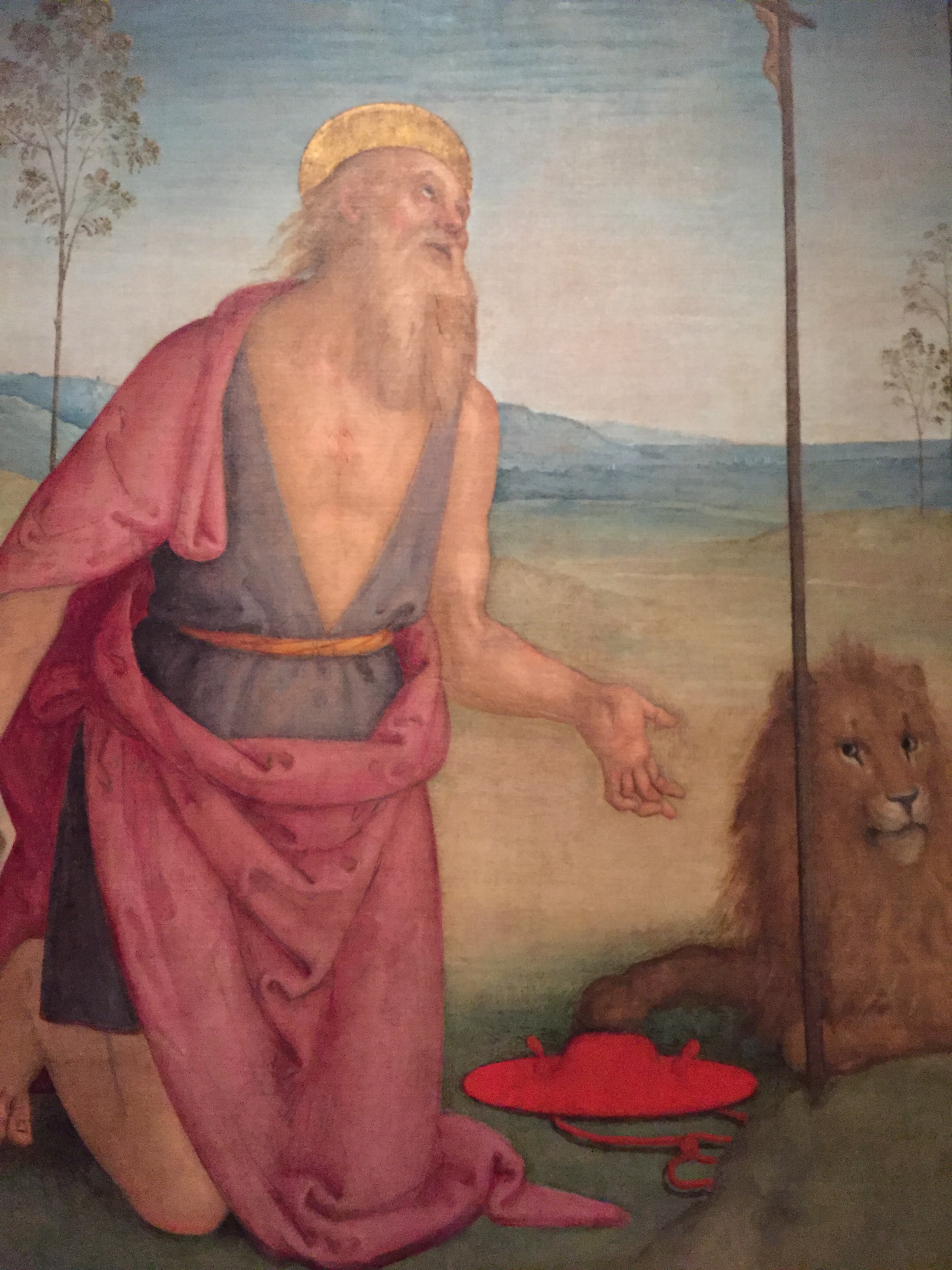
Another painting by Perugino shows the saint in contemplation of the Virgin and child, accompanied by other saints.  In humble adoration, he’s set his cardinal’s red hat on the ground–and who is lurking beside him?

San Girolamo Penitente, Il Perugino, 1512

San Girolamo Penitente, Il Perugino, 1512

In turn, Jerome’s faithful lion gazes adoringly at him.  Isn’t this what we all love to have our pets do?

Detail from Il Perugino painting above

Detail from Il Perugino painting above

The lion’s face is distinctly human.  How many of us humanize our pets? It’s an ancient impulse.

St. Jerome, Pintoricchio, around 1495

St. Jerome, Pintoricchio, around 1495

The same museum in Perugia has another painting of the saint in the same pose–also with his cardinal’s red hat set humbly on the ground. It’s by Bernardino di Betto, known as il Pintoricchio.

The friendly lion is guarding the hat–and St. Jerome.  Who wouldn’t like to have a tame lion riding shotgun all the way through life? Jerome’s lion always had his back.

In medieval times, retreating to the wilderness to meditate was a radical action. Jerome would not have been the first man eaten by a lion in the wilderness. At a time when nature was frightening, St. Jerome was revered for being at one with nature. In our times, retreating to the wilderness still has its risks, but it’s becoming more and more an expensive luxury. Our wildernesses are shrinking and human over-development is routing wild animals from their age-old homes.

1B2632B5-0CCB-42CB-AE4C-EDBC95B95B2B

I treasure any wildlife sightings, like this fox right outside my window.  And I’ll keep looking for glimpses of St. Jerome and his lion.

My previous post about St. Jerome and his lion is at

https://castlesandcoffeehouses.com/2015/08/06/st-jerome-and-his-lion/

Join me next time for more explorations in the art and history of Europe and the British Isles!
Happy International Cat Day!
60D3B527-DCDB-4E0E-9835-D1EE417C57B1

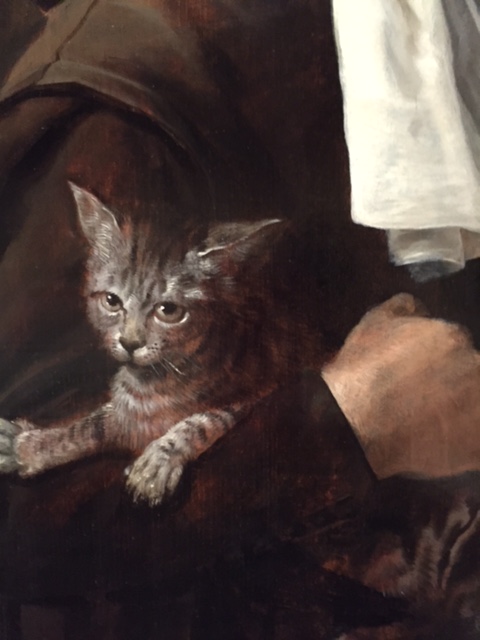
Do cats deserve a day of their very own in the international calendar? Of course they do. A couple of years ago, wandering art museums in Amsterdam and Haarlem, I wrote about the many dogs that appear in Dutch paintings.  I mused that for me, the dogs served as a window into long-ago times and places.  Cats are the same. It’s hard to identify with people wearing heavy black robe-like garments relieved only by starched white ruffs and collars. But  these same people had pets they loved.  The cat above, looking out at the world from the safety of her person’s lap, has the same smug look as any cat of mine. I can understand people who appreciate their feline friends enough to immortalize them in art.

5A866DE9-6454-4482-8B8A-B37736EF81E0

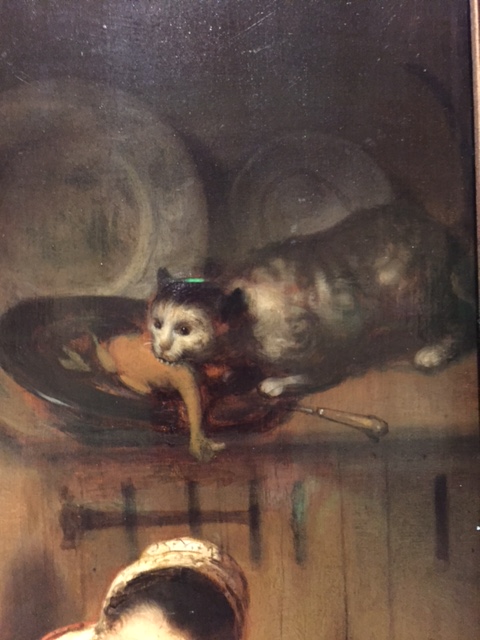
Cats in Dutch paintings are often up to no good.  The one above is about to make off with a plucked bird while the unsuspecting housewife is looking the other way.

00AD08E3-4B61-4426-9900-DCC3DB1E71D8

Cats often gaze longingly at the food artfully arranged in Dutch still life paintings, and they add some “life” to still lifes that consist mainly of dead animals ready to be consumed.

DA817445-8CF4-4AE2-BCCB-1CD306FED0ED

Children have always liked cats.  This ceramic pet, complete with a bib and abandaged leg, sits in the now-quiet nursery at Wightwick Manor, a wonderful Arts and Crafts home in England. He looks a little anxious. I have a feeling his broken ear and broken paw happened when he got tossed across the nursery in some long-ago game.

648F459B-2829-4CEC-9A55-736FD549E1CC

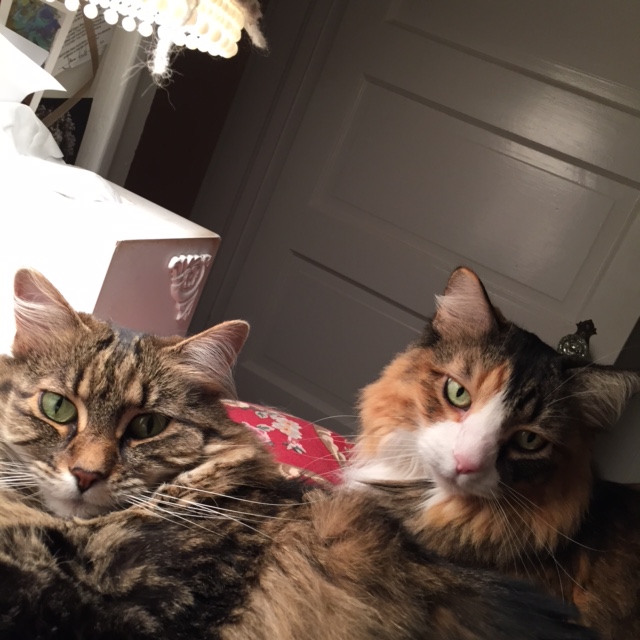
I have a soft spot for all cats, but especially for the calico and tabby  varieties. They remind me of the pair that patiently wait for me at home.

B84912A3-B784-4384-9232-83664DB88EC6

Of course I’m always on the lookout for friendly cats on my travels. This handsome fellow was in York, England.

CB007BF4-DDF8-4F4A-8F26-64A698F1FF1D

What about big cats? I love them too.  The fierce creature above is on an exterior wall of the very grand Pitti Palace in Florence.

6E00C57C-58E9-40B7-BBBD-934557E53E56

Chatsworth House in England has a pair of regal lions who lord it over the Sculpture Gallery. I think part of our fascination with big cats is that we feel we understand them just a bit, especially if we live with their small domesticated relatives. Our pet cats give us a little insight into both long-ago places and wild places on this earth.

In my post “Dogs in Dutch Art,” I quoted a striking poem by David Graham:  “The Dogs in Dutch Paintings.”  A couple of months ago I received a lovely comment from the poet, who had just happened upon my post.  The main reason I keep posting is to remember where I’ve been, what I’ve seen, and what I was thinking at the time.  That must be part of what motivates a poet, too.

Posts about dogs in art are at  https://castlesandcoffeehouses.com/2013/10/01/dogs-in-dutch-art/ ‎and https://castlesandcoffeehouses.com/2013/10/03/more-dogs-in-dutch-art/

Join me next time for more explorations in the art and history of Europe and the British Isles!

Erddig: Home of the Spider Brusher

IMG_4085

Who is the Spider Brusher?  She is Jane Ebbrell, a beloved servant at the Welsh estate of Erddig, near Wrexham. Actually, she was more of an all-around housemaid, but she wielded a mean spider-brush in her day.  We know this because her slightly eccentric late 18th century master, Philip Yorke, not only commissioned her portrait, but wrote an affectionate ditty about her.  It begins,

To dignify our Servants hall

Here comes the Mother of us all;

For seventy years, or near have pass’d her

Since Spider-Brusher, to the Master

At the time of her portrait, she was 87.  Many other servants received the same oil portrait and poem treatment over the next 250 years. But the Yorkes went beyond lip service. Jane Ebbrell, for example, was encouraged to marry another servant, and when she finally retired it was to her own home on the estate.

IMG_4068

In around 1852, the squire, Simon Yorke III commissioned a photograph of all the family servants, each holding an implement of his or her work, standing on the front steps.  He and his family appeared in the window behind the servants.

IMG_4051

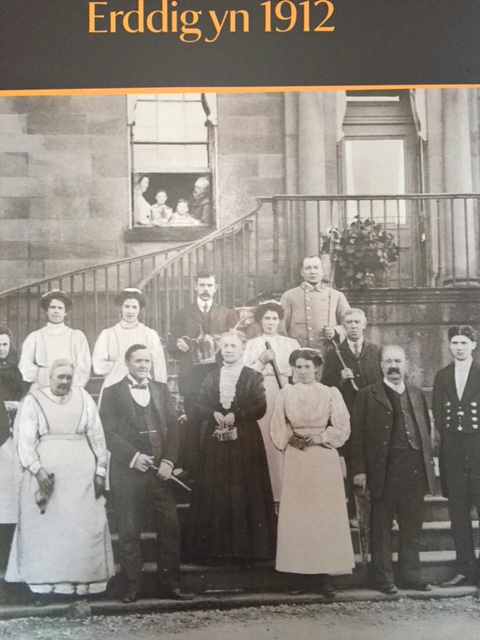
In 1912, Philip Yorke duplicated the photo with his own servants and his own young family.  He wrote a long poem for the occasion.  A book of his poems, all affectionate doggerel, is sold in the gift shop.

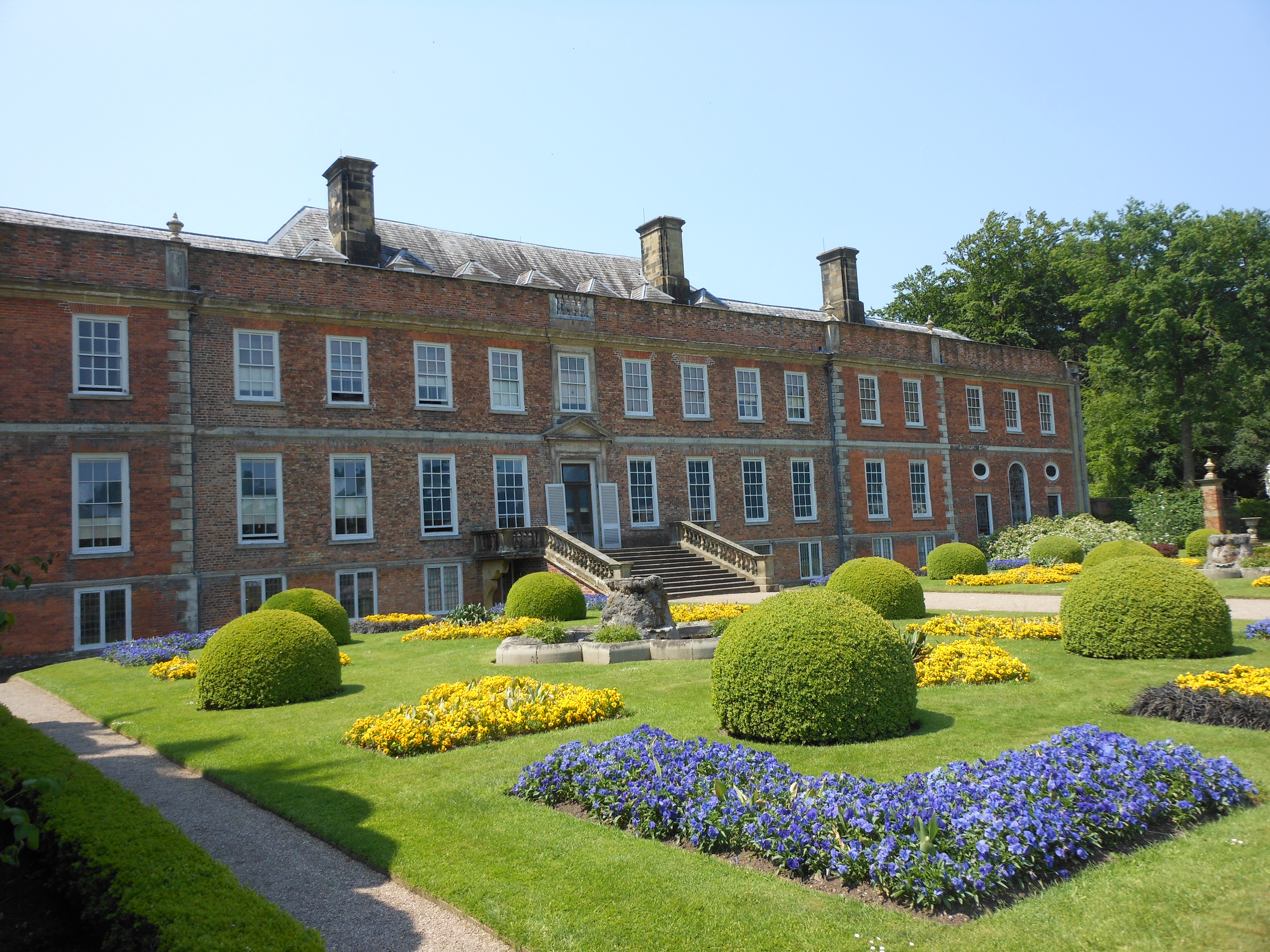
What made seven generations of the Yorke family treat their servants so well? This was an age when kitchen maid might always be called “Mary” because master and mistress could not be bothered to learn new names. Most likely the reason is that the Yorke family had somewhat humble origins themselves. When they unexpectedly inherited the house and its grand 18th century furnishings from an uncle, they found themselves rich in property but poor in cash.  They could not afford the usual wages, but they made up for it by treating their servants so well that they felt part of the whole enterprise.

ErddigFacade

Perhaps not wanting to waste anything, they eventually became epic hoarders.

DSCN0068

When the property finally passed to the National Trust in 1973, the sole remaining Yorke required that no objects should EVER be thrown out or sold. About 30,000 objects were inventoried.  Only about 10,000 can be on display at the same time.

DSCN0123

In their more orderly years, the family kept a “Failures Gallery:” a collection of objects and art they didn’t like but didn’t want to part with.  It lined the walls of the passage the servants used to get to the private chapel.

DSCN0106

The chapel was the scene of daily prayers for everyone.

DSCN0122

The family never used the Failures Gallery.  They entered the chapel through their grand eighteenth century rooms. So life at Erddig kept some of the traditional distance between master/mistress and servant.  But still, life in the Servants’ Hall at Erddig was pleasant enough that generations of families were happy to serve the Yorkes for low wages.

An article about Errdig is at:

http://www.telegraph.co.uk/travel/destinations/europe/united-kingdom/wales/articles/Fiona-Bruces-Britain-Erddig-Wales/

Queen Victoria and Queen Elizabeth II

Queen Victoria in her coronation regalia, public domain

Britain’s beloved Queen Victoria died on January 22, 1901, ending the Victorian Era. She was also Empress of India all through the heyday of the years when the sun never set on the British Empire. Her image still appears everywhere in Great Britain. The coronation portrait by George Hayter is in the Royal Collection (Public Domain now). It still appears in reproductions in some tradition-loving British homes.

6B7E95AF-0E29-47D1-87D7-DDCD309D43FD

Other homes display mass-produced images like the one above, spotted in the very regal Wimpole Estate.

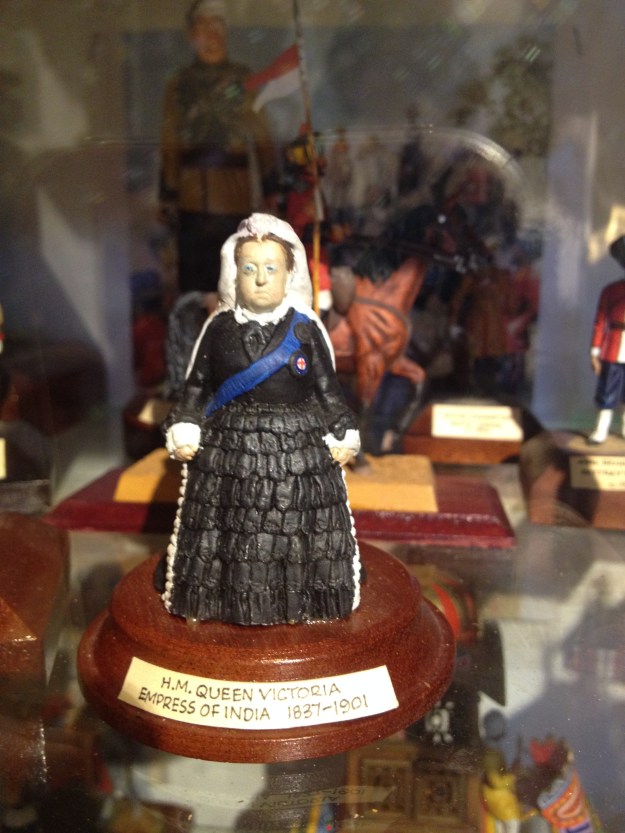
VictoriaModel

Victoria’s image, dressed in black in her widowhood and with her little diamond crown perched on top of her head, is instantly recognizable. The little model above holds pride of place in an exhibit of military models at Blenheim Palace. That unusual crown served as a canny early version of a prominent person creating a unique brand for herself.

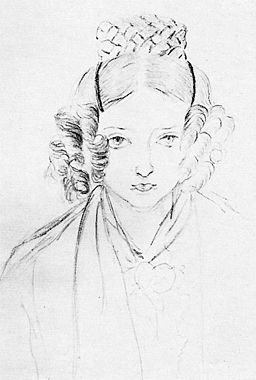
256px-Victoria_sketch_1835

How did Victoria see herself?  The sketch above, Public Domain, was Victoria’s own self-portrait as a young girl. She already has some kind of little whatsit balancing on top of her head. She looks apprehensive.  But when she unexpectedly took the throne at the age of 18, after everyone else in the line of succession had died, she rose to the occasion and she kept rising. She reigned over England for over 63 years.

512px-Her_Majesty's_Gracious_Smile_by_Charles_Knight

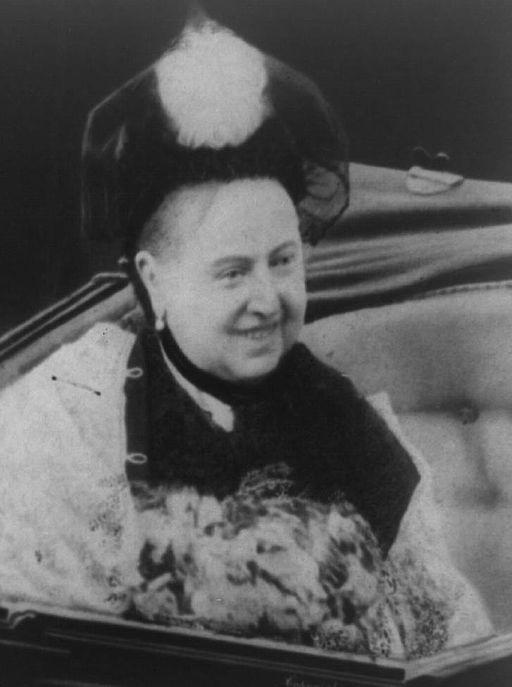
We tend to think of Victoria as a dour old lady.  But in fact she laughed often.  The Public Domain photo above shows her in a jolly mood, even into her old age.

IMG_2749

A statue of Victoria stands serenely at the entrance of Windsor Castle, the thousand-year-old complex that is one of the favorite homes of the current Queen.

IMG_7681

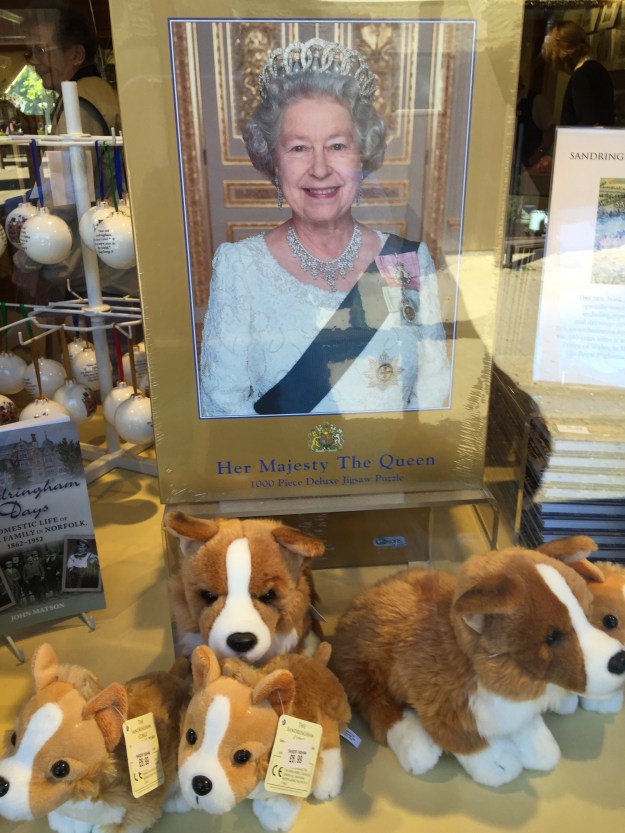
Queen Elizabeth II has now reigned longer than her ancestor, the redoubtable Victoria. Whatever one thinks of the institution of the monarchy, there’s no doubt that Queen Elizabeth is a cracking good Queen.  The photo above is from the shop at Sandringham, the country estate in Norfolk that Queen Victoria wisely bought as a private retreat for the Windsors. When I was there, neither the Queen nor her Corgis were in sight, but their presence was felt everywhere. There’s nothing more British than the Queen and her beloved Corgis.  I wish them all well.

Join me next time for more exploration in the art and history of Europe and the British Isles!


Mary Russell, Flying Duchess–and Much More

IMG_1407

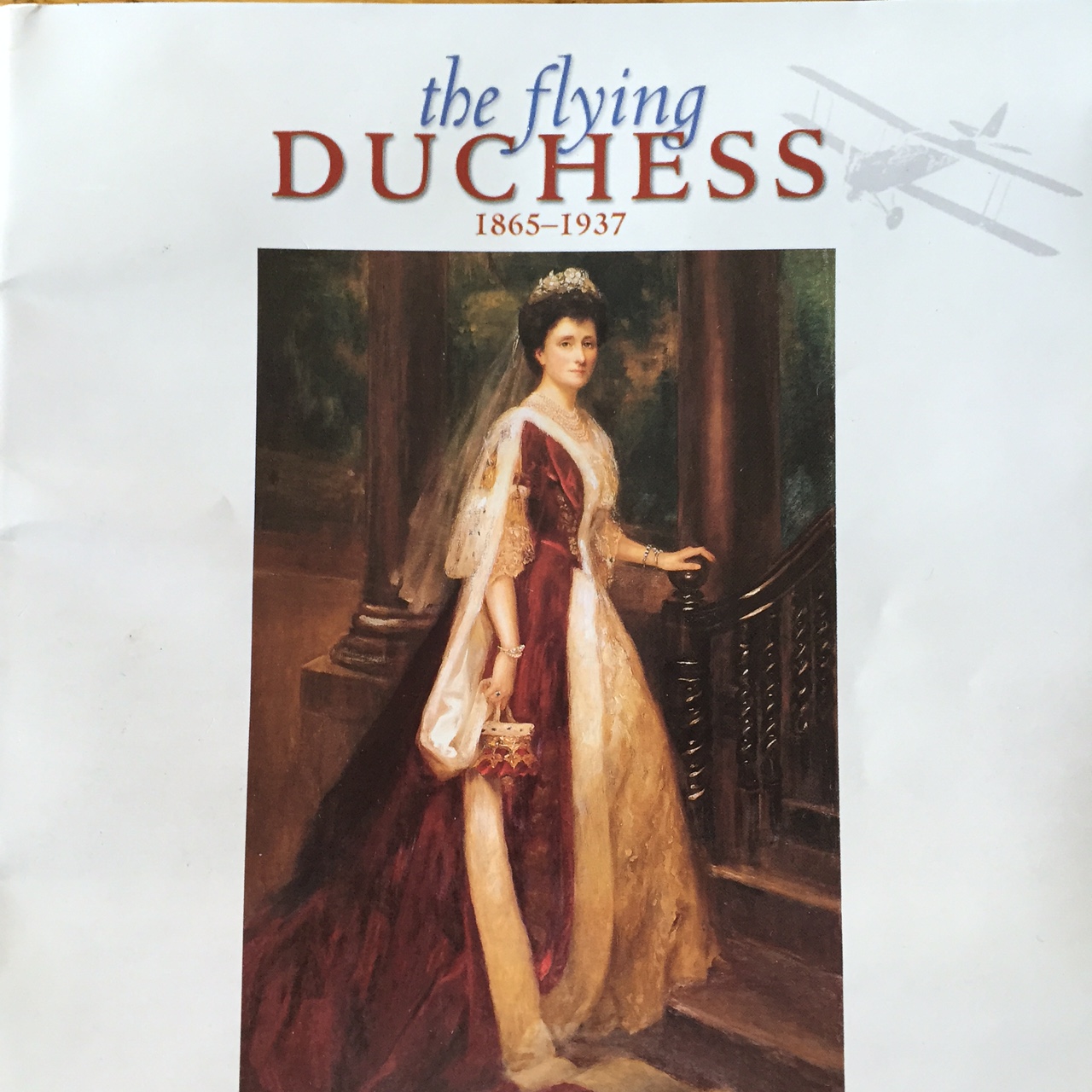
How did the free-spirited daughter of an obscure English clergyman become the famous Duchess of Bedford, best known as The Flying Duchess? The little book above, written by Mary’s great-grandson the Marquess of Tavistock, tells her story. Mary Du Caurroy Tribe was born and educated in England, but as a young teenager she went to join her family, stationed in India.  Her father’s chaplaincy duties took him on dirt roads and over mountain passes to Indian villages.  For six years, Mary happily went along for the ride, taking turns with her father on their one pony. She loved every moment of outdoor adventure.

Lord Herbrand Russell, my photo taken from book "The Flying Duchess," cited above

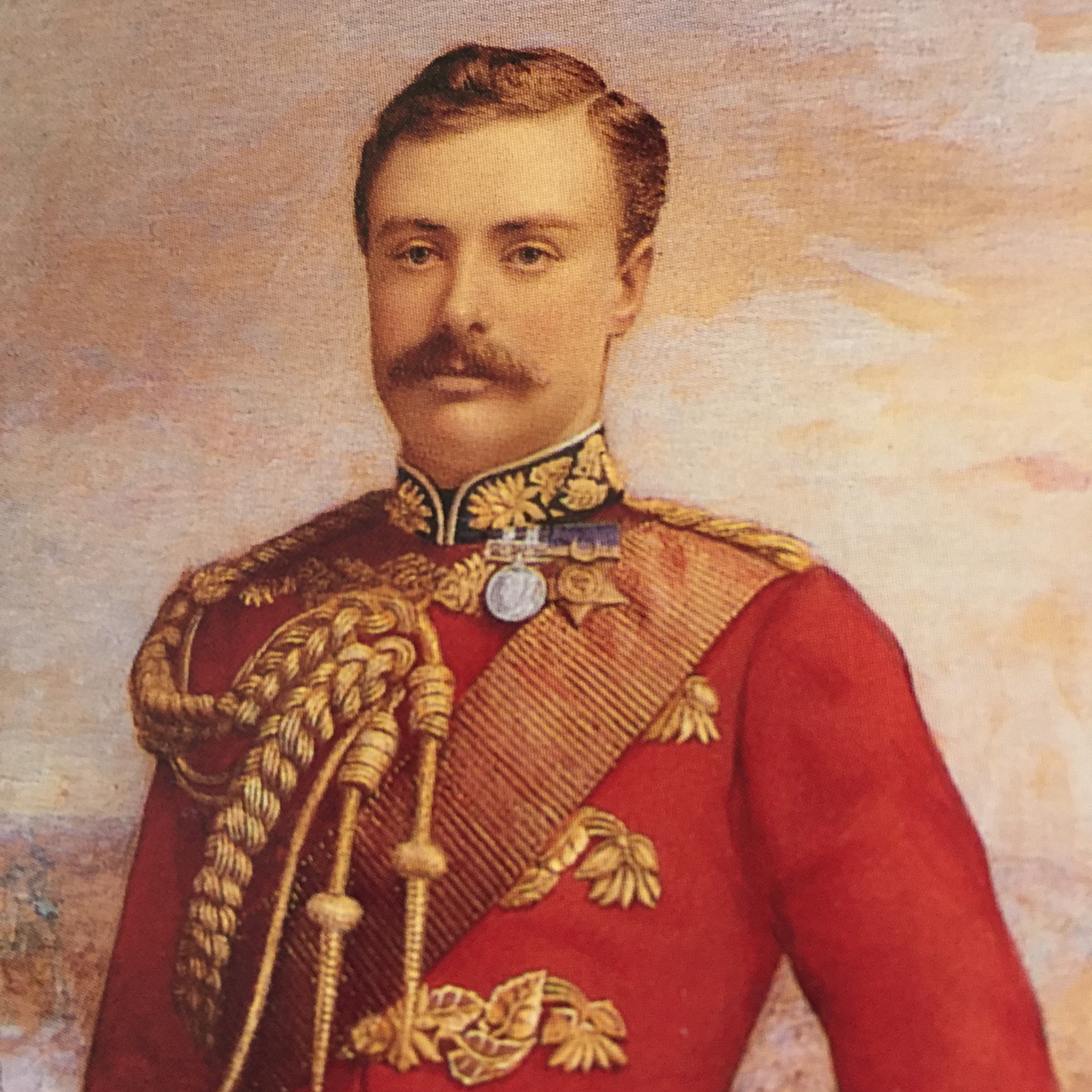
Lord Herbrand Russell, my photo taken from book “The Flying Duchess,” cited above

In 1888, at age 23, she married the dashing Lord Herbrand Russell, aide-de-camp to the Viceroy. He was 27, and as an aristocratic younger son he had to make his own way in the world. A life serving Queen Victoria in India seemed likely for the young couple.

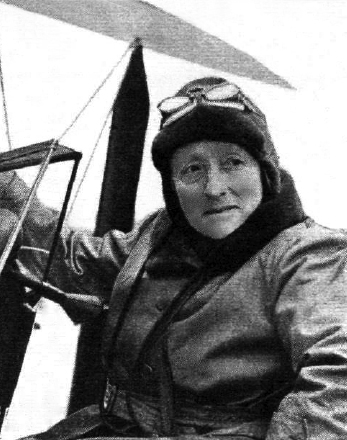
Mary Russell, Duchess of Bedford, Public Domain

Mary Russell, Duchess of Bedford, Public Domain

But in quick succession, Lord Herbrand’s father and childless older brother died, and hey presto! the young couple became Duke and Duchess of Bedford.

Woburn

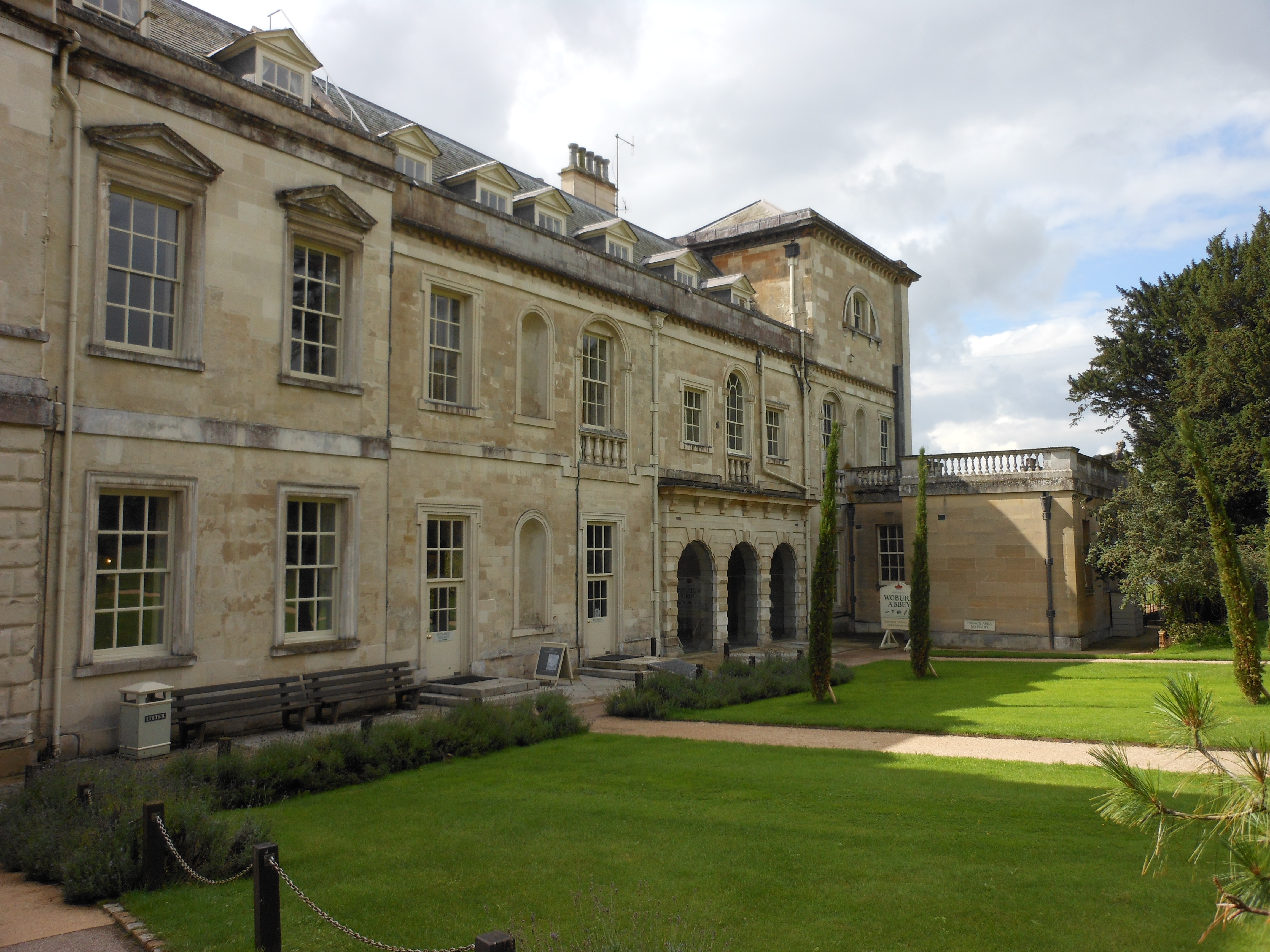
Along with the title came Woburn Abbey, seat of the Dukes of Bedford for over 300 years. In the twentieth century, war and industrialization took a toll on all great country houses. Woburn opened to the paying public in 1953, preserved from steep tax bills thanks to pragmatic plans that included a golf club. But it is still the family’s home. And rare breeds of deer still roam the park.

In her early married years, the Duchess gave birth to her only child, a son named Hastings.  Besides dressing up and wearing a tiara when required, she did all manner of good works in her community. She loved nature and being outdoors. She traveled on her yacht, hunted, fly-fished, and canoed, often alone, down rivers where she “shipwrecked” more often than she probably cared to admit. She took up bird-watching. Never one to do things by halves, she became a world authority on birds.

One of her prized pets was a rare swan named Sabina, a rescue bird who ferociously attacked any creature, man or beast, that ventured near her pond. She was no match for Mary Russell. The Duchess wrote in her diary, “I made a stand and gave Sabina to understand that in my case at least such behavior could not be tolerated.” Soon Sabina was following the Duchess around and allowing herself to be picked up. She haunted the terrace in front of the house, watching for the Duchess. She even asked for kisses. A male swan was drafted into service as a mate for her. Sabina tolerated him, but her first love was the Duchess.

Duchess of Bedford as a nurse, my photo taken from "The Flying Duchess" book cited above

Duchess of Bedford as a nurse, my photo taken from “The Flying Duchess” book cited above

The Duchess designed and built a state-of-the-art community hospital in Woburn. But she didn’t stop there.  For 34 years, she actually worked in the hospital, shoulder to shoulder with her employees. If she noticed a dirty floor, she scrubbed it. 

When World War I came, she converted large outbuildings on the estate into a war hospital. She hired an eminent London surgeon, Mr. Bryden Glendining, as her head of staff.  She trained as a surgeon’s assistant and stood by his side for about a dozen operations a week.

Realizing that the new science of radiology was crucial to diagnosis, she learned radiology and headed that department.  I can just hear her saying, “How hard can it be?” The War Office had so much confidence in the Duchess’s hospital that wounded soldiers were sent to Woburn directly from the Front.

MaryRussellBedford

At age 61, the Duchess took up flying.  Again, how hard could it be? In 1937, at age 71, she had 199 hours of solo flight under her belt when she took off from the park at Woburn, alone in her De Havilland Gipsy Moth. She was never seen again. It seems likely that she strayed over the Channel and went down at sea.  Pieces of her plane eventually washed up on shore, but she was never found. Her beloved husband survived her by three years.

If the Duchess had lived on into the years of World War II, no doubt she would have tossed her flying helmet onto a shelf, rolled up her sleeves, and marched straight back into her hospital work.  A BBC article about her life is at http://www.bbc.co.uk/threecounties/content/articles/2008/08/12/flying_duchess_feature.shtml


A Royal Christening at Sandringham

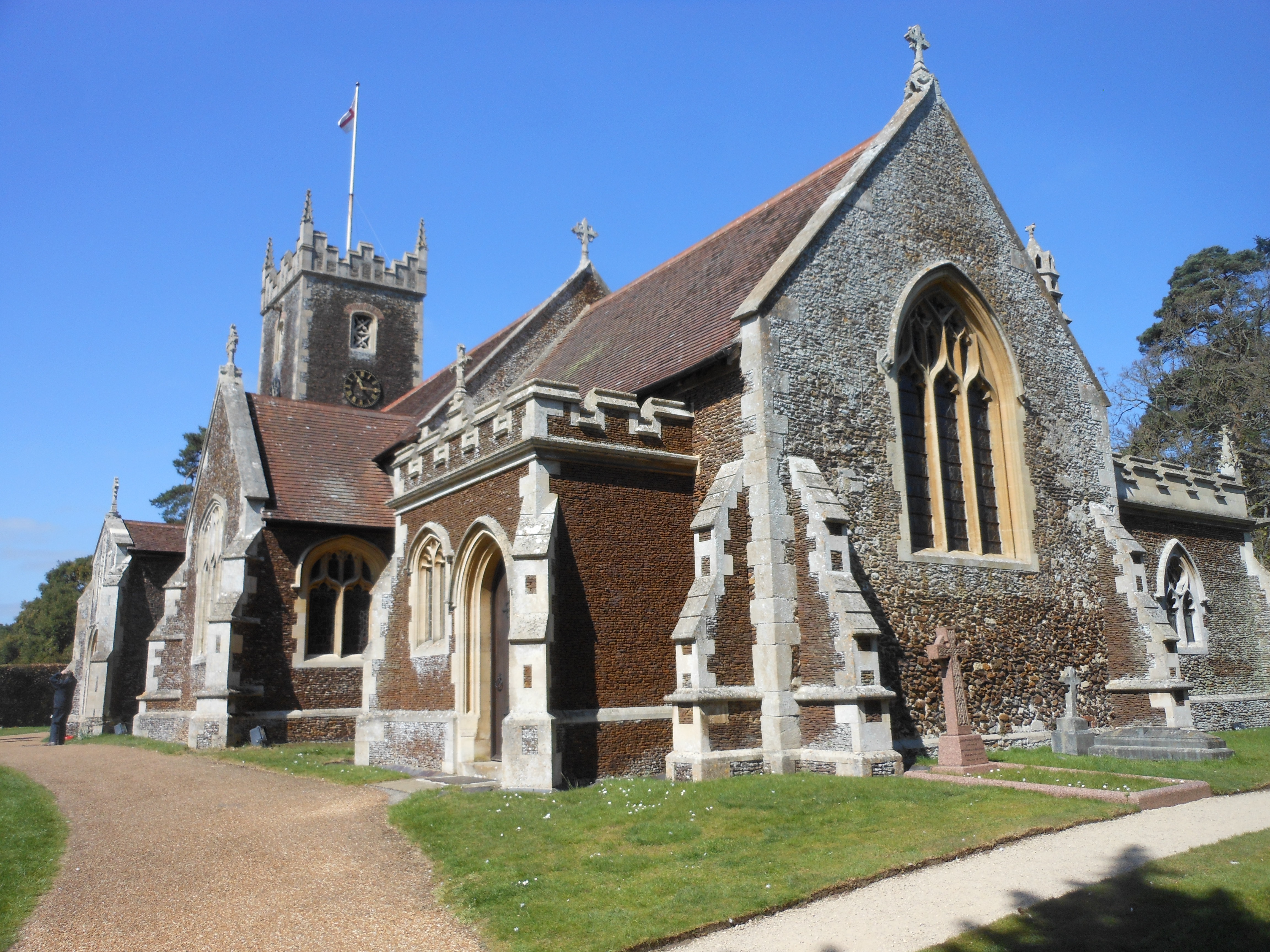
DSCN7017In April I visited Sandringham, the private country home of the royal family, and was especially keen to have a look at the local parish church, where Princess Charlotte was christened yesterday.  News media reported that royal well-wishers were invited to stand in the “paddock” where folks stand every Christmas to watch the royals go in and out of church.  What’s a paddock?  It’s just a field where horses normally stand around and eat grass.  Yes, the old stone parish church is in an unassuming location with fields all around, just a short walk from the grand house. From the outside, the Church of St. Mary Magdalene looks exactly like countless other English country churches. Inside, it is the most beautiful country church I’ve ever seen–not surprising, what with the royal connection.

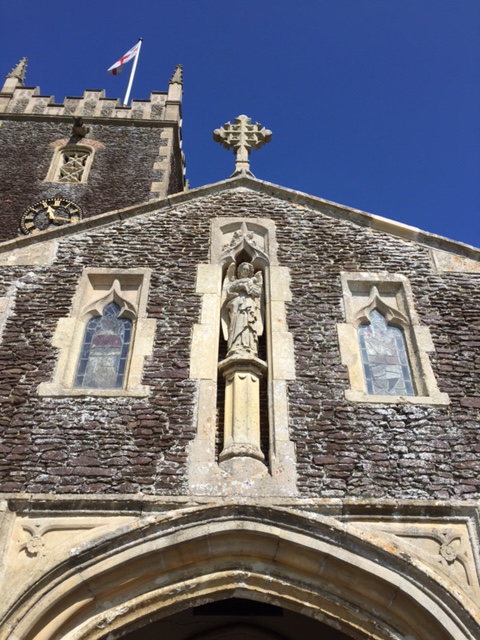
2015-04-23 11.16.47-2An angel holding a baby stands, appropriately, just above the entrance.

2015-04-23 11.19.51More angels minister to people inside, like this carved wooden one offering communion to a parishioner.

2015-04-23 11.20.49The church seems an especially joyful place of worship.  Sunlight streams in through stained glass.

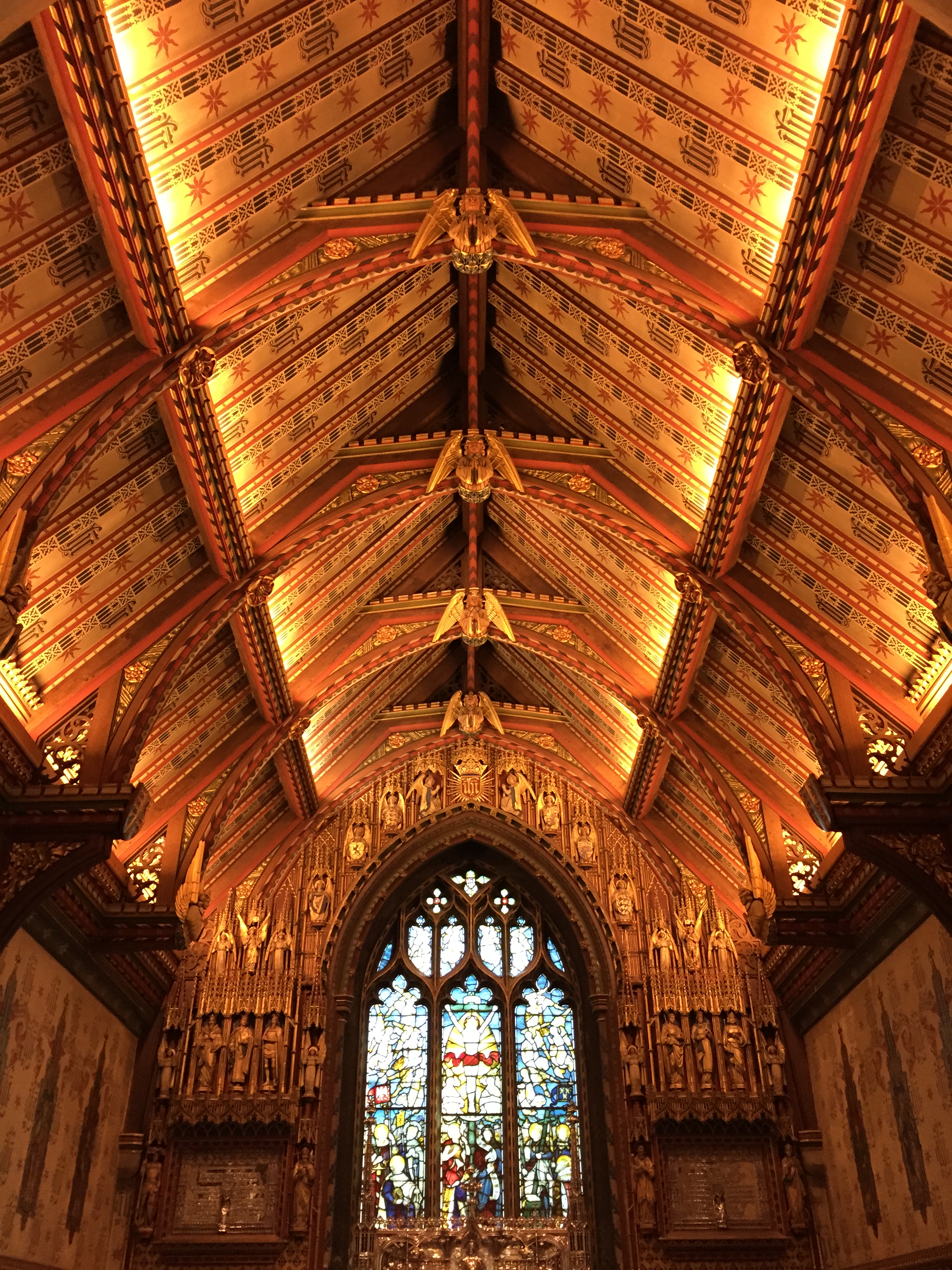
2015-04-23 11.19.21The painted ceiling is especially beautiful and colorful. I think the church in its present form dates mostly from Victorian times.

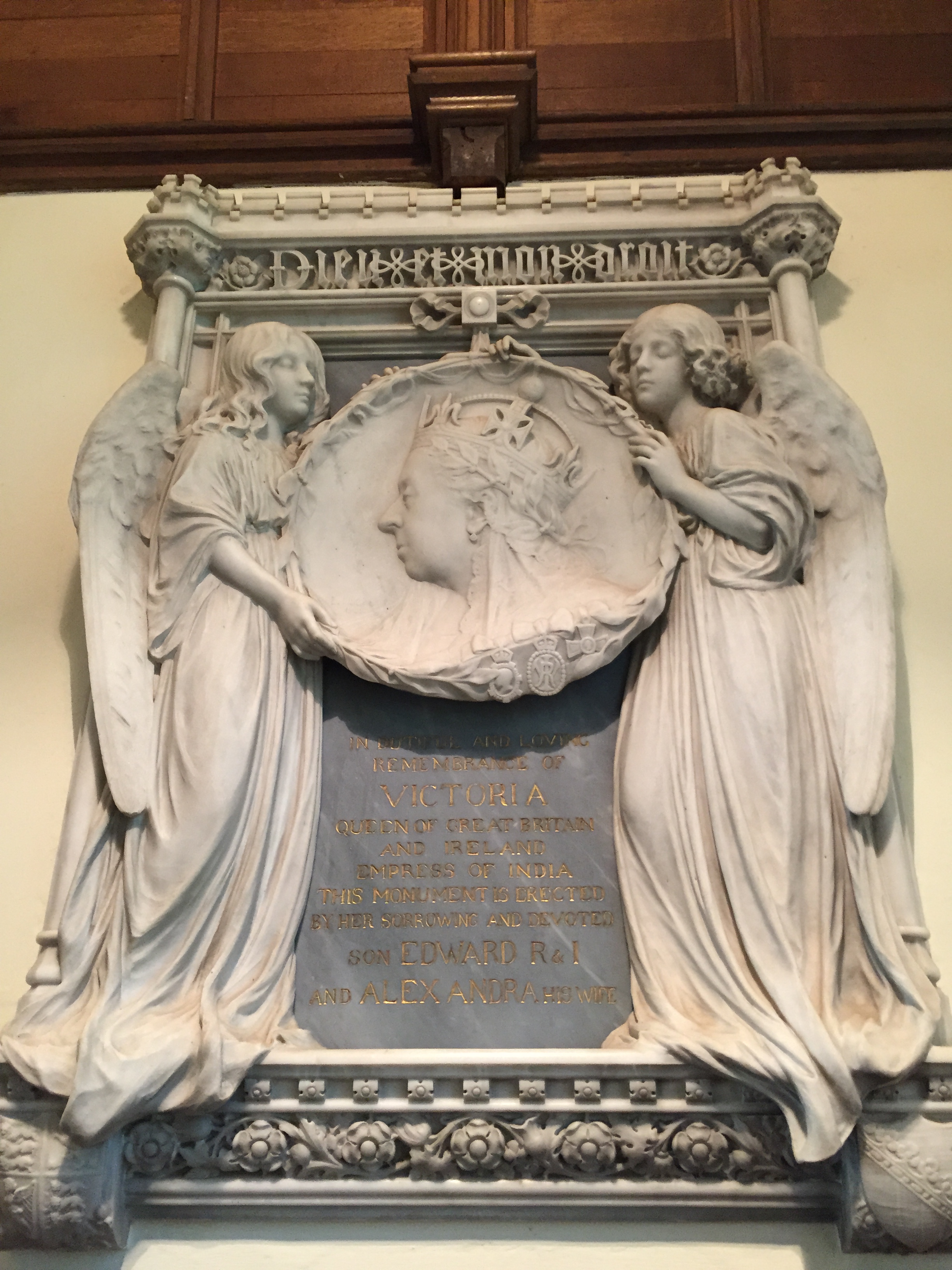
2015-04-23 11.26.07No one seems to be buried in the church, but the walls contain exquisite memorials to various royals.  My favorite is the one of a pair of angels tenderly supporting a silhouette of Queen Victoria. I’m sure she was present in spirit to watch over the newest generation of her descendants. Did they behave themselves? That’s always the big question, as Victoria knew well from the trials of raising her own very large family.

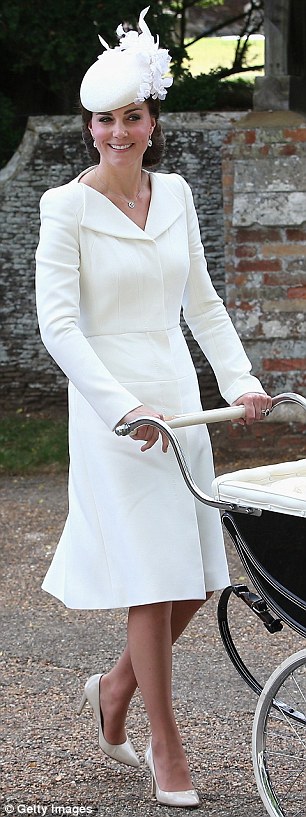
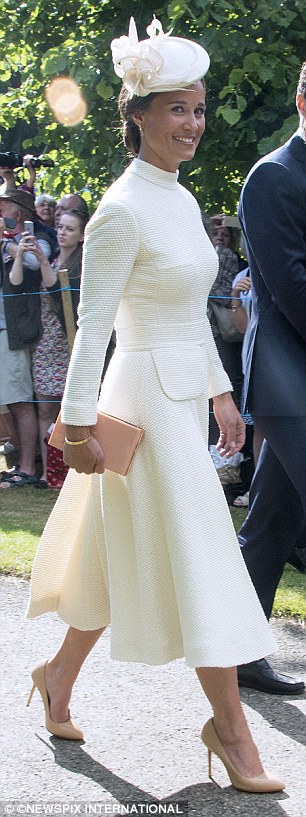
KatePippaNews media have breathlessly reported on supposed sibling rivalry at the christening:  Pippa Middelton is accused of trying to upstage her sister Duchess Kate by wearing essentially the same outfit, and possibly wearing it better.  I reserve judgment. If there are any soap-opera goings-on among the current young royals, I prefer not to know about them. Anyway, good luck upstaging Kate.  This is the woman who left the hospital and waved to crowds the very day she gave birth in April, wearing a pretty dress, perfect hair and HIGH HEELS.  I would not care to try competing with Duchess Kate. The images of the sisters are from the Daily Mail article cited below.

2015-04-23 11.25.37Not having been one of the 25 or so people invited to the christening, I’m not sure there was a sermon or homily.  But if there was, it was delivered from this beautiful silver Victorian pulpit. Best wishes to the new Princess!

http://www.dailymail.co.uk/femail/article-3150898/Did-Pippa-Middleton-try-upstage-Kate-Middleton-Etiquette-expert-William-Hanson-Aunt-Middleton-s-matching-christening-outfit-avoided.html

Previous posts about Sandringham are at https://castlesandcoffeehouses.com/2015/05/07/sandringham/

and https://castlesandcoffeehouses.com/2015/04/30/the-queens-chu…at-

Affordable Europe: Hotel la Roseraie in Chenonceaux


Chenonceau3

The town of Chenonceaux has, somewhat confusingly, a spectacular chateau called Chenonceau–without the X. Many people consider Chenonceau the most beautiful chateau in the Loire Valley.  It’s certainly the most unique:  it is actually built on a bridge that crosses the river.  It’s understandably popular. The thing to do is to stay in the little village of Chenonceaux so as to arrive early. The town makes a perfect base for driving around the Loire Valley.

P1030108

I generally avoid hotels recommended in Rick Steves guidebooks. They’re nice, but occupied by large numbers of Americans.  I would rather be rubbing elbows with Europeans when I travel to Europe, even if I can’t understand much of what they’re saying.  But Rick-recommended Hotel la Roseraie is a winner.  It’s a small hotel, with only 17 rooms.  It’s not the fanciest hotel in town, but it’s surely the friendliest.

P1020753

Rooms are warmly decorated. Ours had walls that had been laboriously covered with the very same sprigged fabric that made up the curtains. Dated? I prefer the term “faded elegance.”

P1020751

The bathroom was totally up-to-date, though; it would pass muster any day on HGTV.

P1020757

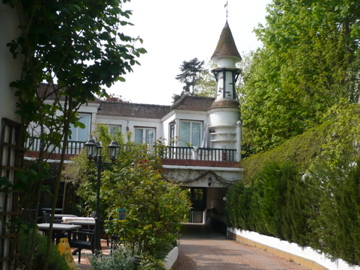
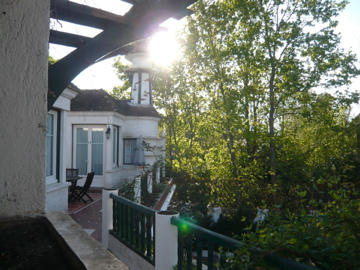
The owners, Sabine and Jerome, welcome returning guests as family.  Guests do return again and again to enjoy the leafy terrace and flower gardens.

P1020765

There’s a charming little restaurant which needs to be booked because it’s popular even with people not staying in the hotel.  I don’t like the feeling of being obligated to eat in a hotel’s restaurant, but this was a delightful experience.  It was traditional but not too formal, the food was fresh and delicious, and no one looked askance at my admittedly fussy vegetarian requirements.

ChenonceauRomanRuins

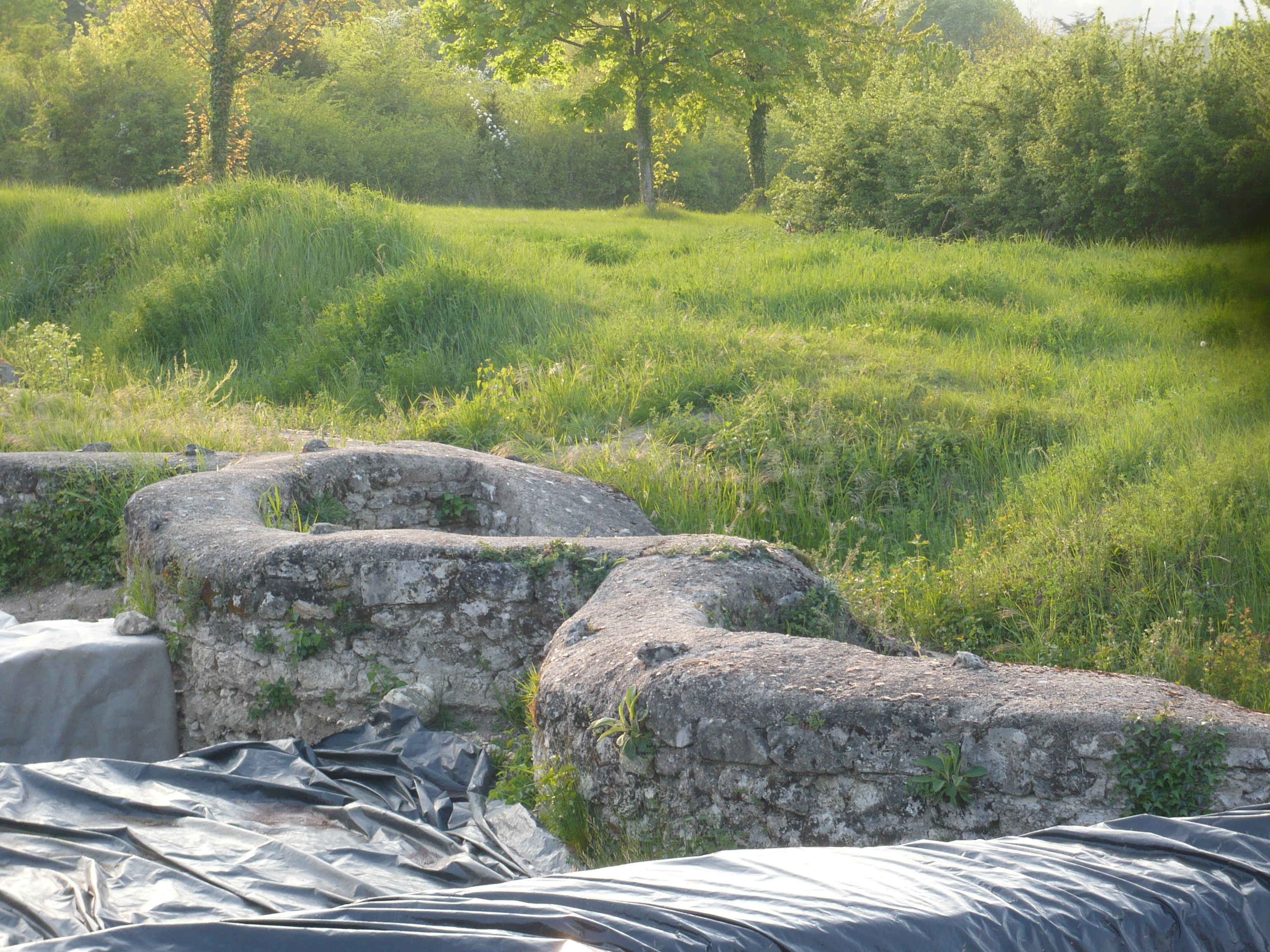
Just outside town, there are Roman ruins.  Julius Caesar is known to have actually slept there–or so the locals say. When I was there, the ruins were partially covered with plastic.  Maybe next time, there’ll be a little visitor center.

ChenonceauMeLunch

The village, like all French villages, has a top-class bakery.  One of those strawberry tarts is waiting for me!


Diane de Poitiers vs. Catherine de Medici

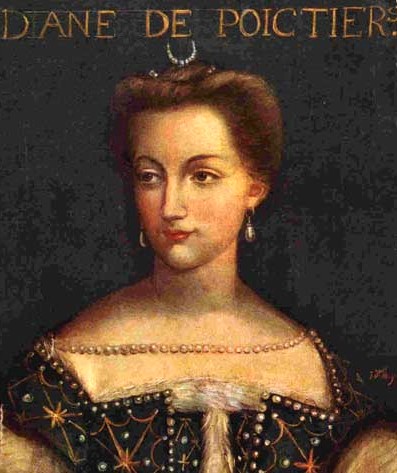
Diane de Poitiers, unknown artist, Public Domain

Diane de Poitiers, unknown artist, Public Domain

When Diane de Poitiers arrived at Chenonceau in 1547, things were going her way. At around age 35, she was already a widow left wealthy when her much older husband conveniently died and left her a fortune. She moved easily in court circles and soon became the mistress of the 16-year-old King Henri II, who gave her Chenonceau as a residence.  Diane loved Chenonceau. She was the undisputed occupant, but it took her a number of years to persuade the King to give it to her outright. In the meantime, she called in the best architects and builders. Money was no problem. First off, she greatly expanded the beautiful pleasure gardens.

Photo by Luke van Grieben, 2006, Creative Commons Attribution Share Alike 3.0

Photo by Luke van Grieben, 2006, Creative Commons Attribution Share Alike 3.0

The gardens were just gardens like many others, but Diane had a truly brilliant idea: she expanded her living space by building an arched bridge, with rooms, that crossed the River Cher. Later additions, some by Diane and some by others, expanded on that idea and created the chateau we see today.

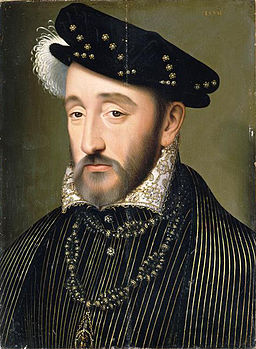
Henri II, after Francois Clouet, Public Domain

Henri II, after Francois Clouet, Public Domain

I think Henri looks very suave in this portrait. Where have I seen that sly, knowing look?  Of course!

Connery

The very worldly James Bond, played by Sean Connery, had the same expression. Just saying. Anyway, Henri certainly knew what he liked, and as King he had the wherewithal to get it. Diane de Poitiers was famous as one of the most beautiful and accomplished women of her age, and the King depended on her advice throughout his life. She had rivals; naturally the King took other mistresses, but she was his closest and most trusted companion throughout his life.  She became the most powerful woman in France.

Catherine-de-medici (1)

This did not sit well with Catherine de Medici, Henri’s wife and the mother of his three sons who became subsequent kings. (She also had several daughters). The stern portrait above was painted when Catherine was still a comparatively young wife. Once she became a widow, she draped herself in black at all times and looked even more forbidding. I would not care to tangle with her.

Lady in Bath, Diane de Poitiers, Francois Clouet, c. 1555, Public Domain

Lady in Bath, Diane de Poitiers, Francois Clouet, c. 1555, Public Domain

Henri lavished favors and property on Diane de Poitiers.  She was clearly quite the babe, as well as being smart and witty. She retained her beauty all through her long life, too.

During his lifetime, Henri expected his dutiful wife Catherine to stay at home and keep quiet. She really had no choice while he was alive. But things changed suddenly.

Desmond Llewelyn as

Desmond Llewelyn as “Q,” 1983, Towpilot, Creative Commons Attribution Share Alike

Since I’ve brought up James Bond, I can’t resist:  what Henri needed was a guy like “Q,” who in the movies patiently explained weapons and prudent tactics to an impatient James Bond. Maybe nobody like “Q” had Henri’s back. In 1559, when he was just 40, poor Henri got knocked in the head in a jousting accident.  His wound became infected and he died 10 days later. His heir the Dauphin was a sickly young son, age 15. The Dauphin was already married to Mary Queen of Scots. But he died 18 months later and Mary Queen of Scots was sent back to Scotland, never becoming Mary Queen of France. The two remaining sons were not good King material, but they were all that Catherine as Regent had to work with. Of course she was not allowed to become Queen in her own right. It was quite an accomplishment to even keep her sons on the throne.

Things went from bad to worse. France was torn apart by civil and religious struggle all through Catherine’s life.  Although she made valiant efforts to govern the country, she made a lot of mistakes and her weak sons were not much help. The French Wars of Religion continued, causing massive carnage as Protestants and Catholics fought each other bitterly.

Chenonceau3

Catherine’s life was not easy.  But there was great consolation in one thing: once Henri was in the ground, she lost no time in booting her chief rival, Diane de Poitiers, out of Chenonceau. Catherine took over the place, made extensive additions, threw spectacular parties, and relished her time there. Who wouldn’t?

Chaumont

Chaumont

As a consolation prize, Catherine grudgingly gave Diane another chateau, Chaumont. It’s a very nice place–I’d cheerfully live there. But it’s high above a river, not draped like an exquisite necklace right across a river. Diane had plenty of other properties, too.  She lived in comfort for the rest of her life. But she must have missed her glory days at Chenonceau.

Join me next time for more explorations in the art and history of Europe!

Chenonceau Addition: Nobody Leaves Diane in the Corner!

Diane de Poitiers, portrait by unknown artist, Public Domain

Diane de Poitiers, portrait by unknown artist, Public Domain

Chenonceau’s most illustrious occupant was Diane de Poitiers, a beautiful and cultured noblewoman who was the longtime mistress of King Henri II of France.  In the portrait above, she is pictured as Diana, goddess of the hunt.