Category Archives: Art

Three Slugs and a Cabbage: Celebrating Andre Le Notre, Master Gardener

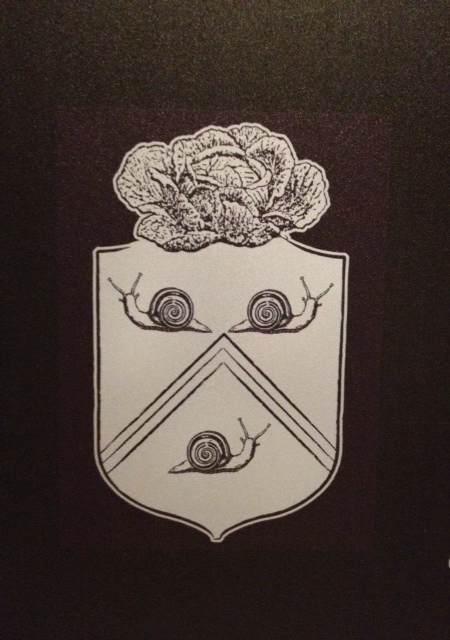
NotreArms

Actually, I should make that “trois escargots et un chou.” That was the tongue-in-cheek coat of arms chosen by the great French landscape architect, Andre le Notre, when a grateful King Louis XIV ennobled him.

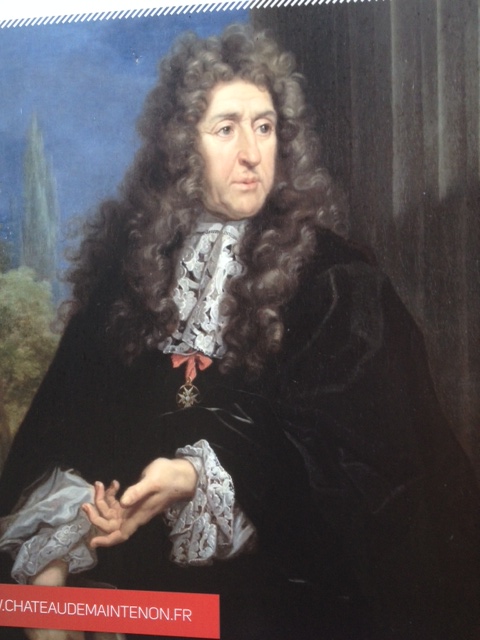
NotrePortrait

Le Notre was born into a family of gardeners; his family lived in a house in the Tuileries, in the very shadow of the Louvre when it was still a royal palace.  He was a humble man; he always called himself “just a gardener.”  He never wrote any treatises on his work; he let his gardens speak for themselves. He developed the French formal garden into a sublime art form and an expression of the most current scientific thought as well.

photo (37)

Le Notre worked on the formal gardens at Chantilly, Vaux-le-Vicompte, Fontainebleau, and many other chateaux.  His work culminated in the spectacular grounds at Versailles.  A more modest example of his work is at the Chateau de Maintenon, home of the King’s final and “secret” wife.

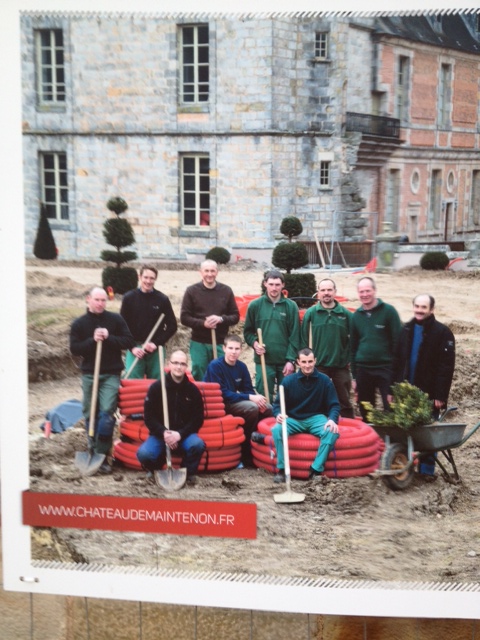
MaintStaff

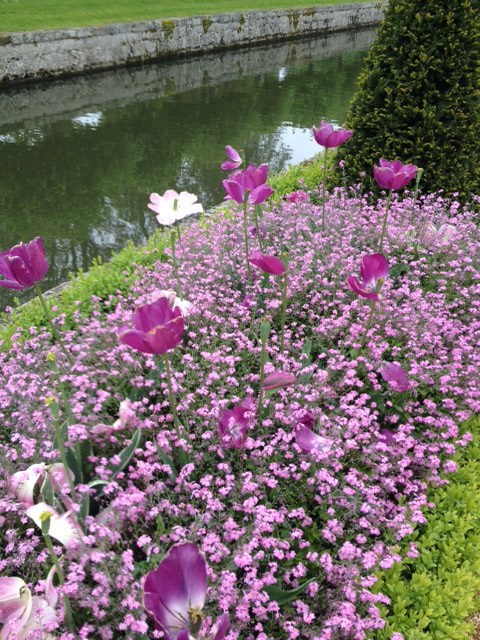
While wandering in this beautiful manicured garden, I could hardly bear to think of my raggedy yard at home.  Then I came upon a photo of the staff employed to maintain even this small and modest French formal garden, and I felt better!

Join me next time for more explorations in the art and history of Europe!

“Belle:” A Tantalizing Glimpse Into History

Last week in Washington, DC,  sights like the Lincoln Memorial and the new Martin Luther King Memorial made me think about the history of slavery. A film now in theaters examines slavery, and race, from a unique perspective.

"Belle" theatrical release poster

“Belle” theatrical release poster

“Belle,” written by Misan Sagay and directed by Amman Asante, is a 2013 film about a real person, Dido Elizabeth Belle. She was the niece of William Murray, 1st Earl of Mansfield and Lord Chief Justice of England and Wales. She was the daughter of his younger brother, a Royal Navy Admiral, and a free black woman who had died. She was left in the care of her uncle to be a companion to her cousin, Lady Elizabeth Murray. Belle was raised as an aristocrat even though she was black. In the film, certain lines are drawn: Dido is not allowed to sit with the family at evening dinners when there is company,  but she is welcome in the drawing room afterward. Actually, little is known about Belle’s life, but the filmmakers have fashioned an absorbing story based on real-life events close to Belle.

Just as she was coming of age, Belle’s uncle had to decide a notorious case in which owners of a slave ship, the Zong, had thrown their cargo of slaves overboard in order to collect the insurance on their “property.” The Lord Chief Justice’s ruling was eagerly anticipated all across England.  If he went one way, slave traders would have a free hand in the future. If he went the opposite way, his ruling would spell the beginning of the end of slave trading in England.

To further complicate matters, Belle inherits a sizable fortune on the death of her father, while her white cousin is penniless.  Suddenly Belle has aristocratic suitors.

In the movie, Belle’s forbidden romance with a passionate, idealistic but impoverished young lawyer influences her uncle’s eventual decision. The luminous Gugu Mbatha-Raw plays Belle. The stellar cast includes the great Tom Wilkinson as the uncle, as well as Miranda Richardson, Penelope Wilton, Sam Reid, Matthew Goode, Emily Watson, Sarah Gadon, Tom Felton, and James Norton.
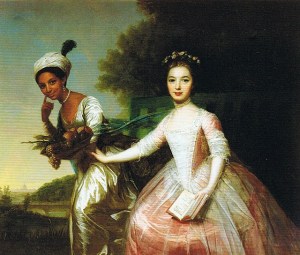
Dido and Elizabeth, Public Doman

Dido and Elizabeth, Public Doman

In 1779, Belle’s uncle commissioned a portrait of his two young nieces. The portrait is unique because it is one of the very first paintings that depict a black aristocrat as an equal to a white aristocrat. The painting, by an unknown artist, hung until 1922 at Kenwood House in Hampstead, where Belle grew up.  It is now at Scone Palace in Perth, Scotland.

Join me next time for more explorations in the art and history of Europe!

Parisian Elegance

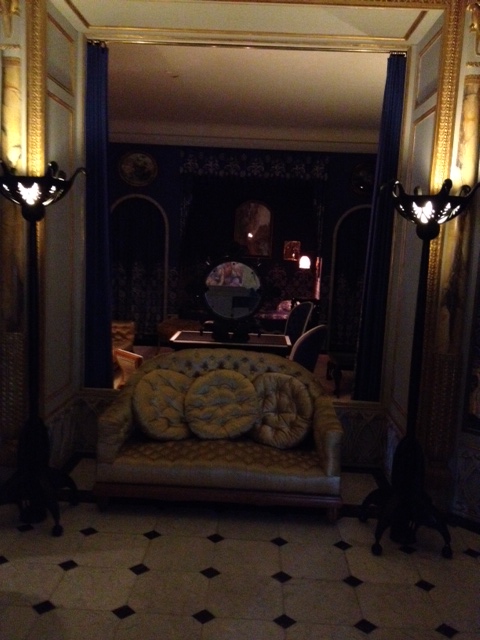
The Musee des Arts Decoratifs (Museum of Decorative Arts) in Paris is actually in the Louvre complex. It doesn’t get the traffic enjoyed by the Mona Lisa, but anyone looking for a visual feast will be happy in its galleries.  Among many other things, there is the reconstructed apartment of the fashion designer Jeanne Lanvin in Paris.

photo (33)

Jeanne began her career as an apprentice milliner, then trained as a dressmaker.  She married a count at age 28, which brought her into higher social circles. Their only daughter, Marguerite, eventually took over the fashion business her mother had founded.

photo (31)

Jeanne began by making exquisite clothes for her daughter, which her friends wanted for their own children.  Soon she was making dresses for their mothers, and she was on her way. In no time, she had her own boutique on the world’s penultimate fashion street, the rue du Faubourg Saint-Honore.

photo (32)

Jeanne’s most famous creation was the iconic perfume “Arpege,” which was inspired by her daughter’s piano practice.  “Arpege” is French for “arpeggio.” The bottle features a charming graphic of a mother and daughter.

The apartment, from the 1920s, is designed down to the square inch, all in the blue and gold featured on the signature perfume bottles.  I can only imagine the rarefied life lived there.

Tulip Monkey Business


photo (9)

I took a short train ride from Amsterdam to the nearby town of Haarlem, especially to visit the Frans Hals Museum. One of the more charming pieces I found there featured monkeys and tulips.  Frans Hals was a contemporary of Rembrandt; they competed for the same clientele of wealthy Dutch citizens during the Golden Age of Dutch painting, in the 1600s.  His namesake museum has many Hals paintings, plus work by other artists of his time.

"A Satire of Tulip Mania" by Brueghel the Younger, Public Domain

“A Satire of Tulip Mania” by Brueghel the Younger, Public Domain

“A Satire of Tulip Mania,” by Breughel the Younger, was painted in 1640, just after the debacle of the tulip boom and bust cycle.  This was the seventeenth-century equivalent of the dot-com boom and bust. It was probably the first modern instance of rampant speculation in a commodity, followed by a crash. At the height of the frenzy, a single tulip bulb sold for ten times the annual income of a skilled craftsman.

Brueghel dressed his gullible monkeys in contemporary clothes and showed them facing debtor’s court and even urinating on discarded tulips, turned from priceless to worthless overnight.

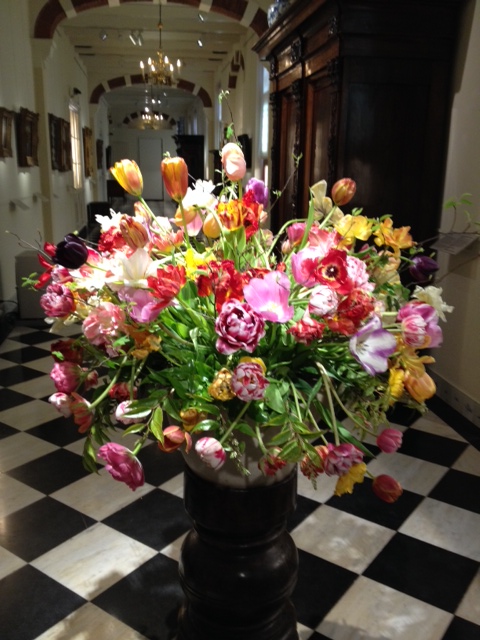
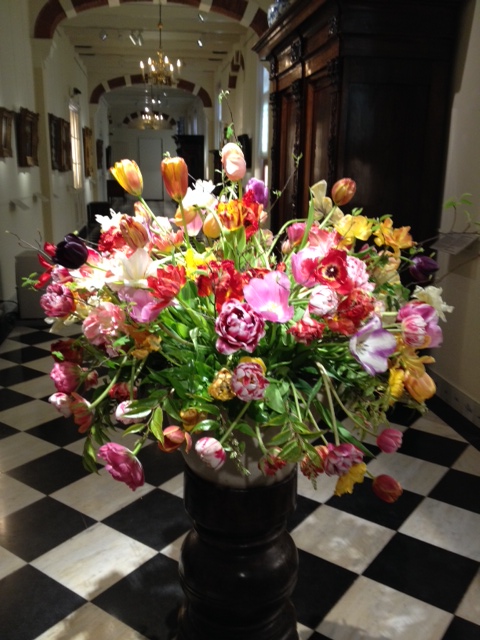
Today the tulip trade is much more stable.  The museum had spectacular arrangements of tulips and other spring flowers in every room.

photo (12)

Join me next time for more explorations in the art and history of Europe!
Amsterdam: Canals, Bikes, Tulips and Dogs

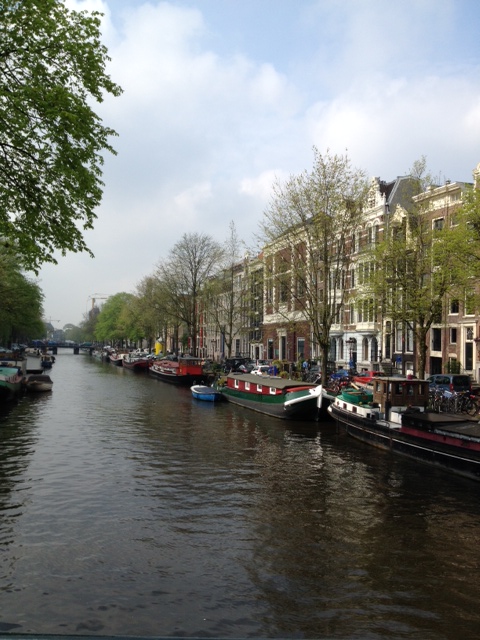
Amsterdam is beautiful in any season, but the long days of spring add to the enjoyment. The light on the canals is particularly beautiful in early morning and evening.

photo (6)

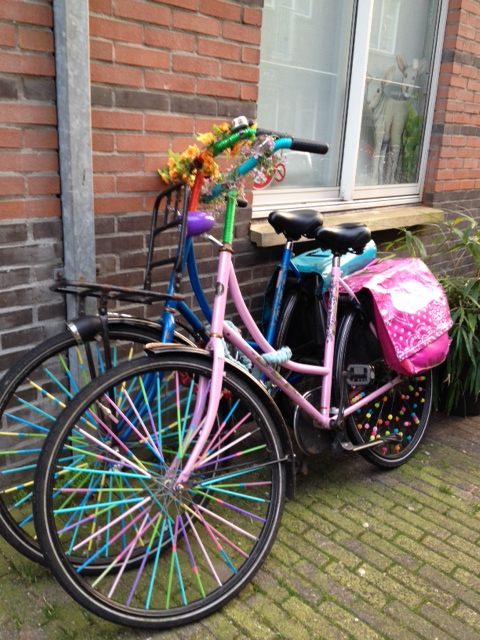
Bikes comprise about 40% of the traffic in the city.  And of course bikes make fashion statements all their own.

BikeFashion

Tulips are everywhere.

TulipArrgmt

And paintings from the Dutch Golden Age, in the 1600s, are replete with the family pets beloved then, as now.

DogPainting

For some reason, dogs occupy a very special place in Dutch painting.  I guess they were a big part of the good life in the heyday of Amsterdam, when trading made its citizens some of the richest and most contented people in the world.  The city today, at least the parts that tourists see, seems equally fun-loving and prosperous, if a lot more egalitarian.

Join me next time for more explorations in the art and history of Europe!
Join me next

Revisiting an Old Friend in Amsterdam

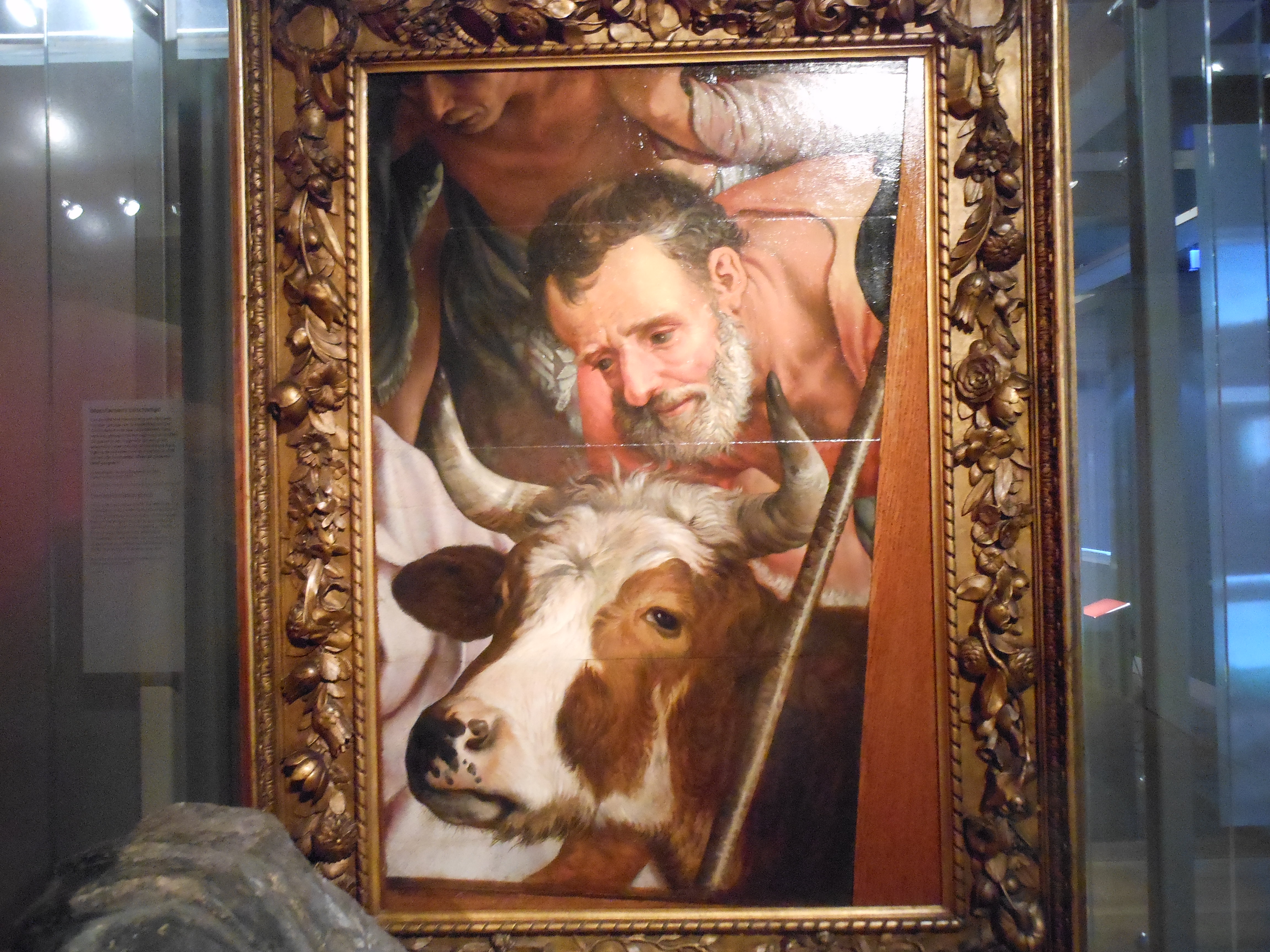
In the Amsterdam History Museum the last time I was there, I came upon a particularly lovely painting of a man with a cow.  It is a fragment left from a much larger painting, now lost.  There’s a benevolent looking man, bending toward a cow that looks equally benevolent. Man and animal are painted with exquisite detail. If anything, the animal is painted in clearer focus. The animal gazes outward toward the viewer, with calm intelligence. The man is intent on something below and beyond the frame: very likely a baby sleeping in a manger.  The scene is one of overwhelming tenderness and reverence.

DamagedMaster

The painting, about 3 by 4 feet, is identified as a fragment of a much larger piece, forever lost. The original work was part of a large altarpiece; the artist is unknown. The altarpiece was broken up during religious rioting in the 16th century.  Even peaceful, tolerant Holland did not escape the religious strife that tore through all of Europe in past centuries.

Some museums allow photos; some do not.  I am always grateful when I can take a quick photo of a piece of art that speaks to me.  I never intend to sell my photo, enlarge it, or frame it.  I’d buy a print if I wanted something to hang on a wall. Instead, my photo preserves a travel memory: an encounter with a piece of art that made me slow down during a long day of sightseeing. It’s a memory of time I took out of fast-moving everyday life to ponder the timeless moments of beauty and peace that great art creates.

I’m off to Amsterdam again.  I’ll be seeking out this painting, as an old friend.

Maria Theresa, the Original “Lean In” Woman

Theresia11-12The Habsburg dynasty was about to die out in the year 1740, when Emperor Charles VI died without a male heir.  He had seen this coming; he had worked during his entire reign to promote the Pragmatic Sanction, an agreement whereby members of the Austro-Hungarian Empire recognized his daughter, Maria Theresa, as his rightful heir even though she was a woman. He was not cold in his grave when many of the entities that had agreed changed their minds.

The young queen had to fight battles, both military and political, to hold on to power.  She married the man she loved, Francis of Lorraine. The Habsburg dynasty, instead of dying out entirely, became the Habsburg-Lorraine dynasty. Francis was not the sharpest knife in the drawer, though, and Maria Theresa soon realized that she had to be the actual day-to-day ruler of her vast empire. She did it for 40 years.

MariaTFamily

In her spare time, she gave birth to 16 children.  She arranged politically advantageous marriages for them all over Europe, mostly strengthening Habsburg power with each marriage.  Poor Marie Antoinette got the short end of the stick, but the other children made out pretty well.

Giants

In the Hofburg at Innsbruck, Maria Theresa’s PR skills are on glorious display.  She redecorated a very grand reception room, called the Giants’ Hall. When she began her reign, the room came with paintings of Hercules and other characters from myth and legend.  Maria Theresa did away with all that; instead she filled the room with oversized portraits of herself, her husband and above all her many children.  Visitors to the palace had to pass through this room, basically plastered with Habsburg dynasty billboards, to reach the other rooms of the palace. Children who had died in infancy were pictured in the clouds.

MariaThereseHall

I don’t know why someone has not made a movie of Maria Theresa’s colorful life.  She is every bit as interesting as, say, her unfortunate daughter Marie Antoinette. Actually, there are not many biographies of Maria Theresa, and I don’t know of any historical novels about her.  I have a feeling, though, that Maria Theresa could have written a very modern book like Sheryl Sandberg’s “Lean In:  Women, Work, and the Will to Lead.”

LeanIn

Join me next time for more explorations in the art and history of Europe!


Walking on a Forest Floor in the City

Now that I’ve been to the Kunsthauswien, I’m sure I’ll make my way there every time I’m lucky enough to be in my favorite city, Vienna.  The medium-sized museum, dedicated to the artist Friedensreich Hundertwasser, is just a short and fun tram ride outside the center. The artist was born Friedrich Stowasser in Vienna in 1928.  His mother was Jewish, and as he became a teenager the Nazis were coming to power.  In order to be inconspicuous, the mother and son posed, as many people did, as Christians.  The father had been Catholic, so this was dangerous but doable.

1998 photo by Hannes Grobe, Creative Commons Attribution-Share Alike 2.5

1998 photo by Hannes Grobe, Creative Commons Attribution-Share Alike 2.5

After the war, Hundertwasser spent several months at the Academy of FIne Arts (which had famously rejected aspiring painter Adolf Hitler–not once but twice). As he developed as an artist, Hundertwasser renamed himself: “Friedensreich” means something like “Peace-realm” and Hundertwasser means “Hundred Waters.” The name was perfect for the artistic career that he developed, with all his work aimed at peace, joy, organic forms, union of humanity with nature, and incredible diversity.  He worked in just about every medium available to an artist, and threw in architecture, environmentalism, and social activism on top of it all.

Hundertwasser especially wanted to bring nature back into cities.  One of his more radical ideas was the uneven floor surface, recreating the natural state of the outdoors.  The Kunsthauswien has such floors.  The floors are not only uneven, but cheerfully covered in bright mosaics. Walking on them is, in the very appropriate expression from the sixties, a real trip.

WavyFloor

A caption quotes some of Hundertwasser’s ideas about the value of uneven floors: “If man is forced to walk on flat floors…estranged from man’s age-old relationship and contact to earth–a decisive part of man withers and dies…The uneven floor becomes a symphony, a melody for the feet and brings back natural vibrations to man.”

The nearby Hundertwasserhaus apartment building has such floors throughout.  I wonder what the residents actually think of their floors.  Do they get used to the waves and bumps, or do they sometimes stub their toes in the middle of the night?  I glimpsed a couple of residents visiting on a park bench in their apartment courtyard, and was tempted to ask them what they thought.  But the apartments are peoples’ private homes, so I left them in peace.

BenchResidents

Join me next time for more explorations in the art and history of Europe!
 

Tree Tenants in Vienna

Photo by Lucian Ilica, Public Domain

Photo by Lucian Ilica, Public Domain

Last time I was in Vienna, I finally took the time to have a look at the Hundertwasserhaus. It’s a short tram ride from the center, in a residential neighborhood of big apartment blocks.  Anyone who has ever taken Art History 101 has studied this innovative apartment building, constructed between 1983 and 1985 according to the ideas of Friedensreich Hundertwasser. He was a one-of-a-kind artist, architect, environmentalist, philosopher, social activist and general pain in the neck to “the powers that be” during his lifetime. For instance, he sometimes appeared completely naked when asked to give a lecture.  He was far ahead of his time, though.

Kunsthauswien

Kunsthauswien

The apartment building itself is hard to really look at; it’s crowded into an urban block, and since its residences are private, tourists can’t enter for a look around.  More interesting is the nearby museum devoted to Hundertwasser and his art, the Kunsthauswien.

TreeTen

I especially liked the Tree Tenants: a number of balconies are occupied by trees, creating a vertical green landscape right in the middle of a sterile urban block. Hundertwasser wrote extensively about trees as legitimate residents of city buildings. He commented, “Cars have chased the trees up into the storeys of houses…We suffer daily from the aggressivity and the tyranny of our vertical sterile high walls. But streets in the cities will become green valleys where man can breathe freely again.”

HundertBack

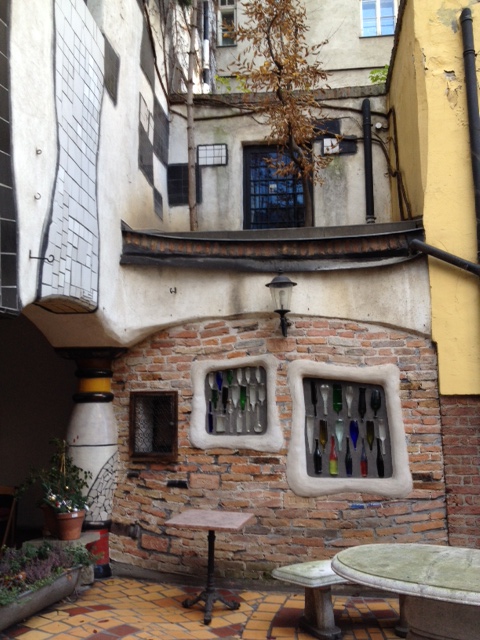
There’s a funky cafe and terrace in the back of the museum, a perfect place to contemplate the life and times of a thinker and man of action. Colored bottles installed in a window, where other people might think of using stained glass?  It makes perfect sense, in this enchanting museum off the beaten path in Vienna.

Join me next time for more explorations in the art and history of Europe!

Beautiful, Musical Vienna

I just booked my next trip to Vienna.  Why do I find that city so charming?  The inner city, the part that tourists see, is like a fairy-tale version of what a European city should be–clean, walkable, quirky, with a history going back centuries. Yet the city feels vital and utterly modern.

ChoirWaiting2

It is very common to see visiting musical groups gather and burst into spontaneous song.  Passersby stop to listen to a few minutes of enchantment, then move on.  This choir group was waiting outside the 12th-century Stephansdom to perform in one of the many musical programs that take place there. The Stephansdom still functions as a parish church, too.  Many VIennese stop in for a quick prayer or moment of contemplation on their daily travels about the city. In the background is the postmodern Haas Haus, which Viennese deplored when it was built in 1990.  Yet now it is a treasured part of the city landscape.  Day and night, the glass surfaces of Haas Haus reflect the medieval flourishes of the ancient cathedral.

I can’t wait to return to Vienna!  Join me next time for more explorations in the art and history of Europe!