Category Archives: Art

St. Jerome and His Lion

Niccolo Antonio Colantonio,

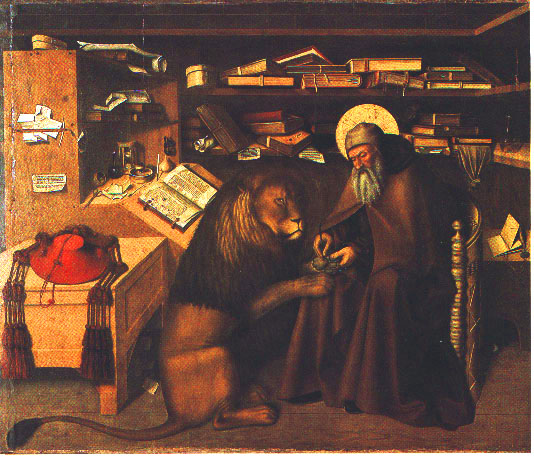
Niccolo Antonio Colantonio, “Jerome in his Study,” c. 1440-1470, Public Domain, National Museum of Capodimonte

One of my favorite saints is Jerome, AKA Saint Hieronymous. Why? Because he befriended a lion in the wilderness–or at least so the legend goes. In the painting above, the lion has ventured into the saint’s dusty study with a thorn in his paw.  Jerome sets his book aside and carefully removes the thorn.  In other depictions, the saint comes across the lion, writhing in pain, out in the wilds. Either way, the legend is that from the moment Jerome extracted the thorn, the lion never left his side.

Jerome was born around the year 347 A.D.  He lived mostly in what is now Croatia.  A scholarly fellow, he became one of the earliest Doctors of the Church, before titles like “Cardinal” existed.  One of his main accomplishments was translating the Bible into Latin, from its original Aramaic and Greek.
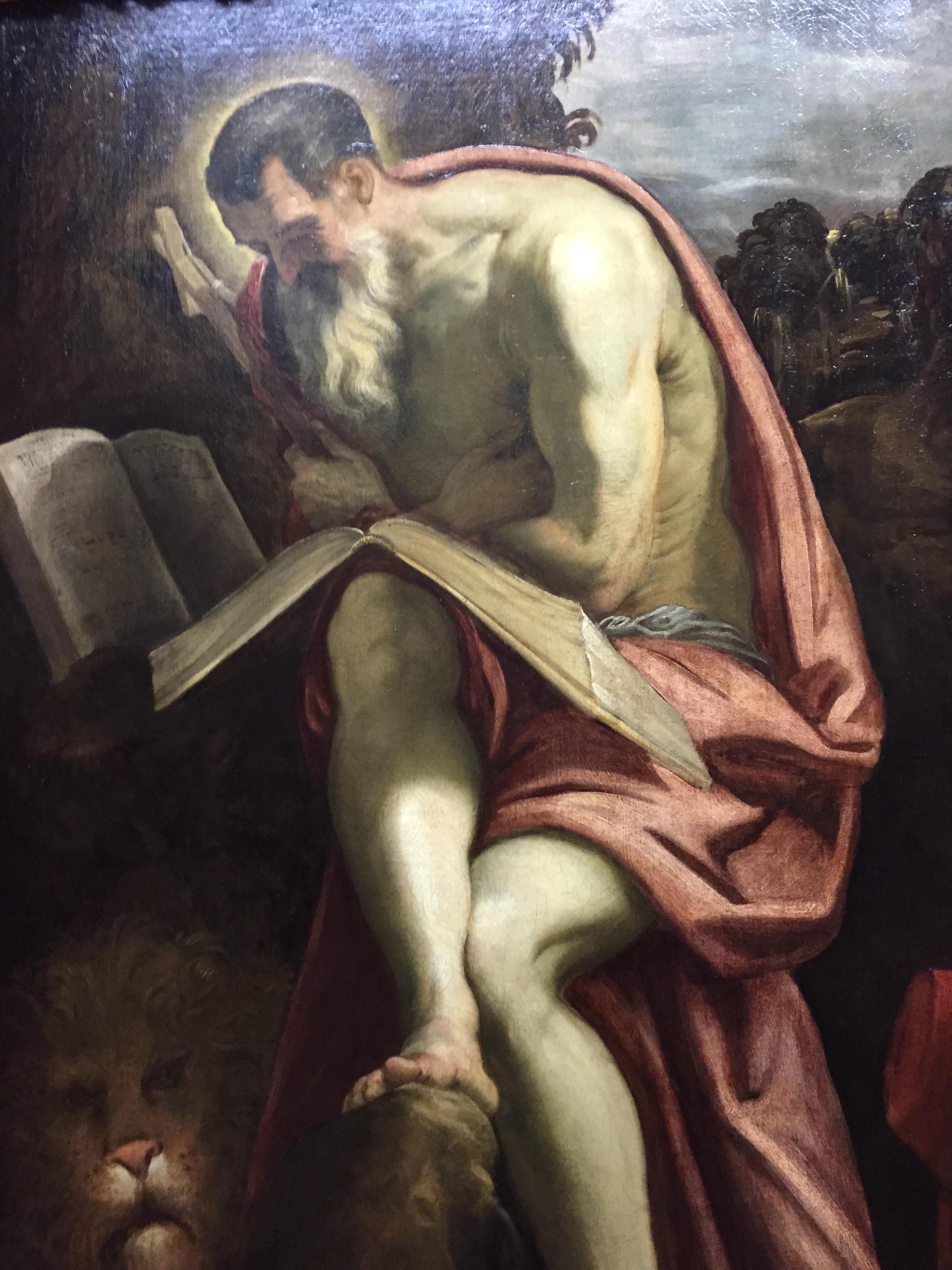
Jacopo Tintoretto,

Jacopo Tintoretto, “St. Jerome,” c. 1570, Public Domain, Vienna Kunsthistorisches Museum

In paintings, the lion often lurks under a table or in a dark corner.
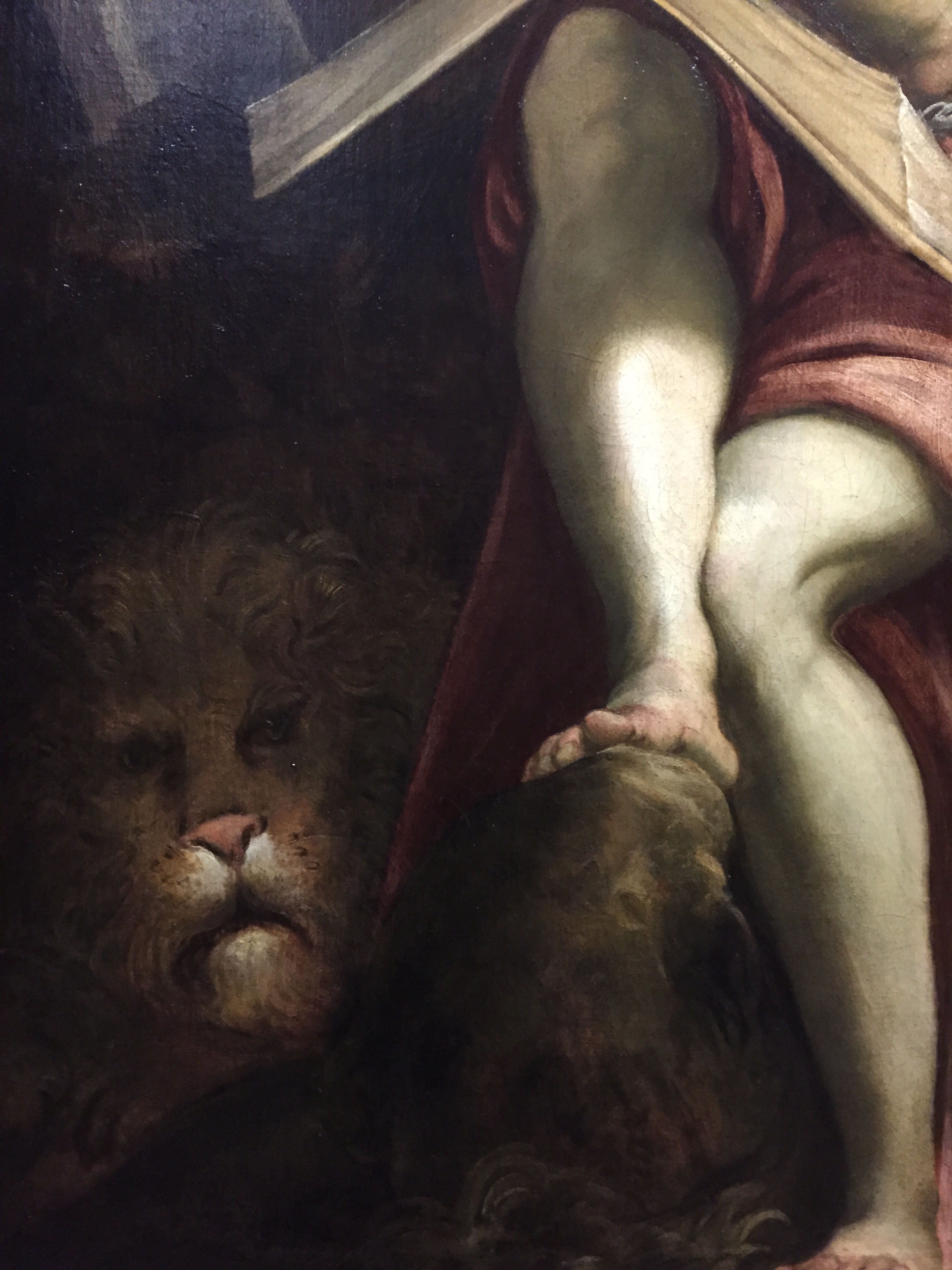
IMG_3174

I took the two photos just above in the Kunsthistorisches Museum in Vienna. I love the legend, and whenever I’m in an art museum I’m on the lookout for images of Jerome and his lion. They have been painted countless times.

IMG_3495

Whenever I spot Jerome and his lion, I move in for a closeup.

Workshop of David Gerard, Saint Jerome in a Landscape, about 1501, my photo taken in National Gallery, London

Workshop of David Gerard, Saint Jerome in a Landscape, about 1501, my photo taken in National Gallery, London

To me, Jerome’s friendship with his lion is part of his concern for the whole creation.

Antonello da Messina,

Antonello da Messina, “Saint Jerome in His Study,” about 1475, my photo taken in National Gallery, London

Sometimes the lion is not underfoot, but he’s always close by.
FullSizeRender (3)

The faithful lion is always present.  In the painting of Jerome in the large study above, he’s patrolling the perimeter. No matter what, the lion always had Jerome’s back.
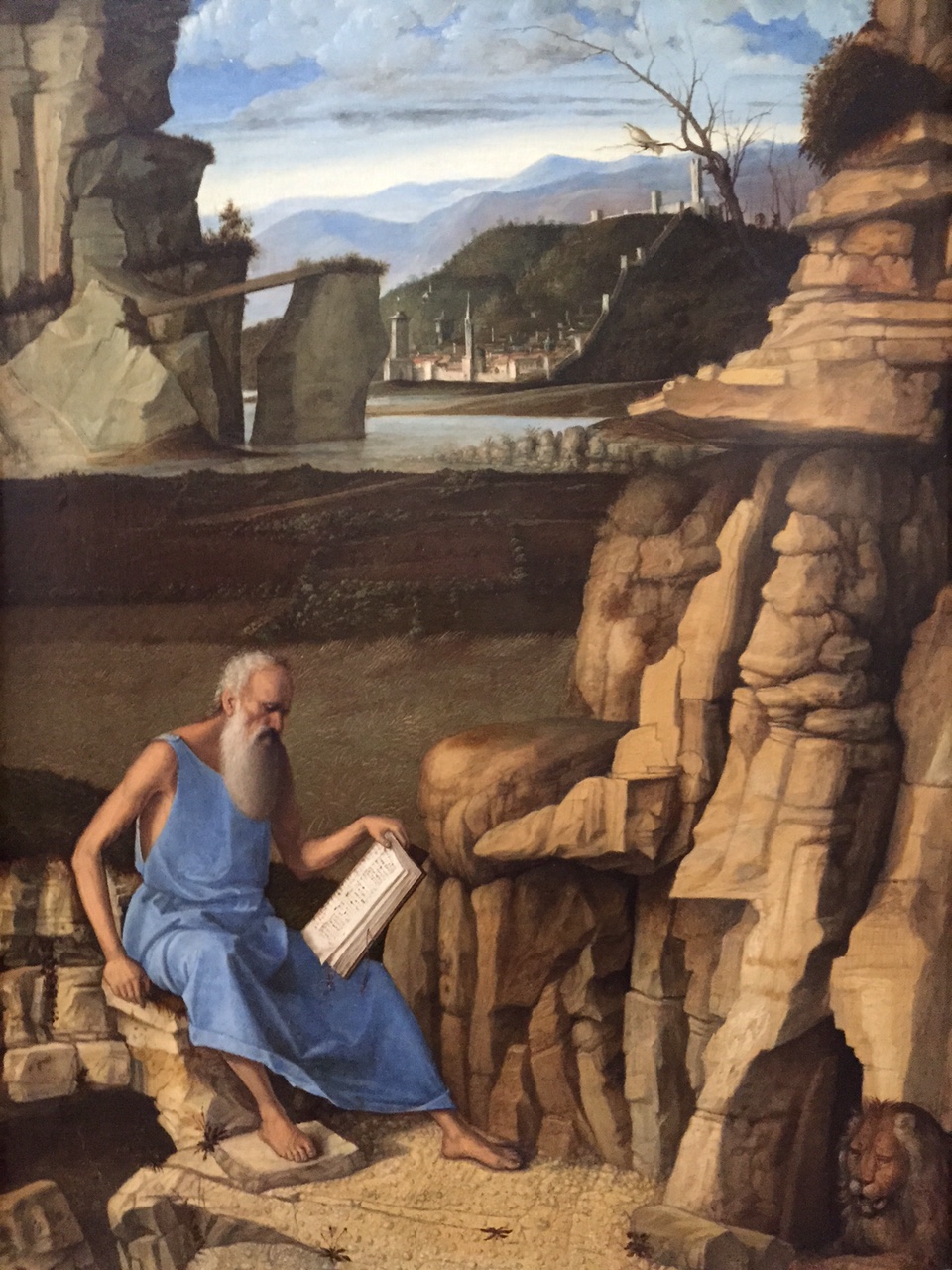
Giovanni Bellini, Saint Jerome Reading in a Landscape, circa 1480-5, my photo taken in National Gallery, London

Giovanni Bellini, Saint Jerome Reading in a Landscape, circa 1480-5, my photo taken in National Gallery, London

If the lion’s face is shown, he always has a friendly, grateful, loyal face–much like a shy family dog. He tends to look a little wary–who is about to disturb his friend Jerome?
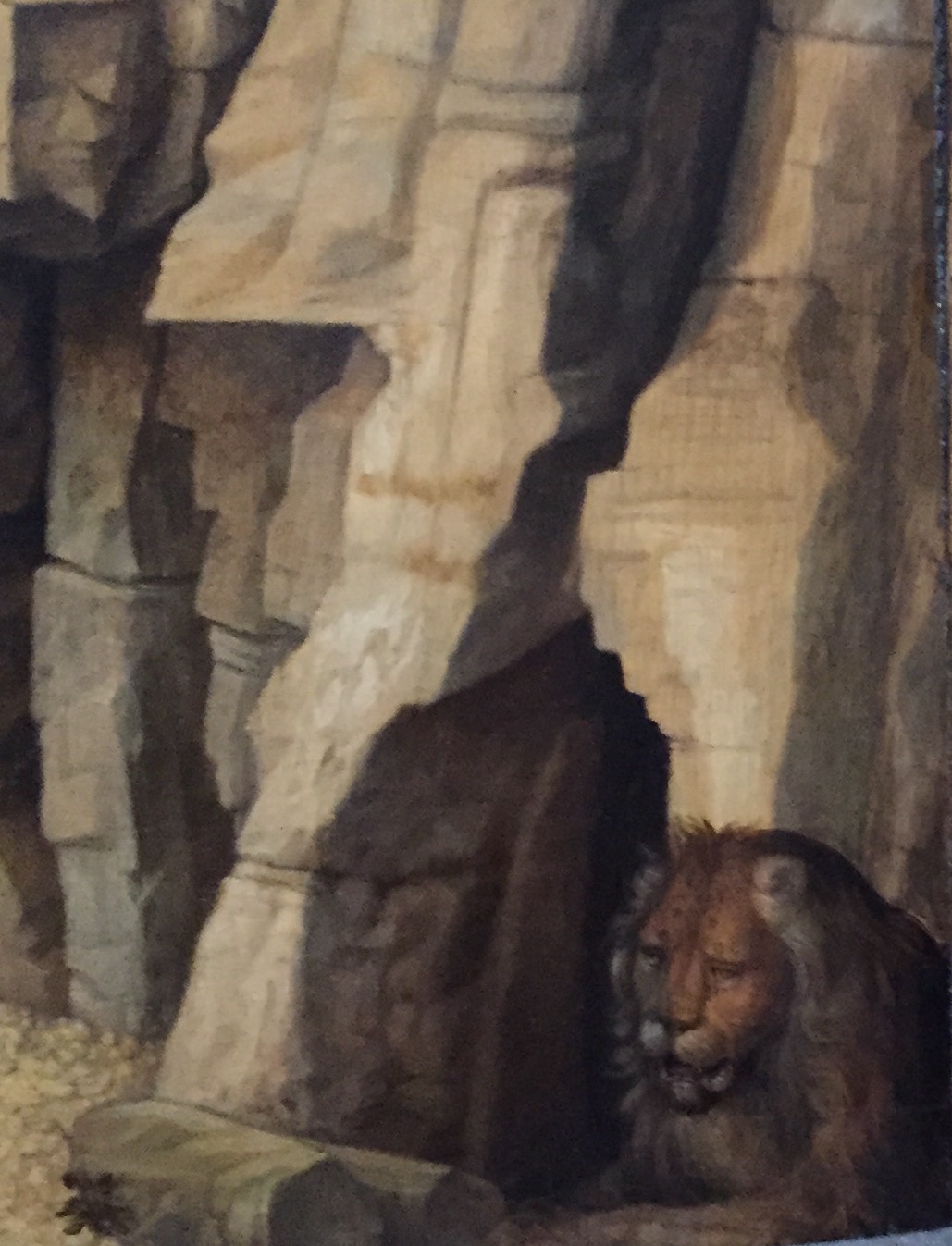
FullSizeRender (2)

Are these paintings just sentimental portrayals of a serious saint who should be remembered for much more than a story that may not have happened at all?  The subject is the medieval and Renaissance equivalent of sharing cute animal videos online.

On a busy day, a couple of minutes spent watching photogenic animals feels to me like a guilty pleasure. What am I accomplishing by watching a gorilla rock a kitten to sleep or a sheepdog rescue a teacup pig from drowning?  Well, I’m not getting a thing done, but I’m pausing in a busy day to learn compassion from animals. Like those videos, the images of St. Jerome and his lion give us an appreciation of our bond with the animals who share our world. The animals mostly treat each other and our world better than we humans do. If I were St. Jerome, I wouldn’t mind being remembered as an animal lover as well as a high-powered scholar.

Join me next time for more explorations in the art and history of Europe!

Margarita Teresa: A Cheerful Infanta

Diego Velazquez,

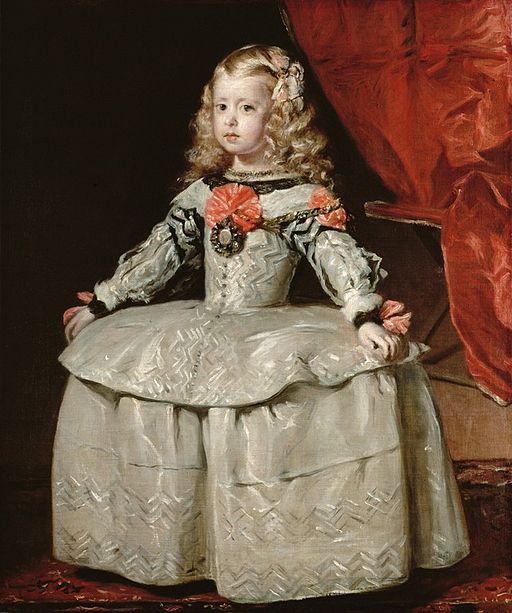
Diego Velazquez, “Portrait of the Infanta Maria Teresa of Spain,” 1652, Public Domain

It’s just as well we can’t see into the future.  The series of Velazquez portraits of Spain’s Infanta Margarita Teresa are some of the most charming images of childhood ever recorded. Her life was happy, but far too short. Margarita Teresa was born in 1651, daughter of King Philip IV of Spain and his second wife Mariana of Austria.

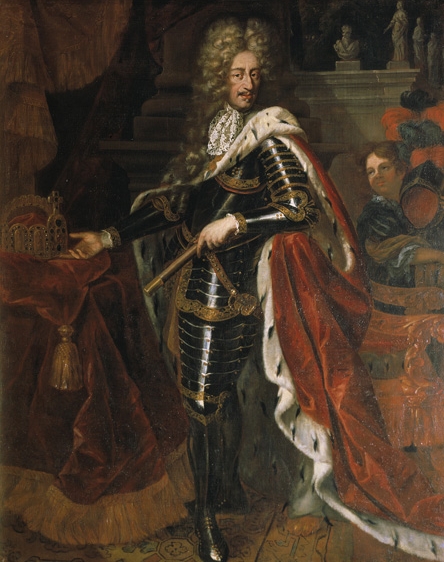
On the birth of a royal child, the Habsburgs immediately began looking for ways to cement the dynasty.  This usually involved intermarriage.  Most of us would not consider our uncle AND our first cousin as what we used to call “dating material,” but Margarita had no choice in the matter. As a baby, she was betrothed to Leopold I, Holy Roman Emperor. He was both her maternal uncle and her paternal cousin. (In my family, holidays like Thanksgiving are tense enough, what with all the unaccustomed family togetherness.  I can only imagine  trying to get through a festive meal of turkey and cranberries with the Habsburgs. At the very least, I think there would be snarky comments.  There could be a food fight).

"Portrait of Leopold I, Holy Roman Emperor," unknown artist, late 17th century, Public Domain

“Portrait of Leopold I, Holy Roman Emperor,” unknown artist, late 17th century, Public Domain

Leopold, 11 years older, was more than happy with his prospective bride.  To sweeten the pot, her father had made sure that she remained in the Spanish line of succession and would pass on her rights to any descendants.

Leopold naturally wanted to follow the progress of his bride as she grew up, and the Spanish court had the great painter Diego Velazquez at the ready.  He supplied enchanting portraits of the child as she grew. The portraits were sent straight to Leopold in Vienna.  The Kunsthistorisches Museum still has them. The portrait at the beginning of this article, showing the child at age 2, was the first. The child still had her fair baby hair, fluffy and unstyled.

Diego Velazquez,

Diego Velazquez, “La Infanta Margarita Teresa,” 1653-56, Public Domain

Velazquez painted Margarita Teresa again a couple of years later. She was lovely and serene. She looks a little shy, but she was clearly accustomed to wearing a grand gown and being admired.

Diego Velazquez,

Diego Velazquez, “Infanta Margarita Teresa in a Blue Dress,” 1659, Public Domain

One of the most famous depictions, above, showed Margarita Teresa at age 8, wearing a blue dress. She looks older than her age, and more than a little apprehensive.  She must have begun to understand her daunting obligations and her rapidly-approaching future by this time.

Jan

Jan Thomas, “Infanta Margarita Teresa,” 1667, Public Domain, Vienna Kunsthistorisches Museum

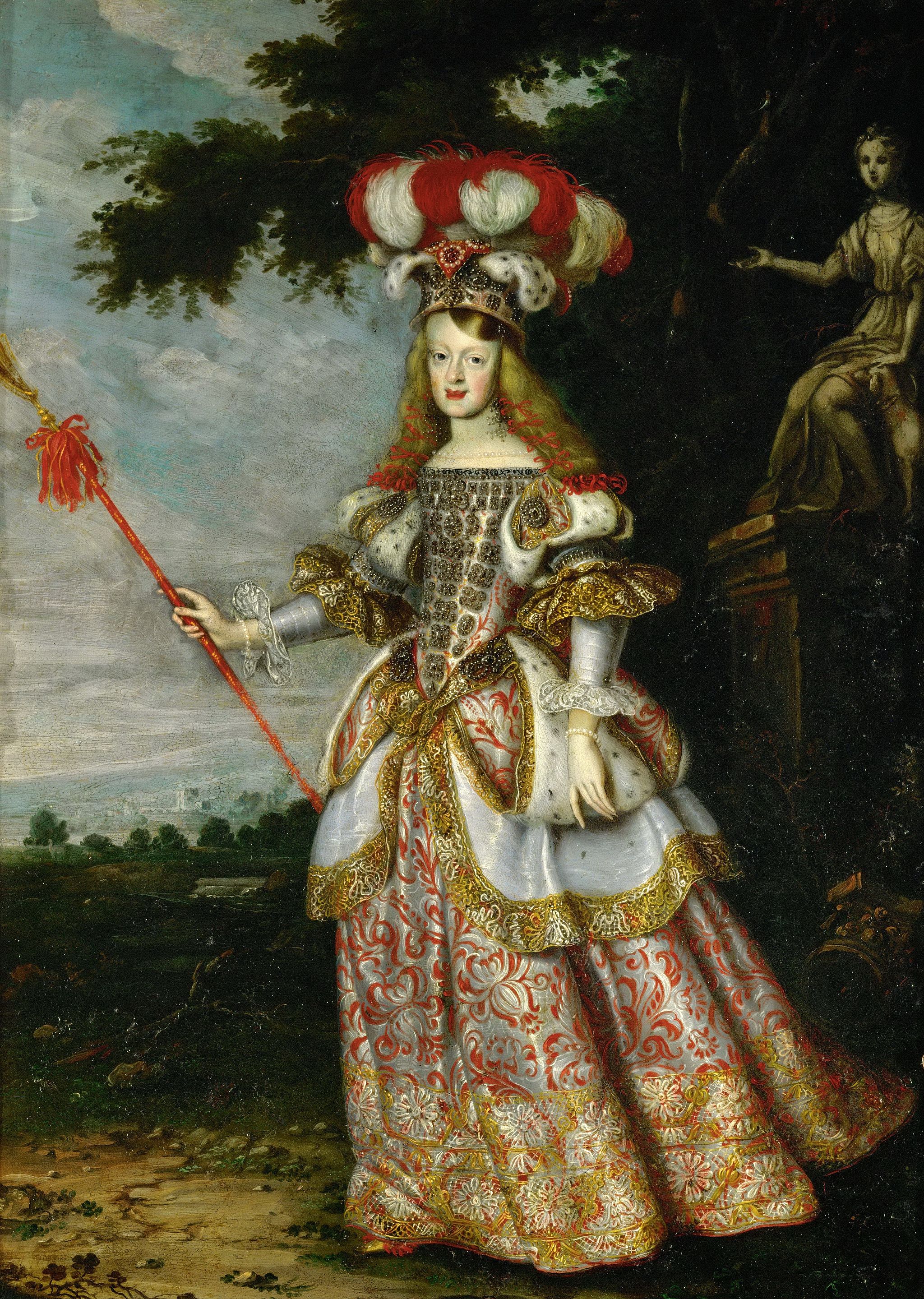
At age 15, just after the death of her father, Margarita Teresa went off to her destiny in Vienna. A German painter, Jan Thomas, painted her portrait in 1667, when she was 16. To me, she looks stiff and unhappy. Her towering headdress overpowers her slight frame, on which so much depended for her family’s royal succession. She looks thin and pale, too.  And why is there a statue in the background, looking over her shoulder and raising a hand as if to ask what she’s up to? The Viennese court was famous for its rigid protocols.  I imagine Margarita Teresa rarely had a moment to herself. Yet, in spite of the age difference, she and Leopold reportedly had a happy marriage.

Of course the teenager immediately began her child-bearing duties. Margarita Teresa had four living children, plus a number of miscarriages in her young life. Only one child survived, Maria Antonia of Austria. But the years of constant pregnancy had taken a toll.  Sadly, Margarita Teresa died at age 21.  Never having seen her native Spain again, she was buried in the Imperial Crypt in Vienna.

I wrote about Margarita Teresa’s ill-fated brothers, Balthasar Charles and Felipe Prospero, in two previous posts:

https://castlesandcoffeehouses.com/2015/07/27/velazquez-in-vienna/

https://castlesandcoffeehouses.com/2015/07/28/prince-felipe-…-a-sad-infante/

An article about the family church in Vienna, where Margarita Teresa was married at age 15, is at https://castlesandcoffeehouses.com/2014/12/01/habsburgs-hatc…and-dispatched/ (“Habsburgs Hatched, Matched and Dispatched”)

Join me next time for more explorations in the art and history of Europe!
Cousin Beatie at Melford Hall

2015-04-26 16.07.09

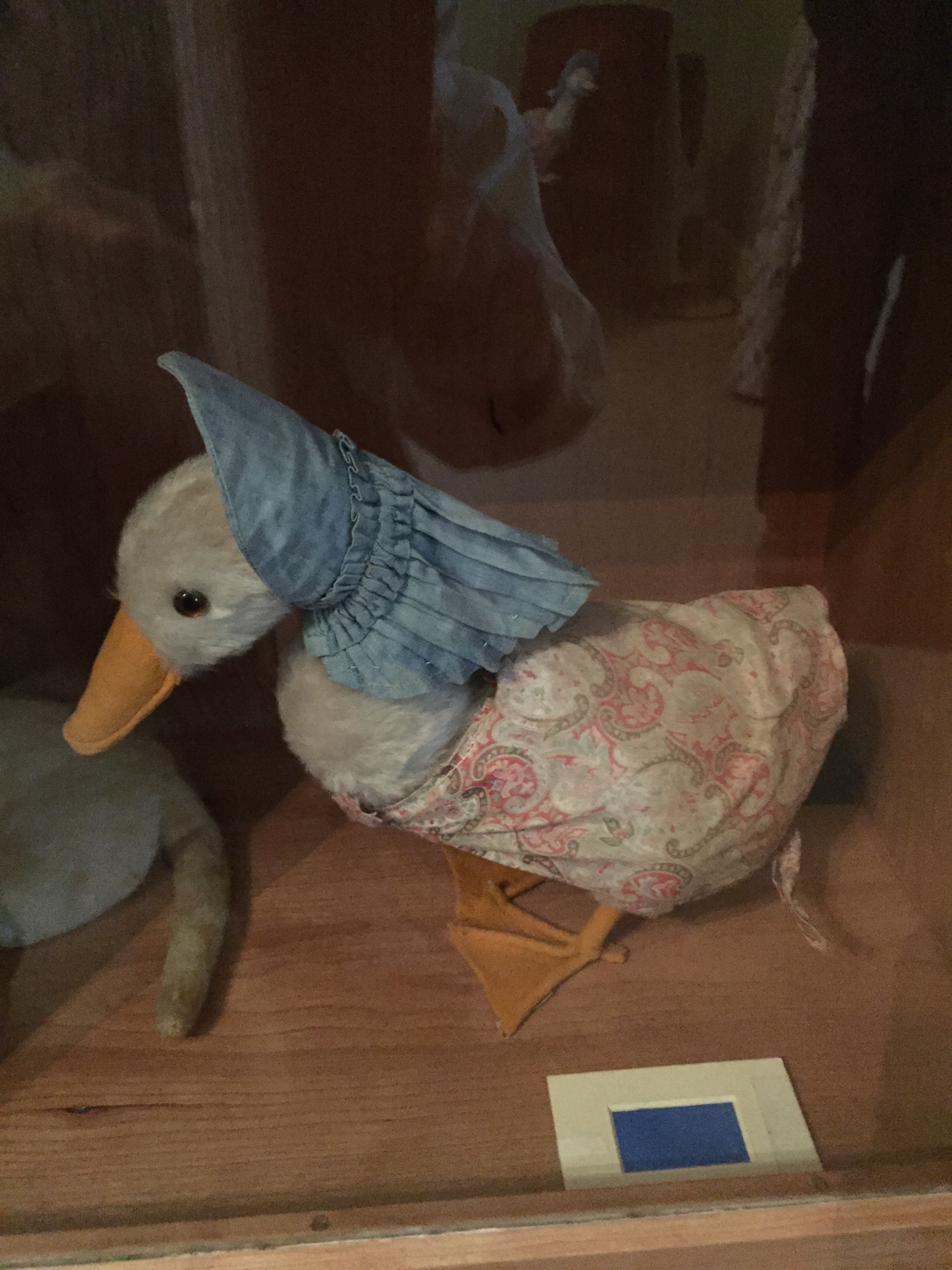
Beatrix Potter, born on this day in 1866, was a frequent guest at Melford Hall in Suffolk. One of her most beloved characters, Jemima Puddleduck, began life as a toy dressed by Beatrix and given to Richard Hyde Parker, a grandson of her cousin.

DSCN7712

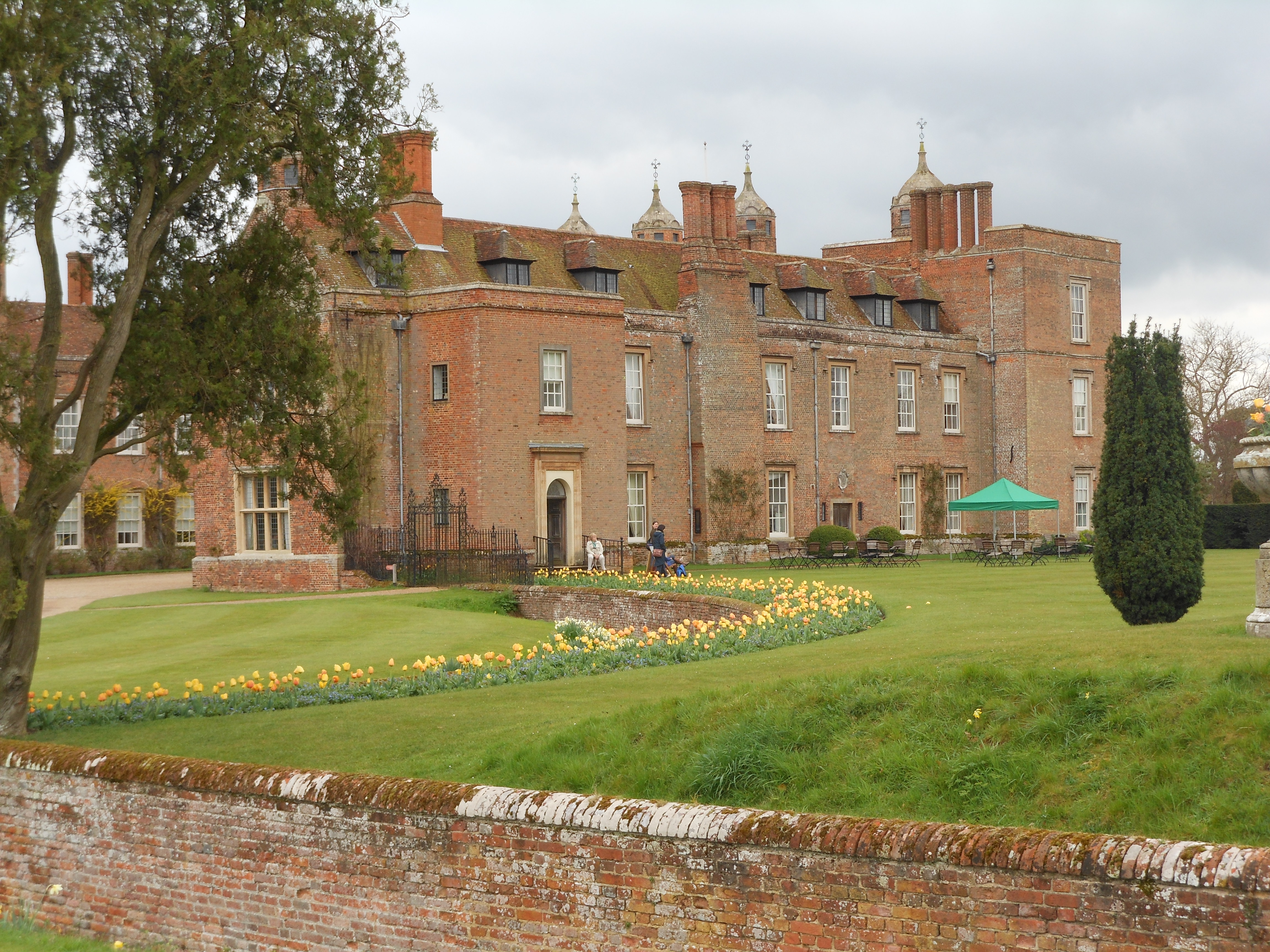
The house is now a National Trust property and a delight to visit. Beatrix was a cousin of Ethel Leech, who lived at the Hall with her husband, Reverend Sir William Hyde Parker. (Like many younger sons of the nobility, he had gone into the Church.  But the heir died unexpectedly and Sir WIlliam found himself a Baronet and the owner of a grand country home with a rich history).

2015-04-26 16.09.07

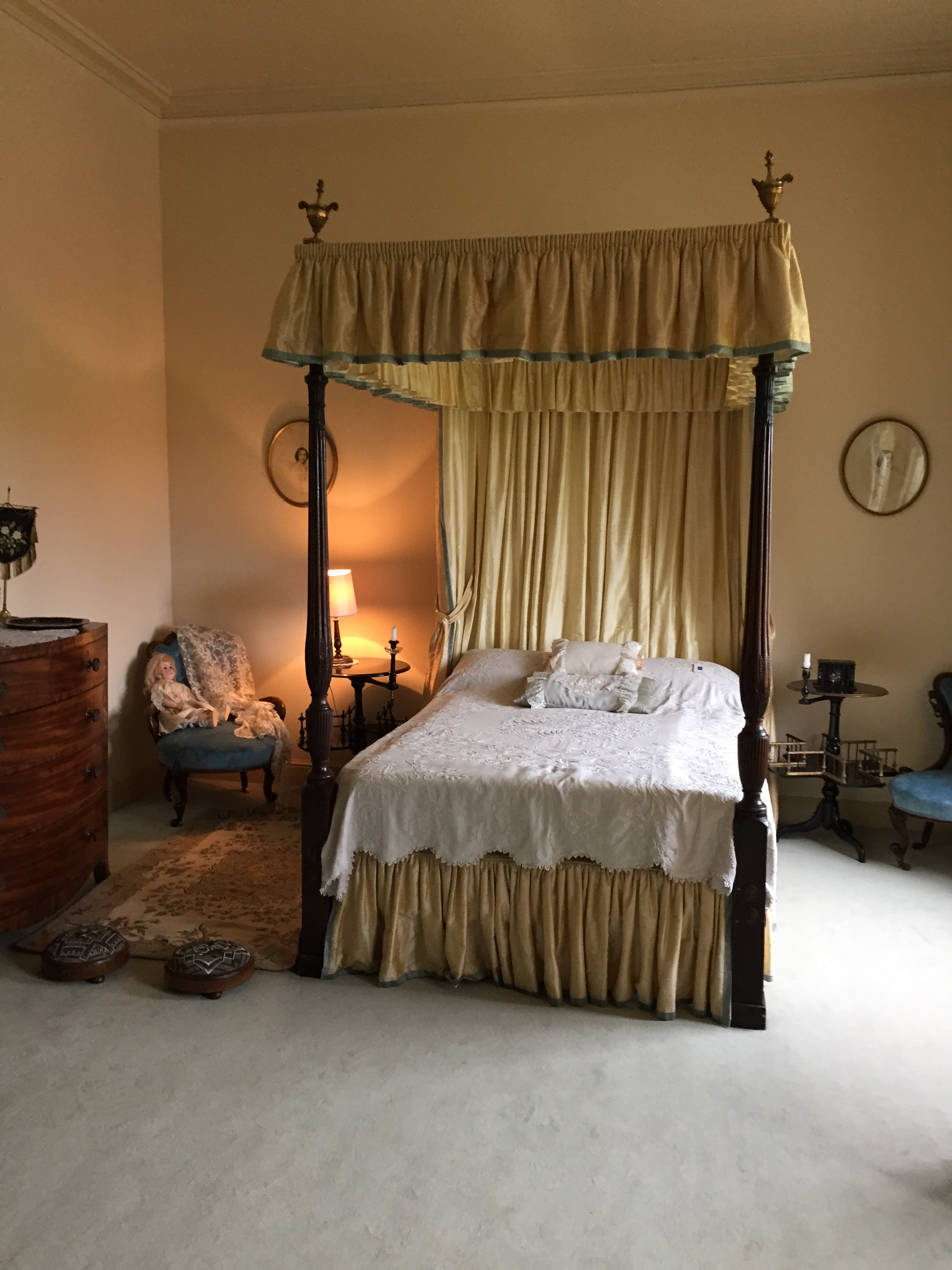
Beatrix usually stayed in the West Bedroom, which had views over the garden and countryside. It’s an elegant high-ceilinged room. When she was a visitor, the room was a magnet for the children of the family.  Beatrix often brought along a collection of small animals, which she kept in the adjoining turret room.

2015-04-26 16.09.33

The house has lots of mementos of “Cousin Beatie’s” time there.

Beatrix returned the family’s hospitality.  When Melford Hall was commandeered by the army during the Second World War, she invited the family to live at Hill Top Farm. They lived there for a year, a great privilege. No one had lived there since Hill Top contained many of Beatrix’s most prized possessions.  No one had lived at Hill Top after she herself moved to Castle Cottage when she married.

One of the joys of wandering in British country houses is in finding connections with history, and especially with British authors.  Beatrix Potter is one of my favorites, and I was very happy to spend an afternoon walking in her footsteps.

Join me next time for more explorations in the art and history of Europe and the British Isles!

Prince Felipe Prospero: A Sad Infante

Diego Velazquez,

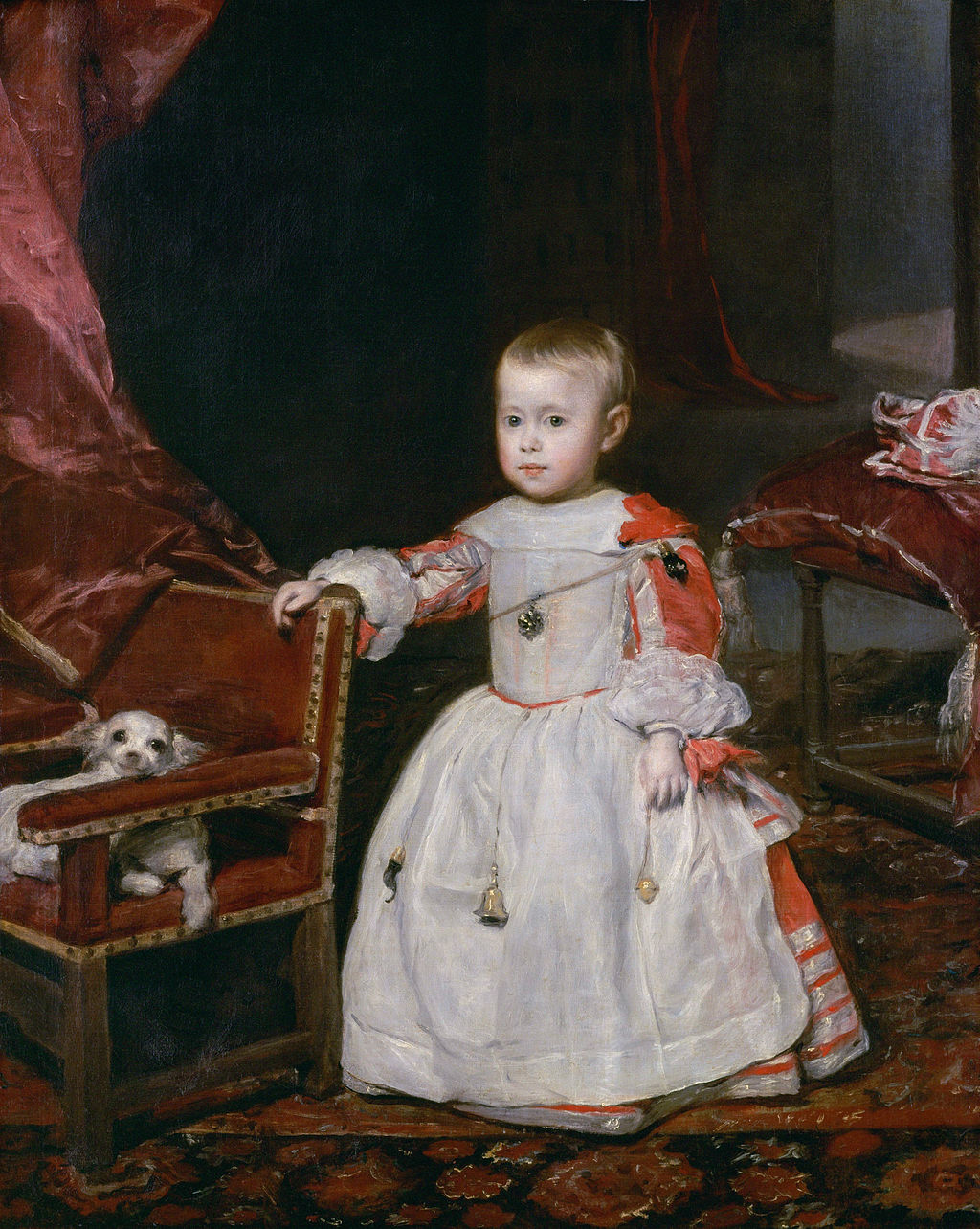
Diego Velazquez, “Prince Philip Prospero,” circa 1660, Public Domain, Kunsthistorisches Museum, Vienna

This painting is one of my very favorite works of the great Spanish court painter Diego Rodriguez de Silva y Velazquez.  It’s a loving depiction of Infante Felipe (Philip) Prospero around 1660. (Infante and Infanta were the titles of boy and girl royal children, respectively). Felipe Prospero was born in 1657. He was a long-awaited heir to the Spanish throne. His father was Philip IV of Spain;  his mother was Philip’s second wife, Mariana of Austria.  A son was essential; otherwise the husbands of Philip’s daughters would fight over the throne when he was gone.

Diego Velazquez,

Diego Velazquez, “Equestrian Portrait of Prince Balthasar Charles,” 1634-35, Public Domain, Prado Museum

The previous male heir, Prince Balthasar Charles, had died as a teenager, eleven years earlier. His death dashed the hopes of Philip IV for a stirring military career for his son.  As a devout Catholic, Philip believed that his sins had somehow caused the death of Balthasar. (Actually, the cause was most likely the collective sins of his family, who for many generations intermarried with their Habsburg cousins in order to keep their hold on power).

Felipe Prospero was greeted with ecstatic celebrations and baptized at the earliest possible moment, to the great joy of his parents and their subjects.  Water was brought from the River Jordan for the baptism.  The Spanish people celebrated with masquerades, bullfights, processions and also getting drunk and breaking up furniture. But the child was sickly, a fact that Velazquez did not try to hide.

FullSizeRender (1)

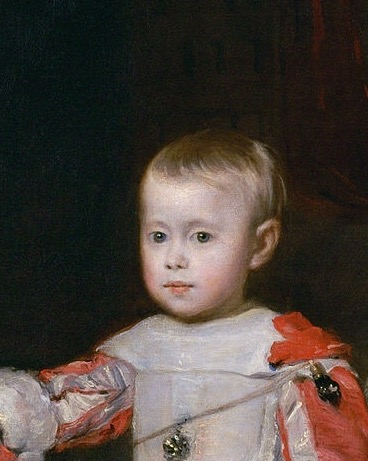
Felipe Prospero is pale. His eyes have a hollow look. Years of inbreeding between the Spanish and Austrian royal families had left him with a damaged immune system.

FullSizeRender

The amulets tied around his waist and across his chest were meant to ward off disease.

Nothing could help his worst medical problem, though.  Inbreeding had left Felipe severely epileptic. The child lived for only a short time after Velazquez painted this portrait. He died of a violent epileptic seizure in 1661, at age 3.

FullSizeRender (2)

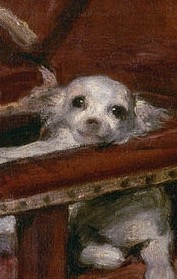
The painting captures the little boy’s wistful beauty, his fragility, and the sadness that surrounded him.  His little dog seems already to be mourning the child’s early death.

Velazquez was honored with a special exhibition last winter in Vienna.  The museum already has the largest collection of Velazquez paintings outside of Spain, and more were brought in for the spectacular exhibition. Because the Habsburgs enthusiastically intermarried with their Spanish cousins, Velazquez was kept busy painting portraits of prospective brides and grooms at various ages. The portraits are enchanting–and haunting.

Diego Velazquez,

Diego Velazquez, “Self Portrait,” 1640, Public Domain

Velazquez painted this self 
portrait the year before his own death in 1660.  I imagine the artist had a special feeling for this delicate child, so near to death at such an early age. To me, this painting is a profound reflection of the frailty and brevity of human life.My previous post told the story of Felipe’s older brother, Prince Balthasar Charles.  It’s at https://castlesandcoffeehouses.com/2015/07/27/velazquez-in-vienna/

Join me next time for more explorations in the art and history of Europe!
Velazquez in Vienna: Prince Balthasar Charles

DSCN9263

Last winter the Vienna Kunsthistorisches Museum had a wonderful exhibit of paintings by the Spanish master, Diego Velazquez. Many of them were from the museum’s stellar collection by the artist, but some, like the portrait used for the banners, were borrowed.

The December week I spent in Vienna it rained all day, every day. Sometimes, it is true, the rain was only a gentle mist.  But I never saw a single moment without some kind of wetness falling from the gray sky.

ViennaRain

Snow in Vienna is beautiful and romantic.  Rain? Not so much. Still, there is more than enough to do indoors in culture-rich Vienna. I always say that I don’t travel to Europe for the weather.

Diego Velazquez,

Diego Velazquez, “Self Portrait,” 1640, Public Domain

Diego Velazquez, considered by many to be the greatest of all European painters, was an honored guest at the Kunsthistorisches Museum. I had a yearly museum pass, so I ducked into the Kunst almost every day. I was often dripping wet, but each time I stashed my raincoat and revisited the Velazquez exhibit, I forgot all about being chilled and damp. I felt as though I had been to sunny Spain for awhile. The museum owns a number of the works of Velazquez, because of the close family ties (inbreeding, actually) between the Habsburgs and Spanish royalty.

The young boy in the portrait below was (literally) the poster child for the exhibit. Who was this boy?

Diego Velazquez,

Diego Velazquez, “Equestrian Portrait of Prince Balthasar Charles,” 1634-35, Public Domain, Prado Museum

The child posed confidently on a galloping horse was Prince Balthasar Charles, Prince of Asturias. He was the long-awaited male heir to the Spanish throne, the only son of King Philip IV and his first wife, Elisabeth of Spain. The Prince was born to great fanfare in 1629.

The boy appears to be at most eight or ten years old in his portrait, but that didn’t stop his parents from having him painted brandishing the baton of a Field Marshal.  He was born to lead, educated to lead, and expected to lead. King Philip IV faced challenges to the continuing rule of his family.  He needed this heir desperately. The hopes of his family and his country rested on this little boy’s shoulders. Sadly, Prince Balthasar Charles died at the age of 17 from smallpox.

Eugène Charpentier,

Eugène Charpentier,
” Jean-Baptiste, comte Jourdan, maréchal de France,” mid-19th century, Public Domain

Monarchies all over Europe awarded batons to important military officers, royal or merely aristocratic.  I imagine a Marshal wielding his baton the way Moses wielded the rod he used to lead the people of Israel.  Possibly the Biblical story is even one of the origins of the marshal’s baton. In most European armies, Field Marshal was the highest military rank, above even a General.  Usually it was awarded only to a person who was already a General, and only after extraordinary achievement, like winning an important battle. But the marshal’s baton in this portrait was purely wishful thinking.

Prince Balthasar Charles never had his chance at glory on the battlefield. His family waited eleven long years for another male heir.  My next post will tell the story of that Spanish royal child, subject of one of my very favorite Velazquez masterpieces.

Join me next time for more explorations in the art and history of Europe!

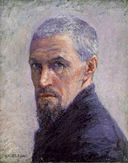
Gustave Caillebotte

Self Portrait, Gustave Caillebotte, circa 1892, Public Domain

Self Portrait, Gustave Caillebotte, circa 1892, Public Domain

Maybe it is really best for an artist to be poor, at least at the beginning of a promising career.  It seems to me that inherited riches stopped the artistic career of a potentially great French painter, Gustave Caillebotte.

Caillebotte, 1848-1894, was born to an upper-class Parisian family; most of their large fortune came from textiles used for military uniforms. I can almost hear the family arguments that resulted in Caillebotte going to law school.  He was licensed as a lawyer in 1870 and was also trained as an engineer. (“Painting will never get you anywhere, son. Besides, why don’t you just run the family business? We need you.” This is all speculation on my part, of course). Anyway, Caillebotte was drafted to fight in the Franco-Prussian War for almost a year, 1870-1871.

He returned home safely, but rather than working in the family business or practicing law, he began serious study of art at L’Ecole des Beaux-Arts. I’d speculate that after seeing the horrors of war, he was determined to spend the rest of his life doing exactly what he wanted to do.  And being the heir to a very wealthy family gave him the means.

CaillebotteHs2

Last year while in Paris I made a trek by train about 12 miles south of the city to the country mansion of the Caillebotte family in the posh suburb of Yerres. There was a special exhibit of the artist’s work.  The champions of his work billed Yerres as “Caillebotte’s Giverny”–the tourist magnet that is the beautiful home and garden of Claude Monet. That was wishful thinking, at least for now. I doubt that Yerres will ever have the hordes of tourists that descent daily on Giverny.  But that is not a bad thing. No photos were allowed inside the exhibit; that was just as well, because it was easy to give each wonderful painting the close attention it deserved.

Caillebotte painted in a much more realistic style than many of his Impressionist friends, and often from unusual perspectives.

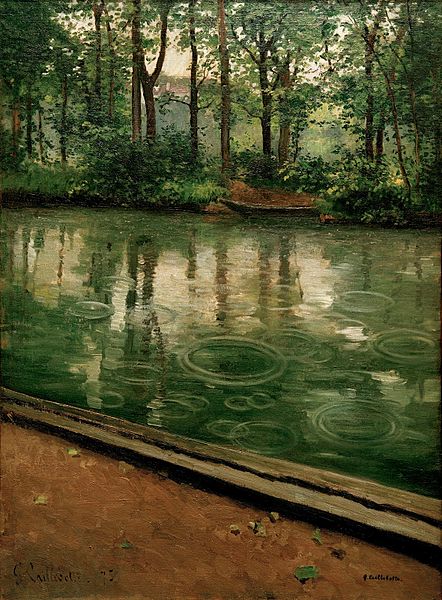
The Yerres, Effect of Rain, Gustave Caillebotte, 1875, GNU Free Documentation License

The Yerres, Effect of Rain, Gustave Caillebotte, 1875, GNU Free Documentation License

The property was much larger when the family occupied it.  But the house and grounds are still beautiful, and beautifully placed on the banks of the River Yerre. I especially loved the virtuoso painting above, depicting a moment of time as rain falls on the still surface of the river.  I loved the play of light and shadow. It was on loan from the Indiana University Art Museum in Bloomington.

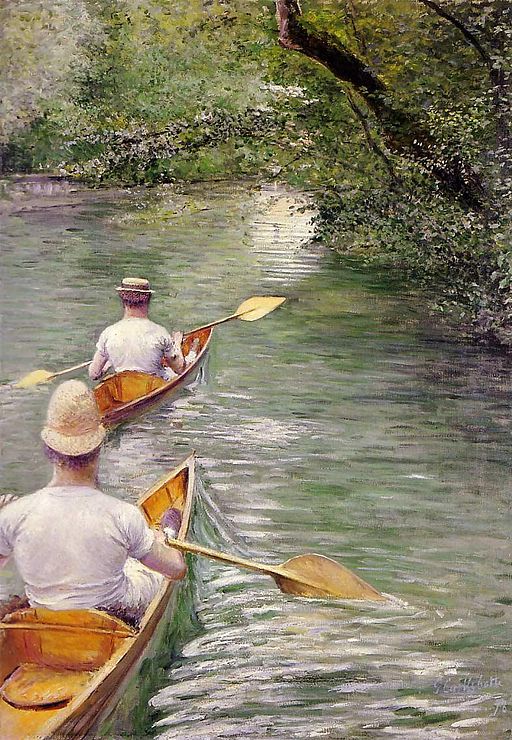
Les Perissoires, Gustave Caillebotte, 1878, Public Domain

Les Perissoires, Gustave Caillebotte, 1878, Public Domain

The exhibit had many other water scenes, like this one with its unusual vantage point just behind a pair of men paddling canoes on the river. It was on loan from the Museum of Fine Arts in Rennes.

Gustave Caillebotte,

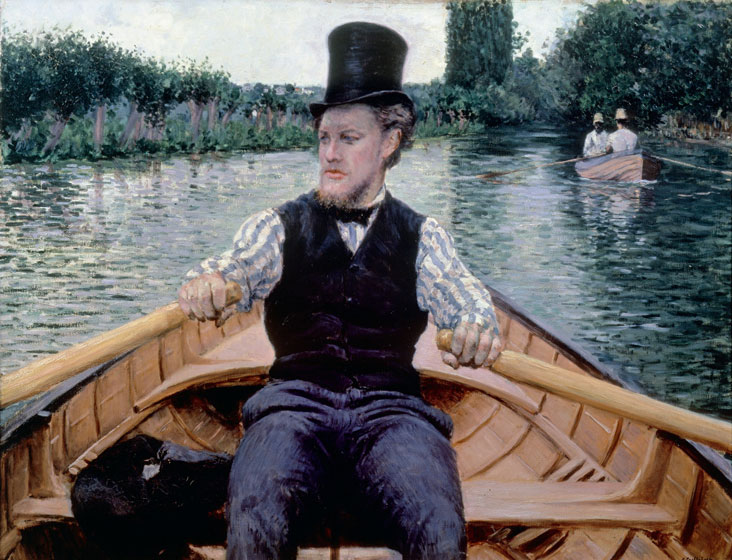
Gustave Caillebotte, “A Boating Party,” 1877-78, private collection

I stood for a long time in front of this painting of a gentleman rowing in a top hat and bow tie, and bought a large postcard of it. If I could carve out the time, I would travel to Washington, D.C. just to see this one painting again. The image above is from the website article from the National Gallery exhibit, cited below. What if the moments of our lives could be captured in a few thoughtful paintings, rather than a never-ending stream of selfies and forgotten party snapshots?

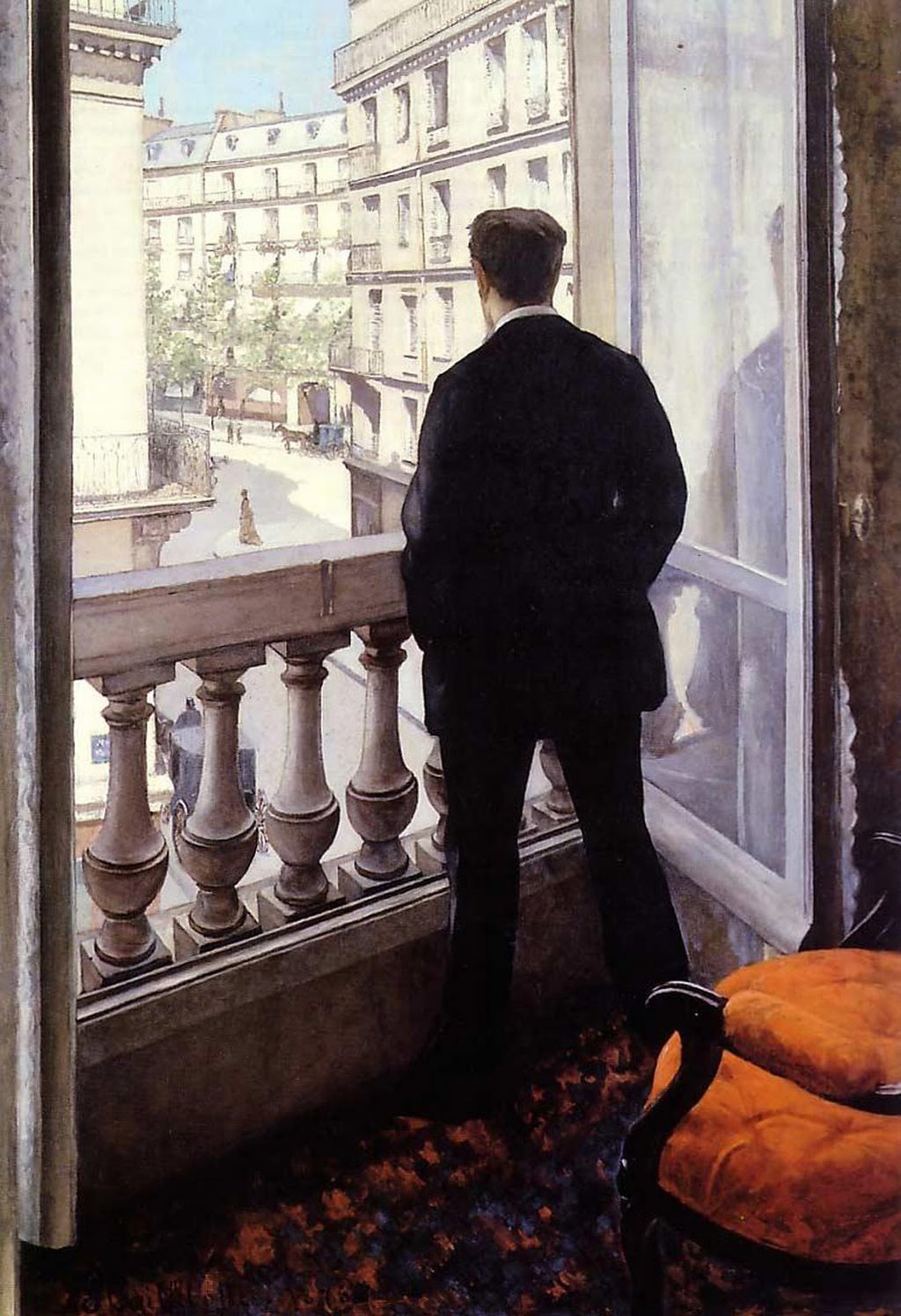
Young Man at a Window, Gustave Caillebotte,1875, Public Domain

Young Man at a Window, Gustave Caillebotte,1875, Public Domain

From his family’s Paris city home, Caillebotte also found unusual perspectives. The painting above shows Caillebotte’s younger brother looking out over the street from the Paris family home. The painting is from a private collection.

The Floor Scrapers, Gustave Caillebotte, 1875, Public Domain, Musee d'Orsay

The Floor Scrapers, Gustave Caillebotte, 1875, Public Domain, Musee d’Orsay

Caillebotte’s most famous painting, The Floor Scrapers, was controversial in his day. This masterpiece was actually rejected by the Salon of 1875. But the Impressionists loved it, and it appeared in their second Impressionist exhibit, where people stood in front of it and argued. Why? There was already a time-honored tradition of painting peasants at work in the countryside, but almost no one had honored urban laborers by painting them. The scene is believed to show a moment of refurbishment of the artist’s own studio in Paris. I love the play of soft light from the open window, the delicate curls of the planed wood, and the sweating shirtless laborers.  Did Caillebotte gain an appreciation of the work of ordinary people during his wartime service?

Sadly, Caillebotte mostly stopped painting at age 34; he was more interested in photography.  The exhibit I saw had a number of his photos, but in my mind they paled beside his paintings.  I wish he had stayed with his brushes and canvases.

For many years, Caillebotte was neglected as an artist and more well known as a patron of other artists, notably his Impressionist friends Auguste Renoir, Claude Monet and Camille Pisarro.  He bought their canvases, funded and curated their exhibits, and sometimes paid their rent.

Did Caillebotte believe he had reached the limit of his abilities and it was better to be a patron of more talented artists? Or was painting just too much hard work? He had the means to do anything he wanted to do.  What he wanted was to hobnob with artists, grow orchids, build yachts, collect stamps, and generally enjoy himself.  Who can blame him? And yet I wish he’d had a bit more of a work ethic.

Caillebotte died while gardening in 1894, aged only 45. He owned a collection of over 70 mostly Impressionist paintings, which he bequeathed to the French state on his death.  They formed the core of the state’s Impressionist collection.  Modestly, he only included two of his own paintings in the bequest.  The rest remained mostly with his family, since he had no need for money and rarely sold a painting.

Gustave Caillebotte,

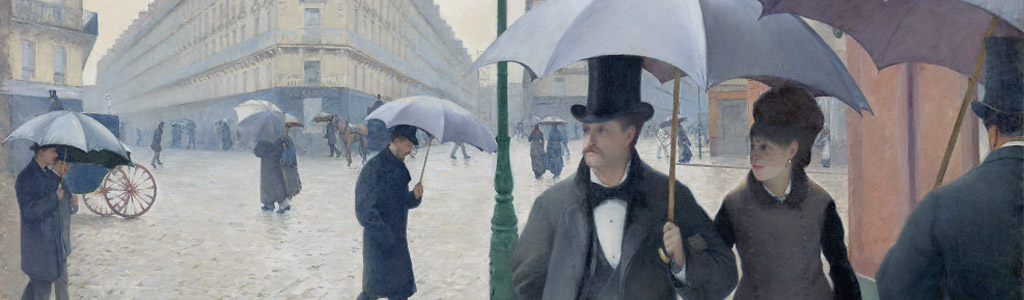
Gustave Caillebotte, “Paris Street, Rainy Day,” 1877, Public Domain, Art Institute of Chicago

Some of these paintings are part of an exhibit, Gustave Caillebotte: The Painter’s Eye, running through October at the National Gallery in Washington, D.C.  The website is at http://www.nga.gov/content/ngaweb/exhibitions/2015/gustave-caillebotte.html

Chenonceau Addition: Nobody Leaves Diane in the Corner!

Diane de Poitiers, portrait by unknown artist, Public Domain

Diane de Poitiers, portrait by unknown artist, Public Domain

Chenonceau’s most illustrious occupant was Diane de Poitiers, a beautiful and cultured noblewoman who was the longtime mistress of King Henri II of France.  In the portrait above, she is pictured as Diana, goddess of the hunt. 

Vienna’s Karlskirche Dome: Up Close and Personal

P1050023

Vienna’s Karlskirche, St. Charles’s Church, is a spectacular Baroque creation, built between 1716-1737.  It honors St. Charles Borromeo, who was a church reformer of the 16th century and who also had a reputation for healing people with the dreaded disease of plague.  The Holy Roman Emperor Charles VI pledged to build a church to honor his namesake saint after the last plague epidemic in Vienna. In the photo above, notice the little round windows where the green copper dome meets the masonry below it. More on them later.

033


The spectacular paintings that decorate the inside of the dome have been under restoration for several years.  This required construction of an elevator right in the center of the church.

032

Someone had the grand idea of charging tourists a fairly nominal fee, about $8, to ride the elevator up into the dome and have a look. I’ve been twice, and I’d cheerfully go again. The last few levels have stairs–a tiny bit shaky, but that only adds to the adventure.

031

Remember those little round windows?  The stairway leads WAY ABOVE them!

030

How did artists create realistic-looking figures on curved surfaces far above the viewer?  The painters’ tricks are on full display, up close and personal.  They used techniques like foreshortening–making feet and legs subtly bigger than they would in a painting seen at eye level.  They used surprisingly subtle shading and liberally applied gold leaf. Up close, the scenes look completely modern, as though they could have been painted yesterday.

029


The illustrations of scenes from the life of St. Charles Borromeo are cheerful and exuberant. The colors are clear and bright, unlike other dome frescoes I’ve seen. So often, years of candle smoke and incense have darkened frescoes that were meant to be bright. Here, angels and other saints float around in the clouds and happily reach down minister to the sick. They all look like they’re having the time of their lives.

028

Charles Borromeo looks like a very happy saint, rising into heaven to meet the risen Christ.  From the story told in his dome, it seems his life was pretty serene for a saint.

The Baroque architect Johann Bernard Fischer von Erlach worked on the church for the first 6 years.  After he died, his son took over.  The original frescoes were by J.M. Rottmayr.

If I were in Vienna right now, at the beginning of the high tourist season, I’d take myself to some out-of-the-way sights like the Karlschirche Dome.

Join me next time for more explorations in the art and history of Europe and the British Isles!

Vincent van Gogh: Can We Forget About the Ear?

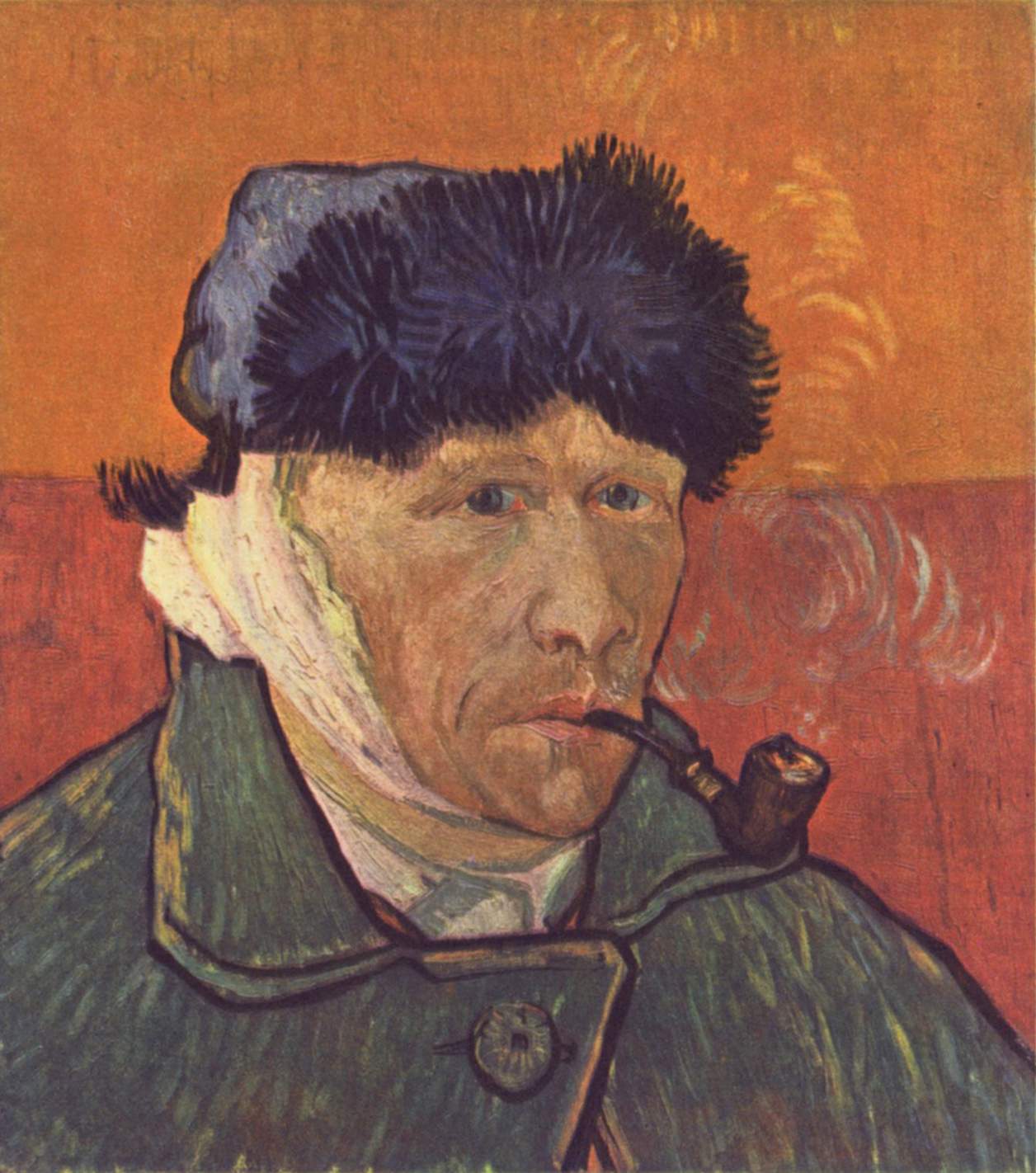
“Self Portrait with Bandaged Ear,” January 1889, Vincent van Gogh, Public Domain

Vincent van Gogh obviously had his share of problems.  Most of us don’t cut off an ear no matter how bad a day we’re having. (Actually, there is evidence that he only cut off a small part of one ear).  Today, mental health professionals would not be especially surprised by this behavior; we know now that people under severe stress do sometimes deal with their pain by cutting themselves or pulling out their hair.  My (unprofessional) understanding is that sometimes self-inflicted physical pain can be a distraction from overwhelming psychic pain.

Vincent tried valiantly to face his problems.  After the ear incident, he painted the rueful self-portrait above, showing himself bandaged. After each of his health crises, he sought the best medical care he could find. He followed medical advice, such as it was in his day.

“In a Cafe,” or “Absinthe,” Edgar Degas, 1873, Public Domain

At the end of a hard day at the easel, Vincent could have jogged five miles, lifted some free weights, and finished off the evening with a nice tall Gatorade.  Instead, he hung out in local dives and drank way too much absinthe. A little absinthe goes a long way. And he admitted that he smoked far too much, even on his deathbed. But then, he did not have Dr. Oz or Dr. Drew advising him.

Recent research at the Van Gogh Museum in Amsterdam has shown that Vincent worked methodically and with great care on his paintings. The findings are summarized in an article by Nina Siegal in The New York Times.  The director of the museum, Axel Ruger,  spoke about the recent exhibit, “Van Gogh at Work.”  Mr. Ruger said, “You discover more clearly that van Gogh was a very methodical artist, which runs counter to the general myth that he was a manic, possibly slightly deranged man who just spontaneously threw paint at the canvas.” The article is “Van Gogh’s True Palette Revealed,” at http://www.nytimes.com/2013/04/30/arts/30iht-vangogh30.html?_r=0

Vincent must have been as lucid as anyone else for much of the time. And yet, he had periods of serious craziness, including terrifying hallucinations,  that made him helpless.  And he apparently ended his own life by gunshot at age 37, at a time when he was at the height of his artistic powers.

So what was wrong with him?    To me, the most convincing explanation is that he was bipolar.  Of course, this diagnosis did not even exist during his lifetime, and there was no effective treatment.  In addition, he may have had chronic malnutrition.  He was poor for his entire life.  Once he decided to become a painter, his only income was whatever his hard-pressed brother Theo could afford to send him. Vincent was single-minded.  When faced with a choice of a new pot of paint or a nice chicken baguette with arugula, he went with the paint every time.  Not only that, but there is evidence that he sometimes ate his paint, in the heat of composition. Some of the paints he used must have been highly toxic and might have caused hallucinations in the most sane of us.

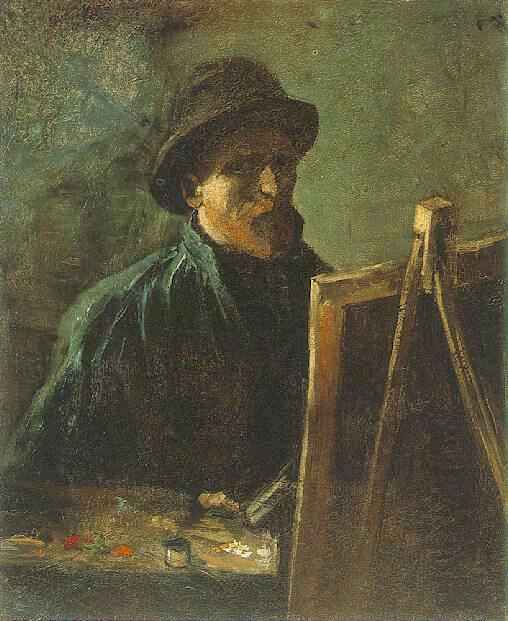
Self Portrait with Dark Felt Hat at the Easel, Vincent van Gogh, 1886, Public Domain

Self Portrait with Dark Felt Hat at the Easel, Vincent van Gogh, 1886, Public Domain

In 1886, Vincent painted the dreary self-portrait above. He looks depressed, buttoned up, shut in by his waiting canvas.  Any writer or painter knows that the blank page or canvas is a challenge and a reproach. The failed effort is even worse. Vincent’s palette in this portrait even looks dreary, just blobs of muted color. Still, the miracle is that with the love and support of his brother Theo, this man pulled himself out of his low periods so many times.  In the decade that Vincent worked seriously as a painter, he produced about 860 oil paintings plus about 1300 works in other media, like watercolors and prints.  He got on with it, even though not a single painting sold in his lifetime.

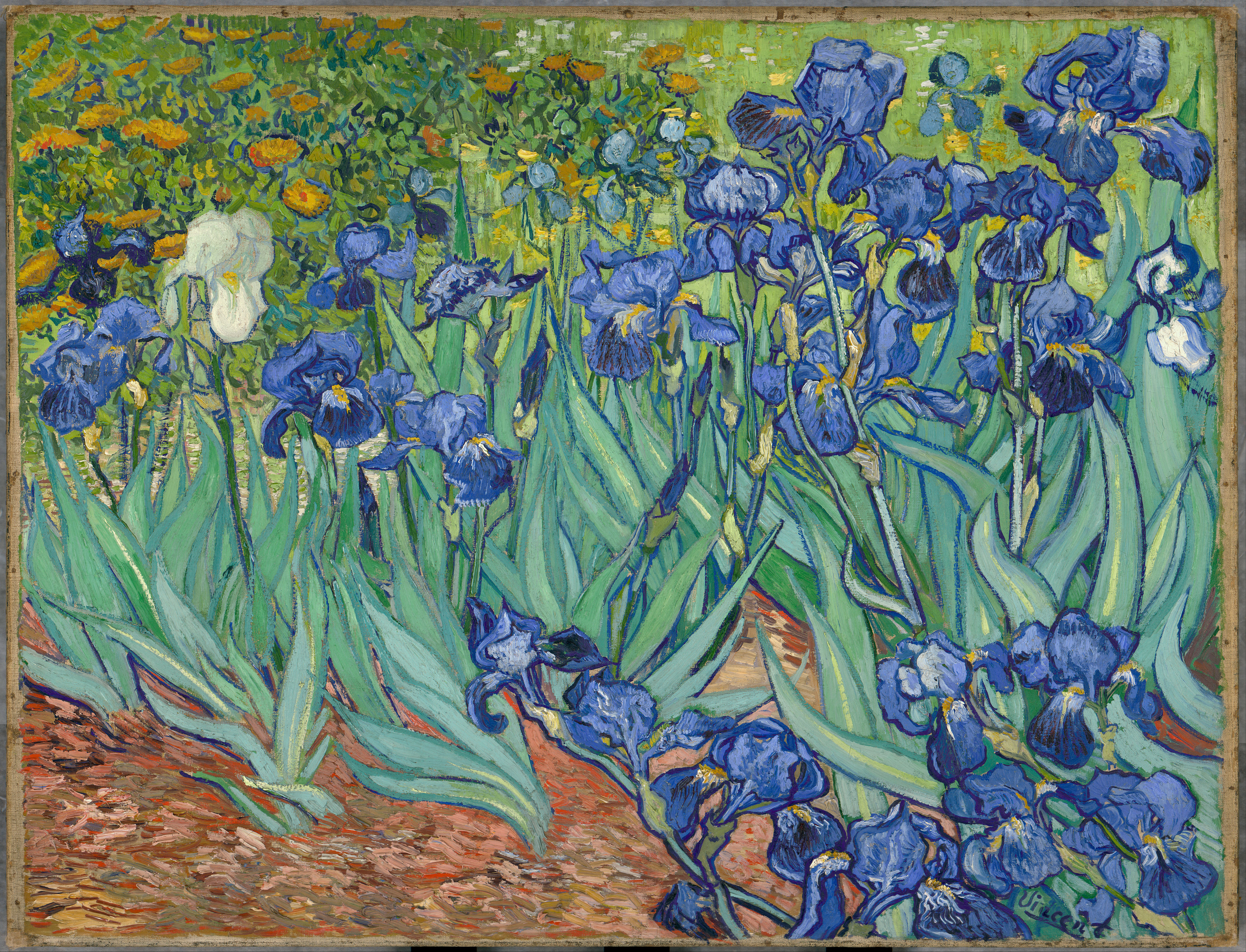
“Irises,” Vincent van Gogh, 1889, Public Domain

We have become so familiar with reproductions of Vincent’s paintings on calendars and coffee mugs that we often don’t really see them. Standing in front of an original painting, inches away from his actual brushstrokes, it is impossible not to feel Vincent’s joy in life and color. “Irises,” pictured above, is at the J. Paul Getty Museum in Los Angeles.

Are you wondering if you are reading this for the second time?  My apologies!  I had additional thoughts about a post I wrote a couple of years ago, so I revised and reposted. Join me next time for more explorations in the art, artists and history of Europe!

Vincent and Theo

imgres

In 1990, Robert Altman directed the movie Vincent and Theo, concerning the relationship between Vincent Van Gogh and his brother.  The fine actor Tim Roth plays Vincent.  The equally fine Paul Rhys plays his brother Theo. It was originally made as a 4-hour BBC mini-series, which the director Altman compressed into a feature film. Rolling Stone called the Altman movie “a masterpiece.” But then, lots of Altman films are known as masterpieces.

The film brilliantly evokes the times in Paris and in the south of France.  There is nothing very picturesque about poverty in either place.  Vincent’s brave attempts to create a stable life for himself are heartbreaking.

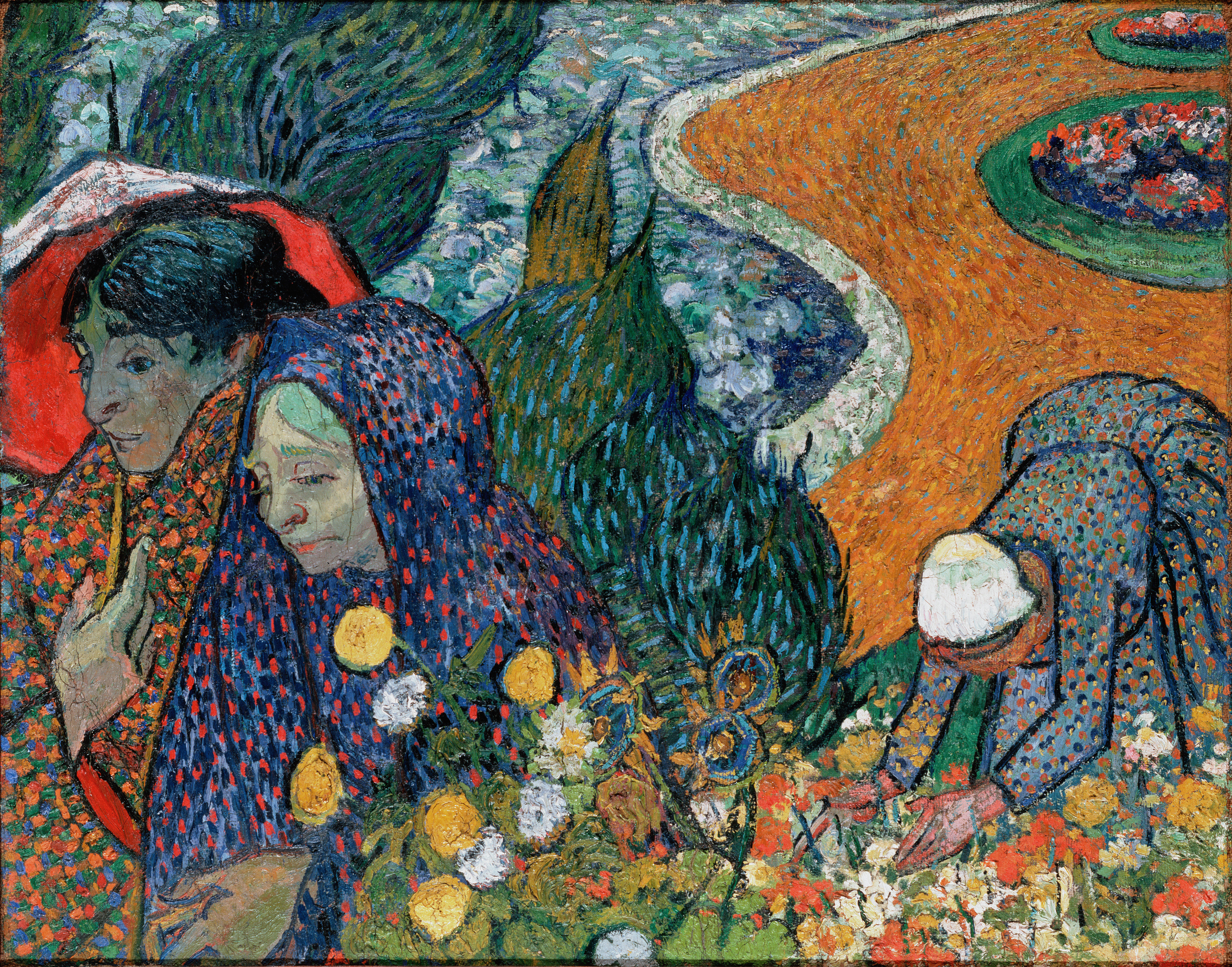
“Memory of the Garden at Etten,” Vincent van Gogh, 1988, Public Domain

In 1888, during his troubled time with his painter friend Paul Gaugin in Arles, van Gogh painted his mother’s garden at Etten from memory.  I don’t know whether I’ll ever see the original; it’s at the Hermitage in St. Petersburg.  It’s a stunning painting.  Vincent wrote about it to Theo:  “A reminiscence of our garden at Etten with cabbages, cypresses, dahlias and figures…Gaugin gives me courage to imagine and the things of the imagination do indeed take on a more mysterious character.” Which of the figures is van Gogh’s mother?  One of the sad-looking figures in the foreground?  Or the woman bent over her garden in humble hard work?  Maybe they all represent his mother, or his childhood, in some way.  I think this painting would have had deep meaning for the brothers who shared so much.

Having recently visited the Van Gogh Museum in Amsterdam, I gave the film another look.  I have always thought of Theo as the long-suffering, conventional patron of his tortured genius brother.  In the film, interestingly, Theo comes across as equally troubled.  In fact, he sometimes seems more tortured than VIncent.  At least Vincent always has his single-minded determination to paint.  Theo has self-doubts.  Why is he stuck working in art galleries?  Why can’t he afford to get married?  Finally he does marry, in spite of suffering from syphilis.  Then he has a wife and colicky baby to add to his troubles.

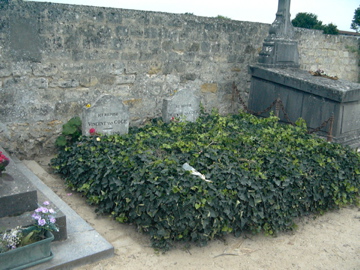
VincentTheoGraves

Theo was always in frail health.  In fact, he died just a few months after VIncent’s death.  The brothers are buried side by side in Auvers. When I visited, a few years ago, the cemetery adjoined a cornfield that could have come straight out of a van Gogh painting. The same ivy vine intertwines and covers the graves of the two brothers. It’s a lonely trek to see the graves; this is not a major tourist attraction. The brothers’ relationship, troubled as it was, gave us the gift of Vincent’s paintings, which always attract clumps of viewers in museums lucky enough to own them. Vincent could not have painted his masterpieces without the love and support of his brother Theo.

I wrote about Vincent’s mother and their loving relationship in a previous post at  https://castlesandcoffeehouses.com/2015/05/09/thanks-for-eve…m-love-vincent/

Join me next time for more explorations in the art and history of Europe!