Category Archives: Art

Lord Anglesey, A Man of Parts


Henry, the dashing 7th Marquess of Anglesey, came to mind this morning. In a burst of fall energy, I started madly cleaning out drawers, cupboards, closets and even the dreaded garage. I thought of Henry.
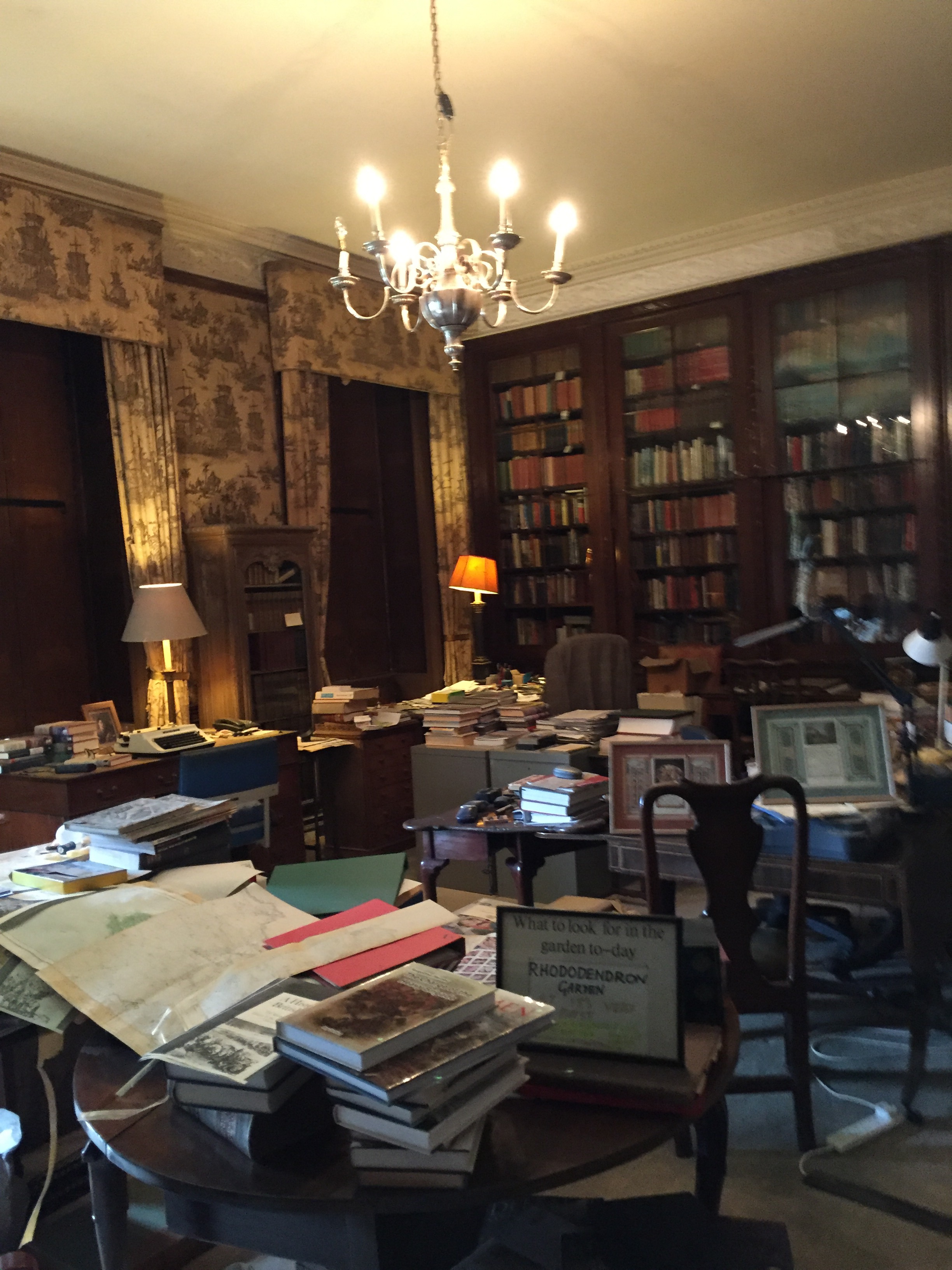

After a couple of strenuous hours of pitching and organizing things I had forgotten I owned, I sank into my softest chair and thought admiringly of Henry’s study at Plas Newydd in Wales. Henry was Marquess from 1947 until he died in 2013. In 1976, he gave Plas Newydd–“New Mansion”–to the National Trust, but still lived upstairs with his family. I think his heirs still live there, too. So would I.

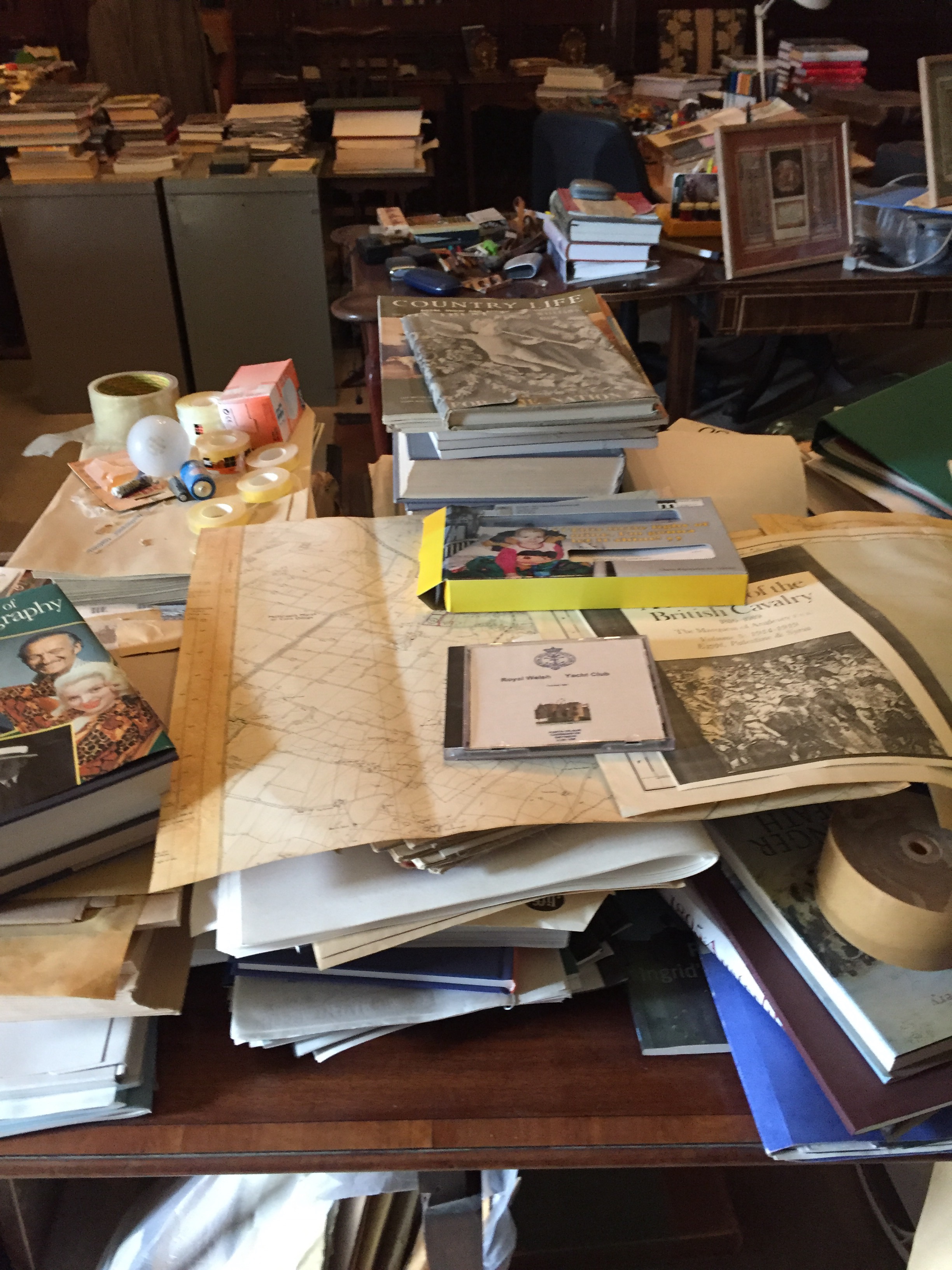
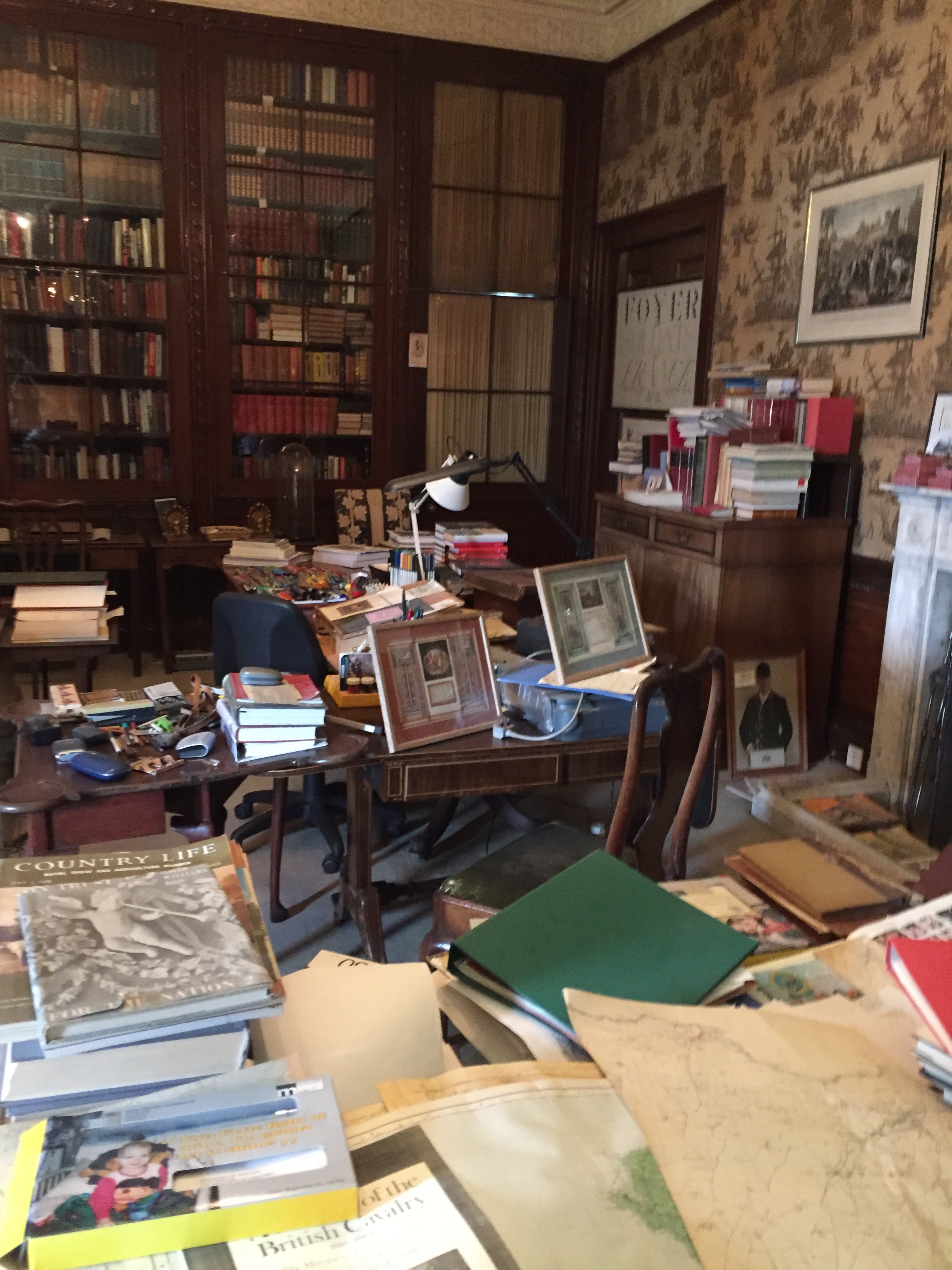
Henry’s study, used daily during his lifetime, is a magnificent jumble of books, papers, drawings, photos, magazines, and who knows what else.

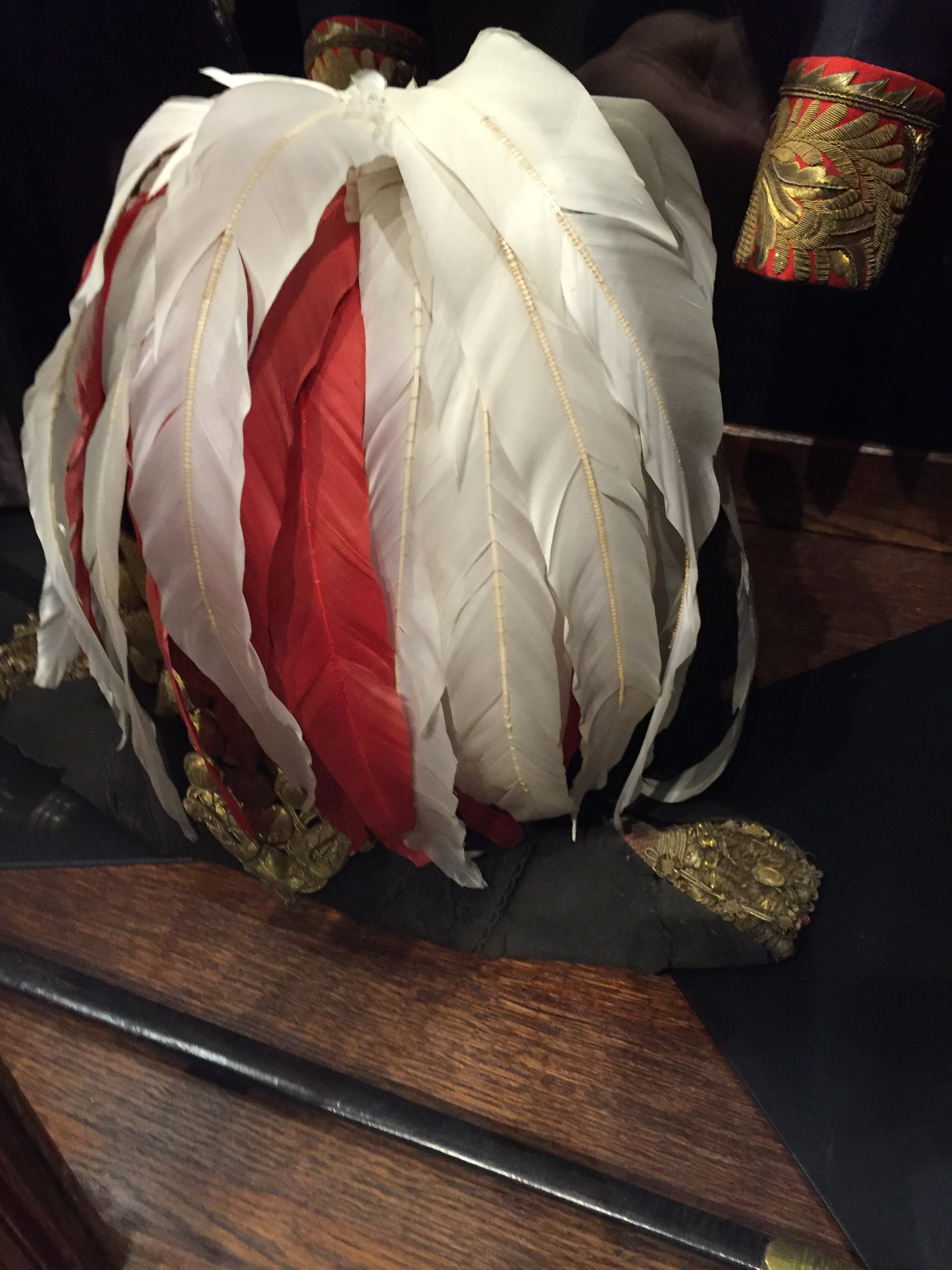
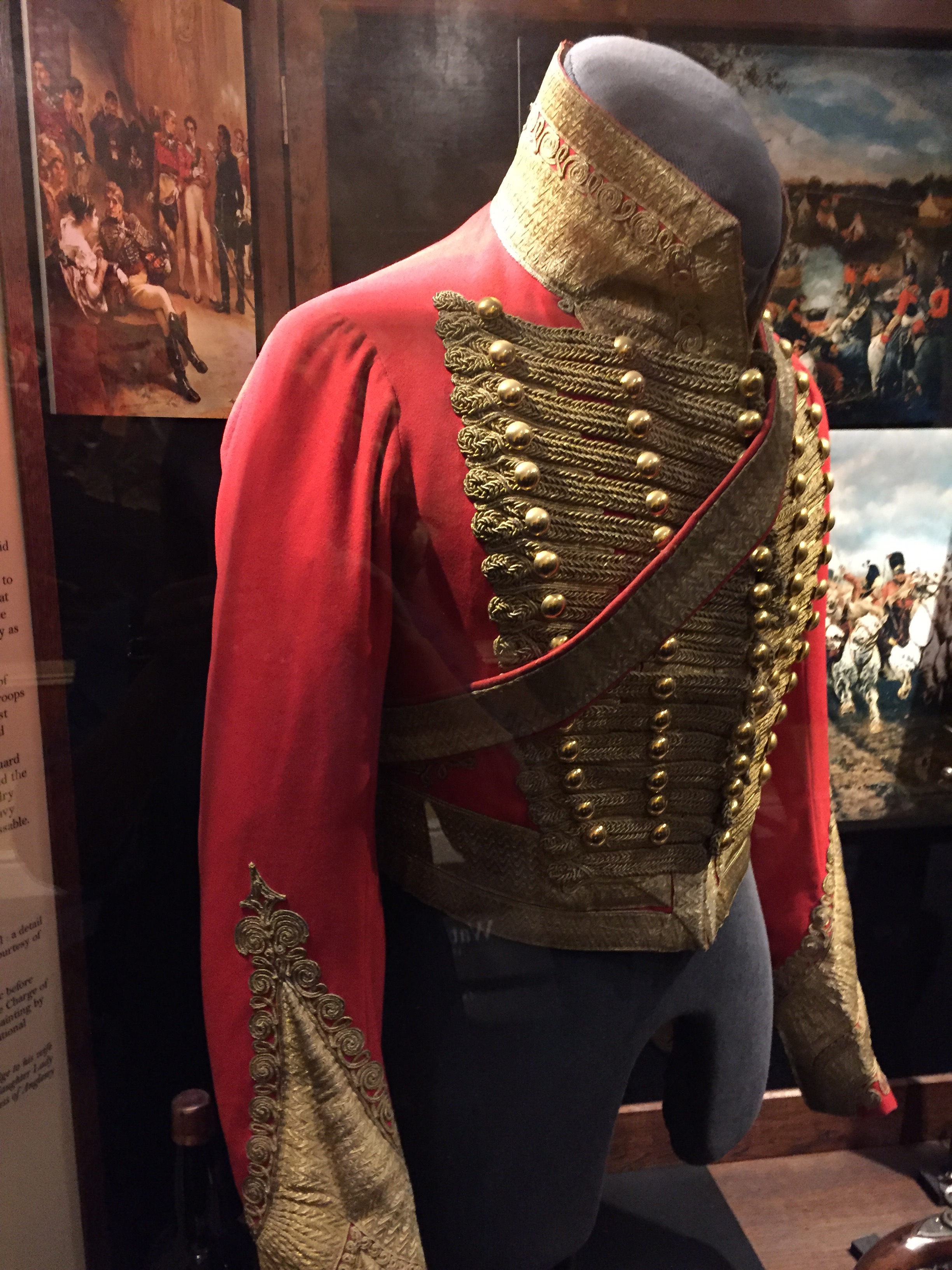
Another part of Plas Newydd displays stuff from the family’s colorful history. Henry was a distinguished historian, and well he might be. His ancestors included the first Marquess, Henry “One-Leg,” whose leg was shot off by cannon fire at the battle of Waterloo in 1815, while he was right next to the Duke of Wellington himself. On the occasion, Henry coolly said, “By God, Sir,    I’ve lost my leg.” The Iron Duke replied, “By God, Sir, so you have.”


The Marquess had what remained of his leg amputated, with a stiff upper lip and no anesthetic, and was fitted with a wooden leg. Afterward, he fathered ten children and walked nine miles a day for the rest of his life.

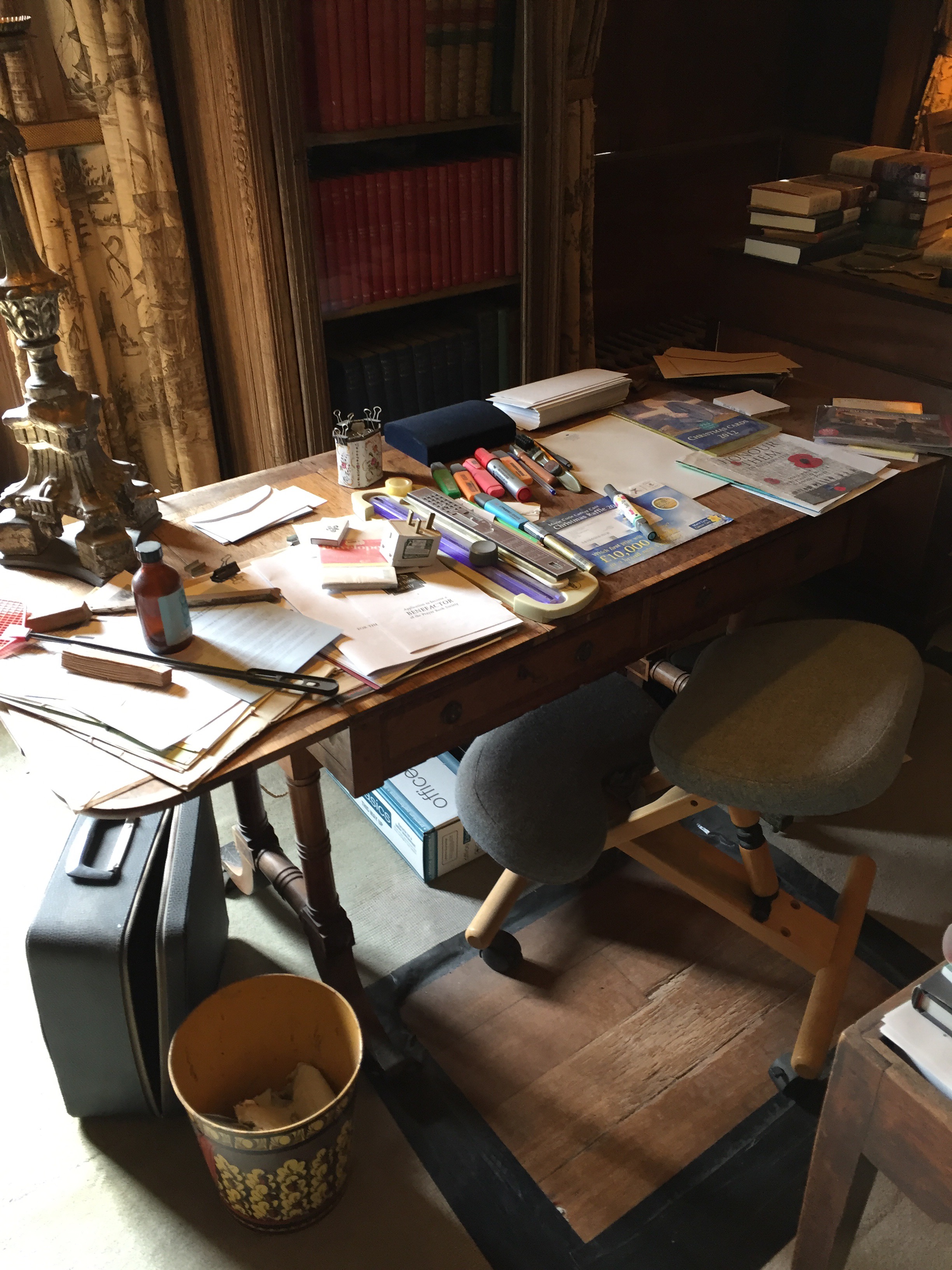
But back to the 7th Marquess. He must have been something of an artist as well as a politician and a writer. He kept a special drawing table, under a window with good light. Of all the rooms in grand homes that I’ve seen, Henry’s study is one of my favorites.


I can see him happily puttering around, going from one table to the next. The jumble made perfect sense to him. He just kept a separate place for each one of his many projects. If only I had the space to do the same.


The other unforgettable room at Plas Newydd is the dining room. In 1936, the 6th Marquess commissioned Rex Whistler to paint the entire long wall as a mural.


The artist was happy to spend endless hours on the mural, partly because he was in love with one of the daughters of the family, whom he also painted. Tragically, Rex Whistler was killed in action in Normandy in July 1944, having insisted on fighting rather than serving in some less dangerous way. He had just arrived at the front.

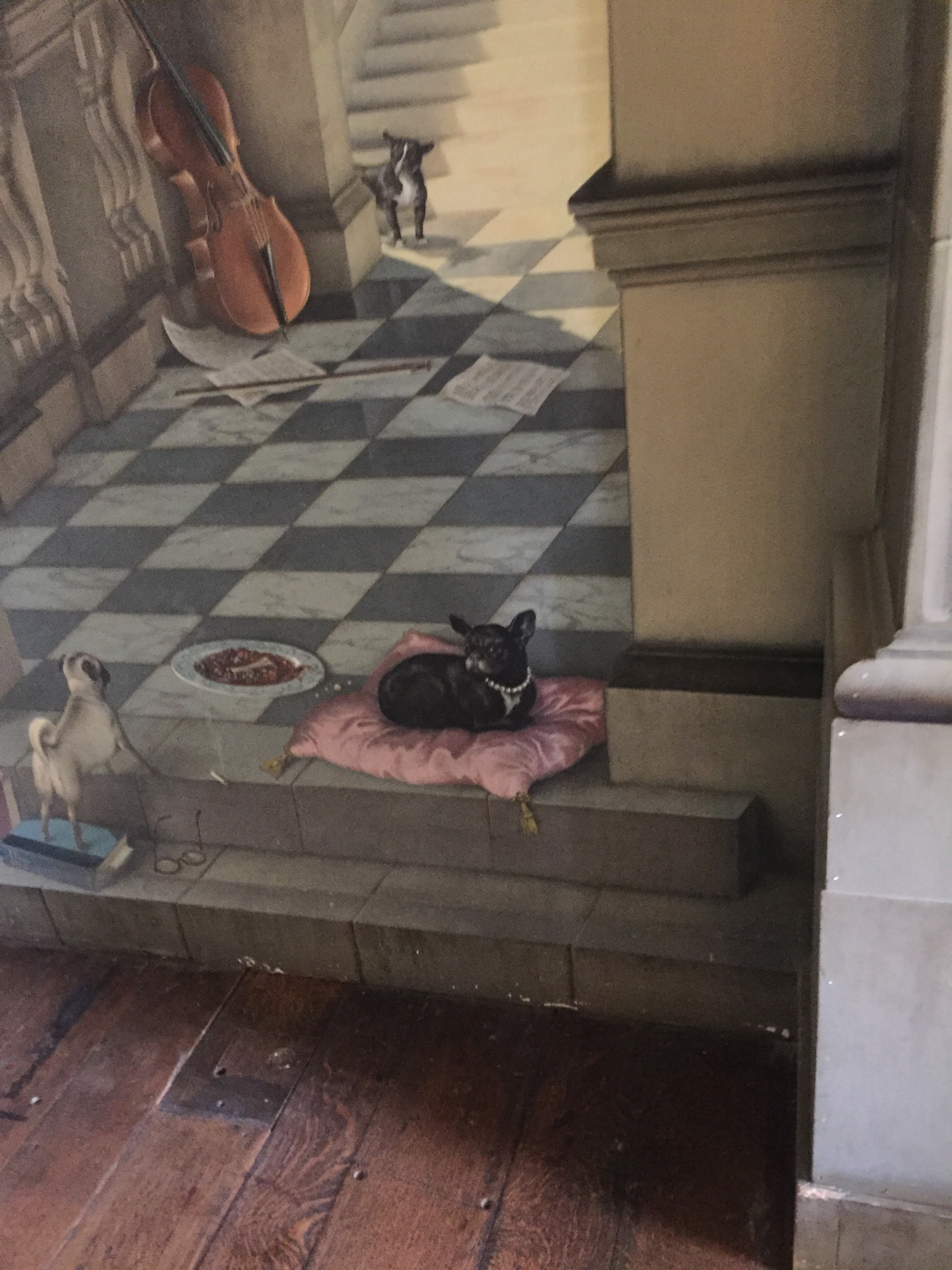
I could spend hours taking in the detail of the Whistler mural, which is full of gentle humor and family references.


If I get to return to Plas Newydd, I’ll try to find time to look into the grounds and gardens, another interest of Henry’s.
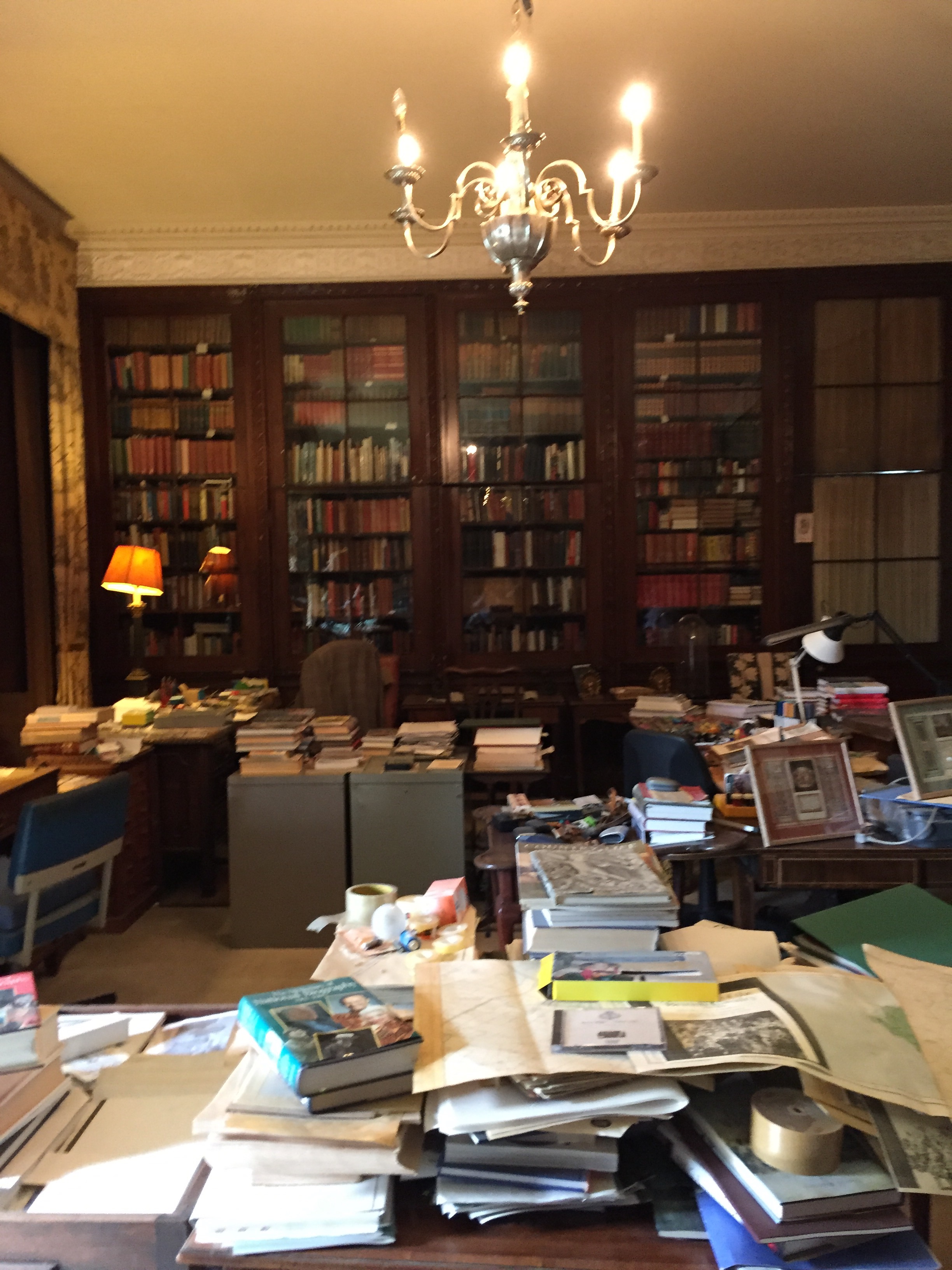

Meanwhile, I’ll dream of having a room all my own, like Henry’s. “A man of parts” is the British term for a multi-talented Renaissance man.Henry is the best example I know of. Now, about my basement storage room…

There’s an article about the 1st Marquess at:
http://www.telegraph.co.uk/culture/books/11682406/The-Battle-of-Waterloo-is-this-the-most-British-conversation-ever-to-be-held-on-a-battlefield.html

Viking Artistry in Oslo

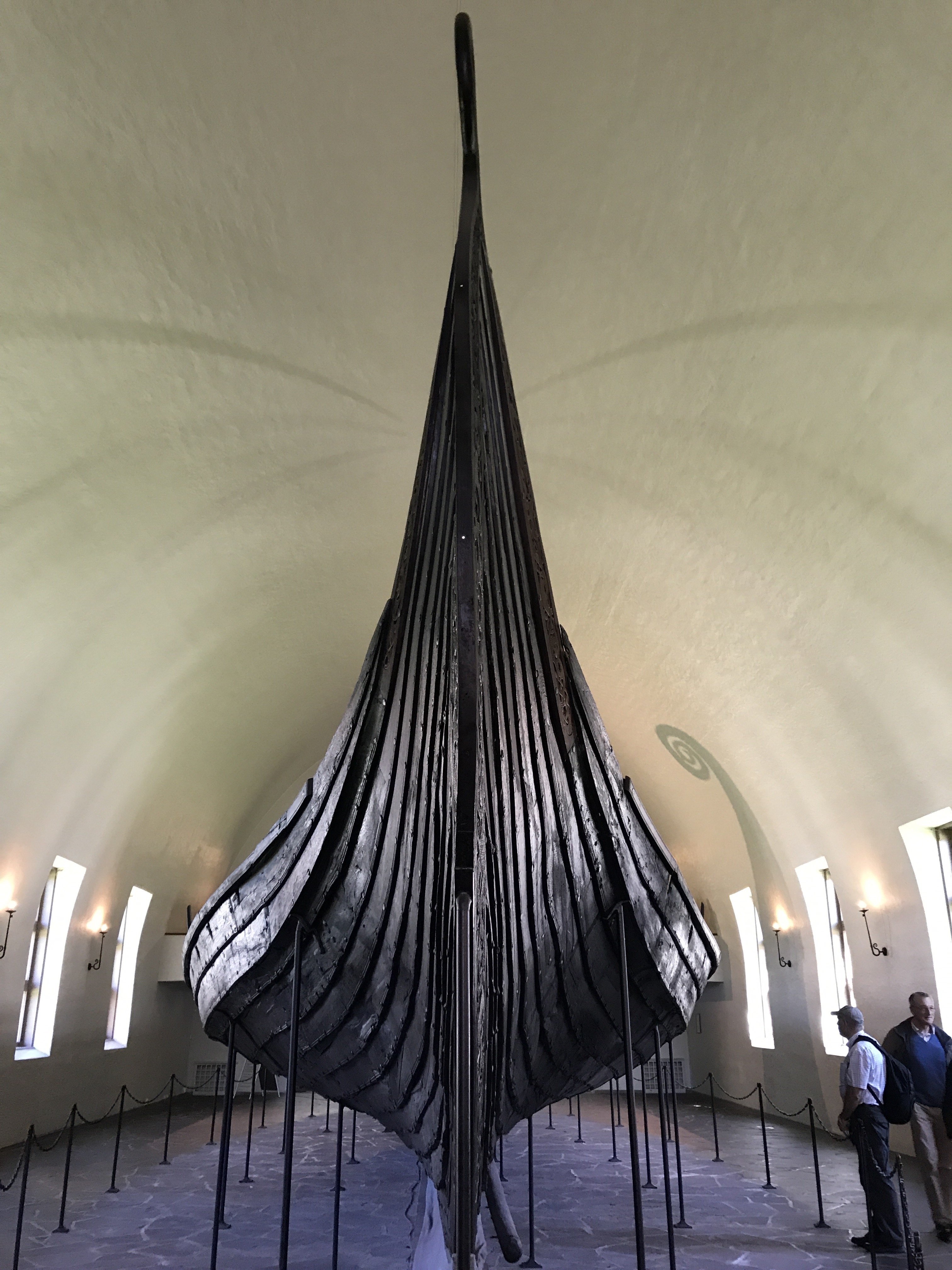
Talk about spectacular resting places! The Viking Ship Museum in Oslo, Norway displays boats and artifacts from four different boat burials along the Oslo Fjord. Three of the boats are well preserved, and the fourth was reduced to iron nails and other bits and pieces. They date from about 820 A.D. to about 900 A.D. All the boats were used at sea for some years, then drydocked and fitted with burial rooms before being dug into the ground. They were found and excavated between 1852 and 1904.

The most beautiful of the three, the Oseberg, was used to bury two women. How important must they have been? A pair of the legendary shield-maidens, perhaps? Maybe a couple of princesses? How did two powerful women die at the same time? There’s a story here, but it’s lost in the mists of Scandinavian history. Modern dating techniques place this burial at 834 A.D.

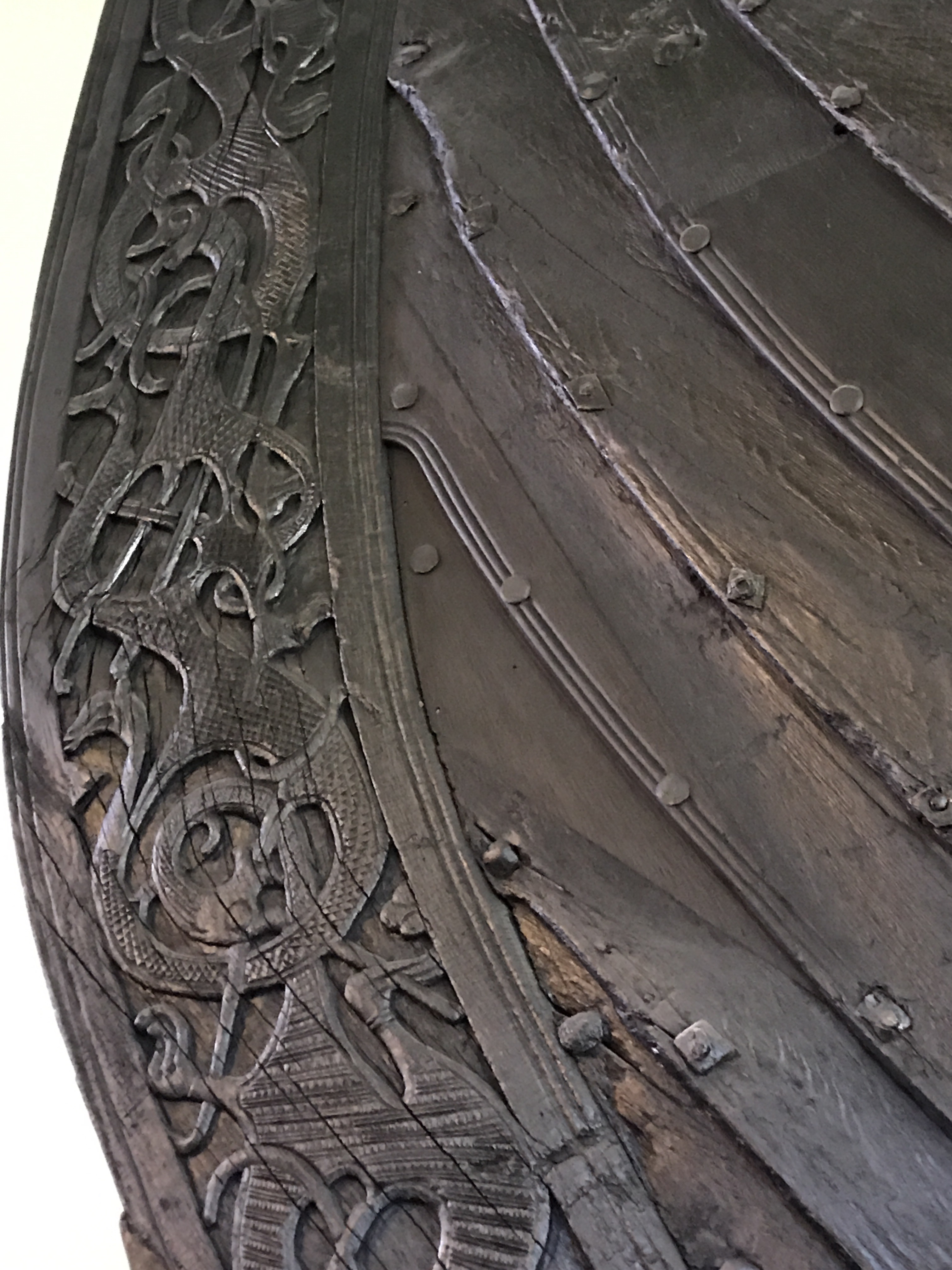
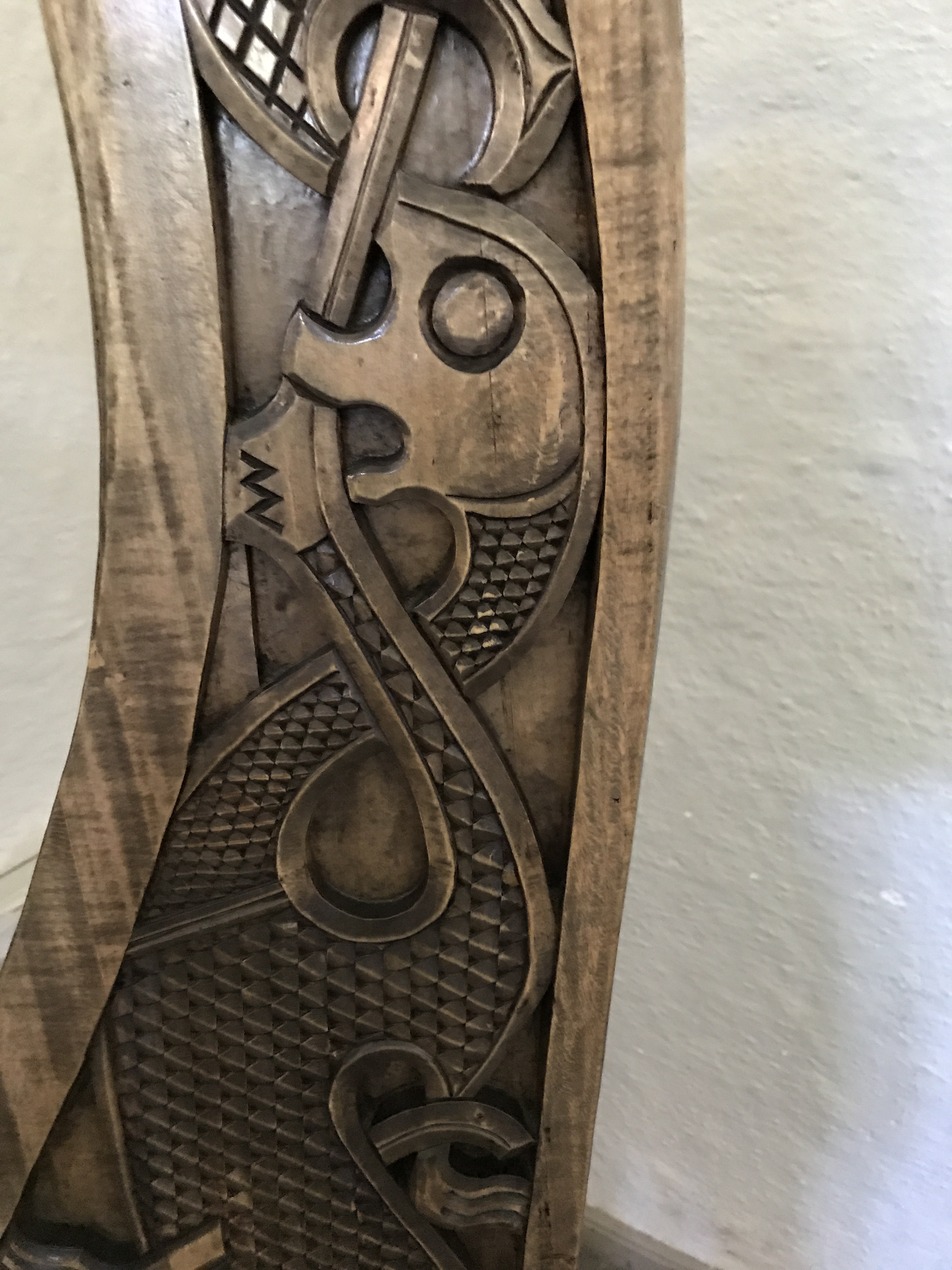
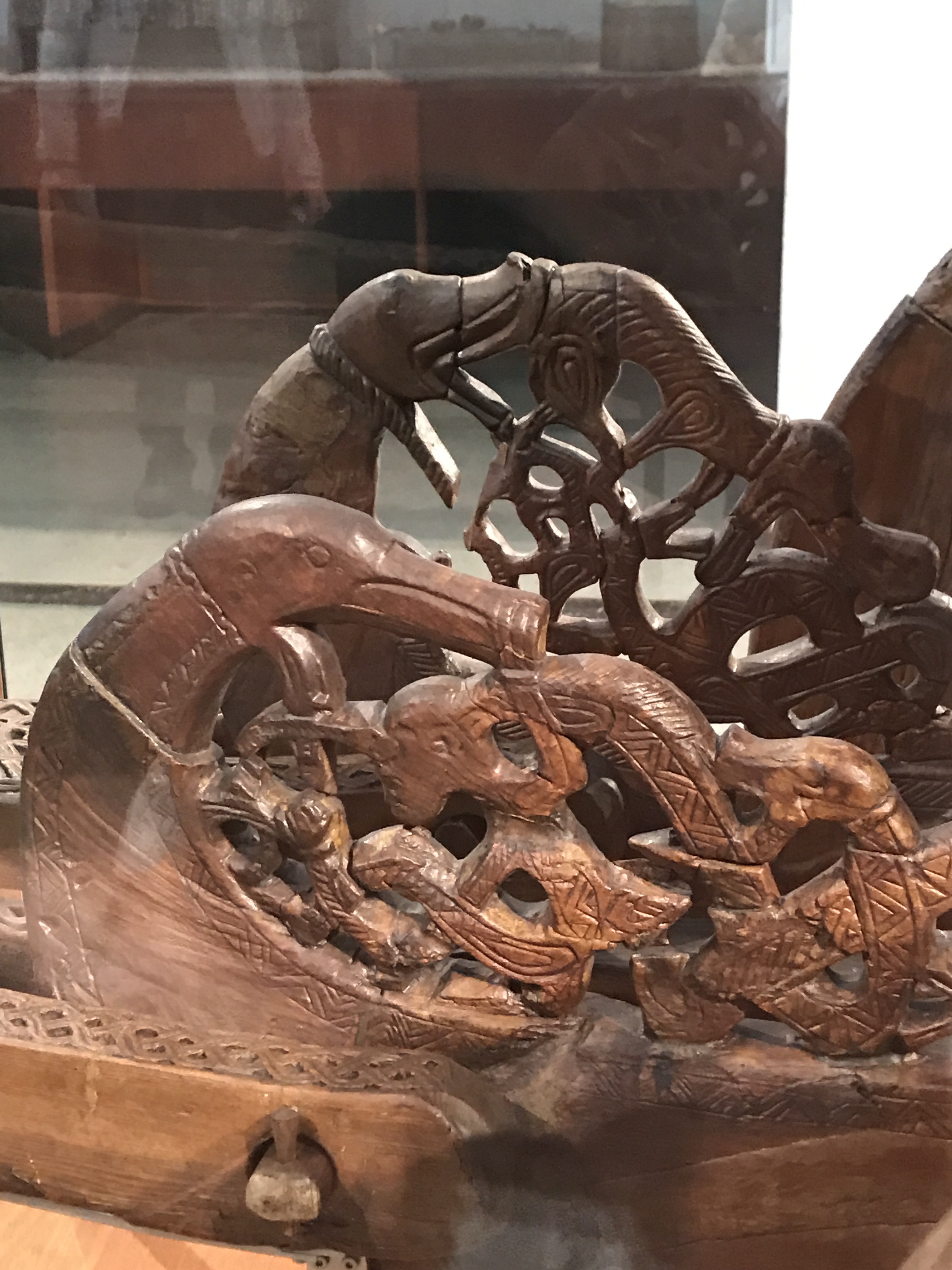
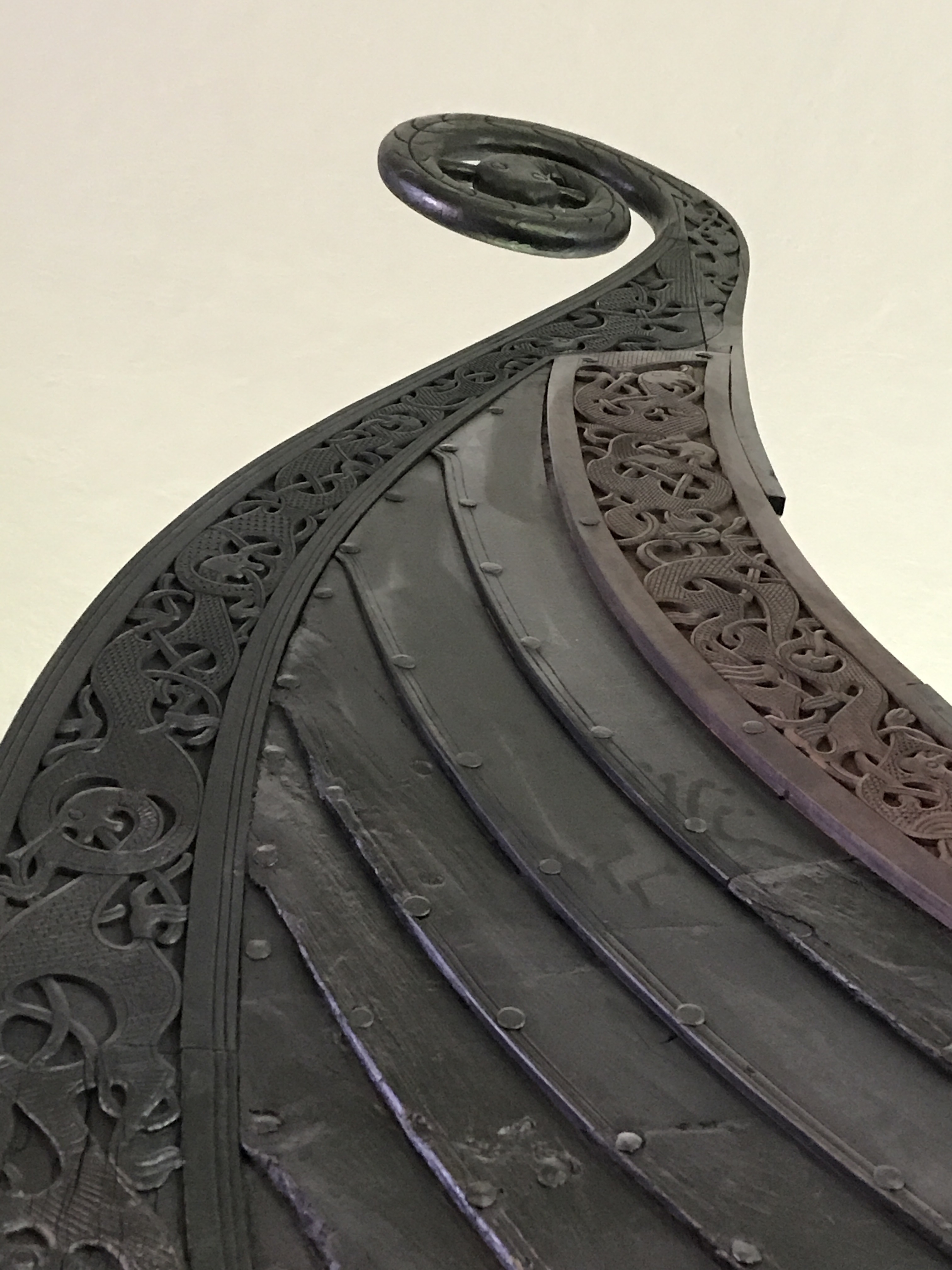
The intricate carved wood detail is beautiful.

Oar openings are still present–fifteen of them on this boat. Still-intact shields were hung from some of the oar holes.

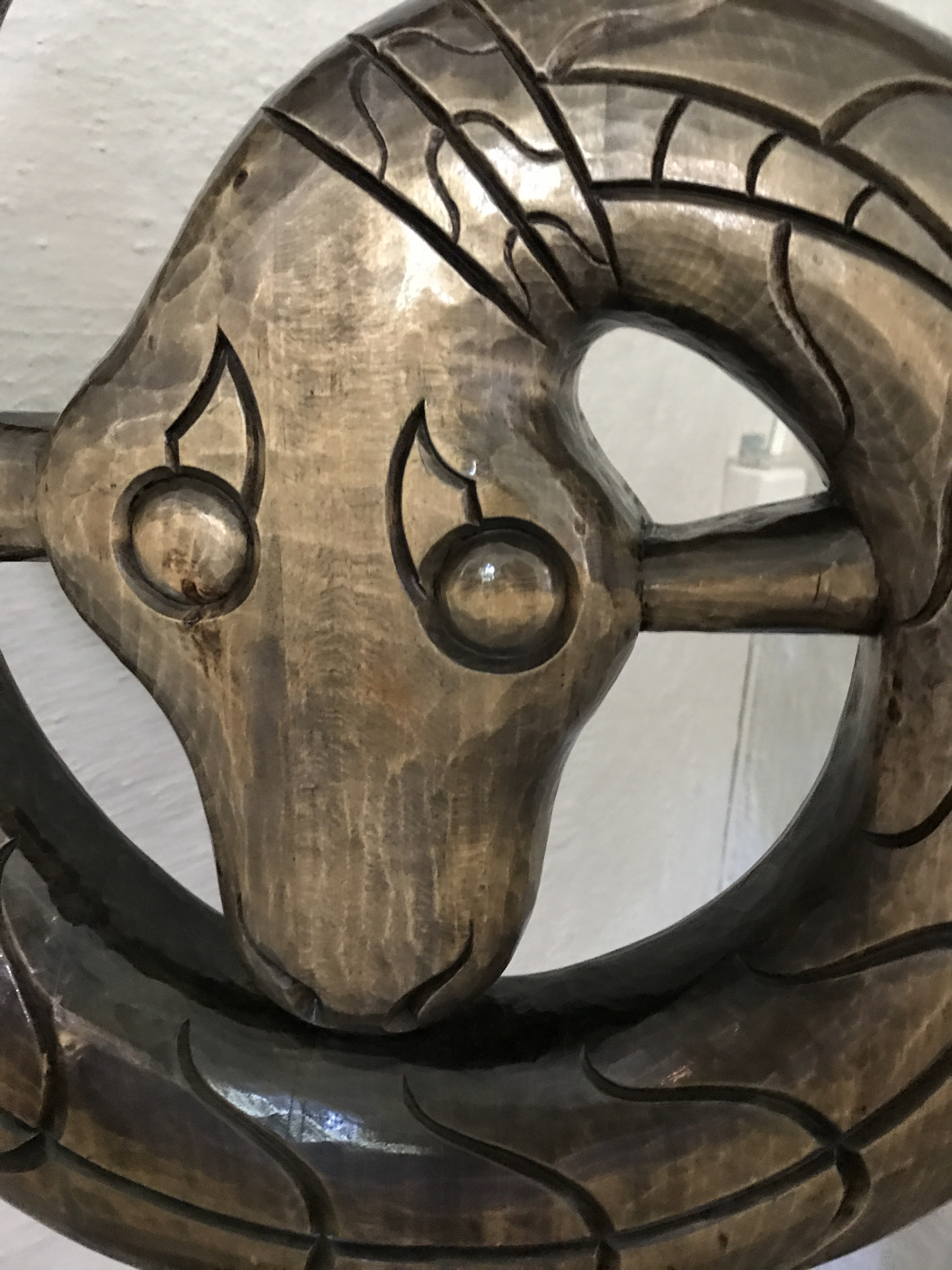
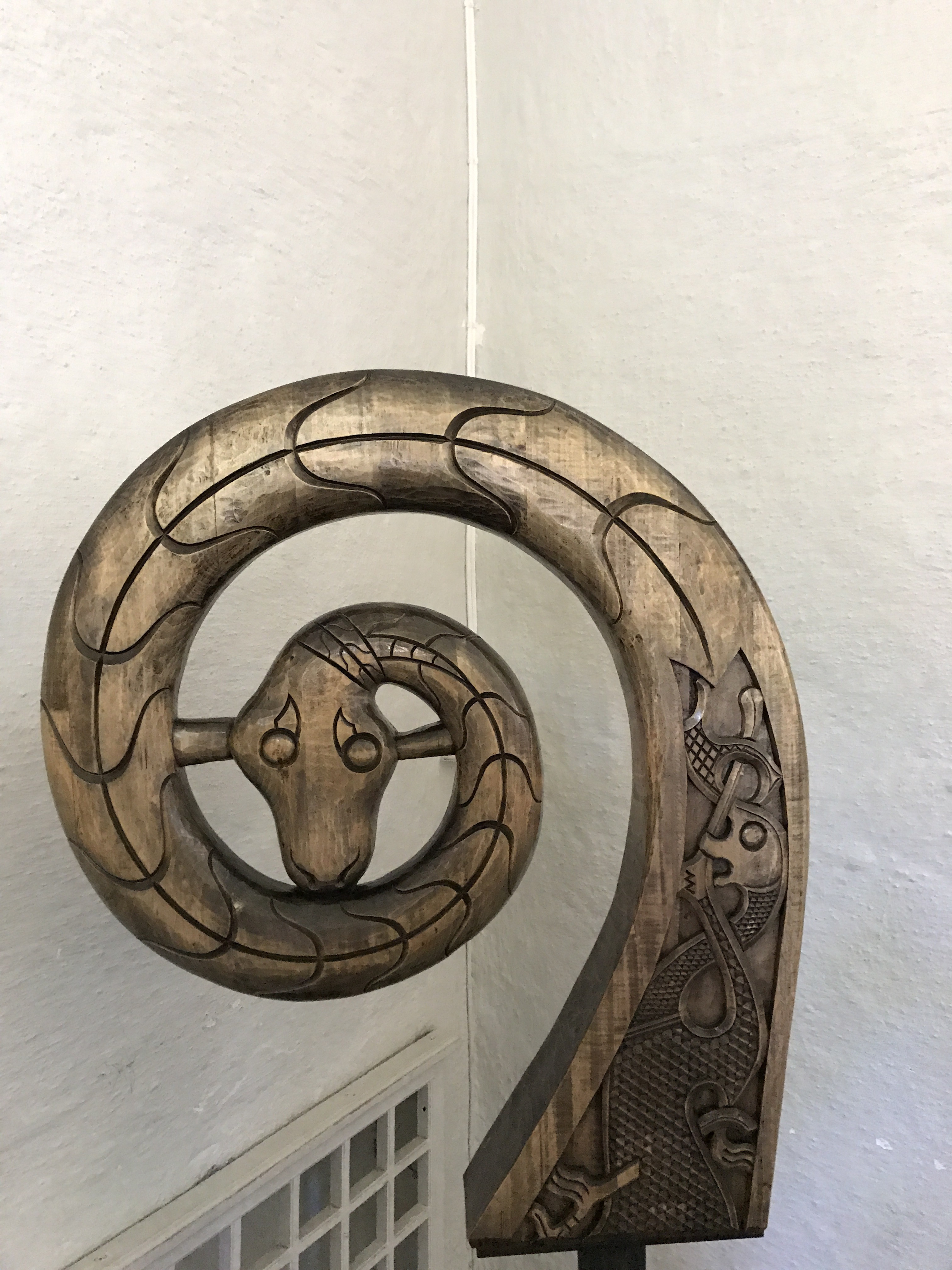
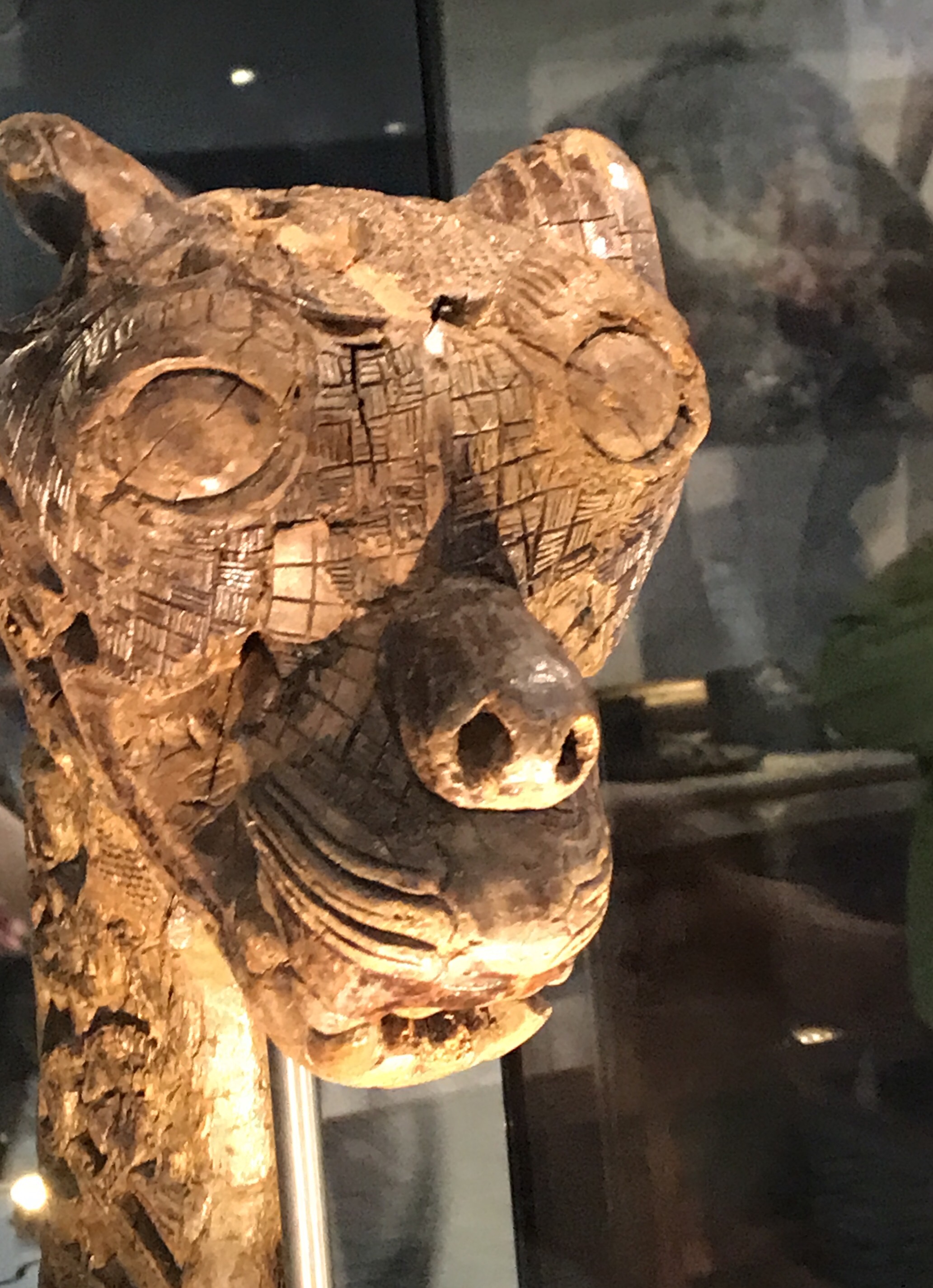
Some elements, like the serpent above, were reconstructed from fragments. Mostly, though, preservation was excellent, because the ships were buried in moist ground with high clay content, and covered with turf for centuries.

More beautiful carving…

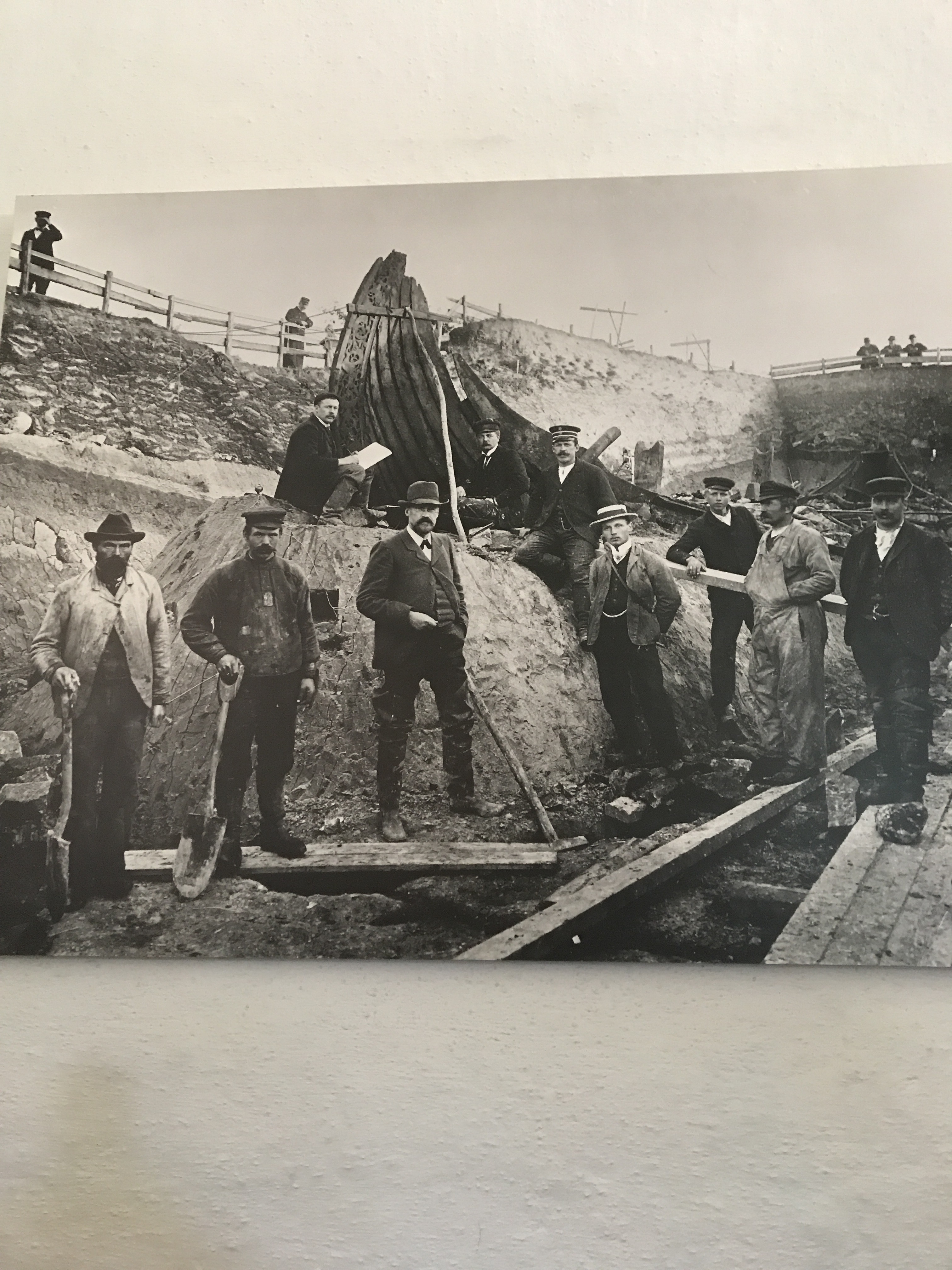
The solemn fellows shown above worked on the excavation in 1903. The photo clearly shows the intact wood carvings. The graves had already been looted long ago of precious materials, but plenty of grave goods survived.

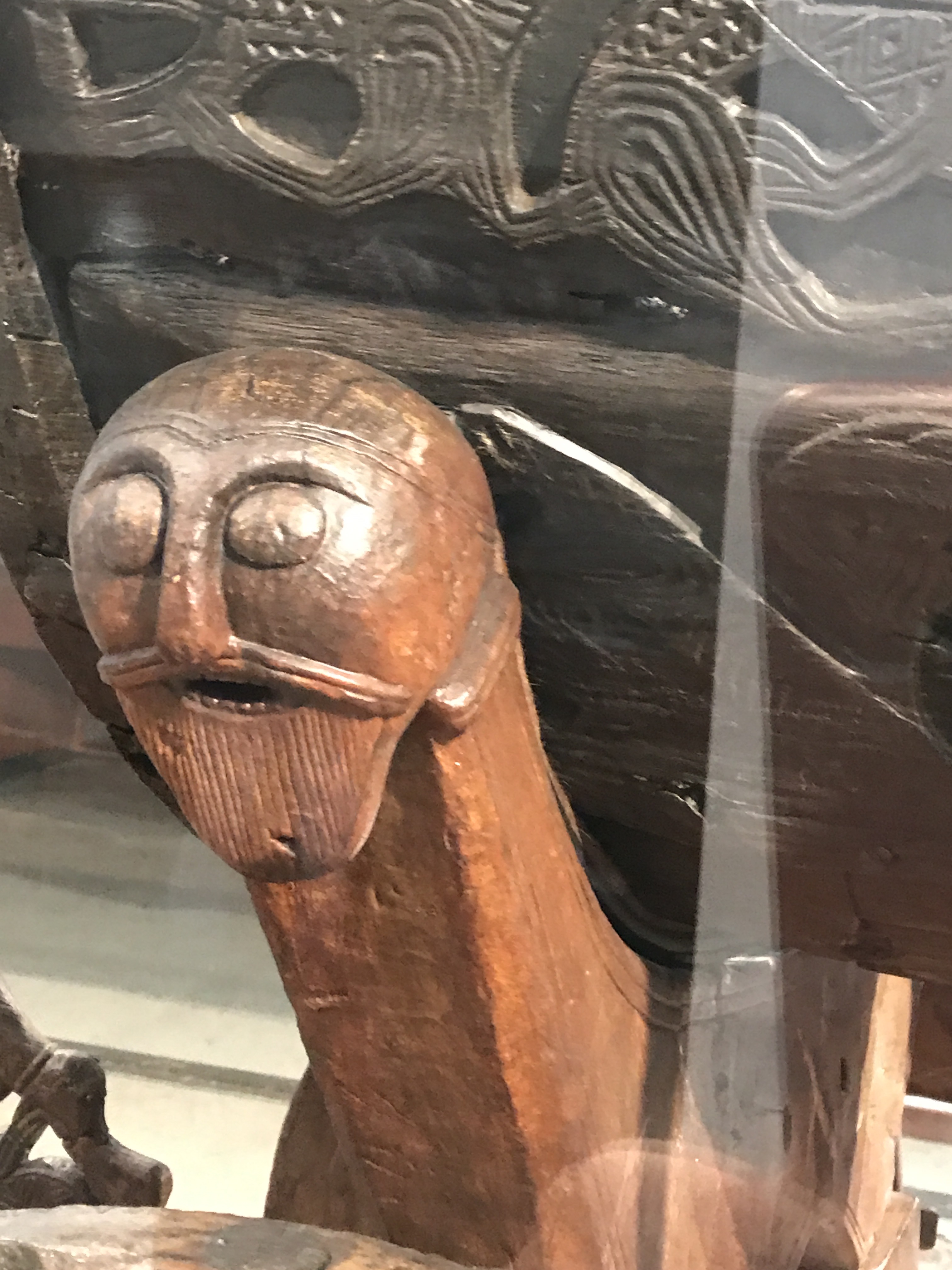
Who is the bearded fellow above?


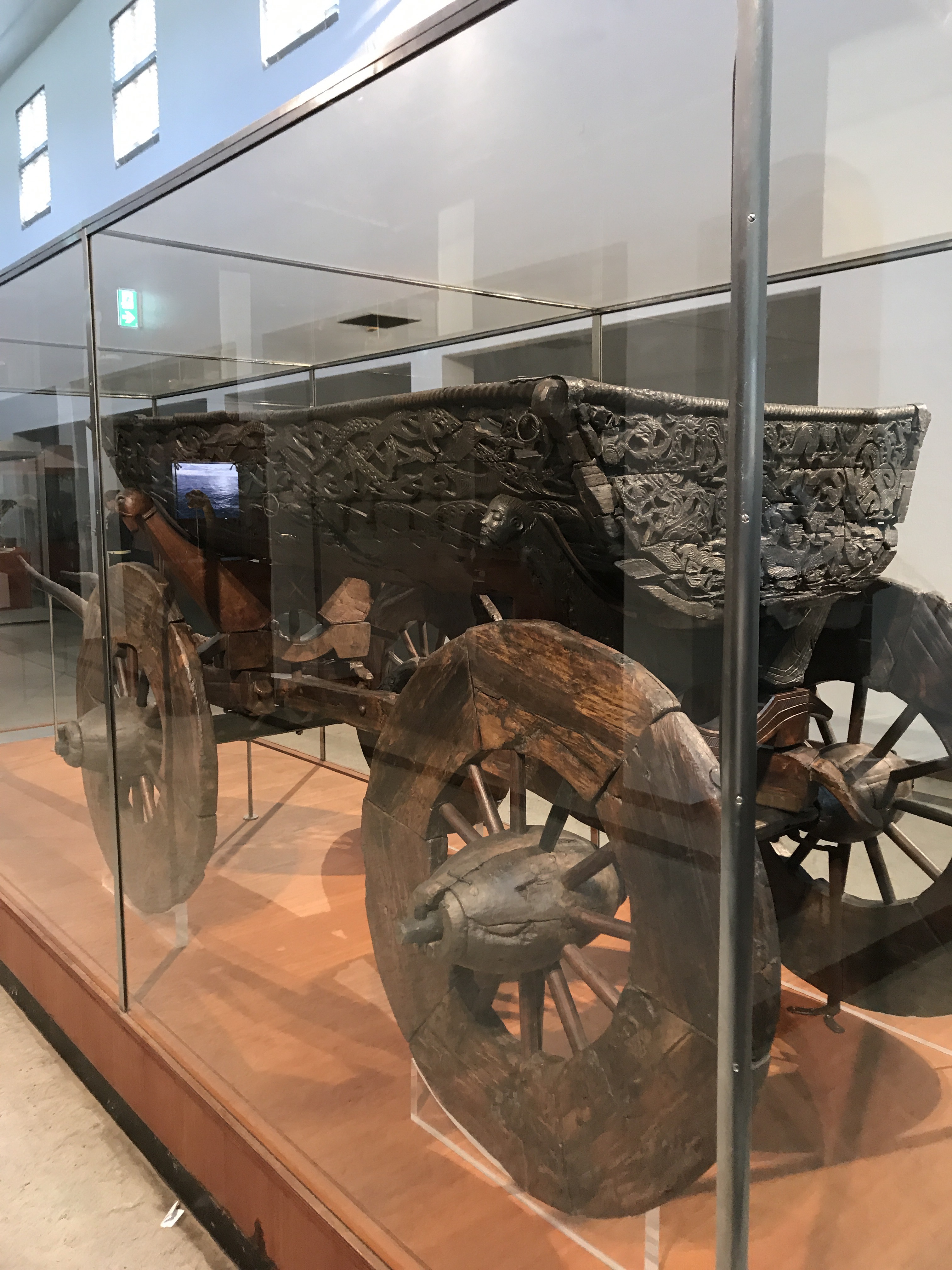
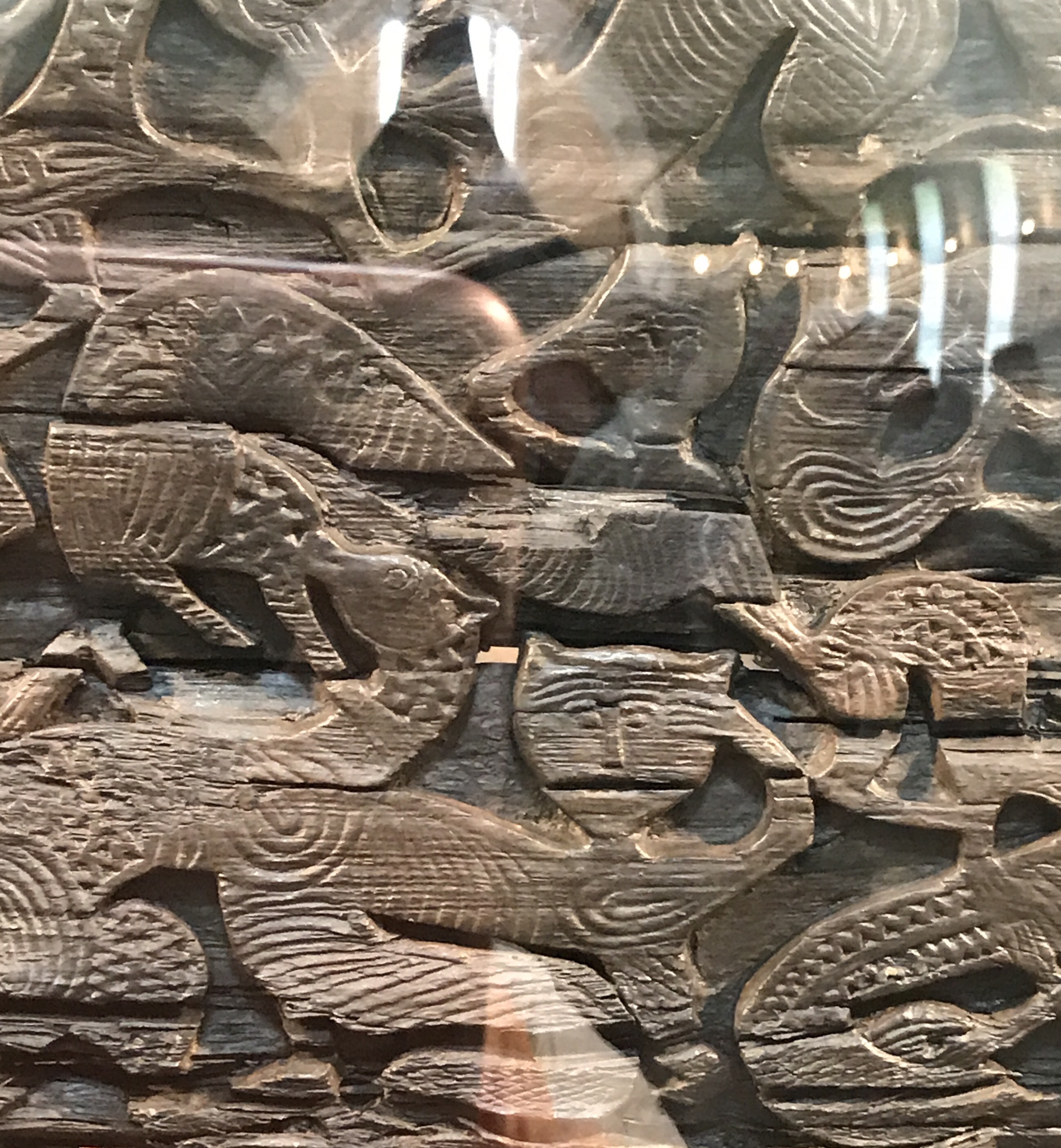
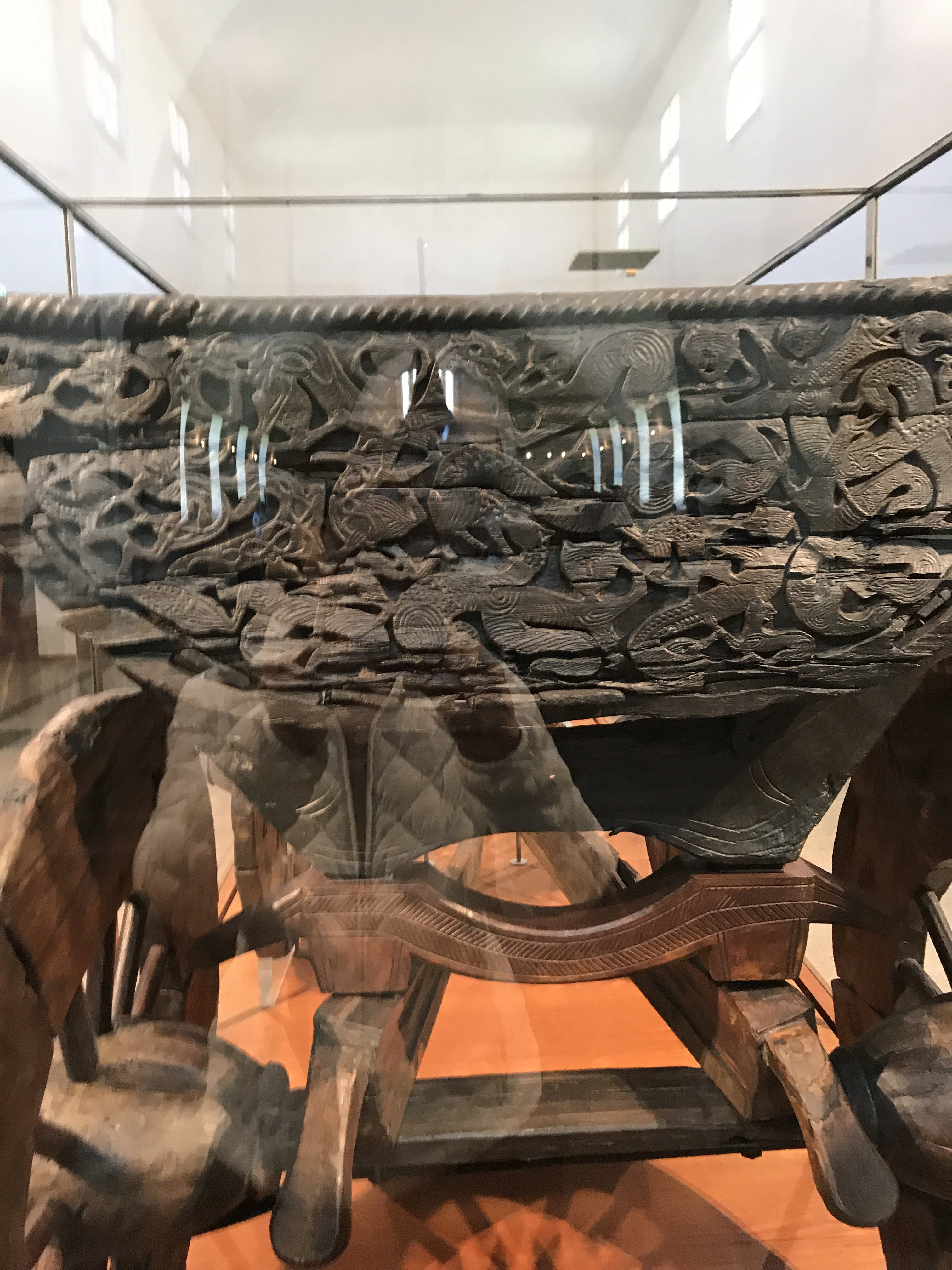
He’s part of a fantastically carved wooden cart found with the Oseberg ship. Vikings were known to use utilitarian carts, but this elaborate one was most likely used in ceremonies and religious processions.

The cart is made of oak. Every surface is covered with carved people and animals, possibly showing Norse legends or historical events.

Did Vikings have cats? I think so! The Norwegian Forest Cat is said to have sailed on ships. Who doesn’t need a good mouser?

The cart is not only beautiful, but quite a feat of engineering.

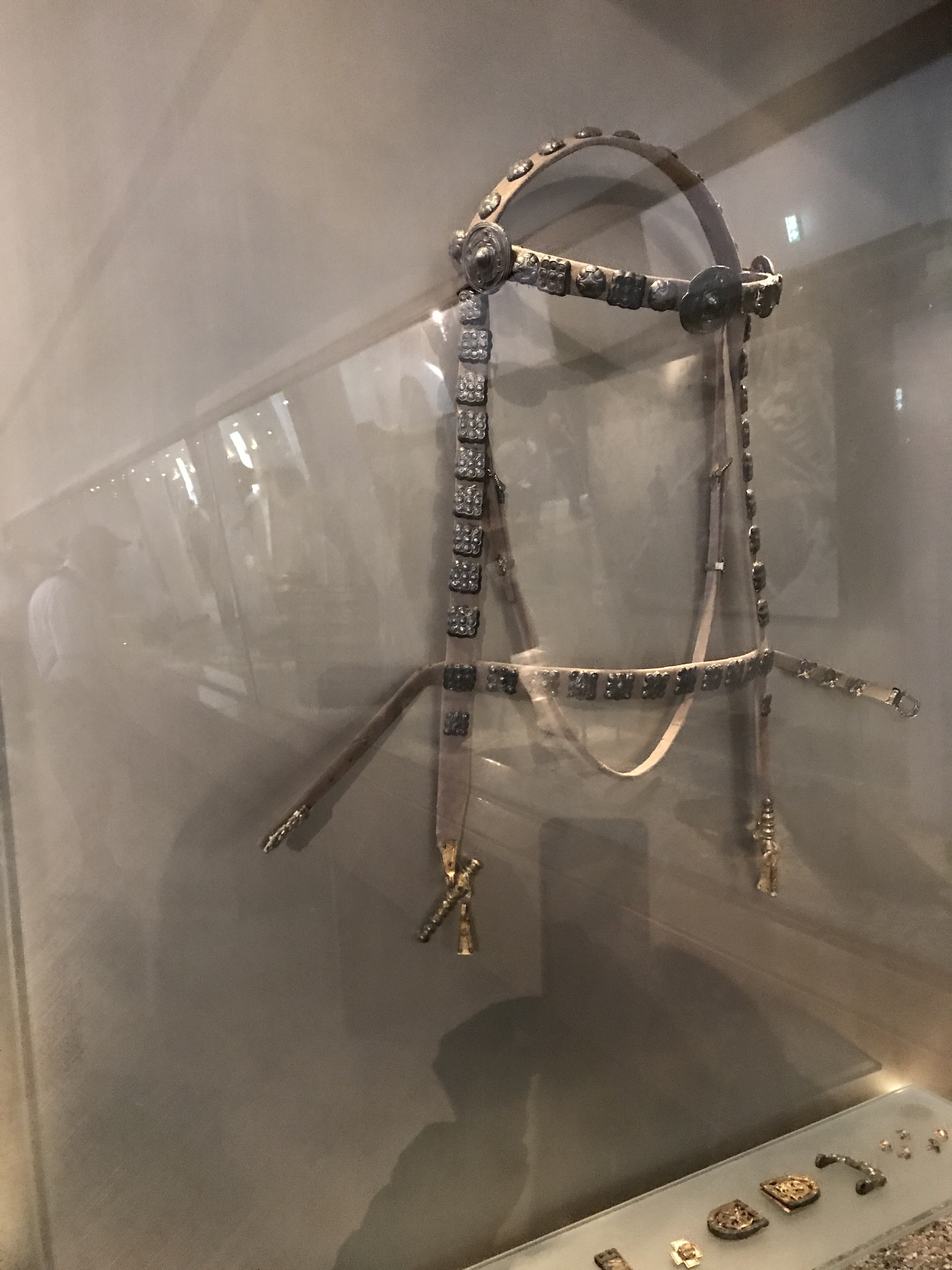
The cart was most likely pulled by two horses. A bridle, decorated with metal studs, is on display in a case nearby.

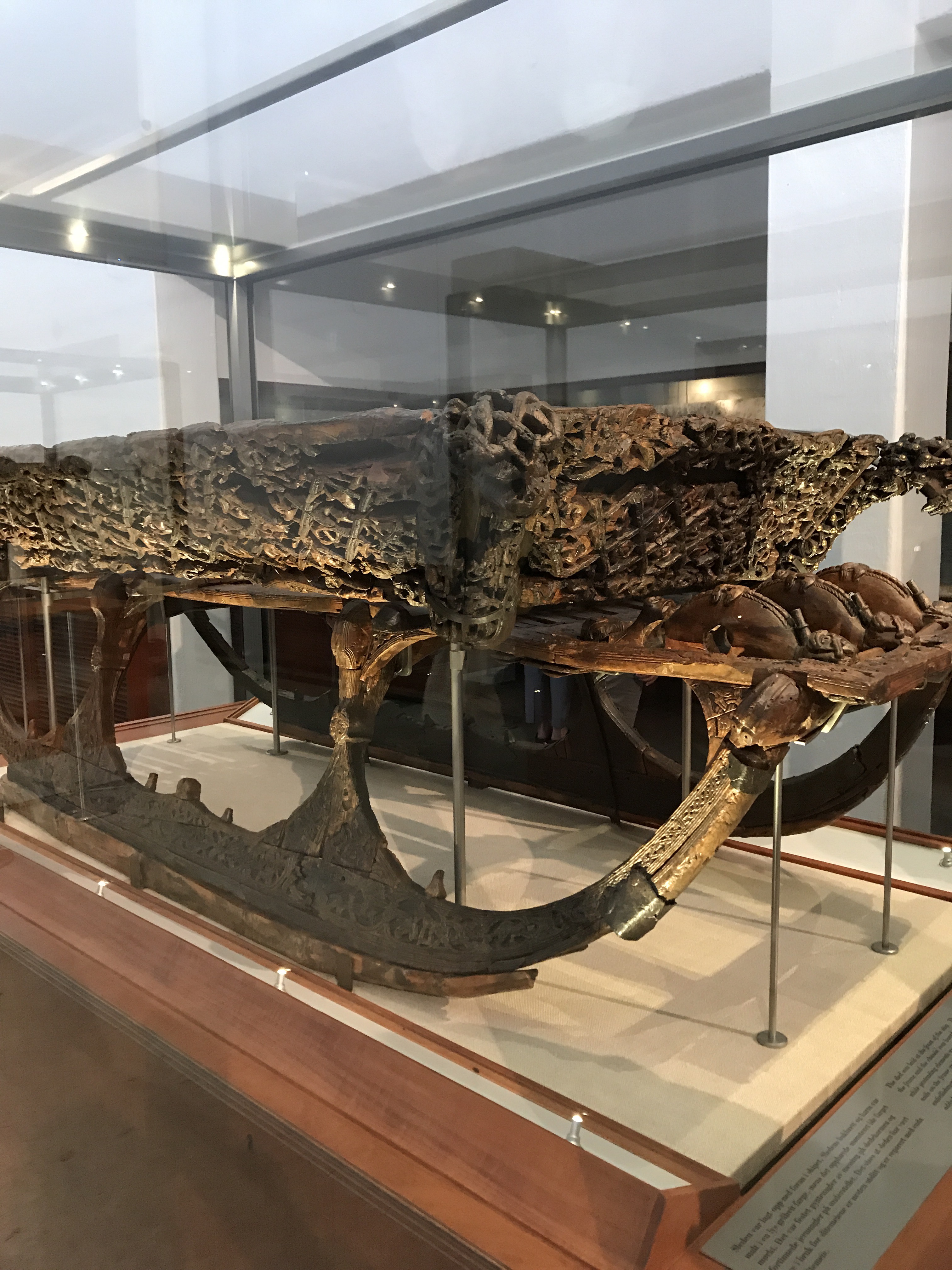
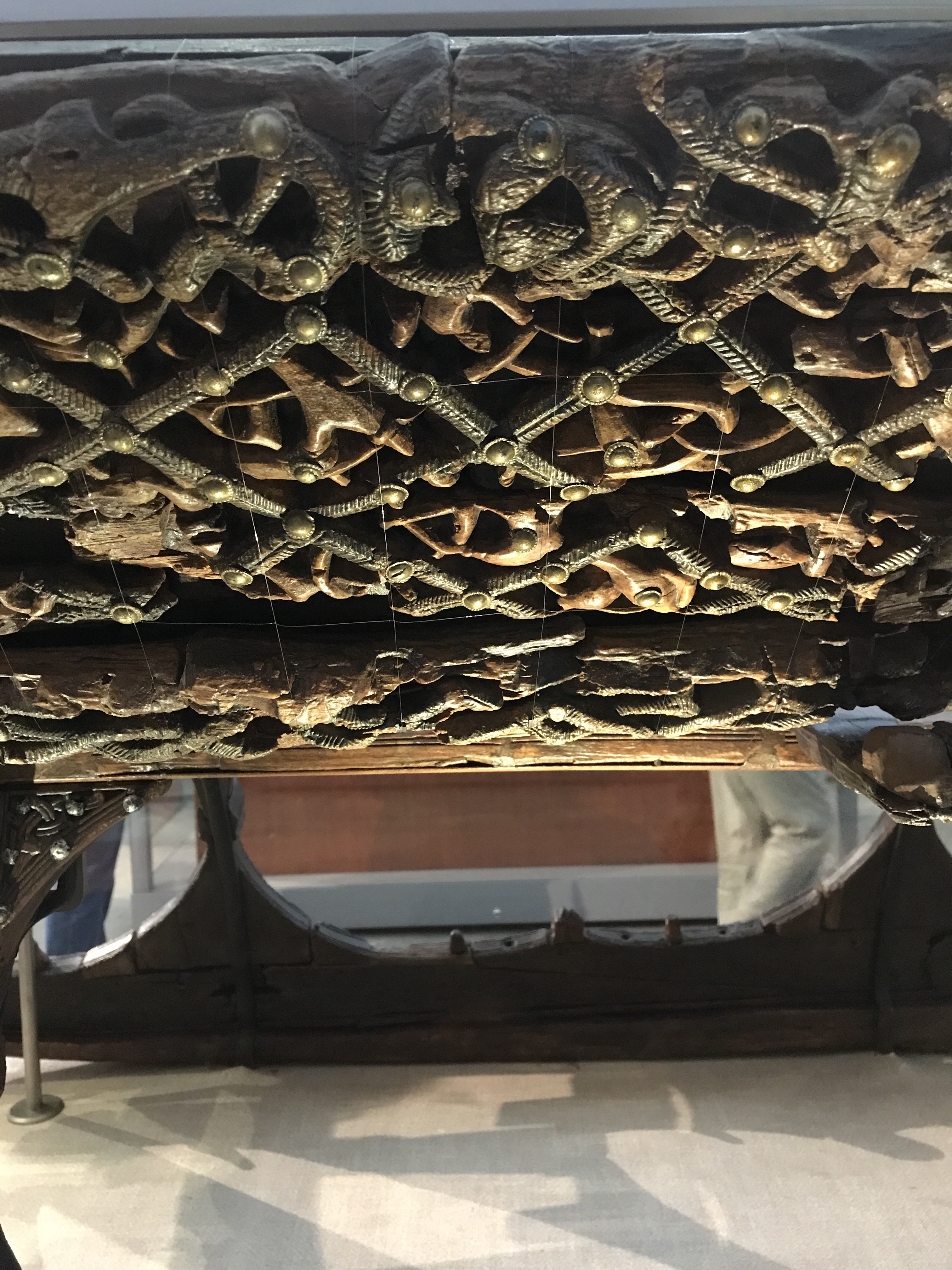
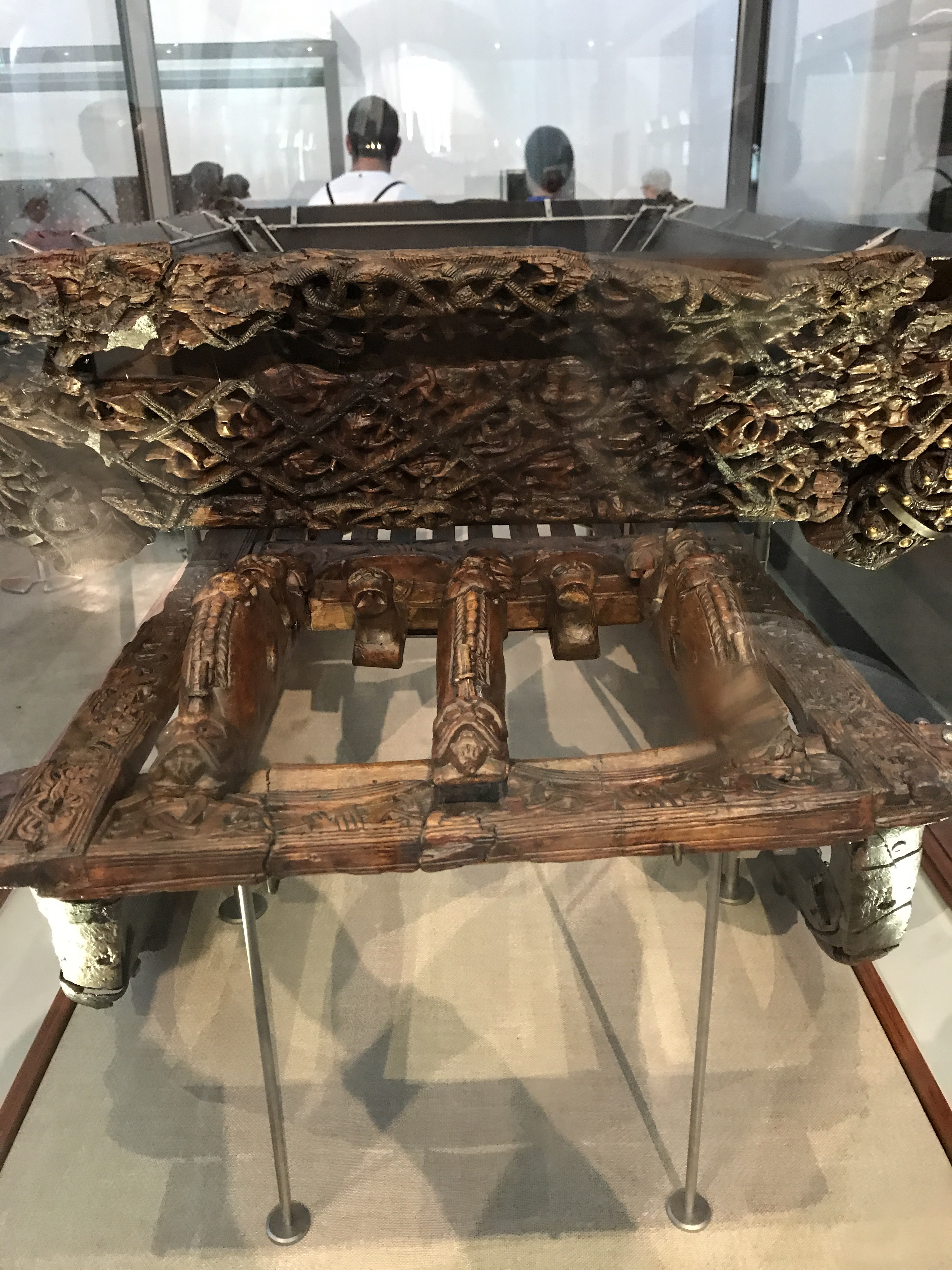
There’s also a sleigh, proof that the Vikings knew their way around snow and ice.

The sleigh carvings are as elaborate and beautiful as the ones on the cart.


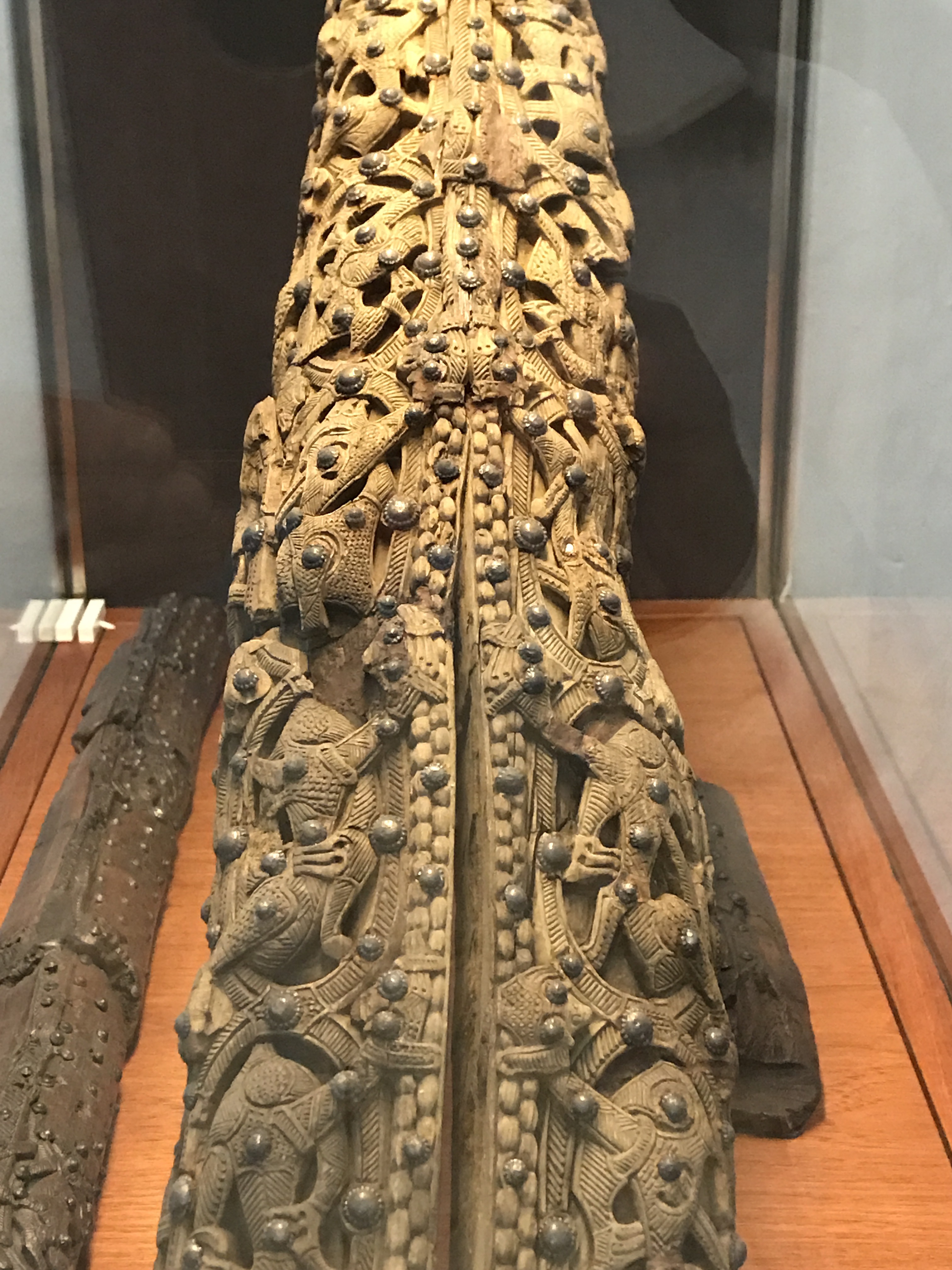
Solid wood sleigh shafts are intricate carved and studded.


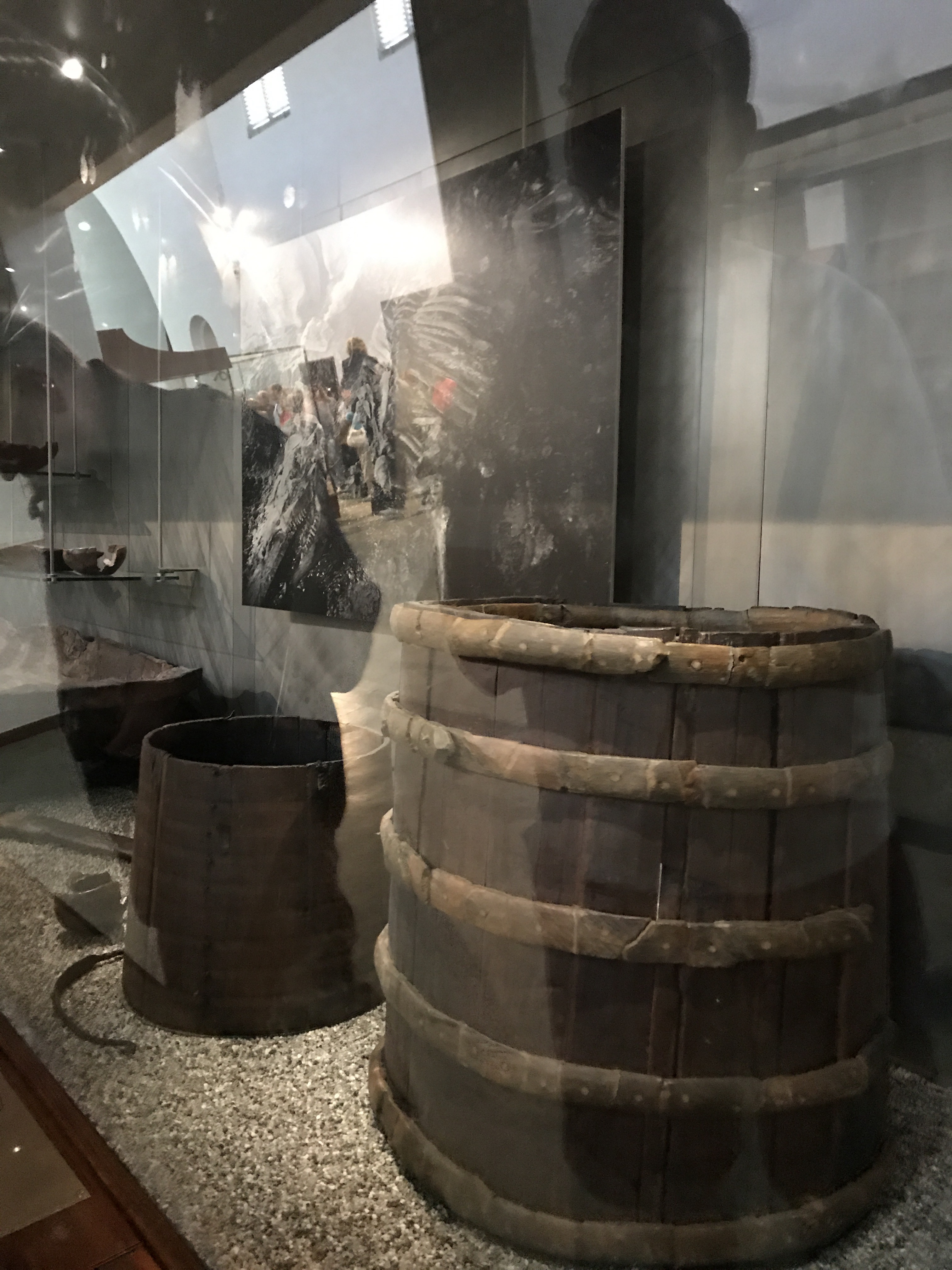
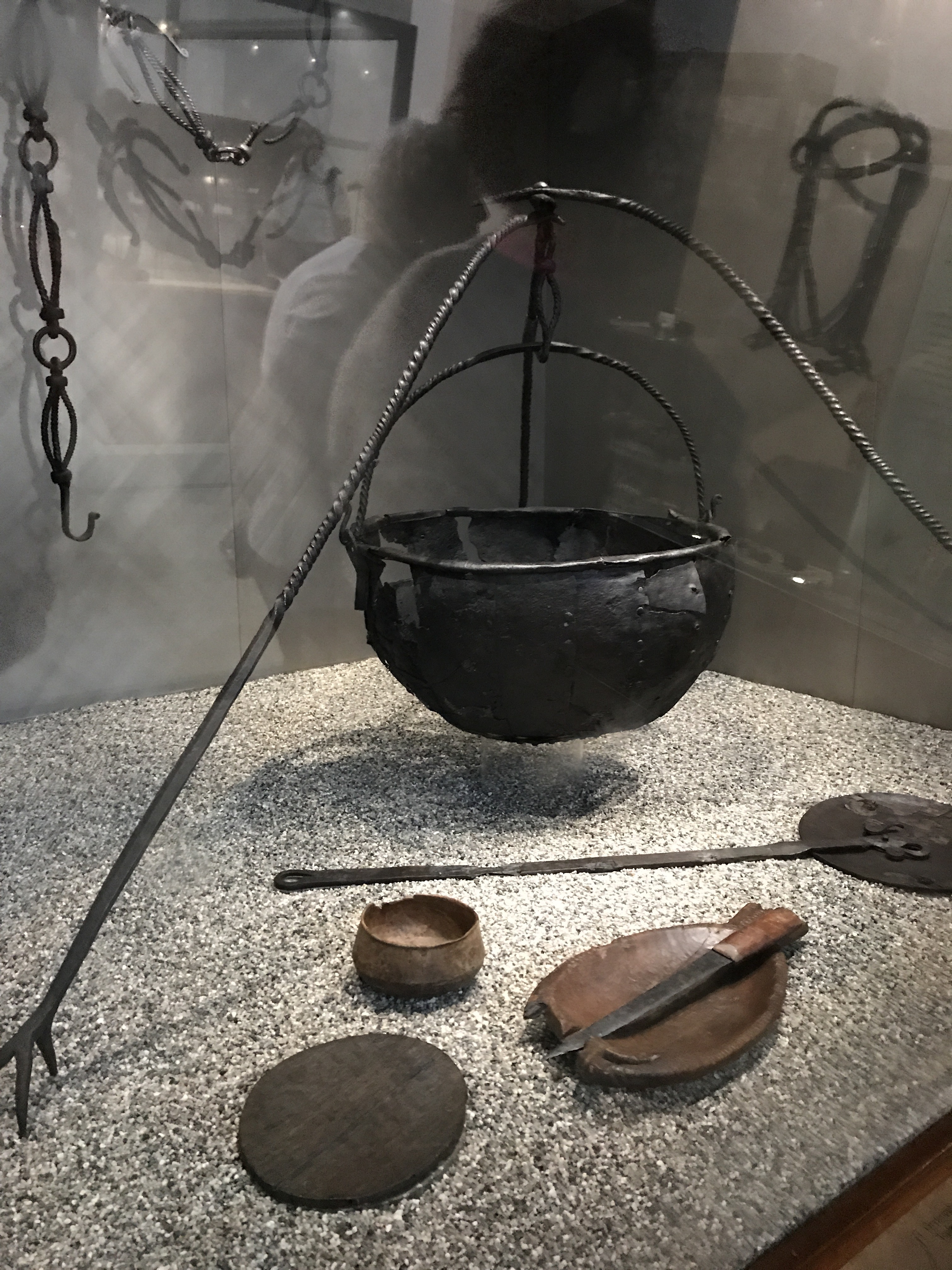
Burials included cooking pots and a good supply of food for the journey to Valhalla.


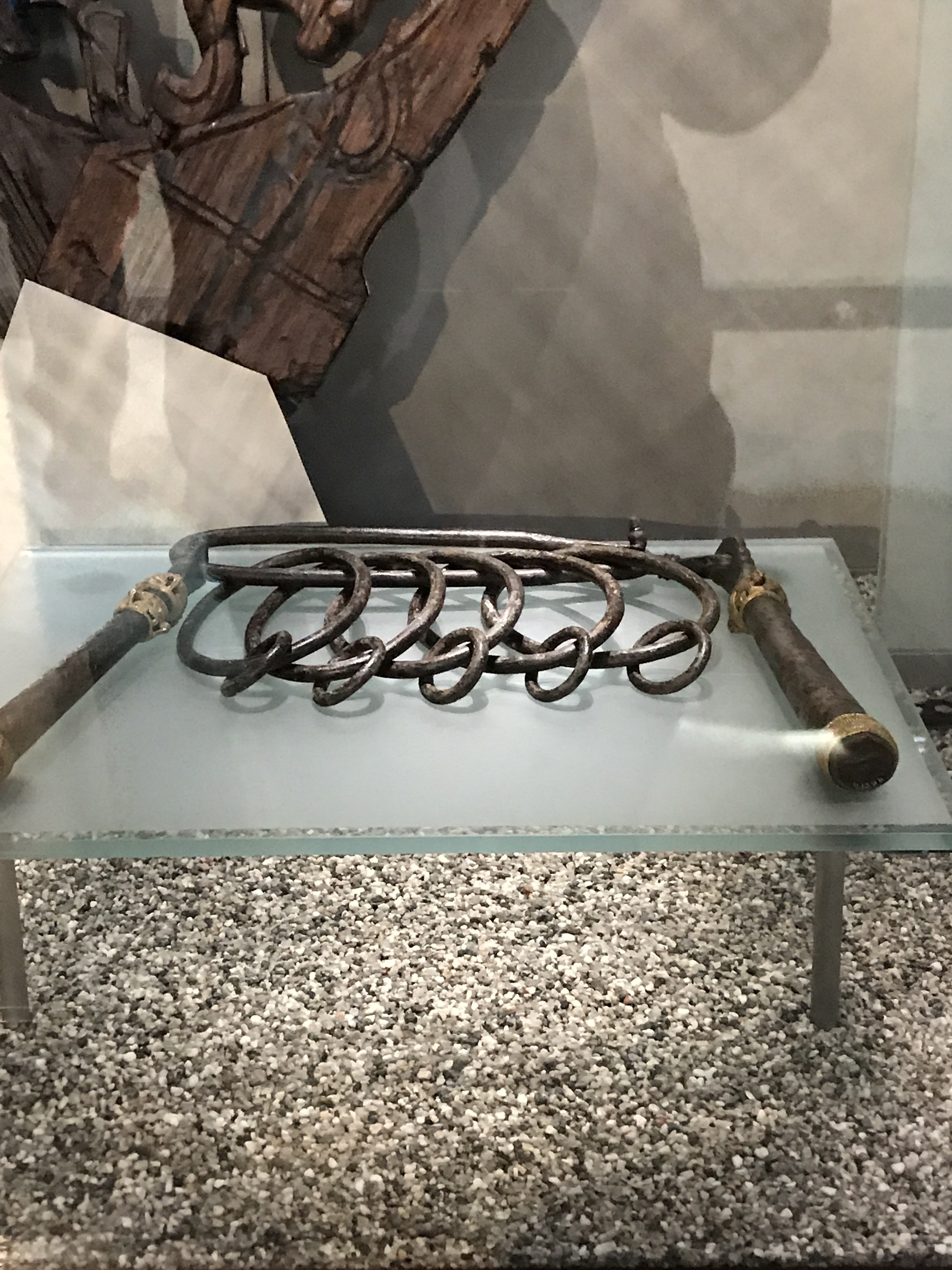
Rattles were most likely used in religious ceremonies. This one would make quite a racket. Maybe it scared away evil spirits?


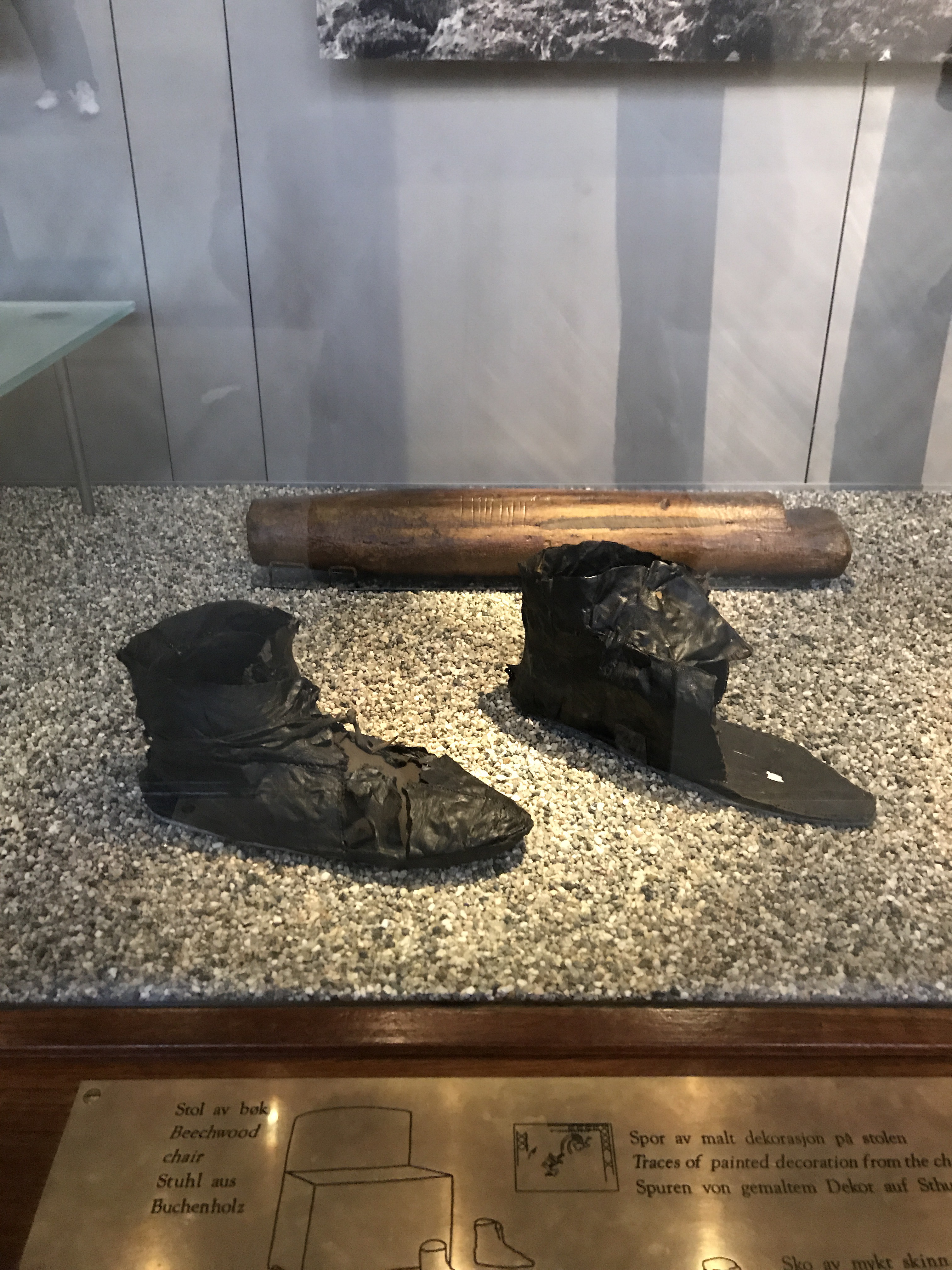
Leather shoes? Sure.


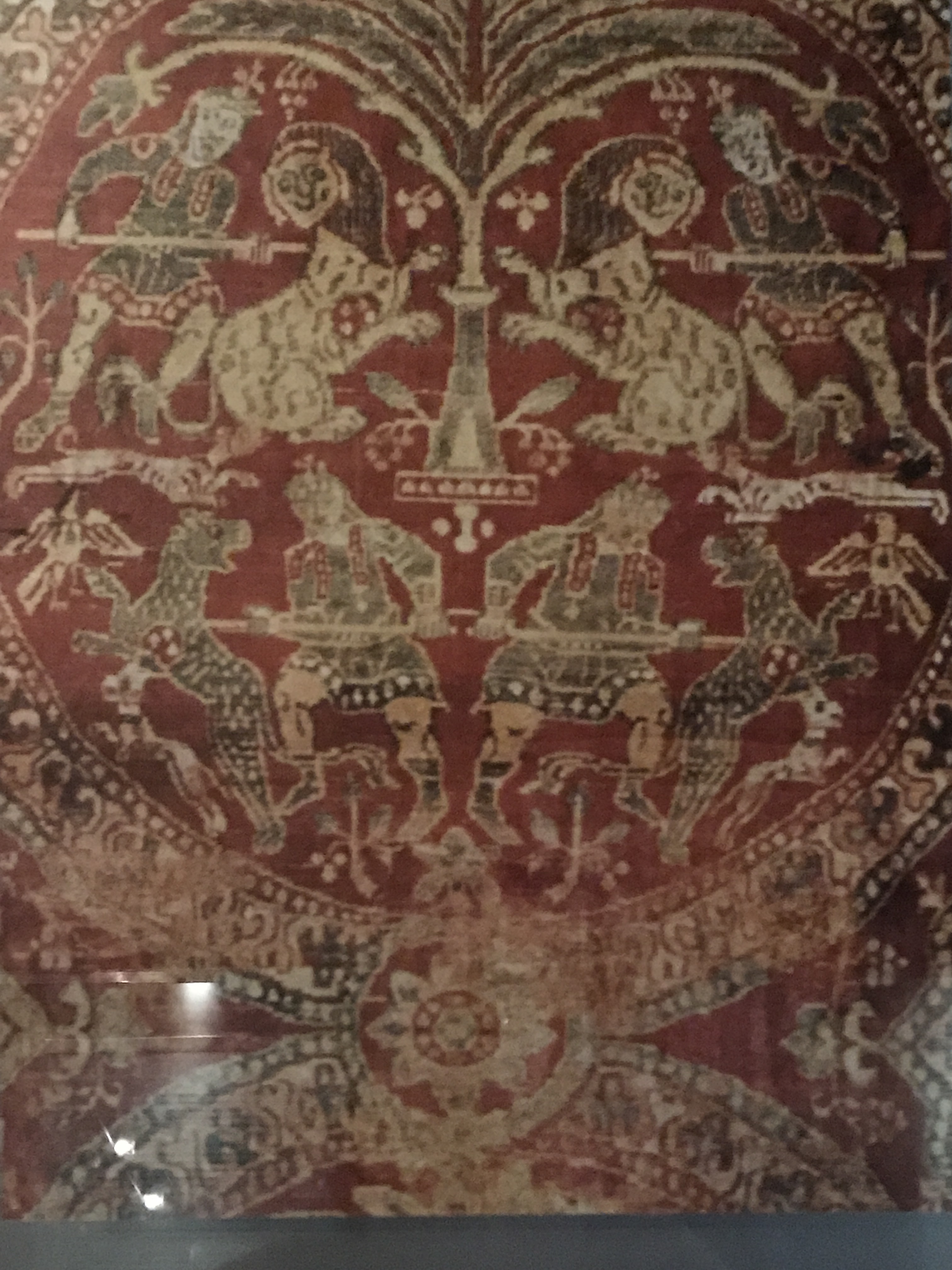
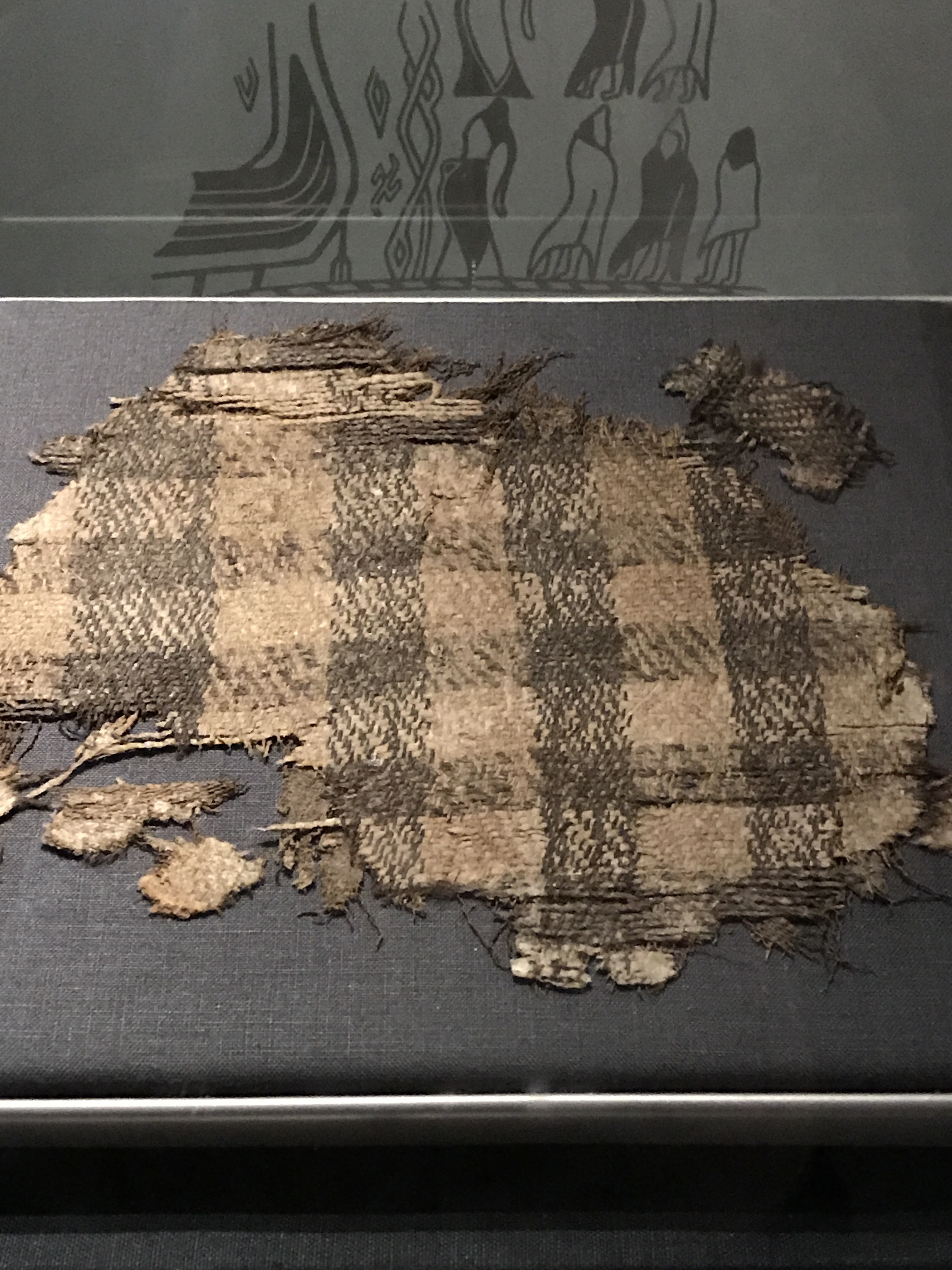
There are even a few surviving textiles. Most likely some were woven at home, and some came from trading–or raiding.


This is by far the most complete Viking exhibit I’ve seen anywhere. I wouldn’t care to see fearsome Viking raiders on my horizon, but from the safe distance of many centuries, their faces are fascinating.

Art Nouveau Vikings at Frederiksborg 

Frederiksborg Castle in Hillerod, Denmark houses tons of fine historic art, but one of my favorite pieces is pretty humble: it occupies a long lower-level hallway leading to the exit.
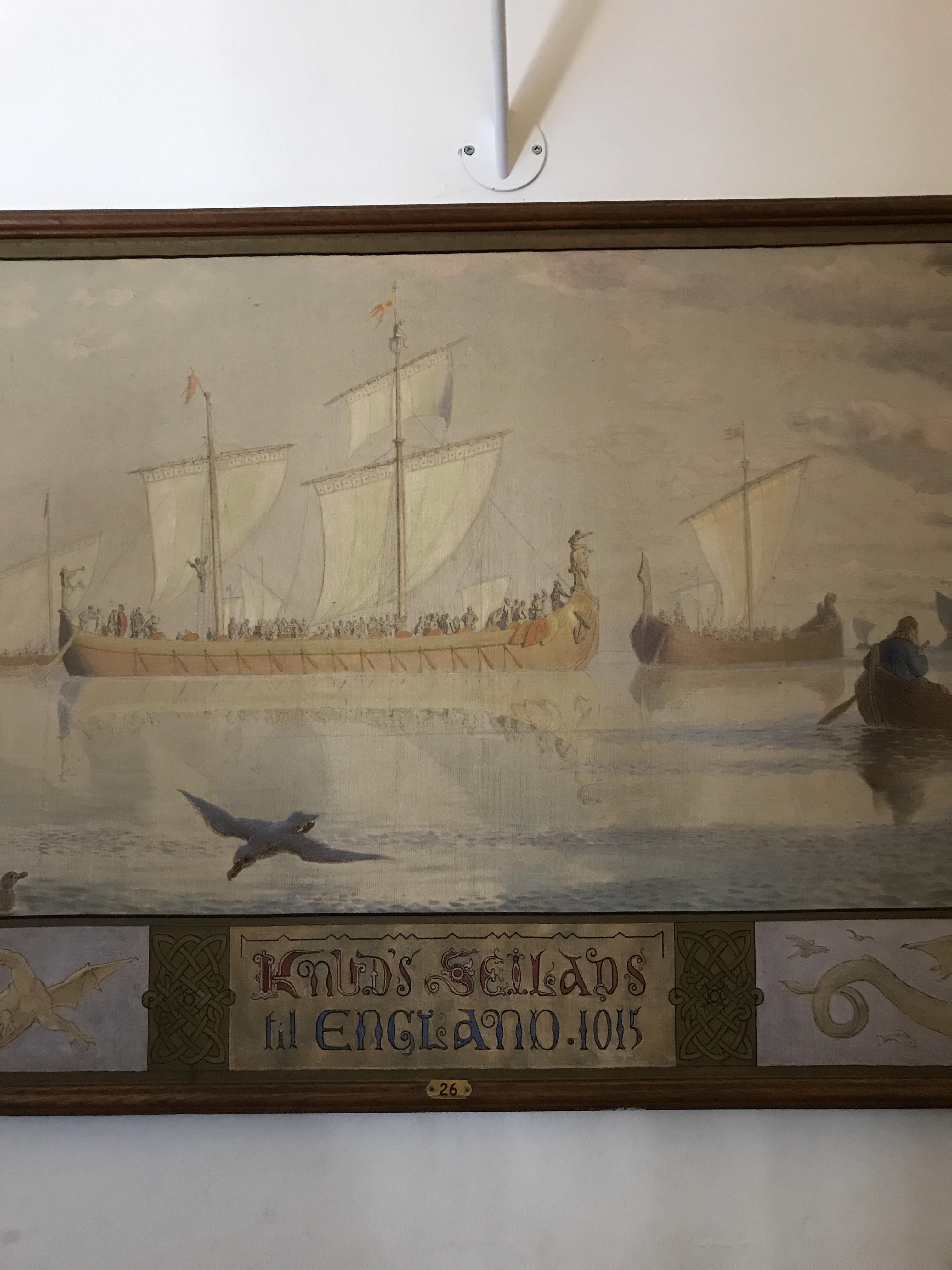
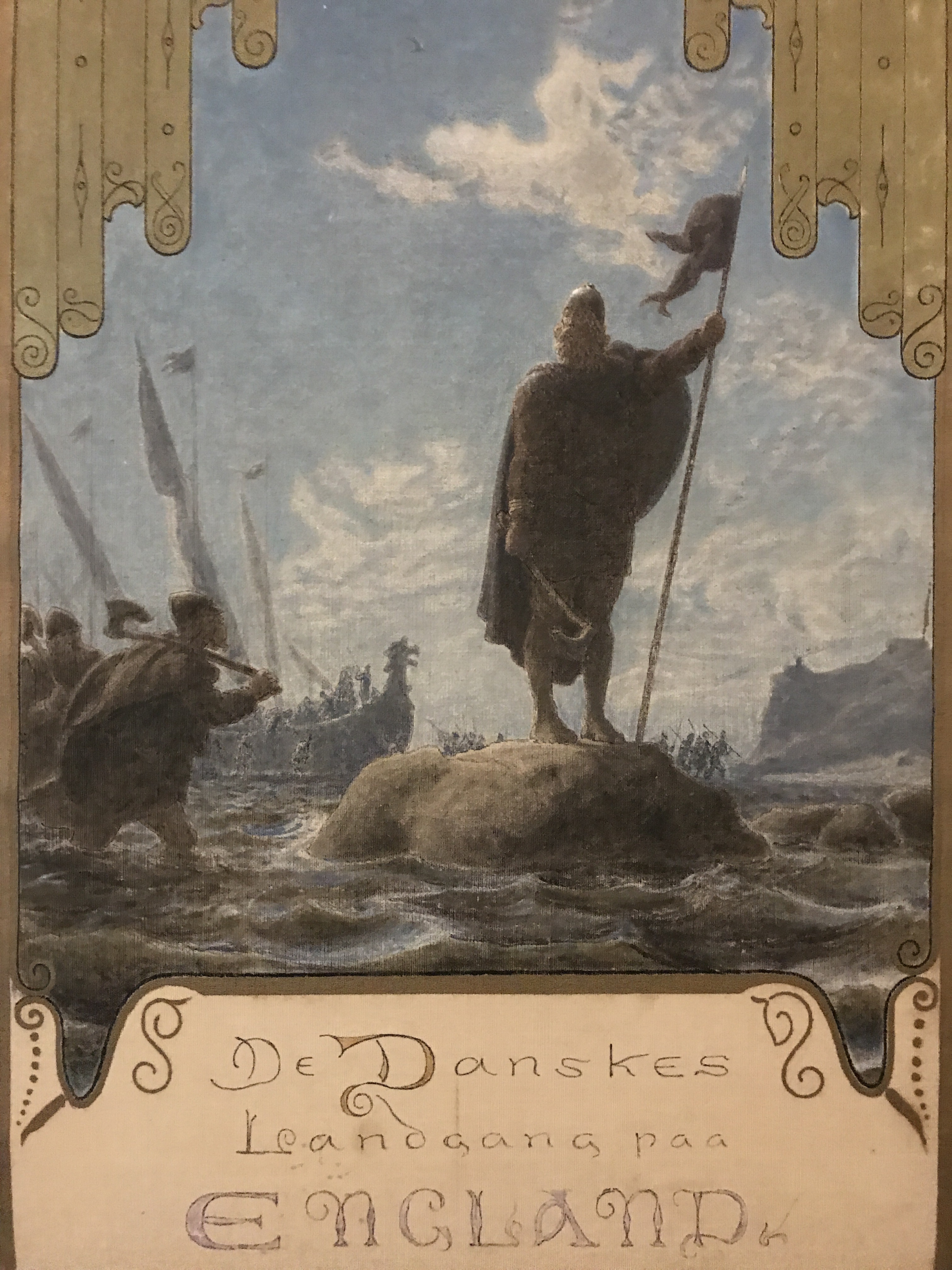
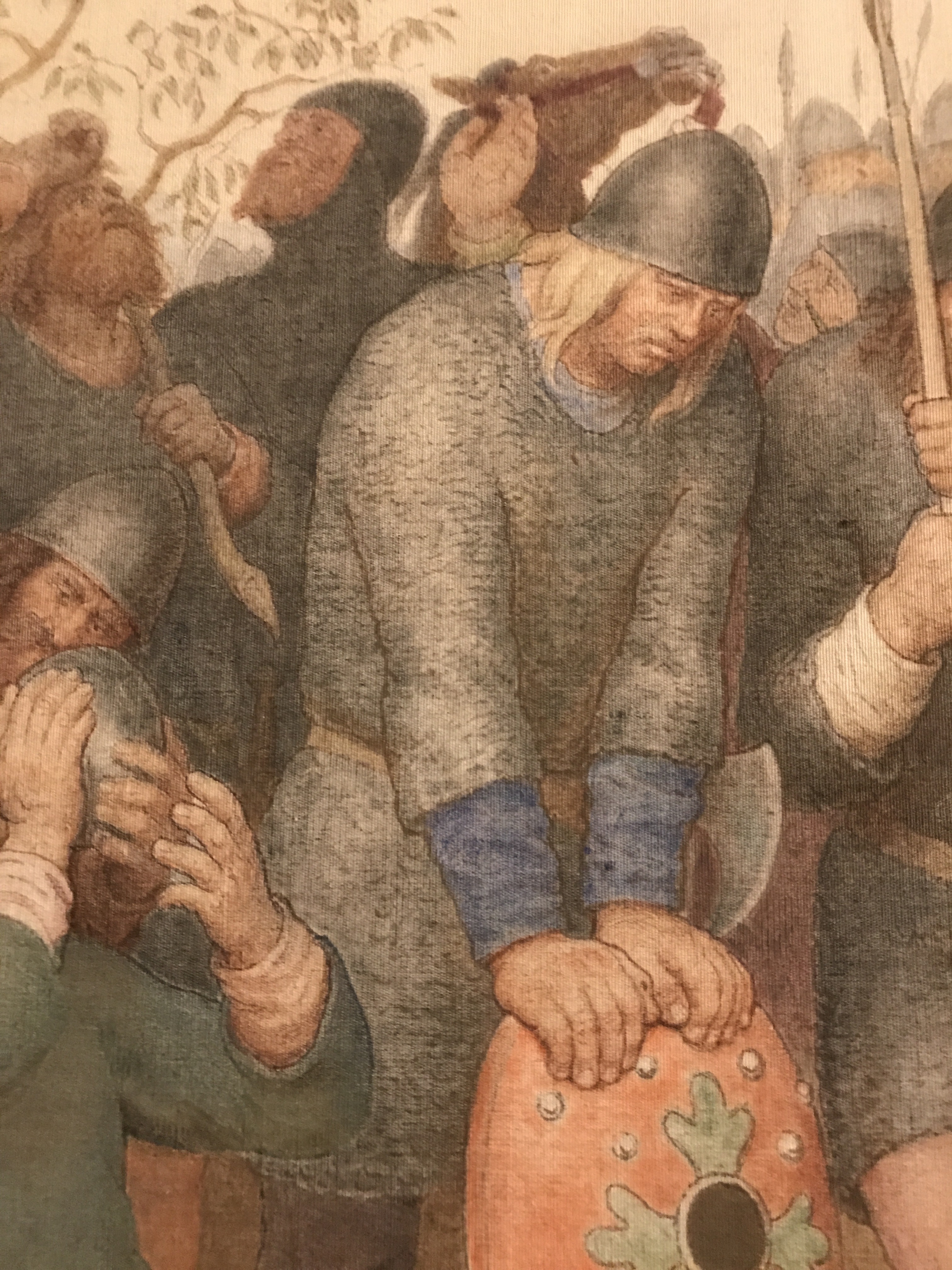
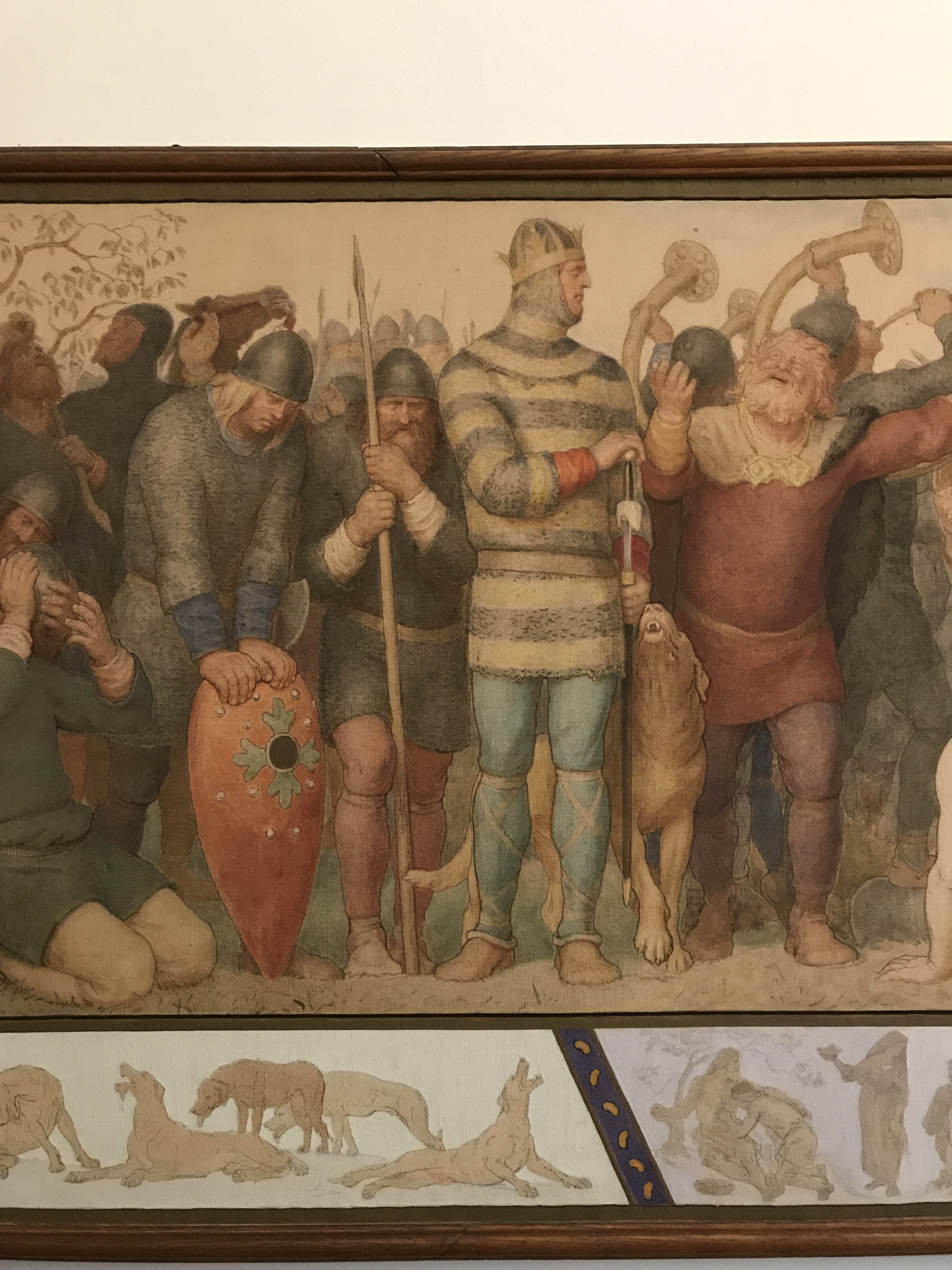
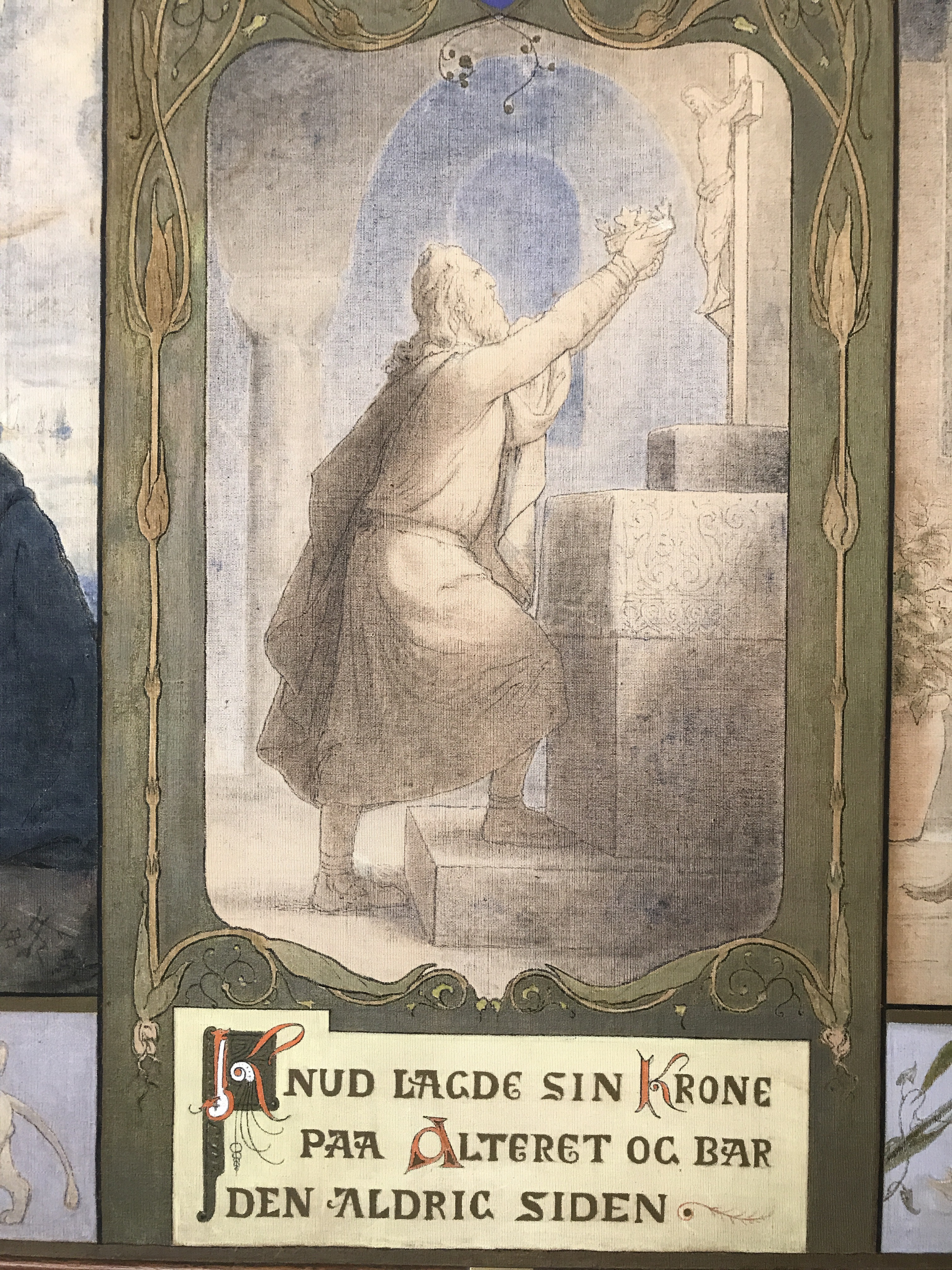
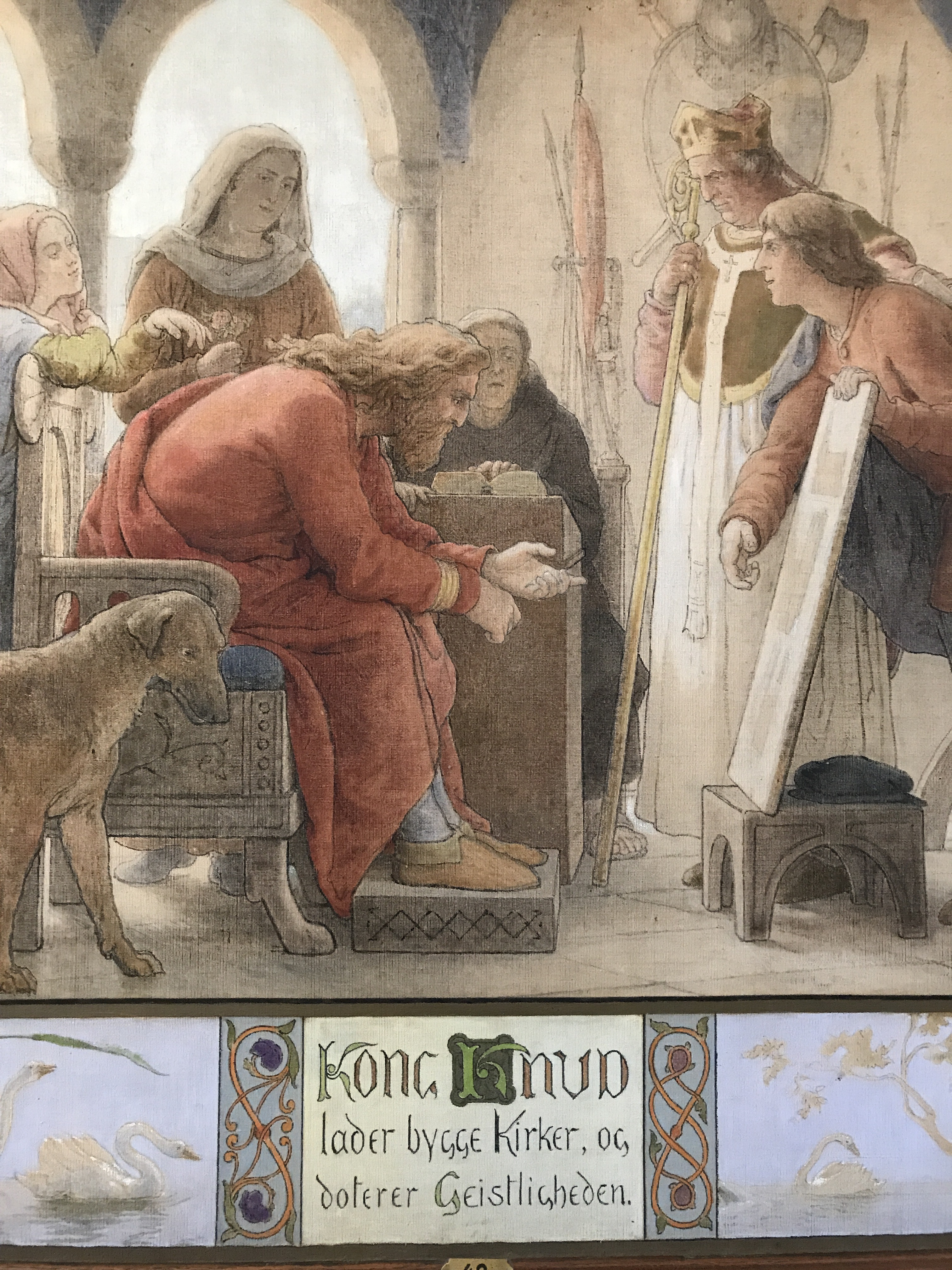
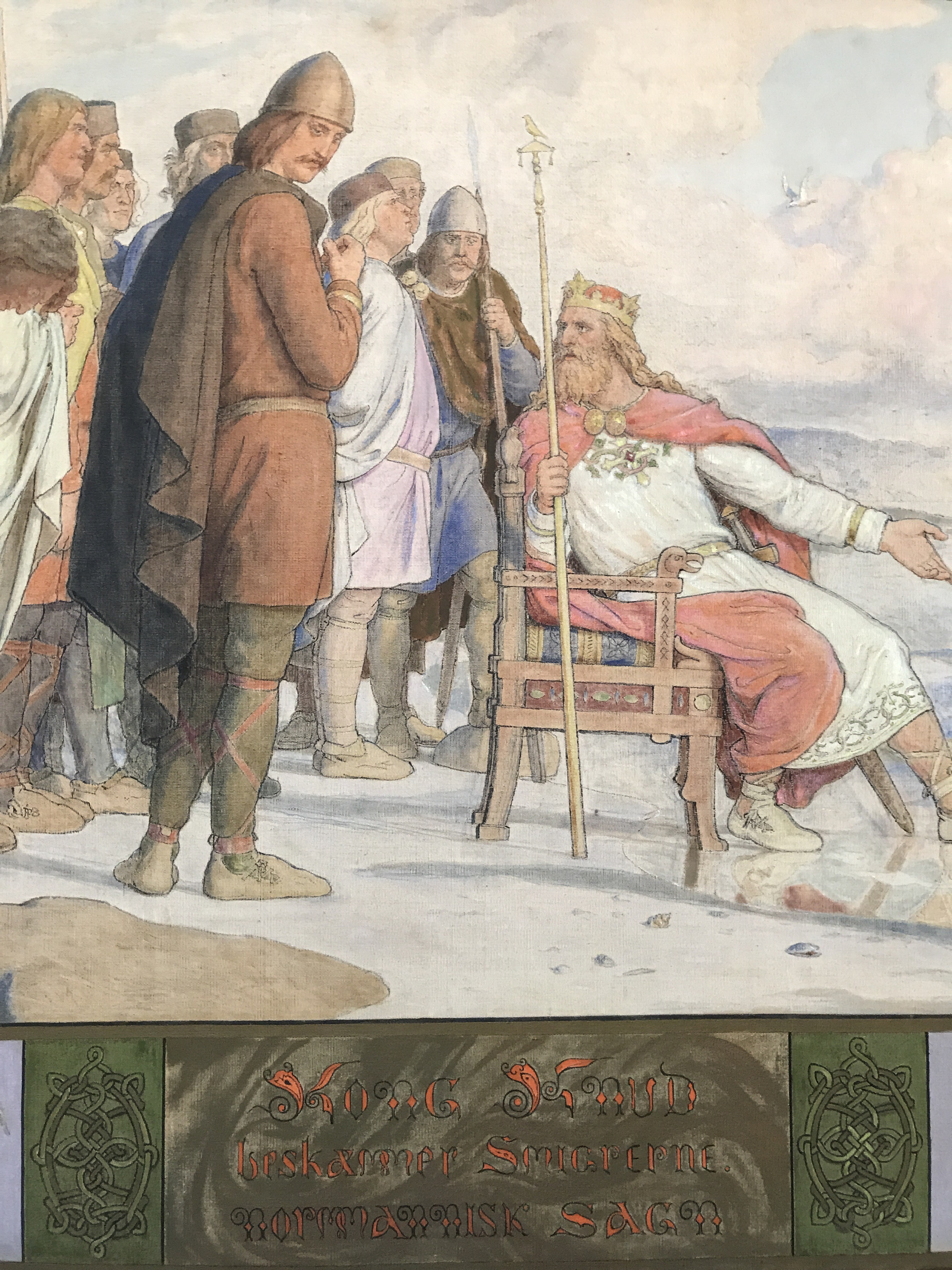
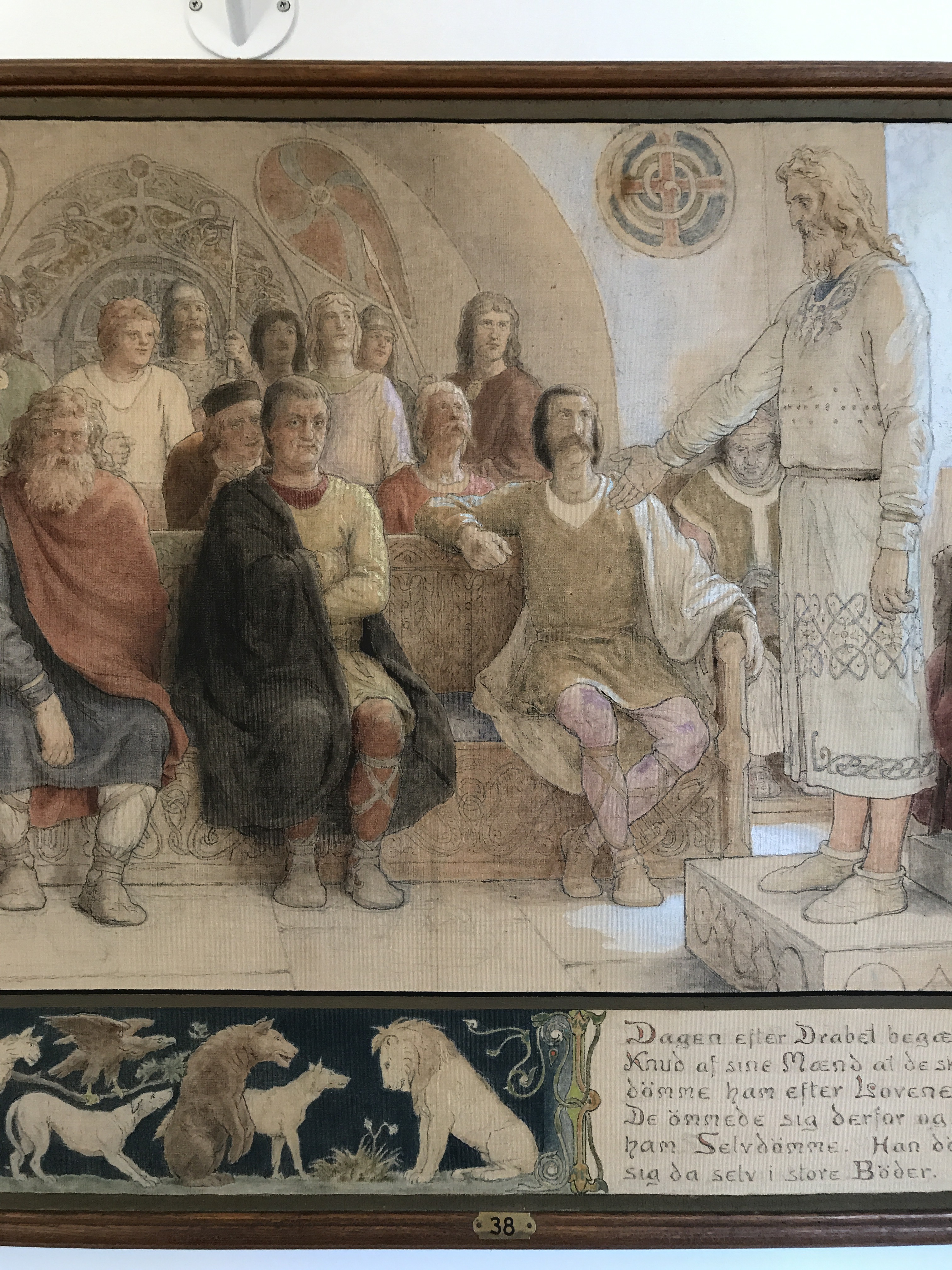
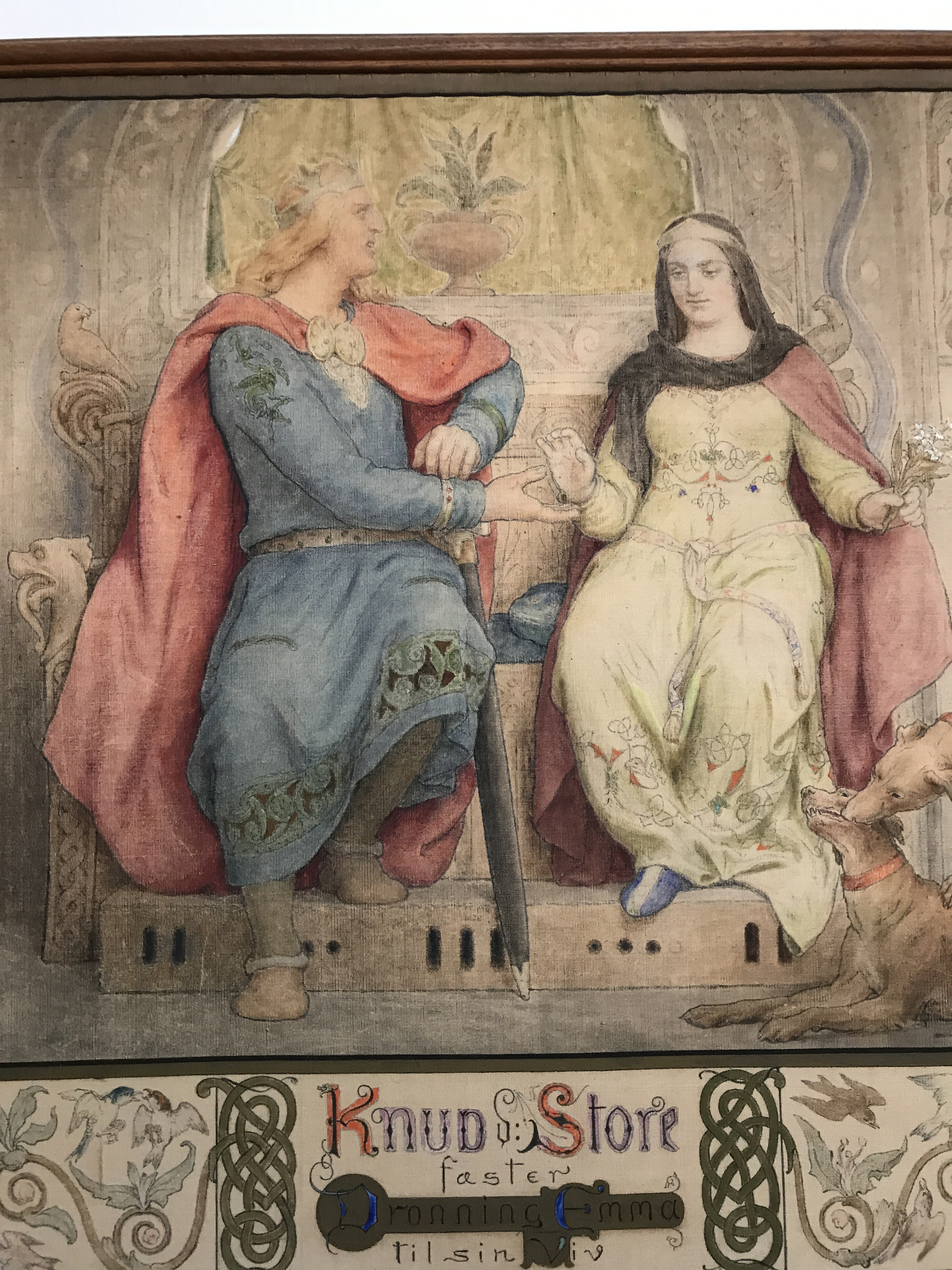
From 1883-1886, Lorenz Frolich painted a commissioned piece: a 37-meter frieze depicting the Danish conquest of large chunks of England. It was to be a Danish counterpart to the embroidered Bayeux Tapestry, which documented the Norman Conquest of England in 1066. The style of the frieze was from the very early years of Art Nouveau,  also known as Jugendstihl, also known as Skonvirke in Denmark.
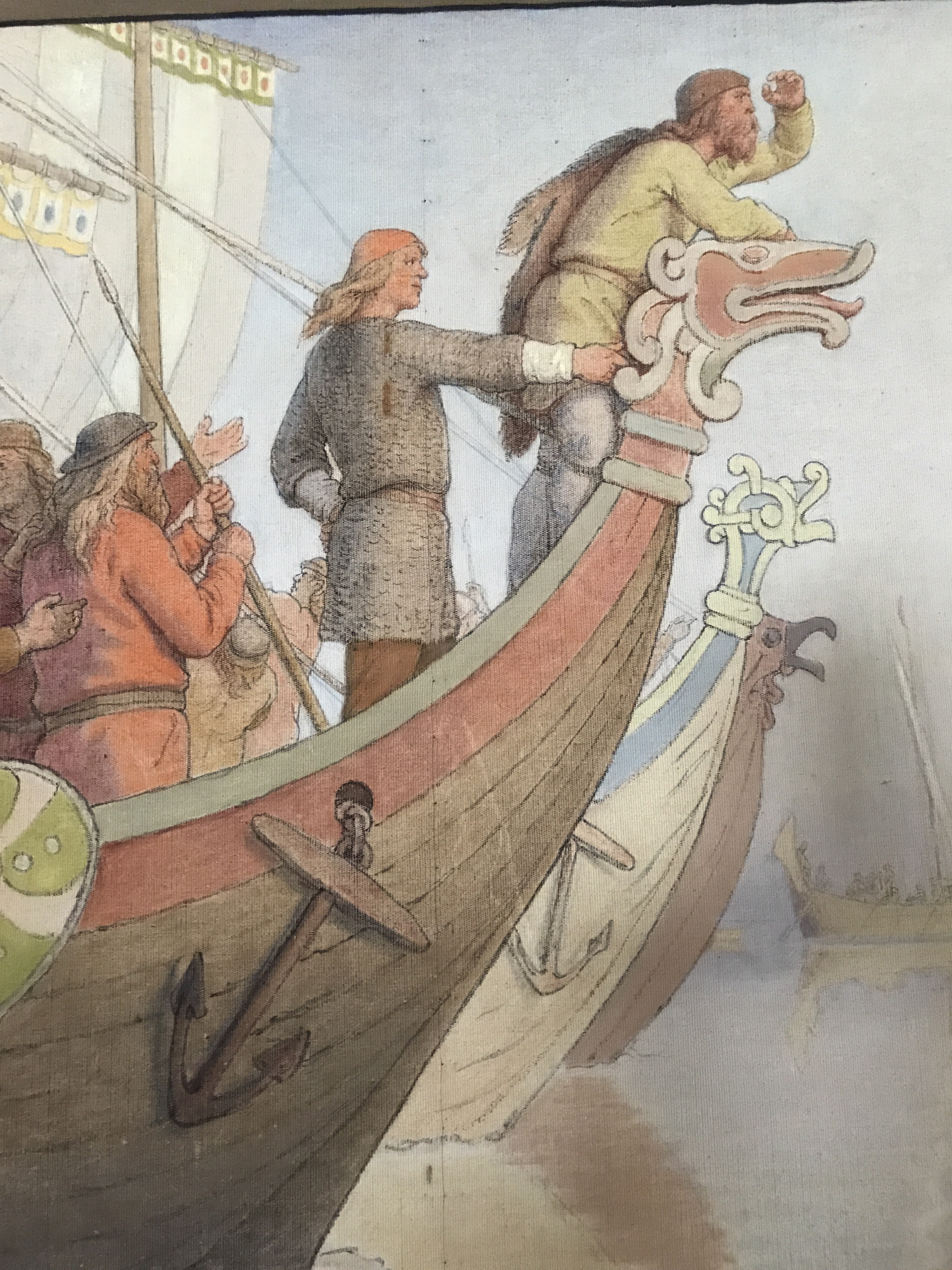
The Danish Vikings began sailing their shallow-depth longboats across the sea and up the rivers of England in the late 700s. Before that, they had only ventured as far as the Baltic countries on their raids. The trouble was, the Baltics were almost as poor in resources as Scandinavia. Pickings were slim. But England had rich soil where Danish settlers could grow much more food than in their own rocky soil. English monasteries were crammed with gold and silver candleholders, crosses and chalices.

Raiding was wearying work, but somebody had to do it, right?


After a couple of centuries of striking fear into the hearts of the Brits, and much bloody axe-swinging, the Dane Swein Forkbeard was crowned King of England in 1013.

When Swein died, his son Canute the Great took the crown, and in due course Swein’s grandsons Harold Harfoot and Hardecnut had their turns at ruling the rich land of England. The printed information at Frederiksborg skips over the period when the Danes lost their grip on power in 1042 after the death of Hardecnut. But we’re informed that 1066 was all about the Danes: the Normans were direct descendants of the Danish Vikings who had conquered the part of France that became Normandy.


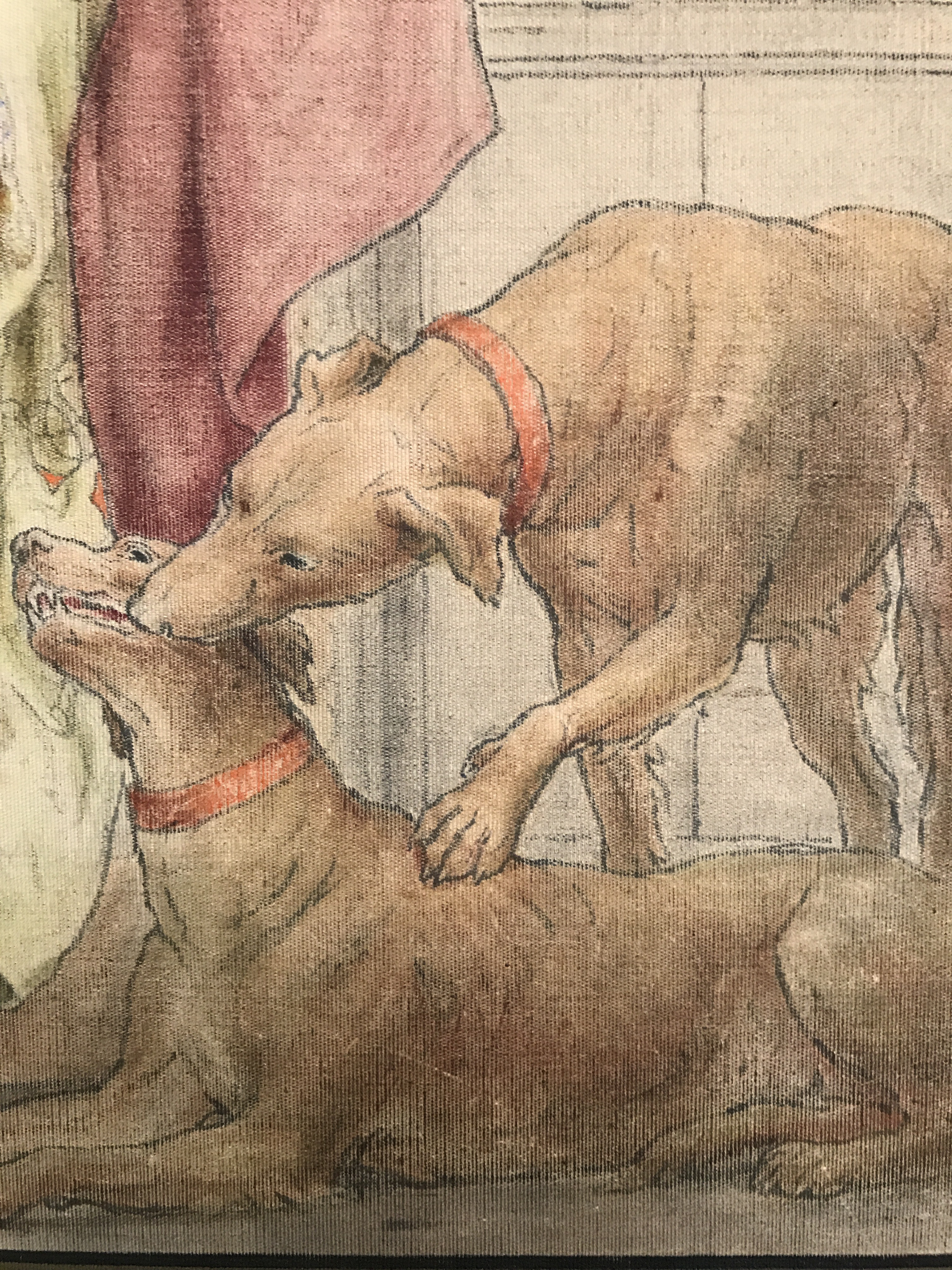
The Frederiksborg frieze is at pains to depict the conquering Vikings as reasonable, law-abiding fellows willing to sit in orderly rows and debate issues like gentlemen.


There’s also emphasis on their domestic qualities. And it’s true: they were fine farmers and they had domesticated animals.

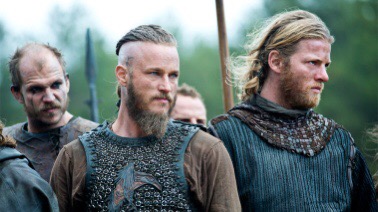
Travis Fimmel as Ragnar Lothbrok, photo from review in “Variety,” Feb. 21, 2014


All the qualities of the Vikings are on display in the History Channel’s TV series “The Vikings.” I’m anxiously awaiting the 5th season. A disclaimer: yes, I know the show is full of appalling violence. Don’t even ask me what a Blood Eagle is. But for the first time, I begin to understand the Vikings, their world view, and the elaborate mythology that guided their behavior.

The series tells the story of Ragnar Lothbrok, an early Viking of song and legend, and his descendants, who eventually became the Normans of 1066 fame. Following the time-honored traditions of TV showrunners everywhere, real events are compressed and characters invented. But historical research is said to be quite accurate as far as clothing, houses, community organization, laws, and religion.

Travis Fimmel, pictured above, plays Ragnar. He is a former Calvin Klein model, but he has real acting chops to go along with his fierce blue eyes and intimidating tattoos. I’ll watch him do anything, from his early daring voyage to pillage Lindisfarne monastery, through adultery and divorce, and right on into the murderous madness of his old age.

Katheryn Winnick and Travis Fimmel in “The Vikings,” photo from review in “The Telegraph,” May 3, 2014


Another big selling point of “The Vikings,” for me, is the depiction of strong women. Lagertha is Ragnar’s brave and loyal wife, a formidable “shieldmaiden.” Even after their messy separation after he takes up with a tall, graceful, ladylike beauty, Lagertha graciously returns again and again to bash heads alongside Ragnar and their sons. Axe, sword and shield in hand, she’s ready save Ragnar’s bacon when he finds himself in trouble. What a woman!


I like the kinder, gentler version of the Vikings depicted in Frolich’s frieze paintings. But I’ll take my Vikings at their fiercest, too.

Join me next time for more explorations in the art and history of Europe, Scandinavia and the British Isles!

Frederiksborg Castle: Renaissance in Knitting Needles

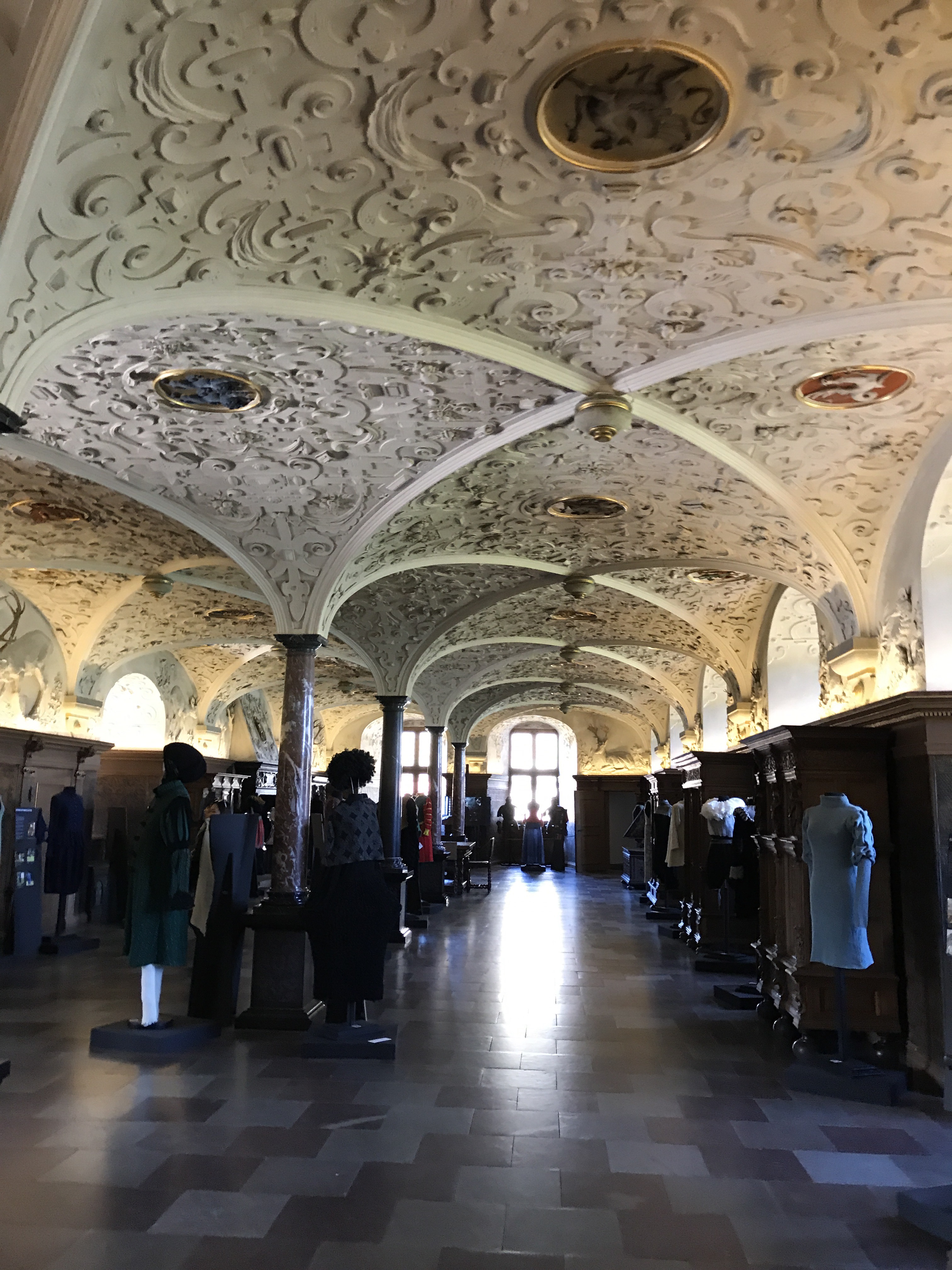
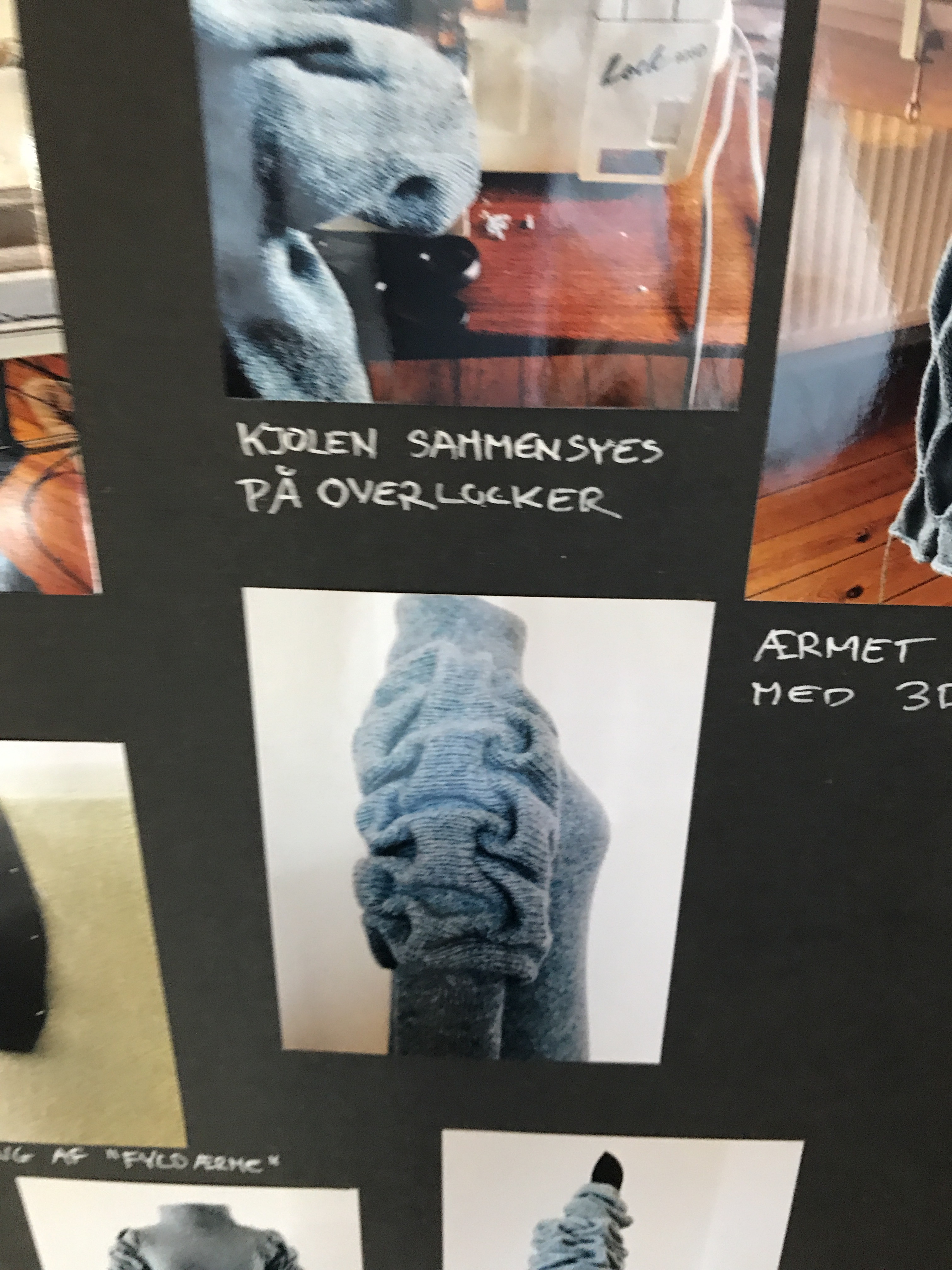
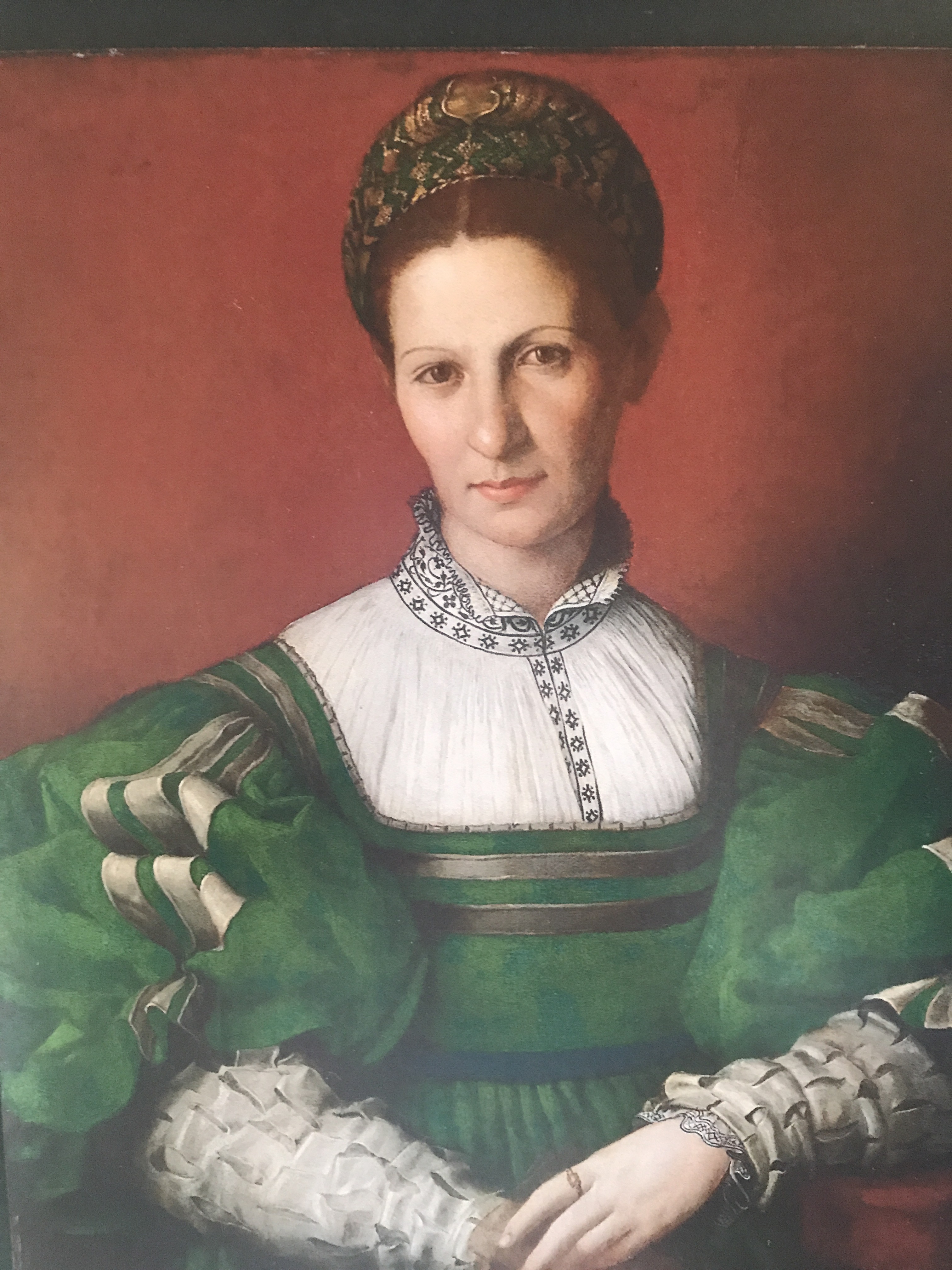
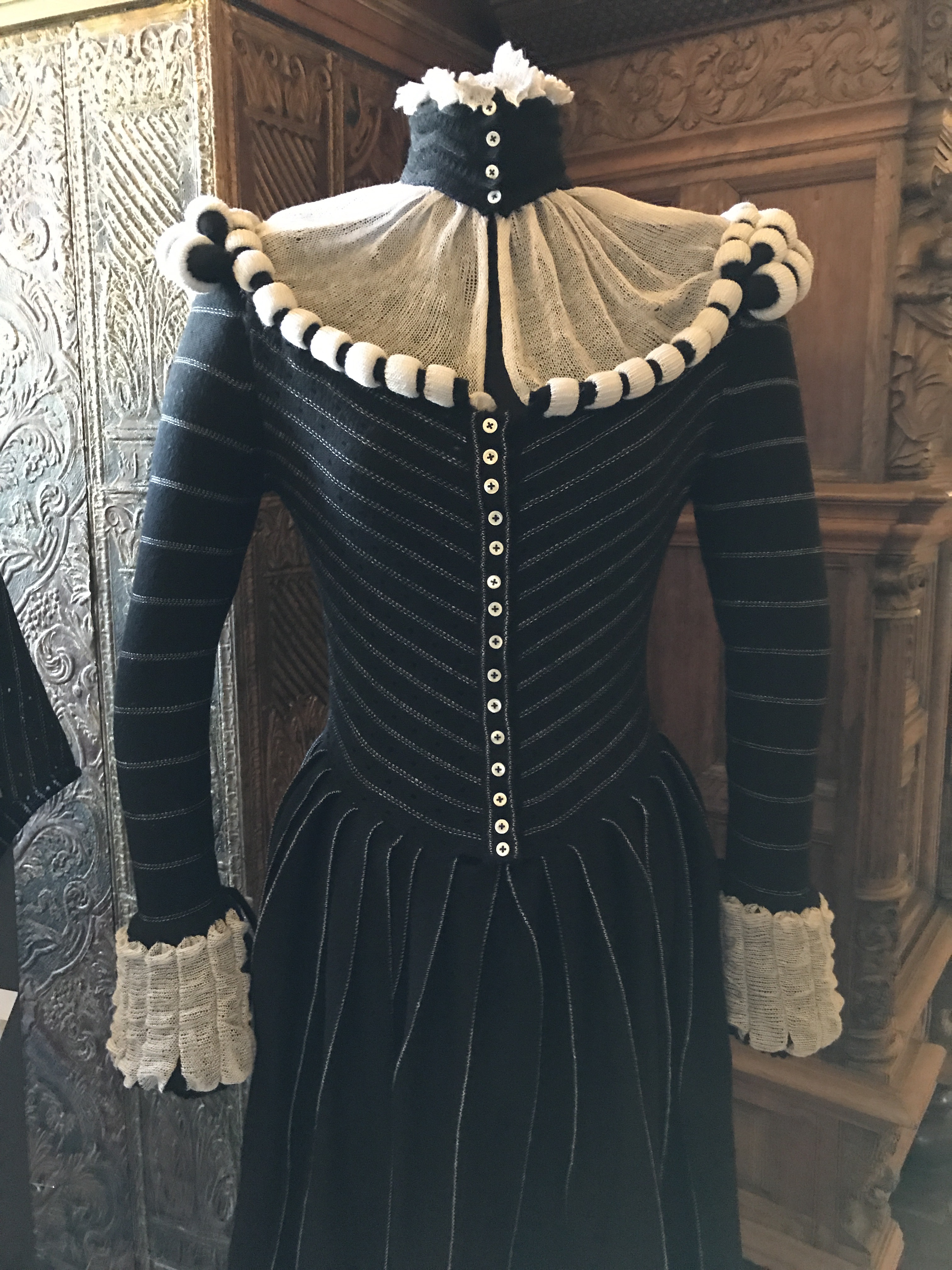
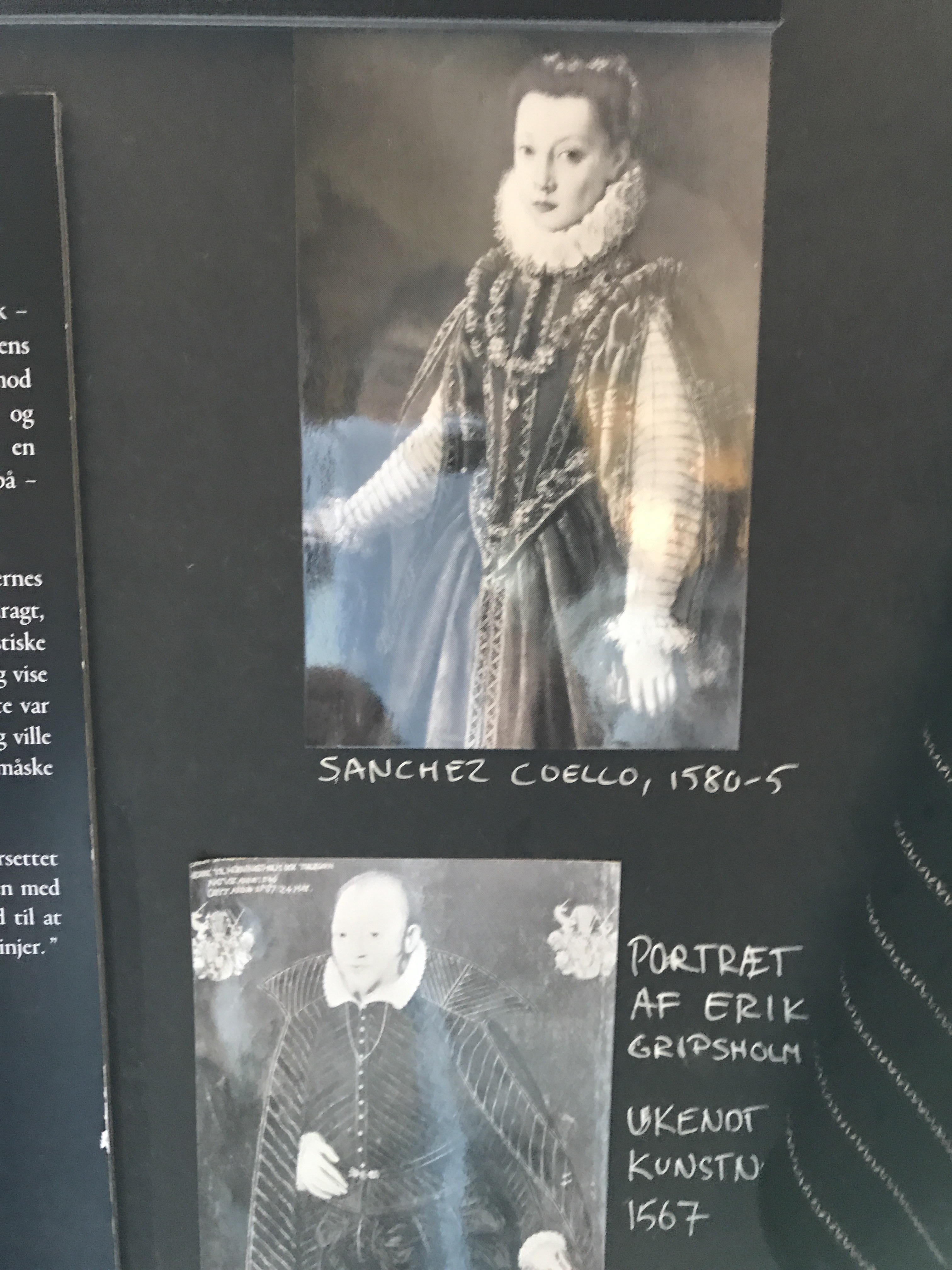
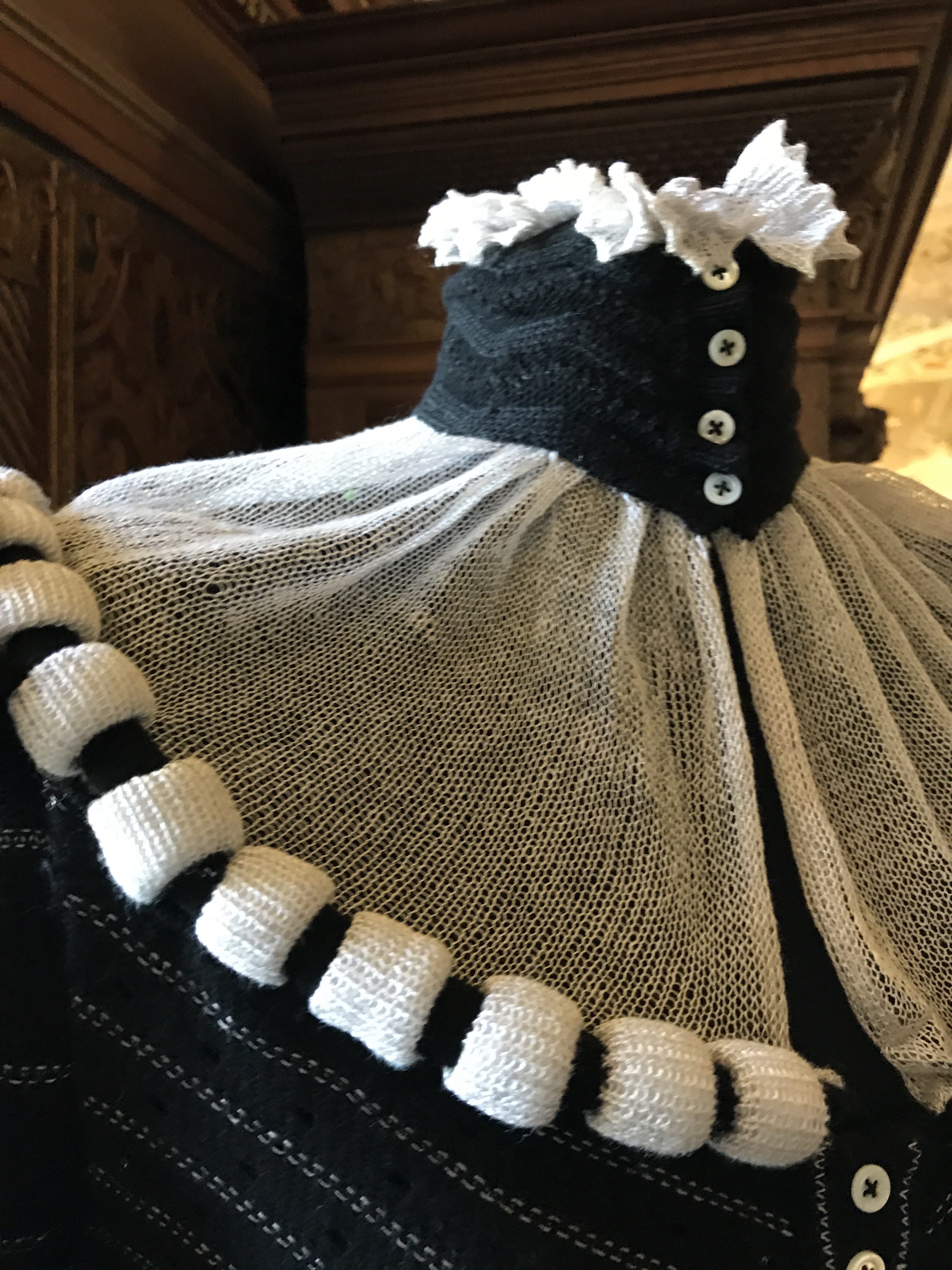
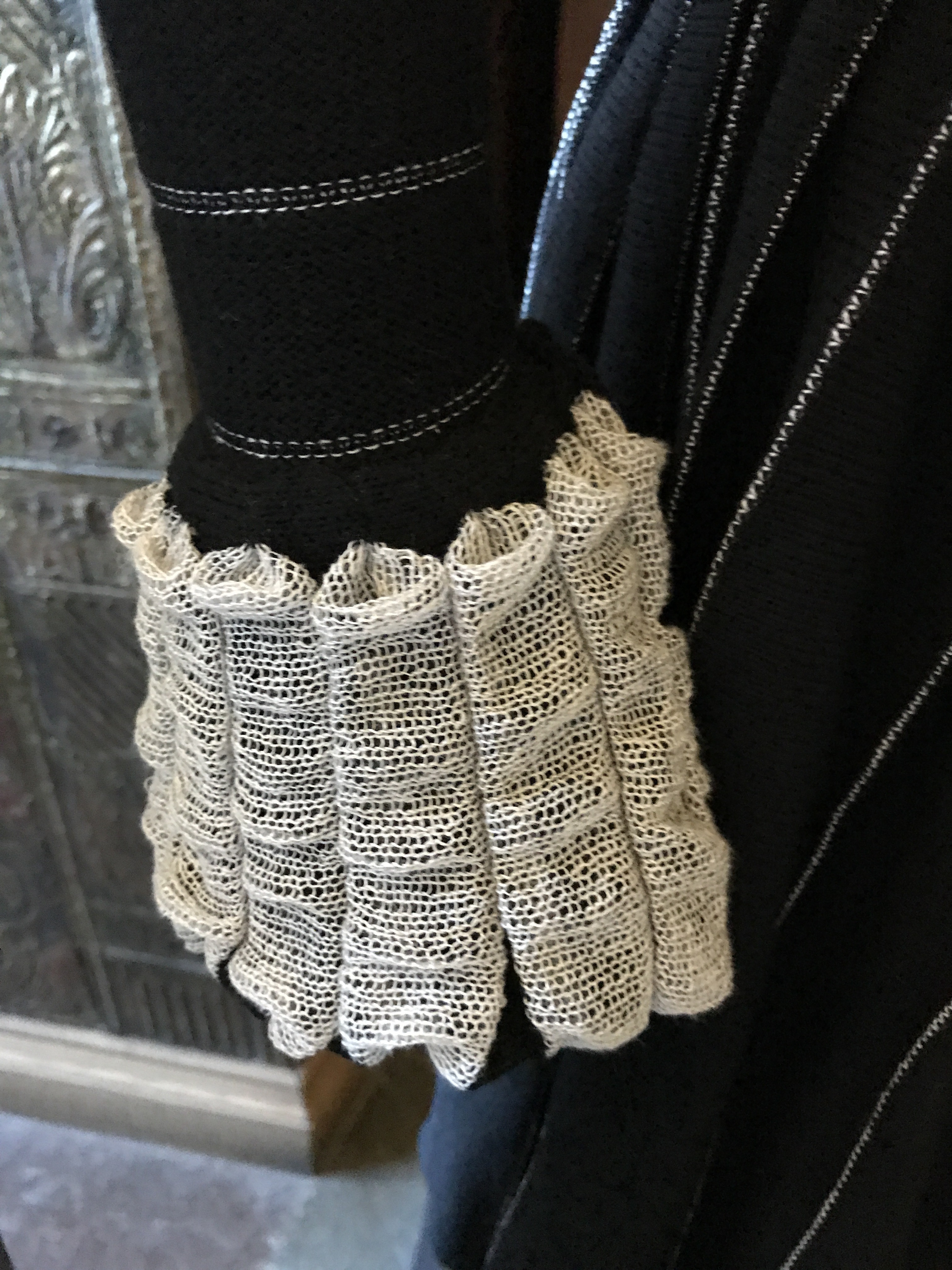
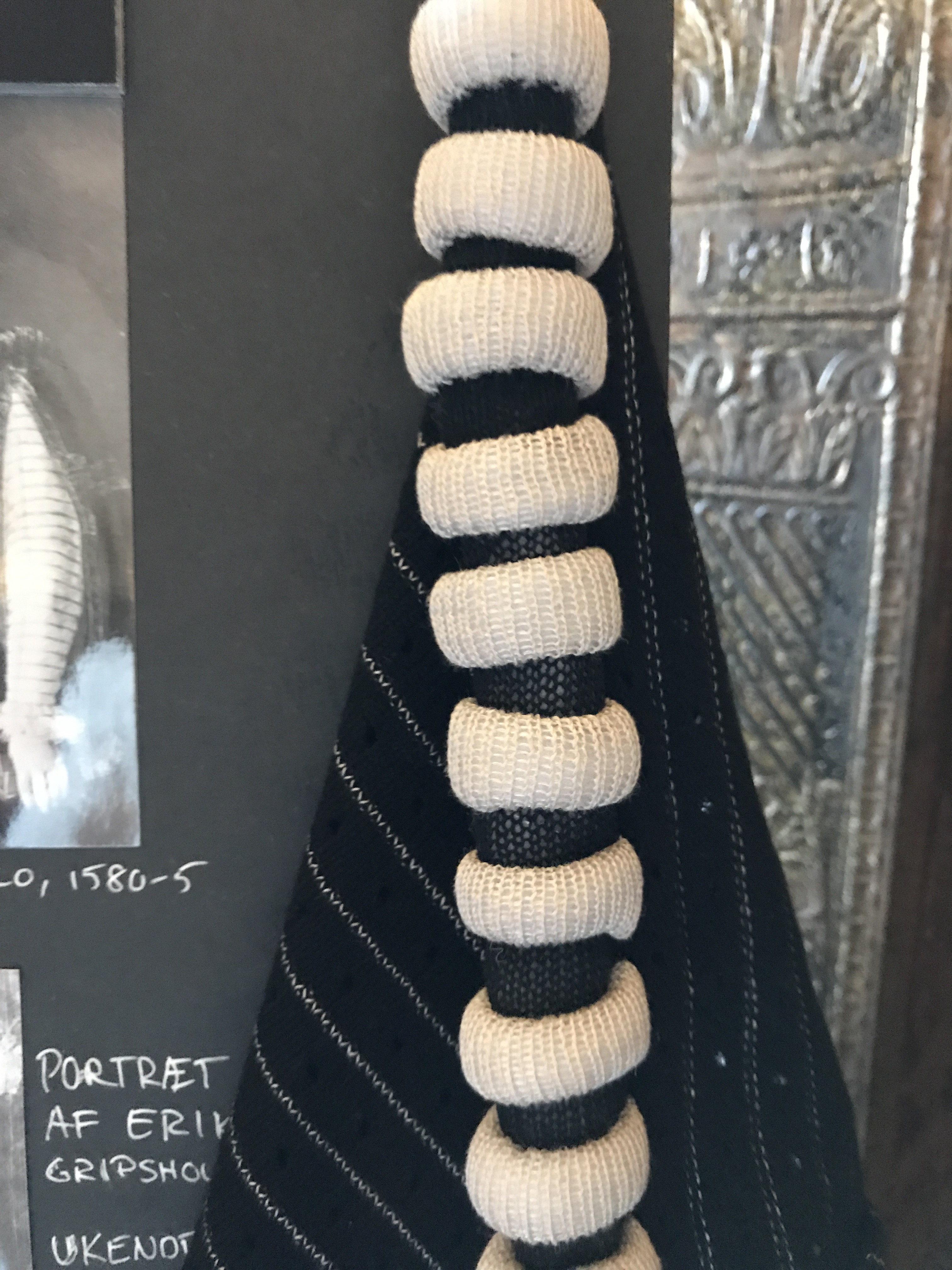
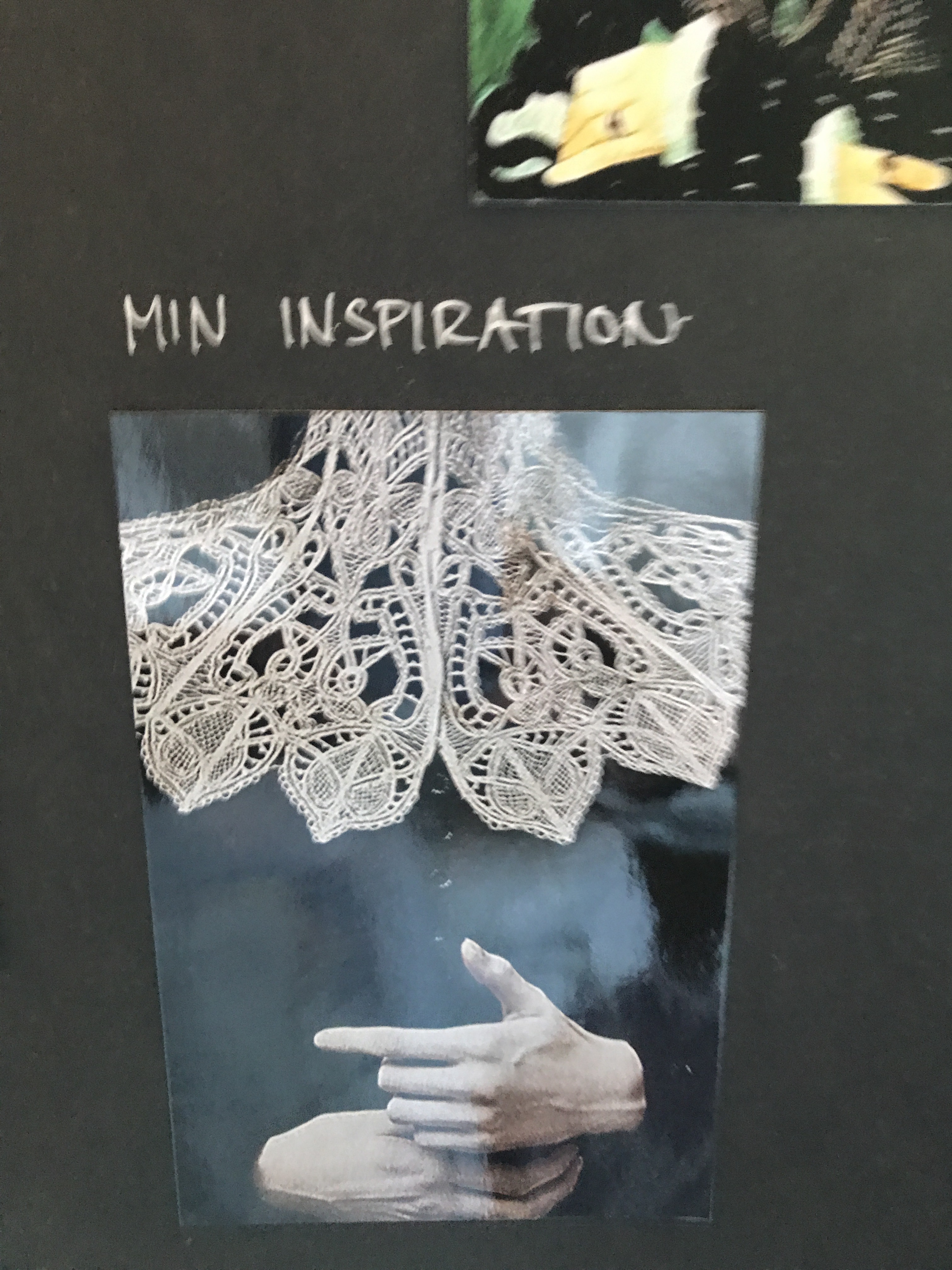
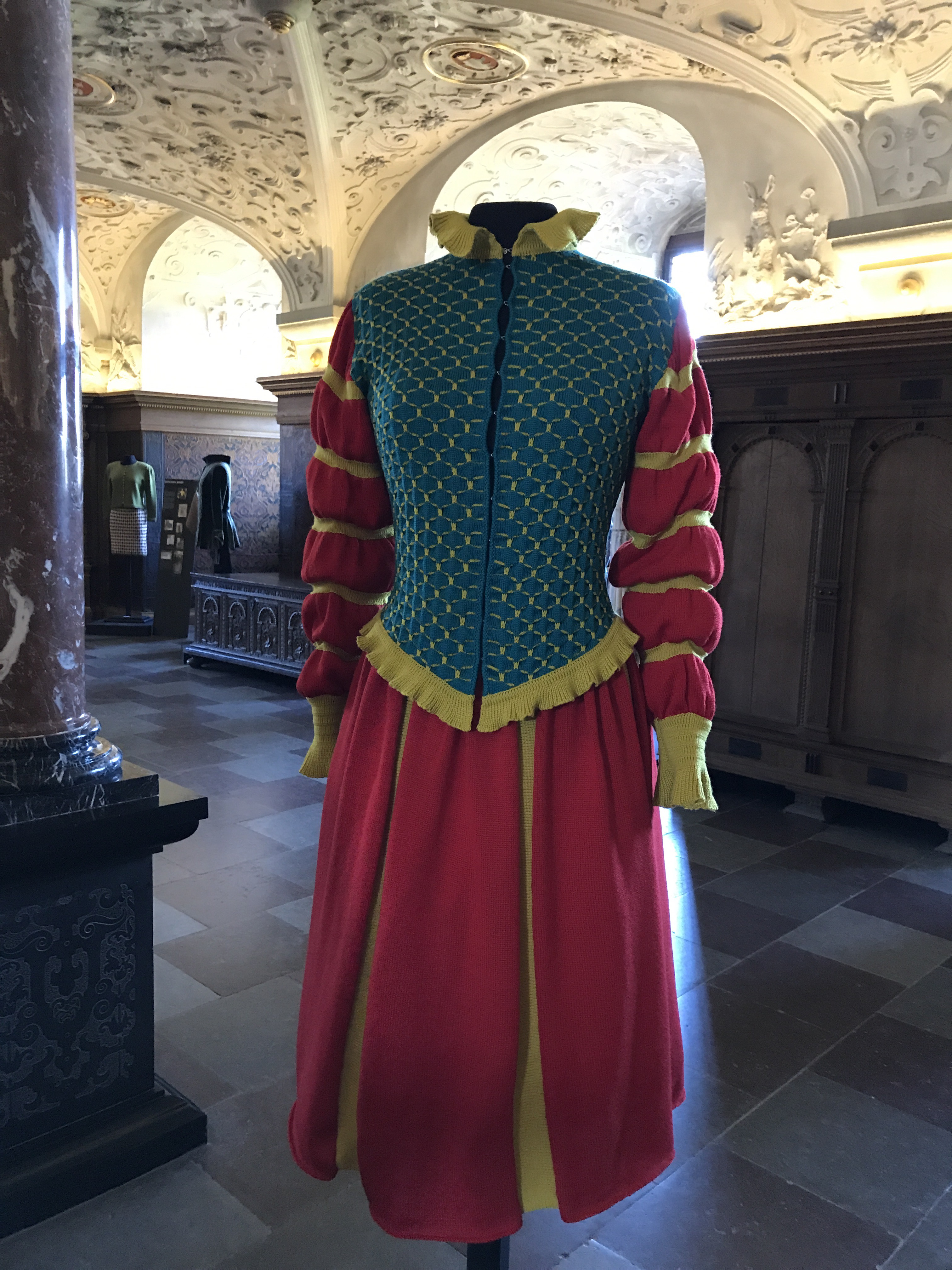
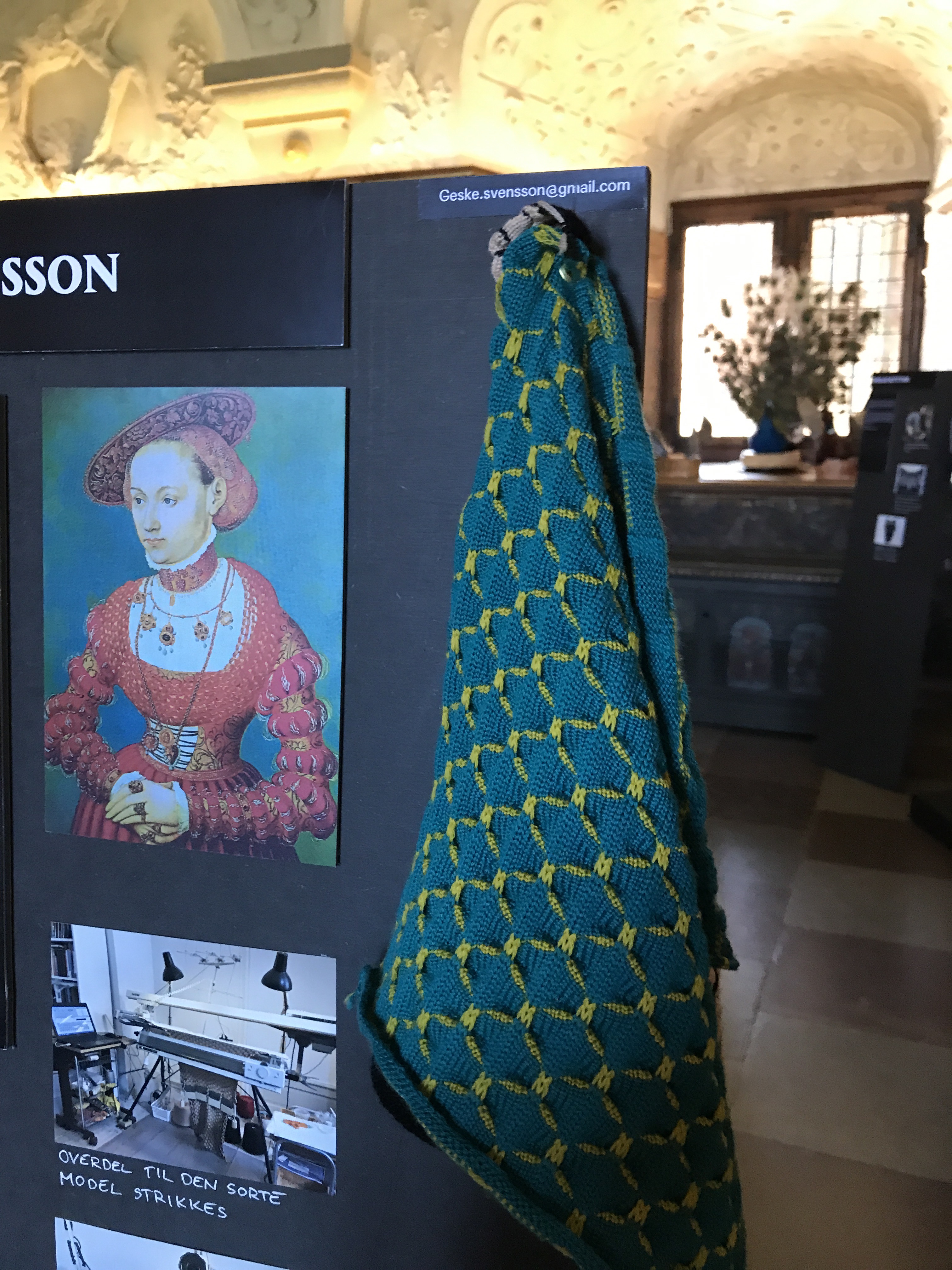
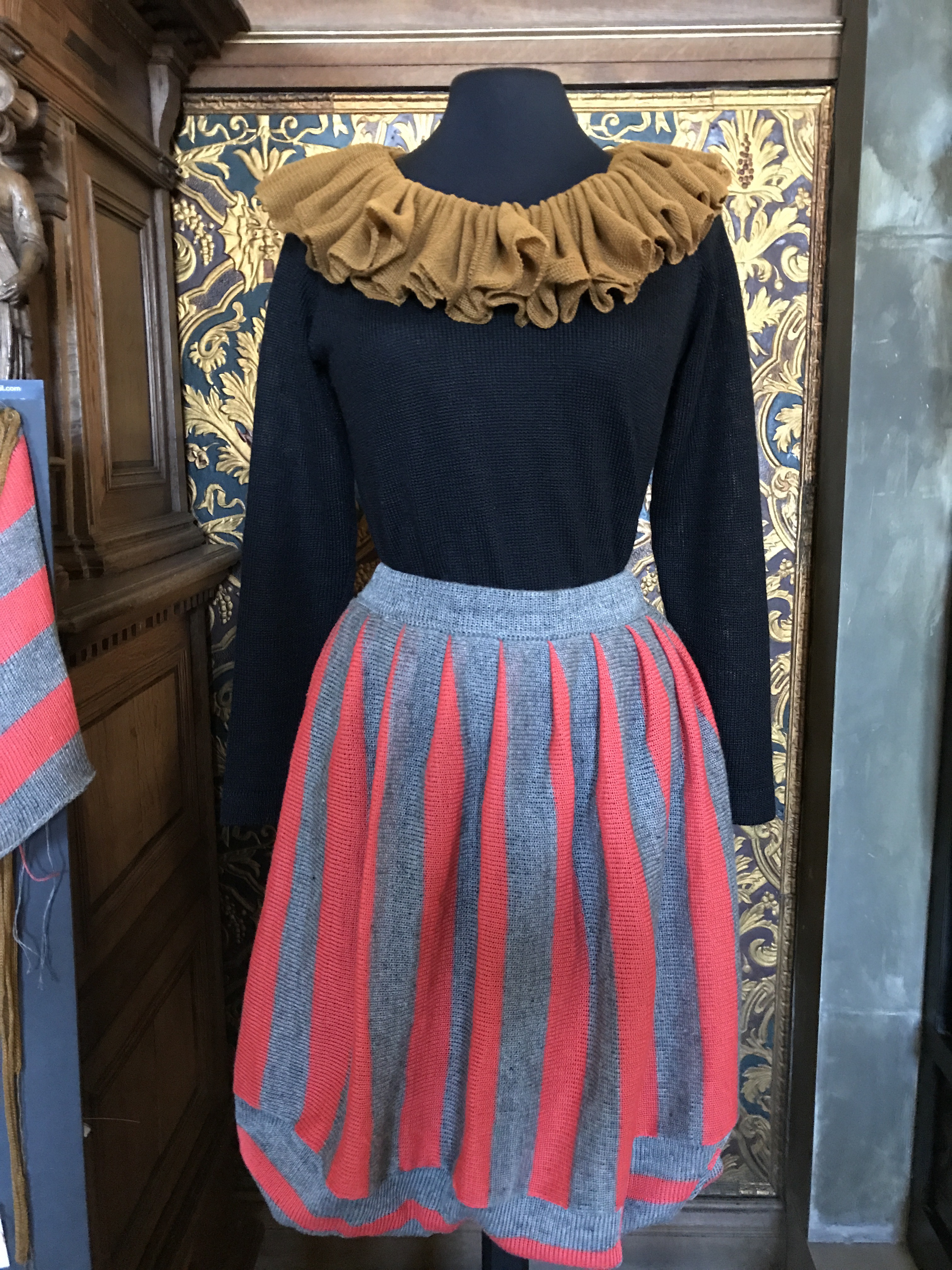
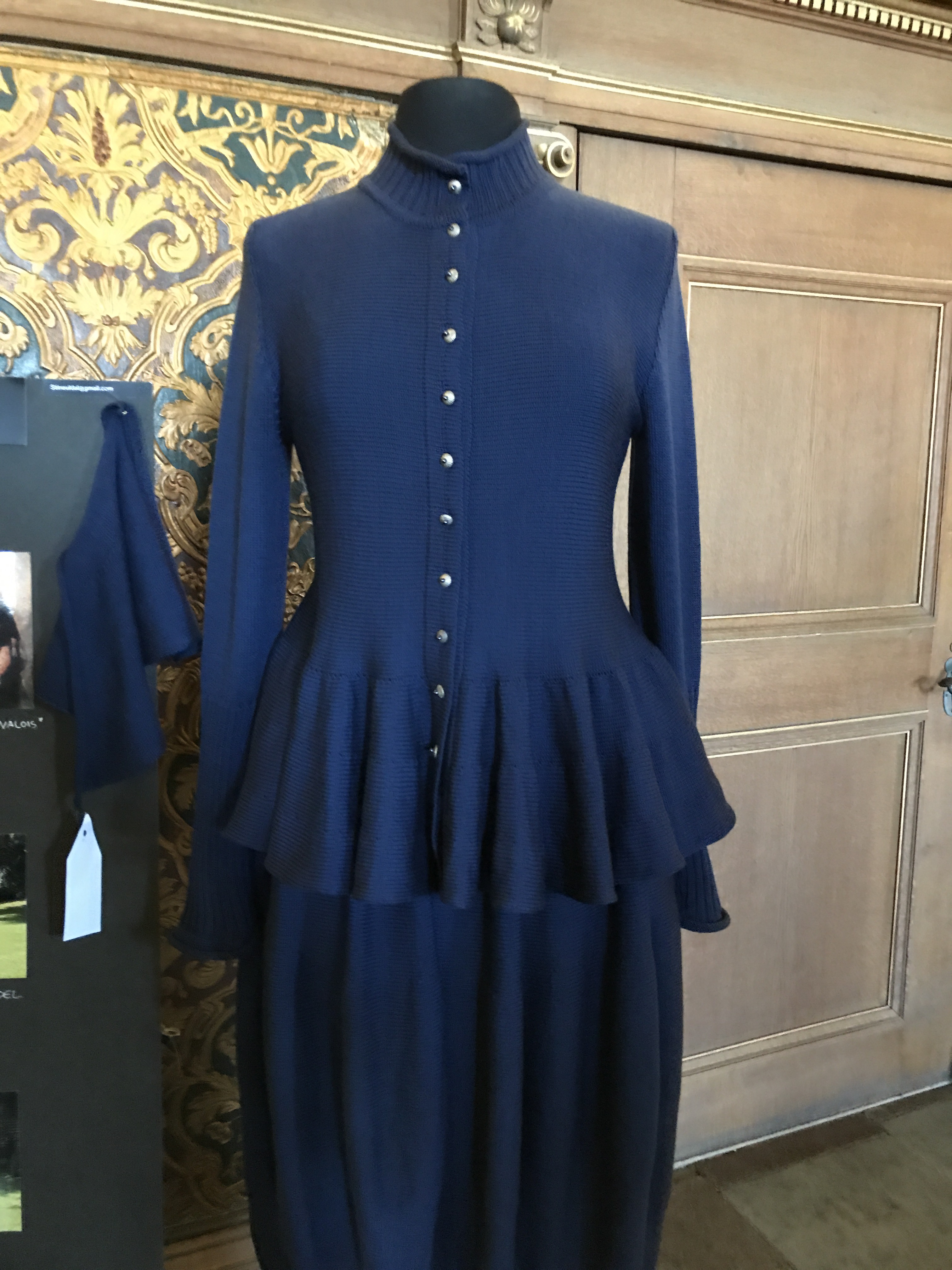
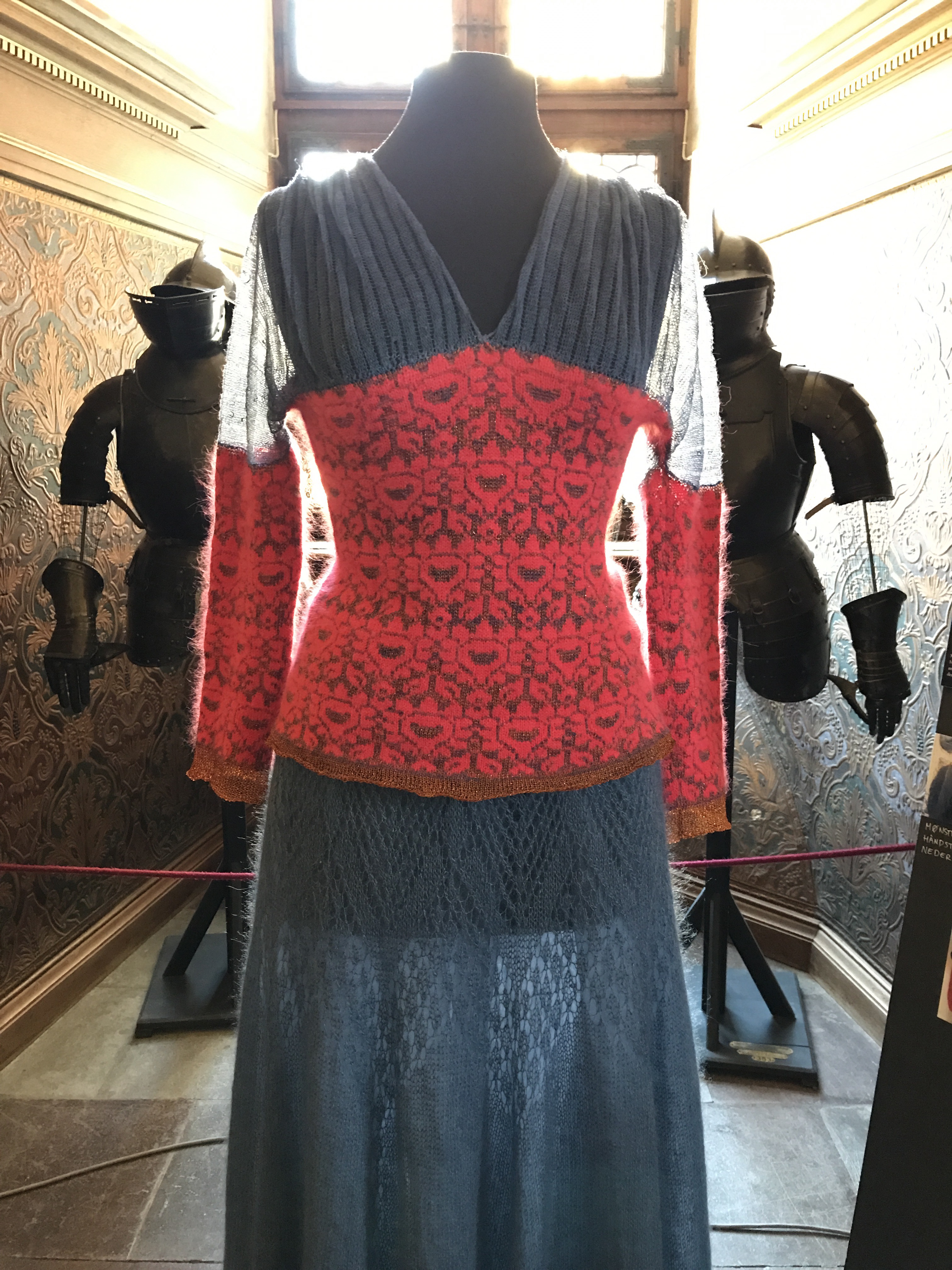
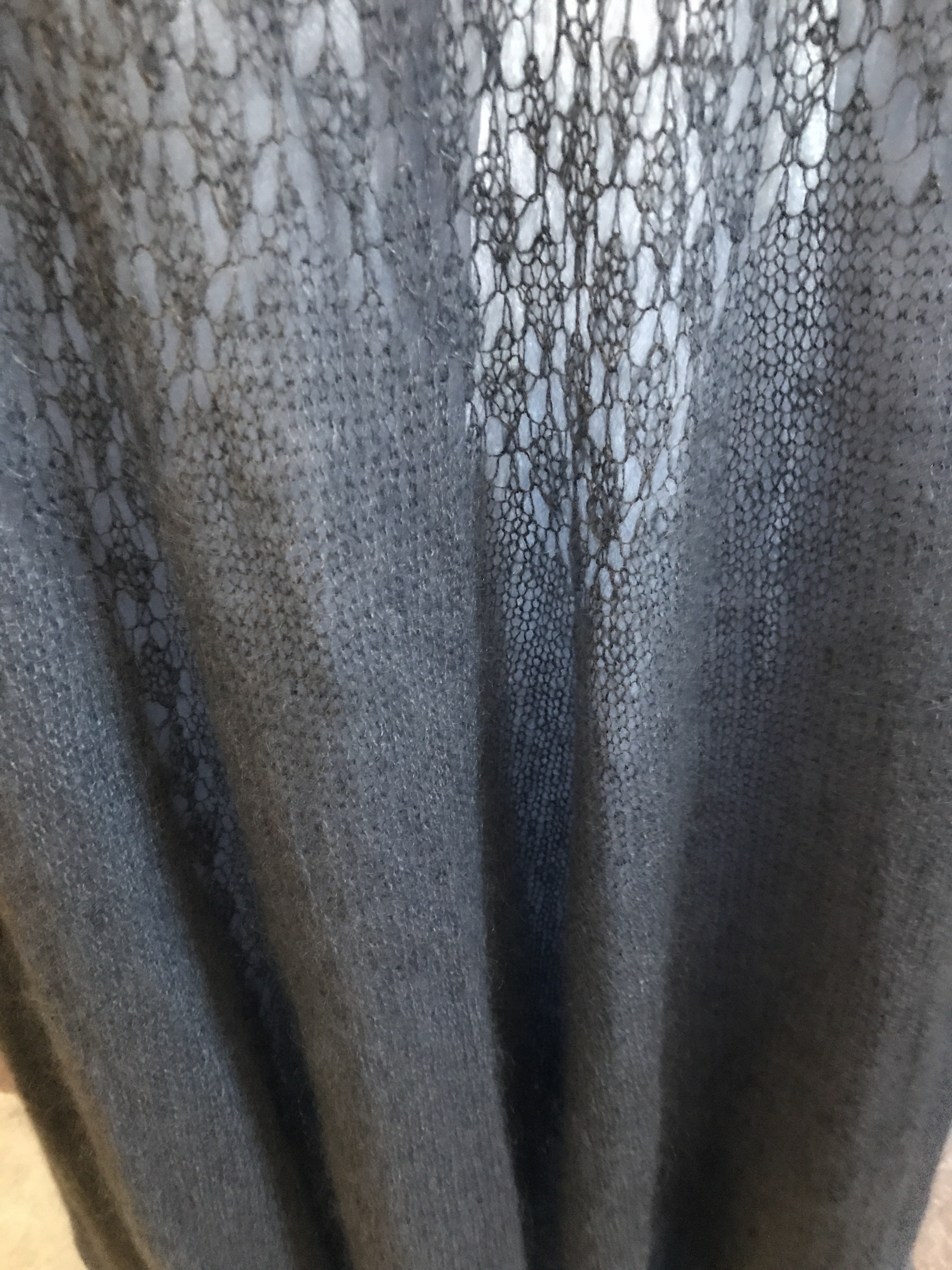
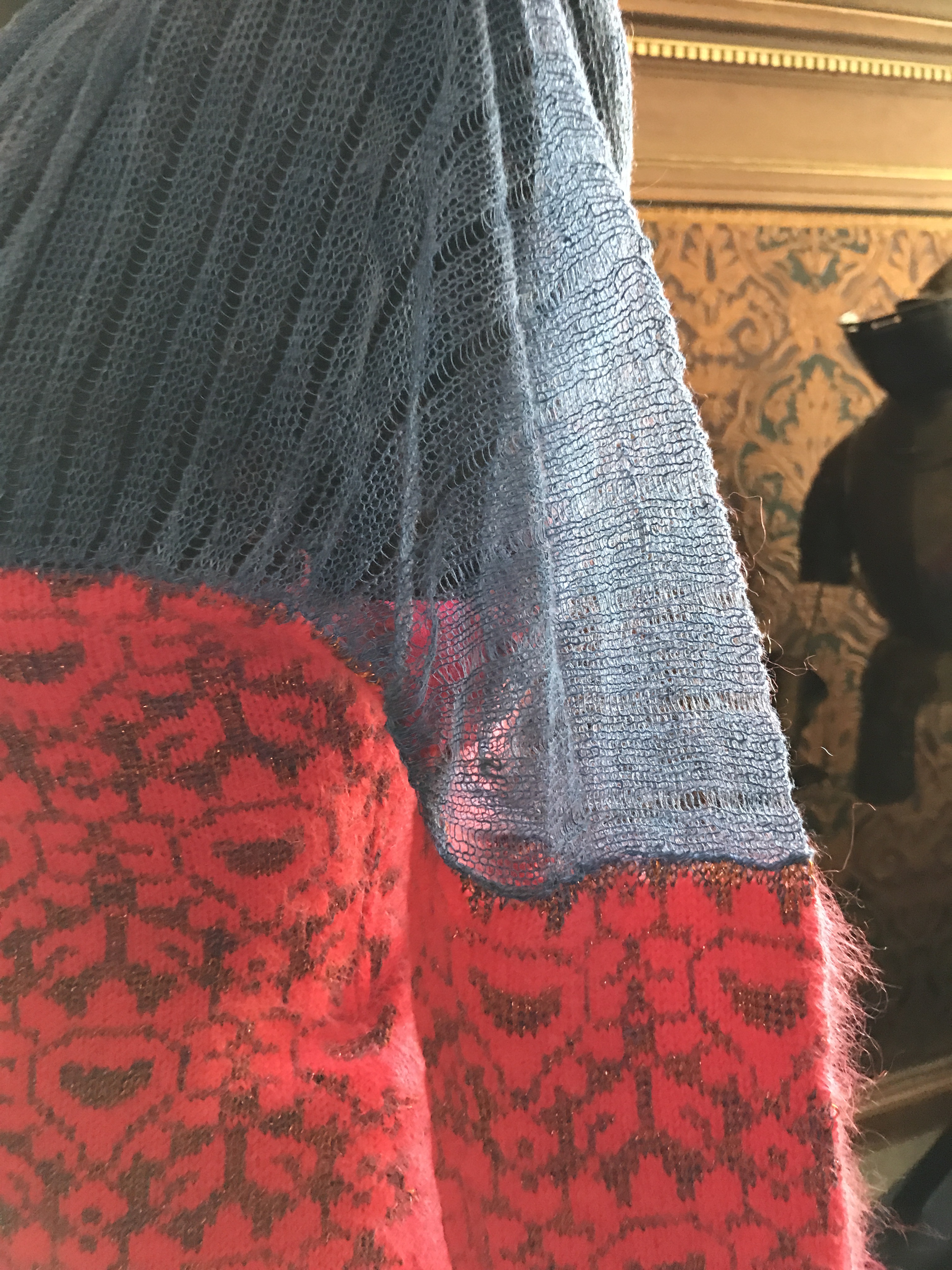
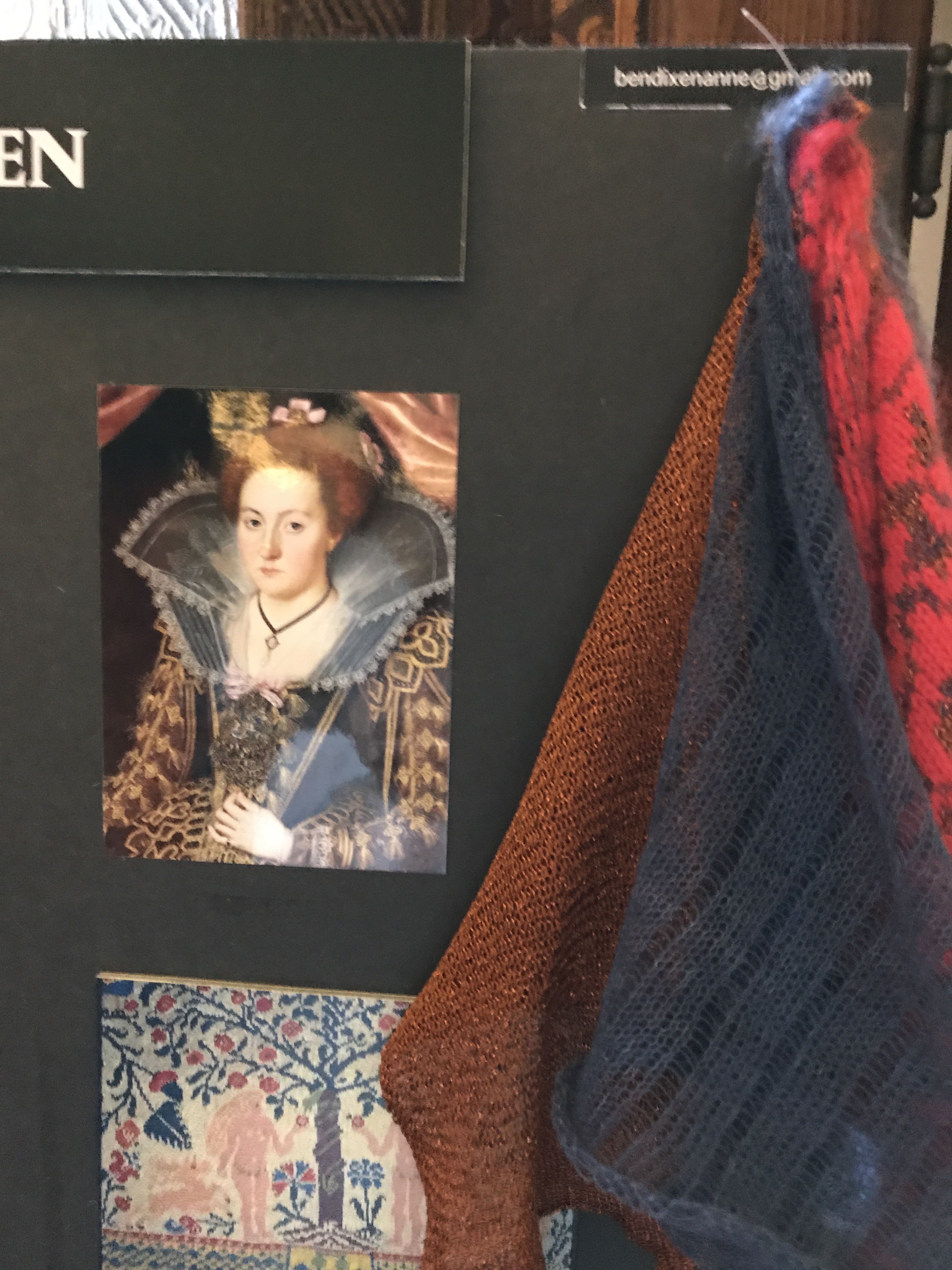
Frederiksborg Castle in Denmark is a riot of Renaissance elegance. A recent exhibit featured a jaw-dropping collection of hand-knitted ensembles based on the costumes in royal and noble portraits in the castle.

I love the idea of knitting, but I’m terrible at it. A simple scarf from my hands turns into a lumpy mess. So I was in awe.

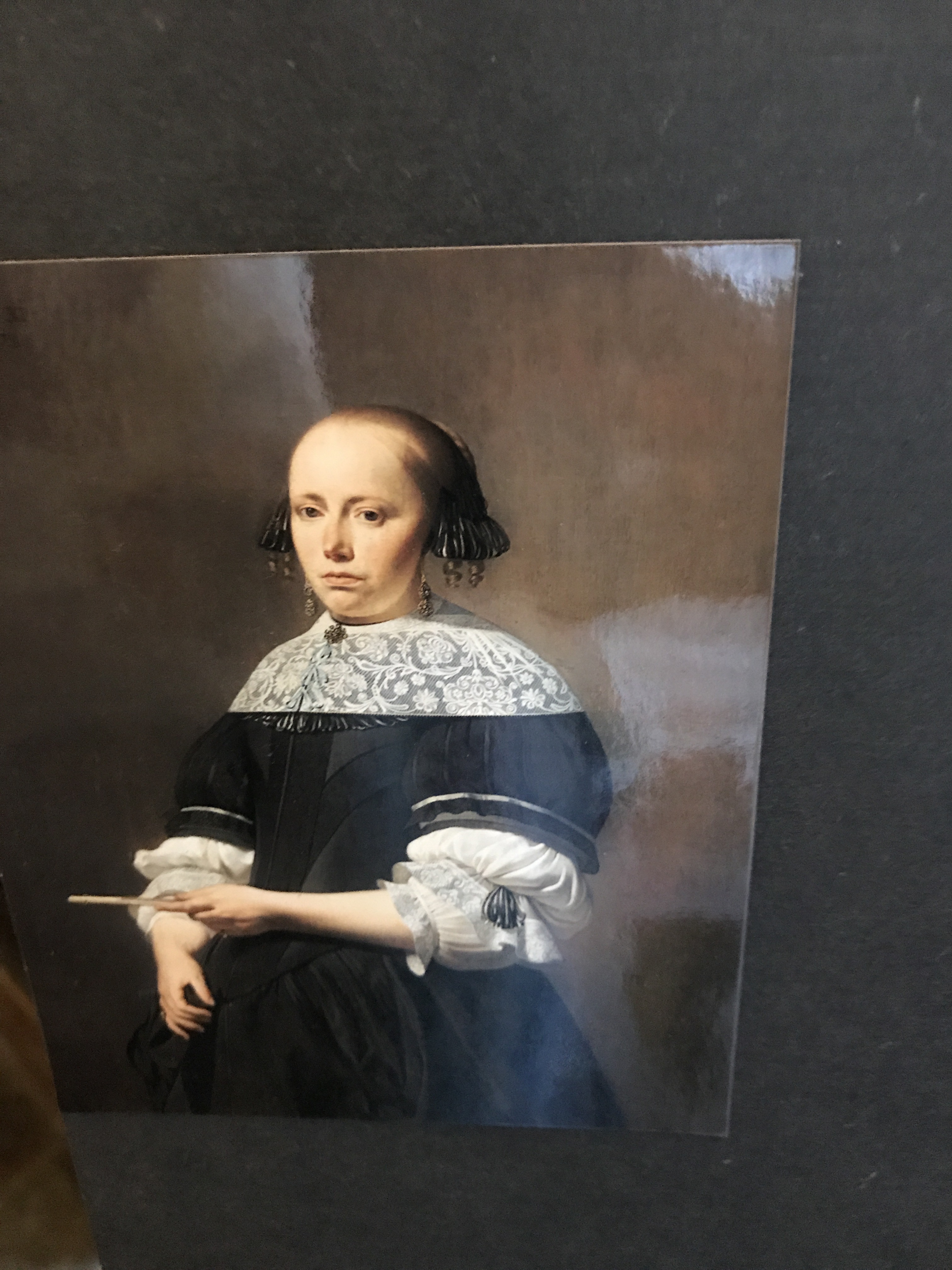
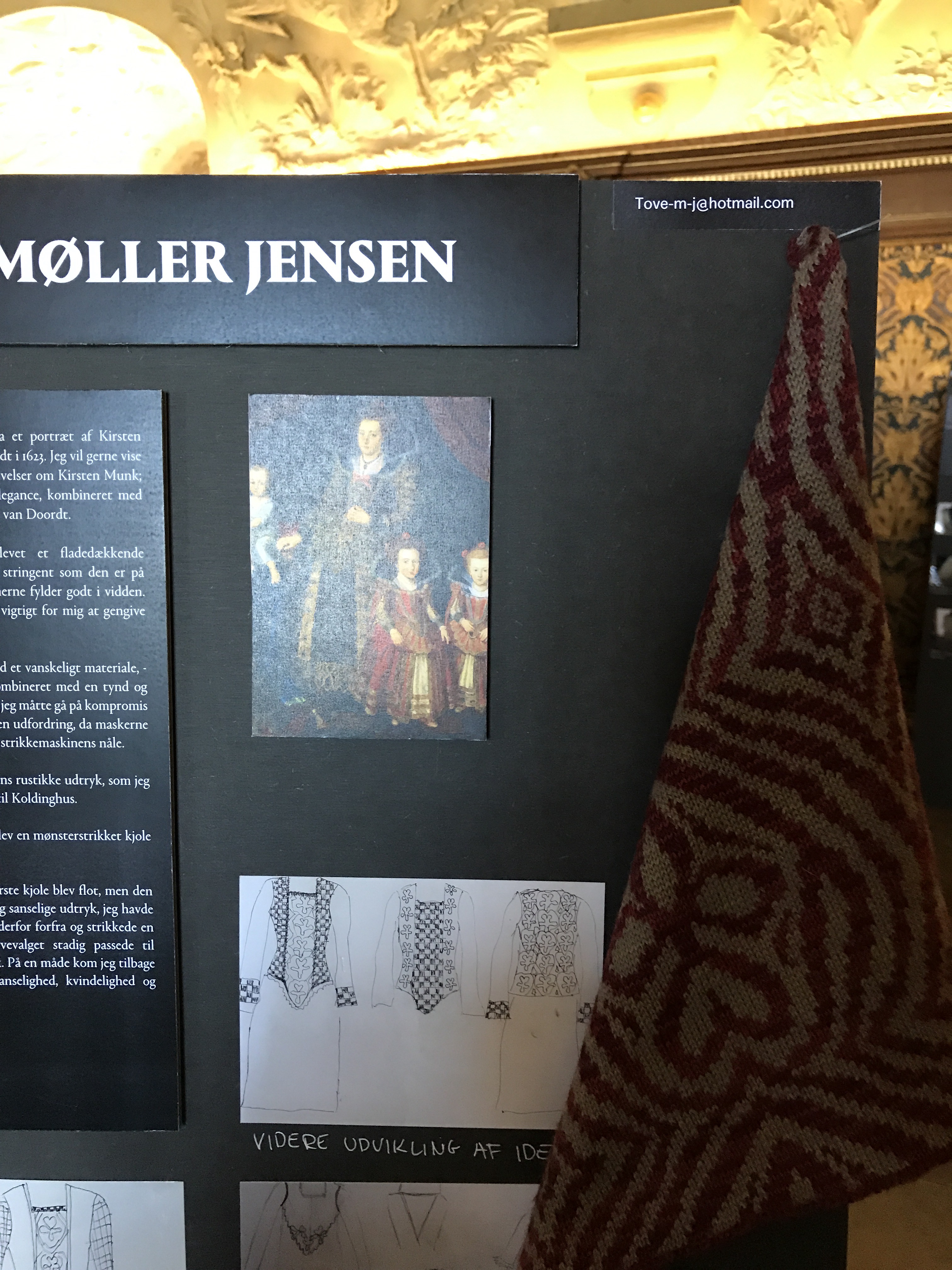
The source portraits were hard to identify in Danish, so I gave up and just enjoyed the knitted versions of the costumes. How about an artfully ruched sleeve on a simple gray sweater?

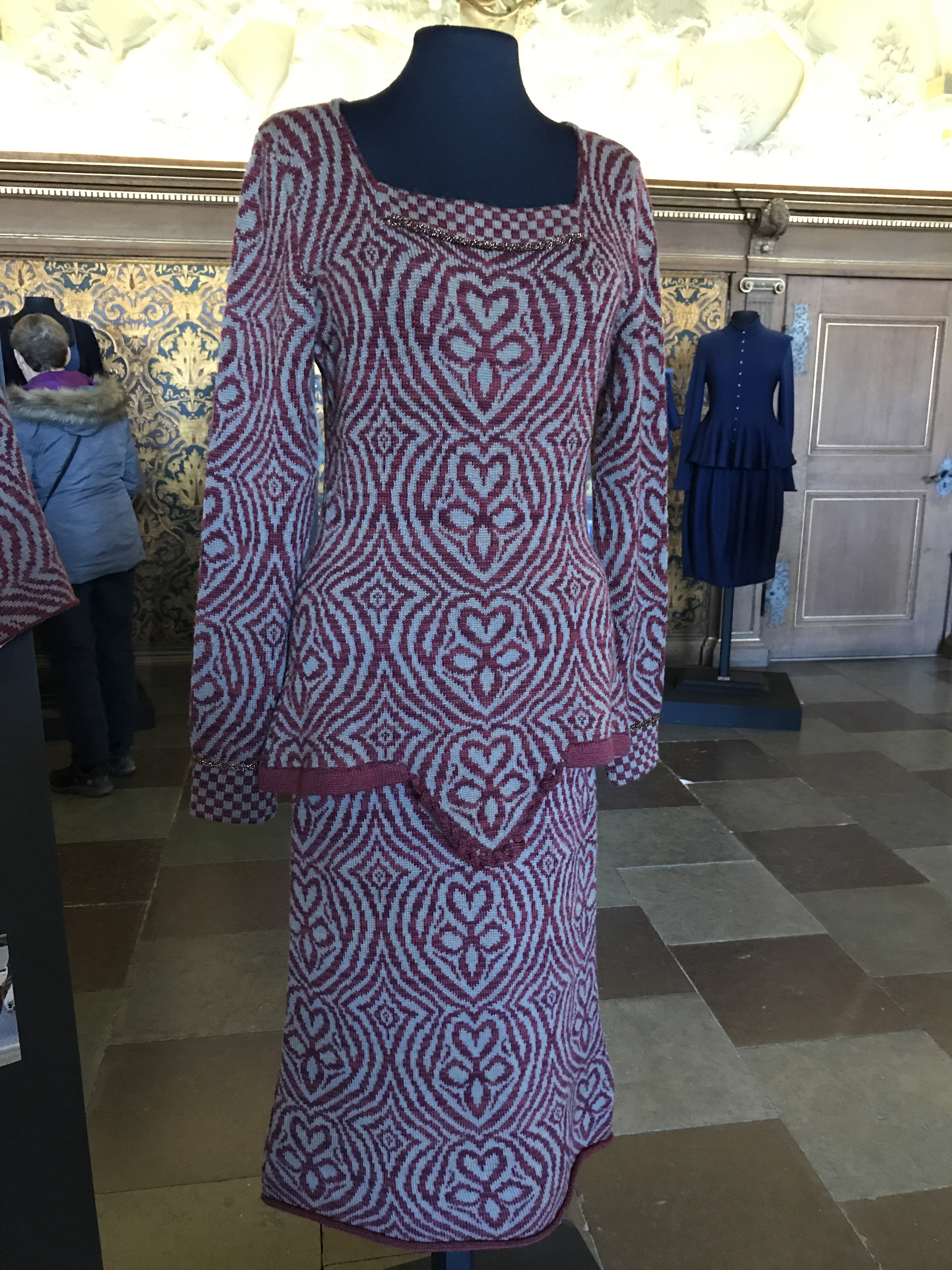
Or an elegant dress based on two portraits from the 1500s? I’d cheerfully wear this if I had an occasion fancy enough.

Perhaps an elaborate lace collar?

I’d wear this dress too, if the artist knitted me one in a different color combination. Maybe subtle blues and purples?


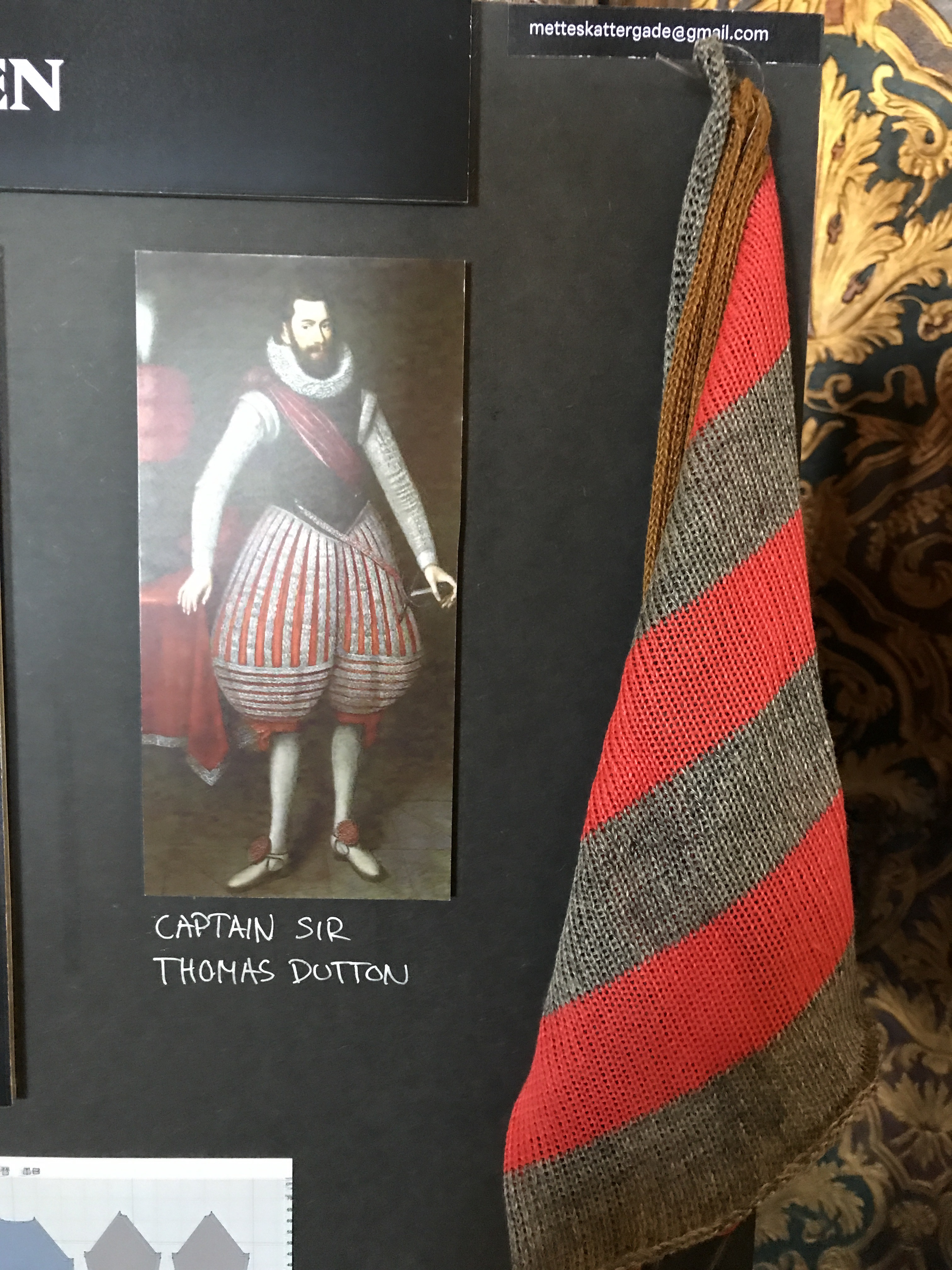
The same goes for the pantaloon-turned-skirt number, based on a portrait of one Captain Sir Thomas Dutton. I’ll take one in grays and blues, please.

Two of my favorite colors, and an Elizabeth vibe…

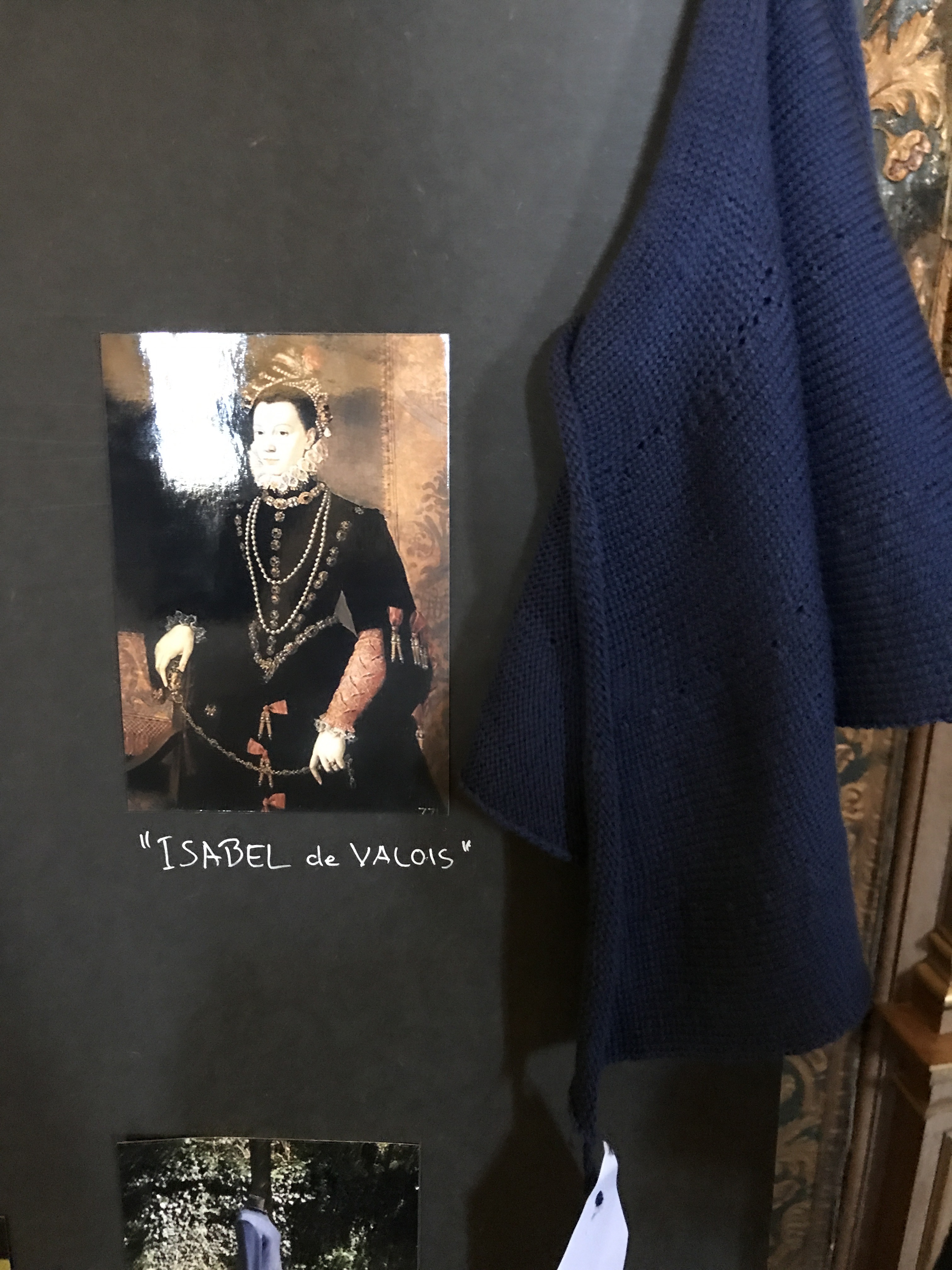
A peplum number in deep blue.

Textures and colors fit for a long-ago princess…


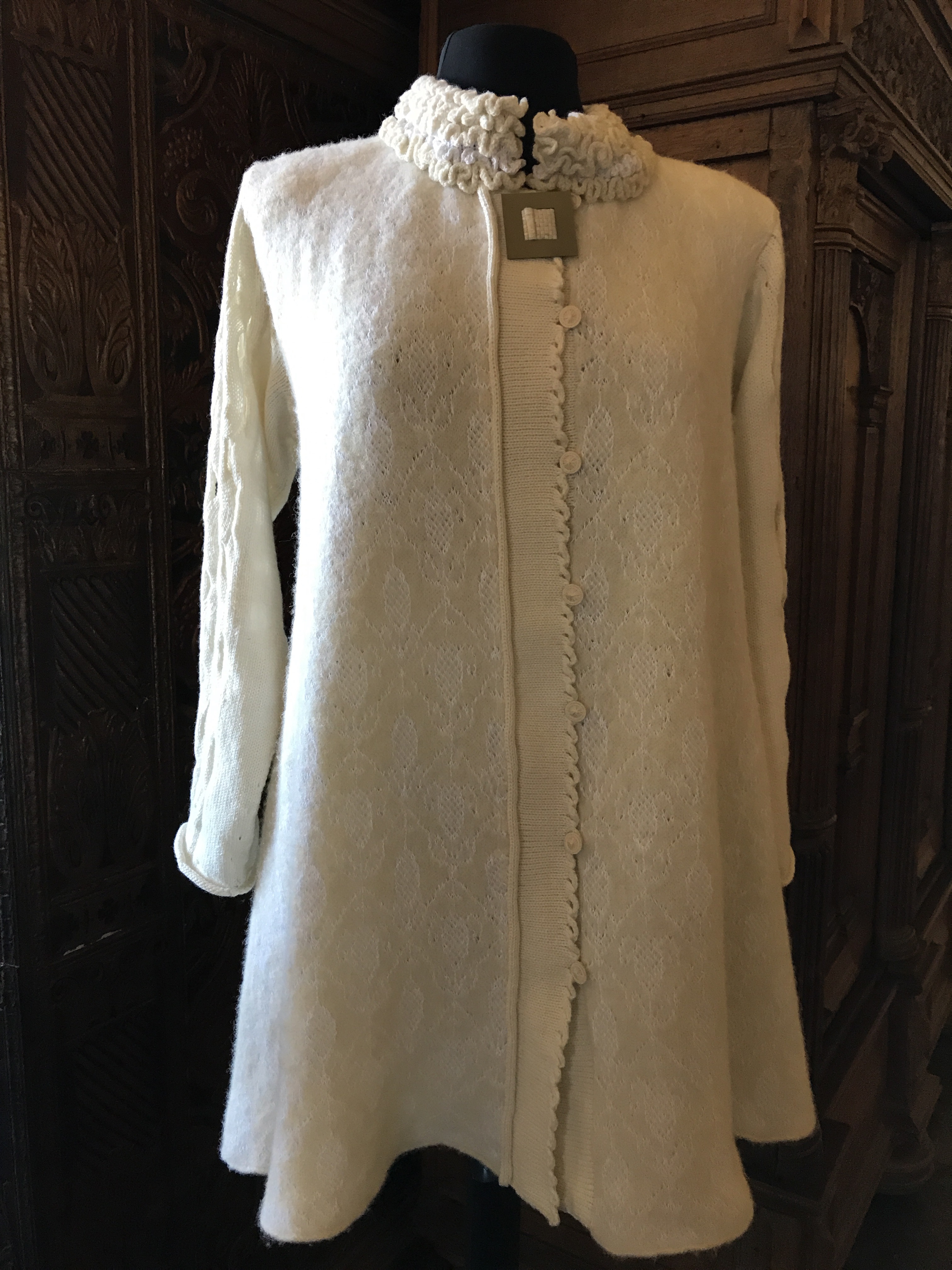
I’m not sure of the inspiration for this creamy white wool coat. It kind of looks like a gentleman’s long-sleeved undershirt, lovingly sewn by his lady. Whatever. Just ring it up. I’ll wear it home!

Join me next time for more explorations in the art, past and present, of Europe and the British Isles.

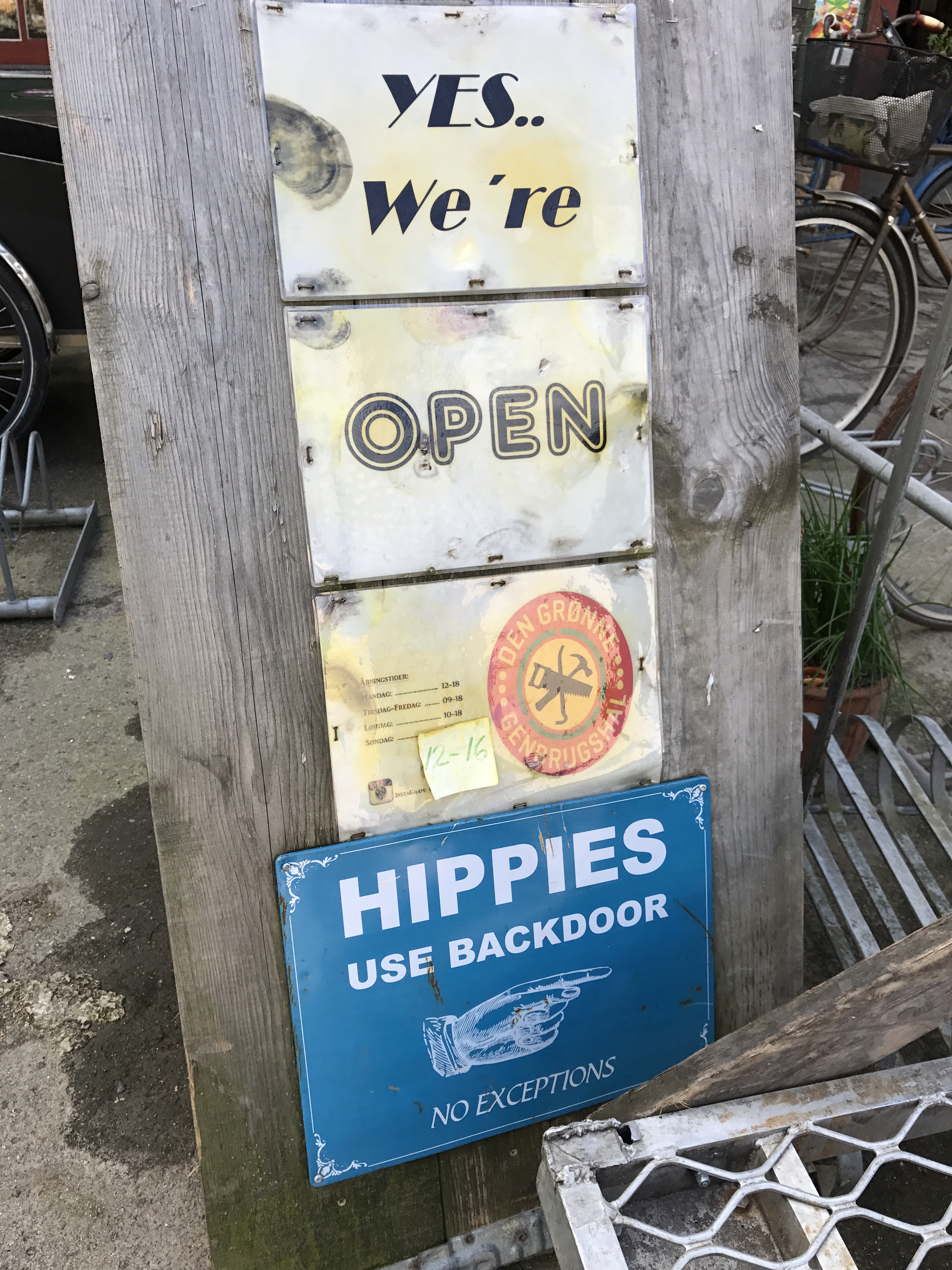
Christiania: Danish Hippie Haven

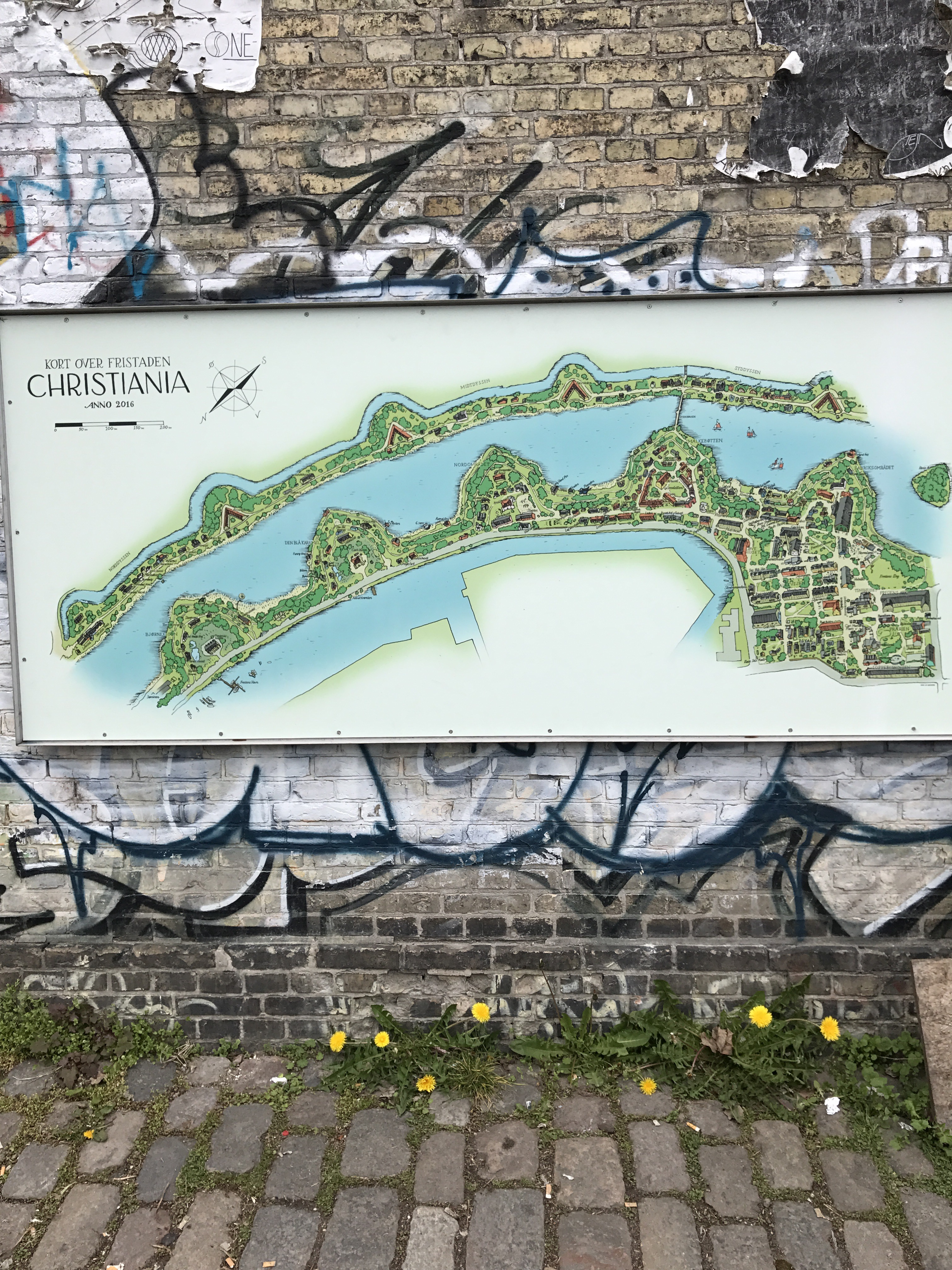
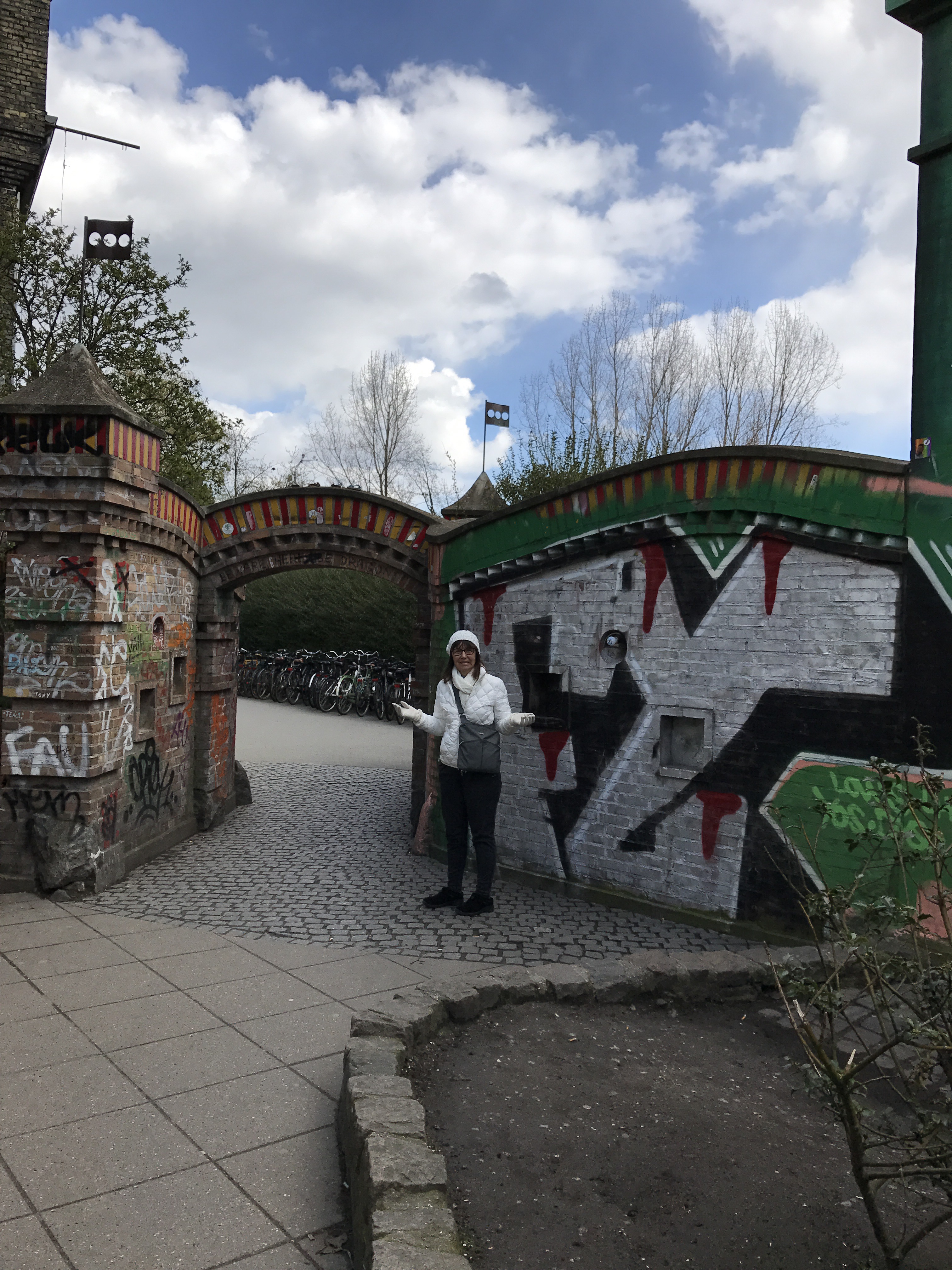
In 1970, a peaceful invasion took place in Copenhagen. A  small group of anarchists broke through a fence and took over the grounds of a former military barracks.


The area had defensive ramparts dating from the 1600s, when Denmark fought endless battles with Sweden. After about 1950, the military more or less abandoned the site. Hippies moved in and set up shop, making up the rules as they went along. They eventually gained legal use of the land and became one of the top tourist attractions of Copenhagen, right up there with Tivoli Gardens.


Today, about 900 people live in Christiania. Over the years, they’ve worked out ways to police themselves and cooperate with local authorities to provide some services. But it’s still all about freedom, just as in 1971.

I ventured inside early on a sunny but chilly spring morning. What would I find?


I had read that photos were generally ok, but to ask permission before taking any photos of people–especially those selling marijuana, which is illegal but freely sold when police are not around. Maybe it was too early, or maybe I was oblivious, but I didn’t see anything remotely like a drug deal. Residents themselves outlawed “hard drugs” some years ago, and they enforce the rules strictly.


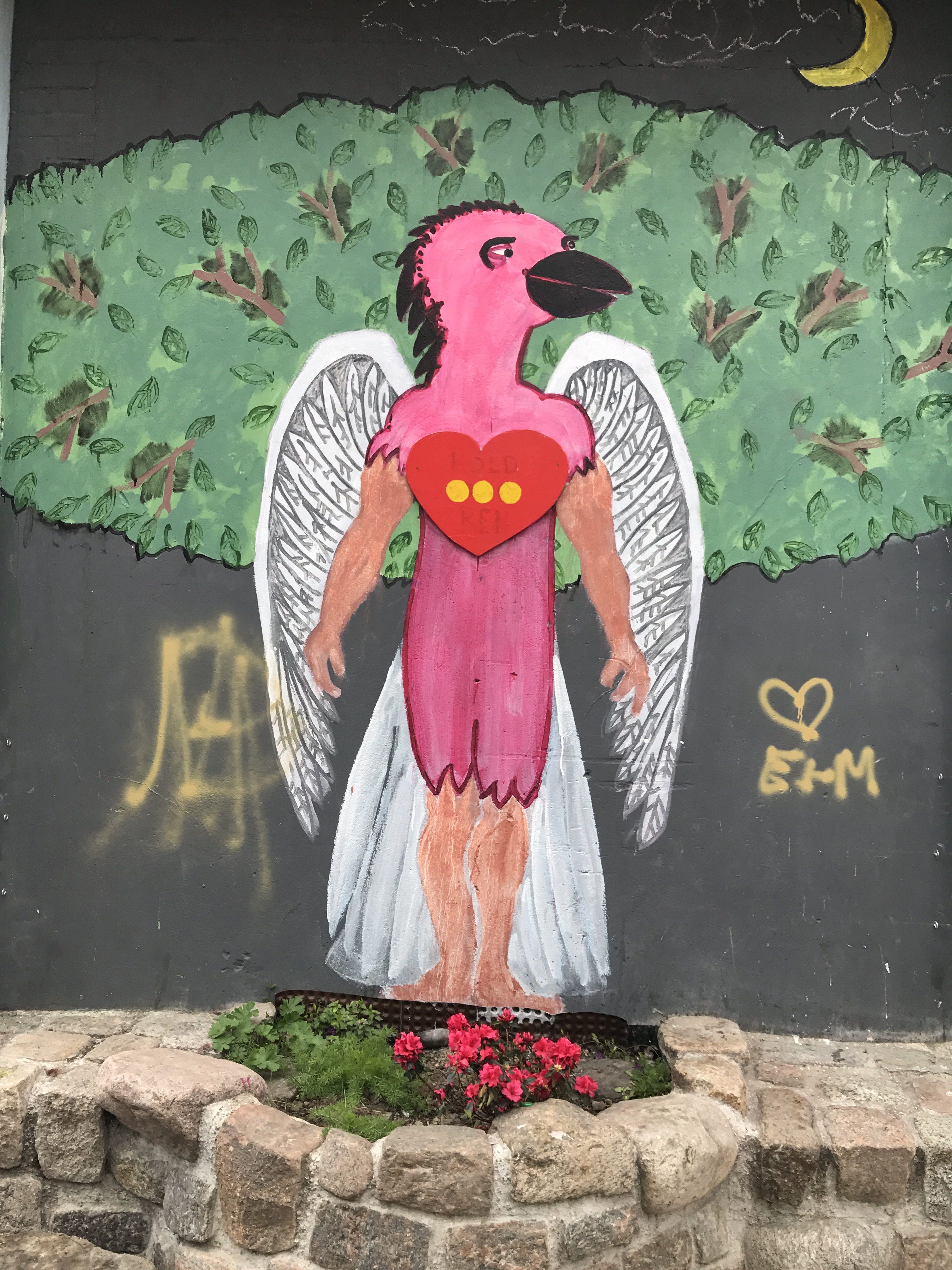
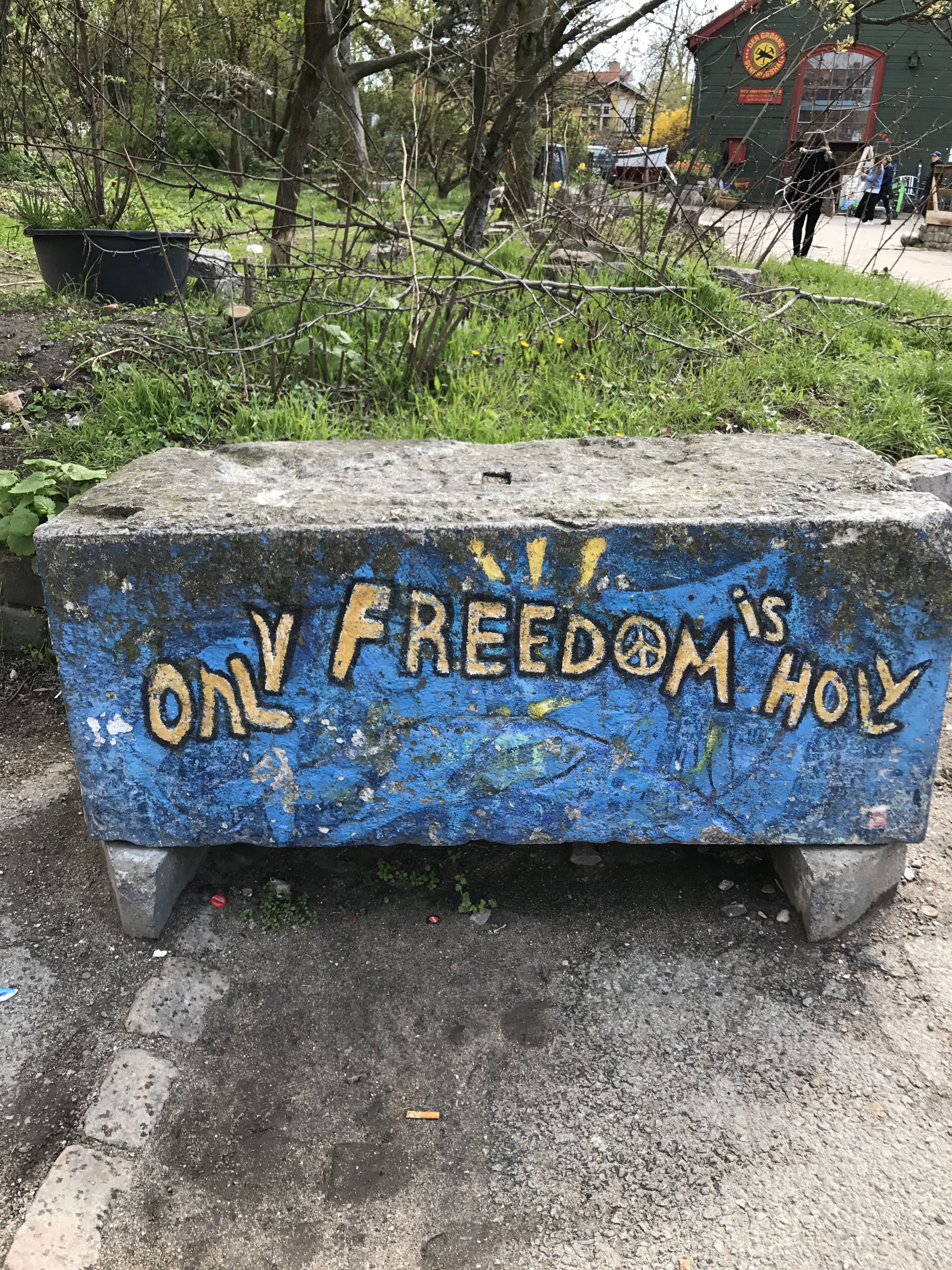
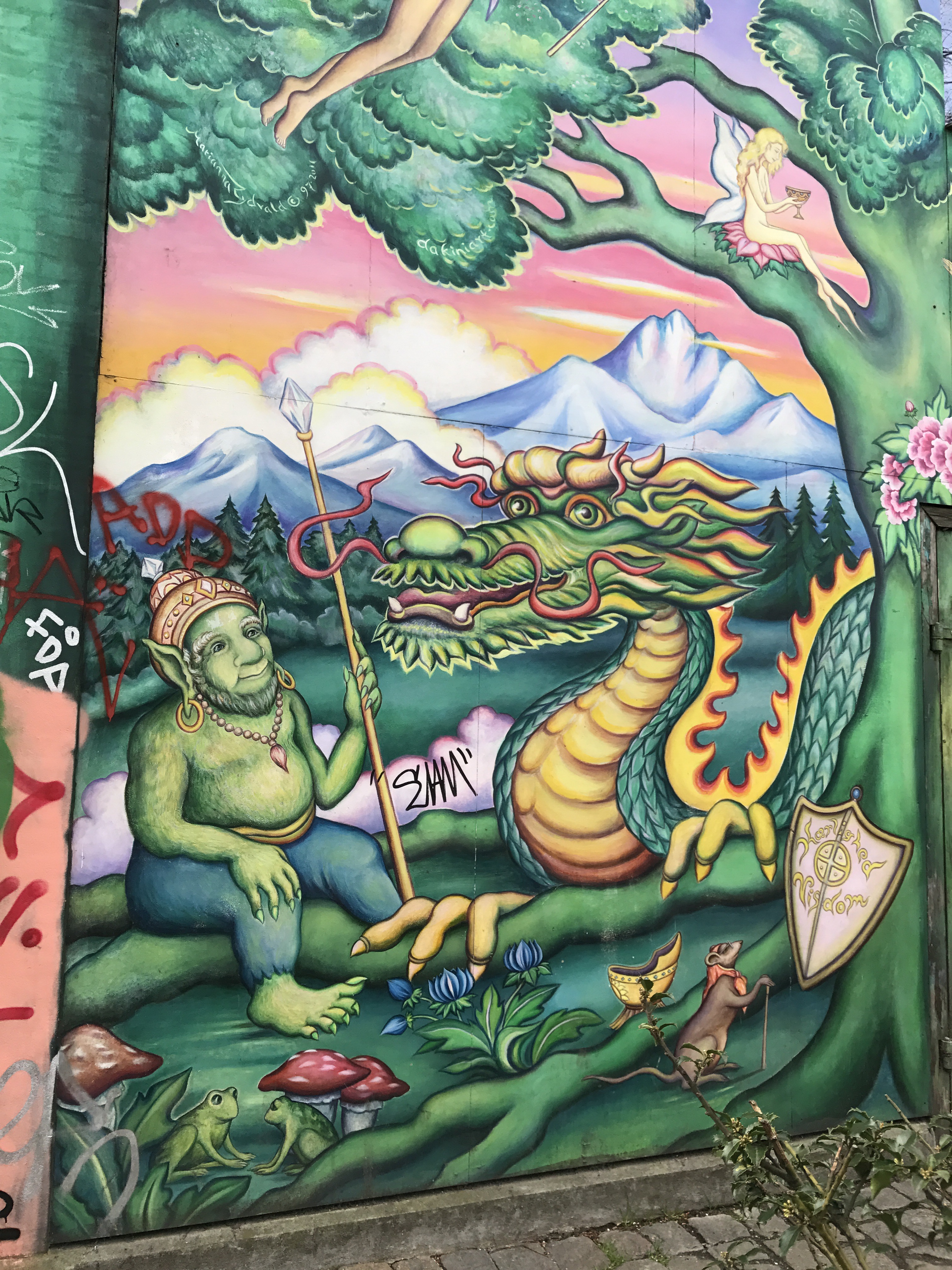
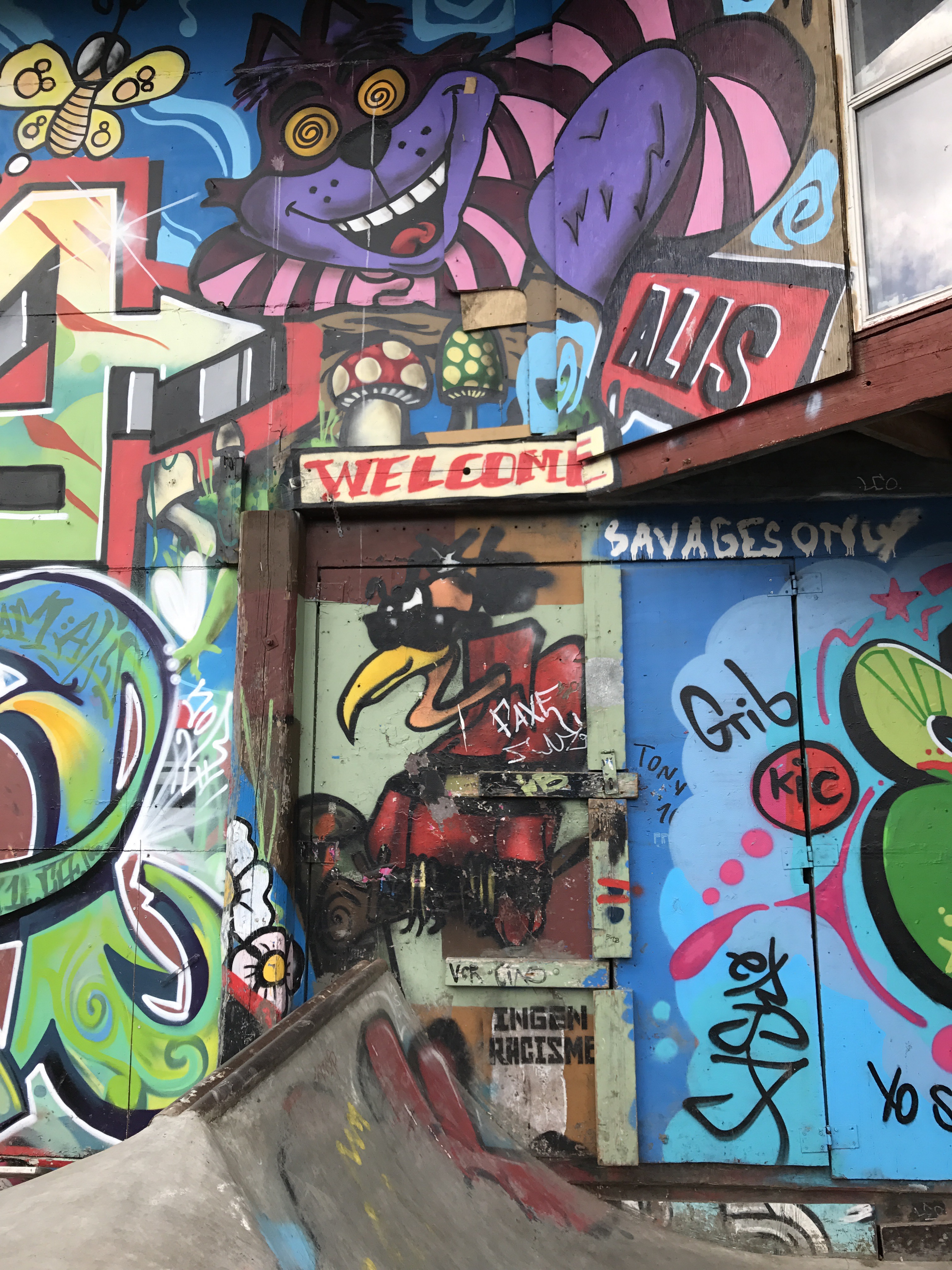
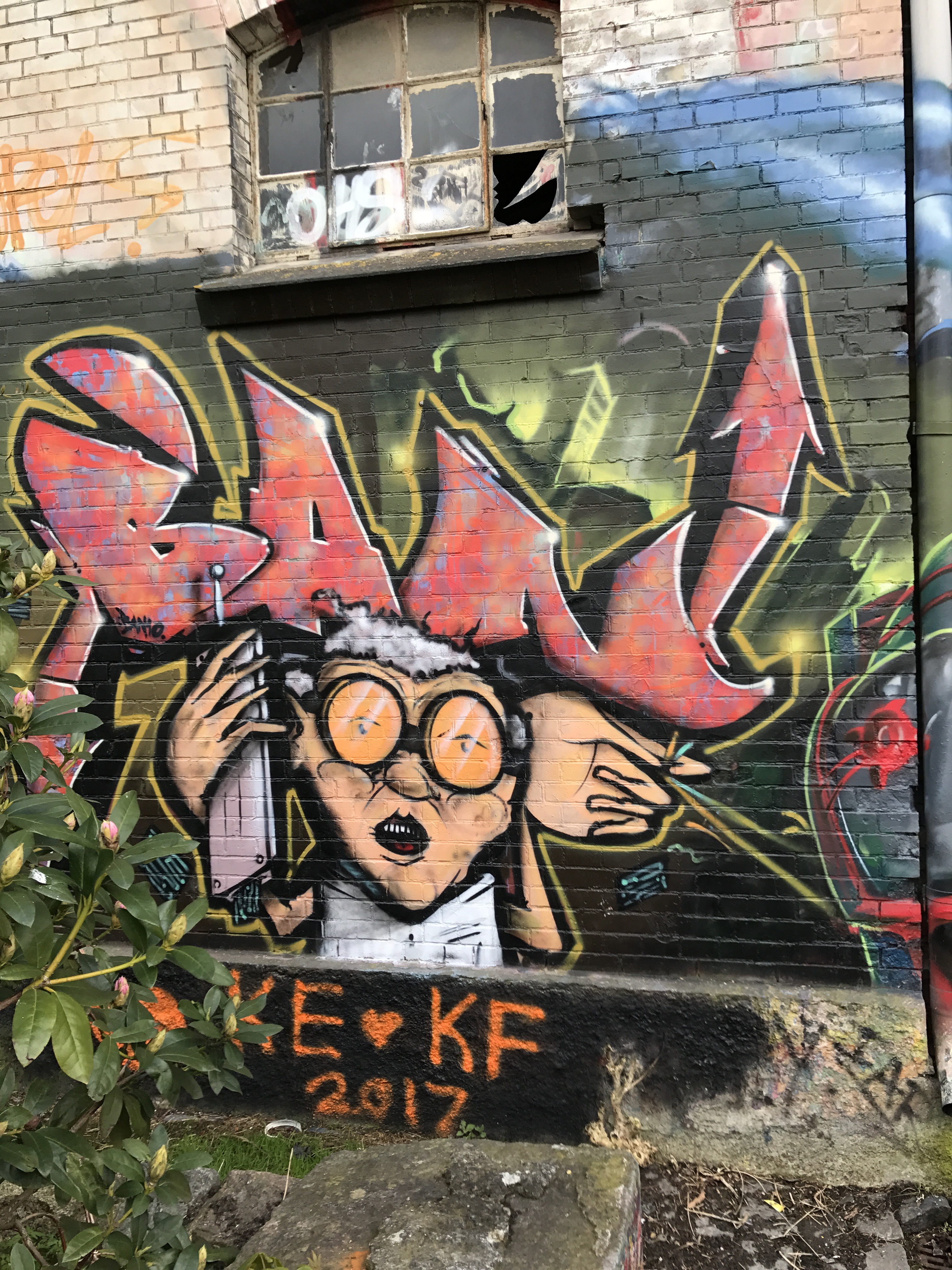
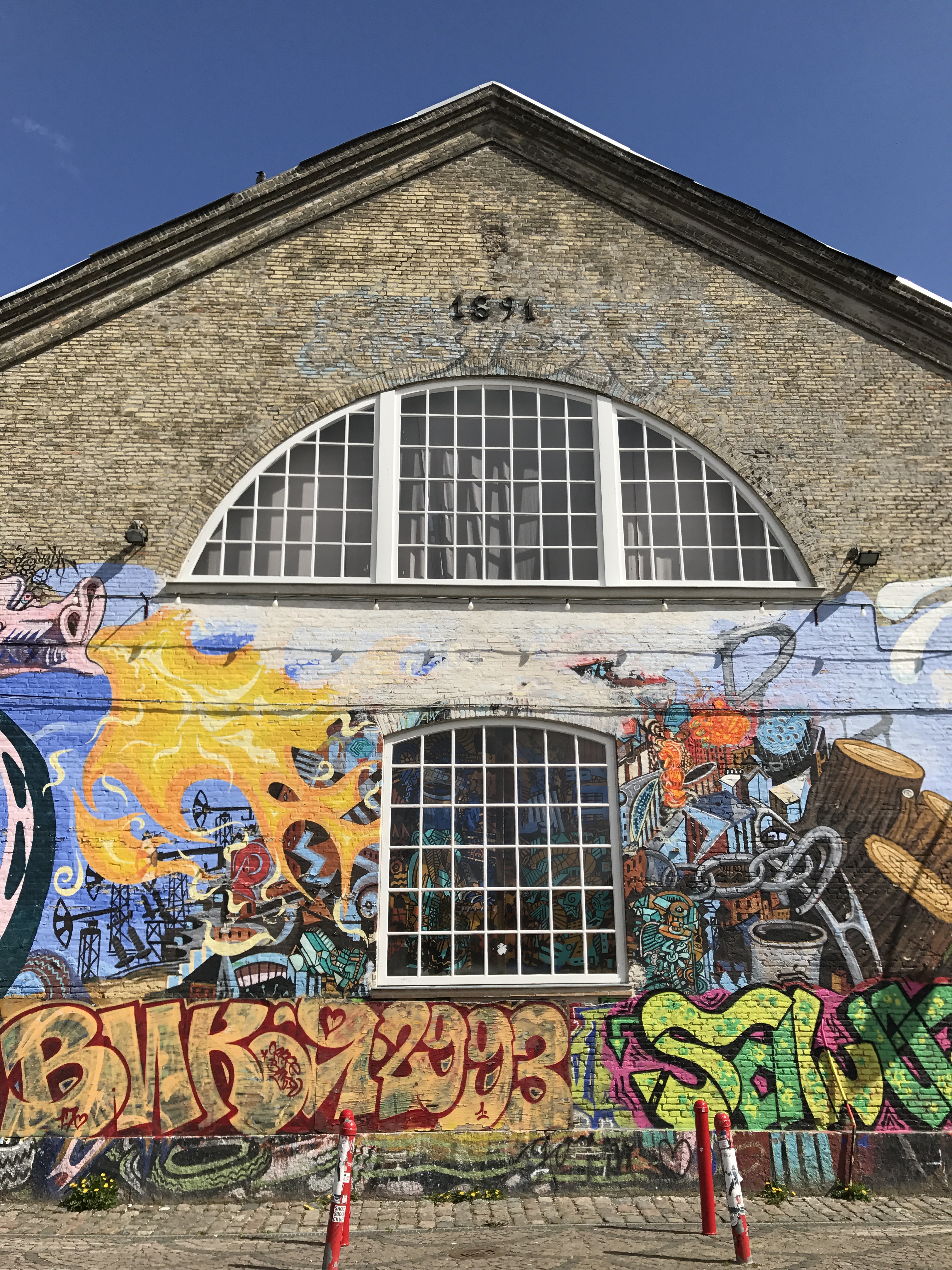
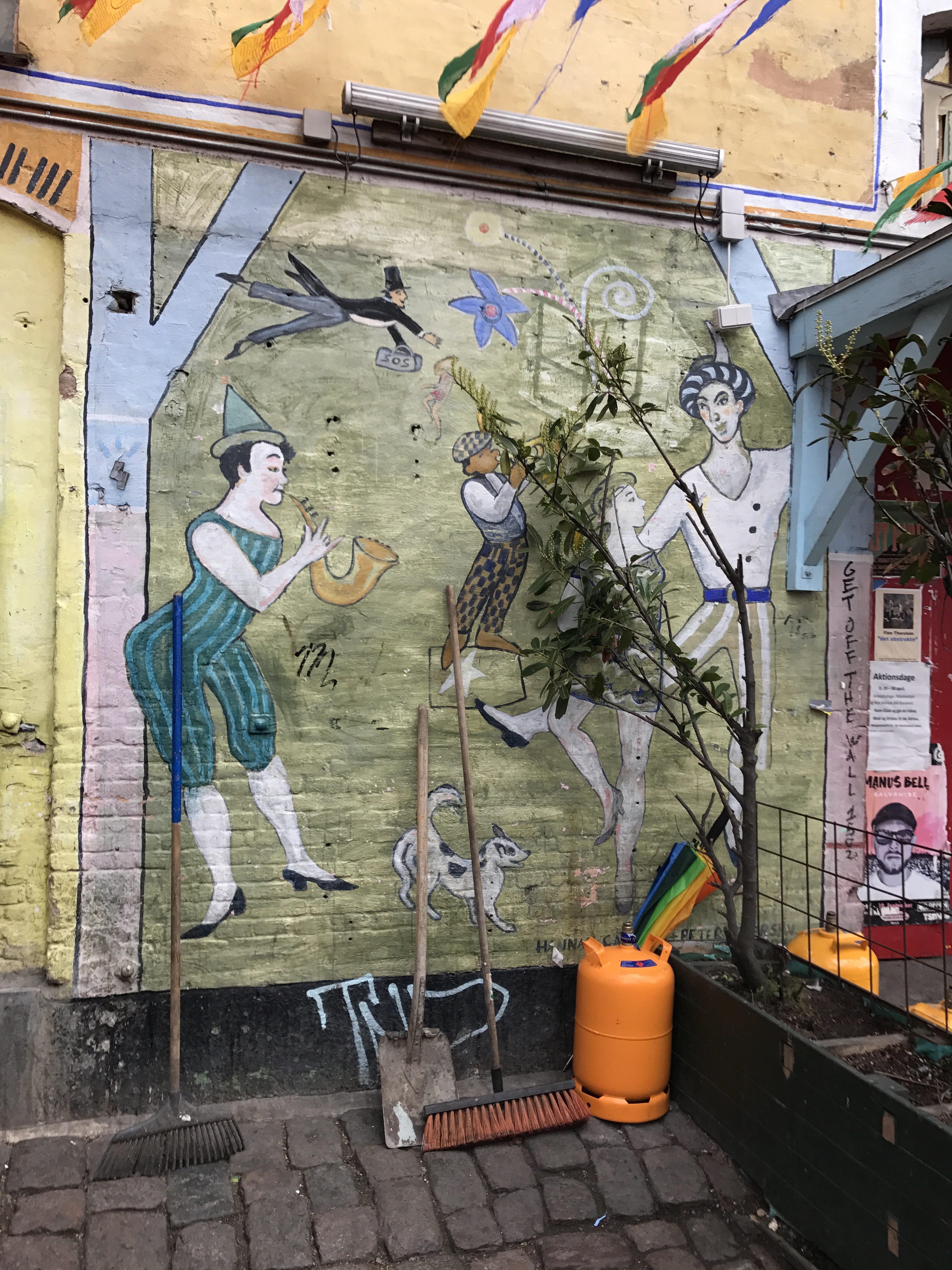
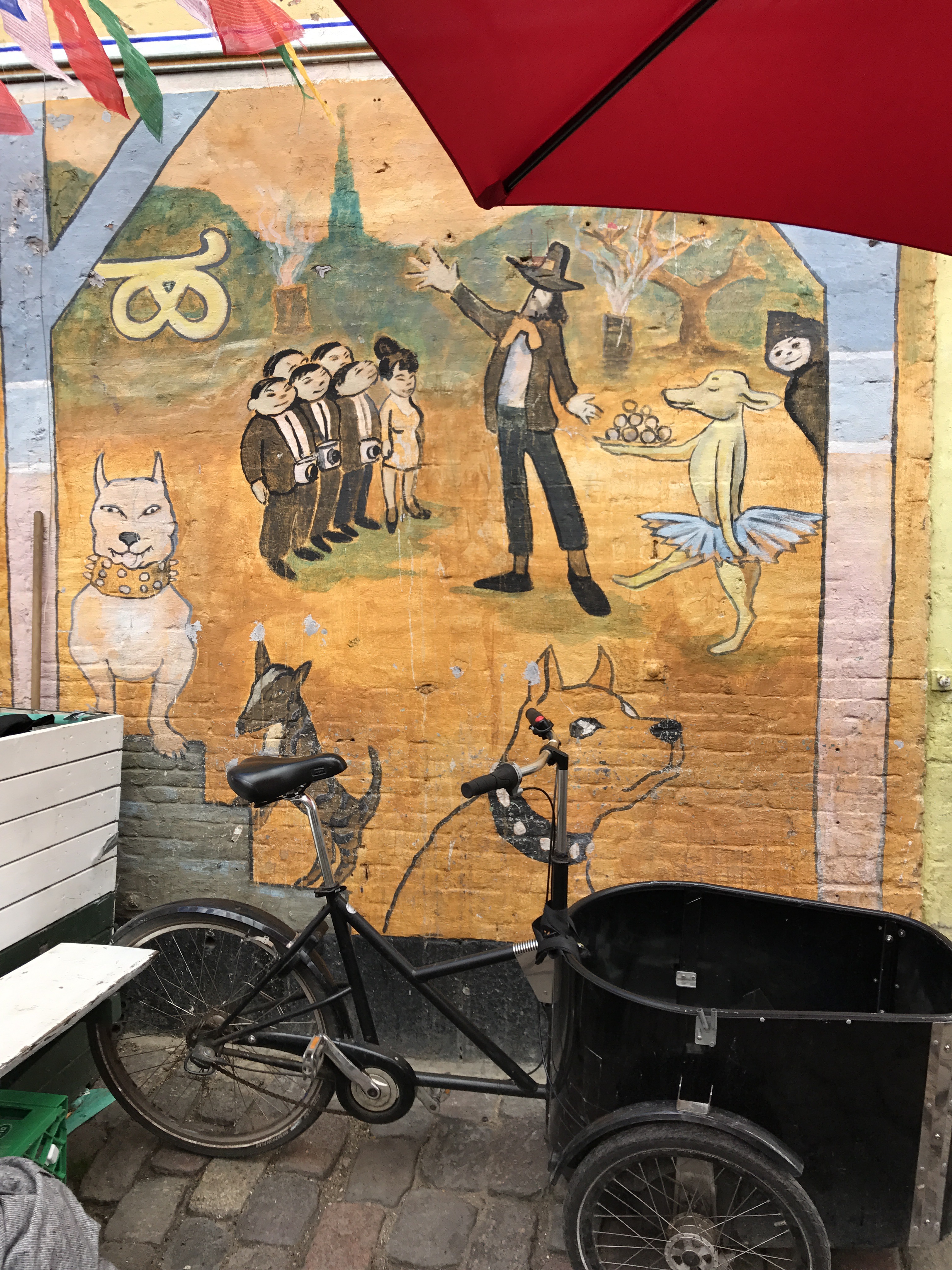
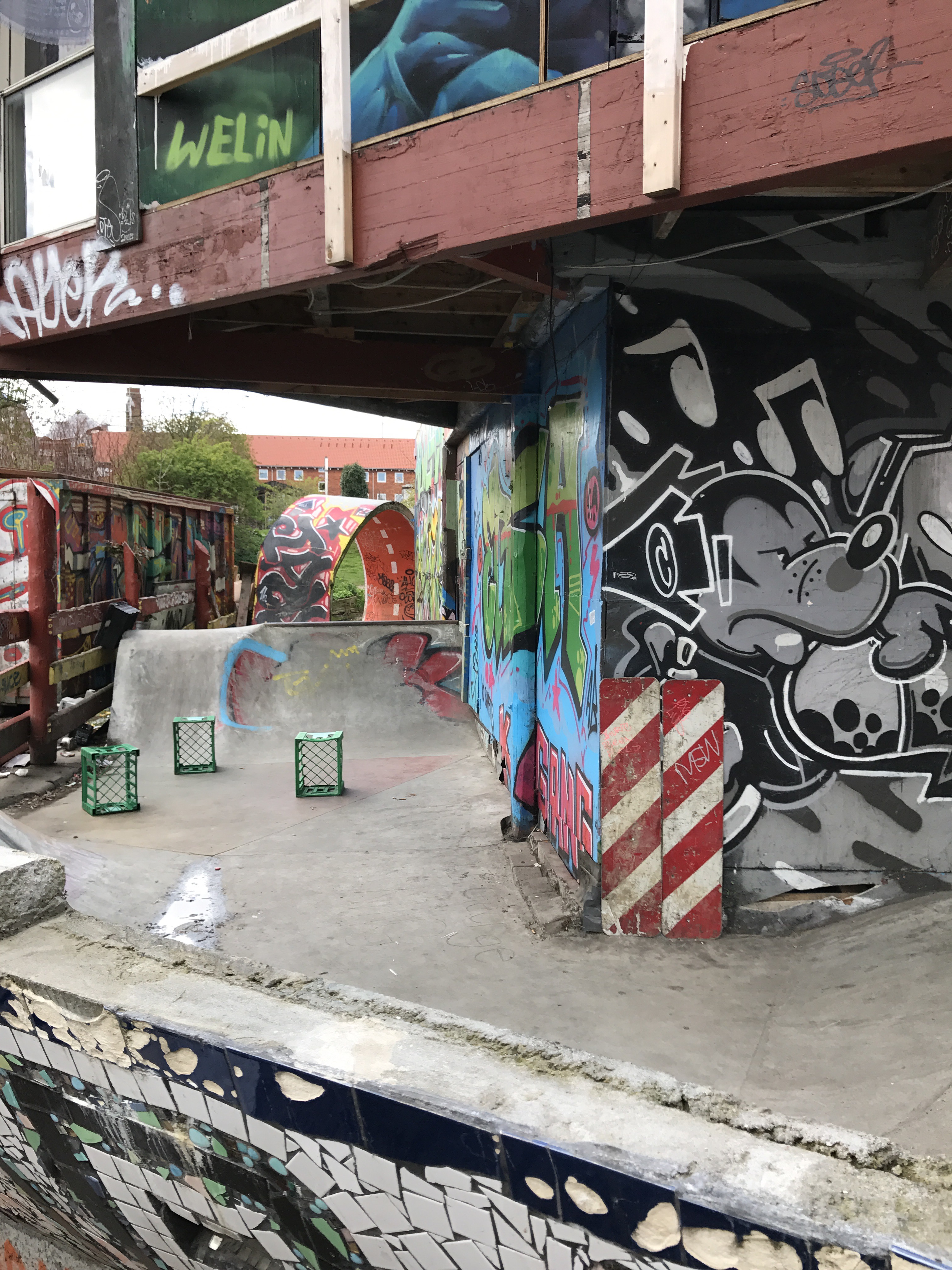
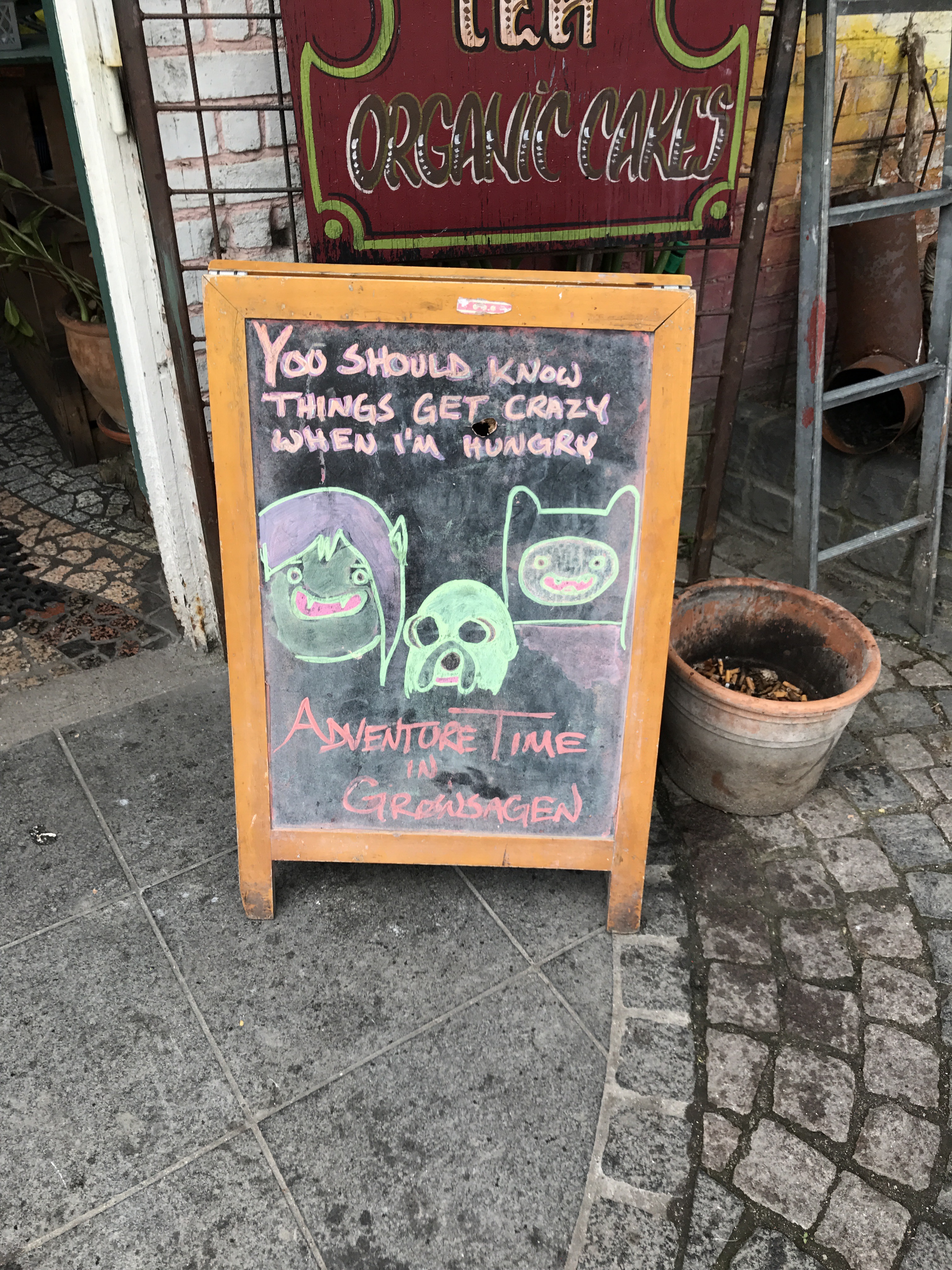
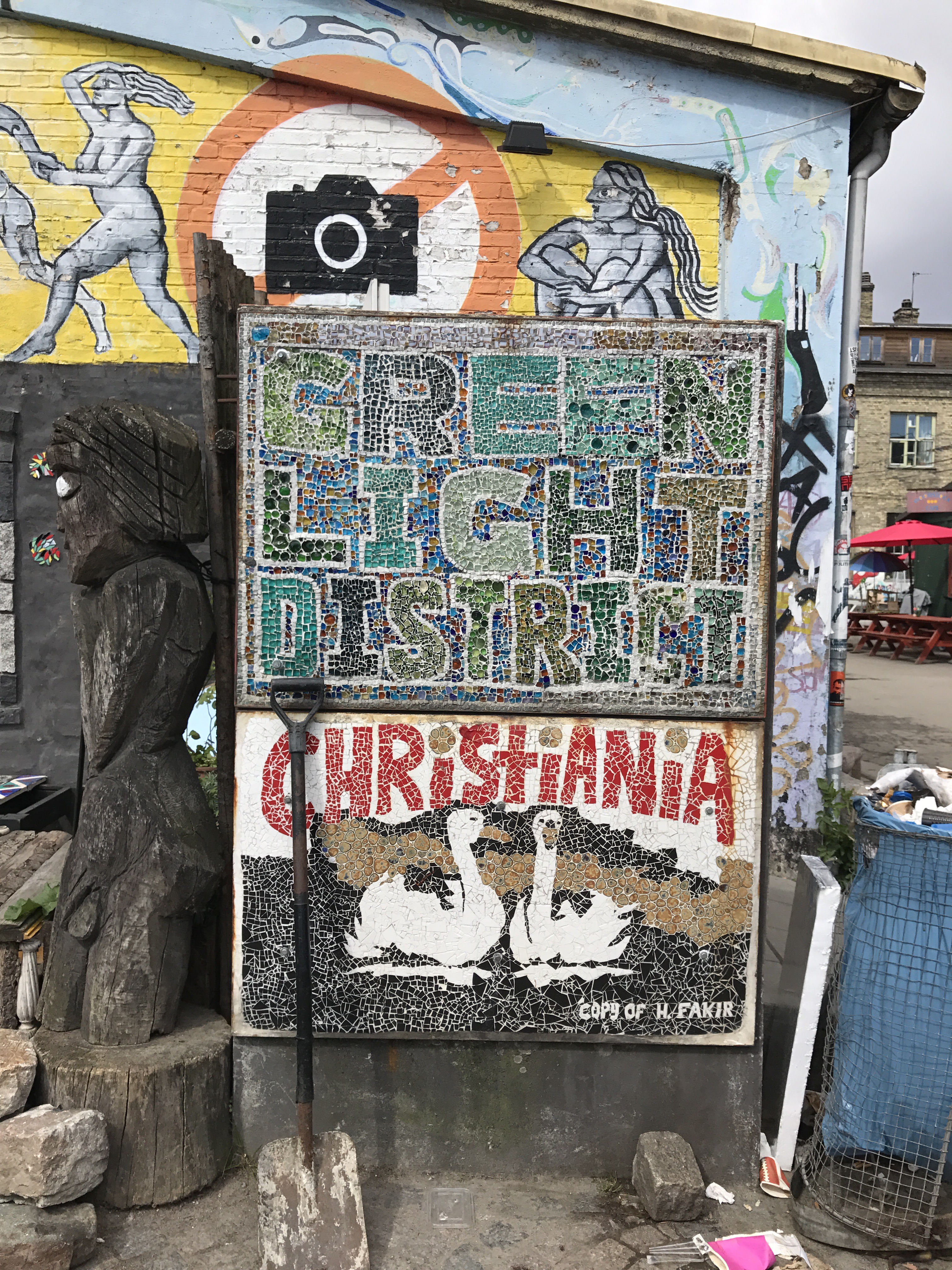
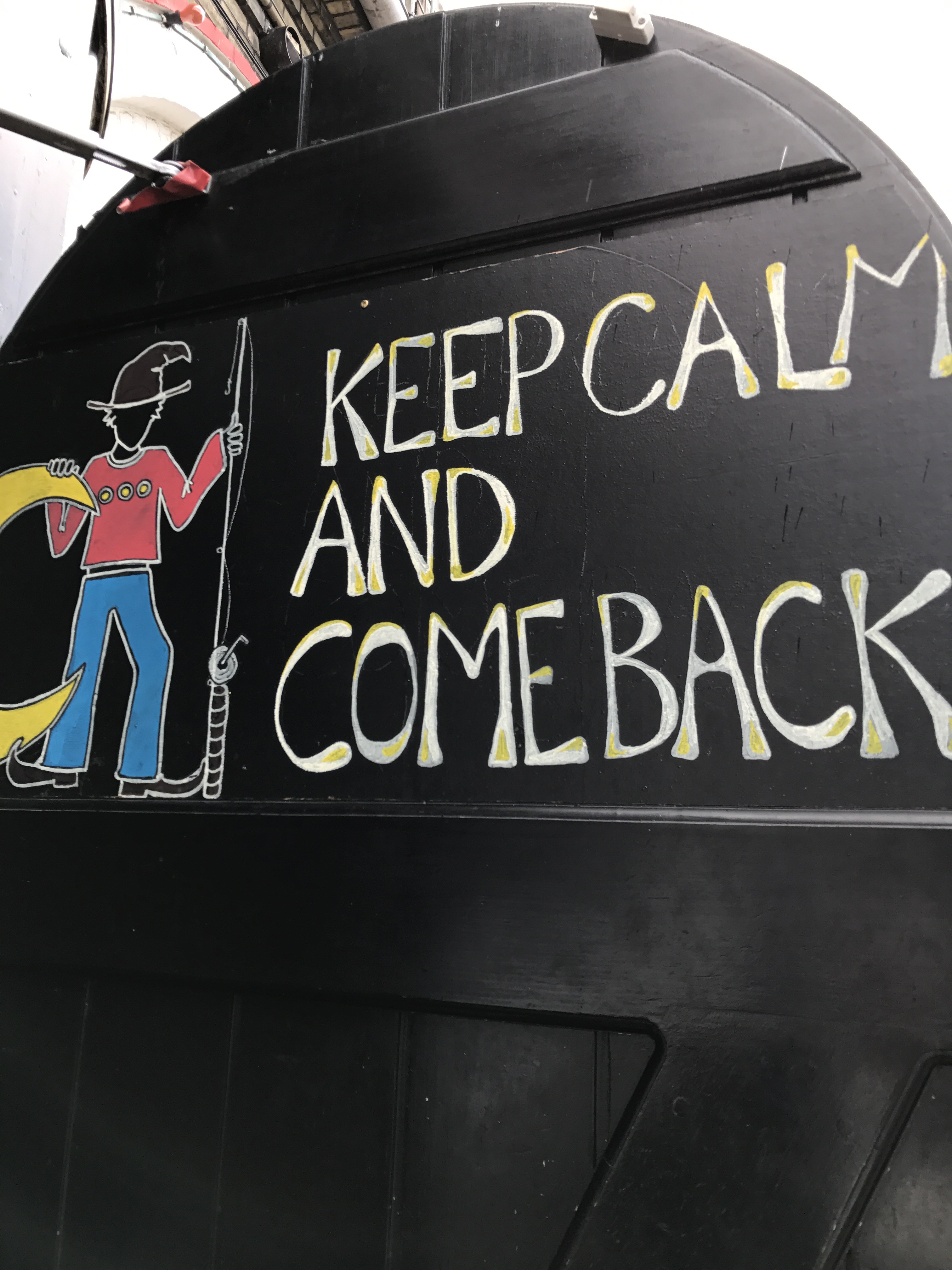
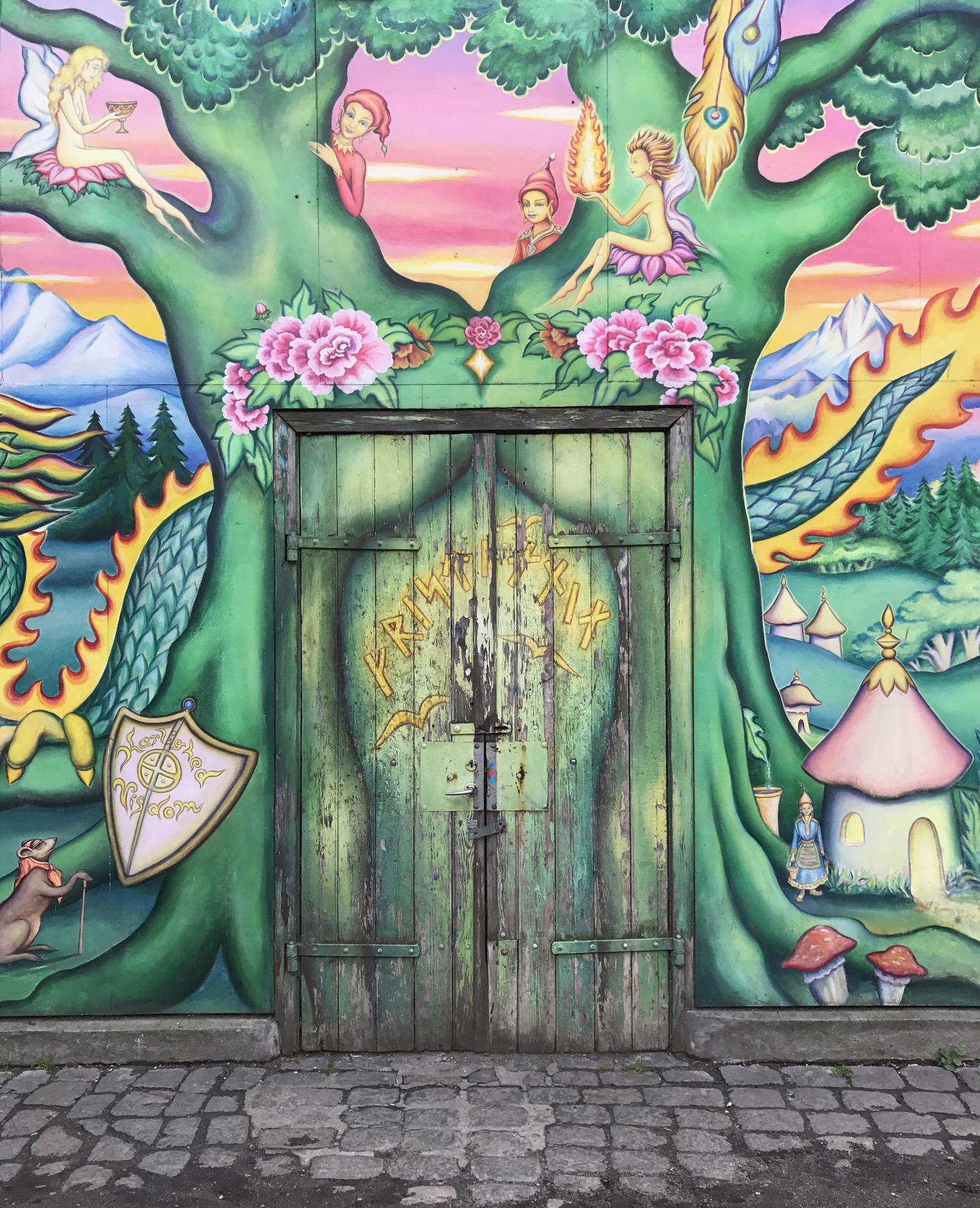
Much of the artwork was a throwback to the psychedelic 60s and 70s.


Other murals looked more contemporary. I liked it all.


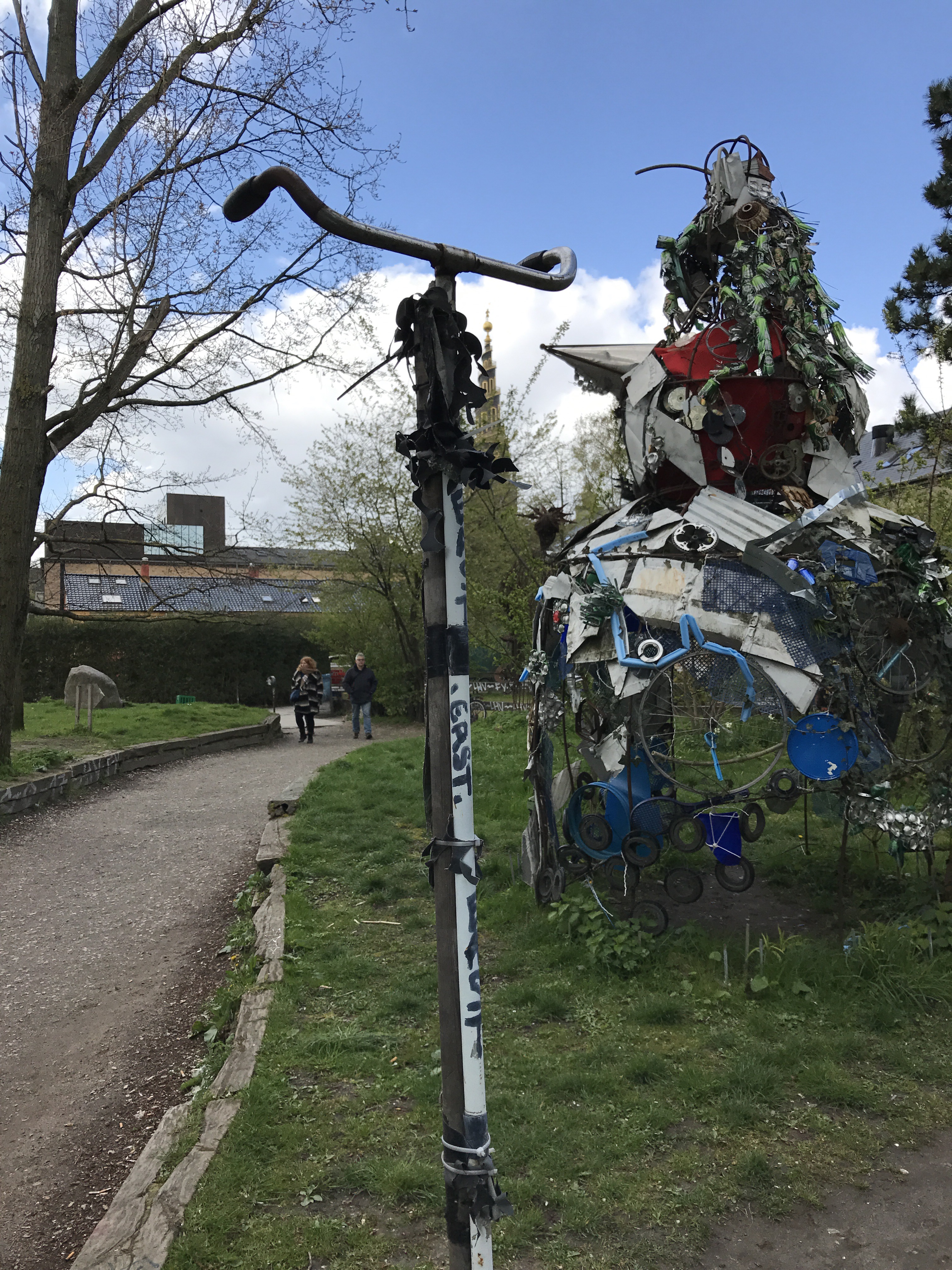
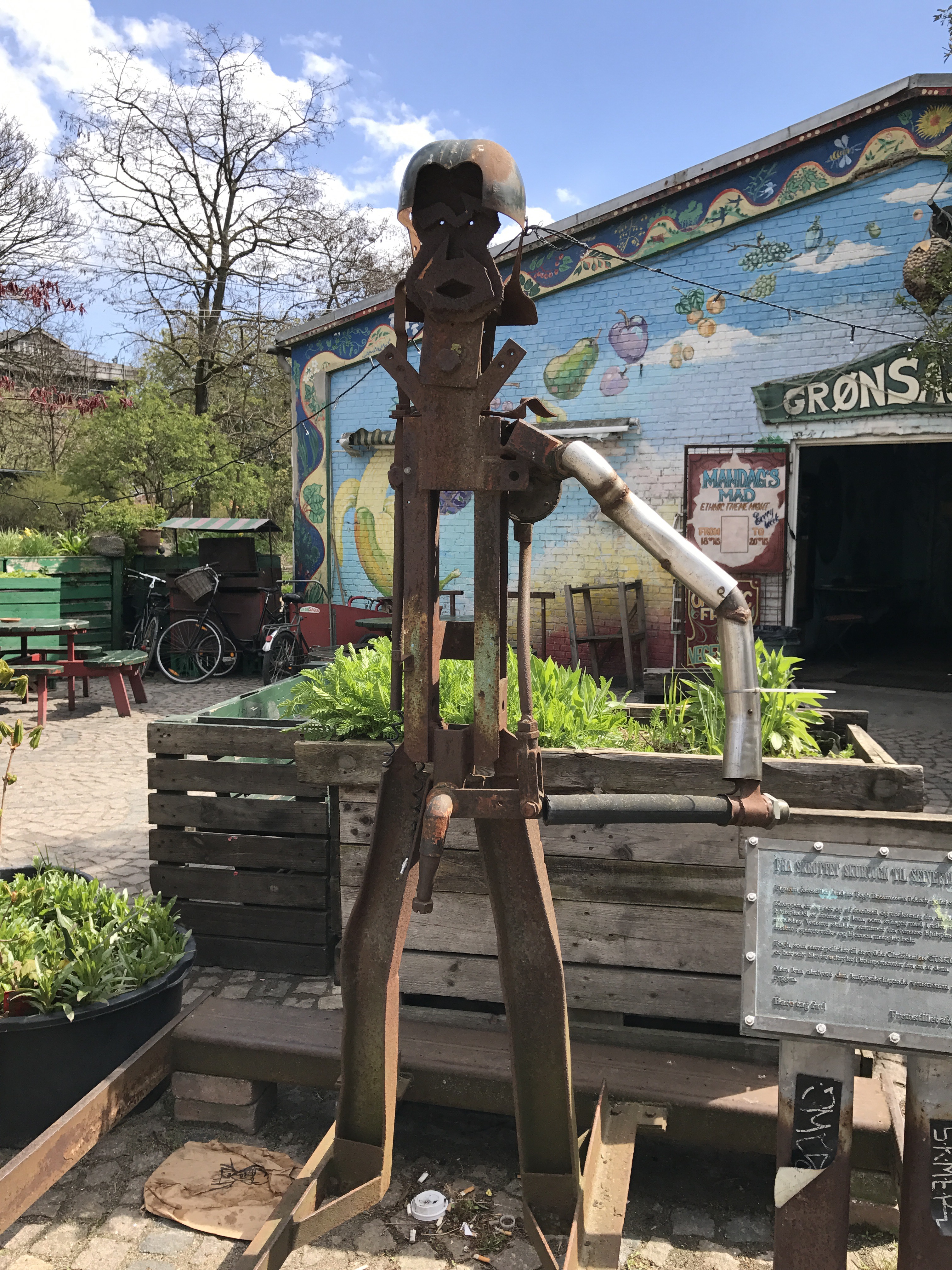
I liked the sculptures too.


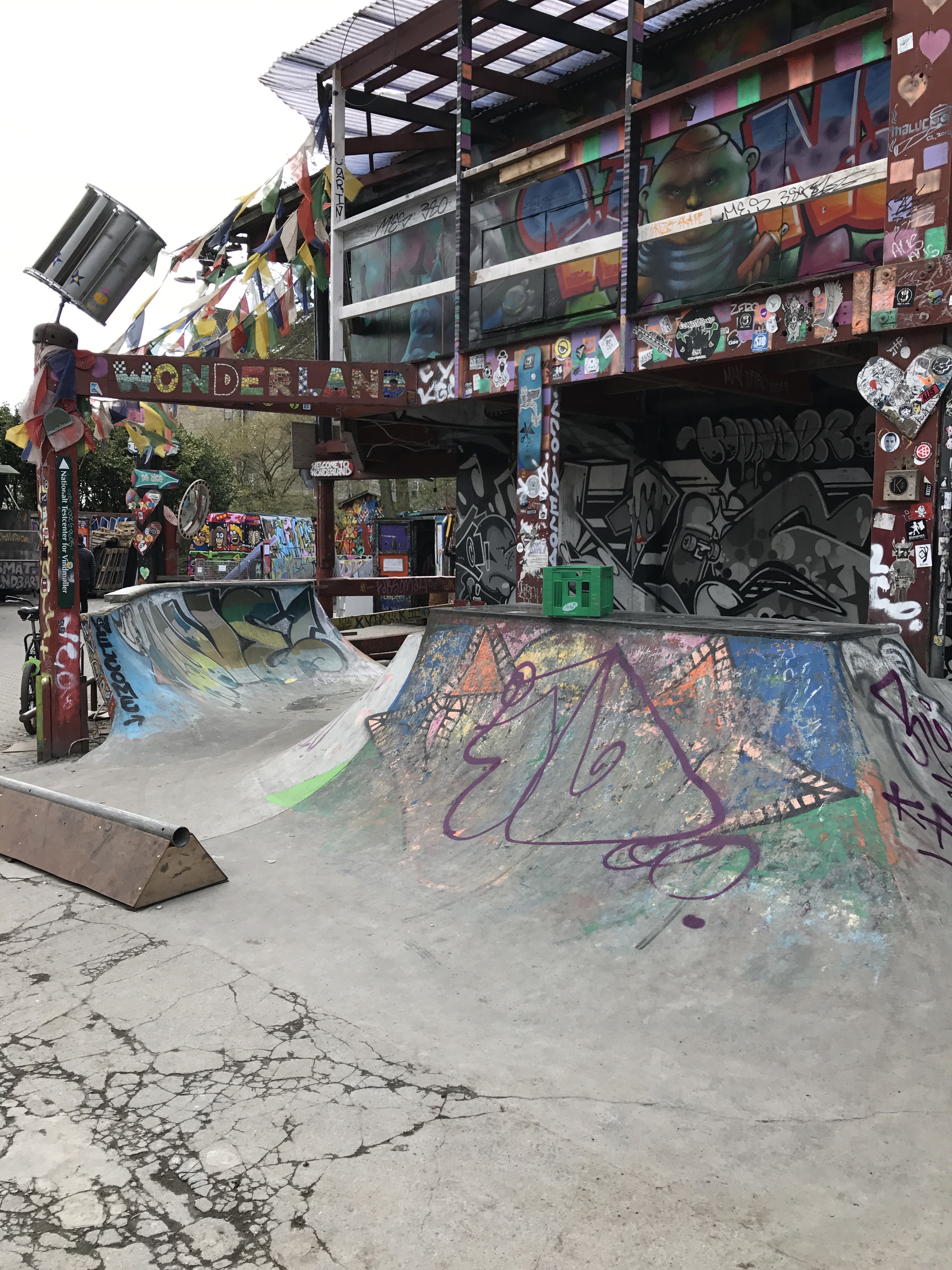
I didn’t bring a skateboard! Too bad.

img_6040.jpg
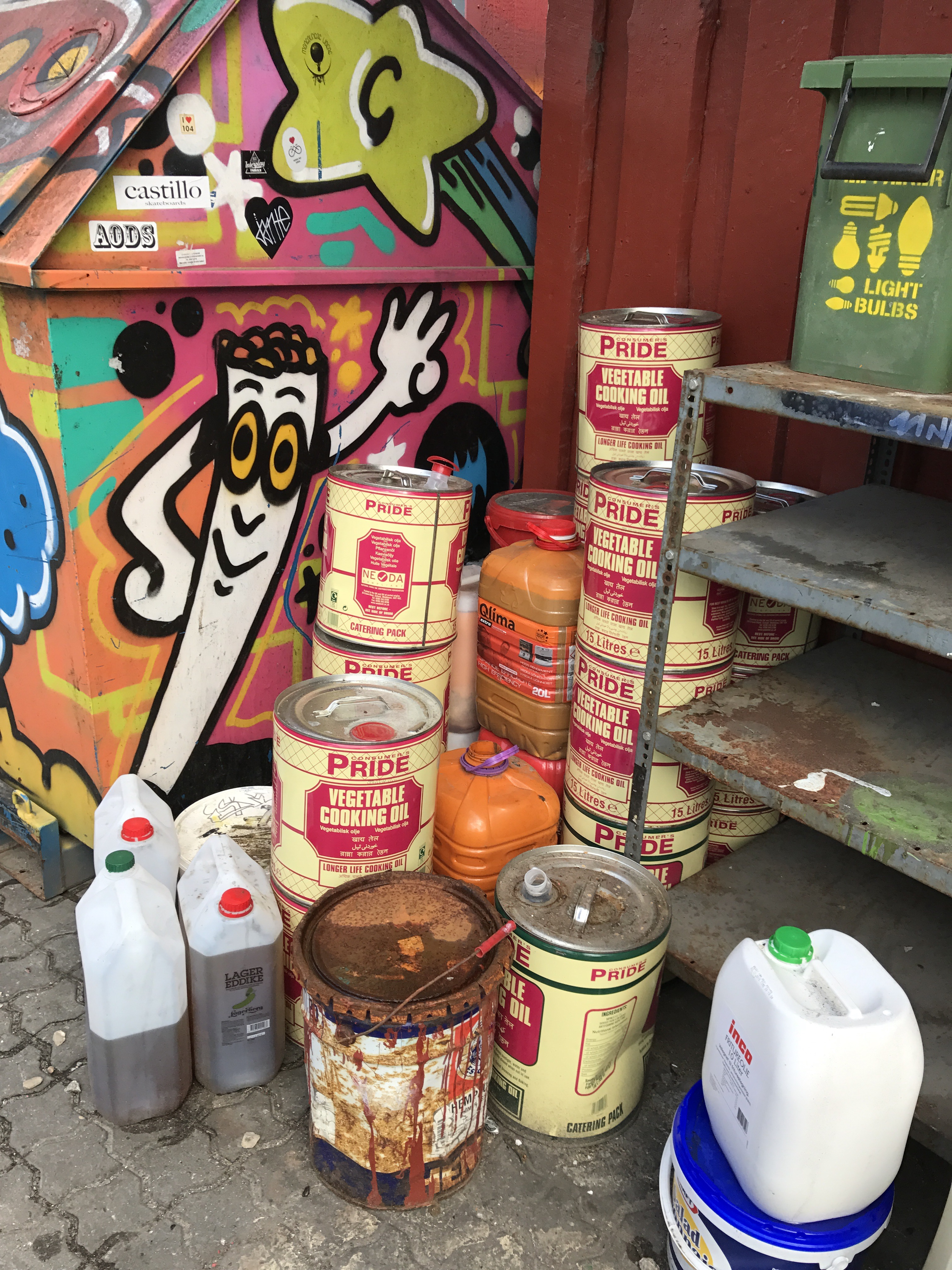
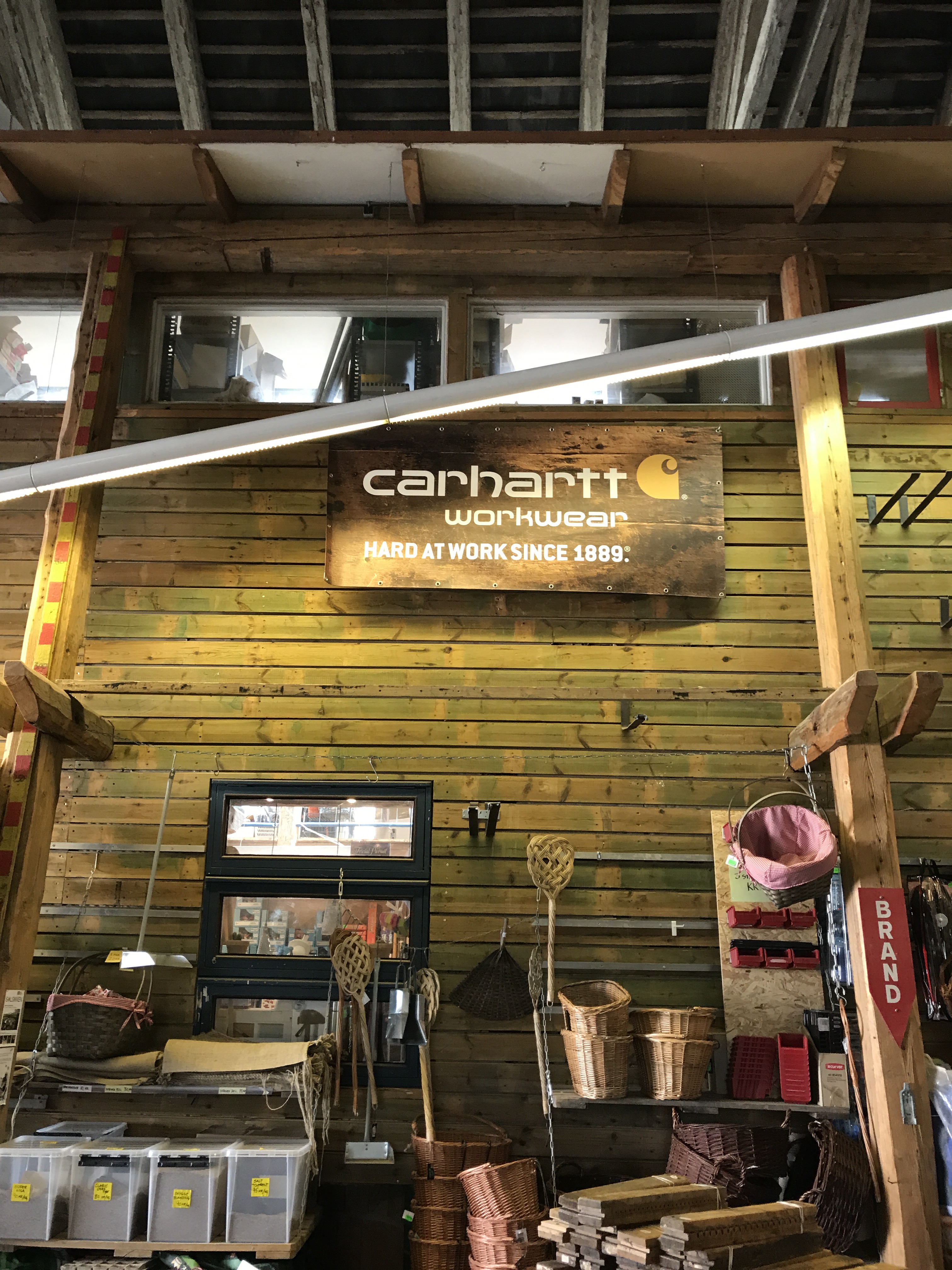
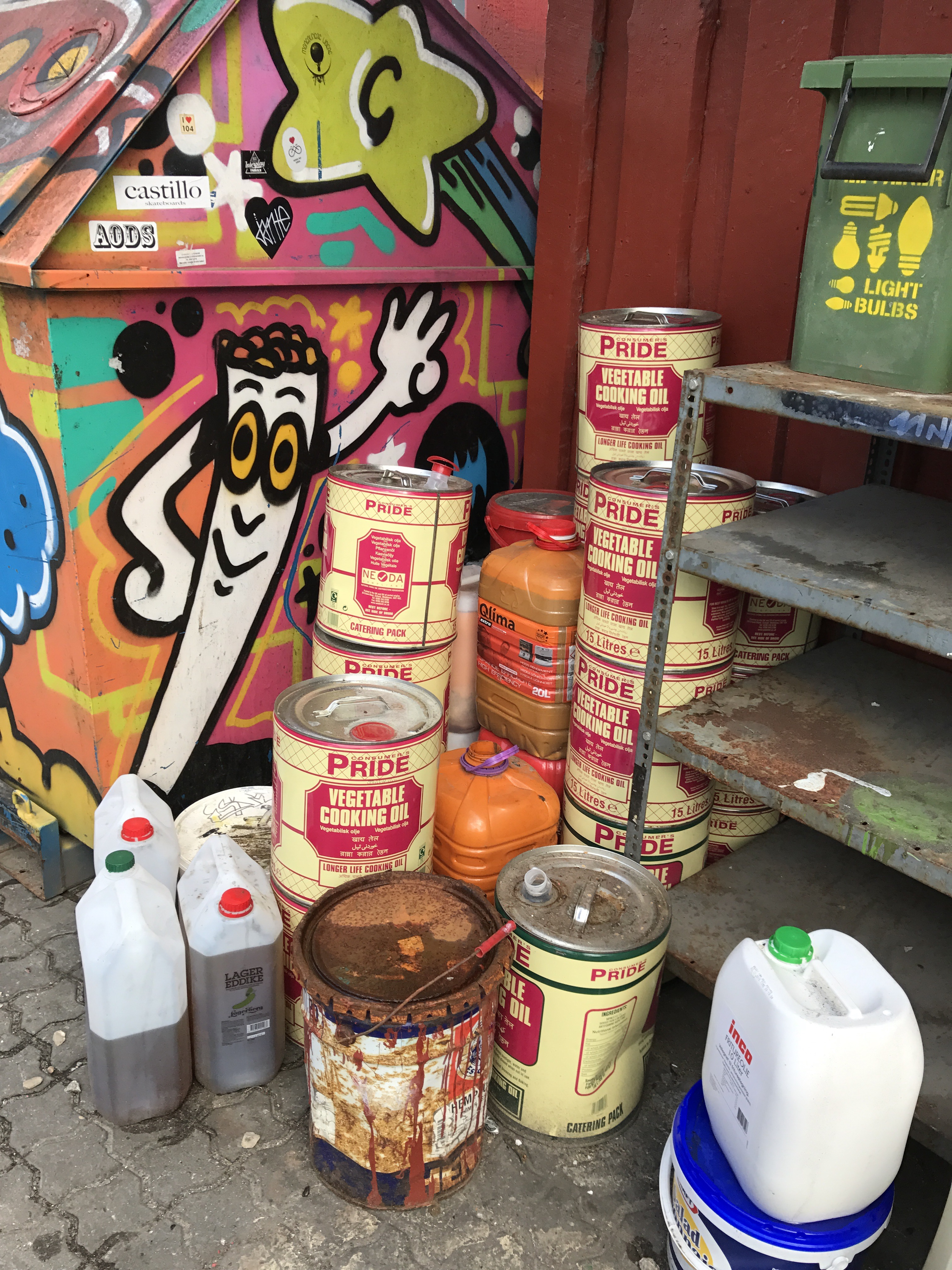
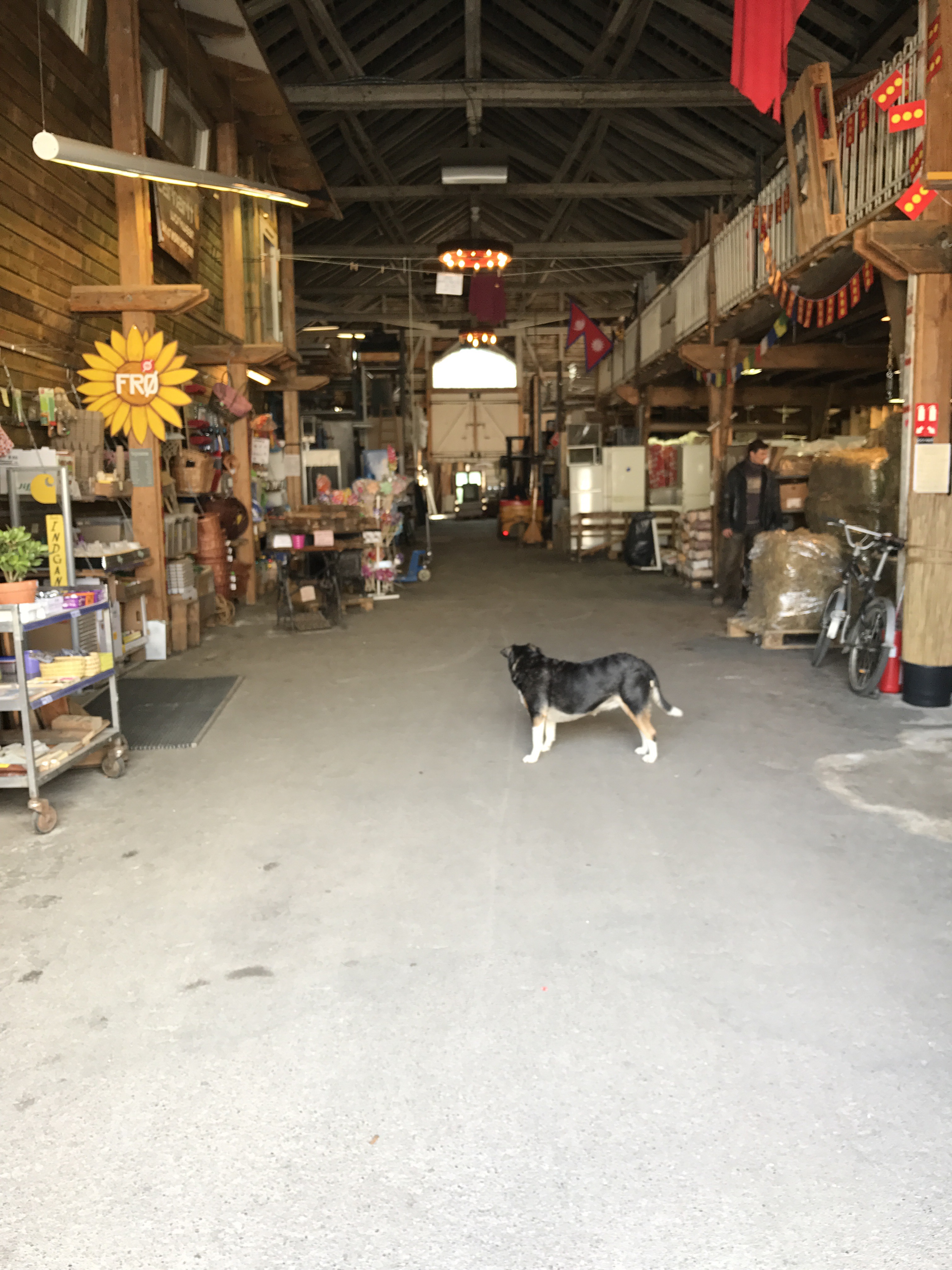
Hippies were the first great recyclers. They figured out how to survive and thrive on the leftovers of materialism. Christiania has a huge warehouse stocked with recycled toilets, sinks, bathtubs, stoves and refrigerators, and all kinds of building materials.


The community depends on tourist traffic. Restaurants look friendly and appealing, but there are probably no Michelin stars.


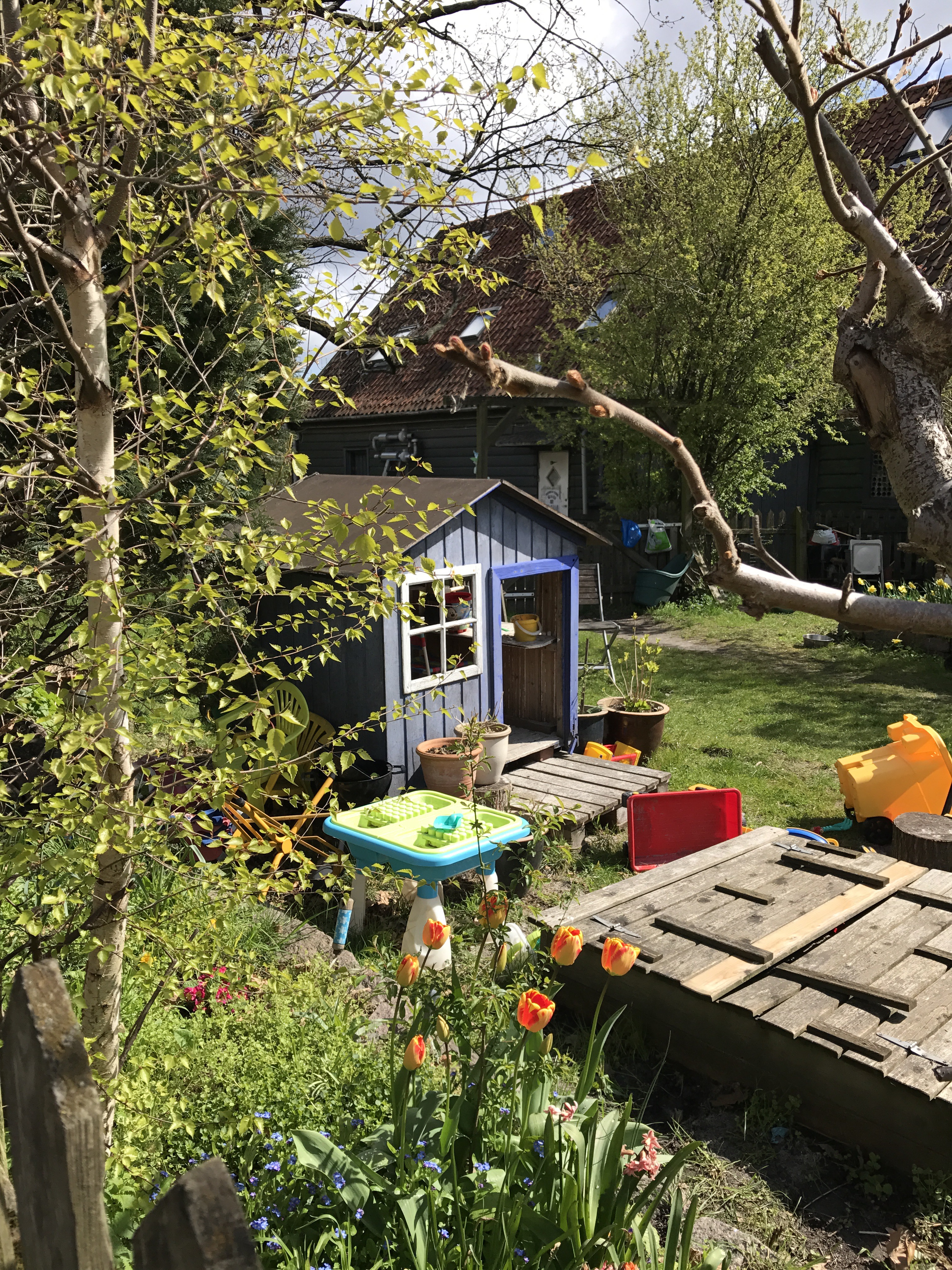
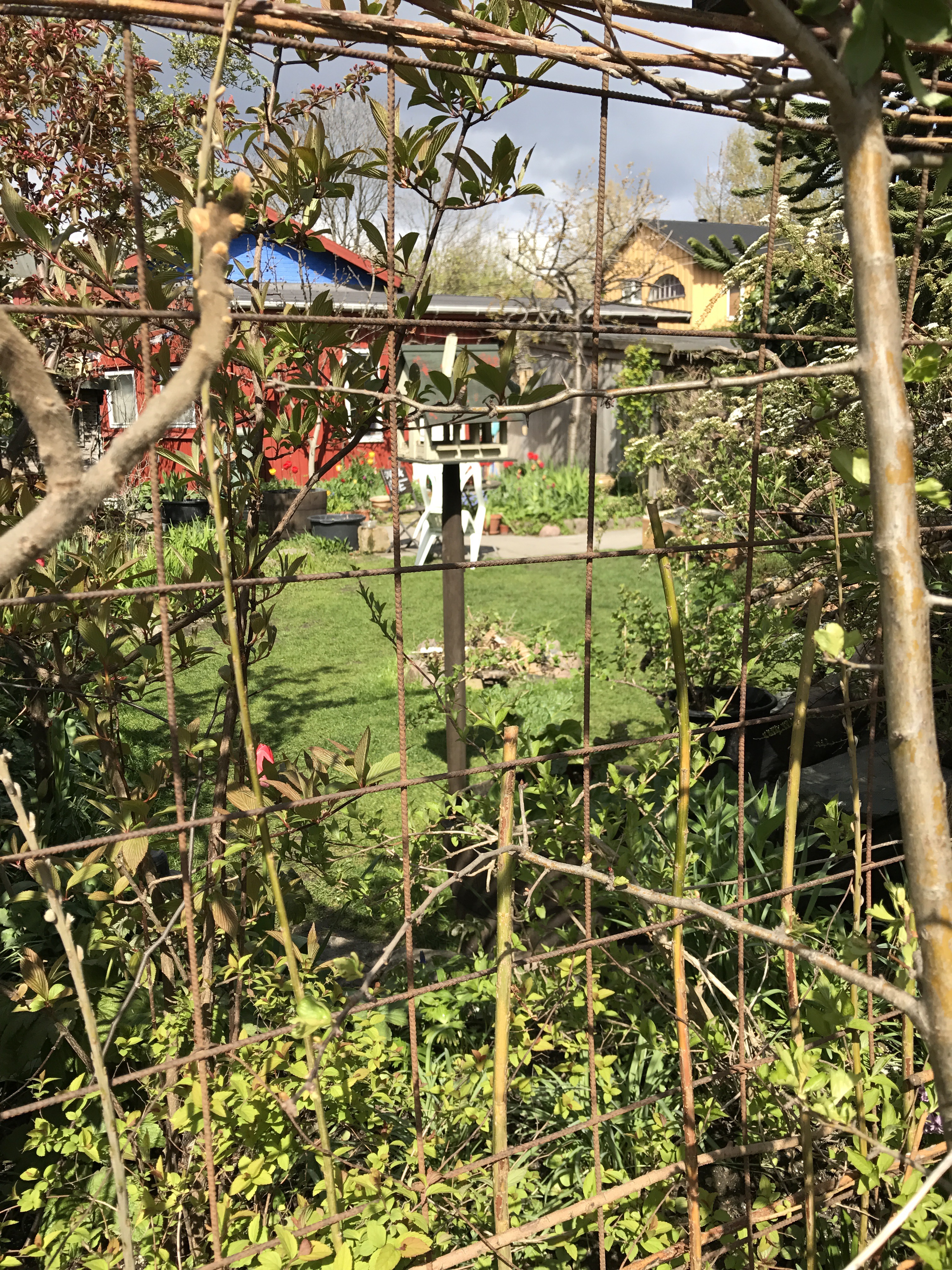
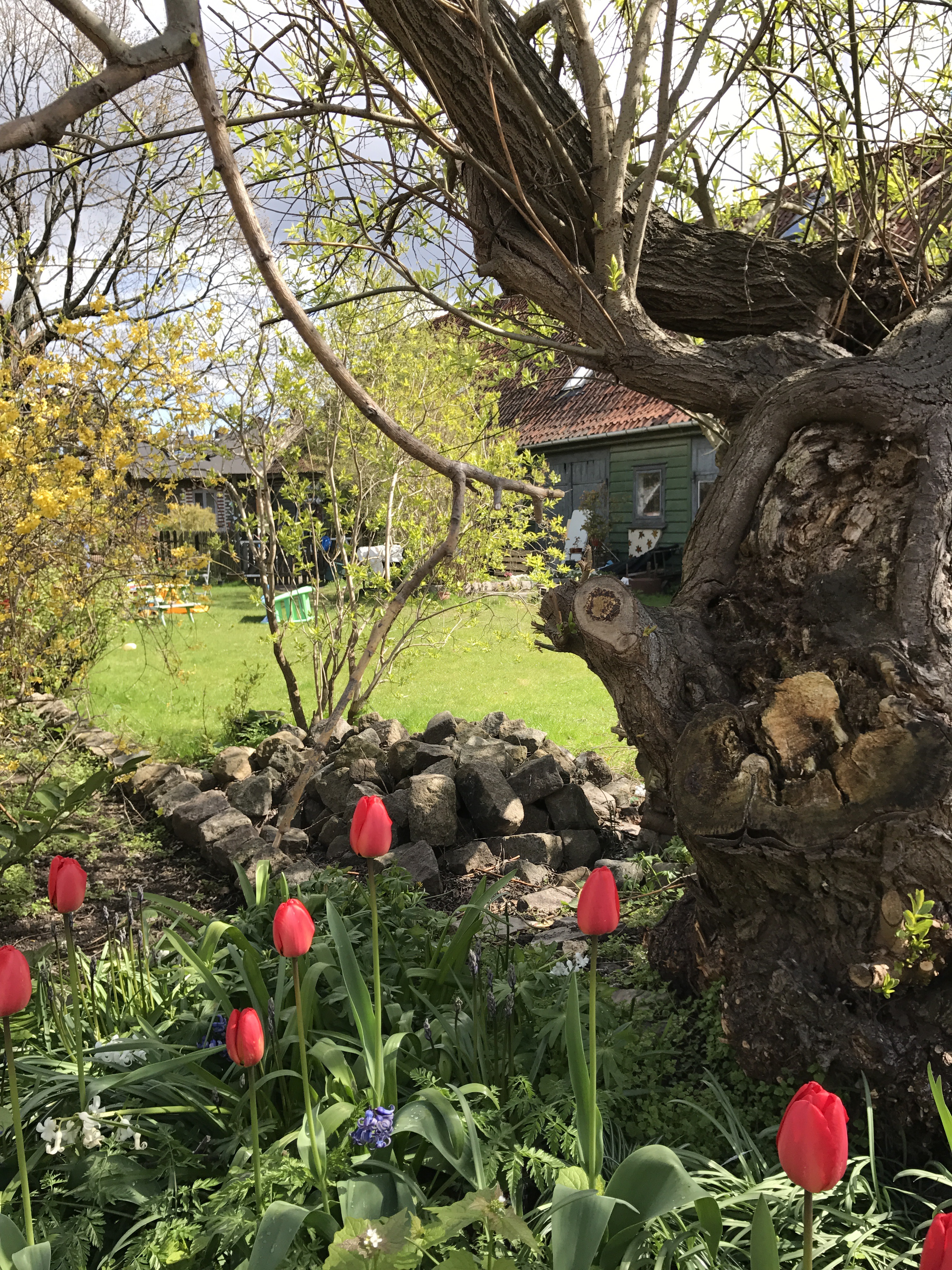
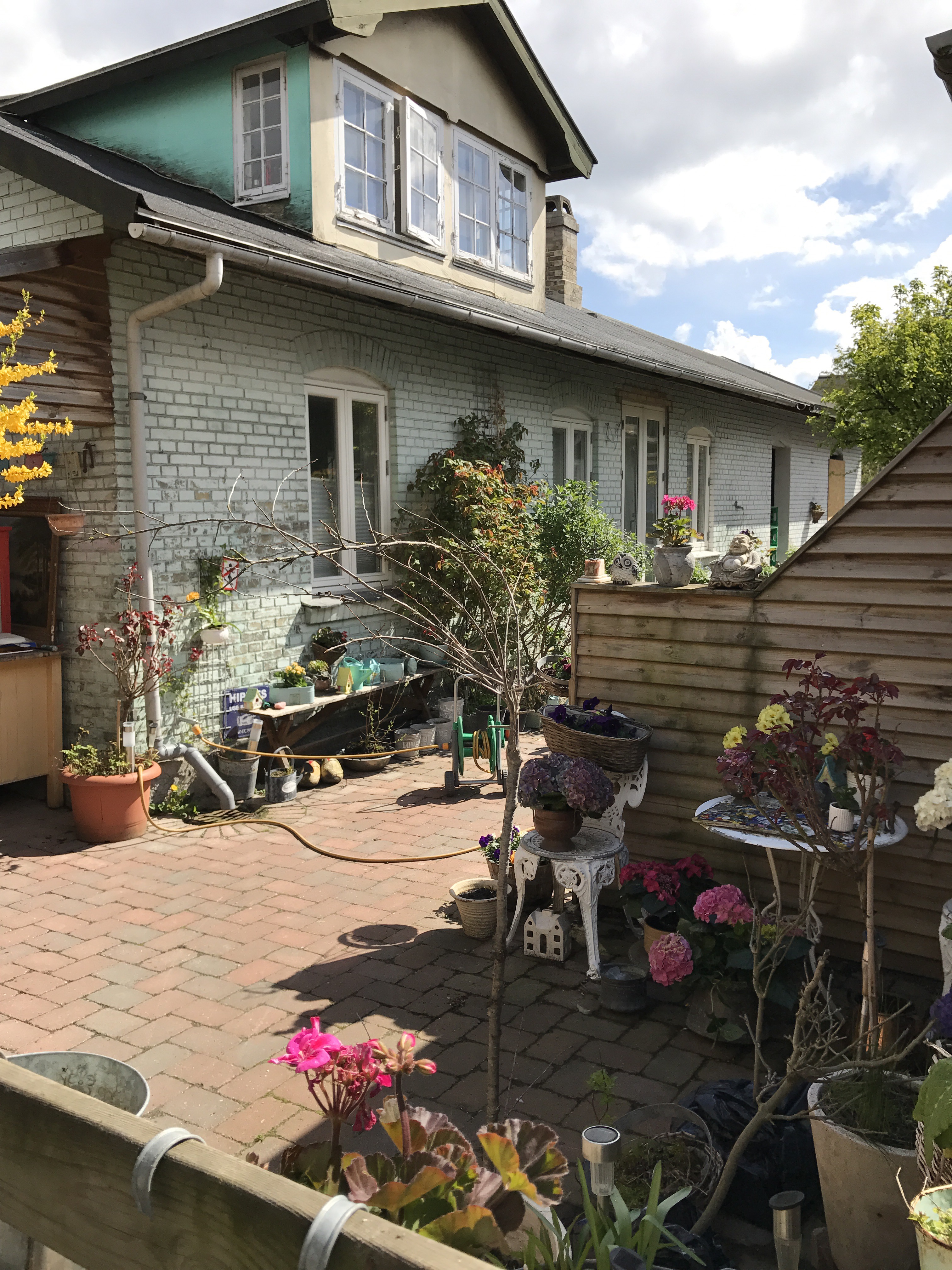
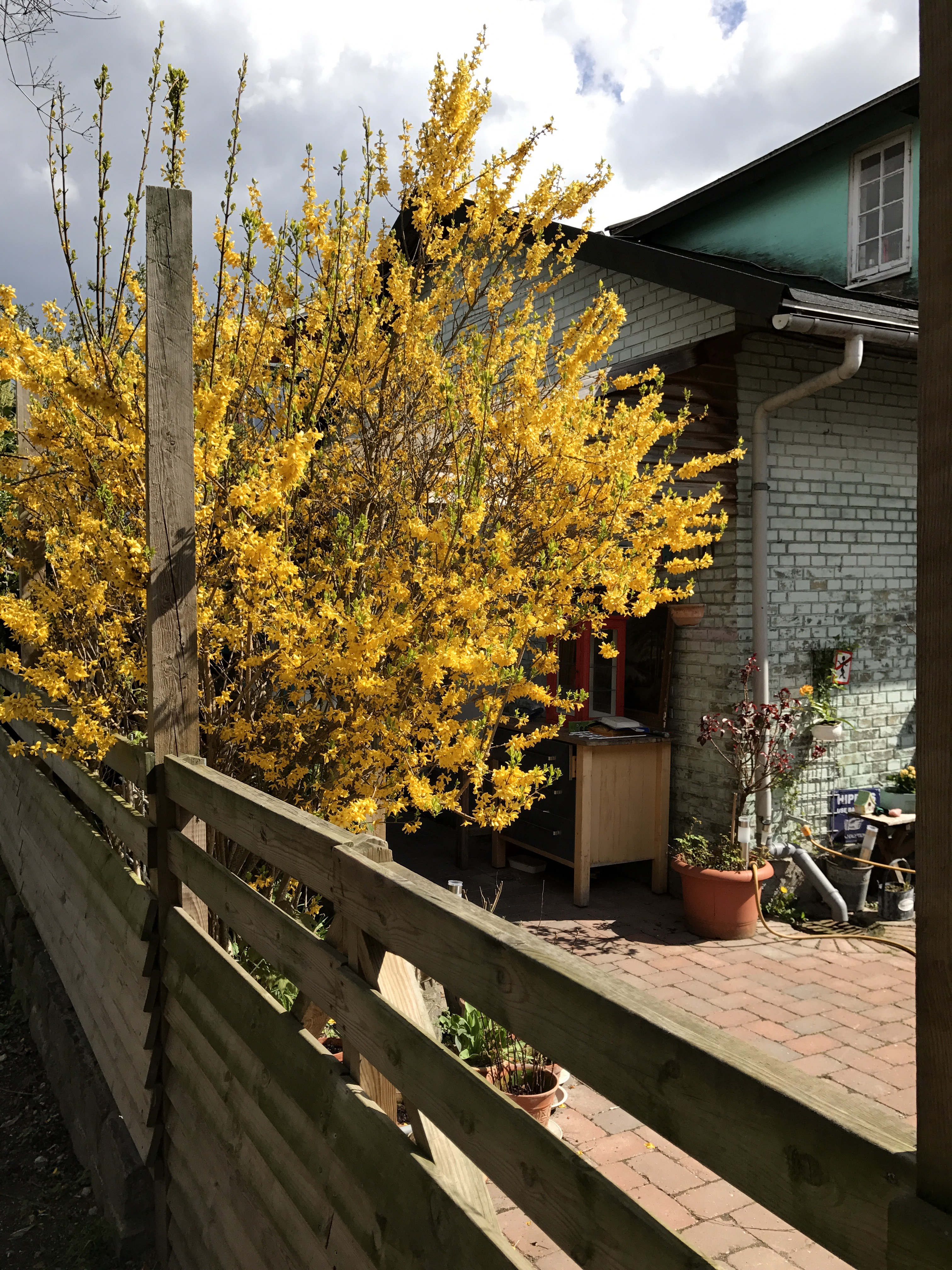
Venturing out of the main tourist area, I found charming handcrafted homes, bright with flowers.


Nobody is allowed to actually own a home or property in this enclave. If a resident leaves, the community decides whether to invite someone else to move in. I’ve read that about 180 of the original residents remain.


After I left, I learned that tourists had been assaulted for taking pictures of residents. I figured this dog, supervising the warehouse, wouldn’t mind.


There are plenty of grungy sights within Christiania, but my impression was of a tranquil haven of social freedom. Yes, I’d go back!

Travel offers so many doors to open! Join me next time for more explorations in the art and history of Europe, the British Isles, and Scandinavia.

Easter Time in Helsinki


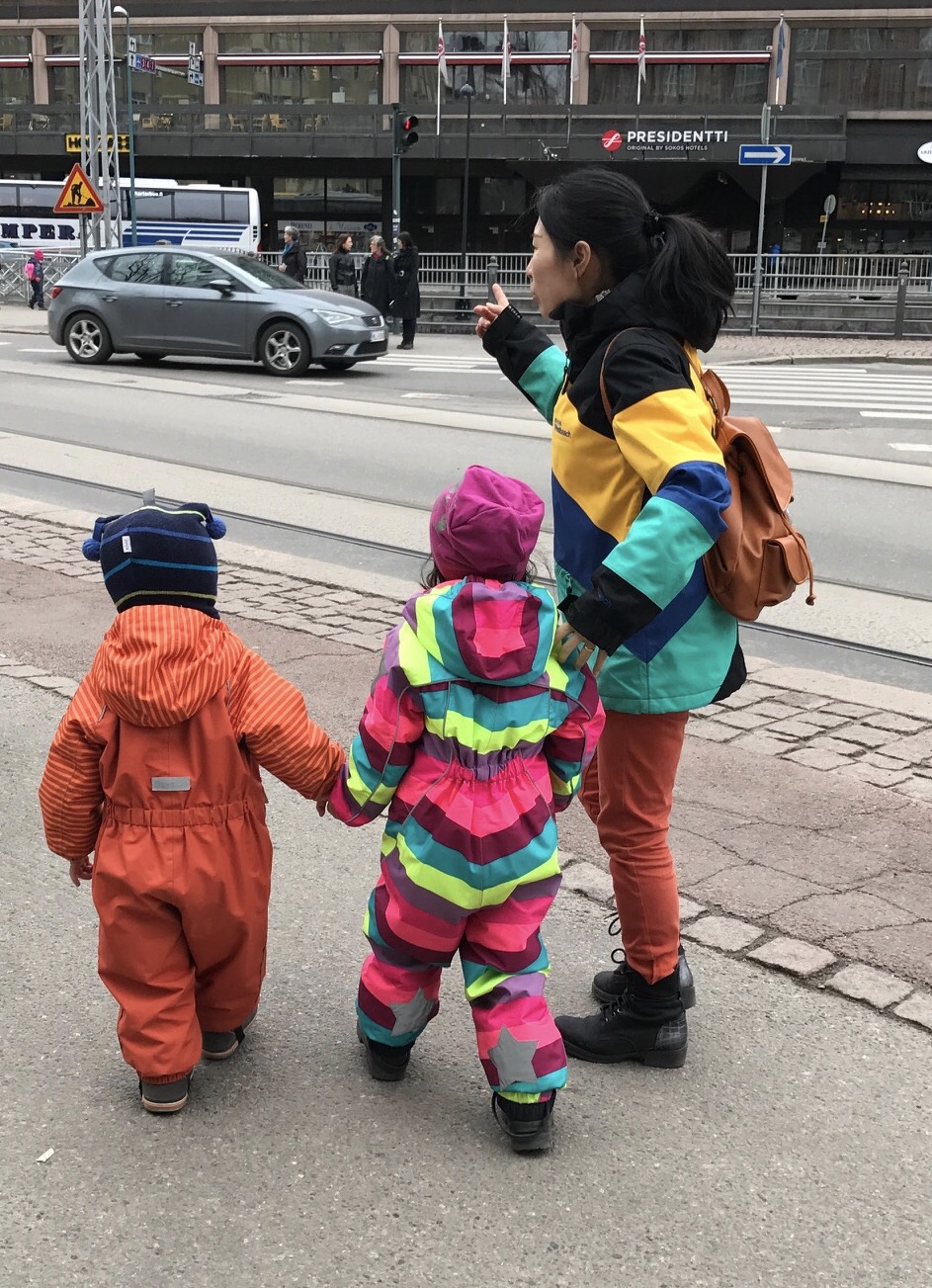
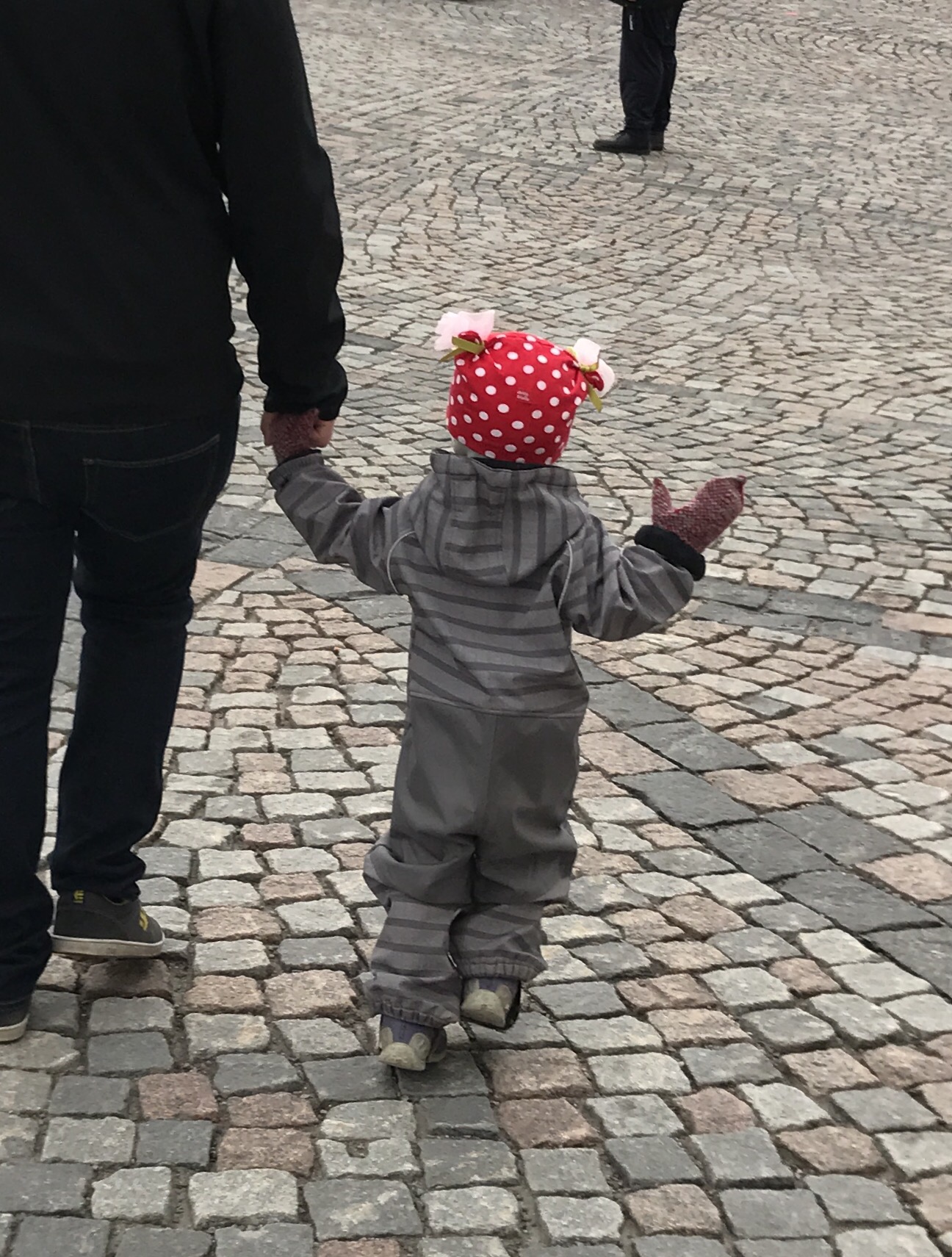
Helsinki in early April is chilly and blustery.  All the children are bundled up in one-piece snow suits. I was wishing I had one! Finland is not a place for religious pageantry and parades as in Southern Europe.


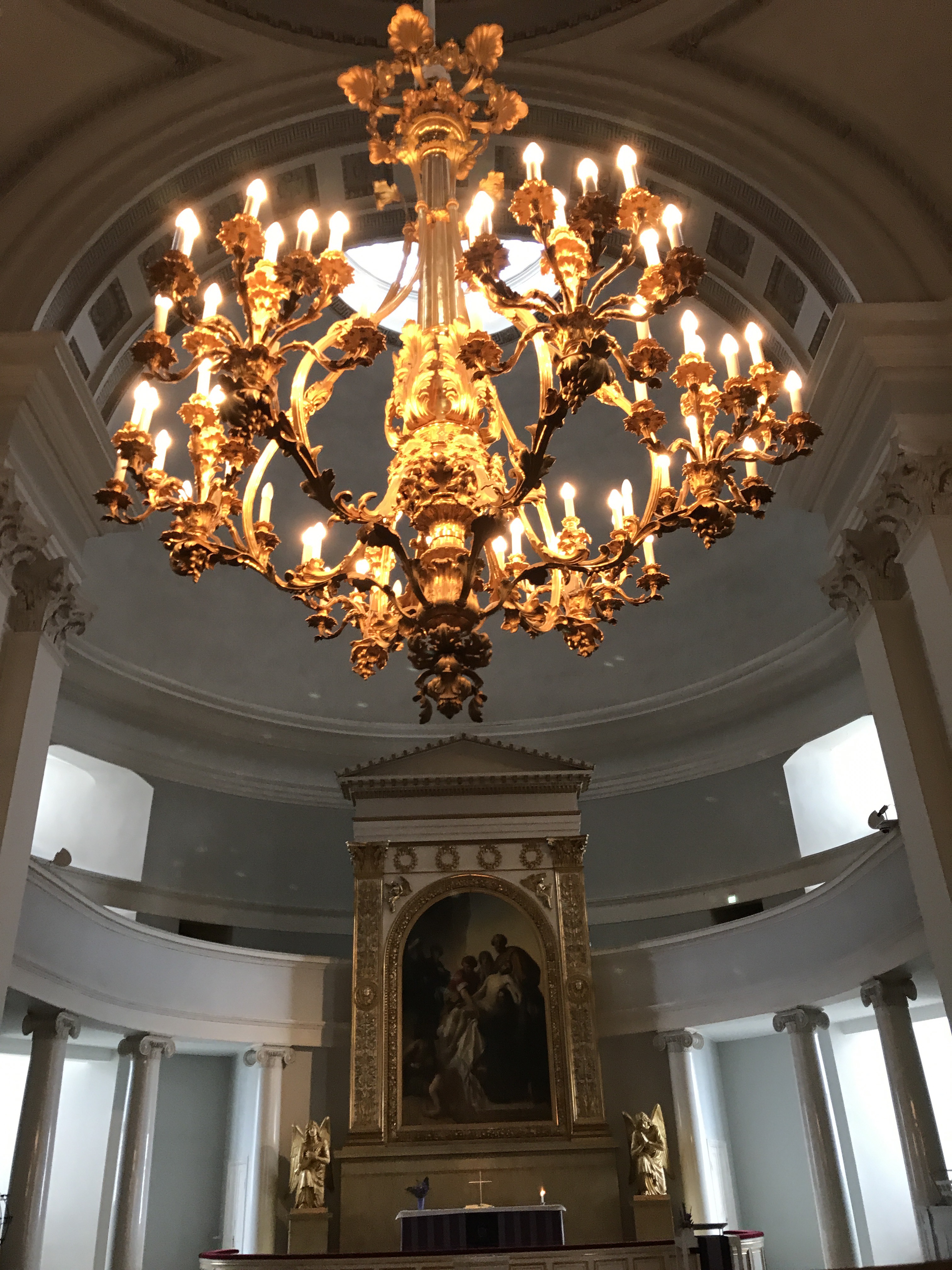
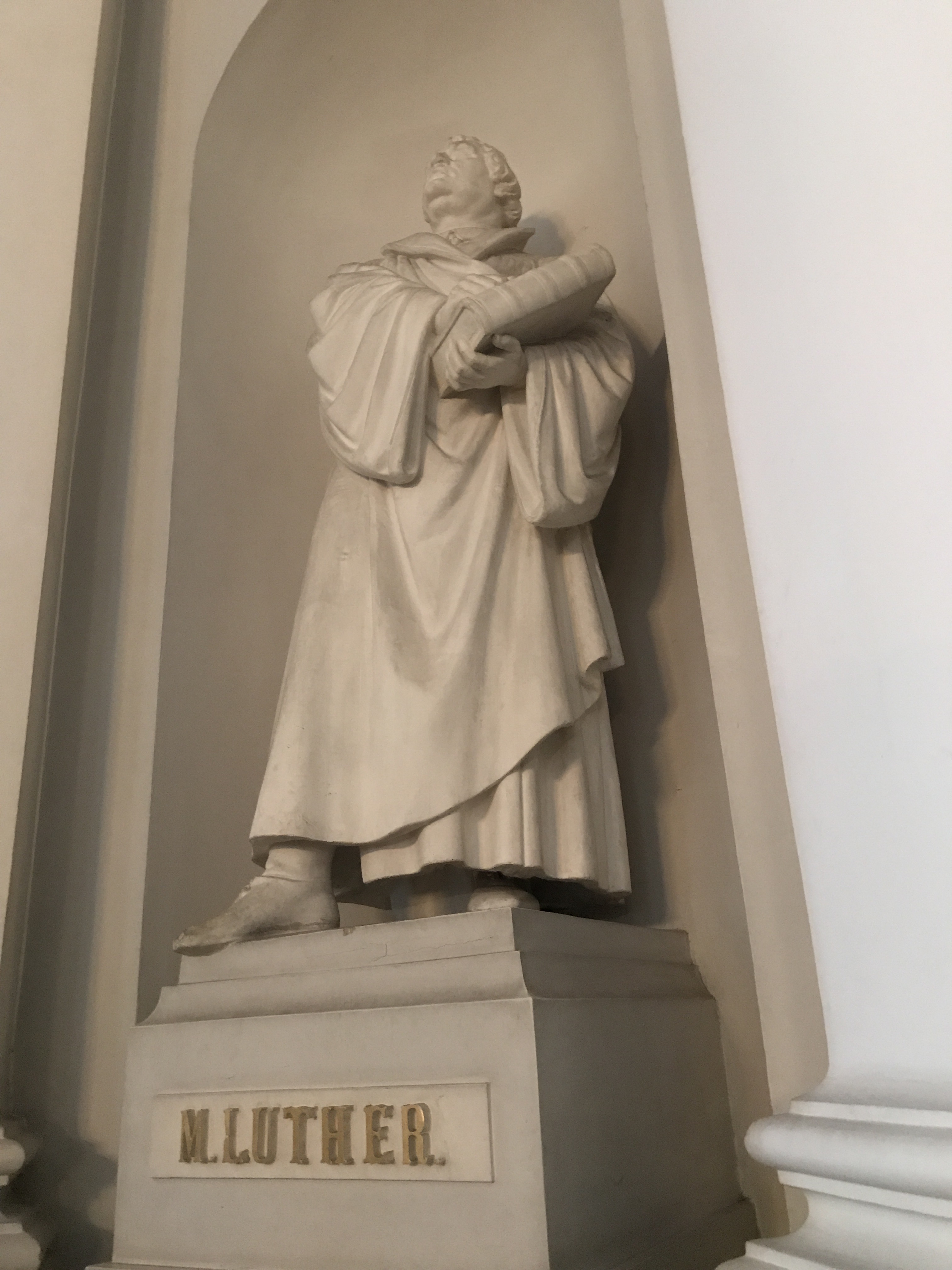
The Lutheran Helsinki Cathedral is impressive in its grand spaces, but very austere. Aside from Martin Luther gazing skyward, there’s not much to look at. And (at least on an admittedly quick stop) I didn’t see a children’s corner with little chairs, or posters about bake sales, or ladies dusting things, or a single clergy person.


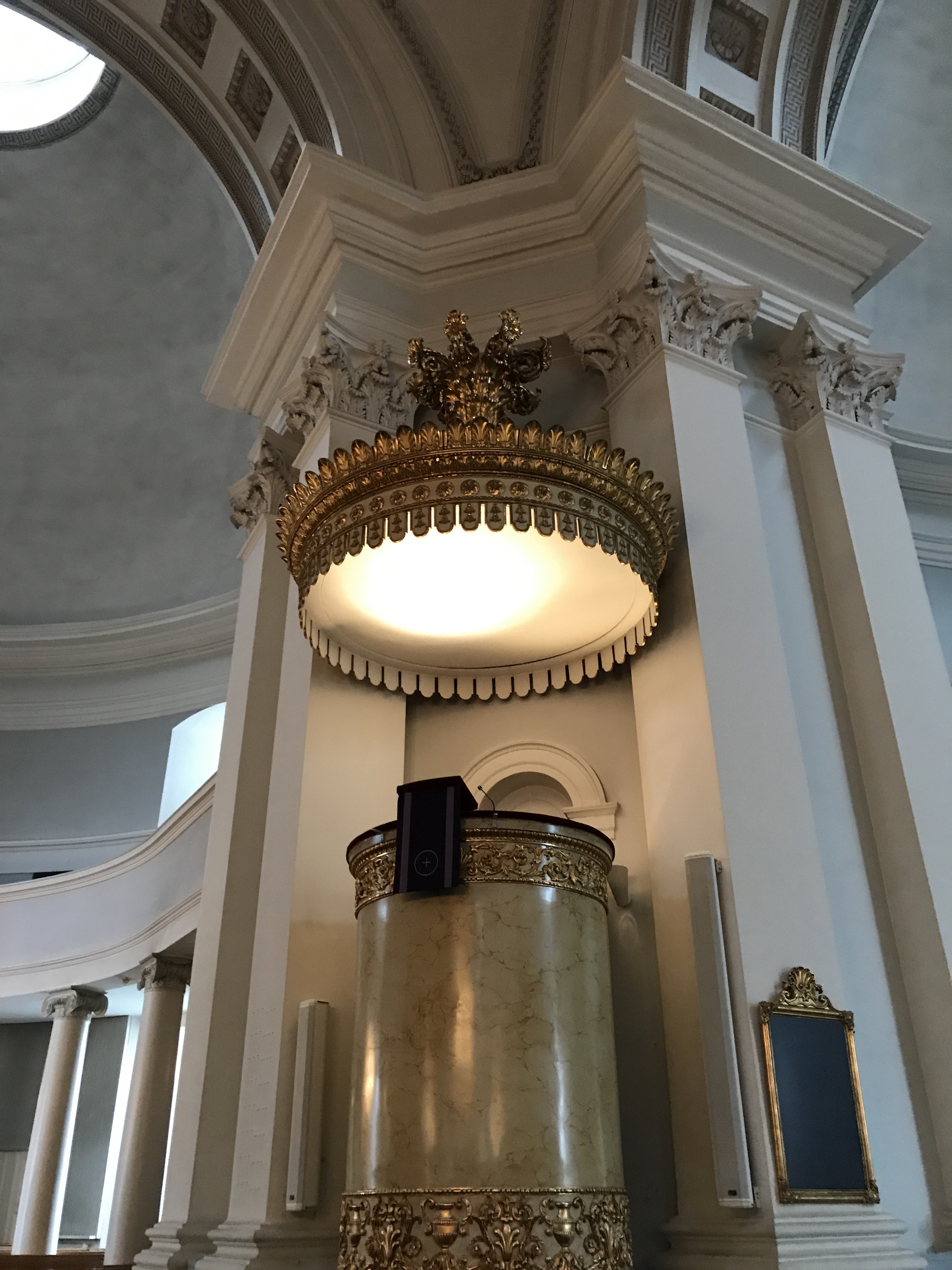
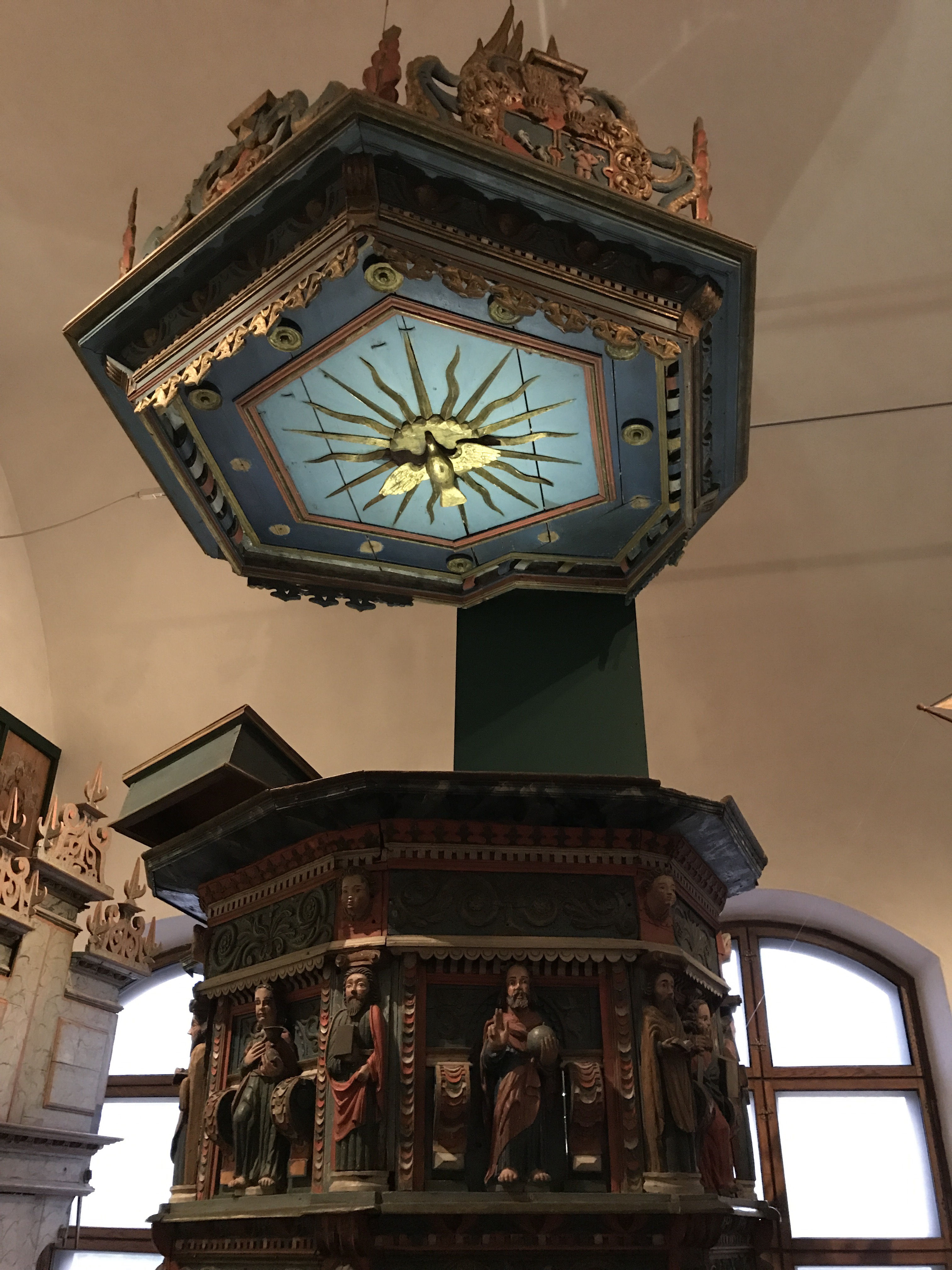
The National Museum of Finland was a much more church-like experience. This pulpit is from the church in Parainen, Finland, dated 1650. At the time, Finland was a frontier to the west of Sweden–and very handy as a buffer between Sweden and Russia. Newly built churches were required to have pulpits. Lutheranism was the state religion of Sweden, and everybody was expected to sit still for it or else.


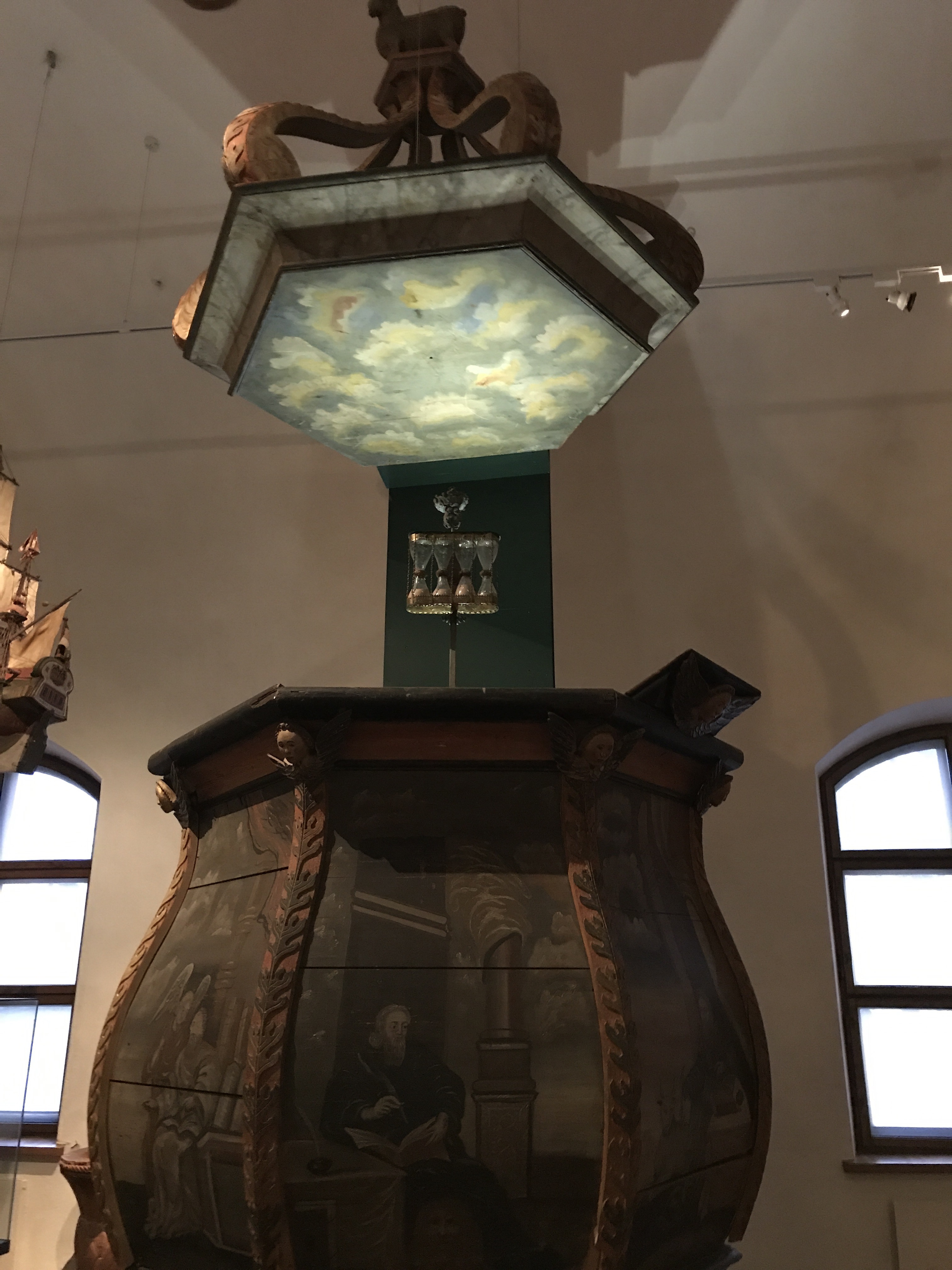
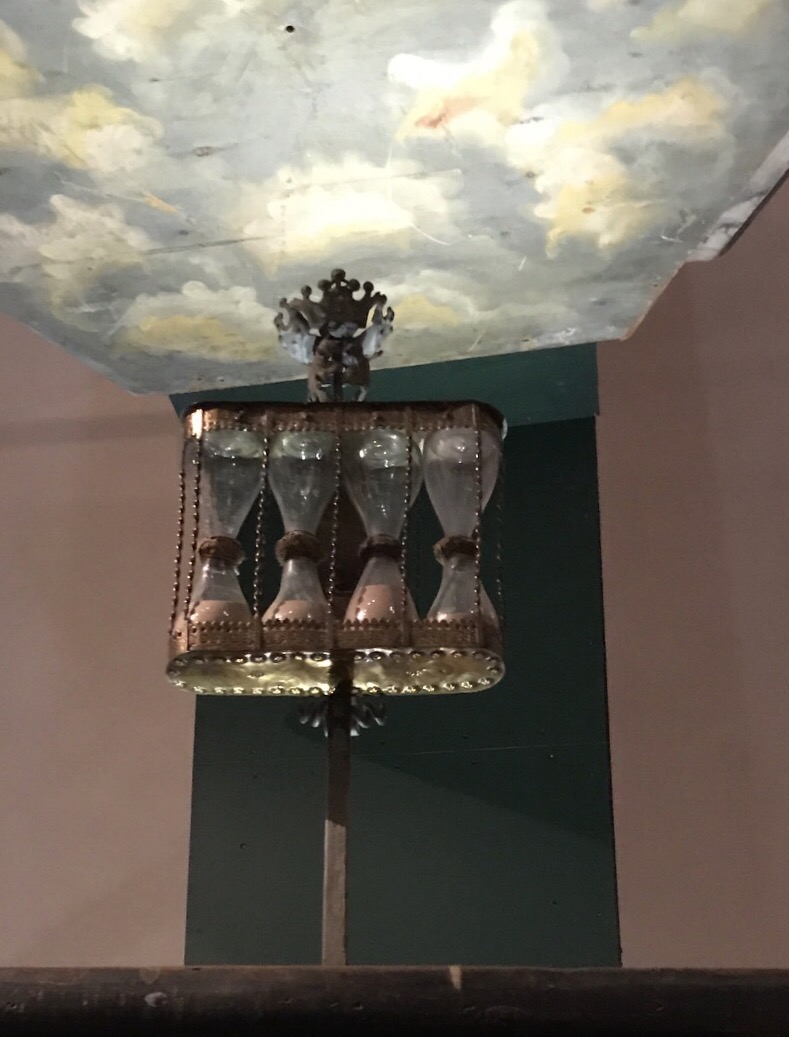
This pulpit is from the Kalvia Church, around 1726.  I like the cloudy heavens painted on its ceiling just above the preacher’s head.


Wait, there are hourglasses? Four of them? How long is this sermon going to be, anyway? Better not ask.


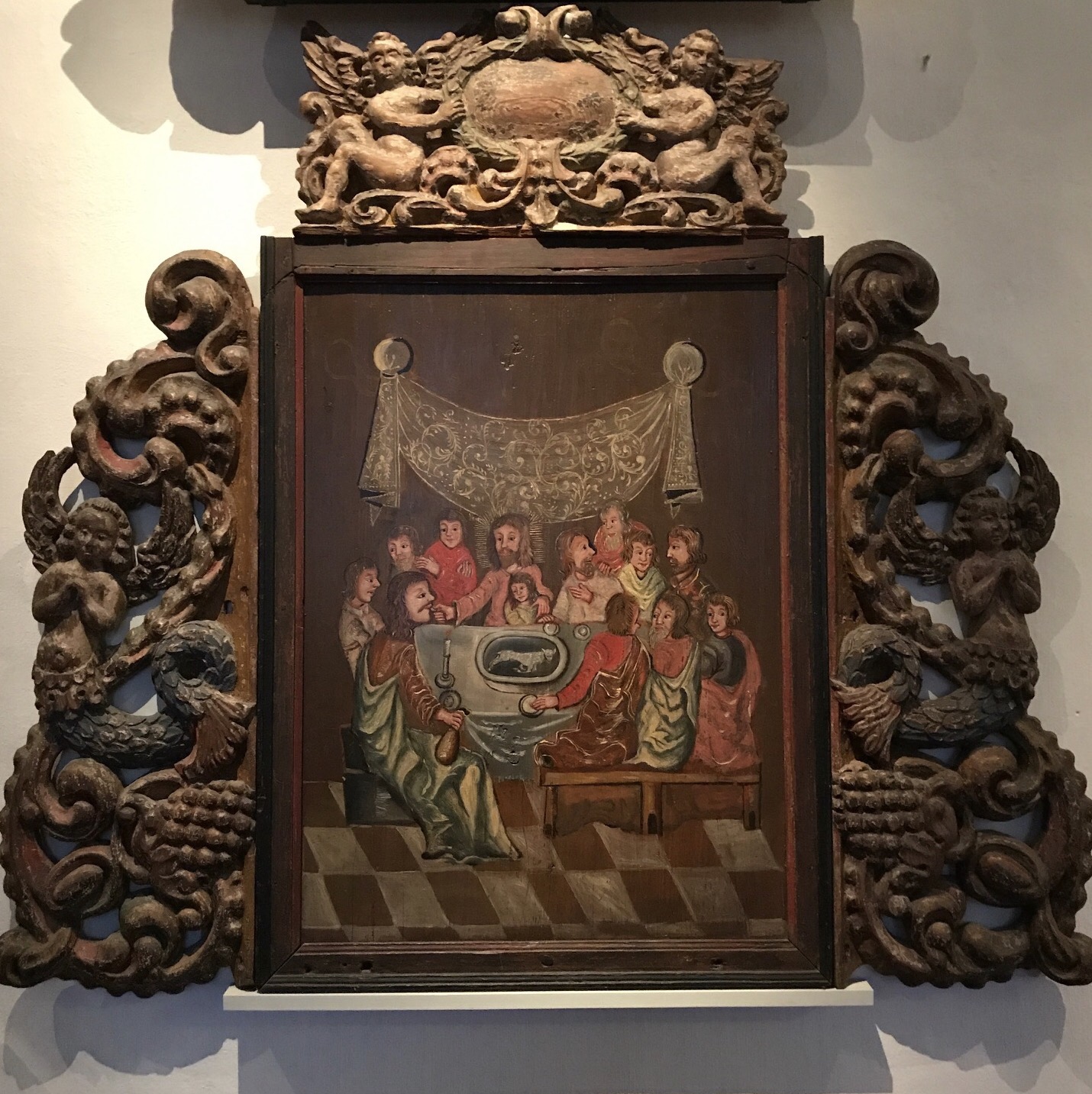
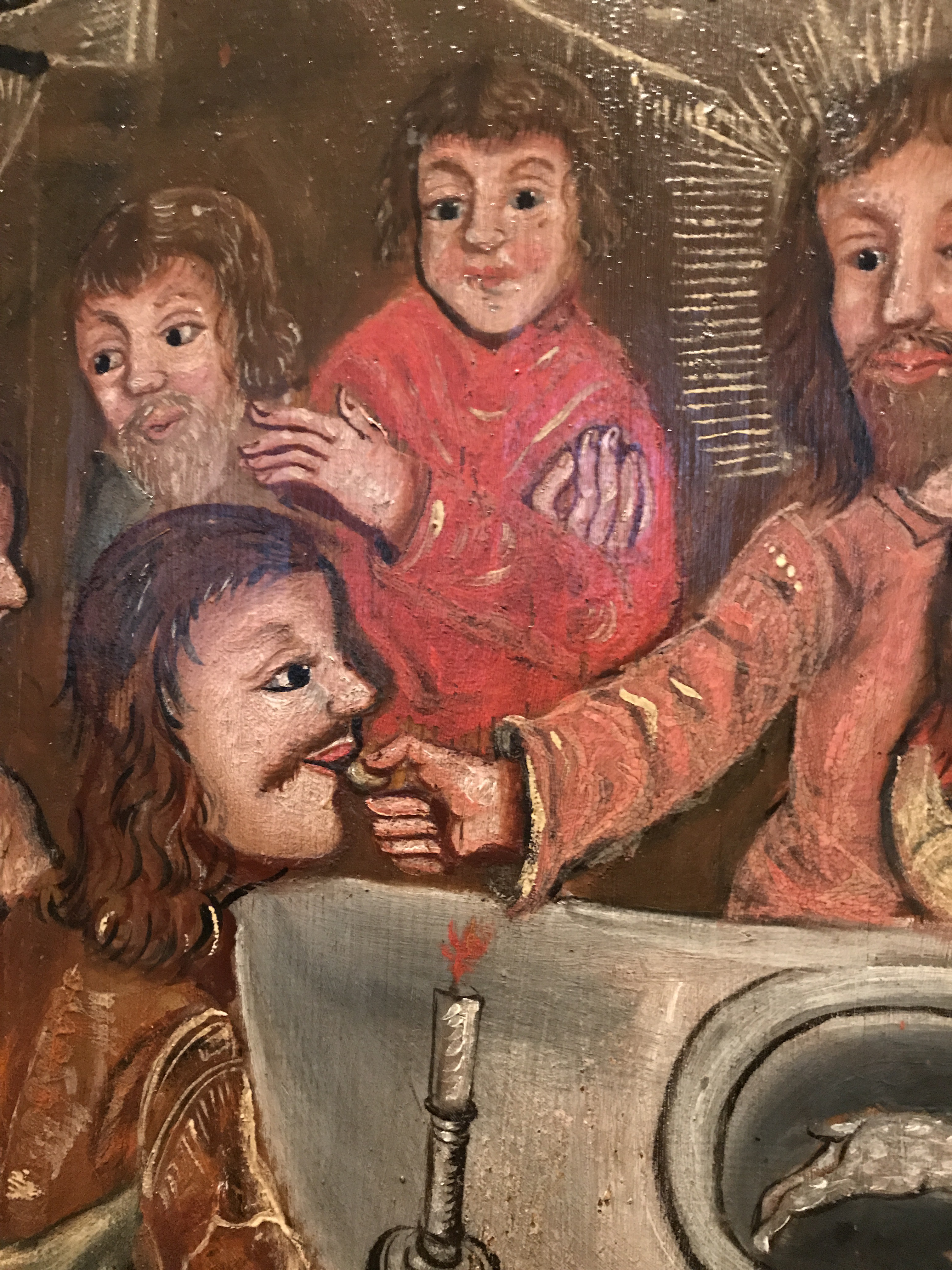
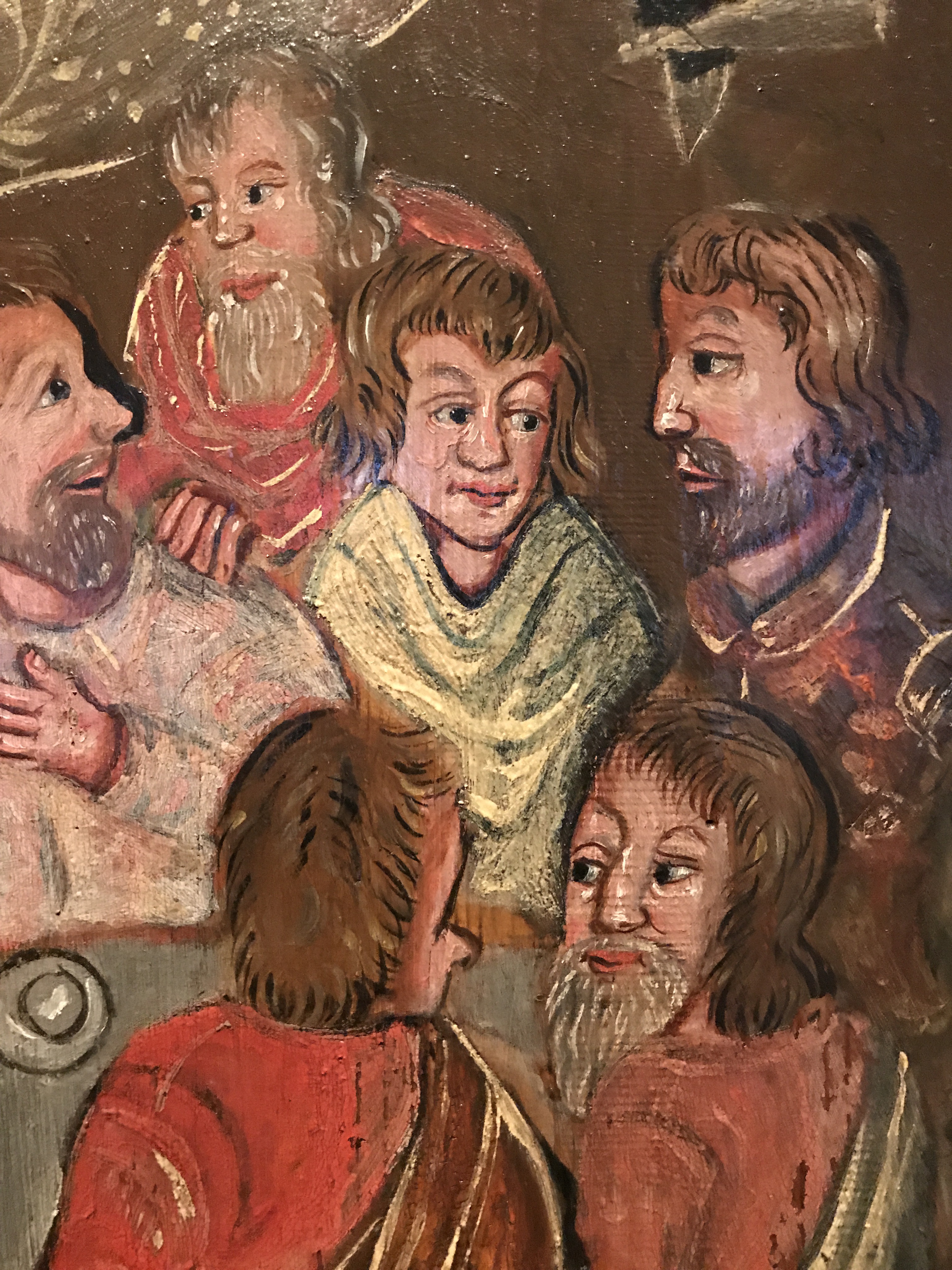
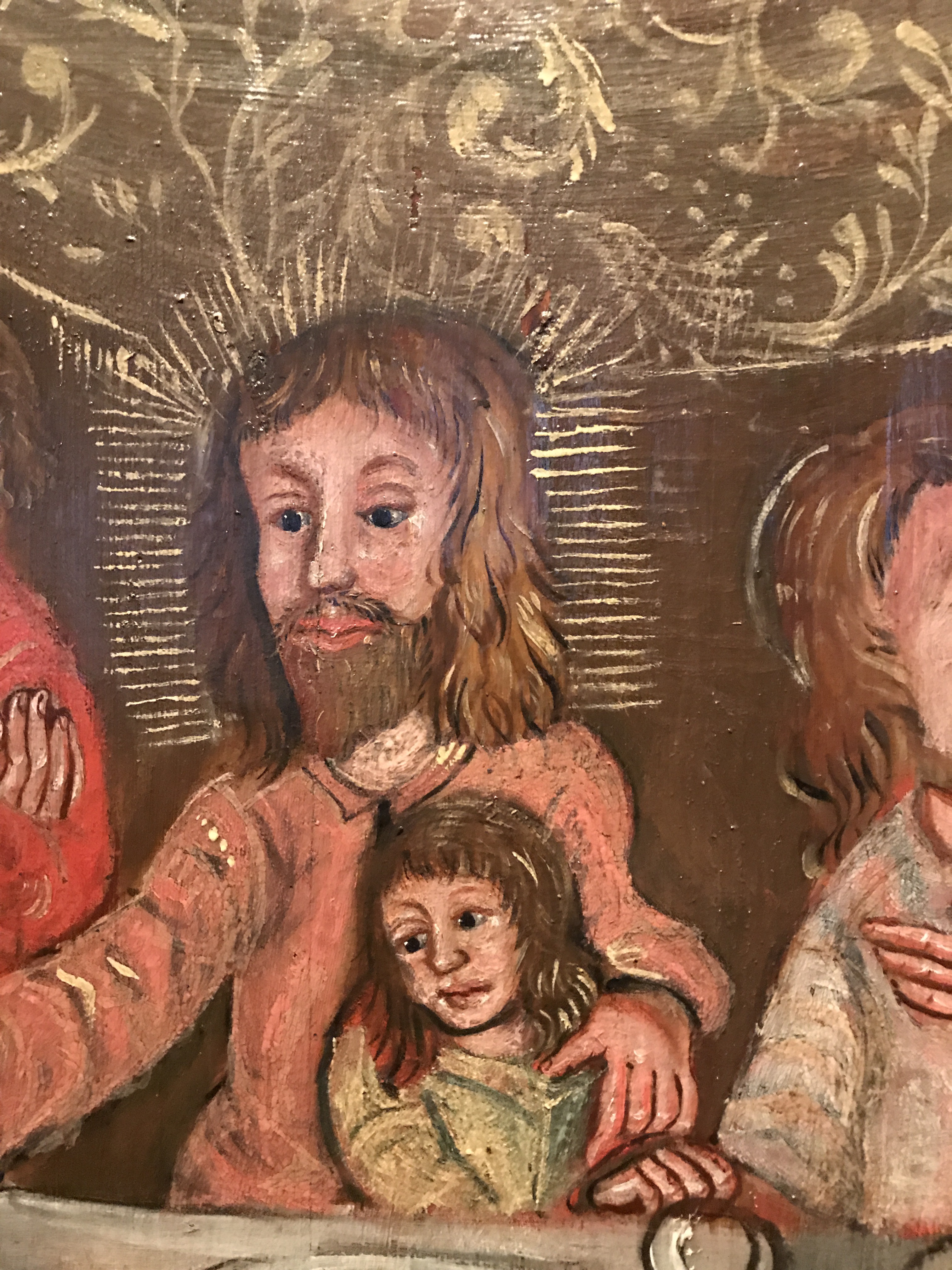
My favorite item was an altarpiece depicting the Last Supper. It’s from the Ylane Church, dated around 1675.


The faces are friendly and everyone is having a nice time together. There seem to be only 11 apostles. Apparently Judas has already left the building.


Jesus (with spiky sun-ray halo) seems to be holding a child in his lap. So the story is maybe doing double duty here: “Let the little children come unto me.”

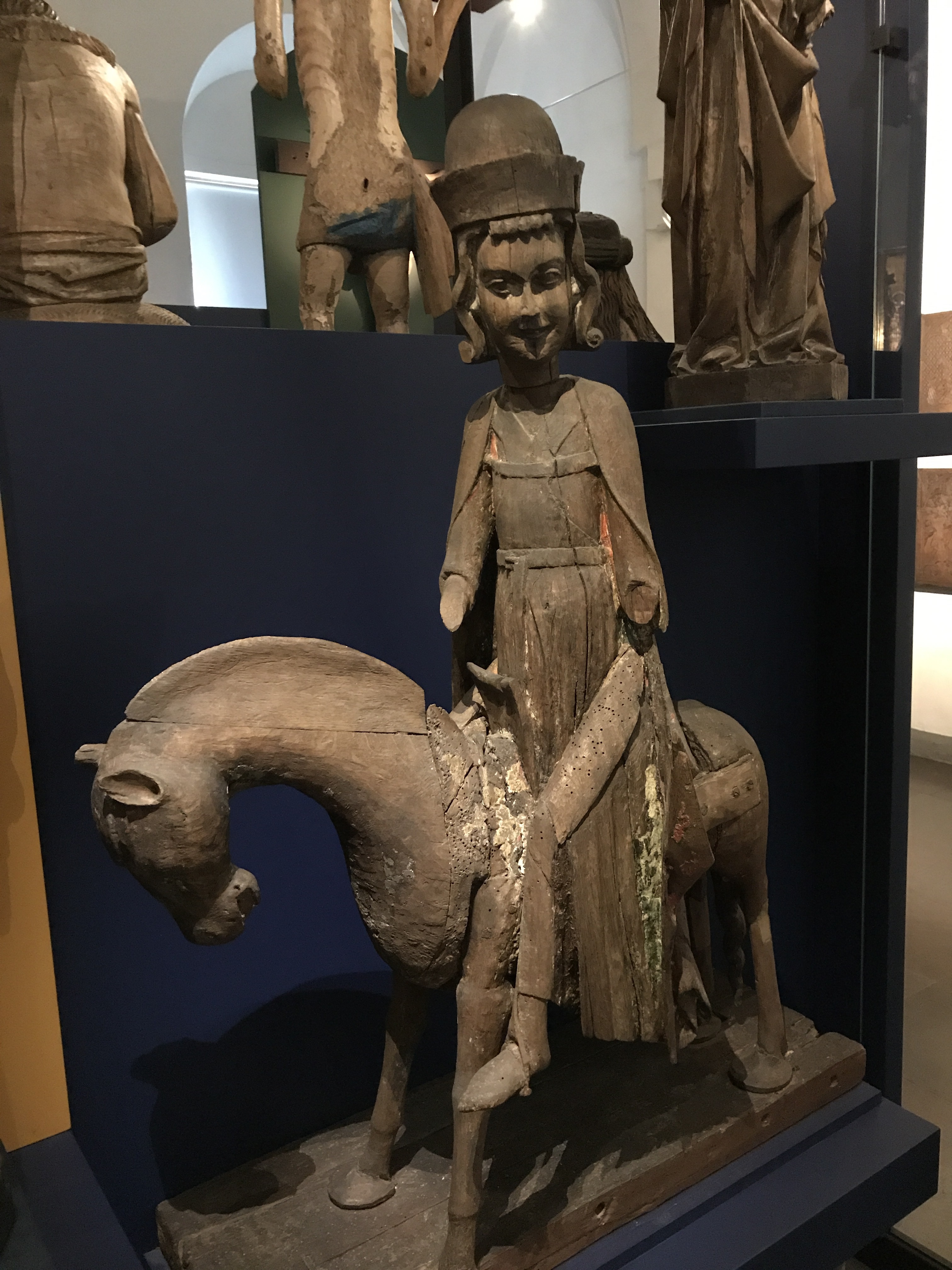
The museum also had wonderful religious wood carvings dating back as far as the 1200s. I liked St. Martin on his horse, about to share his warm cloak with a beggar. He was carved and assembled from several pieces of wood around 1320.


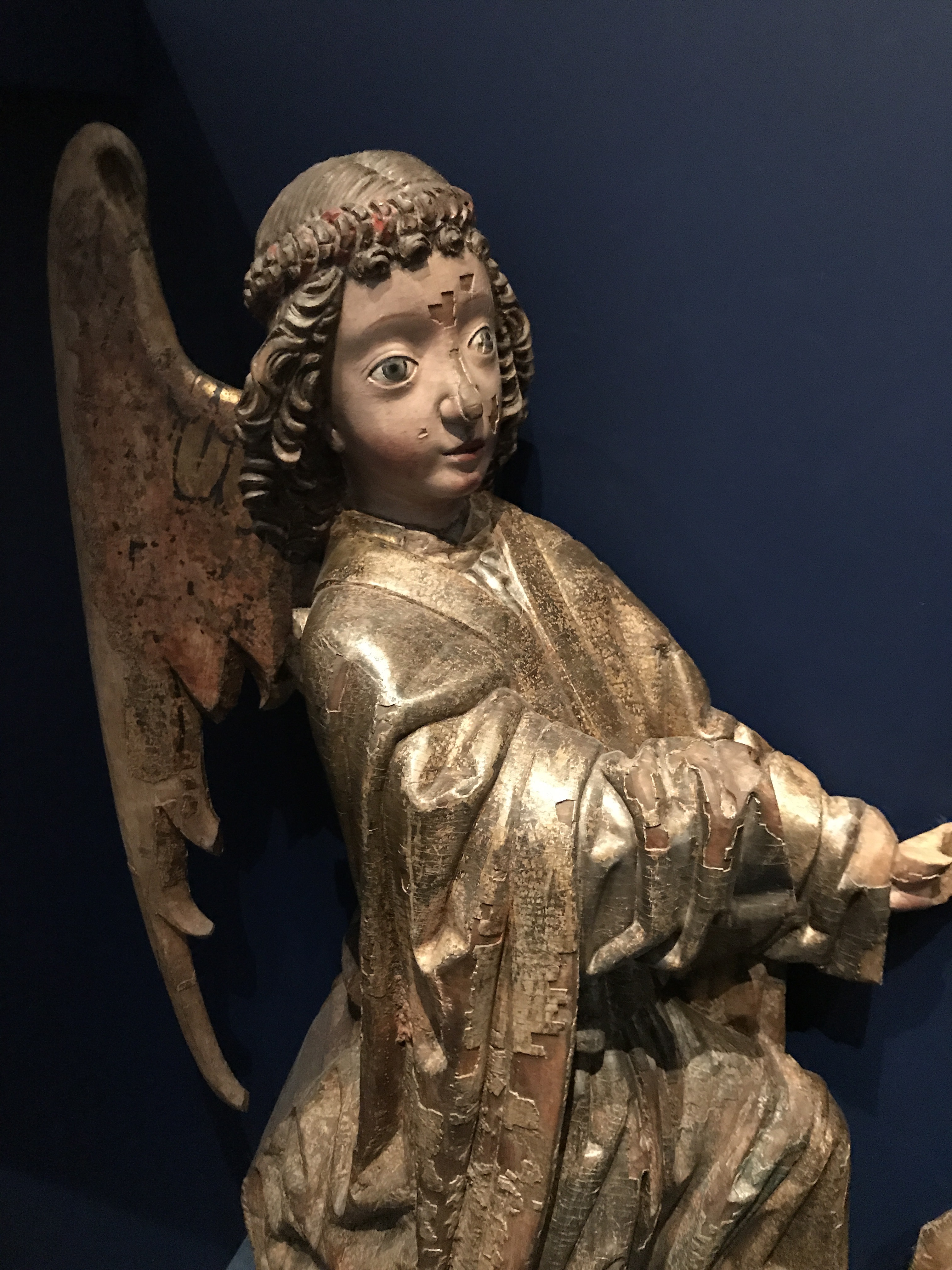
I gazed for awhile at the Archangel Gabriel, carved and gilded around 1500.


Then I was back on the friendly but chilly streets of Helsinki, wishing I had a striped snowsuit and a red polka-dotted hat with flower ears.

Jugendstil in Helsinki


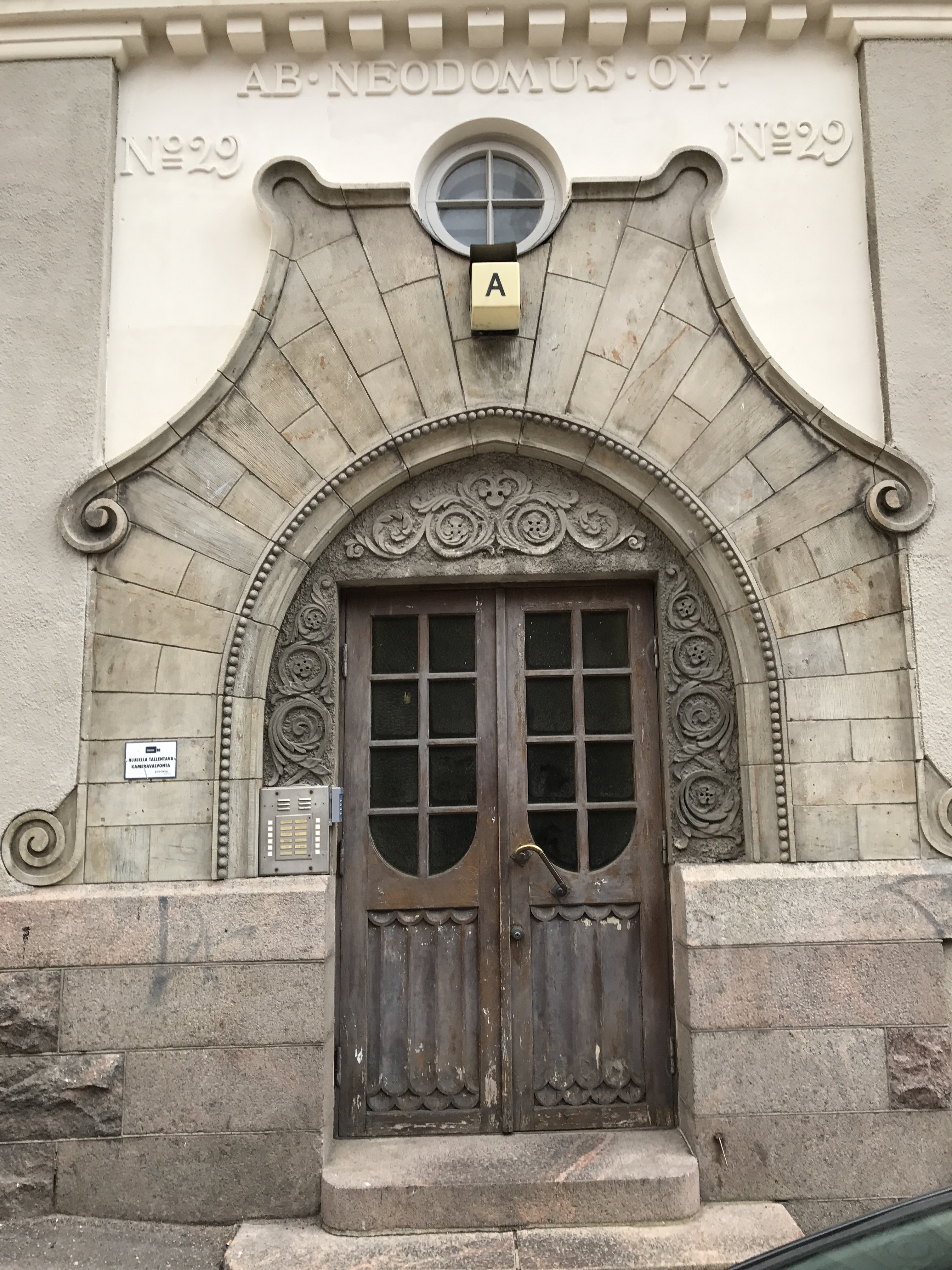
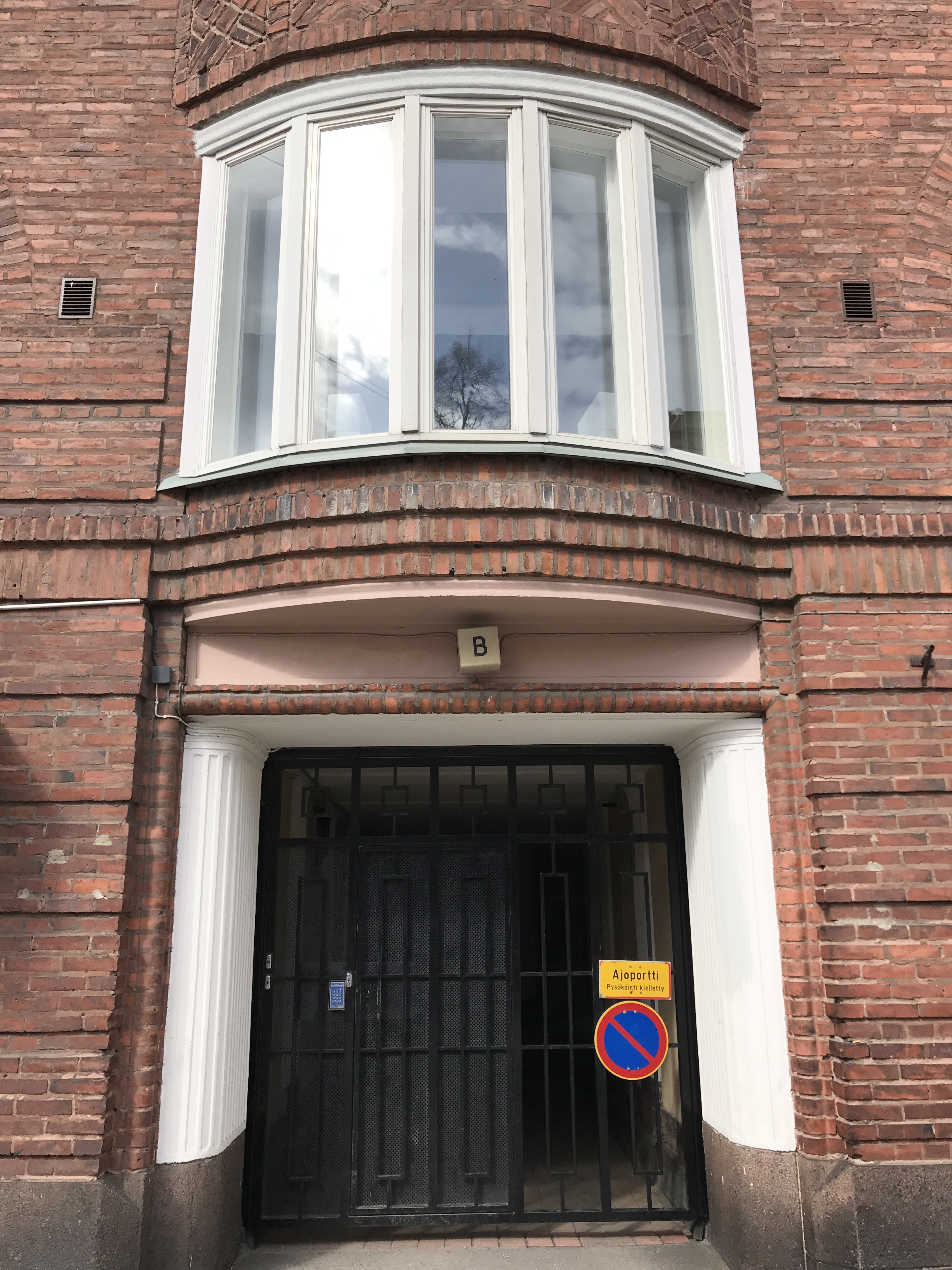
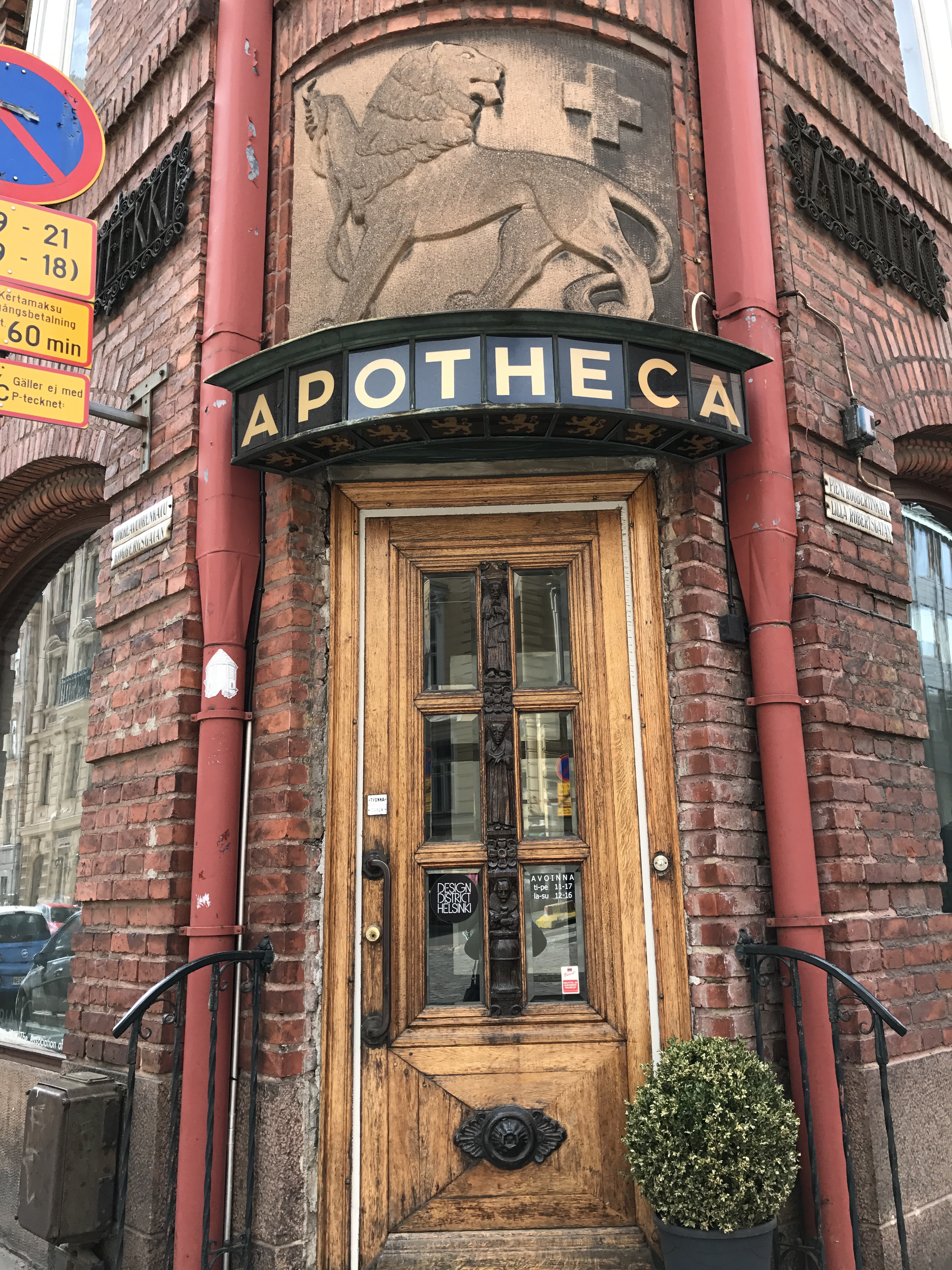
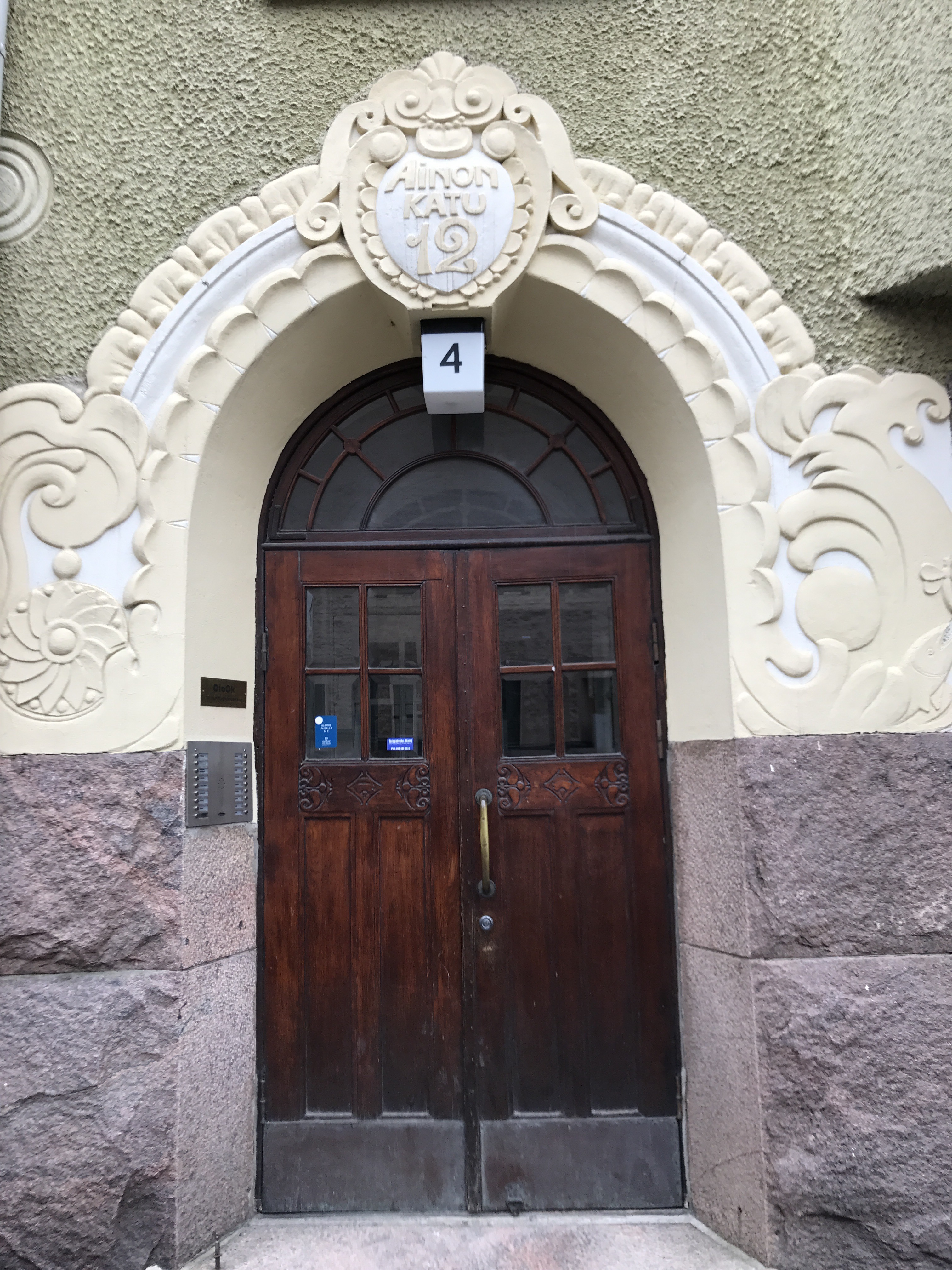
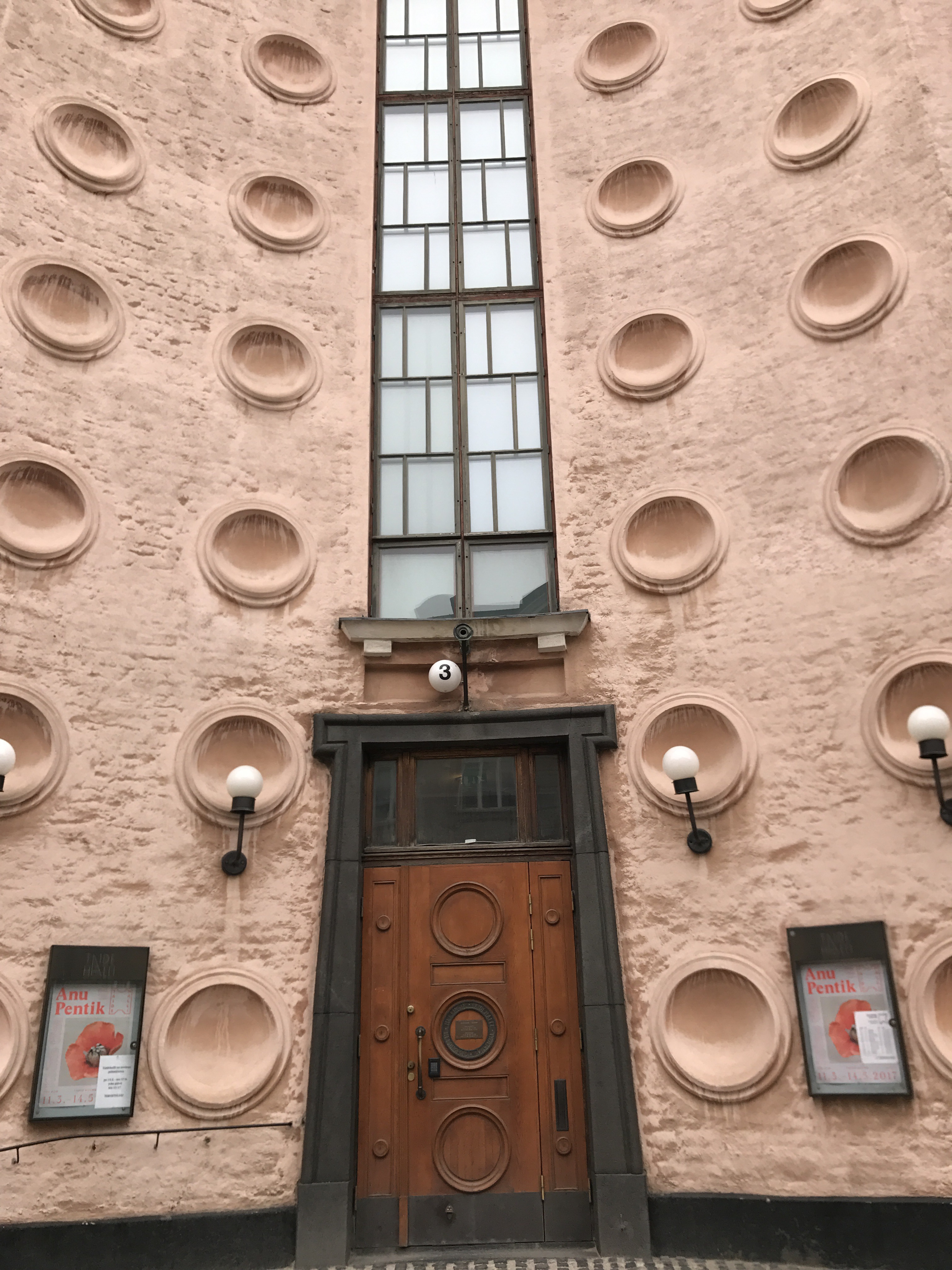
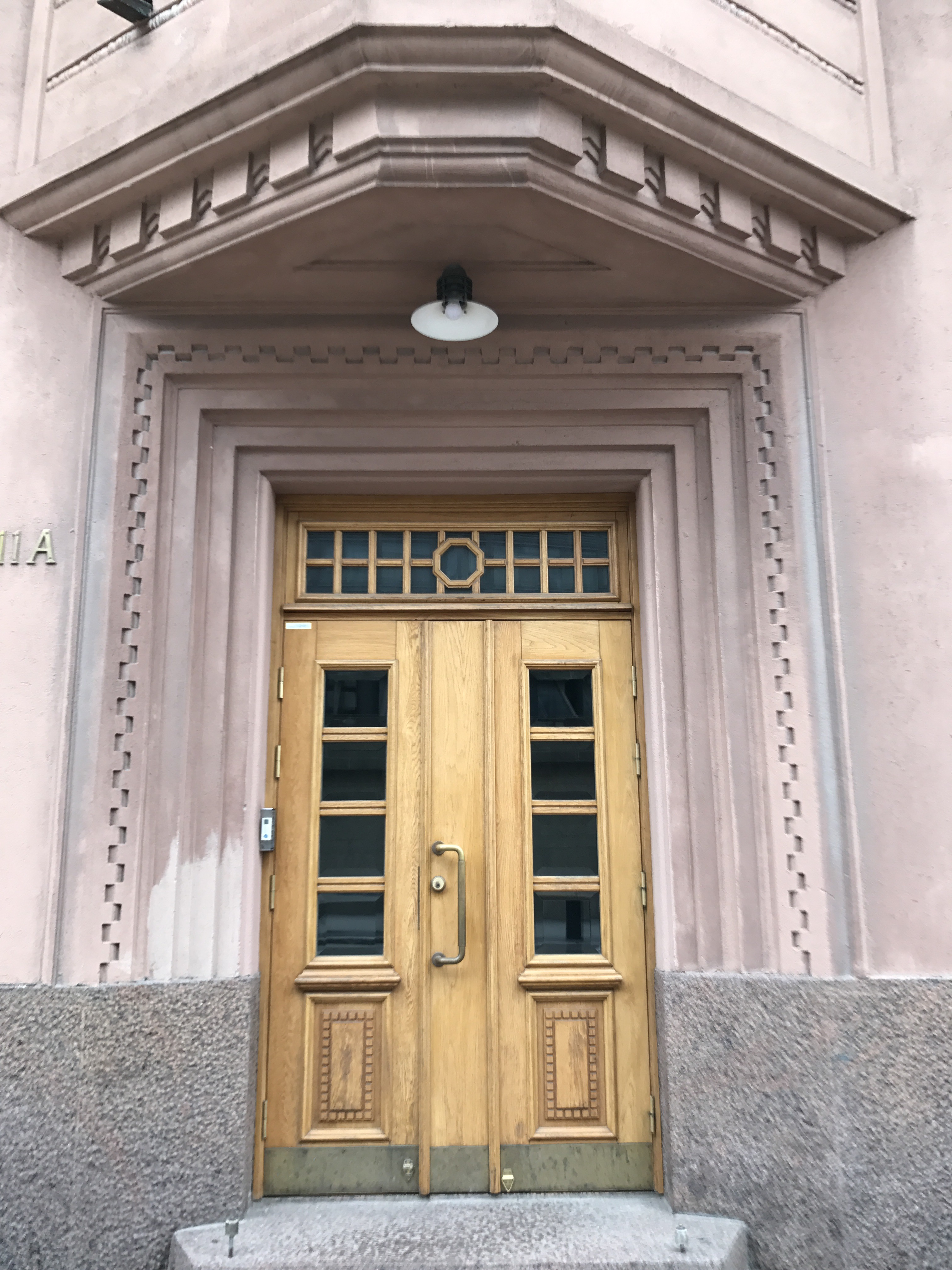
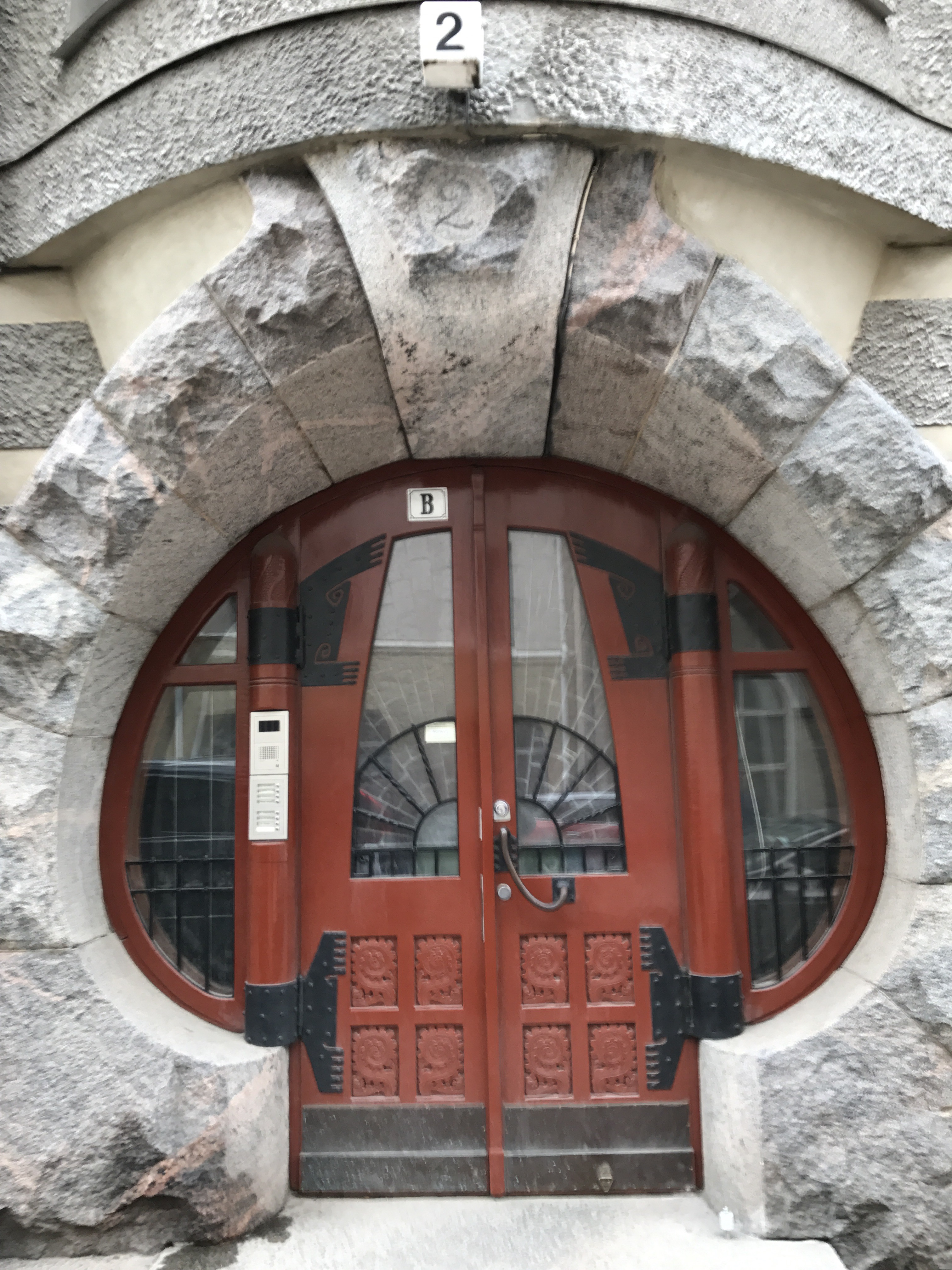
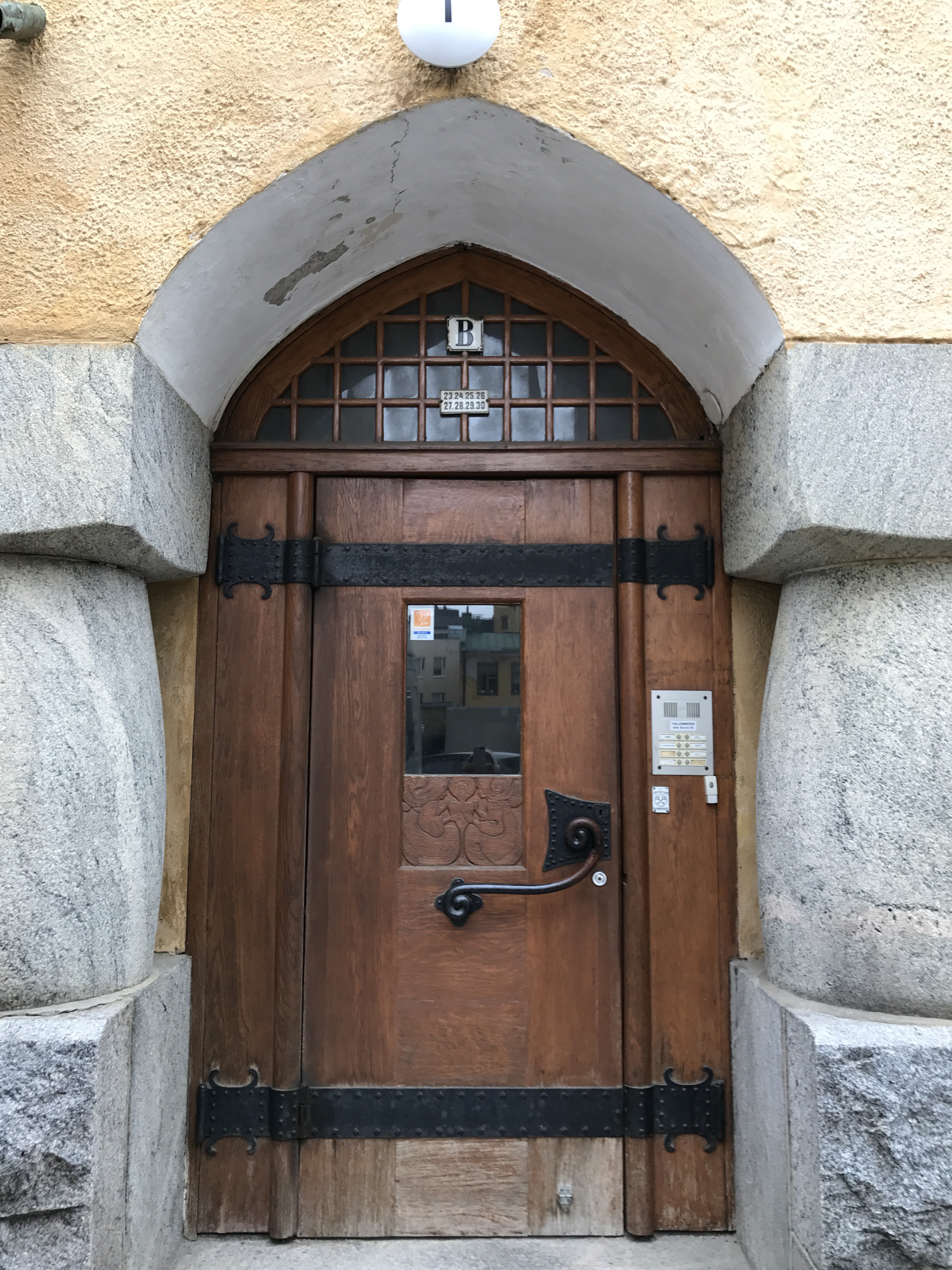
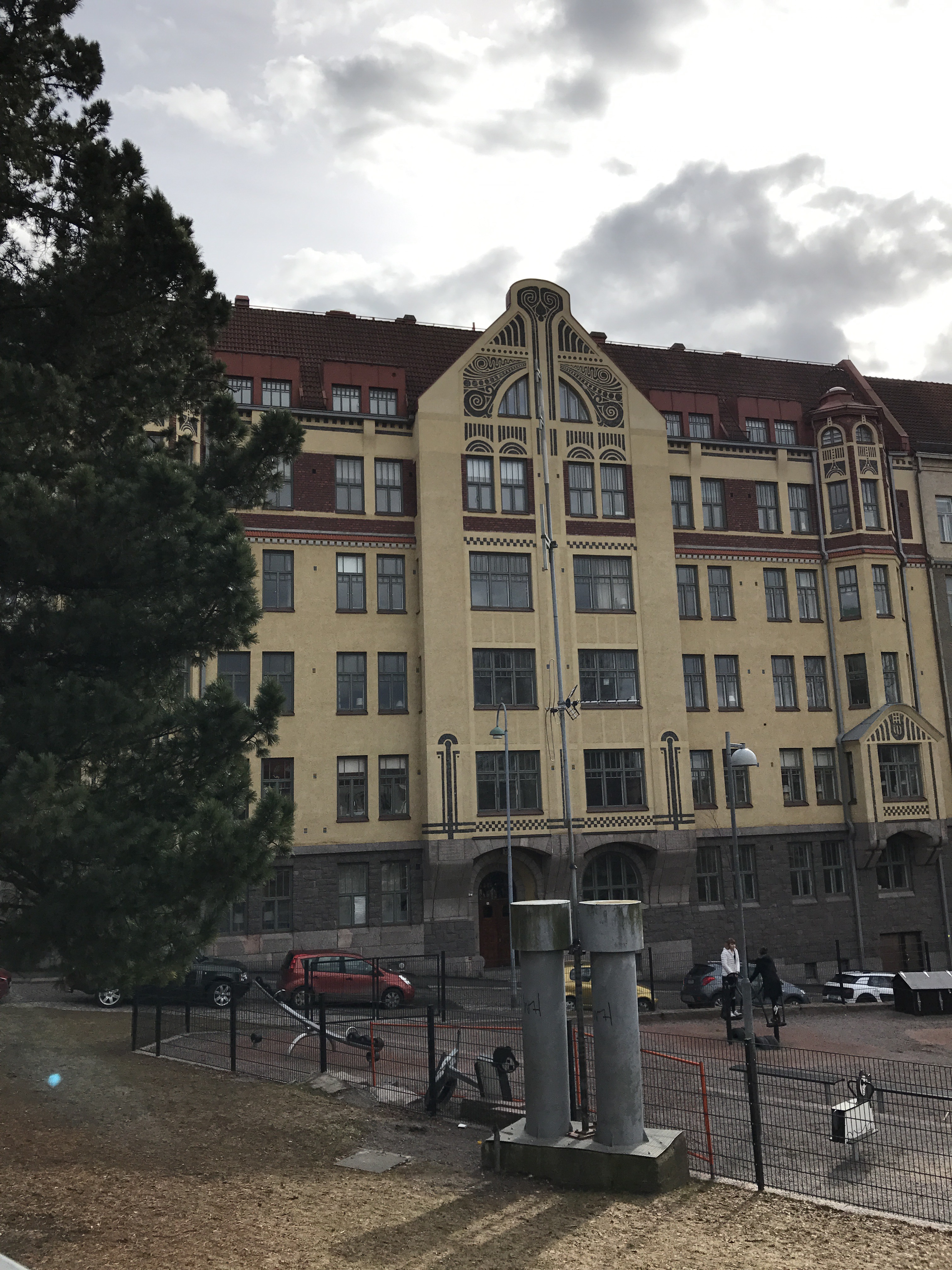
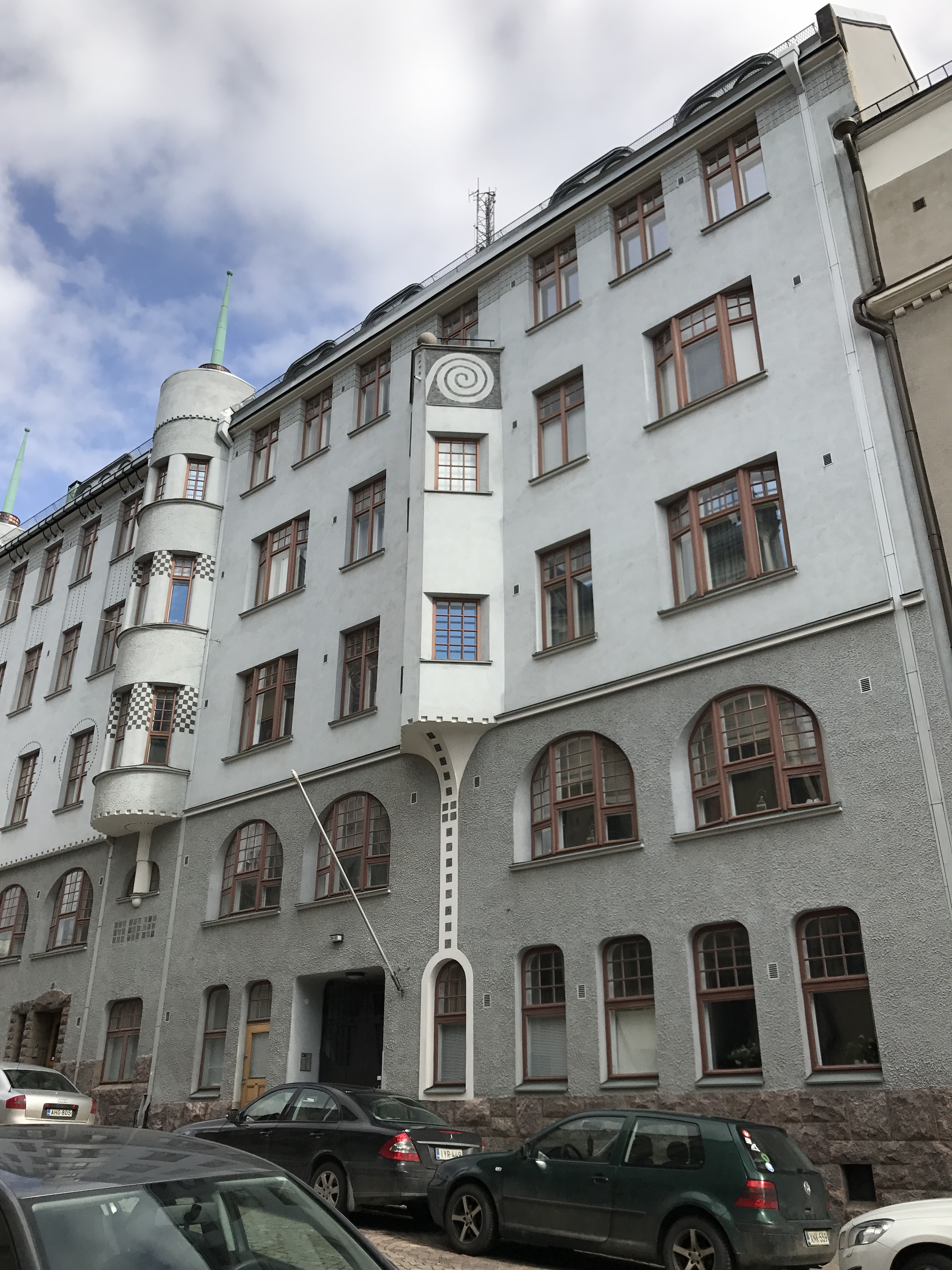
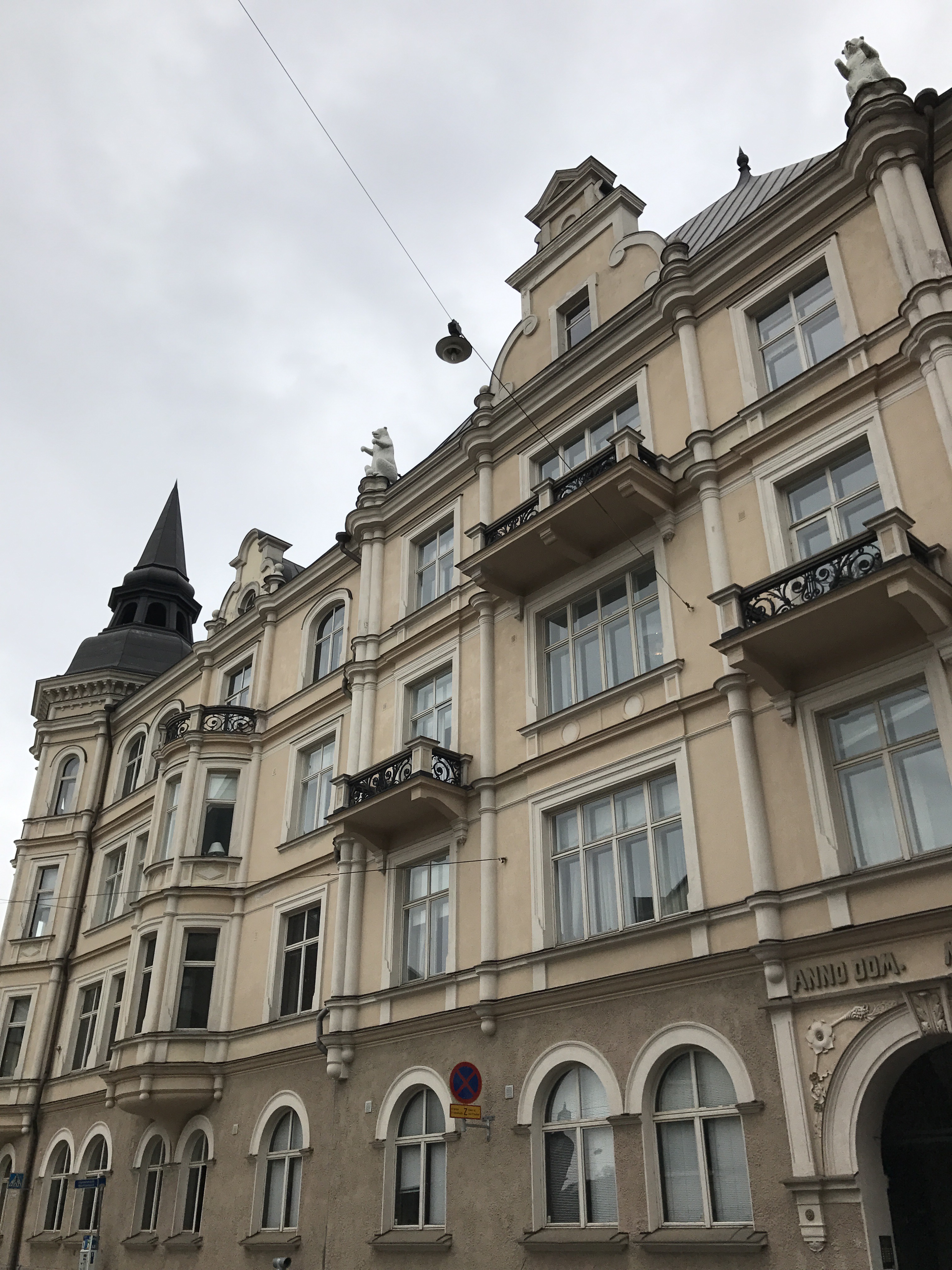
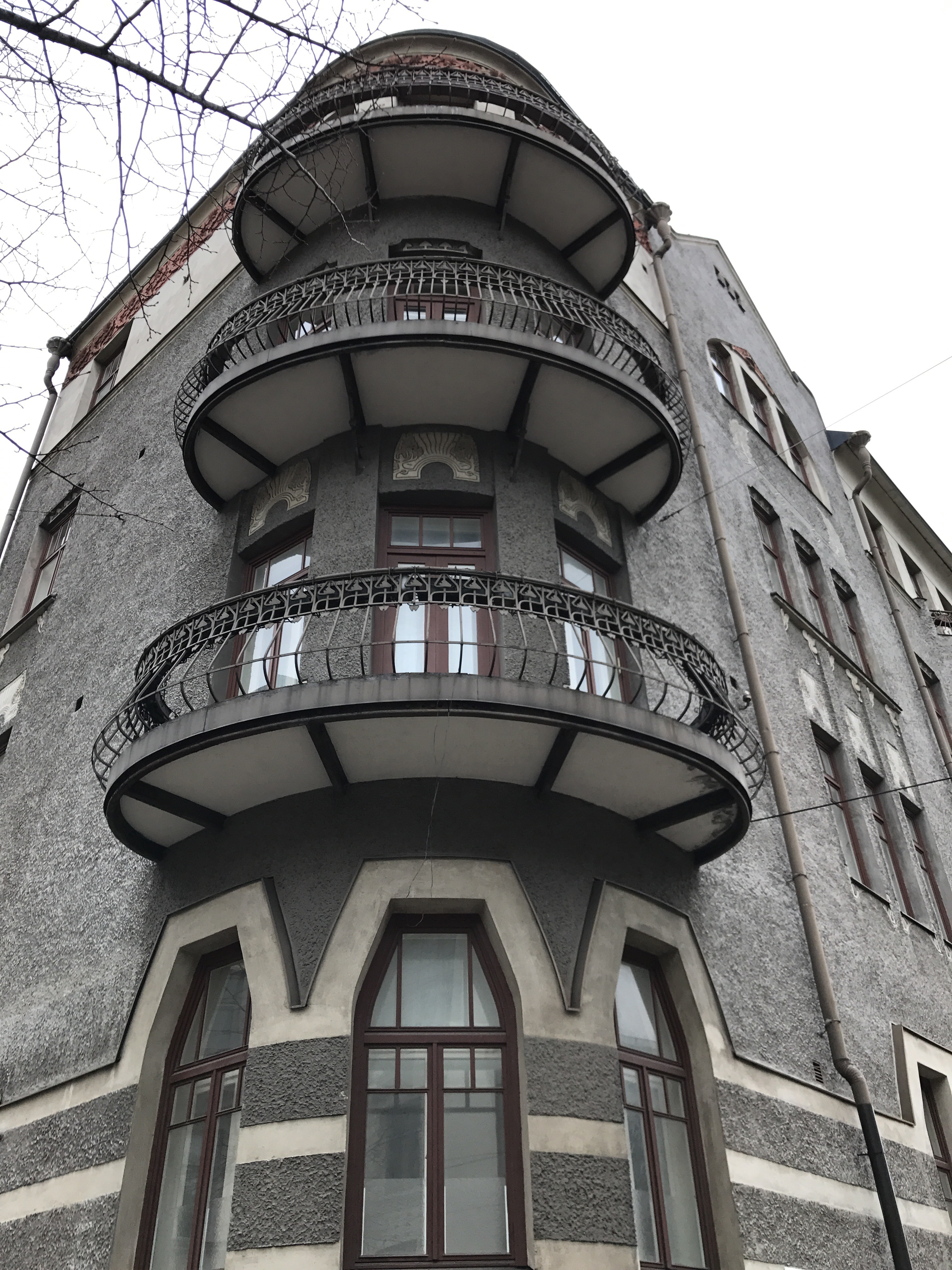
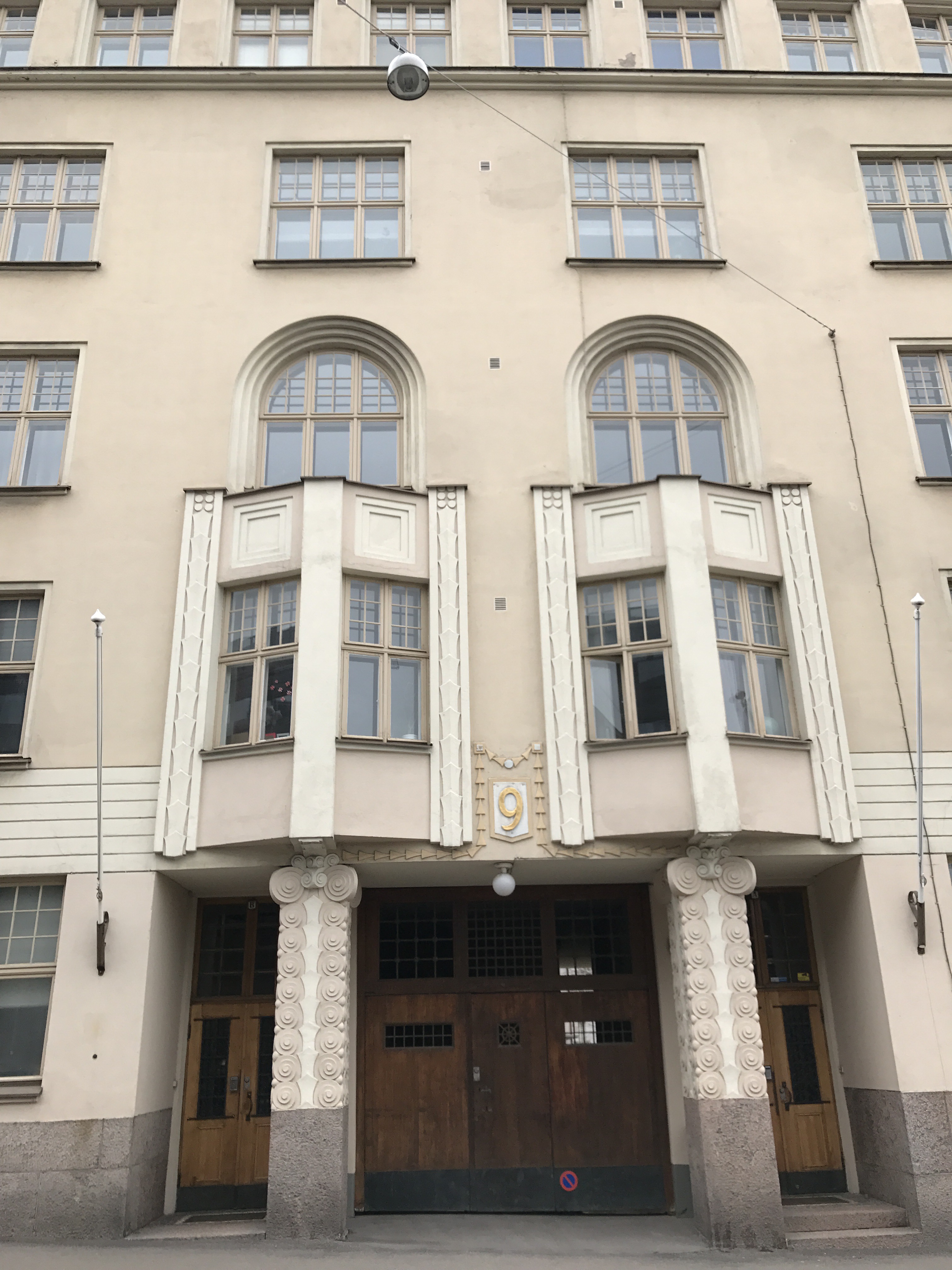
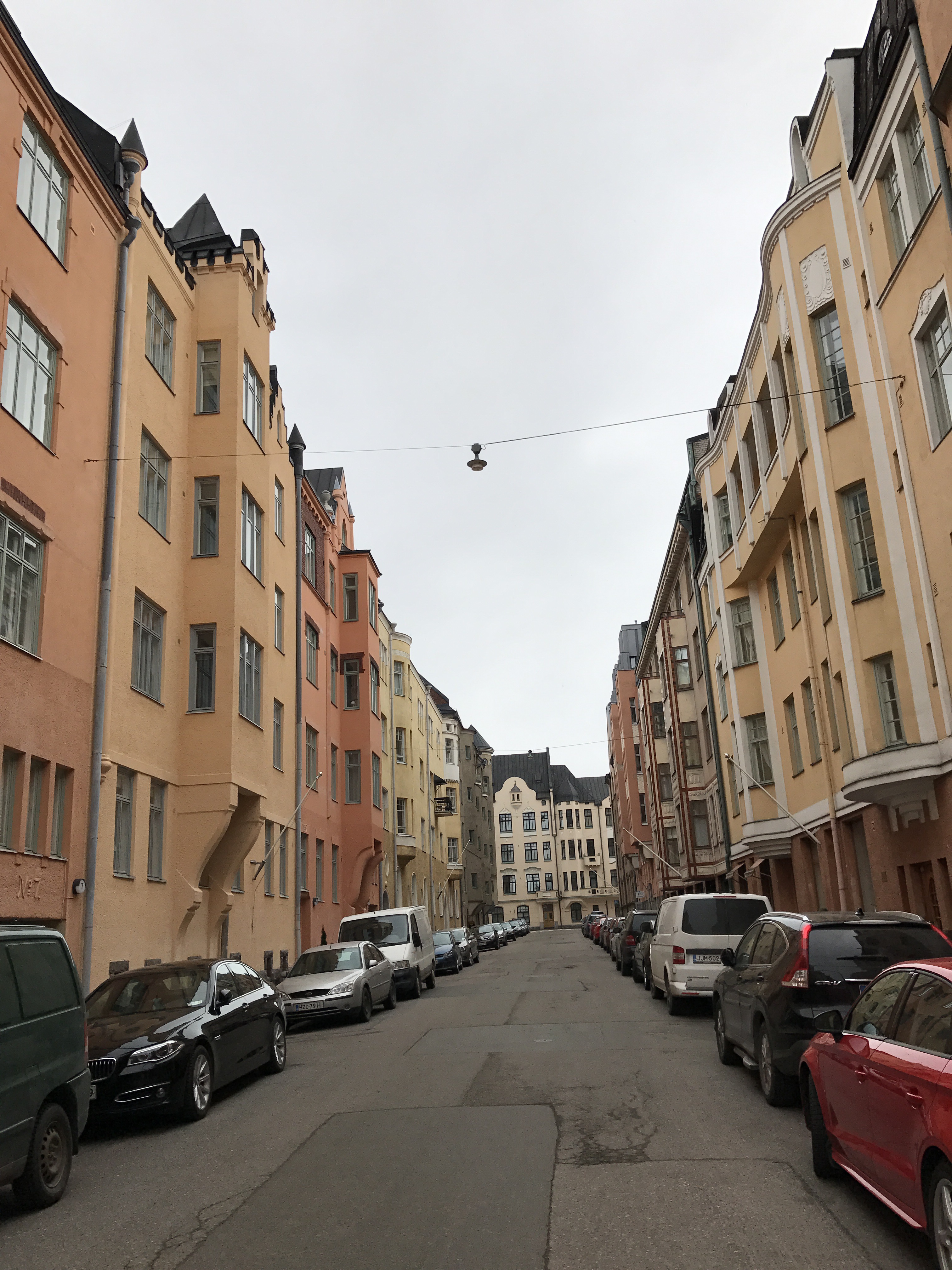
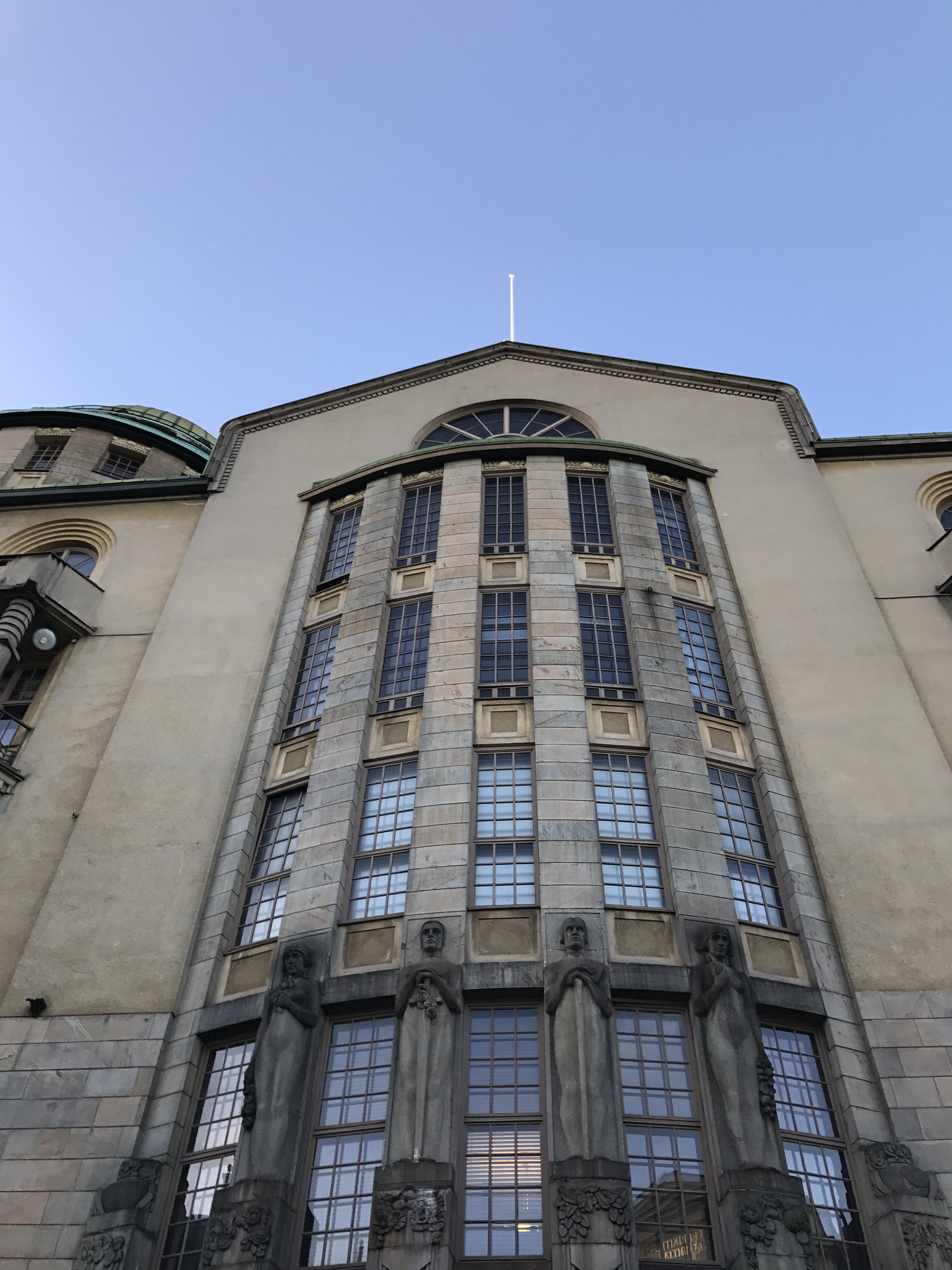
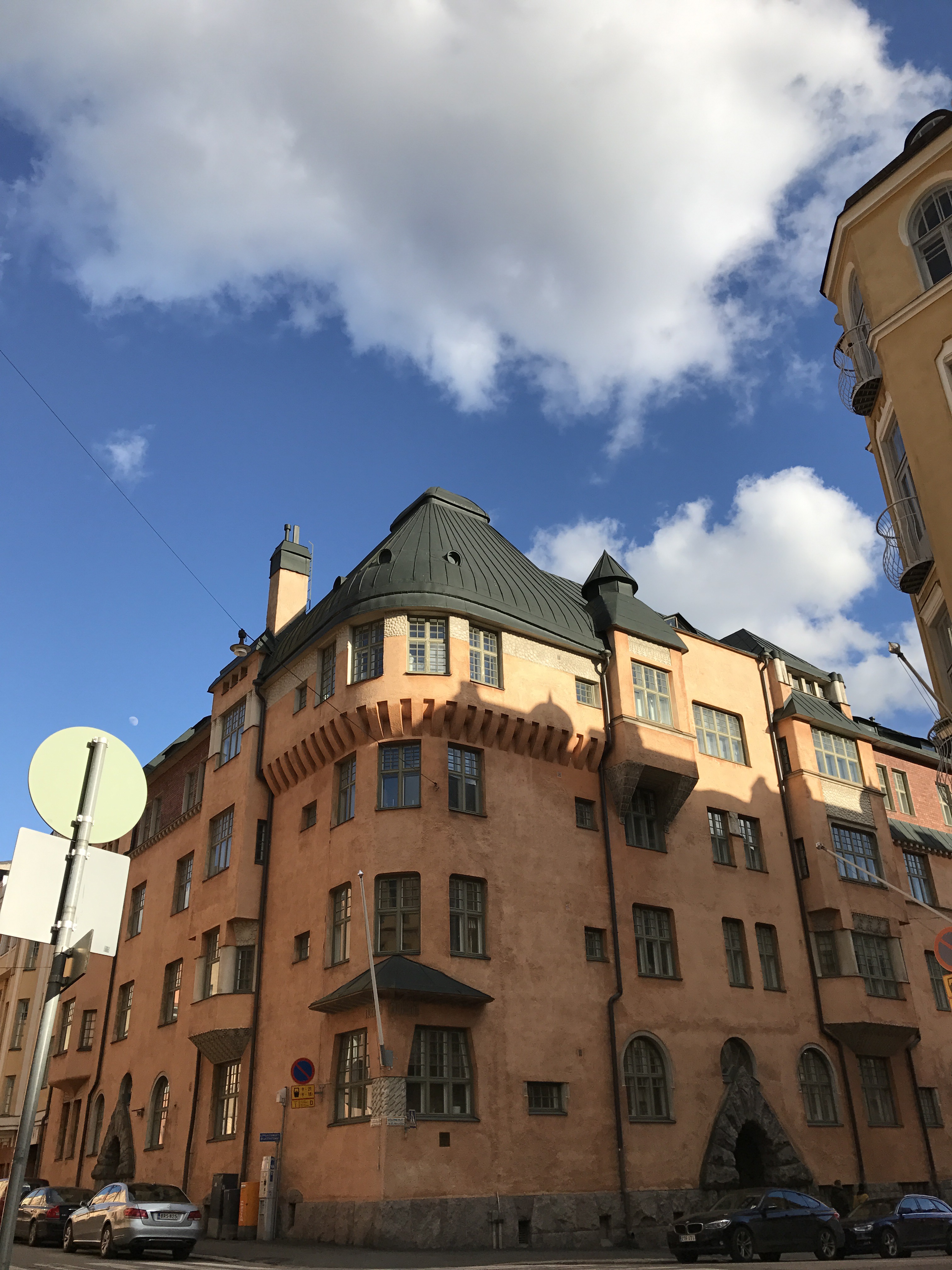
The island of Katajanokka, just outside the center of Helsinki, might have more Jugendstil buildings per square mile than anyplace else on earth.


It seems that in the early 1900s, when industrialization was drawing rural Finns into Helsinki, there must have been a building boom.


Builders must have raced to create castles for the common people: fanciful and beautiful apartment buildings with turrets, towers, interesting windows, and beautiful decorative elements.


We stayed in one of them, and I’d have cheerfully stayed longer. I could see myself living in beautiful, friendly Helsinki. The city is known for its style. Now I see why!

My Favorite Nativity Scene, with Angels on the Buddy System

ad811dcd-ec3e-4cb8-b89b-27f368bc4ede

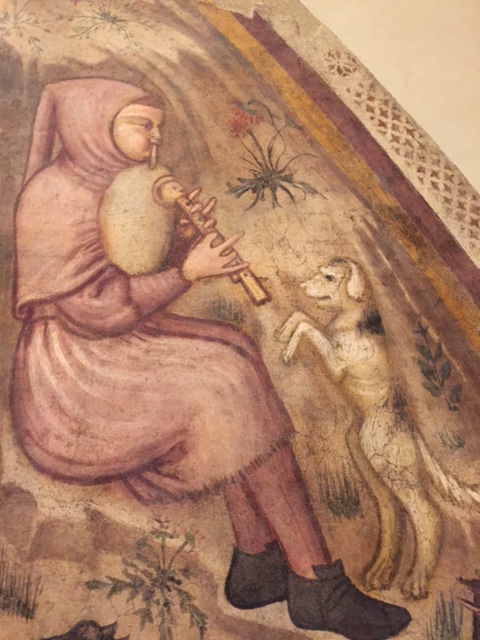
My all-time favorite image for Christmas was painted into a fresco by an unknown artist around 1370 in the Umbria area of Italy. It depicts a shepherd playing a sort of bagpipe. His smiling dog dances in delight.  This is part of fresco fragments from the long-gone monastery of Santa Giuliana in Perugia. The fragments, covering about 20 feet in width and maybe 12 feet in height, are now in the Galleria Nazionale of Umbria.  I’d travel back there just to gaze at them again.  I wrote about this fresco last Christmas, and took another look this year.

a518ccd3-7ee5-4d26-8488-190a3042b664

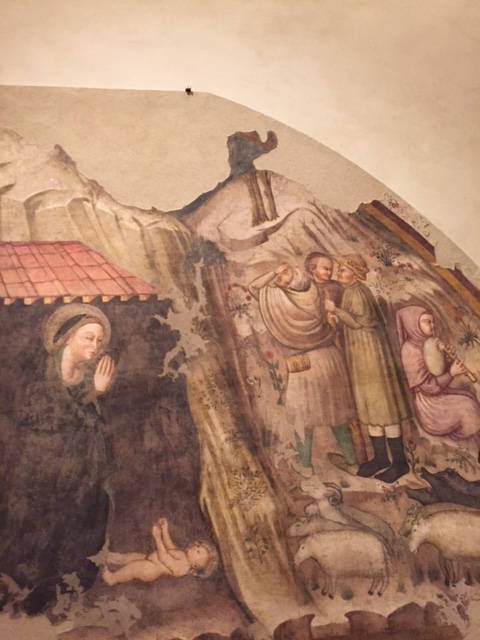
My favorite shepherd and his dog are really just side figures in a more conventional Nativity fresco. The entire fresco is too large to photograph in one shot, and my photography skills are pretty much limited to what I can capture on my trusty iPhone. So the view above shows the shepherd and his bagpipe, but not his joyful dog.

170e1051-c7b9-4c93-a8e5-cd6a99f7aa27

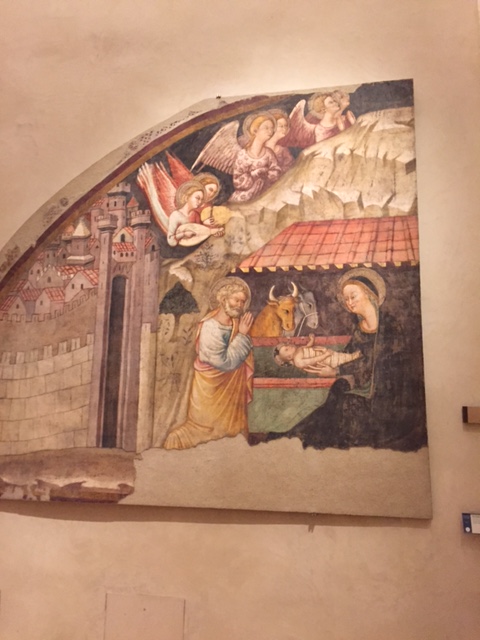
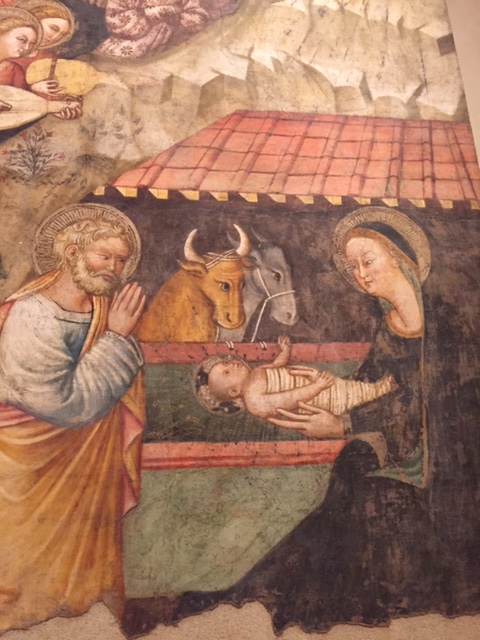
The other side of the fresco, which once covered a wall, shows the traditional Nativity scene with the stable, the town of Bethlehem, musical angels neatly arranged in pairs, some friendly cattle, and Mary and Joseph with their child duly wrapped in strips of cloth–the Biblical swaddling clothes.

049011ac-b565-4fa5-987f-8e91f3092eb5

The details are charming, the faces friendly and serene.

c6c708bd-2d57-4bdf-b900-a6dbae85e150

What I find most appealing is the artist’s careful concern for the ordinary people depicted. They are painted somehow larger than life, and in loving detail.  A friend of mine commented on the cozy-looking black socks worn by one of the shepherds on his way to the stable.  At least I think they are shepherds–or could they be the Three Kings? Whoever they are, their feet are REALLY big.  This fresco was placed high on a wall, under a vaulted ceiling.  The rules of perspective would have dictated that the feet should be smaller in proportion to the heads.  The artist chose to do the opposite. Maybe the artist didn’t exactly have perspective down pat.  Then again, maybe he (or she) just wanted to contrast grounded humanity with floating angels.  These folks definitely have their feet on solid ground.

8532cc3e-2276-4163-a8b4-68baea121710


The animals are grounded, too.  These are real sheep, solid and woolly. And each one has a unique personality, as animals do.

As a child, I always wondered what became of the sheep left behind on that hillside, after the angels in the story told the shepherds to get themselves into Bethlehem posthaste. Maybe the unknown artist of this fresco had an anwer:  the sheep trotted right along. The horned sheep seems to get what’s going on; he raises his head as though somehow lifted up by what he’s seeing.

On this Christmas Eve, my wish is for all of us to remember that we share this beautiful earth with many others. To those who celebrate Christmas and to those who don’t, I wish peace, friendship and health.

Thanksgiving Day: A Berwick Memory

dscn8224 dscn8227

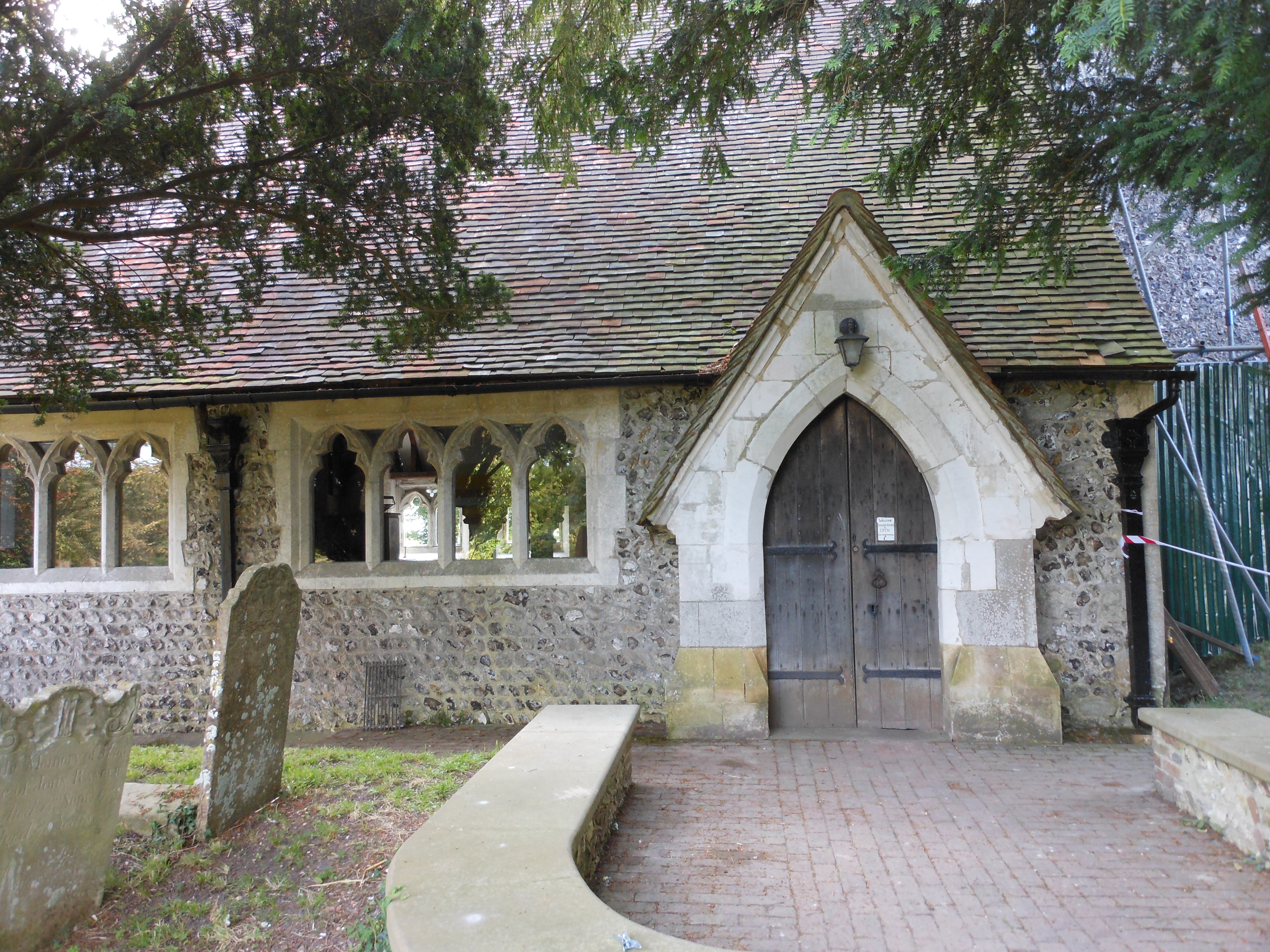
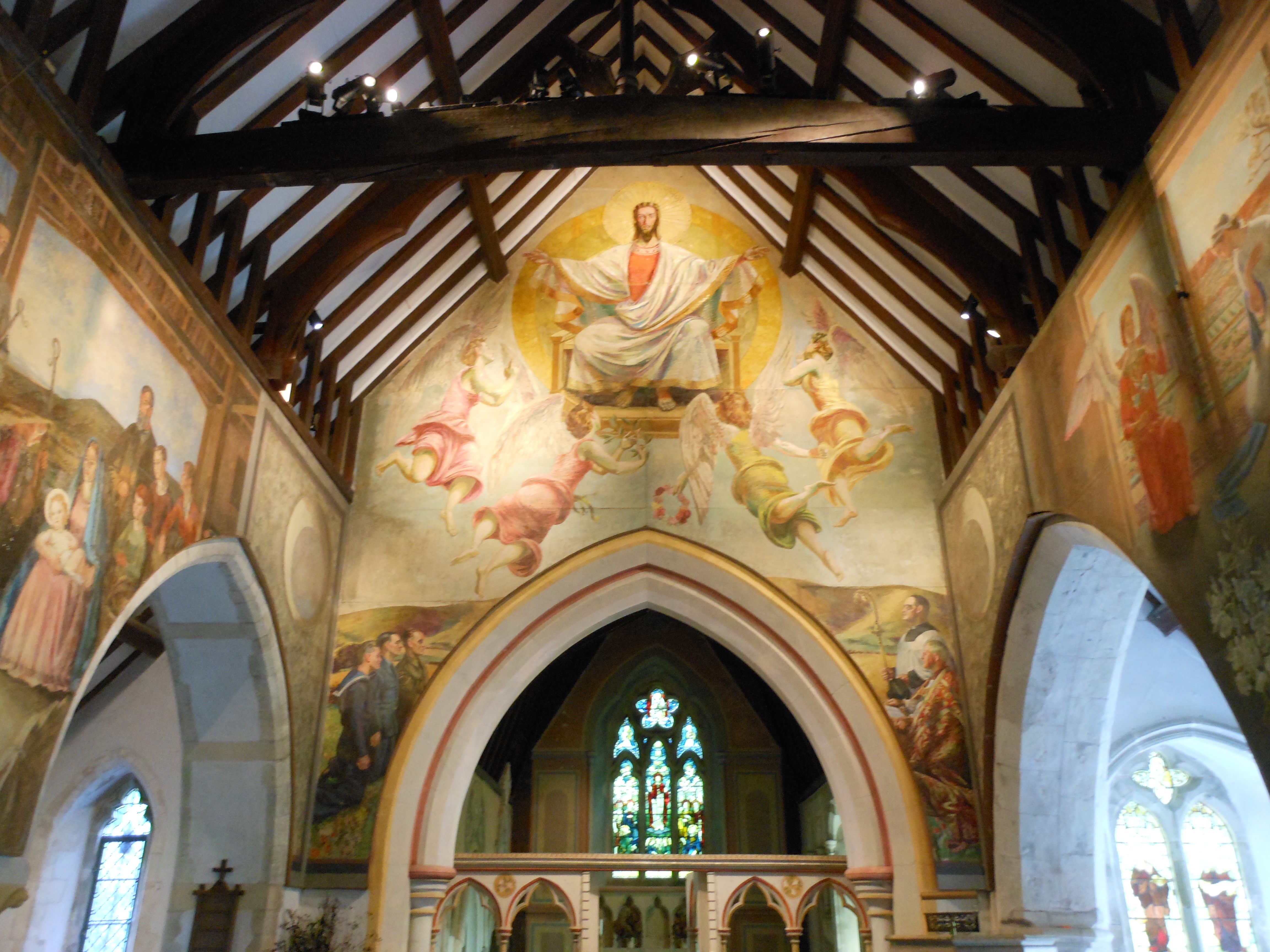
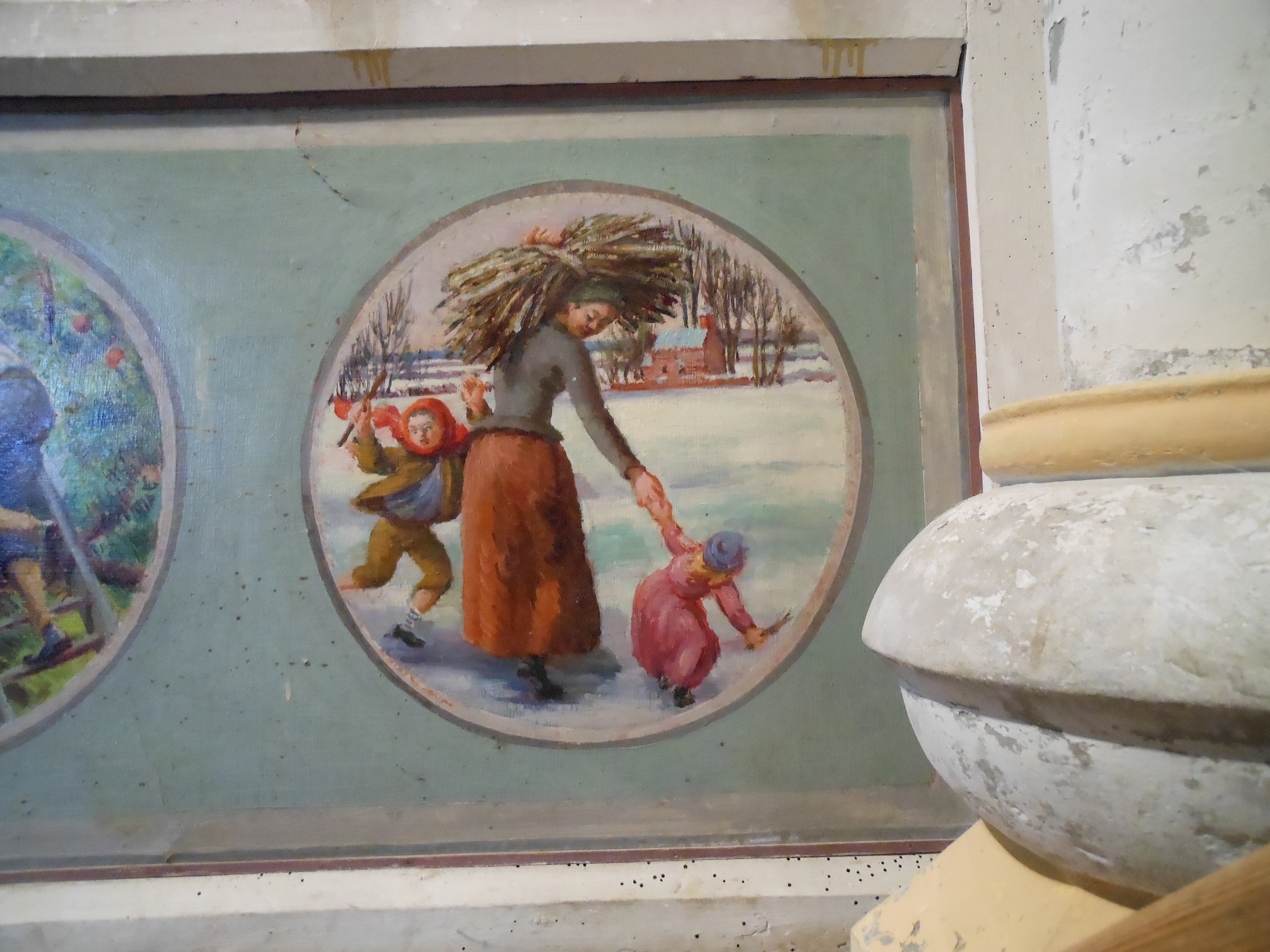
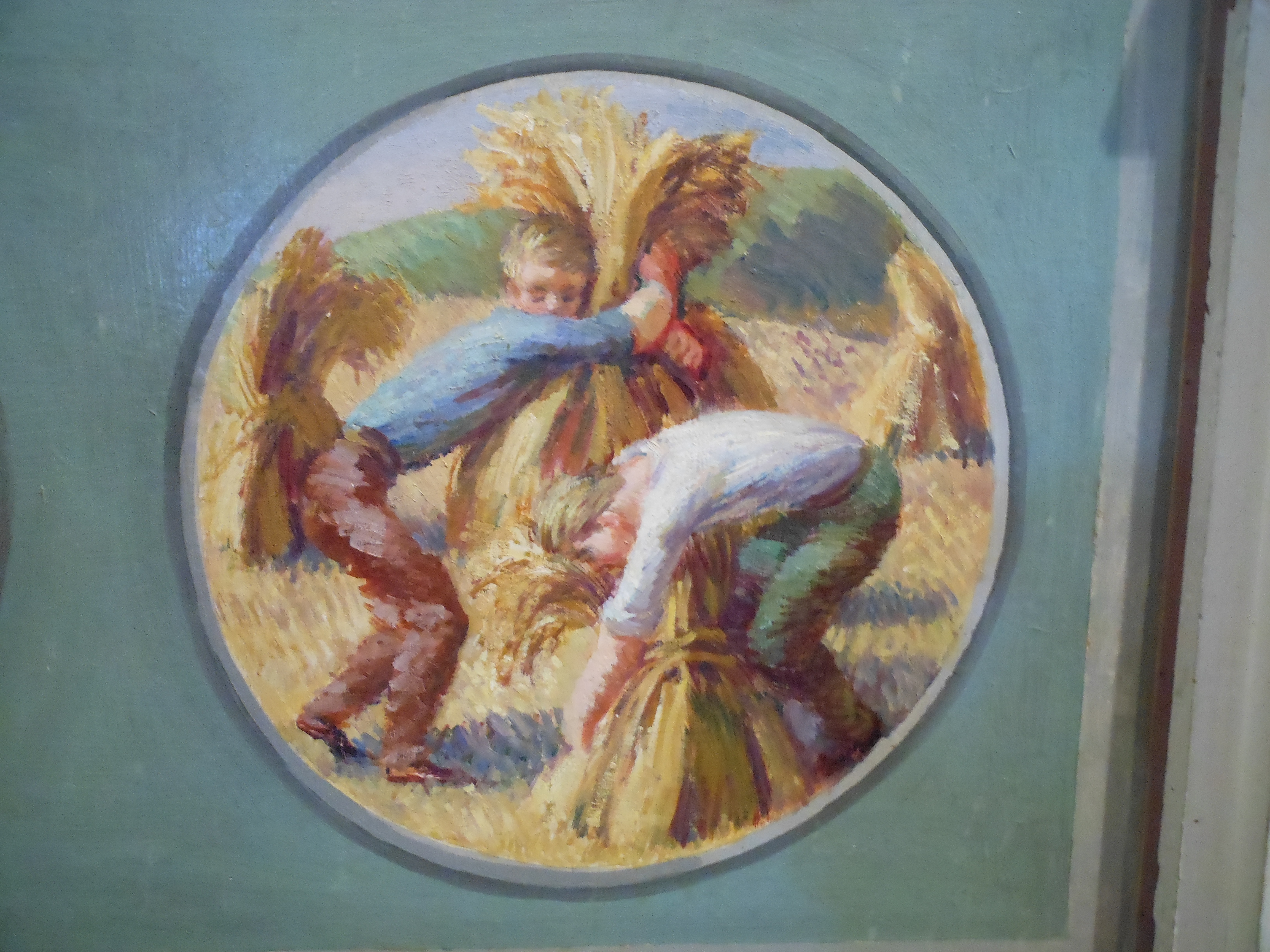
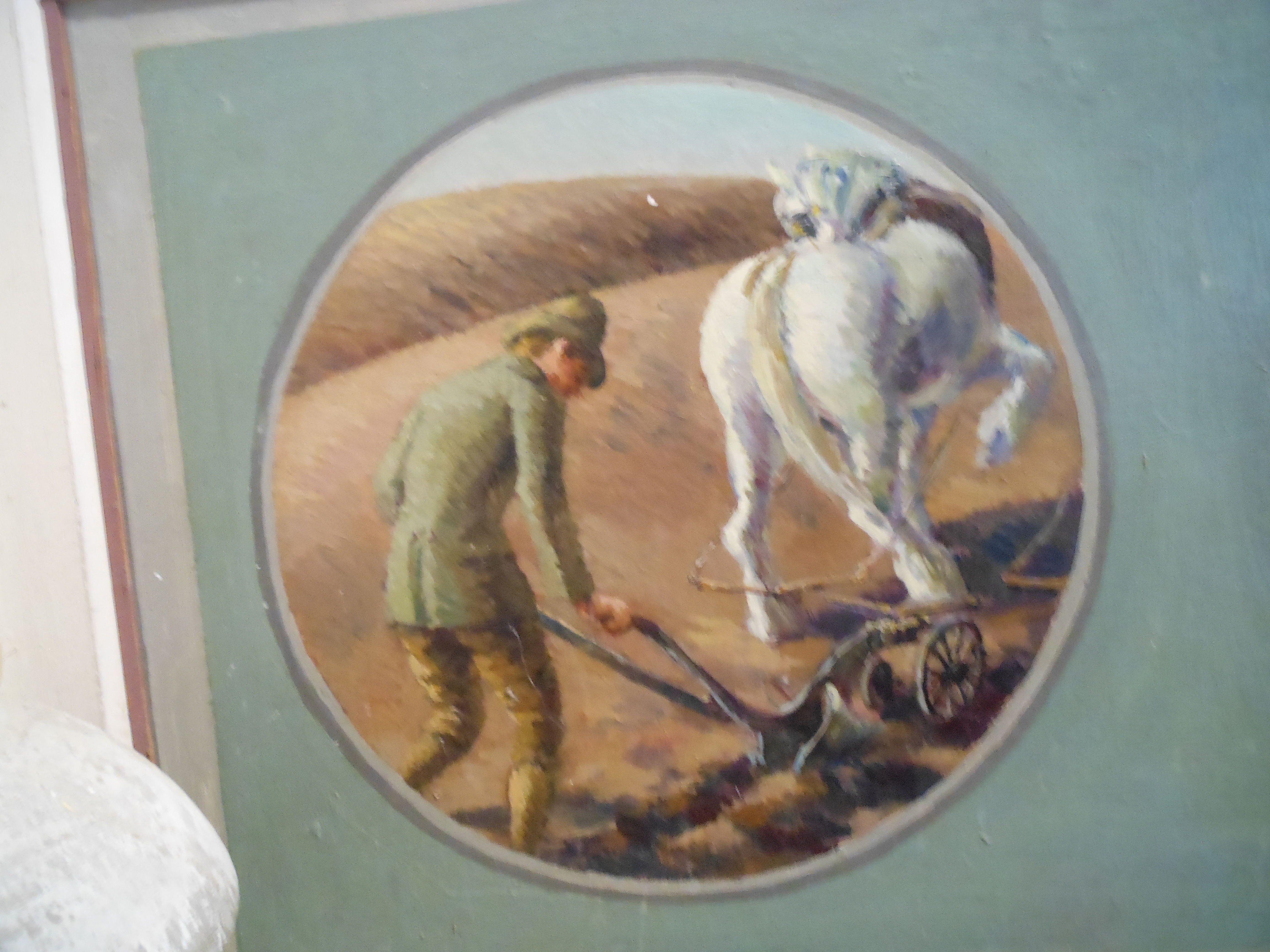
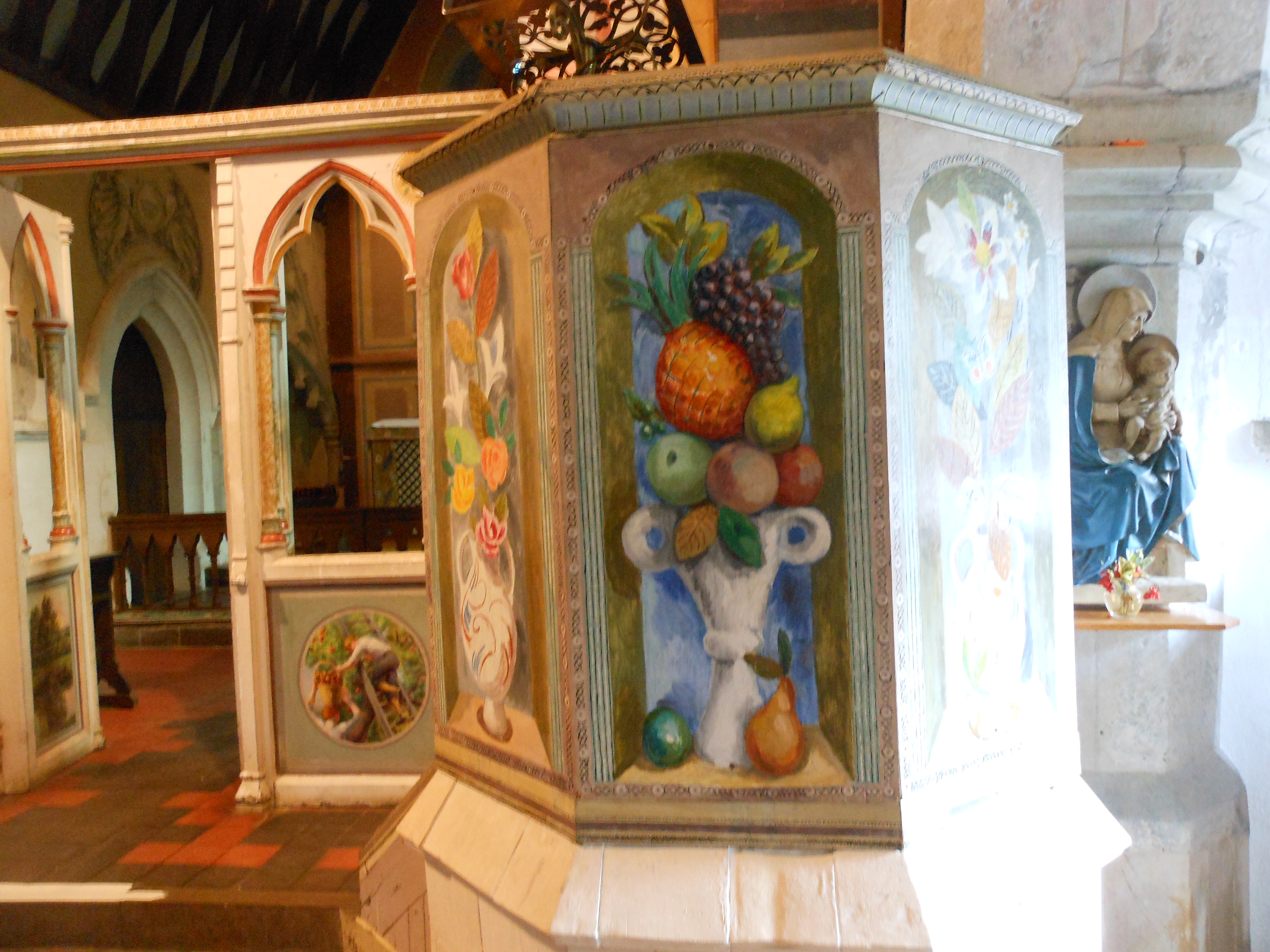
For Thanksgiving Day, I thought I’d post some paintings from beautiful Berwick Church in southern England.  St. Michael and All Angels is a little parish church in Sussex, dating back to at least the 12th century.  Parts of it are even older, dating from Saxon days. It was given a modern artistic touch in the 20th century.

dscn8239 dscn8241

During the First World War, the famous Bloomsbury group of artists, writers and intellectuals decamped from their London homes and occupied the Charleston Farmhouse and Monk’s House in this area.  The men were mostly conscientious objectors.  They fulfilled their patriotic duty by doing farm work in Sussex.

dscn8245 dscn8246

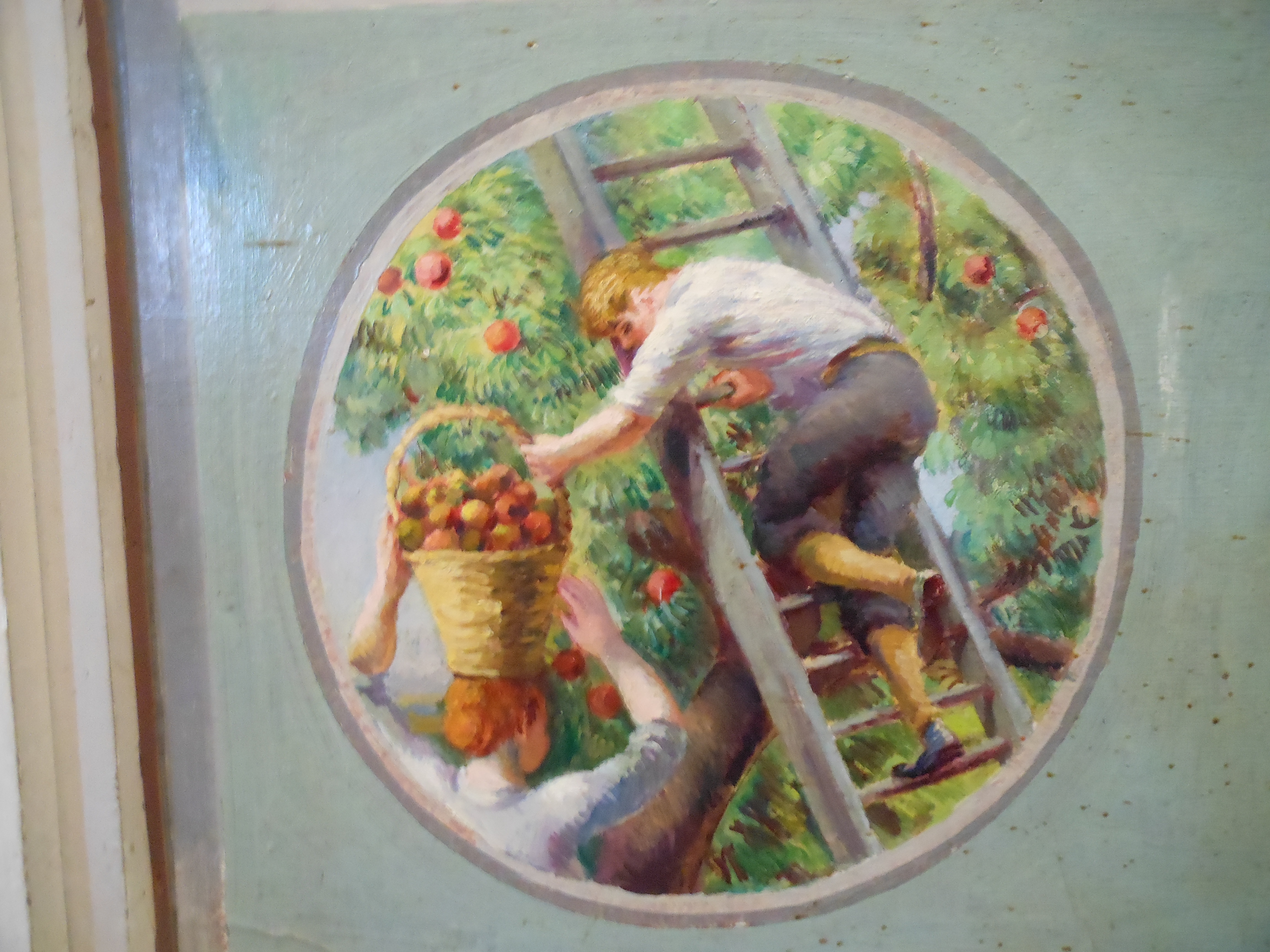
In 1941, several artists from the group were hired to paint new murals and decorations in the ancient church.  These are some of the few remaining works of Vanessa Bell, Duncan Grant, and Quentin Bell.  They depicted themselves and their friends, both as country laborers and as figures in sacred scenes.

dscn8236

The artists were all free-thinkers and even atheists living unconventional, sometimes scandalous lives.  But the local religious authorities hatched an ambitious plan to give artists employment; they hoped the plan would spread all over England’s ancient churches.  That didn’t happen, but I’d like to think the Bloomsbury group occasionally attended a service at the little country church they decorated so beautifully.

Berwick Church stands as an example of cooperation and understanding between people with very different views of the world.  After the tumultuous election season Americans just endured, I think we can use some cooperation and understanding. We’re different, but we can stand together.

img_0432

As for me, I’m spending Thanksgiving Day on an airplane, heading off on a new adventure.  They’re serving pumpkin pie in the airport lounge.  It’s pretty good!