Amsterdam!

Just arrived, late in the afternoon.  Tomorrow will be a museum day in this city of great museums.  Today was a day for walking the canals, people-watching and figuring out how to dodge trams and bikes. People of all ages ride bikes in all weathers here.  I’m sure a  bike is the best form of transportation in this compact, crowded city center. The bikes themselves are simple and workmanlike, mostly one to three speeds.  Many of them have years of patina. But a lot of skill is involved in riding one.

Just outside the Central Station, there’s a 3-story free bike garage maintained by the city.  I’d be hard put to find a place to park a bike there; they overflow into the surrounding streets.

Bikes

The locals are adept at weaving in and out of pedestrians, car traffic and other bike riders.  No one wears a helmet and no one has a bell. I’ll be lucky to avoid getting hit by a bike, never mind riding one.

Tomorrow I’ll set off on foot to explore the city!


Scandalous Dancing in the Woods

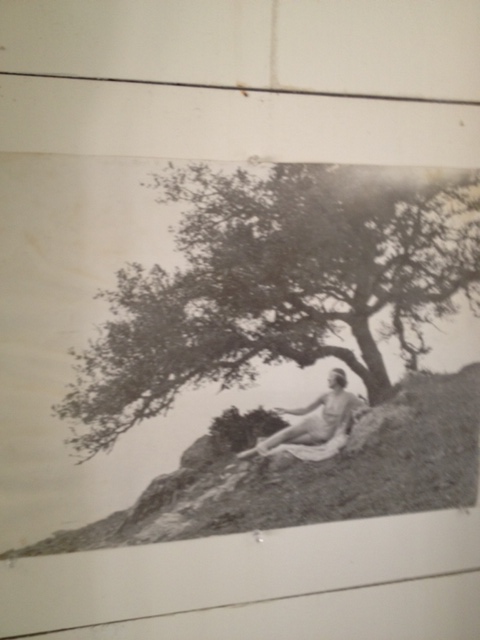
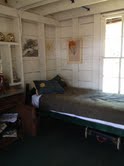
I’ve been writing lately about the Perry-Mansfield Performing Arts School and Camp in Steamboat Springs, Colorado.  The school celebrated 100 years since its founding this past summer.  When I attended the open house, I found an enchanting cabin, restored to reflect history.

Cabin

Dorothy Woodruff and Rosamond Underwood, the adventurous young women featured in my last post, visited the camp shortly after its founding. They were Smith College graduates, teaching for a year in the area.  They were eager to see the venture started by two other intrepid young women who had also graduated from Smith:  Charlotte Perry and Portia Mansfield.  Charlotte’s brother Bob was one of Rosamund’s suitors; his father owned the local coal mine, and he was very much an eligible bachelor.  He and Ferry Carpenter competed for the attentions of Rosamond.

Charlotte and Portia had worked in Chicago for two years to earn the money to buy the land for the camp.  Then they worked side by side with a small crew loaned by Charlotte’s father to build rustic tents and renovate the abandoned homesite on the property. They were sophisticated city girls; they had trouble providing meals their working crew would eat.  Afraid the crew would abandon them, they took the advice of Charlotte’s brother:  “…soak the potatoes in grease, over-cook the meat, boil the coffee, and serve them soggy pie.”  The formula worked like a charm.

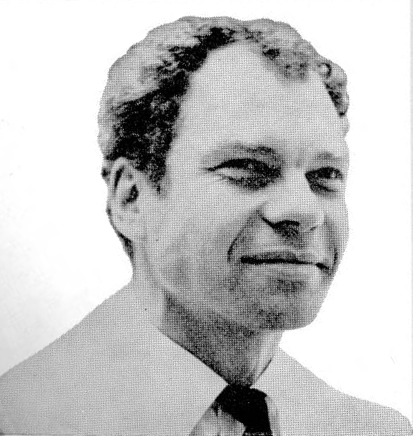
Portia and Charlotte soon had students and teachers, all enjoying a very high quality of instruction in art and music, which continues to this day.  The atmosphere was one of complete artistic freedom, too.  Over the coming decades, Perry-Mansfield was a haven of the avante-garde, including the great dancer Merce Cunningham and his composing partner, John Cage.

photo-11

Local ranchers were suspicious of the place; rumors flew of young women dancing in the woods in diaphanous gowns.  The rumors were true. Dorothy and Rosamond watched actual outdoor rehearsals. Local wives and daughters were forbidden to go near the place; milk and butter were delivered to the creek nearby, to be picked up when the ranchers’ women were safely home again.

In her book Nothing Daunted, Dorothy Wickenden tells the story of the overnight visit Dorothy and Rosamond paid to the camp.  They loved the place.  Ferry Carpenter guided them along a two-mile forest path to get there.  When they were ready to leave the next day, his romantic rival, Bob Perry, one-upped Ferry by maneuvering his little Dodge in and out of the remote area so they didn’t have to walk back.  Rosamund described the living room, which doubled as a music room, as “one of the loveliest and most artistic rooms I have ever seen.”  I think the living room is long gone, but I found the restored cabin enchanting.  I’d cheerfully move right in.

CabinBed

Present-day students live in modernized cabins which were not part of the open house.  These cabins are now winterized.  They are a popular lodging option for skiers and other visitors to Steamboat Springs during the long, snowy winters when there are no students. The website is at http://perry-mansfield.org/.

To read more about the colorful history of the Steamboat Springs area, have a look at Dorothy Wickenden’s best-selling book about the adventures of her fearless grandmother and the best friend who accompanied her on the adventure of a lifetime!

513BtSEHi7L._SL110_

From the Grand Tour to the American West

In my last post, I mentioned the delightful book Nothing Daunted by Dorothy Wickenden.  The subtitle is “The Unexpected Education of Two Society Girls in the West.”

513BtSEHi7L._SL110_

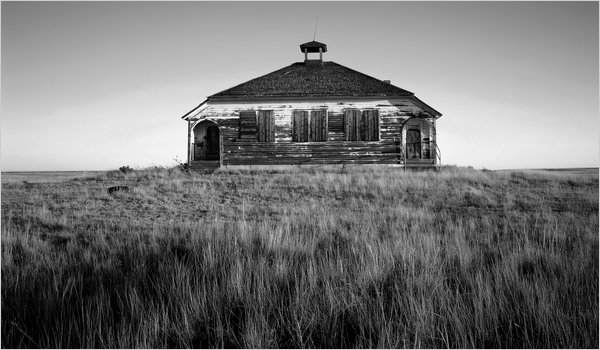
Dorothy Wickenden, the executive editor of The New Yorker, found a treasure trove of letters written by her grandmother, Dorothy Woodruff, who with her best friend, Rosamund Underwood, answered an ad for teachers in a one-room schoolhouse in remote northwestern Colorado.  The young women had graduated together from Smith College.  They were twenty-three and had no intention of settling in right away to their expected life of marriage, charity work, and society events.  So in the summer of 1916, off they went on the grand adventure of their lives.

Photo by Lawrence M. Sawyer/Corbin, from NYT review cited below

Photo by Lawrence M. Sawyer/Corbin, from NYT review cited below

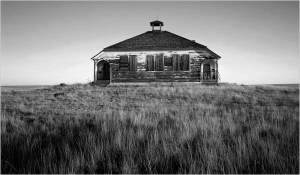
The schoolhouse was in an area so remote they had to live with a homesteading family and ride horseback to work every day, rain or shine.  Their students had to do the same; in winter some students had to ski to school on makeshift skis made of barrel staves.  Not surprisingly, the young women found themselves courted enthusiastically by local cowboys and also by educated men–including the one who had placed the ad, Ferry Carpenter.  He was a Harvard-educated lawyer who had gone west to make his fortune.

The young women had lived lives of privilege; after college, they had been lucky enough to take the Grand Tour.  They spent a year in Europe, studying French and seeing as much as they possibly could.  They went out of their way to see art and experience theater and dance. They judged the women in Rubens’ paintings “beefy,” but loved most of what they saw.  In Paris, they saw an exhibit by Matisse and Picasso.  They were not impressed, especially after having spent a lot of time with the masterpieces in the Louvre. Dorothy thought Matisse’s work was “like that of a little child.” Many years later, she regretted passing up the chance to buy some of those paintings for a song.

They saw Nijinsky, then twenty years old, dance in Scheherazade, the most famous ballet produced by Sergei Diaghilev’s Ballets Russes. They saw Isadora Duncan in her premiere performance of Orpheus.

Dorothy and Rosamund toured France, Germany, Italy, Spain and Holland. All along the way, they wrote long letters home.  They also collected postcards.  Later, when they went off to teach in the one-room Colorado schoolhouse, they brought their postcard collection.  Their students (and the parents of the students) eagerly studied the postcards as clues to the wider world.  I’d like to think that many of them eventually went on adventures of their own, following the lead of these two remarkable young women.

There’s a review by Maria Russo in The New York Times at http://www.nytimes.com/2011/06/26/books/review/book-review-nothing-daunted-by-dorothy-wickenden.html?pagewanted=all&_r=0.
Russian Cowboys in Colorado: Agnes de Mille’s “Rodeo” at Perry-Mansfield

Rodeo

Last month, I watched a rehearsal and a run-through of Agnes de Mille’s most famous ballet, Rodeo.  There’s a strong Colorado connection, and it runs straight through Perry-Mansfield Performing Arts School and Camp in Steamboat Springs. In 1935, the 30-year-old dancer and choreographer Agnes de Mille was in residence at Perry-Mansfield.  She came from a privileged and sophisticated background. Her father was William C. de Mille and her uncle was Cecil B. de Mille, both Hollywood movie producers. She had been discouraged from acting because she was not considered pretty enough, so she turned to dance instead.

During her stay in Steamboat Springs, Agnes asked to be taken to a square dance, an important and regular social event in the local schoolhouse.  Not only was she fascinated with the actual cowboys–and girls–dancing in actual cowboy boots, but she went out on the floor and did a solo turn, to much applause.  The crowd was so enthusiastic that a long line of dancers honored her, in local fashion, by joining hands and “cracking the whip,” propelling Agnes out the schoolhouse door into the sagebrush outside.  It’s too bad there was no You-Tube to capture those moments.

Seven years later, her ballet Rodeo premiered in New York, with music by Aaron Copland.  The dancers were from the company Ballet Russe de Monte Carlo.  Agnes de Mille herself danced the lead, the tomboy Cowgirl who dances up a storm and also gets her man. She received twenty-two curtain calls.

The Ballet Russe de Monte Carlo had left Russia after artistic differences, and moved to Monte Carlo.  From there, they went on to tour the United States during World War II.  (Tragically, one of the founders, Rene Blum, was one of the very first Jews arrested in France during the Occupation in 1941.  He was sent to Auschwitz, where he was killed).

Agnes de Mille was mostly unknown when she landed the job with this company. Rodeo was one of their most successful productions.  It took some doing.  Russian-trained dancers had to perform in cowboy regalia, incorporating raucous cowboy moves into their exquisite classical technique.

On the strength of this ballet, Agnes de Mille was asked to choreograph the Broadway musical Oklahoma! She went on to choreograph many other musicals, such as CarouselBrigadoon, Gentlemen Prefer Blondes, and Paint Your Wagon. Her most important innovation, which changed musical theater permanently, was to create dances that deeply expressed character rather than being just thrown in for entertainment value.

The story of Agnes de Mille in Steamboat Springs is one of the many historical nuggets in Dorothy Wickenden’s bestselling book, Nothing Daunted. The book is reviewed by Maria Russo in The New York Times at http://www.nytimes.com/2011/06/26/books/review/book-review-nothing-daunted-by-dorothy-wickenden.html?pagewanted=all&_r=0.

tlesandcoffeehouses.files.wordpress.com/2013/09/lawrencem-sawyercorbis.jpg”> Photo by Lawrence M. Sawyer/Corbin, from NYT review cited above

The sch

[/caption]The schoolhouse building still stands.  And Perry-Mansfield is still a vital presence in Steamboat Springs, 100 years after its founding.

America’s Flag

Photo by Lipton, Creative Commons Attribution Share Alike

Photo by Lipton, Creative Commons Attribution Share Alike

Like many Americans, I am pausing today to remember the terrible events of 12 years ago.  On the morning of September 11, 2001, I was driving cross-country, alone except for a dog and two cats.  I woke up in North Platte, Nebraska and walked through hotel hallways to the breakfast room.  On my way, I glanced at a TV screen in an empty meeting room and saw the terrible footage of the first plane hitting the first tower.  The attack had just happened, and footage was being played over and over. No one else was in the room.  I stopped, transfixed.  People drifted in and stayed. Someone turned up the volume. More and more shocked watchers arrived, until the room was packed. Together, we watched the second plane hit the second tower. We all knew life would never again be the same.  We all were traveling.  We all had places to be. But we all shared an impulse to huddle together, trying to make sense of senseless events.

I wondered whether I should continue to my destination in Colorado.  Should I return to Minnesota, where most of my family lived?  A close family member happened to be in France, attending a business meeting.  As it happened, planes were immediately grounded and it was some time before he could return home.  But our personal problems were small compared to what happened to so many families.

In the aftermath, Americans shared an impulse to display our national flag everywhere. A friend of mine, Harriet Freiberger, has written an eloquent article describing her feelings about that time and about what our flag means.  The article is in Steamboat Today, online at http://m.steamboattoday.com/news/2013/sep/10/harriet-freiberger-why-remember/.

Harriet writes, “Natural instincts magnetized our need for a cleansing antidote, and we found it in that piece of cloth with its red and white stripes and small white stars in a field of blue. For each of us the woven fabric symbolized something different, and, in that difference, lies the beauty of the good it represented.”  She goes on to describe her grandfather arriving in New York City from Russia in 1904, and the meaning the flag has held for her family.  “True,” Harriet writes, “the flag is only a piece of cloth, but we are in every stitch, and every stitch is connected to another.  That is the good.  Let us remember.”

We live in an interconnected world.  Some of us are fortunate enough to see a lot of the more pleasant parts of that world.  Others are trapped in places where they face constant danger from all sides. We Americans treasure our freedom, even as we acknowledge the good and the bad our country has done since its founding. I’m traveling soon.  I’ll be an American, wherever I go.

Ballet Shoes, Cowboy Boots and The Sound of Music

Last September in Salzburg, Austria, I took a break from the crowded streets of the city famous for being the birthplace of Mozart and for the movie The Sound of Music.  (Today, the inner core of the city during the day seems like a very expensive and very crowded shopping mall). I visited the Museum of Modern Art.  It’s located on top of Monchsberg, the steep mountain that towers over the city.  So the views are panoramic.

SalzView

I was a little disappointed with the permanent collection in the museum, because the captions were all in German–I know a little of the language, but not enough to decipher modern art.  Also, I might as well admit it’s not my favorite kind of art. But there was a special exhibit that made the elevator ride up the mountain more than worthwhile:  a series of videos about the great dancer and choreographer Merce Cunningham, and his longtime partner, composer John Cage.  The videos were all in English!  I spent quite a lot of time with earphones, glued to TV monitors, watching and listening to archival footage of the work of two men who profoundly influenced modern dance, and modern art in general.

Merce, Public

I had never before had a chance to see Merce Cunningham perform. He was active as a dancer, choreographer and teacher for over 70 years, until his death at age 90 in 2009. I had never understood the principles of his work, either.  Besides his longtime collaboration with John Cage, Merce Cunningham collaborated with other musicians, plus visual artists like Robert Rauschenberg.  The most radical innovation pioneered by Mr. Cunningham and Mr. Cage was that the music and the movements for a ballet should be created independently of each other, then put together in the same time and space–at either the dress rehearsal or the first performance.  The concept sounds counter-intuitive, but it works.  The effect of the many dances I watched in Salzburg was challenging but fascinating, even hypnotic. Instead of trying to figure out the plot of a sentimental story, the viewer is caught up in the infinite possibilities of human movement and human-made sound.

When Mr. Cunningham died in 2009, among the many tributes was an article in The New York Times by Alastair Macaulay.  The article is at http://topics.nytimes.com/top/reference/timestopics/people/c/merce_cunningham/index.html. From the article, there are links to slideshows which give some idea of the energy and range of this towering artist.

Actually, watching these ballets gave me a new appreciation for modern, abstract and avant-garde art in general.  The dances were the movement and musical equivalents of non-representational art.  Clearly I need to expand my horizons.

Imagine my surprise when, at the top of a mountain in Austria, the Perry Mansfield Performing Arts School and Camp was mentioned as an important place in the artistic development of Merce Cunningham and John Cage.  The camp in Steamboat Springs, Colorado welcomed artists from the avant-garde from its very beginning in 1913.

During an open house celebrating the 100th anniversary of the founding of Perry Mansfield this past summer, I was able to see for myself that the arts are alive and well in the Rocky Mountains of Colorado.

Ballet

Join me next time for more discoveries in the art and history of Europe–and the influences that extend to the farthest corners of our world.

Ballet Shoes and Cowboy Boots

The summer of 2013 marked the 100th anniversary of Perry Mansfield Performing Arts School and Camp in Steamboat Springs, Colorado.  The camp was founded in 1913 by two graduates of Smith College, Charlotte Perry and Portia Mansfield.  Their vision of a rustic camp with the highest standard of arts instruction is thriving today.  What they created is a beloved cultural oasis in a rural western town.  Students come from all over the USA, and the world, for weeks of intensive study–and everyone also learns to care for and ride horses. When I attended an open house recently, one of the first things I saw was a corral full of beautiful horses.

Horse

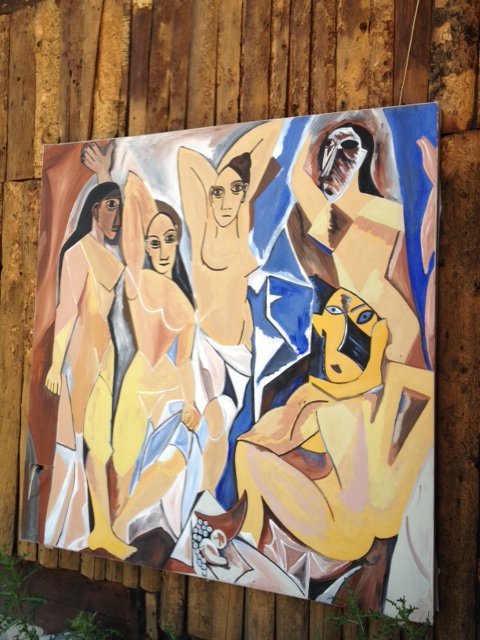
The second thing I saw was this wall-sized copy of Picasso’s Les Demoiselles d’Avignon–not a photographic reproduction, but a copy lovingly made by art students.

Demoiselles

The third thing I saw was  a ballerina carefully lacing on her pointe shoes for rehearsal.

Shoes Ballet

Graduates of the summer program include the late Julie Harris–there’s a theater named in her honor, where I saw an opera recital this summer.  Mozart, Puccini, Donizetti, and Verdi all thrive in this remote mountain outpost of culture, the vision of two adventurous women a hundred years ago.

A Lion for Luck

The Munich Residenz, home of the Wittelsbach dukes and kings, is guarded by bronze lions.  Locals and tourists alike stop to touch one or more of them for luck. (There are a total of four). Actually, tourists make a big production of touching the lions, pausing to take pictures.  Locals just casually brush the lions with their fingers as they pass, often without even looking at them.

LionOutsideResidenz

Why are these particular lions considered lucky?  One story goes that the tradition started when a young student protested the behavior of King Ludwig I and got away with it. Ludwig I was the grandfather of “Mad King Ludwig II,” builder of the fairy-tale castles Neuschwanstein, Linderhof and Herrenchiemsee.  Starting in the 1830s, Ludwig I’s subjects grew restive, like other people in Europe at the time.  They demanded reforms.  Ludwig I was not an astute politician–in the past, kings did not need to be.

However, Ludwig I was a great womanizer.  That would not have been so bad, but one of his mistresses was the beautiful dancer and actress Lola Montez, who was not exactly discreet.  She used her influence with the king to press for liberal reforms, then pressed for severe repression when rebellions started getting out of hand. Lola Montez was only her stage name; she was born Eliza Gilbert in Ireland.  In defiance of popular opinion, the married Ludwig I went everywhere with her in public, made her a countess, and gave her an independent income.  This situation went on for a little more than a year.

Lola Montez, public domain

Lola Montez, public domain

The story goes that a young student was so incensed by the king’s flagrant behavior that he wrote a complaint and nailed it to the main door of the Residenz.  (Did he get the idea from Martin Luther?)  When the offending document was found, the king demanded that “the writers” be found. Apparently the king believed the dastardly deed required more than one offender, and he put out the word to arrest all the usual suspects.  The student promptly wrote another document claiming sole responsibility–and signing his name.  He nailed that one to the door, too. When he was hauled before the king, Ludwig I had to admire the student’s nerve and style.  So the student was let go.  On his way out of the Residenz, he gave one of the guarding lions a pat, and ever since, people have touched one or the other of the lions for luck.

King Ludwig I of Bavaria, public domain

King Ludwig I of Bavaria, public domain

It’s an amusing story, but Ludwig I’s own luck as a king ran out.  In late 1847, there were widespread student rebellions.  Lola Montez persuaded the king to close the university. Soon he was forced to not only reopen the university, but to abdicate in favor of his son Maximilian II.  Lola Montez fled Bavaria.  She eventually ended up in America, where she had a successful career as actress, erotic dancer, and lecturer.   Ludwig I may have had the last laugh, though. He lived on for another 20 years, pursuing his interests in women and the arts, free of the bothersome business of governing.

Join me next time for more explorations into the art and history of Europe!

And for Royal Backyard Barbecues…

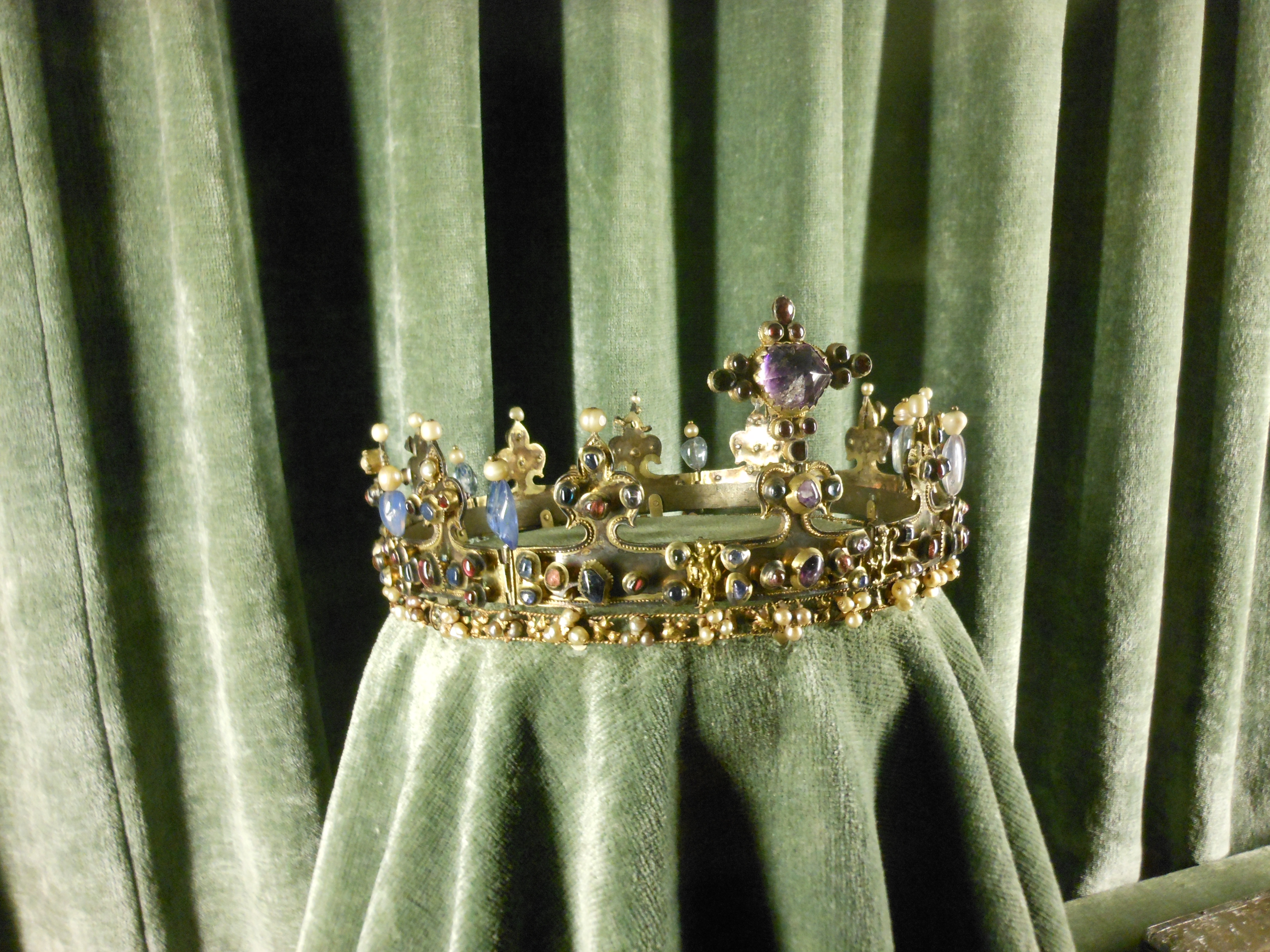
Actually, I’m making that up.  My second-favorite crown is this one, from about the same era as the crown in my last post.  This one is more modest–and looks easier to wear.  Perhaps it was made for a young princess.  Or perhaps a well-dressed queen needed a whole wardrobe of crowns, for both formal and casual occasions.

Crown2ndFavorite

This crown looks to be from the same era as my all-time favorite, but when I took a picture of it I broke my own rule of always taking a picture of the caption. Both of these crowns are in the Munich Residenz Treasury, or Schatzkammer.  I always think I will remember details, but it doesn’t always happen.  For this crown, I’ll just have to say that it’s very old, very beautiful, and it beckons my imagination back into medieval times.  I’m sure those times are much more pleasant to imagine than they ever were to live through, even for royalty.

Like many museums, the Munich Residenz has a lively interactive children’s program where kids can dress up in historic finery.

20130813-125943.jpg

Maybe museums should also have an interactive adults’ programs, for dreamers like me.  I’d be first in line to try on the silks, satins and jewels of days long gone!

My Favorite Crown

What is the oldest surviving English crown doing in the Treasury of the Munich Residenz, home of the Wittelsbach dynasty for centuries? Apparently even the experts are not exactly sure of the sequence of events. But there it is, one of the most beautiful and evocative objects I’ve ever seen.

CrownFavorite

Most crowns considered important enough to be preserved are masculine-looking, as we’d expect in an overwhelmingly patriarchal world. Some of them have a unisex look, suitable for a king or queen, as needed. This crown, known as the “Bohemian” crown, is delicately feminine. It’s made of pure gold, of course. It is enameled and studded with rubies, sapphires, emeralds, diamonds and pearls. It looks lovingly handmade, as no doubt it was. It is quite tall, as crowns and tiaras go: about 7 inches. What I find unique is the airy, open design–not an easy feat to pull off with the many huge gems it holds. The wearer would automatically assume a regal posture, I would think, just in order to live up to this gorgeous object.

The crown was made around 1370-80. It was recorded in a list of jewels in England in 1399. Curators believe it belonged originally to either King Edward II or Anne of Bohemia. Anne was married to King RIchard II. But along came his dashing cousin, Henry IV, star of the Shakespeare history plays. He deposed Richard. Eventually, in 1402, Henry’s daughter Blanche married Ludwig III, an Elector–more or less an elected king in what is now Germany. The crown was part of her dowry, so it ended up in the Treasury of the Wittelsbachs.

The museum’s own write-up about this crown is at http://www.residenz-muenchen.de/englisch/treasury/pic11.htm

Join me next time for more explorations into the art and history of Europe!