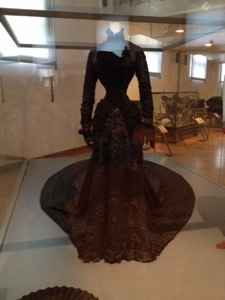
Prague Museum of Communism

ComMusSign

One of the odder sights in Prague is located in a building occupied by a casino and a McDonald’s: the Museum of Communism.  It’s an invention of an American entrepreneur, and more than a little biased.  There is really nothing to explain why the failed political system was ever appealing in the first place. Still, it’s an interesting overview of an important period in the history of the Czech Republic.

Many of the exhibits are colorful collections of artifacts, such as the propaganda present everywhere during that era.  There are also informative placards for those seriously interested in historical events, although there is really no attempt at objectivity. There’s a chilling reconstruction of an interrogation room, giving an idea of the repressive regime people lived under.

Most interesting, to me, were actual objects from that era, lovingly preserved.  In Eastern Europe, many people are nostalgic for some aspects of the Communist period.  There’s a feeling that under capitalism and democracy, Eastern Europe has taken on some of the worst aspects of Western materialism. Some people say that under the Communist regime, they had jobs and money, but nothing to buy.  Now, they say that under capitalism, they have no jobs and no money but there is plenty to buy.

The museum is right around the corner from the huge square where the events of the Prague Spring took place in 1968, eventually leading to democracy. Newsreel footage records those mass demonstrations, complete with arrests.

It would certainly take more than this museum to understand this tumultuous period of history.  Still, it’s an interesting place to spend an hour or two pondering the history that took place in the streets just outside.

Join me next time for more explorations into the fascinating art and history of Europe!
Maybe I Do Like Prague…


Prague Cathedral

Prague Cathedral

Of all the cities I’ve visited, Prague felt the most foreign.  For one thing, I didn’t know even a smidgeon of the language. In fact I didn’t even recognize the letters of the alphabet.  Peering out the train window, I passed several stations that could have been the main station.  The family in the compartment with me kindly stopped me each time I jumped out of my seat.  They saw to it that I got off at the right place, and there I stood on the platform, as directed by the rental agency, waiting for a driver to fetch me.  Hailing a cab outside the station is perilous.

The money is foreign, too, and tourist guides are rife with warnings of ripoffs of unwary travelers.

Even the apartment rental agency was not quite trustworthy.  A day before my arrival, they emailed me that the apartment I had rented needed some maintenance work on my first day, but I could have a cheaper one and they would refund the difference in price.  Then, when I arrived, they tried to get me to stay in the cheaper one.  After the first night, I insisted on moving to the original apartment, which was much bigger, much nicer, and had air conditioning.  Only after I had checked out and carefully checked my bill did I realize that they never did refund the money due me from the first night.  It took numerous emails to sort that out.

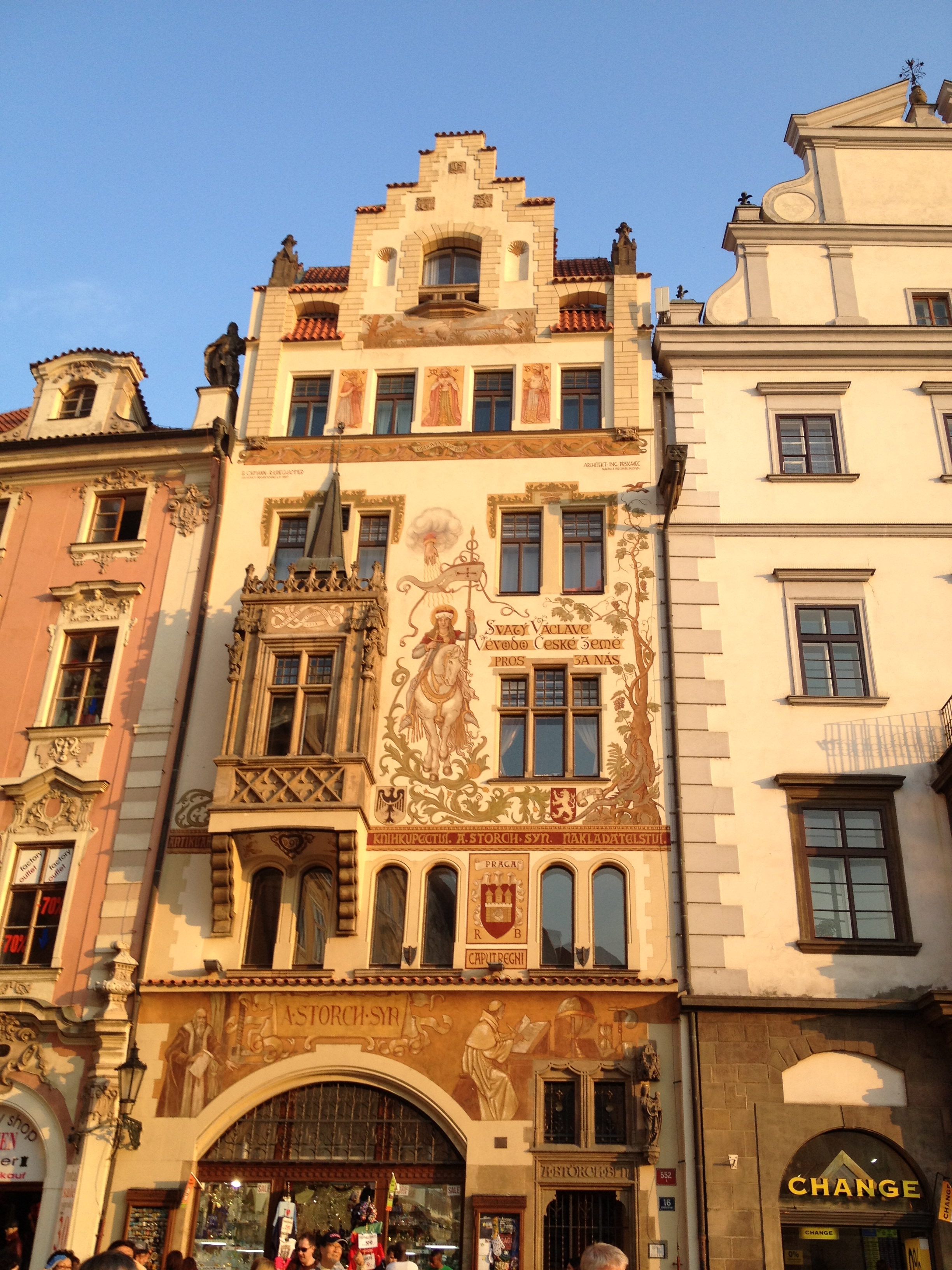
PraguePaintedHouse4-12

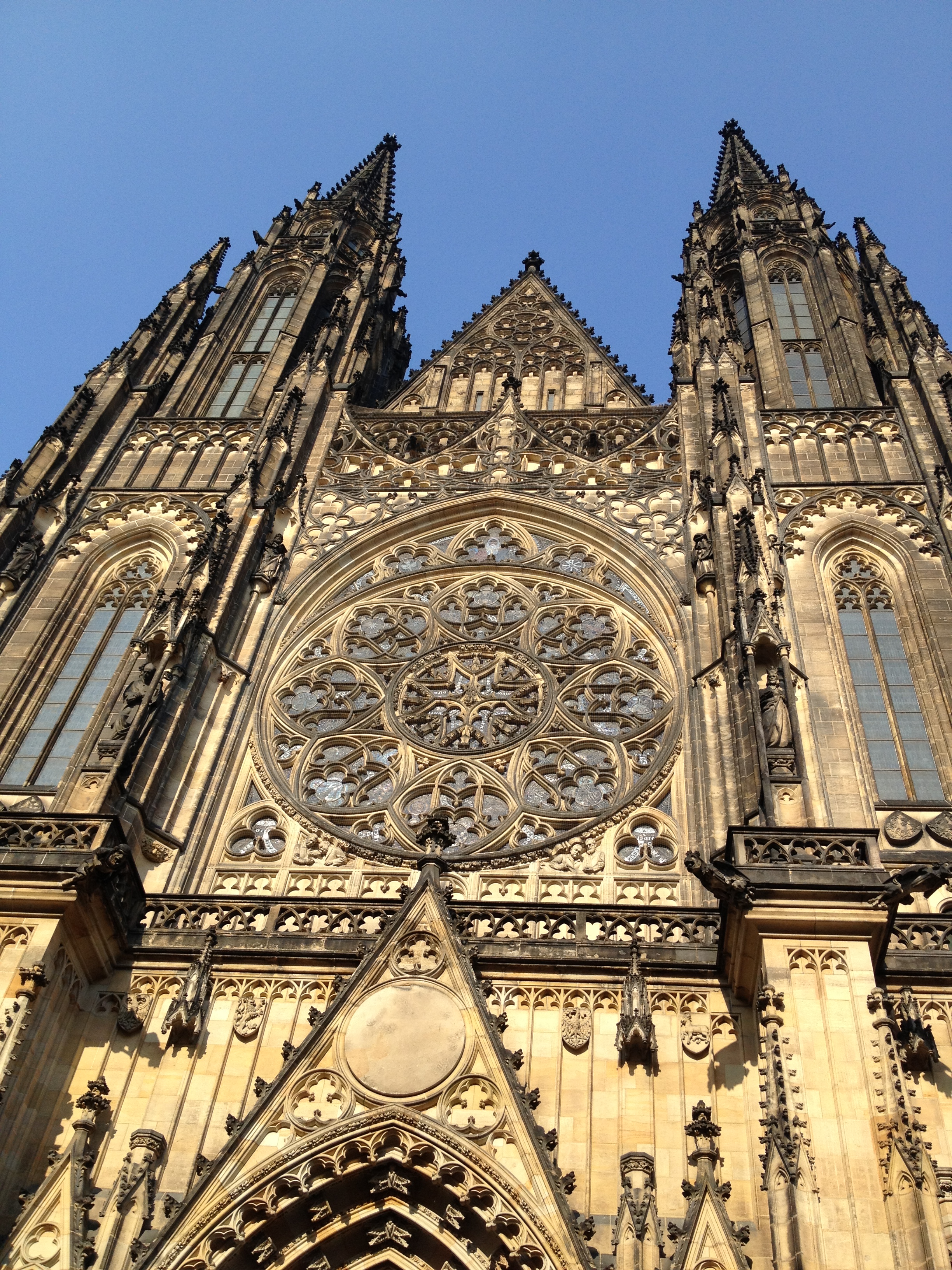
Still, the city is beautiful. The architecture is unique, all tall painted houses and towers festooned with smaller towers.

PragueTowers4-12

When I returned home, I talked with an elderly relative who had been in Prague just at the end of World War II.  His face darkened when I asked him about it.  He said he had witnessed things he just wanted to forget. Today, the people crowding the streets and restaurants seem full of joy, as though they had just emerged from an oppressive regime yesterday.  Maybe I didn’t spend enough time in Prague to appreciate it.  I see another visit in my future. Then there’s Krakow in Poland, which I’ve never seen…

Join me next time for more explorations into the art and history of Europe!

A Perfect Summer Day

Public Domain Image

Public Domain Image

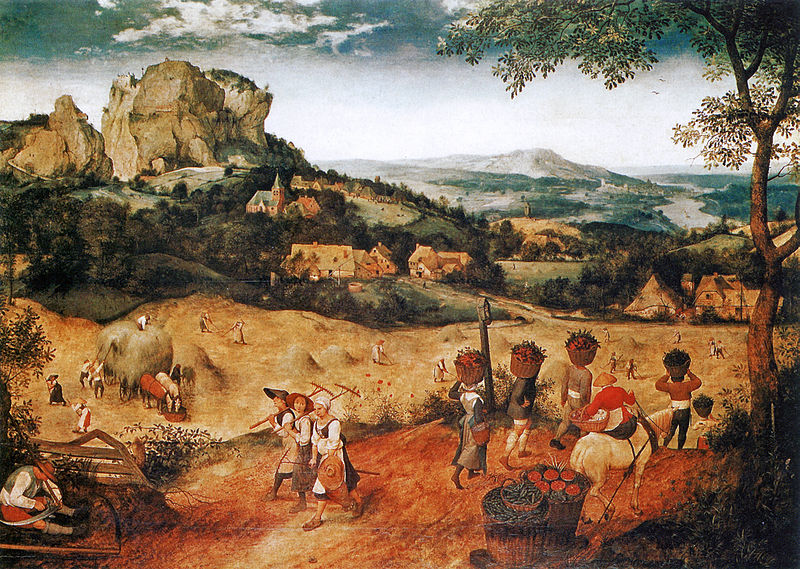
Pieter Breugel the Elder painted a series of six seasonal landscapes in around 1565.  Each represents two months of the year. Five of them survive, including the beautiful and haunting “Hunters in the Snow,” now exhibited in the Vienna Kunsthistorisches Museum.

The Lobkowicz Palace in Prague has the June and July panel, titled “Haymaking” or “The Haymakers.”  It is as warm and inviting as the winter landscape is cool and mysterious.  The painting depicts peasants moving through their time-honored routines of bringing in the hay.  A small image hardly does justice to the glorious painting.  Pieter Breugel was known in his lifetime by the nickname “The Peasant” because he often dressed in peasant clothing so that he could blend in and observe his subjects for long periods of time.  The people in this painting have a natural nobility and a natural connection with the agricultural landscape that sustains them.

Prague is not my favorite city.  Years after the fall of the Iron Curtain, it is still pretty rough around the edges. I rented an apartment from an agency there.  I asked how to get from the train station to the agency office.  I was told to wait right on the train station platform for a driver to collect me.  According to Rick Steves, hailing a cab outside the station invites severe overcharging or worse.  I guess that must be true.  Once I got settled, though, I felt perfectly safe in tourist areas. No doubt there are pickpockets, as in any large city, but I had no problems.

PragueRooftops4-12

The city is a magnet for all of Eastern Europe, so it is full of partying crowds day and night.  But the Lobkowicz Palace, on Castle Hill, is a haven of peace.  The history of the palace  is fascinating.  The noble family lost everything to the Nazis, regained some of it, and lost it all over again to the Communists.  They were staunch opponents of both regimes.  The palace today hosts daily chamber concerts in a lovely, quiet music room. Afterward, a stroll through the grand rooms with an audioguide provides a unique glimpse into the turbulent history of the city, seen through the ups and downs of an aristocratic family. There’s a nice restaurant with views over the rooftops of Prague.

The palace’s website is at http://www.lobkowicz.cz/en/Highlights-from-The-Collections-47.htm?item=112

Join me next time for more explorations into the art and history of Europe!

A Perfect Winter Day

Wikimedia Commons, Public Domain

Wikimedia Commons, Public Domain

Some regular visitors to the Vienna Kunsthistorisches Museum head straight to a particular painting.  Austria subsidizes yearly passes for museum visitors, so many–some say a majority- of Viennese would not think of being without a yearly ticket and popping in to visit favorite works of art on their daily rounds.  A particular favorite is “Hunters in the Snow,” painted in 1565 by Pieter Breugel the Elder. Some people consider it the most beautiful and intriguing painting in the world.  It doesn’t draw the crowds of the Mona Lisa in the Louvre, but there are always a few admirers standing before this painting, transfixed.

hunters1

Last time I visited the Kunsthistorisches, I lingered in the glorious roomful of Breugels.  A woman was absorbed in painting a perfect copy “Hunters in the Snow”.  I envied her: she was spending untold hours lost in the vision of a great artist who captured a winter day almost 500 years ago.

hunters2

Breugel was a Flemish artist, but this is not a landscape from the Low Countries.  He was known to have traveled to Italy, and he very likely passed through the Austrian Alps on his way.  This is definitely an alpine landscape, which would have seemed exotic and particularly beautiful to the folks back home.

I spent awhile looking over this artist’s shoulder.  What better way to spend a winter afternoon than in the company of Pieter Breugel the Elder, gazing at a landscape that he brought home as a perfect memory of his travels?

I am home from my own travels, back in the mountains of Colorado, having my own perfect winter days playing in the 16 feet of snow we have received so far this winter.  But I can imagine a different kind of winter’s day, spent sharing brushstrokes with a great artist.  What painting would I choose? What kind of permission would I need? Could I fit my paints and brushes into my carryon? It’s another travel dream.

Treewell

Join me next time for more explorations in the art and history of Europe!
“Clara’s War”

51+jl9TZTtL._SY344_PJlook-inside-v2,TopRight,1,0_SH20_BO1,204,203,200_

In the cities and small towns of Europe, I’m always aware of a painful history, hidden among the streets and houses.  The book “Clara’s War,” by Clara Kramer, recounts how 16 members of her extended family survived World War II by crouching in a four-foot-high crawl space under the home of a man who was a drunkard, serial adulterer, and notorious anti-Semite. Valentin Beck’s wife Julia had been their housekeeper before the war.  Jews and Christians had lived in harmony in the idyllic little town of Zolkiew, Poland for over 300 years.

But Hitler changed all that.  When the Nazis began murdering the 5,000 Jews of the town, Beck offered to shelter the extended family.  He, his wife and their teenage daughter risked their own lives for over 18 months, bringing in food and water and hauling out buckets of waste.  They entertained Nazis, police, and army personnel at raucous parties just above the heads of the family. For the final few months of the war, they were forced to allow a succession of Nazis to take over their own bedroom. During these times, the families below had to sit perfectly still, sometimes for days at a time, until the visitors left the house.

Ironically, the house had belonged to one of the families until they were forced to leave; the Becks asked for and received the house as their own.  Mr. Beck started sheltering the family tentatively because his wife knew and loved them. He was quite a rebel, refusing to bow to the inhumanity around him. As the savagery in the world outside increased, Valentin Beck became more and more daring in his protection of the families.  He came to love and respect them. He provided them with the items they needed for their own religious ceremonies, and invited them upstairs whenever he could.

Clara was a teenager at the time.  Mr. Beck brought her books to read and a series of composition books to write in.  She filled four of them with a harrowing account of tedium mixed with hairsbreadth escapes, using a single blue pencil the entire time.  When the Russians moved closer and closer to the town, most of the ethnic Germans like the Becks fled. The Becks stayed at their own peril to shelter their visitors in the crawl space, until it was too late for them to escape.  They were about to be shot as German spies.  Clara, newly liberated, ventured into the Russian headquarters and got an officer to read the diary.  That saved the lives of the Becks.  A tree was planted in Israel in their honor.

In her eighties, Clara turned her journal into the book, with the help of a professional writer. The twists and turns of events make the book a page-turner. It would make a wonderful movie. There is savagery, but also extreme courage and tenderness.  The book is a good companion to “The Diary of Anne Frank.”  It gives a visceral feeling for what actually went on all over Europe.

At the end of the war, only 50 of the 5,000 Jews of Zolkiew were alive, all of them having been somehow sheltered as Clara’s family was.  They all soon left; there was nothing left for them there.  But to this day, the occupant of the house with the bunker below shows it to any visitors who ask.

A review of the book from the Daily Telegraph is at

http://www.telegraph.co.uk/culture/books/non_fictionreviews/3673099/Facing-up-to-the-Fuhrer.html. The book is available from Amazon.

Join me next time for more explorations into the sometimes-joyful, sometimes-sorrowful, always-fascinating history of Europe.

Ball Season in Vienna!

20131227-065706.jpg

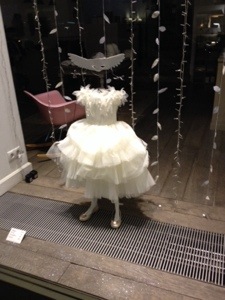
The ball season begins New Year’s Eve and stretches through Easter. Its history goes back at least 400 years, and the tradition is alive and well today. Besides the larger balls where debutantes make their curtsies, every association, large and small, has its own ball: the Medical Ball, the Legal Ball, the Coffee House Owners’ Ball, and on down through the humbler trades like plumbing and pipefitting. Some lucky little girl will be wearing this dress in a glorious swirl of color and movement, maybe in the Hofburg or the Rathaus.

Staircase of the Kunsthistorisches Museum

Staircase of the Kunsthistorisches Museum

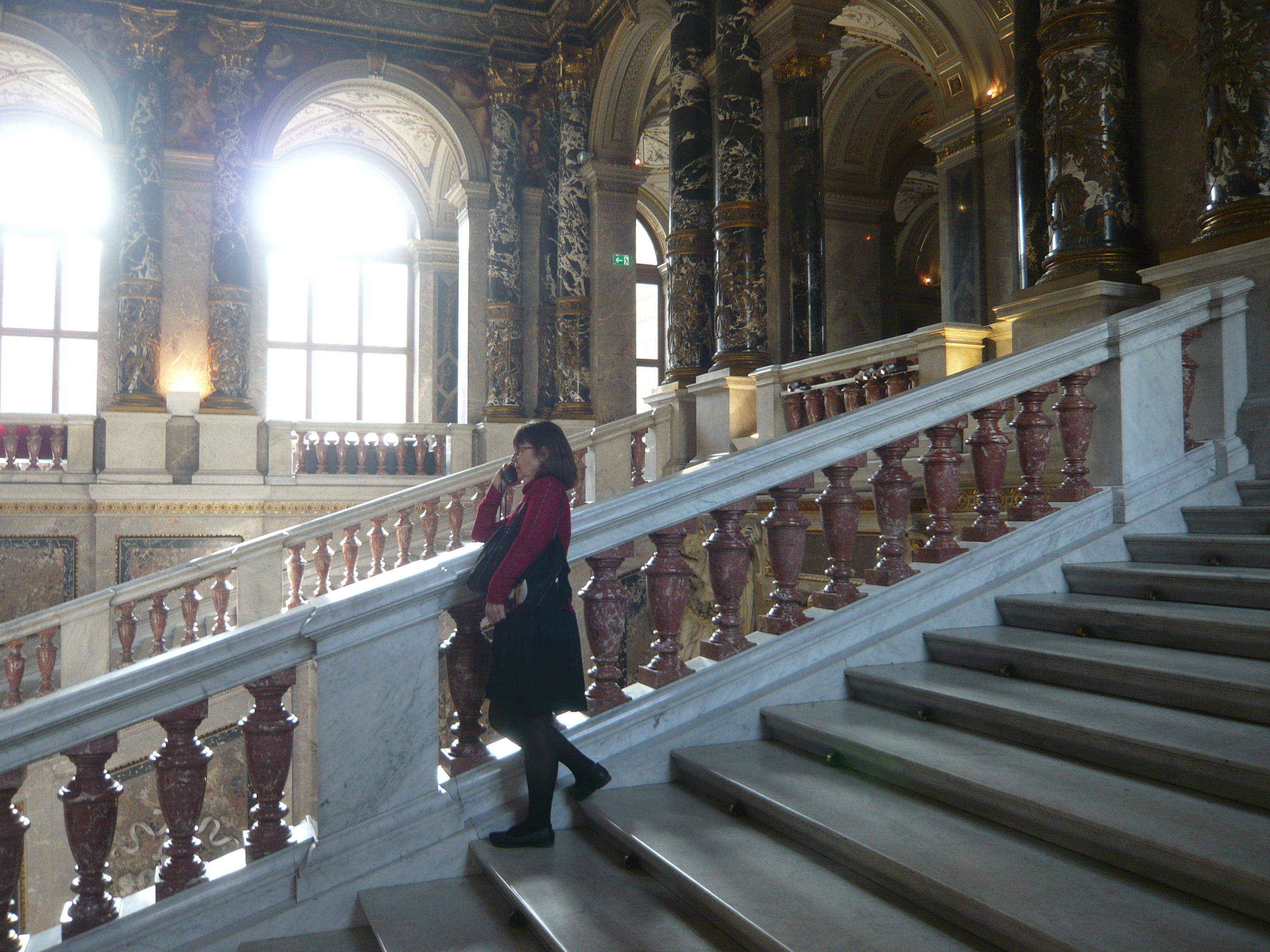
I’m awed by the grand surroundings of Vienna’s museums, built during the height of the empire and stuffed with treasures. I can only imagine sweeping down a grand staircase in a long rustling gown, maybe with a camellia in my hair.

Will I attend a ball?  Hmm, I’d have to travel to Vienna in January or later.  And I’d have to take a crash course in waltzing.  Maybe…

Join me next time for more explorations in the art and history of Europe!
Sisi, the Tragic Beauty


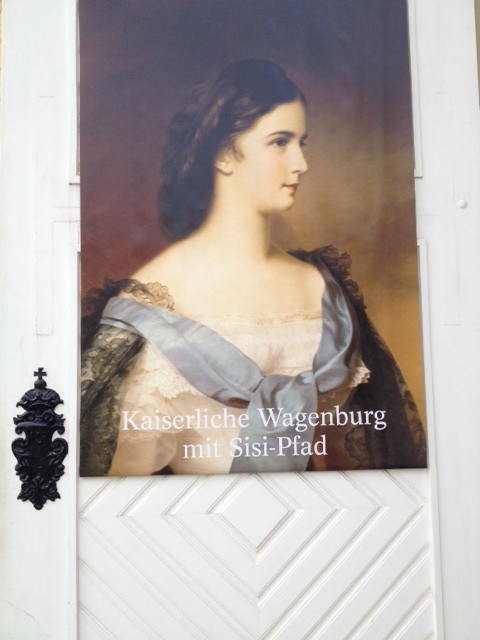
poster

Empress Elisabeth of Austria has tons of followers on the tourist trail in Austria today, although in her lifetime she was seldom seen.  The Carriage Museum at Schonbrunn Palace was seldom visited until officials made it part of the “Sisi Trail.”  Now a few people out of the droves of tourists at the palace cross the courtyard to puzzle over artifacts from Sisi’s privileged but sad life.

Nobody knew quite what to make of Sisi during her lifetime, and she hardly gave anyone the chance to know her.  She’s often compared with England’s unhappy Princess Diana, but the difference is that Diana used and manipulated the media.  Sisi really just wanted to be left alone. Born to aristocrats in 1837, Sisi lived an idyllic life at her family’s Bavarian castle until she caught the eye of the young Emperor Franz Joseph, then 23 to her 15.  He was visiting Bavaria in order to propose to her older sister–a typical arranged marriage between aristocratic first cousins.  But once he saw Sisi, he had to have her and it was pretty much impossible to refuse him.

By all accounts, Sisi was fond of Franz Joseph, but she absolutely hated the restrictions of royal life.  So did he, but he was a man of duty–and he saw it as his duty to see that nothing ever changed.  After giving birth to three children in rapid succession, and having those children taken away from her for court authorities to raise “properly,” Sisi began a life of restless traveling and ceaseless physical activity. She reconciled with Franz Joseph for brief periods, but mostly she led her own life out of the public eye.

20131212-081114.jpg

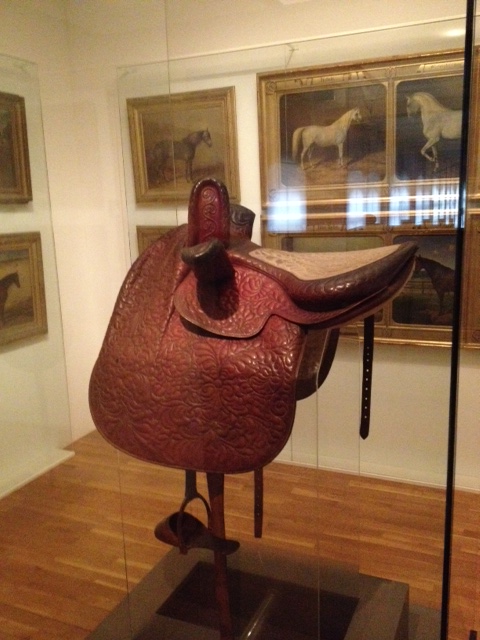
She loved horses and was a spectacular rider, spending several seasons in England fox-hunting.  There, she wore out any number of men who tried to keep up with her.  And she did all this sidesaddle, laced into specially made leather corsets that at times constricted her 20-inch waist down to 16 inches. She had to be sewn in to her dresses once the hour-long process of tightening the corset was finished.

Fan


But no one was allowed to photograph her once she turned 30.  She felt that her celebrated beauty was beginning to fade, and her beauty was all she had. Anyway, her teeth were terrible by that time. She always carried a fan, and routinely hid behind it. It seems she was obviously anorexic in a time before that term was invented. She was probably bulimic, too–she had a private staircase built from her rooms to the kitchen in one of her houses so she could eat in private, and she was known to gorge on cakes from the royal baker Demel.

saddle

The Carriage Museum at Schonbrunn Palace has a display featuring portraits of Sisi’s favorite horses.  Her everyday sidesaddle is on display, too.  It’s hard to imagine jumping hedges and ditches while perched sideways on a horse, but that was really what Sisi did best.

Join me next time for more explorations into the art, history and surprising personalities of the past in Europe!