Category Archives: Uncategorized

Travels with Jane

Reuters image from artsbeat-austen-blog480, featured in NYT article cited below Reuters image from artsbeat-austen-blog480, featured in NYT article cited below

I have to comment again on the new ten-pound banknote that will begin featuring Jane Austen in 2017.  I was curious about the images in the background.  The image in the center of the round seal shows Jane Austen bent over her little writing table.  She famously wrote in the drawing room, in the middle of family life.  Some years ago I visited Chawton Cottage, where Jane spent much of her time during the last years of her life.  She wrote on a little round table placed in front of a window overlooking the road outside.  I stood awhile in front of the table, trying to imagine the drawing room door creaking.  That was the signal for Jane to tuck her pages away and turn her attention toward a visitor.

I wondered if the mansion in the background was meant to represent Pemberly, the home of Mr. Darcy in Pride and Prejudice. But then, Pemberly was a fictional creation.  Instead, it appears the mansion pictured is Godmersham Park.  Jane’s brother was adopted by a wealthy family and eventually inherited the mansion and property.  Jane and her family spent a lot of time there–welcomed as poor but genteel relations, I gather.

The planned quote below Jane’s portrait is “I declare after all there is no enjoyment like reading!”  Some people object because the line is spoken by a decidedly mercenary character, Caroline Bingley.  In The New York Times article I cited in my last post, “Jane Austen, Wallet-Sized,” there’s a suggestion for a different quote.

John Mullan, a professor at University College London, proposed another line from Pride and Prejudice.  His suggestion comes from the middle of the novel, when Elizabeth Bennet is invited on a road trip with her aunt and uncle.  The dastardly Mr. Wickham has just deserted Elizabeth for a certain very rich Miss King.  On a three-week trip, they hope to travel as far as the Lakes.  Elizabeth was not in love with Wickham, but still she welcomes the diversion.  She exclaims, “What are men to rocks and mountains?”

RuskinLake

Then as now, getting to the Lake District in northern England takes some doing.  As it happens in the story, Elizabeth’s aunt and uncle have to cut their trip short because of business–they are in a class that works for a living.  So instead of going to the Lakes, they can go only as far as Derbyshire.  “Elizabeth was excessively disappointed; she had set her heart on seeing the Lakes…But it was her business to be satisfied–and certainly her temper to be happy; and all was soon right again.”   Every reader of the novel knows that the shortened trip put Elizabeth Bennet at Pemberly at the same time Mr. Darcy happened to be there, sealing her fate and his.

Her biographers agree that Jane Austen herself was traveling in Derbyshire at the time she was writing the novel.  I can only imagine that she was as agreeable and happy a travel companion as her beloved heroine, Elizabeth Bennet.


http://artsbeat.blogs.nytimes.com/2013/07/26/jane-austen-bank-note-earns-huzzahs-and-nitpicking/?_r=0

Top 10 Reasons Americans Can’t Get Enough of the British Royal Family

The American press took up a lot of the pavement space in front of the hospital where the new Prince of Cambridge was born this week.  Why our fascination with British royalty?  Following is my own very personal and opinionated list of reasons.

1. We’re safe from a monarchy ourselves, having gained our independence 237 years ago.  We get to enjoy the spectacle without paying the bills.

2. Nowhere in the world is the tension between the antique and the modern more visible than in the traditions of the British Royal Family. Prince William in the velvet and ostrich feathers of the ancient Order of the Garter? Irresistible, at least to many of us. To read about the 2013 Garter Ceremony, go to http://www.dailymail.co.uk/femail/article-2343223/Beaming-Queen-flanked-Charles-William-Order-Garter-today-Duke-Edinburgh-recovers-home.html.

3. We won’t admit we’re a little envious.  But we’re both dreading and secretly anticipating the day the royals trip themselves up and create another riveting story like the Charles and Diana Show of the 1990s.

4. We have a new appreciation for Princess Diana, who, in spite of all her colorful personal failings, gave the British Monarchy a well-deserved kick in the pants.

5. We’re embarrassed about the media “royalty” we create for ourselves:  overpaid sports heroes shown to cheat by taking banned substances, dysfunctional families like the Kardashians who cynically exploit their fame, reality “stars” who waste our time with their lame antics.  Is this the best we can do, 237 years after getting British royalty out of our lives?

6. We love our dogs.  We have to admire a Queen who is able to keep as many dogs as she wants.  Besides the much-photographed corgis, the Queen reportedly keeps any number of cocker spaniels and dorgis—a corgi-dachshund mix.  (No doubt there are also kennels full of dogs used for hunting, but these days hunting is kept on the down-low because of public disapproval).

7. We’re looking for stories of redemption.  Queen Elizabeth II appeared to be a classic coldhearted mother, especially to Prince Charles, but (if you ask me) she redeemed herself in the moment during Diana’s funeral procession when she briefly bowed her head as the coffin passed.  We’d like to think the Queen has learned her lesson and became a better parent from that day forward. We especially like telling ourselves that a Queen NEEDS to be humbled once in awhile.

8. The current crop of royals shows signs of having more good sense than greed.  I was won over when William and Kate asked for charity donations rather than wedding gifts.

9. We appreciate good PR, especially when it does not seem like PR. When Kate was photographed pushing her own grocery cart a few days after the Wedding of the Century, that was great PR–and we all knew she had been shopping for her own groceries for years.  When Prince William personally placed the new baby’s car seat in the royal Land Rover and drove off with his expanded family, that was great PR. Commenting that the baby had more hair than his prematurely-balding dad was frosting on the cake.

10. We’d like to think that if we were born to untold wealth that we did nothing to deserve, we’d behave humbly and generously.  William and Kate appear to be doing just that. And they’re making it look easy.

If the British Monarchy survives this century, I think people will look back on the personalities and events of the past few years as the reason. Join me next time for more explorations into the history of Europe and the British Isles–even as history is being made before our eyes!

A New Prince

I would really love to be in England right now.  No doubt people are dancing in the streets–literally.  As we all know, the former Kate Middleton, now the Duchess of Cambridge, gave birth to a healthy baby boy today.  The announcement appeared on the traditional easel just inside the gates of Buckingham Palace.  No doubt we’ll be inundated with trivia–I’m just waiting to hear that the curlicued easel dates back to Victorian times.

For some reason, every American I’ve spoken to since the news came out was hoping for a girl.  Maybe we were all hoping the newly-passed laws that would have allowed a princess to inherit the throne  even if subsequent children were boys would take effect.  No matter.  Let’s all rejoice with the Royal Family!

Coming Soon: A New Prince or Princess

Queen Elizabeth announced (or rather, had her people announce) that the soon-to-be born baby of Prince William will be called His (or Her) Royal Highness the Prince (or Princess)– of what?  Royal watchers think it will be Cambridge, since Prince William was made Duke of Cambridge at his wedding in 2011.  This is a burning question in England.  I seem to remember that one of the lowest blows Princess Diana sustained during her divorce was that she was stripped of the all-important “Her Royal Highness” or “HRH” designation.  The Queen herself was named “Her Royal Highness the Princess of York” when she was born, because her father was the Duke of York.

Her Royal Highness Princess Elizabeth of York; photo from abcnews.go.com

Her Royal Highness Princess Elizabeth of York; photo from abcnews.go.com

I find all this just a little annoying.  But mostly I find it endearing.  The British doggedly stick to their traditions.  If we didn’t have real live holders of titles walking among us, we’d have a hard time imagining the nobility of the past.  To me, the titles, though shopworn, are living history.  Titles have their practical uses, too. Crowds turn out to see the royals, especially the more likable ones.  Vast sums are raised for the charities they support. And items like tea towels are manufactured and sold in great quantities, providing jobs.

I once attended a ballet performance in London where Princess Margaret, the late sister of the present Queen, was the honored guest.  I must admit it was a thrill to watch her sweep through the lobby with her entourage. And it was fun to see her sitting in the center of the balcony (no tiara, but plenty of jewels and taffeta).

I won’t be posting much about the new royal baby when he or she arrives–our magazine covers will be doing more than enough of that for all of us.  But I salute Prince WIlliam for marrying  commoner Kate Middleton and bringing a breath of fresh air into the British Royal Family.  May they all keep their feet firmly on the ground.

No More Lords a’Leaping?

More than 237 years after the American Declaration of Independence, Great Britain is moving closer to a fully representative democracy. But considering that the British resolved to start working on the process over a hundred years ago, it might still take awhile. Since 1911, the British have made repeated stabs at reforming the House of Lords, which historically included only hereditary peers (plus high Church of England officials). In recent years, pressure has been building to just do it. Many would like to replace the ancient House of Lords with a fully-elected body, which would be similar to our Senate.  Slowly but surely, change is coming.

In 1066, William of Normandy crossed the English Channel and conquered England.  He codified a feudal system in which a council of large landowners and church officials advised him. Titles were formalized, as in my previous post, More Peering at the Peerage. Having a title was a mixed blessing.  At any time, the holder of the title could be summoned to the monarch’s court, at his own expense.  He could be ordered to pay crippling taxes, or to raise an army.  In compensation, he got to sit in council with the king, theoretically having some influence on decisions. (If I’d been sitting across the table from King Henry VIII, I’d have kept my head down). Eventually, the king’s council became the House of Lords, filled by nobles with hereditary titles and the lands that went with them.

In 1215, under King John, the Magna Carta, or Great Charter of the Liberties of England, was written.  Among other things, it stated that never again could the king tax without the consent of the governed–i.e., the nobles.  (At this point, no one thought to worry much about commoners). Five hundred years later, the American colonists demanded the same rights for themselves. The Boston Tea Party was an audacious challenge to the English king’s practice of taxation without representation.

Sometime in the 14th century, due to popular pressure, a House of Commons evolved in Britain so that commoners could have a say in government.  The present 650 members are elected.  They are called MPs, or Members of Parliament.  They actually do the business of government.

Since Great Britain is a constitutional monarchy, the monarch still has a formal role in government.  The theory is that she (or he) provides continuity and stability.  The same theory applies to the House of Lords, but its days could be numbered.  To this day, though, the Queen presides over the opening of every new session of Parliament.

I’ve often watched Question TIme in the House of Commons.  Amid catcalls from one side and cries of “Hear, hear,” from the other, the British Prime Minister leaps up from his seat to answer the most provocative of questions.  It’s a pretty good show. As far as I know, there is no such opportunity to watch the House of Lords at work. There are still 93 hereditary peers eligible to sit in the House of Lords.  The remaining positions are filled by a complicated and ever-changing system of election and appointment which I can’t for the life of me understand.  In fact, I can’t even figure out how many people are entitled to wear the heavy red velvet robes of the House of Lords.

Should the British eliminate the peerage?  One reason it has not yet happened is that the British people love their traditions.  Cynics argue that the hereditary peerage (and the monarchy) provide nifty spectacles for tourists.  I can’t argue with that.

Anyway, as an American, I don’t think I’m entitled to an opinion on either the peerage or the monarchy.  After all, in our “classless” society, we pay outrageous salaries to athletes while teachers have trouble feeding their families.  And we pay homage to “celebrities”–including reality stars of dubious talents–in all our media. Meanwhile, I’m as fond of British traditions, including titles, as any other Anglophile.  England would be a different country with no one to call “Lord” or “Lady.”

Join me next time for more explorations in the art and history of Europe and the British Isles.

Happy Fourth of July!

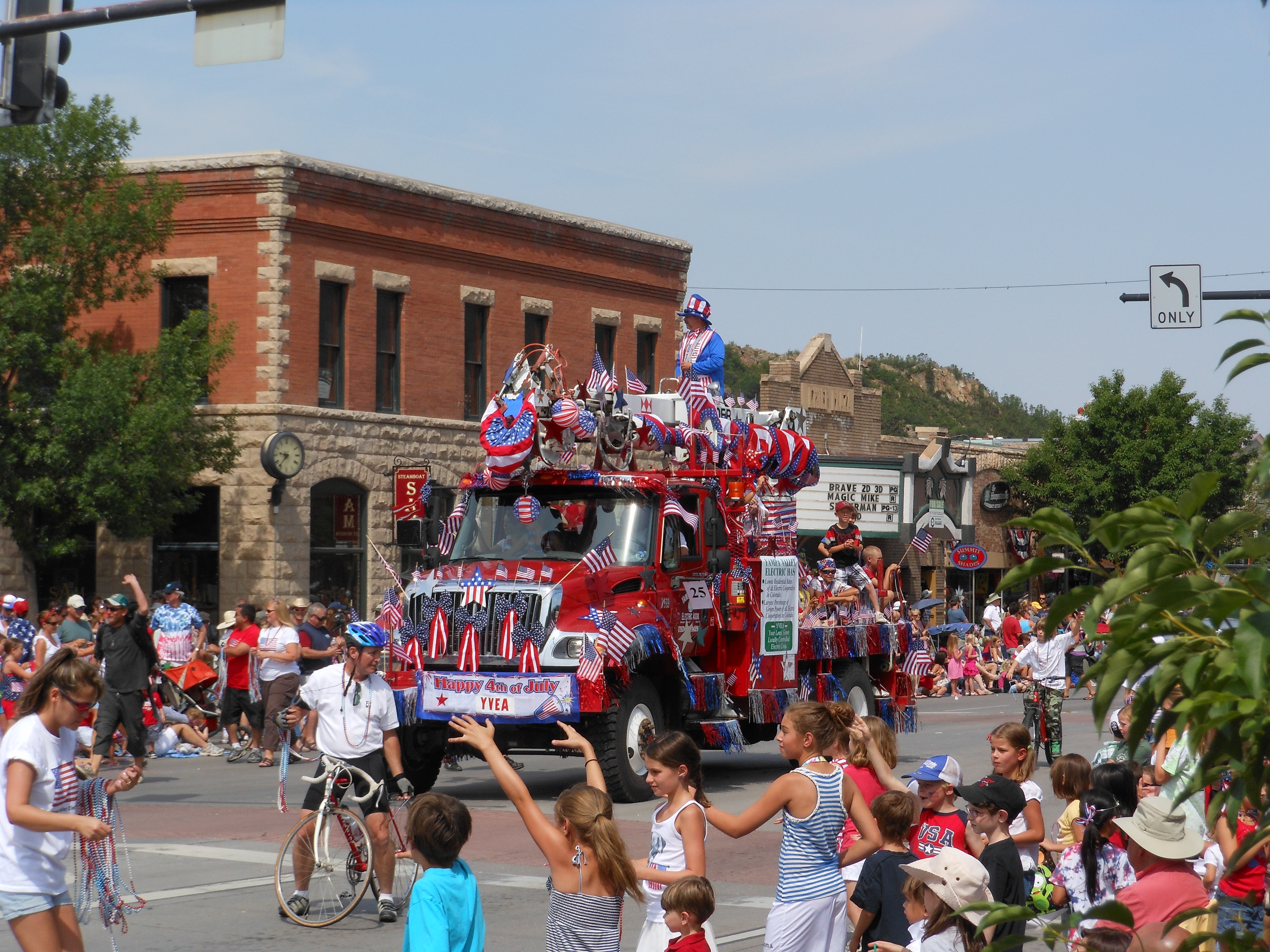
I spent this most American of holidays in Steamboat Springs, Colorado, under sunny skies. It’s a relaxing day full of kids on decorated bikes, dogs sporting flag colors, and strawberry sundaes served up at the community block party.

4thgolden

Of course the evening will bring fireworks.  In this very dry summer of wildfires all over the western United States, people are scanning the skies and hoping that clouds will bring much-needed rain.

fireengine


Meanwhile, we are grateful to our firefights who put themselves in harm’s way to keep us all as safe as we can be.  We mourn the loss of so many brave firefighters in Arizona.

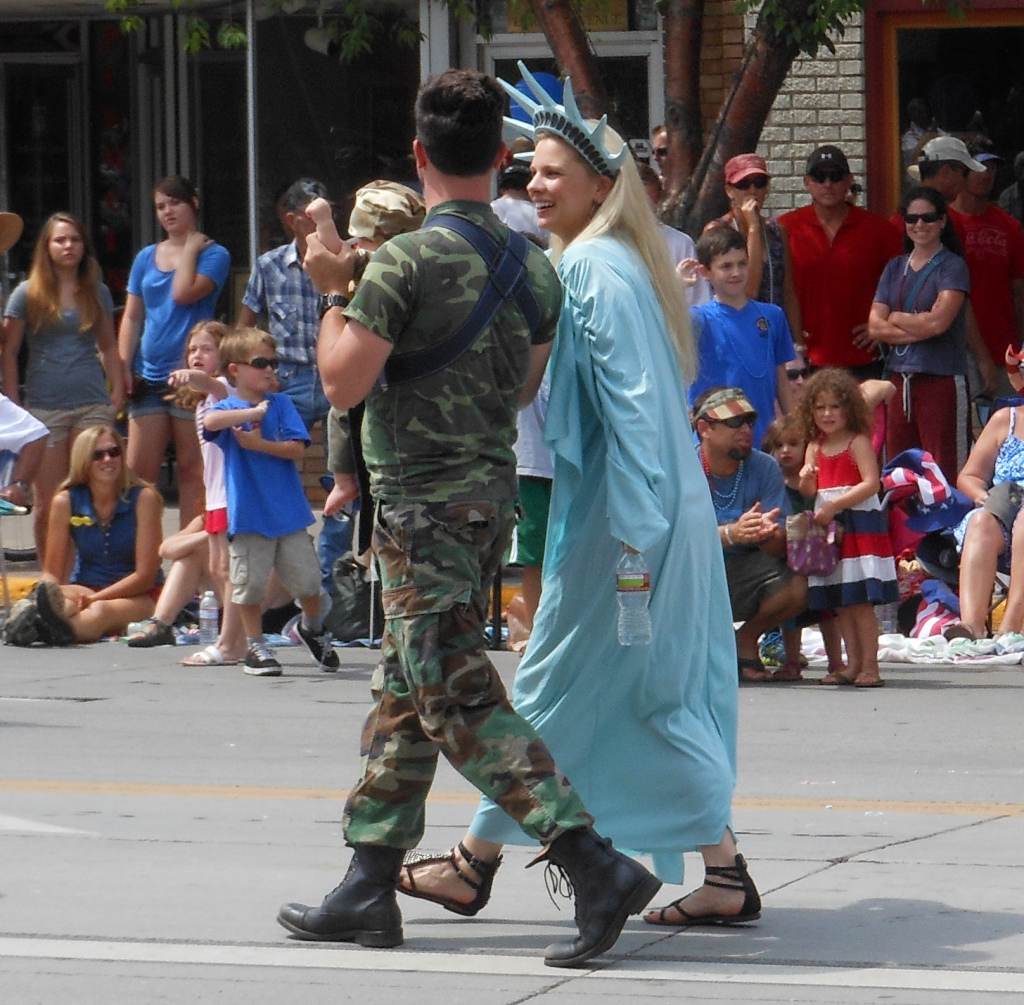
soldierliberty

We also honor our military men and women, who serve our freedom so well.

Happy Fourth of July!

Peering at the Peerage

The New York Times recently published a story about momentous changes possibly coming to the hallowed British laws governing titles and property.  The article is titled “Son and Heir? In Britain, Daughters Cry No Fair.” Royal heredity laws were recently changed to benefit the baby due soon to Prince William and Duchess Catherine.  Boy or girl, the child will become third in line to the throne. (I’m thinking that fun-loving Prince Harry will not really mind giving up his place).

This raises questions for other families still under the laws of primogeniture:  inheritance by males only.  Only in the British Isles does this still happen.  Most European countries have long since required parents to provide for all of their children, regardless of sex or birth order.  But in the British Isles, titles and lands have been held together and preserved for families precisely because the oldest son almost always inherits, and no one else gets anything.

But the changes in royal inheritance law have emboldened other families to question the age-old way of doing things.

Liza Campbell, daughter of the 25th Thane of Cawdor; photo from NYT

Liza Campbell, daughter of the 25th Thane of Cawdor; photo from NYT

For example, Liza Campbell, pictured above, grew up on her family’s Scottish estate, complete with castle, knowing all the while that her younger brother would inherit it all.  (There is still actually a Thane of Cawdor–he’s not just a character from Shakespeare’s MacBeth). Her father always told her, “Your face is your fortune”–meaning that it was up to her to marry well since there was nothing else coming to her.

Now, laws to allow the oldest child to inherit, whether male or female, are making their way through the British legal system.  This means that both titles and lands could still be held together for a family, but having the all-important son would no longer be a requirement.  In Downton Abbey terms, Lady Mary would just inherit the whole kit and kaboodle, and she could marry whomever she pleased.

The ultimate source on titles in Britain, Burke’s Peerage, still publishes the guide found on many a British bookshelf.  Naturally, it’s now an interactive website, too.  Founded in 1826, Burke’s Peerage also lists the genealogical history of all the royal families of Europe and the presidential families of the United States.

Only in Great Britain, though, do titles mean anything in a legal sense.  Many Europeans use their hereditary titles, but they have no legal standing.  And unless the person in question inherited the lands and estates that used to go along with the title, there is no income either. Of course, the “death tax” wreaks havoc on those lucky enough to actually inherit real estate as well as titles.  Some people joke that royal titles in most of Europe are about as valuable as vanity license plates.  In Britain, though, inheritance among the aristocracy still means something.  So any change will have profound results.  Whether there should even be heredity titles–or a monarchy–are subjects of another whole debate.  Change comes slowly in a land as bound by tradition as Great Britain.

The article from The New York TImes is at

Join me next time for more explorations into the history of Europe and the British Isles!

Jane Austen in Tel Aviv

I just saw a fine Israeli movie, Fill the Void, that could have been written by Jane Austen–if she’d spent some time in an ultra-orthodox Hasidic community in Tel Aviv. The director, Rama Burshtein, is an insider in this community–and she specifically said she had Jane Austen in mind when working on this movie.

"Fill the Void" poster, from Ebert review cited below

“Fill the Void” poster, from Ebert review cited below

The men wear prayer shawls, various Old-World-looking hats, and ringleted forelocks.  The women wear modest but attractive outfits, with a lot of fussy detail. The women clearly take great care with their appearance. Turbans cover their hair once they are married.  Only the single women are bareheaded. The sexes are informally separated during gatherings at homes or in the synagogue–the women sit in the next room, but everyone can see and speak with everyone else if they try.

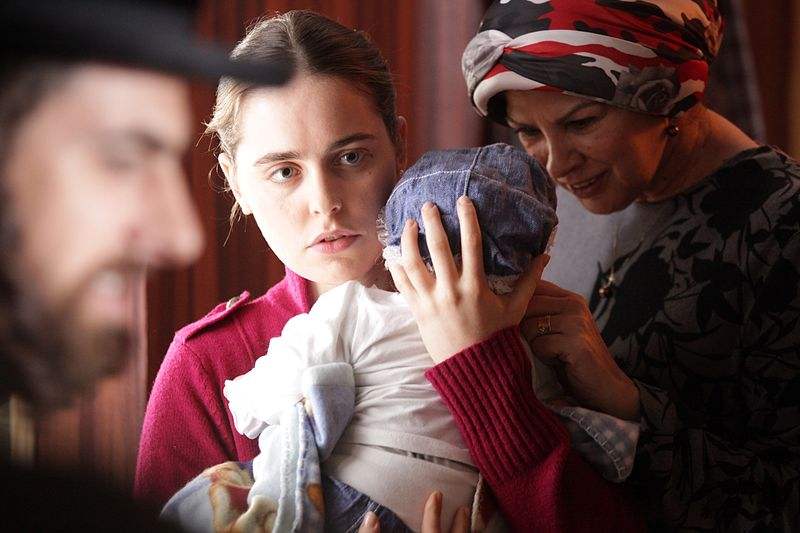
Movie still, Karin Bar, Creative Commons Share Alike 3.0

Movie still, Karin Bar, Creative Commons Share Alike 3.0

As in an Austen novel, the purpose of a woman’s life is to marry.  Here, the point is not so much to marry a rich man–it seems that in this group, an adequate income is assumed.  (The rabbi distributes money on request during a holiday celebration. Is this communal money, or is it the private money of the rabbi? I couldn’t tell, but the rabbi’s wife clearly knows all about whatever finances are involved). The point here is to marry within the group, and to marry someone compatible. Compatibility is very hard to gauge, though, when there is no dating as we know it.

There is a very constrained code of behavior, as in an Austen novel. I’m thinking of Elizabeth Bennet’s horror, in Pride and Prejudice, when oafish Mr. Collins walks right up to Mr. Darcy and begins babbling about a mutual acquaintance, WITHOUT A FORMAL INTRODUCTION.  In the Israeli movie, single men and women are strictly shielded.  In the opening scene, a mother and daughter stalk a prospective bridegroom in a grocery store, just to get a glimpse of him from a distance. As in an Austen novel, the women never question their place in this social system.  They just accept it as their reality.  However, just as in Austen novel, the women have their ways of influencing the men who are nominally in charge.

It goes without saying that to everyone in this community, this way of life, though constrained, is precious. In the sorrowful history of the last century, countless communities like this one disappeared forever.

The plot is simple:  an 18-year-old girl is giddy with the prospect of marriage to the young man glimpsed in the grocery store.  But her family hesitates because a tragedy intervenes, and the young man’s family withdraws the offer.  The tragedy is that the girl’s pregnant sister dies suddenly in childbirth, leaving a tiny son and a grieving widower who, everyone agrees, must marry again.  There is an offer from a woman in another Hasidic community in Belgium.  The girl’s mother can’t bear to part with her first and only grandchild.  So she puts pressure on the widower, some years older, to marry her 18-year-old daughter.  She puts even stronger pressure on her daughter, even though her husband, the rabbi, does not think the match appropriate.

Movie Still, Karin Bar, Creative Commons Share Alike 3.0

Movie Still, Karin Bar, Creative Commons Share Alike 3.0

The way the dilemma works out is fascinating and touching.  A senior rabbi, meeting with the couple, asks, “How does the girl feel about the match?”  The girl replies, “It is not about feelings.  It is the right thing to do.”  He smiles gently and says, “It is ONLY about feelings.”  I can see the appeal of this way of doing things.  The elders are wise and loving.  They have seen a lot of life, and they truly have the best interests of the young people at heart–mixed, of course, with their own very human needs.

The rituals depicted are ancient, mysterious (at least to me) and moving.  We see a mourning group sitting shiva, a Purim holiday celebration, Sabbath meals, formal community gatherings, a circumcision, a betrothal, and a wedding.

One big difference between this world and Jane Austen’s world is that here, there seems to be no dissembling or hiding of one’s true feelings.  The emotions of the community members are palpable, whether in joy or in sorrow.  In this insular community, I suppose no secrets can be kept for long.  And anyway honesty is clearly a core value. At times of high emotion, the people have a habit of rocking back and forth in their seats–so they really wear their hearts on their sleeves.

But as in an Austen novel, a person’s fate turns on a look, a gesture, a few quiet words spoken, a note quickly written and read just in time by the right person.  As in an Austen novel, a woman’s fate depends on her luck in marriage. I have not been to Tel Aviv, and if I go I will probably not see the inside of a Hasidic community.  Many cultures have contributed to the Europe we know today. I very much enjoyed this intimate and detailed look into a culture that somehow feels both alien and familiar.

The film has won numerous awards.  The ending is ambiguous; one hopes these characters have made choices that will make them happy.

The late Roger Ebert had a very sensitive review of the movie.  It is at http://www.rogerebert.com/reviews/fill-the-void-2013. The Variety review, which mentions the Jane Austen connection, is at http://variety.com/2012/film/reviews/fill-the-void-1117948164/.

Channeling Freddie Mercury in Buxton

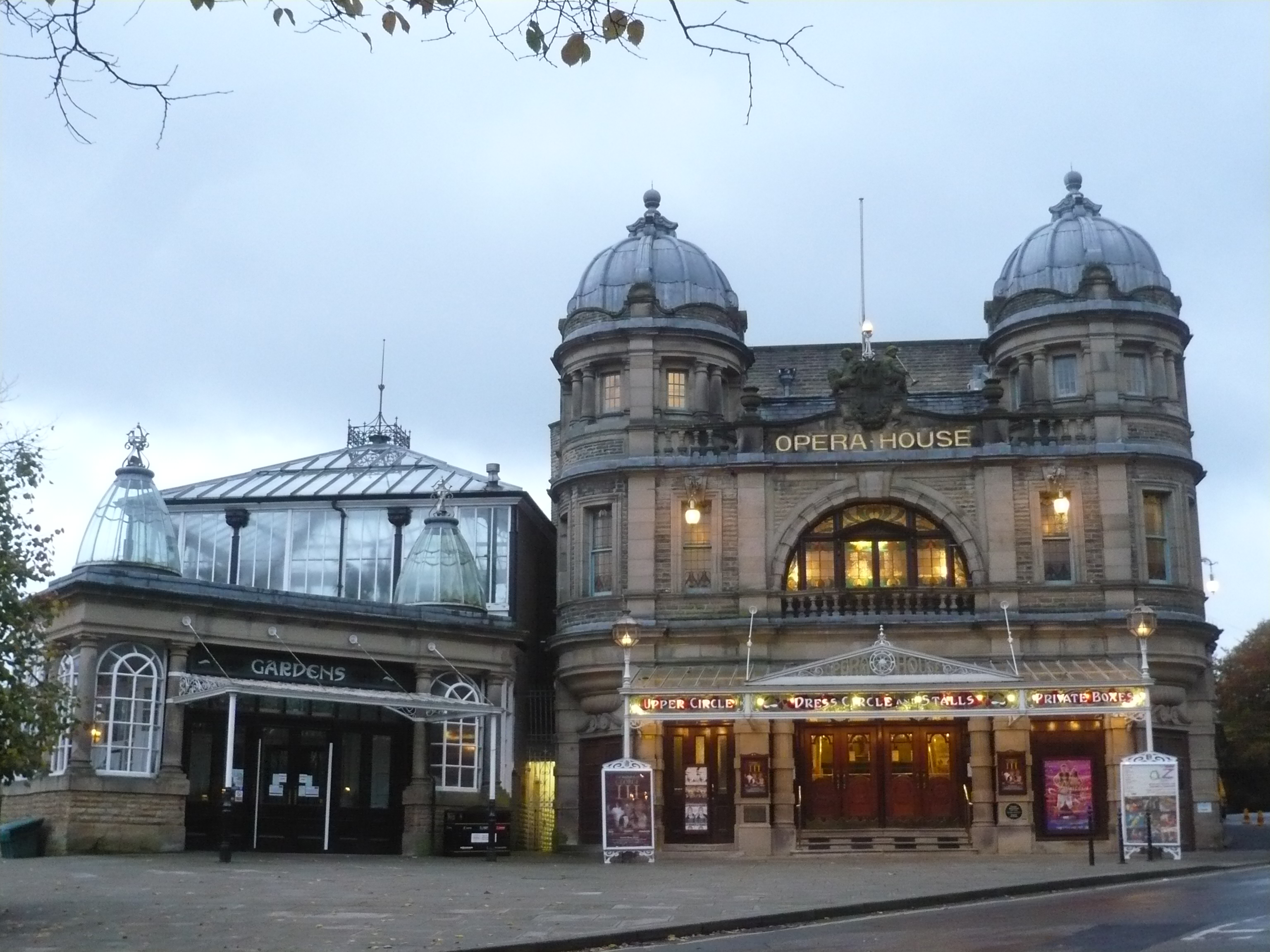
While watching the BBC series Lost Empires, I am sure I recognized one of the locations:  the Opera House in Buxton, England. Built in 1903, the 902-seat theater hosted music-hall shows and other live entertainments in the very period depicted in the series, 1913. (I described this excellent series in yesterday’s post). By 1927, movies had overtaken variety shows in popularity.  The theater turned into a cinema.  In 1979, it was refurbished for live performance, which continue year-round to this day.  I’d love to be there for the annual Gilbert and Sullivan Festival, but I don’t like to travel in the height of summer.  So I take potluck when I go. There is some kind of live entertainment, or a high-quality film, almost every night of the year.

Buxton Opera House

Buxton Opera House

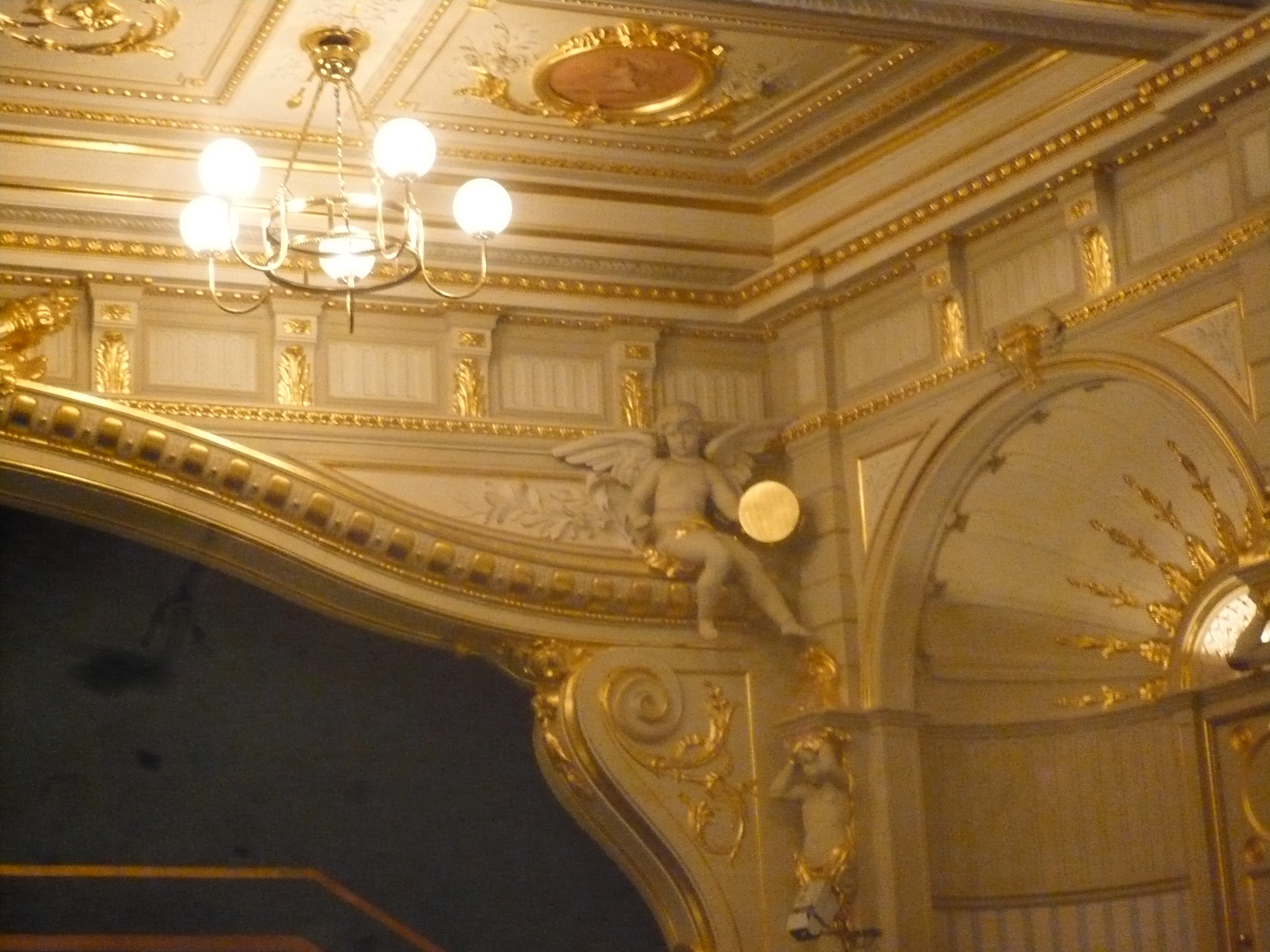
Buxton Opera House Detail

Buxton Opera House Detail

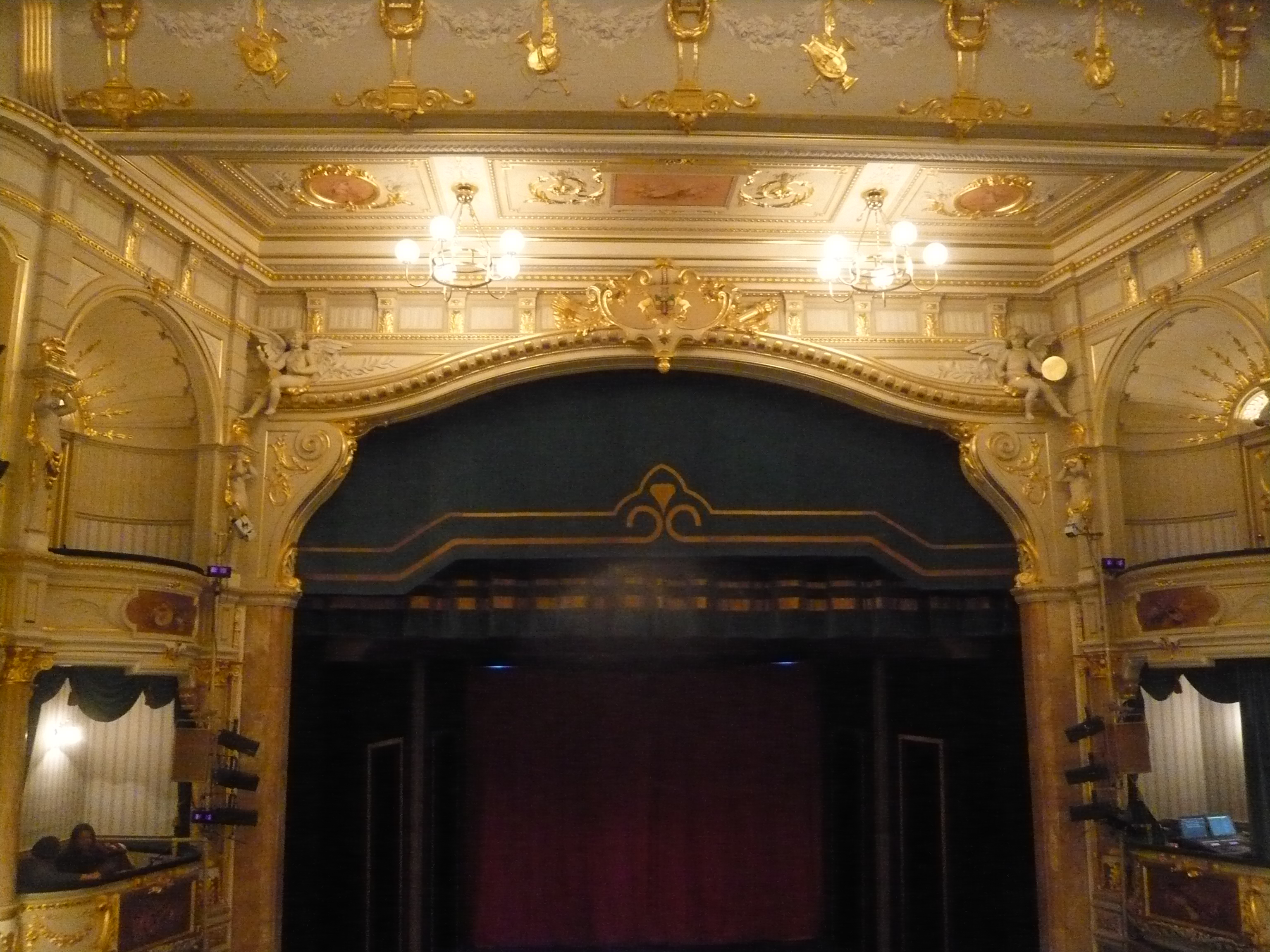
The theater interior is beautiful, white with gilded cherubs, curlicues galore,  and red velvet curtains.  There is not a bad seat in the house, not even way up in “the gods”–theater parlance for the very highest and cheapest seats. In Lost Empires, the seasoned trouper played by Laurence Olivier cautions the young performer played by Colin Firth to always play to “the gods”–the customers in the cheap seats.  They can make you or break you, soon-to-be washed-up performer warns, and he should know.

Buxton Opera House Stage

Buxton Opera House Stage

I once saw a mountain-climbing documentary at the Opera House.  Another time, I saw a very good touring performance of the play “The Madness of King George.” Last time I was in Buxton (to visit nearby Chatsworth and to enjoy the beauty of Derbyshire), I bought tickets for an event I probably would have given a miss, if there had been anything else going on.  There was a Queen tribute band, starring Patrick Meyers as the late Freddie Mercury.  As it turned out, I had a great time.  The band is called Killer Queen.  They fill large stadiums, and they put on a smaller-scaled show for venues like the Buxton Opera House.  Patrick Meyers does not quite have the 4-octave range of Freddie Mercury, but he makes up for it in showmanship, passion, knowledge of his subject, and sheer kinetic energy.

Patrick/Freddie danced and sang his heart out, flinging a series of flamboyant satin jackets out into the audience at just the right moments. And so it went, through the great classic rock repertory of Queen: “Bohemian Rhapsody,” “Killer Queen,” “Somebody to Love,” “Don’t Stop Me Now,” “Crazy Little Thing Called Love,” and of course the anthem “We are the Champions.”

The audience was almost as entertaining as the show itself.  The first two rows were filled with teenagers and young adults from a nearby school for people with various disabilities.  To prepare for the outing, they must have been listening to Queen albums nonstop. Many of them knew every song by heart and sang along, with gusto.  They jumped up and danced, too–which Mr. Meyer tried in vain to get the rest of the audience to do.

One young man in particular was in ecstasy through the entire performance.  He kept moving right up to the stage apron, pounding out the rhythms with his hands.  Every now and then, a teacher would gently lead him back to his seat, but he popped up again every time.  He just couldn’t help it.  He sang every word of every song, and he shouted and spun in circles between songs.

When the show ended, and the curtain calls were done, the band’s drummer dashed to the front of the stage and handed his drumsticks–probably still smoking from the heat of the performance–to this young man.

Until I attended this show, I had never quite understood the fuss about Queen, or the influence on the development of rock. Now I get it.  Reportedly Sacha Baron Cohen is developing a film about the remarkable journey that the multi-talented Farrokh Bulsara took to become Freddie Mercury.

Freddie Mercury died of AIDS in 1987.  I like to think that his talent and creativity live on in memory, and in performances like the one I almost didn’t go to see. I imagine the young man who received the special drumsticks still treasures them as a memory of a wonderful night.

The music hall tradition lives on in Great Britain, taking new forms and honoring old ones. Tastes have changed over time, but the need for audiences and performers to connect remains the same.

A Vigorous Voice from the Past

I hurried to visit Tyntesfield within a year or two of its opening to the public.  The house was only partially open, and work was going on all over the estate.  During my visit, I stood with a tour group in the Billiard Room, admiring the vaulted ceiling and the light from the high windows.  The billiard table, custom-made for the family, connected to an electronic scoreboard.  Pressing a button on the side of the table recorded the score–quite an innovation, for Victorian times.

William Gibbs was 75 when his dream home was completed, and he had four sons.  Three of them were still teenagers, so presumably the room was built and furnished for them.  It was not, however, a smoking room–Mr. Gibbs allowed only smoking in the very highest room of the house, a tower on the third floor.  (I’m sure the teenagers found ways around the various house rules–they always do).

We had all just looked at a rather ornate urinal in an adjoining room–another modern innovation. The guide was talking about how the room was built for and used by men.  Suddenly an elderly lady in the back of the group thumped her cane on the floor and interrupted the guide.  She was a family member and had spent a good deal of time in the house.  One of the 19 heirs!  (I hoped she had collected a cool million and not blown it all at the casino).  She proceeded to set us all straight.  Did women use the billiard room?  Yes, they did!  Trust me, you would not have argued with her.

The lady went on with a story about the bats that had infested the former men’s servants quarters nearby.  Later, I read that the colony of protected lesser horseshoe bats had to given another suitable home on the estate before restoration could begin in those rooms.

The tour guide wisely let the lady keep talking.  I’d have listened to her all day.  At the time, I didn’t know about the Great Kidnapping Incident, or I’d have asked her about it for sure.  In 1988, the late Lord Wraxall had been kidnapped at his home. The ruffians knocked him to the ground and demanded his house keys and the combination to his safe.  But the burglar alarm went off–I don’t know whether he was inside or outside the house at the time.  So they threw him into the boot (the trunk, to Americans) of his own car, which they drove about 2 miles away and abandoned.  He was left there for 7 hours until someone found him. According to some reports, all he had to say was, “Good grief, there’s more room in there than I ever thought.”

The National Trust is going to great lengths to collect stories about life in the house.  There is an interactive website where people can contribute their own memories.  It is at http://www.nationaltrust.org.uk/history/stories/. Personal stories are placed in a timeline. Family, servants and friends have contributed their memories.

Recently, the house has been featured on the wildly popular BBC TV series Dr. Who–very appropriately, since Dr. Who is a Time Lord.  Not only can he travel through time, but he is able to regenerate his body in a different form when near death–very handy for showrunners who have to cope with new actors taking over the part.

At Tyntesfield, and at many other National Trust Properties, enchanting doorways continue to lead us into the past, carefully preserved for future generations.

Join me next time for more explorations into the art and history of Europe and the British Isles!