The streets of the old city center are enchanting, especially at this season. The tall column, liberally coated in gold, was built in the late 1600s in gratitude for the ending of a bad episode of plague, before everyone in the entire city died. It’s a riot of triumphant angels, with the Emperor Leopold front and center. The plague is long forgotten but the column takes its place in the exuberant life of Vienna.
Category Archives: Uncategorized
Sisi in Vienna
Miles of Memories
The title is from today’s post in one of my favorite blogs, allthingsfulfilling.com. Sue Batton Leonard is the writer. She really does write about anything and everything that brings joy and fulfillment: art, film, books, nature, travel, and above all people. She seeks out interesting folks and tells their stories. Right now, she’s about to publish a story of her own, a memoir about her family and her happy but challenged childhood in Baltimore. I’ve read the manuscript and it is a lovely story about how hardships like life-threatening health problems sometimes bring the most amazing surprises and blessings into the life of a family.
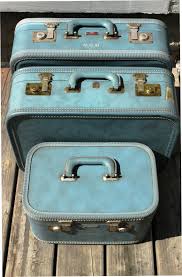
Today’s post begins with a photo of her family’s luggage in the 1950s, all ready for a road trip. The post describes her family’s history of taking off together on long road trips along the East Coast from their home in Baltimore. Sue’s parents believed in the value of travel. In the days before everyone had a smartphone or personal game device, road trips were especially long. When children started fighting in the back seat of the station wagon, Sue’s mother decreed that it was time to sing, and sing they did.
Like Sue, I wish everyone happy and safe travels on this Thanksgiving holiday!
Visit Sue’s always-interesting and inspiring blog athttp://allthingsfulfilling.com/2013/11/27/miles-of-memories/
Stone Age Texting?
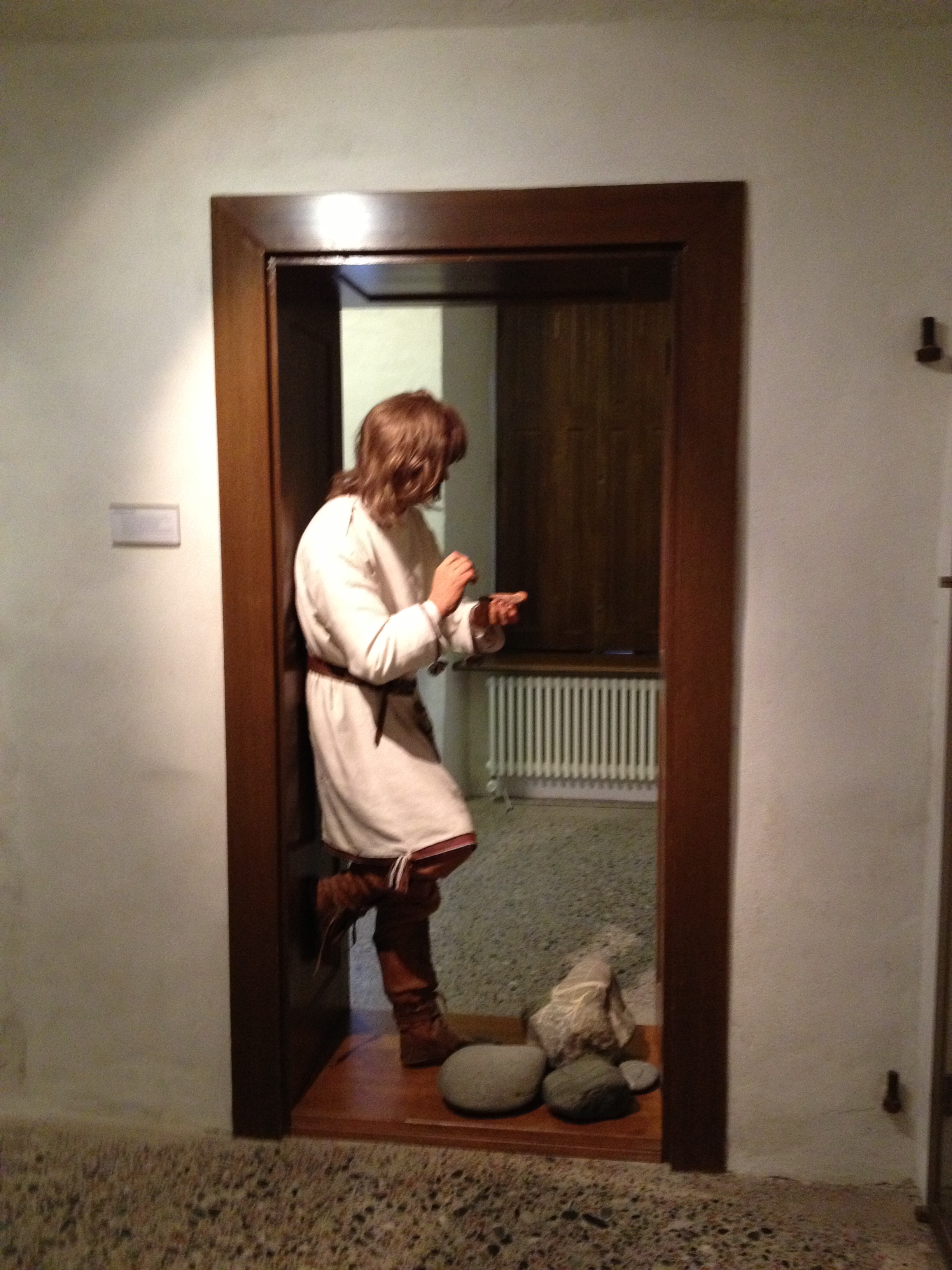
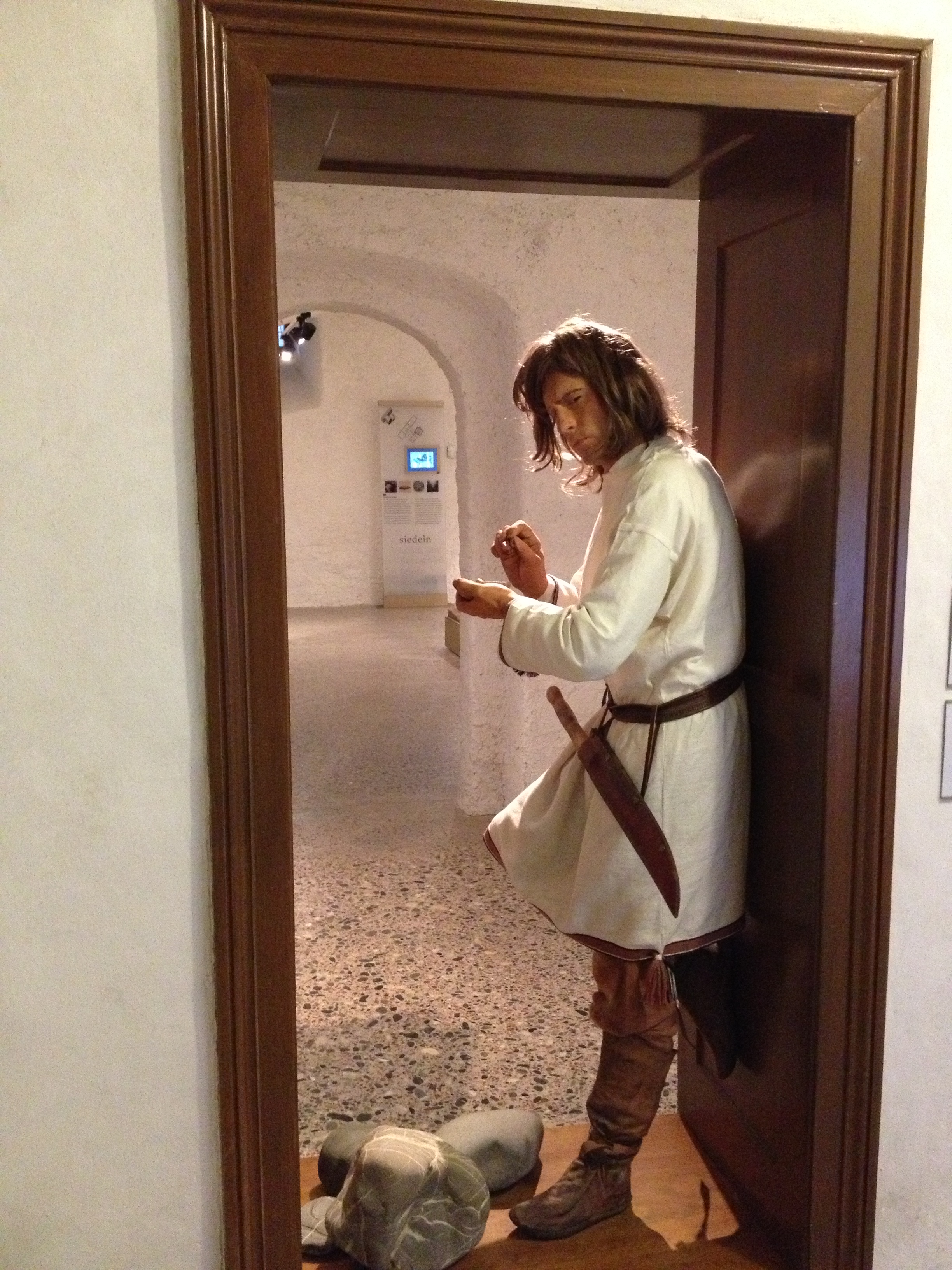
In the Liechtenstein National Museum in Vaduz a couple of months ago, I came upon an oddly dressed tourist checking his cell phone.
No, wait, it was actually a petrified long-ago resident of the town, having a little snack!
He did not look particularly friendly or willing to share, so I moved on. Archaeologists have dug up artifacts going back to prehistory in the tiny country of Liechtenstein. The Liechtenstein National Museum was an absorbing surprise in this tiny country that seems to consist of nothing but banks and a medieval castle on the mountainside. (The castle is not open for visits, but once a year citizens gather on the grounds to greet their current royalty).
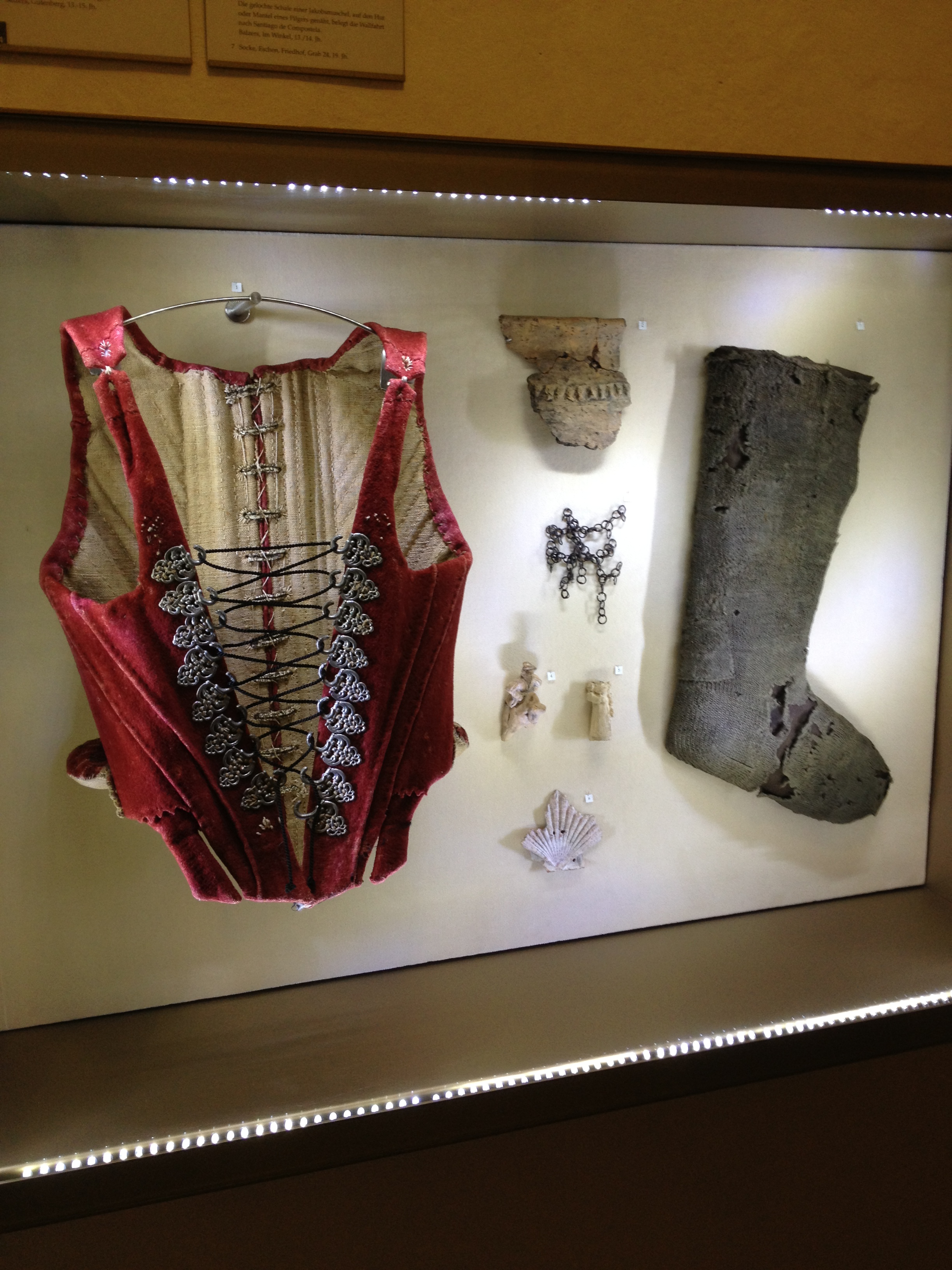
The museum even holds some rare ancient clothing, the most difficult of all old items to preserve.
Several floors of artifacts, creatively displayed, trace the history of this tiny country that has somehow held on to its sovereignty–and its money. Having been to the sumptuous “summer palace” and art gallery the ruling family still maintains in Vienna, I envision troves of treasure and gold socked away in tunnels underneath the mountainside palace. But at least some of that money has been spent on this fascinating history museum.
As I left, my Stone Age friend was still jealously guarding his snack. Join me next time for more explorations into the art and history of Europe!
Dogs in Dutch Art
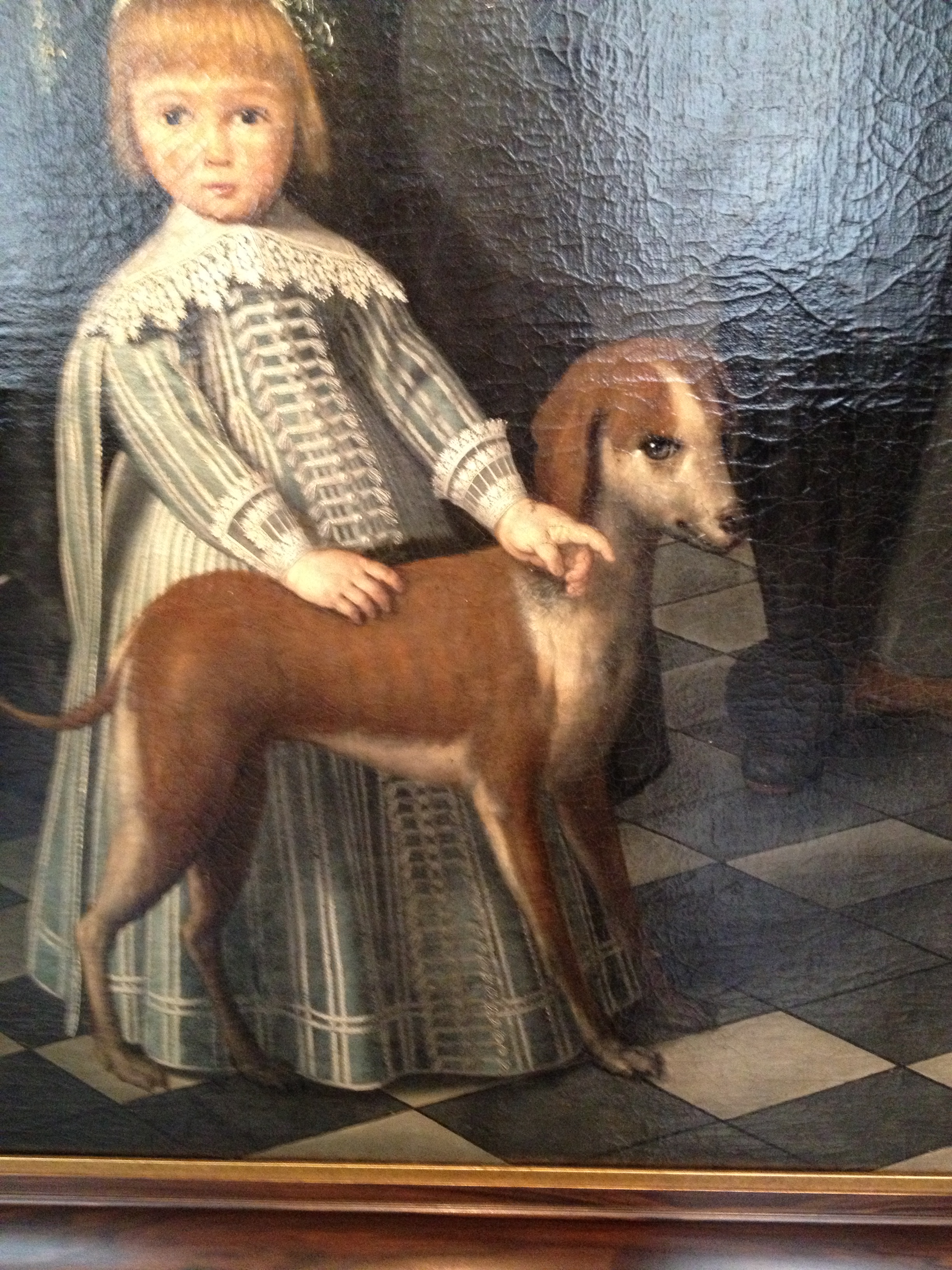
Dogs are everywhere in Dutch museums. As I wandered through the art galleries of Amsterdam, I wondered why dogs appear in so many paintings, especially those dating from the Golden Age. All though the 1600s, the Dutch Republic was pretty much on top of the world. Merchants and seamen traded all over the world, bringing in boatloads of money. A wealthy middle class rose up. There was still a market for religious and historical art, but above all this new wealthy class wanted portraits and depictions of their everyday lives of luxury. Rembrandt, Vermeer, Frans Hals and many other artists were happy to oblige. My guess is that man’s best friend was just part of the good life.
I came across a wonderful poem by David Graham:
The Dogs in Dutch Paintings
How shall I not love them, snoozing
right through the Annunciation? They inhabit
the outskirts of every importance, sprawl
dead center in each oblivious household.
They’re digging at fleas or snapping at scraps,
dozing with noble abandon while a boy
bells their tails. Often they present their rumps
in the foreground of some martyrdom.
What Christ could lean so unconcernedly
against a table leg, the feast above continuing?
Could the Virgin in her joy match this grace
as a hound sagely ponders an upturned turtle?
No scholar at his huge book will capture
my eye so well as the skinny haunches,
the frazzled tails and serene optimism
of the least of these mutts, curled
in the corners of the world’s dazzlement.
The poet’s website is at davidgraham.lifeyo.com.
I’m counting my discovery of this poet as one of the world’s dazzlements!
You Know You’re in France When…
Driving across the Rhine River from Germany into France, I noticed an immediate change: the cornfields have wide strips of flowers planted between the road and the neat line where the orderly rows of cornstalks begin. Germany has its own beauty, but to me, these flower beds are quintessentially French. Of course French farmers would consider it worthwhile to give up twenty or thirty feet of perfectly good corn-growing soil in order to have purple, pink and white flowers swaying in the breeze.
Strasbourg is in Alsace, the most German area of France. Of course this lovely and productive land has been hotly contested over the centuries, between France and Germany. The outcome of the Second World War decided the issue once and for all.
Most of the rest of this trip will be in southern Germany, with forays into Austria and maybe Switzerland. But I’m glad to have had a couple of days just across the border in la belle France, land of impractical beauty for its own sake.
Anne Frank in Amsterdam
How to get the most from an Amsterdam Museum Pass: see everything! The pass covers all the major sights, and Amsterdam is a great city for walking. So we spent the entire day on our feet. Today will be more of the same. It’s especially nice to be able to pop in and out of the more exhausting sights, like the newly-restored Rijksmuseum and the Van Gogh Museum.
We are staying just down the canal from the Anne Frank House, so we pass the ever-present long lines several times a day. Last night, returning home at about 8:30 pm, we did a double take: no line, and the house is open until 9:00 pm! We flashed our Museum Passes and we were in.
Since we last visited, some years ago, a modern annex to the Annex has been added to accommodate the crowds. The claustrophobic hidden rooms, reached by ladder-like stairs, are untouched since the end of World War II. But now there is space for thought-provoking multimedia displays.
The center of the exhibit, as always, is the little red-checked diary under glass. Now there is also space to display some of the many loose pages Anne wrote once she had filled up the little book. She wrote short stories, ideas for novels, and copied out favorite passages from other writers. Toward the end of the war, Dutch authorities advised residents to keep diaries in order to preserve memories of that terrible time. Anne took the advice very seriously. She began copying and revising what she had written, planning to publish a novel called “The Secret Annex.” What was actually published after her death was the pure unvarnished truth: the experience of an ordinary but talented young girl forced to grow toward adulthood in extraordinary circumstances.
I had forgotten that the Annex was in the shadow of the Westerkerk, the magnificent church whose carillon bells played every day all through the war. Anne heard them daily for over two years. They reminded her that a whole world still existed outside her cramped hidden home. During the war, that world was unimaginably treacherous. The four helpers who made it possible for the eight people in hiding had to venture into that world every day for supplies, each transaction putting their own lives at risk.
I always think the exit door of a memorial exhibit like the Anne Frank House should have a mirror. We each need to ask ourselves, what would we have done?
America’s Flag
Like many Americans, I am pausing today to remember the terrible events of 12 years ago. On the morning of September 11, 2001, I was driving cross-country, alone except for a dog and two cats. I woke up in North Platte, Nebraska and walked through hotel hallways to the breakfast room. On my way, I glanced at a TV screen in an empty meeting room and saw the terrible footage of the first plane hitting the first tower. The attack had just happened, and footage was being played over and over. No one else was in the room. I stopped, transfixed. People drifted in and stayed. Someone turned up the volume. More and more shocked watchers arrived, until the room was packed. Together, we watched the second plane hit the second tower. We all knew life would never again be the same. We all were traveling. We all had places to be. But we all shared an impulse to huddle together, trying to make sense of senseless events.
I wondered whether I should continue to my destination in Colorado. Should I return to Minnesota, where most of my family lived? A close family member happened to be in France, attending a business meeting. As it happened, planes were immediately grounded and it was some time before he could return home. But our personal problems were small compared to what happened to so many families.
In the aftermath, Americans shared an impulse to display our national flag everywhere. A friend of mine, Harriet Freiberger, has written an eloquent article describing her feelings about that time and about what our flag means. The article is in Steamboat Today, online at http://m.steamboattoday.com/news/2013/sep/10/harriet-freiberger-why-remember/.
Harriet writes, “Natural instincts magnetized our need for a cleansing antidote, and we found it in that piece of cloth with its red and white stripes and small white stars in a field of blue. For each of us the woven fabric symbolized something different, and, in that difference, lies the beauty of the good it represented.” She goes on to describe her grandfather arriving in New York City from Russia in 1904, and the meaning the flag has held for her family. “True,” Harriet writes, “the flag is only a piece of cloth, but we are in every stitch, and every stitch is connected to another. That is the good. Let us remember.”
We live in an interconnected world. Some of us are fortunate enough to see a lot of the more pleasant parts of that world. Others are trapped in places where they face constant danger from all sides. We Americans treasure our freedom, even as we acknowledge the good and the bad our country has done since its founding. I’m traveling soon. I’ll be an American, wherever I go.
Visiting Sudeley Castle
I don’t know if I’d care to have several separate funerals with crowds of strangers as mourners, but then I’m not an English Queen who was born 500 years ago and survived marriage to King Henry VIII. Katherine Parr, the 6th wife of Henry VIII, was honored last September with not one but two re-enactments of her funeral on the anniversary of her birth. She had already had at least one funeral when she died, plus another one when her coffin was rediscovered following the ruin of her burial place during the English Civil War, plus another one when her tomb was renovated to its present state. An excellent article about the most recent funerals is at http://www.telegraph.co.uk/travel/destinations/europe/uk/9474364/Sudeley-Castle-the-curious-life-and-death-of-Katherine-Parr.html.
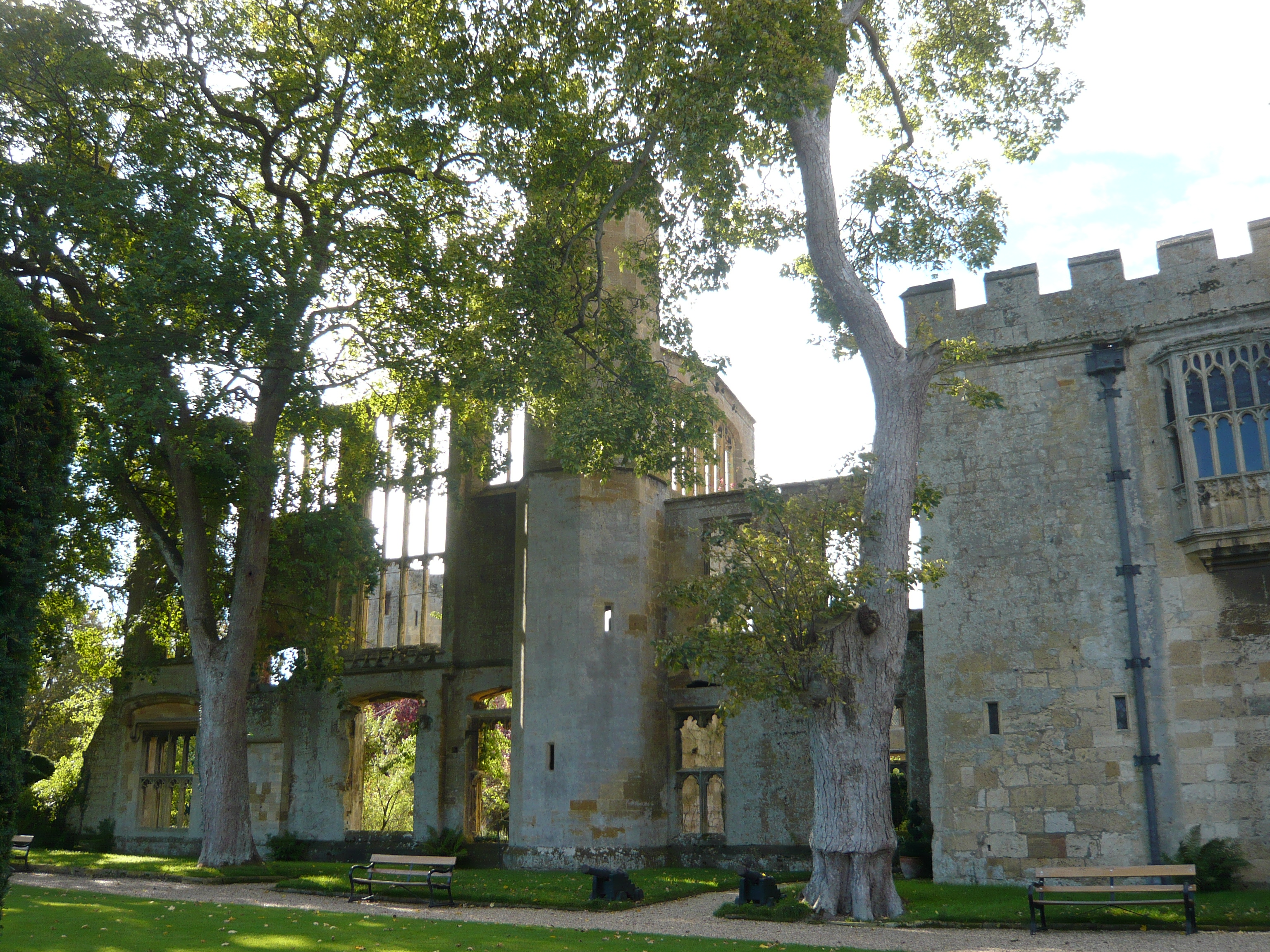
Sudeley Castle is one of the most interesting and evocative historic sites to visit in England. Its origins date from around the 12th century. It has passed in and out of royal possession several times, depending on politics and the outcome of battles. It has been the scene of intrigue and rebellion. Most famously, it was home to three Queens at the same time: Katherine Parr, Elizabeth I, and the ill-fated Lady Jane Grey. The castle is mainly a private home, owned since the 19th century by the Dent-Broklehurst family. They open large parts of the grounds and building for visits at certain times. However, English Heritage members receive a 20% discount.
The chapel is still part of a Church of England parish. Services still take place there–mostly, I think, on Sunday afternoons. According to the castle website, Sudeley Castle is open from
mid-March to early November
from 10.30am-5.00pm daily. On certain days of the week, it is possible to pay an extra fee and tour parts of the family’s private quarters. I would go out of my way to take the private tour. (Children under 12 are not allowed in the private quarters). There are also special garden tours on certain days. I would always check the opening times before driving out to the Castle, though. Weddings or private events could interfere interfere with parts of the Castle and grounds. I would call.
If the place were open, though, I would cheerfully spend about half a day wandering the grounds, touring the castle and chapel, and having lunch on the terrace or in the very nice indoor restaurant. Since I was there last, the Tudor rooms occupied by the three Queens have been restored. There are museum-quality exhibits of exquisite personal possessions of Katherine Parr–and, somewhat ghoulishly, a blackened tooth taken from her coffin. I also remember seeing a very interesting exhibit about a Victorian ancestor of the present owners, Emma Dent. Possibly the exhibit about Katherine Parr occupies that exhibition space at the moment.
The nearby village of Winchcombe is very pretty and not nearly as crowded or touristy as more well-known towns in the Cotswolds. I once stayed in one of the Sudeley Cottages between the Castle and Winchcombe. The Cottages formerly housed some of the help at the castle. They sleep 2-6. They are well-equipped, charming and affordable. WInchcombe is my favorite base in the Cotswolds. It feels like a regular town where actual people go about their lives as they have for centuries.
Time to start planning an English itinerary!
Katherine Parr: The Wife Who Survived
Katherine Parr was the 6th wife of King Henry VIII. Considering his marital history, she must have thought twice before she showed up for that wedding in 1543, when she was 31. The already-ailing Henry died in January 1547. Katherine had already survived two husbands. She did marry Henry, and lived to tell the tale. Then she married Thomas Seymour, believed by many to have been her real love all along. She was unlucky in that marriage, though. She did become pregnant, for the first time, at age 35. But she died a few days after giving birth to a daughter. Her fourth husband, for his part, was involved in various scandals and worse. He was executed for treason in 1549.
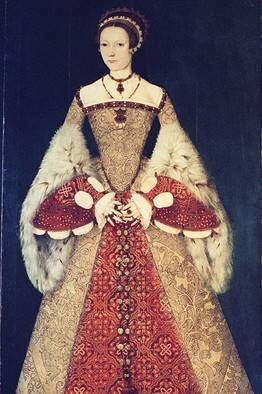
In The Wall Street Journal, the British writer Elizabeth Fremantle writes about the process she used in writing her new historical novel about Katherine Parr. The article is titled “The Life of the Wife of Henry VIII.” It is at http://online.wsj.com/article/SB10001424127887323610704578627820370655036.html. The article reproduces a fine portrait of Katherine.
The book, “Queen’s Gambit” (Simon and Schuster), will come out in a few days. Elizabeth Fremantle writes eloquently of how this Tudor-era queen came alive for her when she visited Hampton Court Palace, where Katherine married Henry VIII. The day of the writer’s visit, actors happened to be portraying the wedding festivities. Afterward, the writer visited the kitchens, all extensively preserved and restored, and gained insight into the lives of people who must have served the royals.
I’ve been to Hampton Court Palace too. It is truly steeped in history, and much easier to take in than many of the sights in central London. The best way to get there from the city is by train. Visitors who buy a day return on the train receive a nice discount on admission to the Palace.
It’s easy to see why Henry VIII appropriated this peaceful and luxurious river retreat from his right-hand man, Cardinal Wolsey. I will certainly be reading Elizabeth Fremantle’s new book about this very intelligent woman who navigated her way through perilous times in the Tudor era.
Join me next time for more explorations into the art, history and literature of Europe and the British Isles!