Category Archives: History

Stone Age Texting?

In the Liechtenstein National Museum in Vaduz a couple of months ago, I came upon an oddly dressed tourist checking his cell phone.
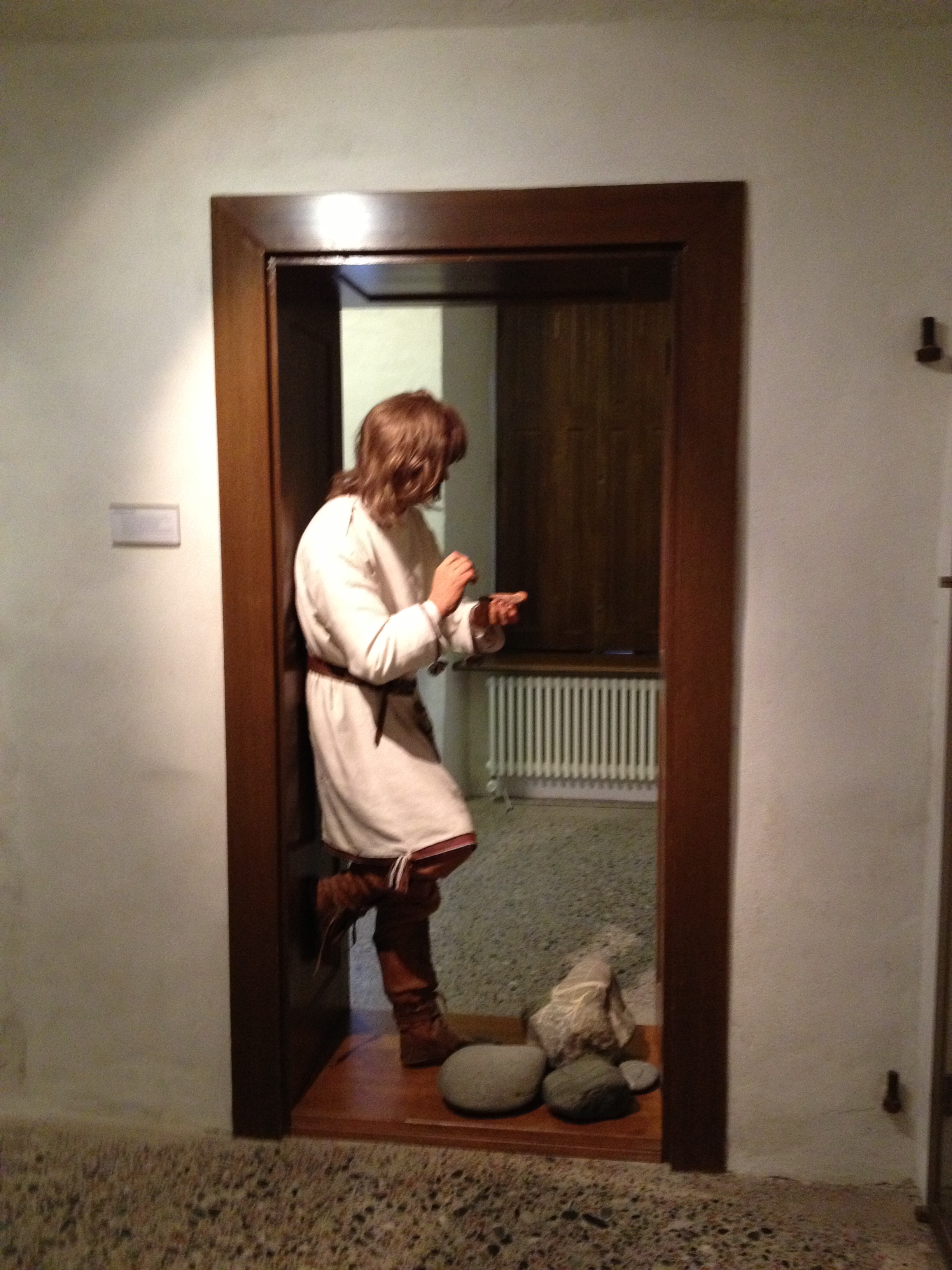
2013-09-27 14.39.58

No, wait, it was actually a petrified long-ago resident of the town, having a little snack!

2013-09-27 14.55.37

He did not look particularly friendly or willing to share, so I moved on. Archaeologists have dug up artifacts going back to prehistory in the tiny country of Liechtenstein.  The Liechtenstein National Museum was an absorbing surprise in this tiny country that seems to consist of nothing but banks and a medieval castle on the mountainside. (The castle is not open for visits, but once a year citizens gather on the grounds to greet their current royalty).

The museum even holds some rare ancient clothing, the most difficult of all old items to preserve.
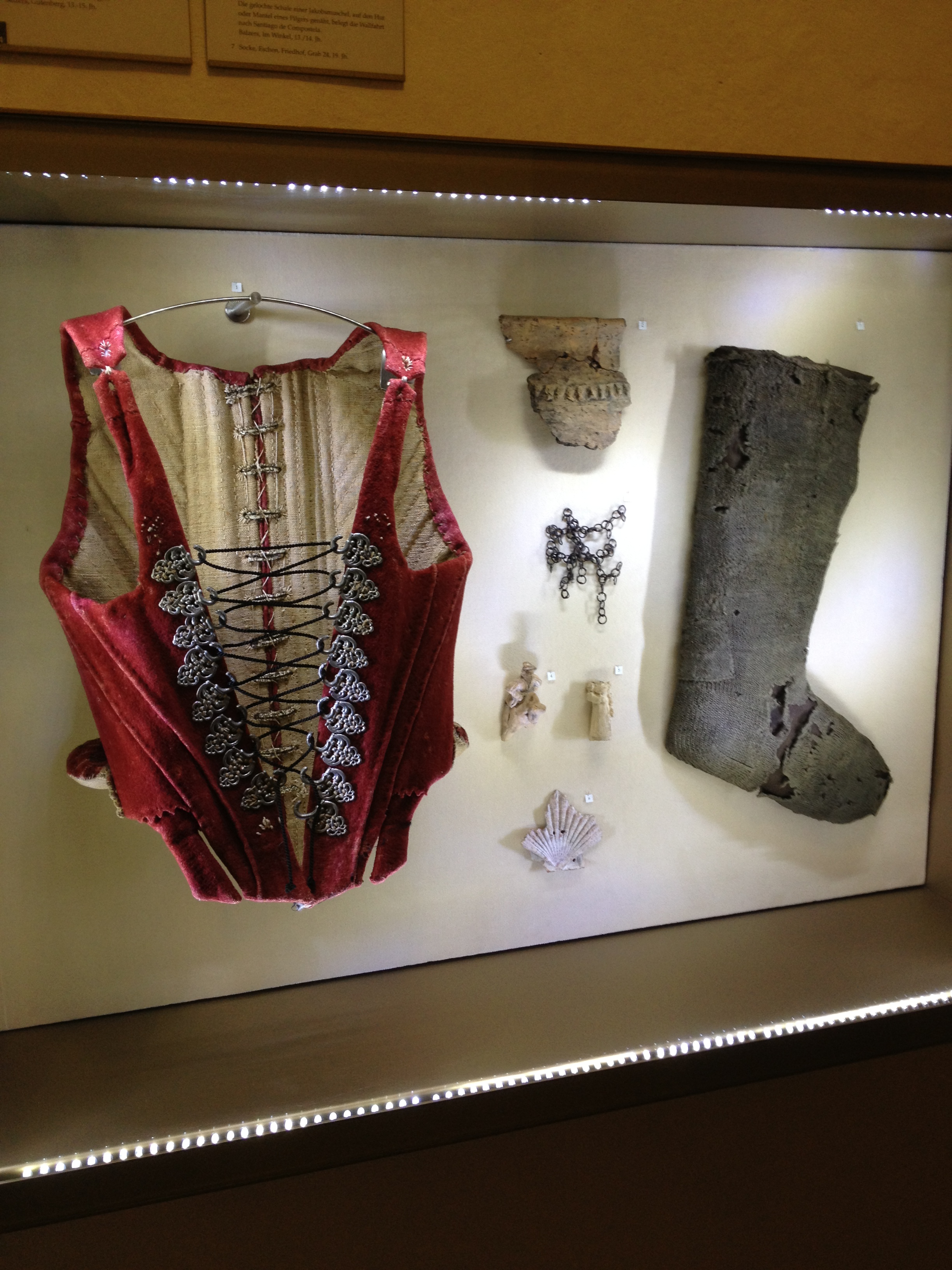
2013-09-27 14.54.22

Several floors of artifacts, creatively displayed, trace the history of this tiny country that has somehow held on to its sovereignty–and its money.  Having been to the sumptuous “summer palace” and art gallery the ruling family still maintains in Vienna, I envision troves of treasure and gold socked away in tunnels underneath the mountainside palace.  But at least some of that money has been spent on this fascinating history museum.
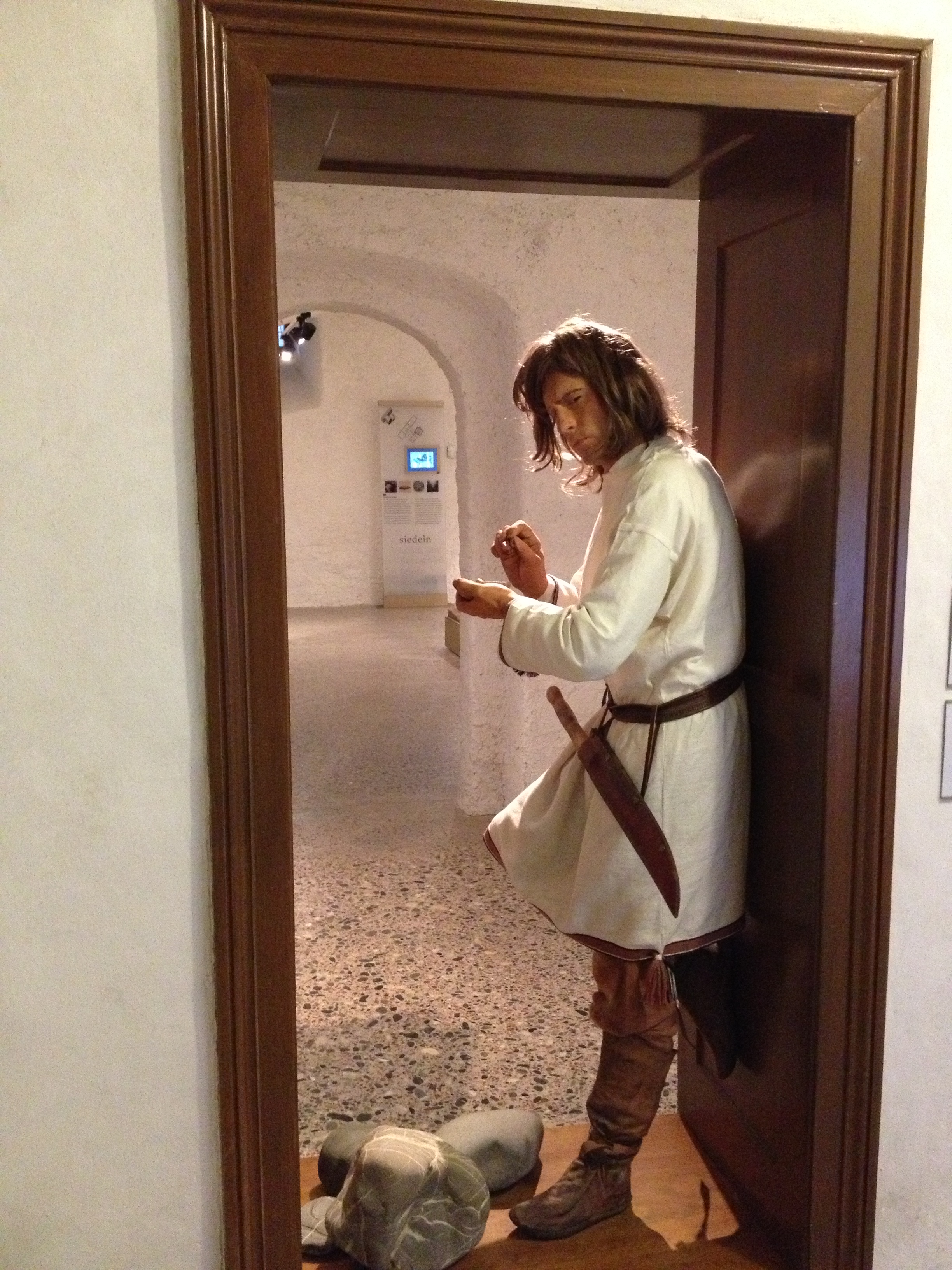
2013-09-27 14.51.28

As I left, my Stone Age friend was still jealously guarding his snack.  Join me next time for more explorations into the art and history of Europe!

Kids and Their Costumes

ChildMilitia

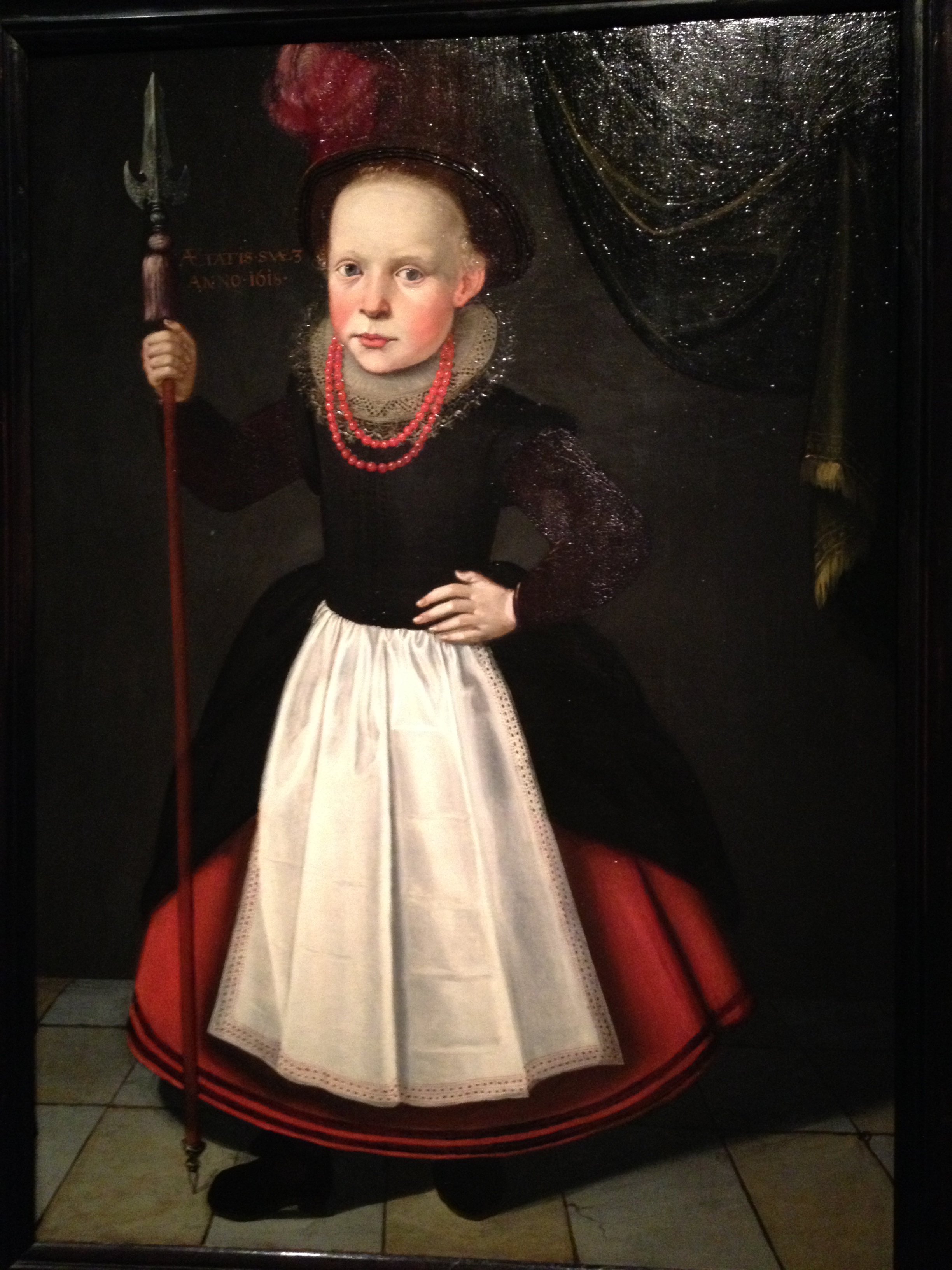
Last month in the Amsterdam History Museum, I admired this touching portrait of a solemn little boy dressed up as a militia officer, complete with a pike in his hand.  This child was no doubt a member of a wealthy family in the Netherlands of the 1600s.  The city militia of the time was not so much a military or police organization as an exclusive club for the elite.  This child’s family hoped he would grow up to be a civic leader.  At that time, children were generally portrayed as miniature adults. Still, parents must have had the same feelings present-day parents have.

images

This portrait reminded me of the costumes present-day children wear, for Halloween and for everyday play. The firefighter’s costume above is for sale at http://www.rakuten.com/prod/kids-baby-halloween-costume-firefighter-fireman/211550071.html?sellerid=23844739. I saw kids trick-or-treating in similar costumes last week.

We all want our children to grow up to be useful members of society.  I’m sure that parents in the 1600s, like present-day parents, watched each stage of their childrens’ development with a mixture of pride and apprehension.  Then as now, parents must have wished they could prolong childhood for their little ones.

Join me next time for more explorations in the art and history of Europe!
Happy Halloween!

HalloweenDogWitch

The origins of the holiday we know as Halloween are lost in the mists of time–maybe they’re Celtic or Welsh, maybe Roman.  The Christian liturgical calendar celebrates All Saints’ Day on November 1 and All Souls’ Day on November 2, thus giving the night of October 31 the name All Hallows Eve.  In parts of Europe, the three days around what we call Halloween are still celebrated as religious holidays when the departed are remembered–and when they possibly  walk the earth.  Jack-o-Lanterns might have begun as representations of wayward spirits.

Many churches displayed the relics of saints during these days.  Some historians theorize that parishes too poor to own any actual saintly relics encouraged parishioners to dress up as their favorite saints instead.  Then again, some historians believe that costumes were first worn as disguises to prevent any of the dead from seeking vengeance against their still-alive enemies.  Pretty deep stuff!

Cleopatra

As for me, I’ll be celebrating Halloween with kids–and that includes both children and adults who give themselves permission to be someone or something else for a few hours. I’m Cleopatra! I expect plenty of pets will get in on the fun, too. Happy Halloween to all!

More Dogs in Dutch Art

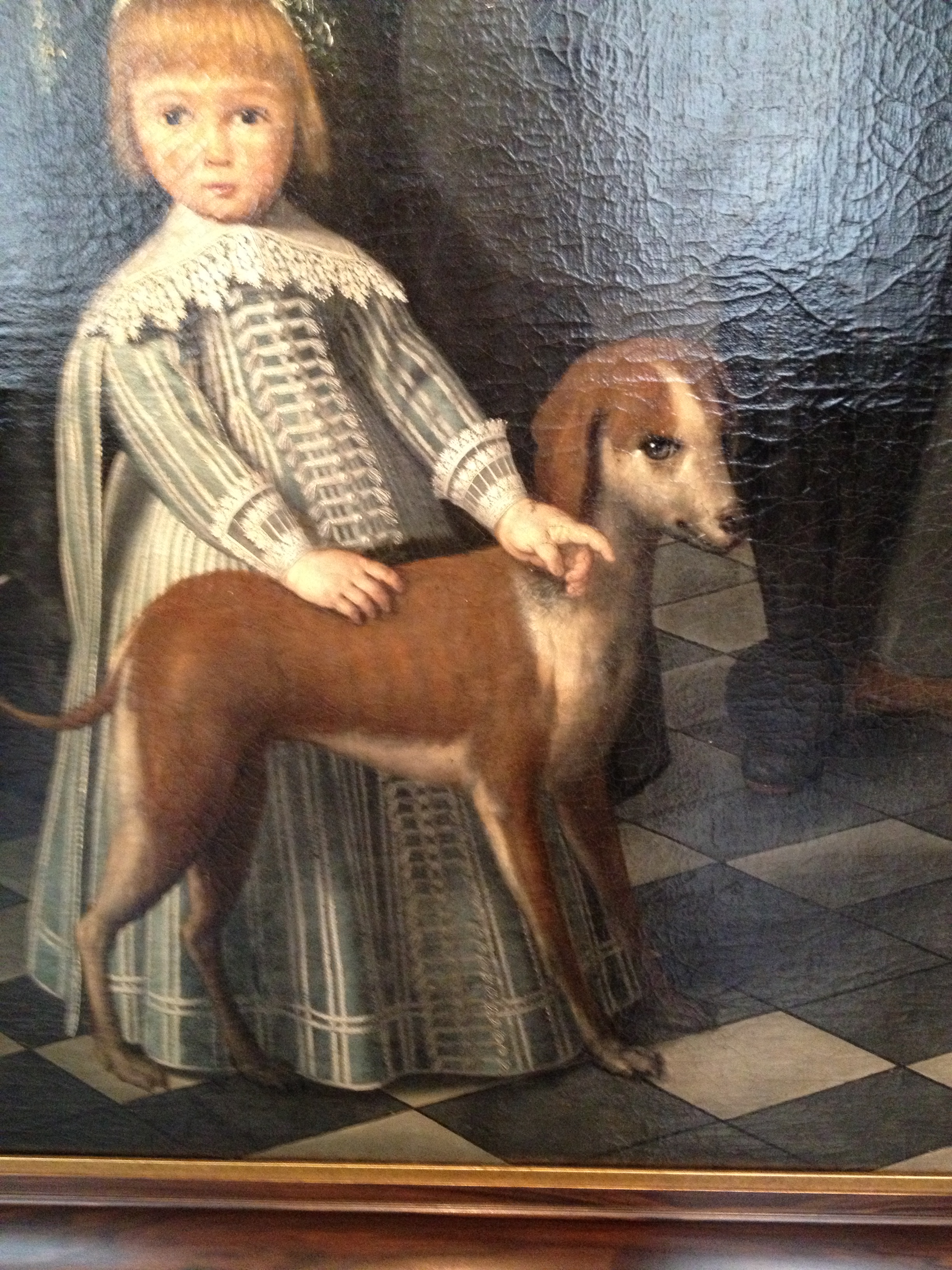
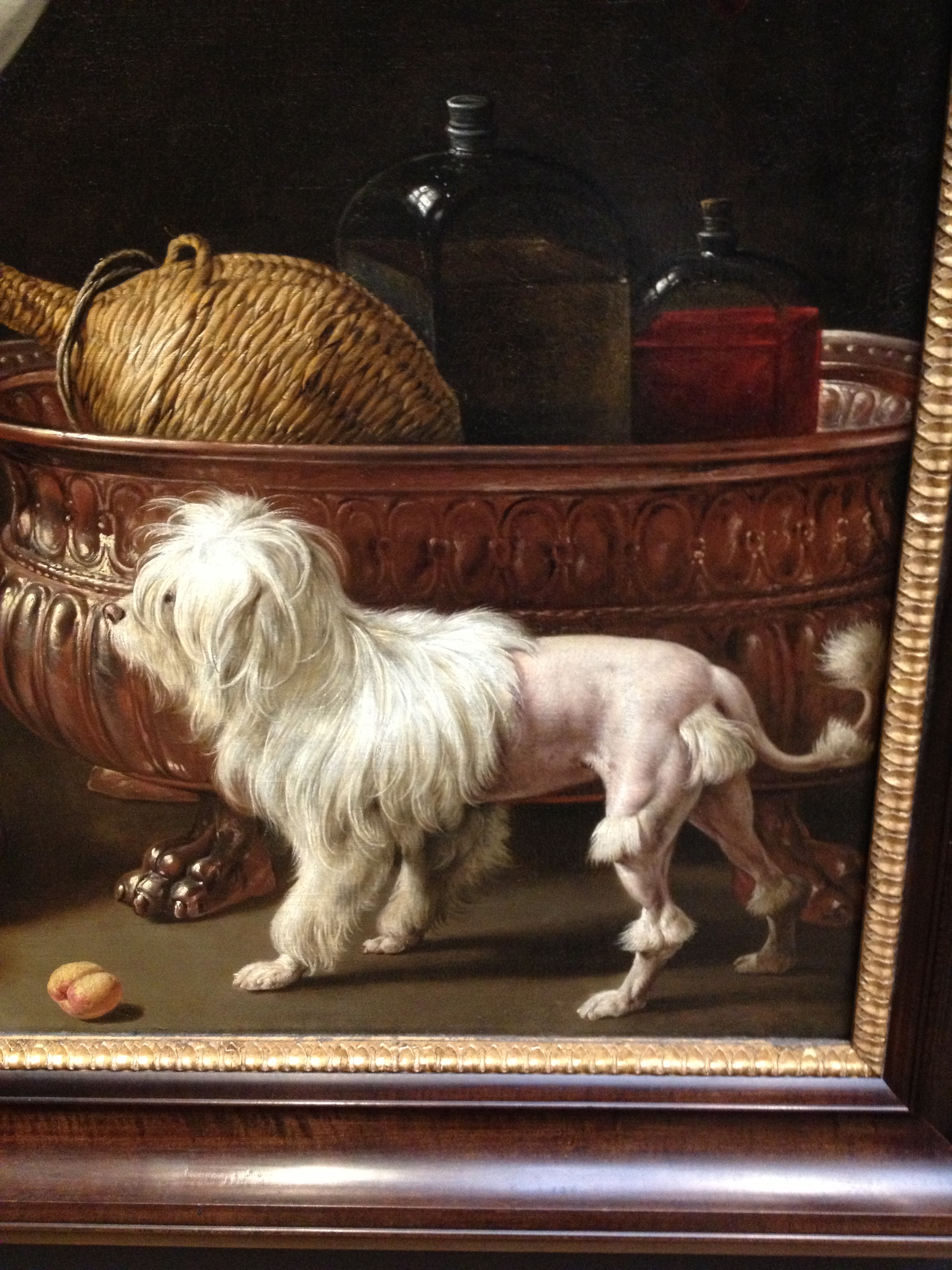
DogLookUpWhat do we really value about our dogs? Blind adoration is the most important thing, if we dog lovers are honest.  Sure, we’d like to see obedience, intelligence, cute tricks, and barking only when fire breaks out or someone is actually breaking into the house.  But that look of pure unconditional love trumps everything else. I imagine that even rich merchants in the Dutch Golden Age had their moments of doubt and insecurity, moments when they needed that adoring upward gaze.

As I wandered the art galleries of Amsterdam, I snapped photos of dogs. They were everywhere, in the Rijksmuseum and in the Amsterdam Museum (which is really the history museum, but the word “history” was recently removed, apparently because it was thought to scare some people away).

iPhone9-23-13 394

Somehow, the dogs featured in paintings serve to make the people depicted seem more real, more like us.

iPhone9-23-13 363Each animal is an individual character, as lovingly painted as any man, woman or child.

iPhone9-23-13 239


Each long-ago dog had a name, a favorite place to sleep, a way of looking happy or sad.

iPhone9-23-13 238

We might have trouble imagining the lives of humans from past centuries, but we have no trouble recognizing these dogs. And that adoring upward look still speaks to us, centuries after dog and master are gone. For me, the loving relationship between people and their pets is a kind of window into the past.

iPhone9-23-13 237

Join me next time for more explorations in the art and history of Europe!

Dogs in Dutch Art

iPhone9-23-13 240

Dogs are everywhere in Dutch museums.  As I wandered through the art galleries of Amsterdam, I wondered why dogs appear in so many paintings, especially those dating from the Golden Age.  All though the 1600s, the Dutch Republic was pretty much on top of the world.  Merchants and seamen traded all over the world, bringing in boatloads of money.  A wealthy middle class rose up. There was still a market for religious and historical art, but above all this new wealthy class  wanted portraits and depictions of their everyday lives of luxury.  Rembrandt, Vermeer, Frans Hals and many other artists were happy to oblige. My guess is that man’s best friend was just part of the good life.

I came across a wonderful poem by David Graham:

The Dogs in Dutch Paintings

How shall I not love them, snoozing

right through the Annunciation?  They inhabit

the outskirts of every importance, sprawl

dead center in each oblivious household.

They’re digging at fleas or snapping at scraps,

dozing with noble abandon while a boy

bells their tails.  Often they present their rumps

in the foreground of some martyrdom.

What Christ could lean so unconcernedly

against a table leg, the feast above continuing?

Could the Virgin in her joy match this grace

as a hound sagely ponders an upturned turtle?

No scholar at his huge book will capture

my eye so well as the skinny haunches,

the frazzled tails and serene optimism

of the least of these mutts, curled

in the corners of the world’s dazzlement.

The poet’s website is at davidgraham.lifeyo.com.

I’m counting my discovery of this poet as one of the world’s dazzlements!

From the Grand Tour to the American West

In my last post, I mentioned the delightful book Nothing Daunted by Dorothy Wickenden.  The subtitle is “The Unexpected Education of Two Society Girls in the West.”

513BtSEHi7L._SL110_

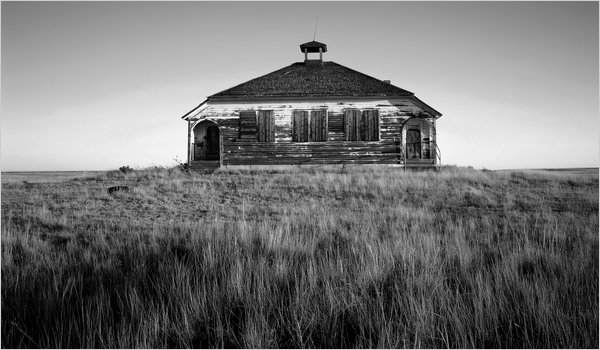
Dorothy Wickenden, the executive editor of The New Yorker, found a treasure trove of letters written by her grandmother, Dorothy Woodruff, who with her best friend, Rosamund Underwood, answered an ad for teachers in a one-room schoolhouse in remote northwestern Colorado.  The young women had graduated together from Smith College.  They were twenty-three and had no intention of settling in right away to their expected life of marriage, charity work, and society events.  So in the summer of 1916, off they went on the grand adventure of their lives.

Photo by Lawrence M. Sawyer/Corbin, from NYT review cited below

Photo by Lawrence M. Sawyer/Corbin, from NYT review cited below

The schoolhouse was in an area so remote they had to live with a homesteading family and ride horseback to work every day, rain or shine.  Their students had to do the same; in winter some students had to ski to school on makeshift skis made of barrel staves.  Not surprisingly, the young women found themselves courted enthusiastically by local cowboys and also by educated men–including the one who had placed the ad, Ferry Carpenter.  He was a Harvard-educated lawyer who had gone west to make his fortune.

The young women had lived lives of privilege; after college, they had been lucky enough to take the Grand Tour.  They spent a year in Europe, studying French and seeing as much as they possibly could.  They went out of their way to see art and experience theater and dance. They judged the women in Rubens’ paintings “beefy,” but loved most of what they saw.  In Paris, they saw an exhibit by Matisse and Picasso.  They were not impressed, especially after having spent a lot of time with the masterpieces in the Louvre. Dorothy thought Matisse’s work was “like that of a little child.” Many years later, she regretted passing up the chance to buy some of those paintings for a song.

They saw Nijinsky, then twenty years old, dance in Scheherazade, the most famous ballet produced by Sergei Diaghilev’s Ballets Russes. They saw Isadora Duncan in her premiere performance of Orpheus.

Dorothy and Rosamund toured France, Germany, Italy, Spain and Holland. All along the way, they wrote long letters home.  They also collected postcards.  Later, when they went off to teach in the one-room Colorado schoolhouse, they brought their postcard collection.  Their students (and the parents of the students) eagerly studied the postcards as clues to the wider world.  I’d like to think that many of them eventually went on adventures of their own, following the lead of these two remarkable young women.

There’s a review by Maria Russo in The New York Times at http://www.nytimes.com/2011/06/26/books/review/book-review-nothing-daunted-by-dorothy-wickenden.html?pagewanted=all&_r=0.

Trying on Royalty for Size

The best art and history museums everywhere have entertaining programs for children–after all, children are the future. I’m always happy when I see kids having a good time at a museum. For instance, the Residenz in Munich gives kids a chance to dress up as royalty from days long past.

20130813-141327.jpg

The Residenz was the ancestral home of the royal Wittelsbach family for generations. “Mad” King Ludwig was born somewhere in its warren of grand bedrooms, salons, music rooms and chapels. Having slogged my way through the corridors twice on two separate trips, I can understand why he went “mad” enough to escape to his personal castles at Neuschwanstein and Linderhof. Away from Munich, he could at least live on a more human scale.

The palace is so huge and confusing that the audio tour considerately offers an escape hatch: a sign about halfway through informing the visitor that the shorter tour is complete, and the full tour is optional. The first time, I didn’t think my tired feet could take any more polished marble corridors. The second time, I made it all the way through and found it worthwhile. Still, although it’s a nice place to visit, I wouldn’t want to live there.

I doubt that Ludwig enjoyed dressing up as much as the kids visiting his home these days. I’m glad to see kids at the very entrance of the Residenz having a good time imagining life in days long past. I hope they all develop a taste for history.

This post is an experiment. I’ll soon be traveling, and I wanted to try posting using nothing but my trusty phone. If you are reading this, the experiment worked!

Tyntesfield: Mr. Gibbs Made His Dibs

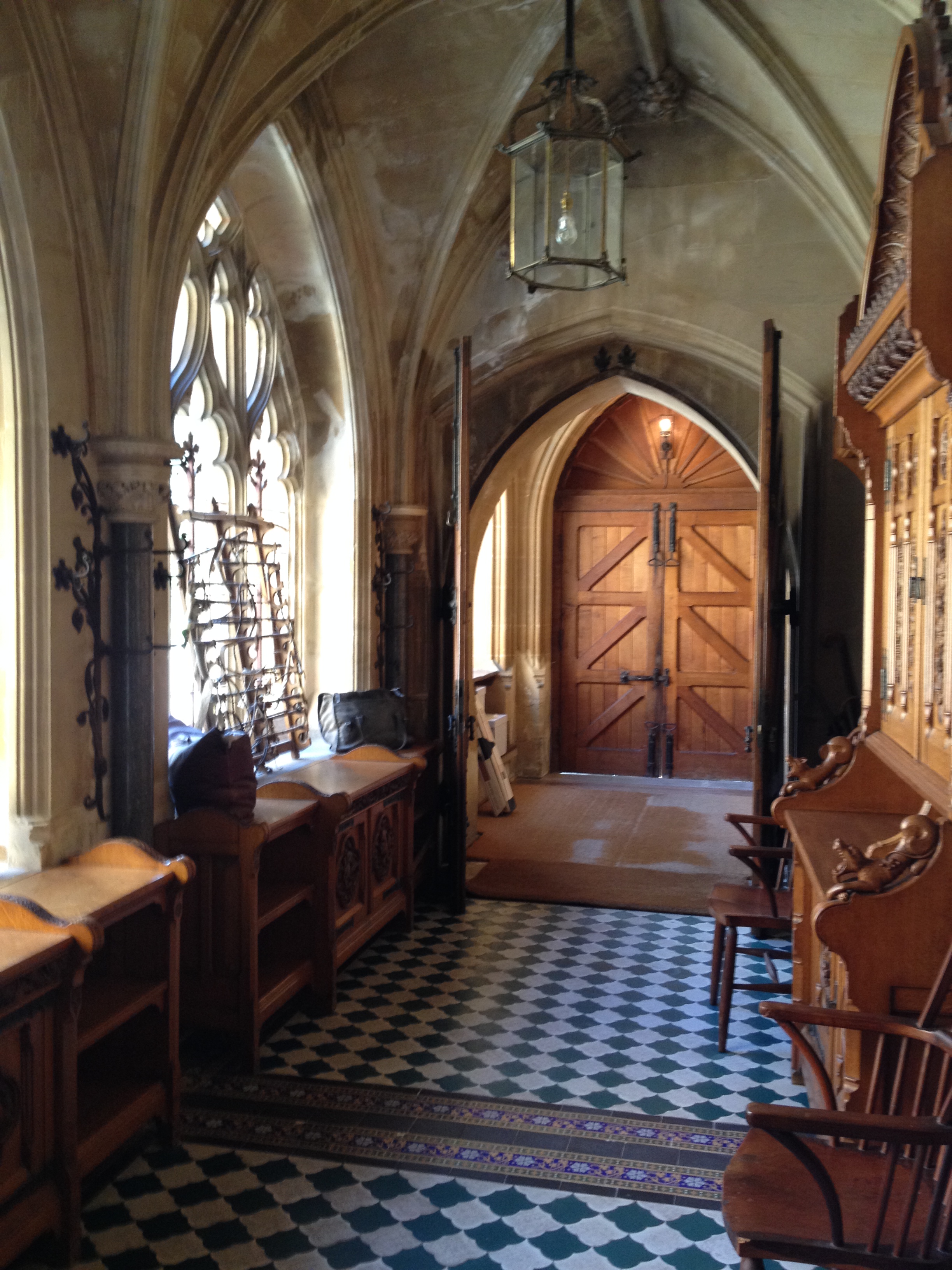
Entry Hall

William Gibbs’s son Antony did not take over the family business as expected.  The story went that William would not allow it, after he observed that the boy could not add four columns of figures simultaneously (I wonder how many of us would pass that test?)  I doubt Antony was disappointed.  He managed the Tyntesfield estates and charities, became an accomplished carver of ivory, and puttered with inventions such as a bicycle which supposedly stored energy going downhill and used it when going uphill. It didn’t work, though.

Instead, William’s nephew Henry Hucks Gibbs took over the company.  Henry was elevated to the peerage, becoming Baron Aldenham in 1896.  (What exactly is the peerage, anyway?  A subject for another post).  Henry also became Governor of the Bank of England, earning him the popular jingle which forever followed the Gibbs family: “Mr. Gibbs made his dibs, Selling the turds of foreign birds.” Not very elegant, but it certainly told the story. And he must have laughed all the way to the bank.

The little ditty no doubt followed George Abraham Gibbs, a war hero who moved in higher social circles than his humbler ancestors.

George became 1st Lord Wraxall and Treasurer of the Royal Household–an example of the new commercial and industrial wealth overtaking older titled families.

The 2nd Lord Wraxall, known as Richard, inherited the title at the age of 3.  His mother, Ursula, Lady Wraxall, presided at Tyntesfield until she died in 1979.  She received an OBE for her services to the war effort. During World War II, the house became a medical distribution center, with the books in the library replaced by bandages. It was also a convalescent home for American soldiers, who stage reunions there to this day.

When he came of age, the 2nd Lord Wraxall (Richard) served with the Coldstream Guards, then took over management of the estate. He maintained the house and grounds as they were, not following the lead of so many great homes in getting rid of Victorian furniture and features as they became unfashionable. He never married, and ended up living alone in the house with most of the rooms closed. When he died unexpectedly in 2001, the place was a treasure trove of Victorian items from the past 150 years.

TyntesSotheby1

Join me next time when I consider the very challenging acquisition of the house by the National Trust.  It’s one of the chapters in the fascinating story of the history and art of the British Isles.

Moonwalk with Ludwig

"King Ludwig II of Bavaria," Ferdinand Piloty, 1865, Public Domain

“King Ludwig II of Bavaria,” Ferdinand Piloty, 1865, Public Domain

Ludwig II of Bavaria identified with Louis XIV, the Sun King of France. (In German, Ludwig is the same name as Louis).  The trouble was, the French King Louis XIV actually was an absolute monarch who expanded and presided over quite a large and powerful empire.

Louis XIV by Rigaud, Public Domain

Louis XIV by Rigaud, Public Domain

Louis XIV was also a warrior. He actually led his own forces in the battlefield.  Ludwig? Not so much. And he had little interest in the day-to-day work of government. Ludwig was a monarch of the kingdom of Bavaria, which was much smaller and less powerful than France.  Through no real fault of Ludwig’s, Bavaria was more or less eaten up by Germany, under Kaiser Wilhelm I of Prussia, during his reign.  But while Bavarian independence lasted, Ludwig was a much-loved monarch of a proud independent kingdom.

LudwigBed1

He visited Versailles early in his reign.  When he came home, he decided to build a dream home–or maybe two or three or four dream homes.  Linderhof Palace, where he actually spent a lot of time, was designed as a mini-Versailles-for-one.  It is in French Rococo style and has any number of references to the Sun King, including this ceiling medallion in the main entry.

SunMedallion

But Ludwig called himself the Moon King.  He often stayed up all night and slept all day.  He was fond of moonlit sleighrides. Pulled by four white horses, he rode in solitary splendor, enjoying the spectacular Bavarian landscape of mountains, foothills and farms.

During these forays into the countryside, he would often stop and visit with the locals, who adored him.  His life was lonely, but by all accounts at least some of his servants and a few of his peers became loyal and trusted friends.  The movie Ludwig, directed by Luchino Visconti, touchingly describes some of these friendships, which lasted to the untimely end of Ludwig’s life.

Michael Jackson in Vienna, Austria, 1988, Zoran Veselinovic, Creative Commons Attribution Share Alike

Michael Jackson in Vienna, Austria, 1988, Zoran Veselinovic, Creative Commons Attribution Share Alike

If I had to make a modern comparison, I would compare Ludwig IV to Michael Jackson.  I would not want to offend fans of either man by carrying the comparison too far.  But both of them were romantic, idealistic, talented, misunderstood, and wildly famous but still lonely. Both of them died far too early in mysterious circumstances.  And both died accompanied only by their physicians.  Sometimes the past can help us understand the present.

Join me next time for more explorations in the art and history of Europe!

Lunch with Ludwig II

In his dining room at Linderhof Palace, King Ludwig II did not want servants bothering him.  Maybe he wanted to avoid the inefficiencies of dining at his childhood home, Hohenschwangau Castle, a few miles away from Linderhof.  In Hohenschwangau, the kitchen was in a separate building.  When the family  sat down to eat, someone had to stand next to the window.  This servant would wave at another servant stationed at the kitchen window when it was time to bring in the next course.  Then the food had to be carried up a couple of flights of stairs in insulated containers.

Hohenschwangau Castle

Hohenschwangau Castle

When he built his own personal dream home at Linderhof, Ludwig did away with all that nonsense.  He designed a dining table that disappeared through the floor into the kitchen directly below.  I had seen this table, but I couldn’t imagine how it actually worked until I watched Luchino Visconti’s film Ludwig, made in 1972.  There is a scene where Ludwig leans back from finishing one course, and a couple of servants down below crank the table down to restock it.  Sliding panels automatically fill in the space, relieving my worry that poor Ludwig would accidentally fall into his kitchen. It’s a sad scene. The liveried servants down below are making coarse jokes about their employer and guzzling his leftover wine.

No doubt it was always hard to find good help.  Ludwig was probably not the most considerate employer, either. Today, it is possible to peer in through the ground-level kitchen window and see the mechanism that lifts and lowers the table.

The dining room is French Rococo, like the rest of the very small palace. That translates into a lot of carved gilded woodwork, framed mirrors and exquisite porcelain.

With tourists traipsing through the place, the windows are covered with heavy shades to protect the interior.  But Ludwig would have looked out at a very pretty French-styled garden complete with fleur-de-lis flower beds.

LinderhofDiningView

Ludwig’s disappearing table is not large. Today, there is only one throne-like chair.  Ludwig almost always ate all alone.  In fact, there were no guest quarters in the small palace because there were no guests. But according to the guides, Ludwig often had the table set for at least one other person, sometimes two or three.  He liked to chat with some of his imaginary friends, whose portraits appear in the room:  Marie Antoinette, Madame de Pompadour, and Louis IV.

When the Bavarian government finally got fed up with Ludwig’s spending and failure to sit in boring Cabinet meetings, much was made of his unusual habits.  Was having imaginary friends evidence of insanity? Personally, I don’t think so.  I think Ludwig was a man who wanted to create the illusion of being with his favorite people in a perfect world.  For about 22 years of his life, from 1864 to 1886, he had the means to do just that.

Join me next time for more insight into some of the quirky byways in the art and history of Europe!