Category Archives: Historical Figures

Marie Antoinette: Women and Window Treatments

MarieAntKunst

The Kunsthistorisches Museum in Vienna has one of the most famous images of Marie Antoinette, painted by Elisabeth Vigee Lebrun in 1779. It was one of her most important paintings, and the artist herself made six copies of it. The young Queen had only reigned for five years; she still had about thirteen years of high living in store, before the Revolution and the Terror that cost her life.

It’s such a familiar image that I haven’t looked at it very carefully.  What struck me on a recent visit was that it’s mostly about fine silks.  All we really see of the queen is her face.  The rest is window dressing.

MarieAntDetail

I got to thinking that her dress actually looks like a window treatment fit for a palace.

Curtains2

In a way, her entire life was a kind of window dressing.  She was married off as a teenager for the valuable political alliance between Austria and France.  She was expected to produce royal heirs, and in her spare time, to show off the wealth and power of the French monarchy.  No doubt it took at least a dozen ladies-in-waiting to get her into this dress.  No doubt she would much rather have been playing house in her farm on the grounds of Versailles, where she could dress as a milkmaid and tend her shampooed sheep.  But in sitting for this portrait, she was doing her duty.  Sadly, her duty did not work out well for her.

I went directly from the Kunsthistorisches to the Albertina Palace, where Marie Antoinette’s sister Marie Christine got to live out her life.  Marie Christine was the favorite child of the redoubtable Maria Theresa.  Of all the children, Marie Christine was the only one allowed to marry for love instead of political alliance. Life is not fair.

Curtains1

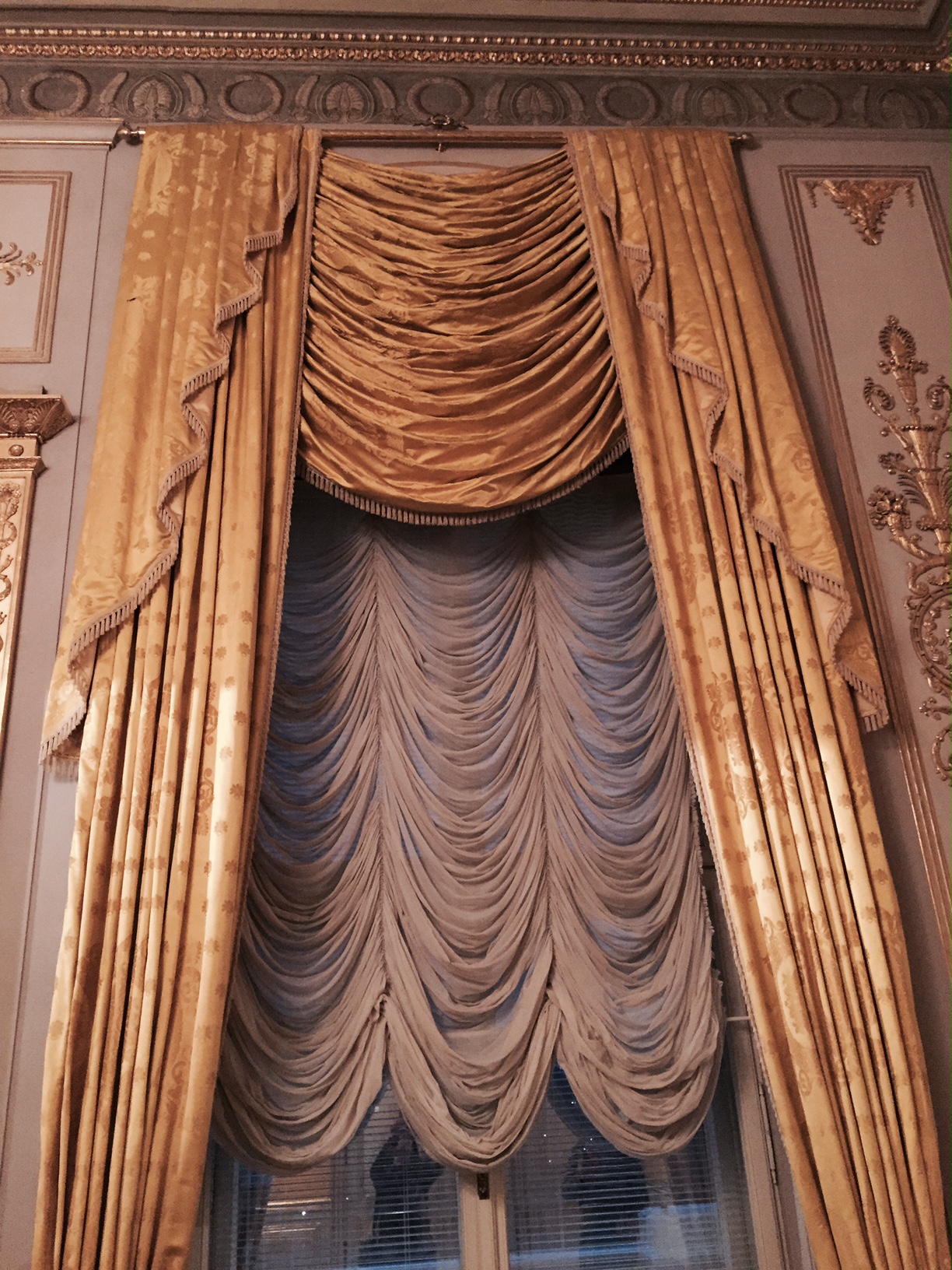
Anyway, the window treatments in the Albertina look exactly like Marie Antoinette’s portrait gown, if you ask me.

FullSizeRender (6)

How much of a person’s life, in history and in the present, is spent trying to strike an idealized pose?  How much of a life is window dressing?  It’s a question to ponder.

Join me next time for more explorations in the art and history of Europe!

Blenheim: The Sun King’s Waterloo

Claude Lefebre, Public Domainnknown artist, after Louis XIV, circa 1670, u

Claude Lefebre, Public Domainnknown artist, after Louis XIV, circa 1670, u

Before there was Napoleon Bonaparte, there  was Louis XIV, the Sun King.  He believed himself the greatest monarch the world had ever seen, so naturally he thought he might as well control all of Europe plus the British Isles, not just France.  In 1704, the War of the Spanish Succession had been going on for four years, and things were going well for the French.  Unlike many kings, Louis XIV was actually a soldier, and an accomplished one.

John Churchill, 1st Duke of Marlborough, 1704, Adriaen van der Werff, Public Domain

John Churchill, 1st Duke of Marlborough, 1704, Adriaen van der Werff, Public Domain

He met his match in John Churchill, who had risen through the ranks after beginning at court as a lowly page.  He had already attained the rank of First Duke of Marlborough when he stopped the French in their tracks.  He changed the course of European history.  Churchill/Marlborough did this through a combination of deceptive communications and wily maneuvering of his forces.  As I understand it, he marched his troops undetected through the Low Countries, pretty much surprising the French at a little Bavarian village called Blenheim.  The object was to keep the French from occupying Vienna, which would have broken up the delicate and ever-shifting balance among European powers.

Marlborough’s heroics ended Louis XIV’s dream of controlling all of Europe. The French suffered 30,000 casualties.  The French commander-in-chief, Marshall Tallard, was captured and hauled to England as a prisoner.  There were still battles left to fight, but the battle of Blenheim was a huge turning point in history.

DSCN7028

A grateful nation gave the 1st Duke of Marlborough the lands and the money to build a suitable tribute, a palace that would rival the Versailles of Louis XIV.  In fact, the cavernous entry hall at Blenheim is as impressive as anything I’ve seen at Versailles.  It’s more austere, though–suitable for the military theme of Blenheim. The palace was built in the English Baroque style, and contained 187 rooms. The construction was halted in 1711, after the Duchess of Marlborough had a terrible quarrel with Queen Anne.  In fact, the Duke and Duchess had to go into temporary exile on the continent until the Queen died in 1714.  After that, the Duke had to spend his own money to complete his palace.

Serious historians would not be much impressed by my analysis of the military situation. If I wanted to fully understand the War of the Spanish Succession and its many battles, I could study a large military exhibition at Blenheim Palace.  I thought about the military exhibit on my recent visit, but the tearoom was calling my name.

Join me next time for more explorations in the art and history of Europe and the British Isles!

A Cradle Fit for a King (or Emperor or Duke)

BlenCradle

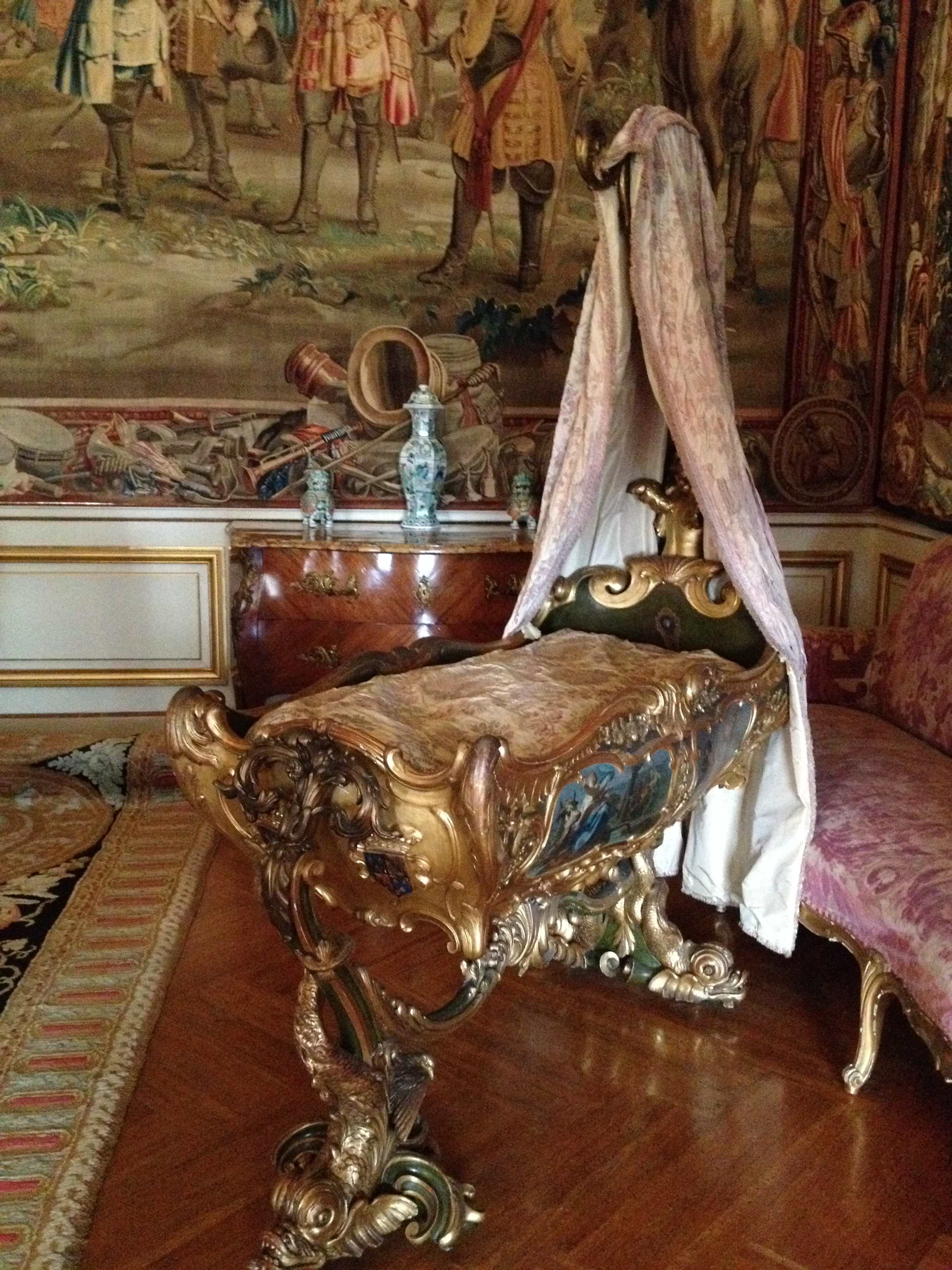
When Consuelo Vanderbilt did her duty and produced the required “heir and a spare” for the 9th Duke of Marlborough, she rocked her boys in a regal cradle, which is still on view at Blenheim Palace.   Consuelo’s mother, the irrepressible Alva Vanderbilt, wasted no time in ordering this cradle from Italy.  She had moved heaven and earth to marry her very rich daughter to the Duke of Marlborough.  The birth of a male heir insured that the Vanderbilt bloodline would forever have a secure footing in the British aristocracy.

According to a placard about the cradle in Blenheim Palace, it was a near-replica of the one made for Napoleon Bonaparte’s long-awaited heir in 1811. I don’t see much resemblance, though. Consuelo’s cradle is ornate, over-the-top with fanciful figures and gilding. (Actually, a baby being rocked in this cradle would have gone straight over the top and onto the floor–the mattress is even with the sides. If Consuelo actually used it, she must have used it with a lower mattress).

NapoleonCrib


Napoleon II’s cradle is now in the Imperial Treasury in Vienna, because the child’s mother was Napoleon’s second wife, Marie-Louise of Austria. It was never actually subjected to a burping, crying child.  It was a ceremonial object–a “throne cradle”– presented to Empress Marie Louise by the City of Paris. This cradle has a distinctly military look. It was fashioned of 280 kg of silver, replete with symbols of power and good government:  horns of plenty, the Roman Capitoline Wolf, a laurel wreath, a crown of stars, and numerous bees. Napoleon the Emperor took the bee as his personal emblem; it was also an old symbol of Paris, indicating diligence. The foot of the cradle has a small eagle; Napoleon II was popularly known as “The Eaglet,” with the hope that he would surpass even the glorious exploits of his father.

Napoleon’s only legitimate son had a short and tragic life.  The Emperor made his son the King of Rome the instant he was born.  Glory did not follow, though. After his father’s abdication in 1814, Napoleon II’s mother was forced to flee home to Austria with her toddler.  She remained married to Napoleon, but never saw him again.  The child died in isolation in Austria, where he had to be kept from the public for fear of his father’s admirers trying to rally around him.  I read somewhere that the unfortunate child’s only companion was a pet bird.  He was a frail, sickly child, kept indoors almost all the time. He died of tuberculosis at age 21.

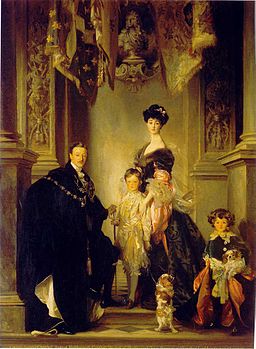
Duke of Marlborough and His Family, John SInger Sargent, 1905, Public Domain

Duke of Marlborough and His Family, John SInger Sargent, 1905, Public Domain

Consuelo’s marriage to the 9th Duke of Marlborough was loveless and unhappy, but her older son, in the fullness of time, became the 10th Duke of Marlborough and her younger son lived out his days as Lord Ivor Spencer-Churchill. Consuelo’s ancestors continue to occupy Blenheim Palace to this day.

Join me next time for more explorations in the art and history of Europe and the British Isles!

Consuelo Vanderbilt to the Rescue

La Duchess de Marlborough, Helleu, 1901, Public Domain

La Duchess de Marlborough, Helleu, 1901, Public Domain

Julian Fellowes, creator of the television hit Downton Abbey, did not invent the story of an American heiress bringing her fortune to the rescue of an aristocratic British family of declining fortunes. Fortune-hunting Brits, titled but poor, regularly patrolled the upper reaches of American society for rich brides.  Consuelo Vanderbilt was one of those real-life brides. She became the very reluctant wife of the 9th Duke of Marlborough.

By all accounts, Consuelo was one of the loveliest and most charming women of her age. The playwright Sir James Barrie, author of Peter Pan, famously wrote, “I would wait all night in the rain, to see Consuelo Marlborough get into her carriage.” She was also sweet, compliant, and dominated by her mother Alva Vanderbilt.

Alva was formidable.  She was estranged from her husband, the fabulously rich railroad man who, among other feats, created Madison Square Garden.  He was a grandson of the dynasty’s founder, Cornelius “The Commodore” Vanderbilt, and inherited the equivalent of about $1.4 billion in today’s money. Alva divorced him for adultery and landed a settlement of the equivalent of $280 million in today’s money.  Alva named her daughter after her godmother, a half-Cuban American socialite who had made a spectacular marriage into the family of the Duke of Manchester.

Alva expected no less of her beautiful daughter Consuelo. She forced Consuelo into a brilliant but doomed marriage with the 9th Duke, who didn’t want the marriage any more than Consuelo did. Alva actually placed her daughter under house arrest in her bedroom, keeping her away from the man she loved, until the tearful teenager finally agreed to marry the Duke of Marlborough.  Consuelo wept behind her wedding veil at the 1895 ceremony in New York. She was just 18 at the time. The Duke wasted no time in collecting her dowry, the equivalent of $67 million dollars, which he sorely needed to maintain the family seat at Blenheim Palace. The money lasted until around 1950, when declining fortunes forced the house to open to the paying public.

Duke of Marlborough and His Family, John SInger Sargent, 1905, Public Domain

Duke of Marlborough and His Family, John SInger Sargent, 1905, Public Domain

Consuelo did her duty, producing the required “heir and a spare.” By some accounts, she invented the famous expression. Predictably, the marriage ended in separation in 1906, divorce in 1921, and finally annullment in 1926, after Alva admitted that she had been wrong to force the marriage. Consuelo forgave her domineering mother and they developed a close relationship.

Consuelo with WInston Churchill at Blenheim, Public Domain

Consuelo with WInston Churchill at Blenheim, Public Domain

Consuelo became a close friend of Sir Winston Churchill, who was born at Blenheim in 1874 and remained a frequent visitor there all his life. While she was the Duchess, she worked to improve the lives of the poor around the estate and in the town of Woodstock.  It appears she was universally adored.  Later in life, she continued her good works, even as she took part in glittering society.  Her second marriage was happy, and she lived out her days in contentment. She died in New York at age 87.

Join me next time for more explorations in the art and history of Europe and the British Isles!

What are Plus Fours Anyway?

Photo from Daily Mail article cited below

Photo from Daily Mail article cited below

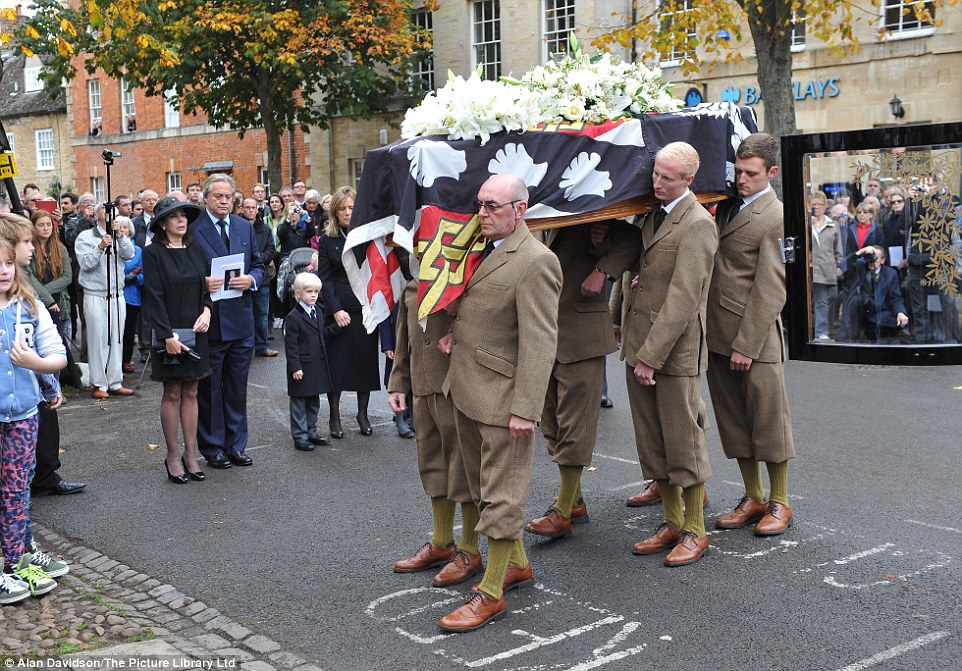
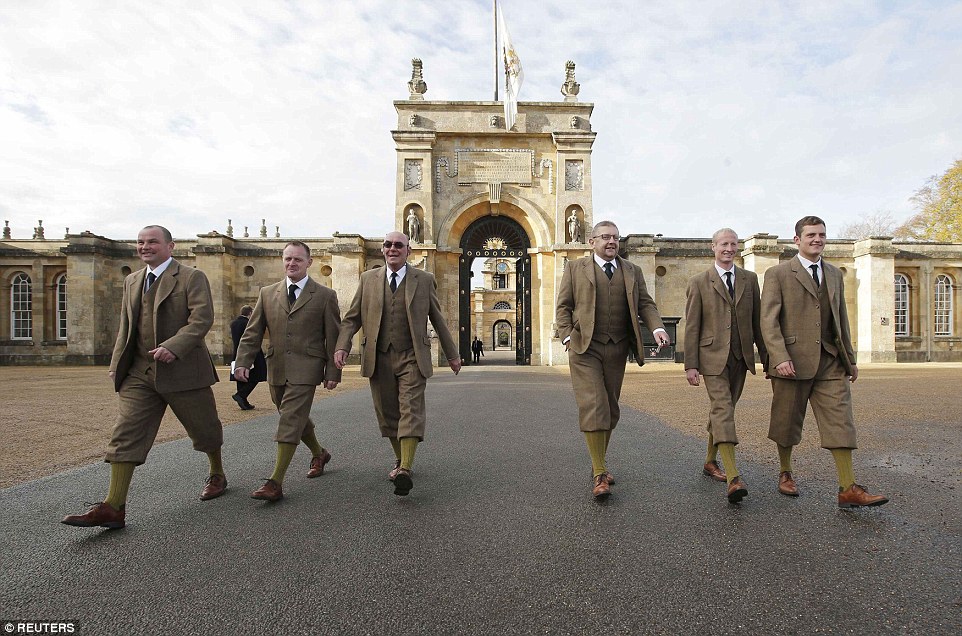
The media coverage of the late 11th Duke of Marlborough’s death made much of the fact that his pallbearers were Palace gamekeepers, or maybe groundskeepers, dressed in “traditional plus fours.”  I looked at the photos and all I saw was short pants worn with knee-high socks that seemed to slightly clash with the pants.  It turns out “plus fours” have a very specific definition: pants that are carefully tailored exactly four inches below the knee.They’ve been worn by British sportsmen since about 1860. The Duke himself very likely wore them when out hunting on his lands.

During his visit to America in 1924, the raffish Edward, Prince of Wales, famously wore plus fours. (He later briefly became Kind Edward VIII, until he famously abdicated in order to marry the divorced American socialite Wallis Simpson). His short pants gave him a sort of free-wheeling look that fit right in with the Roaring Twenties.  After Edward made his way back home across the pond, his stylish short pants caught on, especially with golfers and with anyone else who wanted to flout convention.  (I can well imagine F. Scott Fitzgerald sporting a pair).

I generally expect pallbearers to be close friends or relatives of the deceased.  It seems that having one’s groundskeepers perform the task must be a privilege and mark of very high status. After all, how many of us even have extensive grounds, let alone uniformed groundskeepers to tend them?  There’s also the implication that the Duke’s relatives are above any sort of menial task.

I’m reminded of the custom that shocked Consuelo Vanderbilt when she arrived as a young American bride at Blenheim, freshly married to the 9th Duke of Marlborough. A carriage met the newlyweds’ train in Woodstock.  Approaching Blenheim, men from the estate unhitched the horses and pulled the carriage through the grand palace gates. Things like that didn’t happen where Consuelo came from.

Photo from Daily Mail article cited below

Photo from Daily Mail article cited below

Anyway, the Duke’s employees seem a very happy lot.  When I was in Woodstock last month, all the palace employees I encountered seemed extremely cheerful–and that is not always the case with people who attend the high and mighty.  I think the late Duke was a hands-on sort of man, genuinely loved by many.

As an American, I don’t suppose I’ll ever fully understand the subtleties of the British class system.  I do appreciate certain little perks.  For example, the late Duke’s name was John George Vanderbilt Henry Spencer-Churchill.  But his title gave him the right to use a most elegant signature:  he simply signed his name “Marlborough.” Now that’s class.

http://www.dailymail.co.uk/news/article-2806349/Flag-half-mast-Blenheim-Palace-Mourners-line-route-funeral-cortege-11th-Duke-Marlborough-died-aged-88.html

Farewell to the 11th Duke of Marlborough

BlenheimFacade

Each time I’ve visited Blenheim Palace in Woodstock, England, I’ve had at least a glimpse of the 11th Duke.  Unlike many aristocrats, he made his very grand family seat his real home.  Many owners of stately homes admit the public only grudgingly.  But the 11th Duke really seemed to welcome the public with open arms, and he could regularly be seen striding through a courtyard or hurrying down a hallway.  A ticket to Blenheim is good for a full year of visits, a real bargain for anyone who can visit the house and glorious grounds even twice in a year. Many Brits make it a regular stop.

Sadly, my last visit, in September, was the last time I would see the 11th Duke.  He died less than a month later, on October 16 of this year. When I entered the palace, I asked whether a tour of the private quarters was available–I never miss a chance to get a glimpse at how “toffs” actually live.  The private quarters of a stately home are usually the ultimate in Shabby Chic–the authentic variety.  The guide said, “I’m terribly sorry, but His Grace has a lot of guests.  His brother is getting married today in the chapel.”  Very soon, I spotted His Grace, mingling with his guests outside the private chapel before and after the wedding. He was 88 and walked with a cane, but his tall figure was still elegant and he had the same gentle smile. His Duchess–his fourth Duchess, to be exact–is Lily, a Persian beauty about 30 years younger.

Duke and Duchess of Marlborough, photo from Daily Mail article cited below

Duke and Duchess of Marlborough, photo from Daily Mail article cited below

The marriage, a few years ago, raised eyebrows, but Lily turned out to be a rousing success as a wife.  Not only did she make the Duke extremely happy, but she quietly worked on a reconciliation between the Duke and his heir. The Duke actually had to disinherit his oldest son, Jamie Spencer-Churchill, who was generally known as Jamie Blandford. It was a step almost unheard of in aristocratic families.  They had been estranged for almost 20 years, because the heir had serious drug problems and even served time in prison for crimes such as forging prescriptions and road rage incidents.  With Lily fostering a reconciliation, the reformed heir was back in His Grace’s  good graces.  On the death of his father, he became the 12th Duke.  It appears that he will also inherit the property, although there is talk of some supervision by a board of trustees.

DSCN7085

For the wedding, the entire family was present and everyone seemed happy to be together.  I took the opportunity to photo-bomb the occasion, which no one seemed to mind.


11th Duke's funeral procession, photo from Daily Mail article cited below

11th Duke’s funeral procession, photo from Daily Mail article cited below

Sadly, the elegant old Duke died in his sleep less than a month later. His son and heir, the 12th Duke, followed the solemn and affectionate funeral procession with Lily, now the Dowager Duchess, on his arm. May the old Duke rest in peace, and may the young Duke (now 58) do his father proud.

http://www.dailymail.co.uk/news/article-2806349/Flag-half-mast-Blenheim-Palace-Mourners-line-route-funeral-cortege-11th-Duke-Marlborough-died-aged-88.html

High Victorian Splendor at Tyntesfield


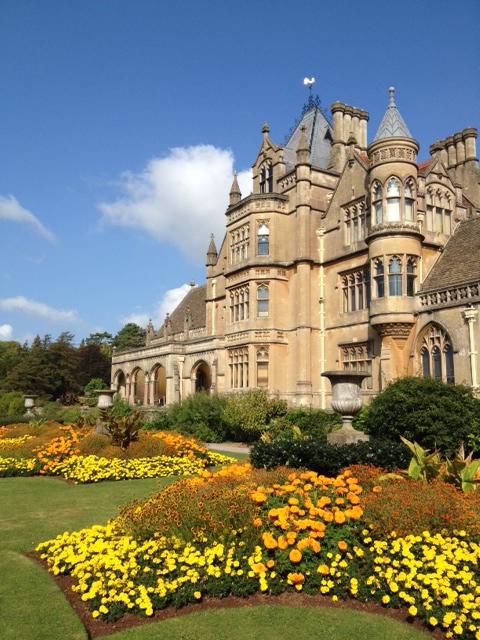
TyntFlowersOn my last trip to England, I made my second visit to Tyntesfield, the glorious Victorian country home rescued by the National Trust of Great Britain in 2002.  My first visit was just a couple of years after it opened to the public.  It is now one of my very favorite National Trust properties in all of Great Britain.

Succeeding generations of the Gibbs family lived in it since it was built.  As the family declined in numbers and in fortune, they simply closed up areas and lived in smaller and smaller parts of the mansion. The result is a time capsule. Tyntesfield and its entire contents were on the market by Sotheby’s when the National Trust managed to purchase it lock, stock and barrel. All the contents had already been tagged for separate auction.

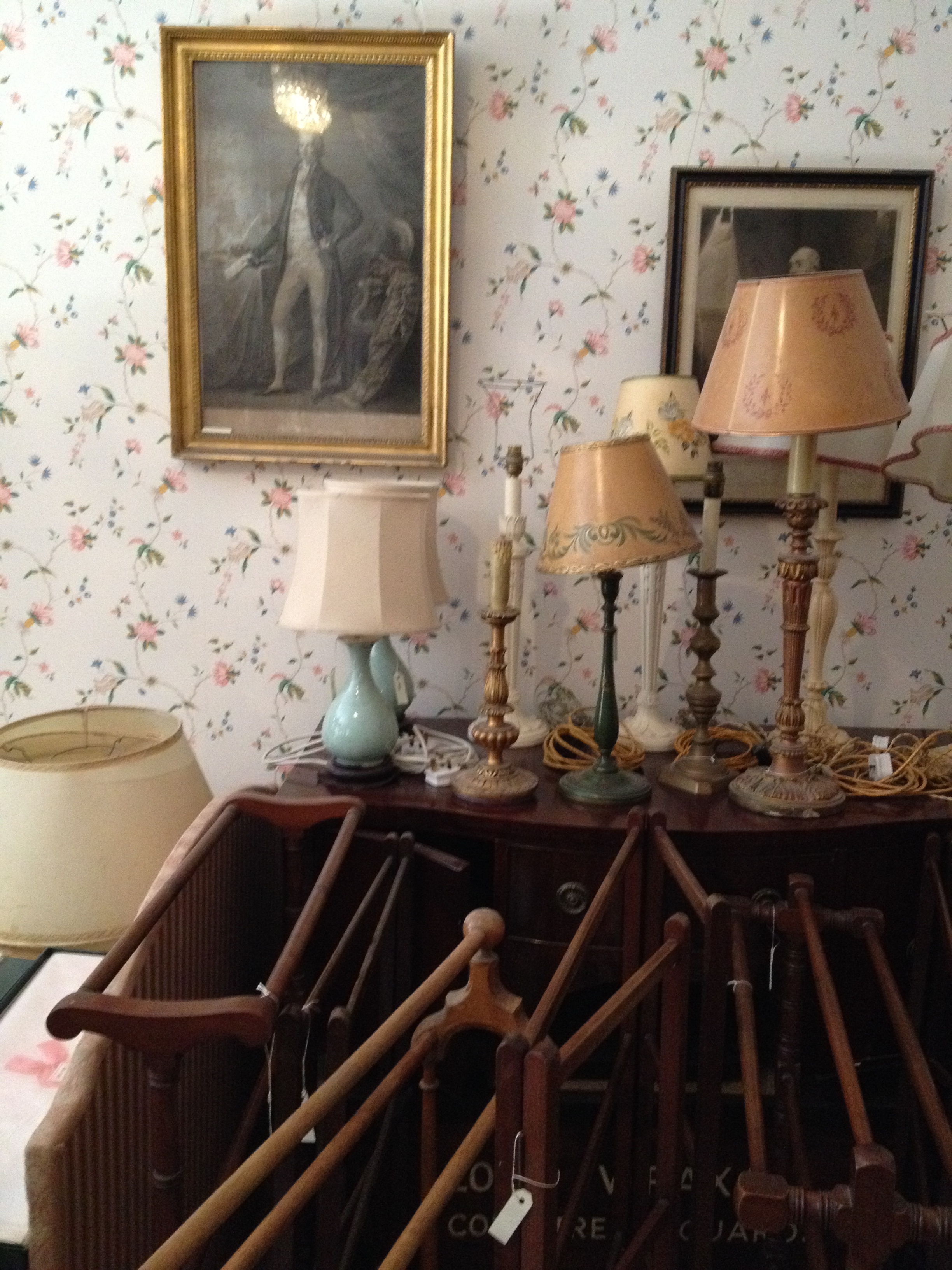
TyntesSotheby1 TyntesSotheby3

National Trust Curators have carefully catalogued, cleaned and replaced thousands of items into their original places in the gorgeous home.  They’ve left a few rooms as they found them with groups of housewares and furniture tagged and ready for the auction block.

By the time the 2nd Lord Wraxall, known as Richard, died in 2001, he was the only person living in the house.  The house had been hit by bombs several times during the Bristol Blitz of World War II, and had never been properly repaired. Birds and bats took up residence in whole wings of the house. Tyntesfield was the last High Victorian house available for purchase in all of England.

The market value was about 20 million pounds, or  about $31 million. In addition, double or triple the purchase amount was needed for repairs. Various gazillionaires were interested. (The press reported that Madonna, Kylie Minogue, and Andrew Lloyd Webber were looking).  But the National Trust of Britain, one of the two main preservation societies, managed to raise the purchase money within a period of 50 days.  (Controversy arose when a semi-secret deal with the National Lottery provided some of the money for this project that many considered “elitist”). The Trust took possession in July of 2002. This was the first new acquisition by the National Trust in many years, and the largest in its history.  Today, over 800 paid and volunteer staff work on the estate, 3 times the number at any other National Trust property.

Dining Room

Dining Room

Tyntesfield is a breathtakingly beautiful place to spend a day.

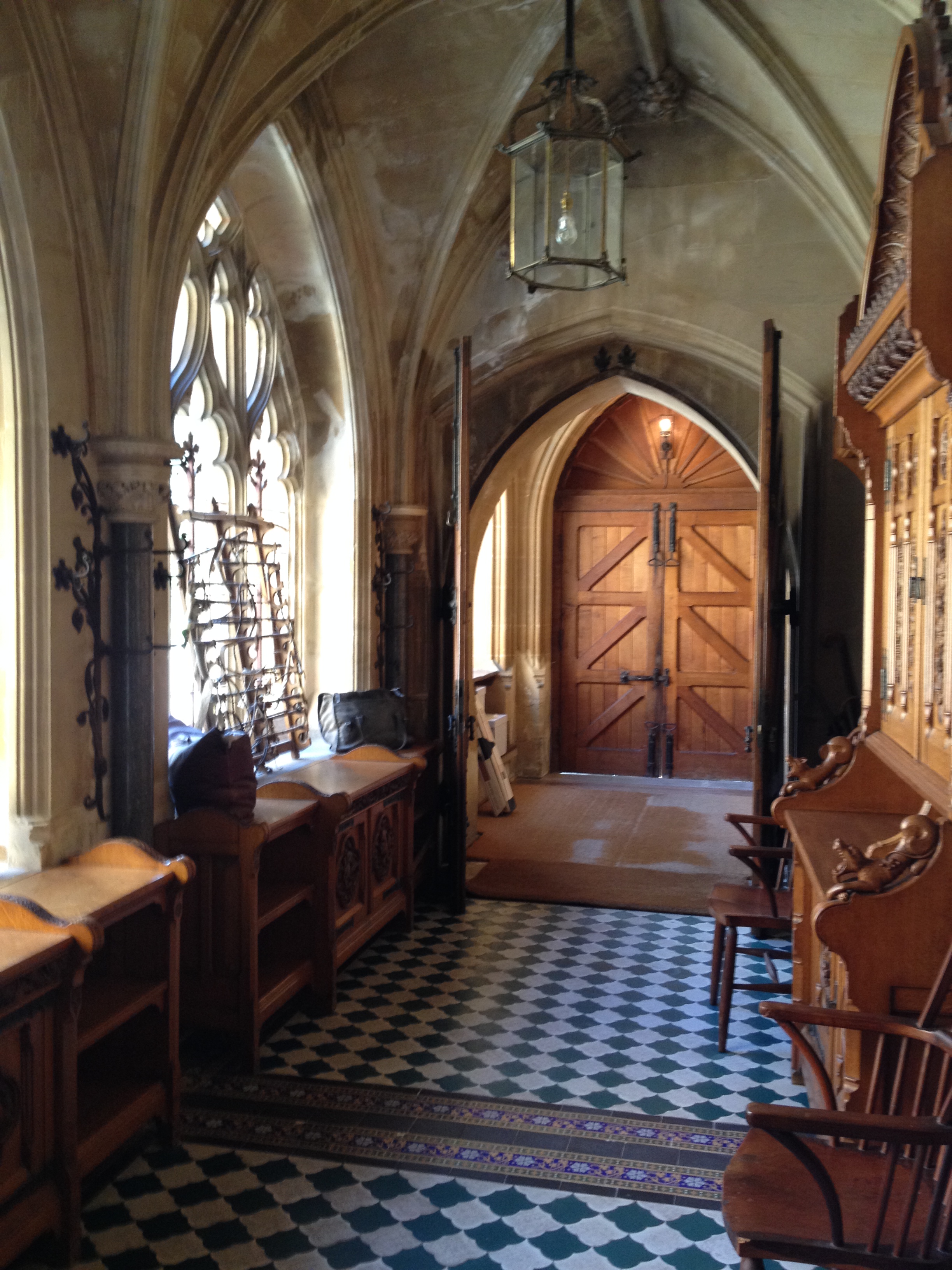
Entry Hall

Entry Hall

It is also a unique window into the glory days of the British Empire, when a businessman with no aristocratic background could amass a huge fortune and build a home to rival many royal palaces. I’ll be writing about how the Gibbs family managed to amass such a fortune.  The large family gathered with their servants for prayers twice a day, had their own private chapel, and funded churches and charities all over England.  However, their business and shipping interests were very likely tied up with the slave trade, a fact which must have caused this generous and devout family some feelings of remorse even as they spent their money.


Beauty and Sadness: the House of Camondo


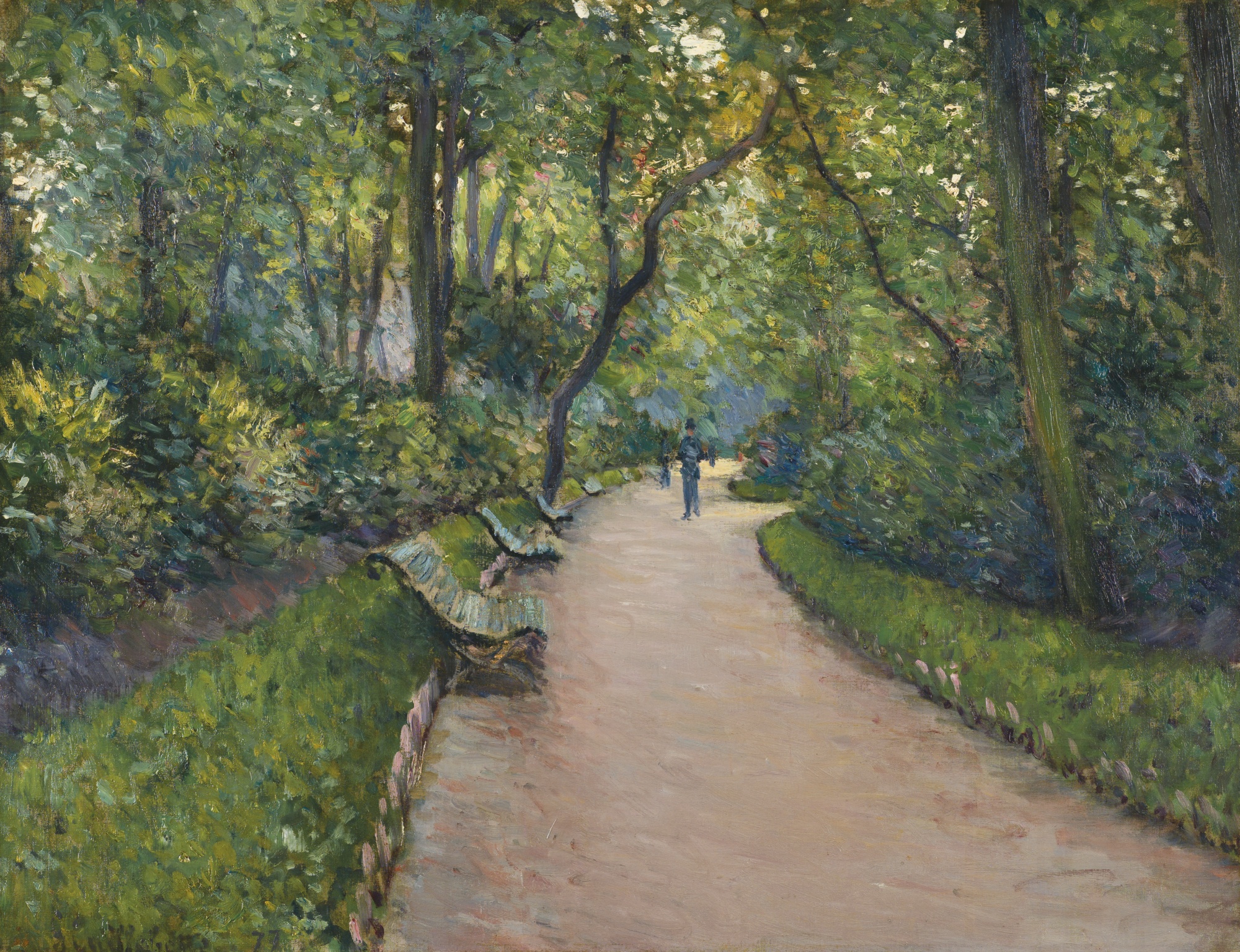
"Parc Monceau," Gustave Caillebotte, 1877, Public Domain

“Parc Monceau,” Gustave Caillebotte, 1877, Public Domain

The painting above is “Parc Monceau,” by Gustave Caillebotte, 1877. In 1911, Compte (Count) Moise de Camondo built his mansion on the edge of the very elegant Parc Monceau in Paris. The park still looks much the same as it did then, and the house is preserved as though the family had just left. But a visit to the Musee Nissim de Camondo in Paris ends with sobering realities. Newsreels show footage from the First and Second World War, plus some footage of the family members who were swept up in those wars, making this venerable family line extinct.

The Camondo family were prominent in Europe as merchants, bankers and philanthropists beginning in 15th century Spain.  After all Jews were expelled from Spain in 1492, they settled in Venice, where they prospered. When Austria took over Venice in 1798, they were again forced to relocate.  They went to Istanbul. Eventually, family members made their way to Paris where they already had business interests.  By that time, they had acquired the hereditary title of “Count.”

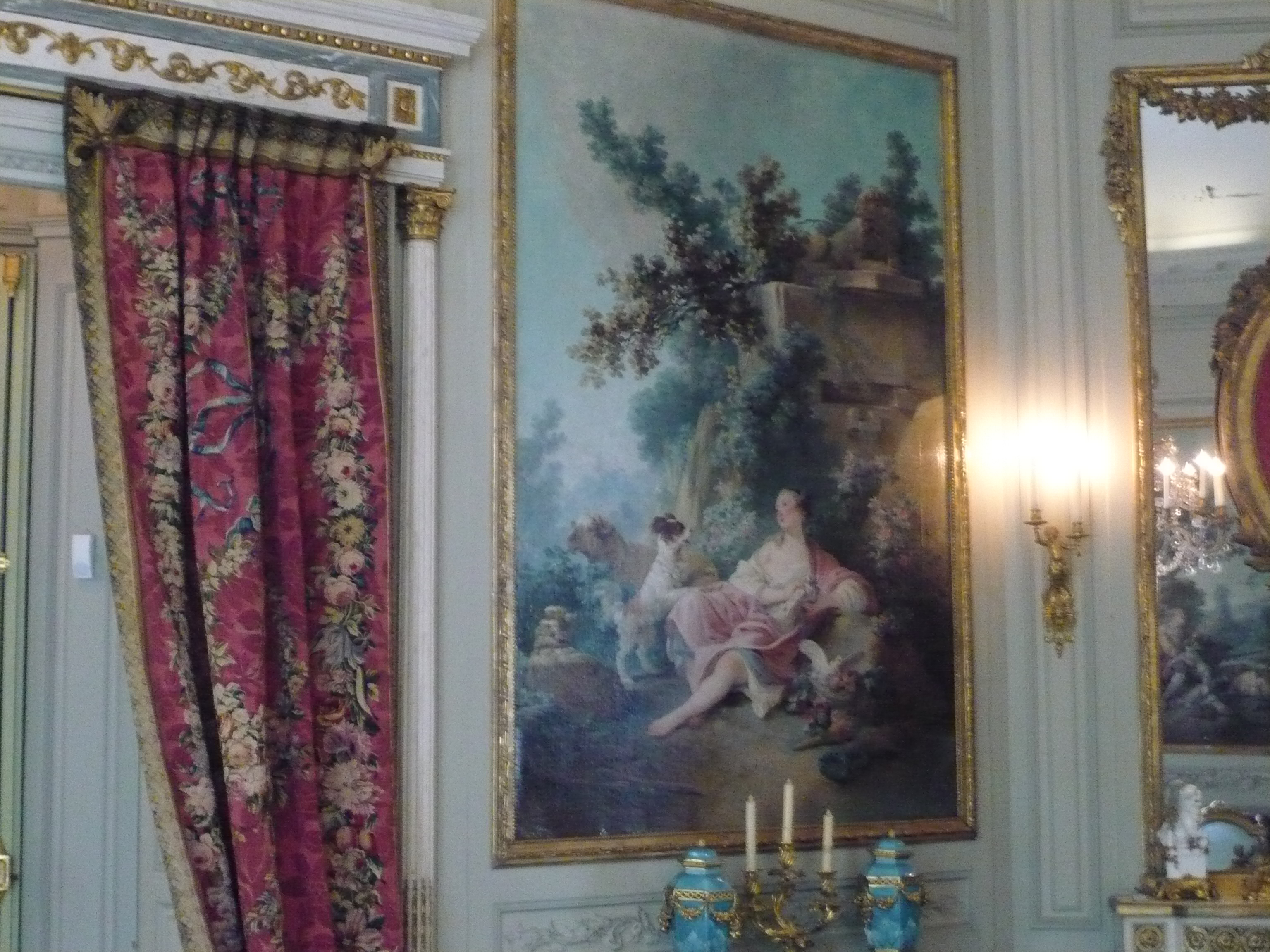
Nissim2

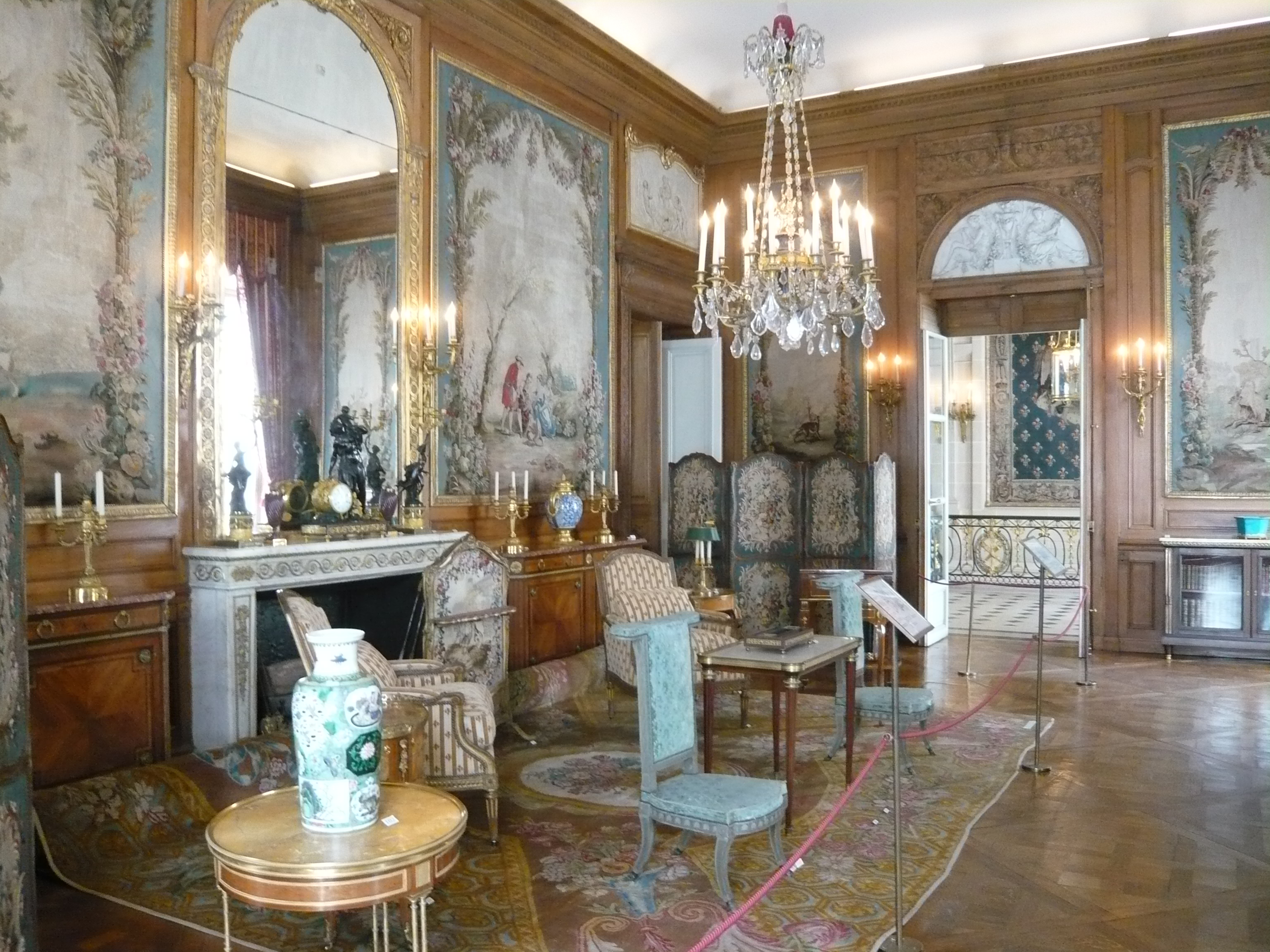
Moise de Camondo built his dream home. His dream was to live as an aristocrat in the 18th century. His tranquil salons are hushed now; not too many tourists make their way to the Parc Monceau.  In Moise’s day, his rooms were filled with friends, laughter, good conversation and music.

Nissim,1

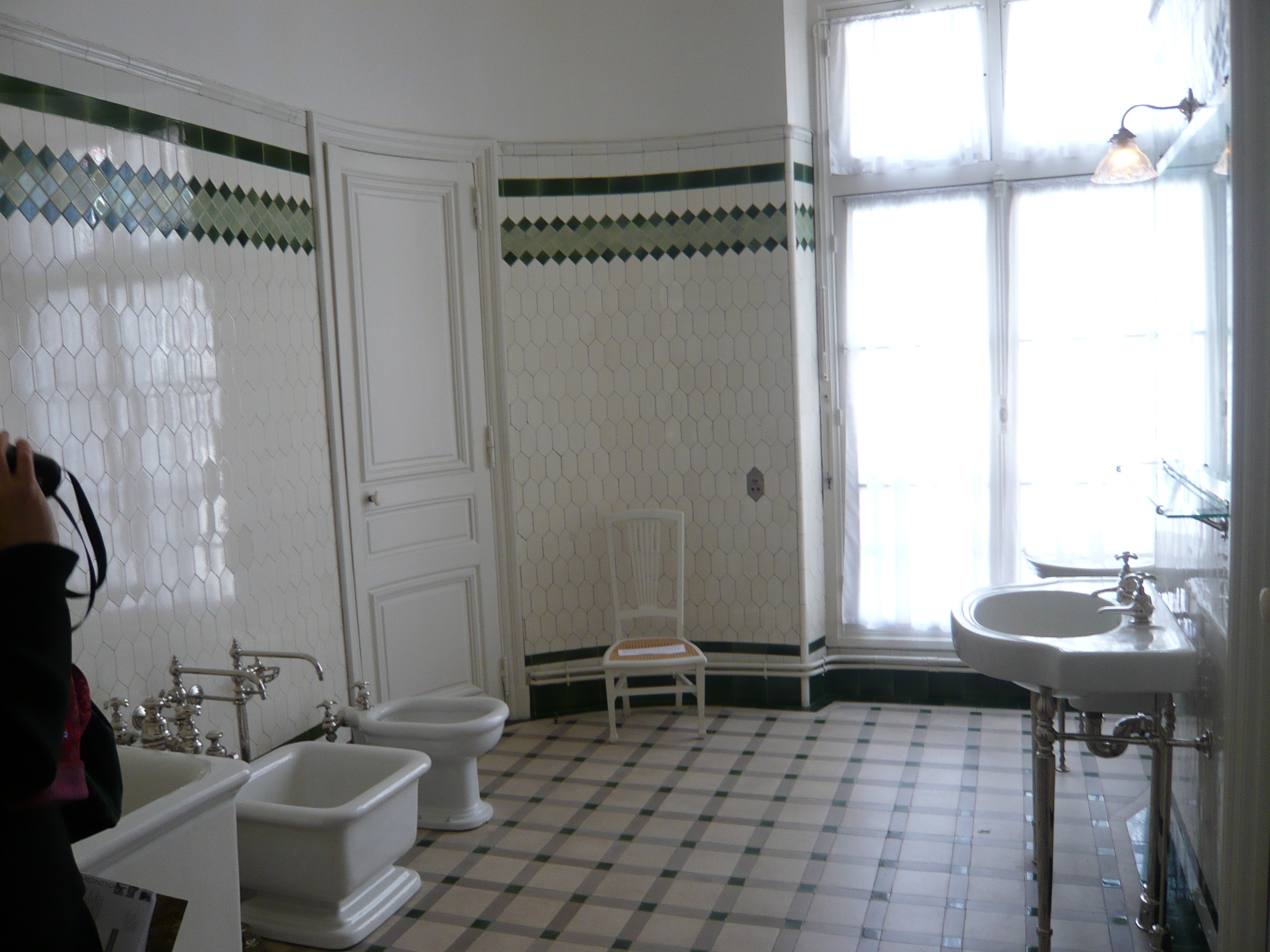
Moise filled his mansion with priceless art and furniture. He also had the very latest in plumbing and fixtures.

Nissim3

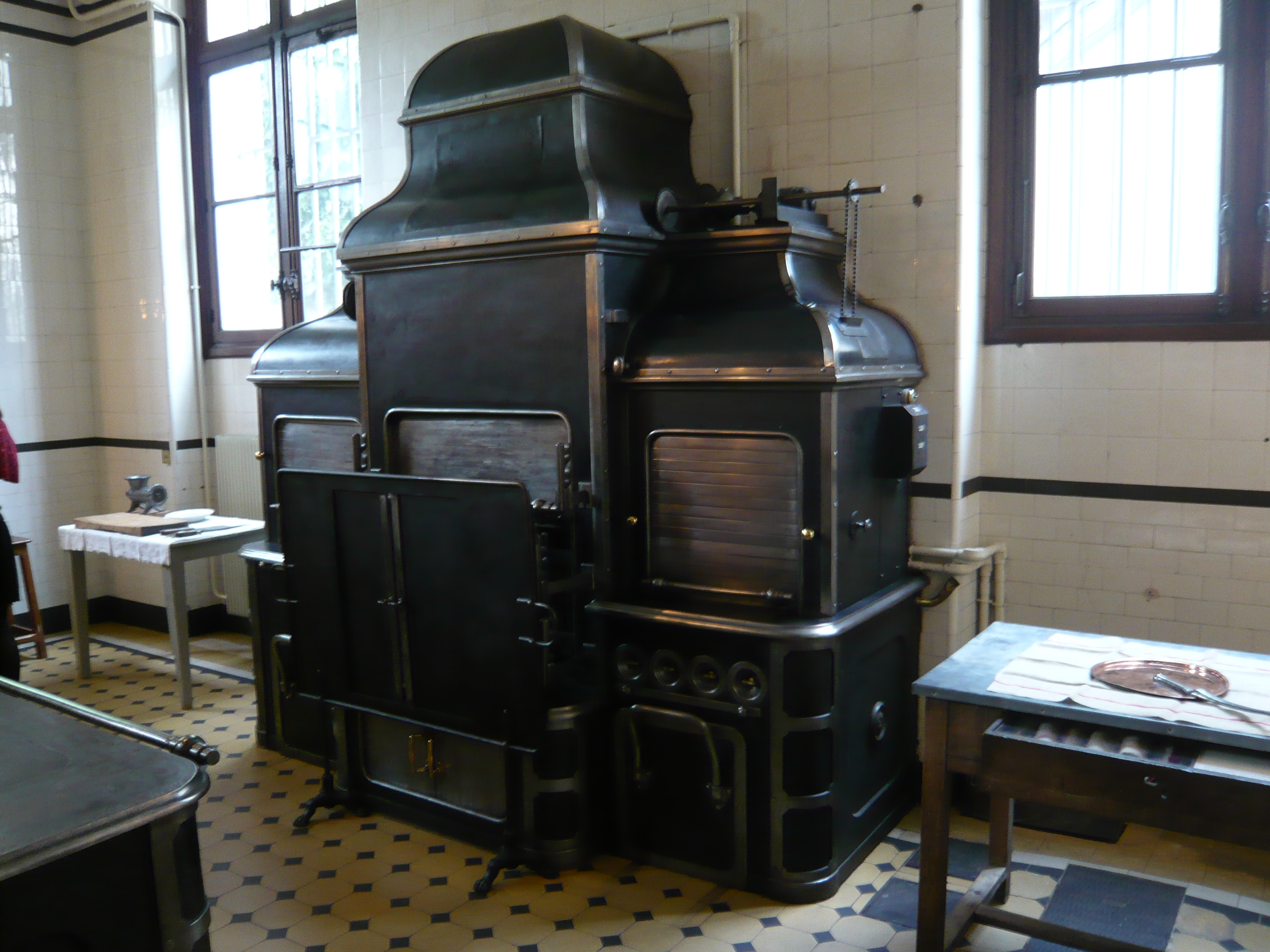
Moise’s state-of-the-art kitchen produced fabulous meals served on museum-quality china.

Nissim 4

But this idyllic life did not last long. Moise’s only son, Nissim, volunteered as combat pilot when World War I broke out. He was killed in action. When Moise died in 1935, he named the mansion for his only son and left it to be opened as a museum of 18th century decorative arts.

There was still plenty of money left over after Moise’s death for his daughter, Beatrice de Camondo.  She was a busy socialite. She saw no reason to change her life even as World War II began; like so many others, she apparently believed her family’s wealth and titled status would protect her.  Sadly, Beatrice, her two children and her husband were deported to Auschwitz between 1943 and 1945.  They were never seen again.

The mansion built in 1911 by Moise de Camondo still stands as he left it, a beautiful but melancholy sight in Paris.


Thinking About “Columbus Day”

images

Monday, October 13 is Columbus Day across the United States.  However, not everyone feels like celebrating the “discovery” of continents where well-developed civilizations already existed.  In Minneapolis, where I spend a lot of time, the City Council voted in April 2014 to substitute “Indigenous Peoples’ Day” for Columbus Day.

Thinking about controversies surrounding Christopher Columbus, I went back and watched a great film, The Mission. The British film was made in 1986 from a script by Robert Bold, directed by Roland Joffe. It won the Palme d’Or at Cannes and an Academy award for cinematography.  It’s a somewhat-fictionalized version of events that actually took place in the 1750s, in the mountains of Paraguay. The story is taken from the book “The Lost Cities of Paraguay” by Father C. J. McNaspy, S.J., who was also a consultant on the film. For me, the story dramatizes some of the heartbreaking conflicts between missionaries and politicians in the colonial period. Conflicts surrounding the exploitation of native lands and peoples continue in our time.

IronsFlute

The main character, Father Gabriel, is played by Jeremy Irons.  The character is based on a real-life Paraguayan Jesuit, Father Roque Gonzalez de Santa Cruz, who became a saint. After a priest in his charge is martyred by a Guarani tribe above a perilous waterfall, Father Gabriel climbs up the steep stone face carrying nothing but a flute.  Warriors surround him as he sits on a rock and plays.  It turns out they love music; they let him stay, and he develops a mission that helps them in material as well as spiritual ways. They are not exploited. Instead, they prosper.

The outside world arrives in the form of a mercenary soldier played by Robert de Niro. He has a lucrative sideline in the slave trade.  He sets a huge net as a trap in the jungle; soon he has a netful of tribe members, and he hauls them off like so many rabbits, to be sold into slavery. Soon afterward, he murders his brother in a jealous rage. Although he is acquitted, he experiences remorse for the first time in his life.  Father Gabriel, on a visit to the city, challenges the mercenary to atone for his sins and change his life.  As penance, the mercenary hauls his net, loaded with all his armor and possessions, tied to a rope and dragging behind him.  He climbs up to the mission above the falls, fully expecting to be shunned or even killed.  He is amazed and humbled when the tribe members forgive and welcome him; over time, he becomes a Jesuit himself. Liam Neeson is excellent as a young Jesuit, in one of his earliest roles.

The rest of the movie concerns further encroachments of the outside world.  Father Gabriel’s mission–and six others like it–are under the protection of Spain, which outlaws slavery.  In 1750, the Treaty of Madrid gives part of Paraguay to Portugal, which encourages slavery. Suddenly, the missions are ordered to close. The Church cannot risk allowing the Jesuits to violate the treaty; the Spanish could shut down their order entirely if they resist. Other religious orders could be barred from the colonies.

Father Gabriel and his Jesuits have to make agonizing choices.  A joint army from Portugal and Spain is ordered to clear out the missions in Portuguese territory. Should the missionaries abandon their mission and the Guarani people they have come to love?  Should they help the Guarani resist, using modern warfare techniques?  Should they resort to peaceful resistance? Would peaceful resistance have any chance? If not, should they sacrifice themselves by trying peaceful resistance anyway?

"The Mission" poster

“The Mission” poster

The film is available at Amazon. The story of the colonization of the “New World” is complex, The great colonial powers of England, Spain, France, and Portugal set out explicitly to exploit whatever they found in the “New World,” people and resources alike. But the members of the various religious orders set out for the colonies with a sincere desire to improve the lives of the people, however misguided their methods were at times.  They were able to do a lot of good that remains to this day. A film like “The Mission” invites us to share in the moral quandaries of times past, and to think about those of the modern world.

Join me next time for more explorations in the art and history of Europe!


Why I Love England and Can’t Wait to Return

I always have good intentions of posting almost daily while traveling, but I always end up rushing around seeing more things than I can record and think about.  That comes later, when I have time to go through my pictures–not to mention the guidebooks that make my suitcase weigh a ton on the trip home. It’s time to sift through my memories of my last trip and begin planning another one.

StreamMottisfont

I love the streams that meander through the English countryside. Estates fortunate enough to have a stream have ancient plantings and walkways, because generations have paused to listen to the rushing water.  This stream is at Mottisfont.

FenceUppark

A fence can become a work of art, when there’s a passionate gardener around.  And England is full of passionate gardeners.  This fence is at Uppark.

RememberAnimals

The British are thoughtful, and their memories are long.  In this year of remembering those fallen in World War I, there are also memorials to the non-human victims.  This wreath, found in the village of Arundel, honors the millions of innocent animals that suffered during the terrible war years. As in town and villages all over England, simple wooden crosses with poppies honor the local war dead. I thought it was nice to create a wreath of blue poppies to honor the animals.

MiadDisplayBlen

The historical sights are making new efforts to attract visitors, and to explain their histories in engaging ways. At Blenheim Palace, there’s a series of rooms that dramatize important events in the palace’s history through the eyes of a lady’s maid. This (wax) woman was awakened in a bedroom where she wasn’t supposed to be, setting off a Marlborough family scandal that turned into a government crisis in days long past.  I would rather read my history and see actual artifacts, but I appreciate the effort that goes into exhibits like this.


LeatherChromeChair

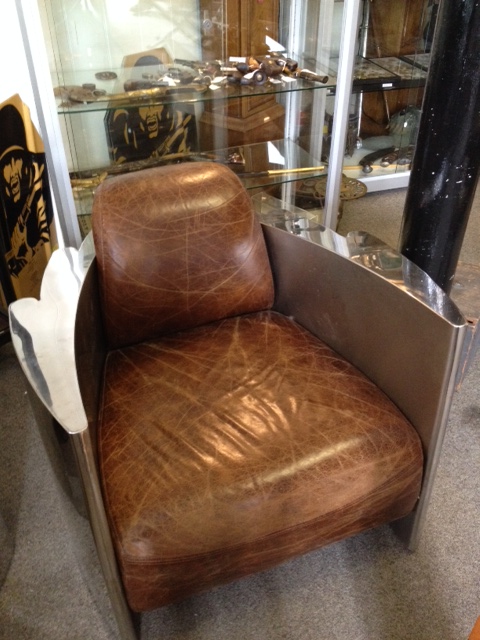
Antique shops are crammed with unusual and very British items, like this well-worn Art Deco chair.

Flowers

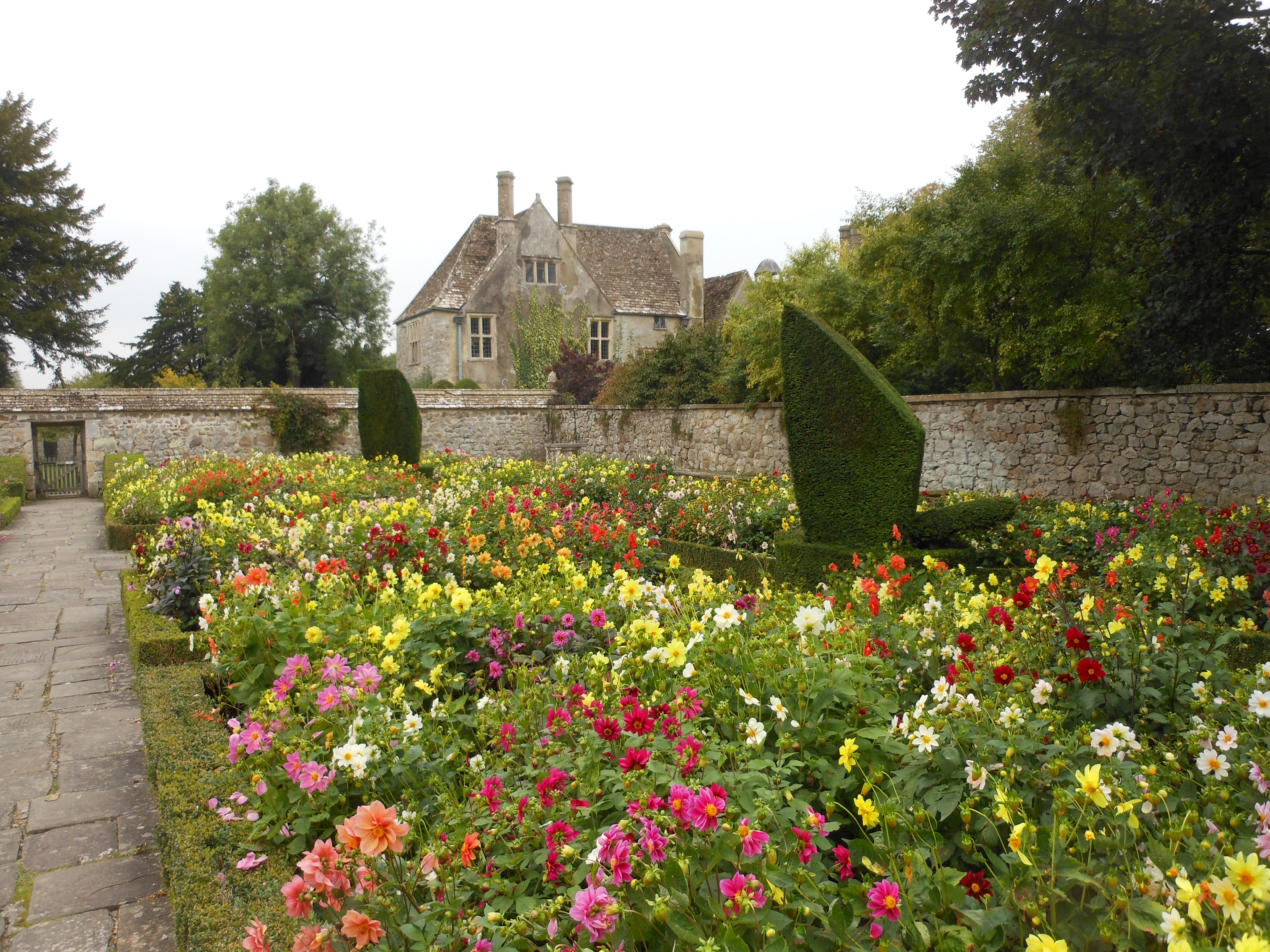
And have I mentioned the flowers? These are at Avebury Manor. Well into the fall, the temperate climate of England keeps flowers blooming.  Yes, I love England!
Join me next time for more explorations in the art and history of Europe and the British Isles!