Category Archives: Paris

Accessories Make the Outfit

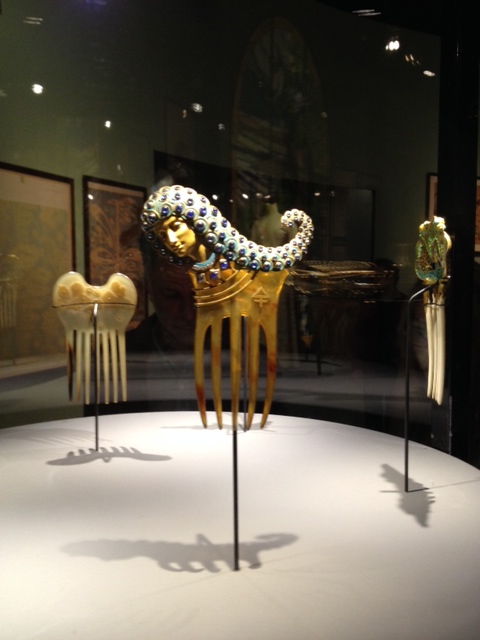
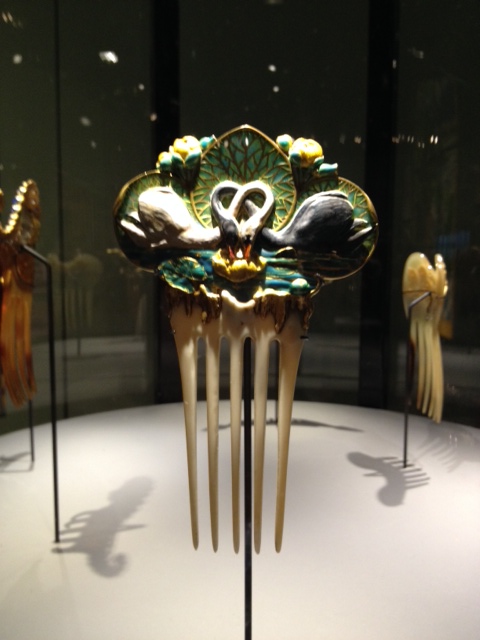
The Art Nouveau movement featured so prominently in the Paris 1900 Exhibit was expressed in the smallest details of daily life.  I saw several beautiful examples of decorative combs to be worn in women’s hair.

photo (1)


Natural forms were everywhere, but developed into the most sophisticated designs.

photo

One of these combs would be just the thing to anchor an artistically tousled chignon.

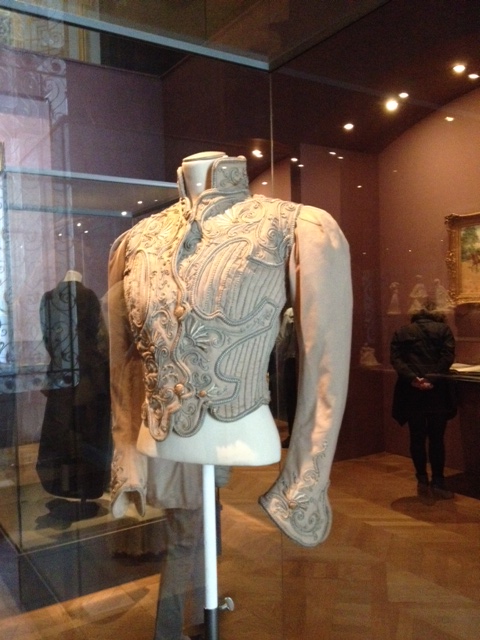
1900jacket

My favorite item, though, was a short fitted jacket in linen and cotton. It was made special with elaborate assymmetrical embroidery and all manner of fine needlework details. In 1900, women had all kinds of new freedoms.  I can see a fashionable woman grabbing this jacket and tossing it on over a simple skirt, on her way out the door with plans to cross Paris on the newly-opened Metro subway. I’d have cheerfully taken this jacket home right out of the display case.  I think it would look great with jeans.

Join me next time for more explorations in the art and history of Europe!

Paris Fashion1900: Worth It


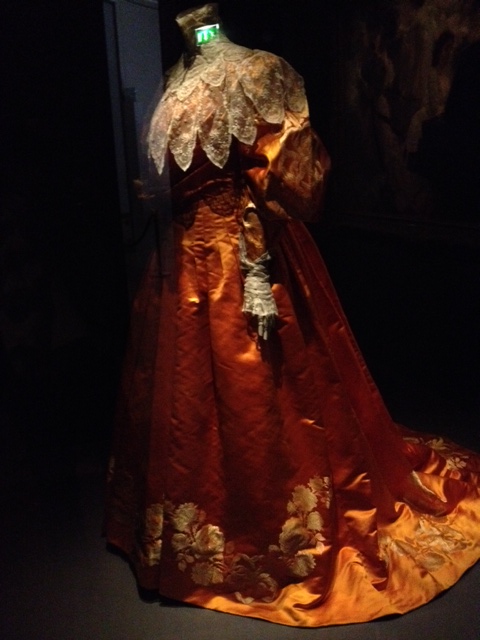
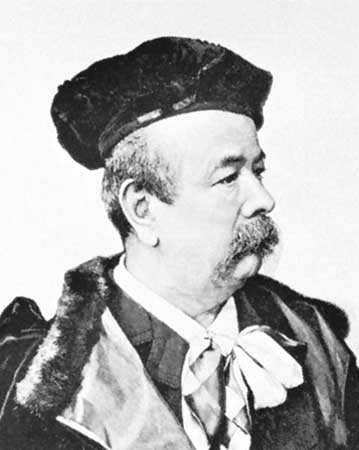
WorthDressThis dress, featured in the Paris 1900 exhibit last spring, was made in the atelier of the man generally reputed to be the first “couturier,” or artist whose chosen art form was women’s fashion. Charles Frederick Worth laid the groundwork for Dior, St. Laurent and others in that rarefied sphere.

Charles Frederick Worth, Public Domain

Charles Frederick Worth, Public Domain

Charles Frederick Worth founded the venerable House of Worth, which clothed rich and beautiful women beginning in 1858 in Paris.  He was actually an Englishman, and he got his start in drapery shops.  In his spare time, he made dresses for his wife.  Soon his designs were in demand, and he was on his way. The Empress Eugenie (wife of Napoleon III) found her way to his shop, and other rich and titled women followed.

Previously, a woman who wanted a dress went to a dressmaker and specified how the dress was to be made. Worth came up with a brilliant idea:  he held fashion shows four times a year featuring various styles.  Women could choose a style, then choose the fabric and have it tailored to their own figures.

This particular dress had a sort of matronly look, I thought. It was made in about 1895, five years before the Exposition of 1900.  I much preferred the more ethereal dresses in sheer white fabrics. But the rich and titled no doubt still needed imposing clothes in expensive fabrics. For such women, Worth was their man.

Join me next time for more explorations in the art and history of Europe!


Paris Fashion 1900

The Paris 1900 exhibit had delicious examples of the all-important art of dressing–always a priority for the French.  No wonder women who could afford it traveled from England and America just to buy their wardrobes.

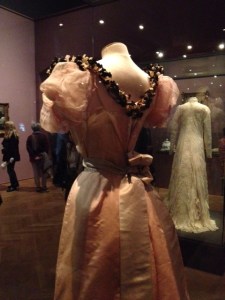
DressBallGown

I loved this dress, just the thing for attracting admiring glances–and filling up one’s dance card–at a ball. I can hear the music!

Boots

Fine leather boots would look fetching while stepping out of a carriage.

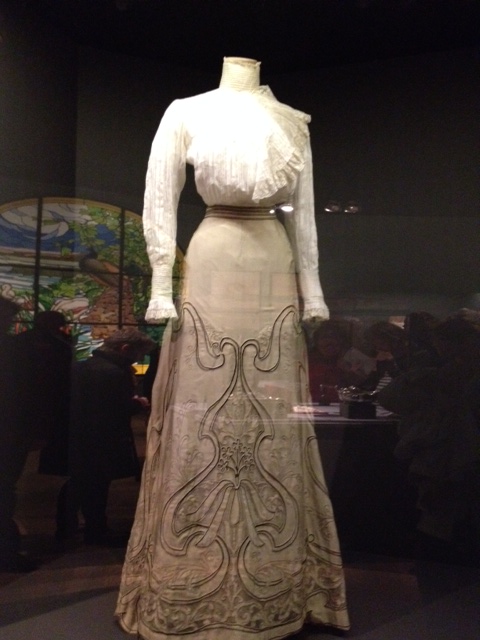
Skirt

An elegant skirt and ruffled blouse, maybe for entertaining in one’s Paris town-home. The sinuous curving lines of Art Nouveau were not just for furniture.  Women delighted in wearing Art Nouveau.

The Belle Epoque–what an era!

Join me next time for more explorations into the art and history of Europe!


Petit Palais: Belle Epoque Revisited

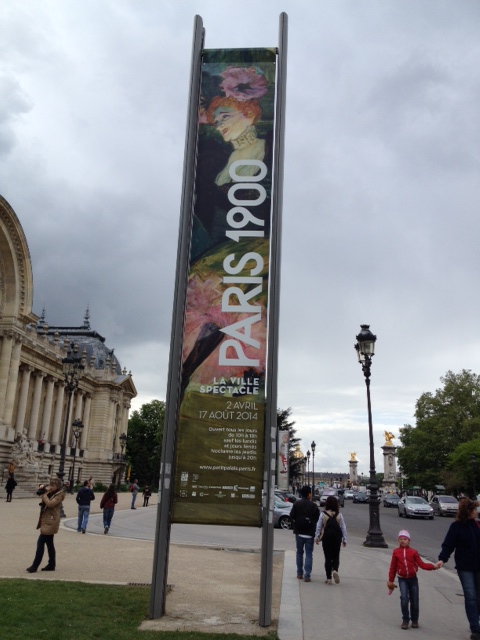
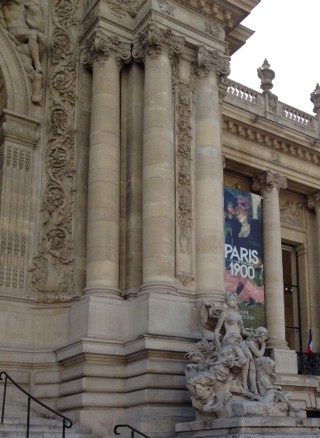
1900Poster

I’m giving myself permission to go on for awhile about the wonderful Paris exhibit currently in the Petit Palais, “Paris 1900.” Actually, if I had the means and the time, I’d hop a plane to Paris to see it again.  It closes August 17, 2014.  Hint:  go online and get advance tickets.  I saw it on my last day in Paris in April, had not planned ahead, and waited in line about 45 minutes.  I imagine the wait would be longer now.  The good thing is that only a certain number of visitors are allowed in at a time, so it will not be mobbed like the Louvre  and the Orsay in summer.

Exciting artists like Cezanne, Monet, Renoir, Pissarro, Vuillard, Maillol, Denis, and Rodin are featured in the fine arts section. Art Nouveau masterpieces abound.

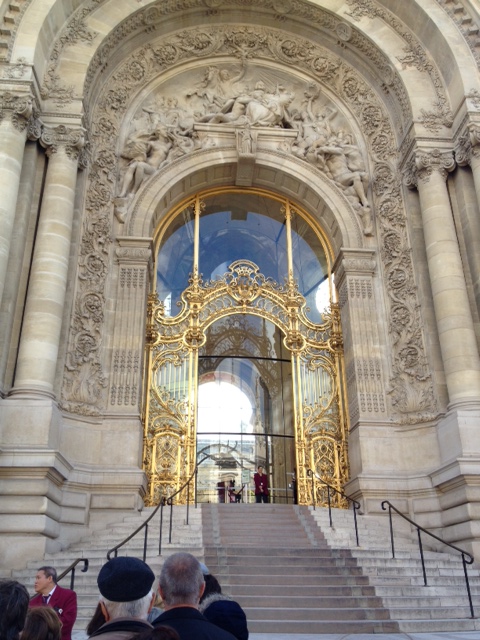
photo

The building itself is glorious.  It is the only remaining complete building from the Paris Exposition 1900, and it gives some idea of the pre-World War I exuberance of Paris. The future seemed limitless to the 51million tourists who attended the Exposition. That is a stupendous number of people, at a time when the Metro had just opened and travel was much more difficult than it is today.

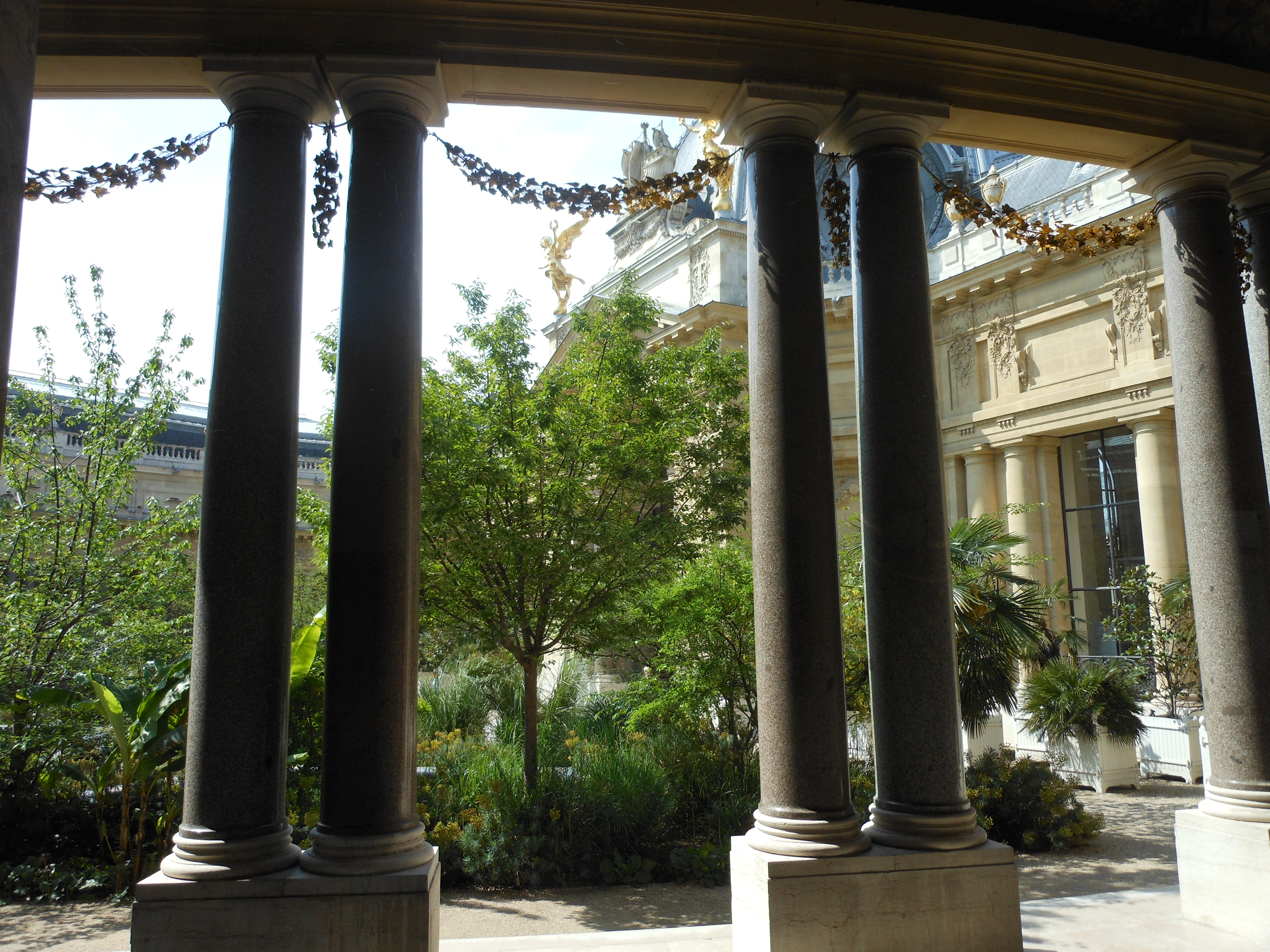
PetitCourtyard

There’s a beautiful plant-filled inner courtyard, which allows light into the large building.

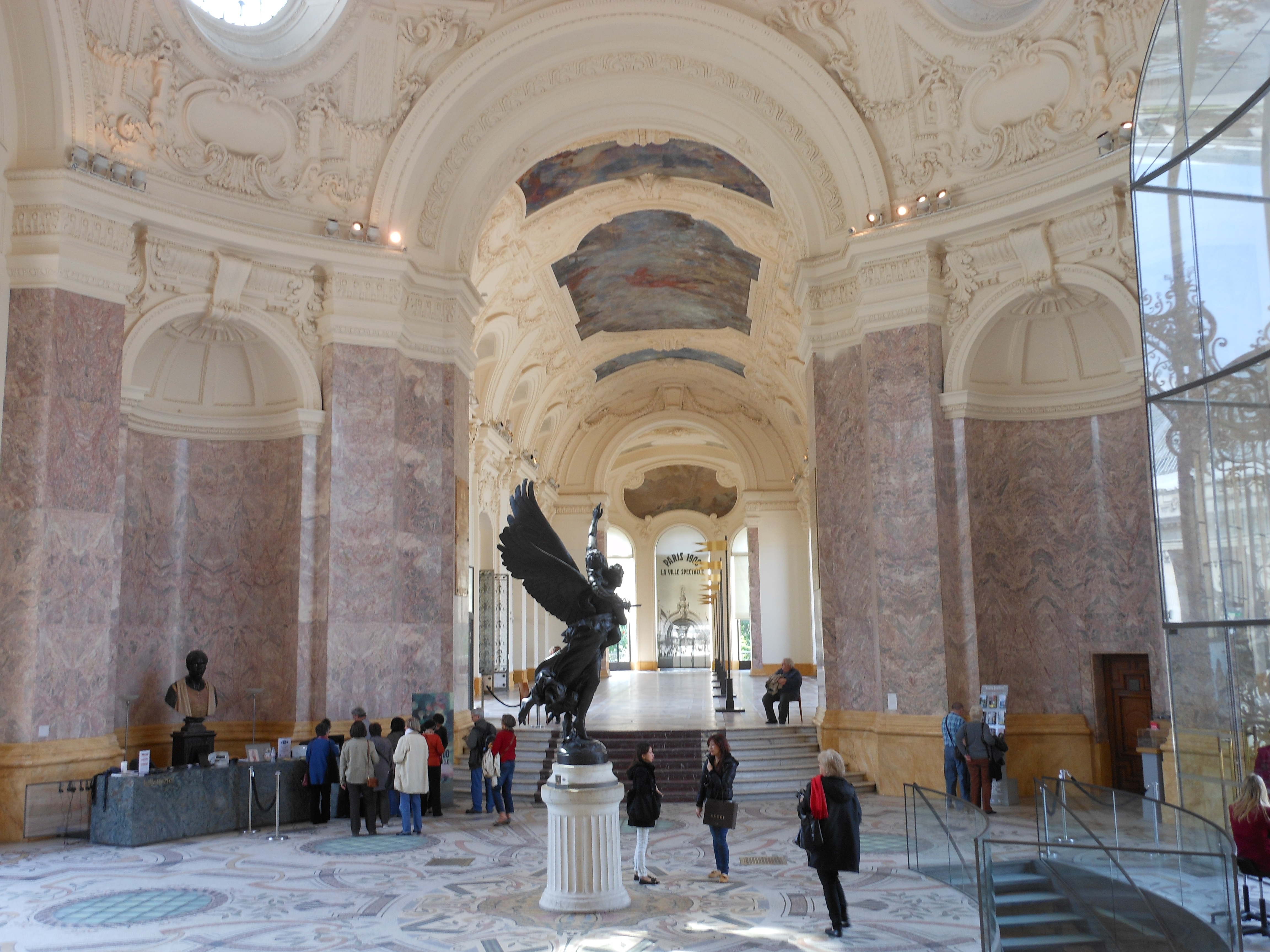
Petit Interior

The galleries on the main floor contain a permanent collection which is interesting in itself.  Everything seems spacious, light and airy.

A link to the exhibit is at

http://www.petitpalais.paris.fr/en/expositions/paris-1900-city-entertainment

An Evening in Paris

PreCatalan


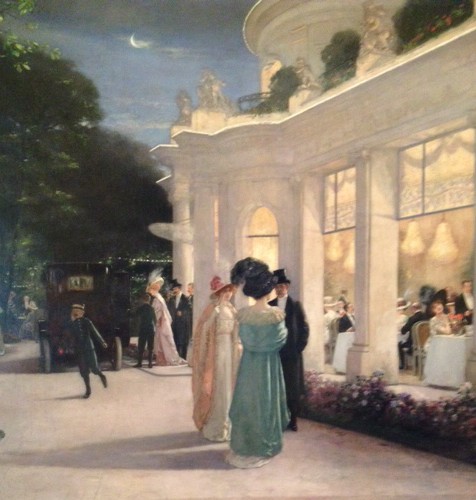
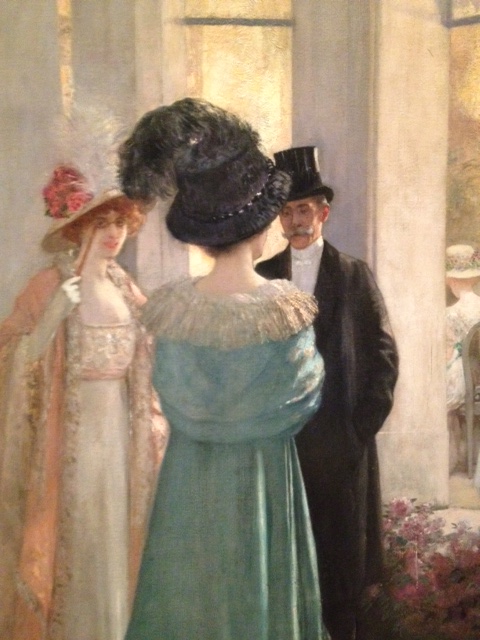
At the “Paris 1900” exhibition in April of this year, I admired this wall-sized painting of an elegant evening from days gone by. It was painted by Henri Gervex in 1909. The title is “Une Soiree au Pre Catalan.” It depicts guests at a celebrated restaurant in the Bois de Boulogne.

TalleyrandPre

Some of them are recognizable: the duke of Talleyrand-Perigord and his rich American wife, Anna Gould. It must have seemed to these privileged people that there was no good reason that life as they knew it would not continue indefinitely. But in just a few short years, the First World War would wreak havoc on the lives of all, including the most privileged.

This painting is from the Musee Carnavalet in Paris, one of the stellar free sights of Paris. I have never seen it crowded. I’d head to the Carnavalet right now if I found myself in the summer crowds of Paris, having just read that so many people are picnicking on the grounds of the Louvre and the Tuileries that large rats are appearing in daylight to scavenge food.  The hushed corridors and quiet galleries of the Carnavalet  are  housed in a Renaissance mansion that has its own history.  A visit gives a glorious overview of the history of Paris. This particular painting will not be there right now, but anyone interested in art and history will find plenty of treasures to contemplate.

Join me next time for more explorations into the art and history of Europe!


Dancing into the 20th Century


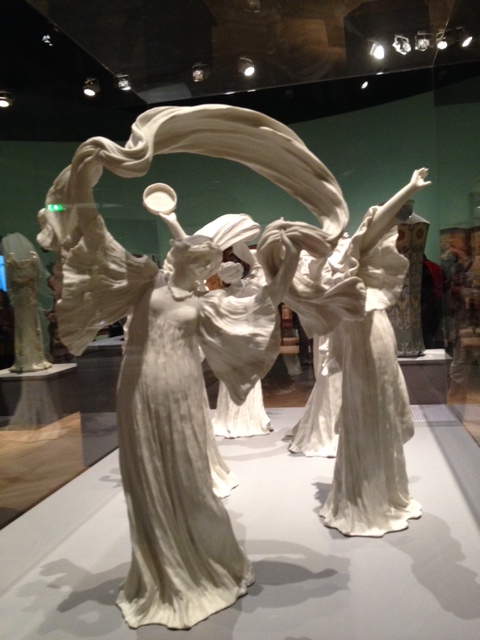
PorcelainDancersThese porcelain dancers from the Paris 1900 Exhibit, in the Petit Palais of Paris in 2014, epitomize the ideals of beauty of the period:  slender, tall, and above all, in graceful motion. The corseted and bustled female form was gone; in its place was a slender silhouette, able to move about the world with new freedom.

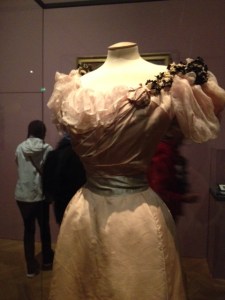
DressFront

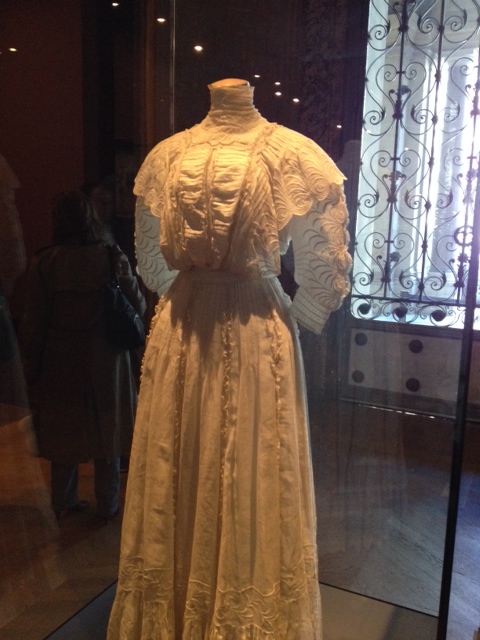
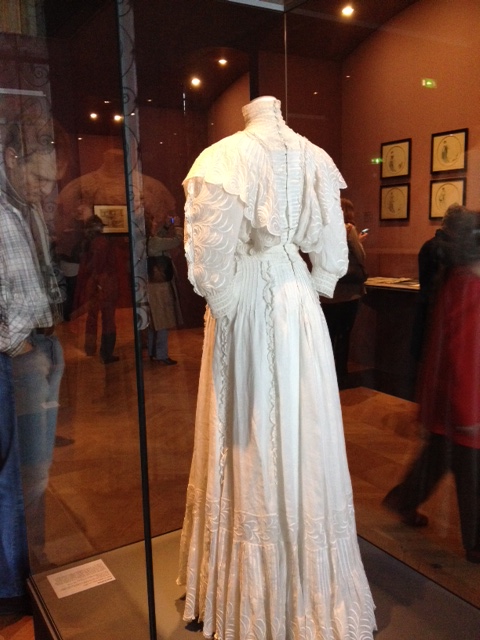
Fashionable women of the period cultivated similar ideals as they went about their daily lives. The corseted and bustled female form was gone; in its place was a slender silhouette, perfect for the modern woman.

DressBack

Coming or going, the fashionable woman of 1900 exuded femininity and grace.

Paris: Sin City 1900

P1900PosterOne of the best reasons to travel to Paris is to take in the special exhibits. This past April, I loved the exhibit called “Paris 1900” at the very grand Petit Palais. In 1900, a huge exhibition occupied 500 acres along the Seine River, at the same time that the very first line of the Metro opened.  The exhibition was a celebration of Paris as THE world center of art, innovation, technology, and above all entertainment. Entertainment in Paris 1900 ran the gamut from sublime theater performances to dance halls to houses of prostitution, tailored to all segments of society.

Annoyingly, all the exhibit captions were in French only.  I had to call on my translating skills, which are pretty good but not great. There was an audioguide, but I was short on time.  (When is there ever enough time in Paris?)

"Redemption," Public Domain

“Redemption,” Public Domain

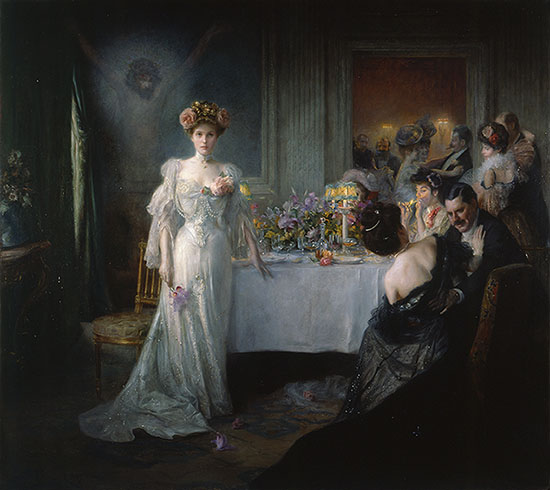
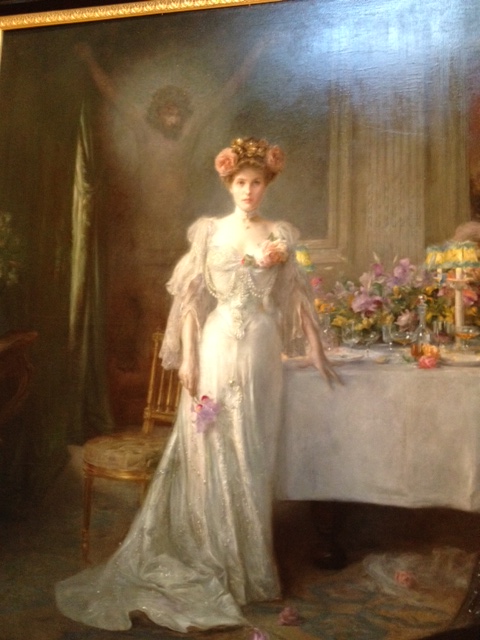
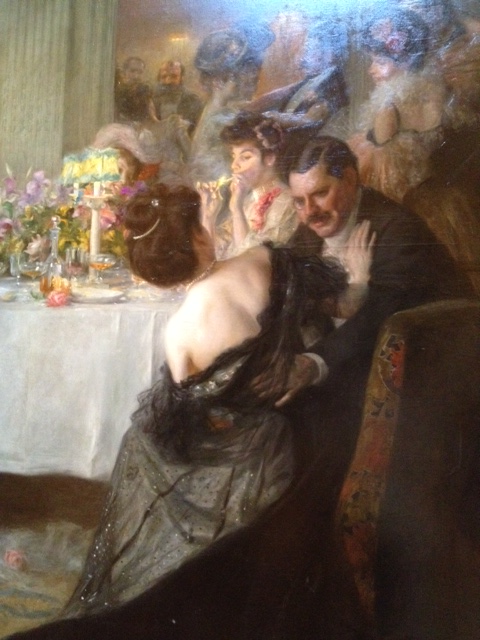
A gorgeous large painting by Julius LeBlanc Stewart poignantly depicts the intersection of high life and low life in the fast-and-loose period known as the Belle Epoque. The title is “Redemption,” painted in 1895. Stewart was an American.  Along with his fellow American, the more well-known John Singer Sargent, he made a nice living doing portraits of society figures. This is a genre painting, on the theme of the repentant prostitute.

Nightlife1

A beautiful young girl, dressed in white, stands alone at one end of a dinner table–or rather, probably a table set for supper during a ball. Will this girl make an advantageous marriage?  Or possibly she already has escaped her former life, and hopes she will not be found out. She looks vulnerable, ready to flee.

Nightlife2


At the other end of the table, a portly gentleman is working on seducing a bare-shouldered woman.  She holds him off with one hand–but for how long?

Join me next time for more explorations into the art and history of Europe!


A Woman Who Could Hold Her Own

MmeBru

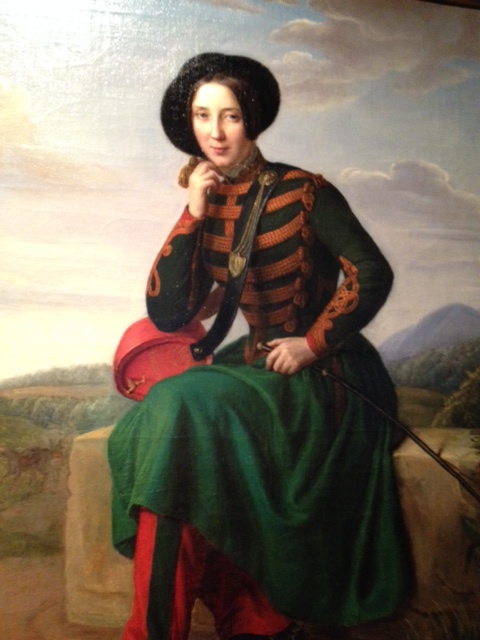
Among the hundreds and hundreds of stiff military portraits and battle scenes in Les Invalides, the military museum in Paris, this sturdy but friendly woman stands out.  She was Madame Bru, one of the few respectable women allowed and even encouraged to follow the French army. She was known as the “cantiniere” of the 7th Regiment of Hussars.  She and no doubt some other women like her organized mobile canteens which provided the soldiers with food, drink and tobacco.  Many times, they also served as nurses. They were sometimes awarded military medals for their services. Madame Bru, painted in 1837, was no doubt a beloved figure in “her” regiment.

Join me next time for more explorations in the art and history of Europe!

An Art-Deco Lady in Green

Lempicka Green

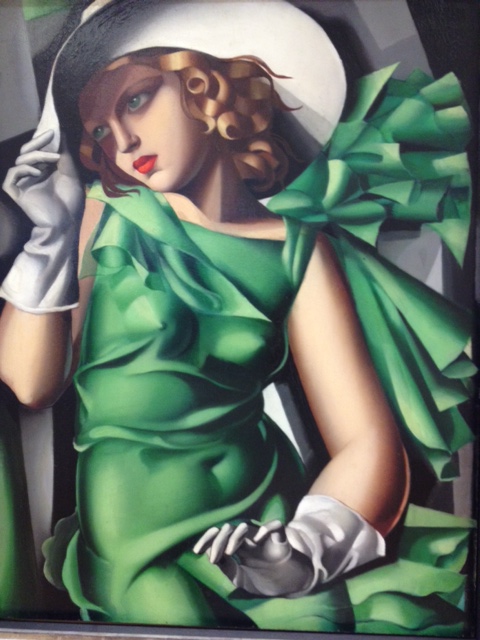
Tamara de Lempicka painted this portrait, “Jeune Fille en Vert,” between 1927-1930. It’s part of the collection of the Pompidou Center in Paris.

The artist was born to Polish-Russian aristocrats in 1899.  Just before the Russian Revolution, she married a well-known lawyer/playboy. He was arrested during the Revolution.  She managed to rescue him from prison and they made their way to Paris, where their money soon ran out.  Tamara began painting as a way to support her family, which by this time included a daughter.

She developed a unique personal style perfectly suited to the Art Deco aesthetic of the Jazz Age.  Her paintings showed the influence of Picasso’s Cubism, combined with Italian Old Masters, which she had been exposed to when she lived with her wealthy grandmother as a teenager in Italy. Soon Tamara was in great demand, charging large fees to paint society figures and even the crowned heads of Europe.

She was wild and difficult, though.  She hobnobbed with the bohemian artist community in Paris, but at the same time conducted a frenetic social life in the highest social circles.  It seems she never really fit in with either group. Her first marriage did not last, and she neglected her only child.  She remarried and moved to the United States, where once again she was in demand for a time, painting portraits of movie stars and society figures.

Eventually, her work fell out of fashion and she retired from painting.  In the 1980s, her work was in demand again. Now, her paintings once more command high prices.

LempickaCover

A recent biography by Laura Claridge sounds like a very entertaining account of this colorful woman’s life.  The title is “Tamara de Lempicka: A Life of Deco and Decadence.” I’m hoping it will soon be available as an eBook. Right now, it seems to be only available in hardcover and paperback, from Amazon. A review is at http://www.nytimes.com/books/99/10/24/reviews/991024.24vincent.html

Join me next time for more explorations into the art and history of Europe!

The French Resistance

Lately I’ve written about two very different members of the French Resistance in World War II: Marguerite, the daughter of the artist Henri Matisse, and Jean de Noailles. How did just a small number of people find the courage to actively resist the tyranny of the Gestapo in France, when most French citizens went about their lives hoping to avoid danger by collaborating with or ignoring the German occupiers? The reasons seem to be as varied as the people themselves.
ArmyCrime

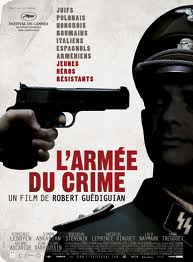
I recently watched an absorbing 2009 film about the Resistance. It is semi-fictional, based on the courageous real-life actions of real people, supplemented by some fictional characters and situations.  The fictional characters serve to humanize the bare-bones stories of the resistance fighters. The director was Robert Guediguian.

The film, which is in French with subtitles, begins with a busload of ordinary-looking people riding through Paris on a sunny day.  They gaze out the bus windows, make small talk, joke with each other, or keep to themselves.  I somehow missed the subtitles, so not until the end of the film did I realize the heartbreaking reason these 22 people were riding that bus.

Next, we see the events that led to that bus ride in 1944, just a few weeks before Paris was liberated. Back in 1941, at the beginning of the German occupation, a ragtag group of resisters began wreaking havoc on the German occupiers. Their leader was the real-life Missak Manouchian, an Armenian poet who was at first ready to die, but not to kill. That changed.

A large number of Resistance fighters were not French. Some of the fighters were Jews; many were Communists. All were implacable enemies of the German occupiers, willing to make the terrible choices dictated by resistance. Even knowing that they were losing the war, the Germans used them in a propaganda campaign which called them an “Army of Crime.” Red posters featuring them appeared all over France in the days before their executions.

Marguerite Matisse and Jean de Noailles are featured in my previous posts,  https://castlesandcoffeehouses.com/2014/07/15/marguerite-a-feisty-daughter/ andhttps://castlesandcoffeehouses.com/2014/06/10/jean-de-noaill…nch-resistance/.  

 

Photo from NYT review cited below

Photo from NYT review cited below


A review of “Army of Crime” is at http://www.nytimes.com/2010/08/20/movies/20army.html?pagewanted=all&_r=0. The film is streaming on Netflix.

Join me next time for more explorations into the fascinating history (and art) of Europe!