Category Archives: Austria

Hundertwasser’s Three Skins


In 1967 and 1968, the artist and activist Friedensreich Hundertwasser delivered his famous “Naked” speech as a kind of manifesto of his ideas at the time.  He appeared naked, and rounded up some friends willing to do the same.  The idea was that a human being has three “skins:” the epidermis, the clothing, and the dwelling place.  (This makes me wonder whether Hundertwasser ever designed any clothing).

Sign

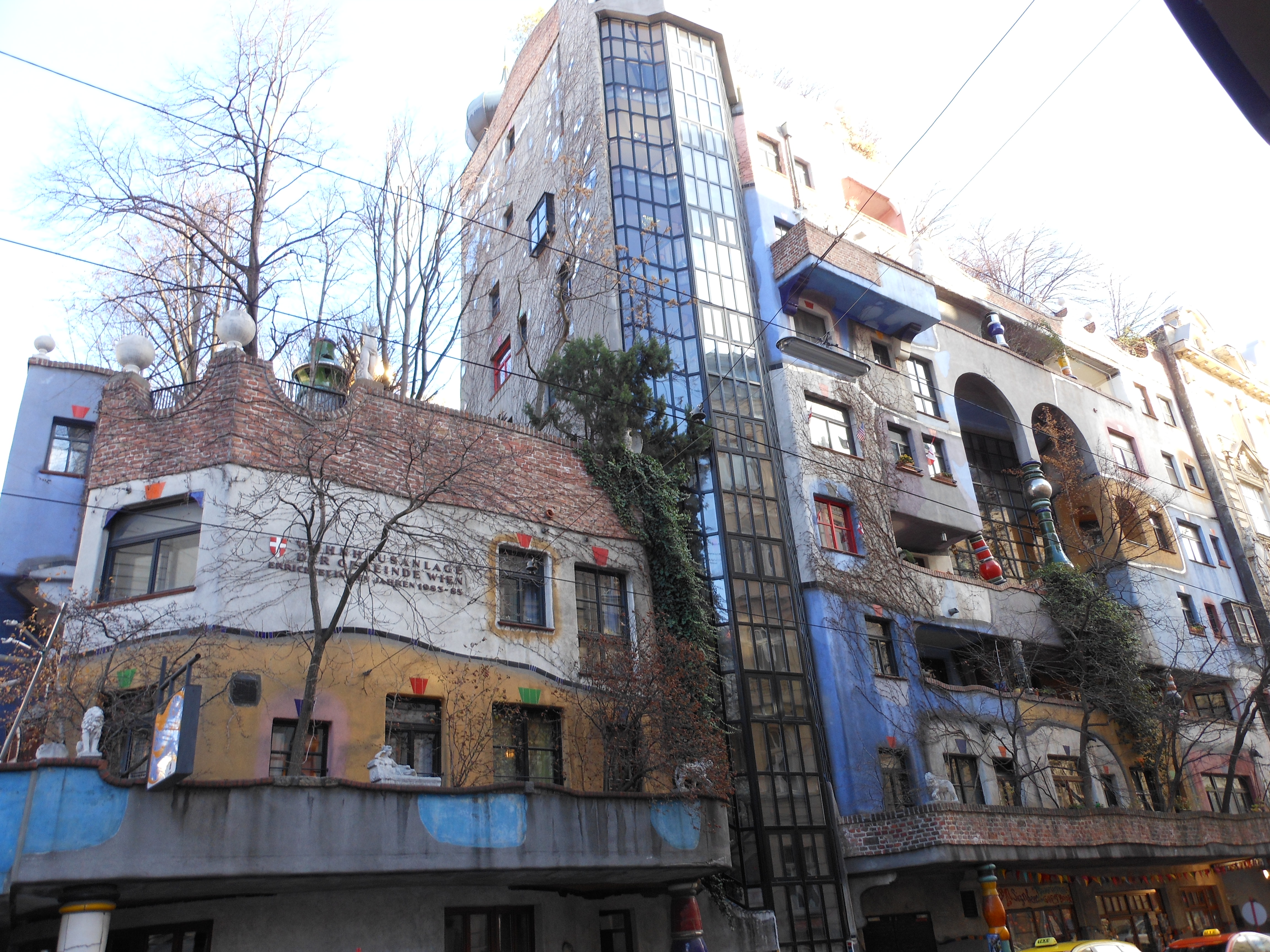
He certainly designed the exteriors of buildings, the most famous of which is the Hundertwasserhaus apartment building in Vienna.  He took it as a sacred right that a human being should be able to express his individuality in the exterior of his living space, instead of being consigned to an anonymous box. He also designed the nearby museum that houses many of his paintings, mosaics and other works of art. Various exhibits explain the artist’s ideas, and there are many beautiful paintings.  The paintings remind me of Paul Klee’s work, but they are much larger in scale and more colorful.  Unfortunately, photographing the paintings is not allowed.

RoofGarden

Hundertwasser believed all urban buildings should have roof gardens.  He actually believed it would be feasible to make these roof gardens burial places for the residents of the buildings.  Somehow, this particular idea never really caught on. Still, Hundertwasser felt that a tree should be planted on top of every grave, instead of installing a headstone.  That way, he said,  you could visit the burial place of your grandfather and say, “This is my grandfather, the tree is growing well, fantastic.”  Eventually, when he died in 2000, he was buried according to his wishes under a tulip tree on property he owned in New Zealand. This wish was in stark contrast to the grand and ghoulish burial customs of the Habsburg dynasty, which deserve their own post later on.

TreeTenantClose

Hundertwasser’s ideas live on, in the minds of the many artists and thinkers he influenced. His ideas also live on in the enchanting museum he created for his work, in a quiet area of Vienna away from the tourist trail. I visited in the middle of winter.  The building has a number of “tree tenants:” trees which occupy balconies, flourishing in only a square meter of soil. I’m sure that now, in springtime, Hundertwasser’s beloved “tree tenants” are leafing out, making the concrete canyons of at least one street green with new life.

Join me next time for more explorations in the art and history of Europe!
Hundertwasser’s Window Rights for All

AptWithTrees

What are “window rights?” The visionary artist/architect/activist Friedensreich Hundertwasser believed that life in big cities destroyed human individuality, unless the buildings themselves allowed each person to create a unique exterior.  For the apartment building he designed in Vienna, the Hundertwasserhaus, he decreed this revolutionary idea:

“A person in a rented apartment must be able to lean out of his window and scrape off the masonry within arm’s reach. And he must be allowed to take a long brush and paint everything outside within arm’s reach.” He also believed that children should be allowed to paint and color walls as far up as they could reach.

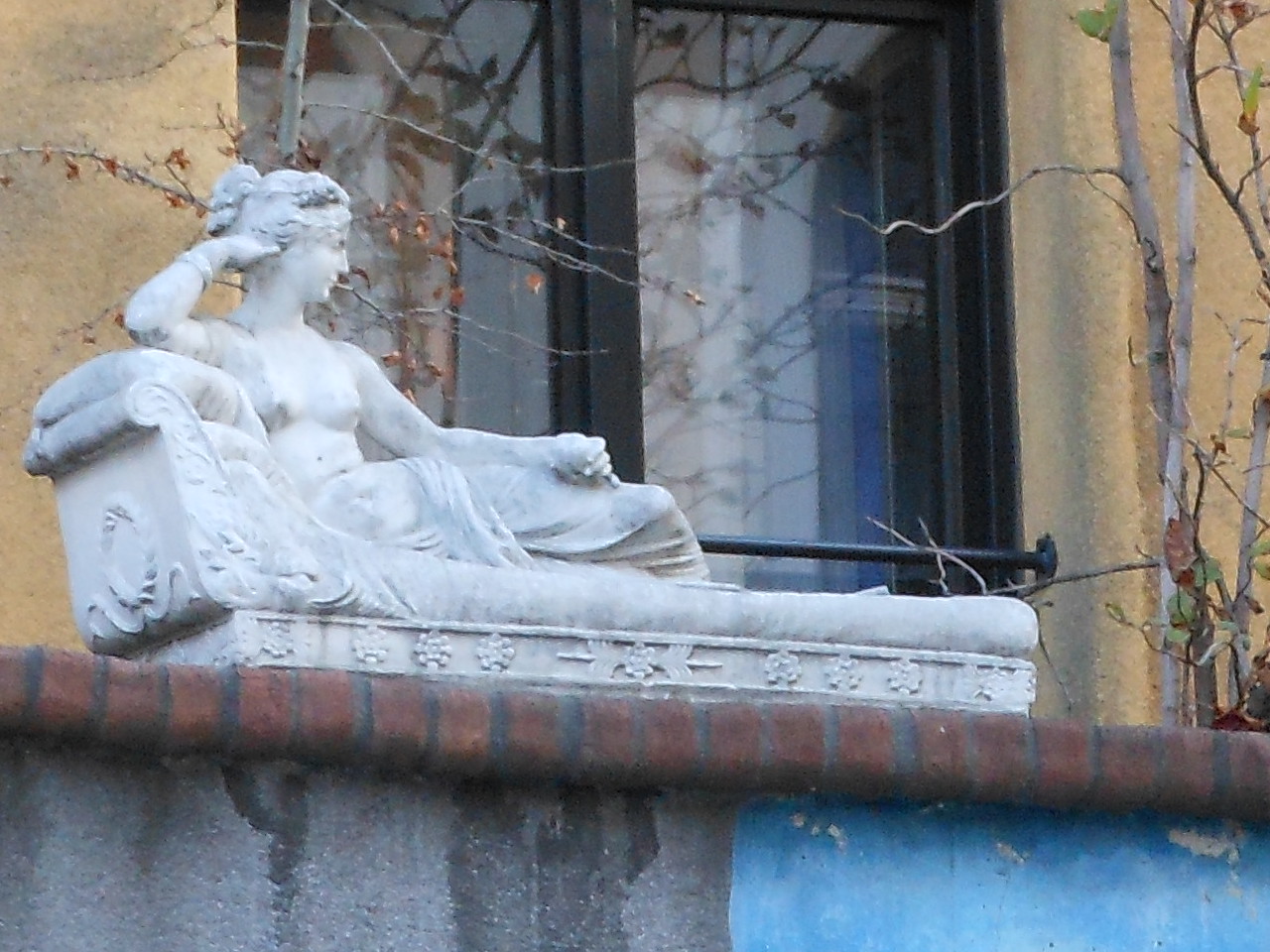
CanovaPauline

I’m sure the people who live in the Hundertwasserhaus are used to tourists staring up at the facade of their home.  Still, I tried to be discreet when I was there.  I couldn’t help taking a picture of one person’s way of decorating a balcony, though: with a plaster replica of Antonio Canova’s “Venus Victorious.”  The original, a breathtakingly lifelike and lifesize creation in marble, reclines in regal splendor in the Galleria Borghese in Rome. The model was Napoleon Bonaparte’s sister Pauline; her husband was the Borghese prince who commissioned the piece.  Pauline was quite a free spirit in her day.  When asked if it bothered her to pose nude for the sculptor, she replied that it was no problem because the room was heated.

This reproduction, perched on the railing of a slightly scruffy apartment balcony, tells me that an interesting person lives inside. The free-thinking spirit of Friedensreich Hundertwasser lives on in the building he designed, too.

Join me next time for more explorations in the art and history of Europe!
Walking on a Forest Floor in the City

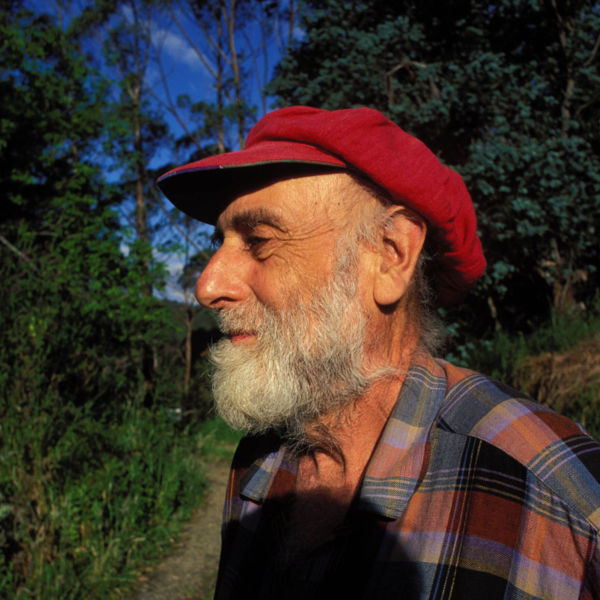
Now that I’ve been to the Kunsthauswien, I’m sure I’ll make my way there every time I’m lucky enough to be in my favorite city, Vienna.  The medium-sized museum, dedicated to the artist Friedensreich Hundertwasser, is just a short and fun tram ride outside the center. The artist was born Friedrich Stowasser in Vienna in 1928.  His mother was Jewish, and as he became a teenager the Nazis were coming to power.  In order to be inconspicuous, the mother and son posed, as many people did, as Christians.  The father had been Catholic, so this was dangerous but doable.

1998 photo by Hannes Grobe, Creative Commons Attribution-Share Alike 2.5

1998 photo by Hannes Grobe, Creative Commons Attribution-Share Alike 2.5

After the war, Hundertwasser spent several months at the Academy of FIne Arts (which had famously rejected aspiring painter Adolf Hitler–not once but twice). As he developed as an artist, Hundertwasser renamed himself: “Friedensreich” means something like “Peace-realm” and Hundertwasser means “Hundred Waters.” The name was perfect for the artistic career that he developed, with all his work aimed at peace, joy, organic forms, union of humanity with nature, and incredible diversity.  He worked in just about every medium available to an artist, and threw in architecture, environmentalism, and social activism on top of it all.

Hundertwasser especially wanted to bring nature back into cities.  One of his more radical ideas was the uneven floor surface, recreating the natural state of the outdoors.  The Kunsthauswien has such floors.  The floors are not only uneven, but cheerfully covered in bright mosaics. Walking on them is, in the very appropriate expression from the sixties, a real trip.

WavyFloor

A caption quotes some of Hundertwasser’s ideas about the value of uneven floors: “If man is forced to walk on flat floors…estranged from man’s age-old relationship and contact to earth–a decisive part of man withers and dies…The uneven floor becomes a symphony, a melody for the feet and brings back natural vibrations to man.”

The nearby Hundertwasserhaus apartment building has such floors throughout.  I wonder what the residents actually think of their floors.  Do they get used to the waves and bumps, or do they sometimes stub their toes in the middle of the night?  I glimpsed a couple of residents visiting on a park bench in their apartment courtyard, and was tempted to ask them what they thought.  But the apartments are peoples’ private homes, so I left them in peace.

BenchResidents

Join me next time for more explorations in the art and history of Europe!
 

Tree Tenants in Vienna

Photo by Lucian Ilica, Public Domain

Photo by Lucian Ilica, Public Domain

Last time I was in Vienna, I finally took the time to have a look at the Hundertwasserhaus. It’s a short tram ride from the center, in a residential neighborhood of big apartment blocks.  Anyone who has ever taken Art History 101 has studied this innovative apartment building, constructed between 1983 and 1985 according to the ideas of Friedensreich Hundertwasser. He was a one-of-a-kind artist, architect, environmentalist, philosopher, social activist and general pain in the neck to “the powers that be” during his lifetime. For instance, he sometimes appeared completely naked when asked to give a lecture.  He was far ahead of his time, though.

Kunsthauswien

Kunsthauswien

The apartment building itself is hard to really look at; it’s crowded into an urban block, and since its residences are private, tourists can’t enter for a look around.  More interesting is the nearby museum devoted to Hundertwasser and his art, the Kunsthauswien.

TreeTen

I especially liked the Tree Tenants: a number of balconies are occupied by trees, creating a vertical green landscape right in the middle of a sterile urban block. Hundertwasser wrote extensively about trees as legitimate residents of city buildings. He commented, “Cars have chased the trees up into the storeys of houses…We suffer daily from the aggressivity and the tyranny of our vertical sterile high walls. But streets in the cities will become green valleys where man can breathe freely again.”

HundertBack

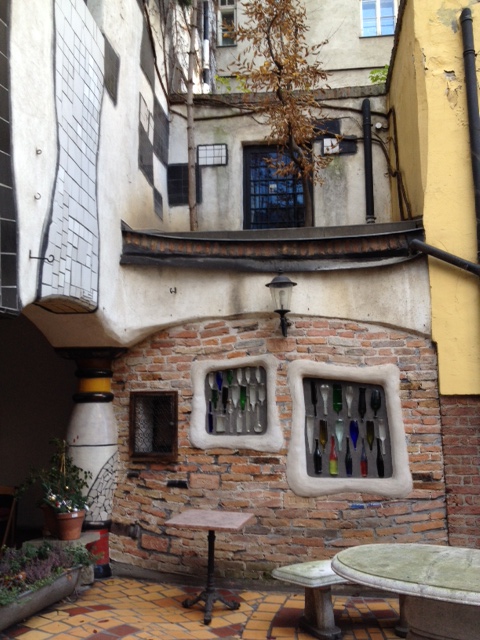
There’s a funky cafe and terrace in the back of the museum, a perfect place to contemplate the life and times of a thinker and man of action. Colored bottles installed in a window, where other people might think of using stained glass?  It makes perfect sense, in this enchanting museum off the beaten path in Vienna.

Join me next time for more explorations in the art and history of Europe!

Marie Antoinette: A Tragic Habsburg

MarieAntBust

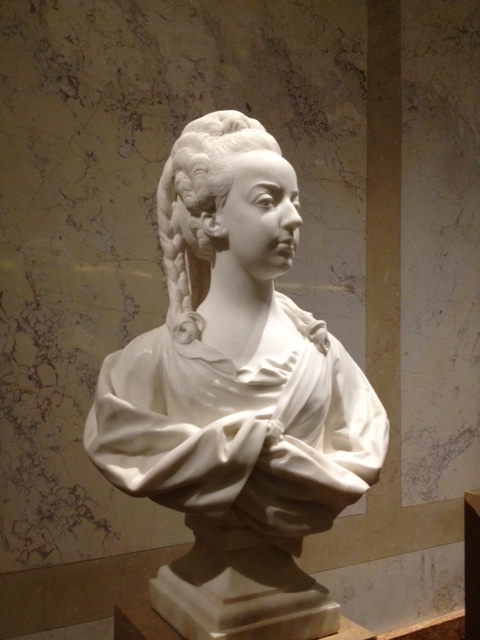
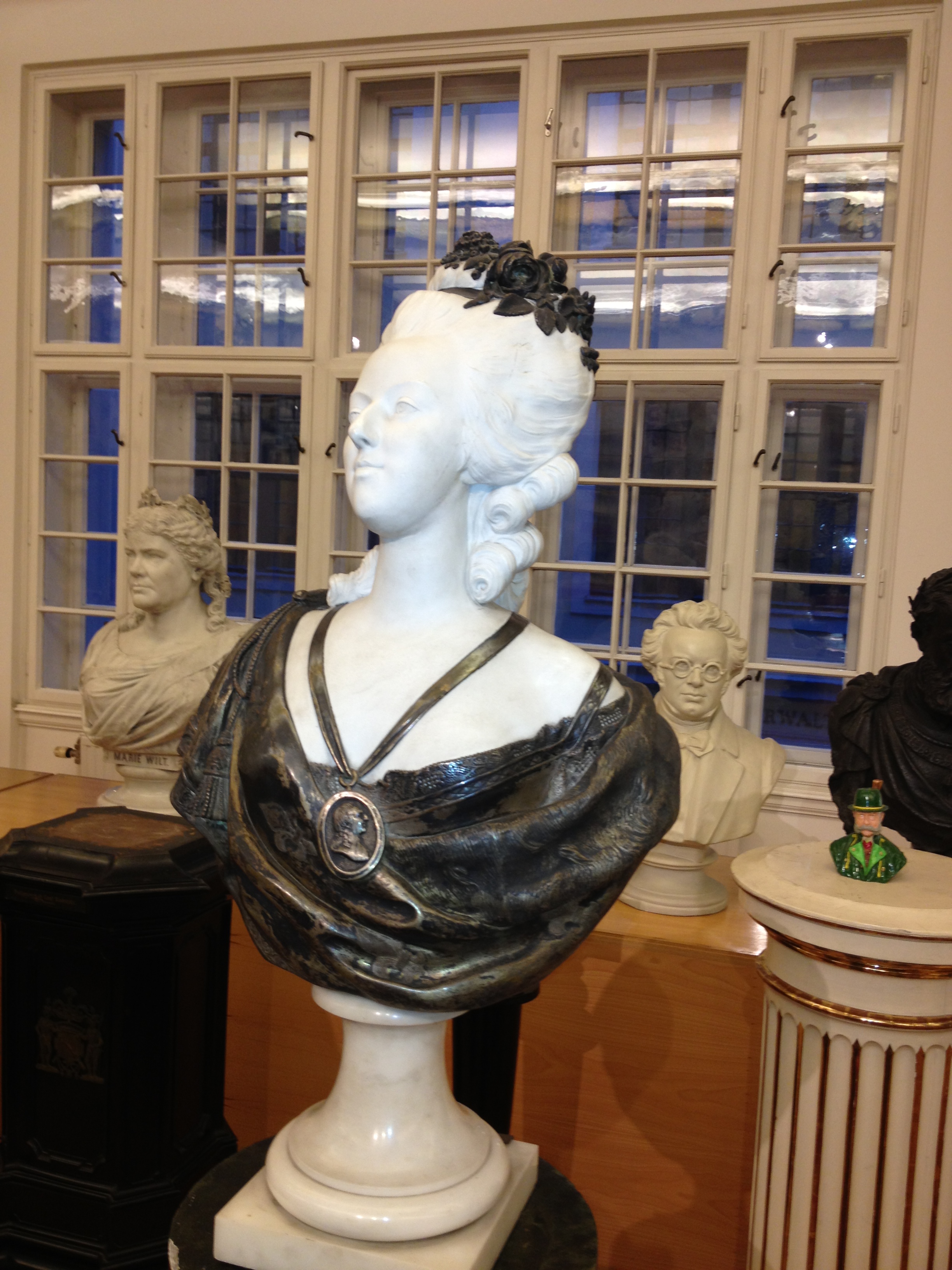
In various places in Vienna, I’ve encountered the proud features of Marie Antoinette, the Habsburg-Lorraine daughter of the redoubtable Empress Maria Theresa.  Poor Marie Antoinette was packed off to France at the age of fifteen to marry the Dauphin who became the most unfortunate Louis XVI. We all know her story: wealth, power, frivolity, and finally the guillotine at age 37. I am always surprised that no one in Austria seems particularly sympathetic to Marie Antoinette. The captions under her images mostly mention only her name, and then only as “Archduchess of Austria.”

MarieAntHofmobil11-12

The Habsburgs held on to power by judicious marriages all across Europe, and Marie Antoinette was a pawn in this real-life “Game of Thrones.” Once she was sent to France, she literally became the property of France.  In a biography, I read that when she was handed over, she was stripped of all her clothing and dressed in clothing provided by the French State.  At the last moment, she had to leave her little dog behind, too. He was the only vestige of her happy childhood in Vienna. She never saw her home or any of her family again, except perhaps for a visit by one of her brothers.  Her mother wrote her frequently, scolding her for laziness and urging her to work for Austria’s interests–as if she had any say in government.

MarieAntPaint

In Paris, I’ve visited both Versailles and the damp, chilly cell on the banks of the Seine where Marie Antoinette spent her last months. The Conciergerie is still a terrifying place, even for a tourist today.  It is all too easy to imagine the horror of being a prisoner there. In Marie Antoinette’s letters, she often expressed a wish to see her beloved home in Vienna again. From what I’ve read of Marie Antoinette, she deserves a little more sympathy than history has given her.

Join me next time for more explorations in the art and history of Europe!

Habsburg High Tech

With great fanfare, the Vienna Kunsthistorisches Museum, or Museum of Fine Arts, opened a new wing a year ago: the Kunstkammer. Its twenty grand galleries contain many of the curiosities and playthings the Habsburgs collected during the six centuries they ruled a vast empire. Among the treasures displayed, a graceful figure about a foot high appealed to me.

Doll1

She was crafted of wood, iron, linen and silk brocade in the mid-1500s. She’s an android from the past, designed to astonish banquet guests by moving down the center of the table, turning her head and playing the musical instrument she holds.  It’s called a cittern.  The lady contains a music box which makes it appear that she is playing the stringed instrument. She was made by a famous Spanish clockmaker, Juanelo Toriano, who worked for Emperor Charles V.

Doll2

Her caption explains that aside from simple entertainment value, such figures were highly prized because they demonstrated the human ability to imitate Nature, and thus to participate to some degree in the divine act of creation.  I have to wonder if the men who dreamed up this particular figure would like to have controlled their real-life women as well as they could control this sweet-faced little lady. Be that as it may, her charming but enigmatic smile is a window into the past.

Join me next time for more explorations in the art and history of Europe!
 

The Famous Habsburg Jaw

Jaw5The Habsburgs of Austria ruled a vast empire, the Austro-Hungarian Empire, for about 600 years.  They did not particularly care for fighting. Shrewdly, they built and maintained their empire mostly by judicious marriages.  Very often, a judicious marriage was marriage to a cousin in some other powerful part of Europe, like Spain.

Jaw1 Jaw2

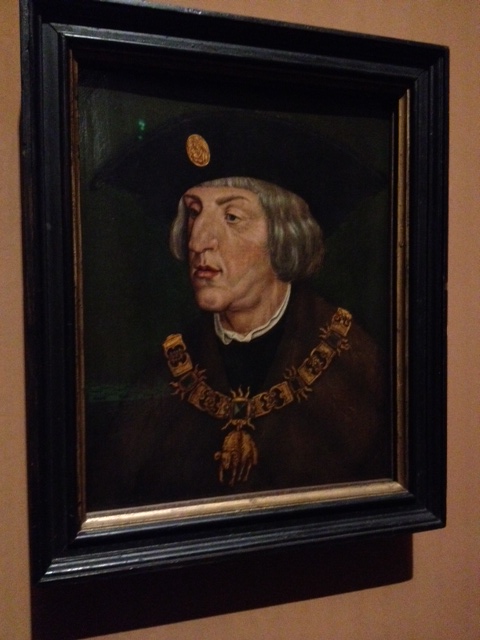
As a result, the succeeding generations of the family very often displayed the famous “Habsburg jaw,” which is seen everywhere in Vienna. Did anyone consider this feature unattractive?  If they did, they may have wisely kept quiet about it.

Jaw3

Male family members proudly had themselves painted and sculpted with the distinctive jawline. What about the women? In all my wandering in Vienna, I have yet to see any female Habsburgs portrayed with the famously prominent jaw.

Jaw4

I guess beauty is in the eye of the beholder.  Still, I can’t say I blame the women for de-emphasizing this feature.

Note: this is a repeated post.  For reasons known only to invisible internet goblins, the previous post on the subject had some problems. Join me next time for more explorations in the art and history of Europe!

Beautiful, Musical Vienna

I just booked my next trip to Vienna.  Why do I find that city so charming?  The inner city, the part that tourists see, is like a fairy-tale version of what a European city should be–clean, walkable, quirky, with a history going back centuries. Yet the city feels vital and utterly modern.

ChoirWaiting2

It is very common to see visiting musical groups gather and burst into spontaneous song.  Passersby stop to listen to a few minutes of enchantment, then move on.  This choir group was waiting outside the 12th-century Stephansdom to perform in one of the many musical programs that take place there. The Stephansdom still functions as a parish church, too.  Many VIennese stop in for a quick prayer or moment of contemplation on their daily travels about the city. In the background is the postmodern Haas Haus, which Viennese deplored when it was built in 1990.  Yet now it is a treasured part of the city landscape.  Day and night, the glass surfaces of Haas Haus reflect the medieval flourishes of the ancient cathedral.

I can’t wait to return to Vienna!  Join me next time for more explorations in the art and history of Europe!

A Tragic Crown Prince


CrownPrince

When I’m missing my favorite city, Vienna, I watch a movie about it.  One of my favorites is the impossibly romantic film “The Crown Prince,” made in 2006.  The film tells the story of Rudolf, son of Emperor Franz Joseph and the fabled beauty Empress Elisabeth. Rudolf tried for years to win the respect of his autocratic father and to convince his father that the empire needed to change with the times.  Franz Joseph was immovable.  His son Rudolf was forced into a dreary arranged marriage.  The more Rudolf urged reforms, the more Franz Joseph pushed him out of the centers of power. Eventually Rudolf began an affair with an adoring and foolish young woman, Baroness Mary Vetsera.

The two lovers died in a suicide pact at Rudolf’s hunting lodge, Mayerling, in 1889. The royal family tried to cover up the truth, and details remain murky to this day.  But the heir to the empire was gone and the inevitable decline of the empire accelerated. By 1918, the Austro-Hungarian Empire was no more.

Portrait of Crown Prince Rudolf, Public Domain

Portrait of Crown Prince Rudolf, Public Domain

The film is a leisurely 3 hours, with plenty of time to explore the gilded but stultifying court life Rudolph had to endure.  I especially like the street scenes; many parts of Vienna have not changed much in the past century. The director was Robert Dornhelm.  Max Van Thun plays Rudolph, and the lovely Vittoria Puccini plays Mary Vetsera.

Join me next time for more explorations in the art and history of Europe!
A Perfect Winter Day

Wikimedia Commons, Public Domain

Wikimedia Commons, Public Domain

Some regular visitors to the Vienna Kunsthistorisches Museum head straight to a particular painting.  Austria subsidizes yearly passes for museum visitors, so many–some say a majority- of Viennese would not think of being without a yearly ticket and popping in to visit favorite works of art on their daily rounds.  A particular favorite is “Hunters in the Snow,” painted in 1565 by Pieter Breugel the Elder. Some people consider it the most beautiful and intriguing painting in the world.  It doesn’t draw the crowds of the Mona Lisa in the Louvre, but there are always a few admirers standing before this painting, transfixed.

hunters1

Last time I visited the Kunsthistorisches, I lingered in the glorious roomful of Breugels.  A woman was absorbed in painting a perfect copy “Hunters in the Snow”.  I envied her: she was spending untold hours lost in the vision of a great artist who captured a winter day almost 500 years ago.

hunters2

Breugel was a Flemish artist, but this is not a landscape from the Low Countries.  He was known to have traveled to Italy, and he very likely passed through the Austrian Alps on his way.  This is definitely an alpine landscape, which would have seemed exotic and particularly beautiful to the folks back home.

I spent awhile looking over this artist’s shoulder.  What better way to spend a winter afternoon than in the company of Pieter Breugel the Elder, gazing at a landscape that he brought home as a perfect memory of his travels?

I am home from my own travels, back in the mountains of Colorado, having my own perfect winter days playing in the 16 feet of snow we have received so far this winter.  But I can imagine a different kind of winter’s day, spent sharing brushstrokes with a great artist.  What painting would I choose? What kind of permission would I need? Could I fit my paints and brushes into my carryon? It’s another travel dream.

Treewell

Join me next time for more explorations in the art and history of Europe!