Author Archives: Claudia Suzan Carley

Affordable Europe: Hotel la Roseraie in Chenonceaux


Chenonceau3

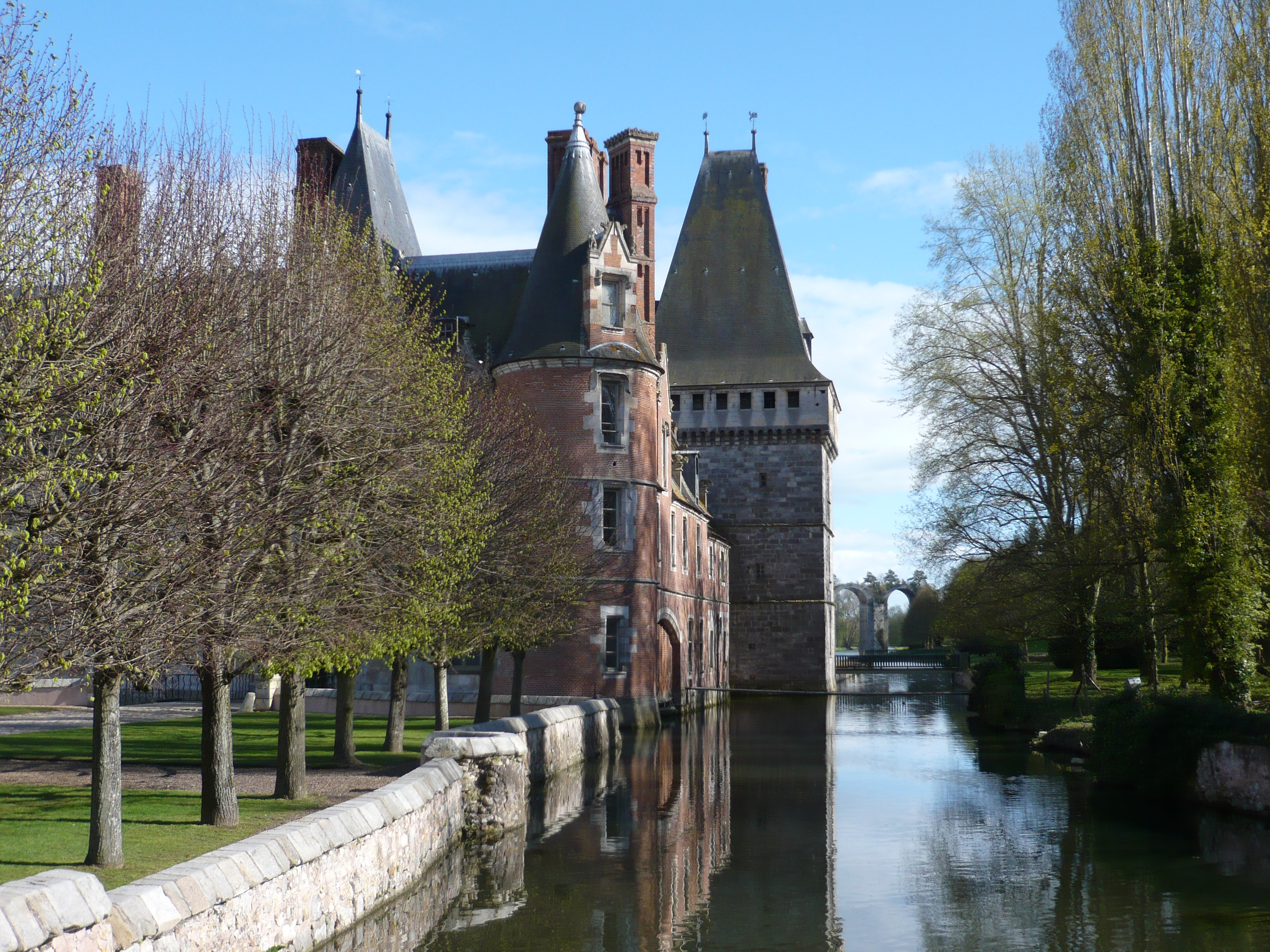
The town of Chenonceaux has, somewhat confusingly, a spectacular chateau called Chenonceau–without the X. Many people consider Chenonceau the most beautiful chateau in the Loire Valley.  It’s certainly the most unique:  it is actually built on a bridge that crosses the river.  It’s understandably popular. The thing to do is to stay in the little village of Chenonceaux so as to arrive early. The town makes a perfect base for driving around the Loire Valley.

P1030108

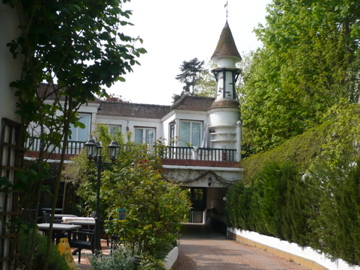
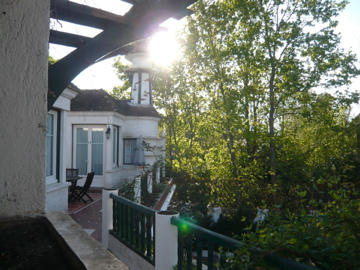
I generally avoid hotels recommended in Rick Steves guidebooks. They’re nice, but occupied by large numbers of Americans.  I would rather be rubbing elbows with Europeans when I travel to Europe, even if I can’t understand much of what they’re saying.  But Rick-recommended Hotel la Roseraie is a winner.  It’s a small hotel, with only 17 rooms.  It’s not the fanciest hotel in town, but it’s surely the friendliest.

P1020753

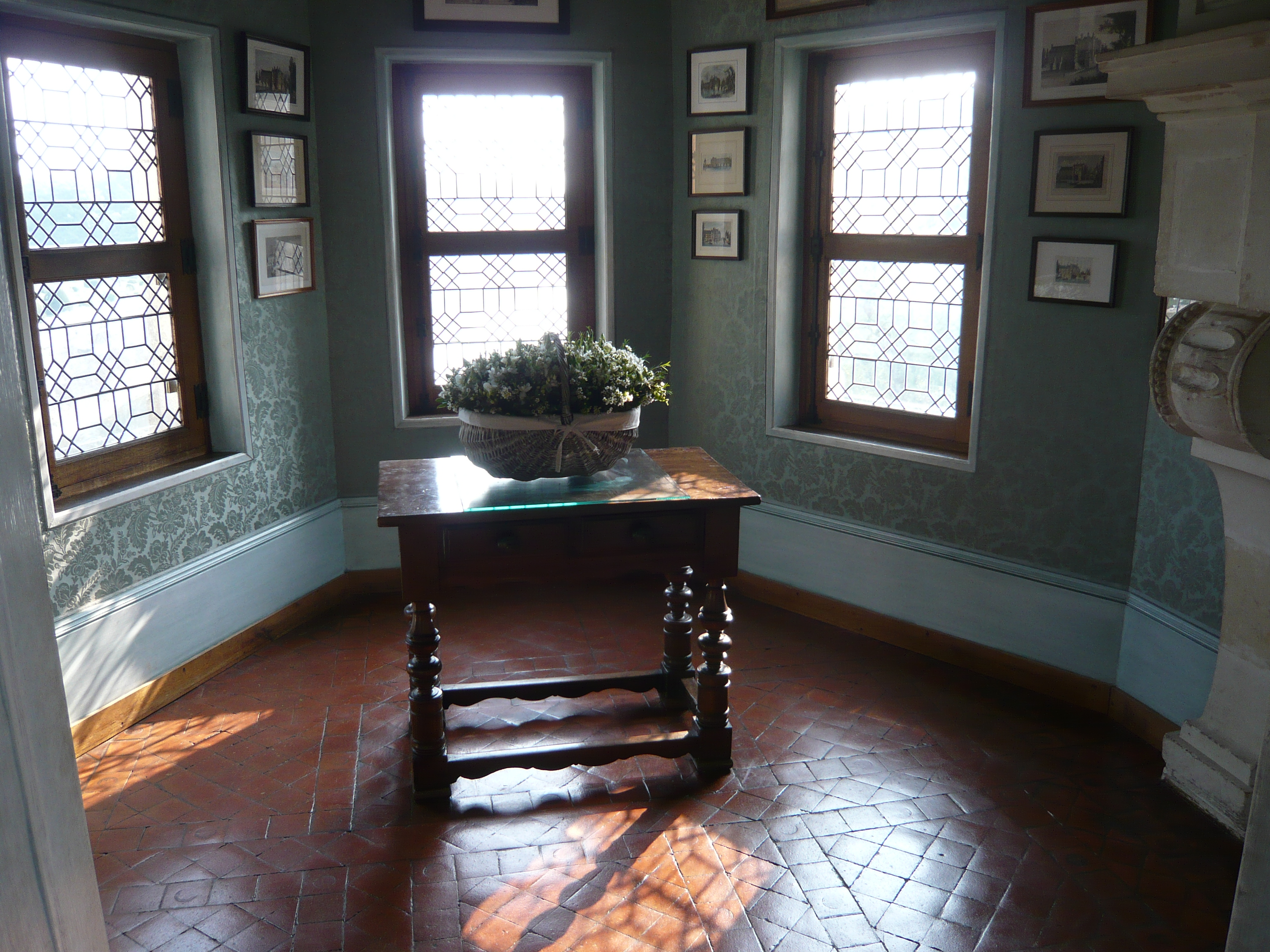
Rooms are warmly decorated. Ours had walls that had been laboriously covered with the very same sprigged fabric that made up the curtains. Dated? I prefer the term “faded elegance.”

P1020751

The bathroom was totally up-to-date, though; it would pass muster any day on HGTV.

P1020757

The owners, Sabine and Jerome, welcome returning guests as family.  Guests do return again and again to enjoy the leafy terrace and flower gardens.

P1020765

There’s a charming little restaurant which needs to be booked because it’s popular even with people not staying in the hotel.  I don’t like the feeling of being obligated to eat in a hotel’s restaurant, but this was a delightful experience.  It was traditional but not too formal, the food was fresh and delicious, and no one looked askance at my admittedly fussy vegetarian requirements.

ChenonceauRomanRuins

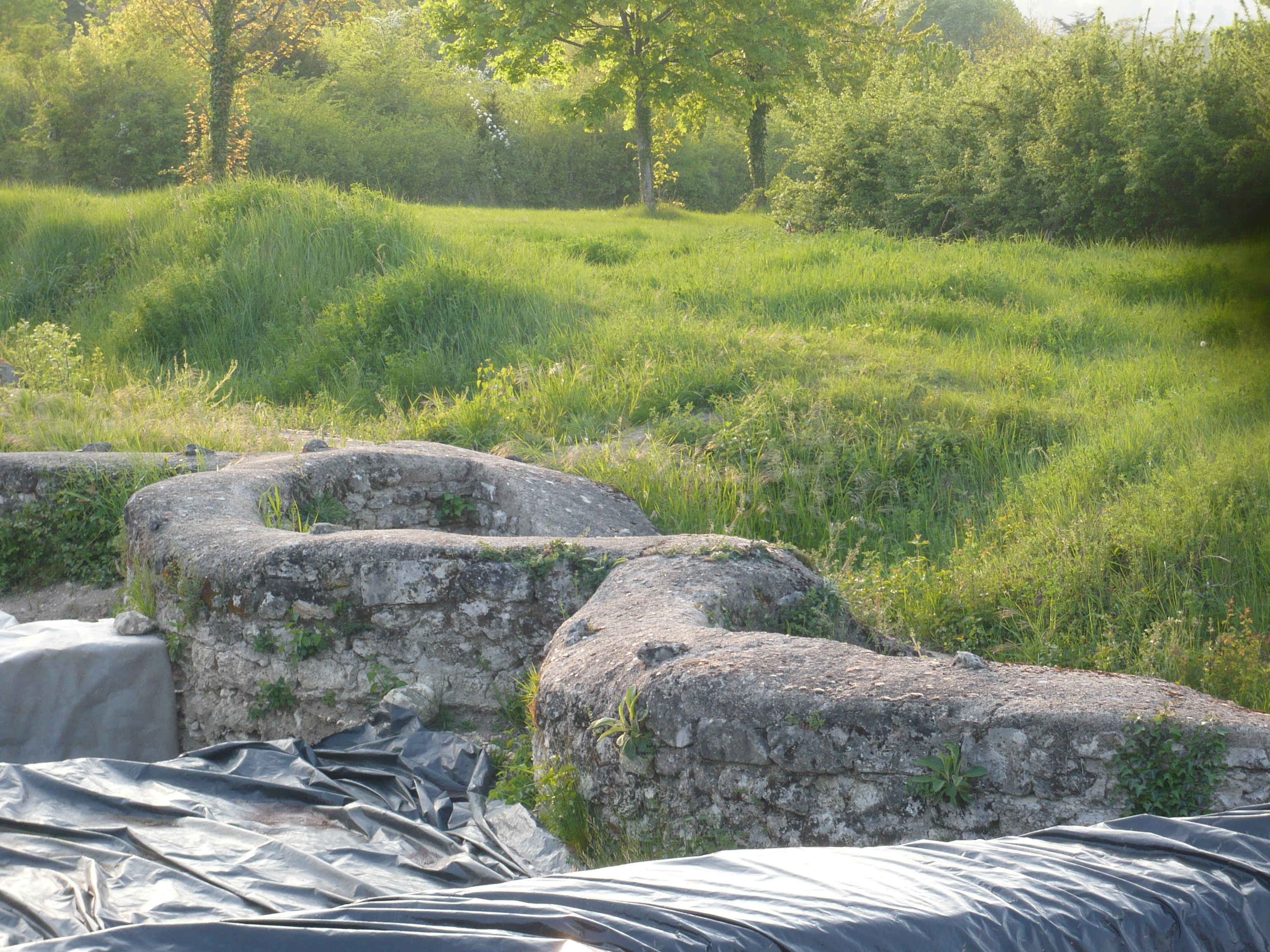
Just outside town, there are Roman ruins.  Julius Caesar is known to have actually slept there–or so the locals say. When I was there, the ruins were partially covered with plastic.  Maybe next time, there’ll be a little visitor center.

ChenonceauMeLunch

The village, like all French villages, has a top-class bakery.  One of those strawberry tarts is waiting for me!


Diane de Poitiers vs. Catherine de Medici

Diane de Poitiers, unknown artist, Public Domain

Diane de Poitiers, unknown artist, Public Domain

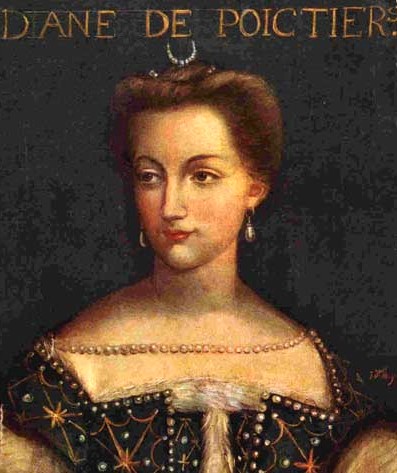
When Diane de Poitiers arrived at Chenonceau in 1547, things were going her way. At around age 35, she was already a widow left wealthy when her much older husband conveniently died and left her a fortune. She moved easily in court circles and soon became the mistress of the 16-year-old King Henri II, who gave her Chenonceau as a residence.  Diane loved Chenonceau. She was the undisputed occupant, but it took her a number of years to persuade the King to give it to her outright. In the meantime, she called in the best architects and builders. Money was no problem. First off, she greatly expanded the beautiful pleasure gardens.

Photo by Luke van Grieben, 2006, Creative Commons Attribution Share Alike 3.0

Photo by Luke van Grieben, 2006, Creative Commons Attribution Share Alike 3.0

The gardens were just gardens like many others, but Diane had a truly brilliant idea: she expanded her living space by building an arched bridge, with rooms, that crossed the River Cher. Later additions, some by Diane and some by others, expanded on that idea and created the chateau we see today.

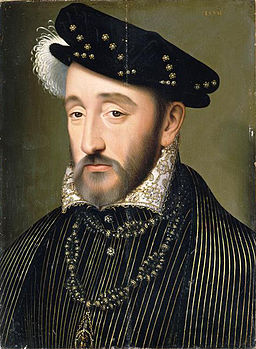
Henri II, after Francois Clouet, Public Domain

Henri II, after Francois Clouet, Public Domain

I think Henri looks very suave in this portrait. Where have I seen that sly, knowing look?  Of course!

Connery

The very worldly James Bond, played by Sean Connery, had the same expression. Just saying. Anyway, Henri certainly knew what he liked, and as King he had the wherewithal to get it. Diane de Poitiers was famous as one of the most beautiful and accomplished women of her age, and the King depended on her advice throughout his life. She had rivals; naturally the King took other mistresses, but she was his closest and most trusted companion throughout his life.  She became the most powerful woman in France.

Catherine-de-medici (1)

This did not sit well with Catherine de Medici, Henri’s wife and the mother of his three sons who became subsequent kings. (She also had several daughters). The stern portrait above was painted when Catherine was still a comparatively young wife. Once she became a widow, she draped herself in black at all times and looked even more forbidding. I would not care to tangle with her.

Lady in Bath, Diane de Poitiers, Francois Clouet, c. 1555, Public Domain

Lady in Bath, Diane de Poitiers, Francois Clouet, c. 1555, Public Domain

Henri lavished favors and property on Diane de Poitiers.  She was clearly quite the babe, as well as being smart and witty. She retained her beauty all through her long life, too.

During his lifetime, Henri expected his dutiful wife Catherine to stay at home and keep quiet. She really had no choice while he was alive. But things changed suddenly.

Desmond Llewelyn as

Desmond Llewelyn as “Q,” 1983, Towpilot, Creative Commons Attribution Share Alike

Since I’ve brought up James Bond, I can’t resist:  what Henri needed was a guy like “Q,” who in the movies patiently explained weapons and prudent tactics to an impatient James Bond. Maybe nobody like “Q” had Henri’s back. In 1559, when he was just 40, poor Henri got knocked in the head in a jousting accident.  His wound became infected and he died 10 days later. His heir the Dauphin was a sickly young son, age 15. The Dauphin was already married to Mary Queen of Scots. But he died 18 months later and Mary Queen of Scots was sent back to Scotland, never becoming Mary Queen of France. The two remaining sons were not good King material, but they were all that Catherine as Regent had to work with. Of course she was not allowed to become Queen in her own right. It was quite an accomplishment to even keep her sons on the throne.

Things went from bad to worse. France was torn apart by civil and religious struggle all through Catherine’s life.  Although she made valiant efforts to govern the country, she made a lot of mistakes and her weak sons were not much help. The French Wars of Religion continued, causing massive carnage as Protestants and Catholics fought each other bitterly.

Chenonceau3

Catherine’s life was not easy.  But there was great consolation in one thing: once Henri was in the ground, she lost no time in booting her chief rival, Diane de Poitiers, out of Chenonceau. Catherine took over the place, made extensive additions, threw spectacular parties, and relished her time there. Who wouldn’t?

Chaumont

Chaumont

As a consolation prize, Catherine grudgingly gave Diane another chateau, Chaumont. It’s a very nice place–I’d cheerfully live there. But it’s high above a river, not draped like an exquisite necklace right across a river. Diane had plenty of other properties, too.  She lived in comfort for the rest of her life. But she must have missed her glory days at Chenonceau.

Join me next time for more explorations in the art and history of Europe!

Why I Love England: A Garden is More Than a Garden


IMG_8907

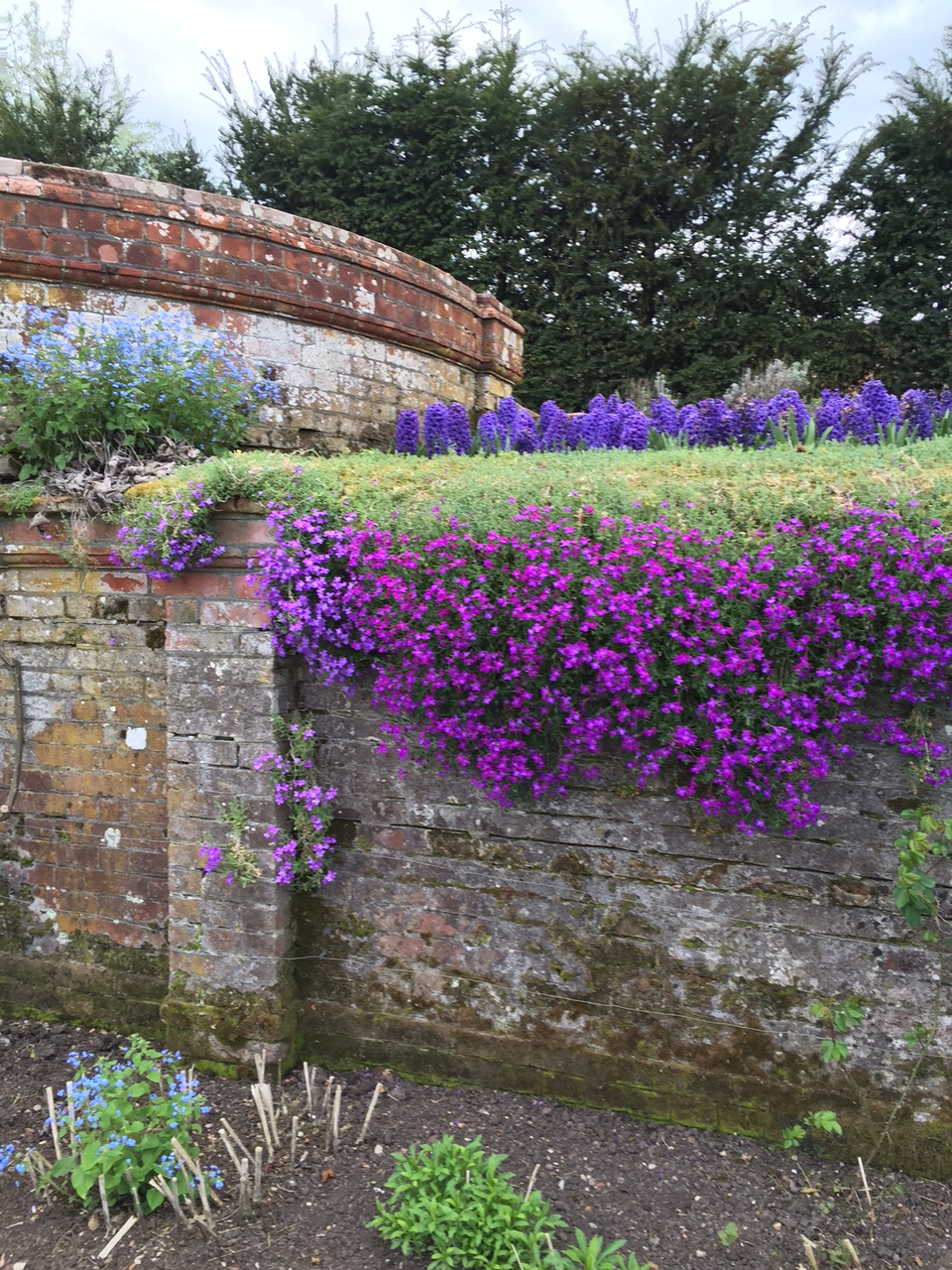
It seems that anyone in England who owns a patch of ground, large or small, is compelled to make it into a thing of beauty or an expression of taste. English gardeners use flowers as a painter uses color.

IMG_5899

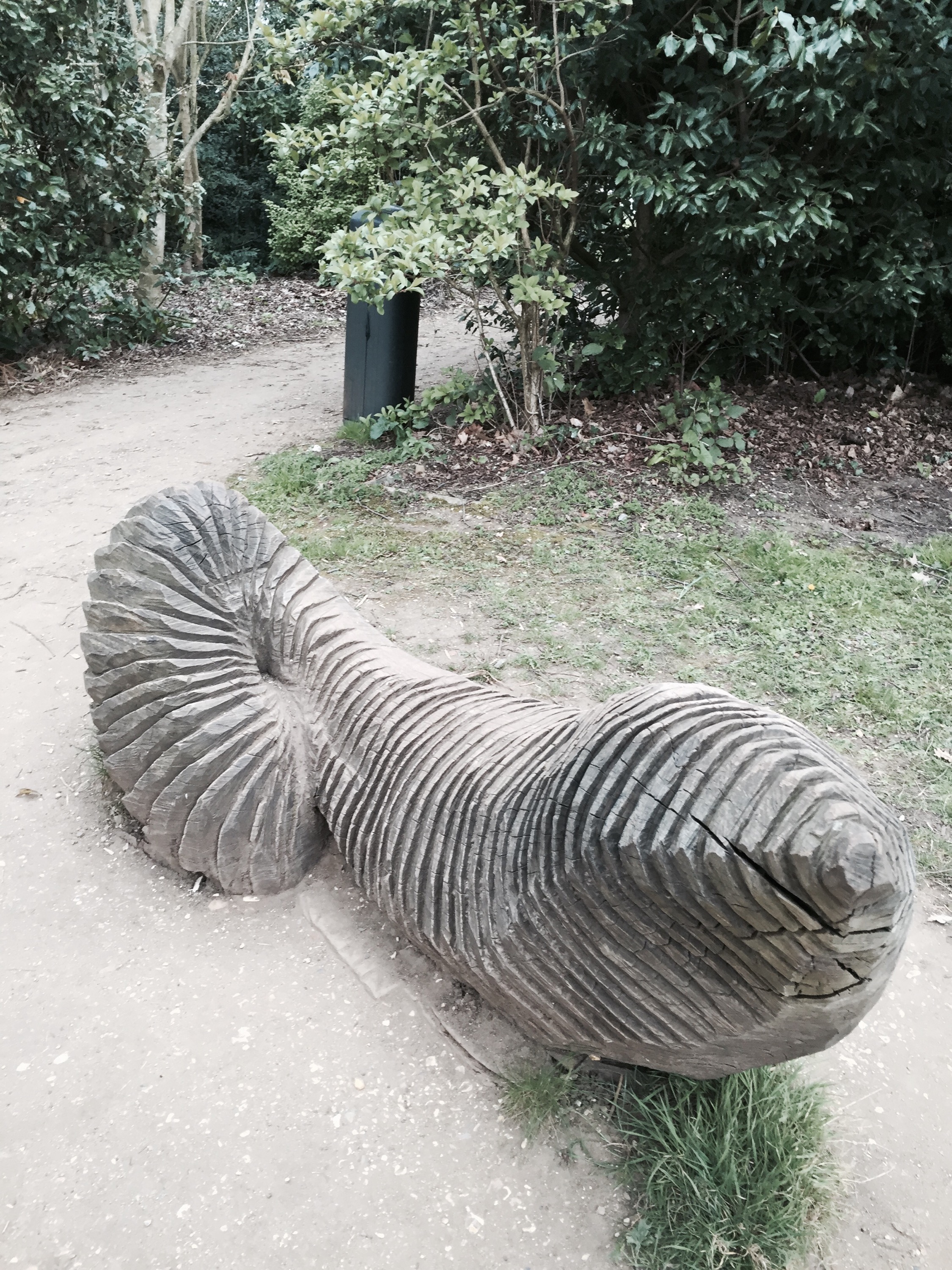
And an English garden is more than just pretty flowers.  It’s also a place to display the imagination and wit of the gardener. Do you have an unsightly stump with a horizontal lean to it? Turn it into a six-foot earthworm to greet your guests. This one is at the entrance to The Vyne, a National Trust house from the Tudor era. I’m pretty sure the earthworm was a modern gardener’s idea.

IMG_7684
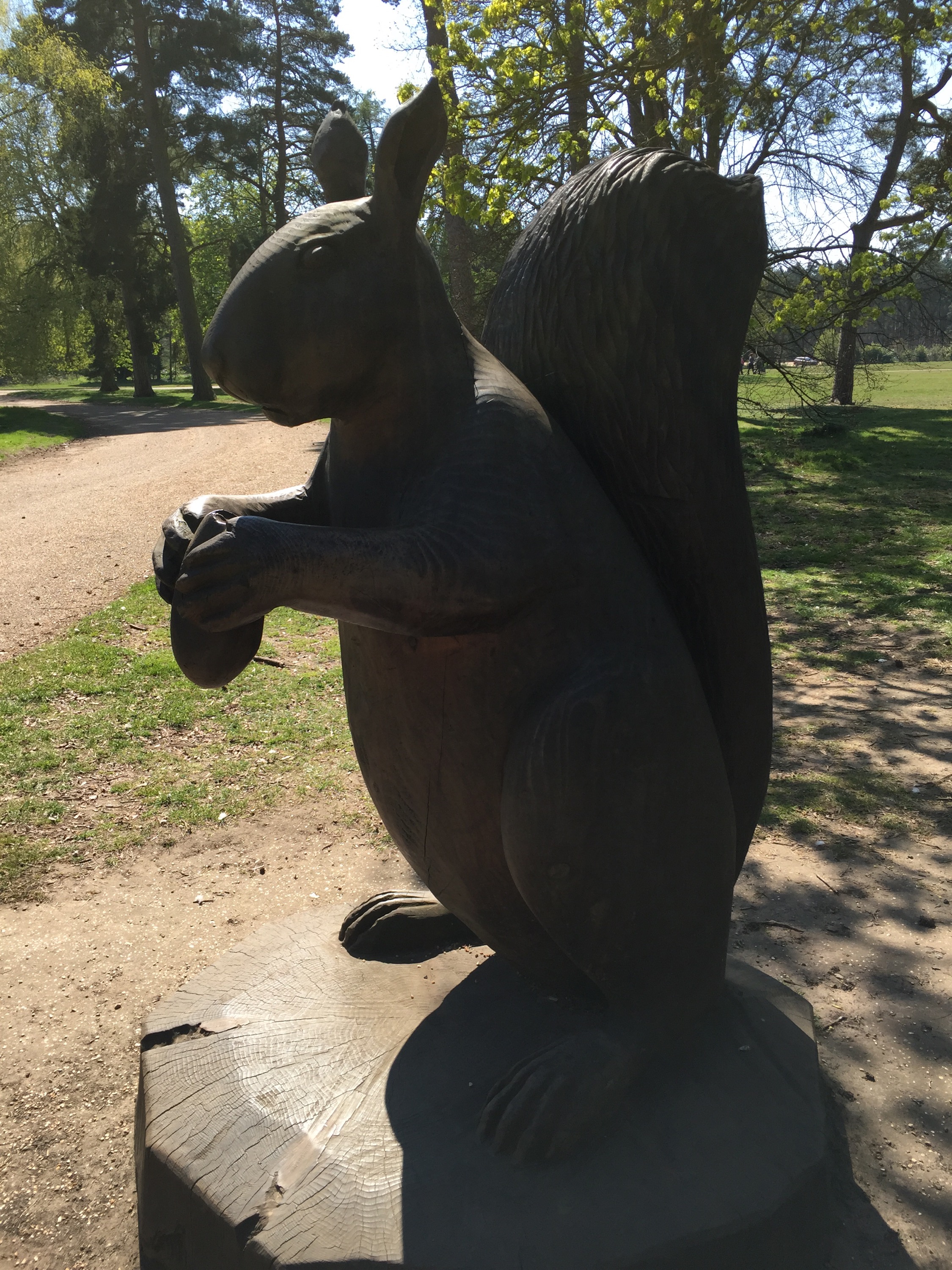
Maybe your stump is more vertical. The Queen turned one of hers into a giant squirrel at Sandringham, the private country estate of the Royal Family near King’s Lynn. The squirrel stands about eight feet tall.  Do children climb on it? There’s nothing to stop them except decorum–maybe the Queen will walk by.

SudeleySpider

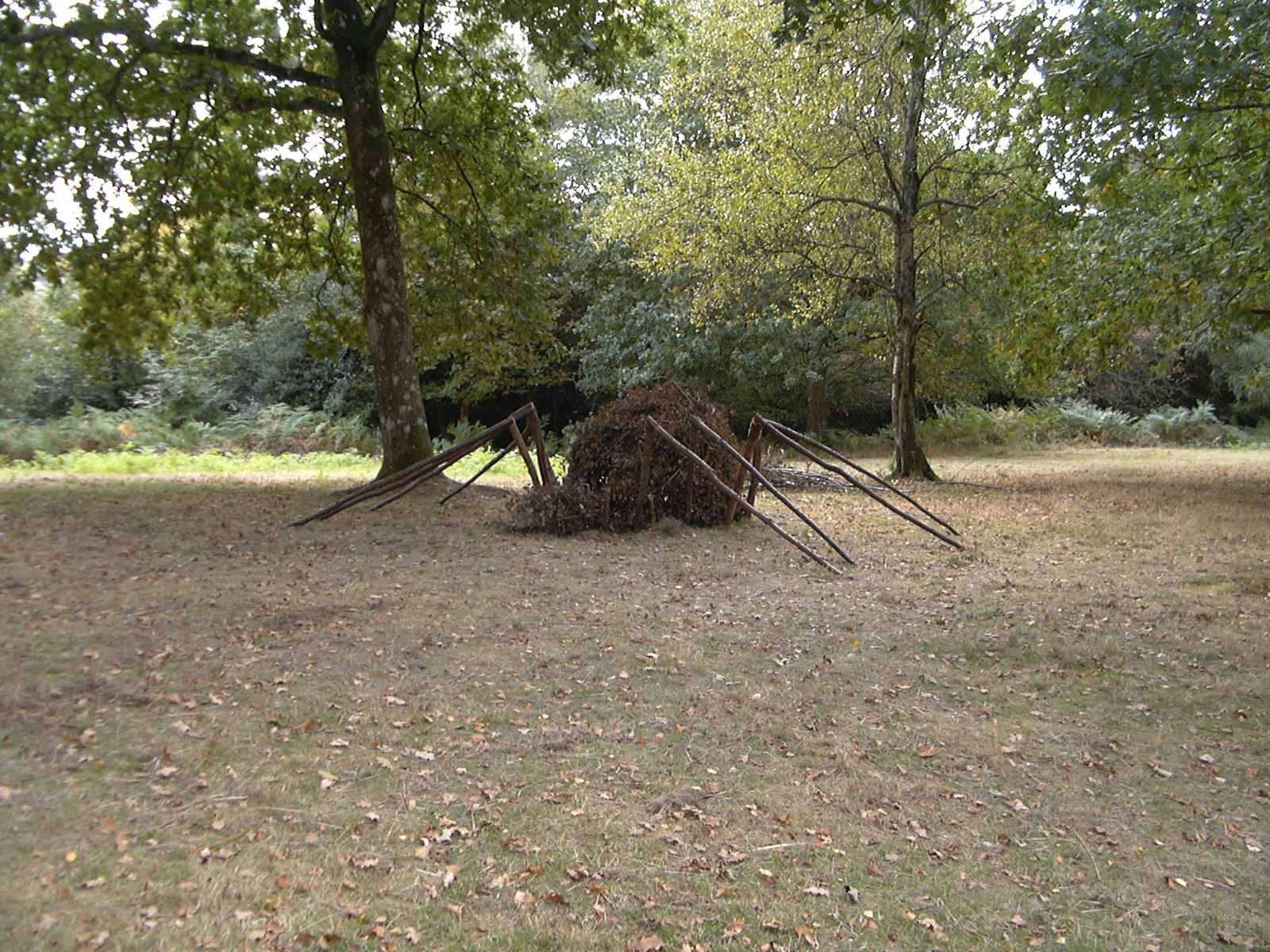
Do you have a boring expanse of lawn?  How about a creepy-crawly spider? This one, about a thousand times larger than life-size, is at Sudeley Castle.

Topiaries

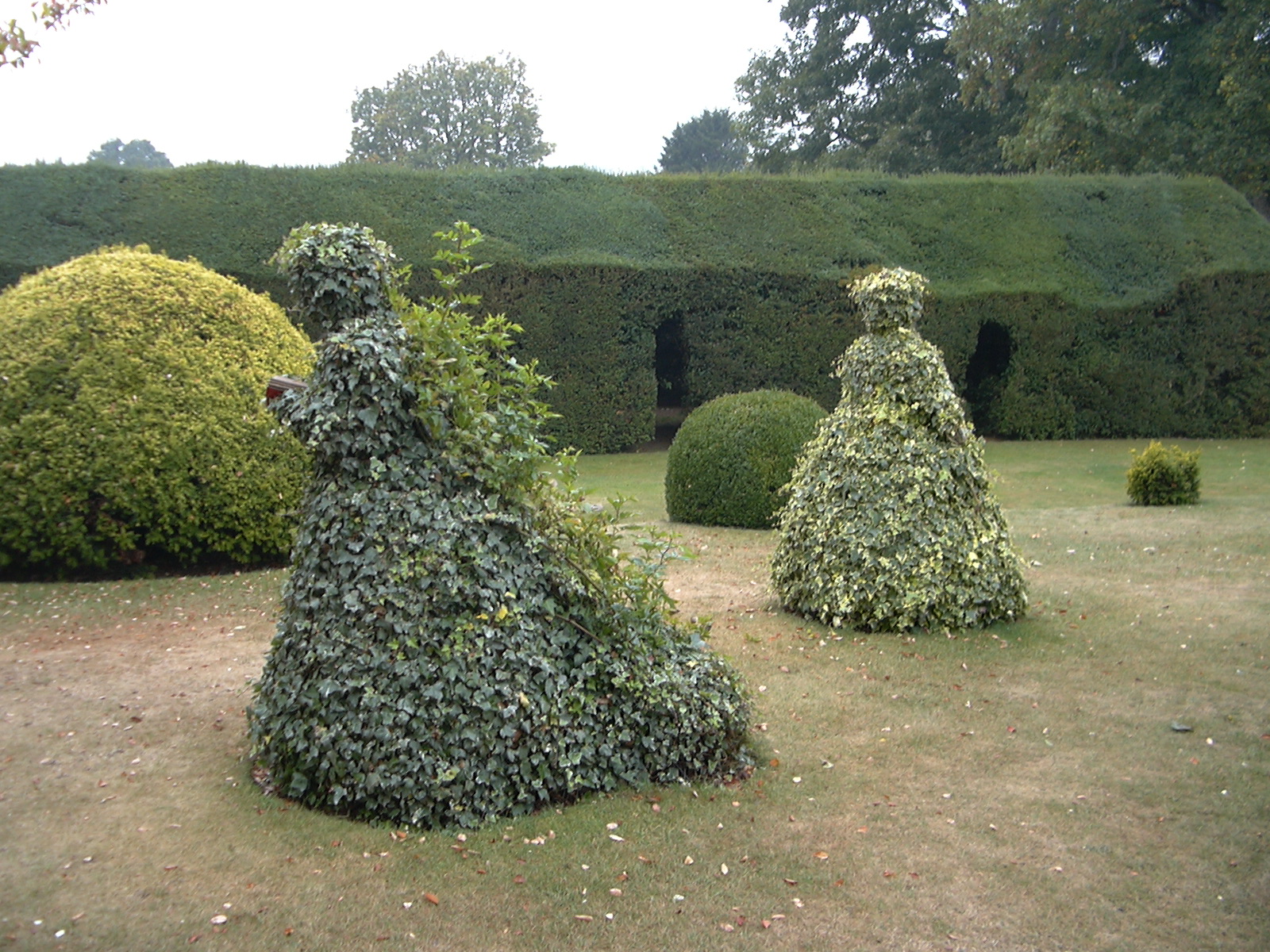
Sometimes garden ornaments touchingly describe history. Sudeley Castle has exquisite ivy garden sculptures depicting Queen Catherine Parr and her younger relative Lady Jane Grey, two queens who lived at Sudeley together for a time. Later, Lady Jane reigned as Queen for only nine days. The political machinations that put her on the throne brought her down quickly and she lost her head. Queen Catherine was the only wife to survive Henry VIII. She is buried in the nearby chapel where she and Lady Jane went daily to pray.

SudeleyRoses

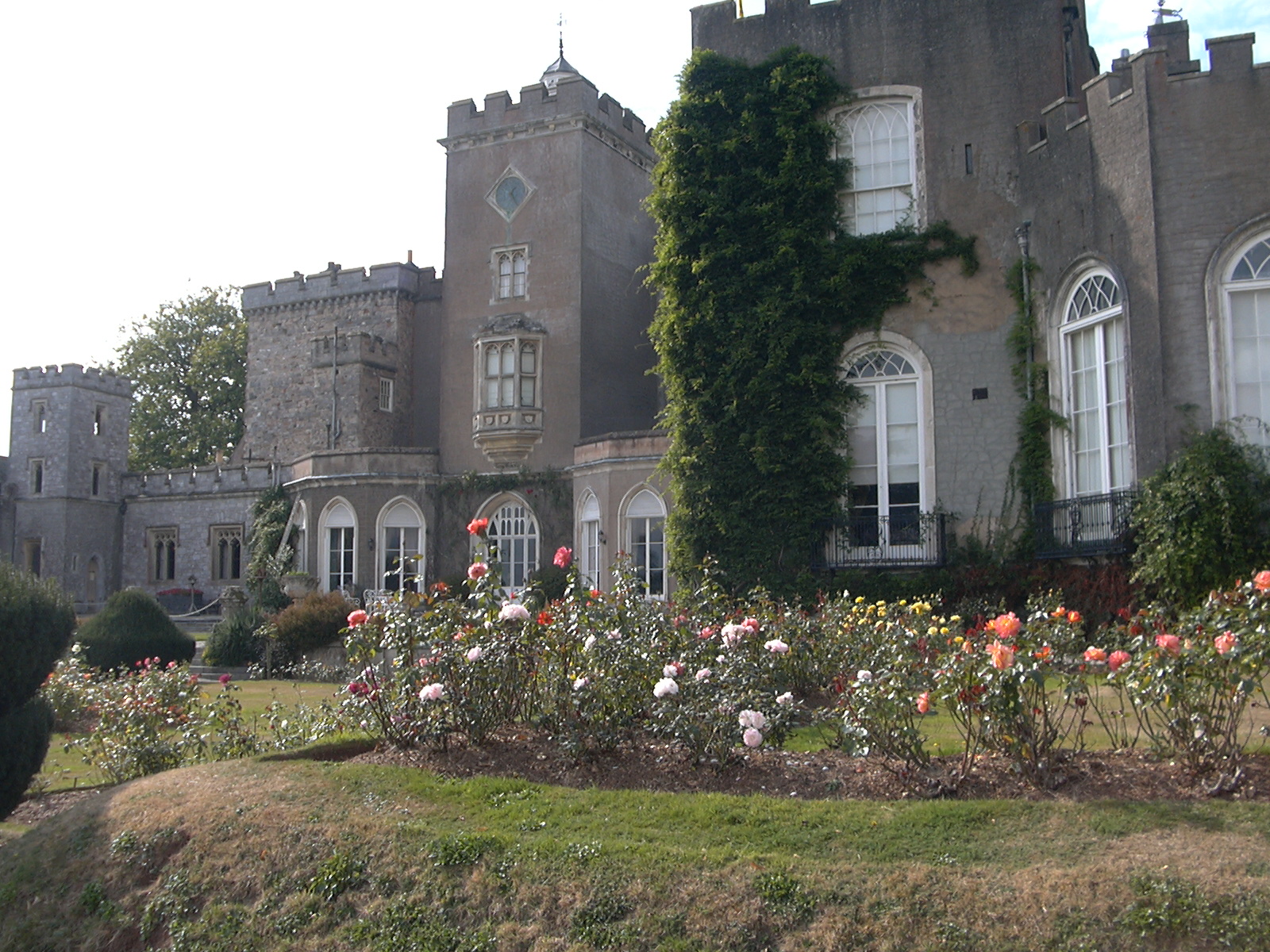
History is everywhere in English gardens. At Sudeley, antique roses are lovingly cultivated outside the castle where the 15-year-old Elizabeth, later Queen Elizabeth I, once had to fend off the advances of Thomas Seymour. Baron Seymour, always on the lookout for the main chance, eventually married Queen Catherine Parr after Henry VIII died.  Sadly, Baron Seymour’s ambition proved his undoing and he was later executed for treason. It seems that Elizabeth wisely avoided him after Catherine died. Elizabeth had suitors enough without this particular bad boy.


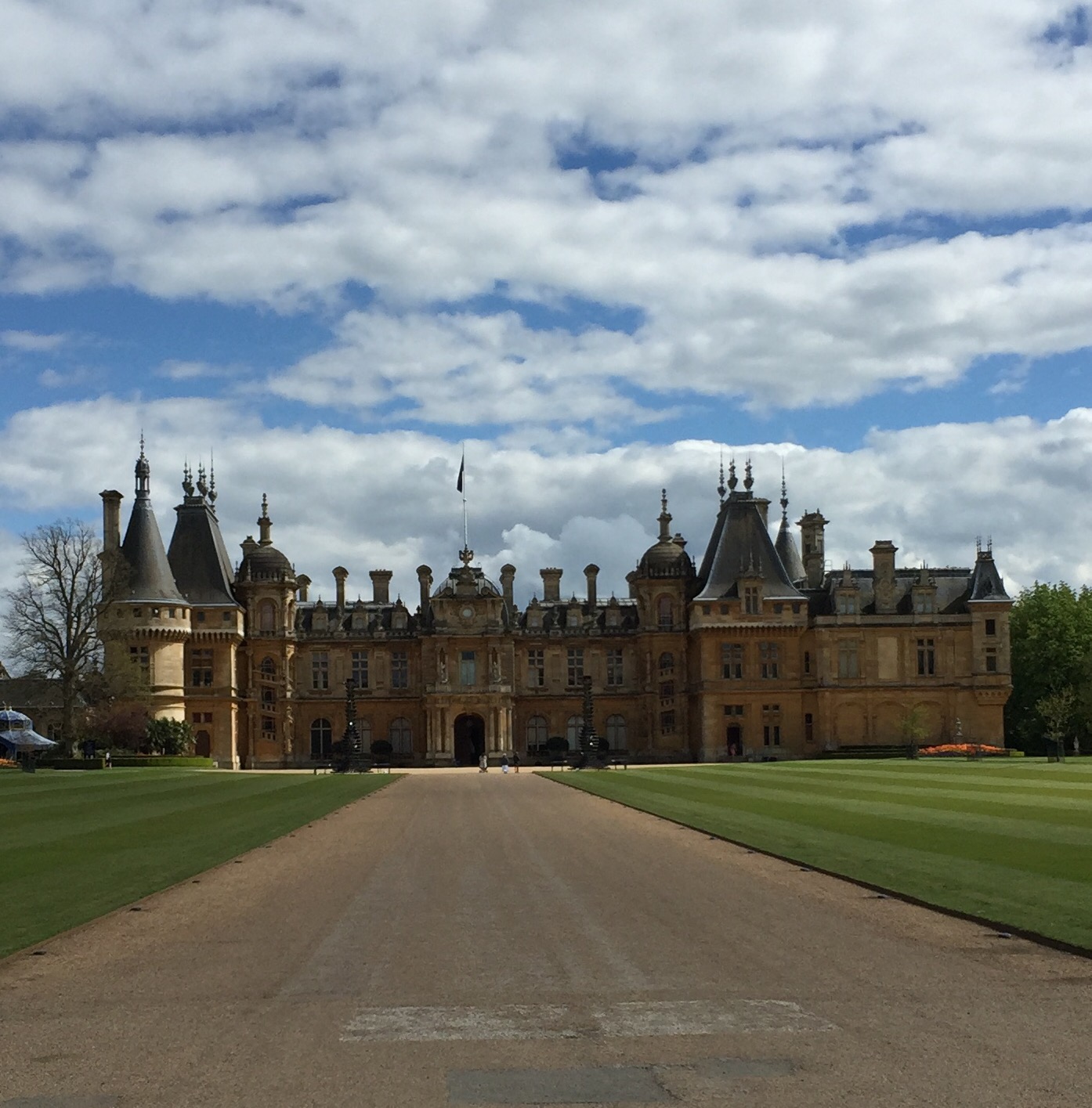
If your brother was the fabulously rich Baron de Rothschild and he built himself a French chateau in the English countryside, then put you in charge of the grounds, what would you come up with?

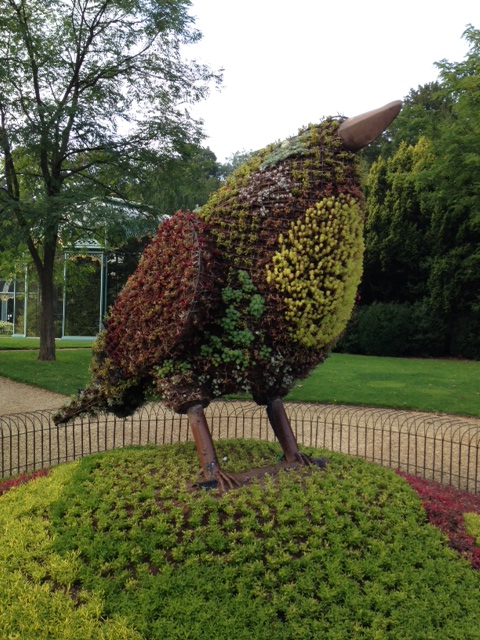
BirdWaddesdon

Baron de Rothschild’s sister Alice invented “vertical gardening” at Waddesdon Manor. This bird, studded with colored plants in early spring, is about 8 feet tall. Like her mega-rich brother, Alice liked to do things in a big way.

MeGarden

I’d love to be wandering in an English garden right now, looking for discoveries through the next garden gate. Join me next time for more explorations in the art and history of Europe and the British Isles!


Chenonceau Addition: Nobody Leaves Diane in the Corner!

Diane de Poitiers, portrait by unknown artist, Public Domain

Diane de Poitiers, portrait by unknown artist, Public Domain

Chenonceau’s most illustrious occupant was Diane de Poitiers, a beautiful and cultured noblewoman who was the longtime mistress of King Henri II of France.  In the portrait above, she is pictured as Diana, goddess of the hunt. 

If I Had to Choose a French Chateau: Chenonceau

P1020886

Rumbling up the drive in a carriage, here is what the long-ago aristocratic visitor would have seen.  I suppose a line of nicely-turned-out servants would have stood at the ready, to haul in trunks. From this angle, Chenonceau  looks like a hundred other chateaux all across France.

IMG_3907

But wait, there’s more! Chenonceau is the only chateau I know of that was actually built spanning an entire river. It stops just a short hop from the opposite bank. (During World War II, the River Cher was the border between Nazi-occupied and Vichy France. Prisoner exchanges and who knows what else took place here).  Back in 1514-1522 when the present chateau was built, I don’t know why everyone else didn’t run out and build one like it. I guess not everyone owned access to a river, or had the means to accomplish this feat of engineering.

The visitor enters Chenonceau the same way royalty did in days long gone: through a supremely French-looking courtyard and facade. As always, I find the details of Chenonceau every bit as enchanting as the overall dreamy effect of this pleasure palace built over a serene river.

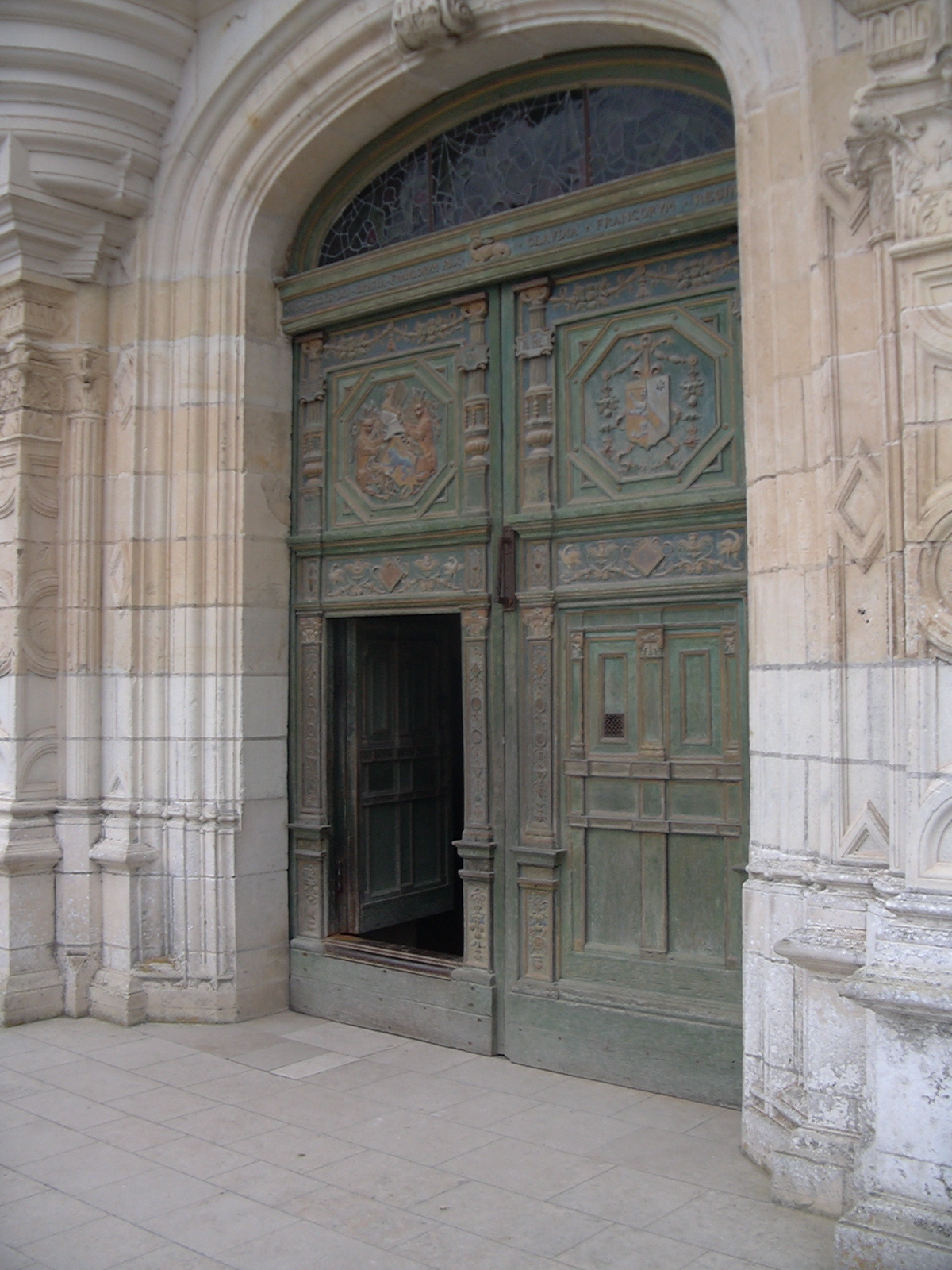
ChenonceauManDoor

The grand entry door has a person-sized smaller door within it, for visitors who don’t need to make a grand entrance. I didn’t have a sweeping ball gown, so the small door worked for me.

ChenonceauStudy

Fresh flowers from the gardens outside decorate all the rooms.  This was a study, overlooking the gently flowing river.  I’m not sure I’d get much work done here.

ChenonceauCeiling

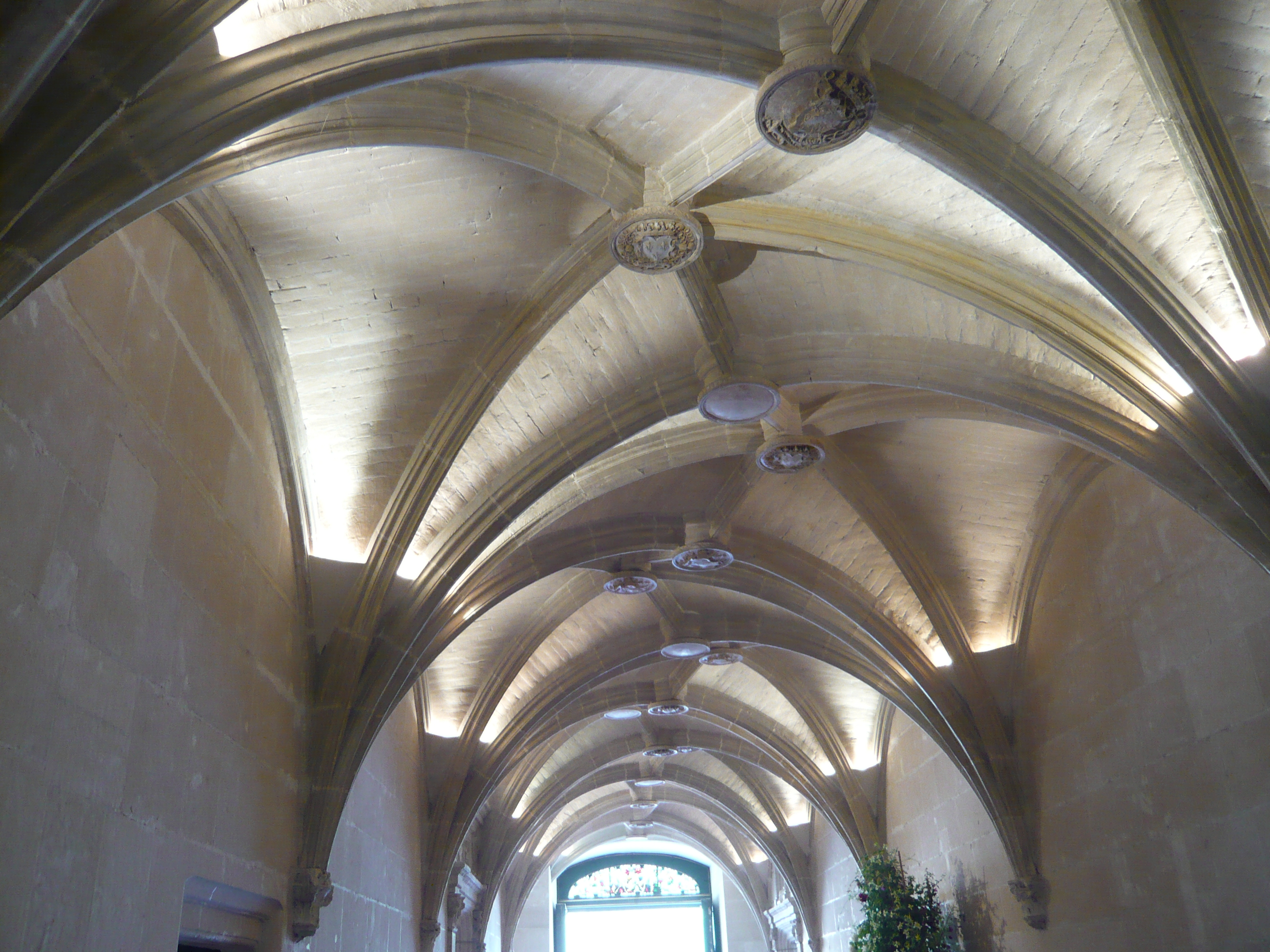
This stairway was reportedly one of the first that was not a cramped spiral.  Guests must have enjoyed sweeping grandly up and down this staircase.

ChenonceauGarden2

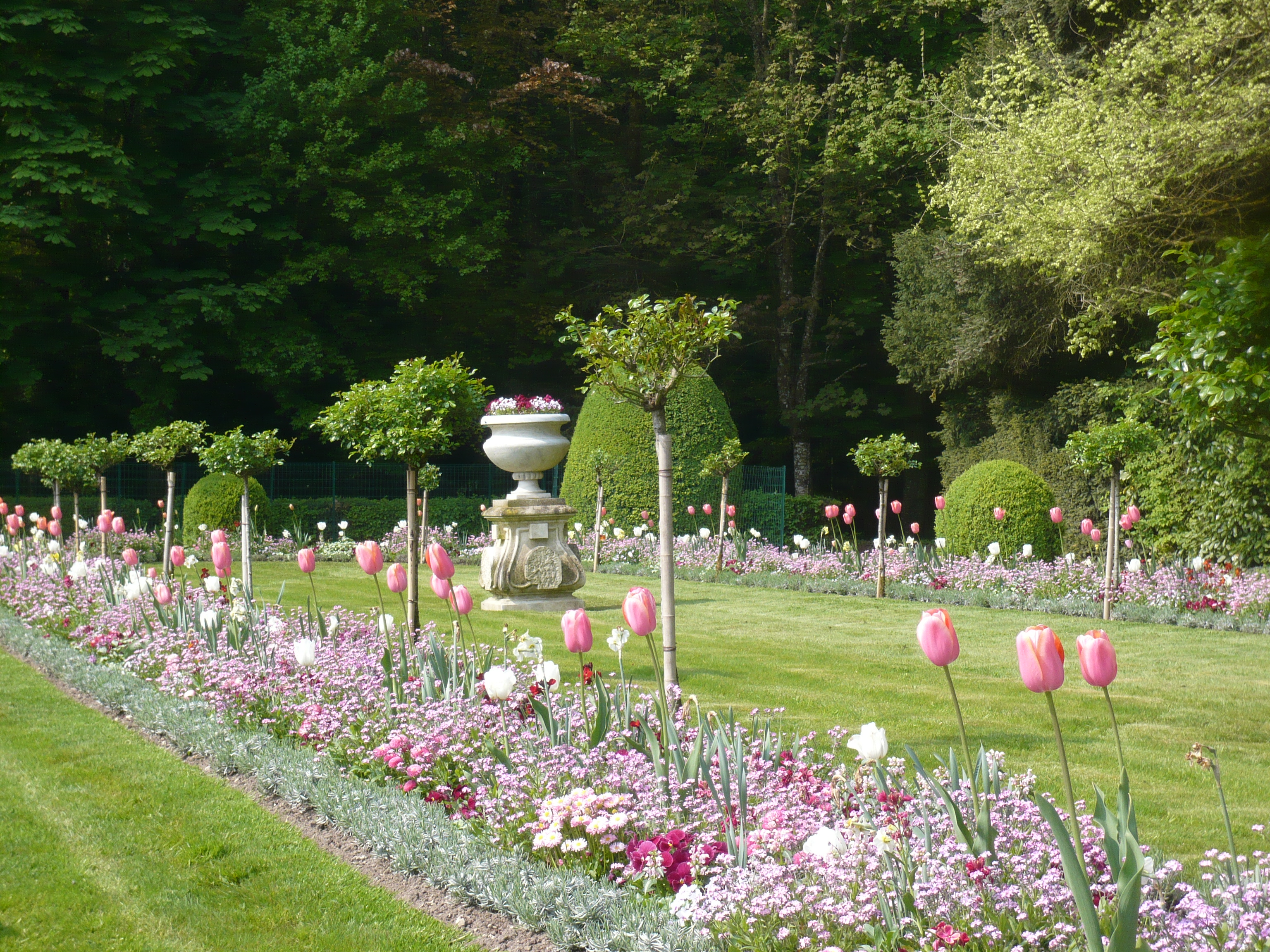
The entire chateau is wonderfully light and airy.  And outside, gardens await, just as they did when Diane de Poitiers reigned here.

Diane de Poitiers, portrait by unknown artist, Public Domain

Diane de Poitiers, portrait by unknown artist, Public Domain

Chenonceau’s most illustrious occupant was Diane de Poitiers, a beautiful and cultured noblewoman who was the longtime mistress of King Henri II of France.  In the portrait above, she is pictured as Diana, goddess of the hunt.


Join me next time for more explorations in the art and history of Europe!

Ludwig at Linderhof

"King Ludwig II of Bavaria," Ferdinand Piloty, 1865, Public Domain

“King Ludwig II of Bavaria,” Ferdinand Piloty, 1865, Public Domain

“Mad” King Ludwig II of Bavaria was found dead in Lake Starnberg on June 13, 1886. He was 40 years old. The cause of death is still mysterious, but his death was convenient for a lot of people in Bavaria, where he had pretty much given up on the day-to-day business of governing. Government of Bavaria ground to a halt while Ludwig spent all his money (mostly his own personal fortune) on increasingly theatrical castles and palaces. He had been declared insane the previous day and was in some kind of royal “protective” custody.

After a couple of misses, I was finally able to visit Linderhof Palace, King Ludwig II’s favorite home, at a time when the grotto was open.  I was anxious to see it, especially after watching Luchino Visconti’s very fine film Ludwig, about the life and mysterious death of the notorious Bavarian king.

LudwigPoster

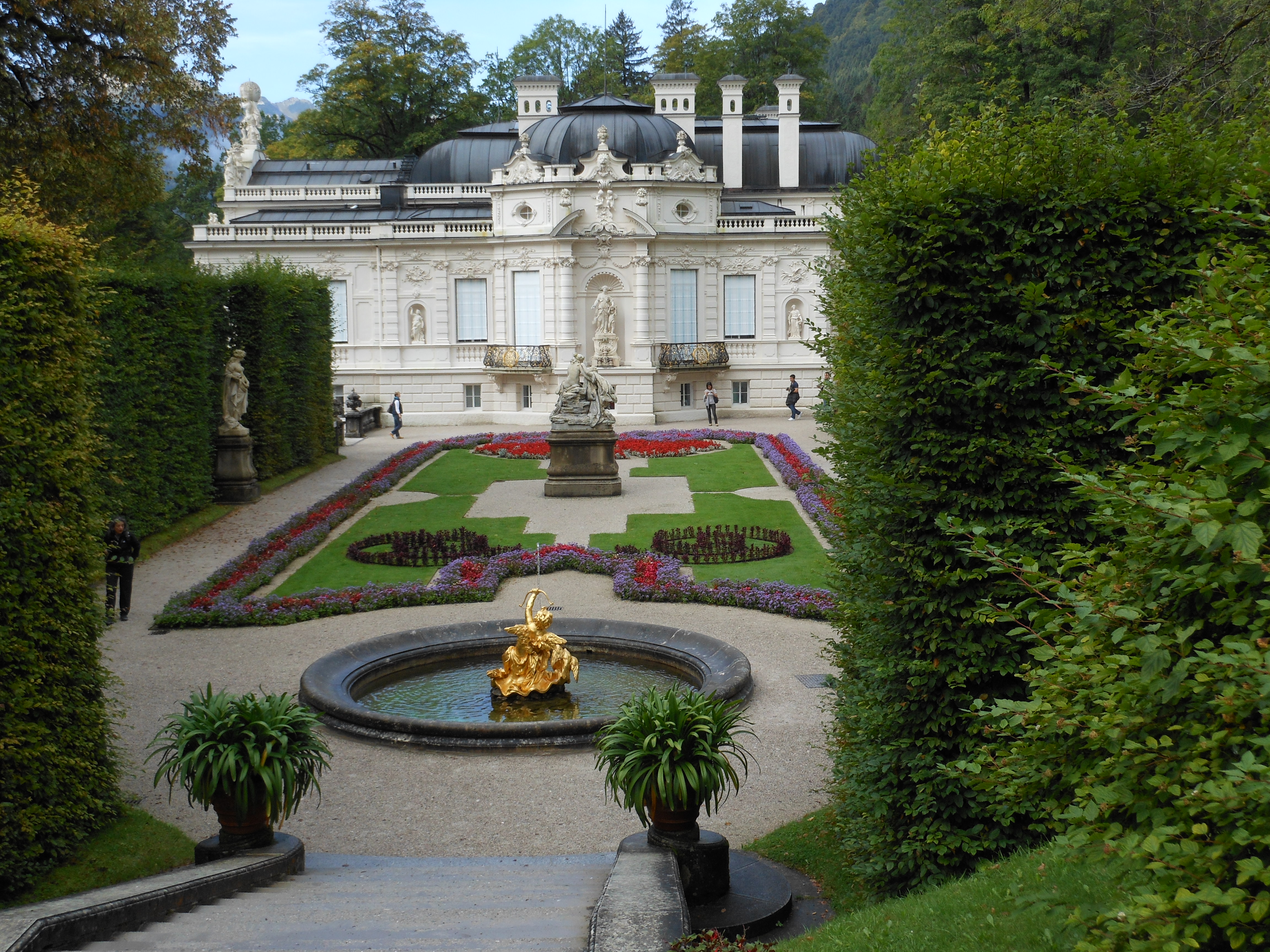
Ludwig built Linderhof as his own personal getaway.  In fact, it was the ultimate bachelor pad.  But he enjoyed the place in solitary splendor; he rarely if ever had visitors.  He built a special music room for his favorite composer, Richard Wagner, but Wagner never saw it. The grounds are breathtaking, and because the palace is quite small, each room looks out onto a beautiful manicured view with pristine mountains in the background.

Linderhof Palace

Linderhof Palace

In Visconti’s 1972 film Ludwig, the king is played by Visconti’s real-life romantic partner and muse, Helmut Berger.

LudwigBed1

The film shows Ludwig lounging around in his grand surroundings with hand-picked servants and a handsome young actor. Filming took place in the palace, so watching it is like having a tour personally conducted by the very strange and romantic Ludwig himself. His bedroom (intentionally) recalls the bedroom of King Louis XIV of France. This is a one-man palace; there are no guest rooms.  The help stayed in outbuildings, invisible to the king until they were needed.

It is hard to say how accurate the life story is.  But it is certain that Ludwig was an eccentric and  dreamy romantic.  His people loved him, but he was not much of a king when it was time to hang the ermine in the closet and get some work done.

One of Ludwig’s very few friends was his cousin, the Austrian Empress Elisabeth, nicknamed Sisi. She was famously married to the Emperor when she was only 15, and spent the rest of her life wanting out.  She is played by Romy Schneider (who also played Sisi in the very silly but entertaining semi-fictional series of Sissi movies).

The grotto was built up the hill behind the castle.  The entrance looks like a fort a very ambitious child might build.

GrottoEntry

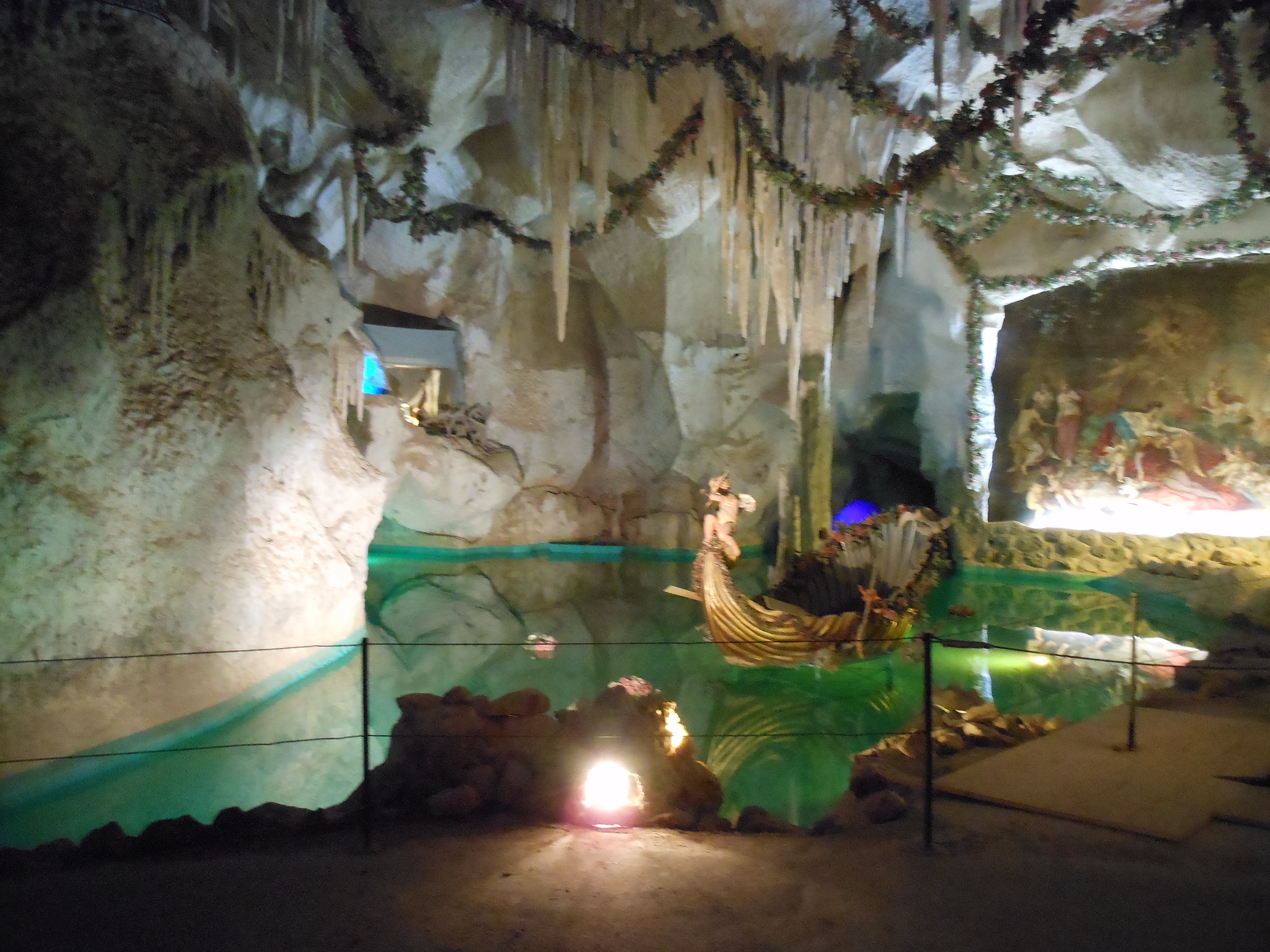
But the grotto itself is as jaw-droppingly weird and beautiful as it was in Ludwig’s day.  He had Wagner’s operas performed inside for his own personal pleasure.  The water was heated, so that he could swim in it if he tired of being rowed around in his gilded shell boat.  And the lighting could change colors depending on his mood, or the mood of the opera scene.

Ludwig's Grotto

Ludwig’s Grotto

The grotto is still festooned with the floral swags that Visconti’s movie crew put up.  The film has a fantastic scene where an Austrian actor is taken into the grotto to meet Ludwig, who wants him to recite dramatic speeches 24/7.  Helmut Berger, as Ludwig, floats out of the gloom in his shell boat, wearing a dark overcoat and a black Homburg–with an enormous diamond brooch pinned to the side. He fixes the actor with an imperious, piercing stare. The actor tries hard to be Ludwig’s New Best Friend, but the friendship ends badly and Ludwig is alone again.

Nearby Neuschwanstein and Hohenschwangau Castles are justly famous, but they are overrun with tourists.  Armed with a Bavarian Castles Pass, I actually went to Linderhof twice during my last trip.  One day it was rainy, the next it was sunny.  I can’t say I had the place to myself, but there was time and space enough to ponder the mysterious life of Ludwig.

Join me next time for more explorations in the art and history of Europe!

Vienna’s Karlskirche Dome: Up Close and Personal

P1050023

Vienna’s Karlskirche, St. Charles’s Church, is a spectacular Baroque creation, built between 1716-1737.  It honors St. Charles Borromeo, who was a church reformer of the 16th century and who also had a reputation for healing people with the dreaded disease of plague.  The Holy Roman Emperor Charles VI pledged to build a church to honor his namesake saint after the last plague epidemic in Vienna. In the photo above, notice the little round windows where the green copper dome meets the masonry below it. More on them later.

033


The spectacular paintings that decorate the inside of the dome have been under restoration for several years.  This required construction of an elevator right in the center of the church.

032

Someone had the grand idea of charging tourists a fairly nominal fee, about $8, to ride the elevator up into the dome and have a look. I’ve been twice, and I’d cheerfully go again. The last few levels have stairs–a tiny bit shaky, but that only adds to the adventure.

031

Remember those little round windows?  The stairway leads WAY ABOVE them!

030

How did artists create realistic-looking figures on curved surfaces far above the viewer?  The painters’ tricks are on full display, up close and personal.  They used techniques like foreshortening–making feet and legs subtly bigger than they would in a painting seen at eye level.  They used surprisingly subtle shading and liberally applied gold leaf. Up close, the scenes look completely modern, as though they could have been painted yesterday.

029


The illustrations of scenes from the life of St. Charles Borromeo are cheerful and exuberant. The colors are clear and bright, unlike other dome frescoes I’ve seen. So often, years of candle smoke and incense have darkened frescoes that were meant to be bright. Here, angels and other saints float around in the clouds and happily reach down minister to the sick. They all look like they’re having the time of their lives.

028

Charles Borromeo looks like a very happy saint, rising into heaven to meet the risen Christ.  From the story told in his dome, it seems his life was pretty serene for a saint.

The Baroque architect Johann Bernard Fischer von Erlach worked on the church for the first 6 years.  After he died, his son took over.  The original frescoes were by J.M. Rottmayr.

If I were in Vienna right now, at the beginning of the high tourist season, I’d take myself to some out-of-the-way sights like the Karlschirche Dome.

Join me next time for more explorations in the art and history of Europe and the British Isles!

Forget Versailles: Get Lost Instead

If there is a ground zero for summer tourism, it may be the Mona Lisa, whose smile seems less mysterious than long-suffering when viewed against the constant crush of tourists around her. As many as 40,000 people rush the picture every day at the Louvre, according to the Paris museum.

The photo above, from a recent article in The Wall Street Journal, shows hordes of tourists crowding around the Mona Lisa in the Louvre. Been there, done that. Actually, I’ve been lucky enough to visit when I could get up close to the most famous painting in the world without being jostled or impaled by someone’s selfie stick. But that was some years ago, and the enigmatic lady is behind glass anyway.  I’d rather look at her in a book. On more recent visits to the Louvre, I’ve escaped her overcrowded gallery as fast as possible. There are plenty of less popular treasures in the Louvre.
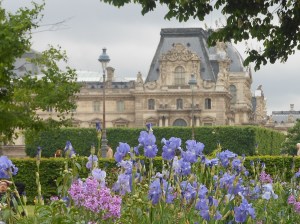
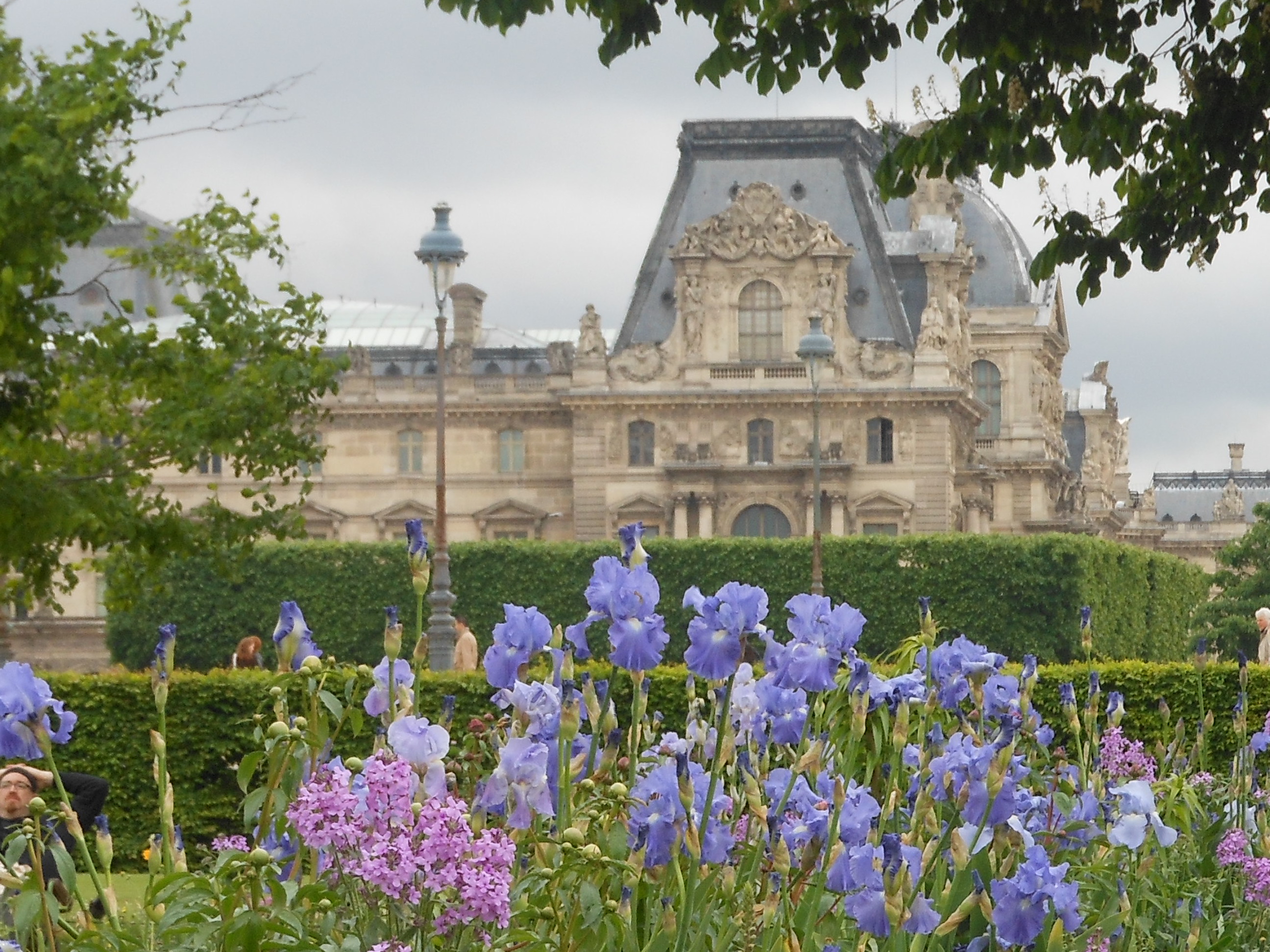
TuileriesIris

There are also the glorious gardens just outside in the Tuileries–surely less crowded and just as inspiring. Other Paris sights?  The article cited above says that officials at Versailles just outside Paris are actually asking tourists NOT to come to Versailles. They are going to cut off ticket sales to the Palace, and they suggest the vast gardens instead. The 25% drop in the Euro is luring huge numbers of tourists to Europe, many of them first-timers who are understandably intent on seeing the biggies they’re been hearing about all their lives. Last time I visited Versailles, the Hall of Mirrors looked like this:

HallOfMirrors2

Right now, it’s much worse:  wall-to-wall people, shuffling along shoulder to shoulder. It would be impossible to see and appreciate the grandeur. I wouldn’t go near Versailles or any of the major tourist “must-sees”  in the height of the coming tourist season.

Here’s what I would do instead: forget the major tourist draws, even for people who have never seen them. They’re all in books and movies and videos. Get lost instead. Just a short drive outside of Versailles, the countryside opens into vast serene fields, dotted with farms and pretty towns. It’s easy to get lost with a car and an intrepid driver–preferably equipped with some kind of GPS device when it’s time to get un-lost.  But it would work with a railpass and a pair of good walking shoes too.

P1000553

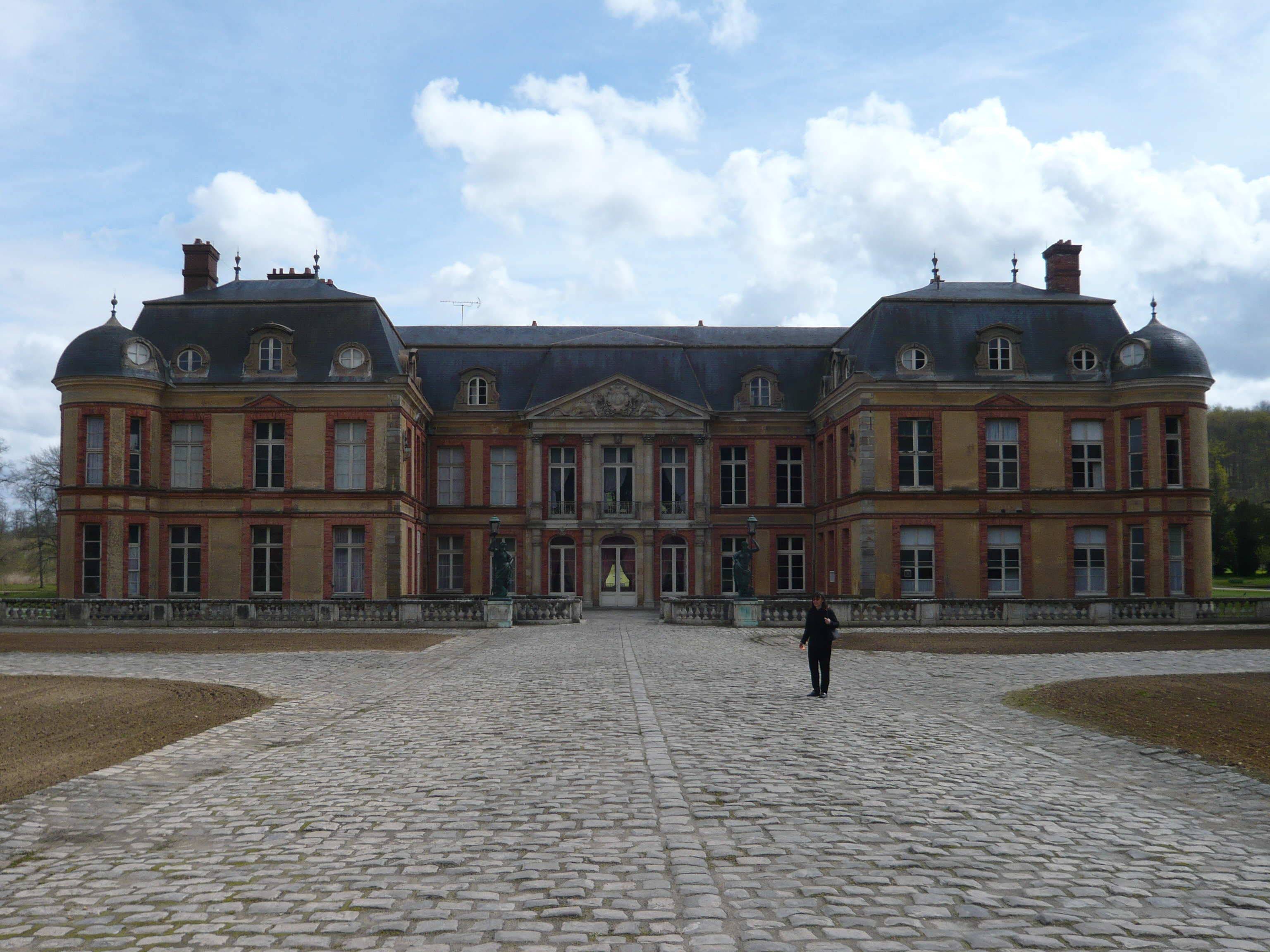
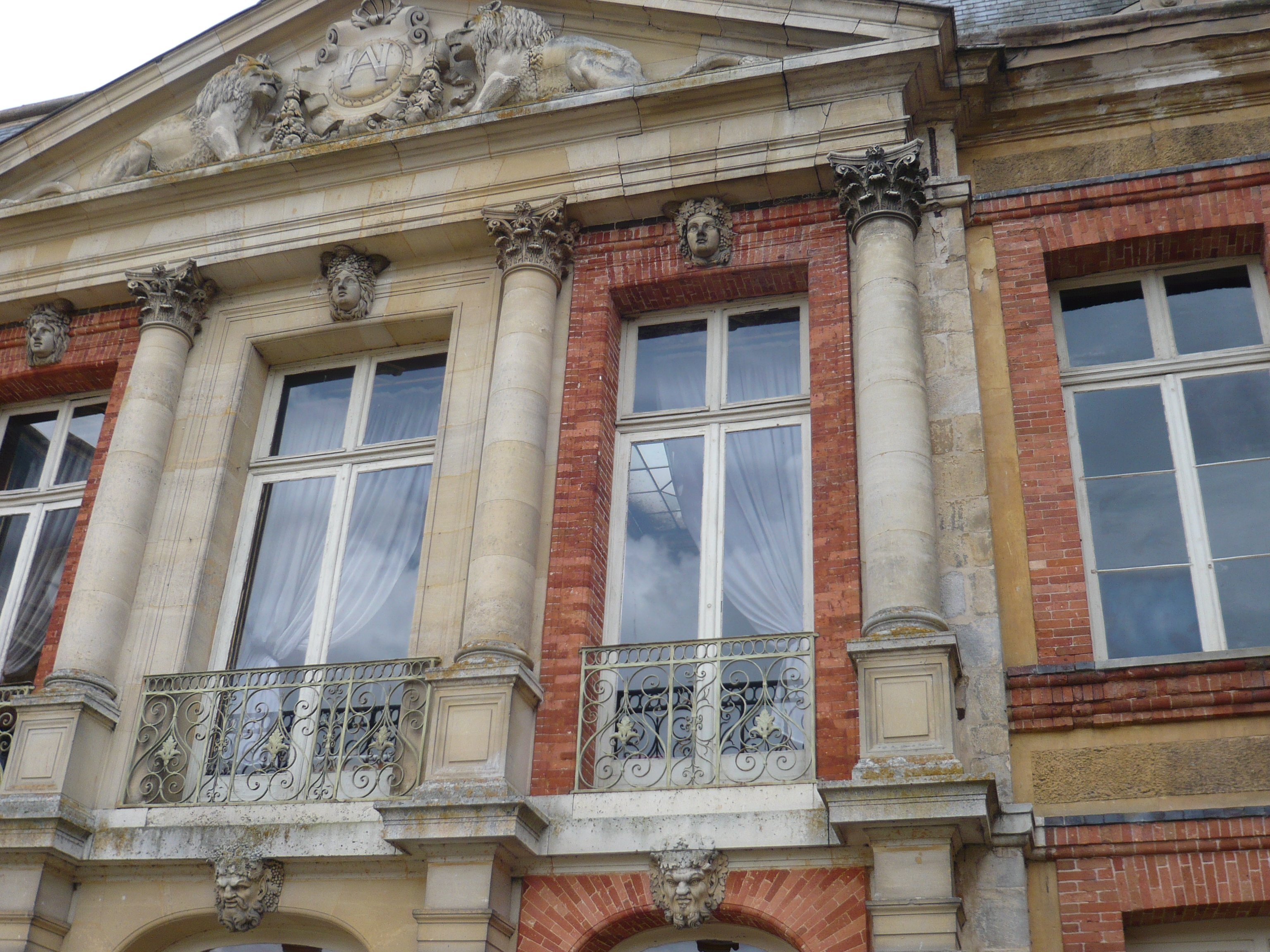
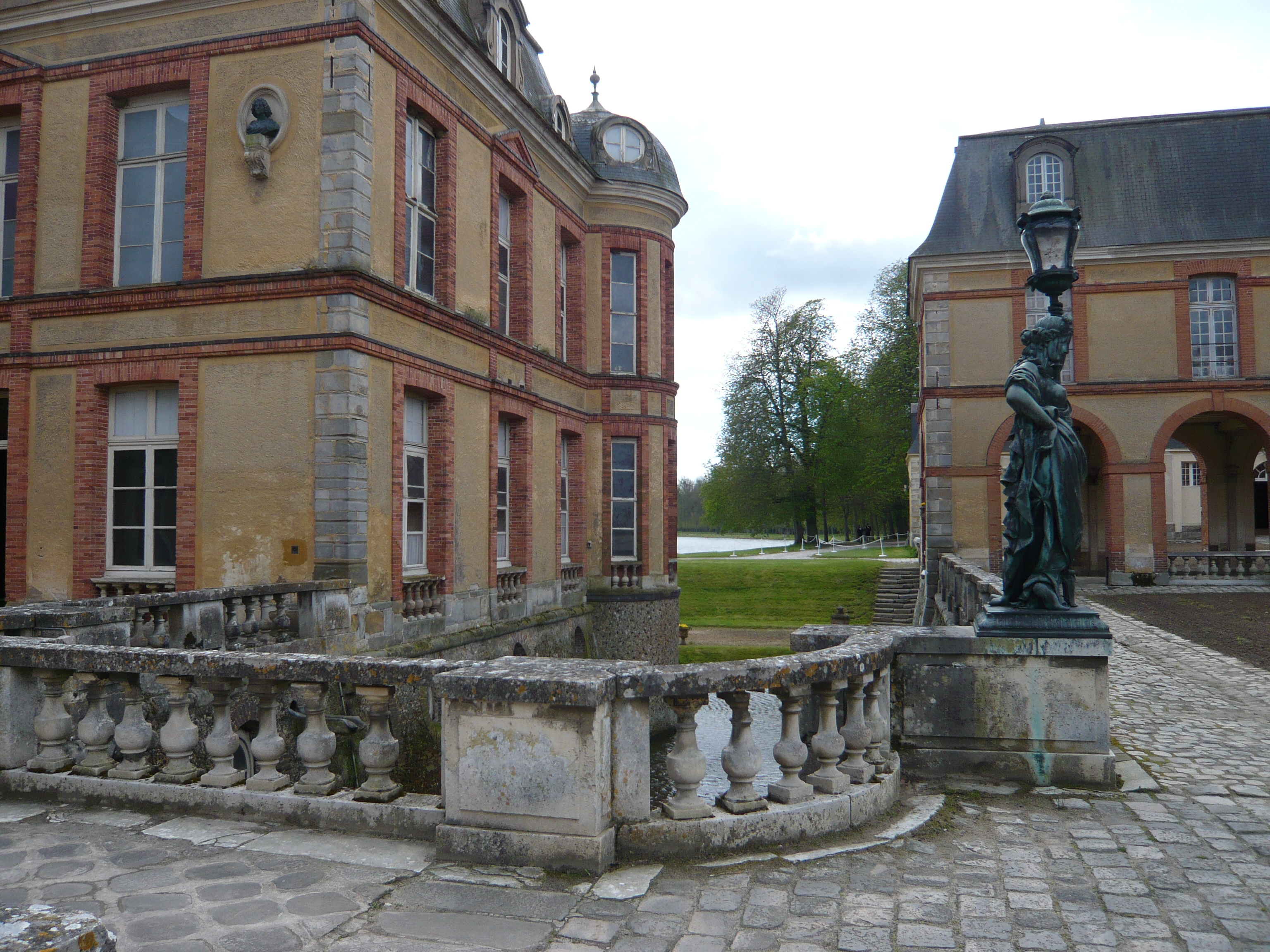
On a trip through the Loire Valley, I came upon a chateau I had never read about in any of my guidebooks.

MeChateau

I walked up its paved driveway, admiring the symmetrical beauty of the facade. Although I managed to take a tour of this chateau, I can’t tell you its name.  My husband and I had the entire place almost to ourselves.

P1000546

What lives played out behind these elegant windows? Who strolled in the gardens beside the dreamy moat?
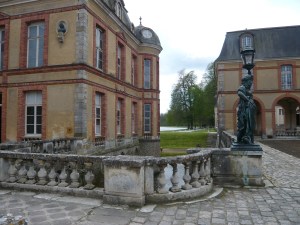
Courtyard

No one seemed to be around.  We walked around the little gatehouse until a lady appeared, wiping her hands on her apron.  She’d been making lunch and not expecting visitors. She made a phone call, and eventually another lady appeared in the courtyard to give us a guided tour. Three other people appeared for the tour. In we went. Instead of the burnished surfaces of Versailles, we were looking at genteel faded elegance:  dusty mantelpieces, faded floral wallpaper peeling in places, slightly tattered lace curtains covering ancient wavy glass windows.

Alas, the tour was only in French. Still, the tour guide made valiant attempts to explain the history of the family.  My French was just adequate to understand the most surprising fact:  during the turmoil of the French Revolution, the chateau was occupied by an elderly noblewoman who was never once disturbed by what was going on just a few miles away at Versailles. The King and Queen were arrested and hauled off to imprisonment and eventual execution in Paris. All over France, nobles lost their lands–and in Paris, hundreds of them lost their heads.  Churches became Temples of Reason.  Chateaux were sacked and burned. But at this particular chateau, life went on as before.

Moat2

No doubt there were many anxious days and nights, but the local residents loved this woman and her family.  Never once did an angry mob try to cross her moat, which was never built for defense in the first place. The old lady lived out her days in peace, no doubt doing good works among the local peasants.

Generally I buy a little guidebook, but  there didn’t seem to be one to buy.  The name of the chateau? The name of the family that once lived there?  In one ear and out the other.  We were given laminated information sheets which we had to return. No photos were allowed inside, so I didn’t even think to snap a photo of the information. Now, I’d like to know the name of this chateau and the history of the family who built it. Maybe a reader can enlighten me.
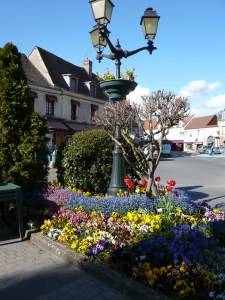
Flowers

The nearby village is substantial enough to have a nice little park.

P1000551

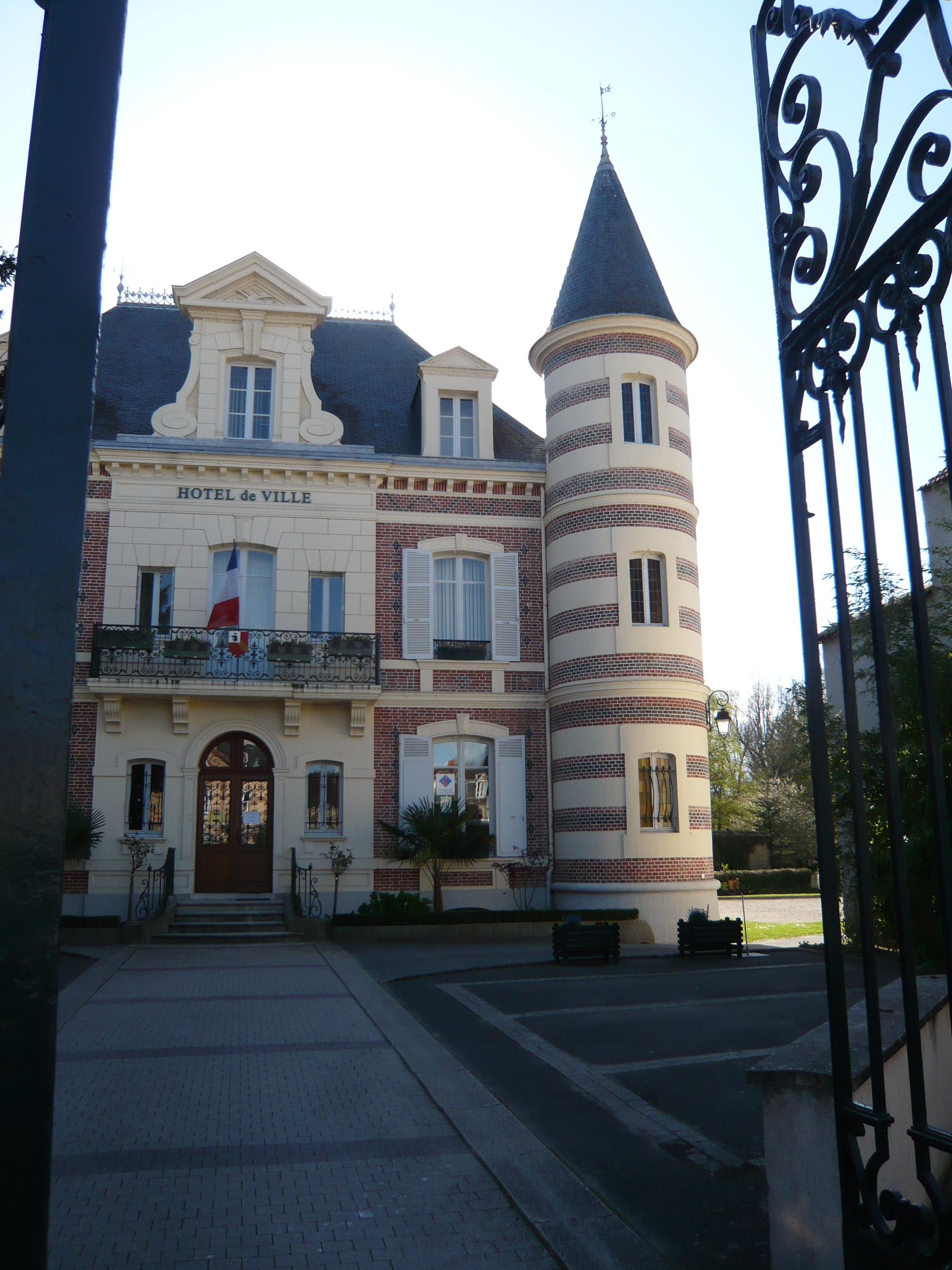
There’s even a City Hall. It looks just like hundreds of other city halls in small towns in France.  OK, I’ve learned my lesson.   Now I fill up my camera with pictures of signs–towns, sights, works of art.  It’s nice to know where I’ve been.

Still, I have a memory of an unforgettable sight that I took in without mobs of other people breathing down my neck. I had a chance to muse about the actual life of the lone noblewoman who lived out her days in peace and tranquility during the darkest days of the French Revolution. I’ve been fortunate enough to see Versailles already. Even if I hadn’t, I wouldn’t trade a hectic day-long visit to Versailles for my two peaceful and intriguing hours at my Mystery Chateau.

Update: May 6, 2018. I just returned from a trip to the Loire Valley where I went to a lot of chateaux. I did not get a chance to find my Mystery Chateau, but I think it is Dampierre. I think it is fairly close to Versailles, not in the Loire Valley. I stopped briefly at Versailles and decided I’d like to go back there again in the winter, when there would not be near as many visitors. Maybe I’ll get to look up my Mystery Chateau too. It’s almost always worth going back to sights I’ve already seen. There’s always more to see and learn.

The article cited above, from The Wall Street Journal, is at

http://www.wsj.com/articles/europe-braces-for-a-summer-travel-crush-1432847803

Vincent van Gogh: Can We Forget About the Ear?

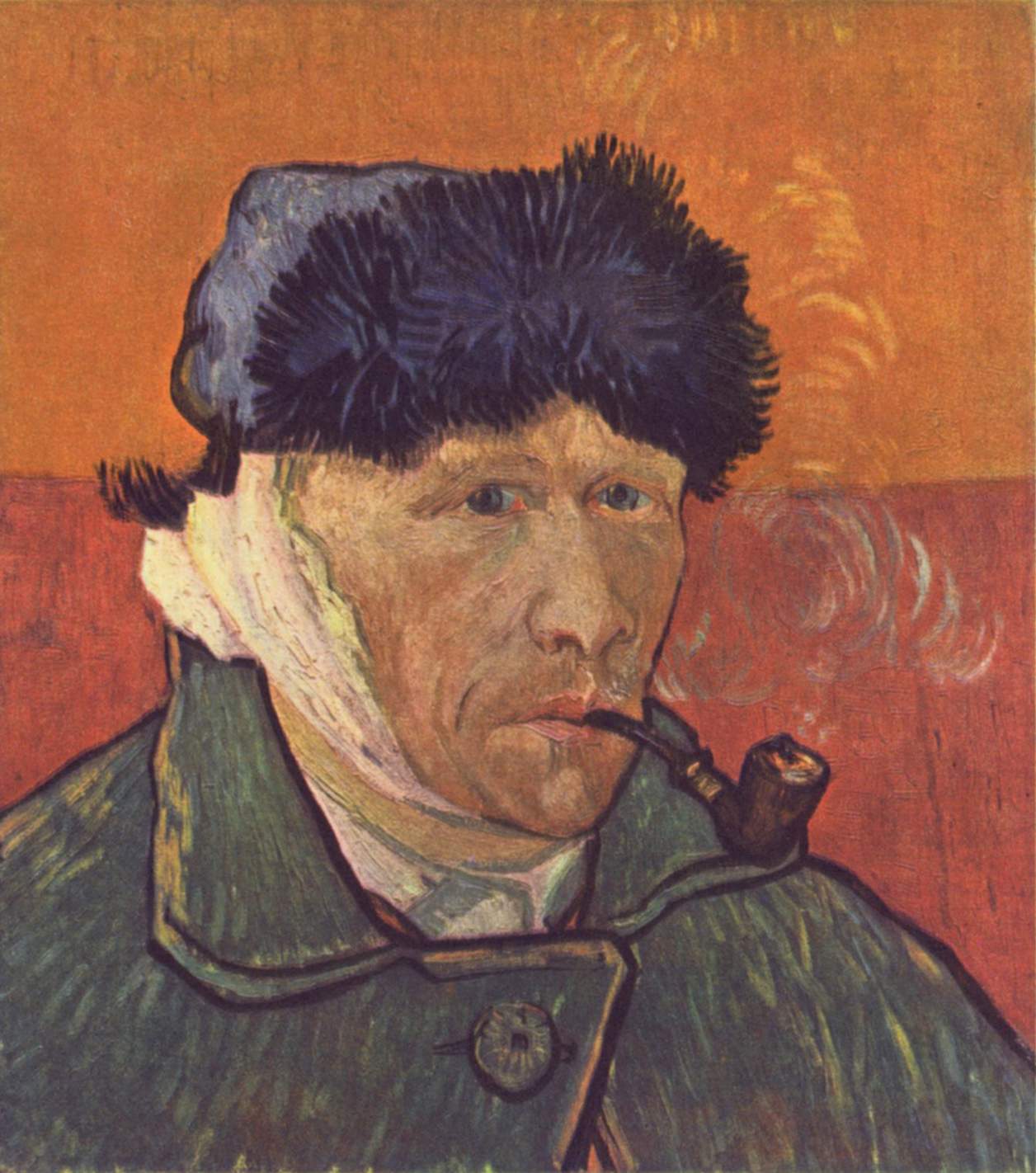
“Self Portrait with Bandaged Ear,” January 1889, Vincent van Gogh, Public Domain

Vincent van Gogh obviously had his share of problems.  Most of us don’t cut off an ear no matter how bad a day we’re having. (Actually, there is evidence that he only cut off a small part of one ear).  Today, mental health professionals would not be especially surprised by this behavior; we know now that people under severe stress do sometimes deal with their pain by cutting themselves or pulling out their hair.  My (unprofessional) understanding is that sometimes self-inflicted physical pain can be a distraction from overwhelming psychic pain.

Vincent tried valiantly to face his problems.  After the ear incident, he painted the rueful self-portrait above, showing himself bandaged. After each of his health crises, he sought the best medical care he could find. He followed medical advice, such as it was in his day.

“In a Cafe,” or “Absinthe,” Edgar Degas, 1873, Public Domain

At the end of a hard day at the easel, Vincent could have jogged five miles, lifted some free weights, and finished off the evening with a nice tall Gatorade.  Instead, he hung out in local dives and drank way too much absinthe. A little absinthe goes a long way. And he admitted that he smoked far too much, even on his deathbed. But then, he did not have Dr. Oz or Dr. Drew advising him.

Recent research at the Van Gogh Museum in Amsterdam has shown that Vincent worked methodically and with great care on his paintings. The findings are summarized in an article by Nina Siegal in The New York Times.  The director of the museum, Axel Ruger,  spoke about the recent exhibit, “Van Gogh at Work.”  Mr. Ruger said, “You discover more clearly that van Gogh was a very methodical artist, which runs counter to the general myth that he was a manic, possibly slightly deranged man who just spontaneously threw paint at the canvas.” The article is “Van Gogh’s True Palette Revealed,” at http://www.nytimes.com/2013/04/30/arts/30iht-vangogh30.html?_r=0

Vincent must have been as lucid as anyone else for much of the time. And yet, he had periods of serious craziness, including terrifying hallucinations,  that made him helpless.  And he apparently ended his own life by gunshot at age 37, at a time when he was at the height of his artistic powers.

So what was wrong with him?    To me, the most convincing explanation is that he was bipolar.  Of course, this diagnosis did not even exist during his lifetime, and there was no effective treatment.  In addition, he may have had chronic malnutrition.  He was poor for his entire life.  Once he decided to become a painter, his only income was whatever his hard-pressed brother Theo could afford to send him. Vincent was single-minded.  When faced with a choice of a new pot of paint or a nice chicken baguette with arugula, he went with the paint every time.  Not only that, but there is evidence that he sometimes ate his paint, in the heat of composition. Some of the paints he used must have been highly toxic and might have caused hallucinations in the most sane of us.

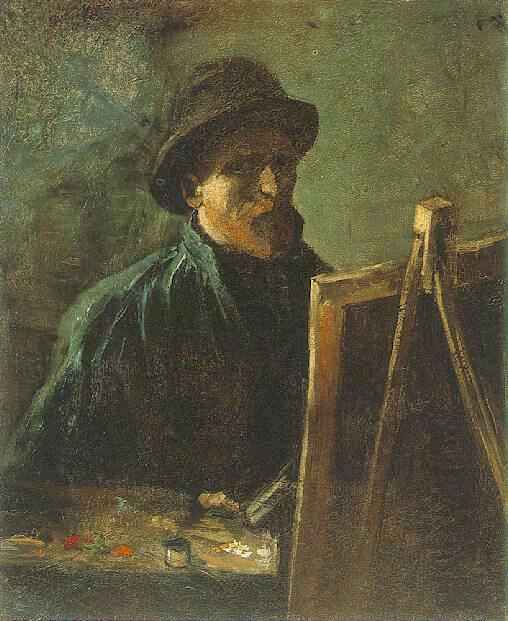
Self Portrait with Dark Felt Hat at the Easel, Vincent van Gogh, 1886, Public Domain

Self Portrait with Dark Felt Hat at the Easel, Vincent van Gogh, 1886, Public Domain

In 1886, Vincent painted the dreary self-portrait above. He looks depressed, buttoned up, shut in by his waiting canvas.  Any writer or painter knows that the blank page or canvas is a challenge and a reproach. The failed effort is even worse. Vincent’s palette in this portrait even looks dreary, just blobs of muted color. Still, the miracle is that with the love and support of his brother Theo, this man pulled himself out of his low periods so many times.  In the decade that Vincent worked seriously as a painter, he produced about 860 oil paintings plus about 1300 works in other media, like watercolors and prints.  He got on with it, even though not a single painting sold in his lifetime.

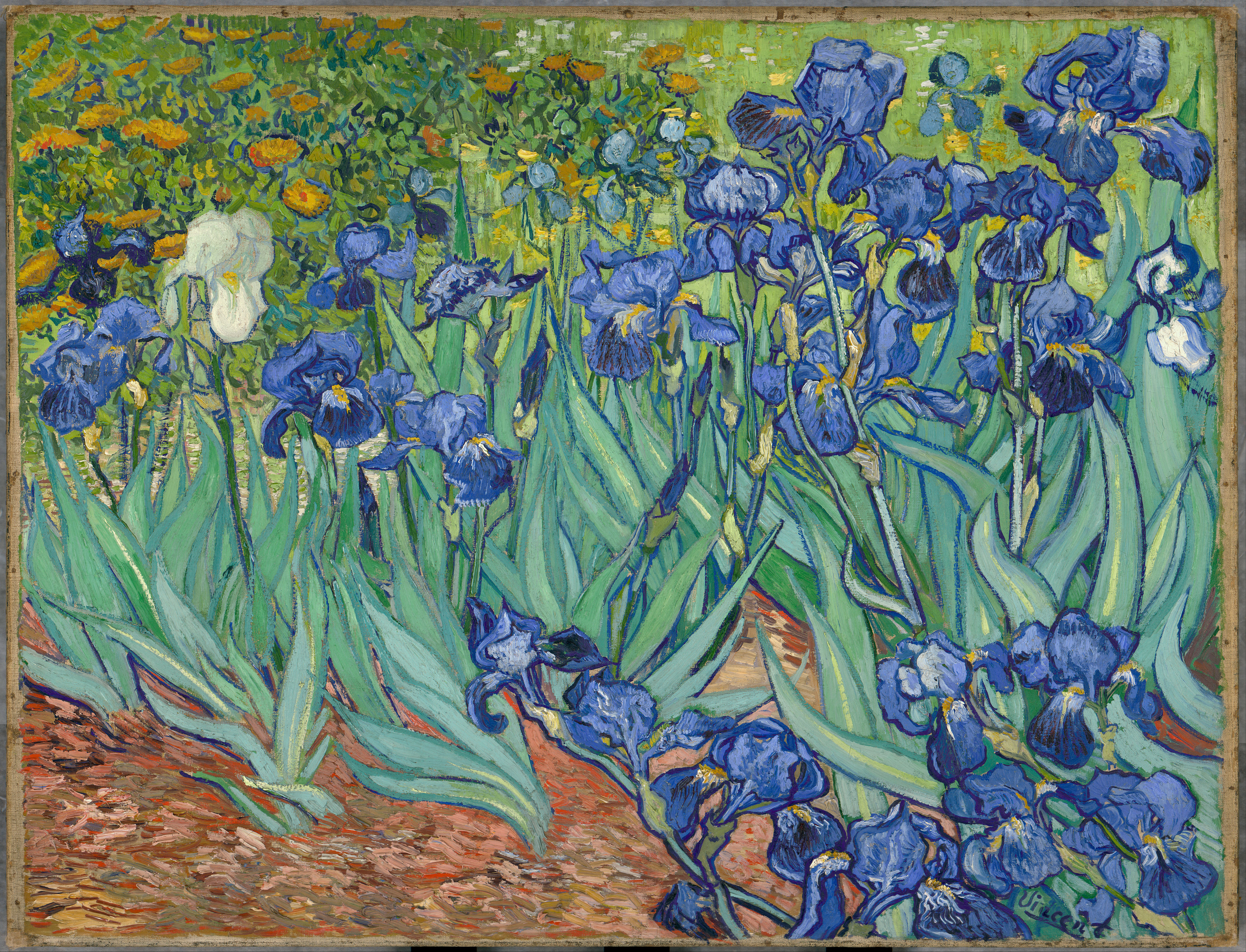
“Irises,” Vincent van Gogh, 1889, Public Domain

We have become so familiar with reproductions of Vincent’s paintings on calendars and coffee mugs that we often don’t really see them. Standing in front of an original painting, inches away from his actual brushstrokes, it is impossible not to feel Vincent’s joy in life and color. “Irises,” pictured above, is at the J. Paul Getty Museum in Los Angeles.

Are you wondering if you are reading this for the second time?  My apologies!  I had additional thoughts about a post I wrote a couple of years ago, so I revised and reposted. Join me next time for more explorations in the art, artists and history of Europe!

Vincent and Theo

imgres

In 1990, Robert Altman directed the movie Vincent and Theo, concerning the relationship between Vincent Van Gogh and his brother.  The fine actor Tim Roth plays Vincent.  The equally fine Paul Rhys plays his brother Theo. It was originally made as a 4-hour BBC mini-series, which the director Altman compressed into a feature film. Rolling Stone called the Altman movie “a masterpiece.” But then, lots of Altman films are known as masterpieces.

The film brilliantly evokes the times in Paris and in the south of France.  There is nothing very picturesque about poverty in either place.  Vincent’s brave attempts to create a stable life for himself are heartbreaking.

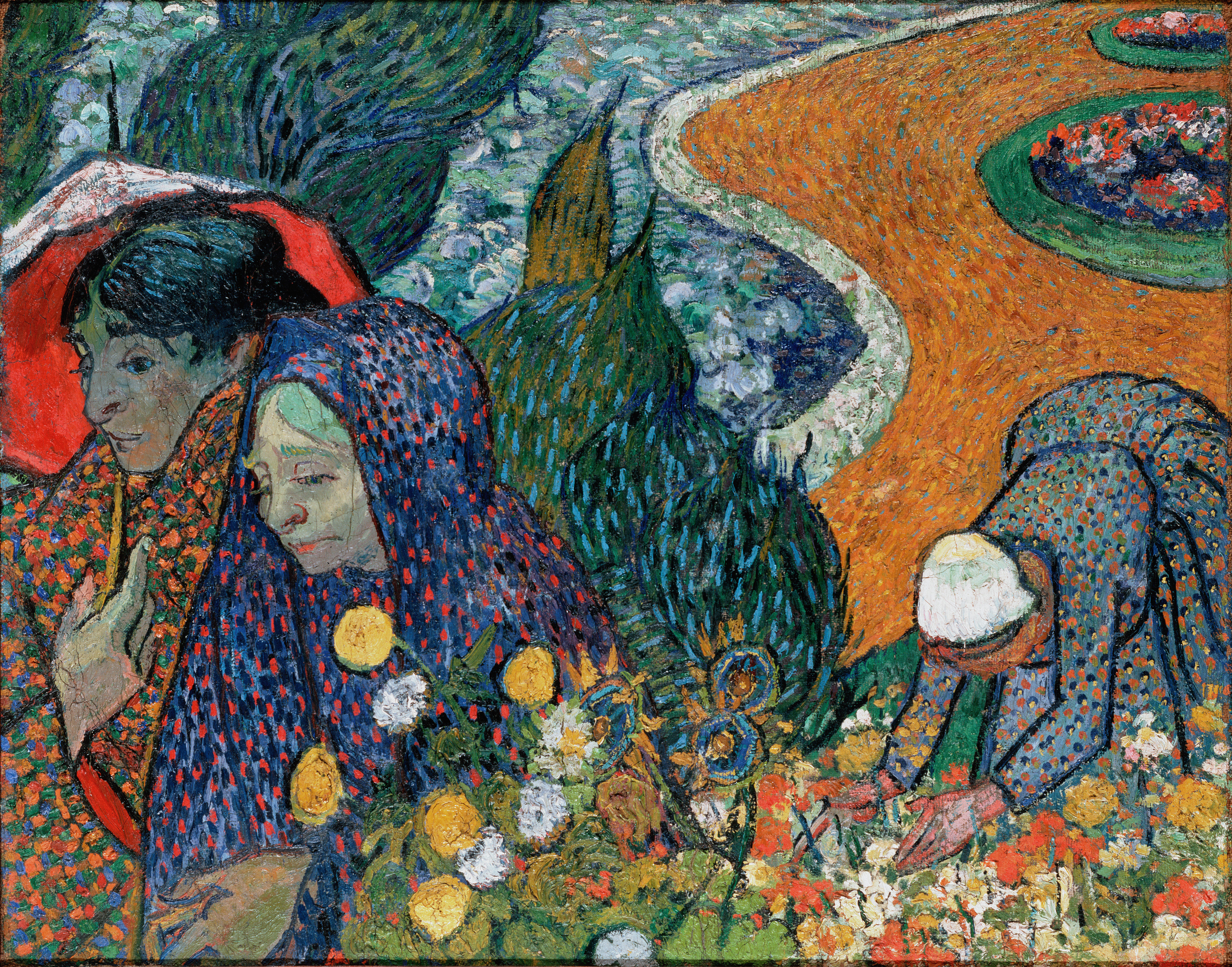
“Memory of the Garden at Etten,” Vincent van Gogh, 1988, Public Domain

In 1888, during his troubled time with his painter friend Paul Gaugin in Arles, van Gogh painted his mother’s garden at Etten from memory.  I don’t know whether I’ll ever see the original; it’s at the Hermitage in St. Petersburg.  It’s a stunning painting.  Vincent wrote about it to Theo:  “A reminiscence of our garden at Etten with cabbages, cypresses, dahlias and figures…Gaugin gives me courage to imagine and the things of the imagination do indeed take on a more mysterious character.” Which of the figures is van Gogh’s mother?  One of the sad-looking figures in the foreground?  Or the woman bent over her garden in humble hard work?  Maybe they all represent his mother, or his childhood, in some way.  I think this painting would have had deep meaning for the brothers who shared so much.

Having recently visited the Van Gogh Museum in Amsterdam, I gave the film another look.  I have always thought of Theo as the long-suffering, conventional patron of his tortured genius brother.  In the film, interestingly, Theo comes across as equally troubled.  In fact, he sometimes seems more tortured than VIncent.  At least Vincent always has his single-minded determination to paint.  Theo has self-doubts.  Why is he stuck working in art galleries?  Why can’t he afford to get married?  Finally he does marry, in spite of suffering from syphilis.  Then he has a wife and colicky baby to add to his troubles.

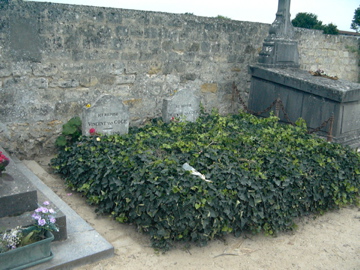
VincentTheoGraves

Theo was always in frail health.  In fact, he died just a few months after VIncent’s death.  The brothers are buried side by side in Auvers. When I visited, a few years ago, the cemetery adjoined a cornfield that could have come straight out of a van Gogh painting. The same ivy vine intertwines and covers the graves of the two brothers. It’s a lonely trek to see the graves; this is not a major tourist attraction. The brothers’ relationship, troubled as it was, gave us the gift of Vincent’s paintings, which always attract clumps of viewers in museums lucky enough to own them. Vincent could not have painted his masterpieces without the love and support of his brother Theo.

I wrote about Vincent’s mother and their loving relationship in a previous post at  https://castlesandcoffeehouses.com/2015/05/09/thanks-for-eve…m-love-vincent/

Join me next time for more explorations in the art and history of Europe!