Category Archives: Uncategorized

Le Renard

FoxYard

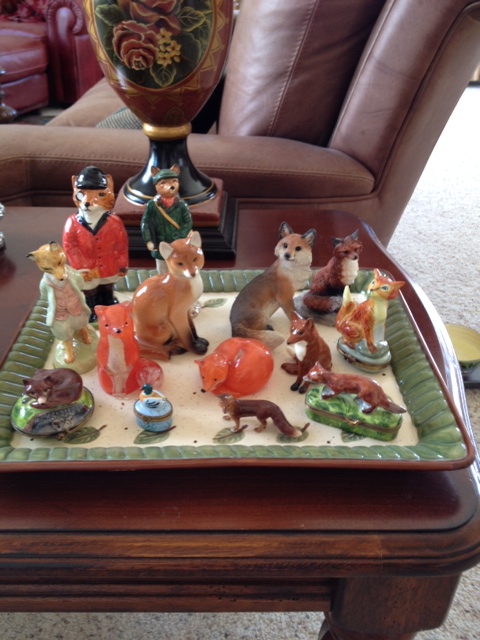
The most fun I ever had speaking French was the time I had a fairly long conversation with a Parisian woman who was walking a particularly lovely little dog. He looked exactly like a fox, my favorite animal. Foxes patrol just outside my house, hunting and also trying to get a rise out of my cats. The cats stare out in wonder at this unassuming animal that looks like a dog, but does not carry a ball or slobber on the window glass.

I wanted to know what breed the elegant little Parisian dog was. After much petting and exclaiming over the adorable creature, the woman managed to explain to me that he was “particulier.” I concluded this meant that he was one of a kind, what I might call a mutt. I would not be able to procure a dog just like him unless I got really lucky at my local animal shelter.

I’ve heard of people trying to tame foxes, but I know wild animals belong in the wild. My indoor foxes live on tabletops!

FoxCollect


April in the Netherlands

photo (25)

Considering that the tulip season runs for only about 8 weeks, and that each tulip bulb blooms for only a week at most, I can see that gardeners and florists have been busy keeping the cities and countryside beautiful.

photo (24)

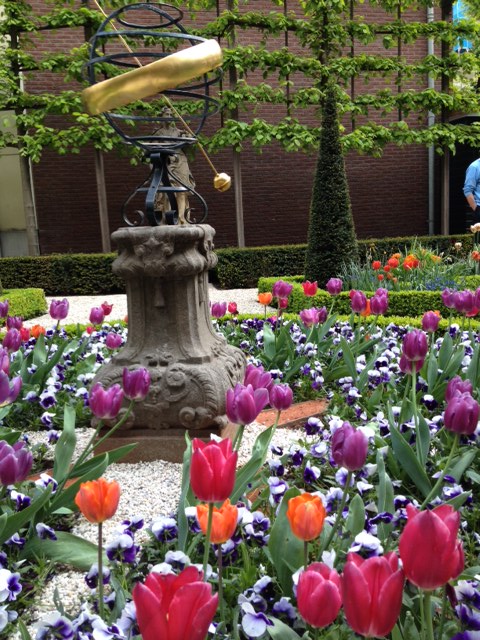
Gardens are in bloom everywhere.

photo (30)

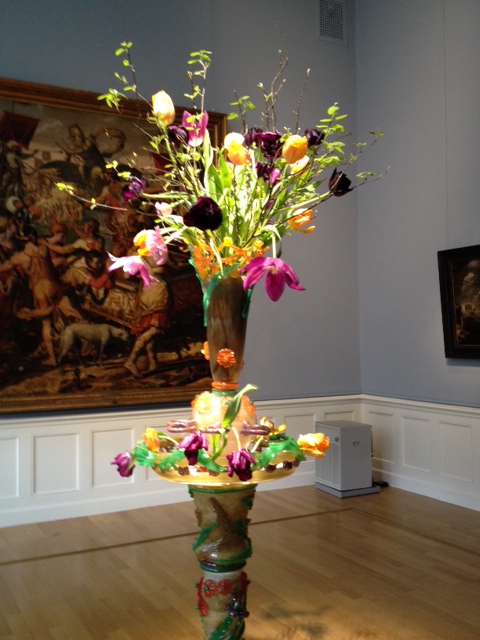
Museums, like the Frans Hals Museum in Haarlem ,have traditional arrangements of tulips, like this one which only a very wealthy family would have enjoyed in the past. Each precious bloom has its own place in a towering Delft vase, a luxurious work of art in itself.

photo (28)

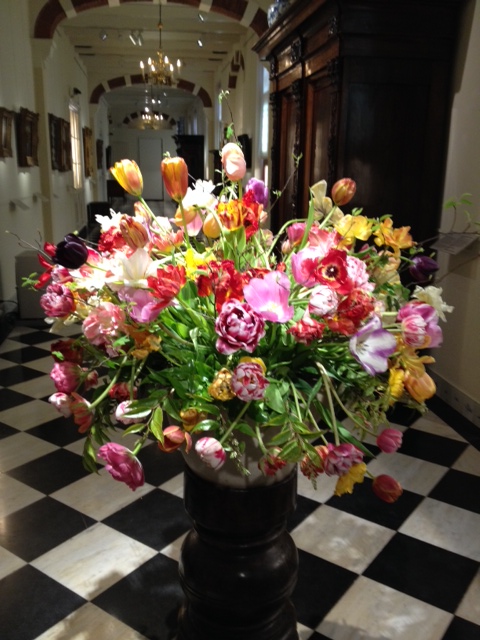
Other arrangements are more modern.  All are spectacular!

Tulip Monkey Business


photo (9)

I took a short train ride from Amsterdam to the nearby town of Haarlem, especially to visit the Frans Hals Museum. One of the more charming pieces I found there featured monkeys and tulips.  Frans Hals was a contemporary of Rembrandt; they competed for the same clientele of wealthy Dutch citizens during the Golden Age of Dutch painting, in the 1600s.  His namesake museum has many Hals paintings, plus work by other artists of his time.

"A Satire of Tulip Mania" by Brueghel the Younger, Public Domain

“A Satire of Tulip Mania” by Brueghel the Younger, Public Domain

“A Satire of Tulip Mania,” by Breughel the Younger, was painted in 1640, just after the debacle of the tulip boom and bust cycle.  This was the seventeenth-century equivalent of the dot-com boom and bust. It was probably the first modern instance of rampant speculation in a commodity, followed by a crash. At the height of the frenzy, a single tulip bulb sold for ten times the annual income of a skilled craftsman.

Brueghel dressed his gullible monkeys in contemporary clothes and showed them facing debtor’s court and even urinating on discarded tulips, turned from priceless to worthless overnight.

Today the tulip trade is much more stable.  The museum had spectacular arrangements of tulips and other spring flowers in every room.

photo (12)

Join me next time for more explorations in the art and history of Europe!

Happy Easter!

HallEasterShopWindow

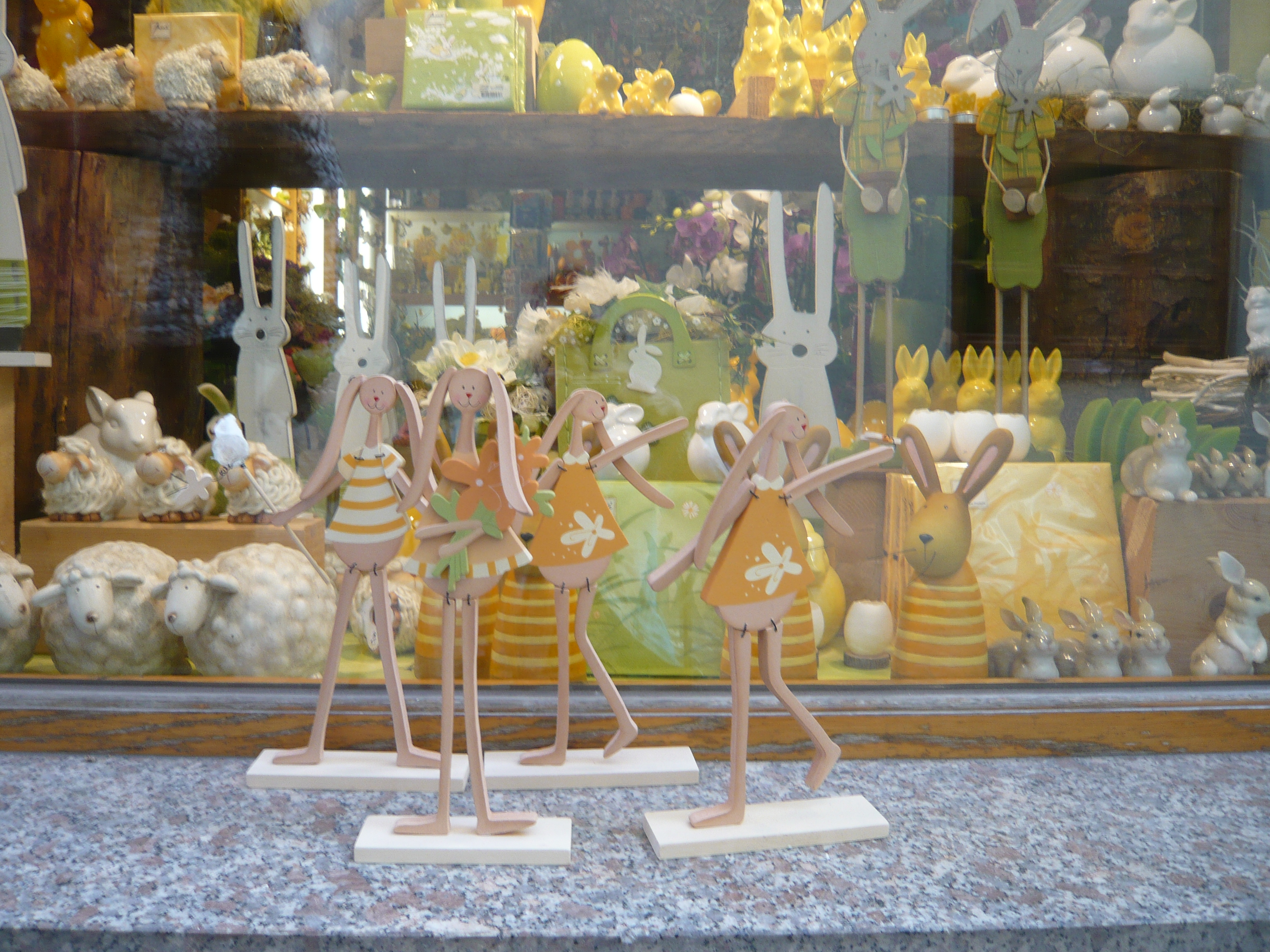
Easter in many European countries is as big a holiday as Christmas. People gather in churches, starting at sunrise, then spend the rest of the relaxed day with their families.  Bakeries and candy shops are full of exquisite spring-themed treats. This shop window, in Hall, Austria a couple of years ago, shows the exuberance of the holiday.  Happy Easter to all!


Maria Theresa, the Original “Lean In” Woman

Theresia11-12The Habsburg dynasty was about to die out in the year 1740, when Emperor Charles VI died without a male heir.  He had seen this coming; he had worked during his entire reign to promote the Pragmatic Sanction, an agreement whereby members of the Austro-Hungarian Empire recognized his daughter, Maria Theresa, as his rightful heir even though she was a woman. He was not cold in his grave when many of the entities that had agreed changed their minds.

The young queen had to fight battles, both military and political, to hold on to power.  She married the man she loved, Francis of Lorraine. The Habsburg dynasty, instead of dying out entirely, became the Habsburg-Lorraine dynasty. Francis was not the sharpest knife in the drawer, though, and Maria Theresa soon realized that she had to be the actual day-to-day ruler of her vast empire. She did it for 40 years.

MariaTFamily

In her spare time, she gave birth to 16 children.  She arranged politically advantageous marriages for them all over Europe, mostly strengthening Habsburg power with each marriage.  Poor Marie Antoinette got the short end of the stick, but the other children made out pretty well.
Giants

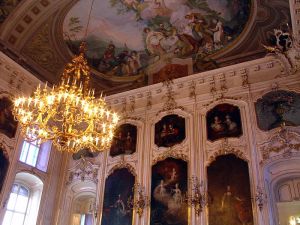
In the Hofburg at Innsbruck, Maria Theresa’s PR skills are on glorious display.  She redecorated a very grand reception room, called the Giants’ Hall. When she began her reign, the room came with paintings of Hercules and other characters from myth and legend.  Maria Theresa did away with all that; instead she filled the room with oversized portraits of herself, her husband and above all her many children.  Visitors to the palace had to pass through this room, basically plastered with Habsburg dynasty billboards, to reach the other rooms of the palace. Children who had died in infancy were pictured in the clouds.

MariaThereseHall

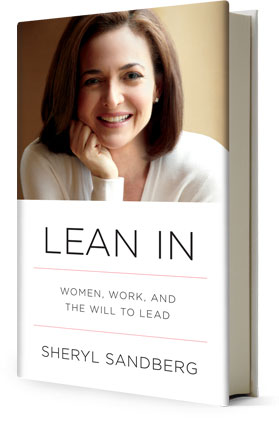
I don’t know why someone has not made a movie of Maria Theresa’s colorful life.  She is every bit as interesting as, say, her unfortunate daughter Marie Antoinette. Actually, there are not many biographies of Maria Theresa, and I don’t know of any historical novels about her.  I have a feeling, though, that Maria Theresa could have written a very modern book like Sheryl Sandberg’s “Lean In:  Women, Work, and the Will to Lead.”

LeanIn

Join me next time for more explorations in the art and history of Europe!


Green Beer in 5th Century?


Photo by Andreas S. Borchert, Creative Commons

Photo by Andreas S. Borchert, Creative Commons

St. Patrick, celebrated today on the anniversary of his death, was an actual person whose history is fairly well known.  He was born in the mid-fifth century in Roman Britain, the son of Christians active in the early church.  He was not a believer himself in his early life. By his own account, at age sixteen, Patrick was captured by Irish pirates and taken to Ireland, where he was held captive as a slave for six years. During that time, he worked as a shepherd and became a believing Christian. He had visions that told him he would return home on a ship. He escaped and after a series of adventures he arrived home again.

A few years later, he had another vision telling him to return to Ireland as a missionary, which he did. His life there was not easy, but he created Christian communities and eventually became a bishop.

Photo by supportstorm, public domain

Photo by supportstorm, public domain

Legend has it that Patrick used the ubiquitous shamrock to teach the mysterious doctrine of the Trinity, in which Father, Son and Holy Ghost are one. Legend also has it that he drove all the snakes from the island of Ireland. (Actually, Ireland is one of the world’s islands where there were almost certainly no snakes to begin with).

Patrick’s feast day has been celebrated for many hundreds of years, especially, of course, in Ireland. For believers there, this is a day for church.  What they do afterward is up to them.  Maybe a pint of green beer at the pub?

I need to add Ireland to a trip.  Join me next time for more explorations in the art and history of Europe!

What’s a Wasp Waist?

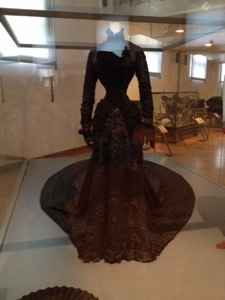
I’ve heard the term “wasp waist,” but never really understood it until I came upon an unaltered dress that once belonged to the Empress Elisabeth, known as “Sisi” in Austria. She was a celebrated beauty, married at 16 to her cousin the Emperor Franz Joseph. She pretty much invented anorexia in her age, dieting obsessively and exercising for hours every day. Even after dutifully giving birth to four children, including the required male heir, her waist measured 20 inches for her entire life. Amazingly, her waist was actually had a larger diameter front to back than side to side. I can only guess how it must have felt to be corseted into this dress.

20131212-081114.jpg

A Pretty Good Crown

This is the crown of the Holy Roman Empire, which historians agree was not really holy or Roman, plus the “empire” part at the time was mostly wishful thinking. But it’s pretty impressive all the same. It was made in about the year 960. The cross denotes the holy part, the arch from front to back recalls the helmets worn by those great soldiers the Romans, and the panels all around denote parts of the empire.

The crown was apparently good enough for Charlemagne, who had himself painted in it in about 1460.

20131206-115650.jpg