Category Archives: British Isles

Back to Blenheim

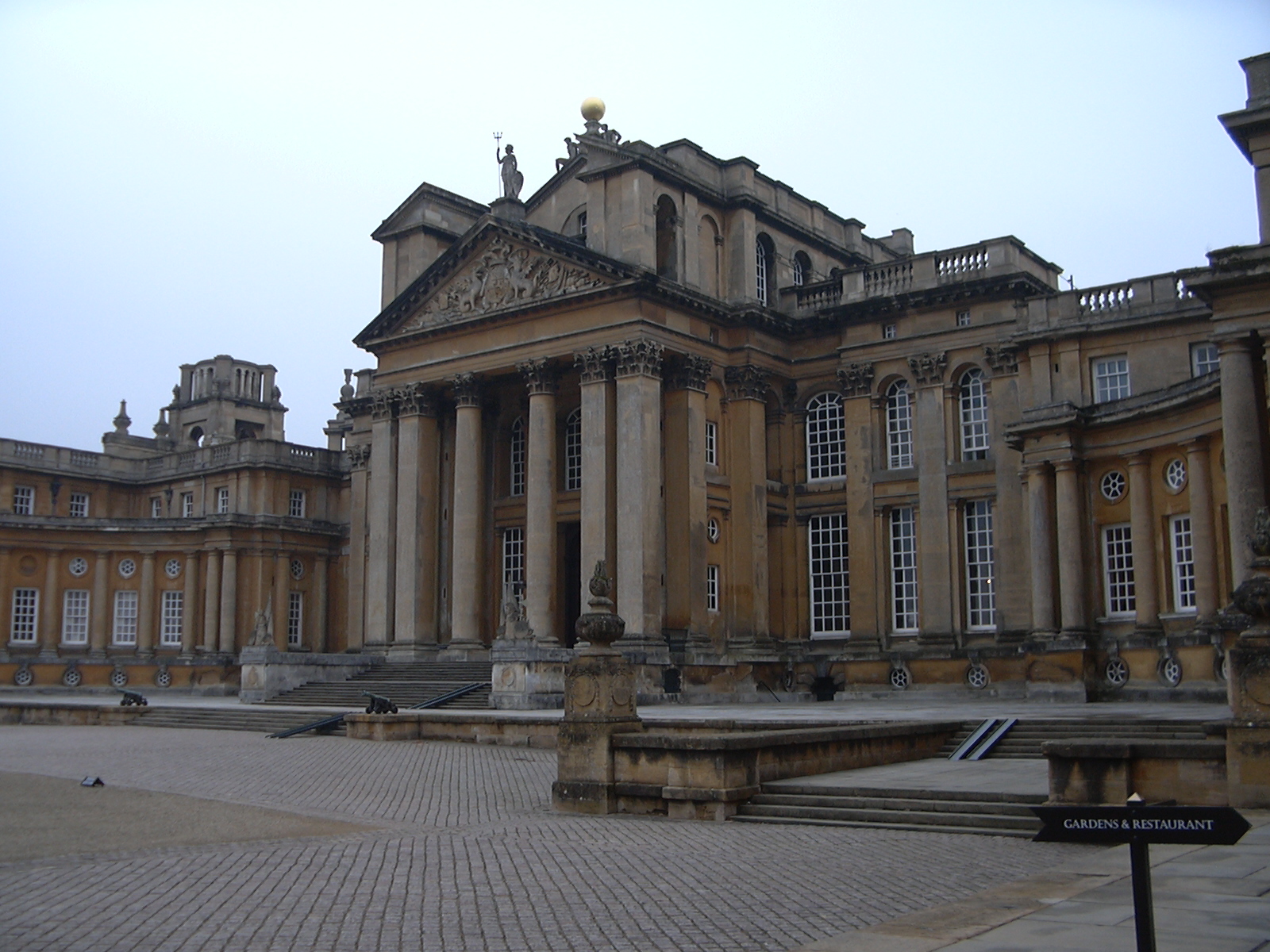
BlenheimFacade

Every now and then the stars align favorably.  I was lucky enough to visit Blenheim Palace last fall, and doubly lucky to be in England again in the spring.  When I bought my Blenheim ticket last fall, I stopped at a kiosk and made it into a year-long pass–at no extra charge!  What a deal!  I’d probably go back even if I didn’t like the place, but I happen to love it.
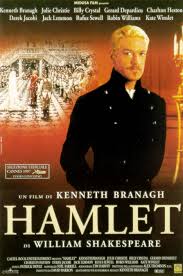
HamletPoster

Blenheim was used for the exterior scenes of the great film Hamlet, with Kenneth Branagh as director and and playing the melancholy Hamlet himself. He was perfect. English major and Shakespeare lover that I am, I’ve watched the film quite a few times.  I like to turn on the subtitles so I can get all the glorious Shakespearean words, but it is very dramatic and easy to follow even without caring much about the dialogue. It even ends with some swashbuckling worthy of Jack Bauer in 24. The acting is stellar, featuring, besides Kenneth Branagh, Charlton Heston, Julie Christie, Billy Crystal, the late Robin Williams, Derek Jacobi, Kate Winslet, Michael Maloney, Timothy Spall, Richard Attenborough, Brian Blessed, Judi Dench, Geraard Depardieu, John Gielgud, Rosemary Harris, and Jack Lemmon (he was still with us in 1996!)
FullSizeRender (31)

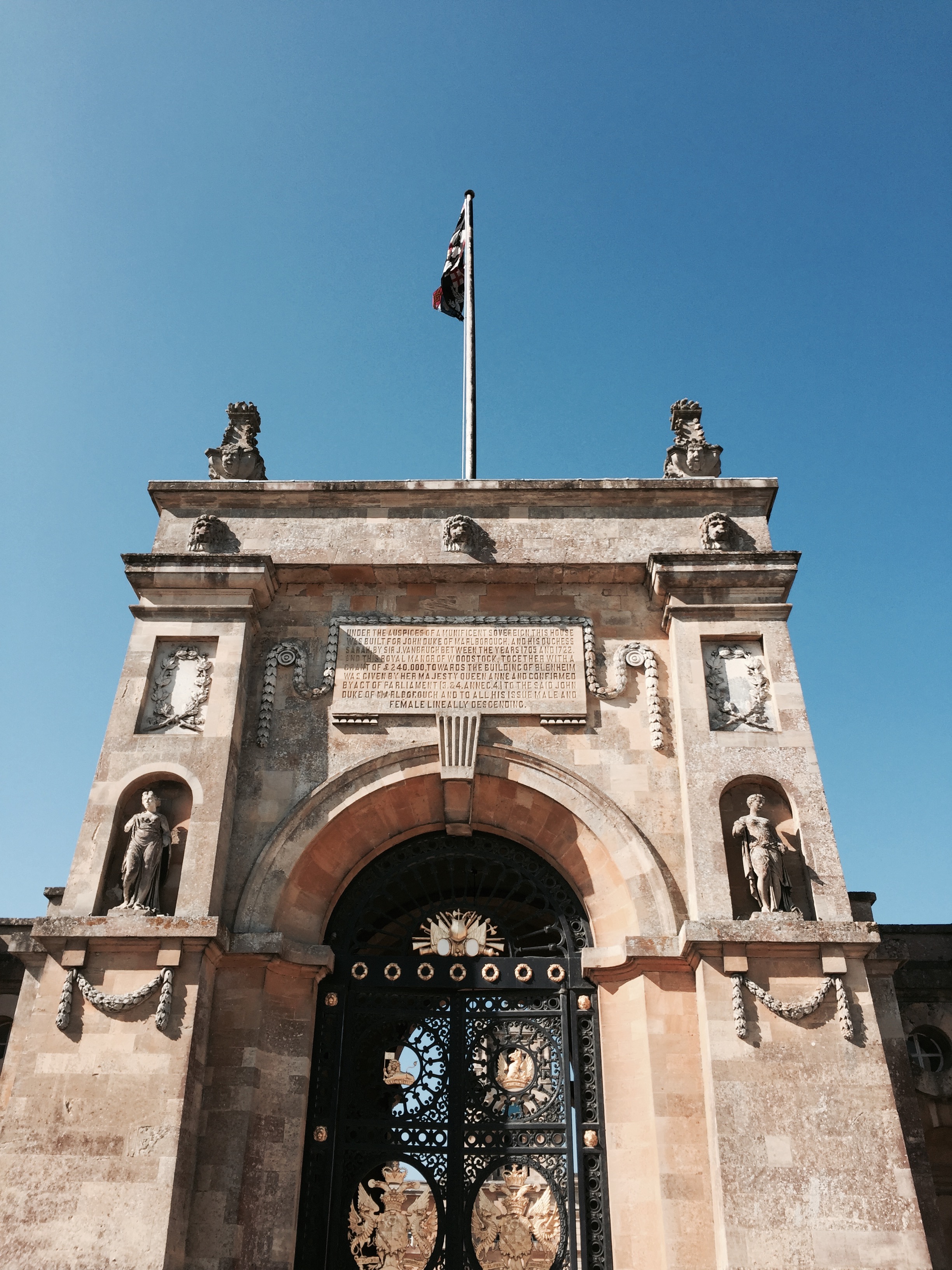
Toward the end of the film, one scene shows the new King arriving after the tragic events of the story, riding up to the palace with his retinue.

DSCN7019

The palace, decorated with military mementos of the First Duke of Marlborough, was just the right location. The 11th Duke of Marlborough had a cameo appearance as one of the nobles accompanying the new king.  I’m guessing it was one of the highlights of his long and distinguished life. After all, he was appearing with fine actors in a great film that showcased his ancestral home. Plus the new King was played by Rufus Sewell, in fine smoldering form.  Who wouldn’t want to appear in that film?
DukePhotos

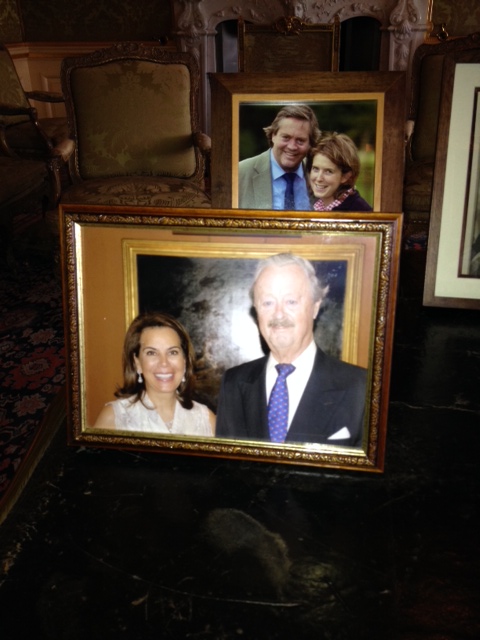
I  last saw the 11th Duke last fall on my visit.  He was usually a very visible presence, striding around his palace and really seeming to welcome visitors.  When I was there last, his brother was being married in the palace chapel. So the Duke was jovially greeting his guests.  He looked frail, though, and I was sad to learn that he died just a few weeks later. During my visit, I saw his lovely wife, and I also saw the soon-to-be 12th Duke with his wife. I recognized them all from photos in the house. The heir is in the photo just behind the 11th Duke.

I previously wrote about Blenheim at https://castlesandcoffeehouses.com/2014/11/06/blenheim-the-s…kings-waterloo/

I wrote about the death and funeral of the elegant 11th Duke at https://castlesandcoffeehouses.com/2014/10/30/what-are-plus-fours-anyway/ ‎ and  https://castlesandcoffeehouses.com/2014/10/29/farewell-to-th…of-marlborough/
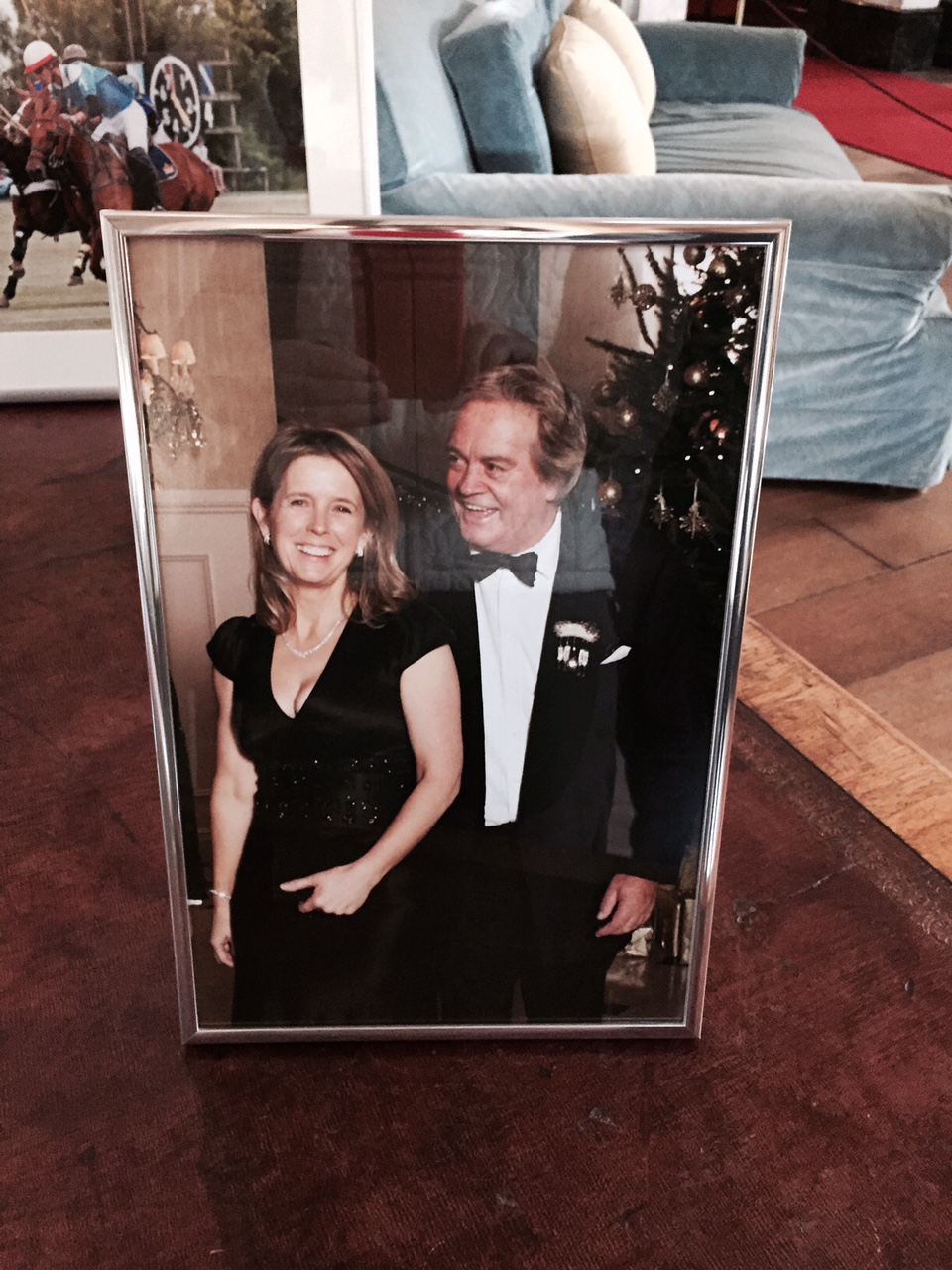
FullSizeRender (34)

The 12th Duke has now moved to the front of the photo displays in the palace. Yesterday I toured the several of the family’s private rooms in the East Wing.  The rooms are sumptuous, but lived-in.  (Think of the most elegant possible version of Shabby Chic).  There are 12 bedrooms, each with its own bathroom and dressing room–but they are off limits. No photos were allowed. The 12th Duke was in the house–his flag was flying.  But he must not have been told that I had come to see him, because he was nowhere in sight.  As an American, I’m always puzzled but intrigued by British aristocracy and royalty.  I wish the 12th Duke many years of carrying on his family’s heritage, and I’m sure he’s as dedicated to the task as his late father was.

Join me next time for more explorations in the art and history of Europe and the British Isles!

Nuffield Place: Home of a Practical Man


NuffieldExt

Last month I visited the home of William Morris–not the Arts and Crafts genius, but another kind of genius.

IMG_6270

He rose from poverty to invent and manufacture the Morris Minor motorcar, the British equivalent of Henry Ford’s Model T. He made an automobile affordable, for the first time, for the newly emerging middle class in Britain. Many families could even afford two of them.

IMG_6173
He was “created” Lord Nuffield, making him a Peer of the Realm, because he was one of England’s greatest philanthropists besides being a fine inventor. He gave away the equivalent of over a billion dollars in today’s money.

IMG_6152
He and his wife lived modestly in their beloved country home starting in 1933.  Lady Nuffield died, childless, in 1959. When Lord Nuffield died in 1963, he left their home to Nuffield College, which he had founded in nearby Oxford. The bequest stipulated that the house remain as they left it.

IMG_6127

What did the college do with the house? They must have maintained it, at least. It’s very livable, with all the original bed linens, china and towels. Maybe it was used to house special guests. The house remained a time capsule until it was given to the National Trust and opened to the public in 2011. Now it’s one of my favorite NT properties, because it’s such a contrast with the conspicuous consumption I’ve grown to expect when I flash my NT pass.

IMG_6101-0

Although he was a close personal friend of the King and Queen, Lord Nuffield liked nothing better than to go home to Nuffield Place, where he could tinker with his inventions and walk his Scottie dogs.

Nuffield Place is just one more reason to love driving around the English countryside with my trusty National Trust pass!

Brits Love Their Queen

Queen Elizabeth II, photo from "Telegraph" article cited below

Queen Elizabeth II, photo from “Telegraph” article cited below

Today is Queen Elizabeth II’s birthday:  89 years young, and still going strong.  Were there big birthday celebrations?  No, because Elizabeth very sensibly prefers to celebrate in June, when the weather is usually better.

FullSizeRender (25)

Her official birthday involves any number of soldiers, dignitaries, retainers and nobles on parade, so it’s not just her own personal comfort that concerns the Queen.  The models above are on display at Blenheim Palace.  They depict a royal Jubilee procession.

FullSizeRender (15)

When in England, I consider myself an honorary Brit.  So I didn’t mind when the carillon bells in the church tower next to the place where I’m staying rang out for about 5 minutes on the hour and half-hour all day long. And I’m waiting breathlessly for word of a new royal grandbaby any day now.

http://www.telegraph.co.uk/news/uknews/theroyalfamily/11549870/Happy-89th-Birthday-Queen-Elizabeth-II-her-life-in-pictures.html

Mompessons: Resting (With a View) in Salisbury

EffigiesPainted

In glorious Salisbury Cathedral, I came upon these two striking effigies, looking much more colorful than most of the effigies lined up along the nave.  They somehow looked startled.  Also they lay in the opposite direction of most of their companions. The closer I got to them, the more curious I was.

EffigiesPainted2

Who were they, and what was their story?  As luck would have it, the photo I took of their names did not turn out.  What to do?  I posted my photos on one of the Facebook history groups I belong to, and had the answer within minutes.

I was looking at effigies of Sir Richard Mompesson and his third wife Katherine. Sir Richard was a local gentleman and politician, a Member of Parliament.  He died in 1627. He had made judicious marriages and enjoyed a comfortable life.  His family owned an early version of nearby Mompesson House, which is now a beautiful National Trust property.

I think I read a placard in the cathedral stating that the tomb of the Mompessons was facing a different direction from most, because it had once been repositioned during a change in the Cathedral.

IMG_1484

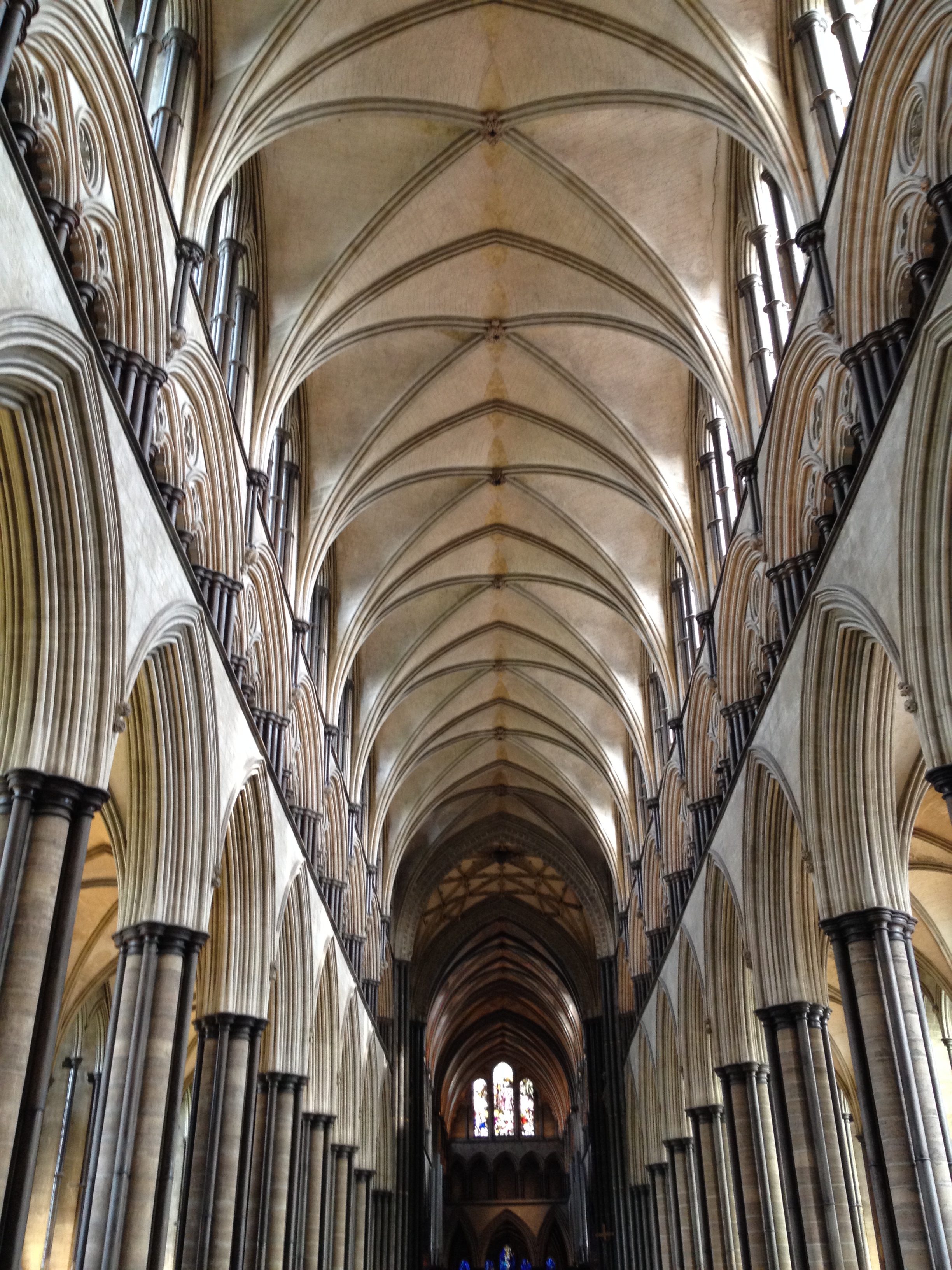
The Mompessons must enjoy their view of the very beautiful Gothic ceiling of soaring Salisbury Cathedral. If those wonderful arches were my view, I’d keep my eyes wide open too.

IMG_1224

Salisbury is one of my very favorite cathedrals.  I’m looking forward to entering its welcoming doors again.

Join me next time for more explorations in the art and history of Europe and the British Isles!

Lady Emma Hamilton: Wild Times and a Sad End

Portrait of Emma, Lady Hamilton, George Romney, c 1782-84, from History Today article cited

Portrait of Emma, Lady Hamilton, George Romney, c 1782-84, from History Today article cited

Emma Lyon was born to working-class parents in 1765.  She grew up to be breathtakingly beautiful–and wild. Early in her life, she worked as a maid, but she soon left dustcloths far behind. She herself joked about her “giddy ways.”  She was a popular dinner guest in certain aristocratic circles. Small wonder: she was fond of dancing naked on the dining-room table.

UpparkFront

At Uppark, a country home in England, I actually saw one of those dining room tables where Emma frolicked long ago.  No photos were allowed.  I looked closely for scratches and there were none; Emma must have been light on her ((bare) feet.

Coronation Portrait, George IV, Sir Thomas Lawrence, 1821, Public Domain

Coronation Portrait, George IV, Sir Thomas Lawrence, 1821, Public Domain

In the raffish household of the owner of this particular house, the Prince of Wales, who later became George IV, was a frequent guest. He was the ultimate playboy. So there were plenty of aristocrats more than happy to dally with the beautiful Emma. She bore an illegitimate child to a gentleman at age 16.

One Charles Francis Greville took Emma into his home, educated her, and introduced her to society painters such as George Romney and Joshua Reynolds.  They loved painting her portrait.

Eventually Greville passed Emma on to his elderly uncle, Sir William Hamilton. She married him when he was 60 and she was just 26.  He was Ambassador to what is now Sicily, and in Naples the couple were popular in high social circles.  Still beautiful, charming and uninhibited, she delighted men in particular by appearing in flimsy mythological costumes.

Lord Nelson, John Hoppner, Public Domain

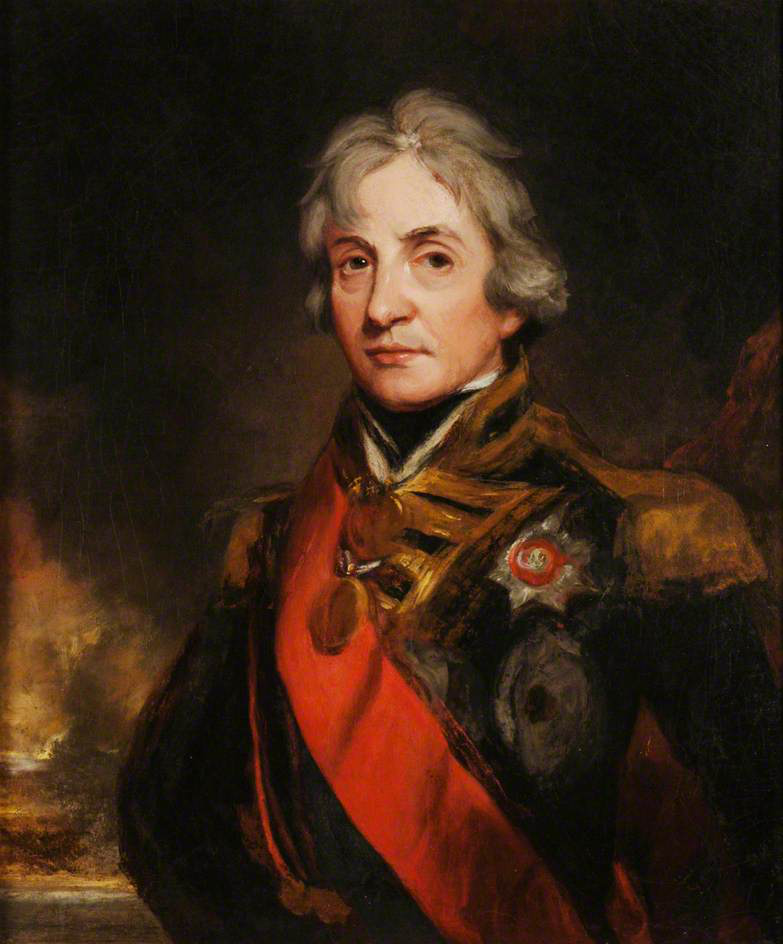
Lord Nelson, John Hoppner, Public Domain

In 1791, Emma met Horatio Nelson, and he fell head over heels for her.  Her husband, Sir WIlliam, didn’t mind; in fact the three of them lived happily together, although Nelson had a wife living elsewhere. Emma bore Nelson’s daughter, Horatia in 1801.

Sadly, Lord Nelson was killed in action at Trafalgar.

Emma’s life was all downhill from there.  She inherited a little money from Hamilton, but his brother held on to most of her money.  By this time, she was an alcoholic–from way too many champagne toasts in her wild youth. She eventually was able to move across the Channel to Calais, where she died at age 49, poor and ill. But out of respect for Lord Nelson, the captains of many English ships attended her funeral.

I love English country homes.  I feel they’re inhabited by the ghosts of people living their colorful lives long ago. There are always volunteer docents happy to tell stories of the past.

http://historytoday.com/richard-cavendish/emma-lady-hamilton-dies-calais

Bob Marley and the Dutch Golden Age

url

What does Bob Marley, the legendary reggae musician who rose from grinding poverty in Jamaica, have to do with the over-the-top wealth of the great trading city of Amsterdam?  A lot, it turns out.  I just watched a fine documentary called Marley, streaming on Netflix. The film, directed by director Kevin Macdonald and released in 2012,  must be the definitive life story of the musician.  He somehow rose from extreme poverty to superstardom.  Bob Marley died of cancer at age 36, in 1981. But his music lives on, and the family he left behind continues what he started.

AmstOldShip

The National Maritime Museum in Amsterdam holds 500 years of the seafaring history of the city.  Last time I was in Amsterdam, in the fall of 2013, the city was celebrating the beginning of the canal system that allowed a great trading center to be built on hundreds of islands and swampy ground adjoining the North Sea.  Kids try sailors’ hammocks and pretend to eat in the officers’ mess. A restored ship docks outside in the harbor. Inside the museum, displays chronicle the glorious history of Dutch seafarers.

ShipHammock AmstShipTable

But there is a darker story, During my visit, the Maritime Museum hosted a stunning exhibit that frankly exposed the shameful secrets of the slave trade that contributed heavily to the city’s wealth.

AmstLadyLecture

On a video inside the exhibit, a lady abolitionist scolds those who profit from the slave trade. She looks quaint, but brave.  It took many years of determined efforts by people like her to put a stop to the slave trade.

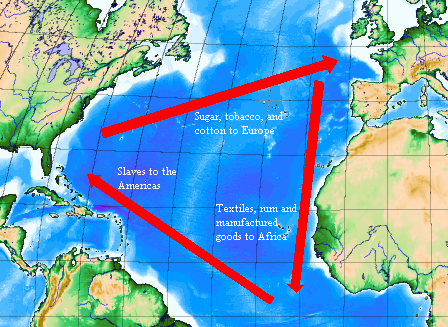
The profits that built the canal rings and the grand houses on Amsterdam’s canals came largely through trade in products from Dutch colonies–sugar, coffee, cacao, tobacco. Production of these lucrative products required slave labor.  The slaves were shipped from West Africa to the Dutch East and West Indies as part of the “triangular trade” that poured huge riches into Portugal, France, England and Holland.

Triangular Trade, Creative Commons GNU Free Documentation License

Triangular Trade, Creative Commons GNU Free Documentation License

Ships would pick up cargoes of slaves in Africa and deliver them to work on plantations in the Caribbean. From those islands, the ships would load up on products such as sugar, indigo, cotton, and coffee. In the ports of Liverpool, coastal France, Lisbon, and Amsterdam, the ships would in turn load up on manufactured goods like textiles, utensils, gunpowder, guns and alcohol.  These products, scarce in Africa, fetched high prices for merchants and shipowners. And another cycle began. The “Middle Passage,” between Africa and the Caribbean (and also the Americas) inflicted unimaginable misery on those captured and used as slaves.

Bob Marley’s ancestors arrived in Jamaica as slaves and remained there after slavery was finally abolished.  They were “free” to live in poverty. He grew up making music in his little hardscrabble town in the hills, using homemade instruments along with the odd guitar. Eventually he and his friends were able to parlay their musical talent into world fame, but he died young.

The Amsterdam exhibit appeared to be a momentous occasion in Dutch history.  The entrance was separated from the rest of the museum by heavy doors, and carried warnings that the exhibits were graphic.  Schoolchildren in somber groups were taking in the exhibit. There was very little of the running and jumping and joking that usually go along with kids on a mandatory school field trip.  The adults were equally serious.

AmstSlavePhotos

In Amsterdam, I visited some of the grand canal houses built by wealthy merchants and bankers. I strolled the beautiful, tranquil canals.  I marveled at the treasures of the Rijksmuseum.  It was good to also acknowledge some of the painful history behind the Dutch Golden Age.

Join me next time for more explorations in the art and history of Europe.


English: Modified version of en::Image:World map.png, which was created by John Monnpoly
Date 21 September 2005 (first version); 2007-05-26 (last version)
Source Modification made by SimonP. Transferred from en.wikipedia
Author SimonP at en.wikipedia
Permission
(Reusing this file)
CC-BY-SA-2.0; GFDL-WITH-DISCLAIMERS; Released under the GNU Free Documentation License.

Charles and Diana’s Royal Honeymoon (Gone Wrong)

HoneyHaven

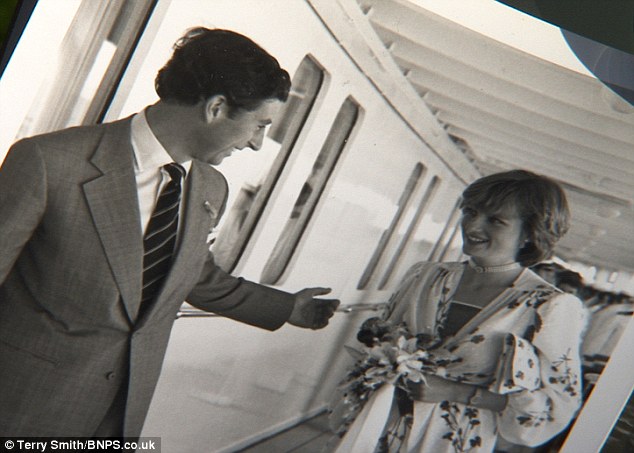
The royal yacht “Britannia” was in active use from 1954 to 1997. That made it available for the now-notorious honeymoon of Charles, Prince of Wales, and his bride, Diana Spencer, in 1981.

Photo from Daily Mail article cited below Photo from Daily Mail article cited below

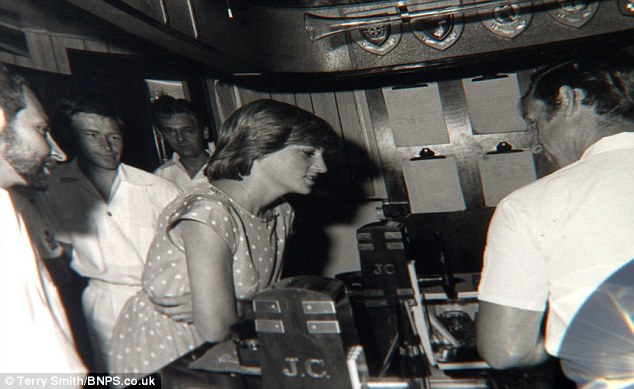
From the published photos, all looked blissful.  But as we all know many years later, trouble was already brewing in the royal marriage.

The young couple had the use of the only two-person bed on the yacht, in what was usually used as a guest room for distinguished visitors. I think the matrimonial bed was–dare I say it?–queen-sized.

QueenBed

Crew members made do with narrow triple-stacked bunks far down in the bowels of the ship. Still, serving on the Royal Yacht was a plum position in the British Royal Navy.

Crew members got to rub shoulders with royalty. During her honeymoon, a sometimes-bored Diana hung out belowdecks with sailors, all of them no doubt starstruck by the charming and beautiful 20-year-old princess.

Photo from the Daily Mail article cited below Photo from the Daily Mail article cited below

The fictional spy James Bond is “officially” a commander in the Royal Navy–an indication of the very high status of the British Navy, to this day.  I wonder how he would feel about serving the Princess of Wales with “half a shandy” from the officer’s mess? I can’t imagine it.  Instead, I’m sure he would wangle an invitation to dine with royals in the formal dining room onboard.

DiningFormal

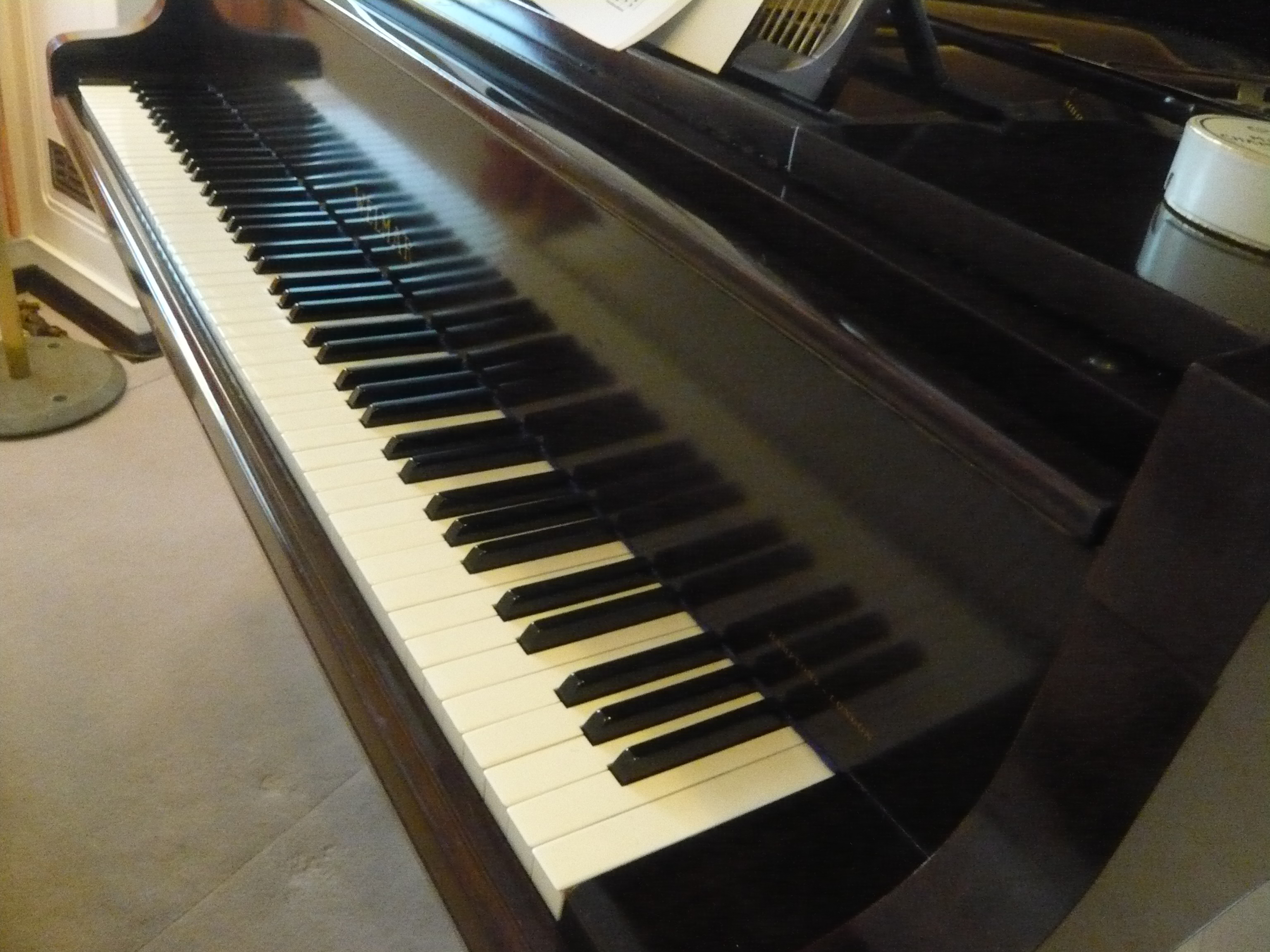
After dinner, Mr. Bond might suavely lean on the grand piano in the salon, listening to the young Princess play.

Piano

Was she any good? I guess we’ll never know.  I wish she were alive to see how her sons turned out.  Actually, I wish she were alive just for her own sake. The sailors who served the royal couple were given access to a set of photographs of the honeymoon.  Some of them were only recently published.

http://www.dailymail.co.uk/femail/article-2057550/Prince-Charles-Princess-Diana-unseen-honeymoon-pictures-Royal-Yacht-Britannia.html

Join me next time for more explorations into the art and the fascinating history of Europe and the British Isles!

When “Britannia” Ruled the Waves

BritanniaView

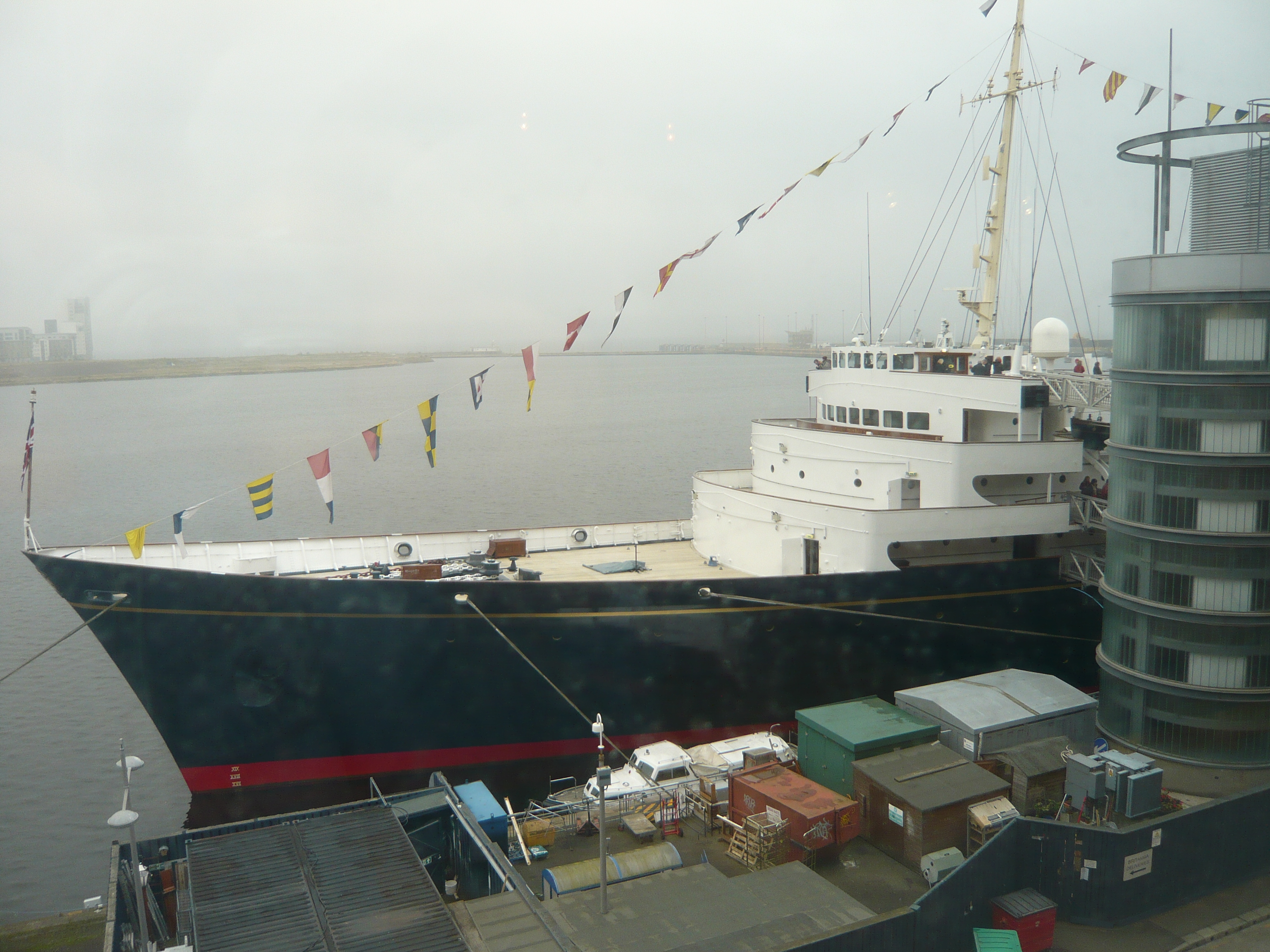
A short bus ride from central Edinburgh, the royal yacht “Britannia” is permanently moored and efficiently packaged as a prime tourist site. It’s one of the best ways for a mere commoner to ponder British royalty, past and present.

BritanniaLR

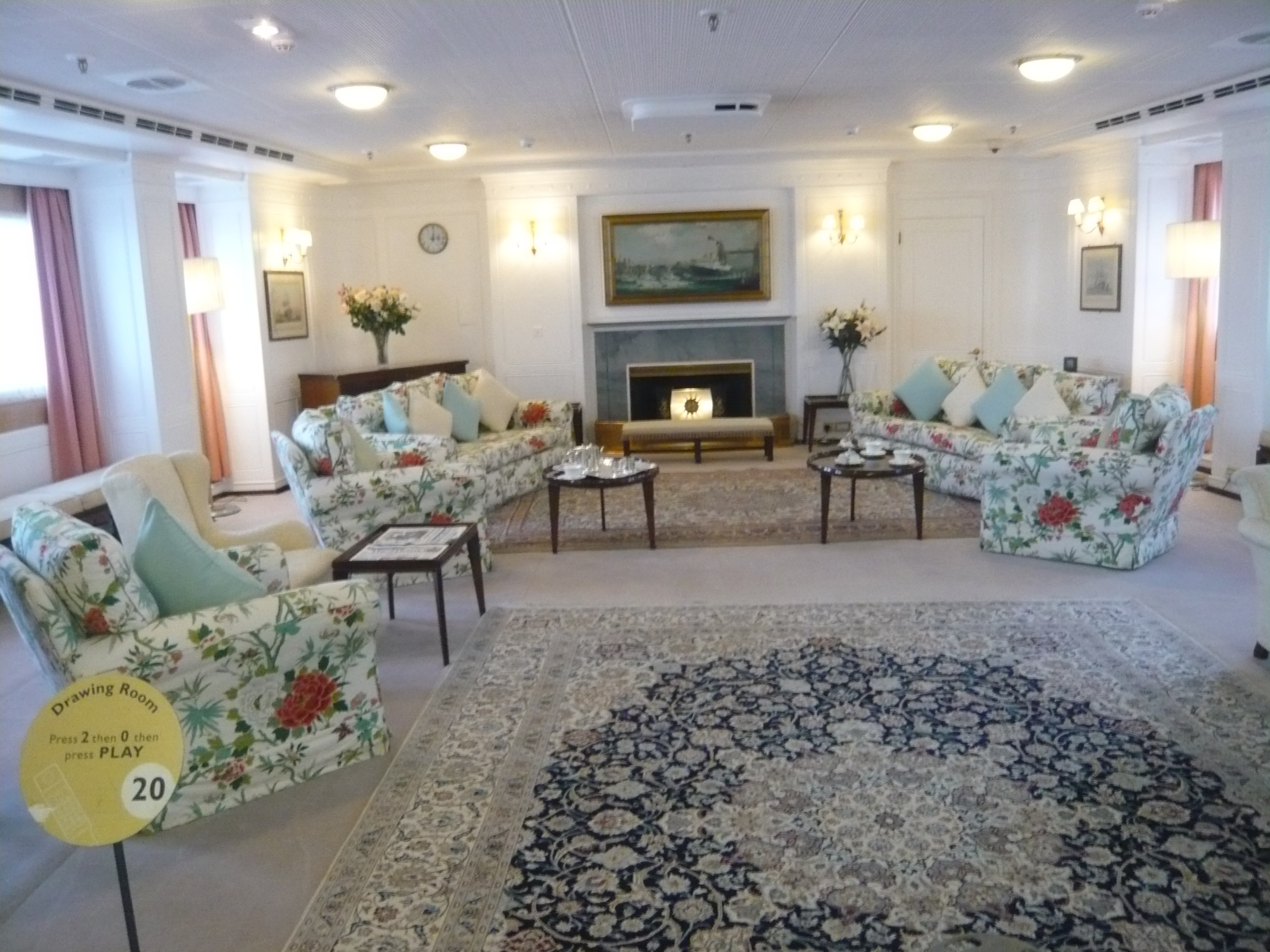
The ship was in active use between 1954 and 1997, when the expense of maintaining it was deemed too high and the Queen had to find other ways of sailing.  In its heyday, the ship served as a floating official residence where the queen entertained heads of state. She could anchor her yacht anywhere on the globe and summon leaders to come to her.  Hardly anyone turned down the invitation. The salon above was furnished in the height of stodgy royal elegance for its time. (In their inner sanctums, do royal Brits now go in for sleek HGTV-inspired square lines and neutral colors?  I’ll have to wait for my invitation to a cozy afternoon tea with the Duchess of Cambridge to  find out).

BritanniaQueenBR

The Queen had her own stateroom, of course, with a handy bedside desk. Visitors can peer at her twin-size bed through a window, but nobody gets to bounce on Her Majesty’s bed.

PhilipStateroom

Prince Philip’s adjoining stateroom is more masculine, but less businesslike.  I’ve read that when staying at various palaces, the Prince always demanded that the personal bathroom he was to use be freshly painted a particular shade of pink, even if it was usually painted blue. (Can’t remember the source).  Onboard the “Britannia,” I think he had the exclusive use of a bathroom that no one else used, so there was never a need to pitch a fit about the color of the walls.

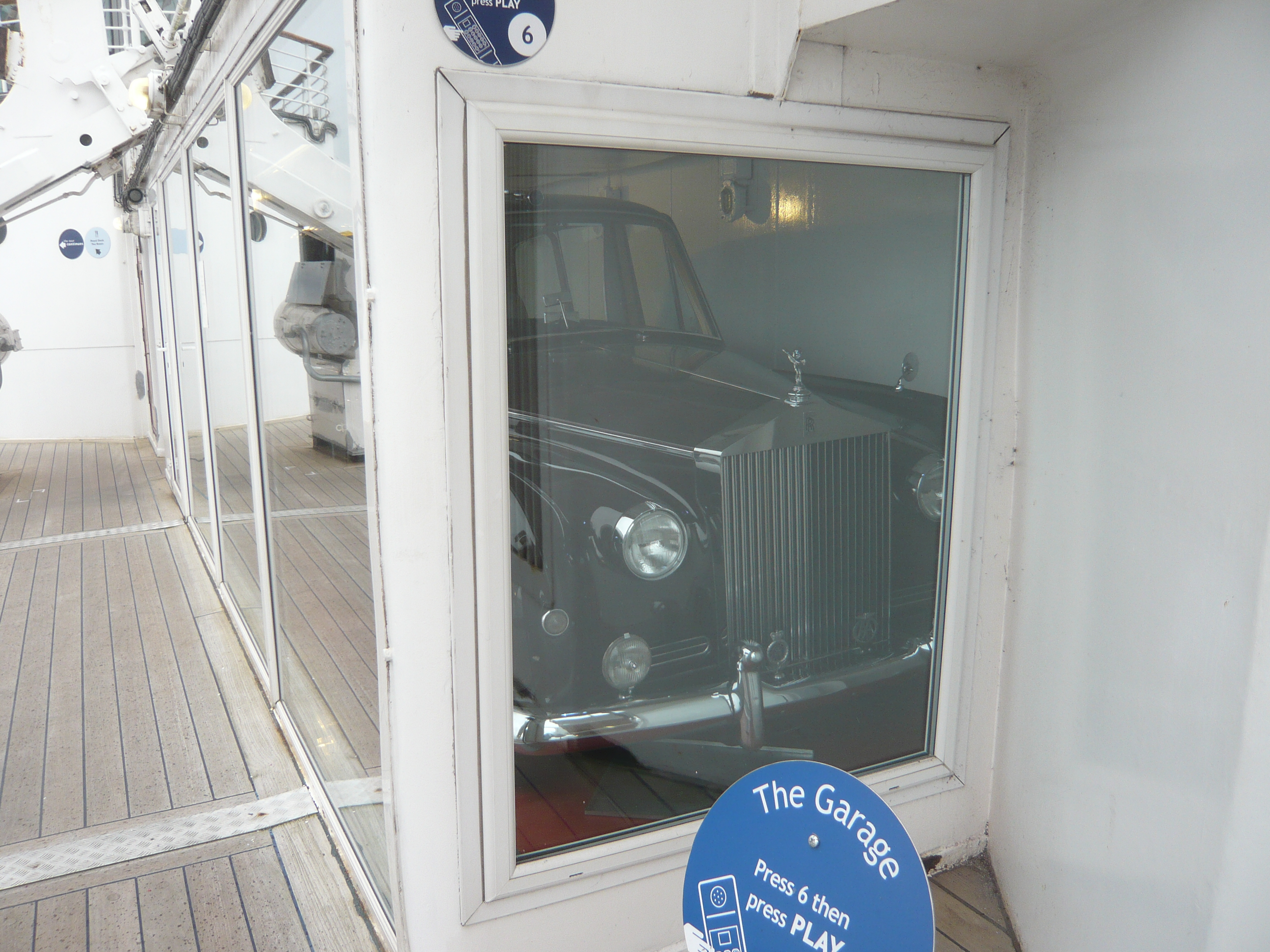
Rolls

For onshore jaunts, a Rolls Royce was always at the ready. Who’s going to drive?  Not the Queen. A crew of 21 officers and 250 yachtsman stood ready to serve the royal family’s every whim.

There’s a lot to ponder on the Queen’s yacht.  As an American, I always wonder how Brits put up with the lavish lifestyles of royalty. But then, how do we put up with the huge income disparities that seem to get wider every day in our own country? I’m sure that in the world of yachts, the Queen’s “Britannia” does not stack up as impressive, especially nowadays.  But a visit gives a rare glimpse into royal life.  Whenever they had the chance, the royals used set off on their boat and lived life on a smaller scale than they were used to in palaces.  Clearly they enjoyed the close quarters and the more modest digs.  Clambering around the boat as a tourist somehow makes the royals seem more like ordinary mortals.  Maybe on the boat they enjoyed pretending they were more or less like the rest of us.

Join me next time for more explorations in the art and history of Europe and the British Isles!


Topsy Turvy

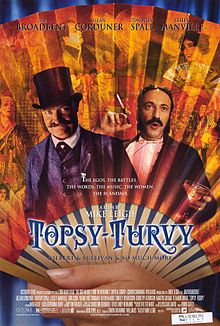
The cold winter months are a perfect time to catch up on movies and miniseries.  I just treated myself to a repeat of one of my very favorite movies, Topsy Turvy. It’s a 1999 musical drama/comedy by the great and idiosyncratic director Mike Leigh. He works with a regular troupe of favorite actors.  The actors all develop their characters over a period of months and get together regularly to improvise based on the relationships they develop. Mr. Leigh watches the improvisations.  At certain points, he tells his actors to get out of character. Then they all discuss what’s happened. Based on the improvisations and discussions, Mr. Leigh develops a shooting script.  So the stories arise organically, out of real human behavior.

220px-Topsy_Turvy

The subject of Topsy Turvy is the unlikely creation of the much-performed and much-loved musical classic, The Mikado. The film’s story is based on real people and real events, extensively researched.  Each cast member was given a character to research and understand, then at intervals they got together in various groupings. Mr. Leigh would give them the premise of a scene, and off they’d go.

At the beginning of the story, Arthur Sullivan and W.S. Gilbert are a phenomenally successful creative team.  Their comic operas attract large and appreciative audiences to the Savoy Theatre, built specially for them by the producer D’Oyly Carte. Gilbert writes the stories and lyrics, and Sullivan comes up with the orchestral scores.  But Sullivan is weary.  He feels he has a serious opera in him, and he is convinced he is wasting his time with light comic operas.  He complains to Gilbert that every story they’ve done is the same: a “topsy turvy” world created by a potion or spell or magical device.

large_mUDH3XjYO3AU1alLpWGtkXfU0LK

Sullivan decamps to Paris, where, truth be told, he enjoys the naughty nightlife more than he composes serious work.  Gilbert is left to his own devices in Victorian London. He has a supportive but miserable wife, an estranged set of demanding elderly parents, and two old maid sisters.  His wife wants children, and he either can’t or won’t cooperate in conceiving any.

Suddenly, Eureka!  There’s an international exposition which includes a wildly popular Japanese pavilion.  Gilbert brings home a ceremonial Japanese sword; it falls on his head with the same brain-jarring effect as Newton’s apple.  The Mikado, in all its wit and humor, flies out of his pen. Sullivan, skeptical,  reads the libretto and chuckles appreciatively.  The duo is in business again, hard at work on their greatest triumph. The Mikado premiered in 1885.  It was an instant smash hit.

hero_EB20000121REVIEWS1210305AR

The best part of the film chronicles the joy and struggle to bring the piece from the page to the stage.  Scenes of backstage pettiness alternate with scenes of sheer genius as the performers learn their places in the comic masterpiece.

Some years ago, I was lucky enough to attend a performance of The Mikado at the Savoy Theatre in London.  It was all I’d hoped for, and more–sublimely beautiful and funny. Topsy Turvy brings it all back. But it is not necessary to know a thing about Gilbert and Sullivan to enjoy the rollicking humor and genuine pathos of the movie.

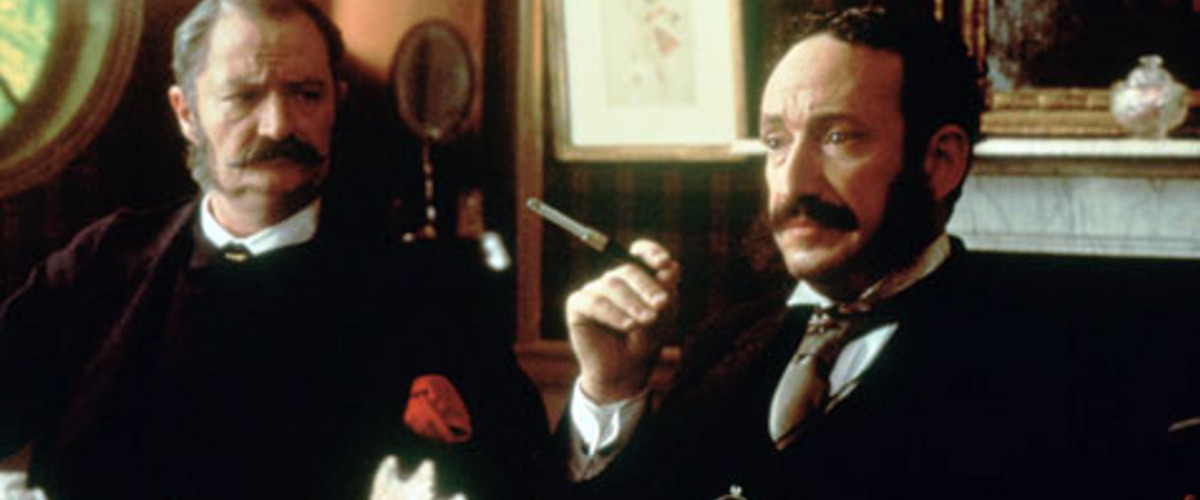
Alan Corduner stars as Arthur Sullivan.  Jim Broadbent is W.S. Gilbert.  All the actors are stellar, including Timothy Spall, who is currently starring in Mr. Turner, a new Mike Leigh film. Mr. Spall plays the great English landscape painter J.M.W. Turner in an acclaimed performance.

The movie still above is from Roger Ebert’s admiring review, found at

http://www.rogerebert.com/reviews/topsy-turvy-2000

Blenheim: The Sun King’s Waterloo

Claude Lefebre, Public Domainnknown artist, after Louis XIV, circa 1670, u

Claude Lefebre, Public Domainnknown artist, after Louis XIV, circa 1670, u

Before there was Napoleon Bonaparte, there  was Louis XIV, the Sun King.  He believed himself the greatest monarch the world had ever seen, so naturally he thought he might as well control all of Europe plus the British Isles, not just France.  In 1704, the War of the Spanish Succession had been going on for four years, and things were going well for the French.  Unlike many kings, Louis XIV was actually a soldier, and an accomplished one.

John Churchill, 1st Duke of Marlborough, 1704, Adriaen van der Werff, Public Domain

John Churchill, 1st Duke of Marlborough, 1704, Adriaen van der Werff, Public Domain

He met his match in John Churchill, who had risen through the ranks after beginning at court as a lowly page.  He had already attained the rank of First Duke of Marlborough when he stopped the French in their tracks.  He changed the course of European history.  Churchill/Marlborough did this through a combination of deceptive communications and wily maneuvering of his forces.  As I understand it, he marched his troops undetected through the Low Countries, pretty much surprising the French at a little Bavarian village called Blenheim.  The object was to keep the French from occupying Vienna, which would have broken up the delicate and ever-shifting balance among European powers.

Marlborough’s heroics ended Louis XIV’s dream of controlling all of Europe. The French suffered 30,000 casualties.  The French commander-in-chief, Marshall Tallard, was captured and hauled to England as a prisoner.  There were still battles left to fight, but the battle of Blenheim was a huge turning point in history.

DSCN7028

A grateful nation gave the 1st Duke of Marlborough the lands and the money to build a suitable tribute, a palace that would rival the Versailles of Louis XIV.  In fact, the cavernous entry hall at Blenheim is as impressive as anything I’ve seen at Versailles.  It’s more austere, though–suitable for the military theme of Blenheim. The palace was built in the English Baroque style, and contained 187 rooms. The construction was halted in 1711, after the Duchess of Marlborough had a terrible quarrel with Queen Anne.  In fact, the Duke and Duchess had to go into temporary exile on the continent until the Queen died in 1714.  After that, the Duke had to spend his own money to complete his palace.

Serious historians would not be much impressed by my analysis of the military situation. If I wanted to fully understand the War of the Spanish Succession and its many battles, I could study a large military exhibition at Blenheim Palace.  I thought about the military exhibit on my recent visit, but the tearoom was calling my name.

Join me next time for more explorations in the art and history of Europe and the British Isles!