Category Archives: British Isles

A Perfect Peach at Stratford-upon-Avon

Some years ago, I found myself with a lot of Frequent Flyer miles that were about to expire.  No one was free to travel with me.  So I treated myself to a solo trip to England.  I decided to see as much live theater as I possibly could. In the course of two weeks, I saw 18 plays.  Some days I doubled up and took in a matinee plus an evening performance.  I saw plays at grand theaters, in the London equivalent of “Off-Broadway,” and in tiny rooms above pubs.

At that time, to get to Stratford-upon-Avon, I had to take a train from London, then transfer to a bus.  (Now, there is a convenient train that goes all the way to Stratford).  I had dreamed for years of seeing the Royal Shakespeare Company in their home theater, the Swan. One evening, I saw a very fine production of a Shakespeare play with the actors in modern dress.  Which play, you might ask?  I think it was Romeo and Juliet, but I can’t be sure. (On the train, I met a woman who had saved the program from every theater performance she had ever attended.  Although she was a theater professor, I thought that was a little obsessive.  Now I wouldn’t mind having all my programs).

The next morning, I went to the bus stop for the trip back to London.  Just outside The Dirty Duck, the pub still frequented by theater folk and tourists alike, I spotted an actor I had seen the evening before.  I stopped and complimented him on his performance.  He seemed delighted to be recognized; he had only a medium-sized part.  I’m thinking maybe he played Juliet’s father. I know how much talent and hard work it takes for any actor to get even a spear-carrying part in the Royal Shakespeare Company. I did remember his performance, I thought he stood out in the character, and told him so.  He thanked me graciously.  Just then, the bus pulled up and I got on.

The bus was about to pull away from the curb when the actor jumped up the steps with a great theatrical flourish. He stood beside the driver, peering down the aisle at all the passengers.  “I am looking for a LADY,” he intoned, in his best Shakespearean elocution.  He spotted me and moved up the aisle toward me.  He took my hand, got me to stand, kissed my hand, and made a great show of presenting me with a perfectly ripened peach.  Everyone on the bus applauded, he took a very grand bow, and he was off with a jaunty wave.
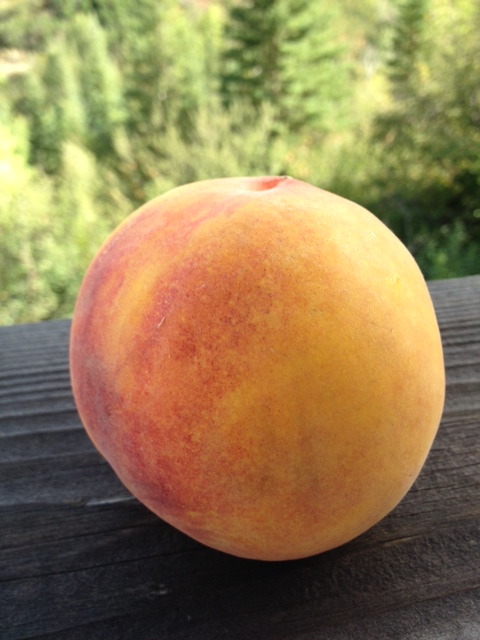
Peach

Like all artists, actors pursue their passion even though they know they are very unlikely to gain riches or fame. Very few of them reach the heights of, say, the late James Gandolfini. I wish I could remember the name of this actor, who shared a magical personal moment with me and went out of his way to entertain a busload of non-paying strangers.  Did all this happen 26 years ago?  Yes, it did.  Travel memories are lifelong!

Join me next time for more explorations into the art, history and literature of Europe and the British Isles.
A Vigorous Voice from the Past

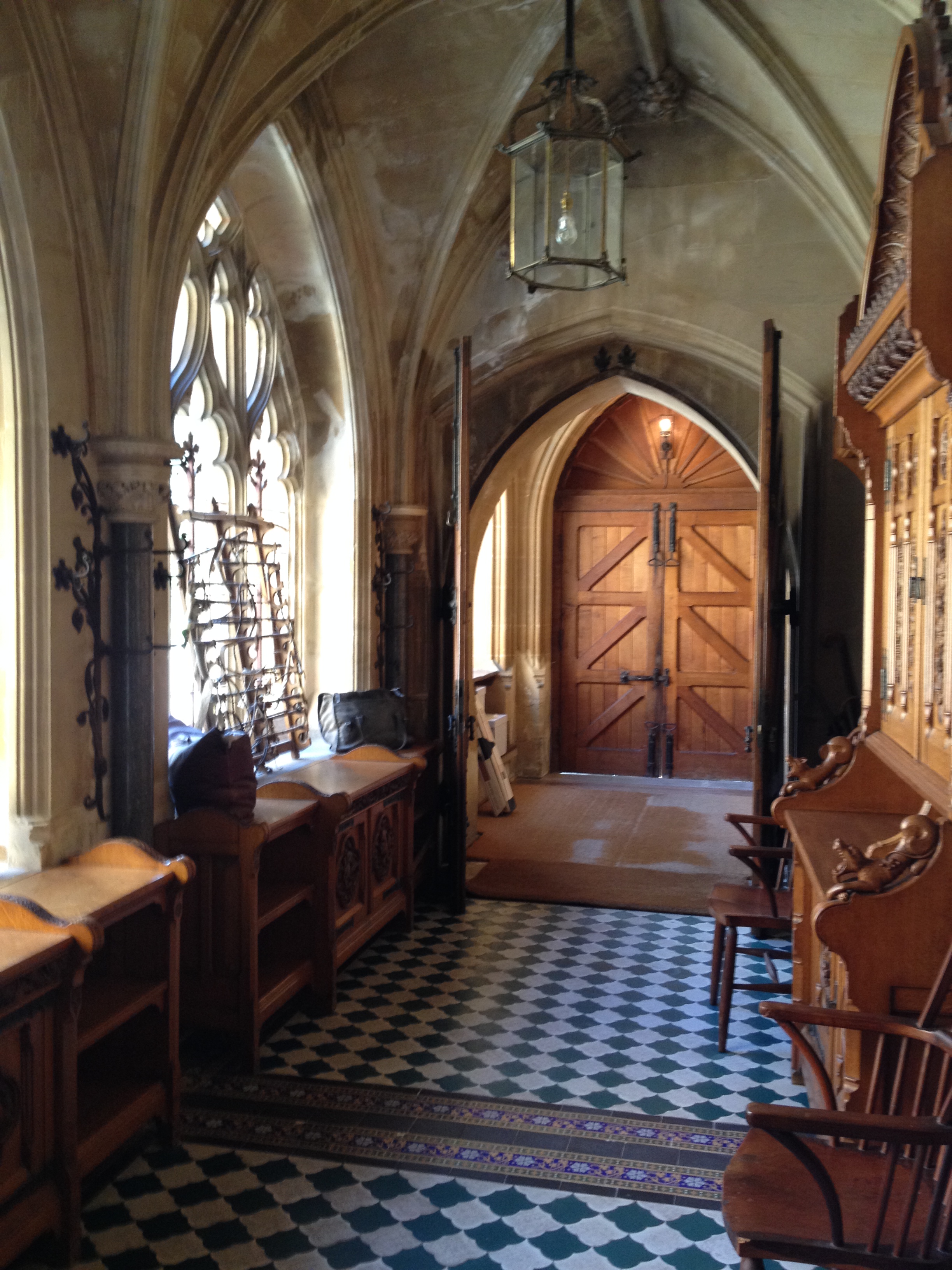
I hurried to visit Tyntesfield within a year or two of its opening to the public.  The house was only partially open, and work was going on all over the estate.  During my visit, I stood with a tour group in the Billiard Room, admiring the vaulted ceiling and the light from the high windows.  The billiard table, custom-made for the family, connected to an electronic scoreboard.  Pressing a button on the side of the table recorded the score–quite an innovation, for Victorian times.

William Gibbs was 75 when his dream home was completed, and he had four sons.  Three of them were still teenagers, so presumably the room was built and furnished for them.  It was not, however, a smoking room–Mr. Gibbs allowed only smoking in the very highest room of the house, a tower on the third floor.  (I’m sure the teenagers found ways around the various house rules–they always do).

We had all just looked at a rather ornate urinal in an adjoining room–another modern innovation. The guide was talking about how the room was built for and used by men.  Suddenly an elderly lady in the back of the group thumped her cane on the floor and interrupted the guide.  She was a family member and had spent a good deal of time in the house.  One of the 19 heirs!  (I hoped she had collected a cool million and not blown it all at the casino).  She proceeded to set us all straight.  Did women use the billiard room?  Yes, they did!  Trust me, you would not have argued with her.

The lady went on with a story about the bats that had infested the former men’s servants quarters nearby.  Later, I read that the colony of protected lesser horseshoe bats had to given another suitable home on the estate before restoration could begin in those rooms.

The tour guide wisely let the lady keep talking.  I’d have listened to her all day.  At the time, I didn’t know about the Great Kidnapping Incident, or I’d have asked her about it for sure.  In 1988, the late Lord Wraxall had been kidnapped at his home. The ruffians knocked him to the ground and demanded his house keys and the combination to his safe.  But the burglar alarm went off–I don’t know whether he was inside or outside the house at the time.  So they threw him into the boot (the trunk, to Americans) of his own car, which they drove about 2 miles away and abandoned.  He was left there for 7 hours until someone found him. According to some reports, all he had to say was, “Good grief, there’s more room in there than I ever thought.”

The National Trust is going to great lengths to collect stories about life in the house.  There is an interactive website where people can contribute their own memories.  It is at http://www.nationaltrust.org.uk/history/stories/. Personal stories are placed in a timeline. Family, servants and friends have contributed their memories.

Recently, the house has been featured on the wildly popular BBC TV series Dr. Who–very appropriately, since Dr. Who is a Time Lord.  Not only can he travel through time, but he is able to regenerate his body in a different form when near death–very handy for showrunners who have to cope with new actors taking over the part.

At Tyntesfield, and at many other National Trust Properties, enchanting doorways continue to lead us into the past, carefully preserved for future generations.

Join me next time for more explorations into the art and history of Europe and the British Isles!

Tyntesfield: Victorian Splendor Rescued

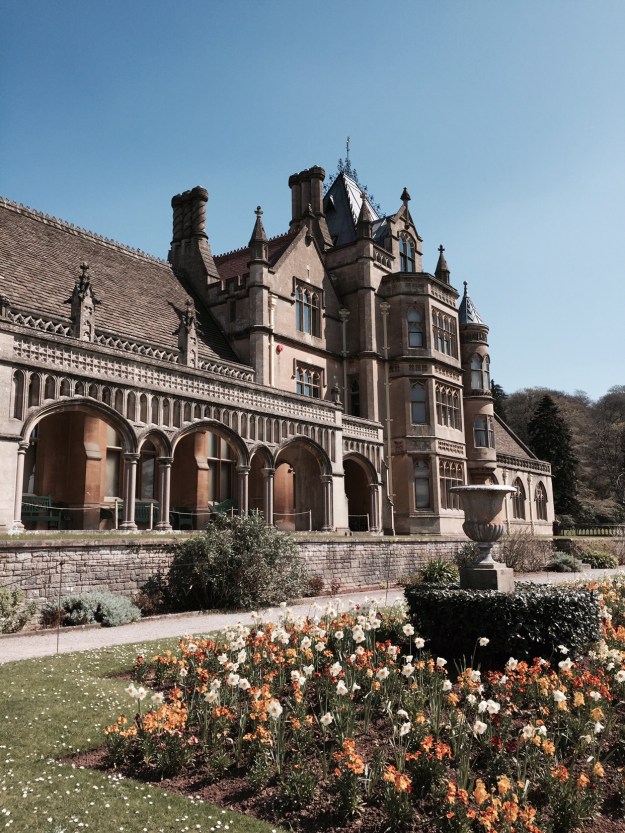
Just outside Bristol, and not far from Bath, stands one of the most beautiful country homes in England. It has only been open to the public since 2002, when the National Trust acquired it.  I visited a couple of years after the opening and can’t wait to return.

By the time the 2nd Lord Wraxall, known as Richard, died in 2001, he was the only person living in the house.  The house had been hit by bombs several times during the Bristol Blitz of World War II, and had never been properly repaired. Birds and bats took up residence in whole wings of the house. Lord Wraxall had maintained the house as best he could, but over the years the four generations of the family had simply closed off areas not in use.  So the house contained a treasure trove of historical belongings. For example, there were packages of shirts dating from the last century, still in their original wrappers as they came new from the shop.  And Tyntesfield was the last High Victorian house available for purchase in all of England.

Lord Wraxall’s will specified that the house be sold and the proceeds divided among 19 heirs.  The market value was about 20 million pounds, or  about $31 million. In addition, double or triple the purchase amount was needed for repairs. Sotheby’s took charge and began cataloging the house’s contents for auction.

Various gazillionaires were interested. (The press reported that Madonna, Kylie Minogue, and Andrew Lloyd Webber were looking).  But the National Trust of Britain, one of the two main preservation societies, managed to raise the purchase money within a period of 50 days.  (Controversy arose when a semi-secret deal with the National Lottery provided some of the money for this project that many considered “elitist”). The Trust took possession in July of 2002. This was the first new acquisition by the National Trust in many years, and the largest in its history.  Today, over 800 paid and volunteer staff work on the estate, 3 times the number at any other National Trust property. First order of business was repairing the roof. A free-standing scaffold the size of 10 tennis courts covered the entire structure for 18 months.  Then the entire house had to be re-wired and re-plumbed.  An elaborate fire protection system was installed. One by one, rooms were cleaned, restored and the furniture carefully arranged, using historic photos and descriptions.

In the meantime, visitors were welcomed.  The Trust had determined that the more people were able to see of the property, the more they wanted to donate and volunteer. Instead of the usual years of construction followed by a great unveiling, the renovation has proceeded with the enthusiastic participation of legions of volunteers.  The renovation itself is a great educational project, unprecedented in National Trust history. Elitist?  Not today.  The estate buzzes with the activity of volunteers, workers, school groups and tourists eager to bask in a lost way of life. I’m writing a number of posts about Tyntesfield because it’s such a fine example of the work of the National Trust. We can learn so many lessons from the ups and downs of a house’s history.  Good or bad, the events of the past help us figure out how to live in the future. I notice that the National Trust has now published a book all about Gibbs family history, Fertile Fortune: The Story of Tyntesfield, by James Miller, National Trust Books, 2006.  If I don’t acquire the book beforehand, I’m sure that on my next visit I’ll walk out of the gift shop with a copy. Join me next time for more explorations into the art and history of Europe and the British Isles!

Tyntesfield: Mr. Gibbs Made His Dibs

Entry Hall

William Gibbs’s son Antony did not take over the family business as expected.  The story went that William would not allow it, after he observed that the boy could not add four columns of figures simultaneously (I wonder how many of us would pass that test?)  I doubt Antony was disappointed.  He managed the Tyntesfield estates and charities, became an accomplished carver of ivory, and puttered with inventions such as a bicycle which supposedly stored energy going downhill and used it when going uphill. It didn’t work, though.

Instead, William’s nephew Henry Hucks Gibbs took over the company.  Henry was elevated to the peerage, becoming Baron Aldenham in 1896.  (What exactly is the peerage, anyway?  A subject for another post).  Henry also became Governor of the Bank of England, earning him the popular jingle which forever followed the Gibbs family: “Mr. Gibbs made his dibs, Selling the turds of foreign birds.” Not very elegant, but it certainly told the story. And he must have laughed all the way to the bank.

The little ditty no doubt followed George Abraham Gibbs, a war hero who moved in higher social circles than his humbler ancestors.

George became 1st Lord Wraxall and Treasurer of the Royal Household–an example of the new commercial and industrial wealth overtaking older titled families.

The 2nd Lord Wraxall, known as Richard, inherited the title at the age of 3.  His mother, Ursula, Lady Wraxall, presided at Tyntesfield until she died in 1979.  She received an OBE for her services to the war effort. During World War II, the house became a medical distribution center, with the books in the library replaced by bandages. It was also a convalescent home for American soldiers, who stage reunions there to this day.

When he came of age, the 2nd Lord Wraxall (Richard) served with the Coldstream Guards, then took over management of the estate. He maintained the house and grounds as they were, not following the lead of so many great homes in getting rid of Victorian furniture and features as they became unfashionable. He never married, and ended up living alone in the house with most of the rooms closed. When he died unexpectedly in 2001, the place was a treasure trove of Victorian items from the past 150 years.

TyntesSotheby1

Join me next time when I consider the very challenging acquisition of the house by the National Trust.  It’s one of the chapters in the fascinating story of the history and art of the British Isles.

Tyntesfield: The House that Guano Built

In 1842, William Gibbs’s brother Henry died during a visit to Venice.  In the same year, the South American agent for the family firm, Antony Gibbs and Sons, made a risky decision. He took out government contracts for the collection and shipping of guano from barren islands off the coast of Peru.  What is guano?  Solidified bird droppings!  William Gibbs was alarmed by the large loans necessary, but the gamble paid off.  Soon the company had a monopoly on the business, which shipped vast amounts of agricultural fertilizer all over the world.

William became a very rich man. He happily set about transforming a fairly simple Georgian house into a dream home for his growing family.  The beautiful result was Tyntesfield, completed in 1865.

William lived contentedly with his family until he died in 1875 at age 85.

Themes from nature appear everywhere in the house.

In his later years, he was affectionately known as “Prior,” because he turned his attention to spiritual matters and to good works in his community. The exquisite chapel was never consecrated, but it’s beautiful all the same. Family and servants gathered for daily prayers, and I doubt that anybody minded taking a break in this beautiful space.

Subsequent Gibbses made substantial additions of their own, and the house rang with the laughter of family and friends for many happy years.

Unlike grand houses built for show, Tyntesfield was built solely for the enjoyment of a family.  The wonderful library was filled with carefully catalogued books that were used on a daily basis by anyone interested.  Those books are still there.  As soon as the room was completed, the family began using it for amateur theatricals.

By all accounts, servants at Tyntesfield were well treated and stayed with the family for many years.

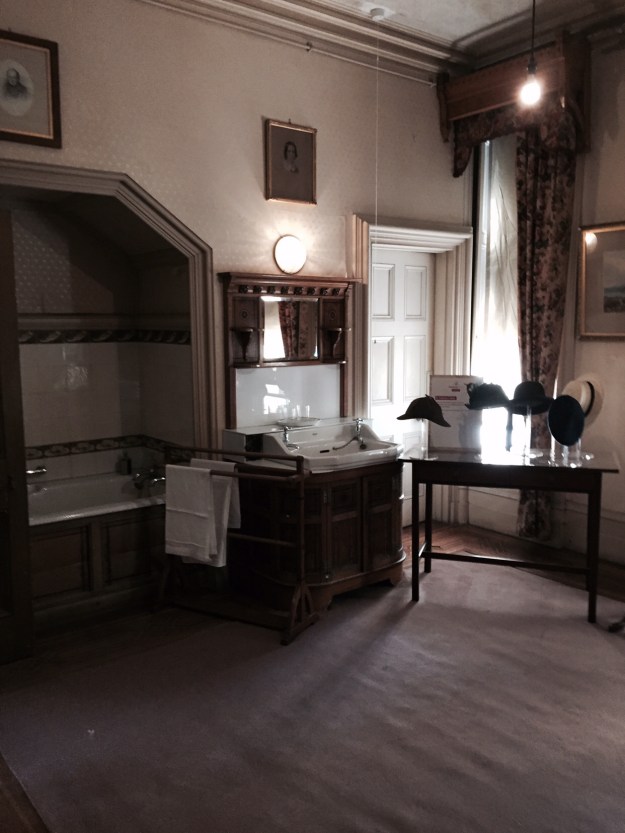
On my very first visit, shortly after the house opened, the servant quarters were just being explored.  It was possible to see, behind the scenes, how a grand home actually operated.  There were laundry rooms, boot rooms, a still room for making jams, a luggage room, rows of large containers for carrying hot water to the main bedrooms, and a kitchen with a fireproof ceiling.

House staff included a butler, two footmen, a housekeeper, a lady’s maid, a cook, six housemaids, a nurse, two nursery maids, two scullery maids, and a hall boy.  Actually, this was  a fairly modest staff for such a large house and family.  I like to think the Gibbs children, raised with the strong Gibbs work ethic, made their own beds.

Join me next time for more explorations in the art and history of Europe and the British Isles!

A Victorian Father

William Gibbs, a successful businessman and model of Victorian rectitude, built what we now know as Tyntesfield for his large family.  He was an example of the new wealth that started to overtake the traditional wealth of the British nobility.

He is shown in a photo from around 1862:  the cheerful white-haired gentleman, seated with his adoring youngest daughter on his knee.  His wife, 28 years younger, is on his right.  On his left, seated at the table, is the house chaplain.  At Tyntesfield, servants and family alike attended morning prayers. Aside from his grand house, William built and supported several churches in the area.

William inherited the family shipping and trading business from his father, who had made some bad calls and gone bankrupt in 1789.  Together with his brother Henry, William worked all his life to re-establish the family business.  In 1818 they set up a “sacred debts” account to pay off the creditors of their father’s business, although they had no legal obligation to do so.  In 1840, over 50 years after the bankrupty, all the debts were paid in full.

Today, we can visit the home he built, Tyntesfield, one of the most beautiful in England.  It evokes happy family life in a lost era.  Here’s to all fathers! May they love their families, meet their obligations, and leave lasting legacies.

Tyntesfield, a glorious Victorian mansion

Tyntesfield, a glorious Victorian mansion

Join me next time for more explorations into the art and history of Europe and the British Isles!

Britain’s Best Travel Bargain

Polesden Lacey, Tyntesfield, Dunham Massey, Cotehele, Castle Drogo, Wightwick Manor, Charlecote Park, Baddesley Clinton… just listing these names gets me itching to buy a plane ticket immediately.  And there are hundreds more.  All these places are part of Britain’s National Trust.  These are just a few of my favorite country homes to visit.  I could cheerfully spend an hour or a day at each one, but another one just down the road always beckons. There are wonderful nature preserves too, and several properties in London.

Tyntesfield, a glorious Victorian mansion

Tyntesfield, a glorious Victorian mansion

The British–including Wales and Scotland–are the best in the world at preserving historic properties.  I’m told the Irish are great too, but I’ve yet to visit Ireland.  (English Heritage is a related organization that also sells passes.  It seems to concentrate more on historic sites that might be in ruins.  I find that for my passion, country homes along with their art and furnishings, the National Trust is better.  With unlimited time in Britain, I would buy both).

Over the years, as economic conditions changed drastically, families who could no longer afford to maintain their beautiful country homes had to face hard realities.  Some, like the Cavendishes of Chatsworth, were able to turn their at least some of their properties into money-making enterprises.  Others sold them and divided the profits among the heirs.  (Many of these properties ended up as golf clubs, upscale hotels, or homes for rich rock stars, and the history was pretty much lost).  Other families generously planned to transition their homes and treasures into historic sites we can all enjoy.  The National Trust of Britain does a stellar job of preserving and maintaining these properties.

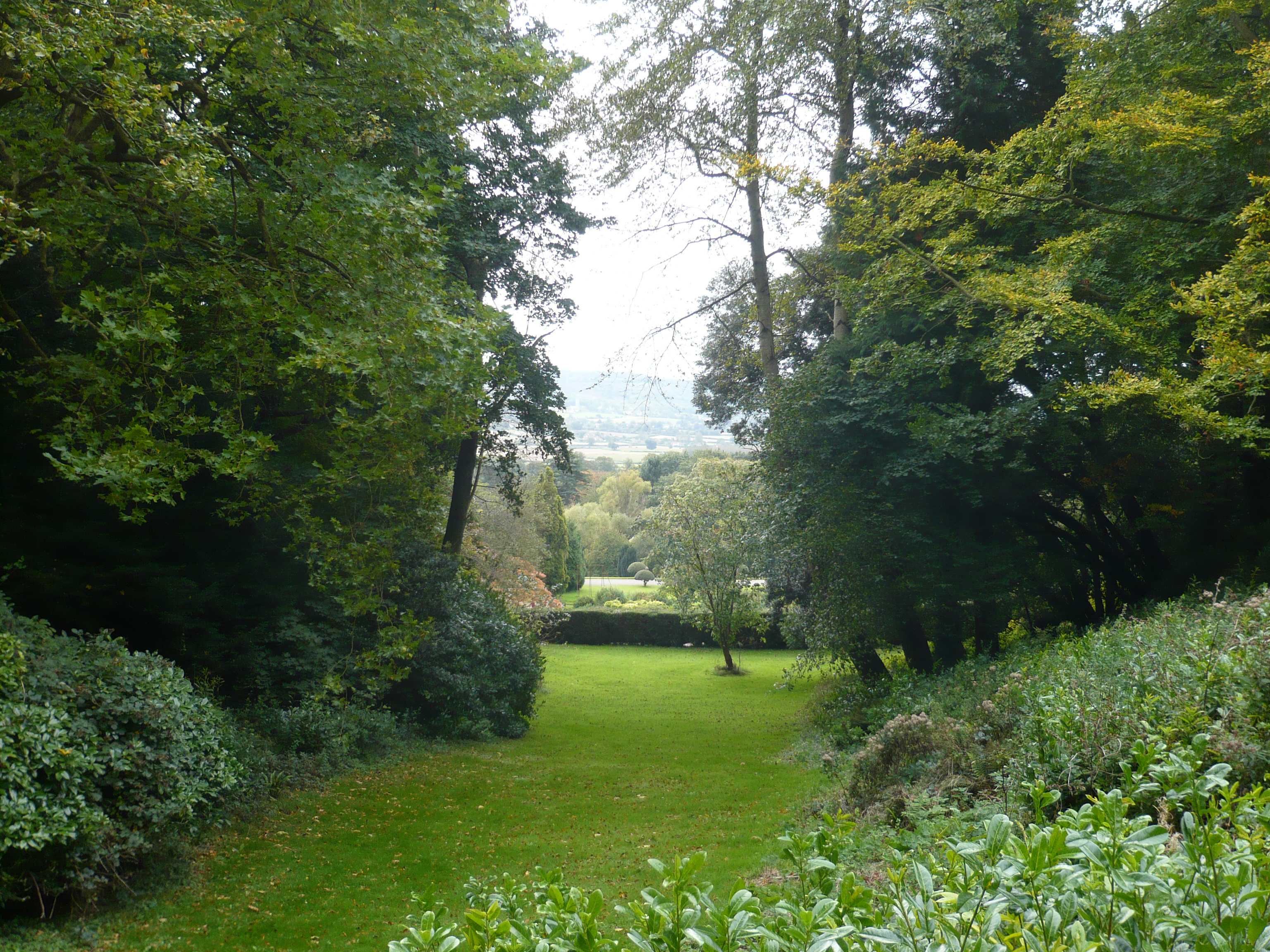
A misty morning on the grounds of Tyntesfield

A misty morning on the grounds of Tyntesfield

Money comes from the National Lottery, generous donations, memberships and the fees visitors pay.  Much of the work is done by dedicated volunteers.  Houses are staffed by kindly local people, standing patiently for hours in old rooms and gardens.  (I always think of Britain as the world headquarters for sensible shoes).  The Trust produces lovely, detailed and reasonably priced little guidebooks which they sell at each property.  They are temptingly slim and easy to stash in a suitcase.

Many of these properties have delightful tearooms.  Fancy a lunch of Stargazy Pie? Toad-in-the-Hole?  Bubble and Squeak?  Or maybe just a nice pot of tea for you, dear.  Perhaps a lovely warm Apple Crumble to go along with it?  The British love their Days Out in the countryside, and it’s a joy to join them.

If I had to choose my very favorite trip to dream of, it would be a very close contest between two:  Vienna in December, or the English countryside in the spring or fall.  Of course I’m blessed with an intrepid husband willing to drive “on the wrong side of the road” while sitting behind the wheel “on the wrong side of the car.”

The best travel bargain in Britain:  the Touring Pass from the National Trust.  It’s available for either 7 or 14 days, at prices ranging from $38 to a high of $90 for an entire family for 14 days. The pass comes with a wonderfully detailed book, including maps, directions, and opening hours.

NatTrustHandbook

Just looking at the maps, with treasures dotted all over England, makes me want to get out my own sensible shoes and travel.  For American visitors, there is also the related Royal Oak Foundation.  A year’s membership for a couple is $95.  It includes all entries to National Trust properties, plus a very nice magazine and various special events in the U.S., mostly it seems in New York.

Alas, I have other plans this year and won’t make it to England.  I guess I’ll have to revisit my favorite places using my photos and guidebooks.

Join me next time for more explorations into the art and history of Europe and the British Isles!

Briticisms

One day in London, I was standing in a customer service line at Harrod’s.  The well-dressed woman in front of me was unhappy with the answers she was getting from the man behind the counter.  I heard the woman say icily, “I find your attitude most reprehensible.”  The man behind the counter, amazingly, blanched, looked around to see who was watching, and gave her what she wanted.  That’s England.  An American customer in the same situation might say, “Hey, gimme a break” or “I want to see your supervisor, ” only to be met with a blank stare.  The British still have a whole layer of civility that Americans are sadly lacking.

Brits take pride in their wit.  Once at Blenheim Palace, I paid extra for a tour of the family’s private quarters–always worthwhile, anyplace it is offered.  The tour guide provided a running commentary about the family’s foibles, as he guided us through grand but surprisingly shabby rooms (Brits still honor “old money,” and Blenheim is about as old as it gets). Someone asked the guide whether the college-age heir hung around the palace he would someday inherit.  “Well,” he replied, “he’s off somewhere having his gap year, don’t you know, but every now and again he stops by and strikes the place a glancing blow.”

Some expressions are just amusing because they’re different.  A trash can is a “rubbish tip.” To be careful when stepping onto a subway car is to “mind the gap.” The equipment needed for, say, a long hike, is “all the kit you need.” An airline attendant might look at an excessive amount of luggage and say, “I’m afraid you can’t bring all that lot.”  If I thought my suitcase was especially heavy, I could say “That thing weighs 10 stone” (140 pounds, at 14 pounds to the stone). To give something a try is to “have a go.”

The Brits have some wonderfully descriptive terms, too.  I like to call myself a “dogsbody” when I find myself doing some menial task no one else wants to do.  When totally amazed, I might say I’m “gobsmacked.”

In the films of Laurel and Hardy, the contrasts between the American Oliver Hardy and the Englishman Stan Laurel account for a lot of the humor.

It’s especially amusing that the Englishman, who aside from his dopey expression looks slim and elegant, is childlike and dim.  He’s always asking unanswerable questions.  The  tubby American is equally clueless, but he doesn’t know it.  So he is ridiculously pompous.

All this has left me feeling a bit knackered.  Maybe it’s time for a bit of a lie-down!

Thrifty Duchesses

Like every other Anglophile, I’m breathlessly waiting for Kate, Duchess of Cambridge, to give birth to a new royal heir.  In the meantime, I’m admiring her common touch–she is, after all, a commoner.  This week she made fashion news by wearing a maternity dress costing L17.50 (about $27), off the rack at a chain called Asos.  Naturally, thousands have been sold.  As far as I can see, she has not put a foot wrong in all the years she’s been Prince William’s main squeeze.

I admire another duchess from an earlier generation, too:  Deborah Devonshire.  She was born into a family of not-very-rich minor aristocrats, the Mitfords.  There were six girls and one boy, and very little money to support them all.  Only the son was properly educated; the girls were expected to marry well.  They begged to go to school and were put off. They were given London debutante seasons instead. But they were all beautiful, brilliant and creative.  So they made their own way in the world.

To make ends meet, Deborah’s mother sold eggs.  Her father dreamed of striking gold in Canada.  In spite of several trips where he personally dug for gold, it never happened for him.  Deborah was the youngest of the family and was considered a little dim as a child.  Nothing could have been further from the truth.

In my last post I described how Deborah became Duchess of Devonshire when the heir to the Cavendish title and property was killed in action in World War II, and then the sitting Duke died unexpectedly.  The dreaded Death Tax took effect:  the authorities demanded millions of pounds, reportedly about 80% of the total value of the inherited estate.

Deborah personally took charge.  The Cavendish family seat, Chatsworth, had always welcomed tourists.  After all, grand country homes were meant to be seen and admired.  Traditionally, the housekeeper conducted tours–for only the right sort of people, of course–and was allowed to keep the resulting tips.  Many housekeepers saved enough money to eventually open their own shops. (In Downton Abbey terms, think of Mrs. Hughes discreetly pocketing money from well-to-do tourists).  The housekeeper was responsible for vetting the tourists who rang the doorbell.  I’m thinking baseball caps, Bermuda shorts and fanny packs would not make it inside.

Anyway, when Deborah took matters in hand, the only facility to welcome tourists was a water tap outside.  That tap still exists.

Water tap outside Chatsworth

Water tap outside Chatsworth

But Deborah decided that people like to buy things, and they like to eat.  She created a restaurant and extensive gift shop, now so large and full of delights that it’s a destination in itself. She created a Farm Store (think a very exclusive Whole Foods, with everything in it produced on the grounds of the estate). She created a children’s farm, where city kids can learn how their food is produced. She oversaw a huge renovation of the grand house.  She created placards describing the house’s treasures. She began formally charging admission and hiring staff to guide tourists. She created guidebooks and eventually audioguides, with help from historians and art experts. She wrote about a dozen books, about the property and about her colorful life.

Today, a visit to Chatsworth can keep a visitor happy for an entire day.  One of my purchases at the gift shop on my last visit was a wonderful book all about the Mitford sisters, The Sisters by Mary Lovell.  Reading it is a fascinating history lesson.

SistersBook

At age 93, Deborah still presides–pretty much as CEO–over the thriving enterprise she created, starting at a time when all seemed lost for the noble Cavendish family.  Let’s hear it for duchesses with good sense and a common touch!

If I Could Choose a Tiara…

My choice would be the Devonshire Tiara. It’s ensconced in a display case among many other treasures at Chatsworth, one of my very favorite English stately homes.

And my favorite wearer of this tiara?  That would be Deborah, Dowager Duchess of Devonshire. Her home, Chatsworth, has been the seat of the rich and influential Cavendish family since 1549, when Bess of Hardwick decided to settle in the area.

Bess of Hardwick was a remarkable woman who deserves a few posts of her own, along with posts about glorious Hardwick House nearby. Both houses are in Derbyshire, in the magnificent walking country that Elizabeth Bennet famously visited in Jane Austen’s Pride and Prejudice. Many people think Chatsworth was a model for Mr. Darcy’s home, Pemberly.  Jane Austen herself was staying in the nearby town of Bakewell while she was writing the novel. But I’m told that Chatsworth was actually mentioned, separately from Pemberly, in the novel. (Some scholars read Jane Austen very carefully!)

Chatsworth, like Highclere, is still in the family of the heirs to the property.  But keeping it so has been a saga of its own.  Credit in recent years goes to my favorite duchess, Deborah Devonshire.  She was the youngest of the six famous Mitford sisters.  She married Andrew, a younger son of the Cavendish family, in 1941.

When the heir, Andrew’s older brother William, was killed in action in World War II, Andrew suddenly became the heir and Deborah was in line to become the Duchess.  In 1950, the 10th Duke died and Andrew became the 11th Duke. Deborah became the Duchess.

In her memoir, Wait for Me, Deborah describes how the Cavendish family had carefully (and legally) planned to circumvent the “death tax” laws by signing over the property to the heir a number of years before the death of the sitting Duke.  But the 10th Duke died very unexpectedly just a few months short of the effective date.  So the tax blow was crushing.  Deborah rolled up her sleeves and turned Chatsworth into a thriving, money-making enterprise that still honors history and shares its glories with the public.

When the American businessman Joseph Kennedy was ambassador to England, his daughter Kathleen “Kick” Kennedy met and married William Cavendish, then heir to the dukedom.  He was killed in combat, and she died in a plane crash shortly after the war.  She is buried at Edensor, the village at Chatsworth.  President John F. Kennedy became a great friend of Deborah’s.  (I’m assuming he called her Debo, as she was always known to her friends.  I imagine she called him Jack). She and her husband were invited to his Inauguration in Washington.  She gleefully attended, but kept committing the faux pas of calling it his “coronation.”  Irrepressible–that’s how I like my duchesses!

Today, Deborah is the Dowager Duchess–which means her husband has died, a new Duke is in place, and the new Duke’s wife is the actual Duchess.  (This is the same situation as on the show Downton Abbey, where Violet Crawley, played by Maggie Smith, is the Dowager Countess of Grantham). Deborah is 93 now, the last of the famous (some say notorious) Mitford sisters.  She lives in the village of Edensor, which is part of the Chatsworth estate. She still oversees the commercial enterprise she created.  She loves Elvis Presley. And she keeps prize chickens, some of which roam the beautiful grounds at Chatsworth.

Chatsworth Chickens

Chatsworth Chickens

Join me next time for more explorations into the art and history of Europe and the British Isles, with a special emphasis on colorful personalities!