Category Archives: British Isles

When Virginia was a Colony

photo (1)

Recently at the National Portrait Gallery in Washington, D.C., I came upon a charming portrait of a young Queen Elizabeth I. It’s by an unknown artist and dates from around 1558. Sir Walter Raleigh tried to establish a British colony on what is now known as Roanoke Island.  He named the new colony “Virginia,” in honor of his young Queen, who was already establishing her popular image as the “Virgin Queen.” At the time, the young Elizabeth was keeping a wary eye on powerful Spain, which had extensive colonies already in the “New World.”

Elizabeth was also anxious to reinforce her credentials as the legitimate heir of King Henry VIII, a little problematic since her mother, Ann Boleyn, had been executed as an adulteress and traitor to the throne. So Elizabeth was portrayed with the famous square-cut stone known as “The Mirror of France,” which her father had also worn prominently.

Elizabeth I, Public Domain

Elizabeth I, Public Domain

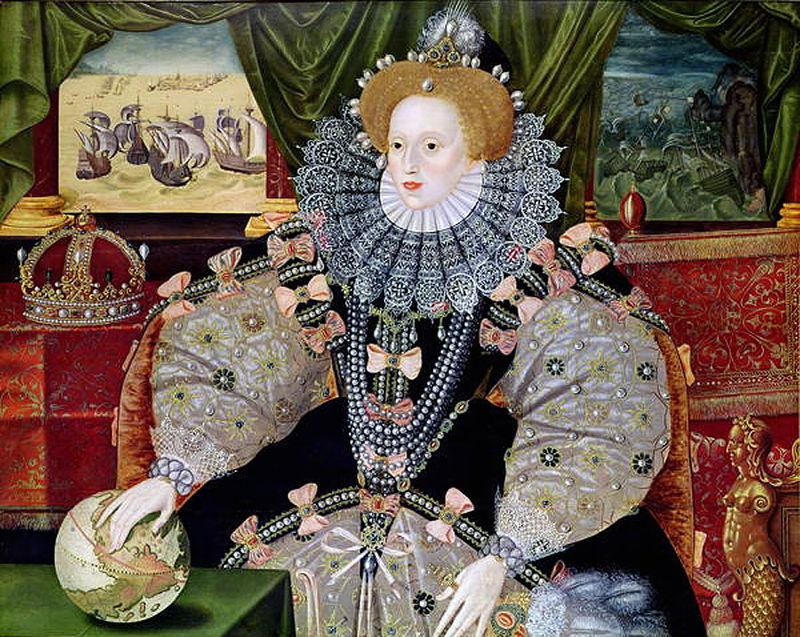
Years later, after the resounding defeat of the Spanish Armada, Elizabeth had fully developed her authority and had herself portrayed in much grander fashion, as in this portrait from around 1588.  The Queen rests her hand on a globe, symbolizing her international power.

I much prefer the very early portrait, depicting a young woman full of hope and promise at the very beginning of her glorious reign.

Join me next time for more explorations in the art and history of Europe!


“Belle:” A Tantalizing Glimpse Into History

Last week in Washington, DC,  sights like the Lincoln Memorial and the new Martin Luther King Memorial made me think about the history of slavery. A film now in theaters examines slavery, and race, from a unique perspective.

"Belle" theatrical release poster

“Belle” theatrical release poster

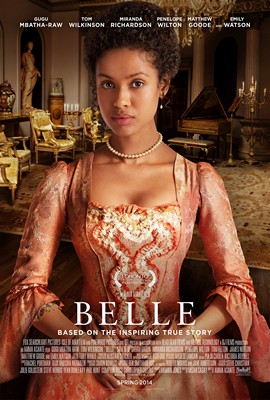
“Belle,” written by Misan Sagay and directed by Amman Asante, is a 2013 film about a real person, Dido Elizabeth Belle. She was the niece of William Murray, 1st Earl of Mansfield and Lord Chief Justice of England and Wales. She was the daughter of his younger brother, a Royal Navy Admiral, and a free black woman who had died. She was left in the care of her uncle to be a companion to her cousin, Lady Elizabeth Murray. Belle was raised as an aristocrat even though she was black. In the film, certain lines are drawn: Dido is not allowed to sit with the family at evening dinners when there is company,  but she is welcome in the drawing room afterward. Actually, little is known about Belle’s life, but the filmmakers have fashioned an absorbing story based on real-life events close to Belle.

Just as she was coming of age, Belle’s uncle had to decide a notorious case in which owners of a slave ship, the Zong, had thrown their cargo of slaves overboard in order to collect the insurance on their “property.” The Lord Chief Justice’s ruling was eagerly anticipated all across England.  If he went one way, slave traders would have a free hand in the future. If he went the opposite way, his ruling would spell the beginning of the end of slave trading in England.

To further complicate matters, Belle inherits a sizable fortune on the death of her father, while her white cousin is penniless.  Suddenly Belle has aristocratic suitors.

In the movie, Belle’s forbidden romance with a passionate, idealistic but impoverished young lawyer influences her uncle’s eventual decision. The luminous Gugu Mbatha-Raw plays Belle. The stellar cast includes the great Tom Wilkinson as the uncle, as well as Miranda Richardson, Penelope Wilton, Sam Reid, Matthew Goode, Emily Watson, Sarah Gadon, Tom Felton, and James Norton.

Dido and Elizabeth, Public Doman

Dido and Elizabeth, Public Doman

In 1779, Belle’s uncle commissioned a portrait of his two young nieces. The portrait is unique because it is one of the very first paintings that depict a black aristocrat as an equal to a white aristocrat. The painting, by an unknown artist, hung until 1922 at Kenwood House in Hampstead, where Belle grew up.  It is now at Scone Palace in Perth, Scotland.

Join me next time for more explorations in the art and history of Europe!

My Favorite Crown

What is the oldest surviving English crown doing in the Treasury of the Munich Residenz, home of the Wittelsbach dynasty for centuries? Apparently even the experts are not exactly sure of the sequence of events. But there it is, one of the most beautiful and evocative objects I’ve ever seen.

CrownFavorite

Most crowns considered important enough to be preserved are masculine-looking, as we’d expect in an overwhelmingly patriarchal world. Some of them have a unisex look, suitable for a king or queen, as needed. This crown, known as the “Bohemian” crown, is delicately feminine. It’s made of pure gold, of course. It is enameled and studded with rubies, sapphires, emeralds, diamonds and pearls. It looks lovingly handmade, as no doubt it was. It is quite tall, as crowns and tiaras go: about 7 inches. What I find unique is the airy, open design–not an easy feat to pull off with the many huge gems it holds. The wearer would automatically assume a regal posture, I would think, just in order to live up to this gorgeous object.

The crown was made around 1370-80. It was recorded in a list of jewels in England in 1399. Curators believe it belonged originally to either King Edward II or Anne of Bohemia. Anne was married to King RIchard II. But along came his dashing cousin, Henry IV, star of the Shakespeare history plays. He deposed Richard. Eventually, in 1402, Henry’s daughter Blanche married Ludwig III, an Elector–more or less an elected king in what is now Germany. The crown was part of her dowry, so it ended up in the Treasury of the Wittelsbachs.

The museum’s own write-up about this crown is at http://www.residenz-muenchen.de/englisch/treasury/pic11.htm

Join me next time for more explorations into the art and history of Europe!

Visiting Sudeley Castle

SudeleyRoses

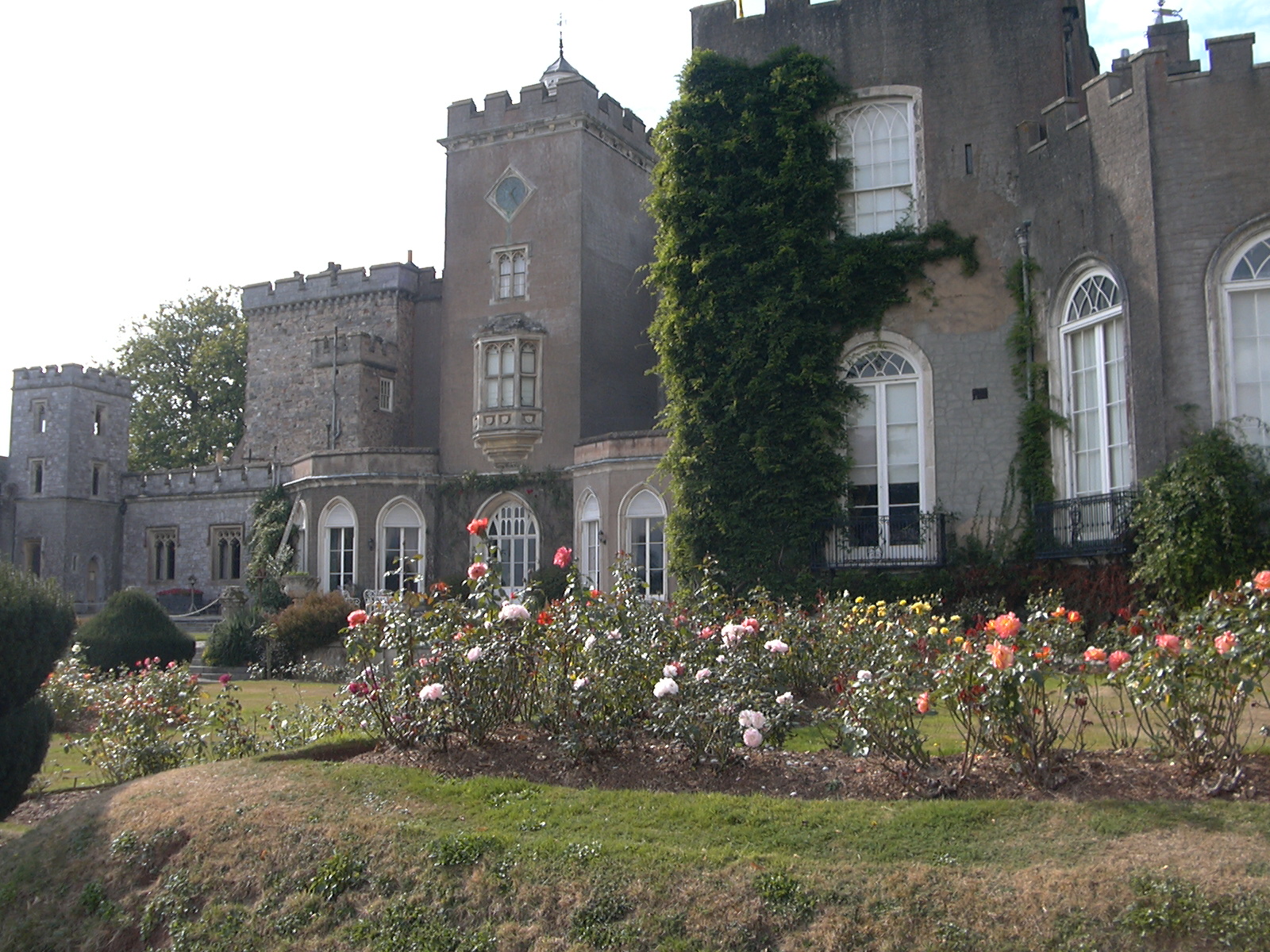
I don’t know if I’d care to have several separate funerals with crowds of strangers as mourners, but then I’m not an English Queen who was born 500 years ago and survived marriage to King Henry VIII. Katherine Parr, the 6th wife of Henry VIII, was honored last September with not one but two re-enactments of her funeral on the anniversary of her birth. She had already had at least one funeral when she died, plus another one when her coffin was rediscovered following the ruin of her burial place during the English Civil War, plus another one when her tomb was renovated to its present state. An excellent article about the most recent funerals is at http://www.telegraph.co.uk/travel/destinations/europe/uk/9474364/Sudeley-Castle-the-curious-life-and-death-of-Katherine-Parr.html.

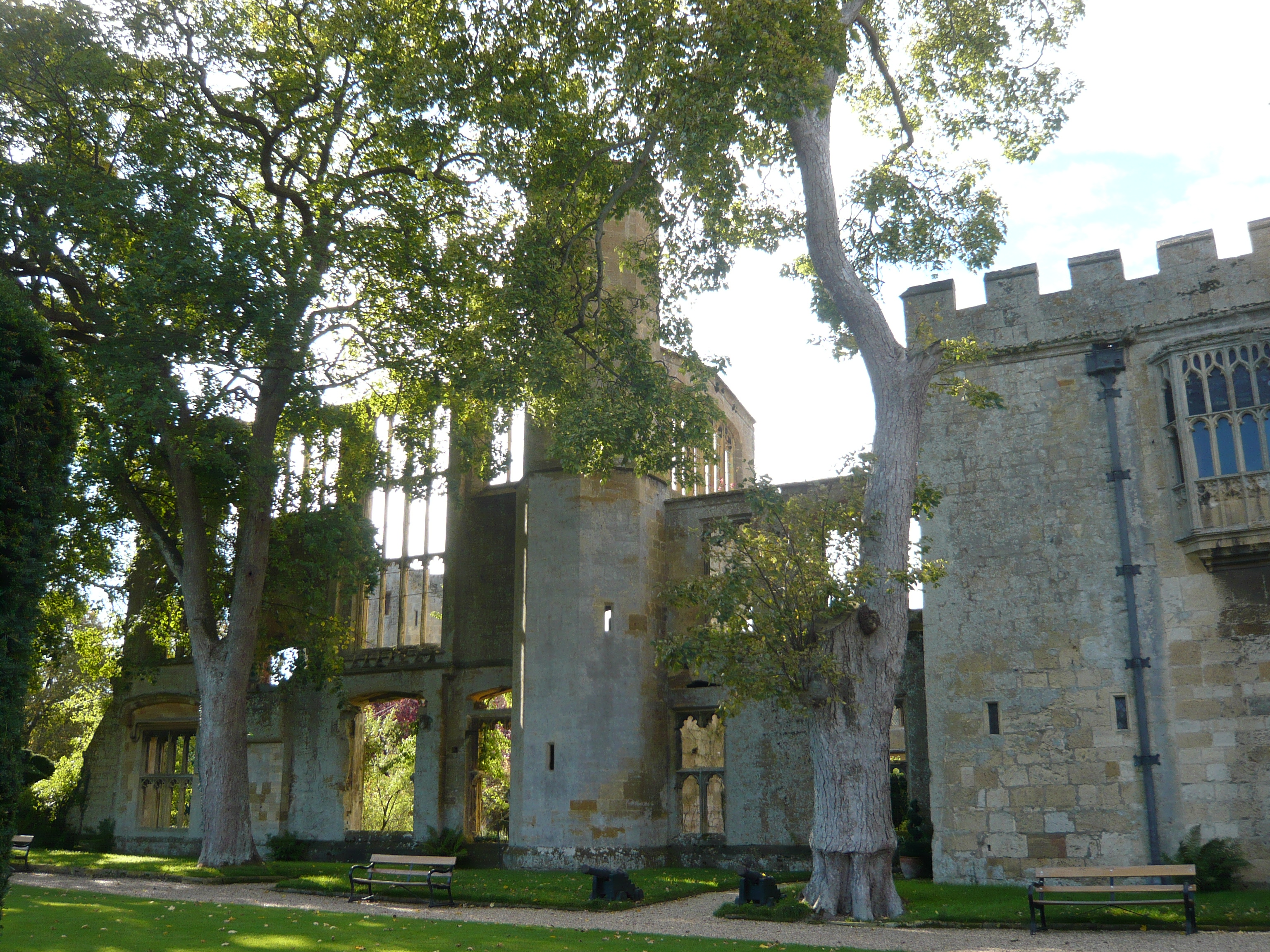
Sudeley Castle with ruins of banqueting hall

Sudeley Castle with ruins of banqueting hall

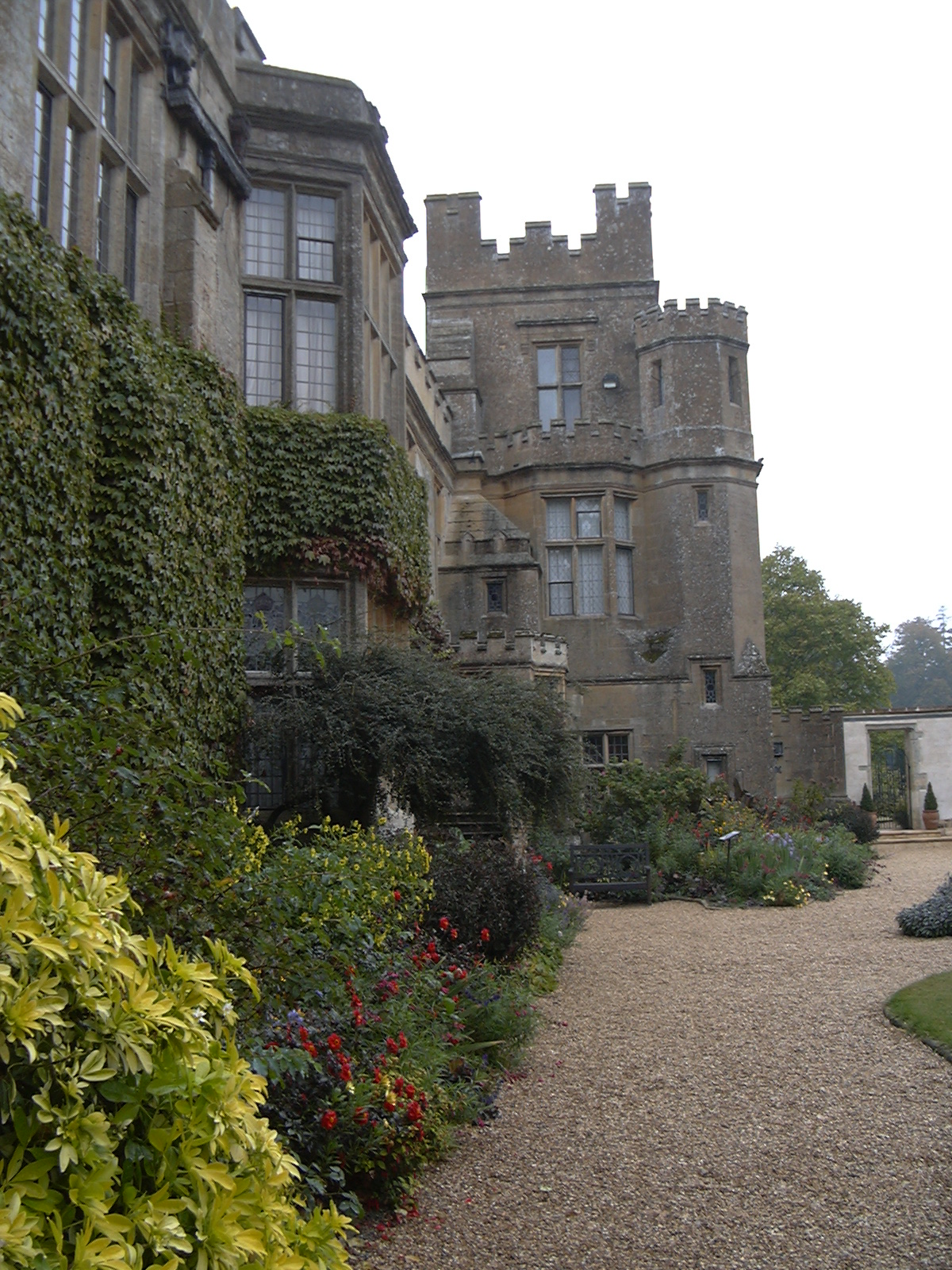
Sudeley Castle is one of the most interesting and evocative historic sites to visit in England. Its origins date from around the 12th century. It has passed in and out of royal possession several times, depending on politics and the outcome of battles. It has been the scene of intrigue and rebellion. Most famously, it was home to three Queens at the same time: Katherine Parr, Elizabeth I, and the ill-fated Lady Jane Grey. The castle is mainly a private home, owned since the 19th century by the Dent-Broklehurst family. They open large parts of the grounds and building for visits at certain times. However, English Heritage members receive a 20% discount.

St. Mary's Chapel at Sudeley

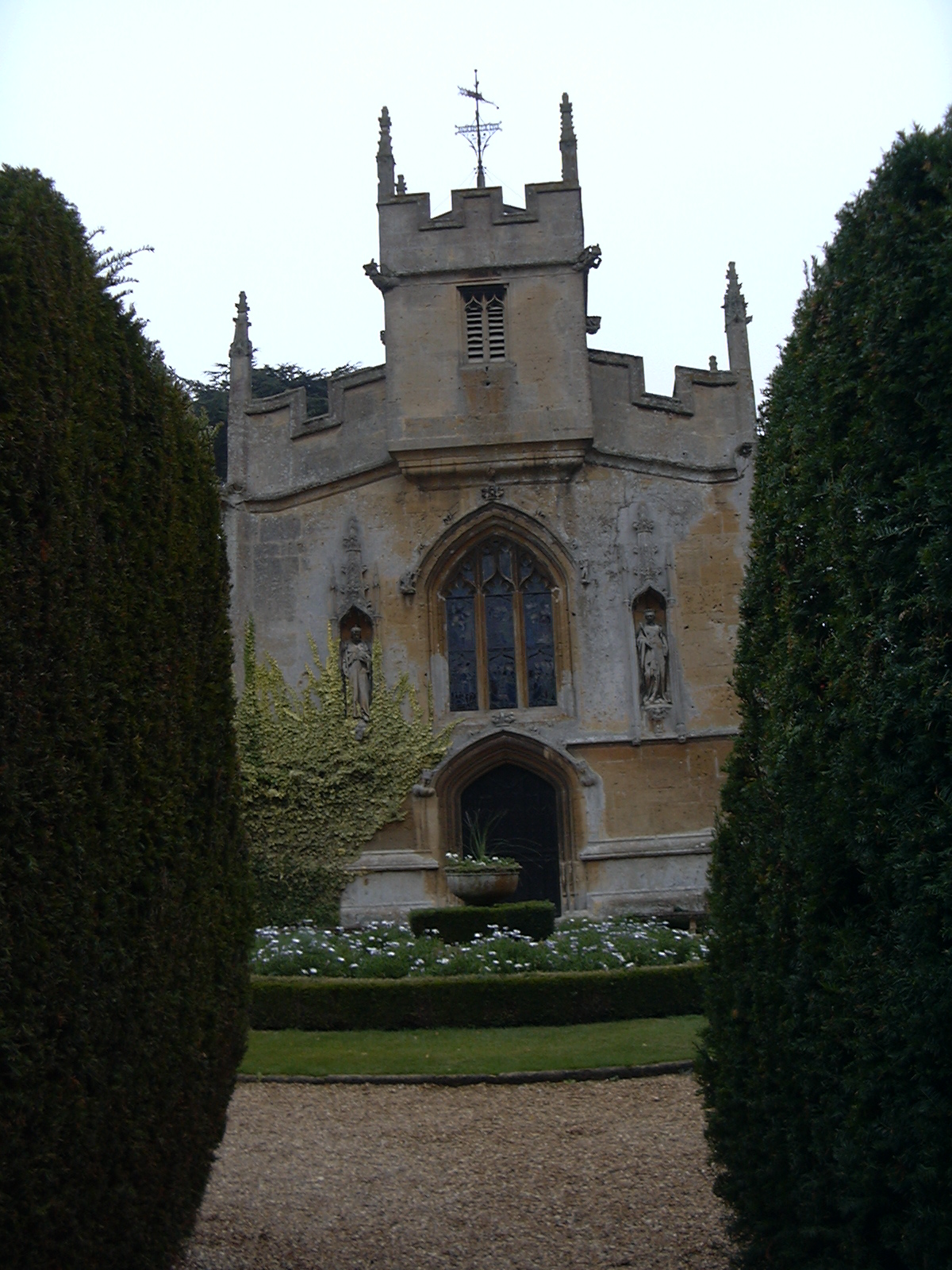
St. Mary’s Chapel at Sudeley

The chapel is still part of a Church of England parish. Services still take place there–mostly, I think, on Sunday afternoons. According to the castle website, Sudeley Castle is open from
mid-March to early November
from 10.30am-5.00pm daily. On certain days of the week, it is possible to pay an extra fee and tour parts of the family’s private quarters. I would go out of my way to take the private tour. (Children under 12 are not allowed in the private quarters). There are also special garden tours on certain days. I would always check the opening times before driving out to the Castle, though. Weddings or private events could interfere interfere with parts of the Castle and grounds. I would call.

If the place were open, though, I would cheerfully spend about half a day wandering the grounds, touring the castle and chapel, and having lunch on the terrace or in the very nice indoor restaurant. Since I was there last, the Tudor rooms occupied by the three Queens have been restored. There are museum-quality exhibits of exquisite personal possessions of Katherine Parr–and, somewhat ghoulishly, a blackened tooth taken from her coffin. I also remember seeing a very interesting exhibit about a Victorian ancestor of the present owners, Emma Dent. Possibly the exhibit about Katherine Parr occupies that exhibition space at the moment.

The nearby village of Winchcombe is very pretty and not nearly as crowded or touristy as more well-known towns in the Cotswolds. I once stayed in one of the Sudeley Cottages between the Castle and Winchcombe. The Cottages formerly housed some of the help at the castle. They sleep 2-6. They are well-equipped, charming and affordable. WInchcombe is my favorite base in the Cotswolds. It feels like a regular town where actual people go about their lives as they have for centuries.

Time to start planning an English itinerary!

Sudeley Castle: Home of Three Queens

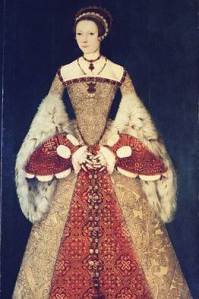
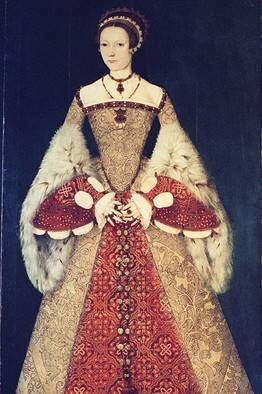
Katherine Parr, Public Domain

Katherine Parr, Public Domain

King Henry VIII died in January of 1547, leaving his 6th wife, Katherine Parr, a generous settlement. Within a few months of Henry’s death, Katherine secretly married Thomas Seymour. There was a bit of a scandal because of the unseemly haste and secrecy of the wedding, but they rode it out. Thomas was the brother of Henry’s 3rd wife, Jane Seymour. She had married Henry after Anne Boleyn’s execution. She died after giving birth to Henry’s long-awaited male heir, Edward. Many people believed that Katherine had planned to marry Thomas Seymour all along, and had only married Henry out of a sense of duty to her monarch. (I have to wonder whether anyone ever got away with saying “no” to Henry about anything, including marriage).

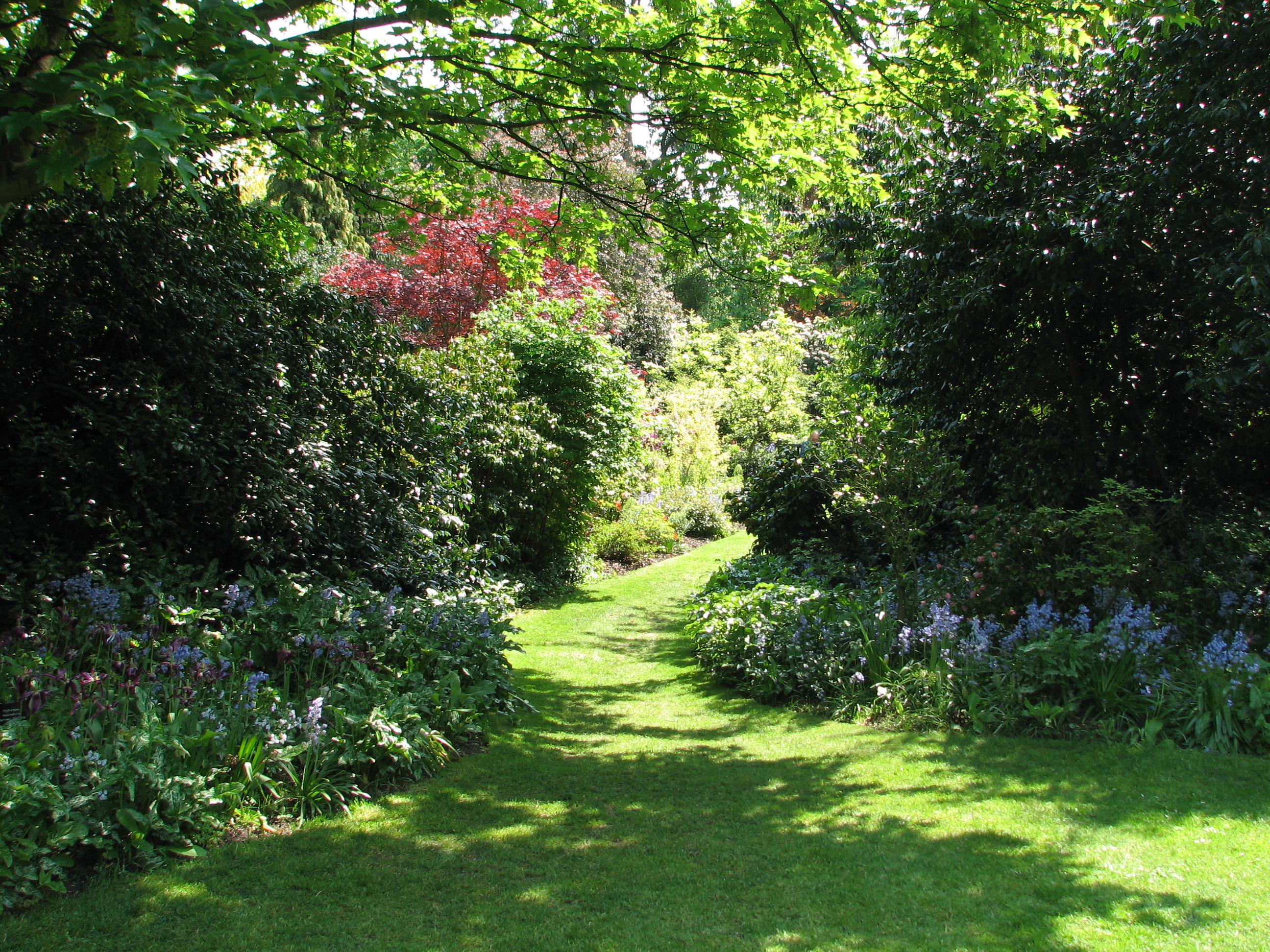
Henry had entrusted Katherine with the care and education of Elizabeth, the orphaned daughter of Henry and the unfortunate Ann Boleyn. Thomas Seymour, who had high political ambitions, became the guardian of young Lady Jane Grey, who was a minor and cousin of the late Henry. (Later, Thomas was part of a plot to place the innocent pawn Jane Grey on the throne. The doomed plot cost Lady Jane her head at age 17). For awhile, though, the couple and their young charges lived in apparent harmony at Sudeley Castle. I can imagine the two young women and their older guardian studying together in the sunny rooms and peaceful Queen’s Garden.

ElizCastle

The harmony did not last long. Soon rumors flew that Thomas Seymour was overly interested in the young Elizabeth, and she in him. She was packed off to live elsewhere.

SudeleyChapel

Katherine died a few days after giving birth to her first and only child in 1548. Thomas Seymour was off to bigger and better things. He abandoned the infant daughter, who was taken in by a friend of Katherine’s and essentially never heard from again. Katherine was buried in St. Mary’s Chapel at Sudeley, mourned mainly by young Lady Jane Grey. But a hundred years later, during the Civil War, the chapel was ruined and her body was lost. A farmer found her coffin in 1782. He opened it, found her body well-preserved, took a lock of hair, and reburied her. The coffin was dug up again and reburied several more times, once upside-down by drunken hooligans. Finally, in 1817, her body was moved back to Sudeley, the chapel was rebuilt, and eventually a magnificent tomb was built as a final resting place for Katherine.

SudeleyRoses

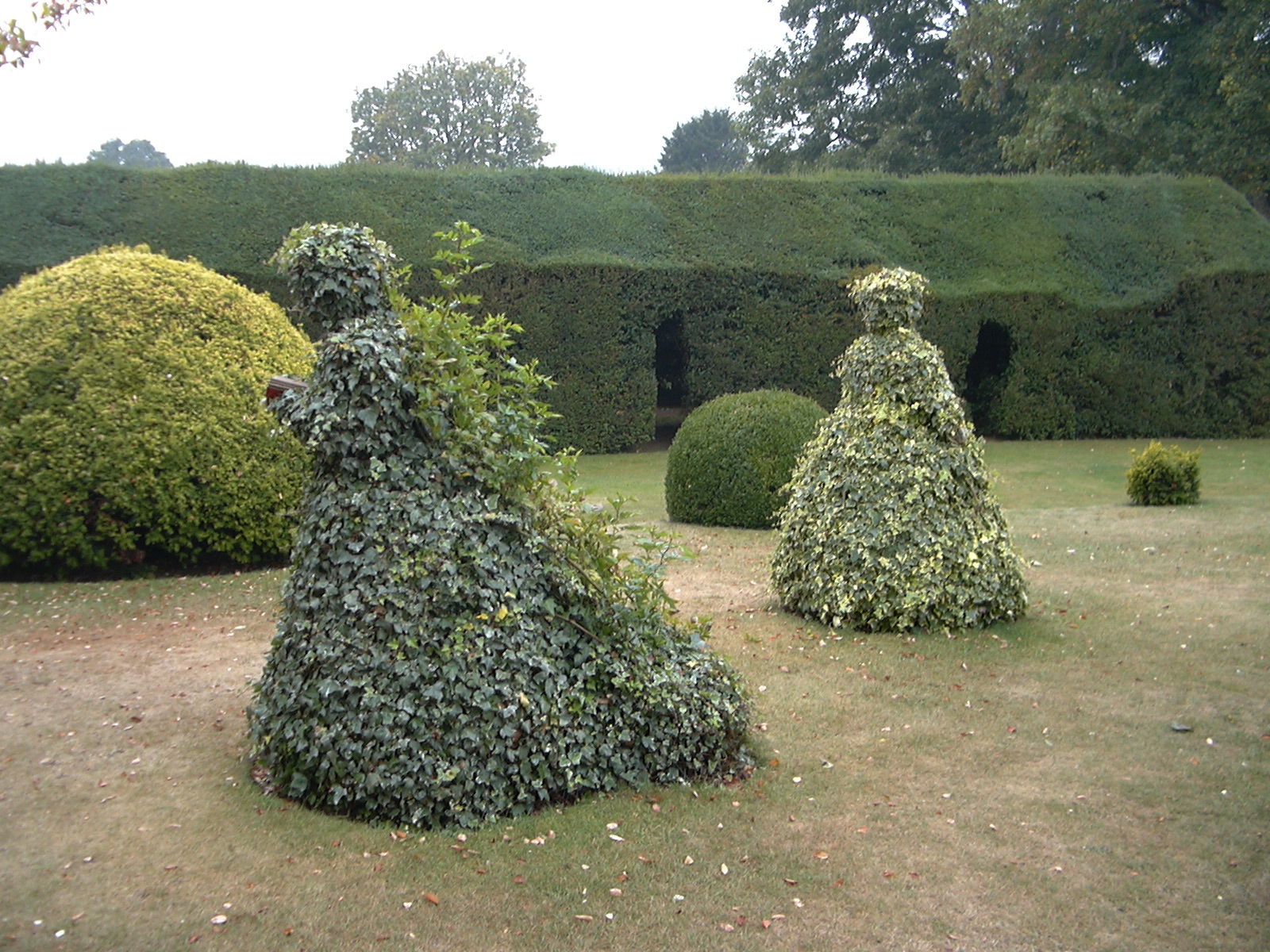
A ghost adds immeasurably to the elegance of any castle, especially a royal ghost. Sudeley’s is believed to be Katherine Parr. Tour guides report that a lady dressed in green has appeared to numerous people. I doubt I will ever see the ghost, but I have seen a Green Lady–or, rather, two of them. On the pathway from the castle to the chapel stand topiary figures of Katherine and her dear companion, the young Lady Jane Grey. Tour guides explain that the two women attended chapel every day during the short time they had together.

SudelyTopiaries04

Royal or not, women in the Tudor and Elizabethan era lived in perilous times. Between political machinations controlled by men, and the dangers of childbirth controlled by no one, they often lived short and tragic lives. I’m looking forward to a new historical fiction account of Katherine Parr’s life, Queen’s Gambit, by Elizabeth Fremantle. I’m sure it will relate the stories of Lady Jane Grey and the young Elizabeth to Katherine Parr’s life. A Wall Street Journal article about the writer’s process of telling this remarkable woman’s story is at http://online.wsj.com/article/SB10001424127887323610704578627820370655036.html.

Join me next time for more on the art, history and literature of Europe and the British Isles!

Katherine Parr: The Wife Who Survived

Katherine Parr was the 6th wife of King Henry VIII.  Considering his marital history, she must have thought twice before she showed up for that wedding in 1543, when she was 31.  The already-ailing Henry died in January 1547.  Katherine had already survived two husbands. She did marry Henry, and lived to tell the tale.  Then she married Thomas Seymour, believed by many to have been her real love all along. She was unlucky in that marriage, though. She did become pregnant, for the first time, at age 35.  But she died a few days after giving birth to a daughter. Her fourth husband, for his part, was involved in various scandals and worse.  He was executed for treason in 1549.

In The Wall Street Journal, the British writer Elizabeth Fremantle writes about the process she used in writing her new historical novel about Katherine Parr.  The article is titled “The Life of the Wife of Henry VIII.”  It is at http://online.wsj.com/article/SB10001424127887323610704578627820370655036.html. The article reproduces a fine portrait of Katherine.

Katherine Parr, Public Domain in USA

Katherine Parr, Public Domain in USA

The book, “Queen’s Gambit” (Simon and Schuster),  will come out in a few days.   Elizabeth Fremantle writes eloquently of how this Tudor-era queen came alive for her when she visited Hampton Court Palace, where Katherine married Henry VIII. The day of the writer’s visit, actors happened to be portraying the wedding festivities.  Afterward, the writer visited the kitchens, all extensively preserved and restored, and gained insight into the lives of people who must have served the royals.

I’ve been to Hampton Court Palace too.  It is truly steeped in history, and much easier to take in than many of the sights in central London.  The best way to get there from the city is by train.  Visitors who buy a day return on the train receive a nice discount on admission to the Palace.

HamptonGarden

It’s easy to see why Henry VIII appropriated this peaceful and luxurious river retreat from his right-hand man, Cardinal Wolsey.  I will certainly be reading Elizabeth Fremantle’s new book about this very intelligent woman who navigated her way through perilous times in the Tudor era.

Join me next time for more explorations into the art, history and literature of Europe and the British Isles!

Travels with Jane

Reuters image from artsbeat-austen-blog480, featured in NYT article cited below Reuters image from artsbeat-austen-blog480, featured in NYT article cited below

I have to comment again on the new ten-pound banknote that will begin featuring Jane Austen in 2017.  I was curious about the images in the background.  The image in the center of the round seal shows Jane Austen bent over her little writing table.  She famously wrote in the drawing room, in the middle of family life.  Some years ago I visited Chawton Cottage, where Jane spent much of her time during the last years of her life.  She wrote on a little round table placed in front of a window overlooking the road outside.  I stood awhile in front of the table, trying to imagine the drawing room door creaking.  That was the signal for Jane to tuck her pages away and turn her attention toward a visitor.

I wondered if the mansion in the background was meant to represent Pemberly, the home of Mr. Darcy in Pride and Prejudice. But then, Pemberly was a fictional creation.  Instead, it appears the mansion pictured is Godmersham Park.  Jane’s brother was adopted by a wealthy family and eventually inherited the mansion and property.  Jane and her family spent a lot of time there–welcomed as poor but genteel relations, I gather.

The planned quote below Jane’s portrait is “I declare after all there is no enjoyment like reading!”  Some people object because the line is spoken by a decidedly mercenary character, Caroline Bingley.  In The New York Times article I cited in my last post, “Jane Austen, Wallet-Sized,” there’s a suggestion for a different quote.

John Mullan, a professor at University College London, proposed another line from Pride and Prejudice.  His suggestion comes from the middle of the novel, when Elizabeth Bennet is invited on a road trip with her aunt and uncle.  The dastardly Mr. Wickham has just deserted Elizabeth for a certain very rich Miss King.  On a three-week trip, they hope to travel as far as the Lakes.  Elizabeth was not in love with Wickham, but still she welcomes the diversion.  She exclaims, “What are men to rocks and mountains?”

RuskinLake

Then as now, getting to the Lake District in northern England takes some doing.  As it happens in the story, Elizabeth’s aunt and uncle have to cut their trip short because of business–they are in a class that works for a living.  So instead of going to the Lakes, they can go only as far as Derbyshire.  “Elizabeth was excessively disappointed; she had set her heart on seeing the Lakes…But it was her business to be satisfied–and certainly her temper to be happy; and all was soon right again.”   Every reader of the novel knows that the shortened trip put Elizabeth Bennet at Pemberly at the same time Mr. Darcy happened to be there, sealing her fate and his.

Her biographers agree that Jane Austen herself was traveling in Derbyshire at the time she was writing the novel.  I can only imagine that she was as agreeable and happy a travel companion as her beloved heroine, Elizabeth Bennet.

http://artsbeat.blogs.nytimes.com/2013/07/26/jane-austen-bank-note-earns-huzzahs-and-nitpicking/?_r=0

Jane Austen, Wallet-Sized

It was big news this week when the Bank of England announced that Jane Austen’s face will appear on 10-pound notes beginning in 2017.

Reuters image from artsbeat-austen-blog480, featured in NYT article cited below

Reuters image from artsbeat-austen-blog480, featured in NYT article cited below

Notice the quotation below Jane’s portrait?  It reads, “I declare after all there is no enjoyment like reading!”  Now critics are complaining that these words were spoken not by one of Jane’s heroines, but by a materialistic snob in Pride and Prejudice, Caroline Bingley.  When she speaks the line in the book, it’s only to try to gain the attention of Mr. Darcy, which to her consternation Elizabeth Bennet is monopolizing in the drawing room.

I look forward to a  lively debate about what quotation would be more suitable.  I don’t mind this one, though.  After all, Jane Austen was a wise enough writer to allow characters other than her heroes and heroines to speak the truth once in awhile.  I’m thinking of Elizabeth Bennet’s mother, described as “a woman of mean understanding, little information, and uncertain temper.”  Yet she speaks sincerely and truthfully about the difficulties of marrying off five daughters with no fortunes of their own. “If I can but see one of my daughters happily settled at Netherfield…and all the others equally well married, I shall have nothing to wish for.”

This brings me to one of my favorite lines in Jane Austen, and indeed in all of literature: the opening line of Pride and Prejudice.  It reads, “It is a truth universally acknowledged, that a single man in possession of a good fortune must be in want of a wife.”  That one line encompasses not only the whole plot of the great novel, but the workings of an entire social and economic system.

In a recent interview, another of my favorite authors, Hilary Mantel, commented, “I love Jane Austen because she’s so shrewdly practical; you can hear the chink of cash in every paragraph.”

I’m sure Jane would be amused and delighted to find herself on the face of a ten-pound note, whatever the quotation under her portrait.

The article about the new currency is at

http://artsbeat.blogs.nytimes.com/2013/07/26/jane-austen-bank-note-earns-huzzahs-and-nitpicking/?_r=0

The interview with Hilary Mantel, author of Wolf Hall  and Bring Up the Bodies, is at

Join me next time for more explorations into the art, history, and literature of Europe and the British Isles.

..

What’s Up with the Garter?

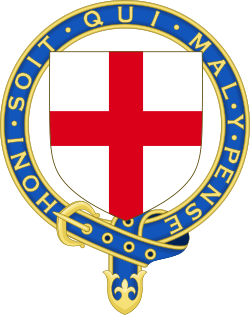
Now that the new heir to the throne of England has arrived and been named George, we will probably hear more about the Order of the Garter.  Why?  The Order has been dedicated to the patron saint of England, St. George, since its founding in 1348. Next to becoming a Peer or receiving the Victoria Cross or the George Cross, the Order of the Garter is the highest honor anyone can achieve in England.  Deciding where to bestow it is one of the very few personal and absolute privileges still left to the King or Queen. It’s a very exclusive club, including only the King or Queen, the current Prince of Wales, and a maximum of 24 handpicked members, who are called Companions.  New members are always announced on April 23, St. George’s Day in England.

Arms of the Most Noble Order of the Garter; image from Wikipedia

Arms of the Most Noble Order of the Garter; image from Wikipedia

I don’t quite understand why the date is so definite, when the origins of the Order are lost in the mists of time.  The most entertaining legend is that a high-ranking lady was dancing at court when her garter fell off–a mildly erotic event which provoked knowing smirks from bystanders.  Supposedly King Edward III picked it up and gallantly said, “Honi soit qui mal y pense,” (“Shamed be the person who thinks evil of it.”) This event took place (if it took place) in France, in the port of Calais, which the English at the time controlled. I have to assume that the King subsequently decided the words would be a good motto for his own particular in-crowd, his trusted friends and advisors who would never snicker at the King.

Another legend, not as much fun, claims that King Richard I, fighting in the Crusades, decided to have his knights wear garters somehow related to St. George the Martyr into battle.  They won. And yet another explanation is that the words actually refer to the ever-problematic claims of the English King to the French throne. Very likely all these explanations are somehow related.

Garter Day occurs in May, at Windsor Castle. The lucky members and inductees wear elaborate outfits, meticulously preserved and recreated from medieval times.  They wear actual garters, of course.

A story about the 2013 Garter Ceremony appears at http://www.dailymail.co.uk/femail/article-2343223/Beaming-Queen-flanked-Charles-William-Order-Garter-today-Duke-Edinburgh-recovers-home.html, along with photos of the occasion.

I read recently that Prince Charles actually has a footman apply toothpaste to his toothbrush every morning.  Some time ago, I read that Prince Philip thinks nothing of having the bathroom repainted in his favorite color each time he visits one of the castles. I also read that Princess Diana insisted on nothing but pure linen sheets, carefully pressed, for her bed.  And the sheets had to be changed even if she only took a short nap. I have no real way of knowing whether these stories are true or not. But reports like these make anti-Royalists call for an end to the monarchy.  I personally hope that the new generation of royals is able to shed the more ridiculous aspects of royal privilege.  I’d like to continue seeing the elegance of truly historic traditions like the Order of the Garter.

Join me next time for more explorations into the art and history of Europe and the British Isles.


Top 10 Reasons Americans Can’t Get Enough of the British Royal Family

The American press took up a lot of the pavement space in front of the hospital where the new Prince of Cambridge was born this week.  Why our fascination with British royalty?  Following is my own very personal and opinionated list of reasons.

1. We’re safe from a monarchy ourselves, having gained our independence 237 years ago.  We get to enjoy the spectacle without paying the bills.

2. Nowhere in the world is the tension between the antique and the modern more visible than in the traditions of the British Royal Family. Prince William in the velvet and ostrich feathers of the ancient Order of the Garter? Irresistible, at least to many of us. To read about the 2013 Garter Ceremony, go to http://www.dailymail.co.uk/femail/article-2343223/Beaming-Queen-flanked-Charles-William-Order-Garter-today-Duke-Edinburgh-recovers-home.html.

3. We won’t admit we’re a little envious.  But we’re both dreading and secretly anticipating the day the royals trip themselves up and create another riveting story like the Charles and Diana Show of the 1990s.

4. We have a new appreciation for Princess Diana, who, in spite of all her colorful personal failings, gave the British Monarchy a well-deserved kick in the pants.

5. We’re embarrassed about the media “royalty” we create for ourselves:  overpaid sports heroes shown to cheat by taking banned substances, dysfunctional families like the Kardashians who cynically exploit their fame, reality “stars” who waste our time with their lame antics.  Is this the best we can do, 237 years after getting British royalty out of our lives?

6. We love our dogs.  We have to admire a Queen who is able to keep as many dogs as she wants.  Besides the much-photographed corgis, the Queen reportedly keeps any number of cocker spaniels and dorgis—a corgi-dachshund mix.  (No doubt there are also kennels full of dogs used for hunting, but these days hunting is kept on the down-low because of public disapproval).

7. We’re looking for stories of redemption.  Queen Elizabeth II appeared to be a classic coldhearted mother, especially to Prince Charles, but (if you ask me) she redeemed herself in the moment during Diana’s funeral procession when she briefly bowed her head as the coffin passed.  We’d like to think the Queen has learned her lesson and became a better parent from that day forward. We especially like telling ourselves that a Queen NEEDS to be humbled once in awhile.

8. The current crop of royals shows signs of having more good sense than greed.  I was won over when William and Kate asked for charity donations rather than wedding gifts.

9. We appreciate good PR, especially when it does not seem like PR. When Kate was photographed pushing her own grocery cart a few days after the Wedding of the Century, that was great PR–and we all knew she had been shopping for her own groceries for years.  When Prince William personally placed the new baby’s car seat in the royal Land Rover and drove off with his expanded family, that was great PR. Commenting that the baby had more hair than his prematurely-balding dad was frosting on the cake.

10. We’d like to think that if we were born to untold wealth that we did nothing to deserve, we’d behave humbly and generously.  William and Kate appear to be doing just that. And they’re making it look easy.

If the British Monarchy survives this century, I think people will look back on the personalities and events of the past few years as the reason. Join me next time for more explorations into the history of Europe and the British Isles–even as history is being made before our eyes!