Category Archives: England

Scotland’s Still In

Braveheart

The people of Scotland voted yesterday, pretty resoundingly, to remain in the United Kingdom. Considering the turmoil and violence of the past, this was a very civilized historic event. British government leaders made impassioned appeals to the people of Scotland to reject independence, and promised significant changes if they did. Now it’s time to make good on those promises. I’m in England, watching British TV, and this is the big news story of the week.

It’s surprising to learn how important the 1995 movie, directed by and starring Mel Gibson, was to Scots in their drive for independence.  The 13th century real-life William Wallace was probably a much darker and more complex man than he appears in the movie, but the stirring scenes of battle and eloquent speeches on freedom are still affecting Scots two decades after the Academy Award-winning movie. Leaders of the independence drive regularly referred to the movie as a source of Scottish pride.

photo (14)

British people seem to have a special fondness for Scots.  In large cities, it is fairly common to encounter a bagpiper in kilt and full Scottish regalia, playing on a street corner. Today at Blenheim Palace I spotted a Scottish soldier in a display of hundreds and hundreds of accurate models, made by the British Model Soldier Society. The Society, founded in 1935, meets monthly in London. Its members do extensive historical research before approving any of the wonderfully detailed models (which are about 3-4 inches tall). The model above depicts a private in the Black Watch regiment in 1815.

photo (15)

Above is an even earlier Scottish soldier from 1684, the Royal Scots 1st of Foot. The union of England and Scotland has deep historical roots.  I hope the Scots get the changes they were promised and the union continues with benefits to both sides.

The Braveheart image above is the theatrical release poster.  The film is available from Amazon.


Winston Churchill: How the Bulldog Got His Scowl

Digitally restored vector portrait of Sir Winston Churchill.

The iconic photograph of Winston Churchill, with his famous bulldog scowl, appeared on the cover of “Life Magazine” in 1945, toward the end of World War II.  When newsman Edward R. Murrow saw it, he remarked, “Ah, there is the face which marshalled the English language and sent it to battle when we had little else.” The photo was taken by Yousuf Karsh in 1941.

All through the war, starting when England faced the enemy alone, Churchill roused and encouraged his people with his words.  His most famous phrase was “I have nothing to offer but blood, toil, tears and sweat.” The words were first spoken at Churchill’s first cabinet meeting as Prime Minister on May 13, 1940. He repeated them in the House of Commons the same day, and soon his words of defiance and courage went out over the airwaves to every British home and workplace.  The stirring words were, in part, “We have before us many, many months of struggle and of suffering. You ask, what is our policy? I can say:  It is to wage war, by sea, land and air, with all our might and with all the strength that God can give us; to wage war against a monstrous tyranny…You ask, what is our aim? I can answer in one word:  victory, victory at all costs, victory in spite of all terror, victory, however long and hard the road may be; for without victory, there is no survival.” The words, even on the page decades later, cause goosebumps. Victory looked very unlikely when the words were spoken.

How did Mr. Karsh, one of the greatest portrait photographers of all time, capture this iconic image?  He was sent to photograph the great man on a visit to Canada in 1941, before Pearl Harbor and before the United States became fully committed to the fight.  Churchill had just addressed the Canadian Parliament.  He was weary. He told the photographer he had exactly two minutes.  Then Churchill began chomping on a cigar. The photographer politely held out an ashtray. Churchill continued chomping. So Mr. Karsh walked up, begged Churchill’s pardon,  and pulled the cigar out of the Prime Minister’s mouth.  (Where did he get the nerve?)  By the time the photographer got back to his camera, the bulldog scowl was there.  And amazingly, Mr. Churchill softened.  He allowed more photographs, but the one that had taken him by surprise became his most famous image.

The photo is from the article cited below.

http://www.huffingtonpost.co.uk/2013/03/06/winston-churchills-bulldog-scowl-yousuf-karshs-iconic-photograph_n_2818281.html

The Bulldog and the Marmalade Cat


Photo from Daily Mail article cited below

Photo from Daily Mail article cited below

When the family of Sir Winston Churchill left the family’s country estate, Chartwell, in the care of England’s National Trust organization in 1966, there was an important condition:  there must always be a marmalade cat with a white bib and four white socks, and the cat’s name must always be Jock.

Jock V recently retired to the Scottish countryside when his person, a staff member at Chartwell, retired.  Jock VI just took up residence.

I’ve been reading a biography of Winston Churchill, The Last Lion, by William Manchester. The man who stood up to Nazi tyranny when the situation seemed hopeless had a very unhappy childhood.  His parents, Randolph Churchill and the American Jennie Jerome, were socially and politically prominent–and they had very little time for their son.  They wrote him off as a dullard, not even fit for university.  Instead he went into the military–a choice that later served him well.  As a child of only seven years old, WInston was put on a train all by himself and sent off to an expensive but abusive boarding school where he was miserable.  He only escaped two years later, when he had a chance to show his beloved childhood nanny the welts he carried from regular beatings. He rebelled against authority all through his childhood and young adulthood, even as he pursued his own political ambitions.

When Sir Winston had his own family, he wanted to create a happy home life.  Jock the marmalade cat was part of that secure, loving home Sir Winston wanted to provide for his own family.  I’m hoping to meet Jock VI when I travel to England soon. I’ll salute the man whose own struggles taught him to be both tough and tender.

http://www.nationaltrust.org.uk/chartwell/visitor-information/article-1355828124885/

http://www.dailymail.co.uk/news/article-2578050/New-marmalade-kitten-installed-Sir-Winston-Churchills-country-estate-honour-dying-wish-wartime-prime-minister.html


Top Hats and Toppled Trees

Recently I went running in Minnesota and encountered a beaver-chewed tree.  Where was the beaver? Scared off? On a coffee break? Sent off by the Chief Beaver to chew another tree instead? This particular beaver never did return.  Alas, the tree is done for.  It fell over in the last high wind.

Beaver-chewed tree

Beaver-chewed tree

The expression “beaver hat” came to mind, the kind of hat I would call a “top hat.”

TopHat


I noticed that at the recent wedding of Brad Pitt and Angelina Jolie, the children were allowed to choose what to wear, and one of the boys chose a black top hat, which he wore, elegantly, with shorts. (I’m also going to go out out a limb and say that Angelina’s wedding dress and veil, embroidered with drawings by her six children, was the most beautiful and meaningful wedding attire I’ve ever seen.  What an inspired use for refrigerator art!)

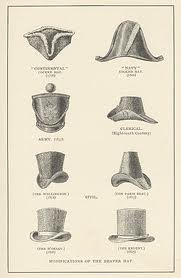
I started wondering why hats in the past couple of centuries were made from beaver fur. I learned that the beaver’s fur, sheared off, boiled, and pressed into thick felt, was so pliable it could be made into almost any shape of hat.  Beaver hats were warm, soft, and resistant to water. Between 1550 and about 1850, huge numbers of such hats were made, for both civilian and military use.

Some varieties of the beaver hat

Public Domain

Everyone had to have at least one. Wealthy men, like Jane Austen’s Mr. Darcy, had several. The European beaver was hunted and trapped to near-extinction.  Traders turned to North America, where the American beaver was plentiful. In fact, demand for beaver pelts was a big factor in colonial expansion in the New World, especially in Canada.  The Hudson’s Bay Company, founded in 1670, made a fortune in the beaver trade.  The company still exists today.

Finally, in the mid-1850’s, silk hats became more fashionable.  The beaver could relax a bit.

American Beaver by Steve, Creative Commons Share Alike 2.0

American Beaver by Steve, Creative Commons Share Alike 2.0

As far as I can see, the American beaver is thriving wherever there is water. I encountered this beaver-chewed tree in the middle of winter next to a stream in Colorado.

Beaver-chewed tree on Yampa River in Steamboat Springs

Beaver-chewed tree on stream in Colorado

People trying to maintain waterside property are not fond of the beaver.  Still, I have to admire the little guy’s energy and ambition.

Join me next time for more explorations into the art and history of Europe, and the many connections with development elsewhere in the world.

The Real Pocahontas

Pocahontas

I could spend many hours in the National Portrait Gallery in Washington, D.C. I recently encountered Pocahontas there.  The portrait is by an unknown artist, dating from about 1616. It was made from an engraving of Pocahontas during her trip to England as a young bride.

Pocahontas was a Native American “princess,” the daughter of Powhatan. Her father was a sort of chief of chiefs, heading many tribes in the tidewater area of what is now Virginia. As a perk of his high position, Powhatan reportedly married women from all the different tribes, kept each one until she had produced a child, then sent them home without the child. By all reports, Pocahontas was a favorite child of his.

Relations between the Native Americans and the English were sometimes friendly and sometimes hostile–no wonder, since the aim of the English was to exploit the resources of the “New World.”  When I was growing up, every American school child heard the endearing story of how an Englishman, John Smith, was about to be executed by Powhatan (by having his head bashed between two large rocks). Pocahontas, then about 12 or 13, threw herself on the Englishman and begged her father to spare his life.

From the bare bones of this story, there are not one but two Disney movies.  The real Pocahontas was captured by the English during a hostile period in 1613.  While in captivity, she converted to Christianity, and chose to stay with the English when she was offered freedom.  She took the new name “Rebecca.” Shortly afterward, she married an English tobacco planter, John Rolfe.

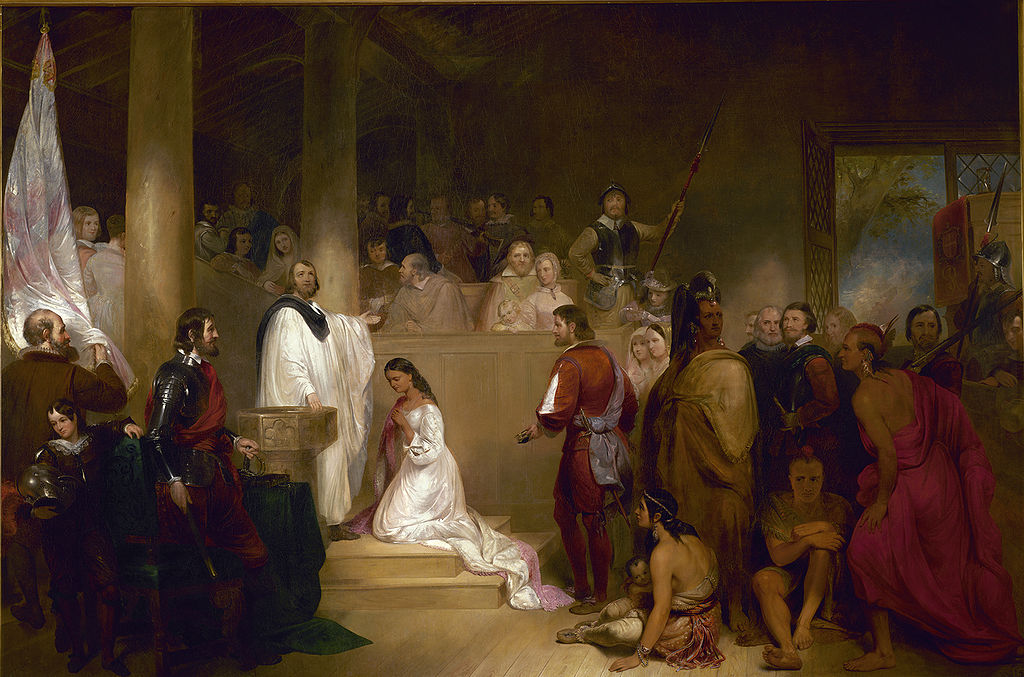
Baptism of Pocahontas, John Gadsby Chapman, 1840, Public Domain

Baptism of Pocahontas, John Gadsby Chapman, 1840, Public Domain

Her baptism and marriage were portrayed in 1840 by the American historical painter John Gadsby Chapman. The painting shows the groom just behind Pocahontas.  Her brother, in Native American dress, is turning away, presumably in disapproval.

The young bride gave birth to a son, Thomas Rolfe.  Then she and John Rolfe journeyed to England in 1616.  She was a bit of a sensation, presented as an example of the “civilizing” effect the English hoped to have on all the native peoples.  She died in England, at the age of only 21 or 22.

The descendants of Pocahontas, through her son Thomas Rolfe, include many notable Americans such as Edith Wilson, wife of Woodrow Wilson; Admiral Richard Byrd; Virginia Governor Harry Byrd; socialite Pauline de Rothschild; Nancy Reagan, wife of Ronald Reagan; and many others.

Join me next time for more explorations in the art and history of Europe!

When Virginia was a Colony

photo (1)

Recently at the National Portrait Gallery in Washington, D.C., I came upon a charming portrait of a young Queen Elizabeth I. It’s by an unknown artist and dates from around 1558. Sir Walter Raleigh tried to establish a British colony on what is now known as Roanoke Island.  He named the new colony “Virginia,” in honor of his young Queen, who was already establishing her popular image as the “Virgin Queen.” At the time, the young Elizabeth was keeping a wary eye on powerful Spain, which had extensive colonies already in the “New World.”

Elizabeth was also anxious to reinforce her credentials as the legitimate heir of King Henry VIII, a little problematic since her mother, Ann Boleyn, had been executed as an adulteress and traitor to the throne. So Elizabeth was portrayed with the famous square-cut stone known as “The Mirror of France,” which her father had also worn prominently.

Elizabeth I, Public Domain

Elizabeth I, Public Domain

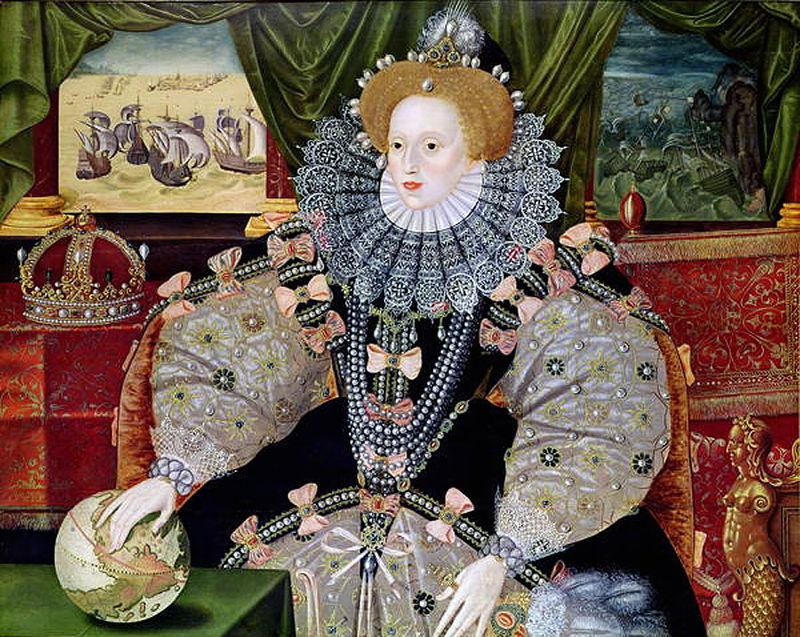
Years later, after the resounding defeat of the Spanish Armada, Elizabeth had fully developed her authority and had herself portrayed in much grander fashion, as in this portrait from around 1588.  The Queen rests her hand on a globe, symbolizing her international power.

I much prefer the very early portrait, depicting a young woman full of hope and promise at the very beginning of her glorious reign.

Join me next time for more explorations in the art and history of Europe!


“Belle:” A Tantalizing Glimpse Into History

Last week in Washington, DC,  sights like the Lincoln Memorial and the new Martin Luther King Memorial made me think about the history of slavery. A film now in theaters examines slavery, and race, from a unique perspective.

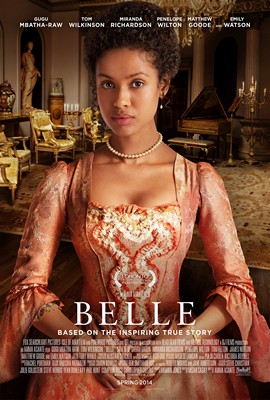
"Belle" theatrical release poster

“Belle” theatrical release poster

“Belle,” written by Misan Sagay and directed by Amman Asante, is a 2013 film about a real person, Dido Elizabeth Belle. She was the niece of William Murray, 1st Earl of Mansfield and Lord Chief Justice of England and Wales. She was the daughter of his younger brother, a Royal Navy Admiral, and a free black woman who had died. She was left in the care of her uncle to be a companion to her cousin, Lady Elizabeth Murray. Belle was raised as an aristocrat even though she was black. In the film, certain lines are drawn: Dido is not allowed to sit with the family at evening dinners when there is company,  but she is welcome in the drawing room afterward. Actually, little is known about Belle’s life, but the filmmakers have fashioned an absorbing story based on real-life events close to Belle.

Just as she was coming of age, Belle’s uncle had to decide a notorious case in which owners of a slave ship, the Zong, had thrown their cargo of slaves overboard in order to collect the insurance on their “property.” The Lord Chief Justice’s ruling was eagerly anticipated all across England.  If he went one way, slave traders would have a free hand in the future. If he went the opposite way, his ruling would spell the beginning of the end of slave trading in England.

To further complicate matters, Belle inherits a sizable fortune on the death of her father, while her white cousin is penniless.  Suddenly Belle has aristocratic suitors.

In the movie, Belle’s forbidden romance with a passionate, idealistic but impoverished young lawyer influences her uncle’s eventual decision. The luminous Gugu Mbatha-Raw plays Belle. The stellar cast includes the great Tom Wilkinson as the uncle, as well as Miranda Richardson, Penelope Wilton, Sam Reid, Matthew Goode, Emily Watson, Sarah Gadon, Tom Felton, and James Norton.

Dido and Elizabeth, Public Doman

Dido and Elizabeth, Public Doman

In 1779, Belle’s uncle commissioned a portrait of his two young nieces. The portrait is unique because it is one of the very first paintings that depict a black aristocrat as an equal to a white aristocrat. The painting, by an unknown artist, hung until 1922 at Kenwood House in Hampstead, where Belle grew up.  It is now at Scone Palace in Perth, Scotland.

Join me next time for more explorations in the art and history of Europe!

My Favorite Crown

What is the oldest surviving English crown doing in the Treasury of the Munich Residenz, home of the Wittelsbach dynasty for centuries? Apparently even the experts are not exactly sure of the sequence of events. But there it is, one of the most beautiful and evocative objects I’ve ever seen.

CrownFavorite

Most crowns considered important enough to be preserved are masculine-looking, as we’d expect in an overwhelmingly patriarchal world. Some of them have a unisex look, suitable for a king or queen, as needed. This crown, known as the “Bohemian” crown, is delicately feminine. It’s made of pure gold, of course. It is enameled and studded with rubies, sapphires, emeralds, diamonds and pearls. It looks lovingly handmade, as no doubt it was. It is quite tall, as crowns and tiaras go: about 7 inches. What I find unique is the airy, open design–not an easy feat to pull off with the many huge gems it holds. The wearer would automatically assume a regal posture, I would think, just in order to live up to this gorgeous object.

The crown was made around 1370-80. It was recorded in a list of jewels in England in 1399. Curators believe it belonged originally to either King Edward II or Anne of Bohemia. Anne was married to King RIchard II. But along came his dashing cousin, Henry IV, star of the Shakespeare history plays. He deposed Richard. Eventually, in 1402, Henry’s daughter Blanche married Ludwig III, an Elector–more or less an elected king in what is now Germany. The crown was part of her dowry, so it ended up in the Treasury of the Wittelsbachs.

The museum’s own write-up about this crown is at http://www.residenz-muenchen.de/englisch/treasury/pic11.htm

Join me next time for more explorations into the art and history of Europe!

Visiting Sudeley Castle

SudeleyRoses

I don’t know if I’d care to have several separate funerals with crowds of strangers as mourners, but then I’m not an English Queen who was born 500 years ago and survived marriage to King Henry VIII. Katherine Parr, the 6th wife of Henry VIII, was honored last September with not one but two re-enactments of her funeral on the anniversary of her birth. She had already had at least one funeral when she died, plus another one when her coffin was rediscovered following the ruin of her burial place during the English Civil War, plus another one when her tomb was renovated to its present state. An excellent article about the most recent funerals is at http://www.telegraph.co.uk/travel/destinations/europe/uk/9474364/Sudeley-Castle-the-curious-life-and-death-of-Katherine-Parr.html.

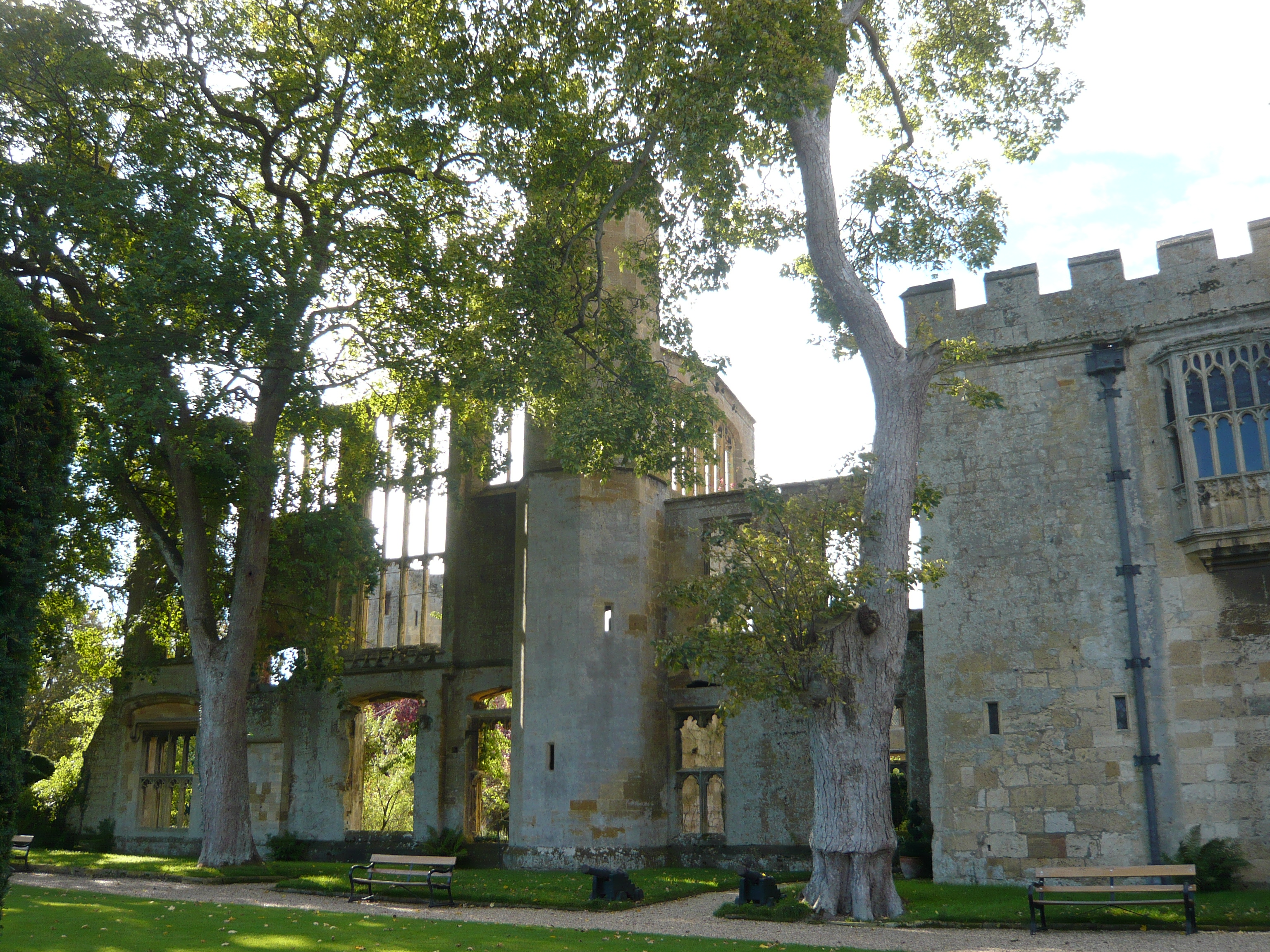
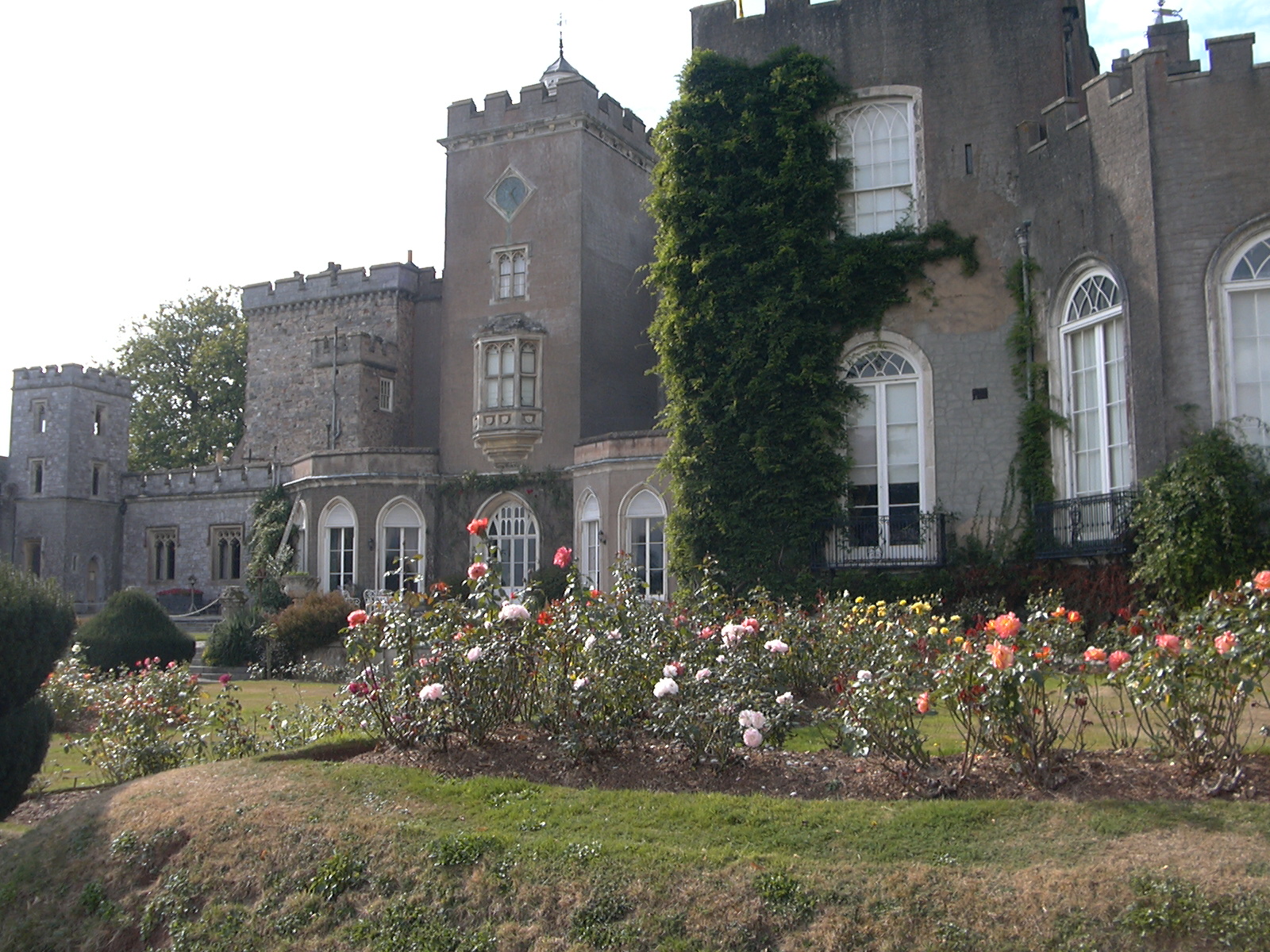
Sudeley Castle with ruins of banqueting hall

Sudeley Castle with ruins of banqueting hall

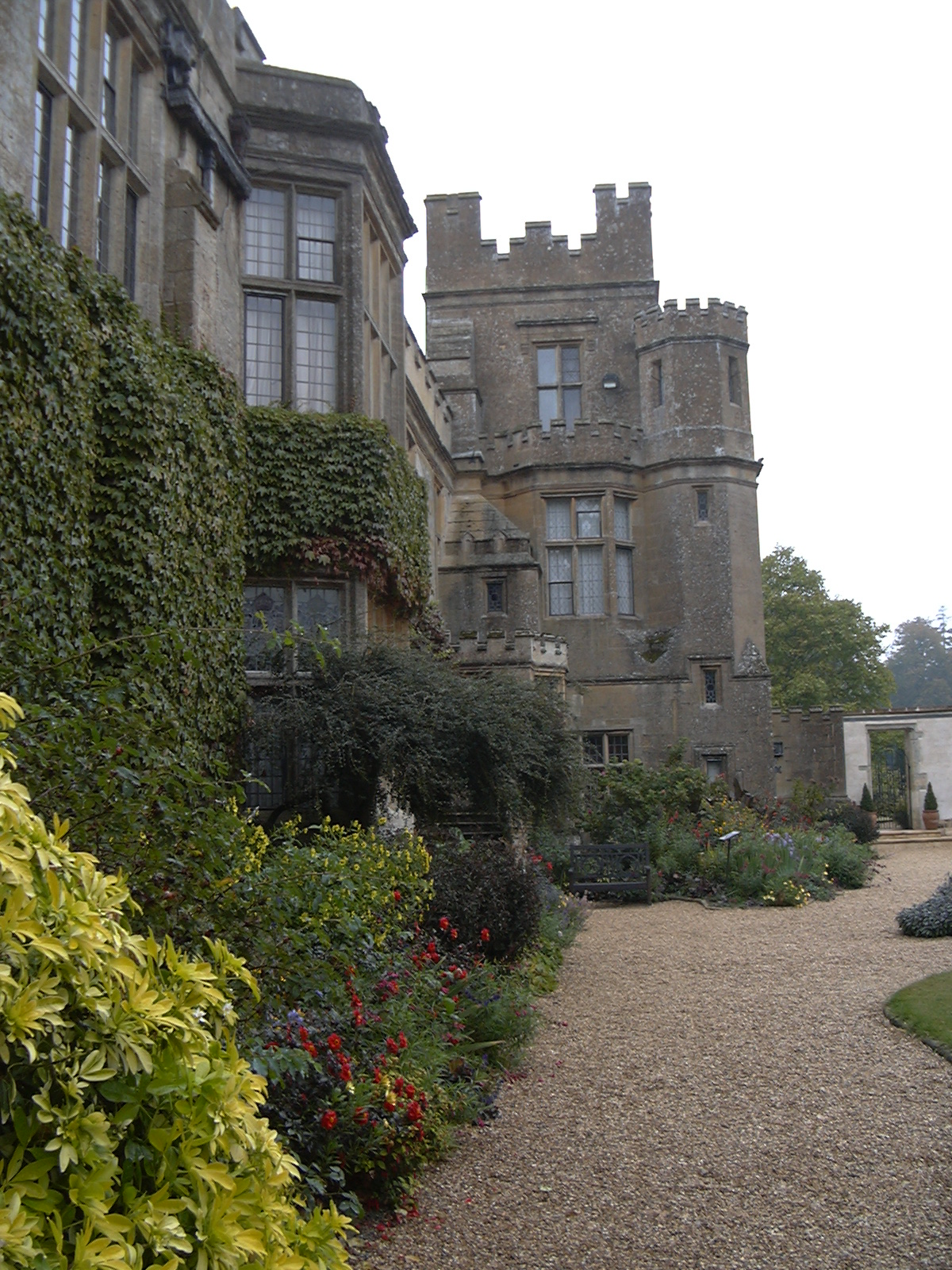
Sudeley Castle is one of the most interesting and evocative historic sites to visit in England. Its origins date from around the 12th century. It has passed in and out of royal possession several times, depending on politics and the outcome of battles. It has been the scene of intrigue and rebellion. Most famously, it was home to three Queens at the same time: Katherine Parr, Elizabeth I, and the ill-fated Lady Jane Grey. The castle is mainly a private home, owned since the 19th century by the Dent-Broklehurst family. They open large parts of the grounds and building for visits at certain times. However, English Heritage members receive a 20% discount.

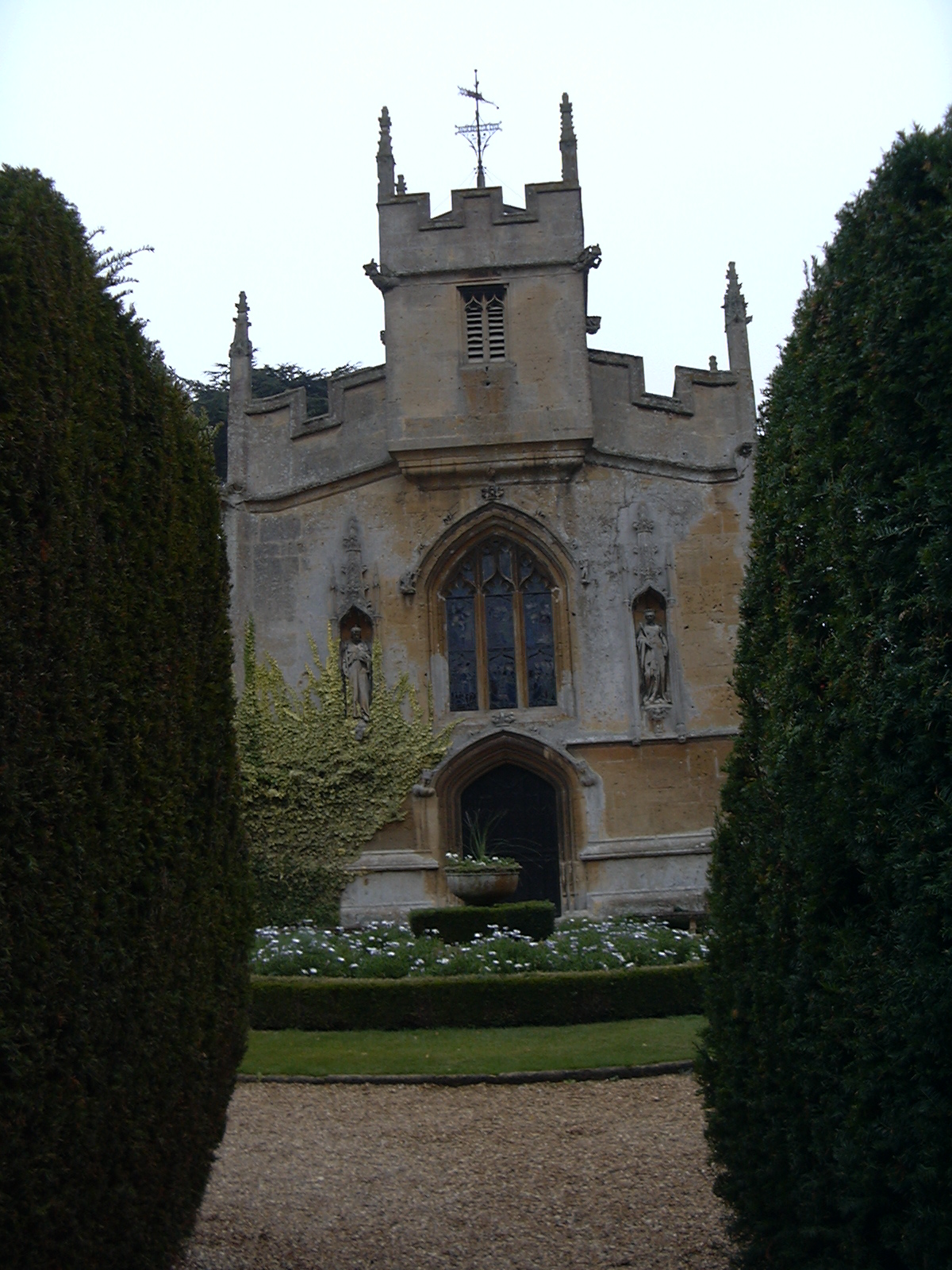
St. Mary's Chapel at Sudeley

St. Mary’s Chapel at Sudeley

The chapel is still part of a Church of England parish. Services still take place there–mostly, I think, on Sunday afternoons. According to the castle website, Sudeley Castle is open from
mid-March to early November
from 10.30am-5.00pm daily. On certain days of the week, it is possible to pay an extra fee and tour parts of the family’s private quarters. I would go out of my way to take the private tour. (Children under 12 are not allowed in the private quarters). There are also special garden tours on certain days. I would always check the opening times before driving out to the Castle, though. Weddings or private events could interfere interfere with parts of the Castle and grounds. I would call.

If the place were open, though, I would cheerfully spend about half a day wandering the grounds, touring the castle and chapel, and having lunch on the terrace or in the very nice indoor restaurant. Since I was there last, the Tudor rooms occupied by the three Queens have been restored. There are museum-quality exhibits of exquisite personal possessions of Katherine Parr–and, somewhat ghoulishly, a blackened tooth taken from her coffin. I also remember seeing a very interesting exhibit about a Victorian ancestor of the present owners, Emma Dent. Possibly the exhibit about Katherine Parr occupies that exhibition space at the moment.

The nearby village of Winchcombe is very pretty and not nearly as crowded or touristy as more well-known towns in the Cotswolds. I once stayed in one of the Sudeley Cottages between the Castle and Winchcombe. The Cottages formerly housed some of the help at the castle. They sleep 2-6. They are well-equipped, charming and affordable. WInchcombe is my favorite base in the Cotswolds. It feels like a regular town where actual people go about their lives as they have for centuries.

Time to start planning an English itinerary!

Sudeley Castle: Home of Three Queens

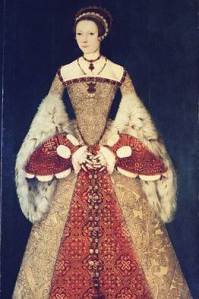
Katherine Parr, Public Domain

Katherine Parr, Public Domain

King Henry VIII died in January of 1547, leaving his 6th wife, Katherine Parr, a generous settlement. Within a few months of Henry’s death, Katherine secretly married Thomas Seymour. There was a bit of a scandal because of the unseemly haste and secrecy of the wedding, but they rode it out. Thomas was the brother of Henry’s 3rd wife, Jane Seymour. She had married Henry after Anne Boleyn’s execution. She died after giving birth to Henry’s long-awaited male heir, Edward. Many people believed that Katherine had planned to marry Thomas Seymour all along, and had only married Henry out of a sense of duty to her monarch. (I have to wonder whether anyone ever got away with saying “no” to Henry about anything, including marriage).

Henry had entrusted Katherine with the care and education of Elizabeth, the orphaned daughter of Henry and the unfortunate Ann Boleyn. Thomas Seymour, who had high political ambitions, became the guardian of young Lady Jane Grey, who was a minor and cousin of the late Henry. (Later, Thomas was part of a plot to place the innocent pawn Jane Grey on the throne. The doomed plot cost Lady Jane her head at age 17). For awhile, though, the couple and their young charges lived in apparent harmony at Sudeley Castle. I can imagine the two young women and their older guardian studying together in the sunny rooms and peaceful Queen’s Garden.

ElizCastle

The harmony did not last long. Soon rumors flew that Thomas Seymour was overly interested in the young Elizabeth, and she in him. She was packed off to live elsewhere.

SudeleyChapel

Katherine died a few days after giving birth to her first and only child in 1548. Thomas Seymour was off to bigger and better things. He abandoned the infant daughter, who was taken in by a friend of Katherine’s and essentially never heard from again. Katherine was buried in St. Mary’s Chapel at Sudeley, mourned mainly by young Lady Jane Grey. But a hundred years later, during the Civil War, the chapel was ruined and her body was lost. A farmer found her coffin in 1782. He opened it, found her body well-preserved, took a lock of hair, and reburied her. The coffin was dug up again and reburied several more times, once upside-down by drunken hooligans. Finally, in 1817, her body was moved back to Sudeley, the chapel was rebuilt, and eventually a magnificent tomb was built as a final resting place for Katherine.

SudeleyRoses

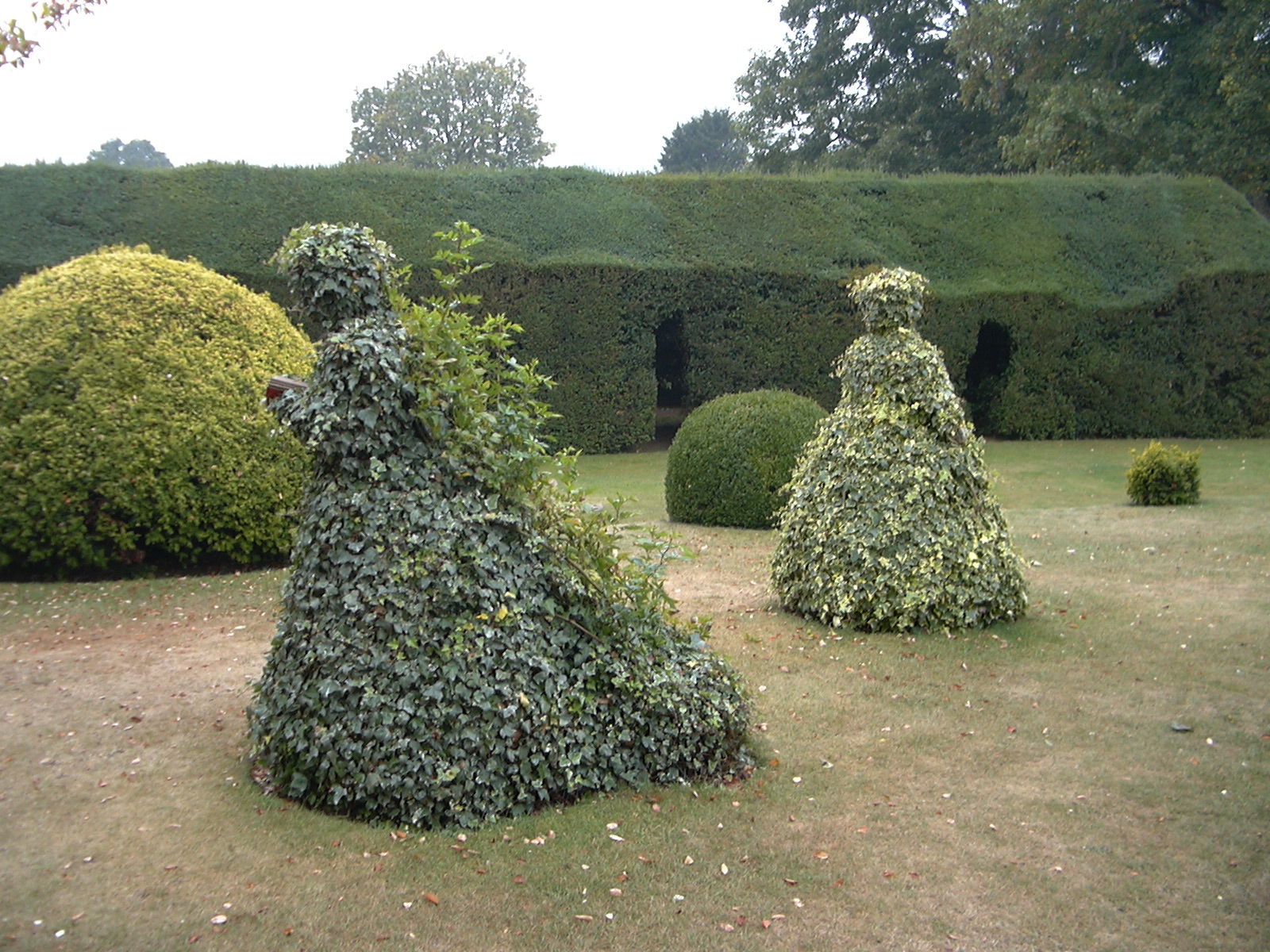
A ghost adds immeasurably to the elegance of any castle, especially a royal ghost. Sudeley’s is believed to be Katherine Parr. Tour guides report that a lady dressed in green has appeared to numerous people. I doubt I will ever see the ghost, but I have seen a Green Lady–or, rather, two of them. On the pathway from the castle to the chapel stand topiary figures of Katherine and her dear companion, the young Lady Jane Grey. Tour guides explain that the two women attended chapel every day during the short time they had together.

SudelyTopiaries04

Royal or not, women in the Tudor and Elizabethan era lived in perilous times. Between political machinations controlled by men, and the dangers of childbirth controlled by no one, they often lived short and tragic lives. I’m looking forward to a new historical fiction account of Katherine Parr’s life, Queen’s Gambit, by Elizabeth Fremantle. I’m sure it will relate the stories of Lady Jane Grey and the young Elizabeth to Katherine Parr’s life. A Wall Street Journal article about the writer’s process of telling this remarkable woman’s story is at http://online.wsj.com/article/SB10001424127887323610704578627820370655036.html.

Join me next time for more on the art, history and literature of Europe and the British Isles!