Category Archives: England

John Ruskin

Brantwood, the home of English writer/critic/artist John Ruskin, is one of many enchanting sights in the Lake District of northern England. Ruskin bought this lakeshore home in 1872 and lived there for the rest of his life.  I can see why.

RuskinShore

The house and gardens are on the shore of beautiful Coniston Water.
RuskinBoats

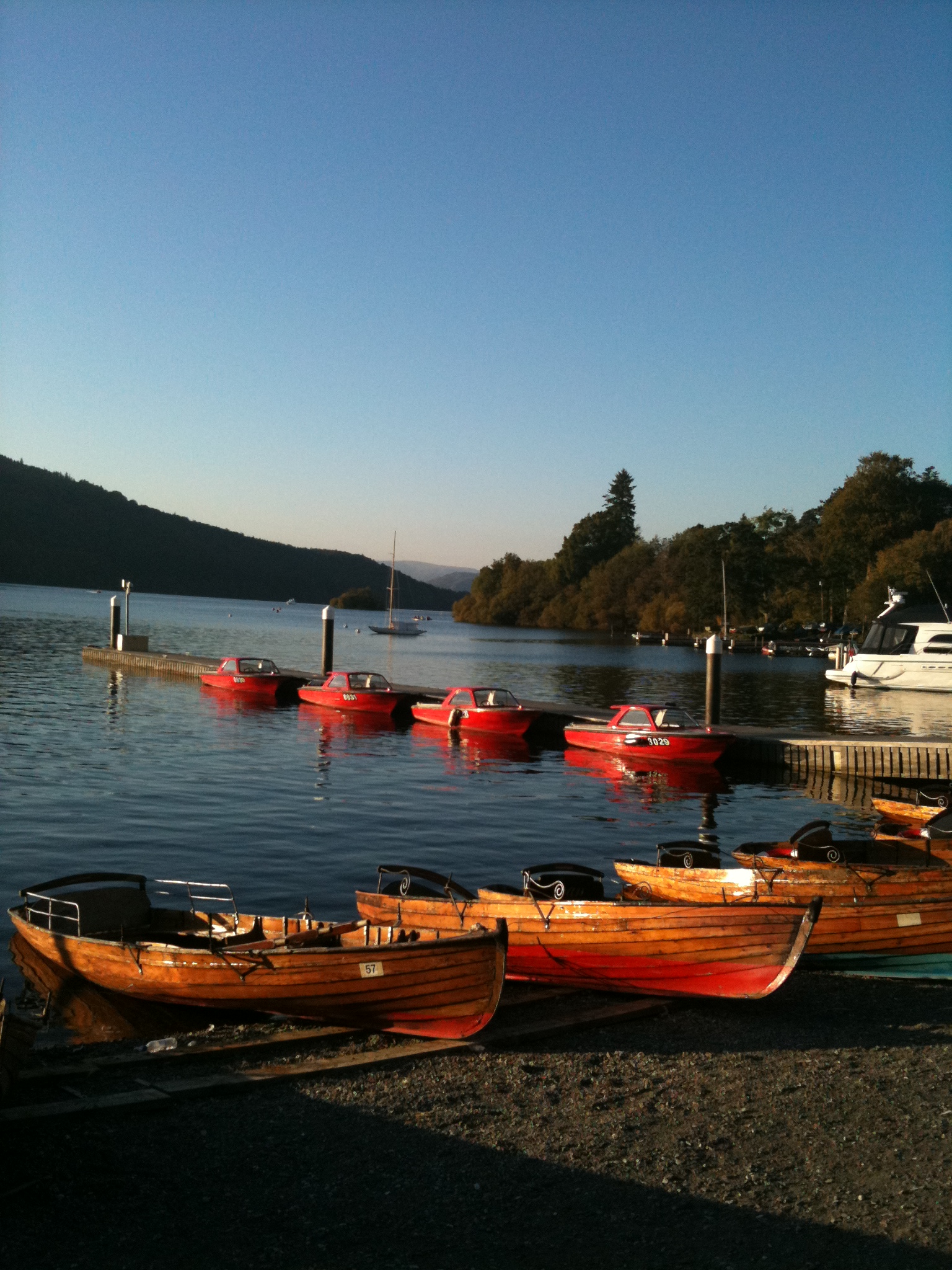
The cafe is called the Jumping Jenny, after the boat Ruskin used to potter around the lake on.  His boat probably looked like one of these.

RuskinStudy

Ruskin’s study is crammed with evidence of his wide and varied interests and expertise:  in the natural world, scientific discoveries, literature, architecture, design, art, history, and any number of other fields.  He had advanced social views for his time, too.  One of his concerns was the plight of the worker in the industrial age.  He felt that modern manufacturing demanded that workers give up their most human qualities, to everyone’s detriment.

This quotation, on a placard in Ruskin’s study, caught my eye:  “You can teach a man to draw a straight line, and to cut one; to strike a curved line, and to carve it; and to copy and carve any number of given lines and forms, with admirable speed and precision, and you find his work is perfect of its kind; but if you ask  him to think about any of those forms, to consider if he cannot find any better in his own head, he stops; his execution becomes hesitating…But you have made a man of him for all that. He was only a machine before, an animated tool.”  The words are from Ruskins book “Stones of Venice.”

John Ruskin in 1863, photograph by William Downey, Public Domain

John Ruskin in 1863, photograph by William Downey, Public Domain

If I were given a chance to meet 10 people from the past, John Ruskin would be high on my list. And I’d make arrangements to meet him at his home in the Lake District!

Join me next time for more explorations in European history and art!
Why I Love England and Can’t Wait to Return

I always have good intentions of posting almost daily while traveling, but I always end up rushing around seeing more things than I can record and think about.  That comes later, when I have time to go through my pictures–not to mention the guidebooks that make my suitcase weigh a ton on the trip home. It’s time to sift through my memories of my last trip and begin planning another one.

StreamMottisfont

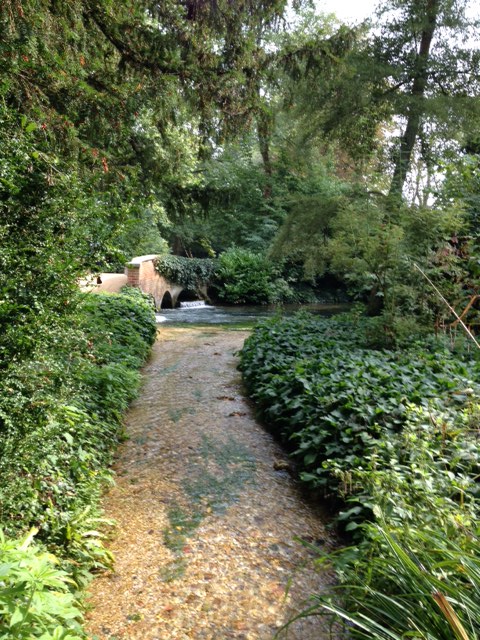
I love the streams that meander through the English countryside. Estates fortunate enough to have a stream have ancient plantings and walkways, because generations have paused to listen to the rushing water.  This stream is at Mottisfont.

FenceUppark

A fence can become a work of art, when there’s a passionate gardener around.  And England is full of passionate gardeners.  This fence is at Uppark.

RememberAnimals

The British are thoughtful, and their memories are long.  In this year of remembering those fallen in World War I, there are also memorials to the non-human victims.  This wreath, found in the village of Arundel, honors the millions of innocent animals that suffered during the terrible war years. As in town and villages all over England, simple wooden crosses with poppies honor the local war dead. I thought it was nice to create a wreath of blue poppies to honor the animals.

MiadDisplayBlen

The historical sights are making new efforts to attract visitors, and to explain their histories in engaging ways. At Blenheim Palace, there’s a series of rooms that dramatize important events in the palace’s history through the eyes of a lady’s maid. This (wax) woman was awakened in a bedroom where she wasn’t supposed to be, setting off a Marlborough family scandal that turned into a government crisis in days long past.  I would rather read my history and see actual artifacts, but I appreciate the effort that goes into exhibits like this.


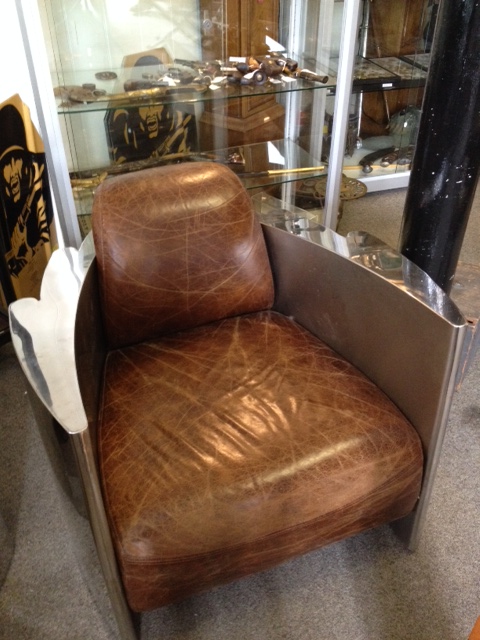
LeatherChromeChair

Antique shops are crammed with unusual and very British items, like this well-worn Art Deco chair.

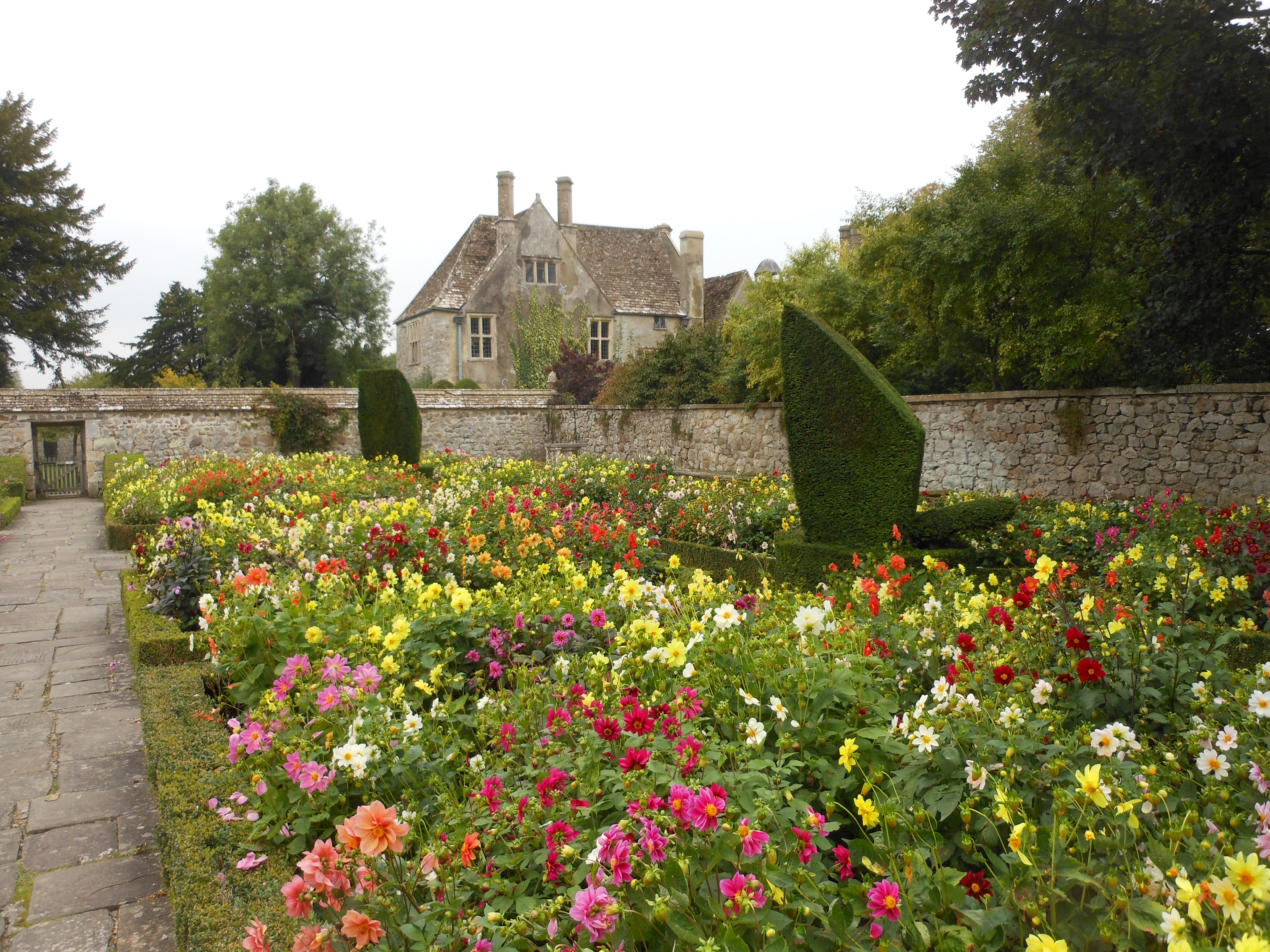
Flowers

And have I mentioned the flowers? These are at Avebury Manor. Well into the fall, the temperate climate of England keeps flowers blooming.  Yes, I love England!

Join me next time for more explorations in the art and history of Europe and the British Isles!


Sir Winston’s Cat

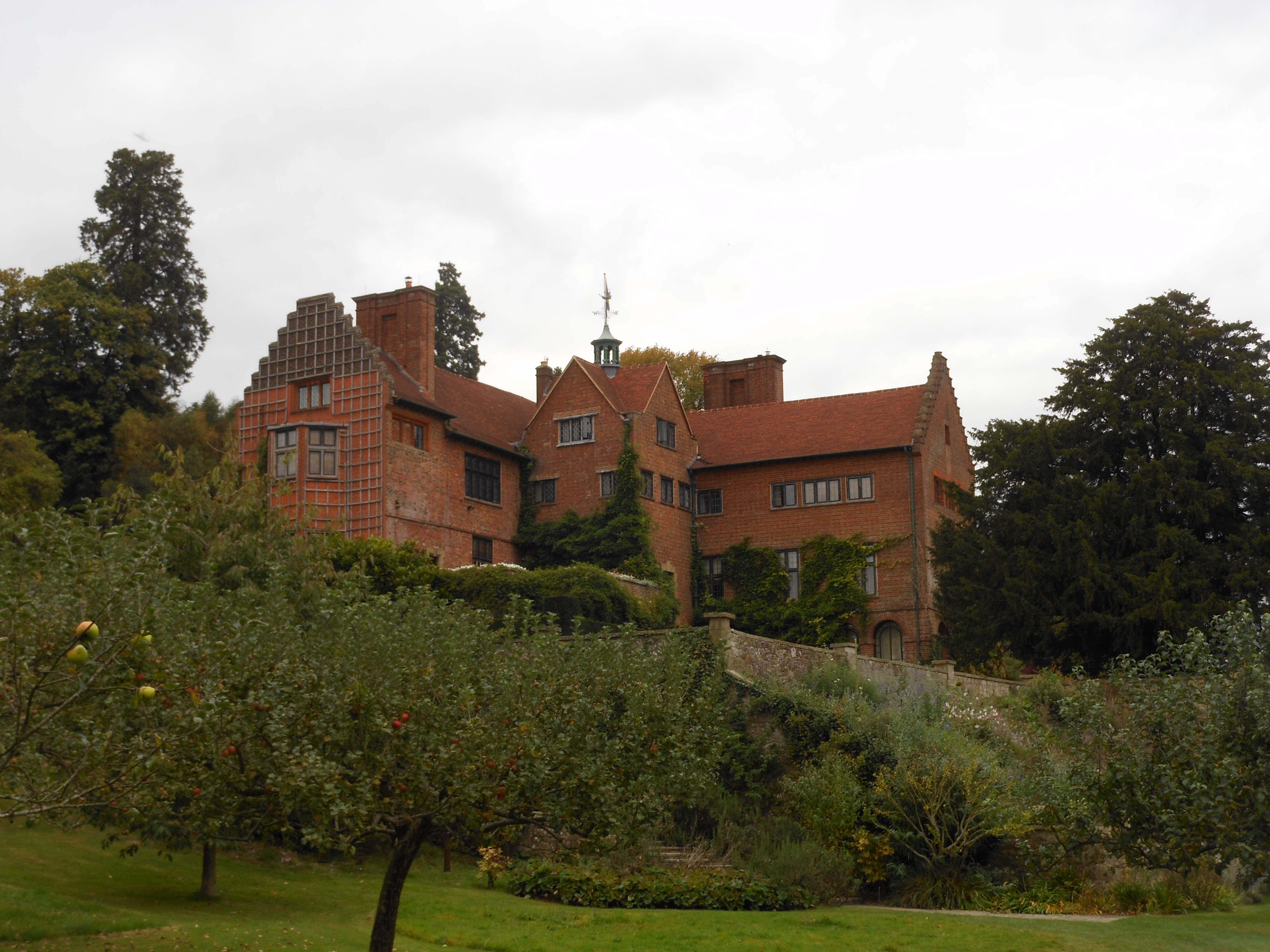
Chartwell

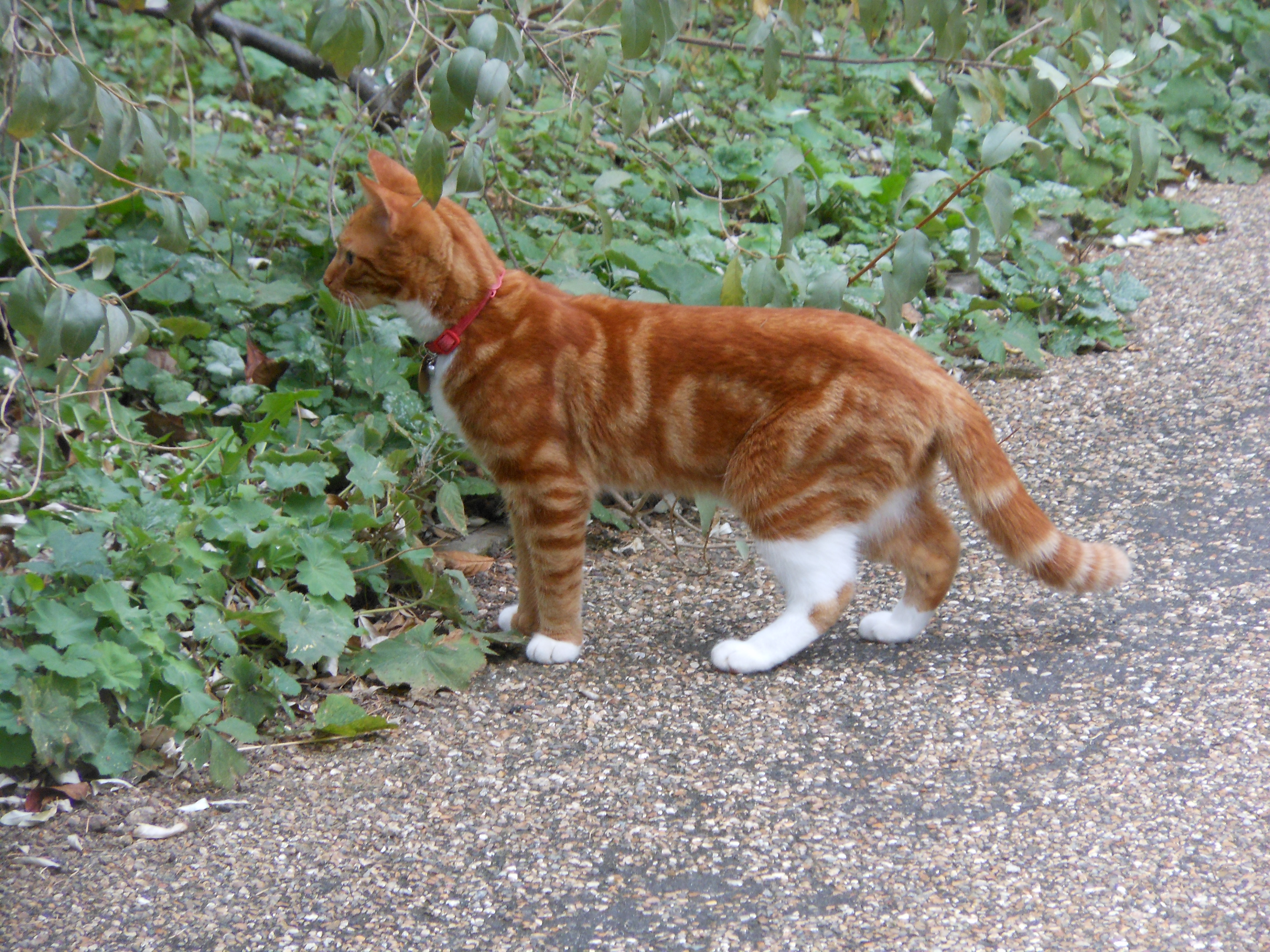
When I was planning my trip to England, I read about the new kitten that recently took up residence at Chartwell, the country home of Sir Winston Churchill.  When Churchill’s family gave the property to the National Trust to become a museum in 1966, they specified that there must always be on the property a marmalade cat with a white bib and white boots.  Sir Winston had owned such a cat for many years. The Chartwell cat must always be named “Jock,” after the family’s beloved pet.  Jock V recently retired to Scotland, and the perfect Jock VI was located in a local animal shelter. I wrote about Sir WInston’s unhappy childhood and his determination to create a happy home for his own children in a previous post, “The Bulldog and the Marmalade Cat” at  https://castlesandcoffeehouses.com/2014/09/12/the-bulldog-an…-marmalade-cat/

Jock1

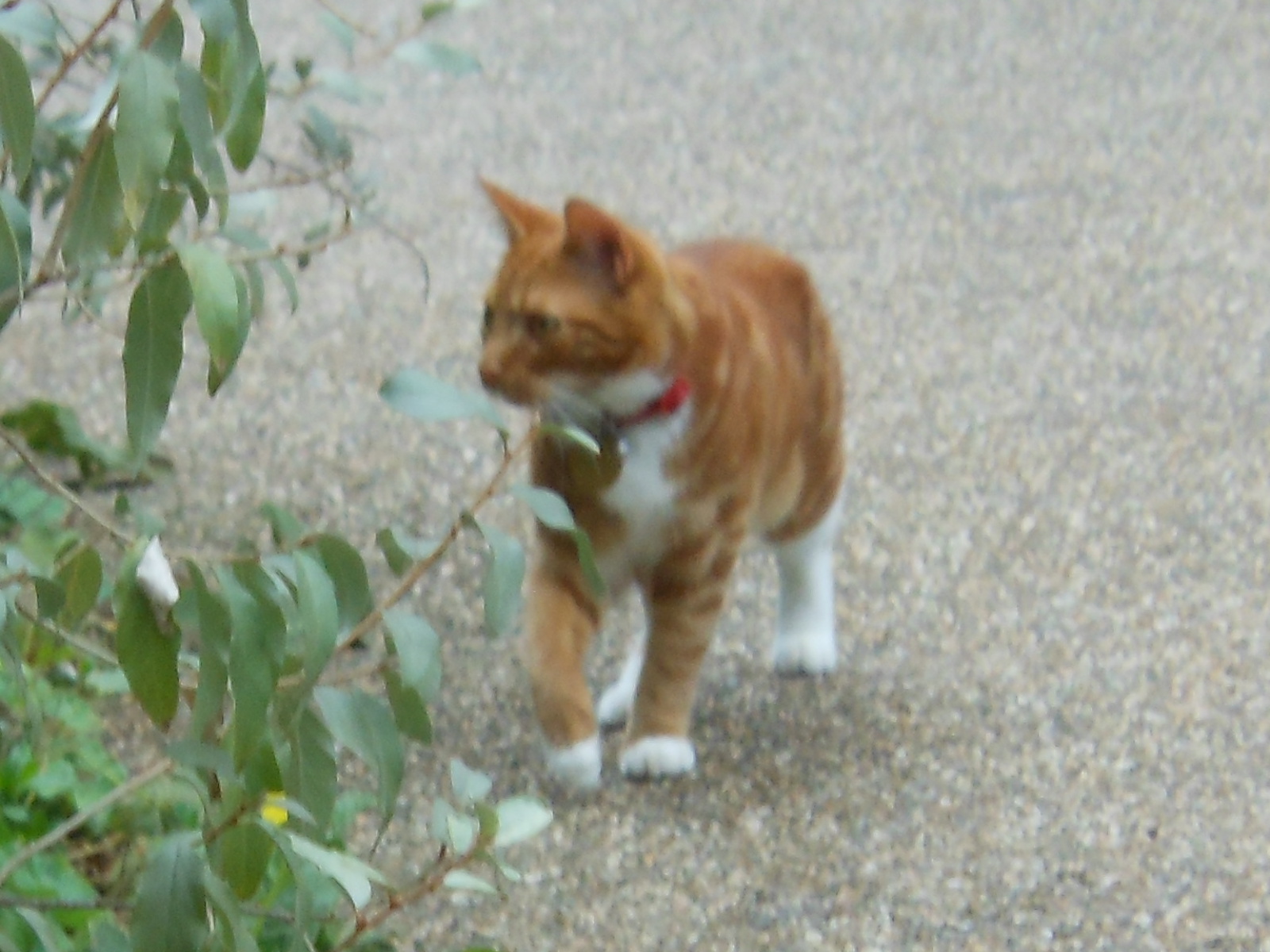
When I visited Chartwell yesterday, I searched for Jock in the Rose Garden, the woodland walkways, beside the pond with the black swans, and in the flower beds beside Sir Winston’s painting studio.  I was leaving, disappointed, when who should spring right into my path?

Jock2

Jock had his eye on something in the shrubbery.

Jock3

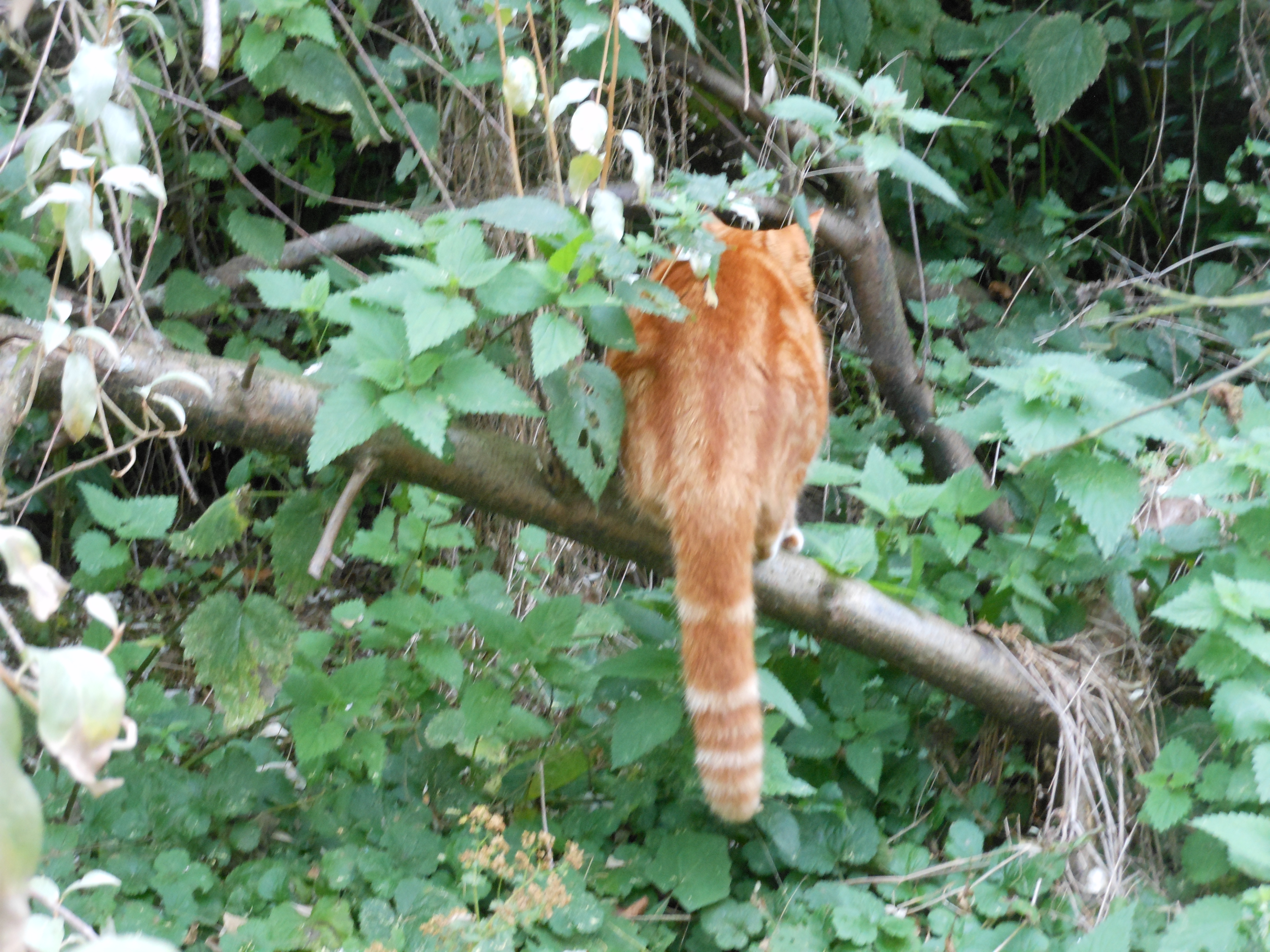
He perched on a branch, watching the ground intently and switching his orange-and-white-striped tail.

Jock4

Then he turned around and very briefly glanced at me, the tourist excitedly taking his picture. Jock certainly has some of Sir WInston’s charisma and supreme self-confidence. I also think some of Sir Winston’s political acumen has already rubbed off on Jock.  He is a busy cat with countless demands on his time. But like any good politician, he took a moment to pose for me.  He showed off the “target” design on his side that marks him as a classic tabby.

Sir Winston Churchill was a soldier, a statesman, a Nobel prize-winning writer, and a great orator who led his country to victory over seemingly insurmountable odds.  His childhood was lonely and unhappy; his father actively disliked him and never missed an opportunity to tell him that he would never amount to anything.  His beautiful mother rarely paid him any attention. Young Winston was ambitious and ruthless in getting what he wanted, but he was also far more compassionate than either of his parents. He was a loving family man with a soft spot for a marmalade cat.  I feel that I know Sir Winston better than I did before.

Maybe Jock wanted to get closer?  Maybe he fancied being scratched behind his ears?  No such luck.  Jock was needed elsewhere.  The entire estate is his responsibility.  Off he went at a gallop.  No matter.  He made my day!

Remembrance of Wars Past: A Sea of Poppies at the Tower of London

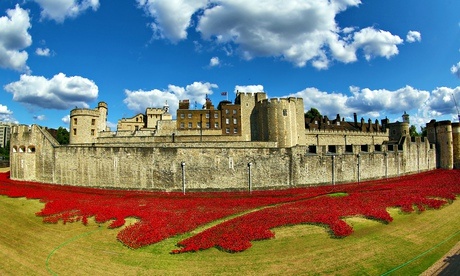
Ceramic poppies fill the Tower of London moat

“Blood Swept Lands and Seas of Red” is the title of an art installation taking place at the Tower of London from August to November of this year, the 100th anniversary of the outbreak of the First World War.  The title comes from a poem written by an unknown soldier. People are invited to buy a ceramic poppy for the installation, up to a total of 888,246 poppies, one for every death in the British forces. The photo above is from The Guardian at http://www.theguardian.com/world/2014/sep/01/tower-of-londons-ww1-remembrance-installation-share-your-photos-and-videos. The designer of the installation is Tom Piper.  Poppies are made by ceramic artist Paul Cummins.

The poppy above was photographed in the small military museum on the estate of Hever Castle, southwest of London.

TownMemorial

The memories of World War I extend all over England this year, into the smallest villages in the country. Most towns have a memorial built to remember the local soldiers fallen in the
“Great War.”  Sadly, within a few short decades new names had to be added from each town, with the outbreak of the Second World War.

Soldiers who fell in battle were buried in identically marked graves, regardless of their social or military rank.

SoldierAge19

Many grieving families put up special memorials to their loved ones close to home. This plaque, in Salisbury Cathedral, poignantly remembers a nineteen-year-old soldier, Edward Wyndham Tennant. the son of a lord. He must have entered the war as an officer. He died in the Battle of the Somme in 1916. On the plaque above his marble relief portrait, a fellow soldier describes the young man’s leadership:  “When things were at their worst he would go up and down in the trenches cheering the men; when danger was greatest his smile was loveliest.”

RedCrossNurse

Those who could not fight helped the war effort in other ways, in both great wars.  All of the great British country houses I’ve visited on this trip have displays recalling their days as hospitals or military bases. Operating rooms were established in kitchens, and convalescent wards occupied Great Halls. Young aristocratic women rolled up their sleeves and cheerfully served as nurses.

Wreath2

This is a year for Britons to recognize the sacrifices of those who served their country in the Great Wars.

Farewell to My Favorite Duchess, Deborah Mitford Devonshire

DeboChatsworth

Deborah Devonshire, known as “Debo” to her large family, died today at the age of 94.  She was the youngest of the famous (and notorious) Mitford sisters.  Deborah was considered a little dim by her lively eccentric family, but she was really as bright as the best of them; she just bloomed a little later.

One sister had a longstanding affair with a leader of the French Resistance in World War II, and wrote brilliant comic novels about English aristocratic life.  One sister married a Guinness, but soon left him for the leader of the British Fascists and spent the war years in prison with him. One sister became obsessed with Adolph Hitler and actually became his friend; she shot herself when England declared war on Germany and eventually died of her injuries.  One sister eloped with a man off to fight in the Spanish Civil War, then left that husband for a Communist and spent the rest of her life in the United States as a Communist sympathizer and agitator. Another sister led a quiet country life.  And then there was Deborah.

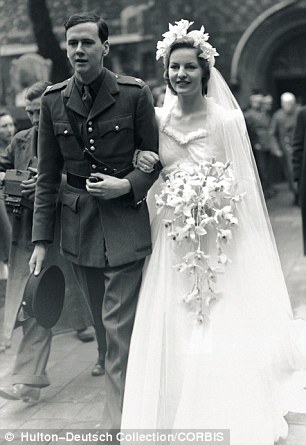
DeboWedding

During World War II, she married the younger son of an aristocratic family.  She expected a quiet country life, poor but happy. He unexpectedly became the Duke of Devonshire when his older brother, who had married Kathleen “Kick” Kennedy, was killed in combat in World War II. (Debo became a friend of President Kennedy; she attended his inauguration, which she playfully insisted on calling his “coronation.”) With the Dukedom came huge estates and grand country homes, nearly impossible to maintain.  The world was changing, as dramatized in the TV series Downton Abbey.

For the Devonshires, the solution to keeping Chatsworth, one of  the grandest and most historic stately homes in the country, was up to Deborah.  She rose to the challenge. She spruced up the house and made it ready for a steady stream of paying tourists.  She decided that tourists liked to eat and to buy things.  Soon she had restaurants and elegant shops selling everything from keychains to custom furniture.  She created a children’s farm so that city children could have hands-on experience of running a farm and seeing where the food in the grocery store came from.  She created a farm shop with her own Chatsworth brands of every kind of food grown on the vast estate. Her shops were “local and organic” decades before those terms became trendy.

When the Duke died, Deborah became the Dowager Duchess. She graciously moved out of the grand house and into a smaller house in the village.  There, to the end of her life, she wrote vastly entertaining memoirs and books about country life.  She listened to Elvis records:  she was a great fan.  She raised her beloved chickens and still oversaw every aspect of the thriving Chatsworth businesses that she had created almost single-handed.  May she rest in peace.

DeboChickens

The photos above are from a story about Deborah’s  life and death in the Daily Mail at http://www.dailymail.co.uk/news/article-2768095/BREAKING-NEWS-Last-Mitford-sisters-Dowager-Duchess-Devonshire-died-aged-94.html

Why I Love England, Mid-Trip

SalisburyFacade

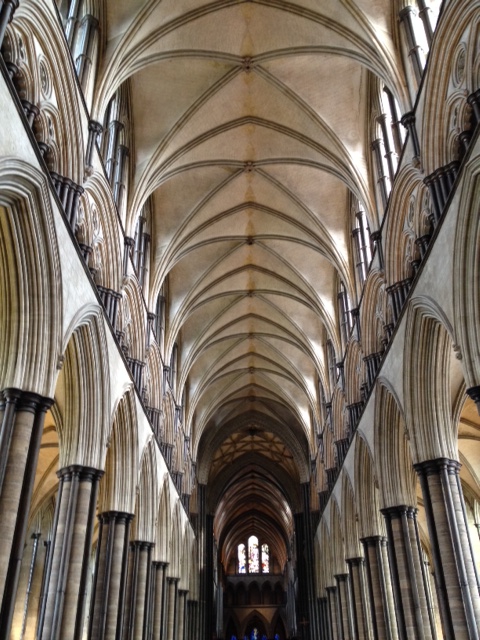
Country towns that used to be powerful have magnificent cathedrals.  The one at Salisbury is breathtaking. This cathedral was completed in 1258 and has not changed since then.

photo (23)

The Gothic ceiling of Salisbury Cathedral is a marvel of engineering.  These beautiful Gothic ceilings always make me feel like I’m in an orderly forest of tall majestic trees whose branches intertwine far above the ground.

photo (22)

In the countryside, a horse is still transportation.  This pretty girl was contentedly chomping grass outside the National Trust property of Mottisfont, while her owner visited the museum and probably also had a spot of tea in the tearoom.

GardenUppark

Have I mentioned gardens, part of every historical and literary sight?  This lawn and flower bed grace the grounds at Uppark, a mansion where Queen Victoria’s son the Prince of Wales whiled away his time carousing.  The notorious playboy owner of Uppark finally settled down at age 70 when he married his milkmaid.  The writer H. G. Wells spent part of his boyhood at the mansion, where his mother worked as the housekeeper.

FlowerboxWoodstock

And then there are the flowerboxes right outside my bed and breakfast in Woodstock.  Yes, I love England!

Jane Austen and Me: Six Degrees of Separation

JaneHouseJane Austen lived the last few years of her too-short life in tranquil Chawton, Hampshire, with her mother, her cherished sister Cassandra, and and a family friend. The women were in a precarious financial state after the death of Jane’s father.  Like most single women of their time, they had to depend on the kindness of relatives for a roof over their heads.

Edward Knight

Edward Knight

It was their good fortune that Jane’s brother Edward Knight was able to come to the rescue. Why was his name Edward Knight, not Edward Austen?  He had been formally adopted by a childless cousin of Jane’s father, Thomas Knight.  Thomas and his wife Catherine were wealthy and childless.  They made Edward their heir.  He inherited several estates, among them a grand house at Chawton.  The house came with a sizable but cozy cottage, which Edward made available to his mother and sisters for their lifetimes.

At last, in her thirties, Jane had a stable home.  She had begun writing as a teenager but had more or less given it up during the years that she had no settled home.  In Chawton, she established a routine of writing every morning at a little round table in front of the dining room window.  Her sister Cassandra took over morning household chores, giving Jane the freedom to write. In the afternoons, they took long walks in the countryside–just like Jane’s heroines. They also spent a lot of time visiting friends and relatives, including the wealthy connections Edward Knight was able to give them.

Jane's TableOn this humble little table, Jane wrote the classics we know and love: Persuasion, Pride and Prejudice, Sense and Sensibility, Northanger Abbey, Mansfield Park, and Emma. Some of them she had begun earlier and had put away. Family lore had it that a squeaky door was purposely never oiled, so that Jane always had warning of visitors.  She would hastily hide her manuscript until the visitors had left.

Jane’s books dealt gently and humorously with the serious problems of women dependent on men for economic security.  As she knew all too well from her own life, an unmarried woman without a fortune of her own had very few options for survival.

I was deep in a discussion about Austen family history with a man stationed in the house, when I noticed that his name tag said, “Mr. Knight.”  Could it be?  Yes!  My Mr. Knight was a living, breathing, direct descendant of Jane’s brother! I think he looks just like his ancestor.

MeKnightIn England, it always seems to me that history comes to life!

Why I Love England

TyntFlowers

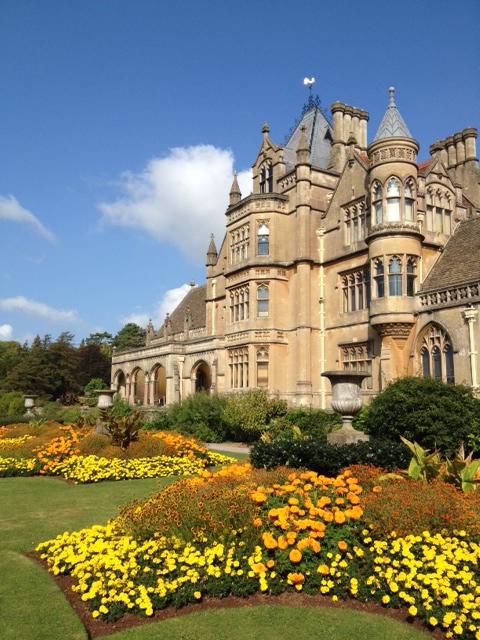
England is a nation of gardeners.  The flower beds above are at glorious Tyntesfield, a Victorian property rescued by the National Trust about 12 years ago.  Thanks to the Trust, it’s open to everyone.

Castles and cottages alike have lovingly tended flower beds everywhere.  The steady, temperate climate must have something to do with it, but it also takes people who have loved and cared for their land for generations.

FlowersAvebury

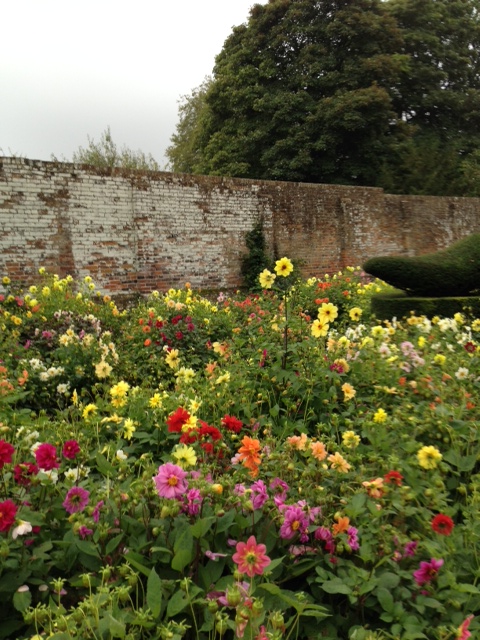
An old garden wall is as beautiful as the garden it shelters.

Westie

A British dog knows its place in the world. This Westie is a connoisseur of cultural sights and also of scones with clotted cream and jam.

Topiaries

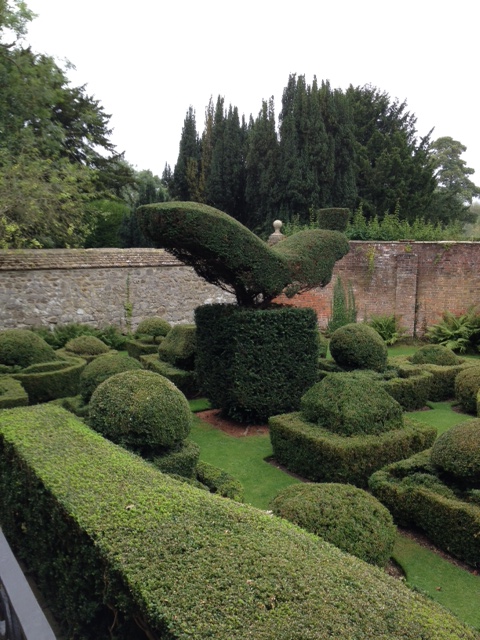
Topiaries?  The British are masters.  Nothing is too much trouble. This topiary looked at first like a dental chair, but I’m pretty sure it’s a peacock.

ReadSigns

English is my native language, so there’s no struggle to understand what I’m hearing or reading. I can read all the signs, and the signs tend to be friendly.  This one, at Tyntesfield, invites me: “Have a sit down!” Thank you.  I don’t mind if I do!


Stonehenge Without the Crowds

DSCN7646

The Autumn Equinox is nearly upon us, and many people like to celebrate it at an ancient sacred sight such as Stonehenge.  I hadn’t planned to visit Stonehenge on this trip, having been there before.  But my route took me within two miles right at sunset, and I couldn’t resist.  The highway passes right beside the ancient stone circle.  Traffic crawled along; there was plenty of time to take in the awesome sight right from the highway.  Maybe it was the equinox, or maybe it was just some kind of Sunday evening rush hour.  Whatever the reason, I joined a long line of cars slowly making its way past the circle. Magic! No parking, no tickets, no shuttlebus from the parking lot, no grousing about the new roads and high-tech visitor’s center.

DSCN7424

I did make a visit to nearby Avebury, a pretty village that has grown up inside a stone cirlce believed to be even older and more important than Stonehenge.

DSCN7363

Some people were dressed in special Equinox finery. I saw a lot of happy-looking people in capes and floral wreaths.

DSCN7425

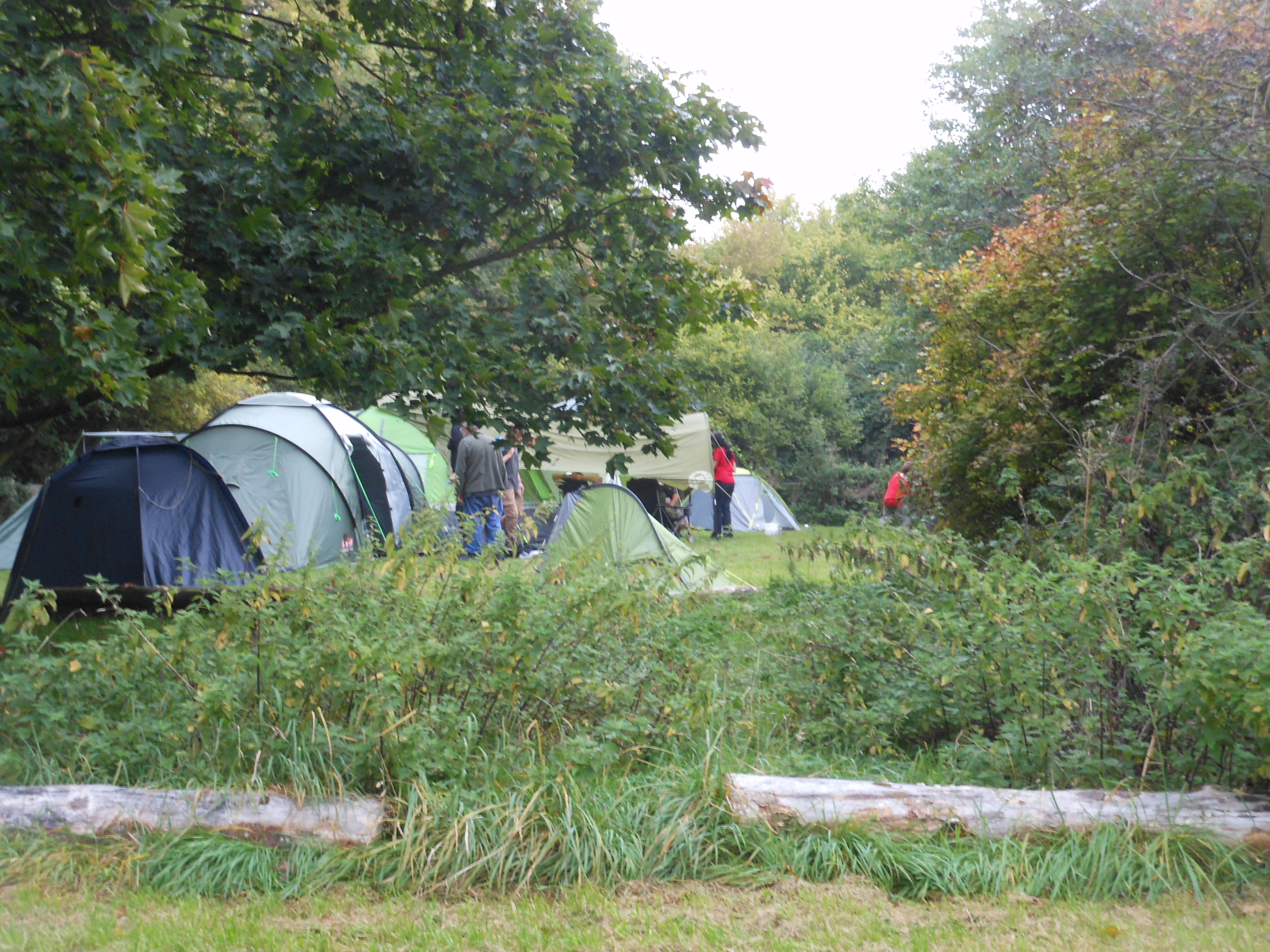
Quite a few people were camping nearby, with the approval of the National Trust organization. Children climbed trees and dogs frolicked.

DSCN7422

Actually, I prefer Avebury to Stonehenge.  It has all the mystery and none of the hype of the more famous circle.  The Avebury stones are smaller but the circle is much larger. The site is more relaxed but every bit as awe-inspiring as Stonehenge. How many thousands of generations of sheep have been calmly grazing around the ancient mysterious stones of Avebury?


A Siren and a Siren Suit

The birth of Winston Churchill, the future Prime Minister, was a shocking surprise and a bit of a scandal. His father, Randolph Churchill, was related to the Dukes of Marlborough, whose seat was (and still is) the over-the-top Blenheim Palace just outside Woodstock.  His mother was the famous American beauty Jennie Jerome.  The couple’s engagement went on longer than they wished, due to financial negotiations, and the bride was very soon noticeably pregnant.  Jennie was a headstrong free spirit.  She was not about to give up the admiration of everyone on the dance floor just because of her condition. By all accounts, she was as lovely and alluring as ever in the final stages of pregnancy.

Jennie Jerome Churchill, , circa 1880, Public Domain

Jennie Jerome Churchill, , circa 1880, Public Domain

So Jennie was dancing, with abandon, in a diaphonous flowing gown when she suddenly went into labor–“prematurely,” or so the story went.  Winston was born about two months sooner than anyone expected, in the Palace that many people consider more grand than any palaces of actual British royalty.

photo (12)

The surprise birth took place in a small and rather plain bedroom close to the grand state rooms, where the band played on. A glass box displays the baby’s infant vest.

photo (13)

Much later in life, when he was Britain’s wartime Prime Minister, Sir Winston wore a “siren suit” during air raids.  Many people, men and women, had one. We’d call it a “jumpsuit:” a loose full-length garment, designed to be zipped into over pajamas on the way to the air raid shelter.

sirensuit

By today’s standards, Jennie Jerome would be considered a terrible mother–selfish before her child was born, and even more selfish afterward in pursuing her often scandalous social life. She paid very little attention to Winston as he grew up. He was raised almost entirely by a beloved nanny.  Yet in later life, Jennie became almost like a sister to her son, advising him and using her wide social and political connections to further his career.  The little bedroom in Blenheim Palace is where a remarkable life began.