Category Archives: Art

Marie Antoinette: Women and Window Treatments

MarieAntKunst

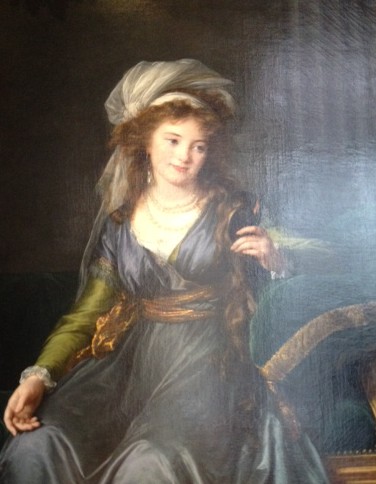
The Kunsthistorisches Museum in Vienna has one of the most famous images of Marie Antoinette, painted by Elisabeth Vigee Lebrun in 1779. It was one of her most important paintings, and the artist herself made six copies of it. The young Queen had only reigned for five years; she still had about thirteen years of high living in store, before the Revolution and the Terror that cost her life.

It’s such a familiar image that I haven’t looked at it very carefully.  What struck me on a recent visit was that it’s mostly about fine silks.  All we really see of the queen is her face.  The rest is window dressing.

MarieAntDetail

I got to thinking that her dress actually looks like a window treatment fit for a palace.

Curtains2

In a way, her entire life was a kind of window dressing.  She was married off as a teenager for the valuable political alliance between Austria and France.  She was expected to produce royal heirs, and in her spare time, to show off the wealth and power of the French monarchy.  No doubt it took at least a dozen ladies-in-waiting to get her into this dress.  No doubt she would much rather have been playing house in her farm on the grounds of Versailles, where she could dress as a milkmaid and tend her shampooed sheep.  But in sitting for this portrait, she was doing her duty.  Sadly, her duty did not work out well for her.

I went directly from the Kunsthistorisches to the Albertina Palace, where Marie Antoinette’s sister Marie Christine got to live out her life.  Marie Christine was the favorite child of the redoubtable Maria Theresa.  Of all the children, Marie Christine was the only one allowed to marry for love instead of political alliance. Life is not fair.
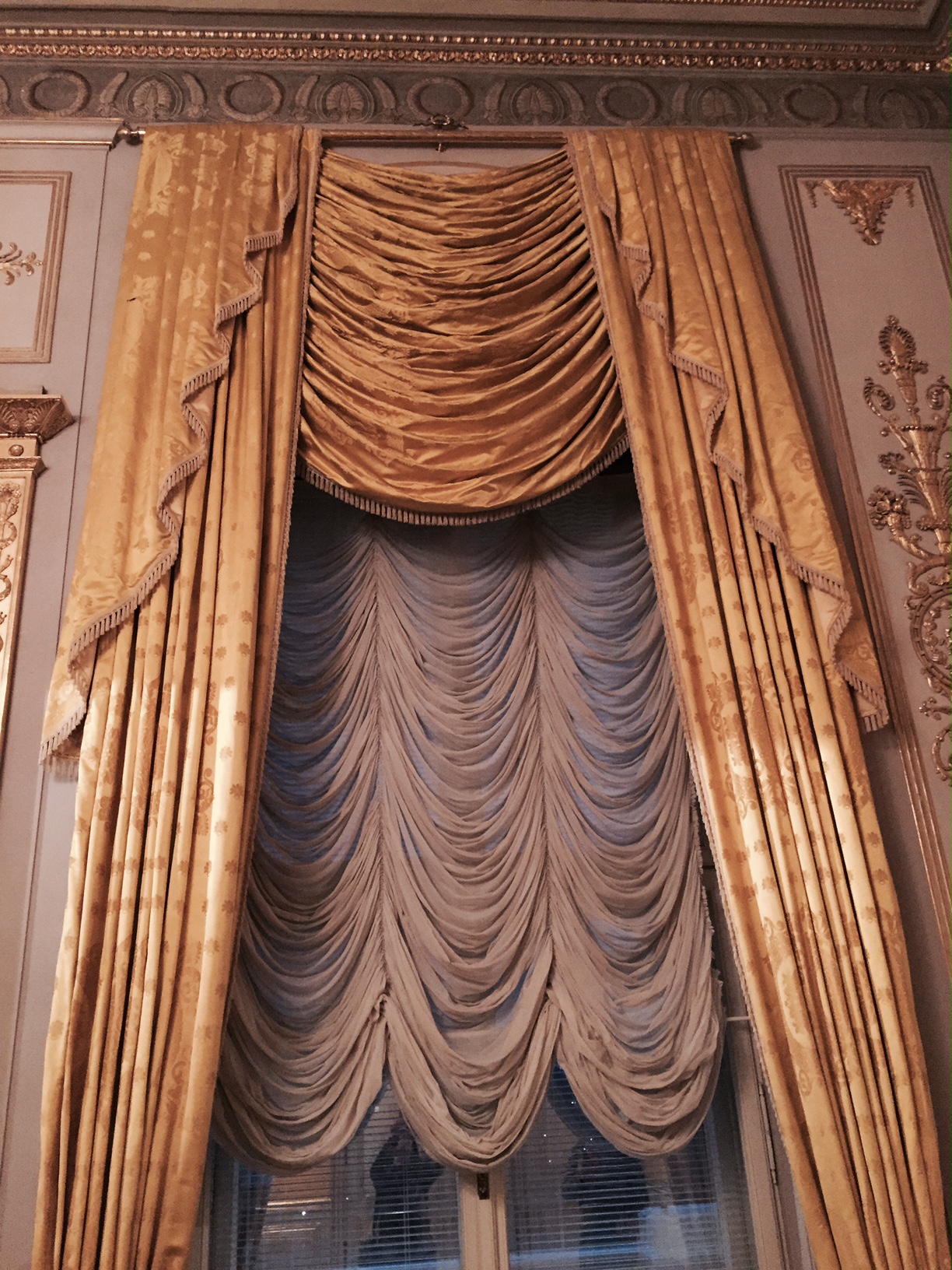
Curtains1

Anyway, the window treatments in the Albertina look exactly like Marie Antoinette’s portrait gown, if you ask me.

FullSizeRender (6)

How much of a person’s life, in history and in the present, is spent trying to strike an idealized pose?  How much of a life is window dressing?  It’s a question to ponder.

Join me next time for more explorations in the art and history of Europe!
Happy Birthday, Pablo Picasso!

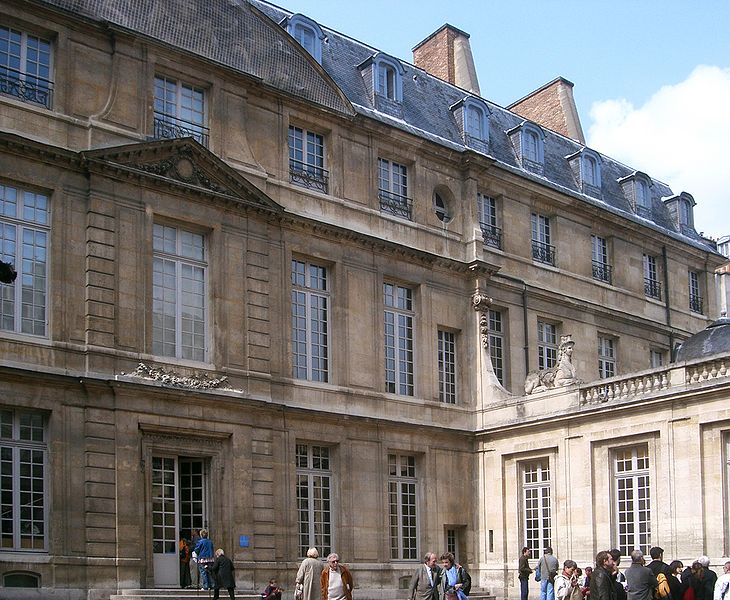
Today in Paris, the Musee Picasso reopens after five years of turmoil and $60 million in renovation.  It’s the anniversary of the great artist’s birth in 1881. (He would be 133 today!) Francois Hollande, the French President, will attend.  Throngs of art lovers will follow.  I’ll be among them as soon as I can swing a trip to Paris. When I was last in Paris, last spring, I just missed the planned May opening; it was one of many, many dates that came and went with no opening after all.

"Hotel Sale," photo by Beckstet, Creative Commons Share Alike 3.0

“Hotel Sale,” photo by Beckstet, Creative Commons Share Alike 3.0

The project was overseen by a distinguished but idiosyncratic Picasso scholar, Anne Baldassari. Five years ago, she was given the responsibility of remodeling the 17th-century mansion in the Marais district of Paris. Her uncompromising vision for the renovation turned a planned two-year project into five long years. The old museum never seemed crowded to me.  Not that many tourists made their way to its imposing gates.  The museum always felt a little damp; after all the “Maris district was once a swamp. It was always a labyrinth of rooms clearly carved out of a very old space never meant for exhibiting art.  But it was always one of my favorite museums. The space seemed appropriate; Picasso spent his entire career working in ancient spaces, both grand and humble.  He spent the years of World War II working tirelessly in studios in Paris, even though he was forbidden to exhibit his work by the occupying Nazis.

Anne Baldassari was dismissed about a year ago, after acrimonious struggles with workers, other administrators, and Picasso heirs.  But her scholarship is still respected; she was invited back to curate part of the hanging of the largest collection of Picasso paintings in the world. The museum houses about 5,000 works. In the old space, only a small fraction could be exhibited at a time. Picasso’s family donated most of these works to the French state after his death, in payment of death taxes.

ChildPicasso

One of my most unforgettable sights in a museum was not a work of great art; it was a young child crouched on the floor of the Musee Picasso in Paris. As her mother waited nearby, the little girl moved from one Picasso painting to another, intently drawing in a notebook. She was oblivious to anything around her, and people respectfully stood back to let her work.  What she was doing WAS work, not play. Was she a budding genius, or just a kid going through a stage, as kids will? Hard to tell, but I admired her mother for patiently spending the day letting this child pursue her passion.

I think Pablo Picasso would approve.  I hope he enjoys his birthday in his renovated museum!

My Own Private Odalisque

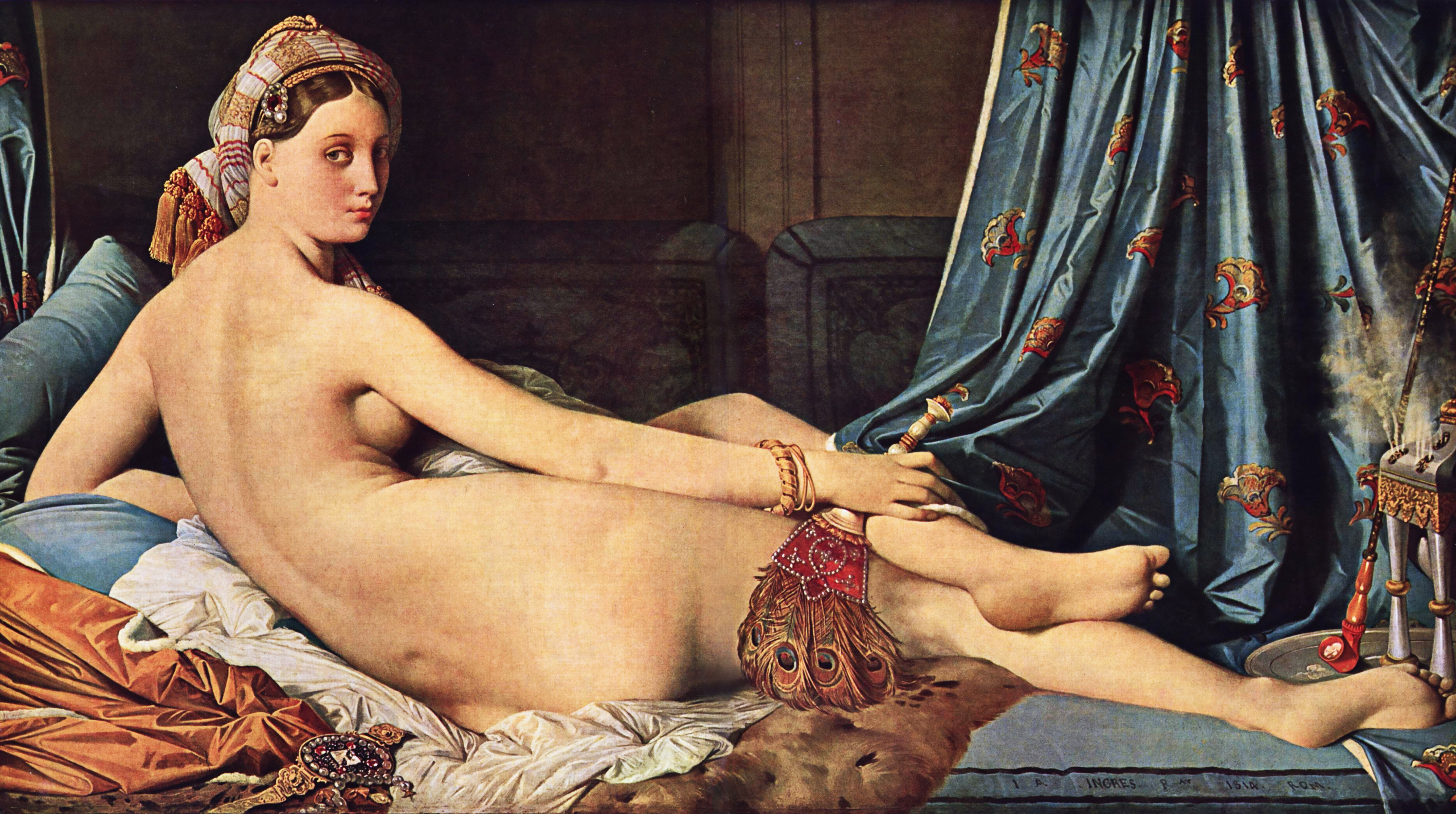
"La Grande Odalisque," Ingres, 1814, Public Domain

“La Grande Odalisque,” Ingres, 1814, Public Domain

I have a special fondness for a particular painting in the Louvre Museum in Paris: “La Grande Odalisque,” painted by Jean-Auguste-Dominique Ingres in 1814.  The original painting was commissioned by Napoleon Bonaparte’s sister, Queen Caroline Murat of Naples. (Early Popes invented “nepotism,” installing their nephews as Cardinals.  But Napoleon I took nepotism many steps further, installing family members on thrones all over Europe during the ten-year period when he was Emperor).

There is something a little off-kilter about this image.  Scientific analysis provided the reason, shortly after the painting first appeared in public: too much backbone. The painter Ingres defied all the known laws of anatomy and classical beauty in order to create a romanticized exotic image from an imagined Sultan’s harem. In order to enhance the sensuous curves of the woman’s body, Ingres painted this lady with at least five extra vertebrae. I guess she is alluring, if a little disconcerting. If you ask me, she looks quite a bit like a weasel.

Photo by Keven Law, Creative Commons Attribution Share-Alike2.0

Photo by Keven Law, Creative Commons Attribution Share-Alike2.0

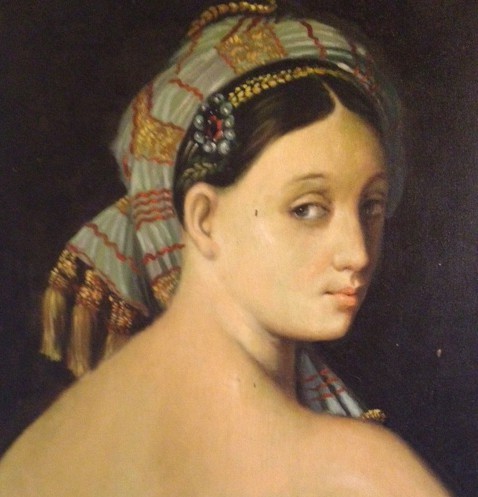
I prefer my own Odalisque, a lady I rescued from a garage sale one fall afternoon.

photo

The artist who painted this very good copy was one M. Feste, signed in red in the corner. The copy shows just the Odalisque’s head and shoulder. I found her canvas leaning against a wall, in danger of being stepped on. My private Odalisque doesn’t suffer the indignity of having a ridiculously elongated backside. Now she just gazes calmly back over her shoulder at anyone entering my bathroom, confident in her exotic beauty.

Join me next time for more explorations in the art and history of Europe!


John Ruskin

Brantwood, the home of English writer/critic/artist John Ruskin, is one of many enchanting sights in the Lake District of northern England. Ruskin bought this lakeshore home in 1872 and lived there for the rest of his life.  I can see why.

RuskinShore

The house and gardens are on the shore of beautiful Coniston Water.

RuskinBoats

The cafe is called the Jumping Jenny, after the boat Ruskin used to potter around the lake on.  His boat probably looked like one of these.

RuskinStudy

Ruskin’s study is crammed with evidence of his wide and varied interests and expertise:  in the natural world, scientific discoveries, literature, architecture, design, art, history, and any number of other fields.  He had advanced social views for his time, too.  One of his concerns was the plight of the worker in the industrial age.  He felt that modern manufacturing demanded that workers give up their most human qualities, to everyone’s detriment.

This quotation, on a placard in Ruskin’s study, caught my eye:  “You can teach a man to draw a straight line, and to cut one; to strike a curved line, and to carve it; and to copy and carve any number of given lines and forms, with admirable speed and precision, and you find his work is perfect of its kind; but if you ask  him to think about any of those forms, to consider if he cannot find any better in his own head, he stops; his execution becomes hesitating…But you have made a man of him for all that. He was only a machine before, an animated tool.”  The words are from Ruskins book “Stones of Venice.”

John Ruskin in 1863, photograph by William Downey, Public Domain

John Ruskin in 1863, photograph by William Downey, Public Domain

If I were given a chance to meet 10 people from the past, John Ruskin would be high on my list. And I’d make arrangements to meet him at his home in the Lake District!

Join me next time for more explorations in European history and art!

Top Hats and Toppled Trees

Recently I went running in Minnesota and encountered a beaver-chewed tree.  Where was the beaver? Scared off? On a coffee break? Sent off by the Chief Beaver to chew another tree instead? This particular beaver never did return.  Alas, the tree is done for.  It fell over in the last high wind.

Beaver-chewed tree

Beaver-chewed tree

The expression “beaver hat” came to mind, the kind of hat I would call a “top hat.”

TopHat


I noticed that at the recent wedding of Brad Pitt and Angelina Jolie, the children were allowed to choose what to wear, and one of the boys chose a black top hat, which he wore, elegantly, with shorts. (I’m also going to go out out a limb and say that Angelina’s wedding dress and veil, embroidered with drawings by her six children, was the most beautiful and meaningful wedding attire I’ve ever seen.  What an inspired use for refrigerator art!)

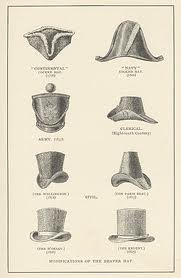
I started wondering why hats in the past couple of centuries were made from beaver fur. I learned that the beaver’s fur, sheared off, boiled, and pressed into thick felt, was so pliable it could be made into almost any shape of hat.  Beaver hats were warm, soft, and resistant to water. Between 1550 and about 1850, huge numbers of such hats were made, for both civilian and military use.

Some varieties of the beaver hat

Public Domain

Everyone had to have at least one. Wealthy men, like Jane Austen’s Mr. Darcy, had several. The European beaver was hunted and trapped to near-extinction.  Traders turned to North America, where the American beaver was plentiful. In fact, demand for beaver pelts was a big factor in colonial expansion in the New World, especially in Canada.  The Hudson’s Bay Company, founded in 1670, made a fortune in the beaver trade.  The company still exists today.

Finally, in the mid-1850’s, silk hats became more fashionable.  The beaver could relax a bit.

American Beaver by Steve, Creative Commons Share Alike 2.0

American Beaver by Steve, Creative Commons Share Alike 2.0

As far as I can see, the American beaver is thriving wherever there is water. I encountered this beaver-chewed tree in the middle of winter next to a stream in Colorado.

Beaver-chewed tree on Yampa River in Steamboat Springs

Beaver-chewed tree on stream in Colorado

People trying to maintain waterside property are not fond of the beaver.  Still, I have to admire the little guy’s energy and ambition.

Join me next time for more explorations into the art and history of Europe, and the many connections with development elsewhere in the world.

Nelie’s Chapel


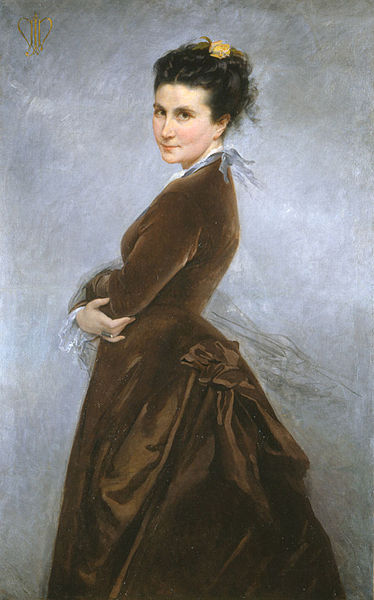
Self Portrait of Nelie Jacquemart, Public Domain

Self Portrait of Nelie Jacquemart, Public Domain

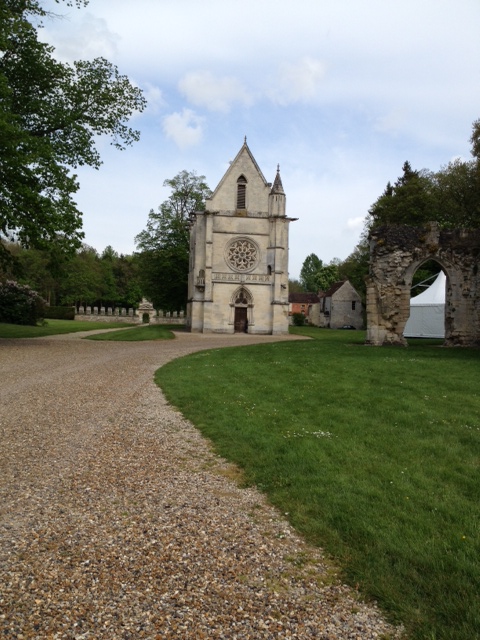
When Nelie Jacquemart-Andre’s colorful life ended in 1912, she was buried according to her wishes in the exquisite 12th-century Chapelle-Sainte-Marie on the grounds of her historic but somewhat modest chateau, the Abbaye Royale de Chaalis.  The chapel was built during the reign of France’s only sainted King, St. Louis. He used to worship there when he visited the monks in the Abbey. Nelie had donated the chateau, the chapel, the grounds, her Parisian mansion, and her priceless art collection to the Institut de France, and her homes were immediately opened as museums.

photo (12)

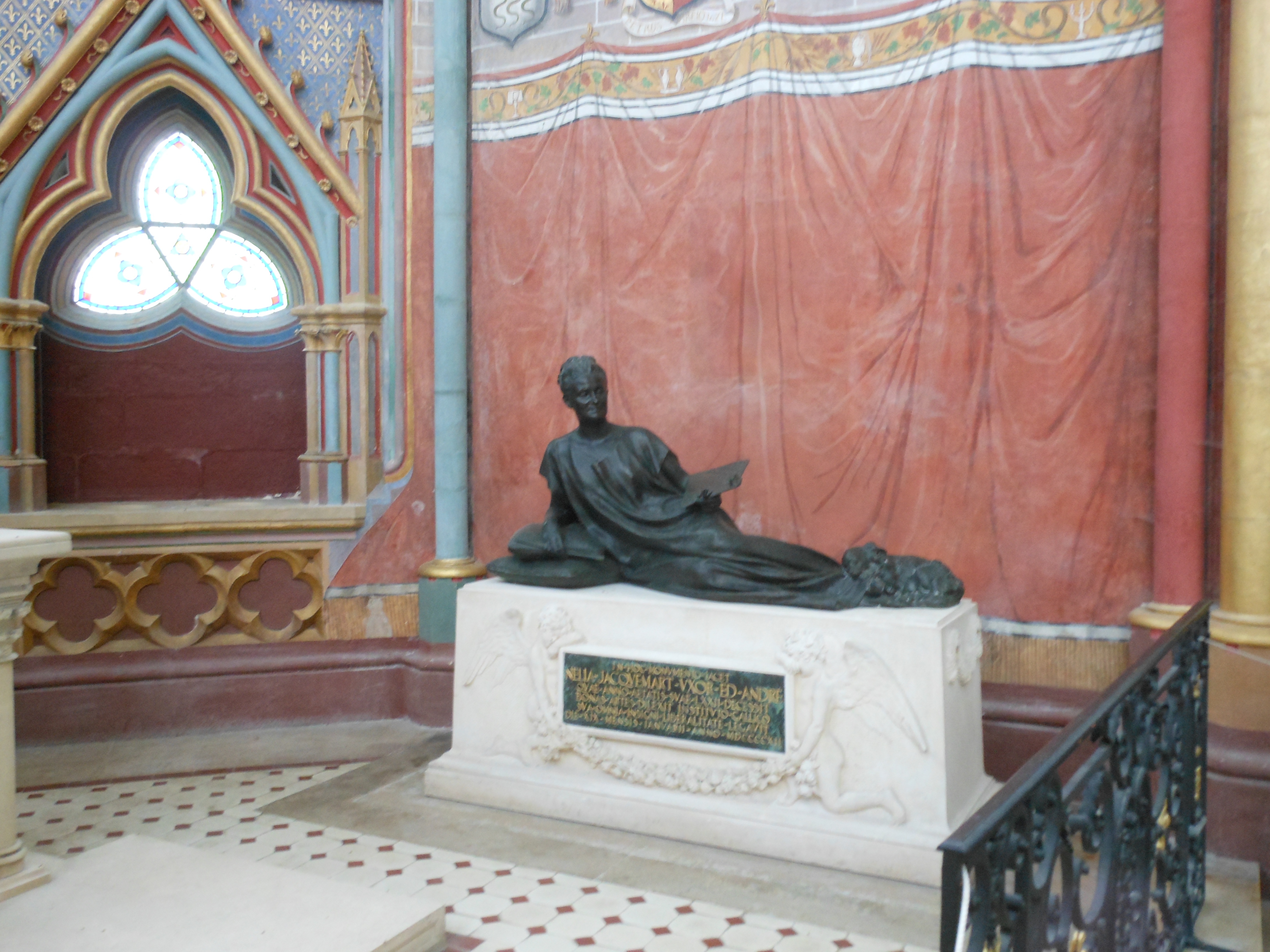
In gratitude, the Institut commissioned a bronze effigy which shows Nelie half-reclining, with her painter’s palette, in the chapel.

NelieTombChapel

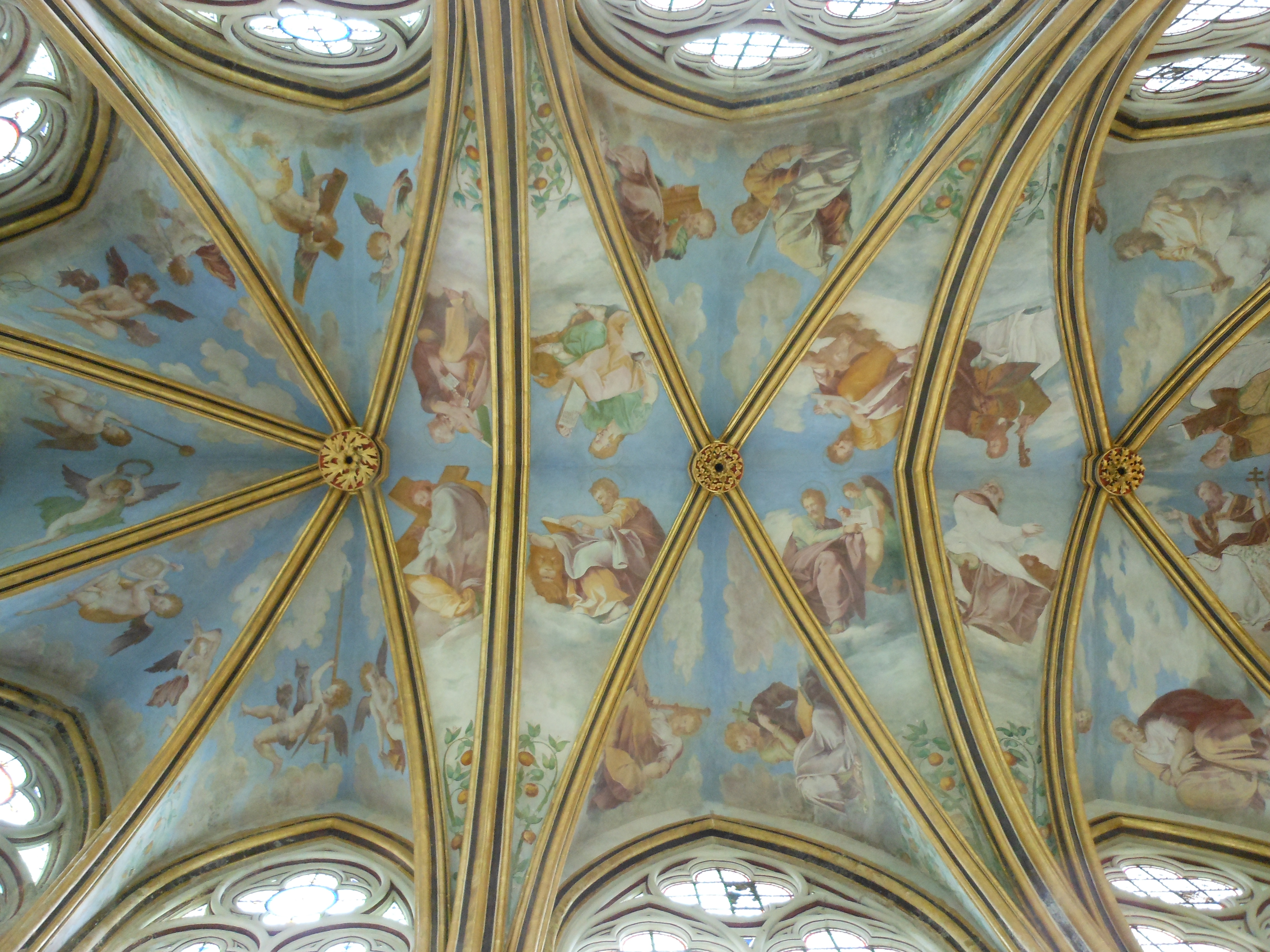
She rests beneath a beautiful ceiling painted by the great fresco artist Primaticcio. His most famous works grace the Palace of Fontainebleau, home of French kings through the centuries. What was good enough for several dynasties of French royalty was good enough for Nelie.

ChapelCeiling

I do wish that with all their money and influence, Nelie and her husband Edouard Andre had delved into the exciting art appearing within their own lifetimes.  Their collections would only be enhanced now by including Monet, Manet, Cassat, and others in that innovative group.  But Nelie and Edouard were intent on preserving great art of the past, and their accomplishments were stellar.

Some people dream of founding a dynasty. Nelie had no children.  Her dream was to welcome generations of art lovers to her homes after she was gone.  I think she deserves to rest and dream and welcome visitors underneath a masterpiece. I’m going to leave her there for awhile, after spending quite a lot of time writing about her life and her collections. Rest in peace, Nelie!

Interested in previous posts featuring Nelie Jacquemart-Andre, her life and legacy? They are at:

https://castlesandcoffeehouses.com/2014/08/16/nelie-and-edouards-100th/

https://castlesandcoffeehouses.com/2014/08/12/nelie-and-edouard/

https://castlesandcoffeehouses.com/2014/08/14/tiepolo-for-two/

https://castlesandcoffeehouses.com/2014/08/11/musee-jacquema…e-epoque-lives/

https://castlesandcoffeehouses.com/2014/08/24/nelies-chateau/

https://castlesandcoffeehouses.com/2014/08/22/pretty-as-an-angel-but-stupid/

: https://castlesandcoffeehouses.com/2014/08/17/the-golden-age-is-now/


Elisabeth Vigee-Lebrun: Painter and Survivor


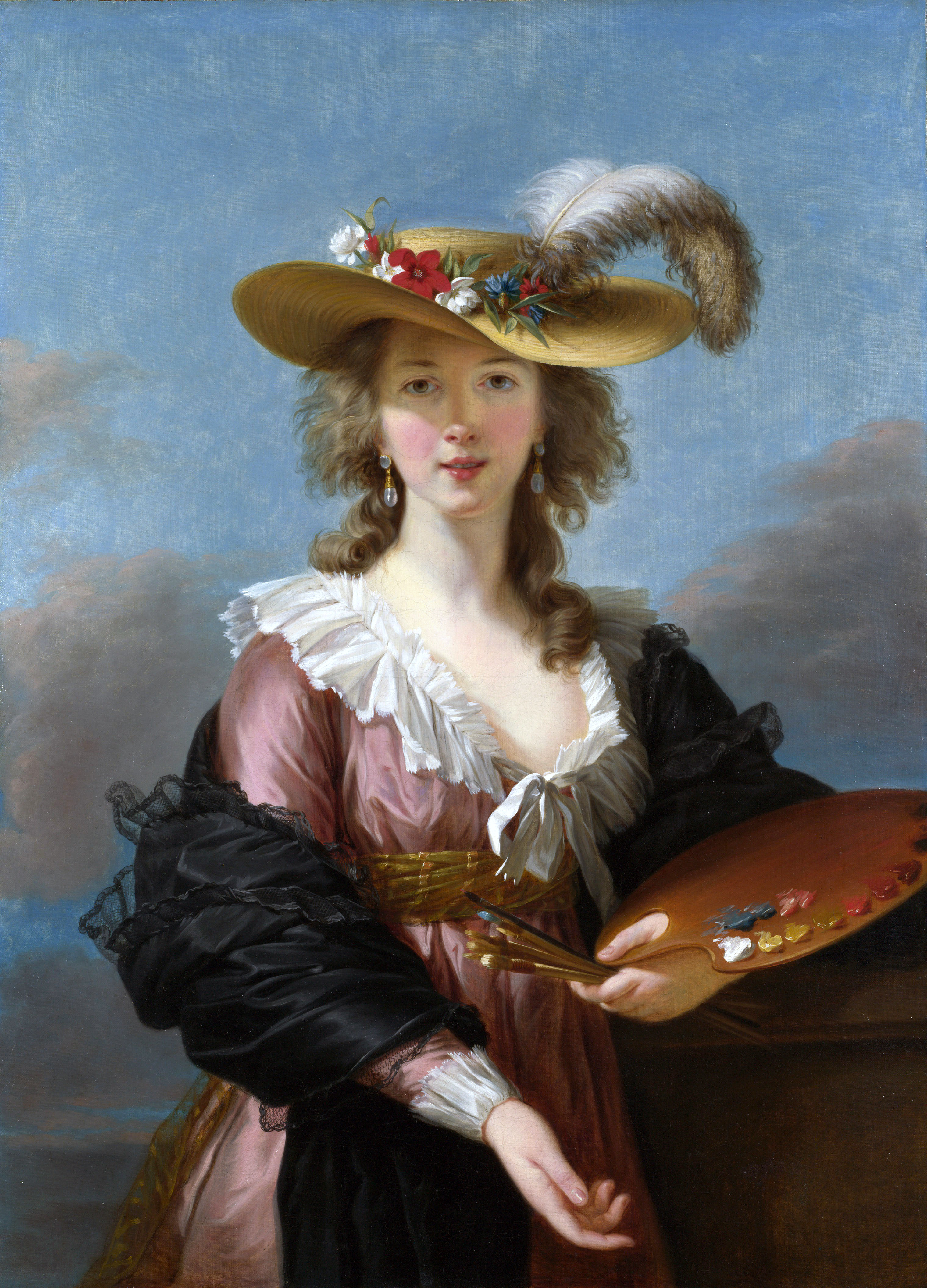
"Self-Portrait in a Straw Hat," Elisabeth Vigee-LeBrun, 1782, Public Domain

“Self-Portrait in a Straw Hat,” Elisabeth Vigee-LeBrun, 1782, Public Domain

Elisabeth Vigee LeBrun, in the self-portrait above, could be mistaken for a conventional 18th century woman, getting ready to pursue a conventional pastime like painting flowers.  But underneath the modest smile lurked talent, ambition, grit and a fierce determination to survive and thrive. She lived  through turbulent times when many others in her position lost their heads–literally. As a protege and friend of Marie Antoinette, Elisabeth adroitly escaped the horrors of the French Revolution, and even made the political turmoil work in her favor.

As a talented teenager, Elisabeth began painting portraits of society people, helped by her father, a fan painter, and later other teachers who recognized her talent. An important benefactor was Louise de Bourbon, wife of the Duke of Orleans. Early in Elisabeth’s career, everything in her studio was confiscated by the authorities–because she didn’t have a license to paint!  (In modern times, we often think our world is over-regulated. But at least in most places, being a starving artist does not require a government license). She applied for membership in the Academie de Saint Luc, and was somehow admitted.  It sounds to me like they didn’t realize they were dealing with a young girl. Maybe she just used her initials when she submitted paintings for approval.

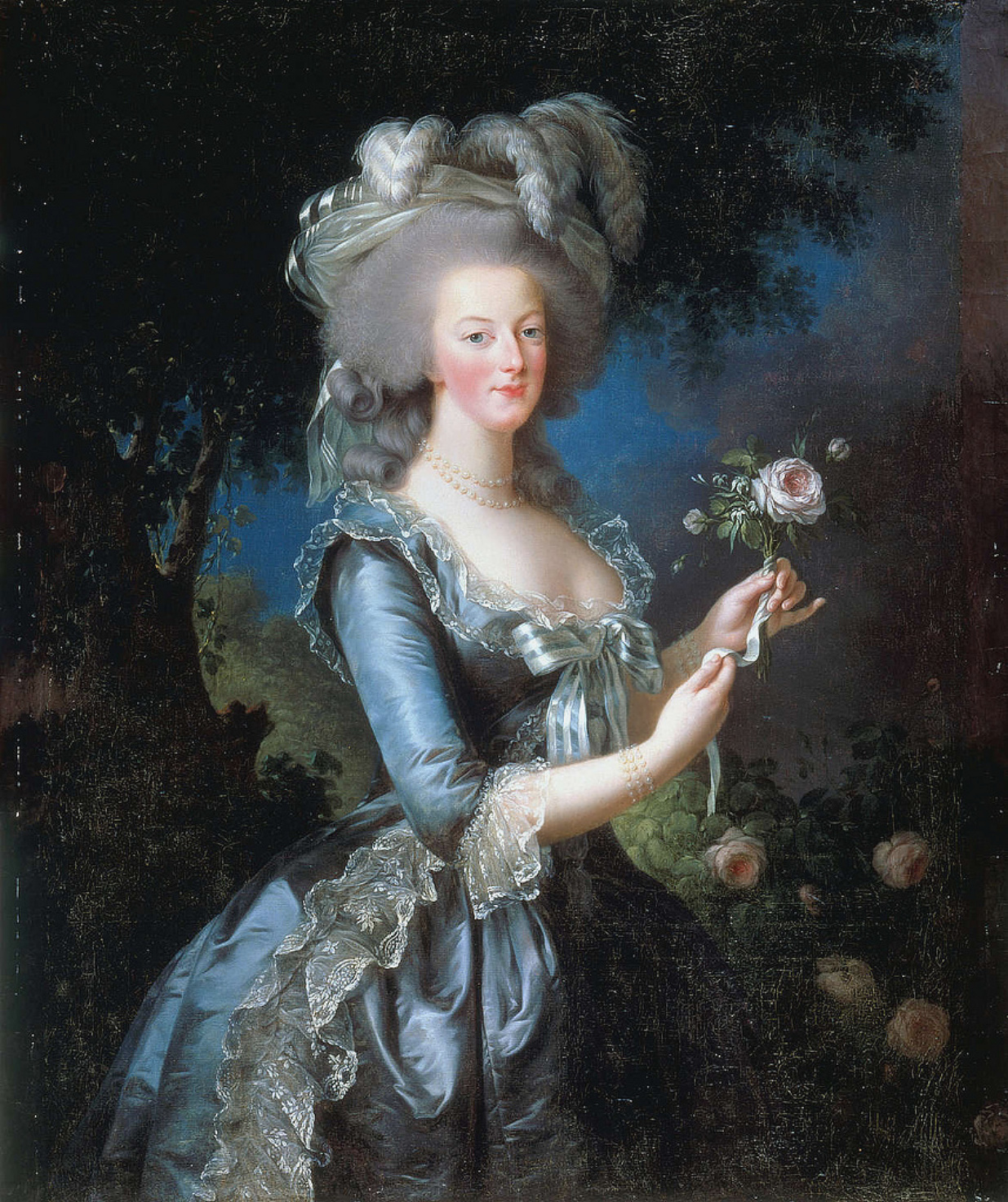
"Marie Antoinette," Elisabeth Vigee-LeBrun, 1783, Public Domain

“Marie Antoinette,” Elisabeth Vigee-LeBrun, 1783, Public Domain

Her marriage helped her career.  At age 20, she married Jean-Baptist-Pierre LeBrun, a painter and art dealer.  His grandfather had been the first Director of the French Academy under Louis XIV, the Sun King. Soon Elisabeth was painting Marie Antoinette and her family members–about 30 royal family portraits in all.

When the French Revolution broke out, Elisabeth decamped to safer surroundings. She worked for several years in Russia, Italy, and Austria. Eventually, she was allowed to return to France while Napoleon I was Emperor. She continued to paint well into old age, once causing a minor scandal by painting a self-portrait with her teeth showing.  This was simply not done–probably for good reason, since most people had terrible teeth in those times. She died in 1842, at the ripe old age of 86. She left behind over 600 portraits, plus 200 landscapes and history paintings, which now appear in museums and private collections all over Europe and in the United States.

Join me next time for more explorations in the art and history of Europe!
Nelie’s Chateau

Most of us can only dream of owning a chateau. Nelie Jacquemart-Andre was able to hang her hat in a chateau, late in life. When Edouard Andre died in 1894 and left Nelie Jacquemart-Andre a widow, she faithfully continued to fill out his collections. In 1902, Nelie was traveling in the Orient, scouting for antiquities, when she received word that a chateau just outside Paris was for sale. She dropped everything and rushed back to France.

photo

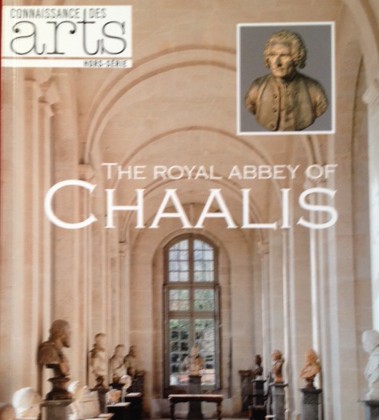
This was not just any chateau. It was the Abbaye Royale de Chaalis, and she had spent a good part of her childhood and young adulthood there. The guidebook above, new since the last time I visited, gave details about Nelie’s life that I had always wondered about. It turns out Nelie was not universally admired. The Comptesse Jean de Pange is quoted in the guidebook as saying that aristocrats used to mock the “plump, impulsive and very idiosyncratic little woman” who swept in and bought herself a fabulously historic chateau.  (I sympathize with Nelie. Rich people always manage to annoy somebody).

Nelie was a talented painter even as a child, and she was taken on as a sort of protege of the chateau owners at the time, particularly Rose Pamela Vatry.  Nelie was given art instruction, a studio was built for her, and she attended soirees packed with the aristocracy, illustrious artists, musicians and writers, and even with royalty.  The young woman had a particular flair for portraits, and she obtained many commissions.  One of these commissions, to paint the rich young banker Edouard Andre, eventually led to her brilliant marriage.

But Nelie was always a bit of a handful.  Her patroness complained that she never even used her painting studio, she only appeared at dinner when the company was glittering enough, and she seemed more interested in social climbing than in painting.

photo (12)

The Chaalis estate had begun as an abbey in the Middle Ages. It gained great wealth and power due to royal patronage and extensive rich lands. In the years 1255-1260, an exquisite small chapel was built, during the reign of St. Louis, the king who became a full-fledged saint.  He used to retreat to the abbey and live for awhile as a monk when he needed a break from ruling France. That chapel has been restored and is the best part of the chateau estate.

NelieExt


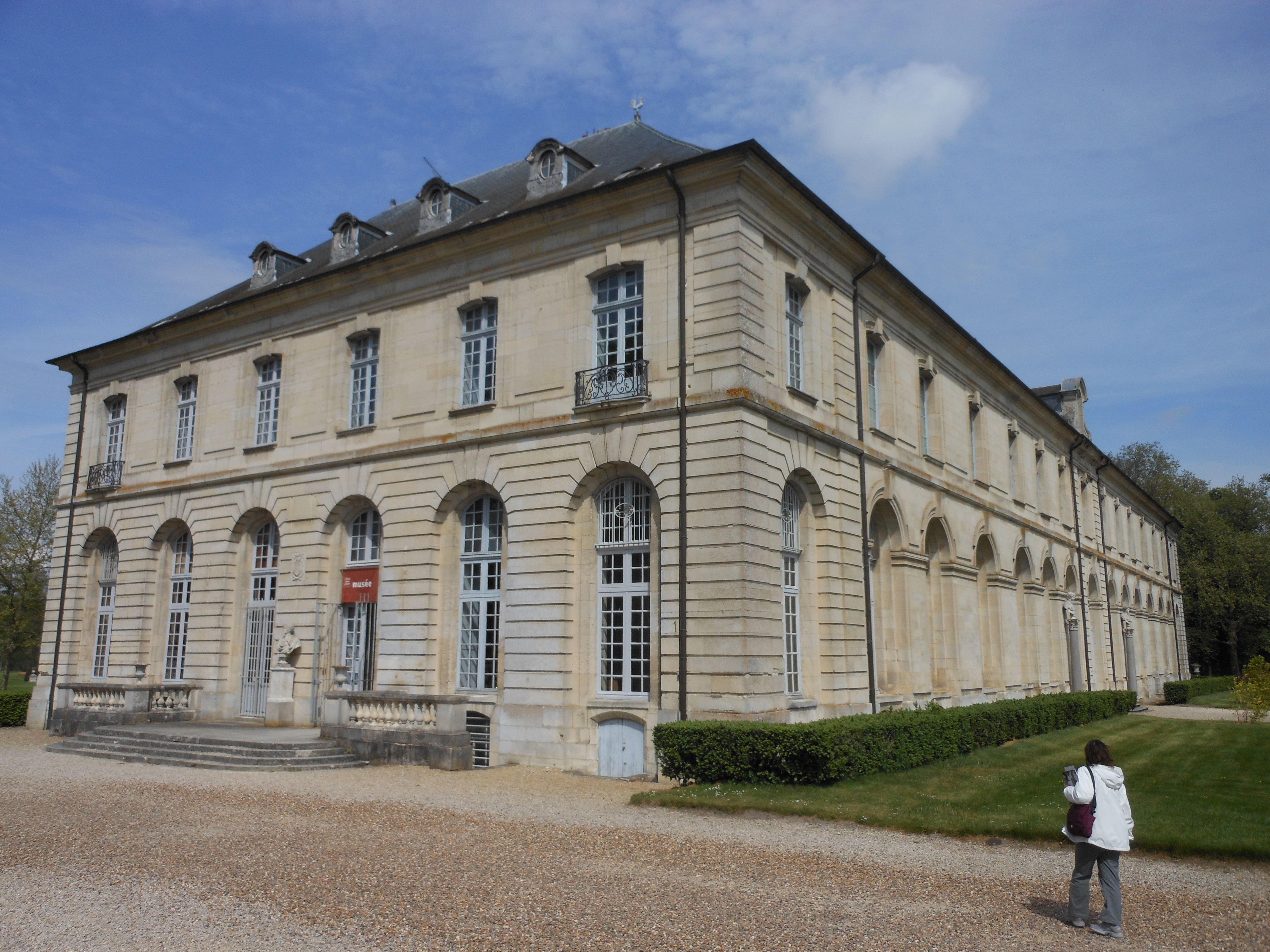
In the 1700s, the medieval buildings occupied by the religious order were rebuilt, and a little later the monks departed.  Their cells in the main building became guest rooms for a succession of owners who set about making the “abbey” into a “chateau.”

ChaalisRuin


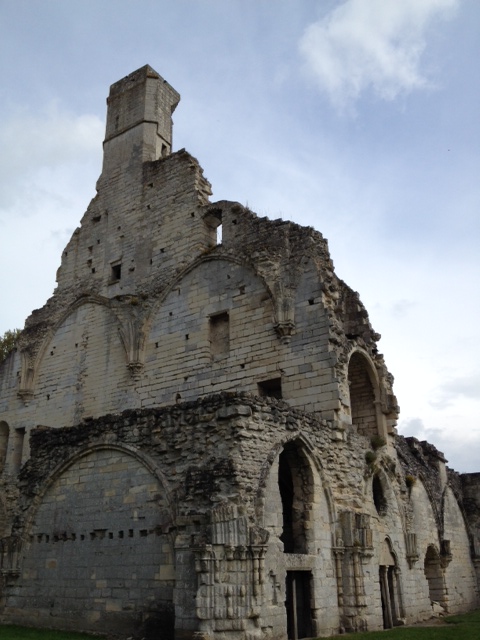
By this time, the enormous main church had become a picturesque ruin, and so it remains.

When the entire estate went up for sale in 1902, Nelie snapped it up at a bargain price.  I gather that she felt she had been treated as a sort of poor relation;  this was payback.  She set about installing her own magnificent collections, especially of antiquities.  She also, according to the guidebook, hoped to marry a neighbor at nearby Chantilly, the Prince de Broglie.  That never happened.

On her death, Nelie left both her Parisian mansion and her country chateau to the Institut de France, and both were immediately opened to the public as museums.

The Abbaye Royale de Chaalis is close to CDG Airport, making it an easy stop for drivers.  It’s near the pretty and walkable town of Senlis, with its own historic sights.  Chaalis is covered by the Paris Museum Pass, unlike the Musee Jacquemart-Andre. Indoor photos are restricted.  But the new guidebook is a great read. If anyone other than Nelie Jacquemart-Andre had bought the property, it would probably be a golf club with condos today.  Instead, it’s a permanent treasury of art and history, open to all.

Join me next time for more explorations in the art and history of Europe!

Child Safety, Circa 1850

ChildHelmet

This charming little portrait shows a child wearing a safety device apparently common among extra-careful parents in the middle of the 19th century:  a safety helmet, made of padded wood, prettily concealed under lace ruffles.  I saw the painting at the Teylers Museum in Haarlem, Netherlands, as part of a special exhibit on Russian Romantic painting. This 1831 painting is by Jan Adam Kruseman.

Then as now, parents worried.  Infant mortality was beginning to improve, but childhood was still full of dangers.  Parental love for this particular child, no doubt from a very privileged background, shines through in this portrait.

GirlHelmets

Little girls today wear equally pretty helmets, for riding bikes and skateboards.

photo (1)

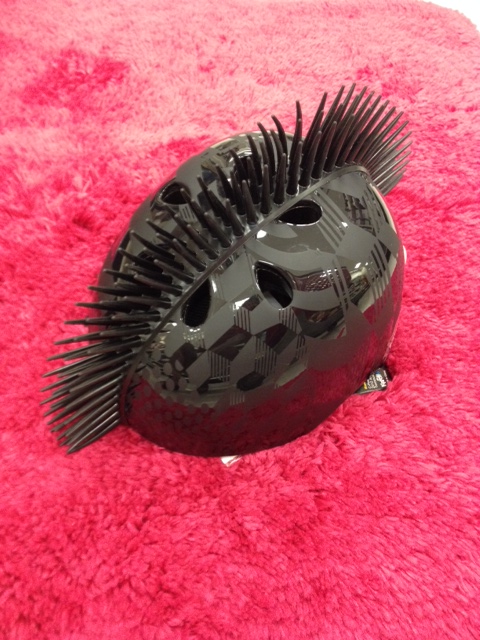
More macho helmets are available for the well-dressed and well-protected little boy. The love and concern of parents for their children is a common denominator linking us to generations past.

Join me next time for more explorations into the art and history of Europe!

An Elisabeth Vigee-Lebrun Portrait of A Polish Countess: “Pretty as an Angel, But Most Stupid”

RussianGirl

The artist had a low opinion of her subject; hopefully she kept her thoughts to herself and concentrated on her painting. Nelie Jacquemart-Andre must have liked this portrait a lot; she hung it in her boudoir, now a room in the Musee Jacquemart-Andre, close to her luxurious bathtub (Nelie loved soaking in the tub). The subject is the Countess Skavronskaia, wife of the Polish Ambassador to Italy.  The artist is Elisabeth Vigee Lebrun, who gained fame and fortune as the official painter for Marie Antoinette and her gilded circle of friends. The artist fortunately left France just before the French Revolution.  Her reputation and talent led her through the courts of Europe.

During her stay in Naples in 1790, Elisabeth Vigee Lebrun painted this young countess.  The artist remarked in her journal, “The Countess was as mild and pretty as an angel,” but “she had no education, and her conversation was most stupid.”  Still, the artist, like everyone else, fell under the irresistible charm of this sweet young woman.  That charm shines through the portrait. Her lovely face is an island of warmth in the painting, all cool blues and greens. Is that a mirror in her hand? The artist must have allowed herself this small comment on her subject. Today’s equivalent might be a supermodel with no thought other than her own beauty. But sheer niceness always counts for something.

There’s a better image of the Countess on the website of the Musee Jacquemart-Andre at http://musee-jacquemart-andre.com/en/collections/portrait-countess-skavronskaia.

Join me next time for more explorations in the art and history of Europe!