Category Archives: Uncategorized

Why I Love England…In April

FullSizeRender (10)

England is a nation of gardeners.  Hyacinths are fragrant right now.

IMG_8879

Daffodils are still in bloom, and bluebells are just coming into season. Bluebells are a protected species; they carpet forest floors.

FullSizeRender (61)

Garden gates beckon.

IMG_7671

Fiddlehead ferns are just coming up.  They’re a delicacy in salads, I’m told.  These belong to the Queen, on her estate in Sandringham.

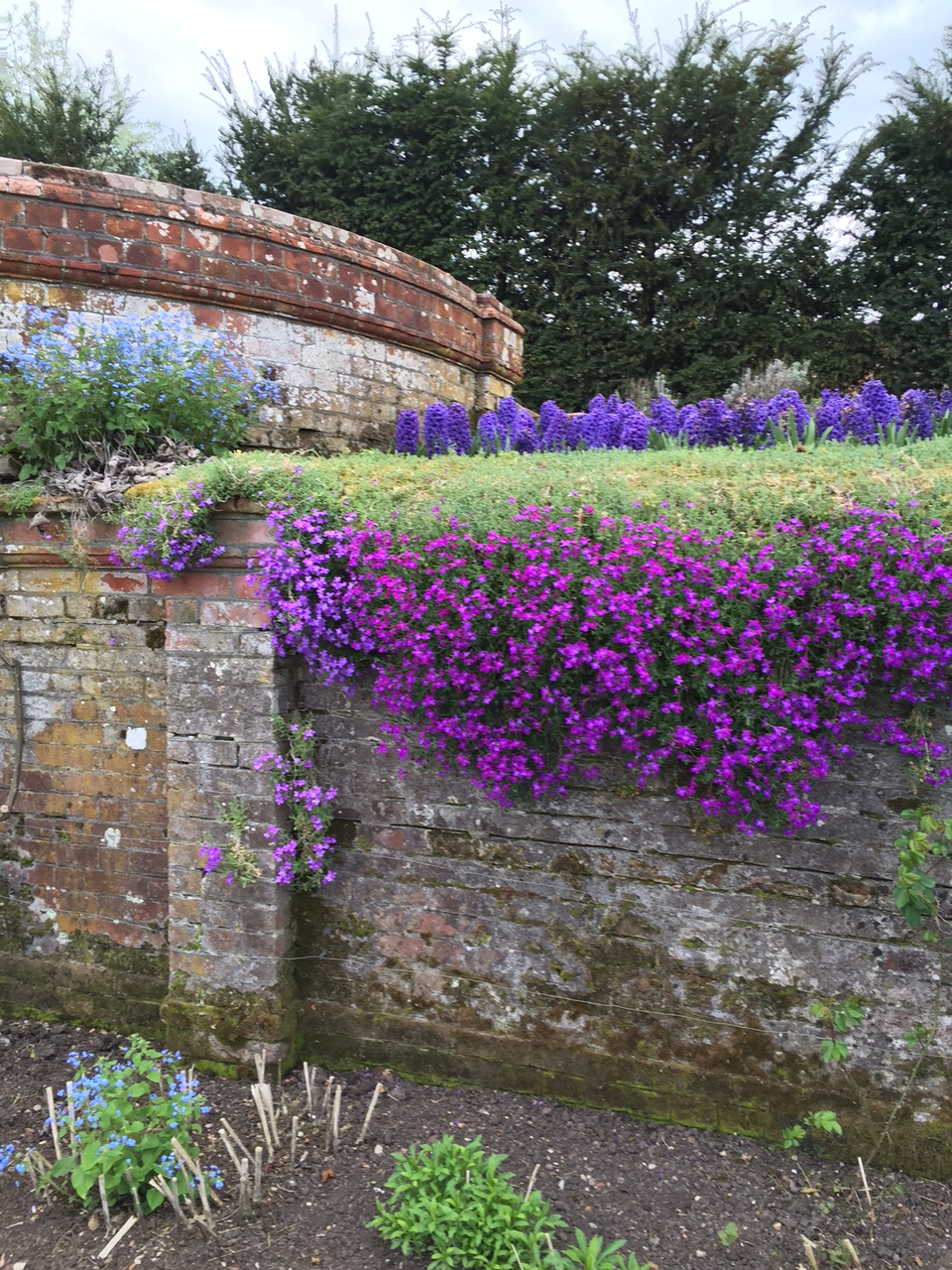
IMG_8907

Every gardener is an artist.  A gardener at the Tudor mansion Blickling Hall, reputed birthplace of Anne Boleyn, composed a beautiful study in blues and purples.

I love England in April!

Winter as a Child, Again and Again

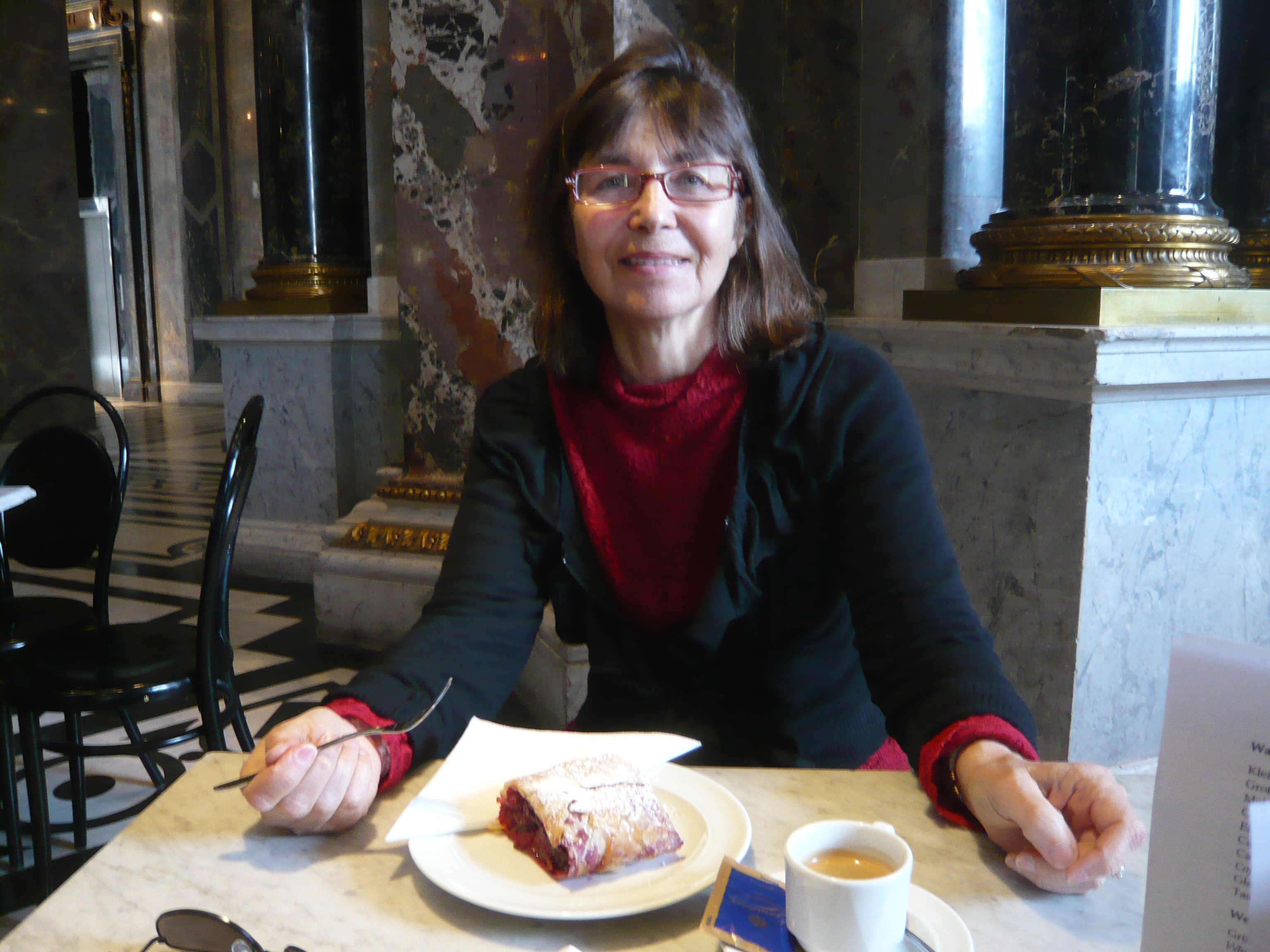
It is now two years since I started my blog.  I decided to revisit my very first post, written when I was getting ready to travel to Vienna for the Christmas markets, the concerts and the museums–and of course the apple strudel.  Now I’m lucky enough to be leaving again for Vienna, one of my very favorite places.  Here’s to discovering new places and revisiting old ones!  Two years ago, I wrote:

Travel is not just about being there.  Travel is about memory and anticipation.  As I pack my one small suitcase for Vienna in November, I am full of memories of past trips and high hopes for this one.

Lady Caroline Scott as Winter; image from Commons Wikimedia

Last year, the Vienna Kunsthistorisches Museum had a special exhibit:  “Winter Tales.”  Paintings, sculpture and artifacts from all over the world were gathered in a glorious celebration of winter.  My very favorite piece was this portrait of a child with a fur-and-velvet muff and a scruffy little dog impatient for her to play:  “Lady Caroline Scott as Winter,” by Sir Joshua Reynolds.  Winter is so often personified as Death, or as a creaky old man.  Here, though, winter is a child full of hope and wonder.  She gazes out at us from the barren winter grounds of her British home, her face as fresh as the day she was painted in 1776 at the age of two or three.

This is not a glamorous society portrait.  It is only about 57 x 45 inches (just the right size to place over my fireplace, if I could afford such a thing!)  I can imagine the artist Sir Joshua Reynolds, age 51 at the time, encountering Lady Caroline in the bare winter grounds of her home.  Anyone would be captivated by her rosy-cheeked face and direct gaze.  I can see Sir Joshua dashing off a sketch and finishing the portrait back in his studio.  It would have made a nice break from painting his more demanding adult subjects, who proudly posed with the emblems of their wealth and power:  swords, globes, weighty books, jewels and fine silks.

The British Peerage tells us that Lady Caroline was the daughter of the 3rd Duke of Buccleuch. She married the 6th Marquess of Queensberry (slightly lower in rank than a Duke, but who’s keeping score?) She had 6 surviving children and lived to the age of 80.  So she was an exact contemporary of Jane Austen, although Jane died at age 41.  I’d like to think Lady Caroline read Jane’s books.

Lady Caroline was a privileged child.  As she grew up, no doubt she learned that many children were cold and dirty and hungry.  Her rank would come with some responsibilities to take care of the less fortunate.  She lived through the American Revolution, the Terror in France, and the Napoleonic Wars.  And we all know that even for the most privileged, life holds heartbreak and disappointment.  But on this wintry day, all that is in the future.  In this perfect moment, Lady Caroline stands on her sturdy little legs, happy to be 615-369-5900walking about in the wide world.

Vienna is an enchanting city in any season, but my favorite time there is winter.  The Christmas season begins in late November, an ideal time for crowd-free travel.  I do not have a fur muff or a scruffy little dog, but I am setting off for Vienna with all the anticipation of a child at Christmas.

MeStrudel

Why I Love England, Mid-Trip

SalisburyFacade

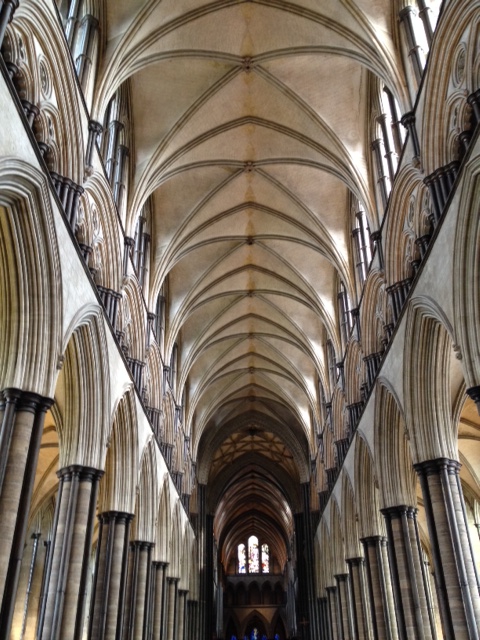
Country towns that used to be powerful have magnificent cathedrals.  The one at Salisbury is breathtaking. This cathedral was completed in 1258 and has not changed since then.

photo (23)

The Gothic ceiling of Salisbury Cathedral is a marvel of engineering.  These beautiful Gothic ceilings always make me feel like I’m in an orderly forest of tall majestic trees whose branches intertwine far above the ground.

photo (22)

In the countryside, a horse is still transportation.  This pretty girl was contentedly chomping grass outside the National Trust property of Mottisfont, while her owner visited the museum and probably also had a spot of tea in the tearoom.

GardenUppark

Have I mentioned gardens, part of every historical and literary sight?  This lawn and flower bed grace the grounds at Uppark, a mansion where Queen Victoria’s son the Prince of Wales whiled away his time carousing.  The notorious playboy owner of Uppark finally settled down at age 70 when he married his milkmaid.  The writer H. G. Wells spent part of his boyhood at the mansion, where his mother worked as the housekeeper.

FlowerboxWoodstock

And then there are the flowerboxes right outside my bed and breakfast in Woodstock.  Yes, I love England!

Top Hats and Toppled Trees

Recently I went running in Minnesota and encountered a beaver-chewed tree.  Where was the beaver? Scared off? On a coffee break? Sent off by the Chief Beaver to chew another tree instead? This particular beaver never did return.  Alas, the tree is done for.  It fell over in the last high wind.

Beaver-chewed tree

Beaver-chewed tree

The expression “beaver hat” came to mind, the kind of hat I would call a “top hat.”

TopHat


I noticed that at the recent wedding of Brad Pitt and Angelina Jolie, the children were allowed to choose what to wear, and one of the boys chose a black top hat, which he wore, elegantly, with shorts. (I’m also going to go out out a limb and say that Angelina’s wedding dress and veil, embroidered with drawings by her six children, was the most beautiful and meaningful wedding attire I’ve ever seen.  What an inspired use for refrigerator art!)

I started wondering why hats in the past couple of centuries were made from beaver fur. I learned that the beaver’s fur, sheared off, boiled, and pressed into thick felt, was so pliable it could be made into almost any shape of hat.  Beaver hats were warm, soft, and resistant to water. Between 1550 and about 1850, huge numbers of such hats were made, for both civilian and military use.
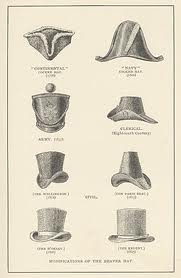
Some varieties of the beaver hat

Public Domain

Everyone had to have at least one. Wealthy men, like Jane Austen’s Mr. Darcy, had several. The European beaver was hunted and trapped to near-extinction.  Traders turned to North America, where the American beaver was plentiful. In fact, demand for beaver pelts was a big factor in colonial expansion in the New World, especially in Canada.  The Hudson’s Bay Company, founded in 1670, made a fortune in the beaver trade.  The company still exists today.

Finally, in the mid-1850’s, silk hats became more fashionable.  The beaver could relax a bit.

American Beaver by Steve, Creative Commons Share Alike 2.0

American Beaver by Steve, Creative Commons Share Alike 2.0

As far as I can see, the American beaver is thriving wherever there is water. I encountered this beaver-chewed tree in the middle of winter next to a stream in Colorado.

Beaver-chewed tree on Yampa River in Steamboat Springs

Beaver-chewed tree on stream in Colorado

People trying to maintain waterside property are not fond of the beaver.  Still, I have to admire the little guy’s energy and ambition.

Join me next time for more explorations into the art and history of Europe, and the many connections with development elsewhere in the world.

Palace Seating: How Do You Rank?

KQStools

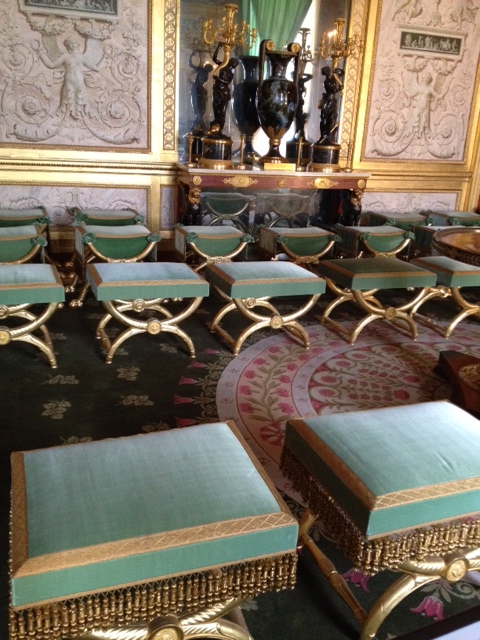
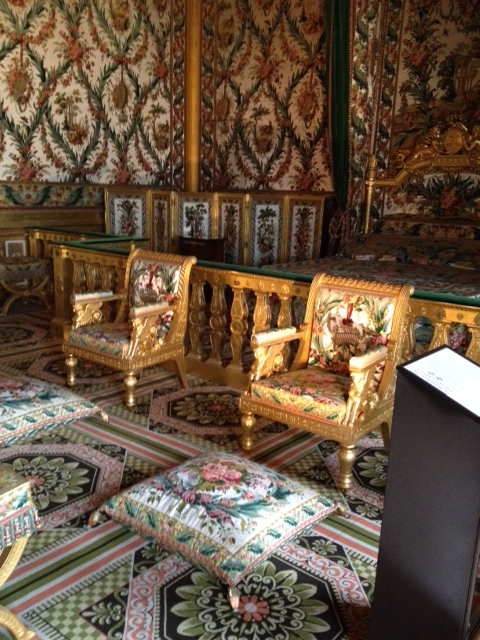
At Fontainebleau, as at many royal palaces, rooms are filled with rows of upholstered seating in various shapes and sizes. But apparently there were no cheap seats.  These folks must have spent a lot of time just hanging out with royalty in salons, hoping to curry favor.

As royal etiquette evolved over the centuries, a seat was not just a place to sit down. By the time of Louis XIV, a seat was a rigidly controlled indication of one’s rank in society. Seats had no nametags. There were no sections marked “Duchesses and above.” A person attending the King and/or Queen was just expected to know.   I’d have lived in terror that I might absentmindedly sit down in the wrong place and land myself in a dungeon, or worse.

Chairs

Naturally, the pair of armchairs placed in the most desirable spot, like next to a fireplace in a chilly room, was reserved for royalty. And only the King and Queen rated footstools.

Stools

“Stools” of various sizes and heights–what we might call ottomans–were reserved for those high in rank.  But within each rank, there was a pecking order, with those currently most in favor getting to sit closest to the Queen.

KQChairs


Marie Antoinette, for example, could gather her most amusing ladies around her, close to the warmth of the fire–reason enough to get off as many good jokes as possible. The coveted seats needed to be wide and deep, to accommodate voluminous layers of skirts.


What about the guys?  Out of luck, I’m afraid. Gentlemen below royal rank were expected to stand at all times in the presence of royalty–unless they were invited into a private boudoir.

The first thing I look for when I enter a museum or palace room where I want to spend some time is a bench or chair designated for visitors.  Good thing I live in the 21st century!


“The Age of Innocence”

The_Age_Of_Innocence

One movie I’ll watch over and over:  “The Age of Innocence,” directed by Martin Scorcese in 1993.  It’s a gorgeously realized version of the great novel by Edith Wharton.

It stars Daniel Day-Lewis as Newland Archer, a passionate but repressed man of New York’s upper classes.  His life seems tranquil, with its course set in stone by his engagement to the lovely and sweet May Welland, played fetchingly by Winona Ryder. But her beautiful cousin, Countess Ellen Olenska, played by Michelle Pfeiffer, returns to New York in flight from a terrible marriage to a Polish count who has stolen her fortune and abused her.

Newland, the family lawyer, helps the Countess get legally free of the Count, but falls hopelessly in love with her, and she with him.  It’s touch and go, but he honorably chooses to marry May as planned. The story is about the terrible costs of following social convention instead of following one’s heart.

The movie was nominated for several Academy awards, and won for Best Costume Design.  The acting and storytelling are flawless.  The fine actress Joanne Woodward supplies the ironic but compassionate narration, beautifully weaving in the words of Edith Wharton herself. After several viewings, I still tear up at certain points.

Join me next time for more explorations in the art and history of Europe, which has often intertwined with American history.

Steamboat Springs: Small Town 4th of July

Sometimes the most unusual and endearing sights are close to home.  This holiday weekend in Steamboat Springs, Colorado, I was treated to the sight–from a safe distance–of a mother elk who had just given birth to a couple of calves.  No pictures–it was too dangerous to get close enough! The new mom reigned on a grassy hillside close to my house for several days, until she judged her young ones strong enough to move.

Quilt

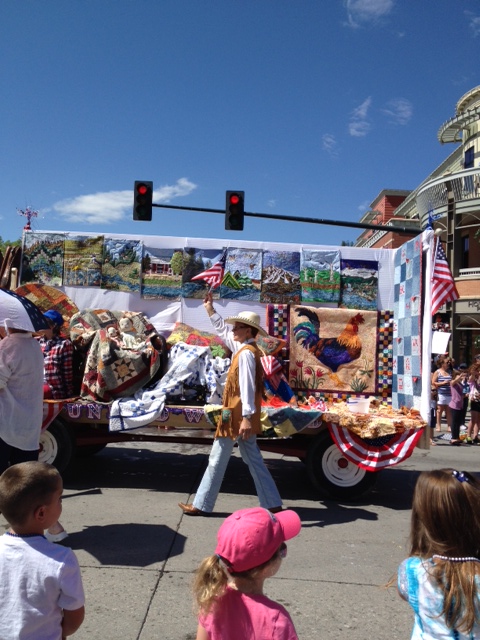
In the traditional parade on Lincoln Avenue, I saw another first:  a parade float featuring local quilts from the Delectable Mountain Quilting Guild.

Flag

The American flag appeared everywhere.  Everybody in town, and folks from far and wide, turned out for events such as ski jumping (on plastic and grass instead of snow).  After the parade, people enjoyed the block party complete with root beer floats and strawberry sundaes.

Snorkels

I watched a couple of happy little girls try out their new snorkel gear at the Old Town Hot Springs, then we all watched the spectacular fireworks.  Somehow, no matter how far I travel, the American 4th of July never gets old!

Newseum in Washington, D.C.

20140606-114009-42009772.jpg

Our nation’s capital has changed a lot since I last visited some years ago. One of the new-to-me sights is the Newseum, five floors of colorful interactive exhibits about the history of news, starting in Europe in the 1500s with the invention of the printing press. The Pennsylvania Terrace on the top floor gives a spectacular open-air view of the United States Capitol.

I had never really thought much about how absolutely essential a free press is to democracy. With the invention of the printing press, life became much more difficult for tyrants.  Their subjects suddenly had ways of exposing exposing their misdeeds and demanding justice.

photo

Social media have only accelerated that process.  An example of a communication satellite hangs high above the atrium. On the Pennsylvania Terrace, there is a timeline of events that took place on the famous street below.

20140606-115333-42813291.jpg

I was amazed and appalled to see a picture of slave pens that once existed below the street.  Wealthy people could deposit their slaves there f or safekeeping while they enjoyed their dinners.

The next placard is an illustration of the parade that took place on Pennsylvania Avenue  in 1866 following the Emancipation Proclamation. The availability of news all through human history has changed the course of history.

Join me next time for travels in Europe–and in the “New World!”

Two Weddings in Honfleur

Sometimes a tourist gets an unexpected window into contemporary local culture.  That is what happened a few years ago, when I visited Honfleur. It’s a charming and well-preserved harbor town on the Normandy coast. As far as I could tell, the town escaped bombing in World War II.

Honfleur Church

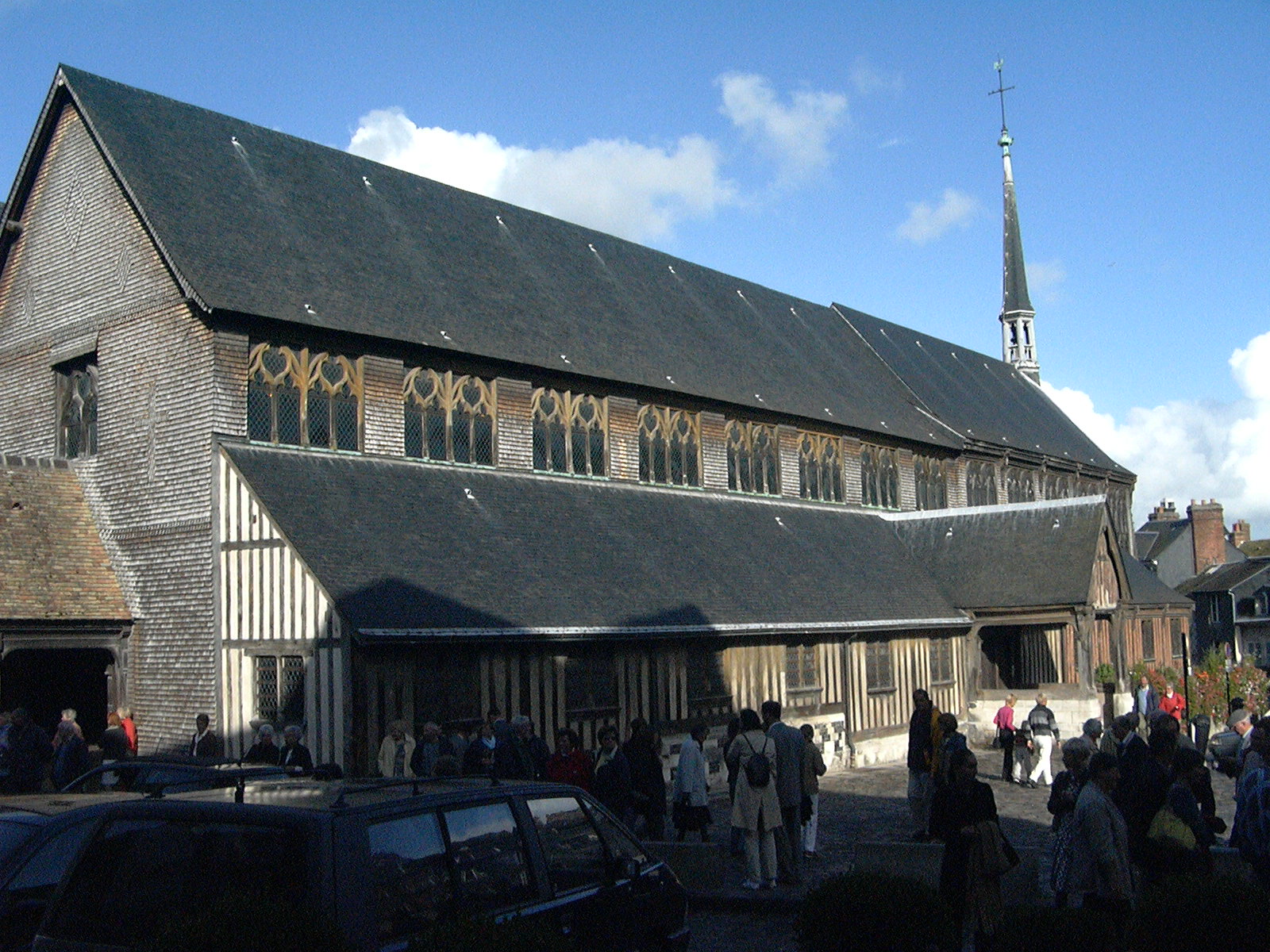
One of the major things to see in Honfleur is St. Catherine’s Church, actually a cathedral dating from the 15th Century.  It is the oldest surviving wooden church in France.

Honfleur1

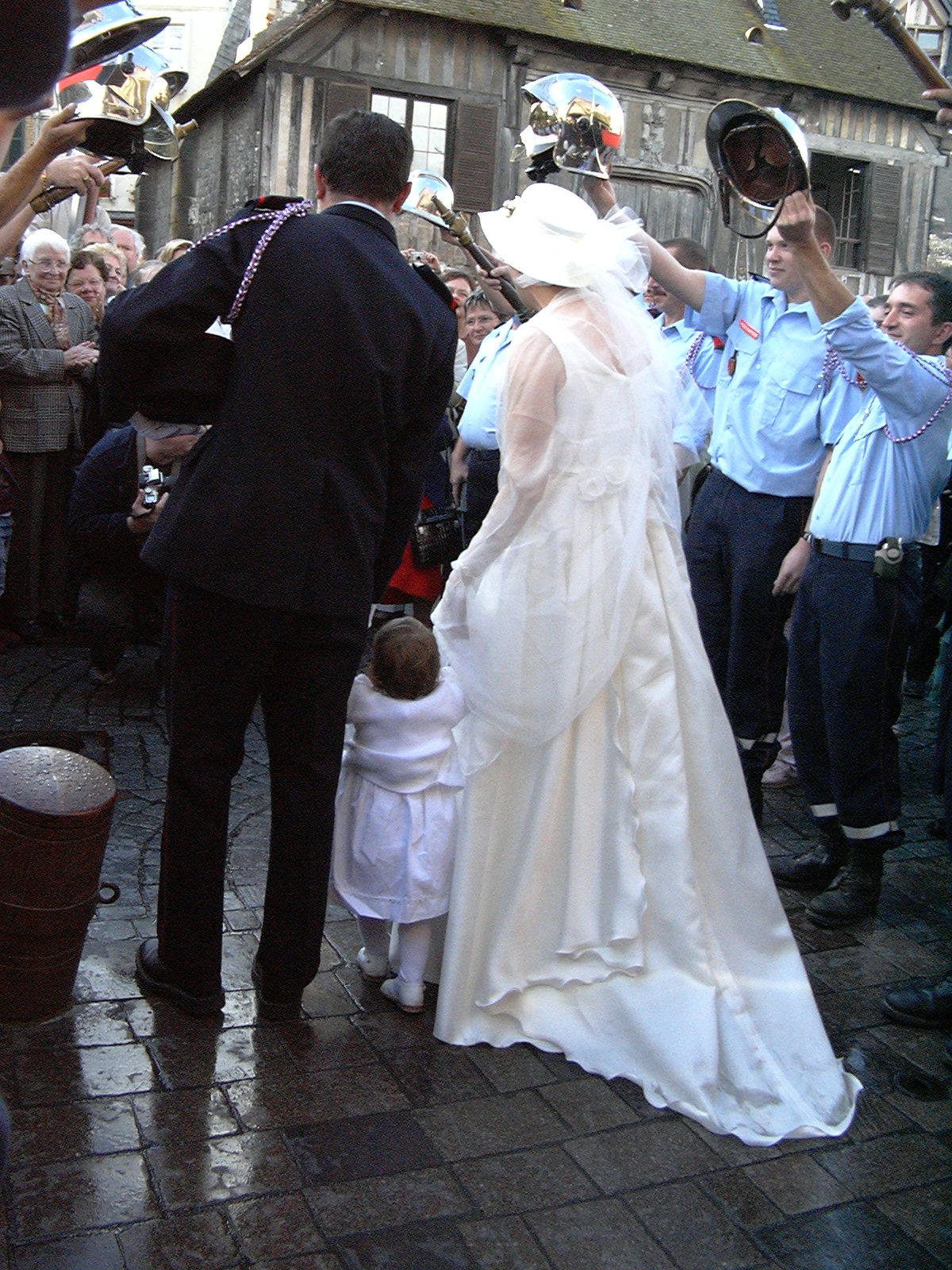
When we arrived, a wedding was taking place.  Uniformed members of the local fire and rescue brigade milled about, both inside the church and outside.  Tourists were allowed to enter and stand quietly in the back of the sanctuary.  We watched the ceremony for awhile.  It appeared that both the bride and groom were members of the brigade.  Most of their guests were in uniform.  Their ceremony went on and on, with the groom, then the bride, then various other people making lengthy speeches once the ceremony itself seemed to be over. The bride looked as though she might give birth very soon, and from what I could understand of the speeches, the couple had gone through a lot of hardship and received a lot of help from their community. Finally, the bride and groom left, to applause and shouts of congratulation.  Outside, they were greeted by waiting colleagues, each holding up a helmet for them to pass under.

HonWedding2

During the ceremony, I noticed caterers busy hauling in tall potted trees and beautiful floral arrangements.  The instant the fire-and-rescue bride and groom were outside, the caterers went to work transforming the sanctuary into a floral bower.

WeddingHats

Outside, the fire-and-rescue bride and groom were driven away in a waiting fire engine.  The square was immediately filled with very posh-looking people, a completely different crowd from the one that had just left.  All the women wore huge elaborate hats.

BrideFeathers

Suddenly a discreet sedan pulled up to the front door of the church.  A spectacularly beautiful bride emerged, wearing a designer dress and veil–decorated with ostrich feathers! In the not-too-distant  past, ostrich feathers were only seen at a Royal Court gathering, and only royalty and nobility were allowed to wear them. Was the bride a Duchess or a Countess?  Was she marrying into a noble house?  Be that as it may, I have never seen a more elegant bride anywhere.

As the ceremony was about to get under way, I sidled over to the church door, hoping to sneak a look at this very fancy event (my invitation must have been lost in the mail). Alas, uniformed men stood guard, gazing sternly at anyone who approached the door.  Where we had been welcome at the working-class wedding, the fancy society wedding was another story. The two weddings gave us a very clear view of how the social classes mix–and don’t mix–in France. We wandered off into the town, content with having seen two sides of French life.

Fontainebleau: Diana’s Garden

FontainbleauFountainThe Kings of France spent most of their time hunting with their packs of hounds, so the image of Diana the Huntress appears everywhere.  This fountain, in the gardens at Fontainebleau, features Diana,  handsome stags, and several peeing dogs.  The dogs look rather sad, or maybe just worn out from the day’s hunt.  They sit on their pedestal, peeing in unison into the pool beneath them.

Whose idea was this fountain? It was built by Henri IV in 1602. He was an unpopular king during his reign, because he was entangled in the religious wars of his time.  In fact, he was finally assassinated, after surviving at least 12 attempts. Once he was dead, his reputation improved greatly and he came to be known as “Good King Henri” because he really tried to improve the welfare of his people.

This particular fountain used to be in a private garden reserved for royalty.  Reportedly Henri went to some trouble to get the bronze hounds–they were formerly in the Louvre, and he requisitioned them for this fountain.  Then there was the matter of plumbing. The result gives us an idea of what royalty four centuries ago considered whimsical.  I can’t help thinking this fountain is a bit cheesy, like something from a catalog found in an airplane pocket.

Today, the forests of Fontainebleau are open to all.  Millions of French people flock there for hiking, rock climbing and generally escaping from nearby Paris.  A much smaller number visit the Chateau, one of the largest and most historic in France.

FontainbleauNap

A visit to the Chateau is tiring for the tourist.  The day I was there recently, there were no audioguides available, and many whole sections were closed, with no explanation. Every caption was written only in French.  I could not find a single English-speaking person on staff.  I bought a little guidebook and made do.  Still, I’d go again and hope for a more user-friendly experience. Fontainebleau preserves part of the colorful history of each century it has been a seat of the Kings of France.  Every King left his mark, and the Emperor Napoleon most of all.  And Fontainebleau is much less crowded than Versailles.

Join me next time for more explorations in the art and history of Europe!