Category Archives: Uncategorized

Mary Anne Disraeli: the Woman Behind the Man

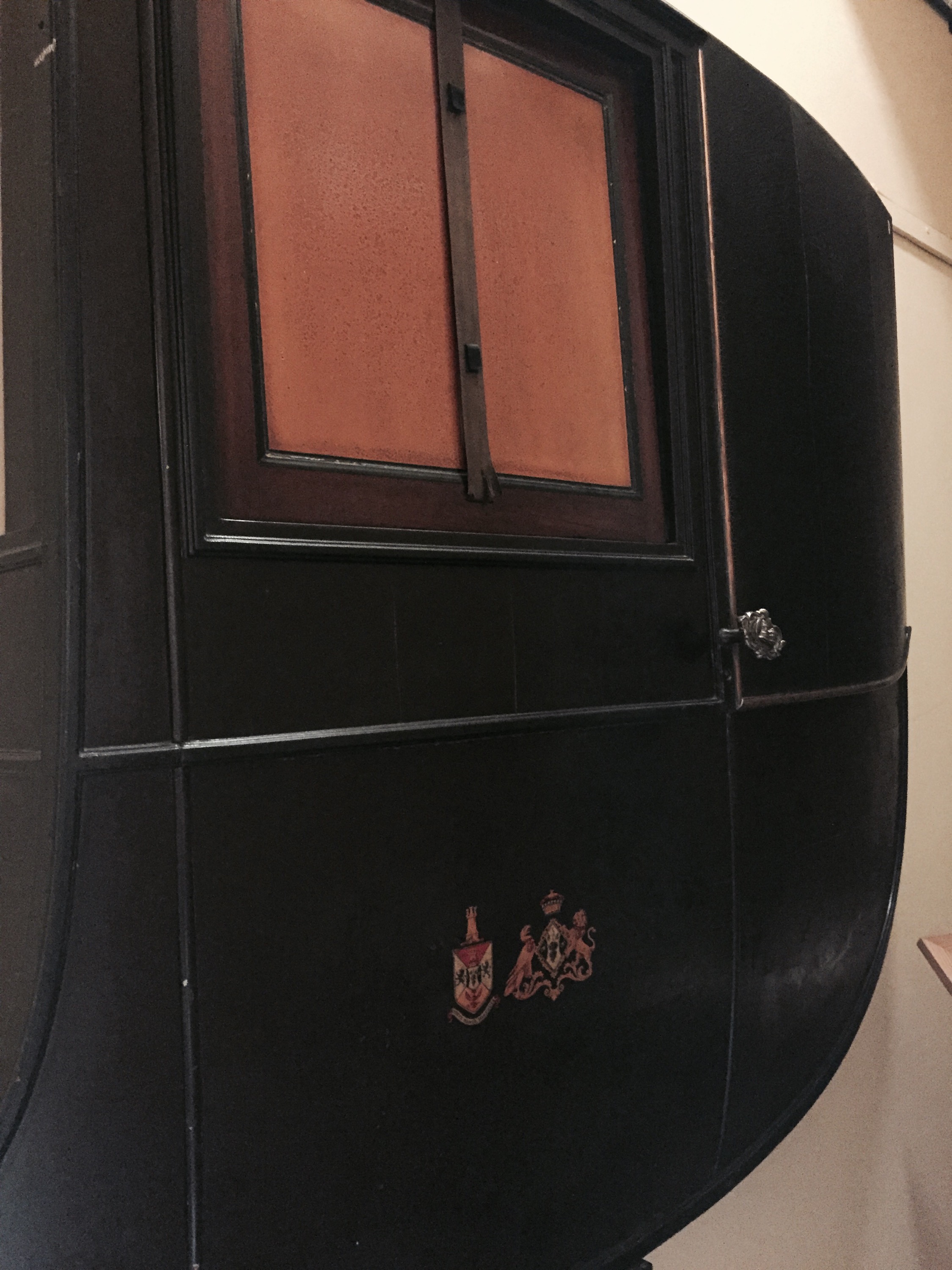
Why is a Victorian carriage door prominently displayed on a wall at Hughenden, the country home of Queen Victoria’s friend and Prime Minister, Benjamin Disraeli? The Prime Minister himself removed it from the carriage and preserved it as a tribute to his wife, Mary Anne. One evening the ambitious politician and his doting wife set off from his London house to Parliament, where he was to deliver a very important speech.  When the carriage door was closed, it slammed shut on Mary Anne’s thumb. What did she do? She suffered in silence, all the way to Westminster. She didn’t want to upset the man before his speech. A placard next to the carriage door explains that Mary Anne said not a word until Disraeli was safely out of the carriage and on his way into the corridors of power.  The placard remarks drily that her words when her thumb was released were not recorded.

 Mary Anne was 12 years older than her husband, and the marriage began as one of convenience. But it grew into a true love match.
DisDandy

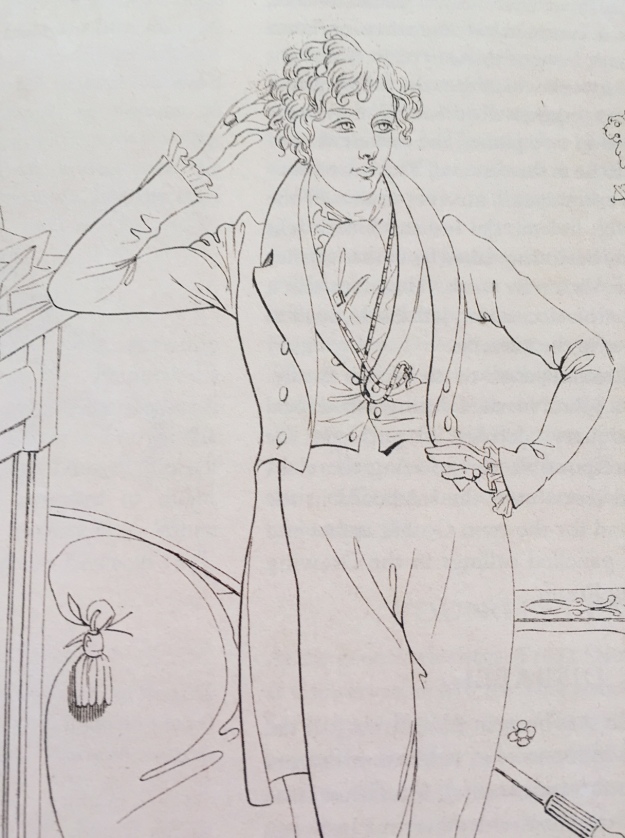
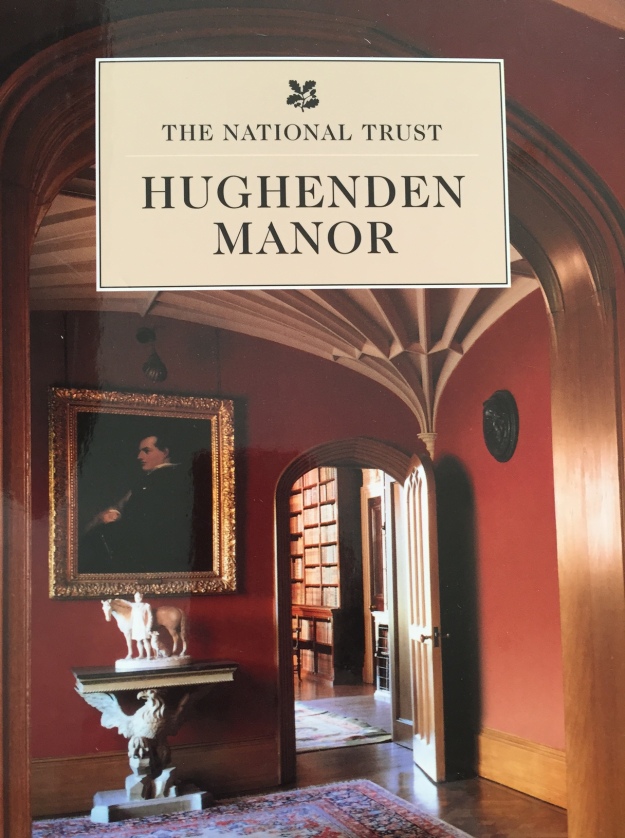
According to the guidebook sold at Hughenden, Disraeli was a novelist and something of a playboy in 1830s London. He had written a novel, Vivian Grey, which was a thinly veiled self-portrait of a young man on the make. His friend Bulwer-Lytton described him thus: he wore “green velvet trousers, a canary coloured waistcoat, low sleeves, silver buckles, lace at his wrists, his hair in ringlets.” He cut a wide swath through bohemian London salons, finally gaining an entree into the highest circles. He tried five times for a seat in Parliament before he won an election.  His maiden speech was a disaster; he was shouted down. What worked in drawing rooms did not work in the House of Commons.  He famously ended by saying, “I will sit down now, but the time will come when you will hear me.”
IMG_6240

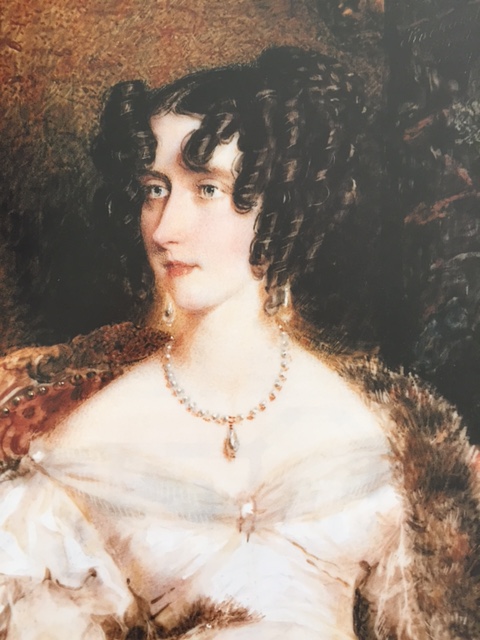
Mary Anne, my photo from Hughenden guidebook


What Disraeli needed was a rich wife. He met Mary Anne Wyndham Lewis in 1832, when she was just another older married woman he enjoyed flirting with.  He thought her “a pretty little woman, a flirt and a rattle” which according to the guidebook meant “incessant chatterer.” But her deep-pocketed husband obligingly died in 1838, leaving her a rich widow. Her appeal increased and Disraeli married her in 1839.
Disraeli soon learned what a treasure he had found.  He wrote, “There was no care which she could not mitigate, and no difficulty which she could not face. She was the most cheerful and the most courageous woman I ever knew.”  High praise indeed; Disraeli had known and depended on many, many women in his rise to power in Victorian England.
HughendenCover

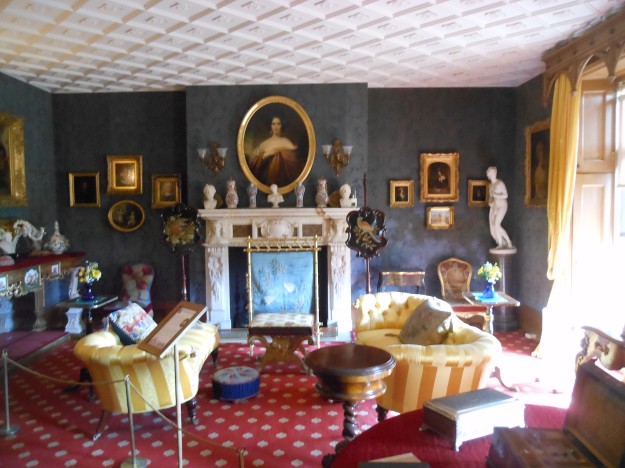
A visit to Hughenden is a window into the Victorian past.
HughendenLR

The estate is under the care of the National Trust, and beyond the quintessentially Victorian rooms there’s a surprise, new since I first visited years ago. The estate was a secret location for surveillance work which was crucial to victory in World War II.  This work was so secret that not even the National Trust knew a thing about it until very recently.  I’ll be writing about what went on in the wartime rooms and the icehouse soon.

Join me next time for more explorations in the art and history of Europe and the British Isles!
Happy New Year from The Original Pearly King


Henry Croft Pearly King, Public Domain

Henry Croft Pearly King, Public Domain

How did a penniless orphan rate a funeral procession half a mile long? How does a person make something wonderful out of nothing? Why do people appear proudly on the streets of London weighed down by thousands of white buttons? The ladies pictured below are part of the London institution known as the Pearly Kings and Queens.  The photo is from the Guardian article cited later.

PearlyQueen

Henry Croft was born around 1862 and raised in the orphanage of a workhouse. At age 13, he went out into the streets of Victorian London to make his living as a street sweeper and rat catcher. He fell in with the lively community of costermongers: sellers of apples and other cheap goods on the street.  They were known for sewing penny-sized mother-of-pearl buttons up the sides of their trousers, at the seams. Henry Croft took it one step further: he somehow acquired a full suit, complete with top hat and tails, and set about decorating it with “pearlies.” His friends helped him.  When he appeared in public, people gave him small change which soon added up to sizable amounts.  He donated the money to the orphanage that raised him. Soon, he was asked to collect money for other charities.  People began joining him and a movement began.

Pearlies, photo from thepearlies.co.uk

Pearlies, photo from thepearlies.co.uk

In 1911, the first of several organized pearly societies began in London. The various organizations, one for each borough of the city, united in 1975. They are a registered charity in England, with their own website at www: thepearlies.co.uk.

IMG_0041

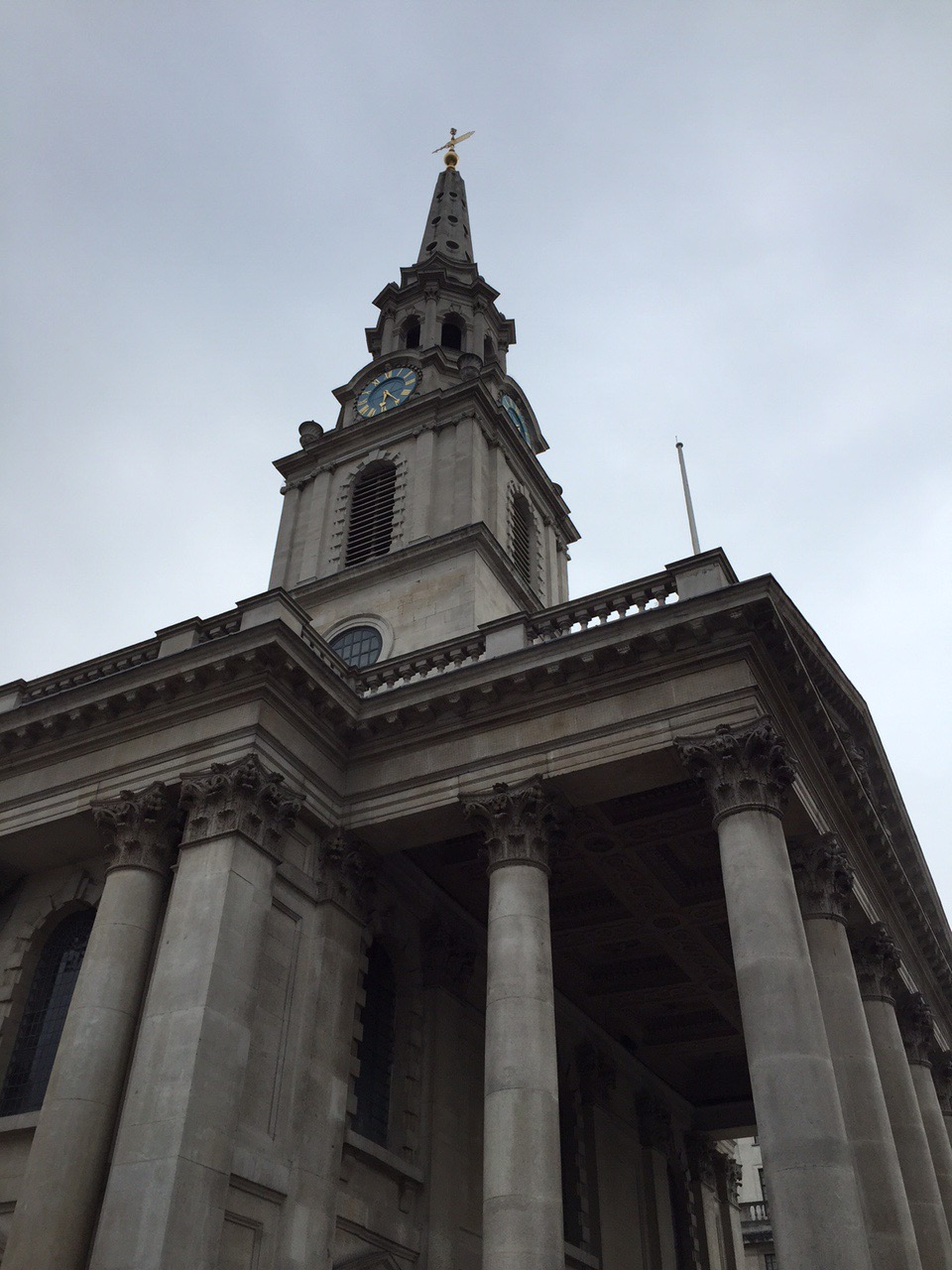
Their base is the Church of St-Martin-in-the-Fields, one of my very favorite places in London. One of these days I’ll make it to their Harvest Festival in the fall.

Pearlies

The tradition is kept alive by about 30 families in London. The photo above is from the Harvest Festival of 2015. An article about the festival is at http://www.theguardian.com/uk-news/gallery/2015/sep/28/londons-other-royalty-pearly-kings-and-queens-mark-the-harvest-festival-in-pictures

IMG_0040

Henry Croft died on January 1, 1930.  His funeral procession began with 400 Pearly Kings and Queens and stretched for half a mile with other admirers. He was honored with a memorial statue which is now in the crypt at St-Martin-in-the-Fields Church at Trafalgar Square in London. Most of the crypt is taken up by the wildly popular volunteer-run cafe in the crypt.  When in London, I eat there every chance I get.  I’m sure Henry appreciates all the lively company. On my last visit, I wrote about the cafe at https://castlesandcoffeehouses.com/2015/05/09/st-martin-in-the-fields/

The motto of the Pearlies is “One Never Knows.” None of us can know what the New Year will bring, but I hope it brings peace and a better life for everyone who suffers poverty, homelessness, and being alone in the world.

Join me next time for more explorations in the art and history of Europe and the British Isles!

Medieval and Renaissance Angels

In 14th and 15th century Tuscany and Umbria, angels appeared everywhere in sacred art. 

  
Benedetto Bonfigli, Angels with Roses, Church of San Francesco al Prato, Perugia, circa 1466

  
Detail from a painting by Lorenzo de Niccolo, early 1400s, Santa Croce Church, Florence

  
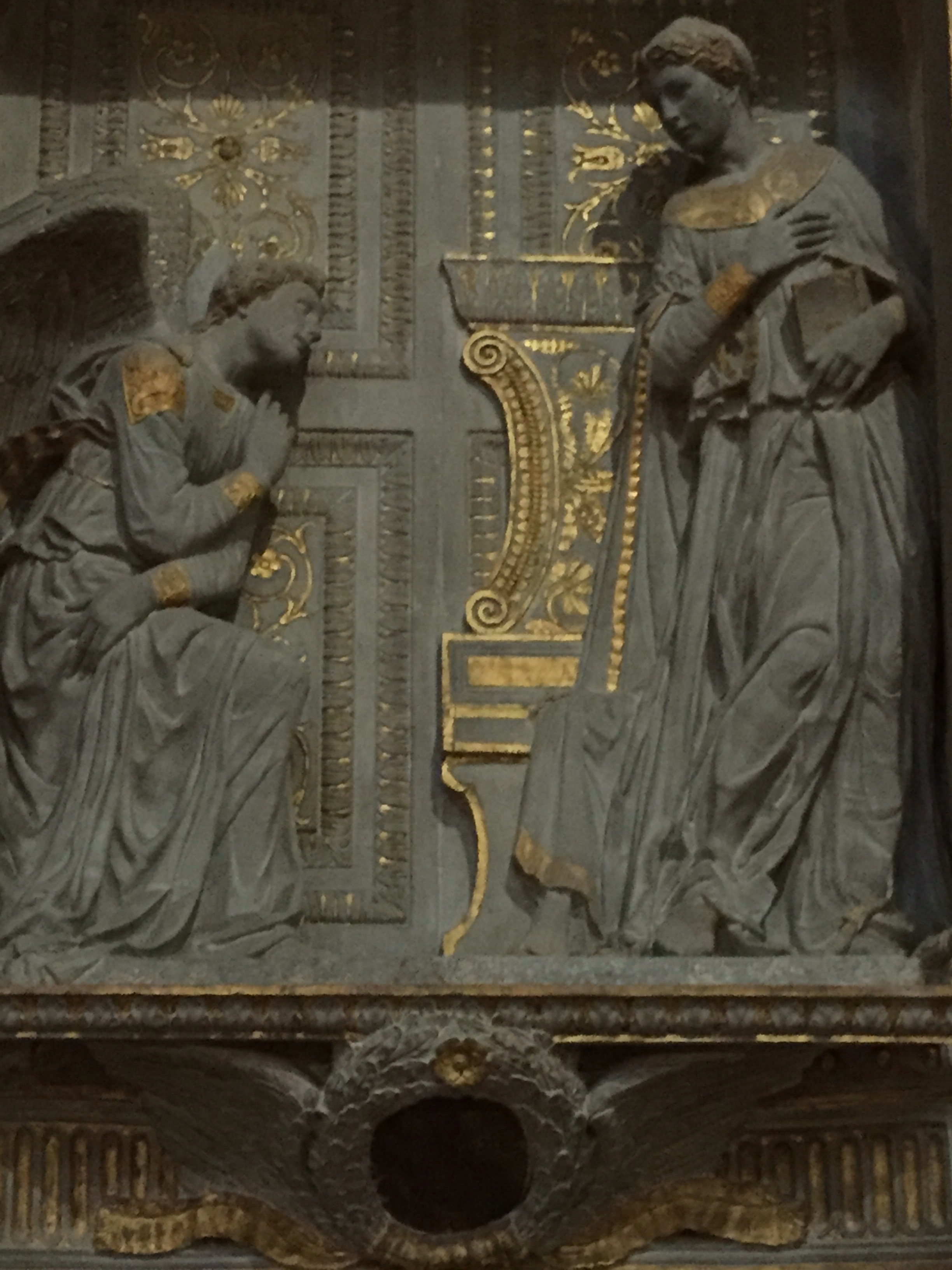
Donatello, Tabernacle of the Annunciation, 1433, Santa Croce Church, Florence


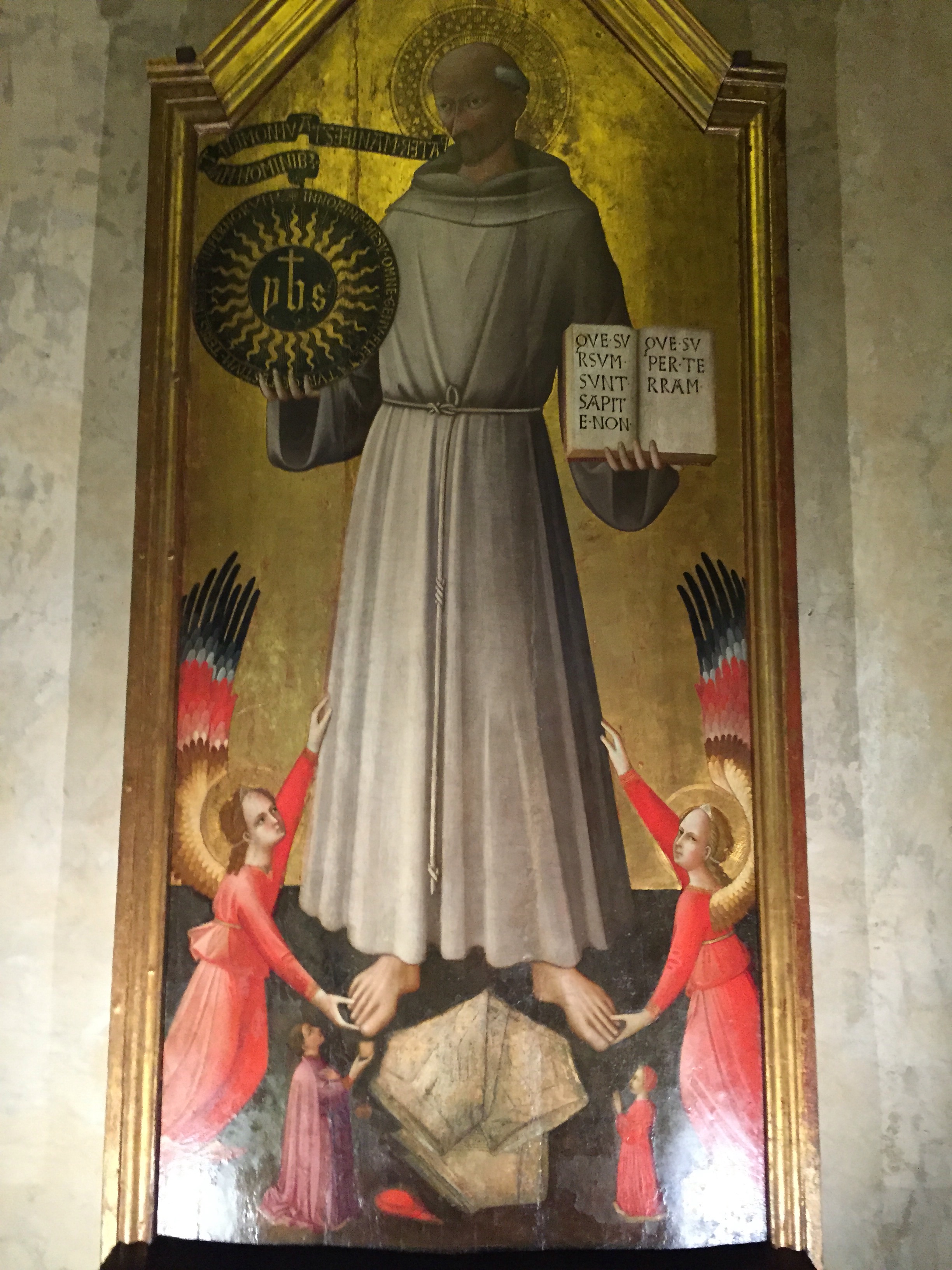
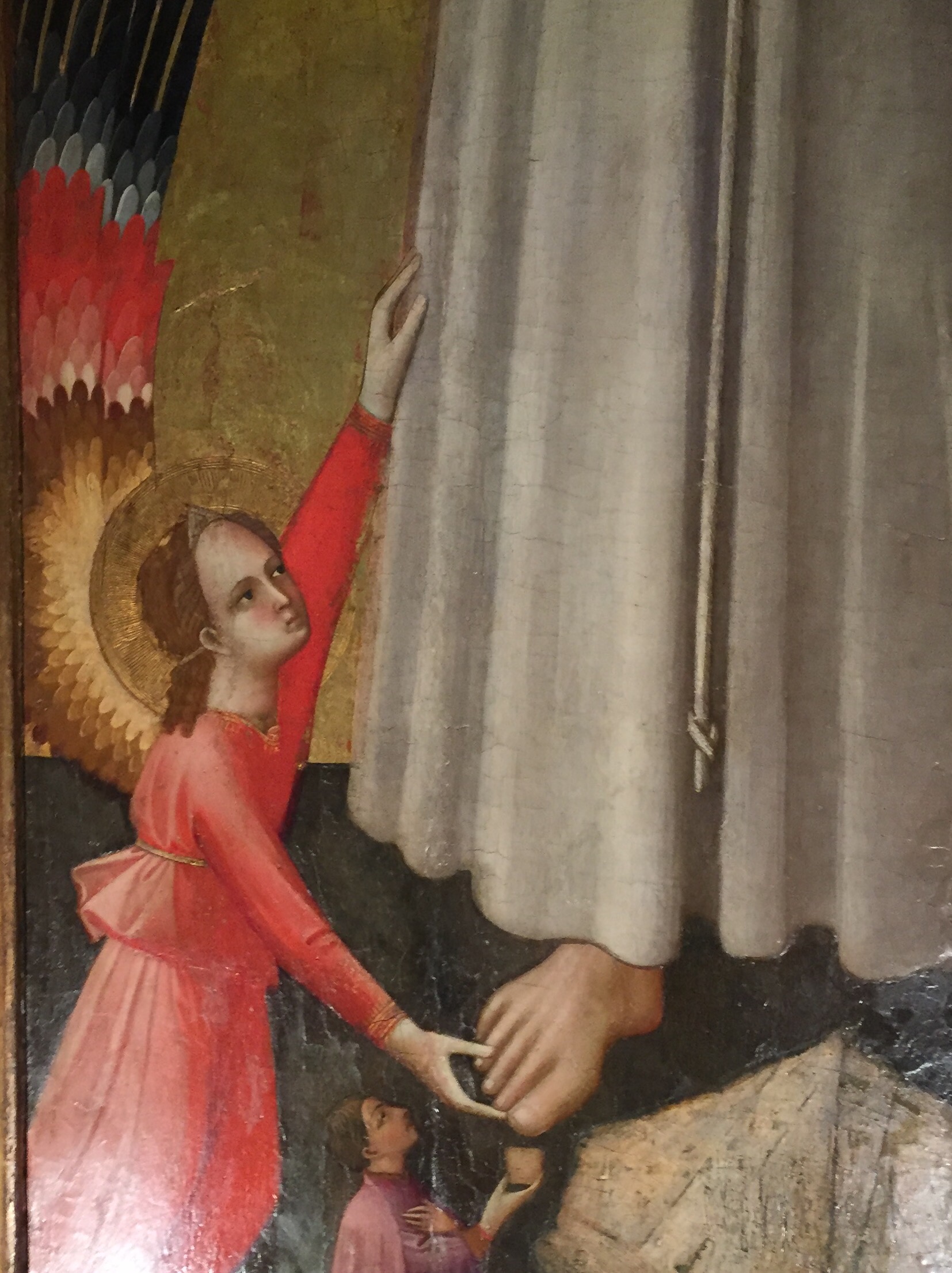
Rosello di Jacapo Franchi, St. Bernardino of Siena with angels and donors. A giant saint, a smaller angel, and the tiny humble donor who commissioned the painting! 

  
And a Renaissance-styled angel from the glorious exterior of Florence’s Duomo, completed in Victorian times, around 1880. 

How Florence Does Christmas

  Roses still blooming on the terrace of our apartment… 

Elegant handmade dresses for little girls


The shop above seems to have only one-of-a-kind items, destined to be heirlooms.

 
An exquisite Madonna and Child by Filippo Lippi, around 1560, commissioned or snapped up by the art-loving Medicis and still on display in their palace long after the’re gone.

  
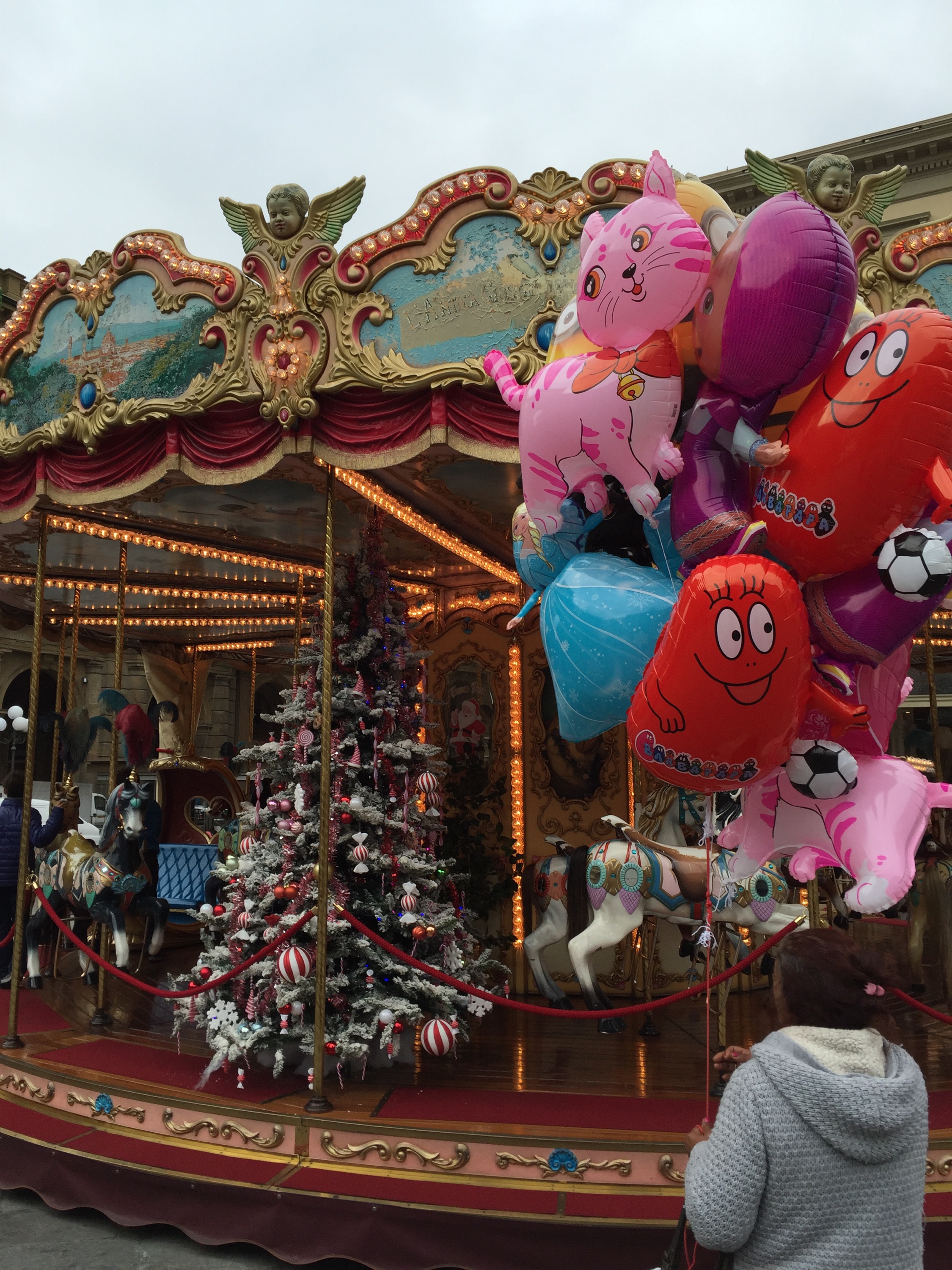
A merry-go-round with a Christmas tree.

   
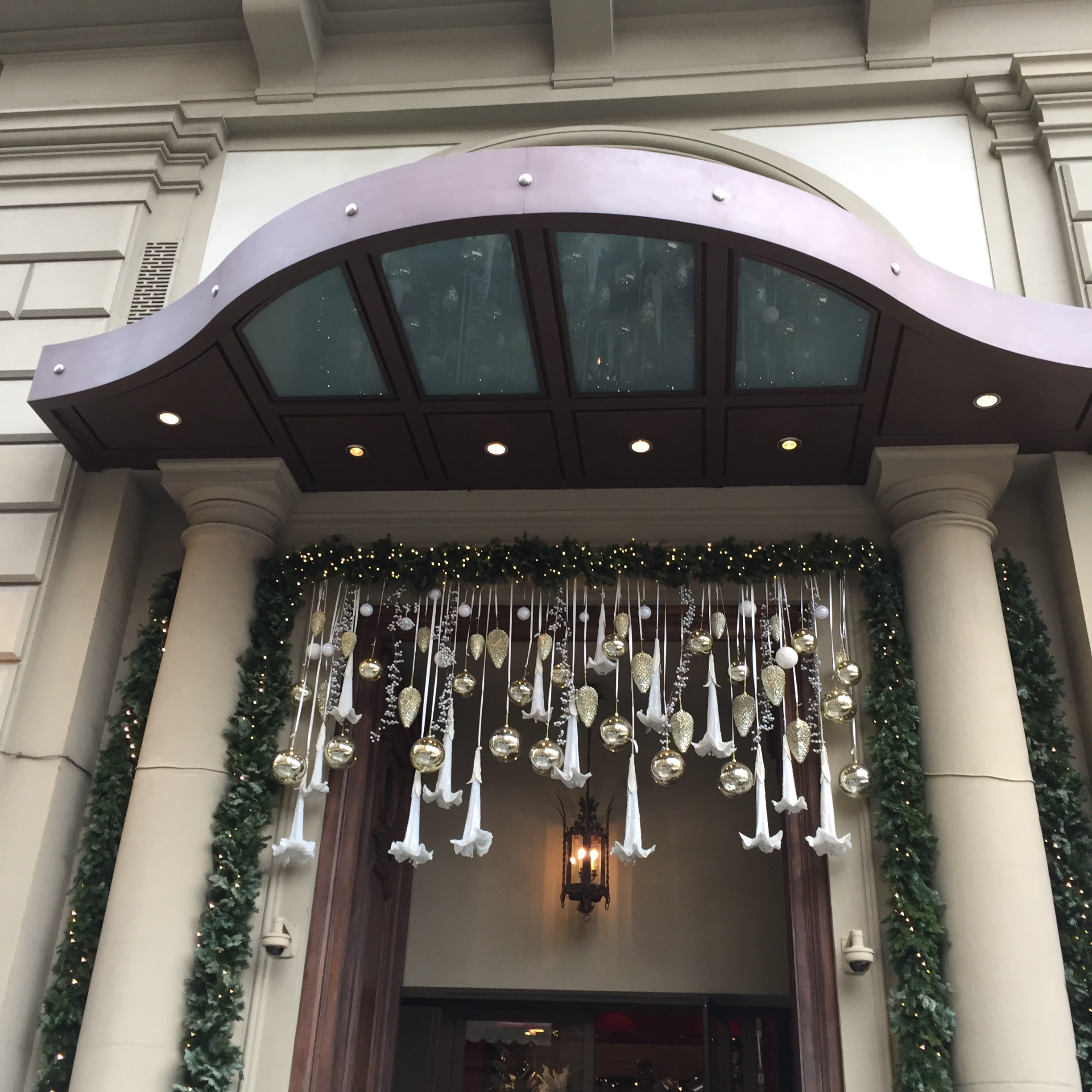
 Tinsel and lights…

  
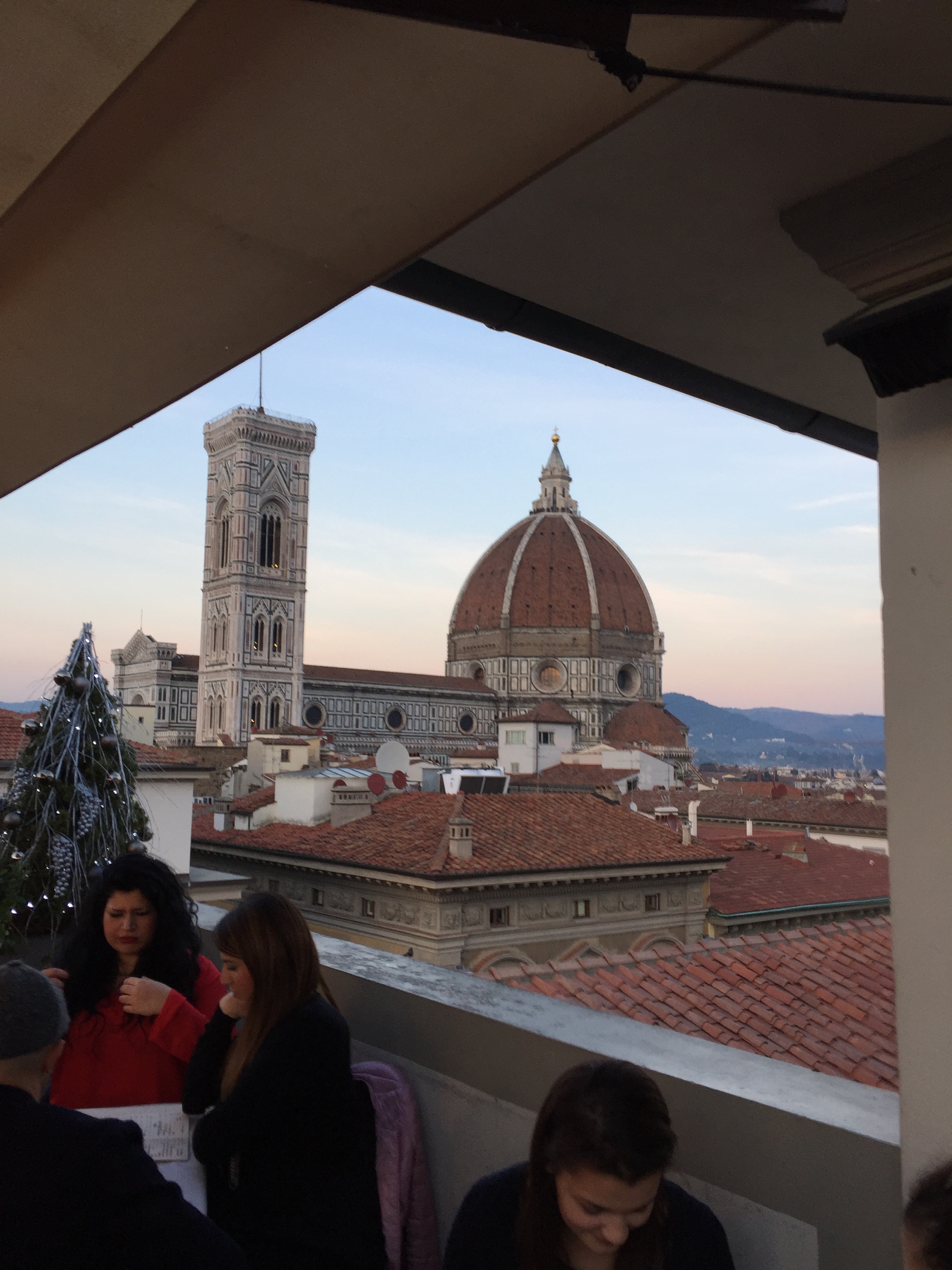
Brunelleschi’s amazing dome, a treasured view from all over the city…

  
A horse and carriage passing a decorated house at the edge of the Ponte Vecchio…

  
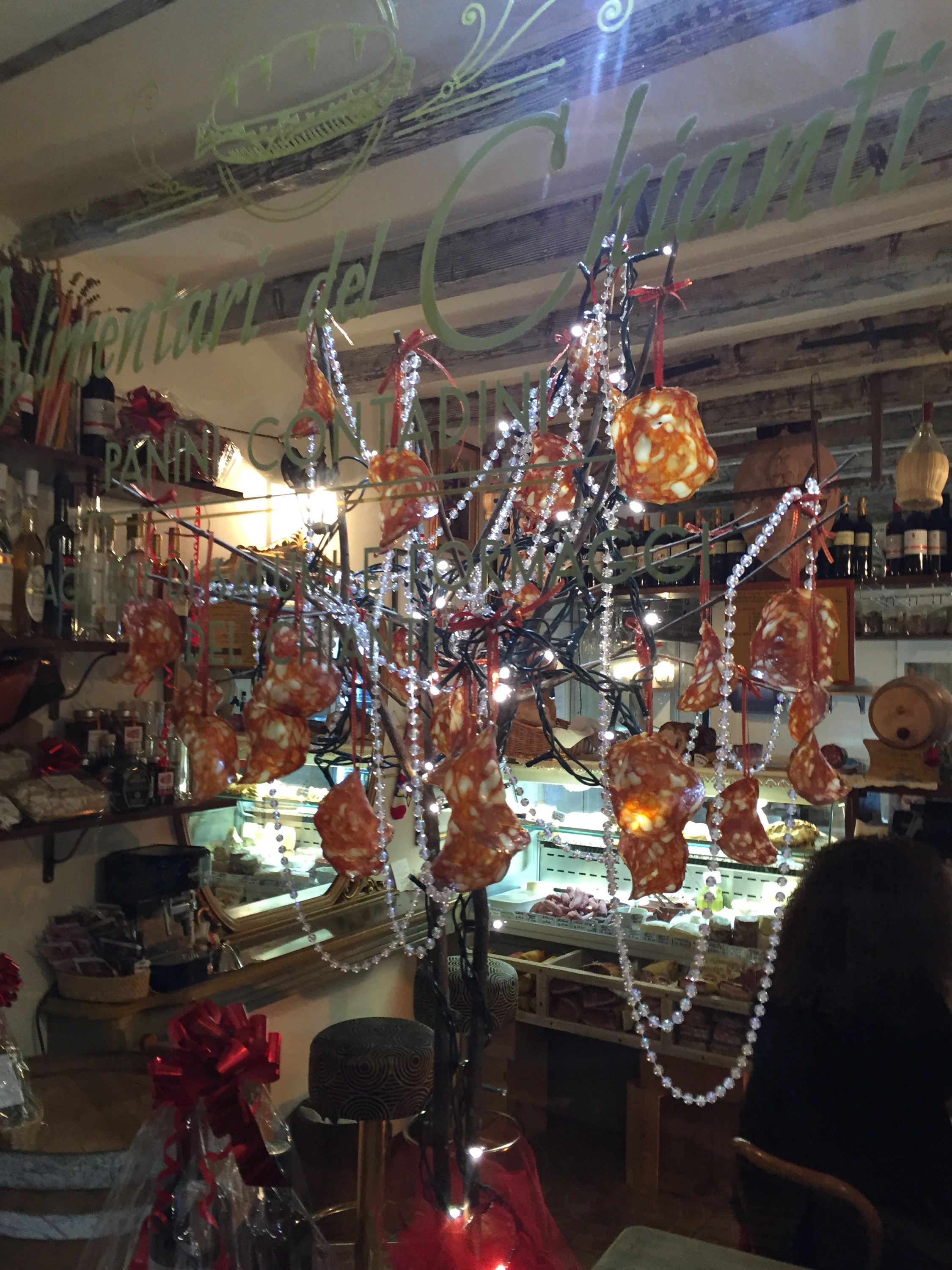
And although I’m a vegetarian, I appreciate the food-loving culture. Pepperoni slices on a tree? Fine with me!
 

Assisi, Hometown of St. Francis

  
The medieval streets of Assisi are no doubt cleaner than they were in 1181 or 1182 when the boy who became St. Francis was born. But the ancient stone buildings and streets would probably look much the same to him today. His life story is fairly well documented, although of course many legends have grown up around the historical figure.

Francis was raised as a rich boy, the son of a successful cloth merchant. He went off to war as a young man and was taken prisoner for a year. At some point after his return, he experienced a religious awakening which annoyed his father to no end.

  
The house where Francis grew up still stands, and the cloth warehouse where his father expected him to carry on the family business. 

  
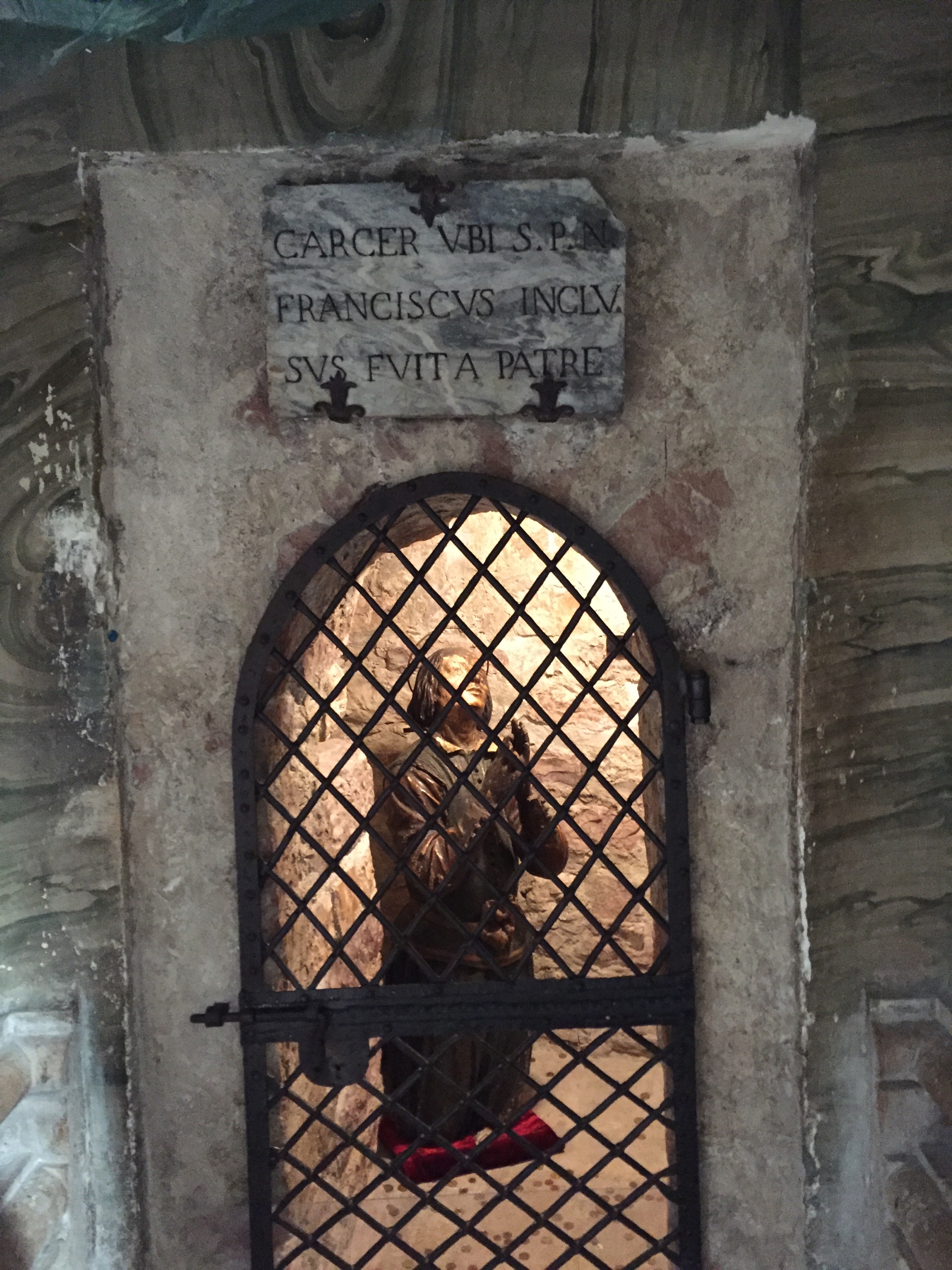
The story goes that at one point, his father placed him on house arrest in a tiny room, which still exists, complete with a model of the young Francis.

Eventually, Francis left parents, home, and even the clothes on his back. He went off to live as a beggar and itinerant preacher. He soon attracted many followers and received official Papal permission to found a religious order. His followers lived alongside the poor people they served. They went barefoot or wore sandals, and dressed in plain rough habits. 

  
Their rope belts had three knots, signifying poverty, chastity and obedience.


S. Francesco, contemporary painting by Carlo Bertocci, detail

 
Francis famously loved nature; he was said to preach to flocks of birds, who listened intently. He was an environmentalist at a time when humans were intent on exploiting nature as much as possible for their own gain (sounds familiar, doesn’t it?) Francis was also a great peacemaker, constantly trying to get enemies to reconcile. In his time as in ours, peace was elusive.

Assisi is not overrun with tourists, although there are plenty of visitors. 

  
Are there tacky souvenirs? Sure, but it’s all pretty tasteful and low-key. I liked this lantern beside someone’s doorway: St. Francis, his friend St. Clare, and the present Pope all cheerfully greeting passersby.

  
Even outside the many historic churches in and around the town, Assisi has a spiritual feel. In other tourist destinations in Italy, people run around with selfie sticks, trying to capture their smiling faces in front of landmarks. In Assisi, I didn’t see a single selfie stick. Instead, I believe I saw many people quietly looking within themselves, measuring their lives in light of the example set by Francis.

Medieval Angels

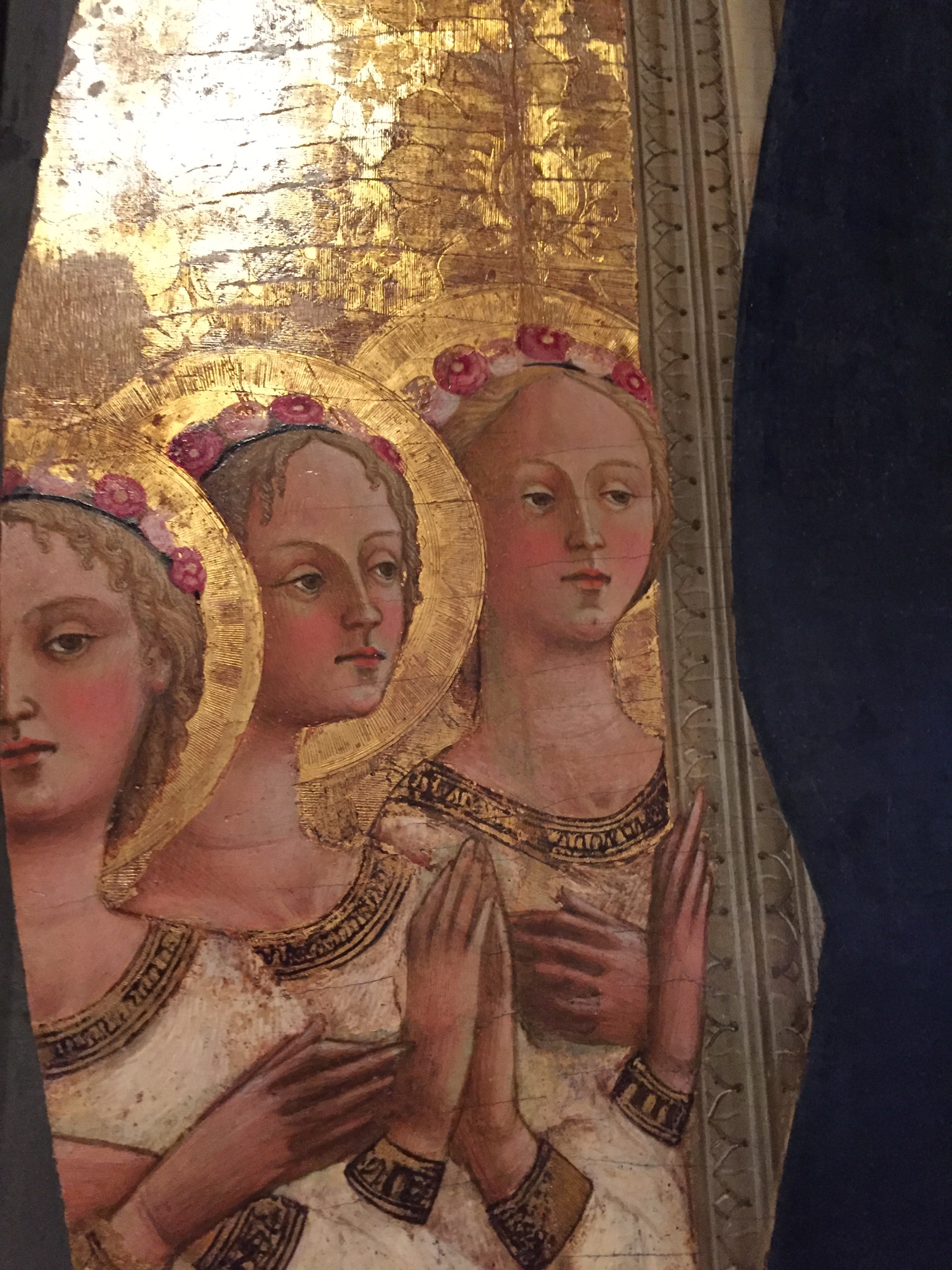
These are from beautiful Umbria, where St. Francis lived and worked. They are by various artists, in paintings 700 to 1000 years old.  The humble Francis became a saint within two years of his death, and the best artists gathered immediately in Umbria to honor his life and work. The art is breathtaking and inspiring.


Living History in Italy

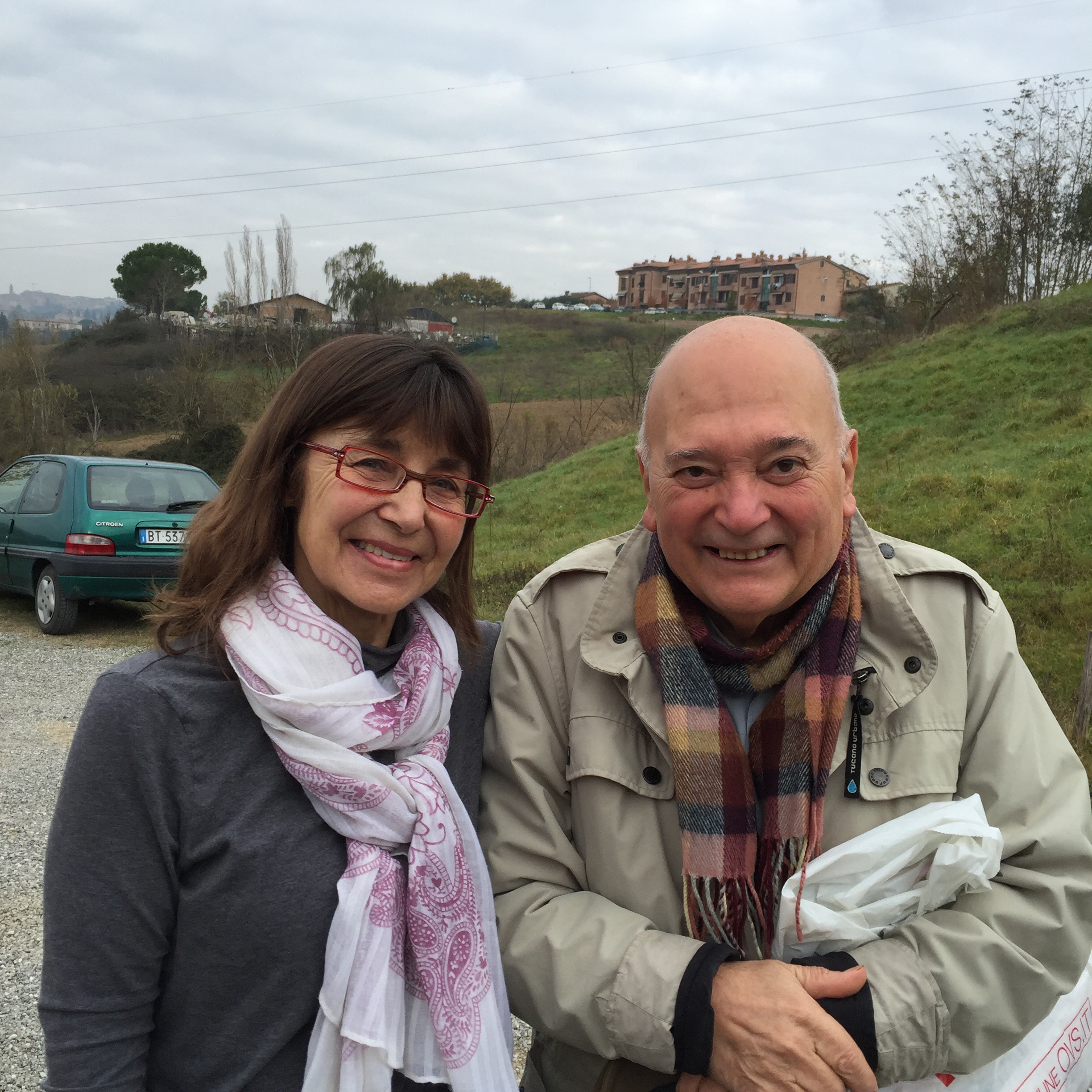
I just met this lovely man in Siena, Italy, about 30 miles south of Florence. He spoke no English and I know very little Italian, sadly. But he learned that I was American and he began excitedly telling me all about “Liberace,” or so I thought at first. Was he a fan of the flamboyant American pianist? Then I realized he was actually talking about “liberation.” When he was a small child during World War II, American Marines marched victoriously right through the outskirts of Siena, exactly where we stood on his family’s farm. He had to get out a handkerchief to wipe tears from his eyes as he described the event and tried to explain what it meant to him. The Americans gave him chocolate, and they brought him freedom. He wanted to thank me, although I deserved no thanks at all.

I think he went on to express sadness for the violence we all live with in our modern world. Americans were recently warned to be extra cautious all over the world. Given recent events, I thought seriously about cancelling my trip. But we must continue to live our lives and not give in to fear. The reward is that strangers reach out to each other in friendship instead of shrinking back in fear. I’m glad I took this trip.


It’s a Princess!


Well, it’s whatever one properly calls the daughter of a Duke.  It may be just “Lady Cambridge” for the time being. As an American, I wouldn’t know. I didn’t plan this (honestly!) but I happened to arrive at Paddington Station a half-hour after that the announcement that the Duchess of Cambridge had given birth. I was within a block of the Lindo Wing of St. Mary’s Hospital, and the celebration was just beginning.


Pink banners fluttered from the fence in front of the hospital.


Pink party hats started appearing.


Reporters interviewed fanatical royal watchers who had been camped out for days or weeks.

Welcome, baby Cambridge!

Clandon Park: A Window Into History, Closed Forever

ClandonPalladian

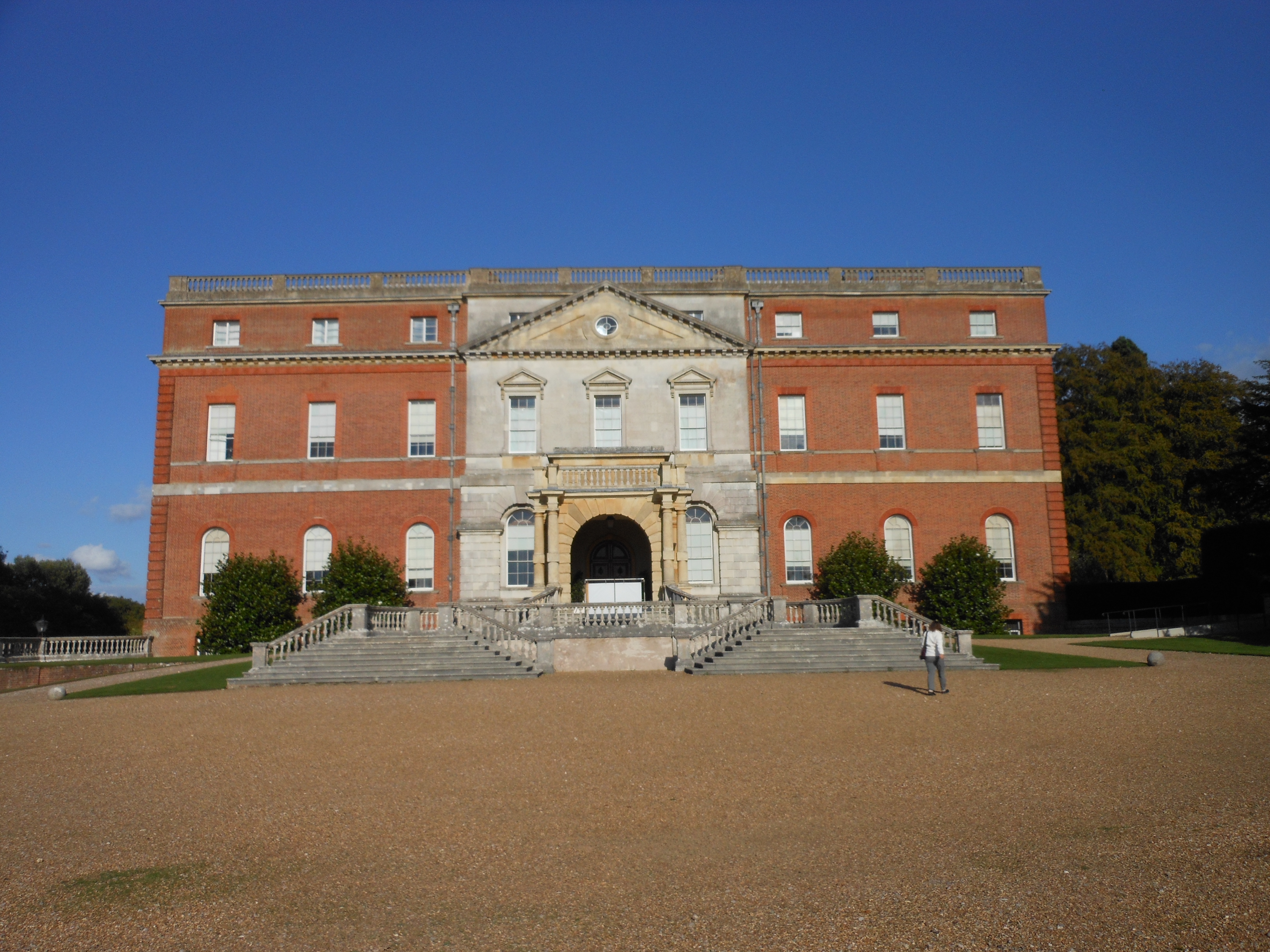
Well, I hope it’s not really forever.  Clandon Park is a splendid 18th century Palladian mansion just outside London. It was featured as a location for the film The Duchess, starring Keira Knightley.  It went up in flames a couple of days ago.

ClandonMarbleHall

The Marble Hall, one of the finest in England–and in the world–is gone. It was a perfect cube, 40 feet square, of white marble, a space designed to impress.  The ornate stucco ceiling completed the cube, with heroic figures superimposed on the exquisite background. Outside of visiting hours, the mansion was a popular wedding venue.  Several English brides are scrambling right now to replace their dream setting for a white wedding.

ClandonCanovaGraces

Countless volunteers and at least 80 firefighters struggled to save what they could.  Much of the furniture and art was rescued, but I doubt that anyone was able to move this life-size sculpture of “The Three Graces” by the great Italian sculptor Antonio Canova.

ClandonUniforms

The mansion housed a wonderful military museum in the basement, where the fire apparently started. I know that the prized Victoria Crosses, awarded for bravery in battle, were saved.  Certainly the many colorful uniforms from heroes of the past were lost too. The Onslow family, who began building on the property in the 1200s, were prominent British politicians. In fact, three of them served as Speakers of the House of Commons. More recent Onslows fostered connections with Maori tribes.

I was fortunate enough to see the house in its glory, last September.  Will it be rebuilt?  Possibly.  Some National Trust properties, such as Uppark, were eventually rebuilt.  But this was an especially devastating fire which left a national treasure an empty roofless shell.  I am sad.

The smouldering remains of Clandon Park House

An article about the fire is at  http://www.theguardian.com/uk-news/2015/apr/30/clandon-park-house-fire-salvage-stately-home-surrey#img-3. The photo above, by Rex Shutterstock, is from the article.