Category Archives: Historic Homes

Tyntesfield: Mr. Gibbs Made His Dibs

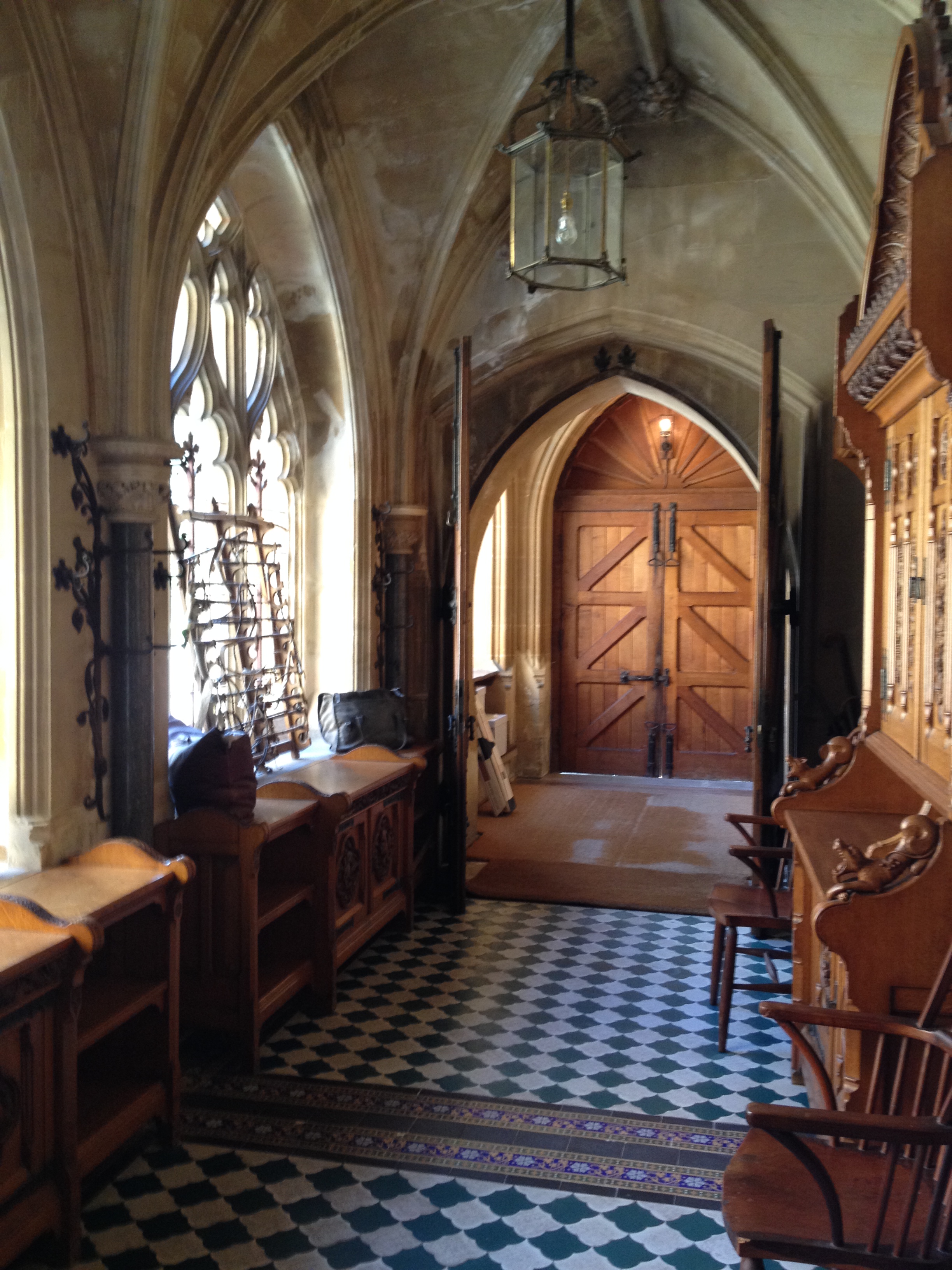
Entry Hall

William Gibbs’s son Antony did not take over the family business as expected.  The story went that William would not allow it, after he observed that the boy could not add four columns of figures simultaneously (I wonder how many of us would pass that test?)  I doubt Antony was disappointed.  He managed the Tyntesfield estates and charities, became an accomplished carver of ivory, and puttered with inventions such as a bicycle which supposedly stored energy going downhill and used it when going uphill. It didn’t work, though.

Instead, William’s nephew Henry Hucks Gibbs took over the company.  Henry was elevated to the peerage, becoming Baron Aldenham in 1896.  (What exactly is the peerage, anyway?  A subject for another post).  Henry also became Governor of the Bank of England, earning him the popular jingle which forever followed the Gibbs family: “Mr. Gibbs made his dibs, Selling the turds of foreign birds.” Not very elegant, but it certainly told the story. And he must have laughed all the way to the bank.

The little ditty no doubt followed George Abraham Gibbs, a war hero who moved in higher social circles than his humbler ancestors.

George became 1st Lord Wraxall and Treasurer of the Royal Household–an example of the new commercial and industrial wealth overtaking older titled families.

The 2nd Lord Wraxall, known as Richard, inherited the title at the age of 3.  His mother, Ursula, Lady Wraxall, presided at Tyntesfield until she died in 1979.  She received an OBE for her services to the war effort. During World War II, the house became a medical distribution center, with the books in the library replaced by bandages. It was also a convalescent home for American soldiers, who stage reunions there to this day.

When he came of age, the 2nd Lord Wraxall (Richard) served with the Coldstream Guards, then took over management of the estate. He maintained the house and grounds as they were, not following the lead of so many great homes in getting rid of Victorian furniture and features as they became unfashionable. He never married, and ended up living alone in the house with most of the rooms closed. When he died unexpectedly in 2001, the place was a treasure trove of Victorian items from the past 150 years.

TyntesSotheby1

Join me next time when I consider the very challenging acquisition of the house by the National Trust.  It’s one of the chapters in the fascinating story of the history and art of the British Isles.

Linderhof: “Mad” King Ludwig’s Real Home

Last fall I was finally able to visit Linderhof Palace, King Ludwig II’s favorite home, at a time when the grotto was open.  I was anxious to see it, especially after watching Luchino Visconti’s very fine film Ludwig, about the life and mysterious death of the notorious Bavarian king.

LudwigPoster

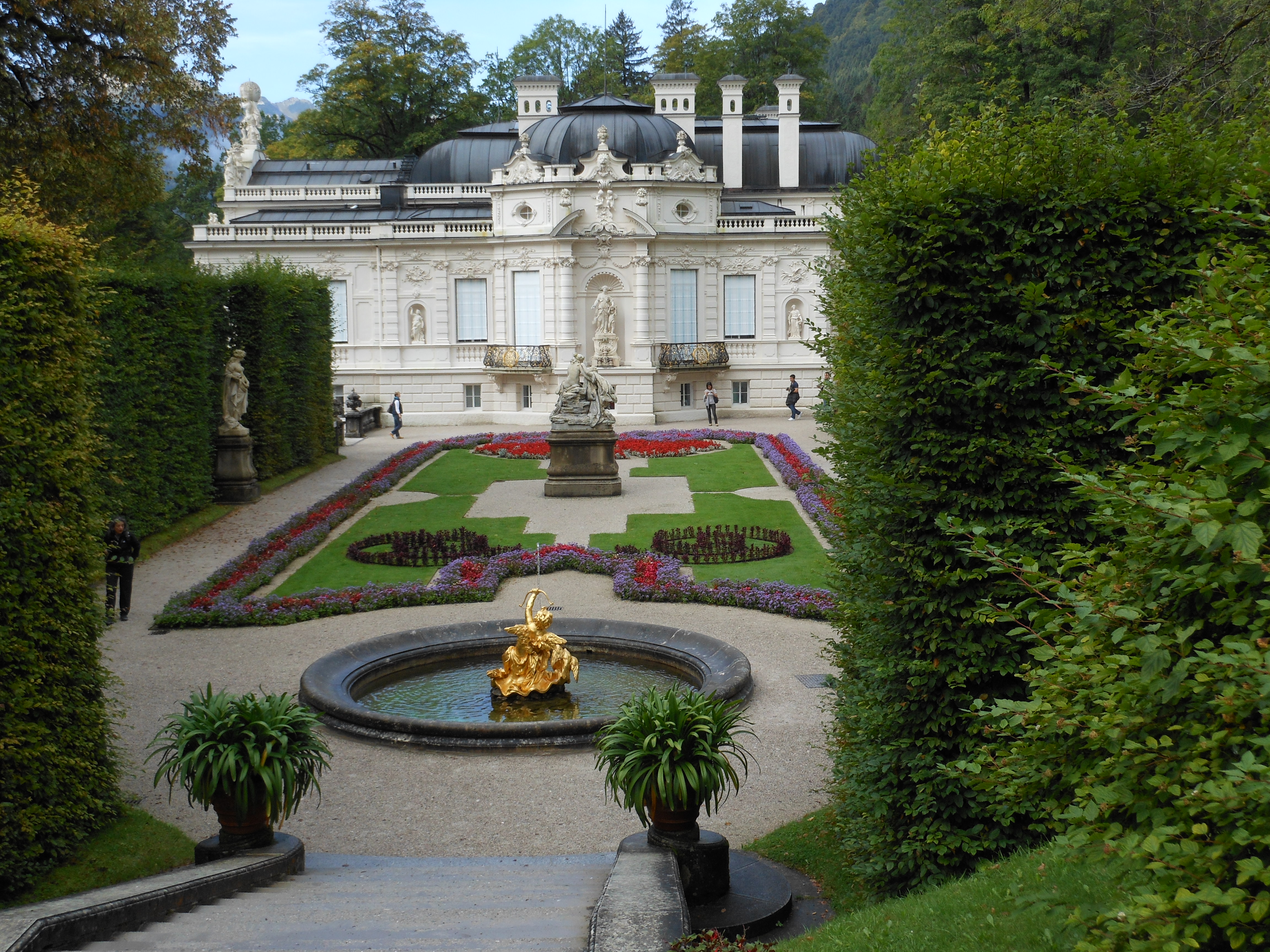
Ludwig built Linderhof as his own personal getaway.  In fact, it was the ultimate bachelor pad.  But he enjoyed the place in solitary splendor; he rarely if ever had visitors.  He built a special music room for his favorite composer, Richard Wagner, but Wagner never saw it. The grounds are breathtaking, and because the palace is quite small, each room looks out onto a beautiful manicured view with pristine mountains in the background.

Linderhof Palace

Linderhof Palace

In Visconti’s 1972 film Ludwig, the king is played by Visconti’s real-life romantic partner and muse, Helmut Berger.

It is hard to say how accurate the life story is.  But it is certain that Ludwig was an eccentric and  dreamy romantic.  His people loved him, but he was not much of a king when it was time to hang the ermine in the closet and get some work done.

One of Ludwig’s very few friends was his cousin, the Austrian Empress Elisabeth, nicknamed Sisi. She was famously married to the Emperor when she was only 15, and spent the rest of her life wanting out.  She is played by Romy Schneider (who also played Sisi in the very silly but entertaining semi-fictional series of Sissi movies).

The grotto was built up the hill behind the castle.  The entrance looks like a fort a very ambitious child might build.

GrottoEntry

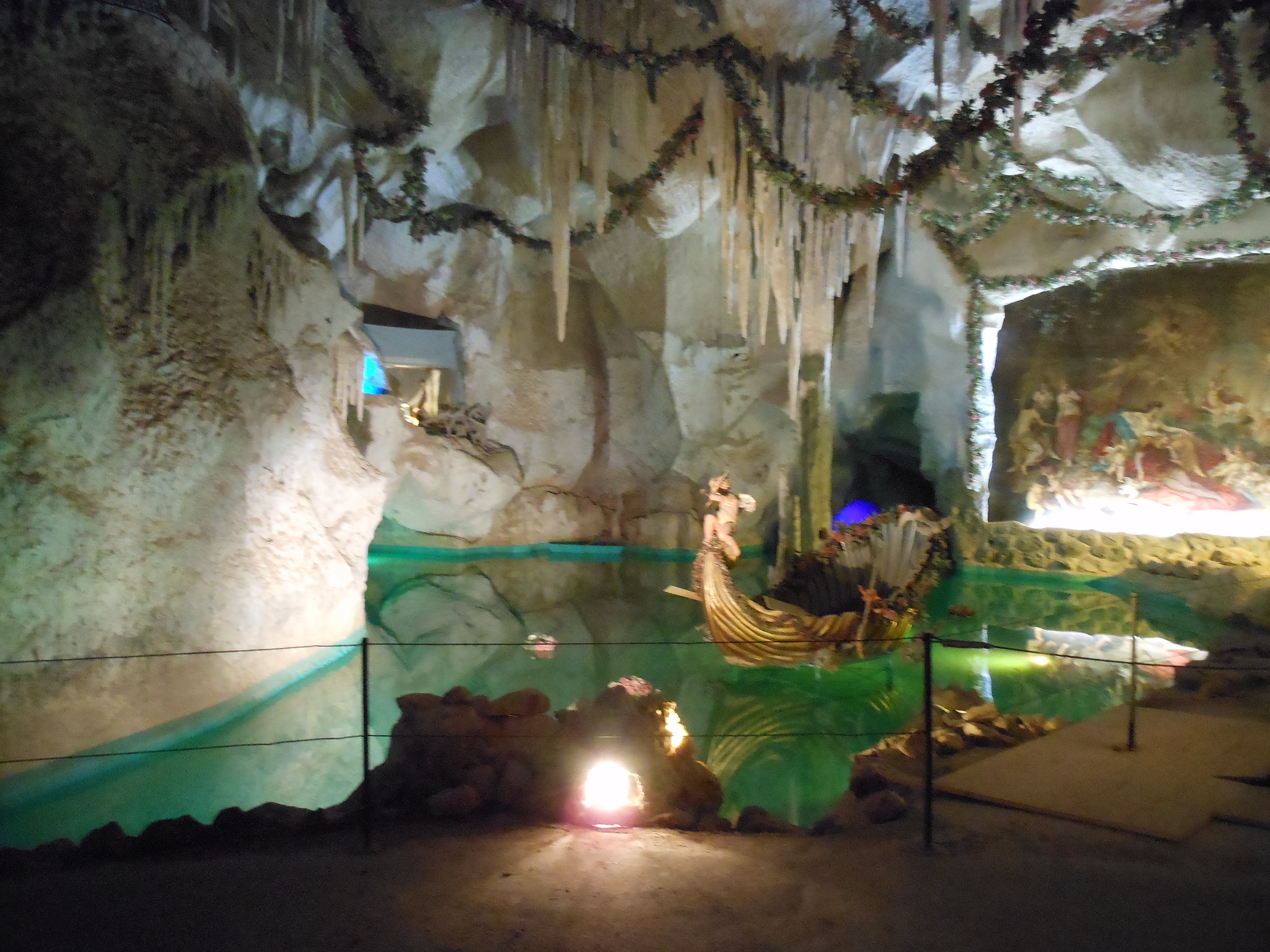
But the grotto itself is as jaw-droppingly weird and beautiful as it was in Ludwig’s day.  He had Wagner’s operas performed inside for his own personal pleasure.  The water was heated, so that he could swim in it if he tired of being rowed around in his gilded shell boat.  And the lighting could change colors depending on his mood, or the mood of the opera scene.

Ludwig's Grotto

Ludwig’s Grotto

The grotto is still festooned with the floral swags that Visconti’s movie crew put up.  The film has a fantastic scene where an Austrian actor is taken into the grotto to meet Ludwig, who wants him to recite dramatic speeches 24/7.  Helmut Berger, as Ludwig, floats out of the gloom in his shell boat, wearing a dark overcoat and a black Homburg–with an enormous diamond brooch pinned to the side. He fixes the actor with an imperious, piercing stare. The actor tries hard to be Ludwig’s New Best Friend, but the friendship ends badly and Ludwig is alone again.

Nearby Neuschwanstein and Hohenschwangau Castles are justly famous, but they are overrun with tourists.  Armed with a Bavarian Castles Pass, I actually went to Linderhof twice during my last trip.  One day it was rainy, the next it was sunny.  I can’t say I had the place to myself, but there was time and space enough to ponder the mysterious life of Ludwig.

Join me next time for more explorations in the art and history of Europe!