Category Archives: Art

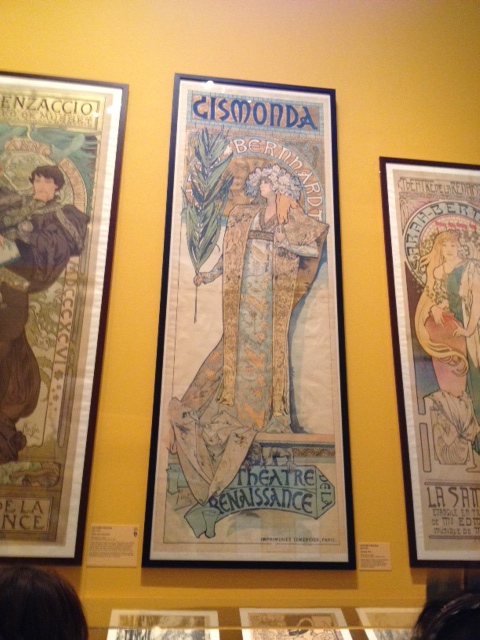
Sarah Bernhardt, Sculptor

Bernhardt

At the “Paris 1900” exhibit this past spring, I was not surprised to see theatrical posters featuring the famous actress Sarah Bernhardt, “The Divine Sarah.”  She was a celebrated–and often notorious–figure of the Belle Epoque. She was thrown out of the Comedie-Francaise as a very young woman, for slapping another actress.  But she lived to return in triumph, giving spectacular performances to rave reviews. The venerable Comedie-Francaise was not big enough for her talents, though.  She founded her own theaters in several locations and traveled the world performing.

Acting was not big enough for her talents, either. Who knew that  “The Divine Sarah” was an accomplished sculptor, when she wasn’t onstage playing Phaedra–or Hamlet?  She created around 50 sculptures, starting when she was 25. She painted, too.

BernhardtSculpt

The Paris 1900 exhibit contained a sculpture that Sarah Bernhardt actually created for the 1900 Exposition held on the banks of the Seine. It’s titled “Une Algue,” which I think means “An Algae.”  It certainly looks like one, lovingly rendered in bronze.  Where did she find the time?

Sarah Bernhardt, Public Domain

Sarah Bernhardt, Public Domain

Join me next time for more explorations in the art and history of Europe!
 

The Golden Age is Now

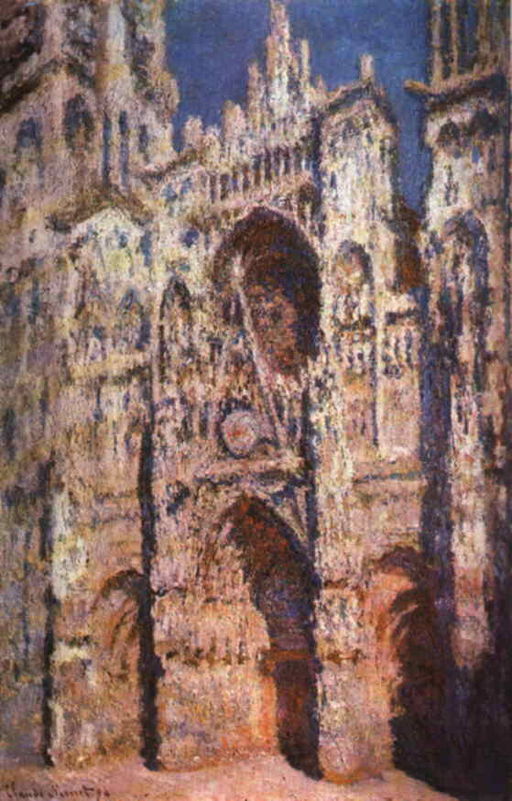
"Rouen Cathedral," Claude Monet, 1894, Public Domain

“Rouen Cathedral,” Claude Monet, 1894, Public Domain

Nelie and Edouard Jacquemart-Andre only pursued art from the 18th century and earlier. Monet, Manet, Renoir, Sisley, Degas, and Morisot were all active in the 1890s and later.  Presumably Nelie and Edouard agreed with the conventional wisdom that the Impressionists were a flash in the pan, destined for the dustbins.

On the other hand, Nelie and Eduoard bought for the future; they always intended their home to end up as an art museum.  And each had a keen eye for a bargain. They could have picked up Impressionist pieces for a song, and at least stored them away in a closet in case they ever amounted to anything.

Today, arcoss the Seine at the Musee d’Orsay, people shuffle through packed galleries and stand shoulder to shoulder to gaze at priceless Impressionist paintings.  The Musee Jacquemart-Andre is never crowded; most tourists never set foot in it. Nelie and Edouard had impeccable taste for the treasures of the past, but they must have closed their minds to the artistic innovations going on right under their noses.

TiepoloDetail

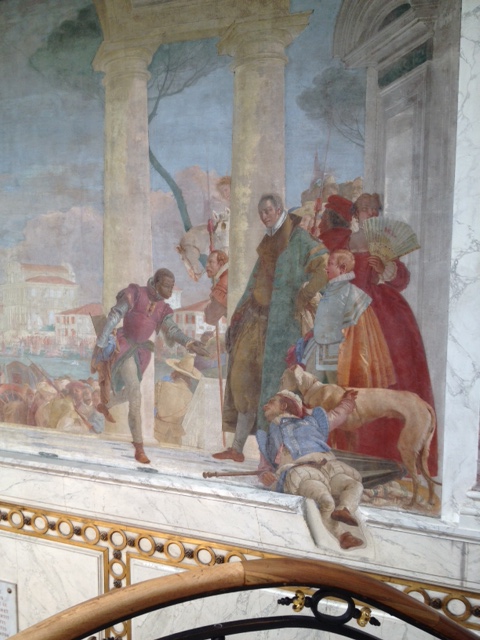
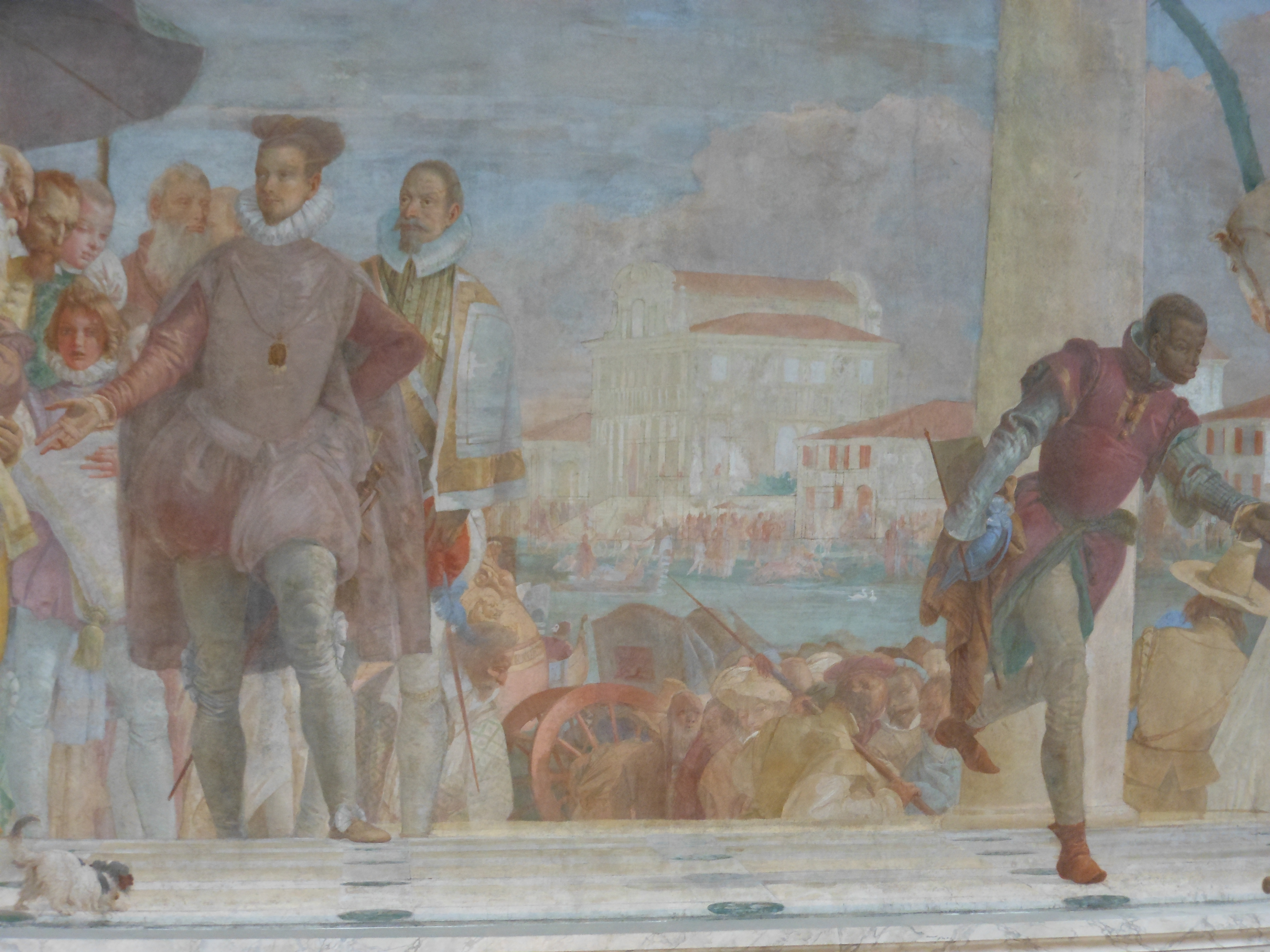
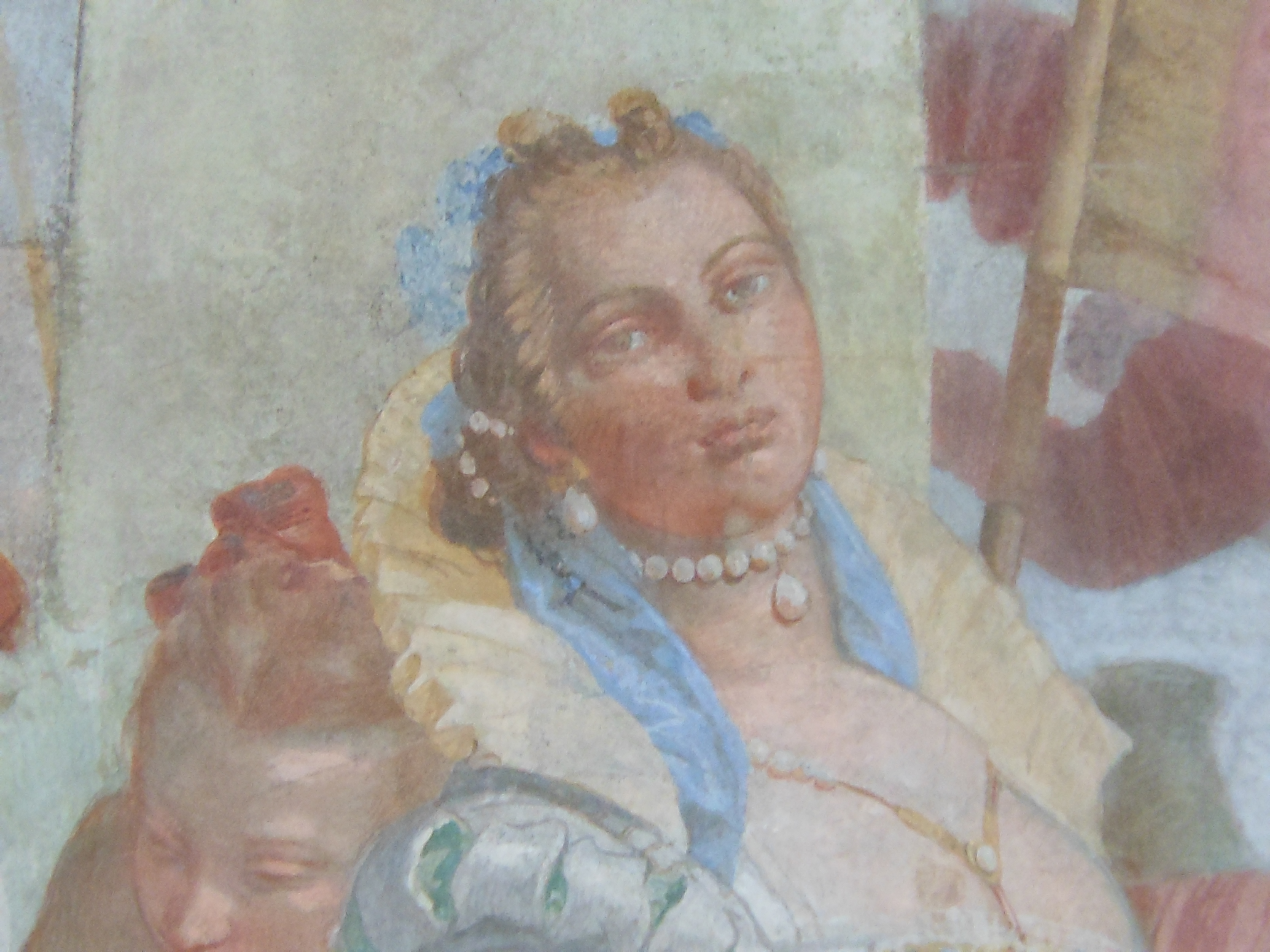
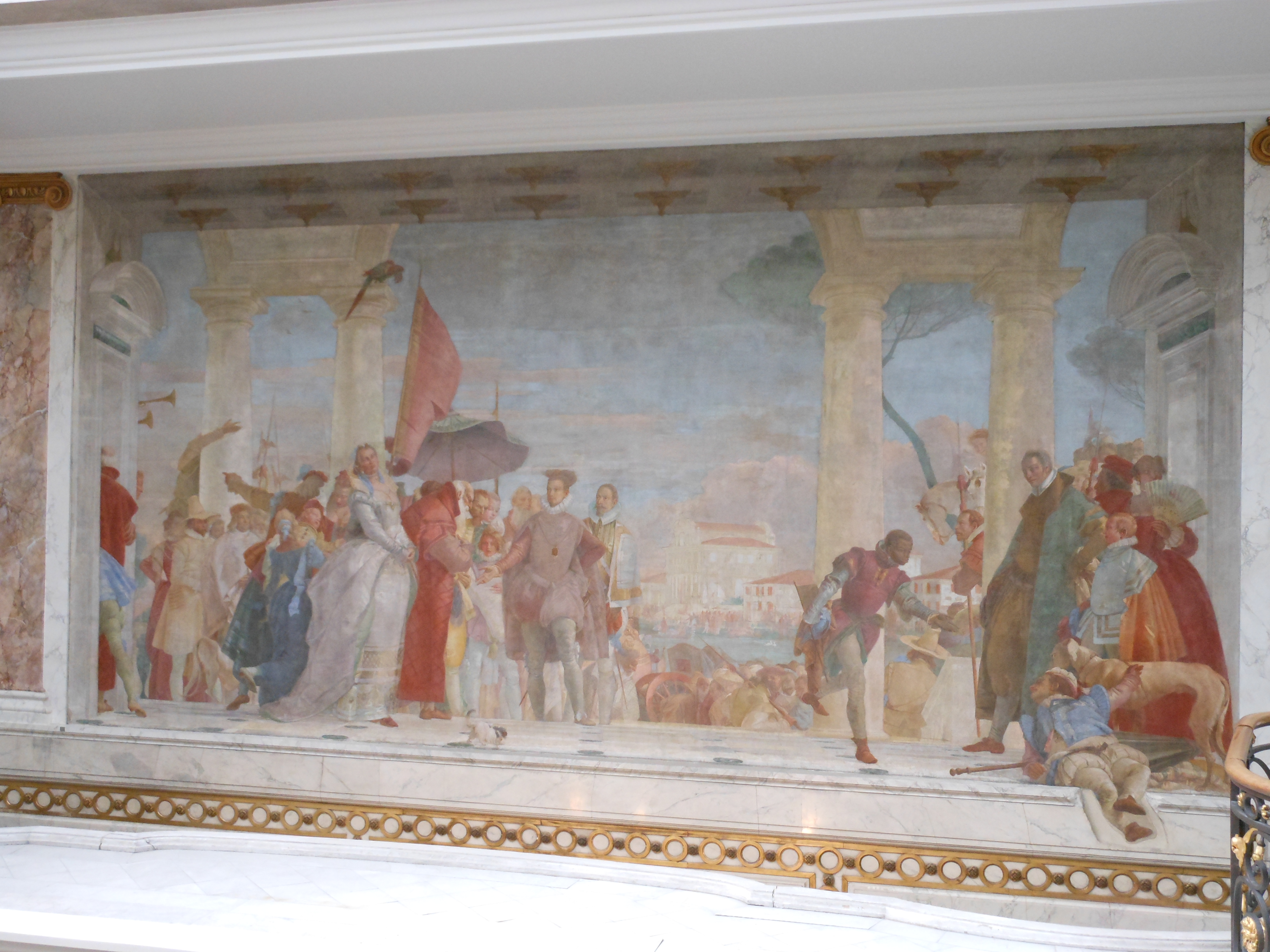
The glorious Tiepolo fresco “Henri III Being Welcomed to the Contarini Villa” was commissioned by Contarinis 200 years after the historical event, to commemorate one of the proudest and happiest events in their family’s history.

TiepoloDetail4

When Nelie and Edouard installed the Tiepolo fresco 200 years later in their Winter Garden, they were also gazing backward into a golden time they might have preferred to their own time.

JacqFresco

The tourist wandering the Musee Jacquemart-Andre today is gazing backward through the Parisian Belle Epoque of the 1890s, at a fresco painted in 1745 to depict a historical event from 1574. Much as I love history, I do try to live in the moment. What am I overlooking in my own contemporary world?

Join me next time for more explorations in the art and history of Europe!
Nelie and Edouard’s 100th

Jacq100Yr

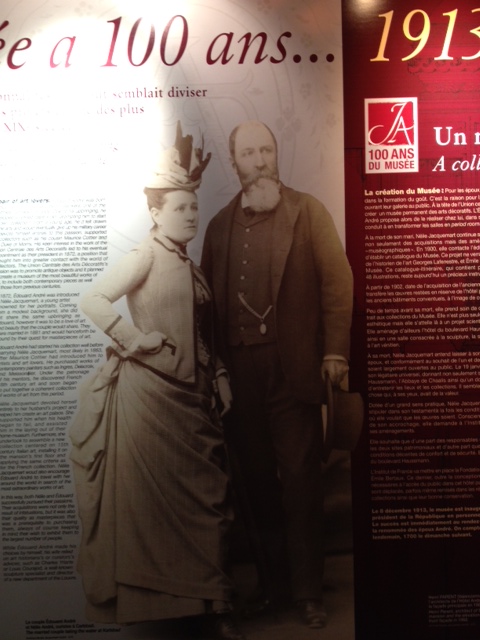
The year 2013 was the 100th anniversary of the opening of the Musee Jacquemart-Andre on the Boulevard Haussman in Paris.  Nelie and Edouard had built the palatial mansion and stuffed it with priceless art with this very purpose in mind, once their glittering lives of art collecting and high-toned socializing were over.

photo

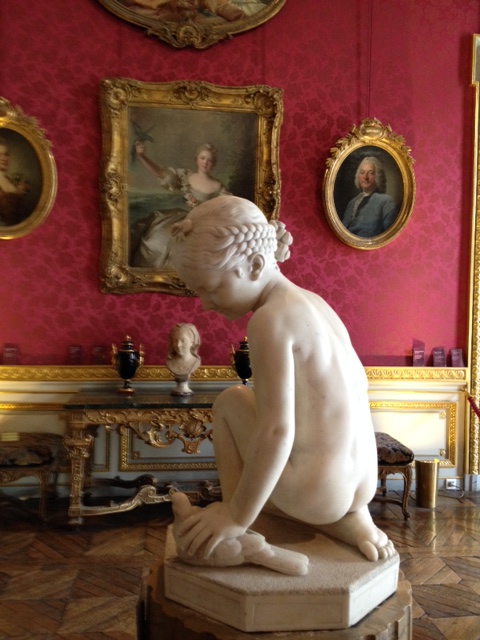
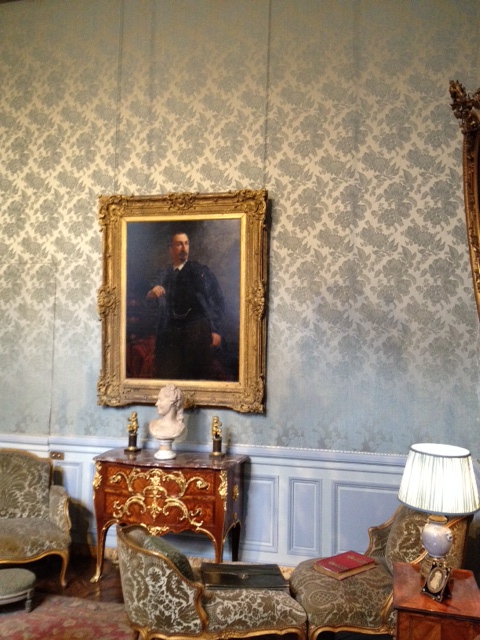
What they achieved was an exquisite melding of architecture, decorative arts and fine arts. The museum is not covered by the Paris Museum Pass, and most tourists pass it up in favor of the ever-crowded Louvre and Orsay Museums. It’s well worth the price of admission, though.  The audioguide is lively; music ushers the visitor into each of the grand state rooms as though a party were just beginning. In fact, there is a musicians’ gallery where Nelie and Andre used to station a small orchestra when they entertained. The rooms have been left just as they were when Nelie died in 1912.

AndreBustNelie

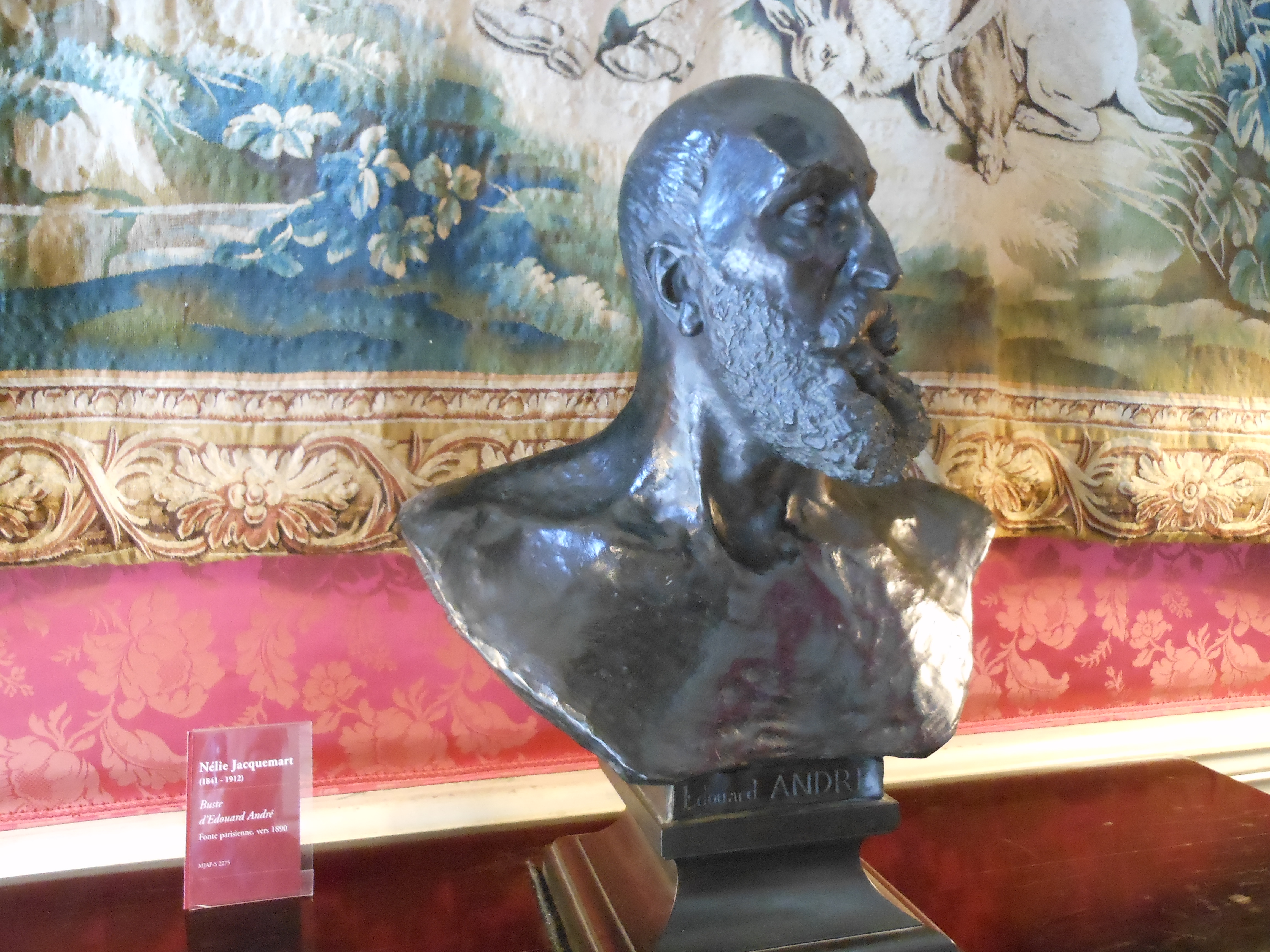
Nelie herself created a very distinguished bronze bust of Edouard in 1890 (if I’m reading the caption correctly). She certainly had every reason to honor Edouard. Her life changed the minute she landed the extremely rich bachelor. One day she was a struggling painter, trying to get society portrait commissions; the next she was traveling the world with a handsome, dashing gazillionaire.  By all reports, she made him very happy. After Edouard’s death in 1894, she continued to build their collections. When Nelie died in 1912, she left their mansion–and her own country chateau, also stuffed with art–to the Institut de France. Both Nelie and Edouard lived out their lives in the glamorous bubble their wealth created.  They never had to deal with the terrible events of the Great War, or with the wrenching changes that war brought to their world.

Join me next time for more explorations in the art and history of Europe!


Tiepolo for Two at Jacquemart-Andre

Tiepolo

When Nelie and Edouard Jacquemart-Andre were planning their Paris mansion, they visited Venice in 1893. They were delighted to snap up a fresco by Giambattista Tiepolo. In fact they felt that it was just sitting there waiting for them, and  to this day it remains the crown jewel of all their art collecting.  The fresco had been painted for the Villa Contarini around 1745, when the great artist was at the height of his powers. The title is “Henri III Being Welcomed to the Contarini Villa.”  It depicts an event that actually happened in French history:  in 1574, the very young King Henri III, who was of Italian descent through his mother, Catherine de Medicis, stopped on his way to Paris to claim the throne. He was the fourth in line and had not been expected to reign.  His brother,  24-year-old Charles IX, had died unexpectedly.

I don’t know why the fresco (and a companion ceiling, which the Jacquemart-Andres also bought) were up for sale.  Presumably the noble Venetian family that had commissioned them had fallen on hard times.  In any case, the French “Gazette des Beaux-Arts” rhadsodized about the fitness of this exquisite fresco for a grand French home:  “No other Tiepolo can be closer to our heart; one would say it was made for us. The last great Venetian painter and a part of the history of France: is it not the most beautiful blend of Venetian and French?”

TiepoloDetail

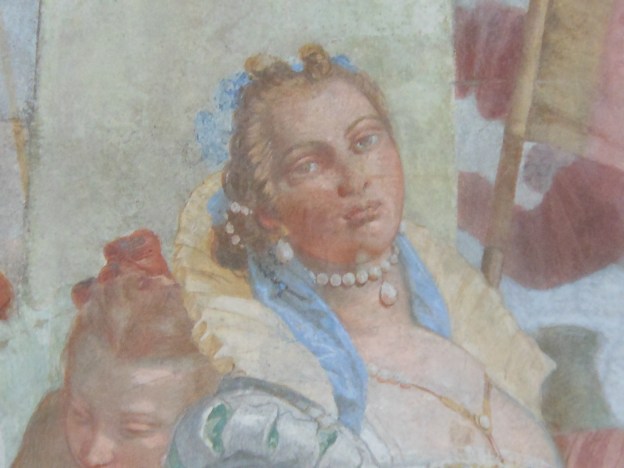
The colors are clear and delicate; the figures are arranged in a grand tableau that is also entirely natural. The king and his retinue of guards and ladies, dwarves and servants are climbing the stairs of the villa, ready to greet the Contarinis.

TiepoloDetail4

Faces look calm and dignified, as though greeting a king were an everyday occurence.

TiepoloDetail2

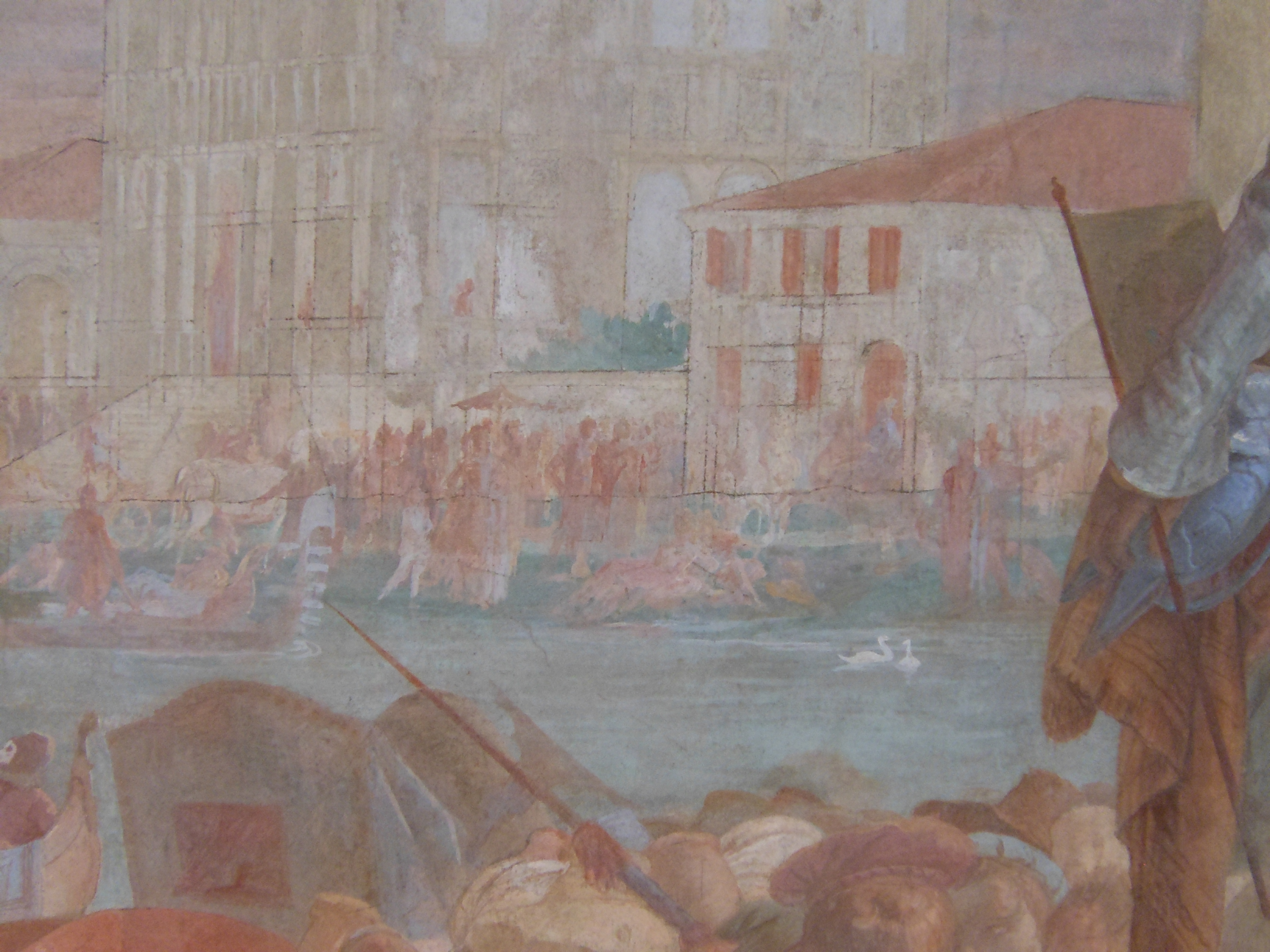
Just across the canal are beautiful palaces and gardens.

TiepoloDetail3

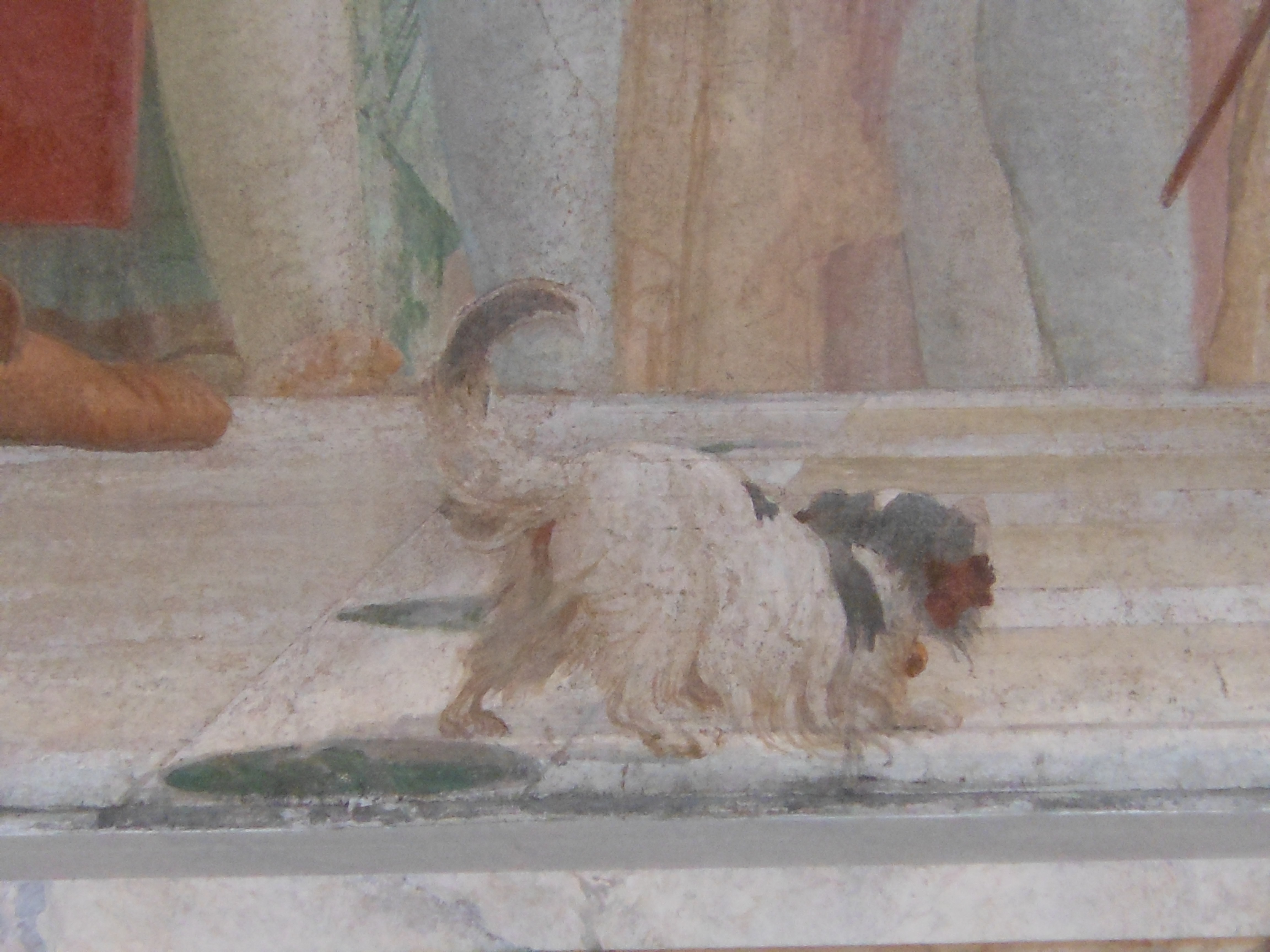
The occasion is grand, but gracious and informal. There’s even a little dog making the king feel welcome.

TiepoloDetail5

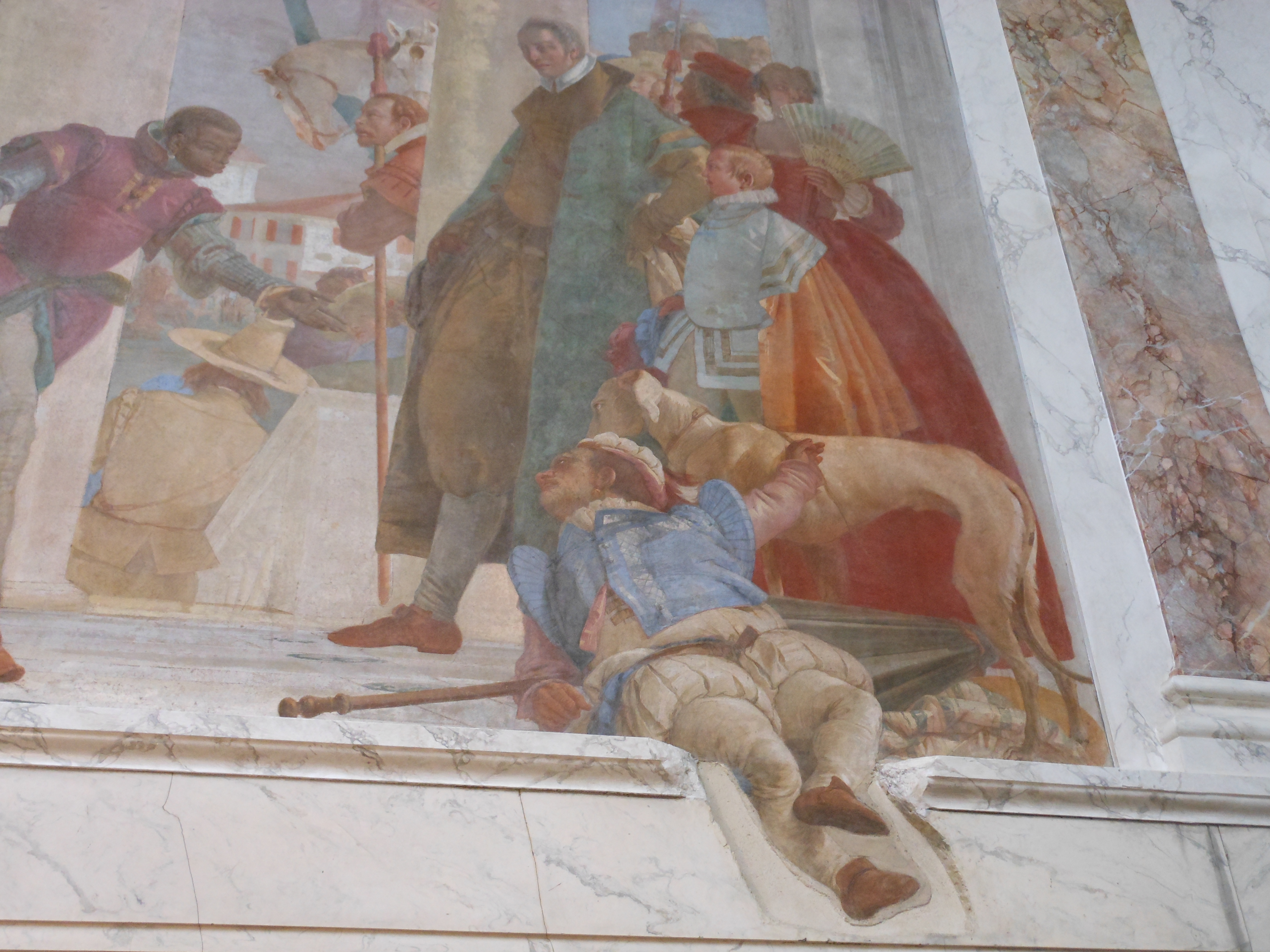
An attendant’s foot extends out of the outline of the painting.  No problem!  After all, Nelie and Edouard built an entire Belle Epoque mansion around this fresco. They just made a place in the marble frame for the errant foot.

There’s much more about the fresco, and about the mansion, at museejacquemart-andre.com.  Vive la France!

Nelie and Edouard

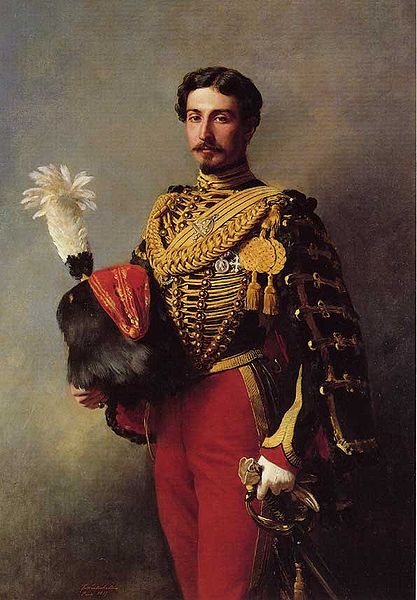
Edouard Andre was a scion of a fabulously wealthy Protestant banking family. A measure of the family’s wealth and prestige is that he had his portrait painted by Franz Zavier Winterhalter, who routinely painted royal and imperial subjects all over Europe.

Portrait of Edouard Andre, Winterhalter, Public Domain

Portrait of Edouard Andre, Winterhalter, Public Domain

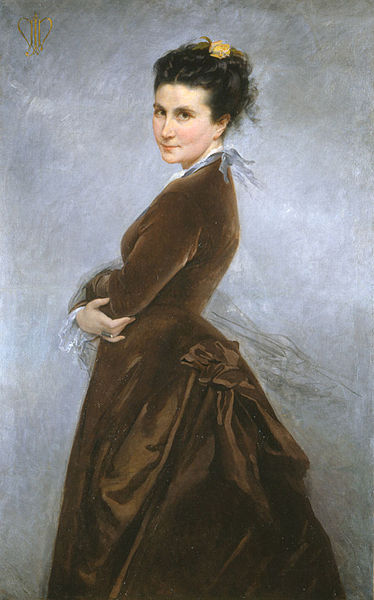
For some reason, Edouard also chose to have his portrait painted by an up-and-coming society painter, the young Nelie Jacquemart.

AndreNeliePortrait

The resulting portrait was nondescript.  It hangs in their Belle Epoque mansion, now the Musee Jacquemart-Andre, but relegated to the back of a room display. Andre was one of the most eligible bachelors in Europe at the time.  What went on between Nelie and Andre? Nothing seemed to happen other than the production of an OK portrait, but ten years later they were married. She was 40; he was 48. They shared a passion for collecting art, and they had so much money to spend on art that they decided to work cooperatively with the Louvre so as not to outbid the great museum during sales and auctions.

Nelie gave up her career as a painter and concentrated on taking care of Andre–and spending his money. He designed a beautiful studio for her in their Paris mansion, but it became a gallery for art instead. She left her brushes and tubes of paint behind as soon as she was married.

Self Portrait of Nelie Jacquemart, Public Domain

Self Portrait of Nelie Jacquemart, Public Domain

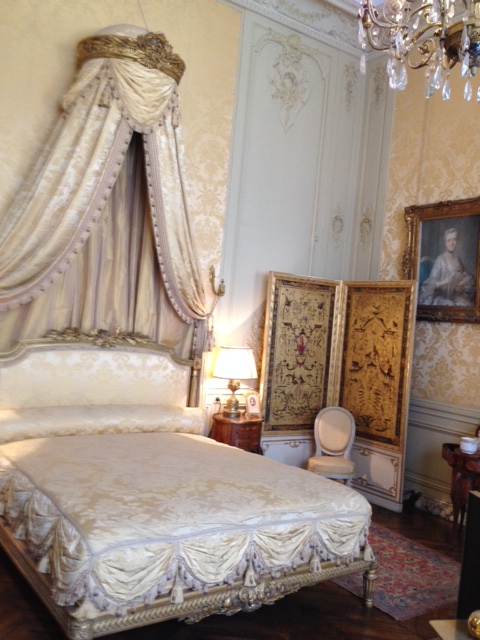
Their marriage seems to have been very happy.  They hosted glittering society parties in their fabulous mansion of Boulevard Haussman. They traveled at least yearly to Italy to add to their collections. They lived in luxurious rooms replete with satins, marble, and fine woods.

NelieBR

What was not to like? I could get used to life in a Belle Epoque mansion!


Musee Jacquemart-Andre: The Belle Epoque Lives

JacqExt (2)

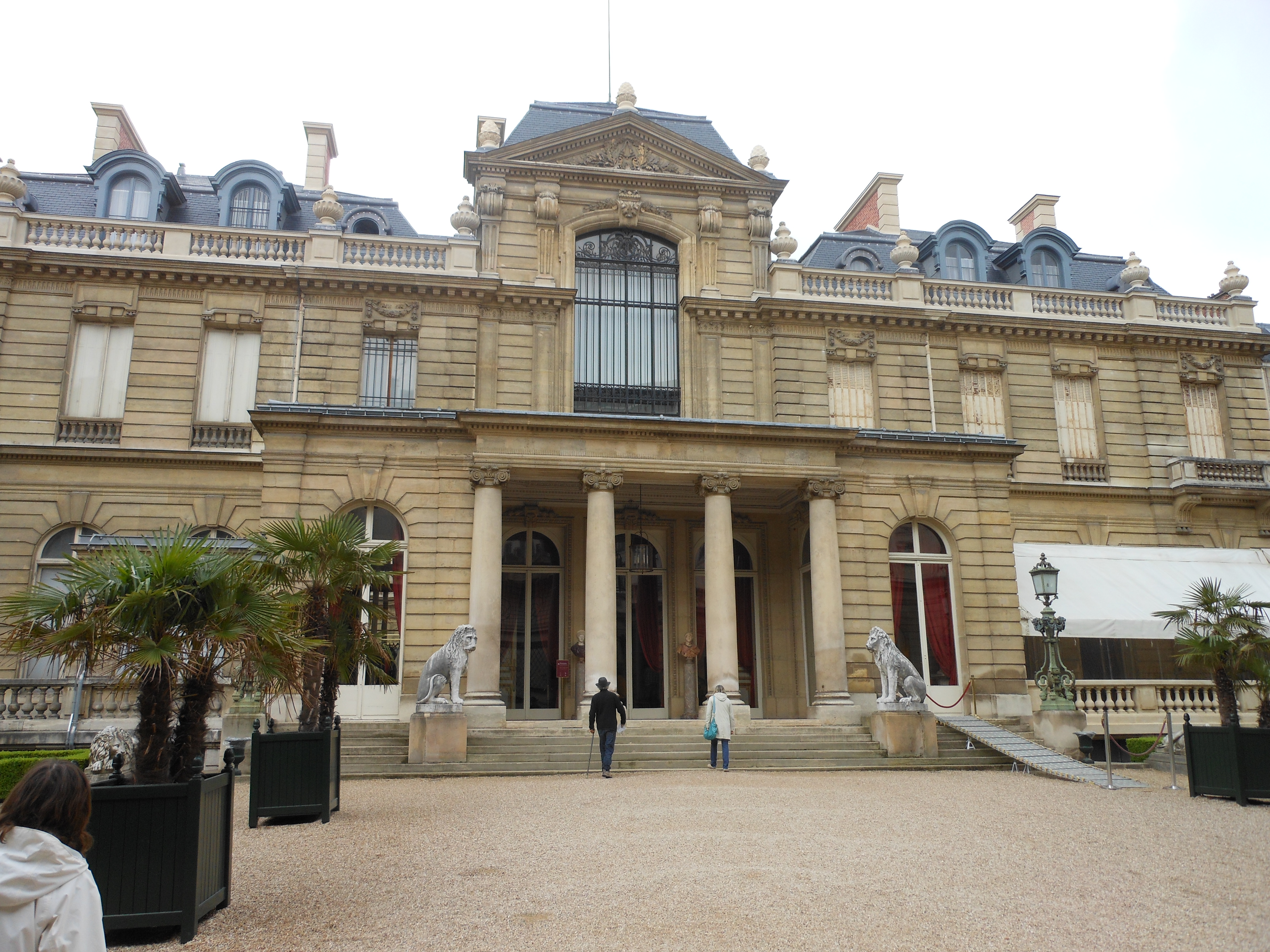
A Belle Epoque mansion, open to the public, still exists in Paris:  the Jacquemart-Andre Museum. The wealthy banker Edouard Andre built it with and for his wife, Nelie Jacquemart.  Work began in 1869 and was completed in 1875.  The mansion on the Boulevard Haussman was a glittering social hub which contained the couple’s fantastic art collection in purpose-built rooms. It became a museum in 1913, after the widowed Nelie bequeathed it to the Institut de France.

WinterGarden

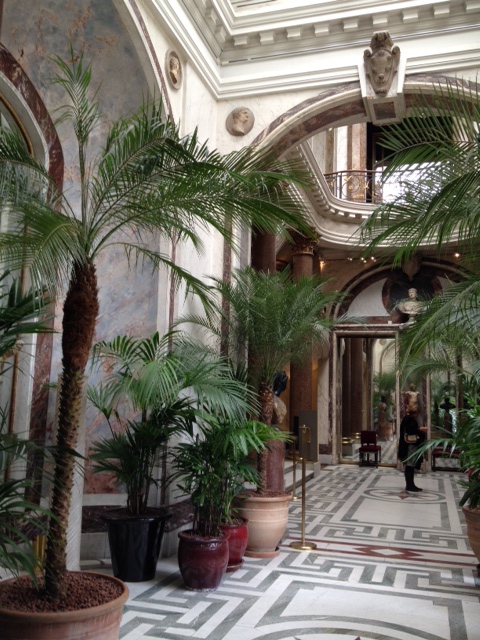
My favorite room in all of Paris (at least the part of Paris that is open to a lowly tourist) is the Winter Garden, replete with marble, plants, and a skylight to brighten dreary Paris winter days.

JacqStairs

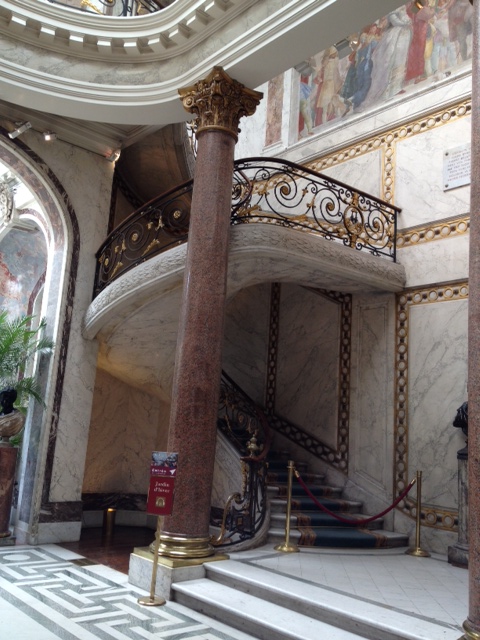
The double-helix marble staircase in the Winter Garden is a marvel of engineering and architecture. And the visitor climbing up is treated to a Tiepolo fresco at the top. Nelie and Andre snapped up the fresco during one of their many art-foraging trips to Italy.  (A fresco is not just a painting on a wall; the pigment is actually embedded in the plaster, so moving it requires carefully dismantling the entire wall.  With the Andre banking fortune, this was no problem at all for Edouard)

Tiepolo


Join me next time!   I’ll be posting more about Jacquemart-Andre, one of the most beautiful and fascinating sights in Paris.

An Evening in Paris

PreCatalan


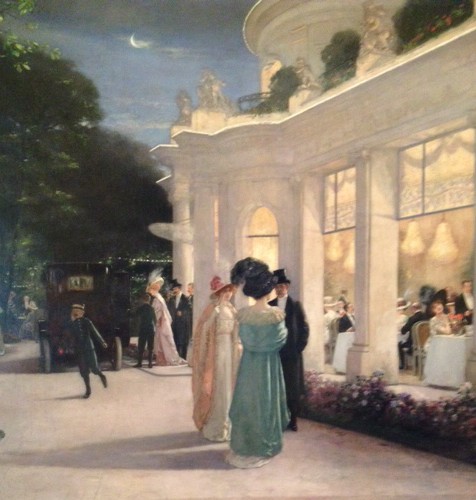
At the “Paris 1900” exhibition in April of this year, I admired this wall-sized painting of an elegant evening from days gone by. It was painted by Henri Gervex in 1909. The title is “Une Soiree au Pre Catalan.” It depicts guests at a celebrated restaurant in the Bois de Boulogne.

TalleyrandPre

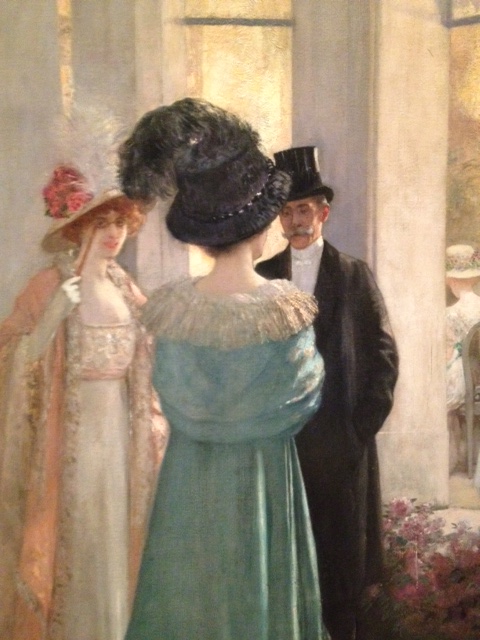
Some of them are recognizable: the duke of Talleyrand-Perigord and his rich American wife, Anna Gould. It must have seemed to these privileged people that there was no good reason that life as they knew it would not continue indefinitely. But in just a few short years, the First World War would wreak havoc on the lives of all, including the most privileged.

This painting is from the Musee Carnavalet in Paris, one of the stellar free sights of Paris. I have never seen it crowded. I’d head to the Carnavalet right now if I found myself in the summer crowds of Paris, having just read that so many people are picnicking on the grounds of the Louvre and the Tuileries that large rats are appearing in daylight to scavenge food.  The hushed corridors and quiet galleries of the Carnavalet  are  housed in a Renaissance mansion that has its own history.  A visit gives a glorious overview of the history of Paris. This particular painting will not be there right now, but anyone interested in art and history will find plenty of treasures to contemplate.

Join me next time for more explorations into the art and history of Europe!


Dancing into the 20th Century


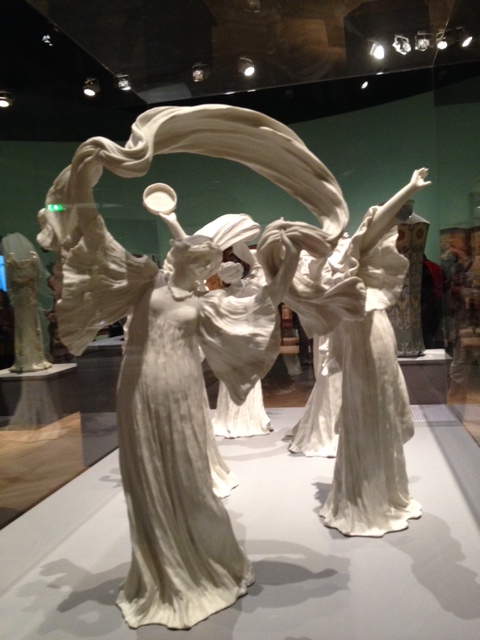
PorcelainDancersThese porcelain dancers from the Paris 1900 Exhibit, in the Petit Palais of Paris in 2014, epitomize the ideals of beauty of the period:  slender, tall, and above all, in graceful motion. The corseted and bustled female form was gone; in its place was a slender silhouette, able to move about the world with new freedom.

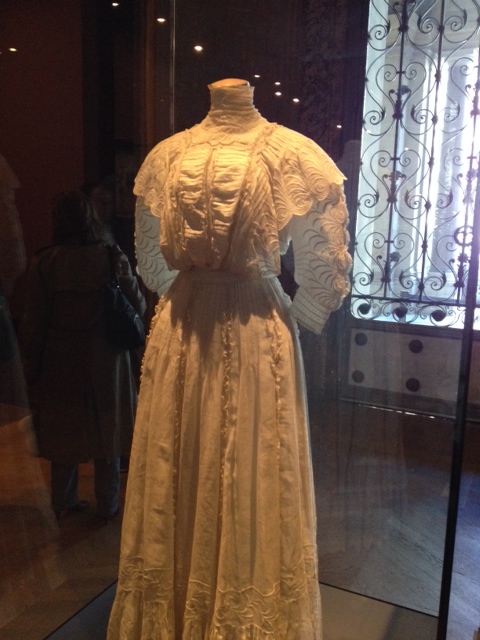
DressFront

Fashionable women of the period cultivated similar ideals as they went about their daily lives. The corseted and bustled female form was gone; in its place was a slender silhouette, perfect for the modern woman.

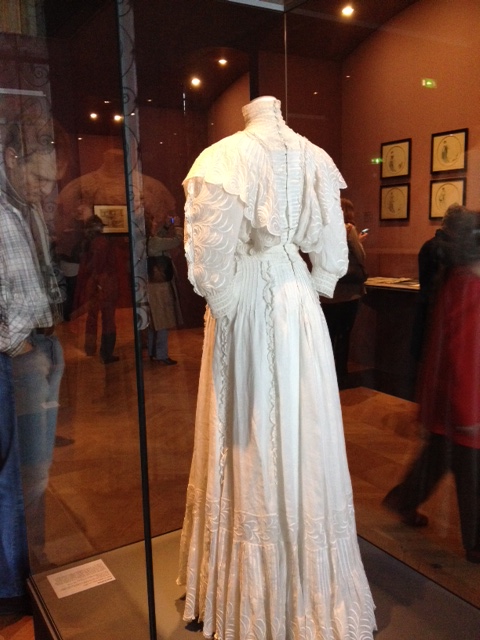
DressBack

Coming or going, the fashionable woman of 1900 exuded femininity and grace.

Paris: Sin City 1900

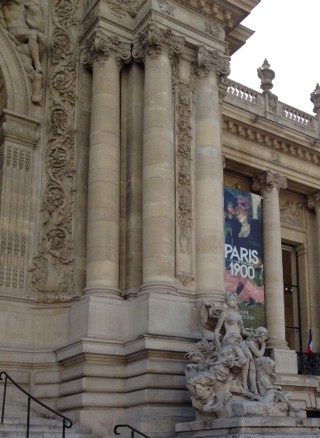
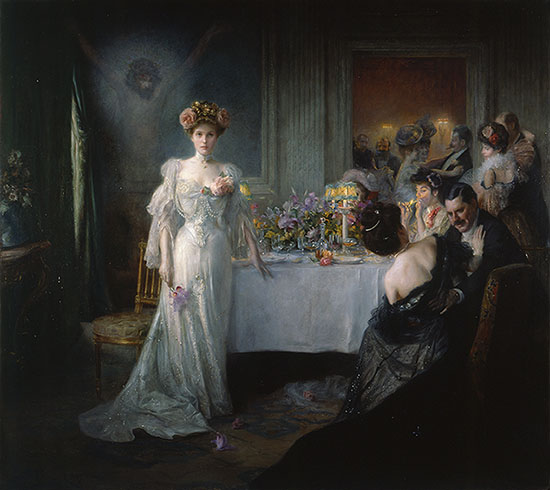
P1900PosterOne of the best reasons to travel to Paris is to take in the special exhibits. This past April, I loved the exhibit called “Paris 1900” at the very grand Petit Palais. In 1900, a huge exhibition occupied 500 acres along the Seine River, at the same time that the very first line of the Metro opened.  The exhibition was a celebration of Paris as THE world center of art, innovation, technology, and above all entertainment. Entertainment in Paris 1900 ran the gamut from sublime theater performances to dance halls to houses of prostitution, tailored to all segments of society.

Annoyingly, all the exhibit captions were in French only.  I had to call on my translating skills, which are pretty good but not great. There was an audioguide, but I was short on time.  (When is there ever enough time in Paris?)

"Redemption," Public Domain

“Redemption,” Public Domain

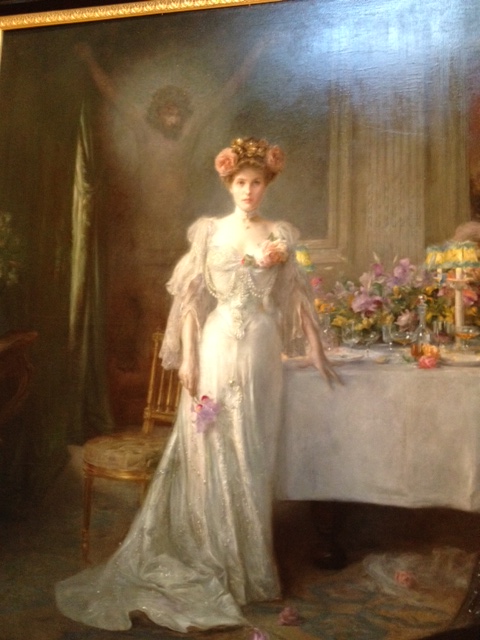
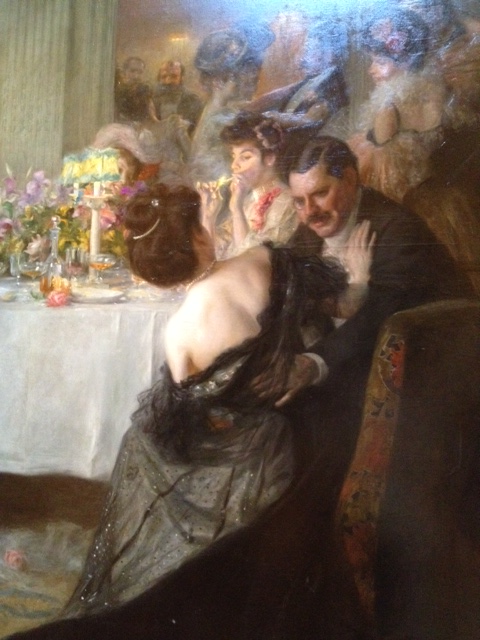
A gorgeous large painting by Julius LeBlanc Stewart poignantly depicts the intersection of high life and low life in the fast-and-loose period known as the Belle Epoque. The title is “Redemption,” painted in 1895. Stewart was an American.  Along with his fellow American, the more well-known John Singer Sargent, he made a nice living doing portraits of society figures. This is a genre painting, on the theme of the repentant prostitute.

Nightlife1

A beautiful young girl, dressed in white, stands alone at one end of a dinner table–or rather, probably a table set for supper during a ball. Will this girl make an advantageous marriage?  Or possibly she already has escaped her former life, and hopes she will not be found out. She looks vulnerable, ready to flee.

Nightlife2


At the other end of the table, a portly gentleman is working on seducing a bare-shouldered woman.  She holds him off with one hand–but for how long?

Join me next time for more explorations into the art and history of Europe!


An Art-Deco Lady in Green

Lempicka Green

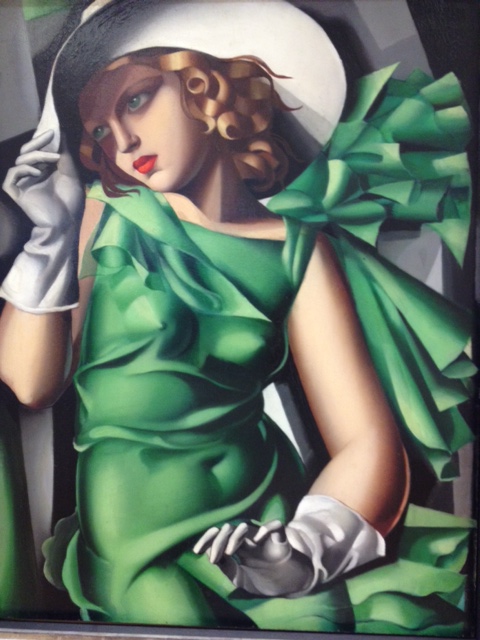
Tamara de Lempicka painted this portrait, “Jeune Fille en Vert,” between 1927-1930. It’s part of the collection of the Pompidou Center in Paris.

The artist was born to Polish-Russian aristocrats in 1899.  Just before the Russian Revolution, she married a well-known lawyer/playboy. He was arrested during the Revolution.  She managed to rescue him from prison and they made their way to Paris, where their money soon ran out.  Tamara began painting as a way to support her family, which by this time included a daughter.

She developed a unique personal style perfectly suited to the Art Deco aesthetic of the Jazz Age.  Her paintings showed the influence of Picasso’s Cubism, combined with Italian Old Masters, which she had been exposed to when she lived with her wealthy grandmother as a teenager in Italy. Soon Tamara was in great demand, charging large fees to paint society figures and even the crowned heads of Europe.

She was wild and difficult, though.  She hobnobbed with the bohemian artist community in Paris, but at the same time conducted a frenetic social life in the highest social circles.  It seems she never really fit in with either group. Her first marriage did not last, and she neglected her only child.  She remarried and moved to the United States, where once again she was in demand for a time, painting portraits of movie stars and society figures.

Eventually, her work fell out of fashion and she retired from painting.  In the 1980s, her work was in demand again. Now, her paintings once more command high prices.

LempickaCover

A recent biography by Laura Claridge sounds like a very entertaining account of this colorful woman’s life.  The title is “Tamara de Lempicka: A Life of Deco and Decadence.” I’m hoping it will soon be available as an eBook. Right now, it seems to be only available in hardcover and paperback, from Amazon. A review is at http://www.nytimes.com/books/99/10/24/reviews/991024.24vincent.html

Join me next time for more explorations into the art and history of Europe!